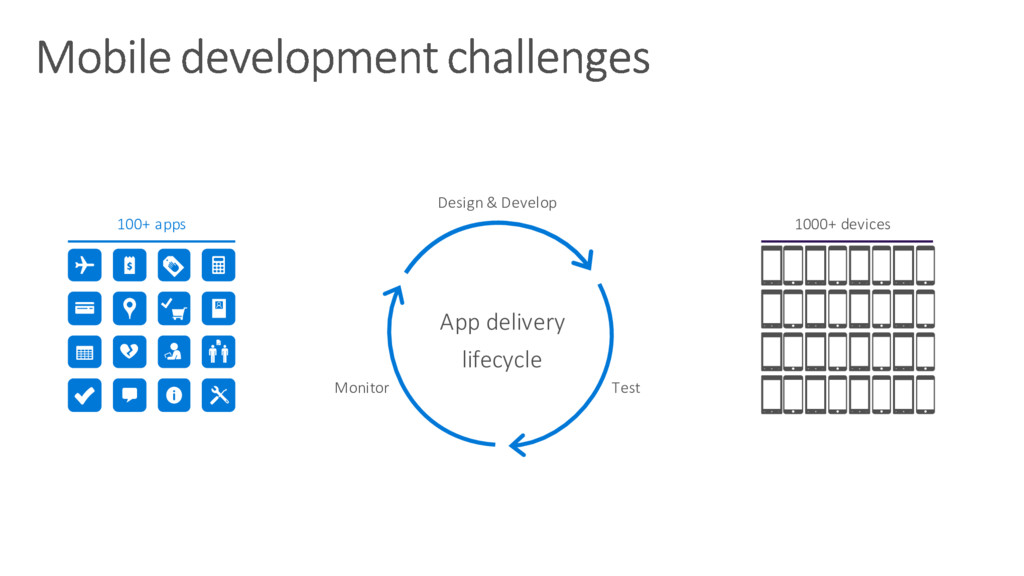
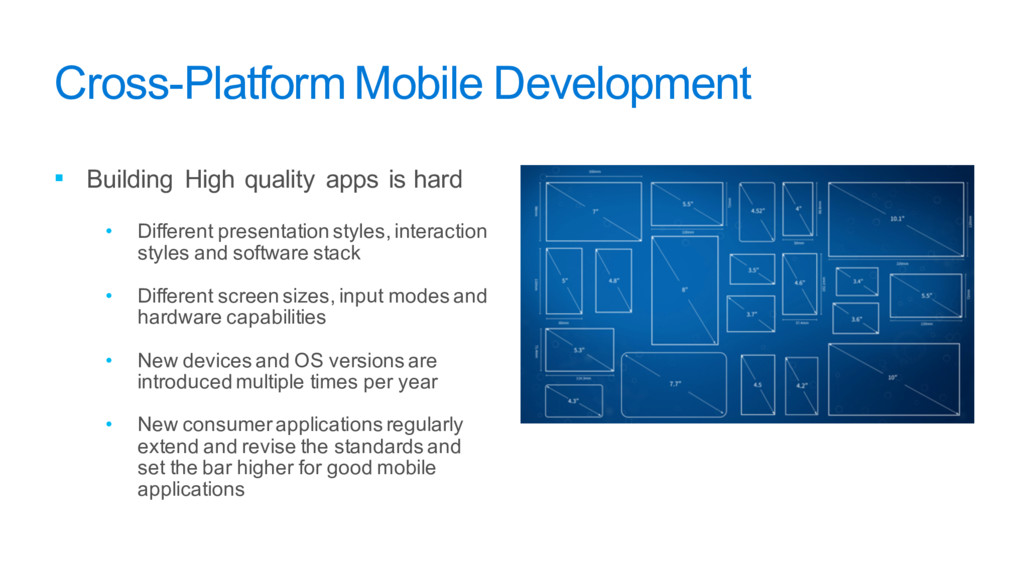
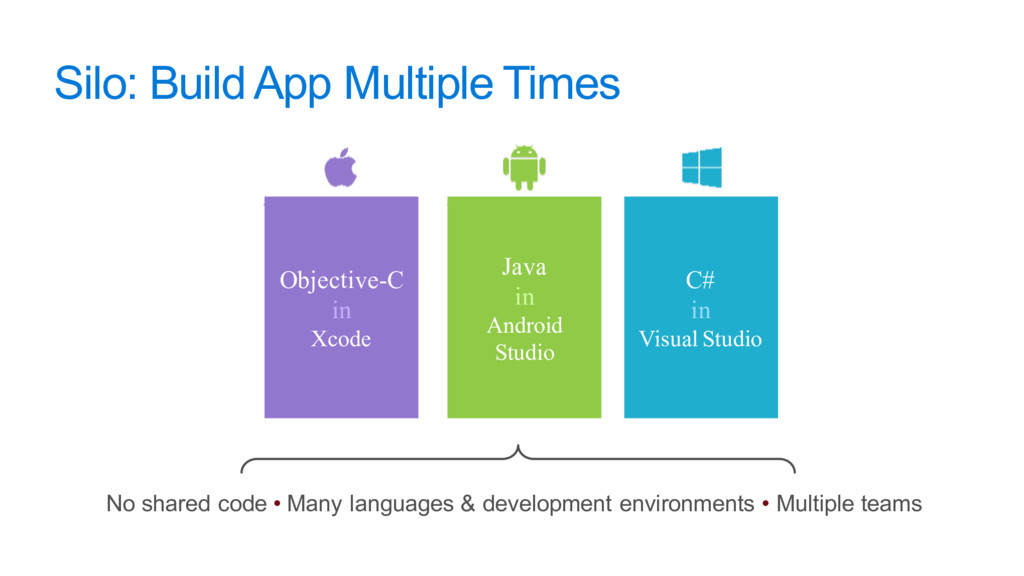
• Different presentation styles, interaction styles and software stack • Different screen sizes, input modes and hardware capabilities • New devices and OS versions are introduced multiple times per year • New consumer applications regularly extend and revise the standards and set the bar higher for good mobile applications
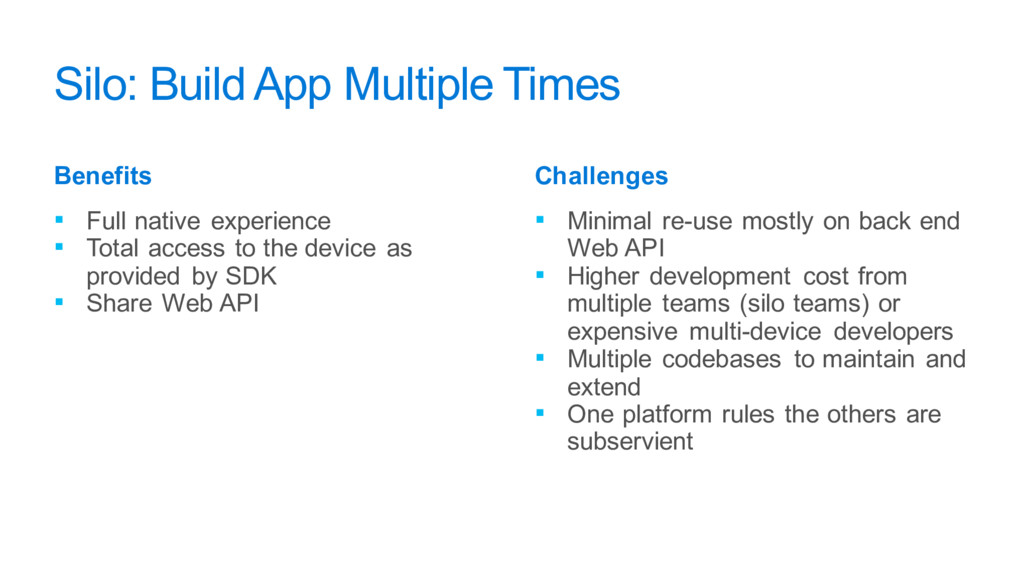
as provided by SDK ▪ Share Web API ▪ Minimal re-use mostly on back end Web API ▪ Higher development cost from multiple teams (silo teams) or expensive multi-device developers ▪ Multiple codebases to maintain and extend ▪ One platform rules the others are subservient Benefits Challenges Silo: Build App Multiple Times
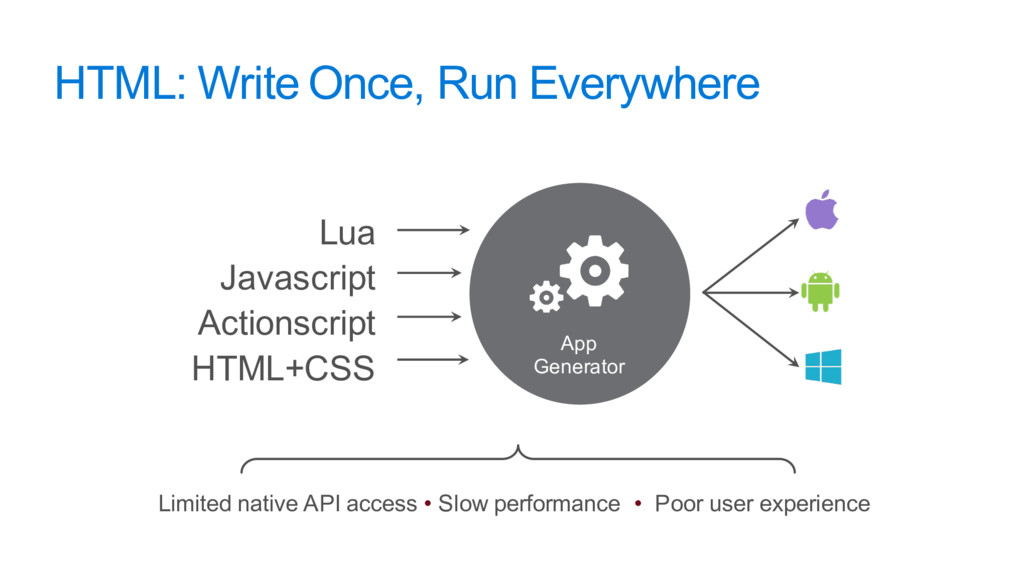
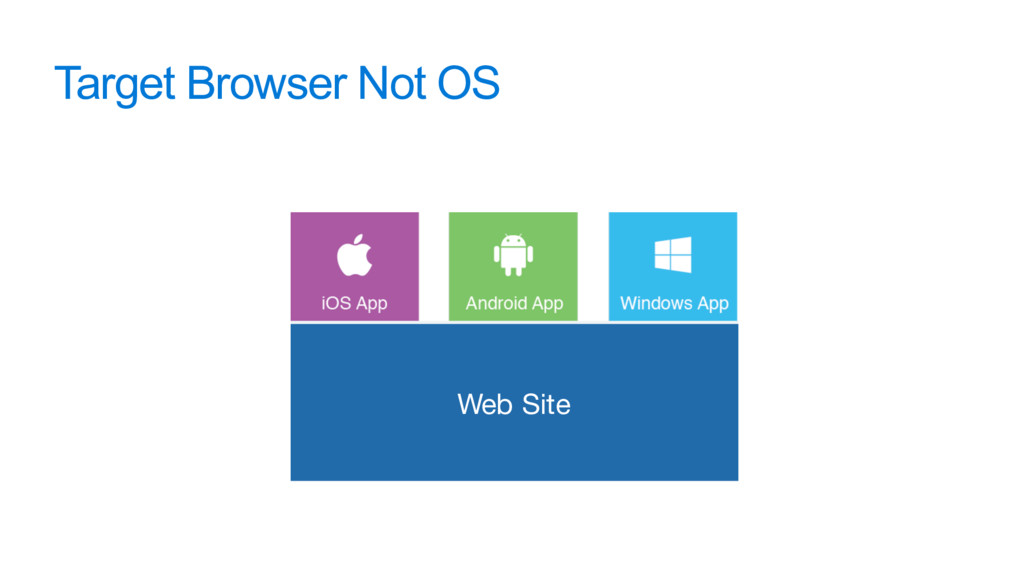
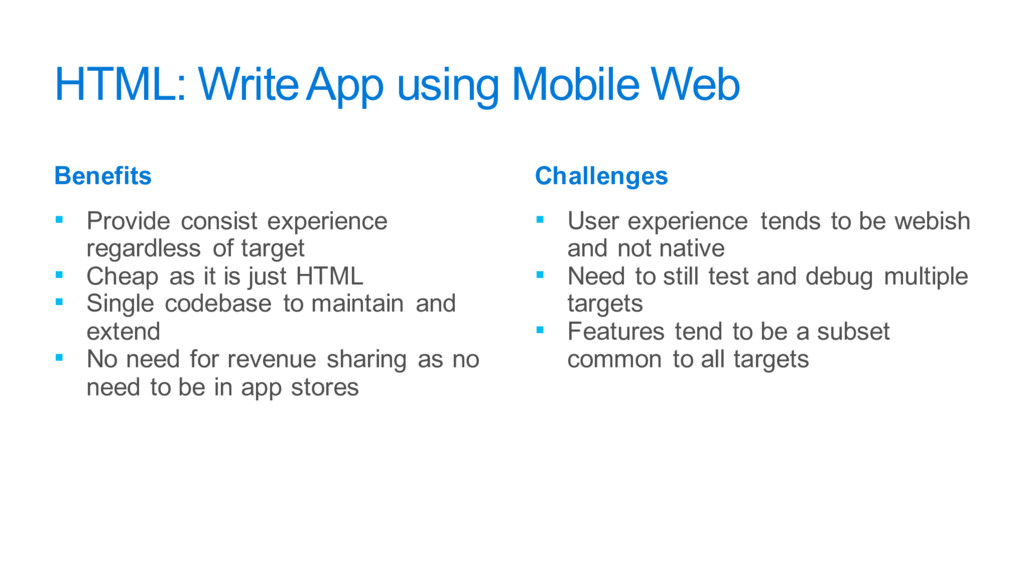
it is just HTML ▪ Single codebase to maintain and extend ▪ No need for revenue sharing as no need to be in app stores ▪ User experience tends to be webish and not native ▪ Need to still test and debug multiple targets ▪ Features tend to be a subset common to all targets Benefits Challenges HTML: Write App using Mobile Web
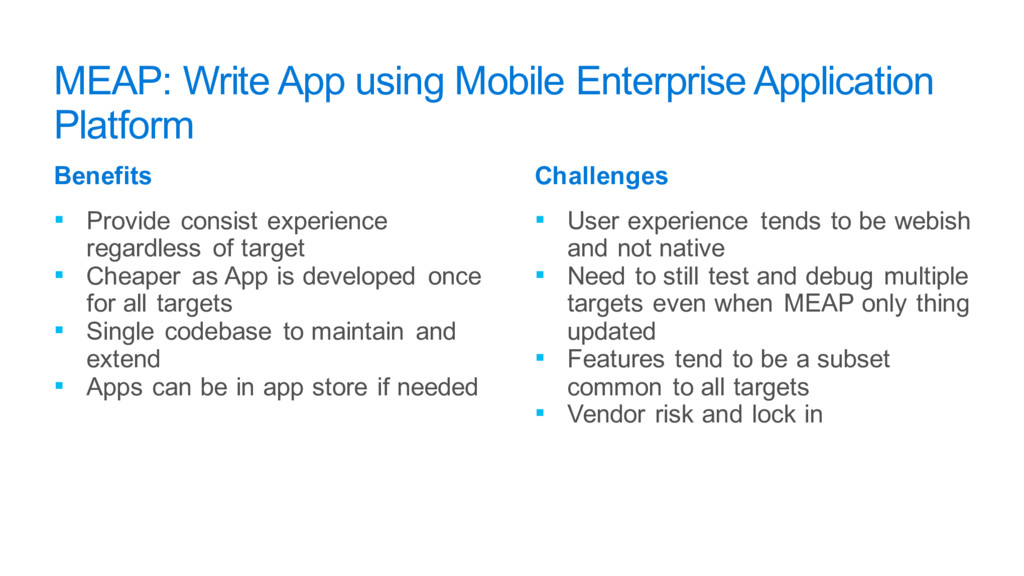
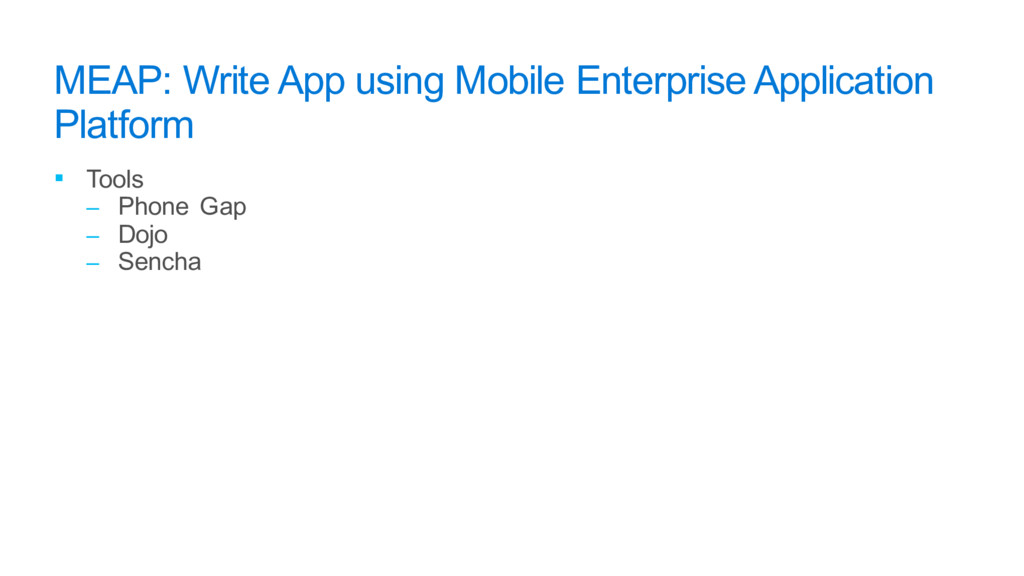
App is developed once for all targets ▪ Single codebase to maintain and extend ▪ Apps can be in app store if needed ▪ User experience tends to be webish and not native ▪ Need to still test and debug multiple targets even when MEAP only thing updated ▪ Features tend to be a subset common to all targets ▪ Vendor risk and lock in Benefits Challenges MEAP: Write App using Mobile Enterprise Application Platform
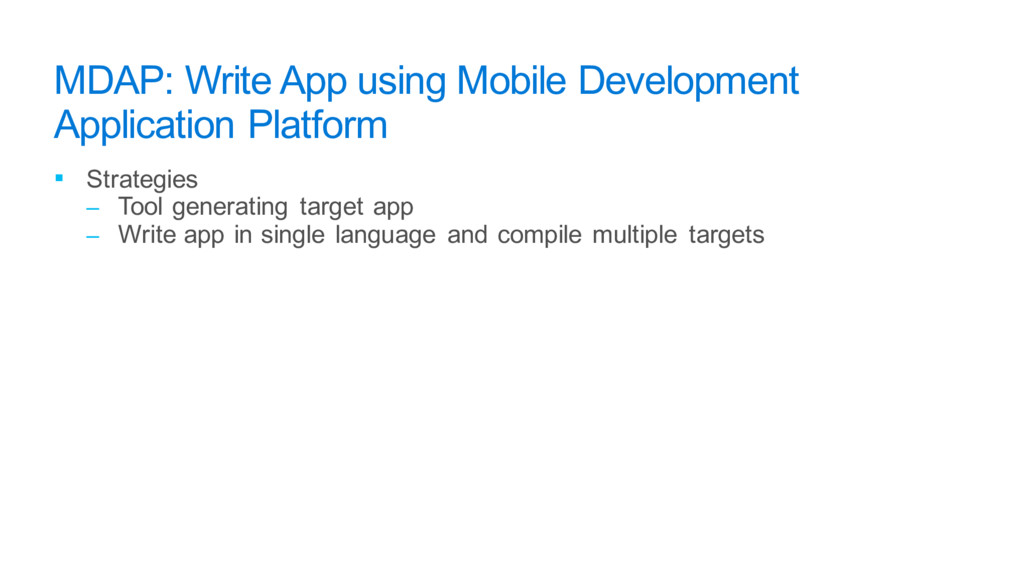
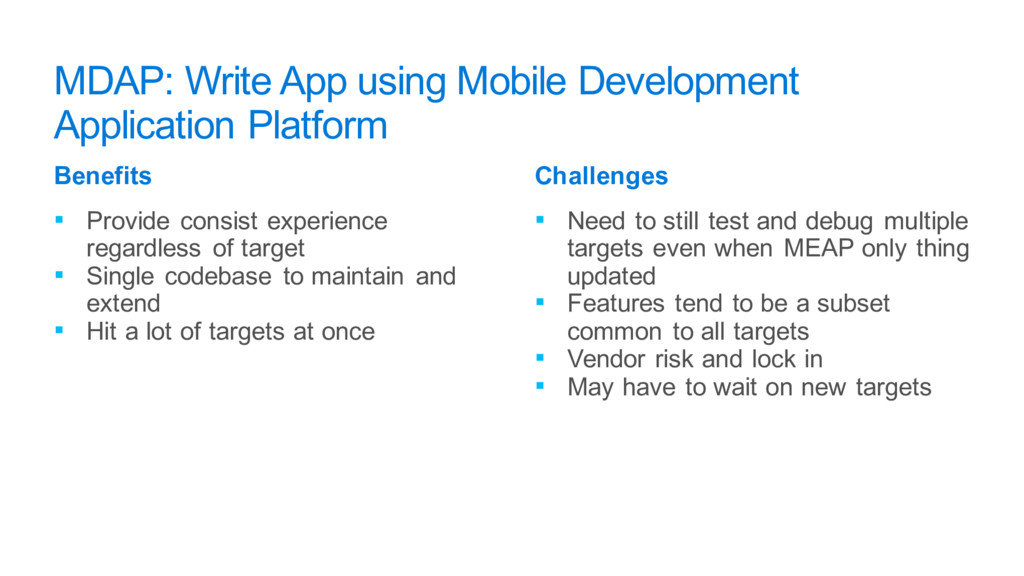
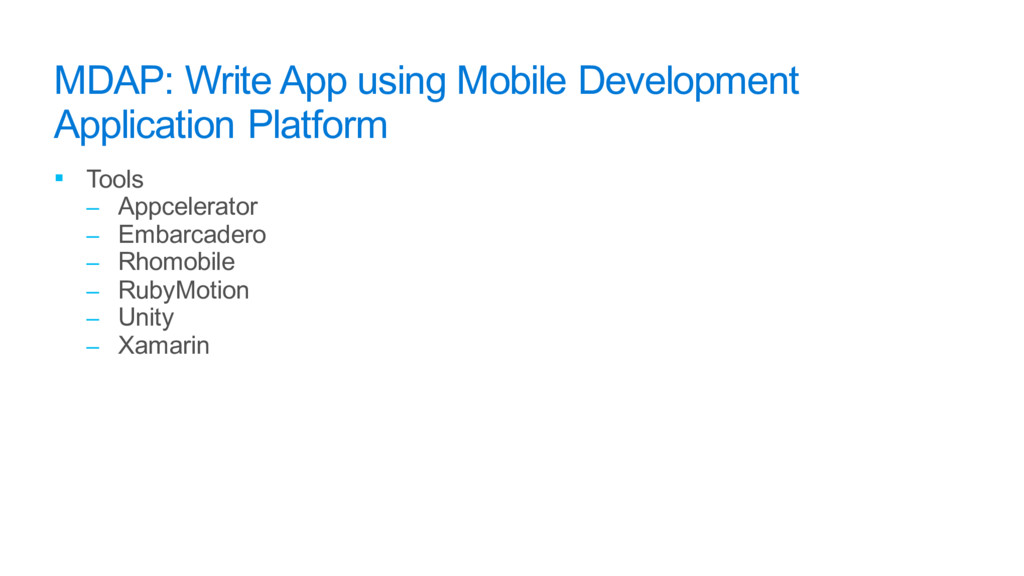
to maintain and extend ▪ Hit a lot of targets at once ▪ Need to still test and debug multiple targets even when MEAP only thing updated ▪ Features tend to be a subset common to all targets ▪ Vendor risk and lock in ▪ May have to wait on new targets Benefits Challenges MDAP: Write App using Mobile Development Application Platform
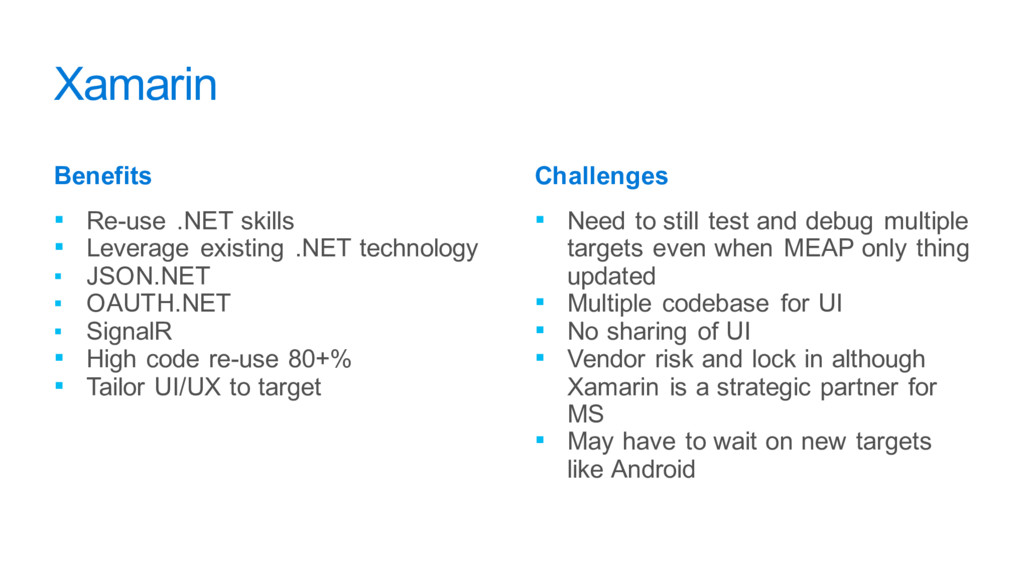
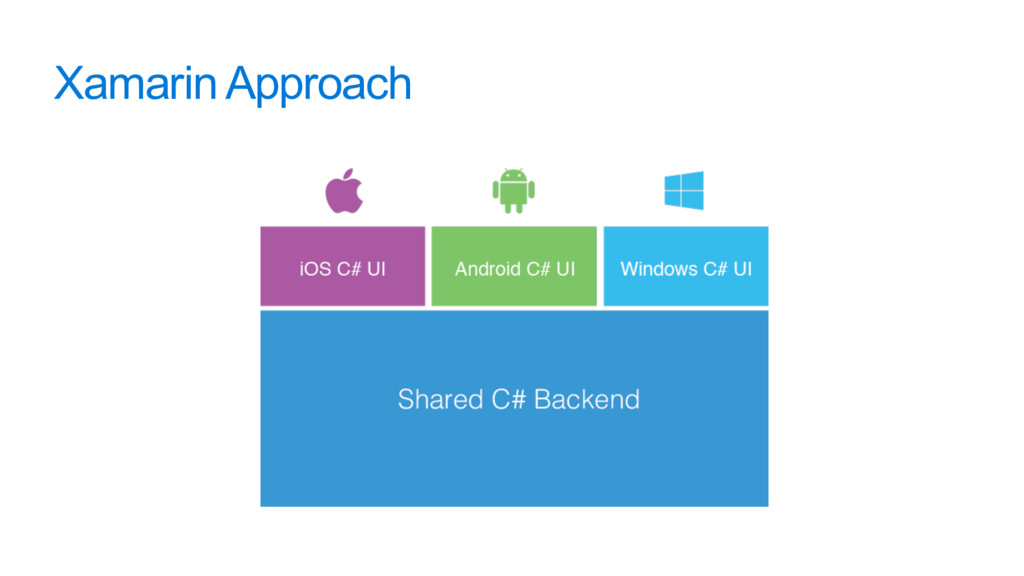
JSON.NET ▪ OAUTH.NET ▪ SignalR ▪ High code re-use 80+% ▪ Tailor UI/UX to target ▪ Need to still test and debug multiple targets even when MEAP only thing updated ▪ Multiple codebase for UI ▪ No sharing of UI ▪ Vendor risk and lock in although Xamarin is a strategic partner for MS ▪ May have to wait on new targets like Android Benefits Challenges Xamarin
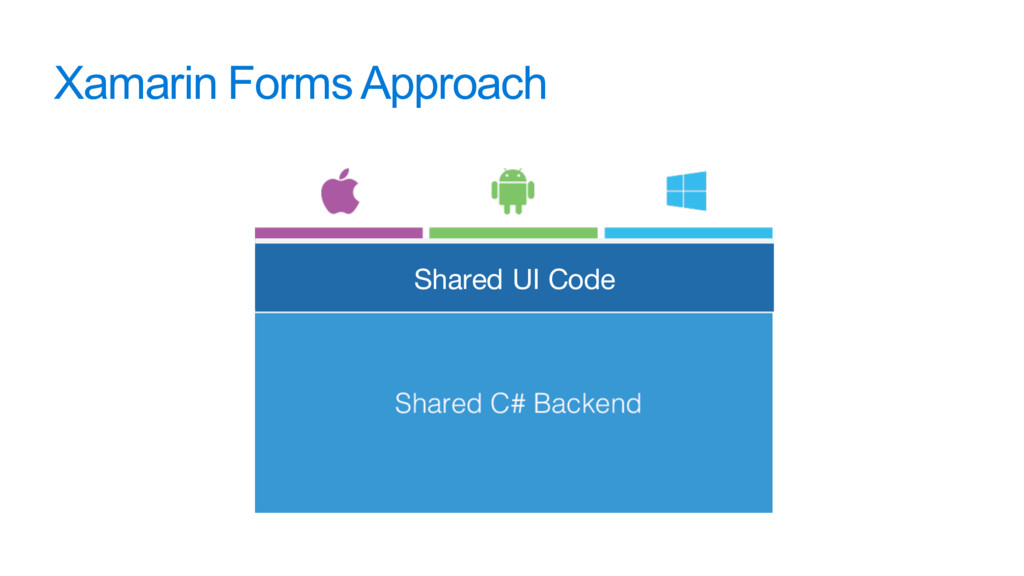
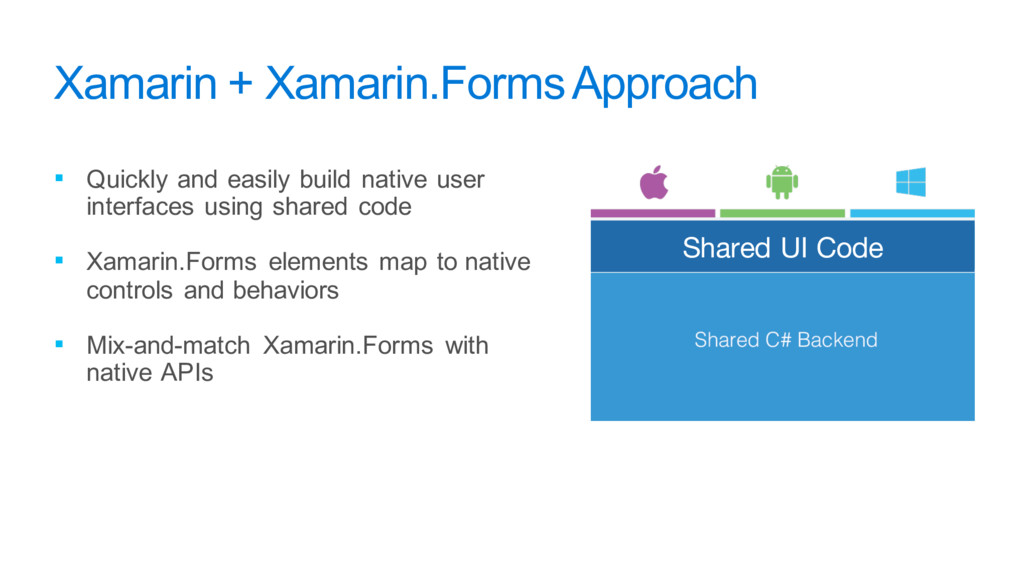
interfaces using shared code ▪ Xamarin.Forms elements map to native controls and behaviors ▪ Mix-and-match Xamarin.Forms with native APIs Shared UI Code
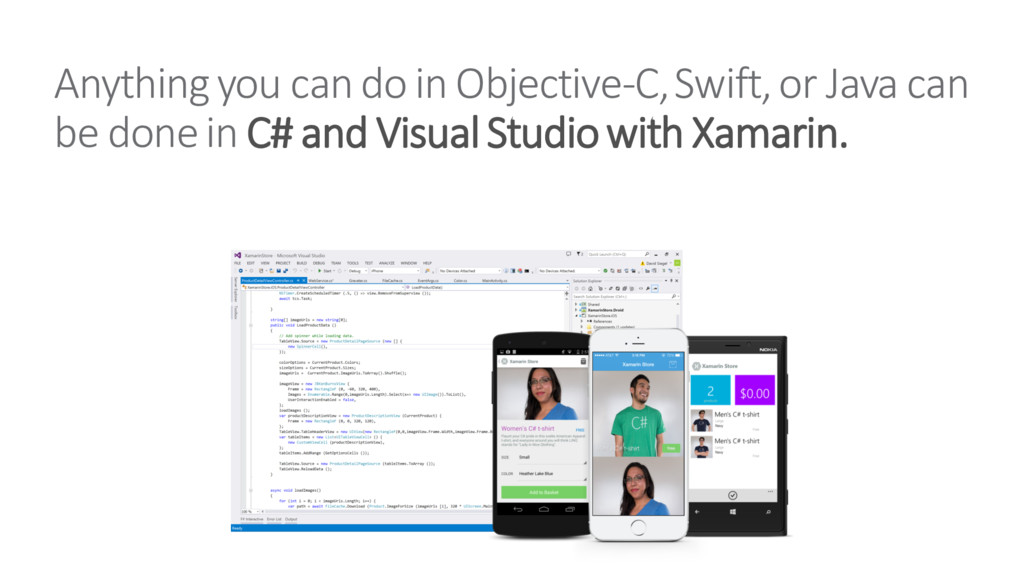
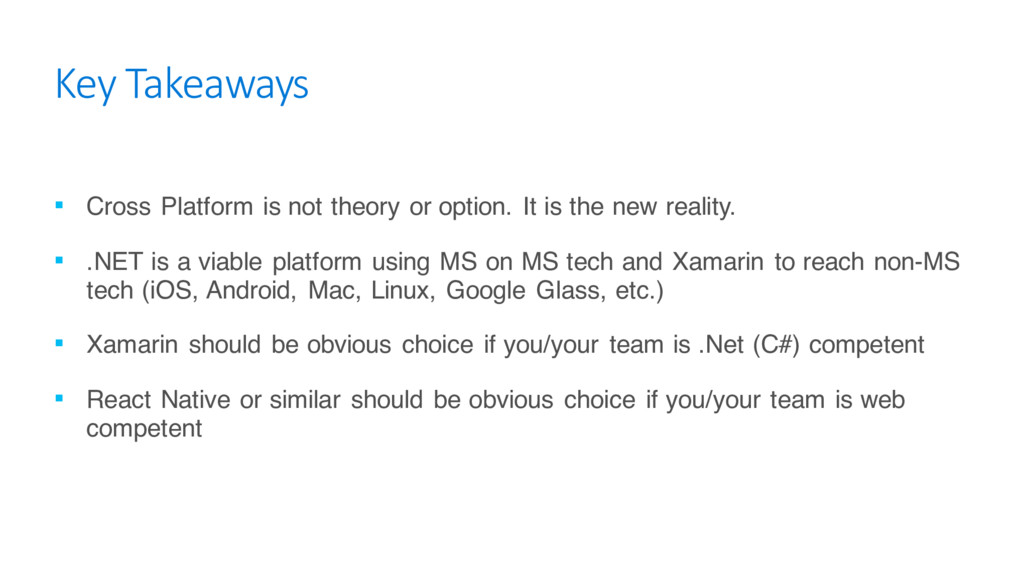
It is the new reality. ▪ .NET is a viable platform using MS on MS tech and Xamarin to reach non-MS tech (iOS, Android, Mac, Linux, Google Glass, etc.) ▪ Xamarin should be obvious choice if you/your team is .Net (C#) competent ▪ React Native or similar should be obvious choice if you/your team is web competent


 mistryhardik
 satomasahiro2005
 ivry_presentationmaterials
 onk
 shogo4131
 terapyon
 teamlab
 akitoshiga
 pfn
 occhi
 glaforge
 hiracky16
 daidaidai
 rmw
 watany
 sergeychernyshev
 tanoku
 schlessera
 garrettdimon
 akosma
 tamaranovitovic
 honzajavorek
 inesmontani
 tmiket
 marcduiker