Upgrade to Pro — share decks privately, control downloads, hide ads and more …

Moize Goulamhoussen Valuable Advice for Stock I...

Moize Goulamhoussen Valuable Advice for Stock Investment Beginners

While individuals looking to grow their wealth over time have numerous options to choose from, investing in stocks has emerged as a powerful avenue. For those who do it with a plan and stay the course for the long term, they have been able to transform their finances. As Moize Goulamhoussen – a Senior Portfolio Manager and Wealth Advisor with over 20 years of experience – knows, good planning and compound returns are some of the key factors that contribute to success.

Avatar for Moize Goulamhoussen

Moize Goulamhoussen

April 15, 2025

More Decks by Moize Goulamhoussen

Other Decks in Business

Transcript

  1. Valuable Advice for Stock Investment Beginners While individuals looking to

    grow their wealth over time have numerous options to choose from, investing in stocks has emerged as a powerful avenue. For those who do it with a plan and stay the course for the long term, they have been able to transform their finances. As Moize Goulamhoussen 3 a Senior Portfolio Manager and Wealth Advisor with over 20 years of experience 3 knows, good planning and compound returns are some of the key factors that contribute to success. Investors looking to start investing in stocks should consider the following aspects.
  2. What's the Goal? Specify Financial Objectives Failing to plan is

    planning to fail, as the old adage goes. For someone new to stocks, it is vital to begin by specifying their financial objectives. Examples of Goals Whether it's to save for a home, build wealth for retirement or fund a child's education, it helps to set clear investment goals. Age Considerations Younger investors tend to consider aspects such as accumulating wealth over the long term, while much older ones might prefer preserving capital or generating stable income for their retirement years. Clarity is Key The more concise the goal, the better.
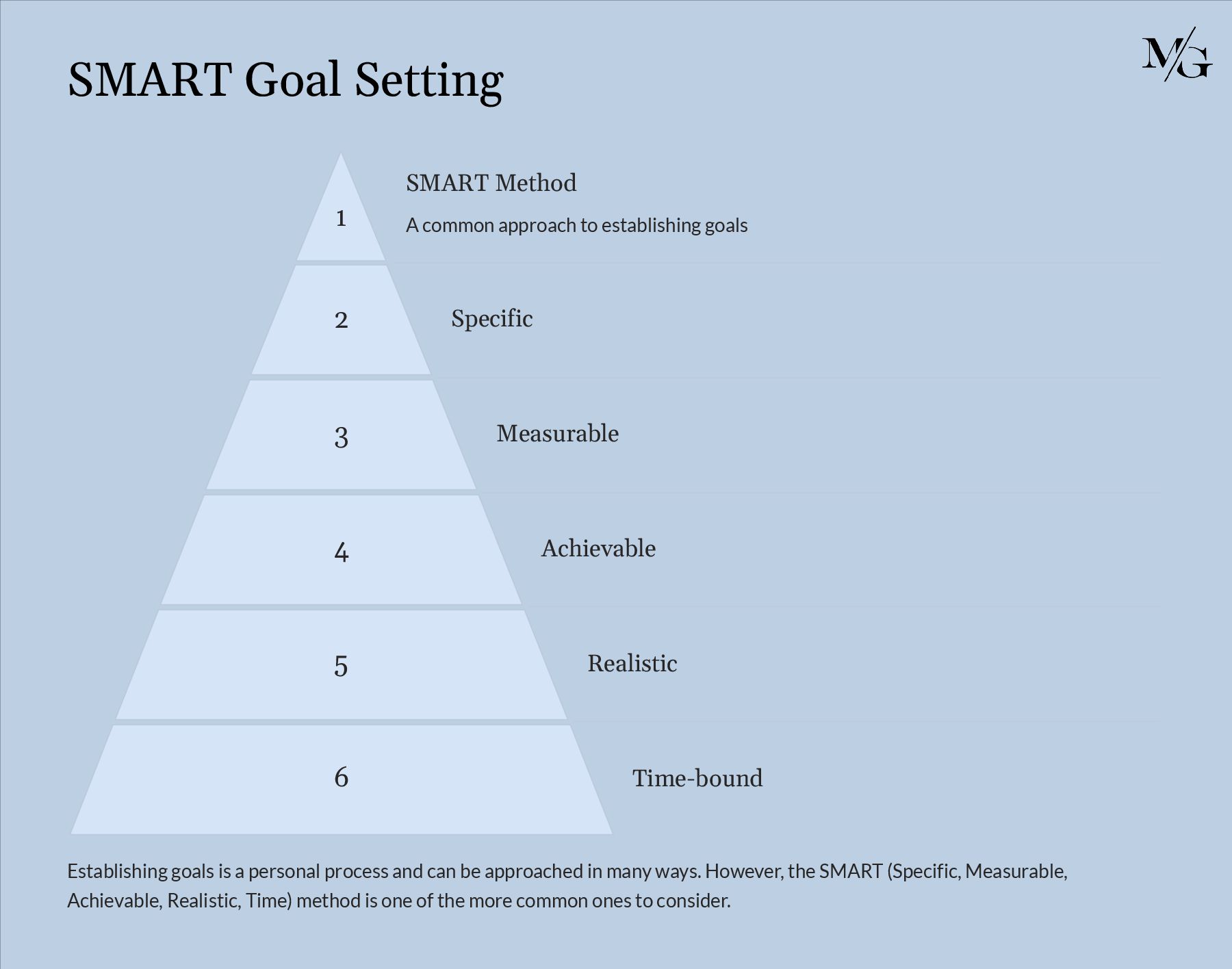
  3. SMART Goal Setting 1 SMART Method A common approach to

    establishing goals 2 Specific 3 Measurable 4 Achievable 5 Realistic 6 Time-bound Establishing goals is a personal process and can be approached in many ways. However, the SMART (Specific, Measurable, Achievable, Realistic, Time) method is one of the more common ones to consider.
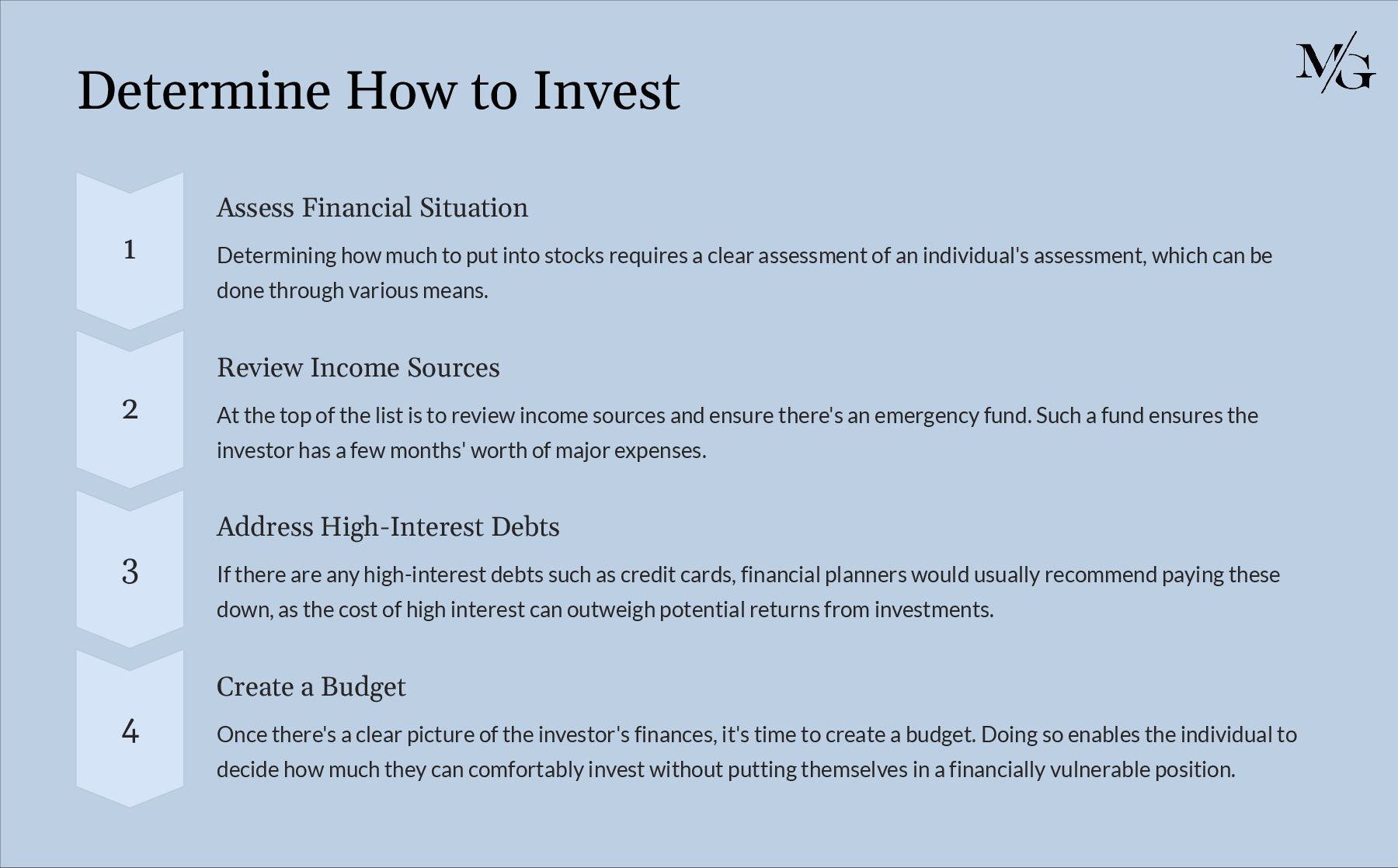
  4. Determine How to Invest 1 Assess Financial Situation Determining how

    much to put into stocks requires a clear assessment of an individual's assessment, which can be done through various means. 2 Review Income Sources At the top of the list is to review income sources and ensure there's an emergency fund. Such a fund ensures the investor has a few months' worth of major expenses. 3 Address High-Interest Debts If there are any high-interest debts such as credit cards, financial planners would usually recommend paying these down, as the cost of high interest can outweigh potential returns from investments. 4 Create a Budget Once there's a clear picture of the investor's finances, it's time to create a budget. Doing so enables the individual to decide how much they can comfortably invest without putting themselves in a financially vulnerable position.
  5. Identify Your Investing Style Passive Strategy Some people prefer a

    passive strategy, which typically involves less frequent trading and a focus on long-term growth. Active Strategy Others will want to be more hands-on and active in the process, which may involve more frequent trading and closer monitoring of market trends. Hand in hand with this assessment is identifying an investing style. The choice of style might evolve, but there has to be a starting point.
  6. Open An Account Brokerage Account Requirement With much of the

    preparation done, it's time to get into the actual investing. Dealing with stocks and shares requires a brokerage account, and there are likely multiple brokerage options available. Choose Wisely With these, an investor will want to choose one with the features and fees they prefer.
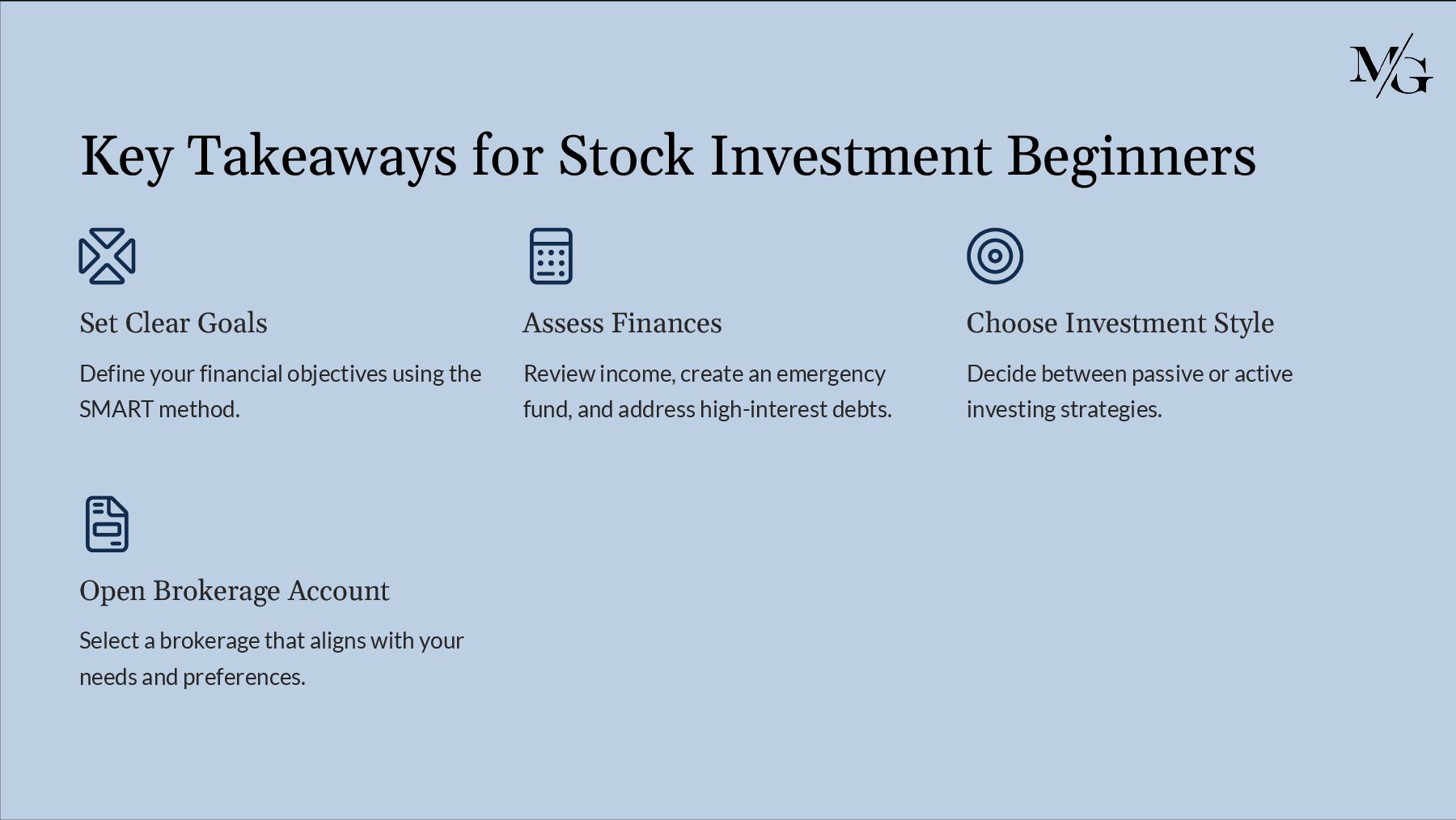
  7. Key Takeaways for Stock Investment Beginners Set Clear Goals Define

    your financial objectives using the SMART method. Assess Finances Review income, create an emergency fund, and address high-interest debts. Choose Investment Style Decide between passive or active investing strategies. Open Brokerage Account Select a brokerage that aligns with your needs and preferences.