Upgrade to Pro
— share decks privately, control downloads, hide ads and more …
Speaker Deck
Sign up for free
Menu
Search
Features
All features
Private URLs
Password Protection
Custom URLS
Scheduled publishing
Remove Branding
Restrict embedding
Deck Collections
Notes
Features
All features
Private URLs
Password Protection
Custom URLS
Scheduled publishing
Remove Branding
Restrict embedding
Deck Collections
Notes
Explore
Featured decks
Featured speakers
Programming
Technology
Storyboards
Explore
Featured decks
Featured speakers
Programming
Technology
Storyboards
Pricing
Search
Sign in
Sign up for free
Berlin 2013 - Riemann Workshop - Pierre-Yves Ri...
Search
Sponsored
·
Your Podcast. Everywhere. Effortlessly.
Share. Educate. Inspire. Entertain. You do you. We'll handle the rest.
→
Monitorama
September 20, 2013
740
2
Share
Embed
Copy iframe code
Copy JS code
Copy link
Start on current slide
Berlin 2013 - Riemann Workshop - Pierre-Yves Ritschard
Monitorama
September 20, 2013
More Decks by Monitorama
See All by Monitorama
Monitorama PDX 2017 - Ian Bennett
monitorama
1
650
PDX 2017 - Pedro Andrade
monitorama
0
850
PDX 2017 - Roy Rapoport
monitorama
4
1k
PDX 2017 - Julia Evans
monitorama
0
530
Berlin 2013 - Session - Brad Lhotsky
monitorama
5
770
Berlin 2013 - Session - Alex Petrov
monitorama
6
740
Berlin 2013 - Session - Jeff Weinstein
monitorama
2
680
Berlin 2013 - Session - Oliver Hankeln
monitorama
1
600
Berlin 2013 - Session - David Goodlad
monitorama
0
530
Featured
See All Featured
The Web Performance Landscape in 2024 [PerfNow 2024]
tammyeverts
12
1.3k
Applied NLP in the Age of Generative AI
inesmontani
PRO
4
2.5k
Java REST API Framework Comparison - PWX 2021
mraible
34
9.8k
Writing Fast Ruby
sferik
630
63k
Fantastic passwords and where to find them - at NoRuKo
philnash
53
4k
How to Align SEO within the Product Triangle To Get Buy-In & Support - #RIMC
aleyda
2
1.8k
The Limits of Empathy - UXLibs8
cassininazir
2
720
Git: the NoSQL Database
bkeepers
PRO
433
67k
How People are Using Generative and Agentic AI to Supercharge Their Products, Projects, Services and Value Streams Today
helenjbeal
2
360
How to Get Subject Matter Experts Bought In and Actively Contributing to SEO & PR Initiatives.
livdayseo
0
220
Future Trends and Review - Lecture 12 - Web Technologies (1019888BNR)
signer
PRO
0
3.8k
個人開発の失敗を避けるイケてる考え方 / tips for indie hackers
panda_program
123
22k
Transcript
@pyr
https://github.com/pyr
• Riemann concepts • In-app events • System metrics •
Just enough clojure • Common use cases Agenda
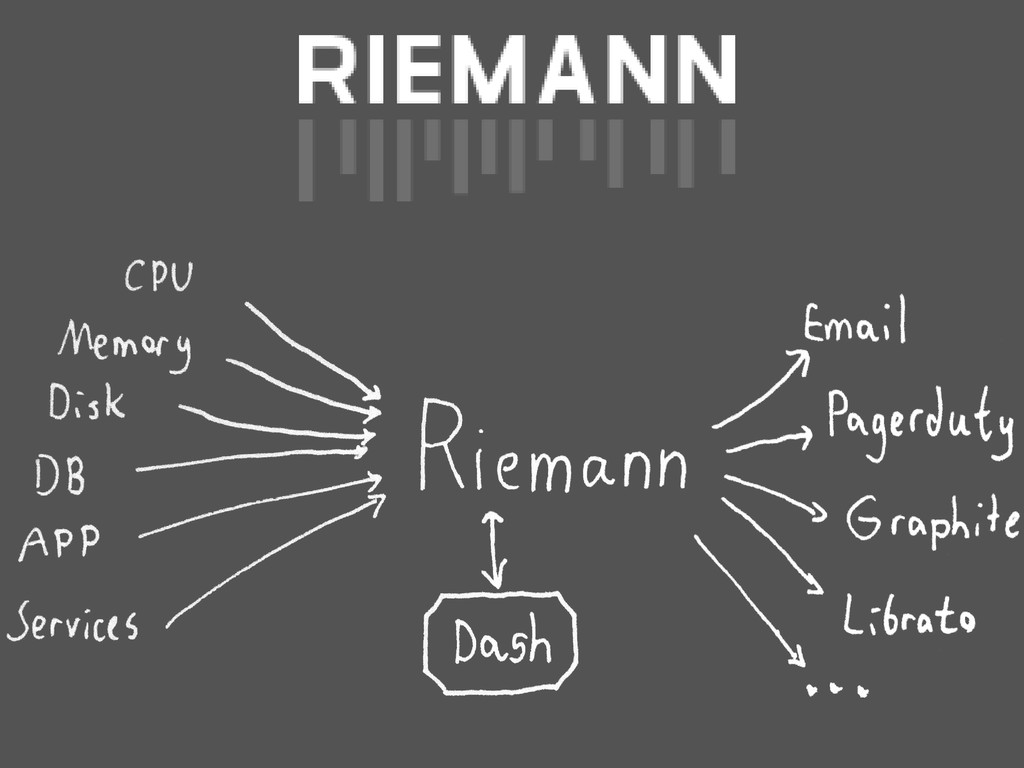
Event stream processor • Process • Analyze • React
None
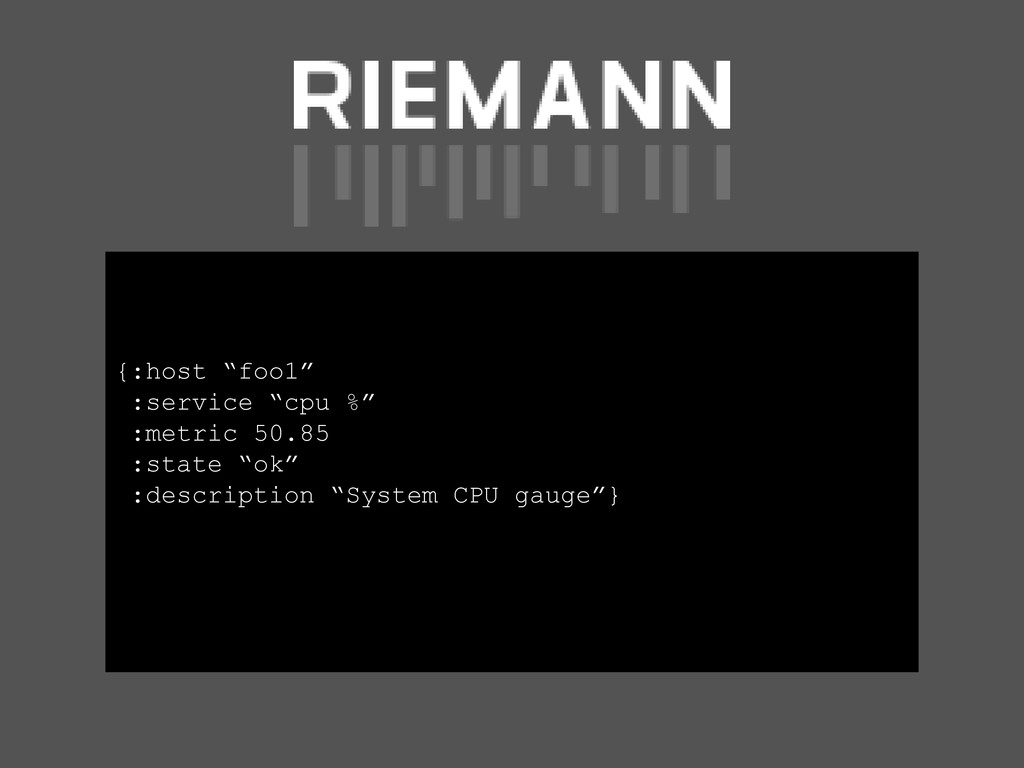
{:host “foo1” :service “cpu %” :metric 50.85 :state “ok” :description
“System CPU gauge”}
Where do events come from • Your app • Collectd
• Riemann-health • Logstash
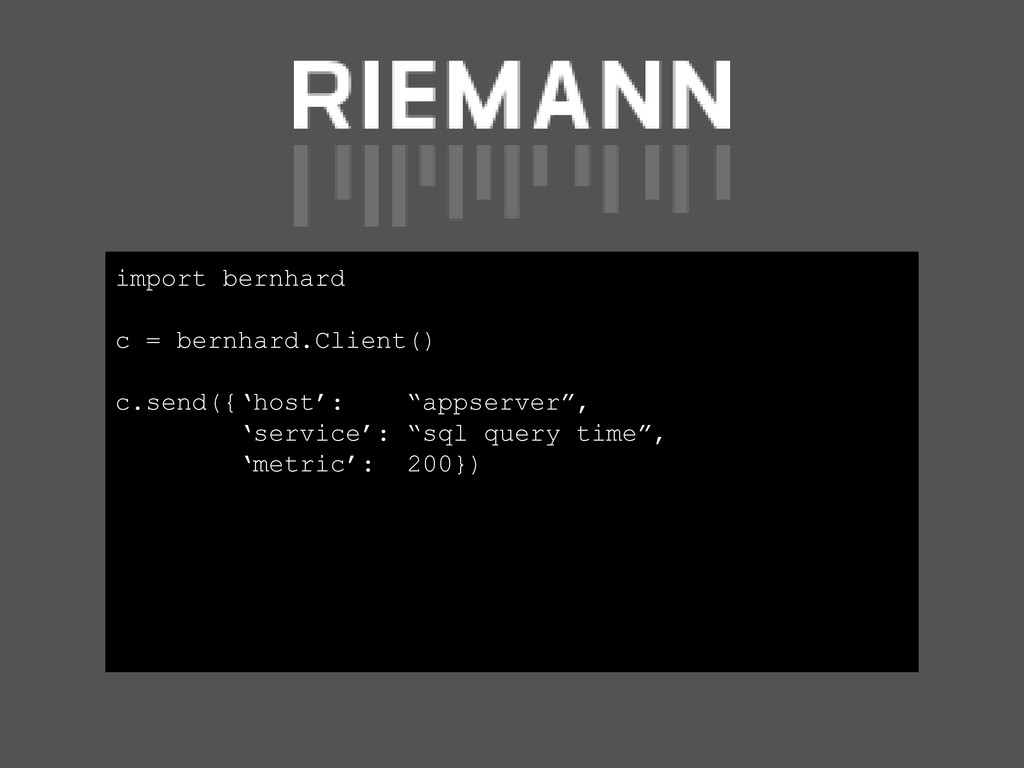
import bernhard c = bernhard.Client() c.send({‘host’: “appserver”, ‘service’: “sql query
time”, ‘metric’: 200})
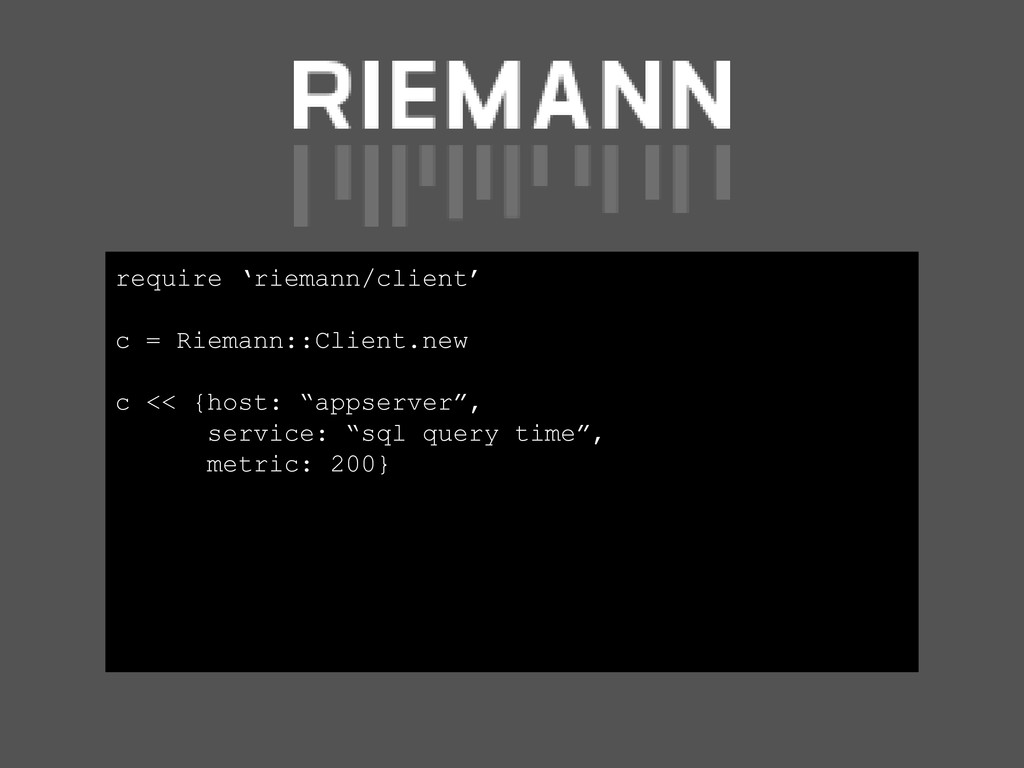
require ‘riemann/client’ c = Riemann::Client.new c << {host: “appserver”, service:
“sql query time”, metric: 200}
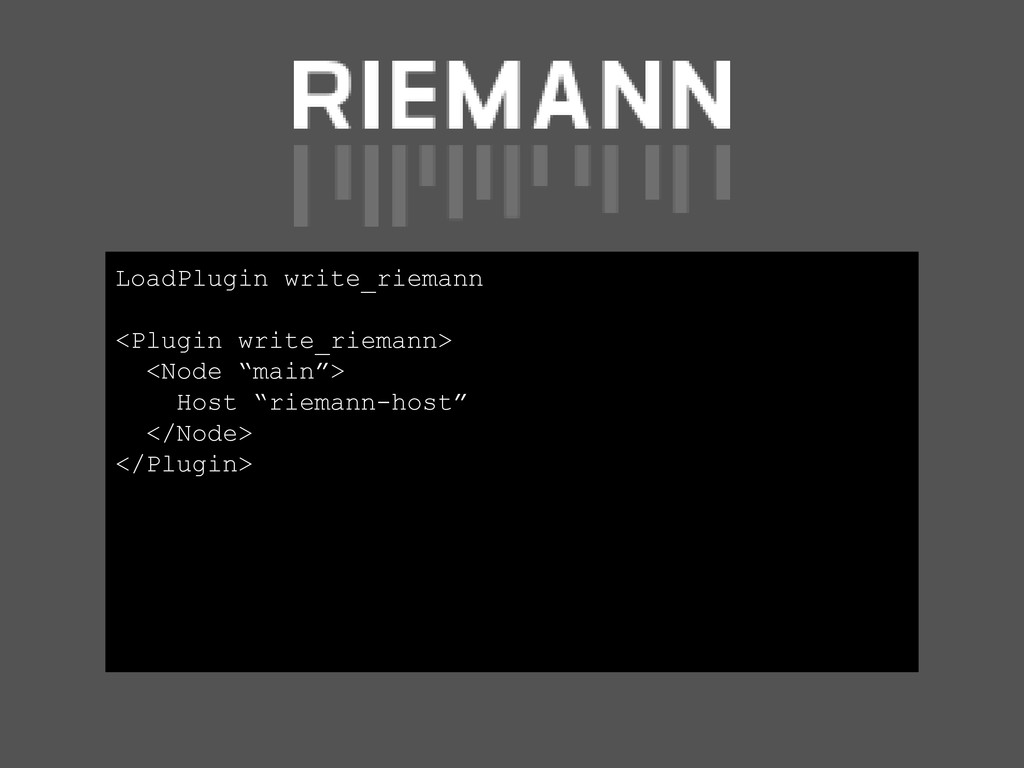
LoadPlugin write_riemann <Plugin write_riemann> <Node “main”> Host “riemann-host” </Node> </Plugin>
Event lifecycle • Enters riemann • Follows streams • Optionally
indexed
Looking at events • Queries • Dashboard
require ‘riemann/client’ c = Riemann::Client.new c[‘true’] c[‘service = “cpu”’] c[‘tagged
“web-servers”’]
Configuration API Features • Percentiles • EWMA • Fixed /
Moving event windows • Event coalescing • Many more
Configuration • Configuration is code • Code is in clojure
Clojure
Clojure • Functional Lisp • Immutable • Data first, not
objects first • Lazy • Concurrent
Clojure (defn hello [name] (println “hello” name) (def a-map {:some-key
“some value”}) (def an-array [0 1 2 :foo]) (def a-set #{:a :b :c}) (def a-pattern #”^(.*)[ \t]+=(.*)[ \t]+$”) (def inline-fn #(+ 3 %)) (def anon-fn (fn [a b] (+ a b)))
Clojure (defn greeter [greeting] (fn [name] (println greeting “, “
name))) (let [german-greeting (greeter “Hallo”)] (german-greeting “Rich”))
Clojure (let [m {:foo 0 :bar 1} a [3 2
1 0]] (conj a 4) ;; => (4 3 2 1 0) (assoc m :baz 2)) ;; => {:foo 0 :bar 1 :baz 2}
Clojure (ns my-sql-query-ns (:require [clojure.data.jdbc :as jdbc] [clojure.data.jdbc.sql :as sql]))
(jdbc/query mysql-db (sql/select * :users)) ;;=> ({:login “root” :uid 0} {:login :daemon :uid 1})
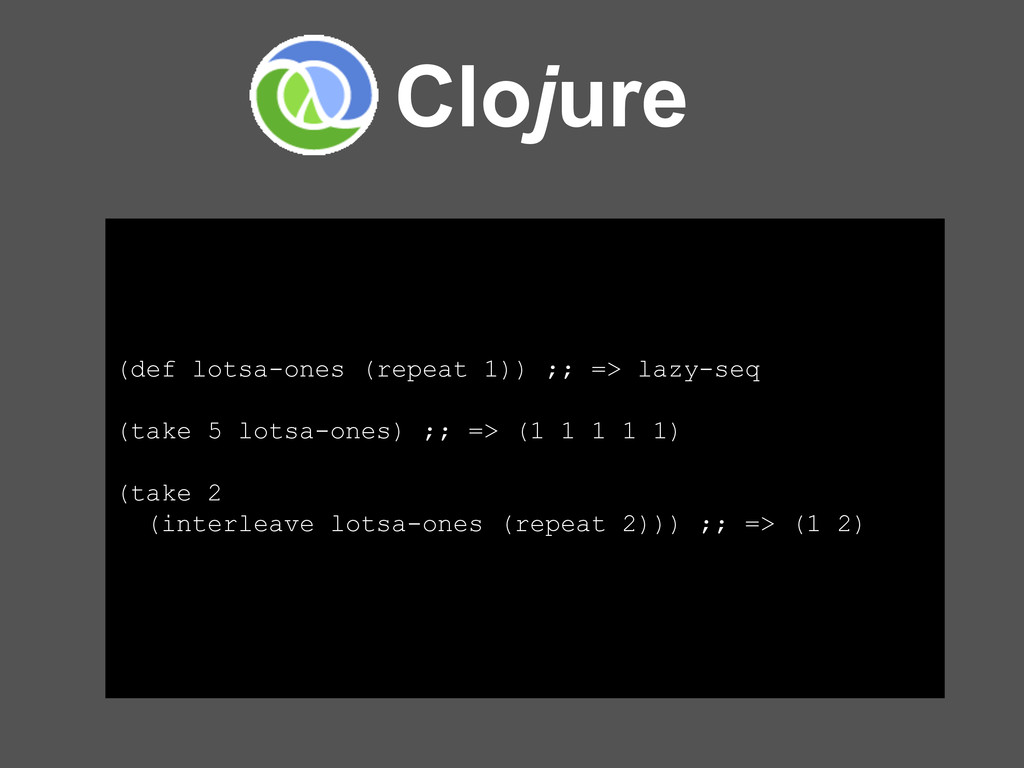
Clojure (def lotsa-ones (repeat 1)) ;; => lazy-seq (take 5
lotsa-ones) ;; => (1 1 1 1 1) (take 2 (interleave lotsa-ones (repeat 2))) ;; => (1 2)
Clojure (def requests (atom 0)) (swap! requests inc) @request ;;
=> 1 (def user1 (ref 10)) (def user2 (ref 50)) (dosync (alter user1 + 10) (alter user2 - 10)) @user1 ;; => 20 @user2 ;; => 40
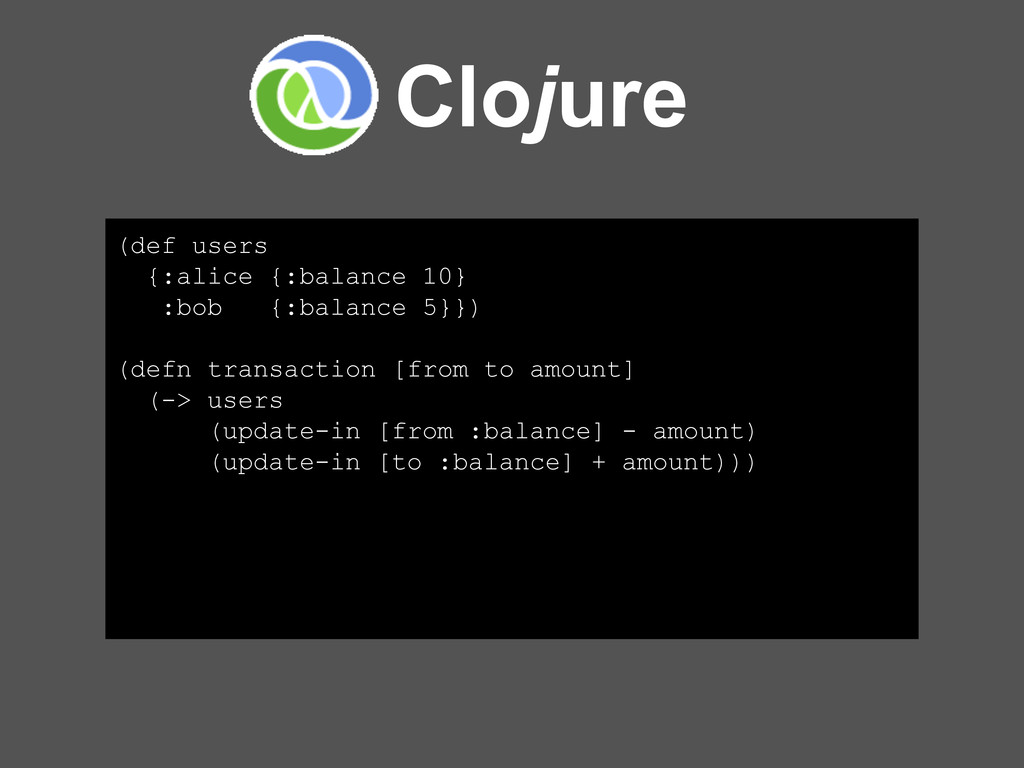
Clojure (def users {:alice {:balance 10} :bob {:balance 5}}) (defn
transaction [from to amount] (-> users (update-in [from :balance] - amount) (update-in [to :balance] + amount)))
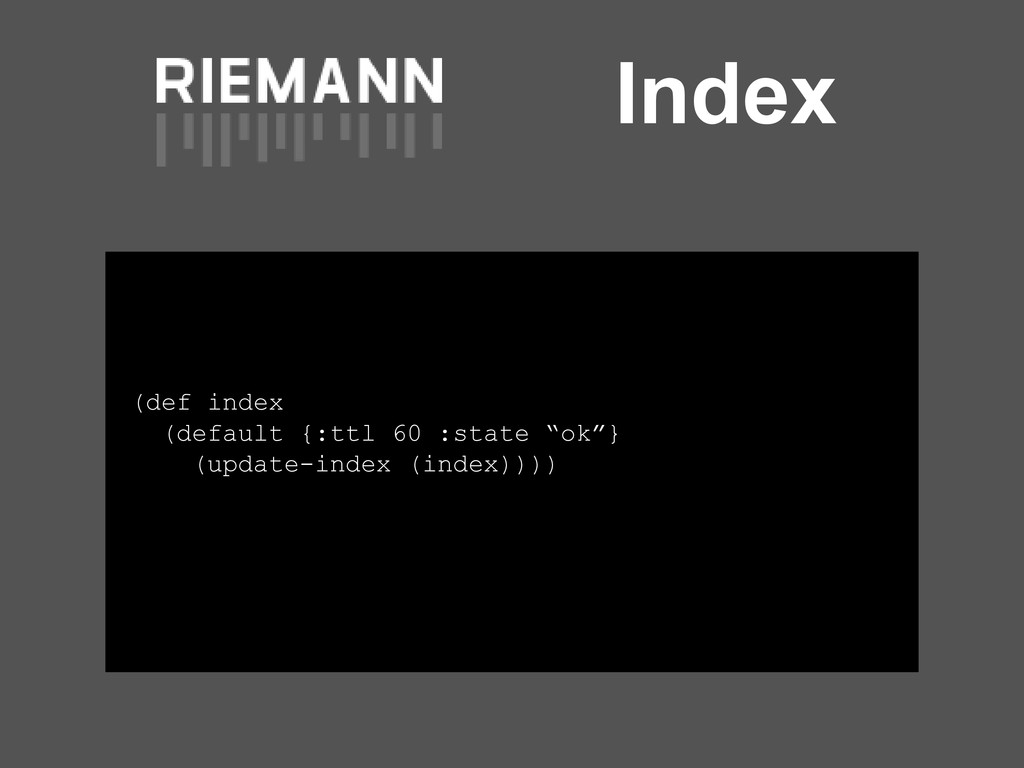
Index (def index (default {:ttl 60 :state “ok”} (update-index (index))))
Streams (let [index (default {:ttl 60 :state “ok”} (update-index (index)))]
(streams index))
Streams (let [index (default {:ttl 60 :state “ok”} (update-index (index)))
email (mailer {:from “riemann@production”})] (streams index (where (state “critical”) email) ))
Demo!


 monitorama
 tammyeverts
 inesmontani
 mraible
 sferik
 philnash
 aleyda
 cassininazir
 bkeepers
 helenjbeal
 livdayseo
 signer
 panda_program







![Clojure (let [m {:foo 0 :bar 1} a [3 2](https://files.speakerdeck.com/presentations/dbd5d41007b101317dbf6229406390f2/slide_19.jpg)