Upgrade to Pro — share decks privately, control downloads, hide ads and more …

Run ML as Cloud Function

Sponsored · Ship Features Fearlessly Turn features on and off without deploys. Used by thousands of Ruby developers. →

Run ML as Cloud Function

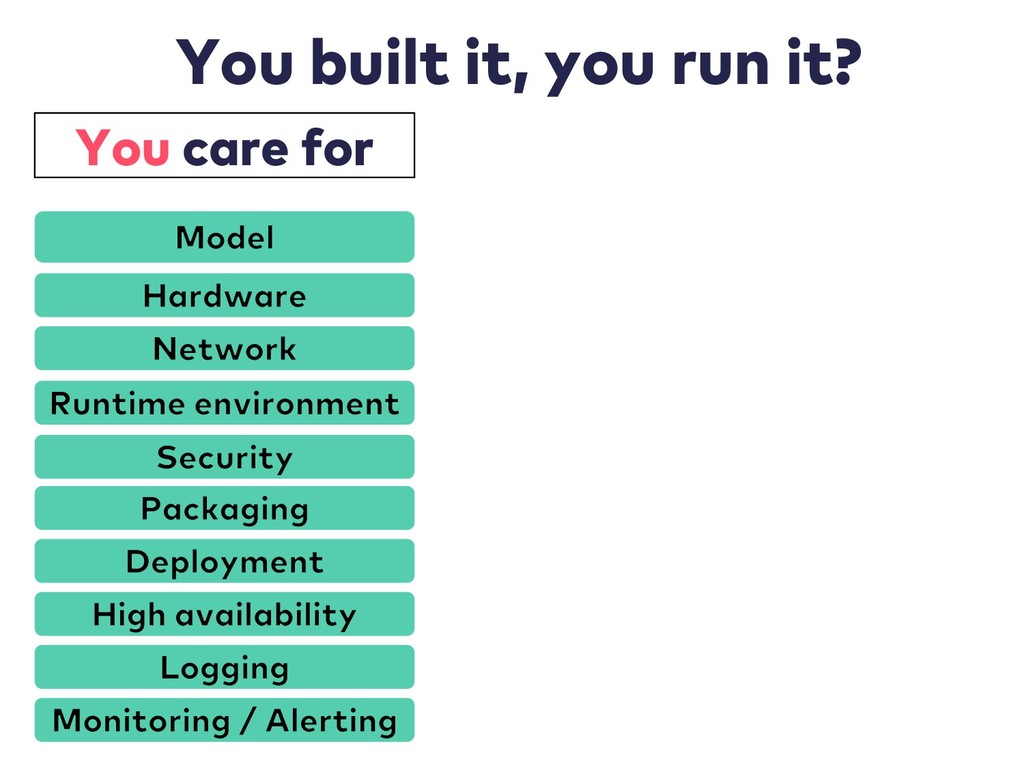
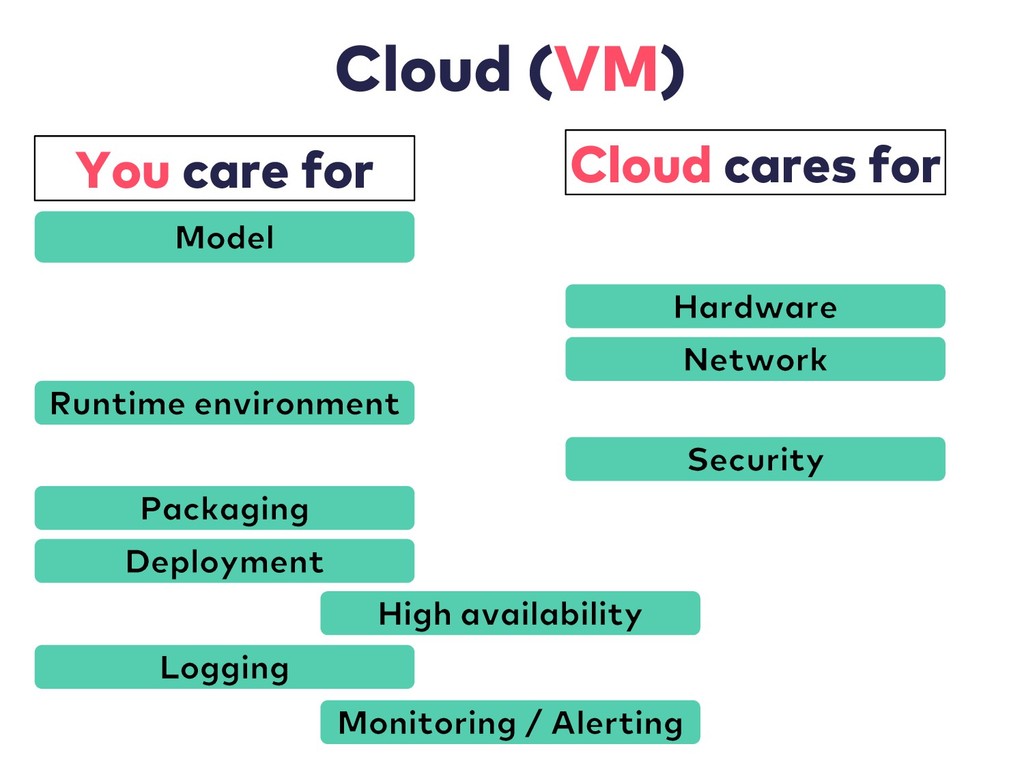
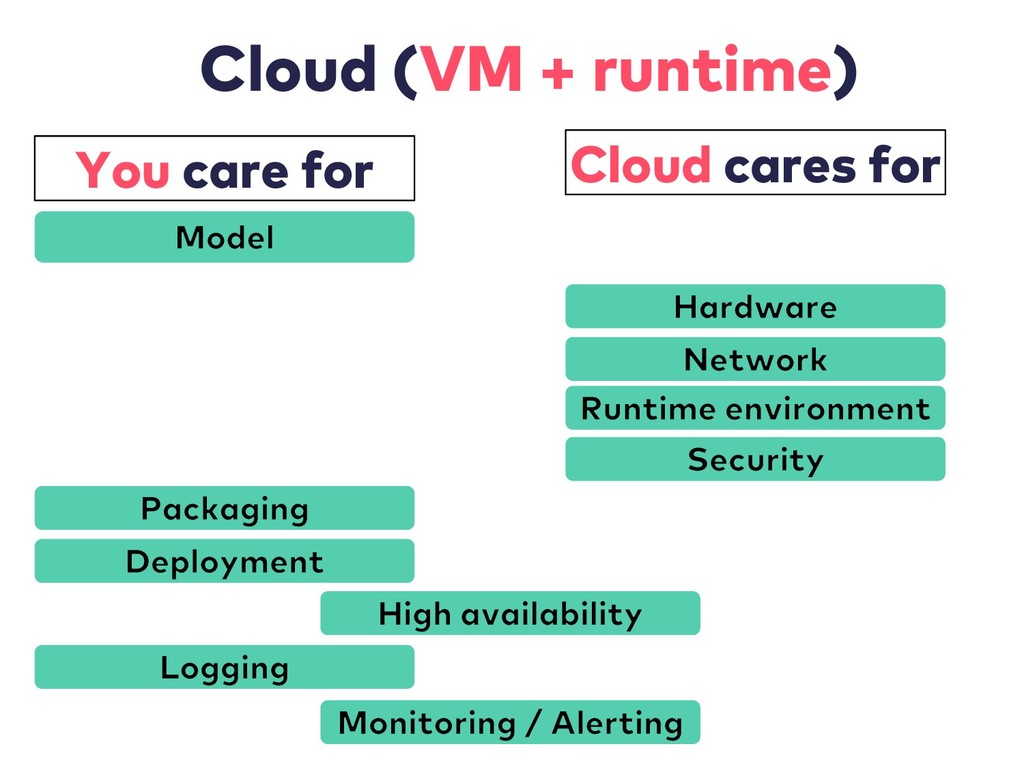
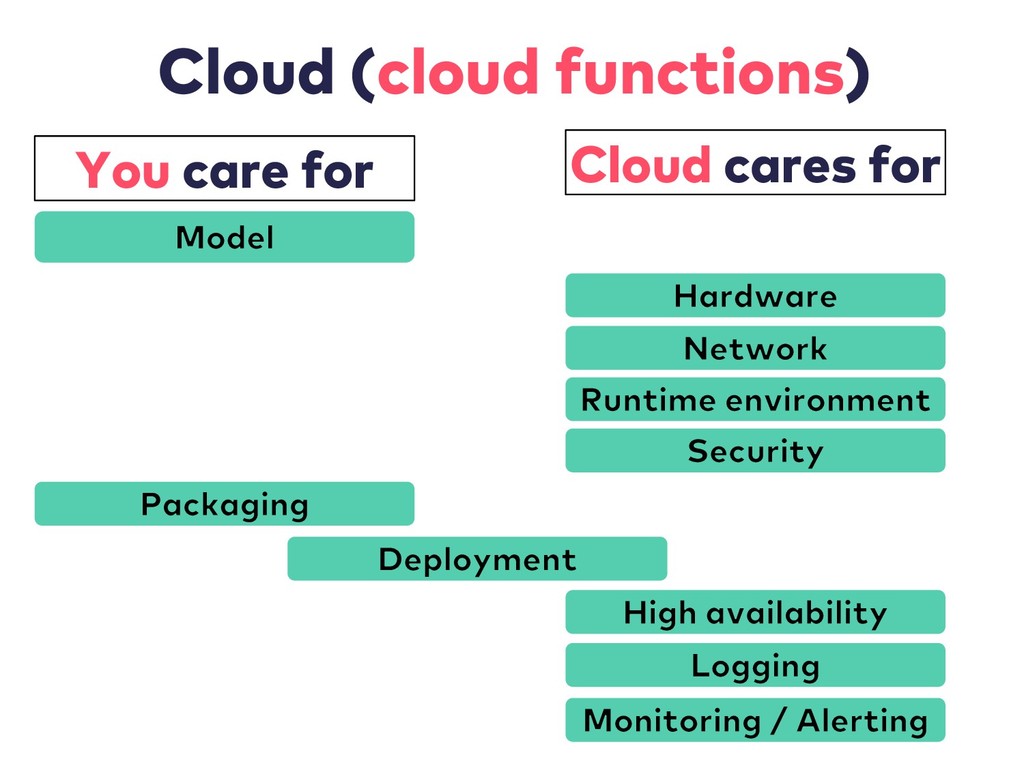
When deploying your model into production, you have to care about configuring and maintaining the runtime environment, scaling, monitoring and more – all tasks, which are more related to DevOps than to ML. In some contexts, you can achieve your goals in a much simpler way by establishing a "serverless" approach. We’ll take a look at the cloud services "AWS Lambda", "Google Cloud Functions", and "Azure Functions" and show how they enable running ML inference.

Avatar for Michael Perlin

Michael Perlin

March 04, 2019

Other Decks in Technology

Transcript

  1. www.innoq.com SERVICES Strategy & technology consulting Digital business models Software

    architecture & development Digital platforms & infrastructures Knowledge transfer, coaching & trainings Big data & machine learning FACTS ~130 employees Privately owned Vendor-independent OFFICES Monheim Berlin Offenbach Munich Hamburg Zurich CLIENTS Finance Telecommunications Logistics E-Commerce Fortune 500 SMBs Startups We are sponsoring today ! " # $ %
  2. • consultant at INNOQ • 15 years sortware development /

    architecture • 2 years infrastructure / cloud • 1 year machine learning / deep learning !
  3. Agenda • Problem we‘re solving • The serverless solution •

    Limitations, problems and how to deal with them • Alternatives on the cloud • Takeaways and best practices
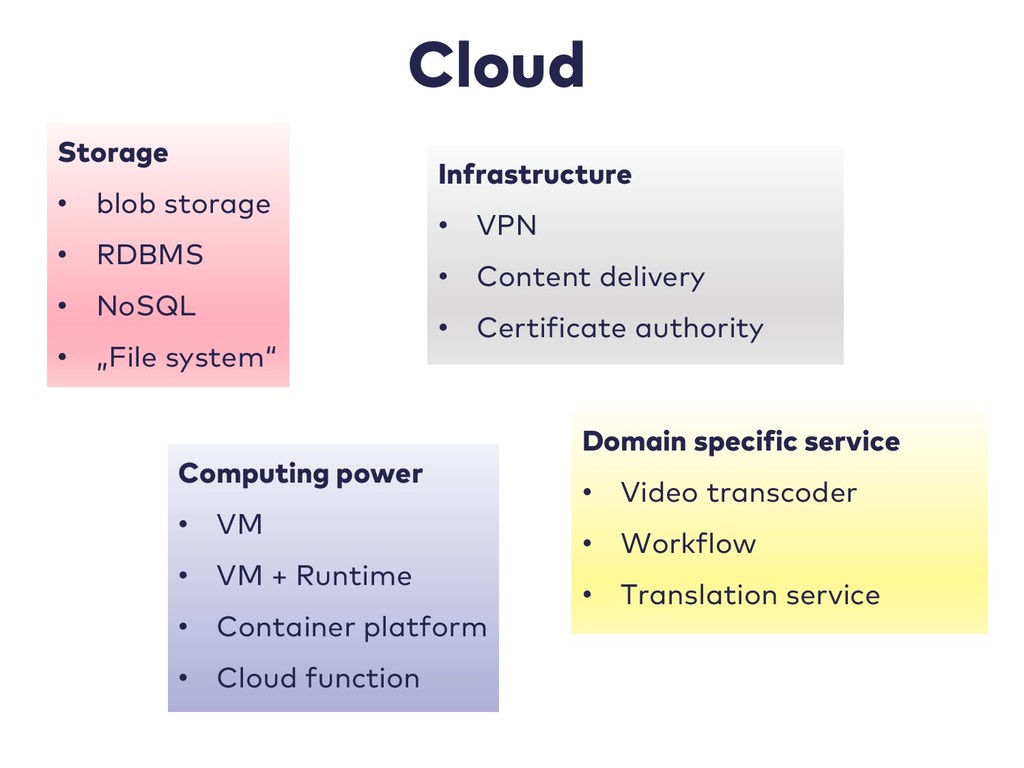
  4. Cloud Storage • blob storage • RDBMS • NoSQL •

    „File system“ Computing power • VM • VM + Runtime • Container platform • Cloud function Infrastructure • VPN • Content delivery • Certificate authority Domain specific service • Video transcoder • Workflow • Translation service
  5. Cloud functions • highly pre-installed and pre-configured environments where you

    just put you code, and they care for the rest • start on demand, fulfil the task, get terminated
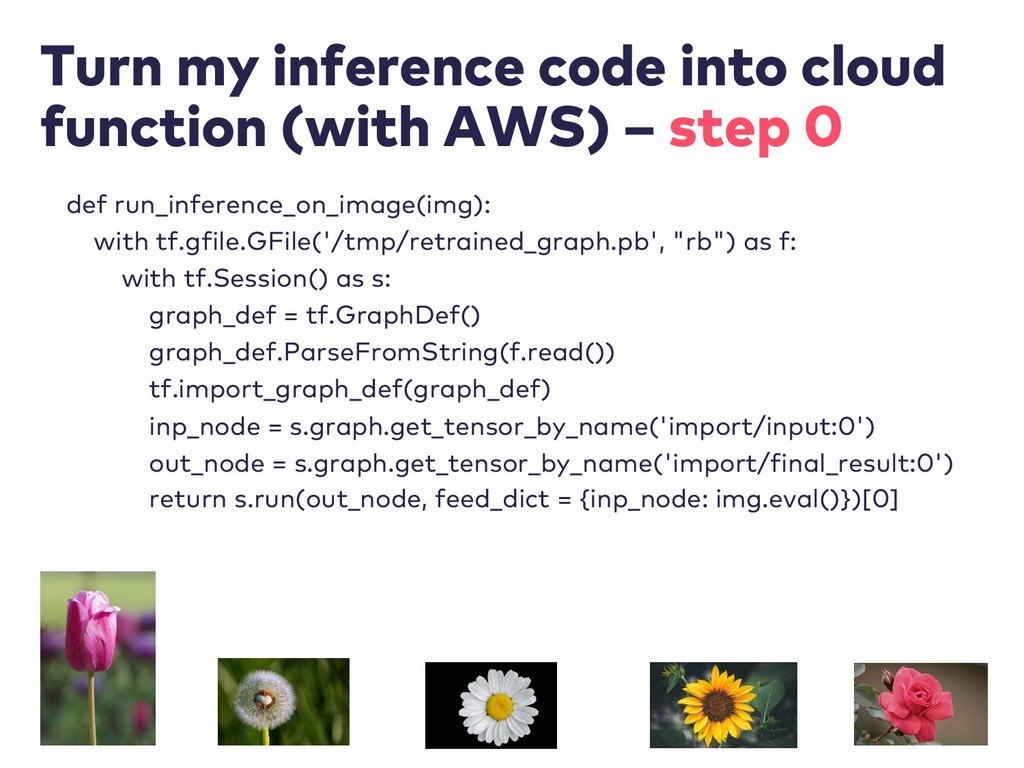
  6. Turn my inference code into cloud function (with AWS) –

    step 0 def run_inference_on_image(img): with tf.gfile.GFile('/tmp/retrained_graph.pb', "rb") as f: with tf.Session() as s: graph_def = tf.GraphDef() graph_def.ParseFromString(f.read()) tf.import_graph_def(graph_def) inp_node = s.graph.get_tensor_by_name('import/input:0') out_node = s.graph.get_tensor_by_name('import/final_result:0') return s.run(out_node, feed_dict = {inp_node: img.eval()})[0]
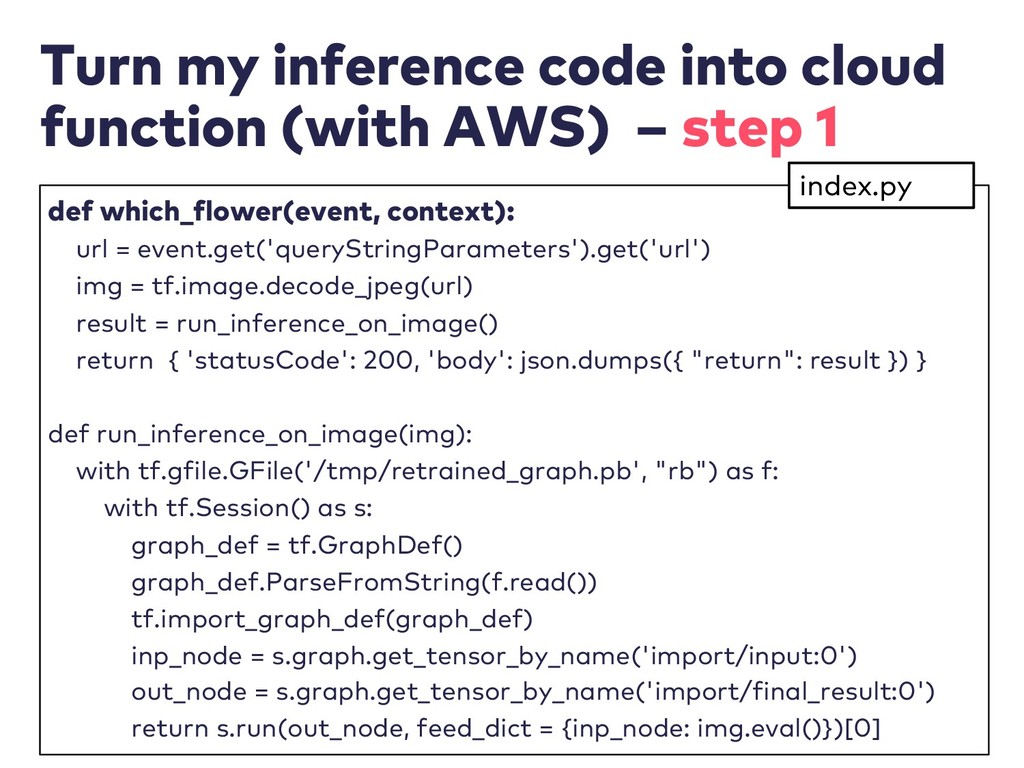
  7. def which_flower(event, context): url = event.get('queryStringParameters').get('url') img = tf.image.decode_jpeg(url) result

    = run_inference_on_image() return { 'statusCode': 200, 'body': json.dumps({ "return": result }) } def run_inference_on_image(img): with tf.gfile.GFile('/tmp/retrained_graph.pb', "rb") as f: with tf.Session() as s: graph_def = tf.GraphDef() graph_def.ParseFromString(f.read()) tf.import_graph_def(graph_def) inp_node = s.graph.get_tensor_by_name('import/input:0') out_node = s.graph.get_tensor_by_name('import/final_result:0') return s.run(out_node, feed_dict = {inp_node: img.eval()})[0] index.py Turn my inference code into cloud function (with AWS) – step 1
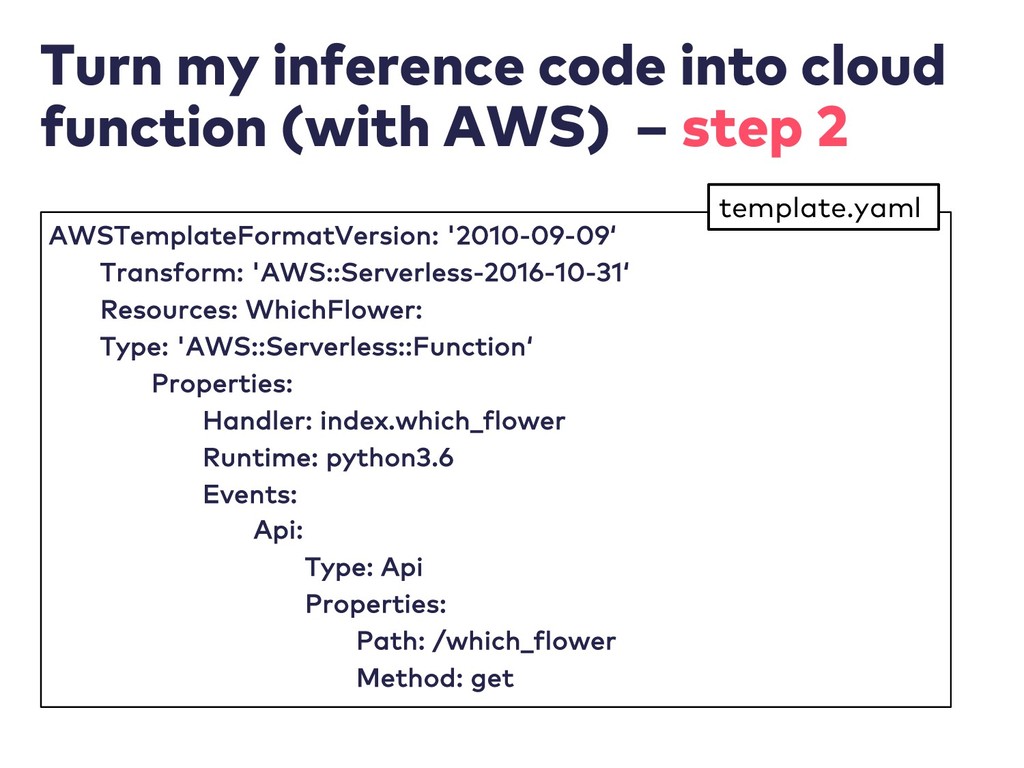
  8. AWSTemplateFormatVersion: '2010-09-09‘ Transform: 'AWS::Serverless-2016-10-31‘ Resources: WhichFlower: Type: 'AWS::Serverless::Function‘ Properties: Handler:

    index.which_flower Runtime: python3.6 Events: Api: Type: Api Properties: Path: /which_flower Method: get template.yaml Turn my inference code into cloud function (with AWS) – step 2
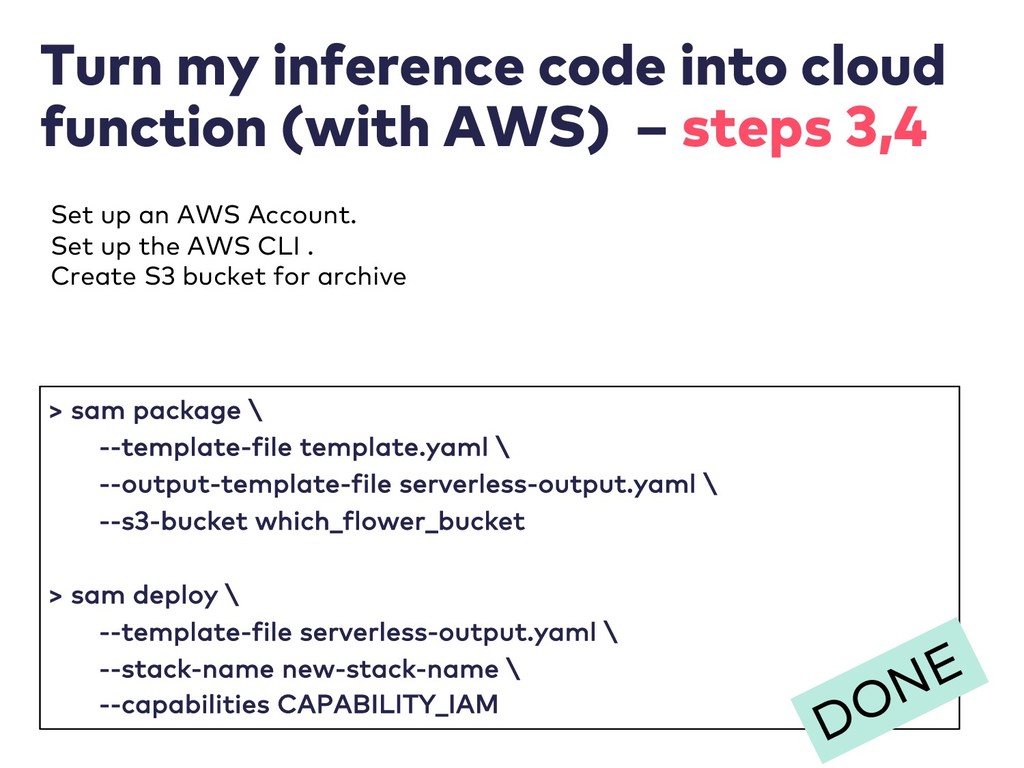
  9. > sam package \ --template-file template.yaml \ --output-template-file serverless-output.yaml \

    --s3-bucket which_flower_bucket > sam deploy \ --template-file serverless-output.yaml \ --stack-name new-stack-name \ --capabilities CAPABILITY_IAM Turn my inference code into cloud function (with AWS) – steps 3,4 Set up an AWS Account. Set up the AWS CLI . Create S3 bucket for archive DONE
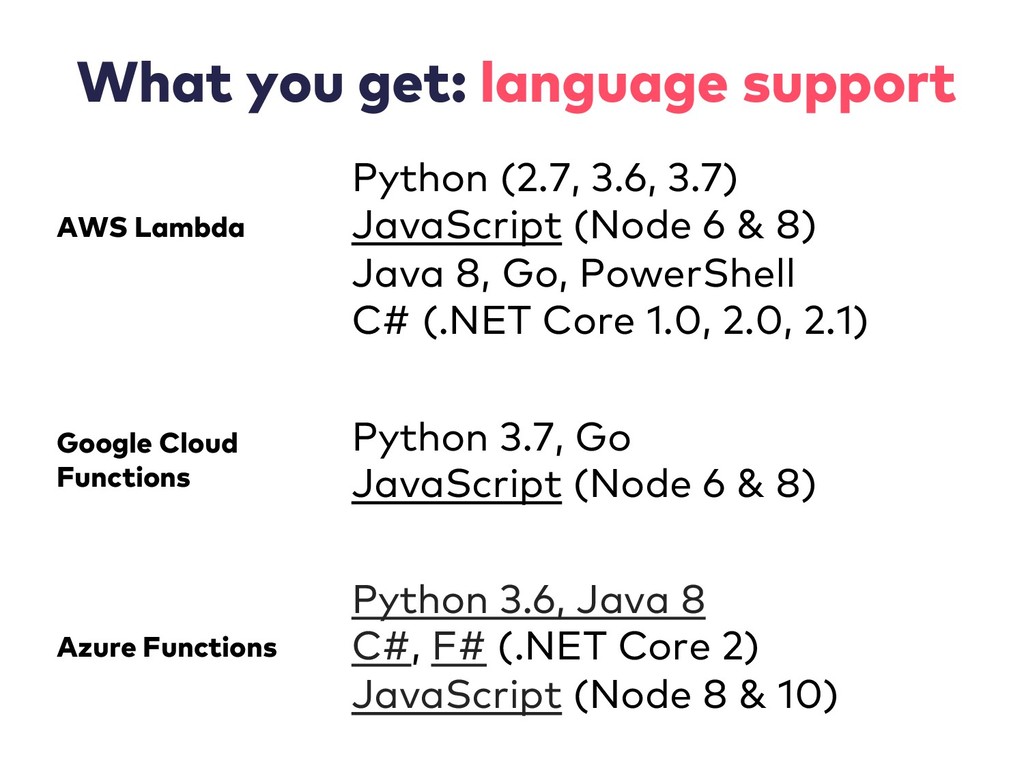
  10. What you get: language support AWS Lambda Google Cloud Functions

    Azure Functions Python 3.6, Java 8 C#, F# (.NET Core 2) JavaScript (Node 8 & 10) Python 3.7, Go JavaScript (Node 6 & 8) Python (2.7, 3.6, 3.7) JavaScript (Node 6 & 8) Java 8, Go, PowerShell C# (.NET Core 1.0, 2.0, 2.1)
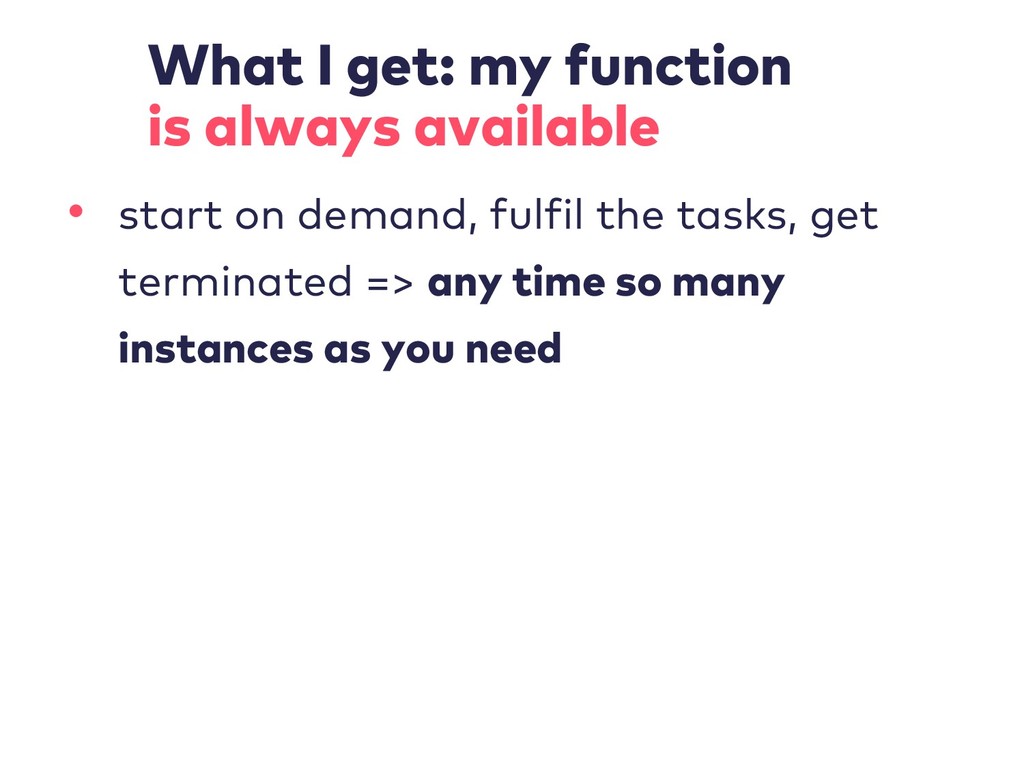
  11. What I get: my function is always available • start

    on demand, fulfil the tasks, get terminated => any time so many instances as you need
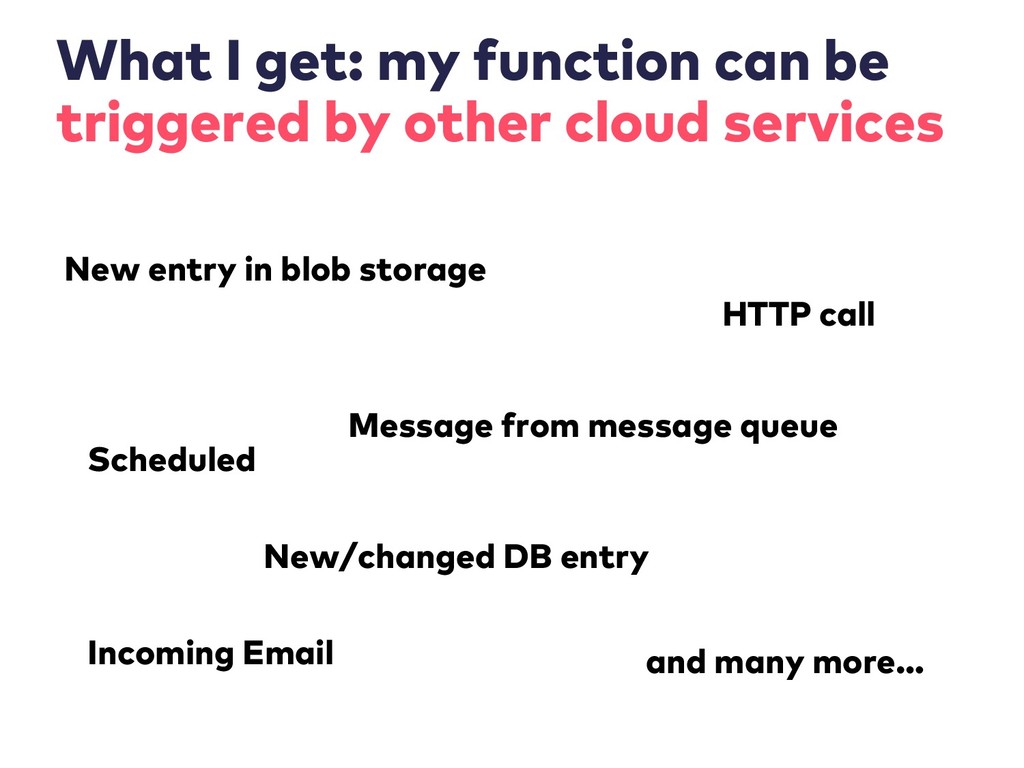
  12. What I get: my function can be triggered by other

    cloud services HTTP call Message from message queue Scheduled New/changed DB entry New entry in blob storage Incoming Email and many more…
  13. Cloud functions as microservices Microservice architectural style is an approach

    to developing a single application as a suite of small services, each running in its own process and communicating with lightweight mechanisms, often an HTTP resource API. These services are built around business capabilities and independently deployable by fully automated deployment machinery. There is a bare minimum of centralized management of these services, which may be written in different programming languages and use different data storage technologies. (Martin Fowler, James Levis)
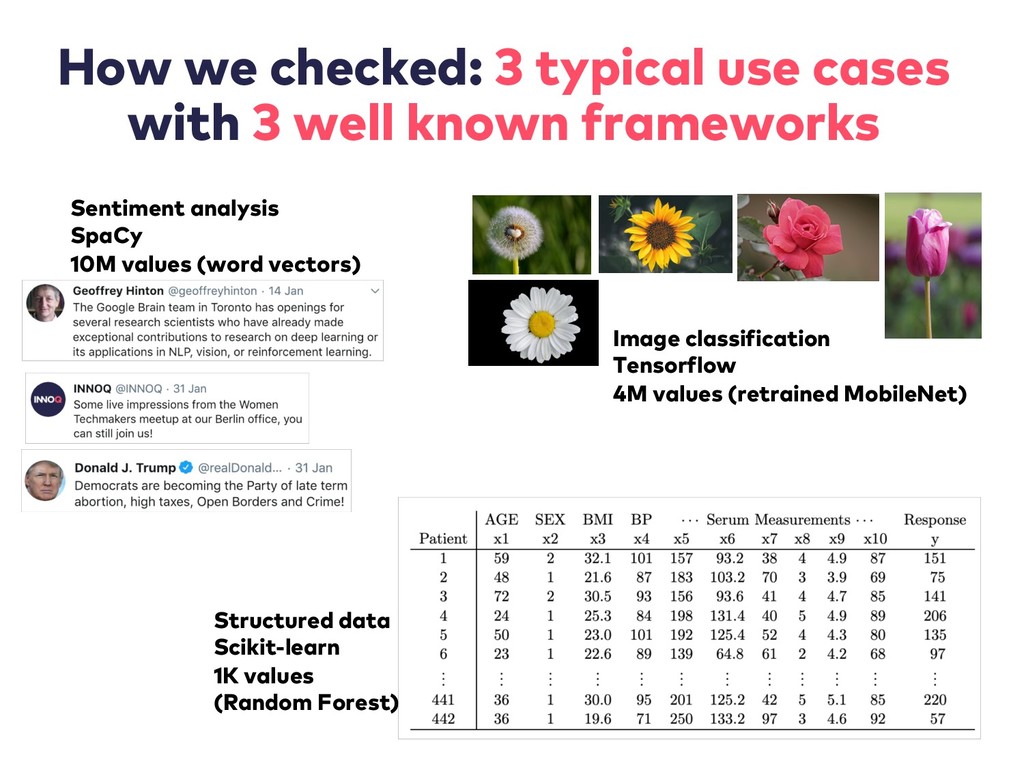
  14. How we checked: 3 typical use cases with 3 well

    known frameworks Sentiment analysis SpaCy 10M values (word vectors) Image classification Tensorflow 4M values (retrained MobileNet) Structured data Scikit-learn 1K values (Random Forest)
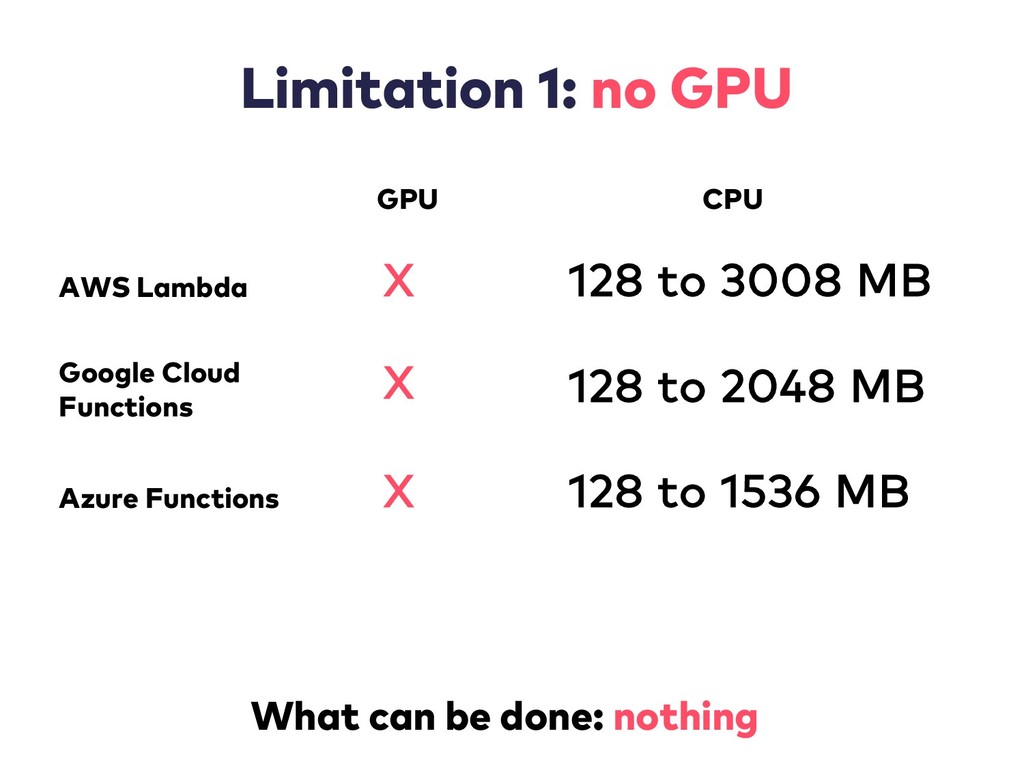
  15. Limitation 1: no GPU AWS Lambda Google Cloud Functions Azure

    Functions GPU CPU X X X 128 to 3008 MB 128 to 2048 MB 128 to 1536 MB What can be done: nothing
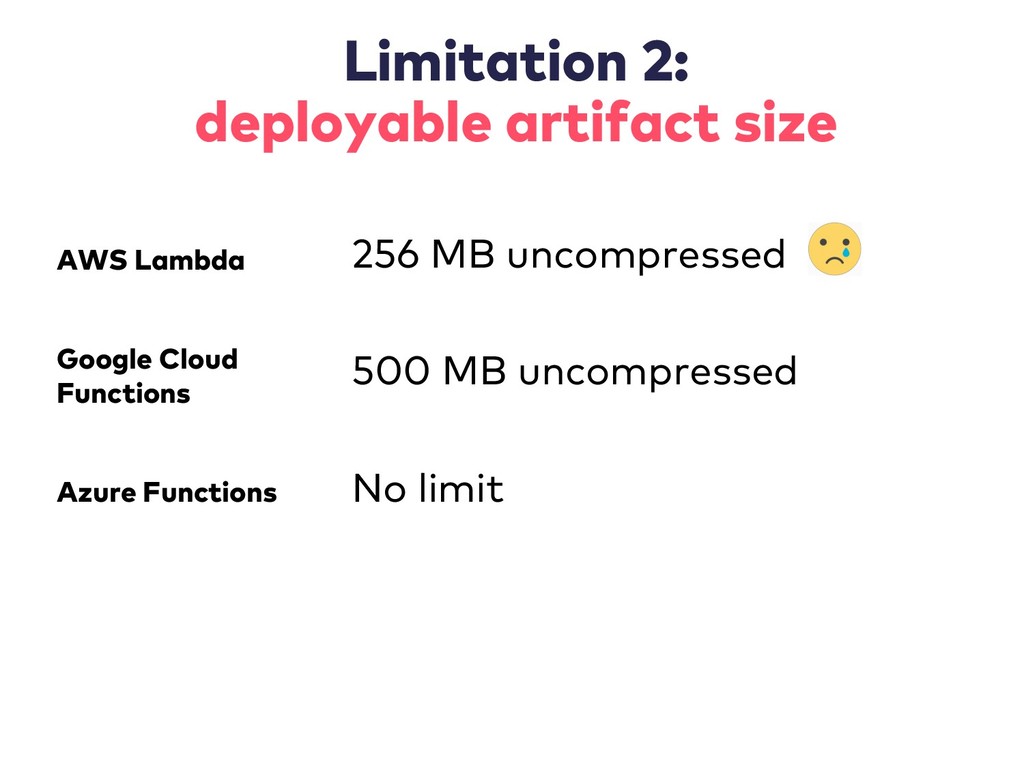
  16. Limitation 2: deployable artifact size AWS Lambda Google Cloud Functions

    Azure Functions 256 MB uncompressed 500 MB uncompressed No limit
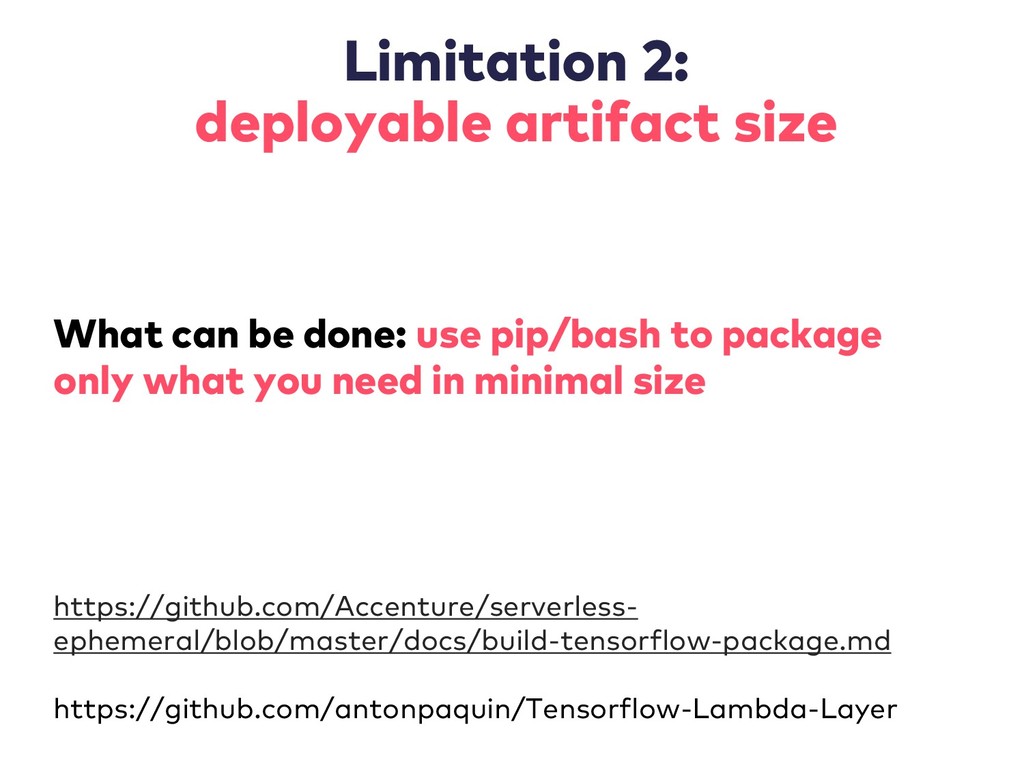
  17. Limitation 2: deployable artifact size What can be done: use

    pip/bash to package only what you need in minimal size https://github.com/Accenture/serverless- ephemeral/blob/master/docs/build-tensorflow-package.md https://github.com/antonpaquin/Tensorflow-Lambda-Layer
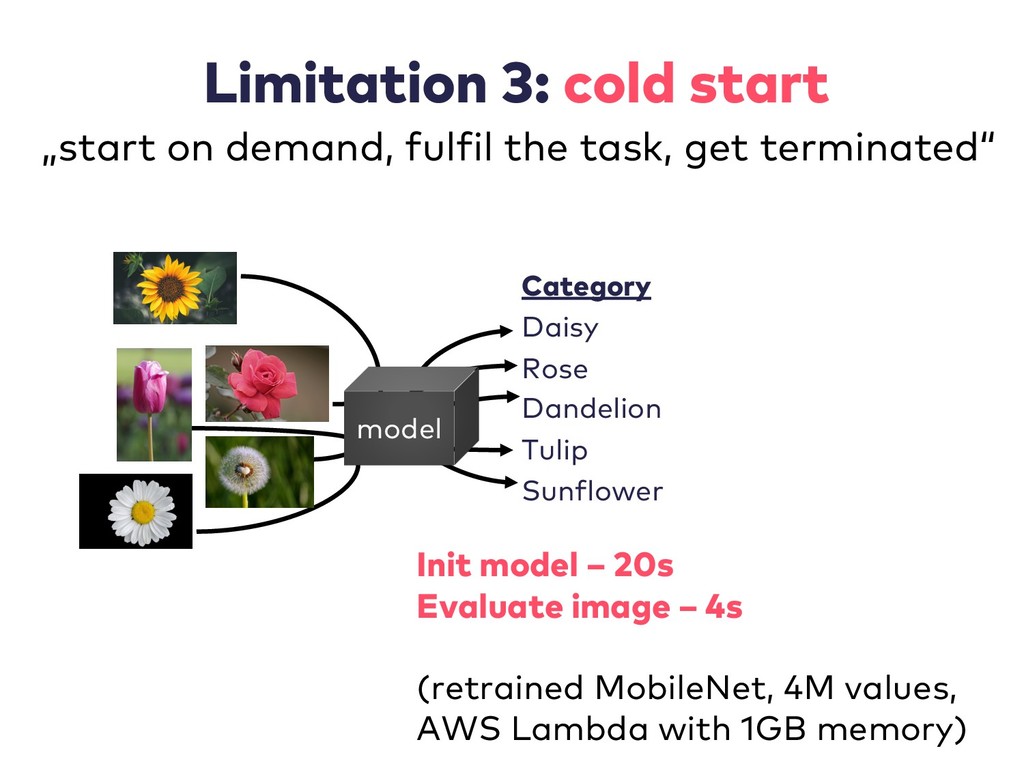
  18. Limitation 3: cold start Init model – 20s Evaluate image

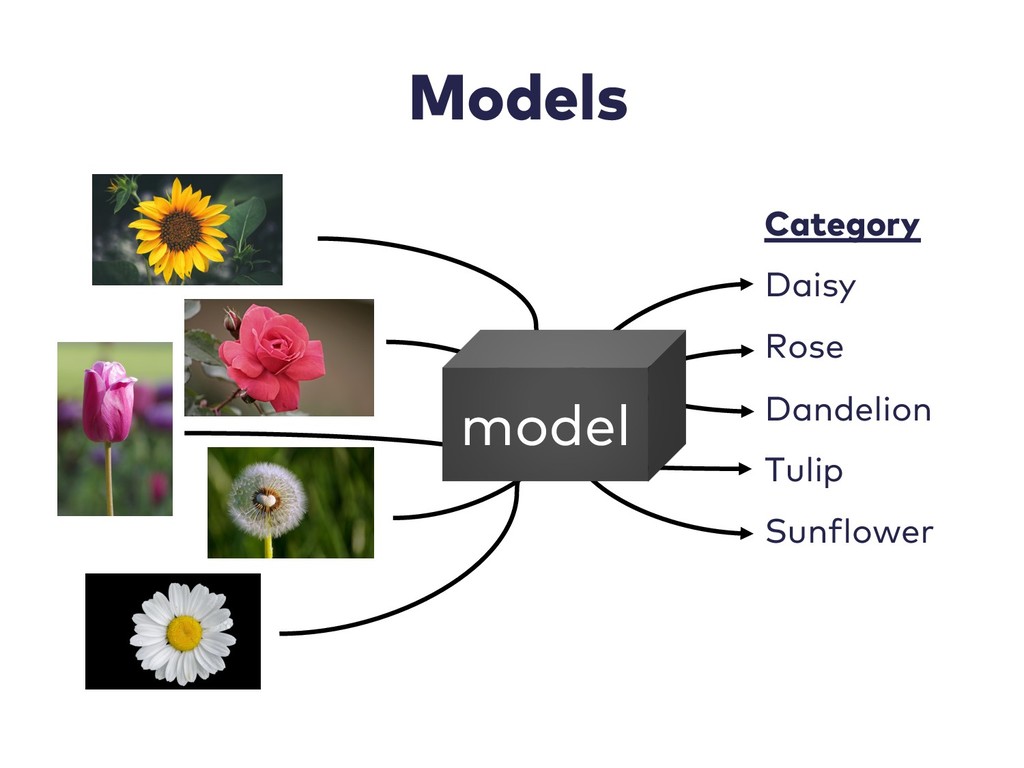
    – 4s (retrained MobileNet, 4M values, AWS Lambda with 1GB memory) model Category Daisy Rose Dandelion Tulip Sunflower „start on demand, fulfil the task, get terminated“
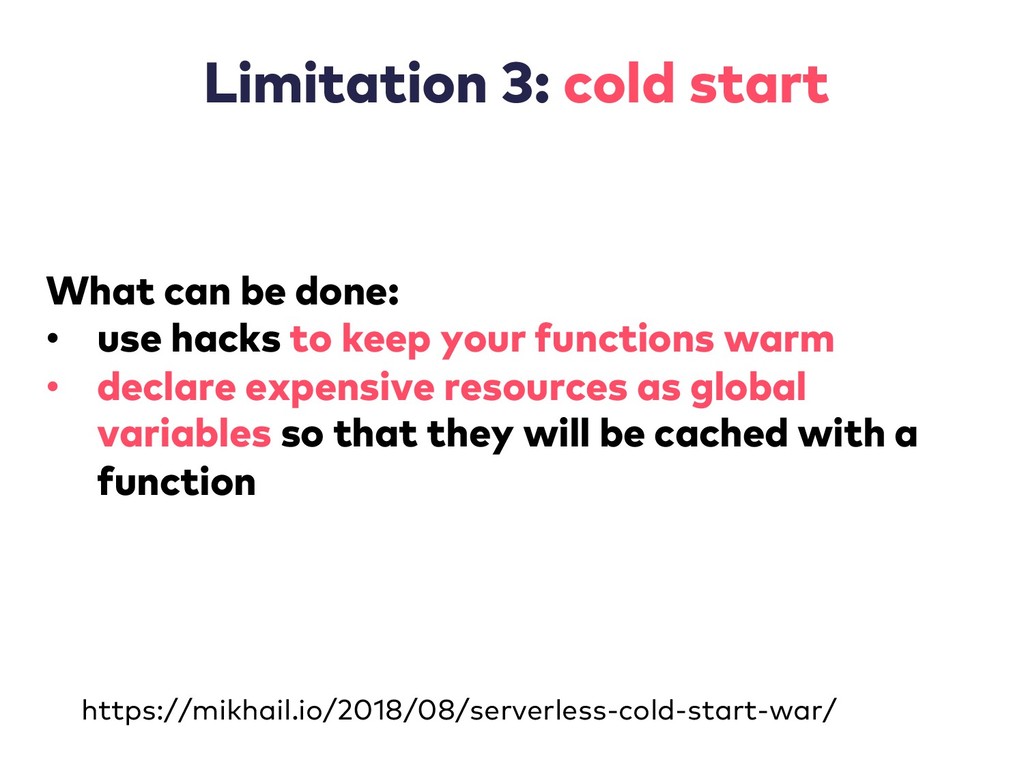
  19. Limitation 3: cold start https://mikhail.io/2018/08/serverless-cold-start-war/ What can be done: •

    use hacks to keep your functions warm • declare expensive resources as global variables so that they will be cached with a function
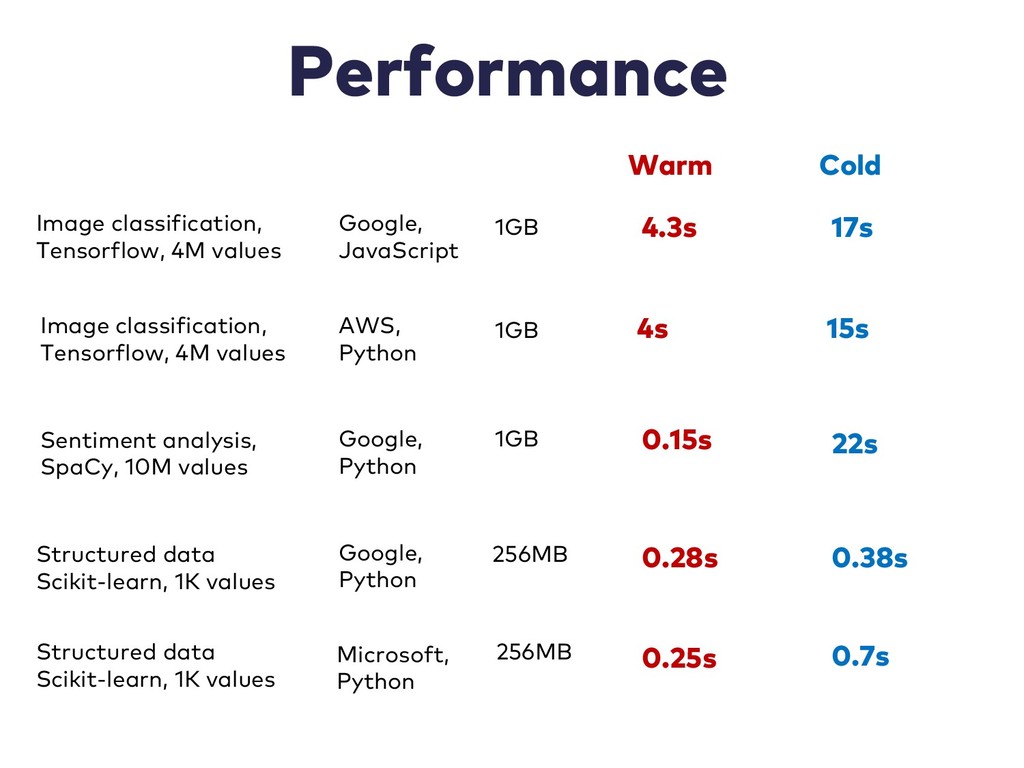
  20. Performance AWS, Python Google, Python Structured data Scikit-learn, 1K values

    Image classification, Tensorflow, 4M values Sentiment analysis, SpaCy, 10M values Cold Warm 0.15s 22s Image classification, Tensorflow, 4M values Google, JavaScript 1GB 4.3s 17s 1GB 1GB Google, Python 256MB 0.28s 0.38s Structured data Scikit-learn, 1K values Microsoft, Python 256MB 0.25s 0.7s 4s 15s
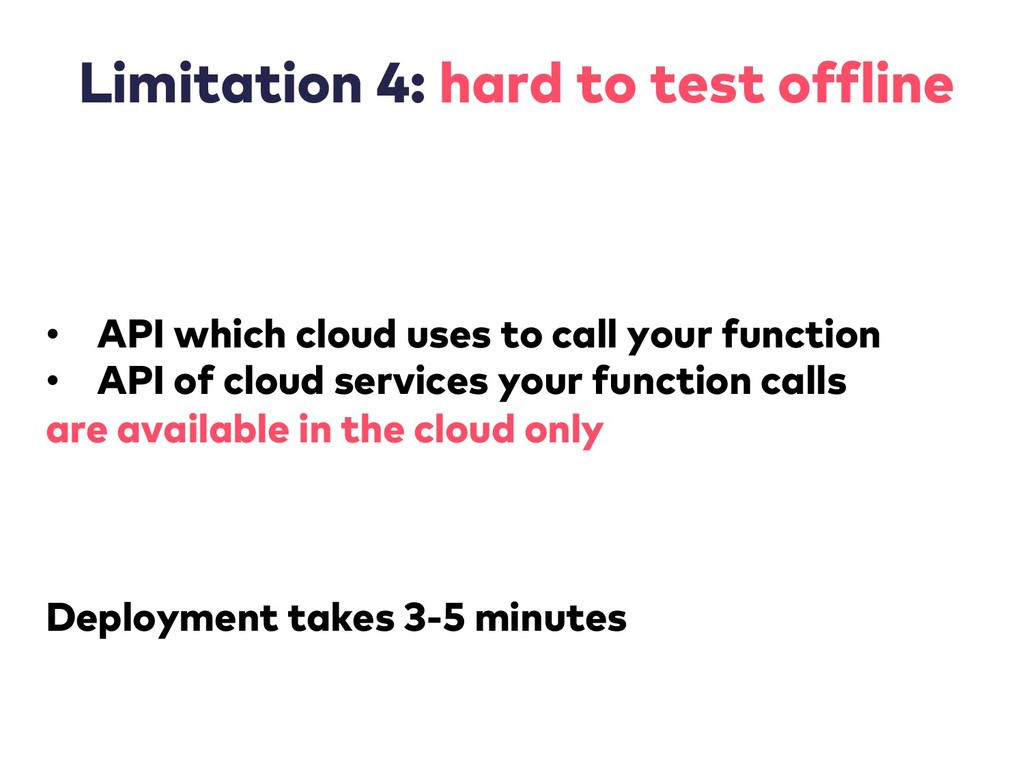
  21. • API which cloud uses to call your function •

    API of cloud services your function calls are available in the cloud only Limitation 4: hard to test offline Deployment takes 3-5 minutes
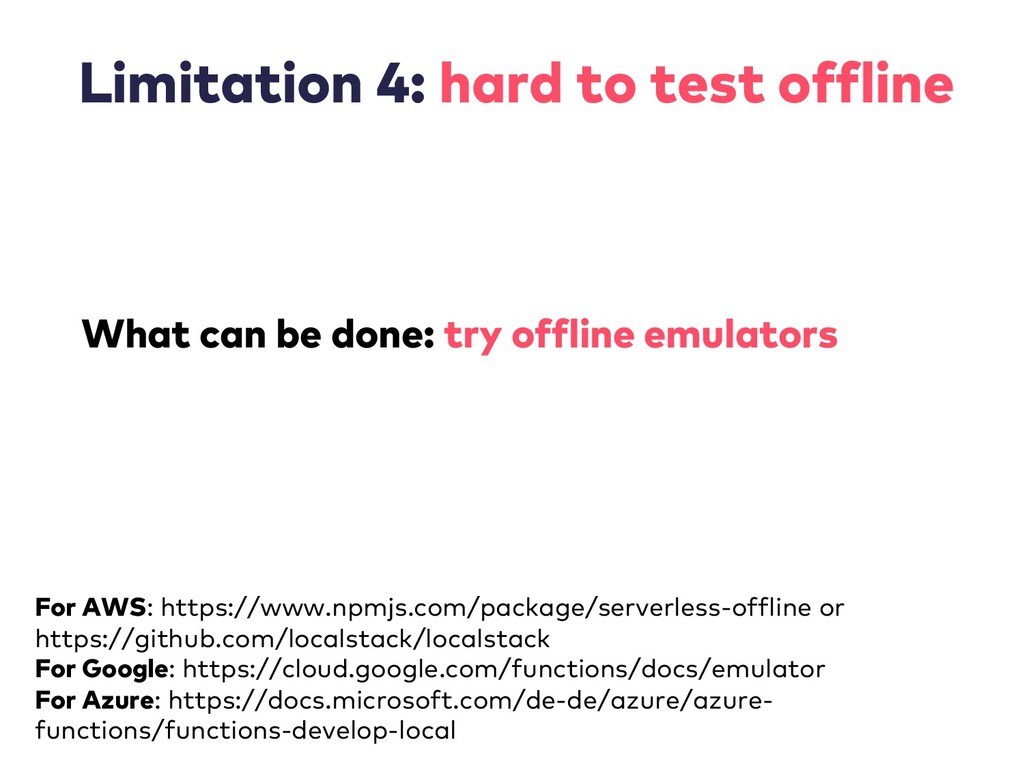
  22. Limitation 4: hard to test offline What can be done:

    try offline emulators For AWS: https://www.npmjs.com/package/serverless-offline or https://github.com/localstack/localstack For Google: https://cloud.google.com/functions/docs/emulator For Azure: https://docs.microsoft.com/de-de/azure/azure- functions/functions-develop-local
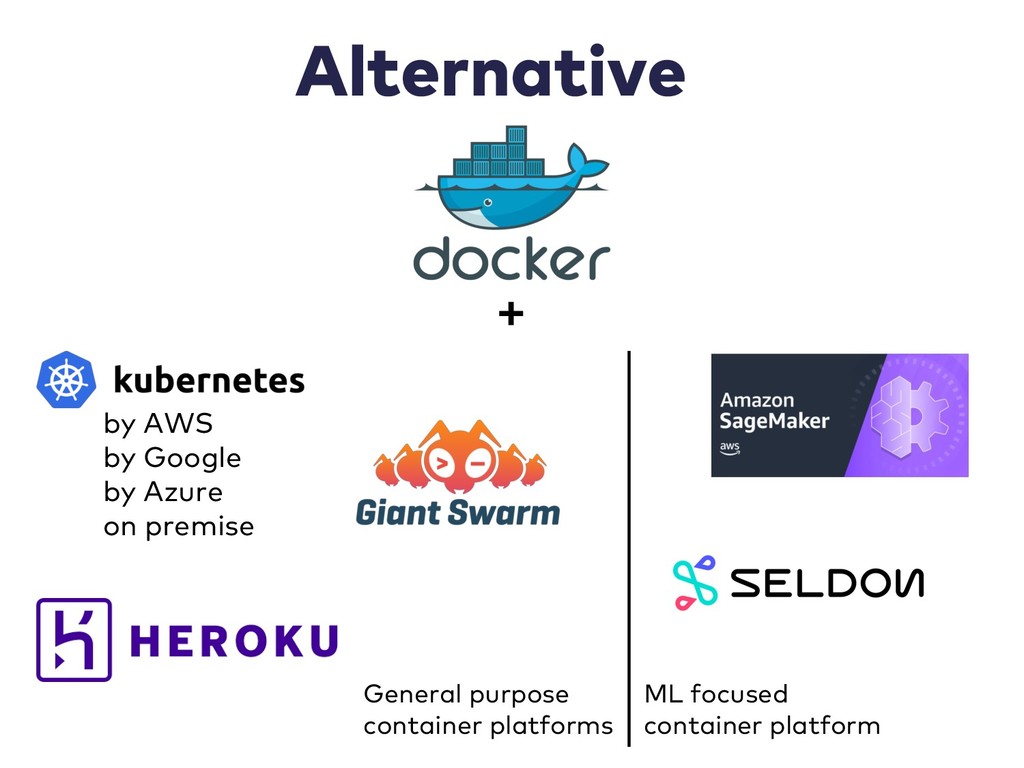
  23. Alternative + by AWS by Google by Azure on premise

    General purpose container platforms ML focused container platform
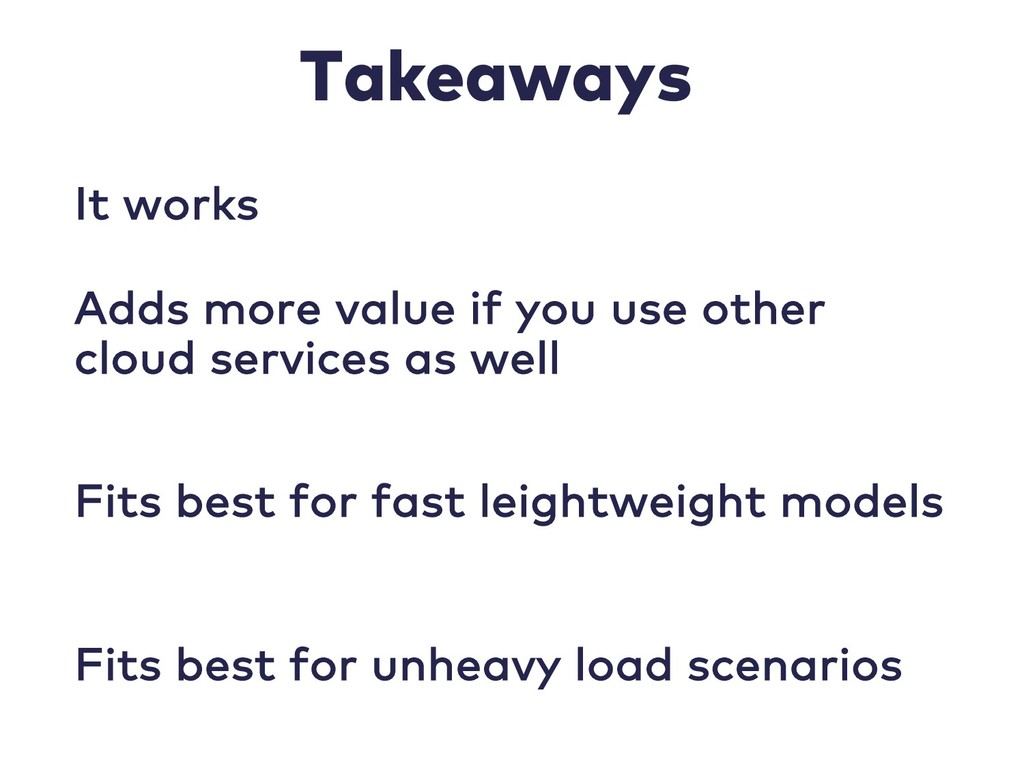
  24. It works Fits best for fast leightweight models Fits best

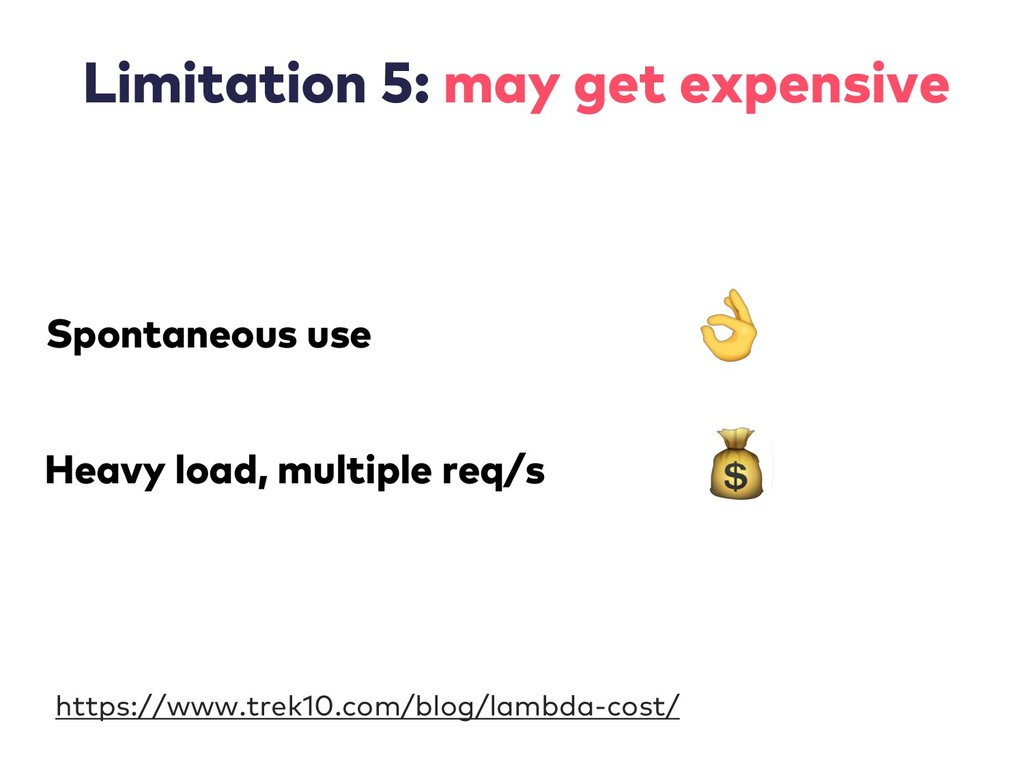
    for unheavy load scenarios Takeaways Adds more value if you use other cloud services as well
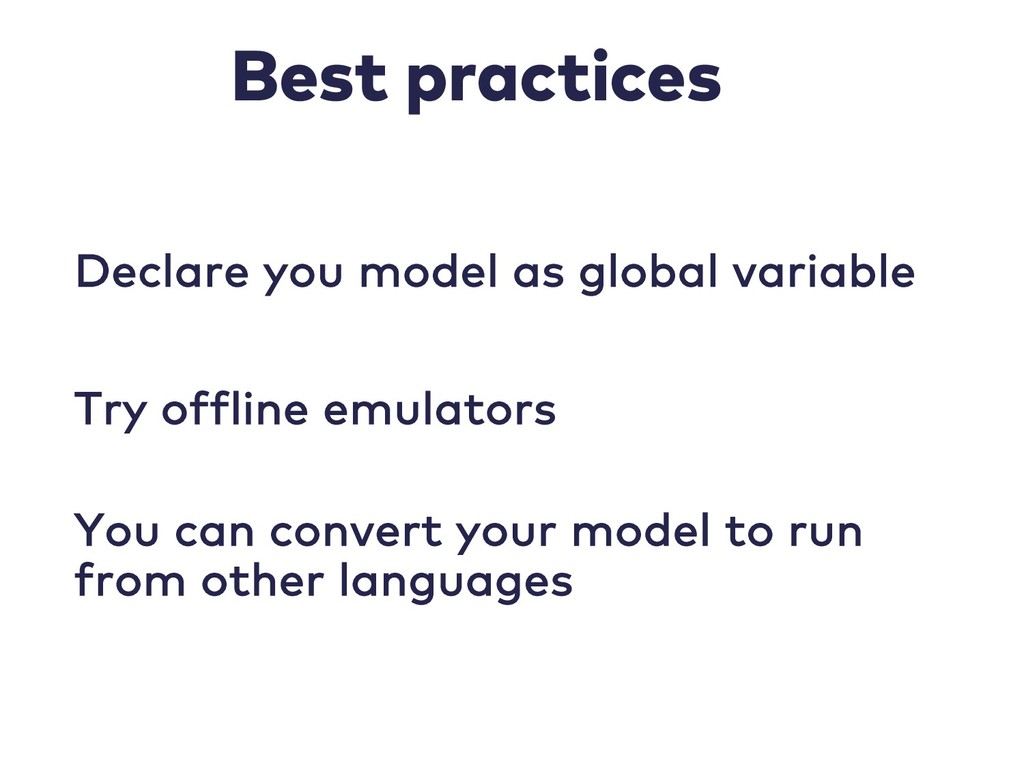
  25. Declare you model as global variable Best practices Try offline

    emulators You can convert your model to run from other languages
  26. Image sources • Unsplash.com • Wikipedia.org • http://web.stanford.edu/~hastie/Papers/LARS/LeastAngle_2002.pdf Credentials Michael

    Krämer, Leonardo Ramirez, Philipp Beyerlein, Phillip Ghadir, Christian Stettler (INNOQ)
  27. Thank you! Questions? www.innoq.com innoQ Deutschland GmbH Krischerstr. 100 40789

    Monheim am Rhein Germany +49 2173 3366-0 Ohlauer Str. 43 10999 Berlin Germany Ludwigstr. 180E 63067 Offenbach Germany Kreuzstr. 16 80331 München Germany Gewerbestr. 11 CH-6330 Cham Switzerland +41 41 743 01 11 Albulastr. 55 8048 Zürich Switzerland innoQ Schweiz GmbH Michael Perlin [email protected] +49 178 7818063 @ttzt_mp