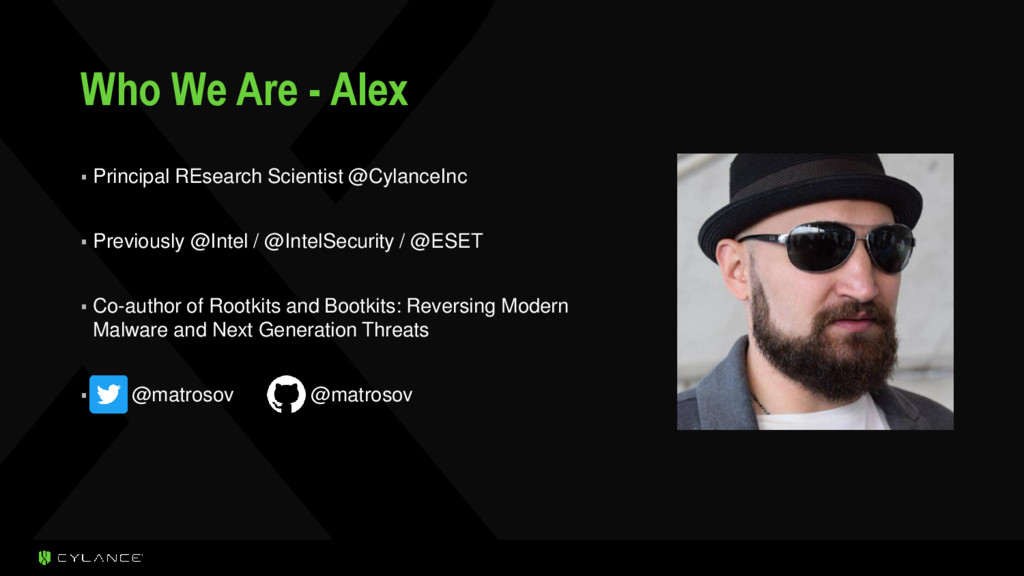
Previously @Intel / @IntelSecurity / @ESET Co-author of Rootkits and Bootkits: Reversing Modern Malware and Next Generation Threats @matrosov @matrosov
Introduced in 2005 for Windows 2003 SP1 x64 – multiple revisions since then Prevents modification to the Windows kernel and kernel data structures IDT, GDT, SSDT, MSR, System PE Images Analysis and bypasses documented by various security researchers (skape, skywing) Bypasses implemented by malware rootkits (Uroburos) Incrementally updated to address deficiencies and block bypasses Creates an arms race between independent software vendors (ISV) and Microsoft Forces security vendors to rely on user-mode hooking in order to monitor processes for malicious behavior http://blog.talosintel.com/2014/08/the-windows-81-kernel-patch-protection.html
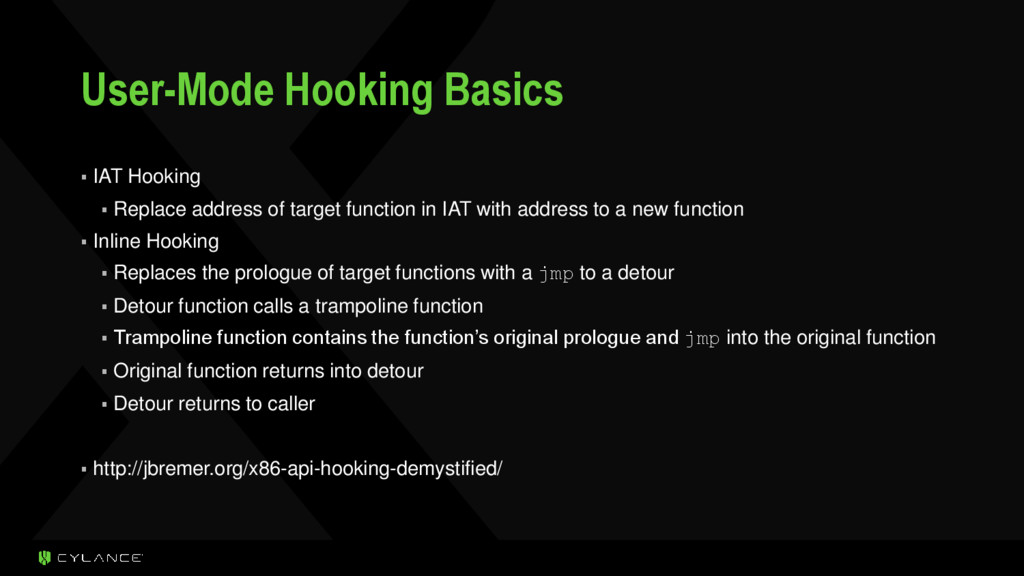
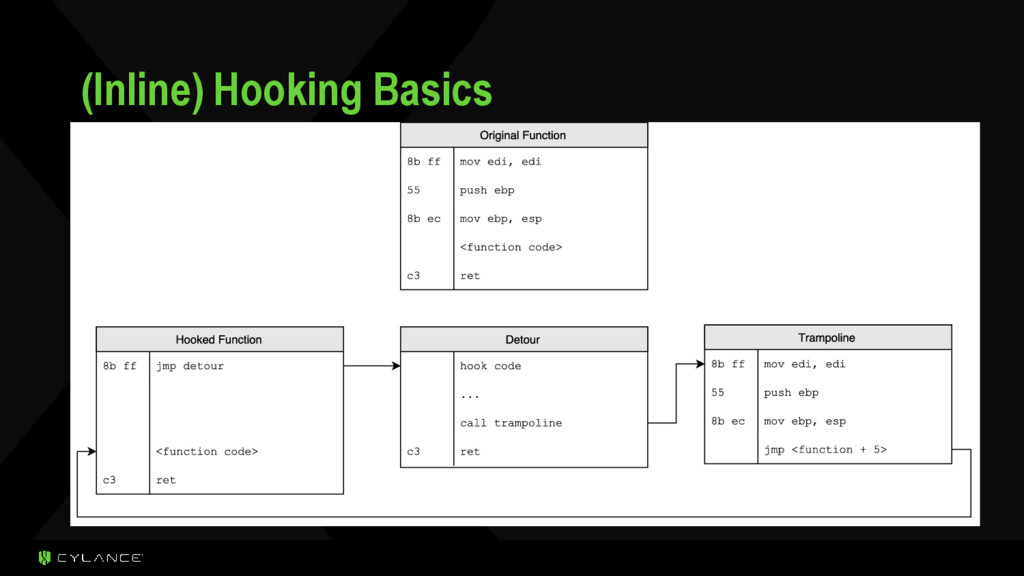
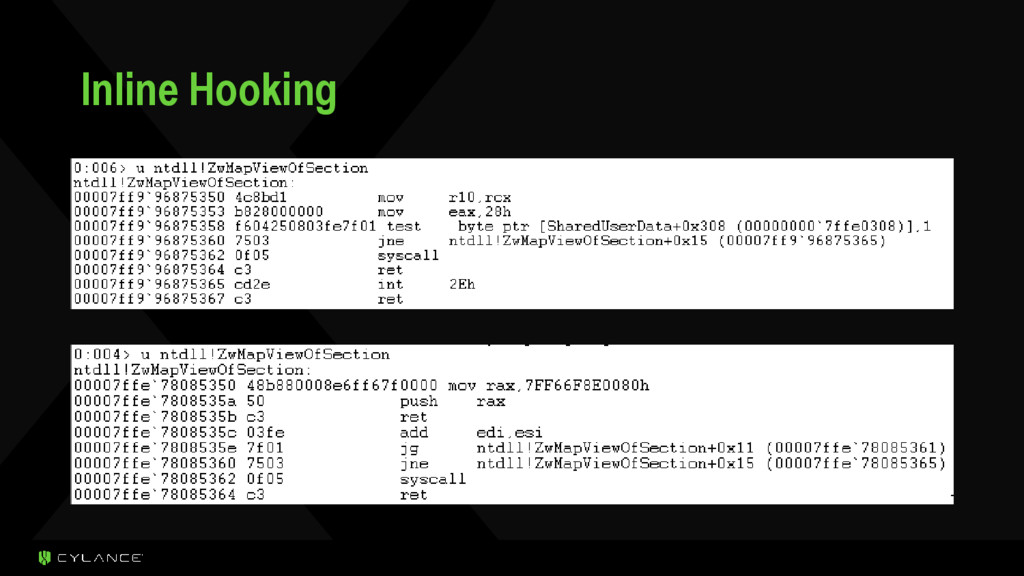
target function in IAT with address to a new function Inline Hooking Replaces the prologue of target functions with a jmp to a detour Detour function calls a trampoline function Trampoline function contains the function’s original prologue and jmp into the original function Original function returns into detour Detour returns to caller http://jbremer.org/x86-api-hooking-demystified/
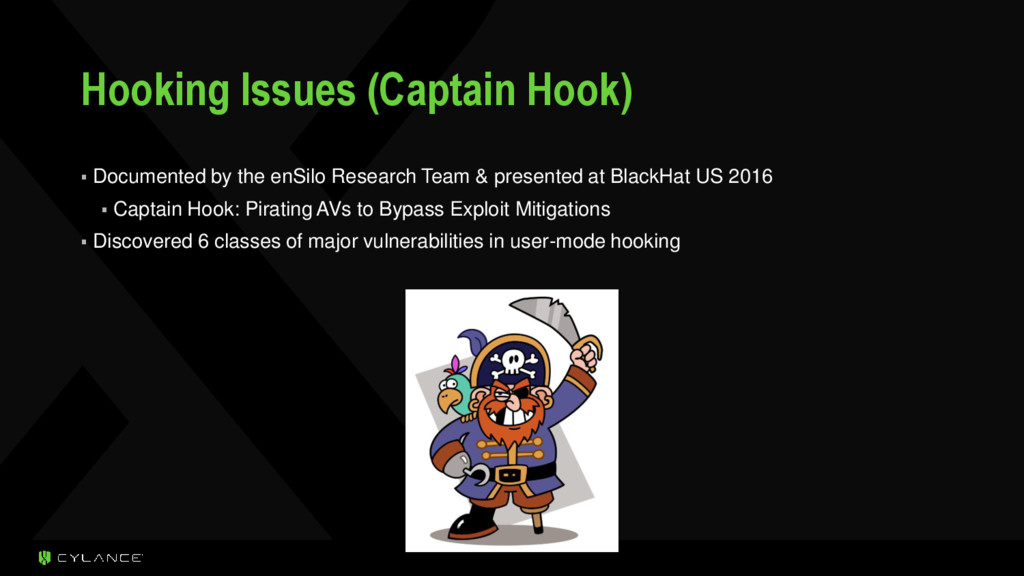
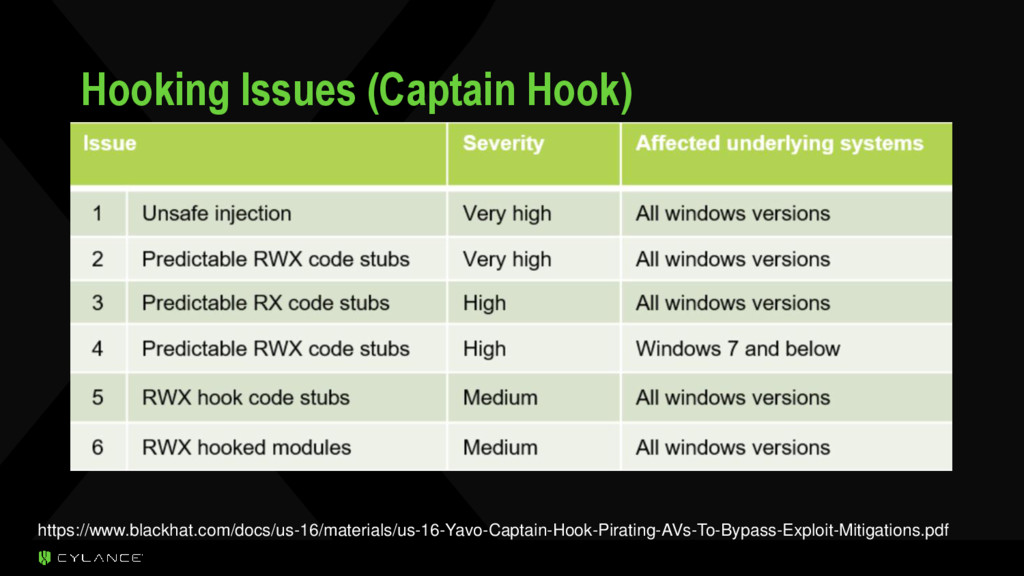
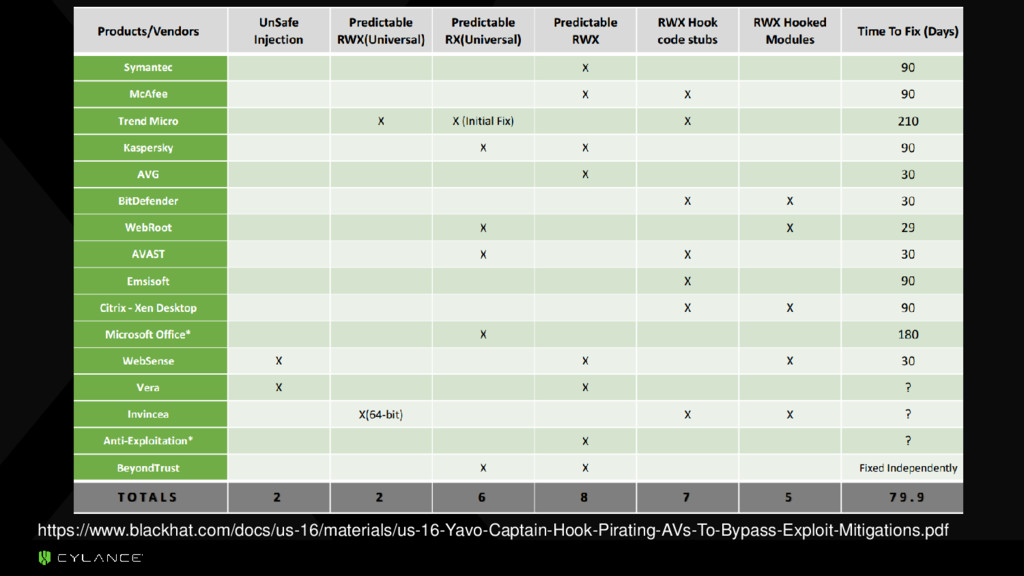
Team & presented at BlackHat US 2016 Captain Hook: Pirating AVs to Bypass Exploit Mitigations Discovered 6 classes of major vulnerabilities in user-mode hooking
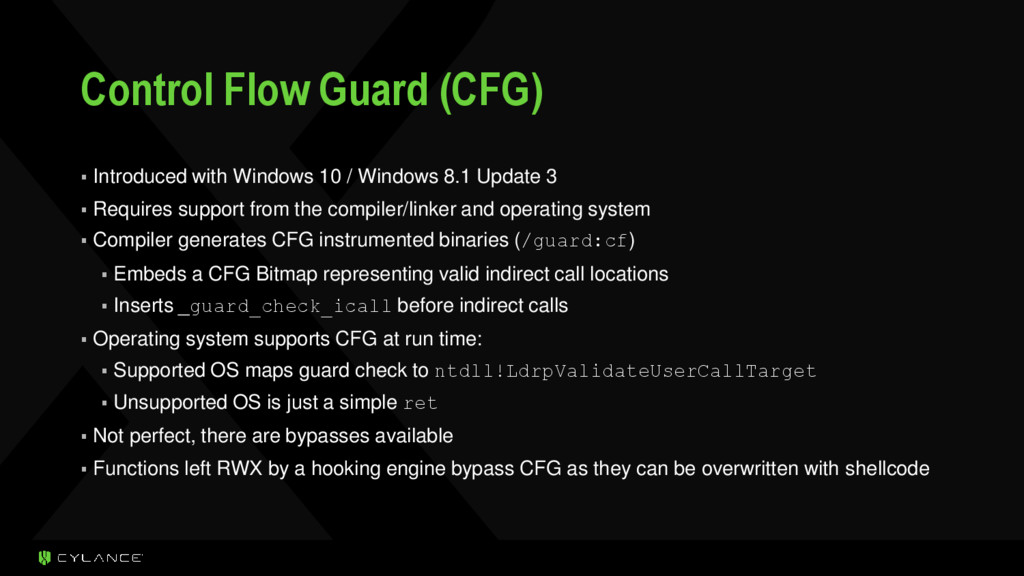
Windows 8.1 Update 3 Requires support from the compiler/linker and operating system Compiler generates CFG instrumented binaries (/guard:cf) Embeds a CFG Bitmap representing valid indirect call locations Inserts _guard_check_icall before indirect calls Operating system supports CFG at run time: Supported OS maps guard check to ntdll!LdrpValidateUserCallTarget Unsupported OS is just a simple ret Not perfect, there are bypasses available Functions left RWX by a hooking engine bypass CFG as they can be overwritten with shellcode
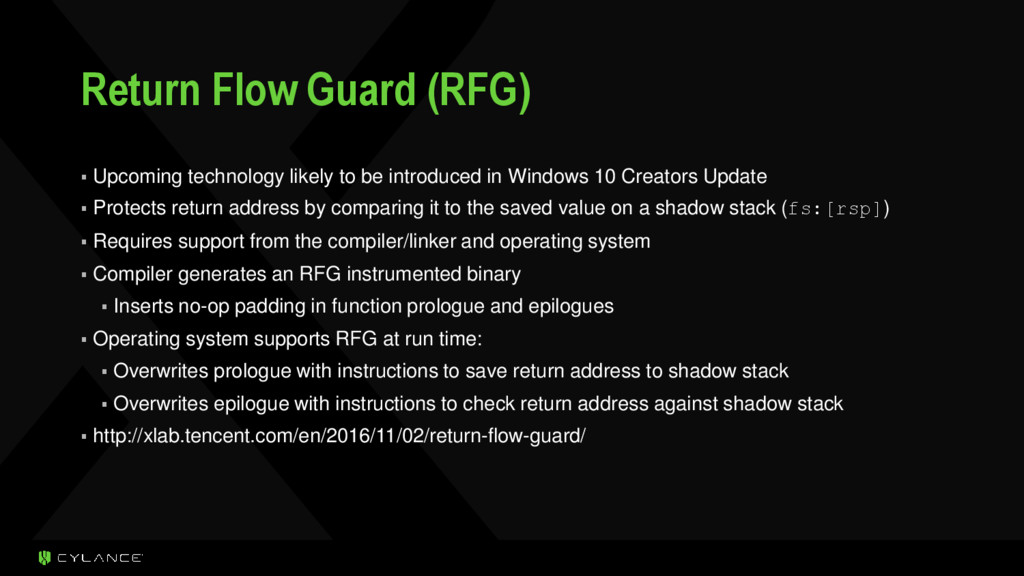
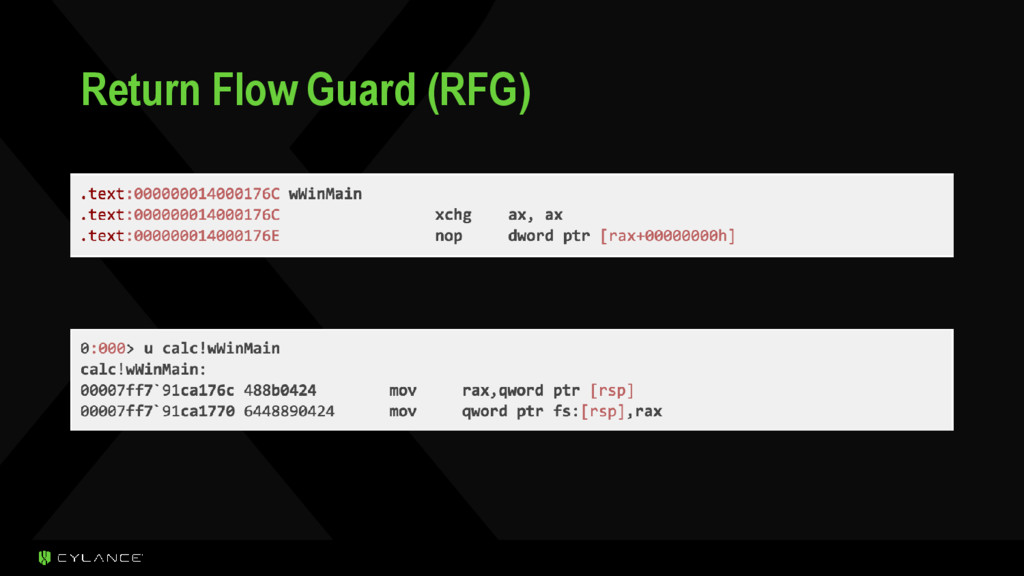
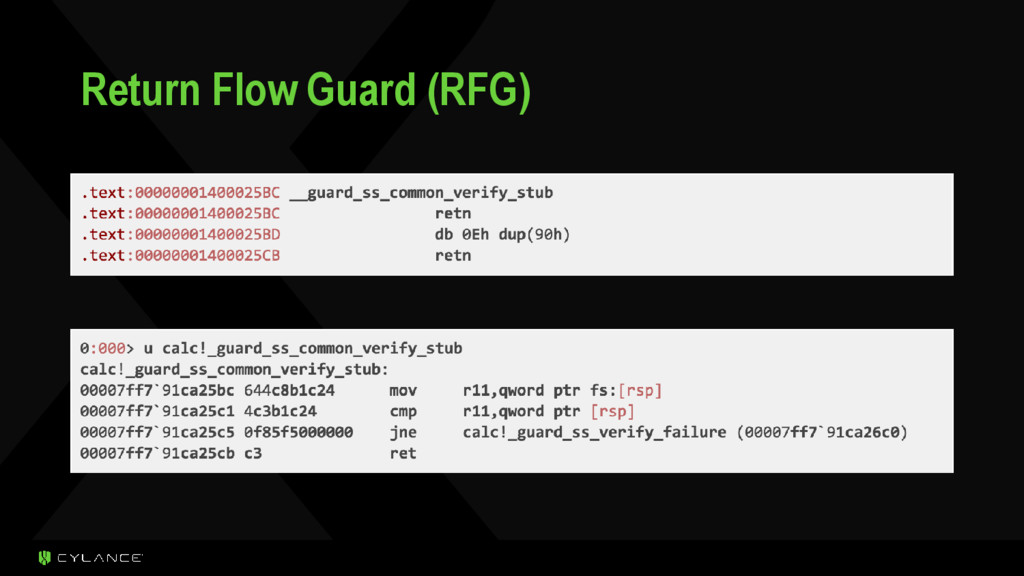
introduced in Windows 10 Creators Update Protects return address by comparing it to the saved value on a shadow stack (fs:[rsp]) Requires support from the compiler/linker and operating system Compiler generates an RFG instrumented binary Inserts no-op padding in function prologue and epilogues Operating system supports RFG at run time: Overwrites prologue with instructions to save return address to shadow stack Overwrites epilogue with instructions to check return address against shadow stack http://xlab.tencent.com/en/2016/11/02/return-flow-guard/
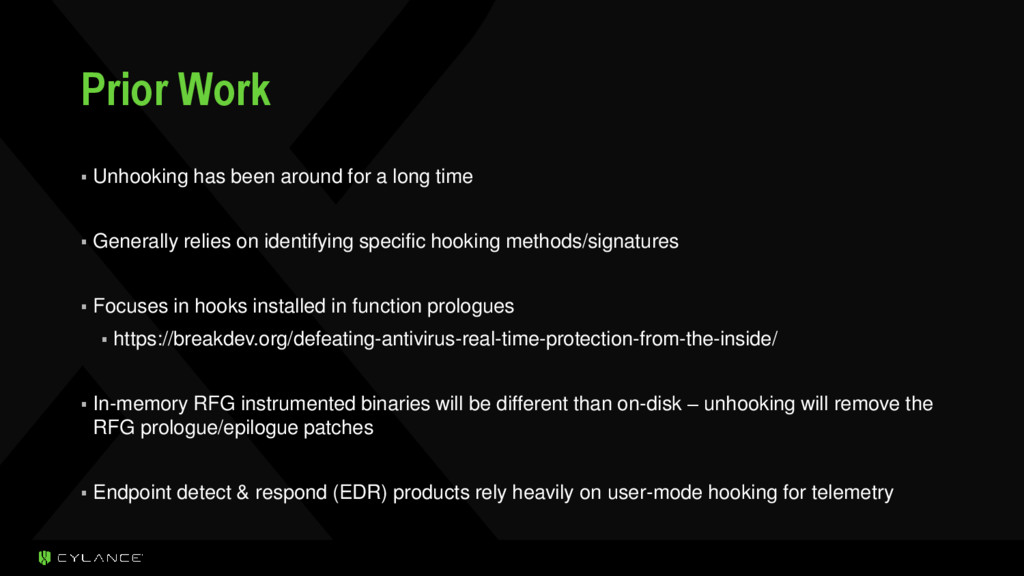
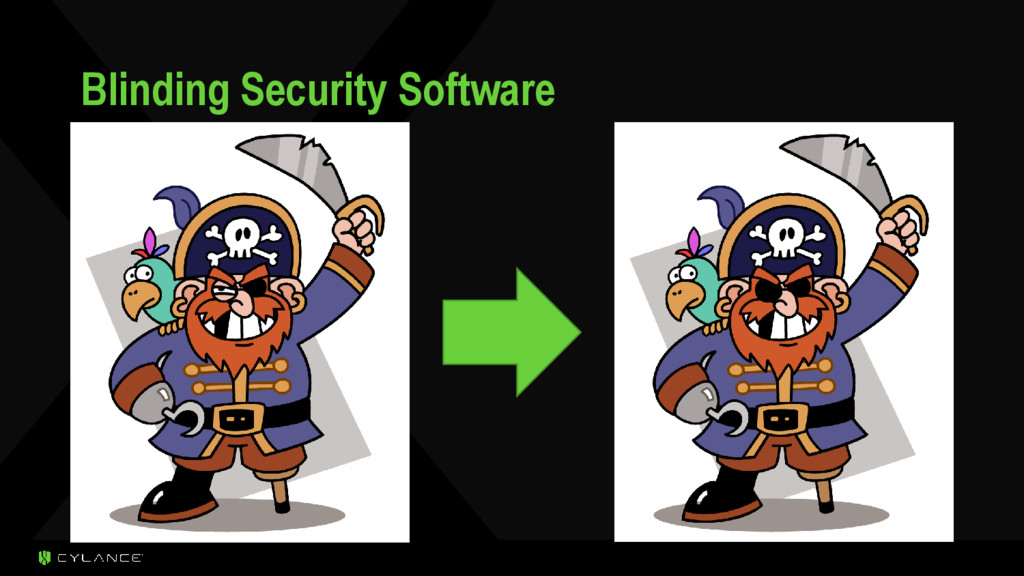
time Generally relies on identifying specific hooking methods/signatures Focuses in hooks installed in function prologues https://breakdev.org/defeating-antivirus-real-time-protection-from-the-inside/ In-memory RFG instrumented binaries will be different than on-disk – unhooking will remove the RFG prologue/epilogue patches Endpoint detect & respond (EDR) products rely heavily on user-mode hooking for telemetry
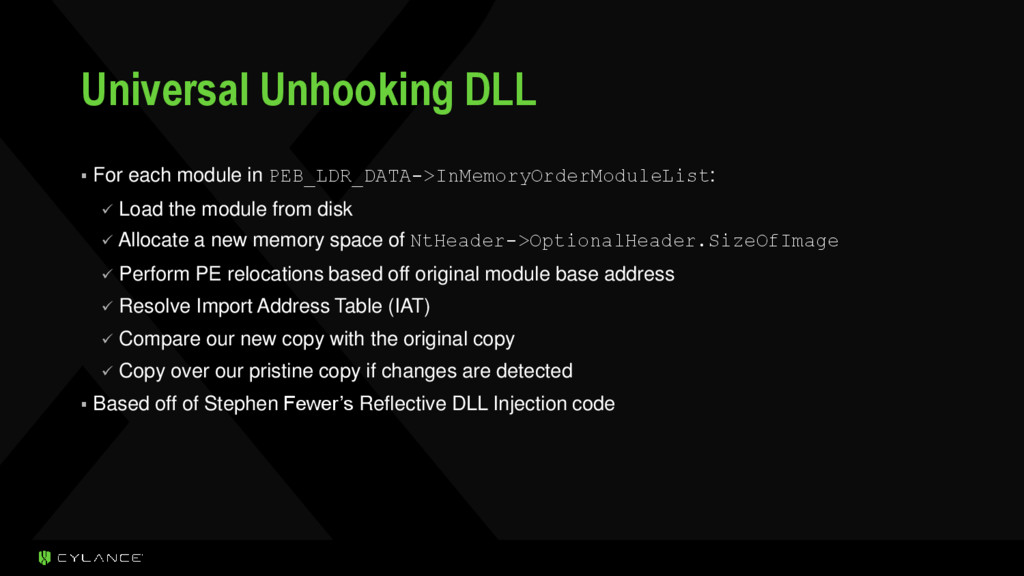
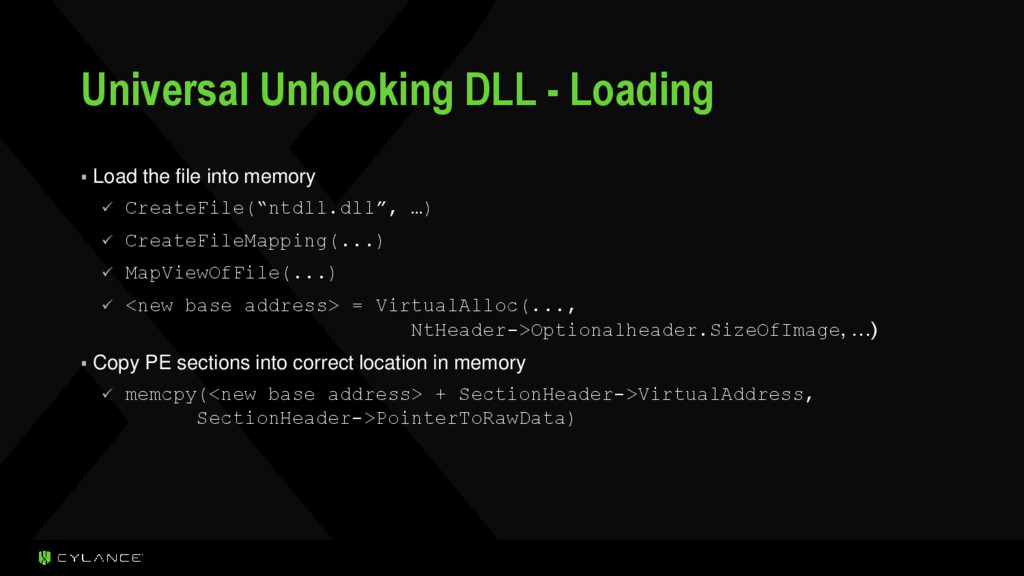
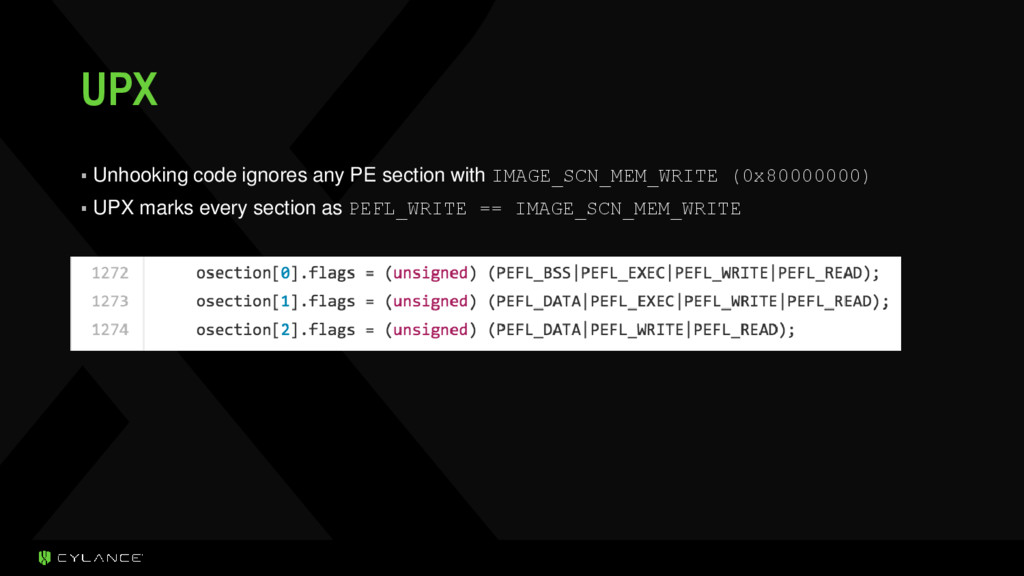
Load the module from disk Allocate a new memory space of NtHeader->OptionalHeader.SizeOfImage Perform PE relocations based off original module base address Resolve Import Address Table (IAT) Compare our new copy with the original copy Copy over our pristine copy if changes are detected Based off of Stephen Fewer’s Reflective DLL Injection code
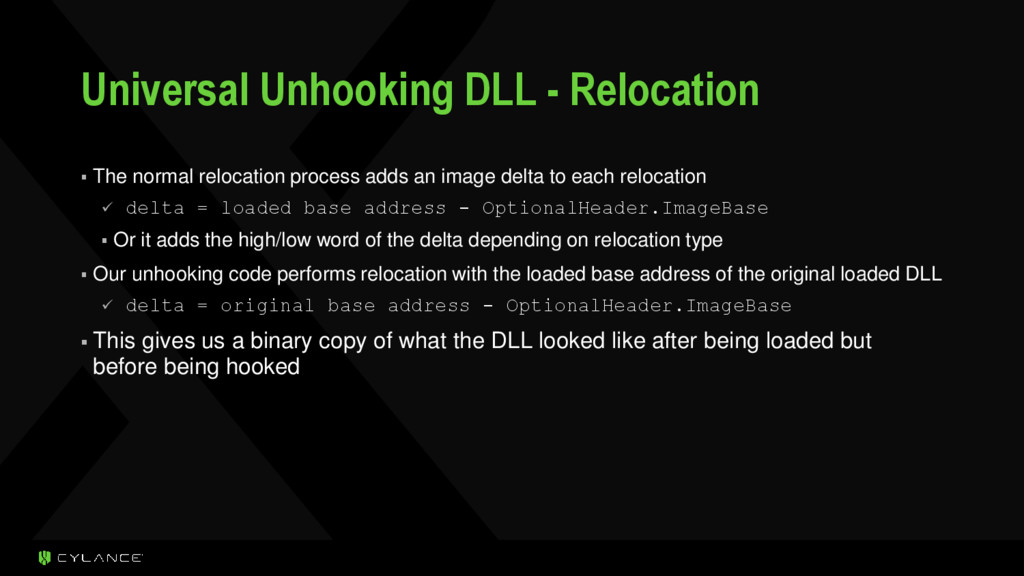
adds an image delta to each relocation delta = loaded base address - OptionalHeader.ImageBase Or it adds the high/low word of the delta depending on relocation type Our unhooking code performs relocation with the loaded base address of the original loaded DLL delta = original base address - OptionalHeader.ImageBase This gives us a binary copy of what the DLL looked like after being loaded but before being hooked
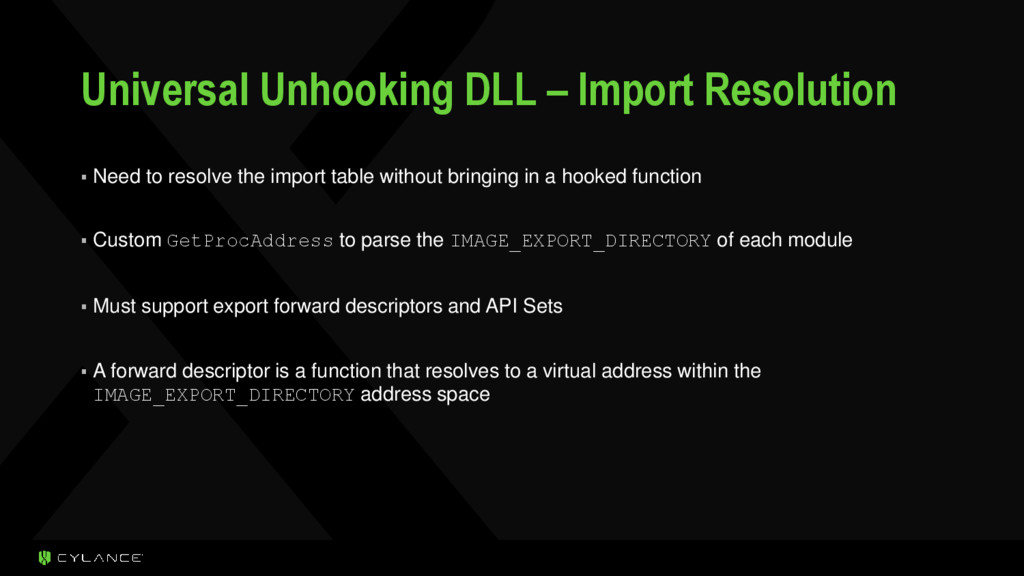
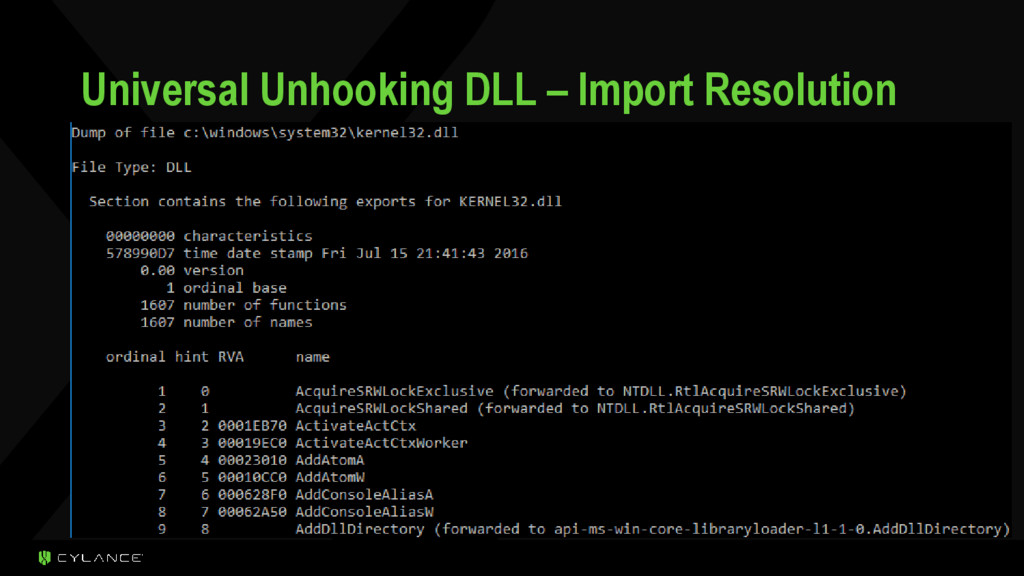
the import table without bringing in a hooked function Custom GetProcAddress to parse the IMAGE_EXPORT_DIRECTORY of each module Must support export forward descriptors and API Sets A forward descriptor is a function that resolves to a virtual address within the IMAGE_EXPORT_DIRECTORY address space
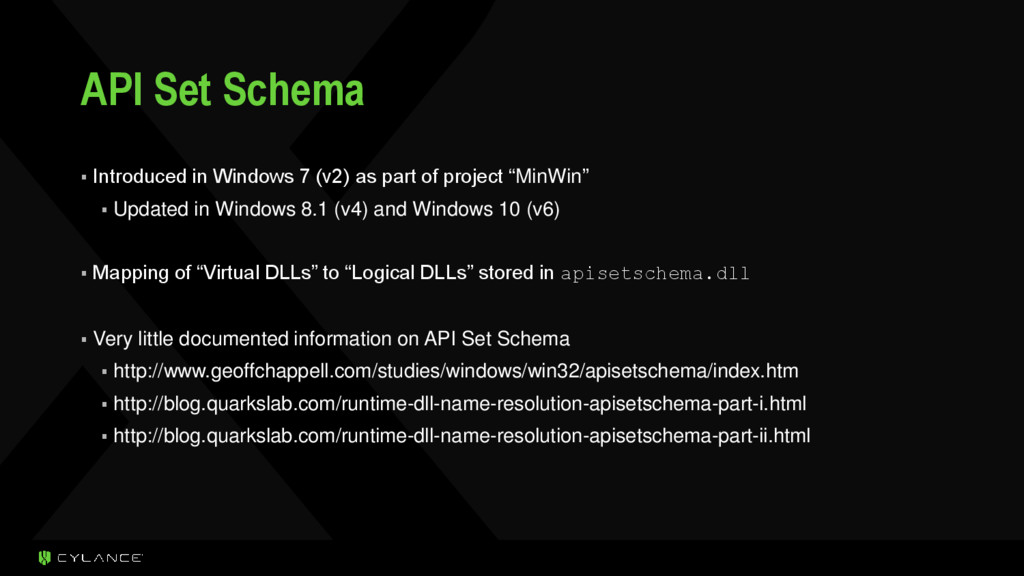
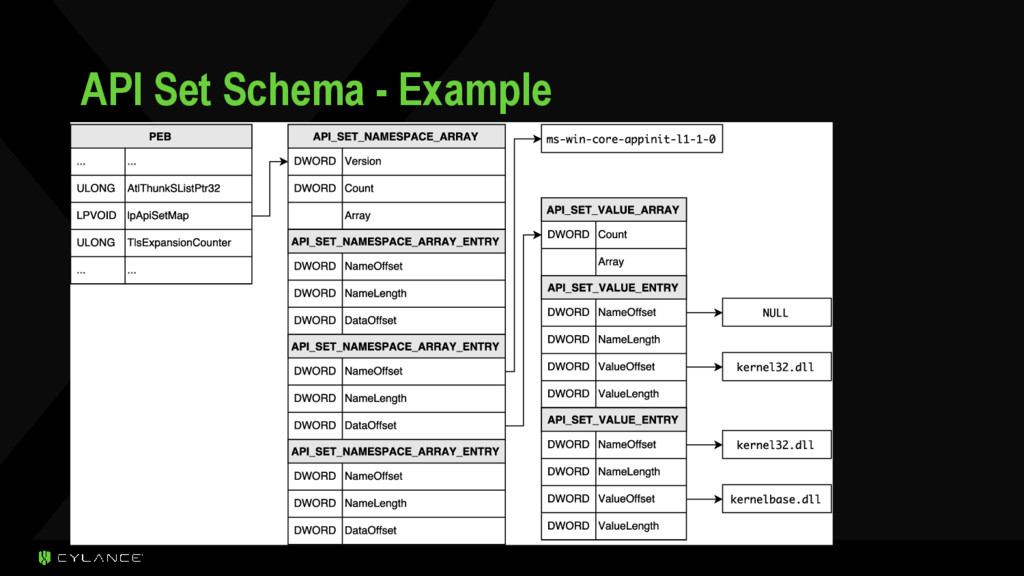
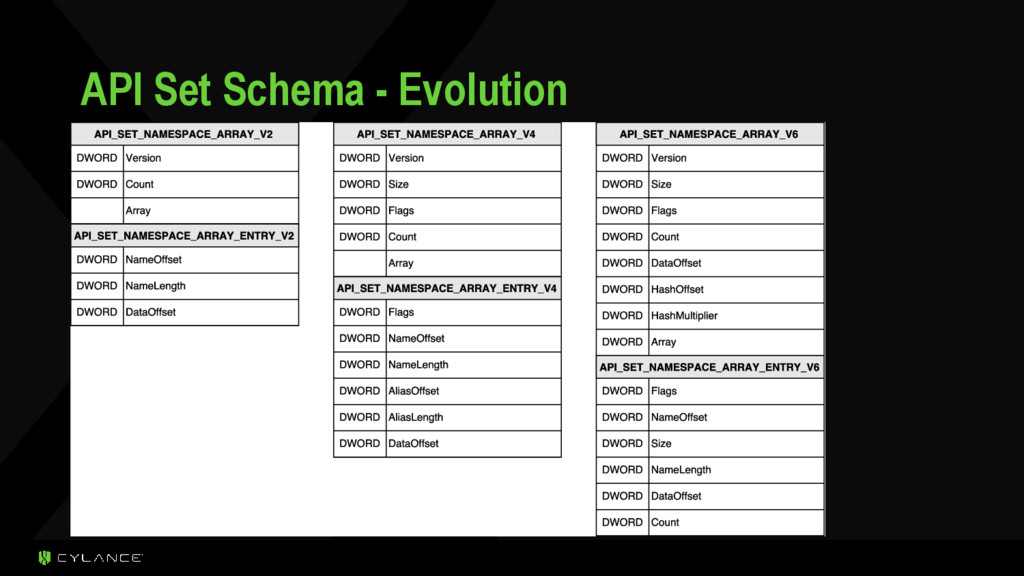
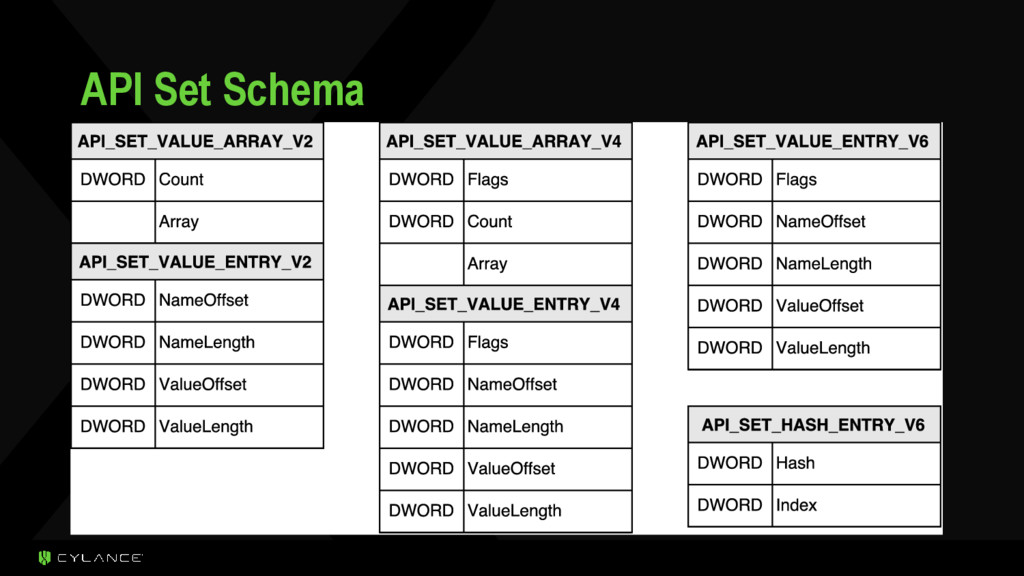
part of project “MinWin” Updated in Windows 8.1 (v4) and Windows 10 (v6) Mapping of “Virtual DLLs” to “Logical DLLs” stored in apisetschema.dll Very little documented information on API Set Schema http://www.geoffchappell.com/studies/windows/win32/apisetschema/index.htm http://blog.quarkslab.com/runtime-dll-name-resolution-apisetschema-part-i.html http://blog.quarkslab.com/runtime-dll-name-resolution-apisetschema-part-ii.html
PE section of the original loaded DLL to our version Replace any sections which are different Return back to initial program to continue execution without hooks
DLL Security software could detect Meterpreter initialization prior to unhooking Solution: Modify meterpreter server to call unhooking code before connection initialization Drop in replacement for Metasploit installs Copy modified metsrv.dll to metasploit-framework/data/meterpreter/
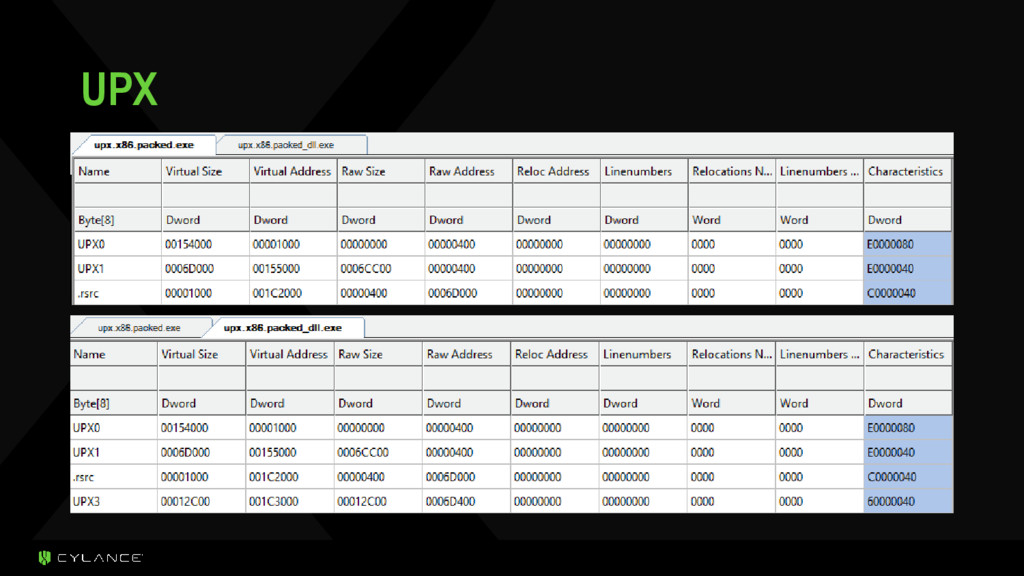
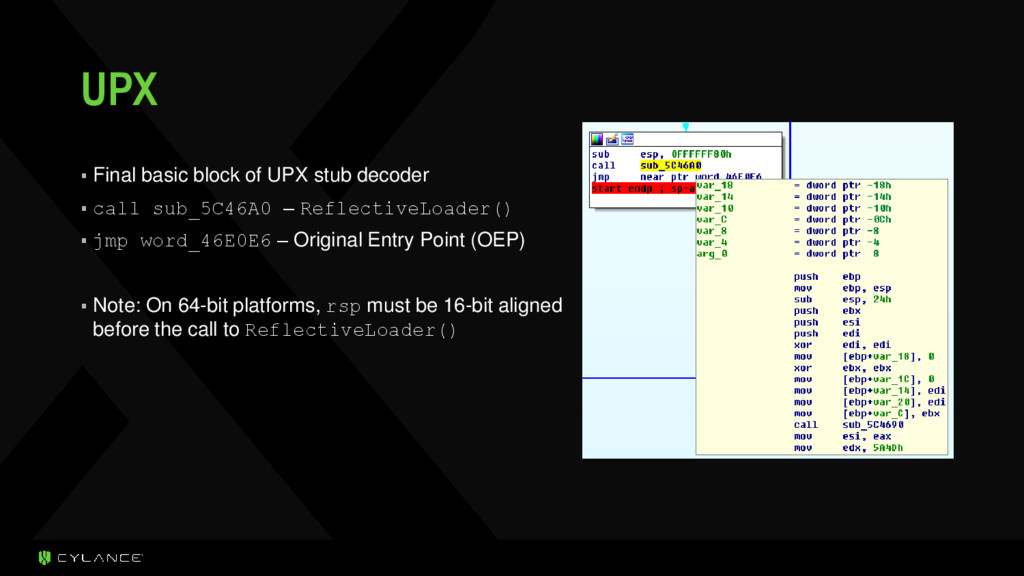
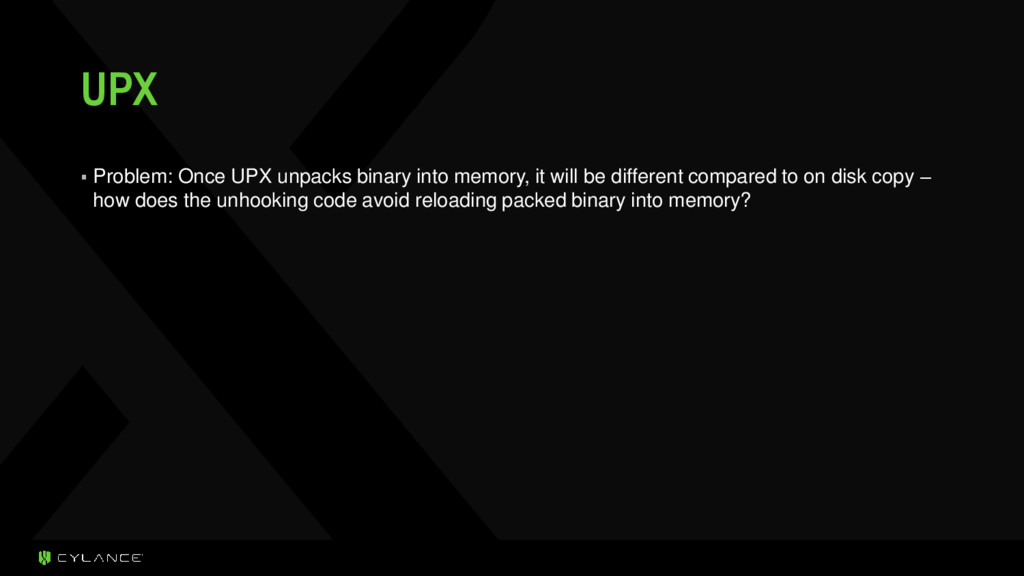
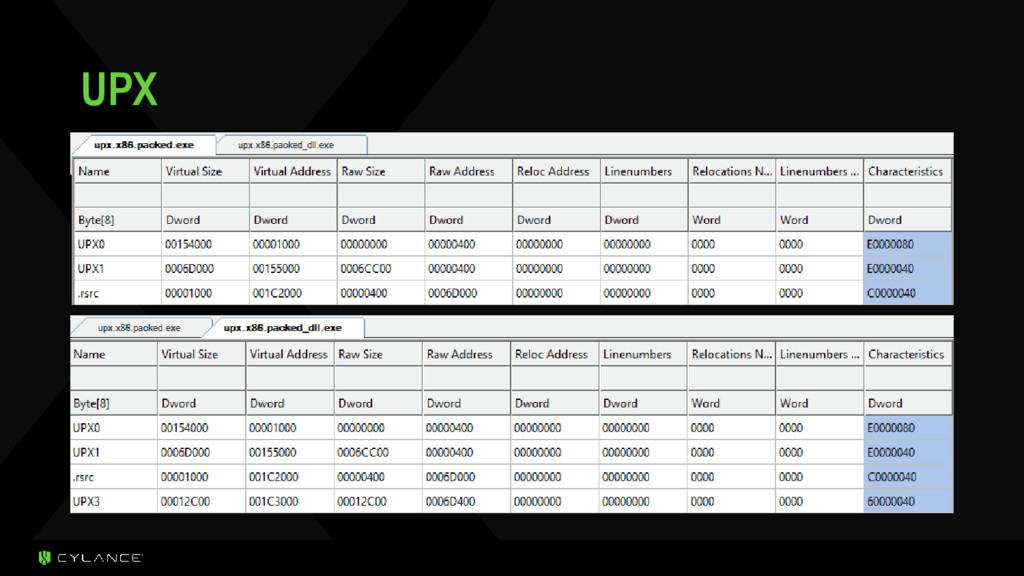
Modify UPX to insert an extra section ‘UPX3’ containing arbitrary reflective DLL UPX decoder stub unpacks original binary and resolves imports Decoder calls the first export in the reflective DLL (ReflectiveLoader()) Unhooking code runs and removes any hooks detected Stub decoder jumps to original entry point (OEP) Note: Reflective DLL is not compressed by UPX Also blows up the size of the final packed executable
call sub_5C46A0 – ReflectiveLoader() jmp word_46E0E6 – Original Entry Point (OEP) Note: On 64-bit platforms, rsp must be 16-bit aligned before the call to ReflectiveLoader()
Relying on user-mode hooking for protection is ineffective Critical need for OS support to provide callbacks and APIs for monitoring system behavior Source code will be released soon @ https://github.com/CylanceVulnResearch/


 onk
onk
 yamanoku
 kaminashi
 iktakahiro
 gionn
gionn
 oikon48
 jozono
 tetsuya28
 tokuty
 moznion
 ykanoh
 akhino
 mkilby
 tmiket
 codingconduct
 bethany
 gr2m
gr2m
 pedronauck
 chriscoyier
 samanthasiow
 kastner
 shlominoach
 sugarenia
 erikaheidi