Upgrade to Pro — share decks privately, control downloads, hide ads and more …

Context is King – Crafting Smarter, Adaptive Di...

Context is King – Crafting Smarter, Adaptive Digital Products Today

This talk elaborates on an increasingly relevant–yet often overlooked–part of digital product design: user context. Now that we have all (sort of) mastered responsive design, our next challenge as designers and developers is creating smarter products that adapt to a user’s context.

Playing around with data, device sensors and customer behaviour helps to anticipate a user’s intent, or tailor the user experience to a specific user’s context. Ultimately, these things offer exciting opportunities to create more efficient and enjoyable digital experiences.

Main topics include:
• examples of “smart” products and services
• the key ingredients of the research, discovery and design approach used at Mirabeau
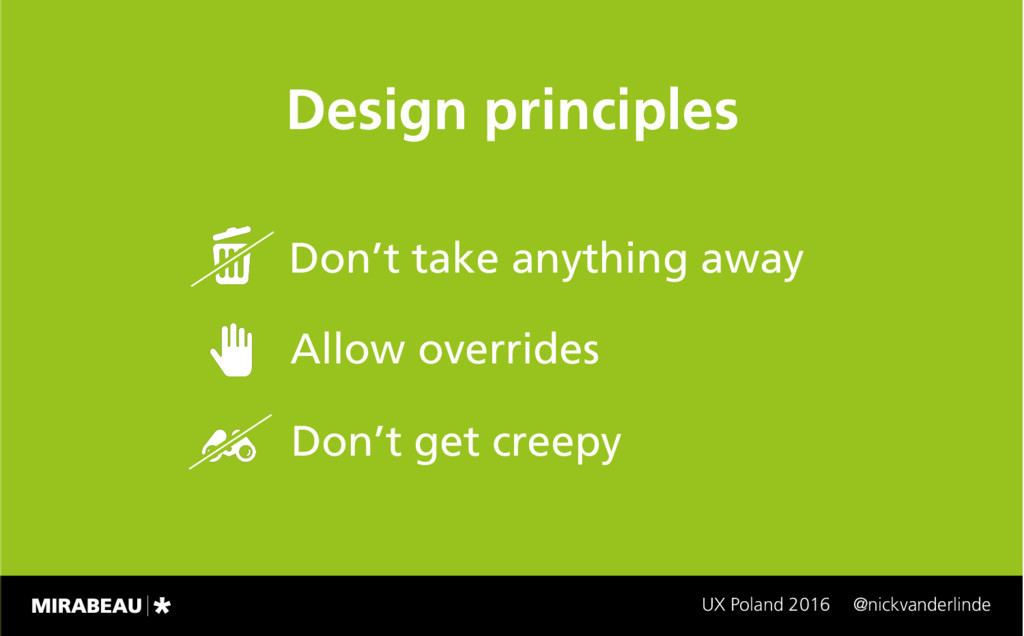
• design principles for creating context-aware products

Avatar for Nick van der Linde

Nick van der Linde

April 14, 2016

Other Decks in Design

Transcript
  1. @nickvanderlinde UX Poland 2016 “The design goal is to find

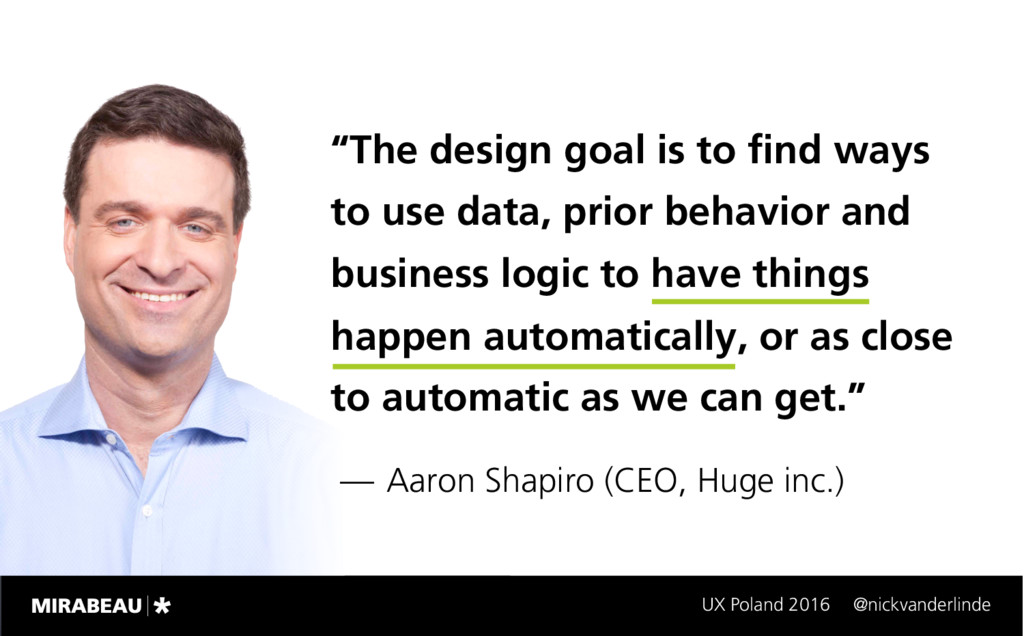
    ways to use data, prior behavior and business logic to have things happen automatically, or as close to automatic as we can get.” — Aaron Shapiro (CEO, Huge inc.)
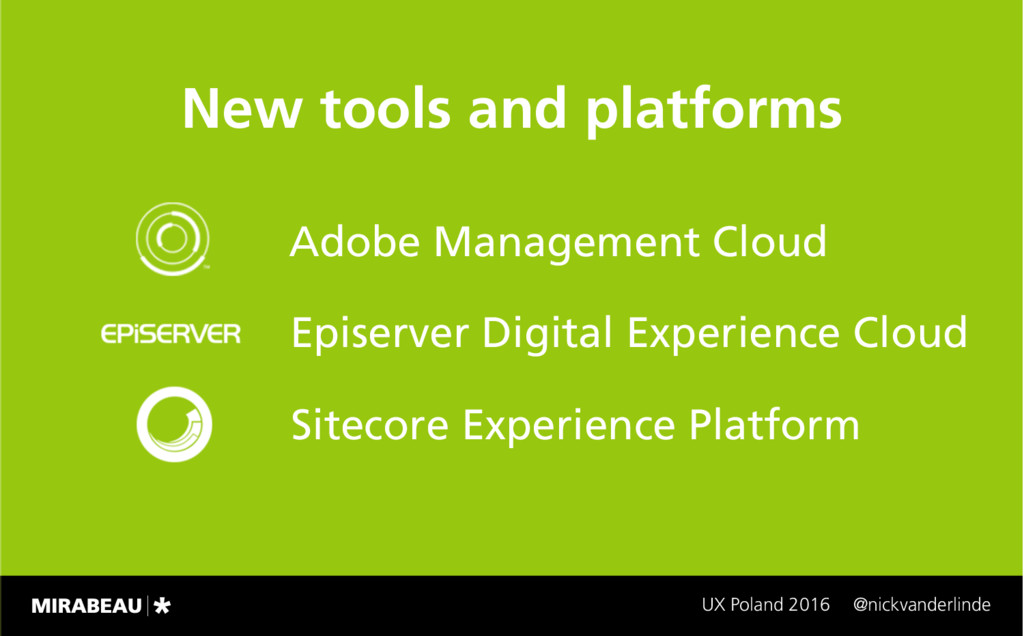
  2. @nickvanderlinde UX Poland 2016 Adobe Management Cloud Episerver Digital Experience
    Cloud Sitecore Experience Platform New tools and platforms
  3. @nickvanderlinde UX Poland 2016 “The trick to making progress is

    picking the right problem to solve” — Jeff Hawkins
  4. @nickvanderlinde UX Poland 2016 & Quantitative research Helps to discover

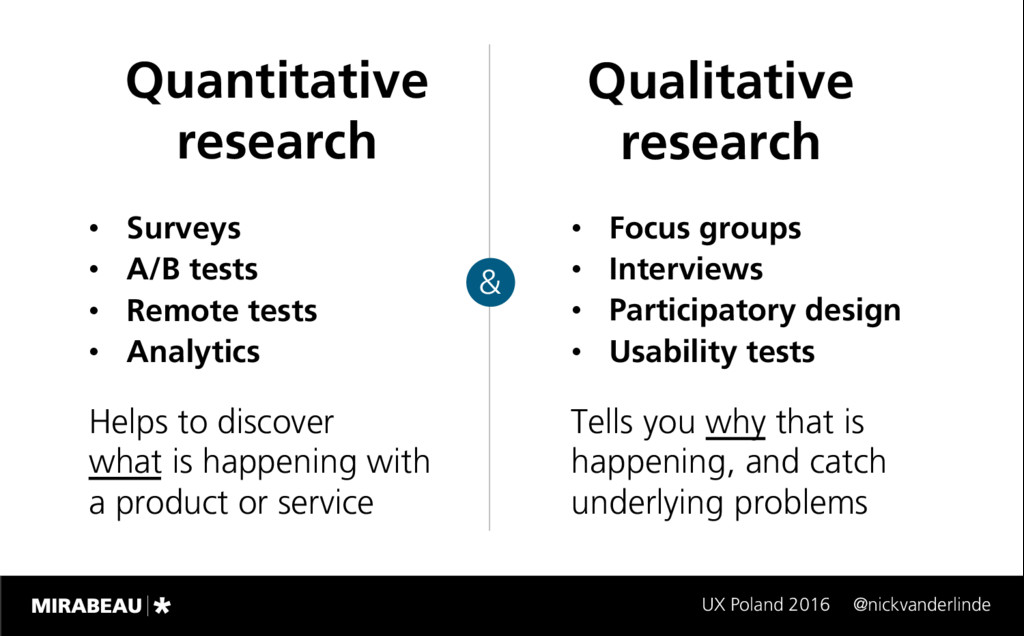
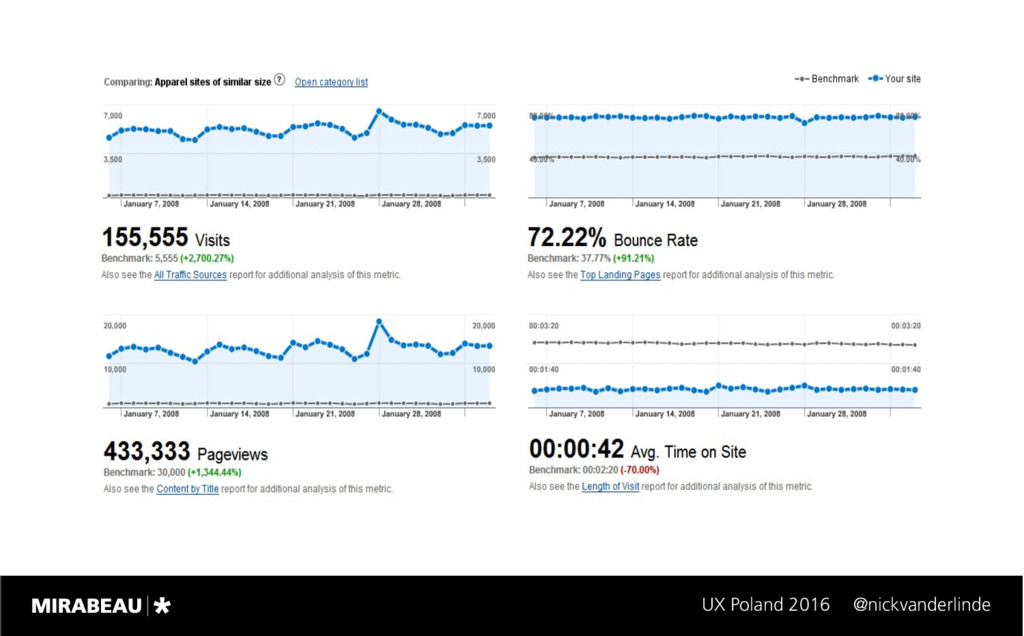
    what is happening with a product or service •  Surveys •  A/B tests •  Remote tests •  Analytics Qualitative research Tells you why that is happening, and catch underlying problems •  Focus groups •  Interviews •  Participatory design •  Usability tests
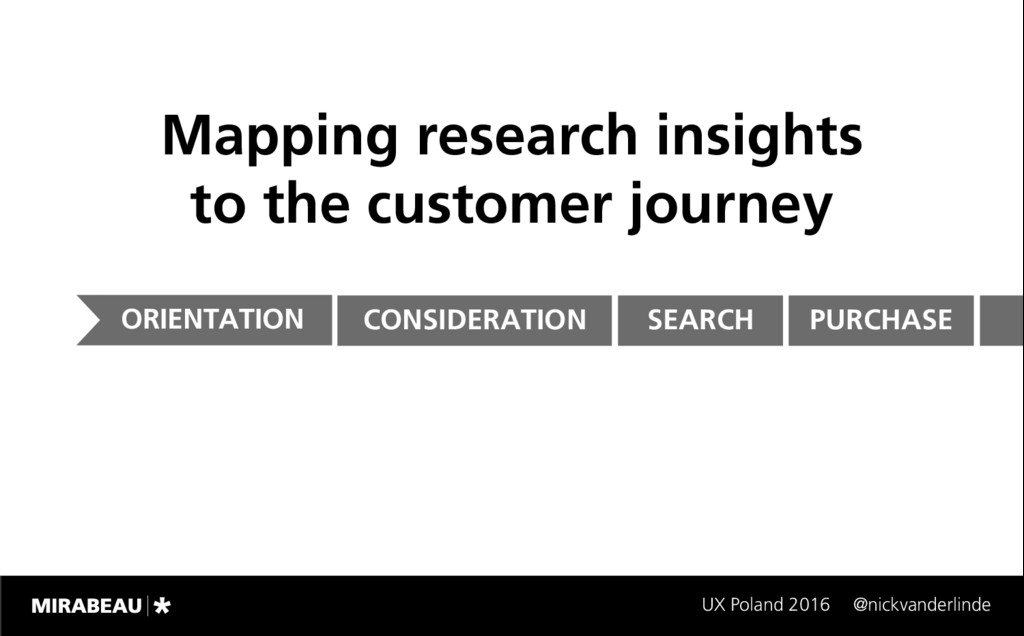
  5. @nickvanderlinde UX Poland 2016 Mapping research insights to the customer

    journey CONSIDERATION SEARCH PURCHASE ORIENTATION
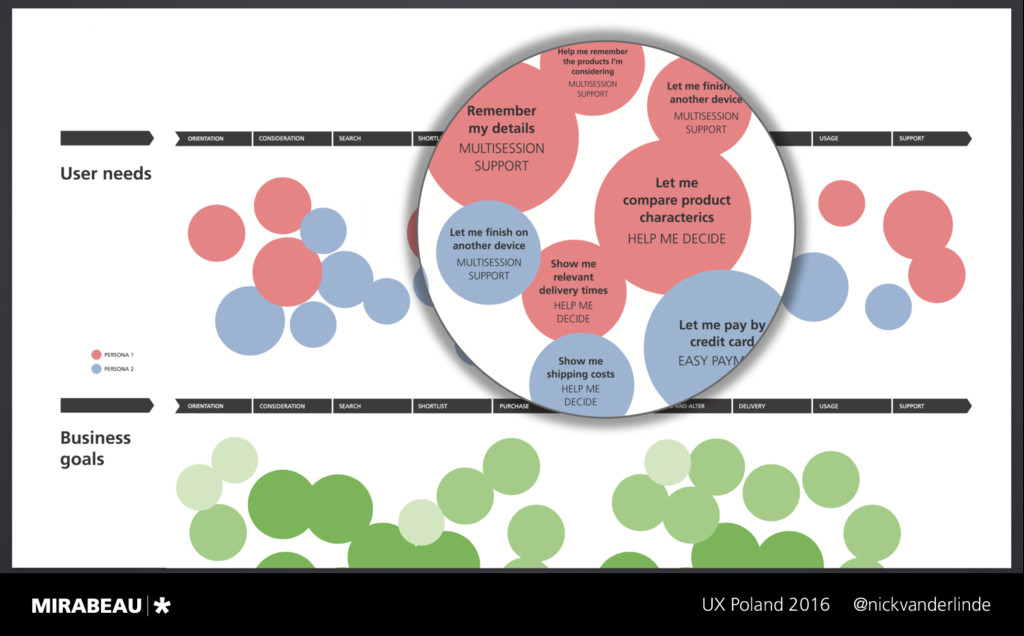
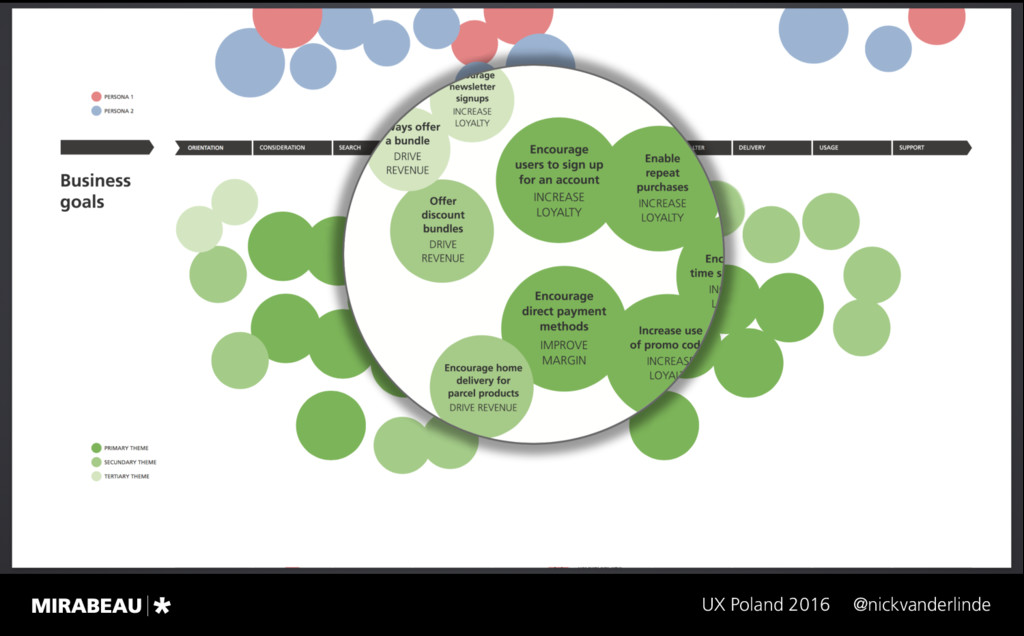
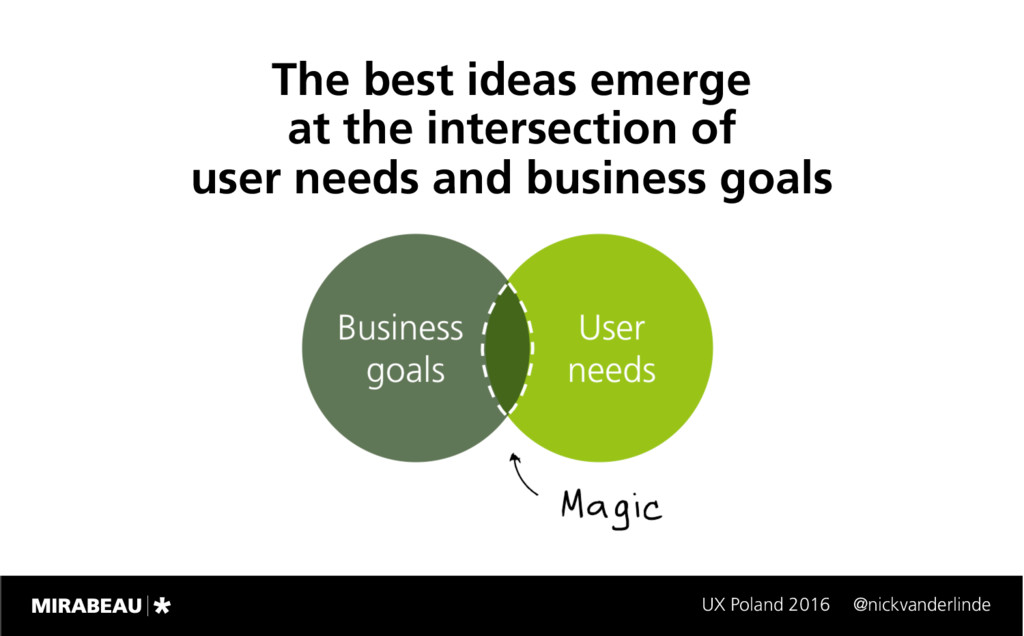
  6. @nickvanderlinde UX Poland 2016 The best ideas emerge at the

    intersection of user needs and business goals
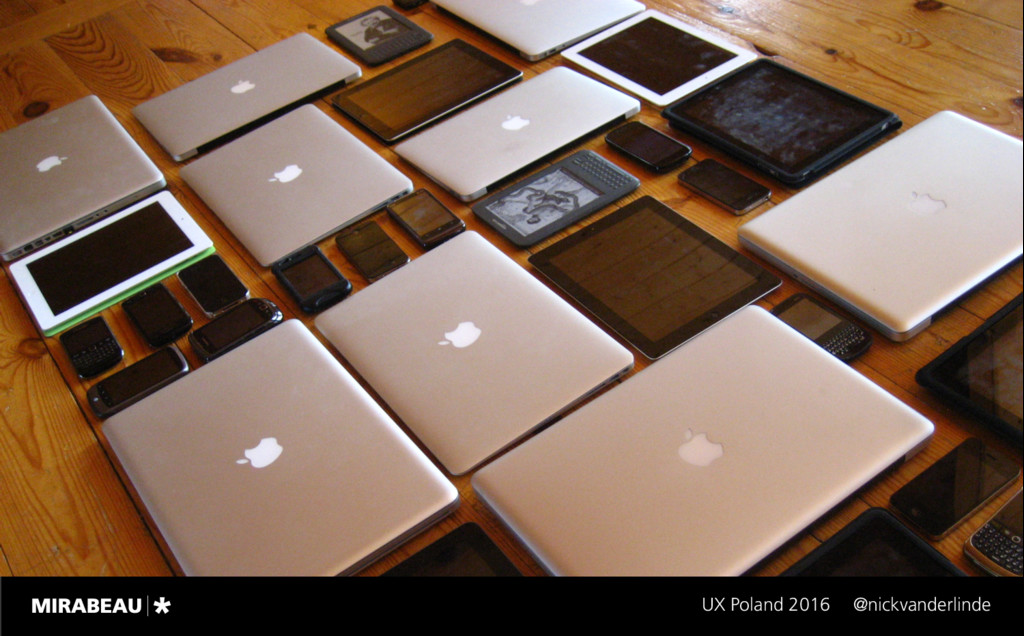
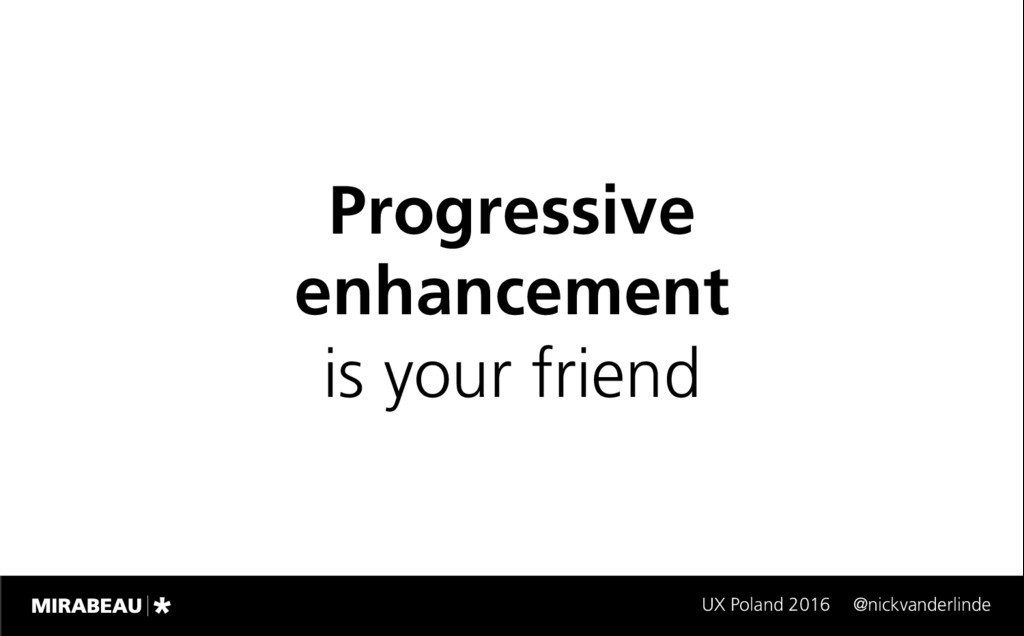
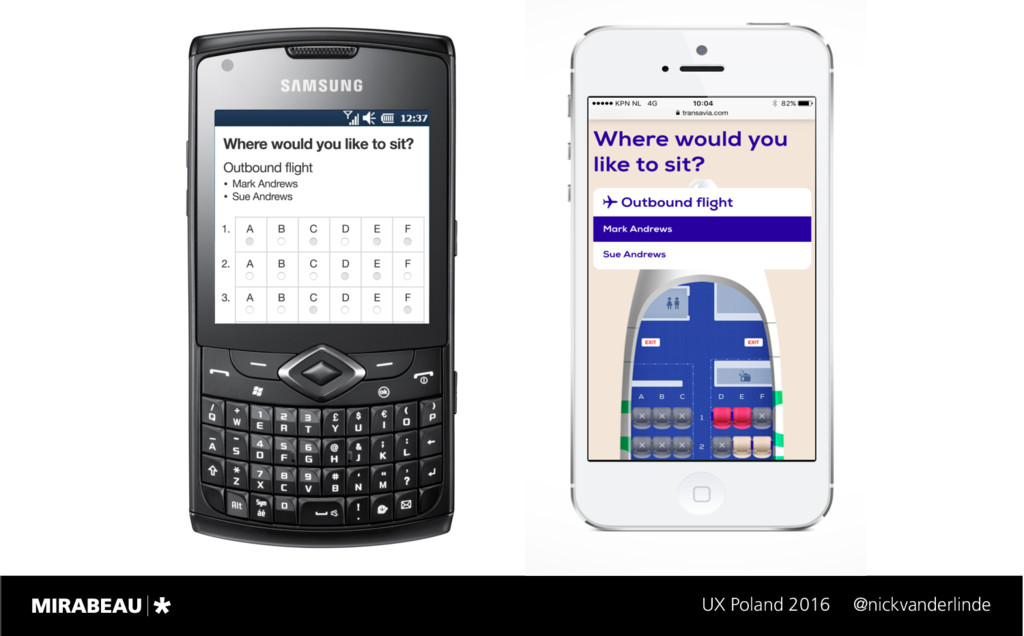
  7. @nickvanderlinde UX Poland 2016 Progressive enhancement means not making assumptions

    about Javascript, browsers, connectivity, screens, etc, We simply make things that works everywhere
  8. @nickvanderlinde UX Poland 2016 In practice, that means •  Core

    content (text & images) •  Radiobuttons, forms, selectboxes •  A simple, accessible experience
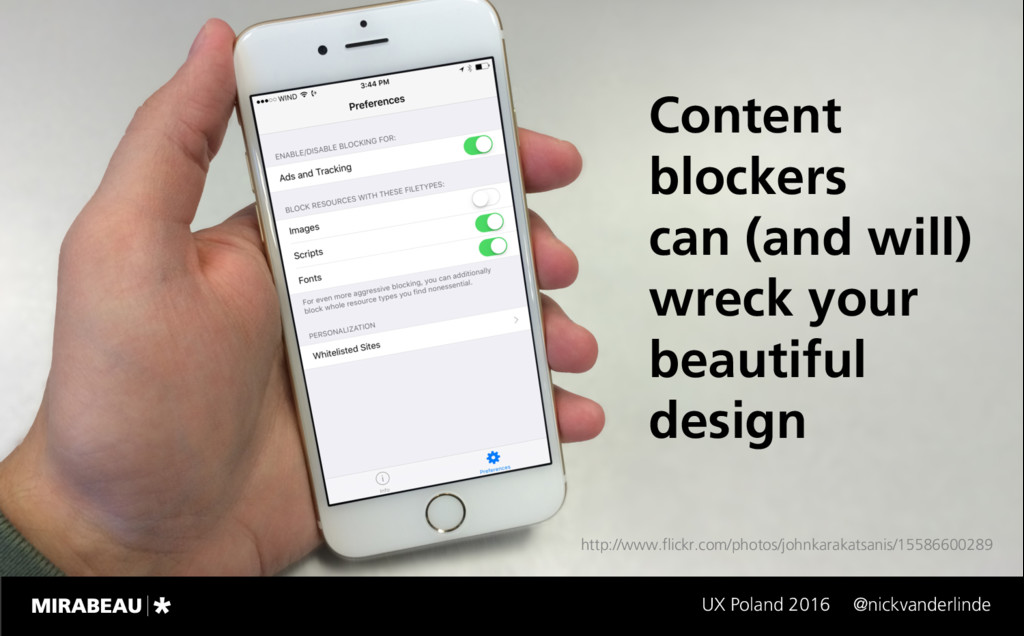
  9. @nickvanderlinde UX Poland 2016 Content blockers can (and will) wreck

    your beautiful design Content blockers can (and will) wreck your beautiful design http://www.flickr.com/photos/johnkarakatsanis/15586600289
  10. @nickvanderlinde UX Poland 2016 Exactly 0% of your users care

    about ‘cross-platform brand consistency (And no, product managers do not count) http://bou.io/crossplatformdevelopment.html
  11. @nickvanderlinde UX Poland 2016 Making sure your product works everywhere

    is incredibly liberating It allows us to move on quickly, and focus on the cool stuff
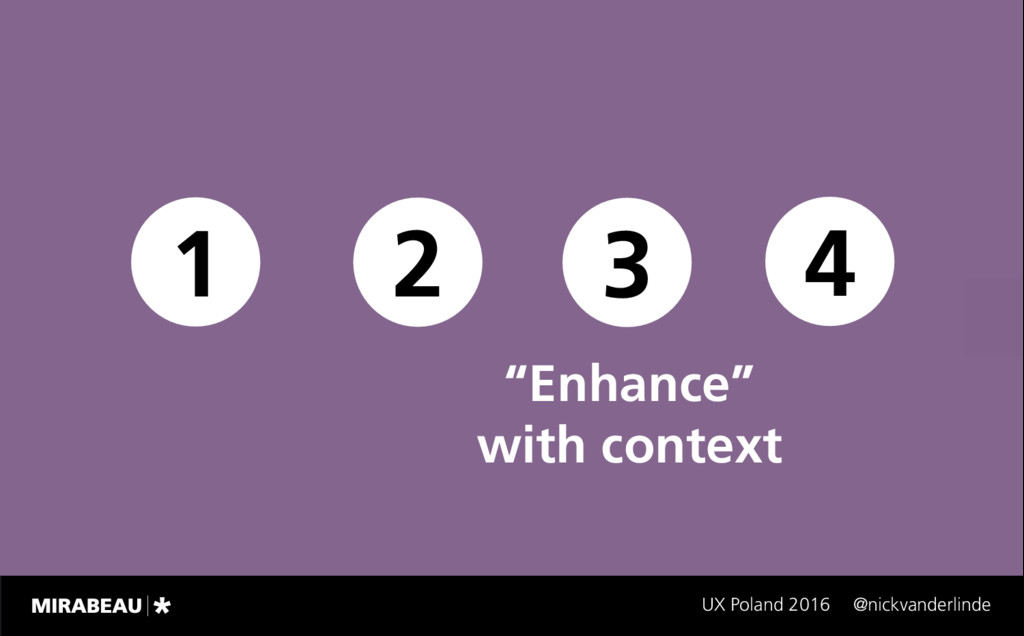
  12. @nickvanderlinde UX Poland 2016 Designing for context Focus on what

    matters Start with the basics Enhance with context Test early, keep improving 1 2 3 4
  13. @nickvanderlinde UX Poland 2016 No matter how sophisticated your context

    model or algorithm, your assumptions will often be wrong.
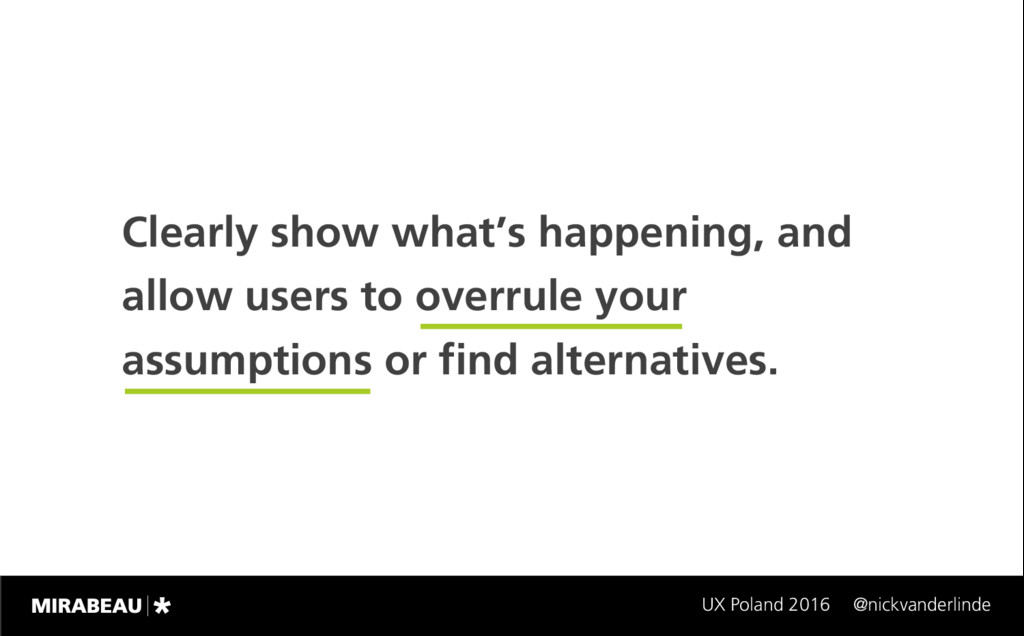
  14. @nickvanderlinde UX Poland 2016 Clearly show what’s happening, and allow

    users to overrule your assumptions or find alternatives.
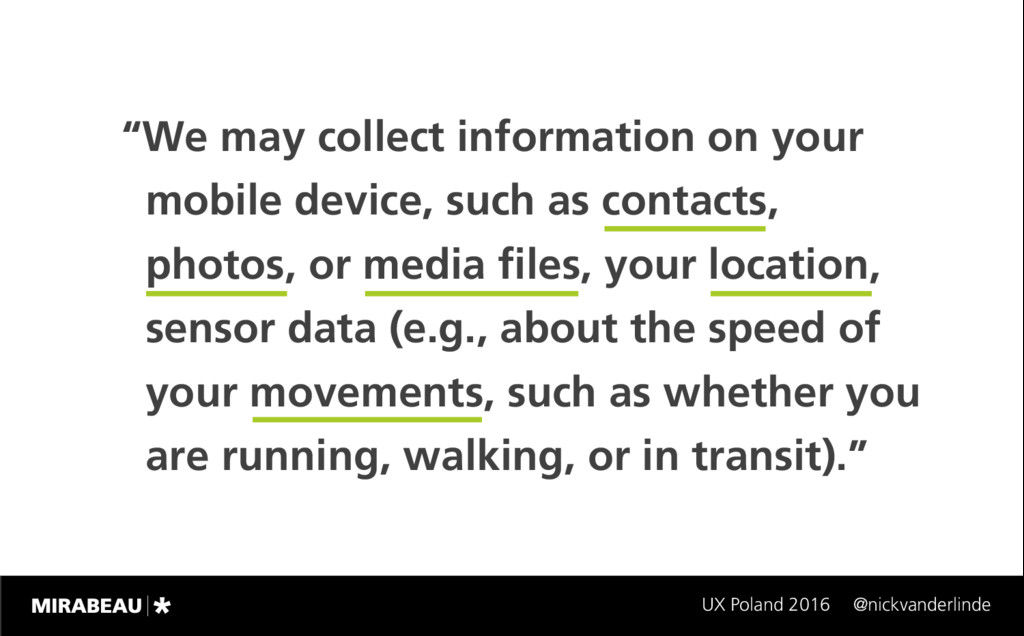
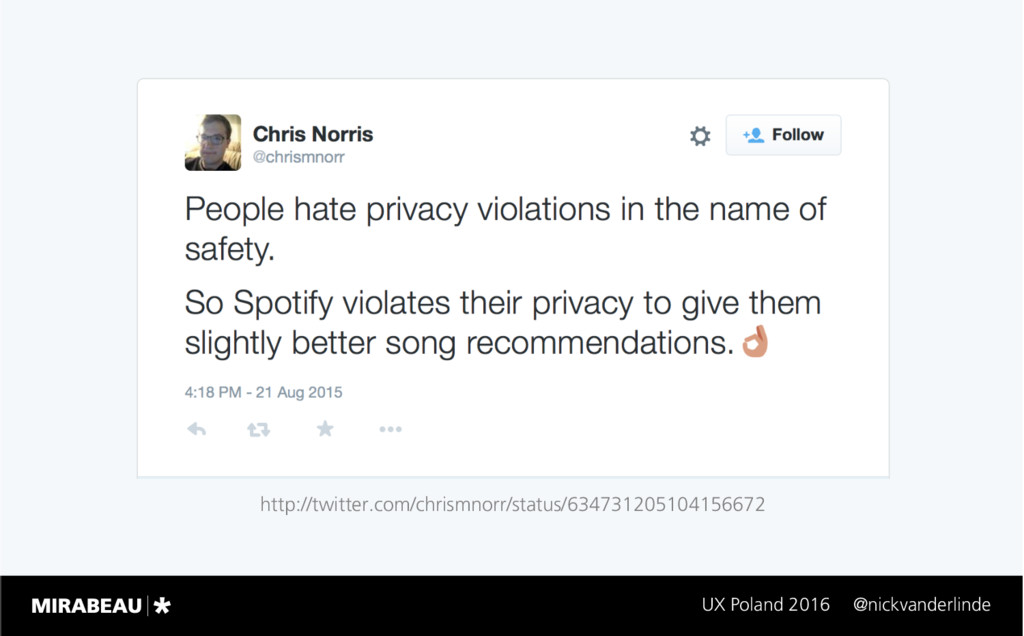
  15. @nickvanderlinde UX Poland 2016 “We may collect information on your

    mobile device, such as contacts, photos, or media files, your location, sensor data (e.g., about the speed of your movements, such as whether you are running, walking, or in transit).”
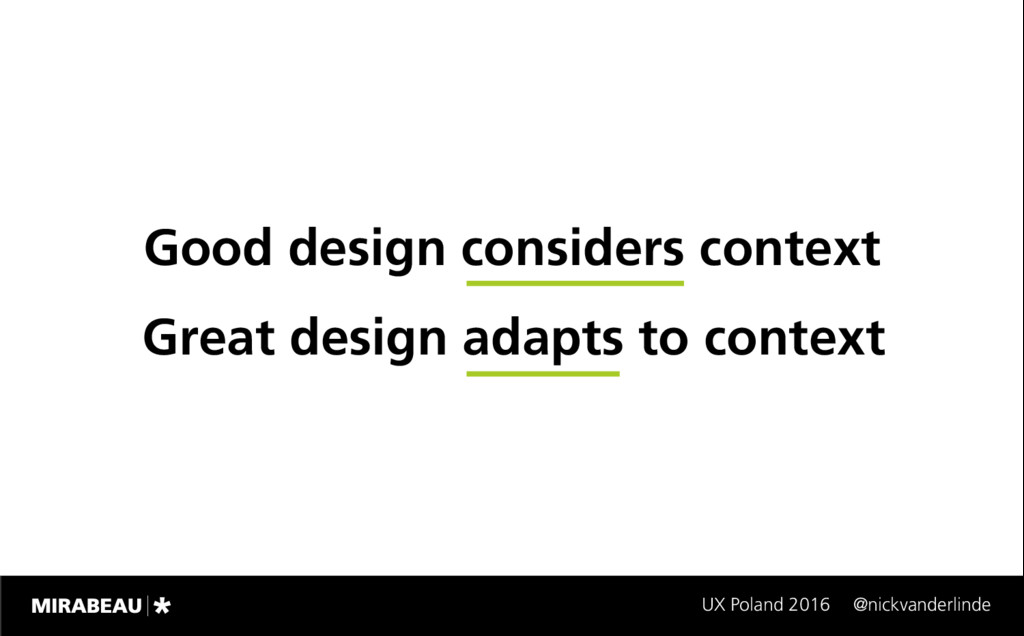
  16. @nickvanderlinde UX Poland 2016 As technology blends into every aspect

    of our lives, the need for digital products to consider and adapt to context becomes increasingly urgent