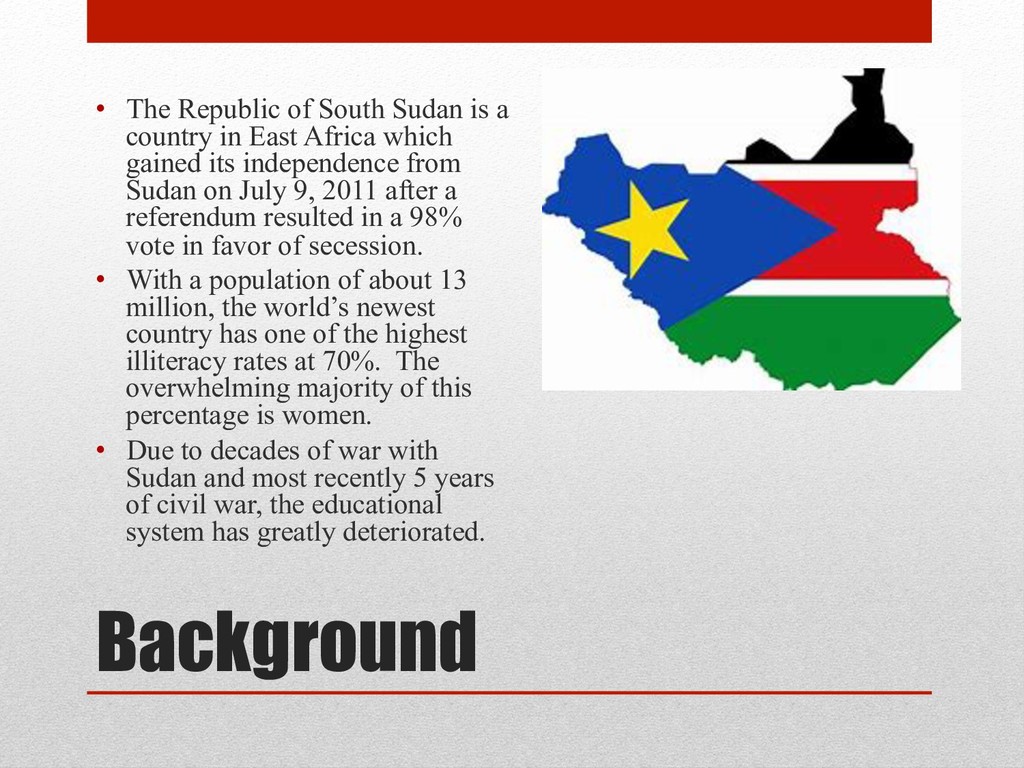
in East Africa which gained its independence from Sudan on July 9, 2011 after a referendum resulted in a 98% vote in favor of secession. • With a population of about 13 million, the world’s newest country has one of the highest illiteracy rates at 70%. The overwhelming majority of this percentage is women. • Due to decades of war with Sudan and most recently 5 years of civil war, the educational system has greatly deteriorated.
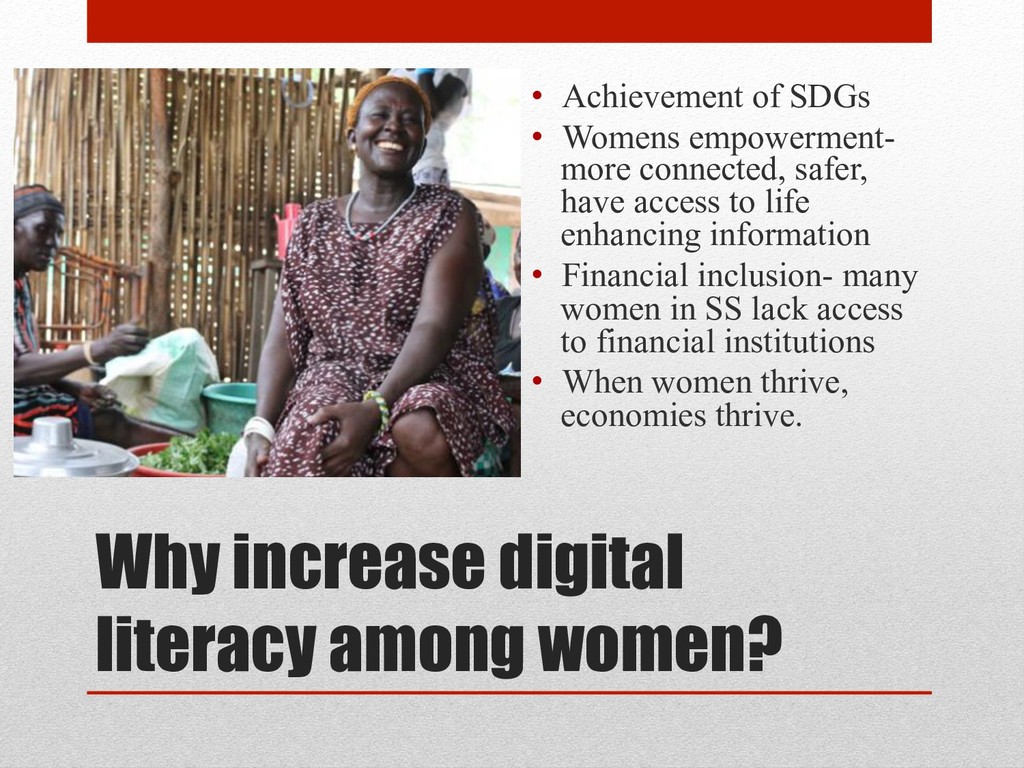
• Womens empowerment- more connected, safer, have access to life enhancing information • Financial inclusion- many women in SS lack access to financial institutions • When women thrive, economies thrive.
to afford mobile handsets and data fees due to economic instability and lack of control over household funds • Safety- issues of harassment, theft, rape, loss of life • Accessibility- lack of network coverage. SS has one of the least developed telecommunications systems and internet in the world. • Usability/Skills- lack of knowledge on how to use mobile handsets and services • Social and Cultural Norms • Lack of gender aggregated data- difficult to collect data in conflict zones
order to address the barriers facing women in achieving digital literacy. Ideally efforts should be led by the SS Government by: • Increasing its capacity and resources by reaching a lasting peace agreement that will end the current conflict- other stake holders will be more likely to invest in and develop SS’s telecommunications systems and internet services • Making gender consideration an integral part of policies, plans, and budgets • Creating a holistic strategy to ensure gender equality in ICT programs • Consult and involve women and other relevant communities • Ensuring cooperation and communication between other relevant stakeholders
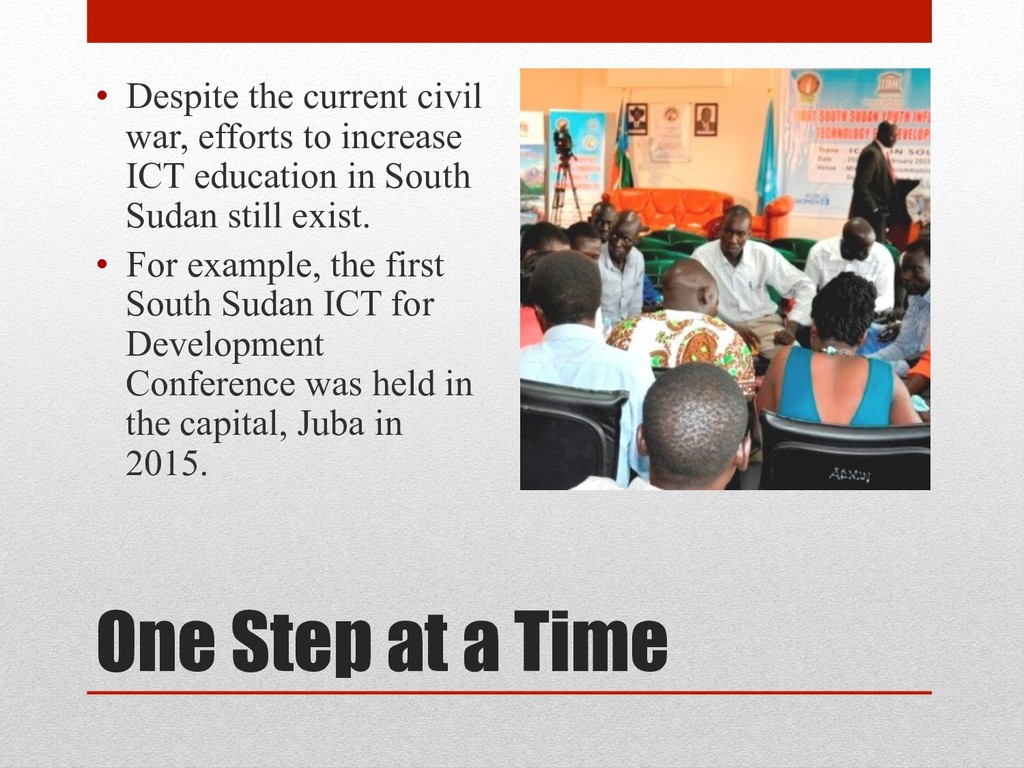
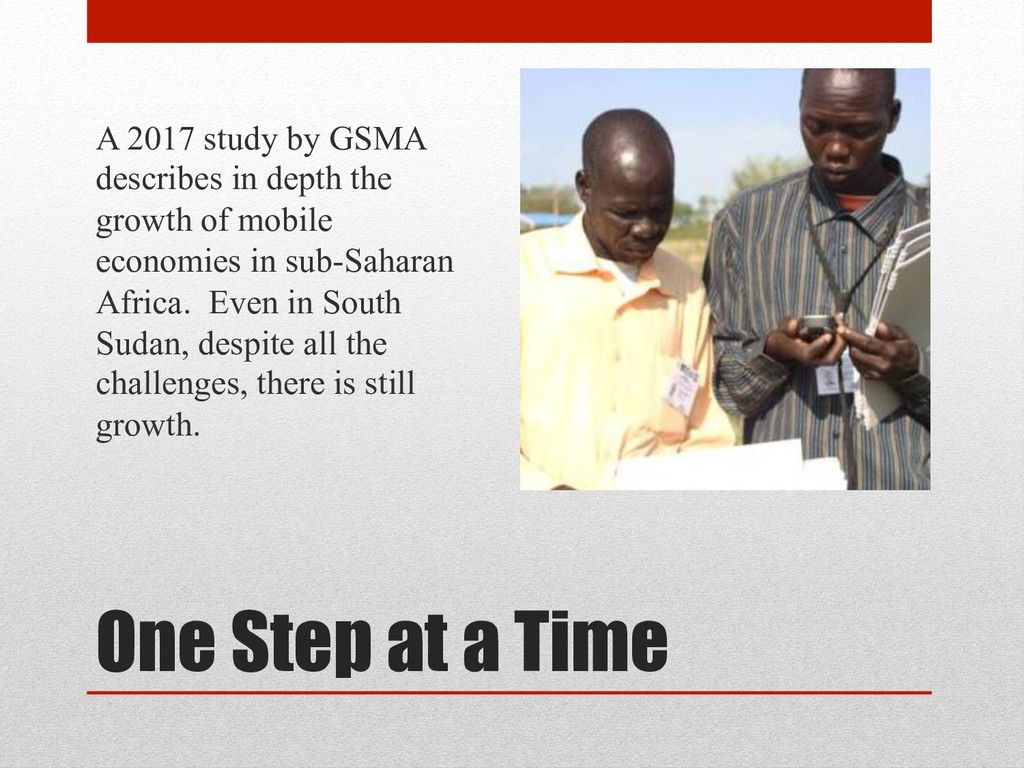
war, efforts to increase ICT education in South Sudan still exist. • For example, the first South Sudan ICT for Development Conference was held in the capital, Juba in 2015.
clip, the former Minister of Telecommunications & Postal Services, Hon. Rebecca Joshua Okwaci, describes the growing awareness of the benefits of connecting women to technology despite the challenges the country faces. https://news.un.org/en/audio/2014/09/591932


 spring_aki
 terazawa
 hiragahh
 hiola
hiola
 bvr7352
 pawan_pharm
 ytapples613
 kekekenta
 yatabe
 signer
 ainischool
 rmw
rmw
 cassininazir
 addyosmani
 jonrohan
 eileencodes
 letsgokoyo
 chriscoyier
 aleyda
 katarinadahlin
 lara
lara
 bluesmoon
 reverentgeek