Keio University’s Faculty of Policy Management in 1997, he worked at four private companies before becoming independent in 2009. He has been involved in network and database systems, Java Virtual Machine, mobile applications, and distributed systems. Takahiko Kawasaki He devised a unique architecture that modularizes and provides OAuth 2.0 / OpenID Connect implementations as SaaS — global standard technologies for Web API security and Identity Federation. In 2015, he founded Authlete, Inc. Currently, he participates in global standardization efforts and translates them into commercial implementations. Tech blog in English: https://darutk.medium.com Tech blog in Japanese: https://qiita.com/TakahikoKawasaki
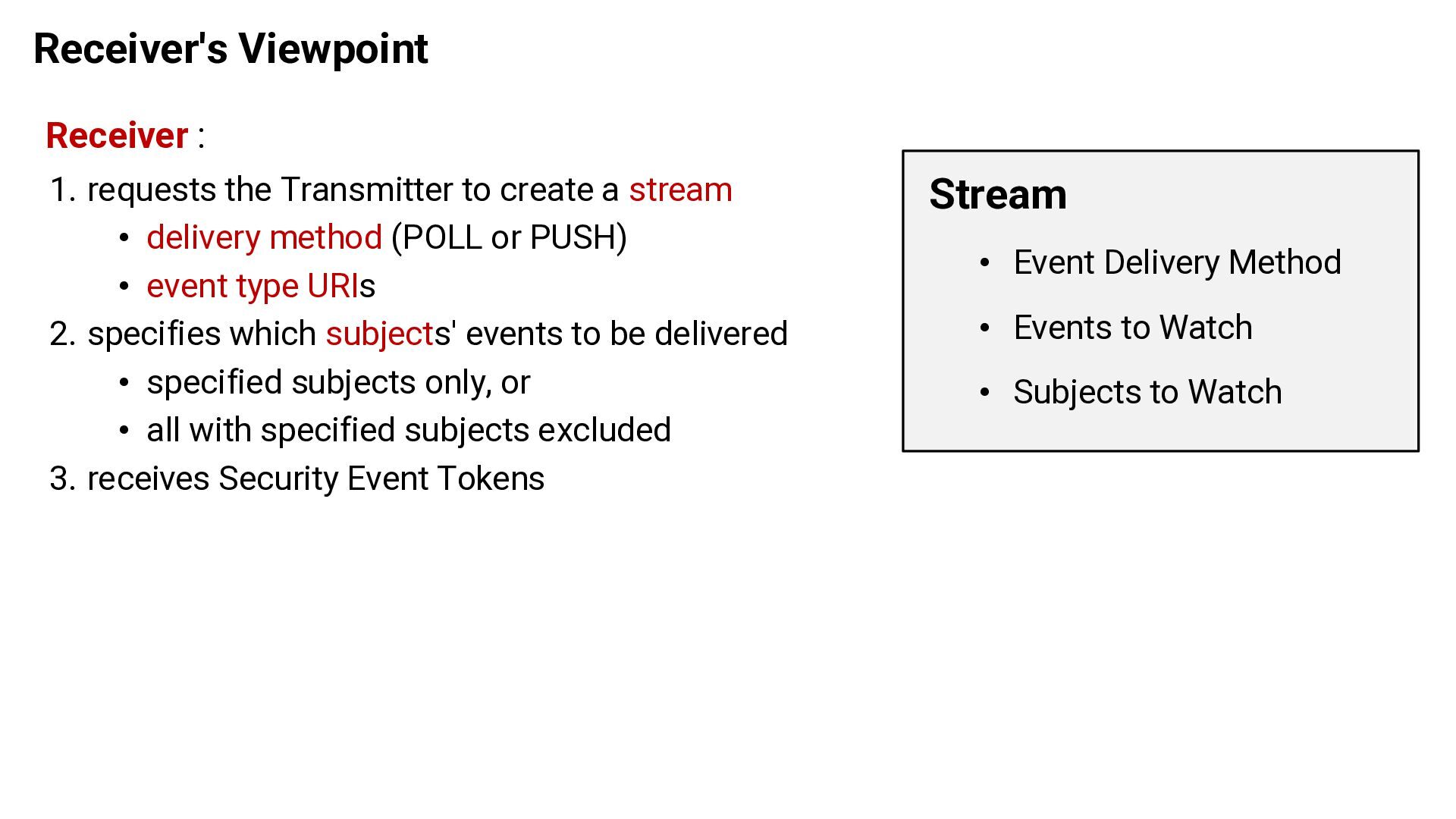
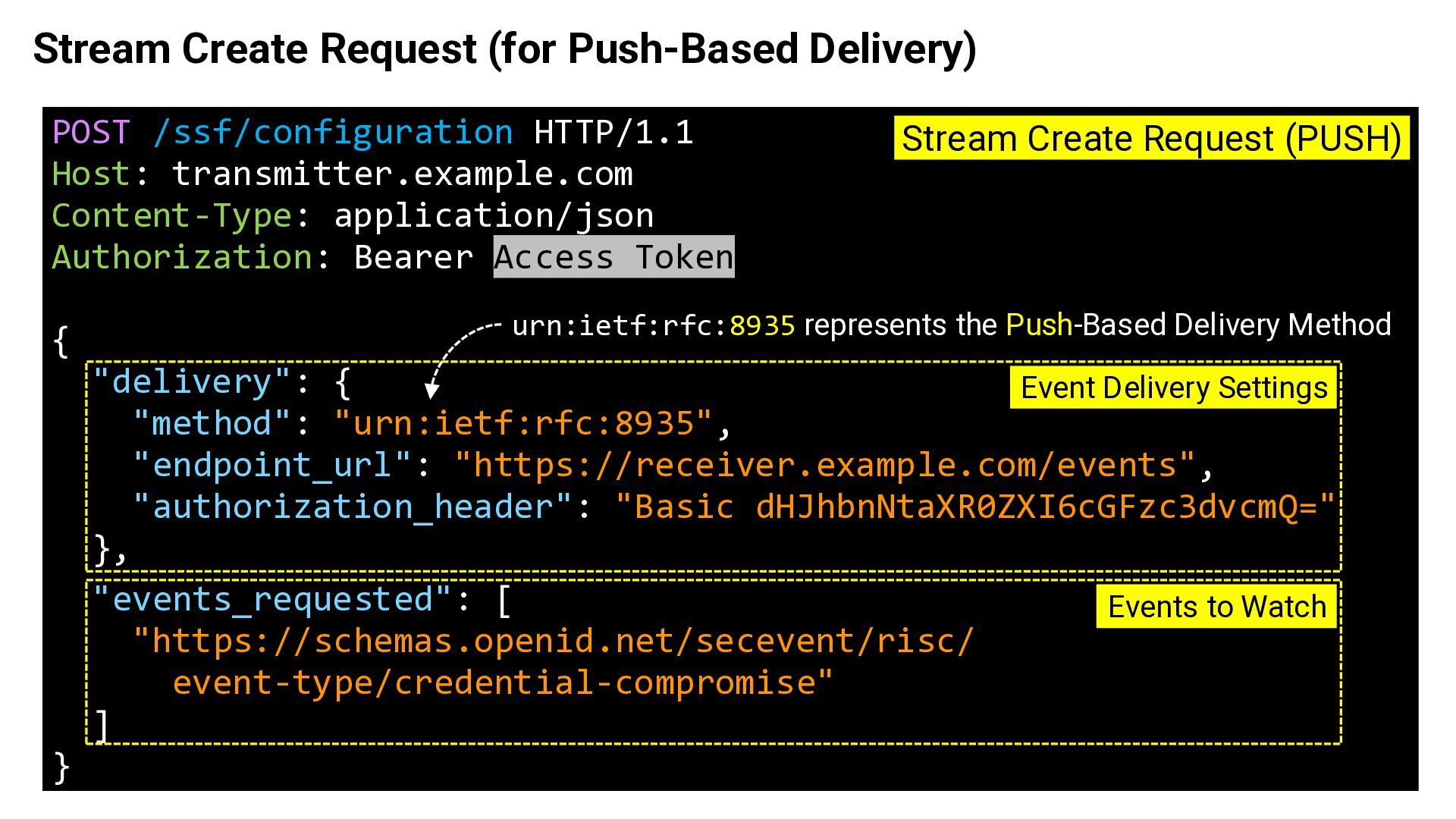
a stream • delivery method (POLL or PUSH) • event type URIs 2. specifies which subjects' events to be delivered • specified subjects only, or • all with specified subjects excluded 3. receives Security Event Tokens Stream • Event Delivery Method • Events to Watch • Subjects to Watch
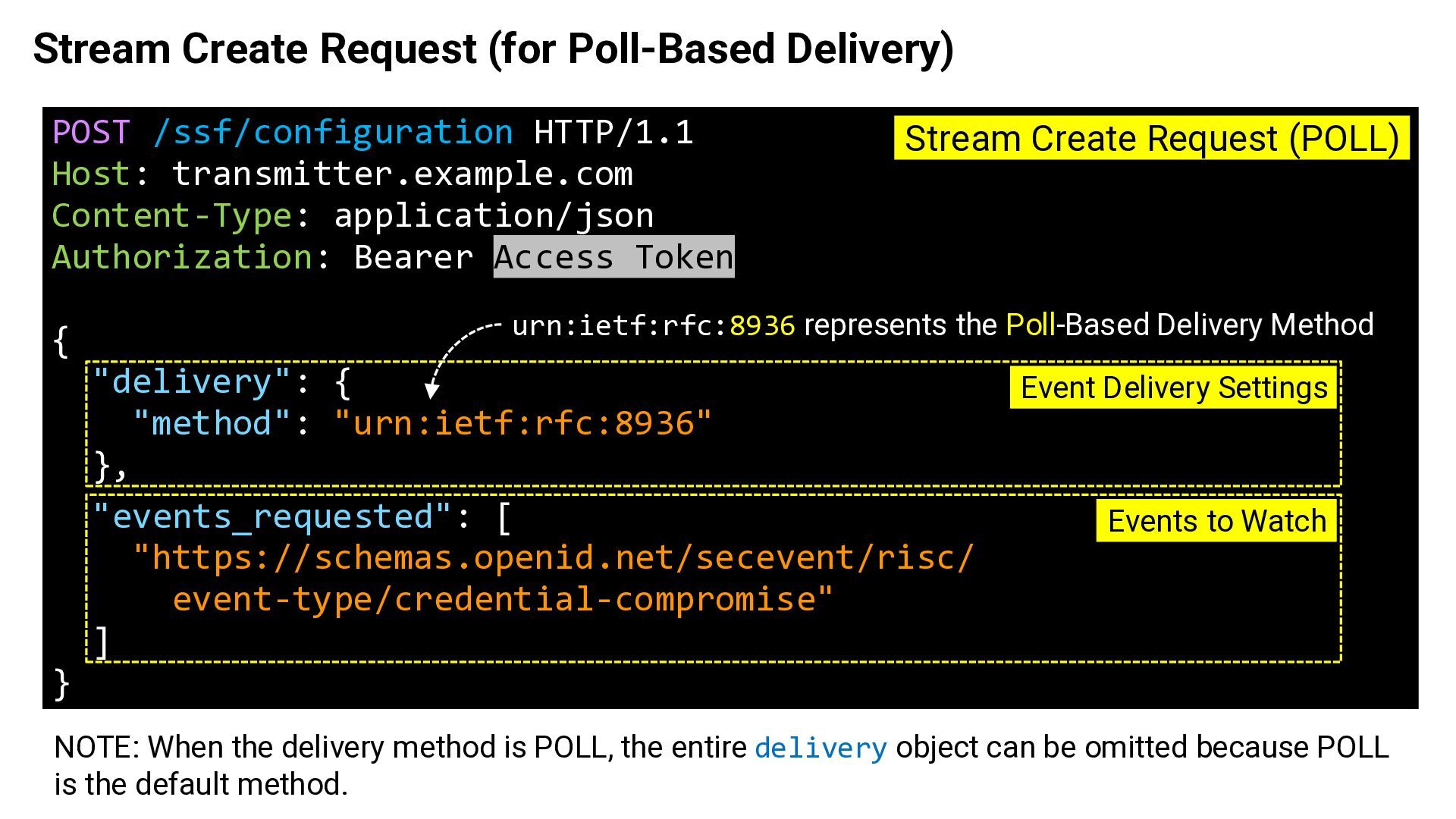
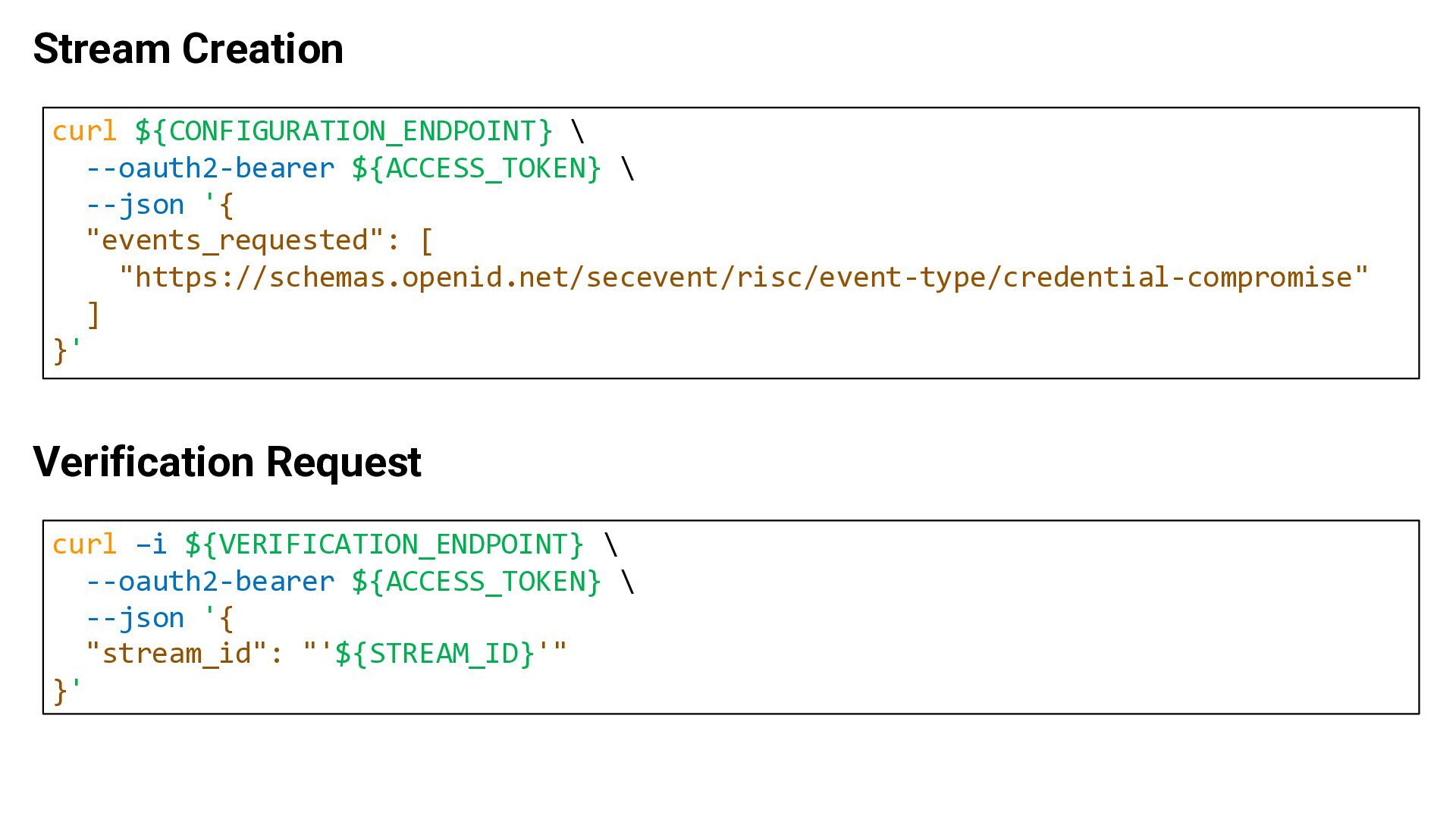
transmitter.example.com Content-Type: application/json Authorization: Bearer Access Token { Stream Create Request (POLL) urn:ietf:rfc:8936 represents the Poll-Based Delivery Method "delivery": { "method": "urn:ietf:rfc:8936" }, "events_requested": [ "https://schemas.openid.net/secevent/risc/ event-type/credential-compromise" ] Event Delivery Settings Events to Watch } NOTE: When the delivery method is POLL, the entire delivery object can be omitted because POLL is the default method.
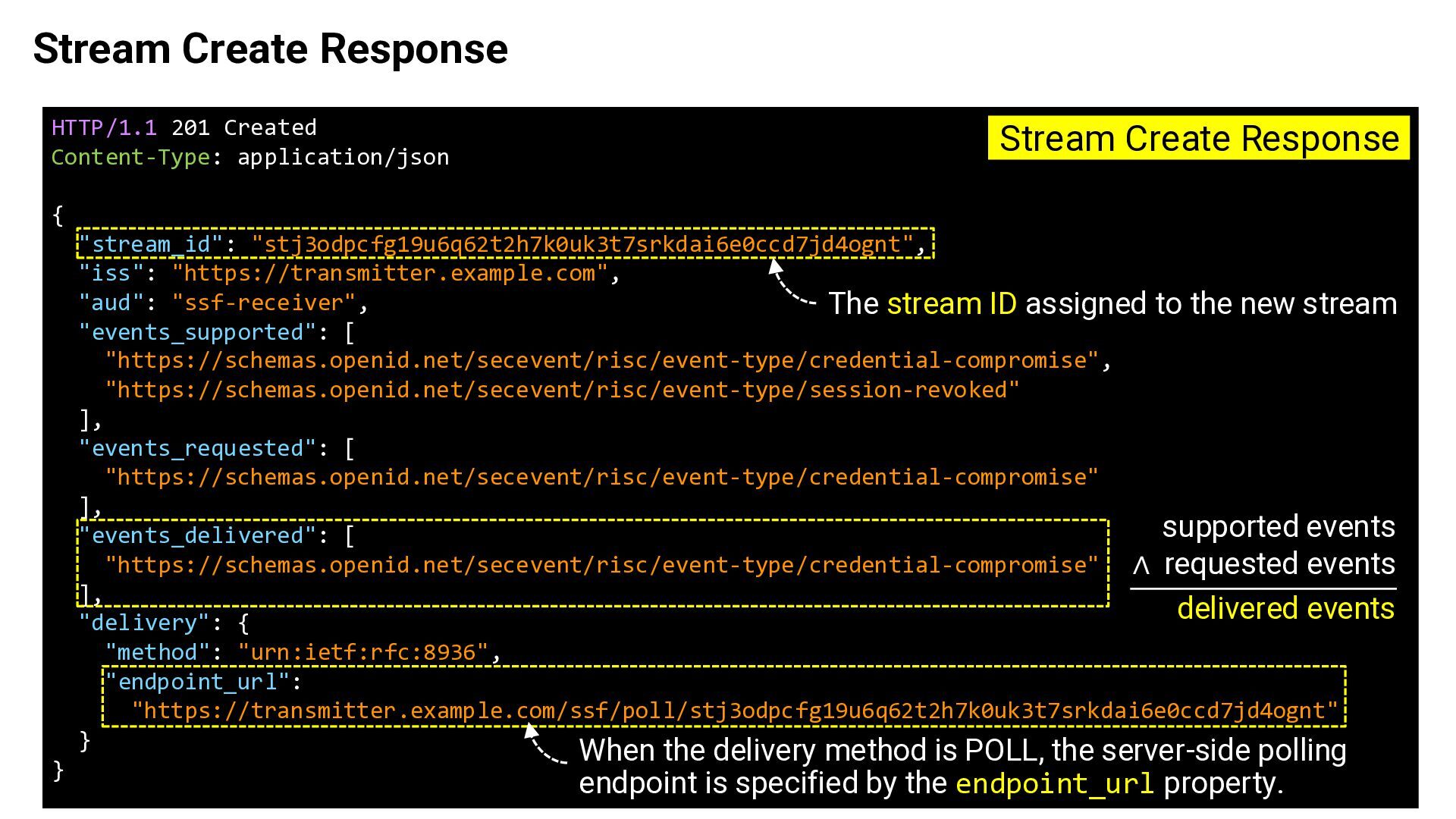
Response { "stream_id": "stj3odpcfg19u6q62t2h7k0uk3t7srkdai6e0ccd7jd4ognt", "iss": "https://transmitter.example.com", "aud": "ssf-receiver", The stream ID assigned to the new stream "events_supported": [ "https://schemas.openid.net/secevent/risc/event-type/credential-compromise", "https://schemas.openid.net/secevent/risc/event-type/session-revoked" ], "events_requested": [ "https://schemas.openid.net/secevent/risc/event-type/credential-compromise" ], supported events "events_delivered": [ "https://schemas.openid.net/secevent/risc/event-type/credential-compromise" ∧ requested events ], delivered events "delivery": { "method": "urn:ietf:rfc:8936", "endpoint_url": "https://transmitter.example.com/ssf/poll/stj3odpcfg19u6q62t2h7k0uk3t7srkdai6e0ccd7jd4ognt" } } When the delivery method is POLL, the server-side polling endpoint is specified by the endpoint_url property.
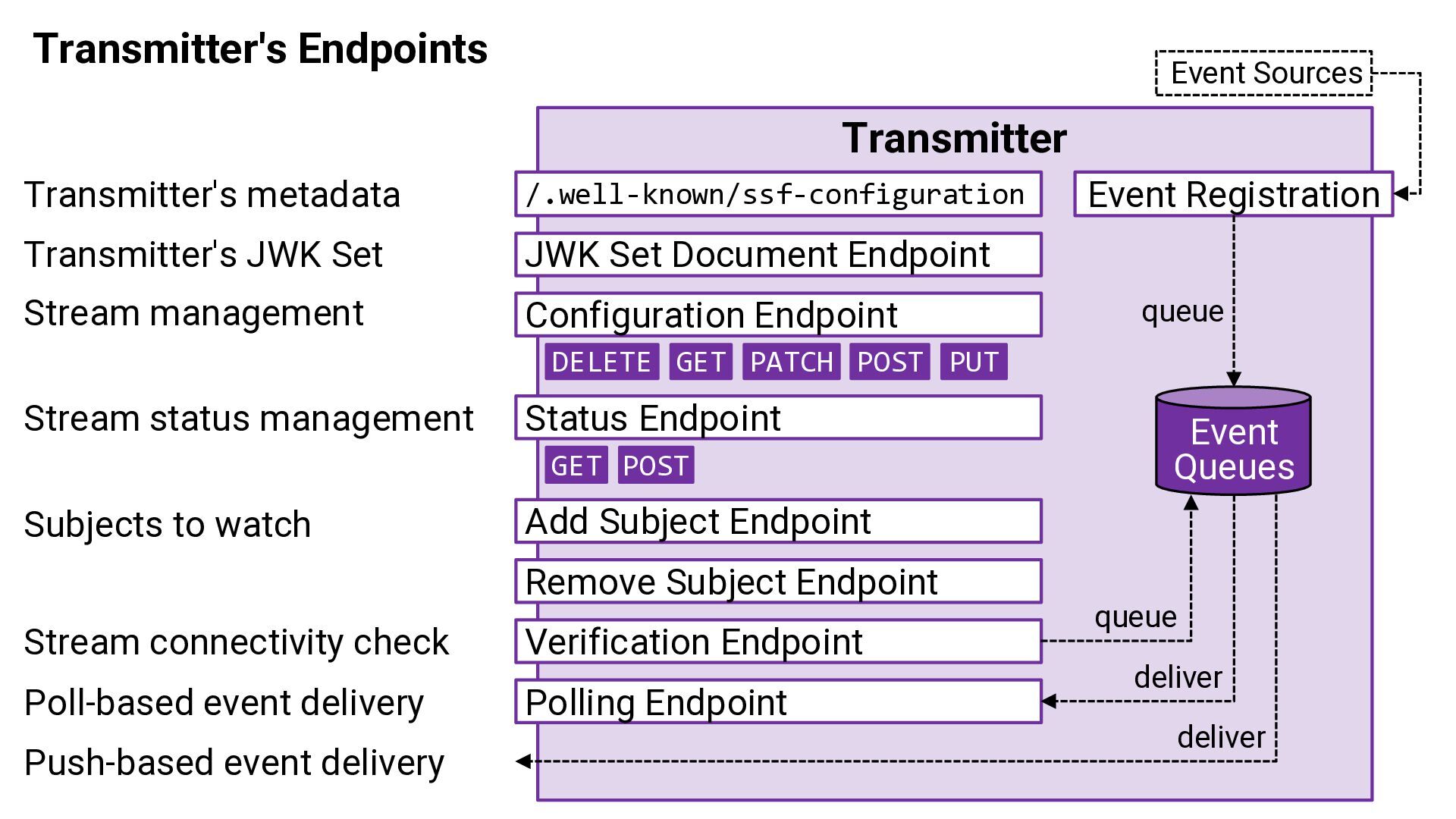
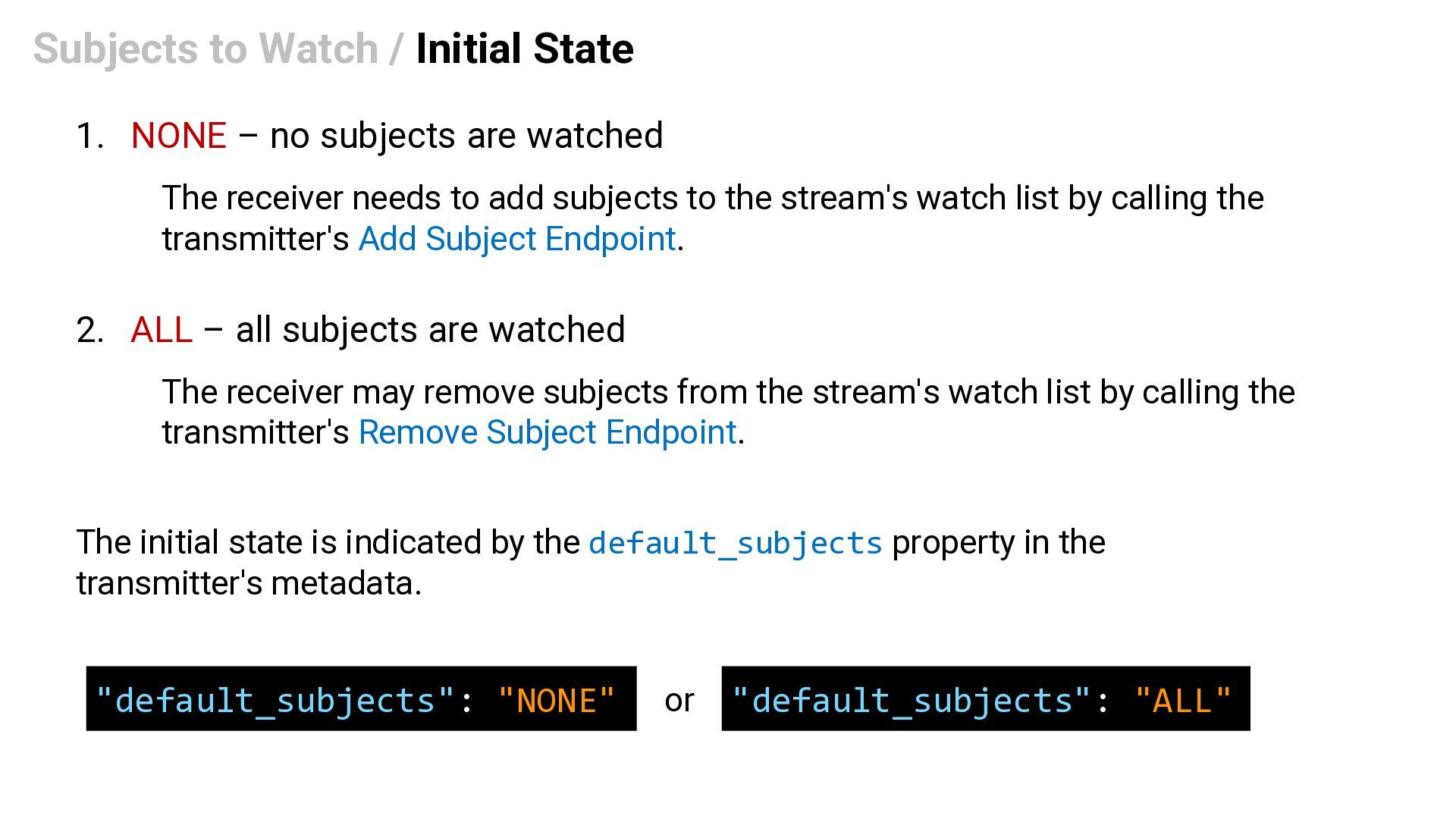
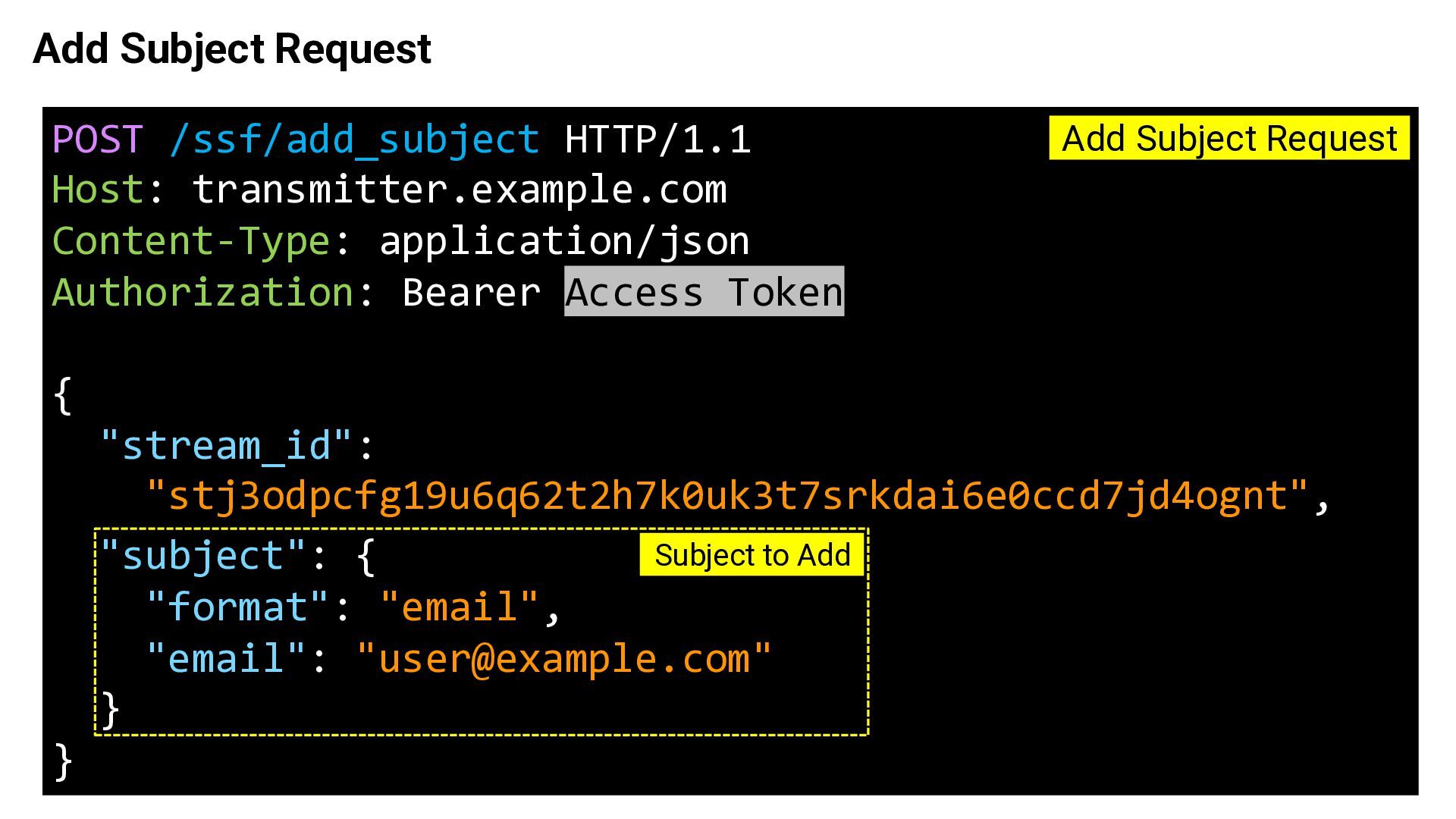
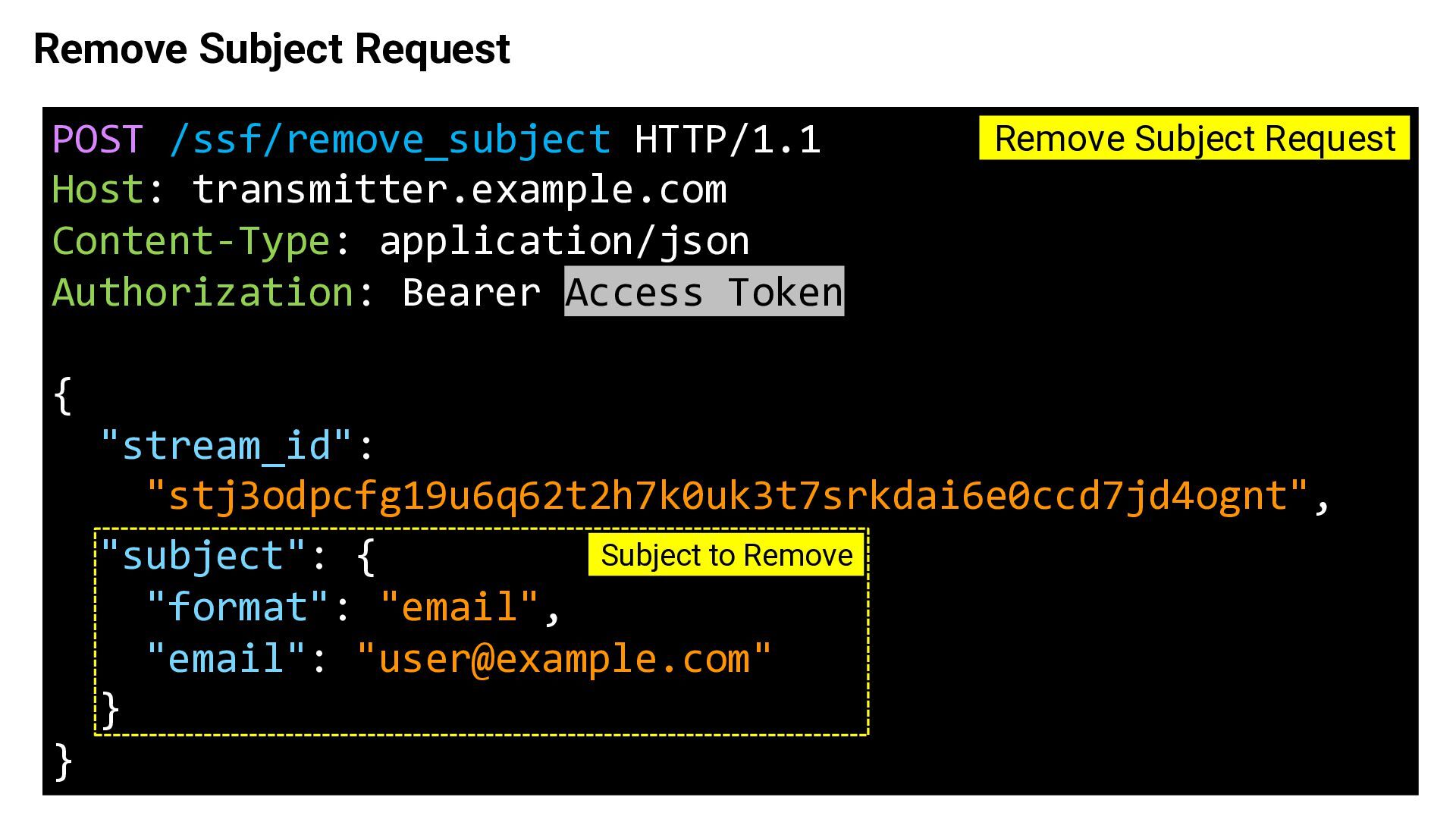
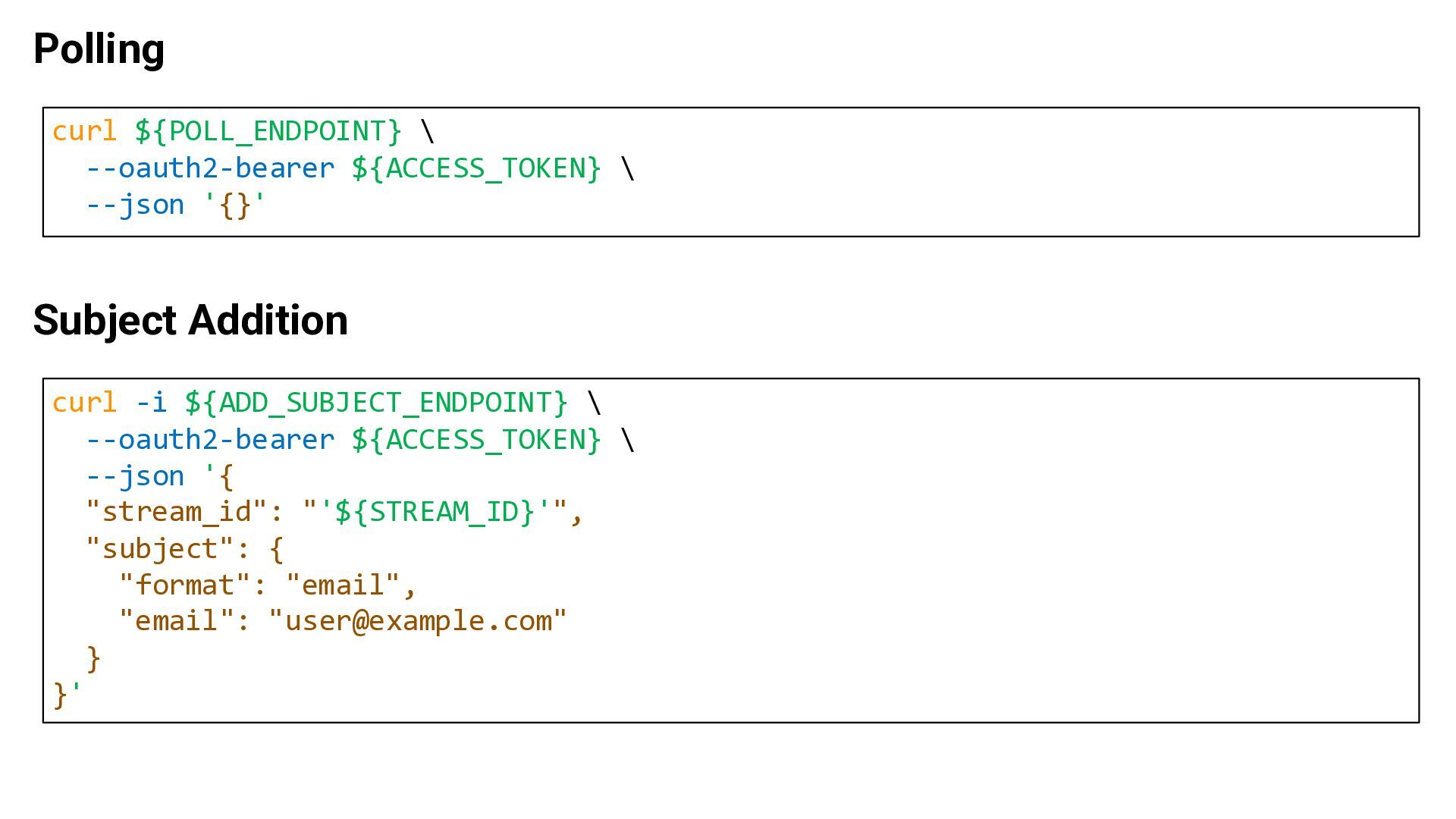
subjects are watched The receiver needs to add subjects to the stream's watch list by calling the transmitter's Add Subject Endpoint. 2. ALL – all subjects are watched The receiver may remove subjects from the stream's watch list by calling the transmitter's Remove Subject Endpoint. The initial state is indicated by the default_subjects property in the transmitter's metadata. "default_subjects": "NONE" or "default_subjects": "ALL"
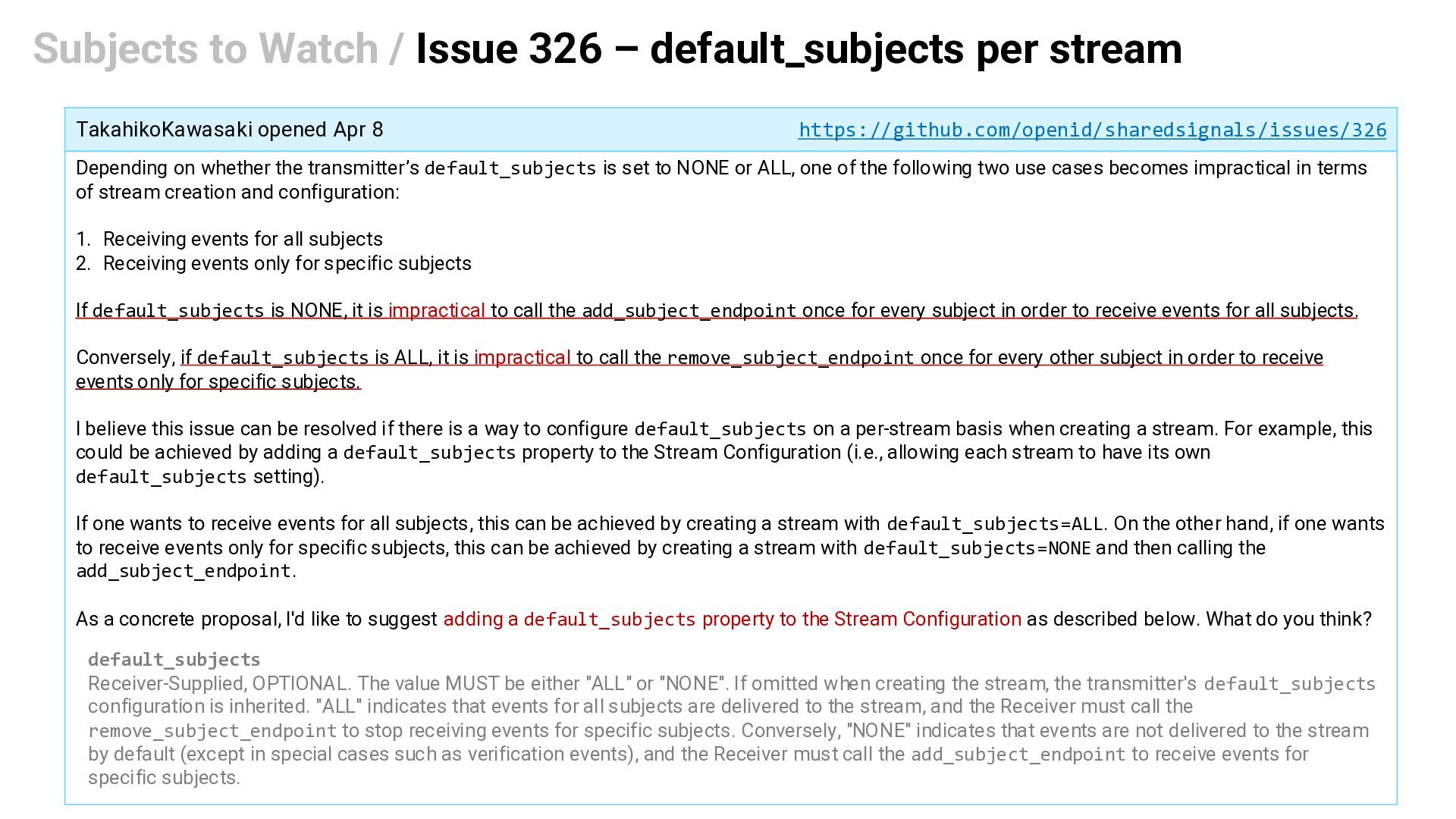
TakahikoKawasaki opened Apr 8 https://github.com/openid/sharedsignals/issues/326 Depending on whether the transmitter’s default_subjects is set to NONE or ALL, one of the following two use cases becomes impractical in terms of stream creation and configuration: 1. Receiving events for all subjects 2. Receiving events only for specific subjects If default_subjects is NONE, it is impractical to call the add_subject_endpoint once for every subject in order to receive events for all subjects. Conversely, if default_subjects is ALL, it is impractical to call the remove_subject_endpoint once for every other subject in order to receive events only for specific subjects. I believe this issue can be resolved if there is a way to configure default_subjects on a per-stream basis when creating a stream. For example, this could be achieved by adding a default_subjects property to the Stream Configuration (i.e., allowing each stream to have its own default_subjects setting). If one wants to receive events for all subjects, this can be achieved by creating a stream with default_subjects=ALL. On the other hand, if one wants to receive events only for specific subjects, this can be achieved by creating a stream with default_subjects=NONE and then calling the add_subject_endpoint. As a concrete proposal, I'd like to suggest adding a default_subjects property to the Stream Configuration as described below. What do you think? default_subjects Receiver-Supplied, OPTIONAL. The value MUST be either "ALL" or "NONE". If omitted when creating the stream, the transmitter's default_subjects configuration is inherited. "ALL" indicates that events for all subjects are delivered to the stream, and the Receiver must call the remove_subject_endpoint to stop receiving events for specific subjects. Conversely, "NONE" indicates that events are not delivered to the stream by default (except in special cases such as verification events), and the Receiver must call the add_subject_endpoint to receive events for specific subjects.
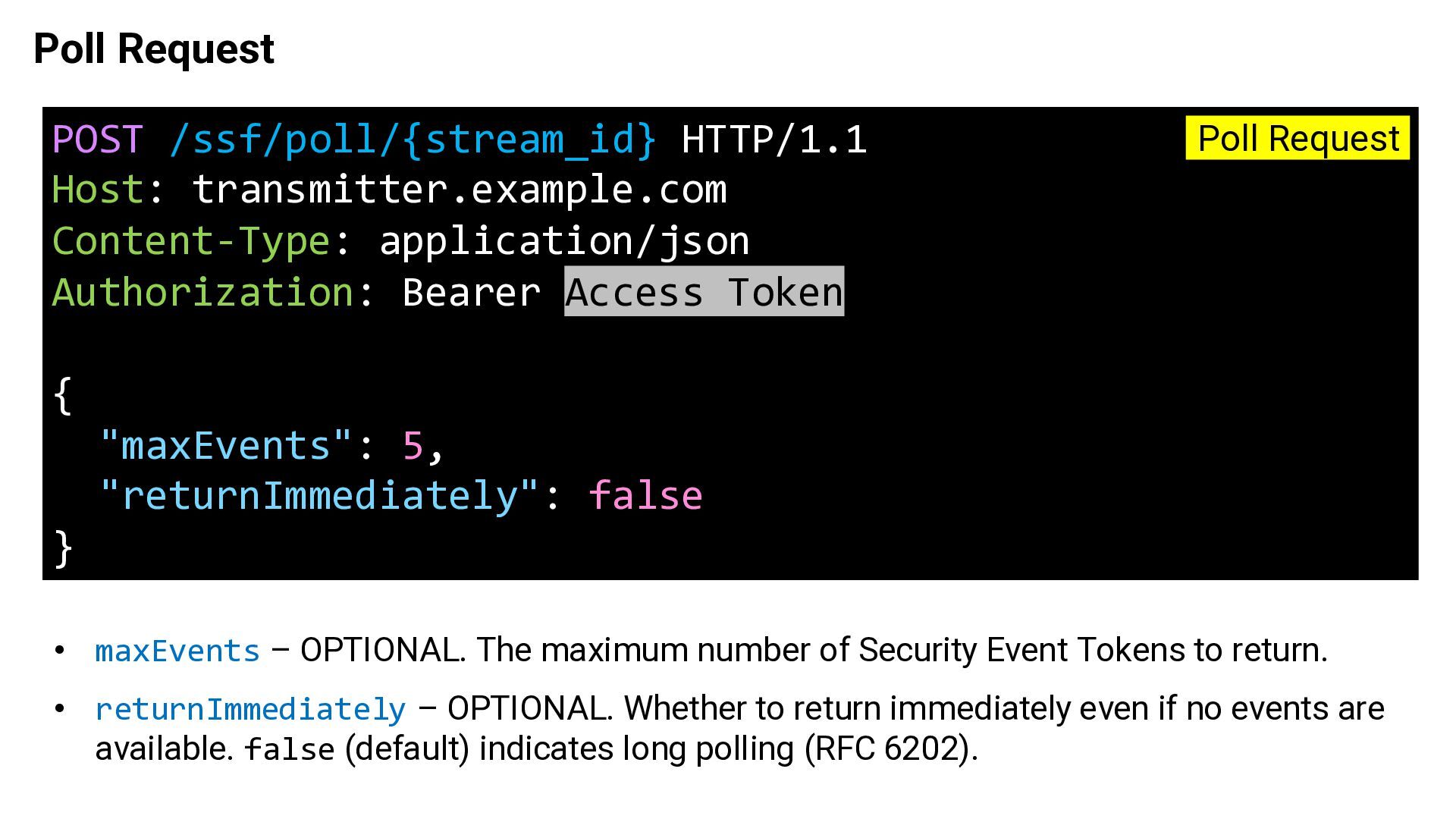
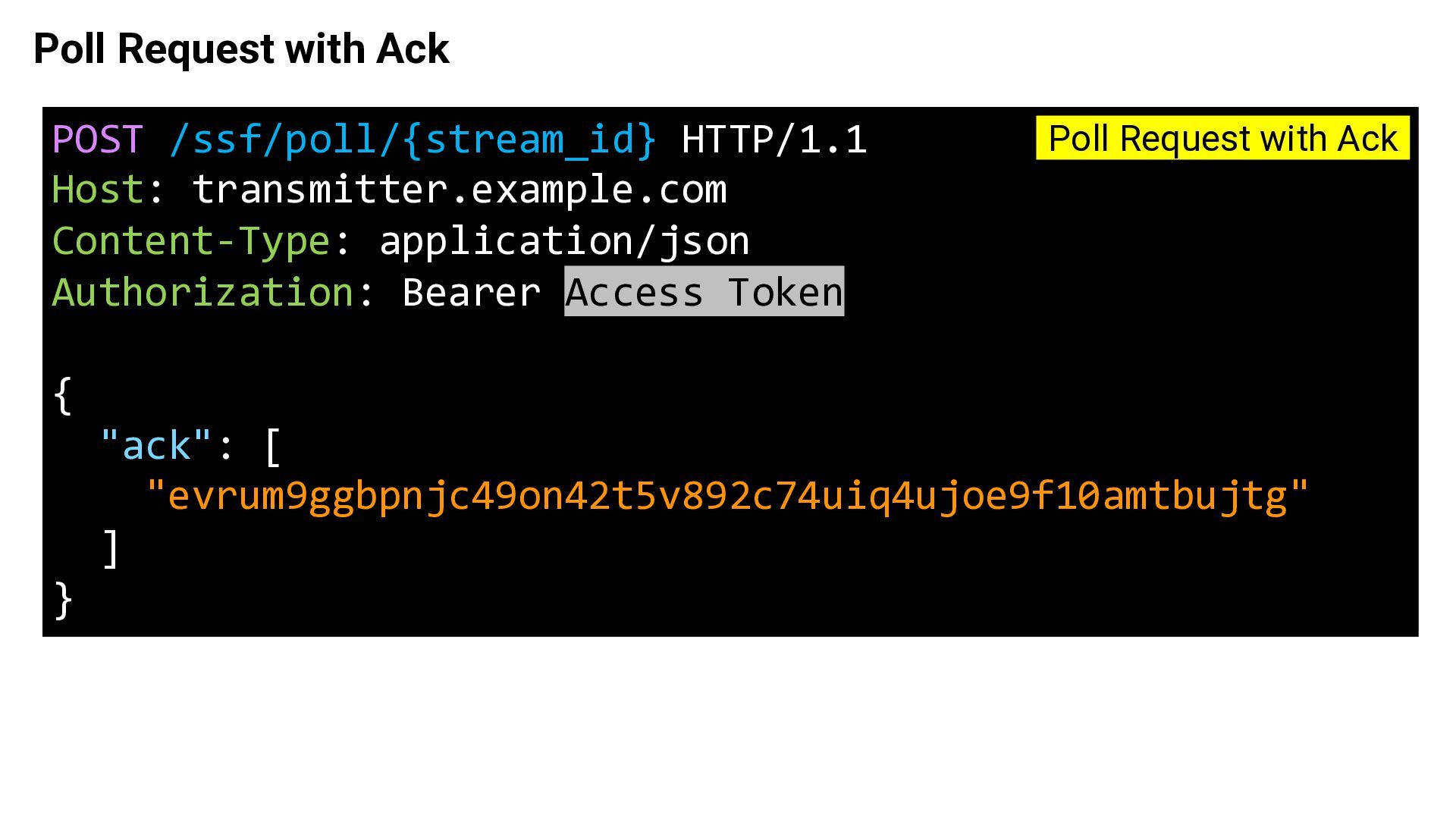
Bearer Access Token Poll Request { "maxEvents": 5, "returnImmediately": false } • maxEvents – OPTIONAL. The maximum number of Security Event Tokens to return. • returnImmediately – OPTIONAL. Whether to return immediately even if no events are available. false (default) indicates long polling (RFC 6202).
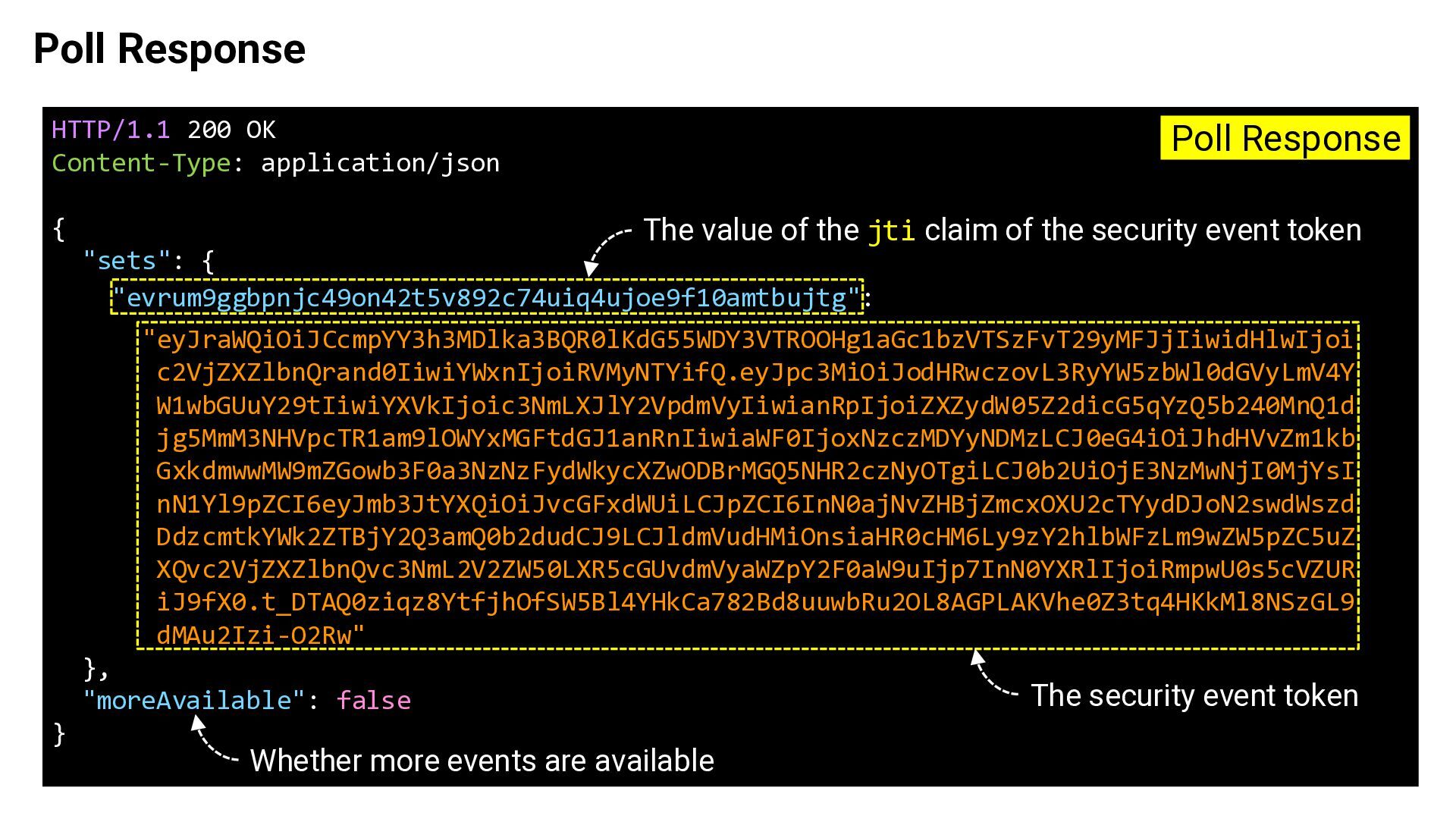
value of the jti claim of the security event token { "sets": { "evrum9ggbpnjc49on42t5v892c74uiq4ujoe9f10amtbujtg": "eyJraWQiOiJCcmpYY3h3MDlka3BQR0lKdG55WDY3VTROOHg1aGc1bzVTSzFvT29yMFJjIiwidHlwIjoi c2VjZXZlbnQrand0IiwiYWxnIjoiRVMyNTYifQ.eyJpc3MiOiJodHRwczovL3RyYW5zbWl0dGVyLmV4Y W1wbGUuY29tIiwiYXVkIjoic3NmLXJlY2VpdmVyIiwianRpIjoiZXZydW05Z2dicG5qYzQ5b240MnQ1d jg5MmM3NHVpcTR1am9lOWYxMGFtdGJ1anRnIiwiaWF0IjoxNzczMDYyNDMzLCJ0eG4iOiJhdHVvZm1kb GxkdmwwMW9mZGowb3F0a3NzNzFydWkycXZwODBrMGQ5NHR2czNyOTgiLCJ0b2UiOjE3NzMwNjI0MjYsI nN1Yl9pZCI6eyJmb3JtYXQiOiJvcGFxdWUiLCJpZCI6InN0ajNvZHBjZmcxOXU2cTYydDJoN2swdWszd DdzcmtkYWk2ZTBjY2Q3amQ0b2dudCJ9LCJldmVudHMiOnsiaHR0cHM6Ly9zY2hlbWFzLm9wZW5pZC5uZ XQvc2VjZXZlbnQvc3NmL2V2ZW50LXR5cGUvdmVyaWZpY2F0aW9uIjp7InN0YXRlIjoiRmpwU0s5cVZUR iJ9fX0.t_DTAQ0ziqz8YtfjhOfSW5Bl4YHkCa782Bd8uuwbRu2OL8AGPLAKVhe0Z3tq4HKkMl8NSzGL9 dMAu2Izi-O2Rw" }, "moreAvailable": false } Whether more events are available The security event token
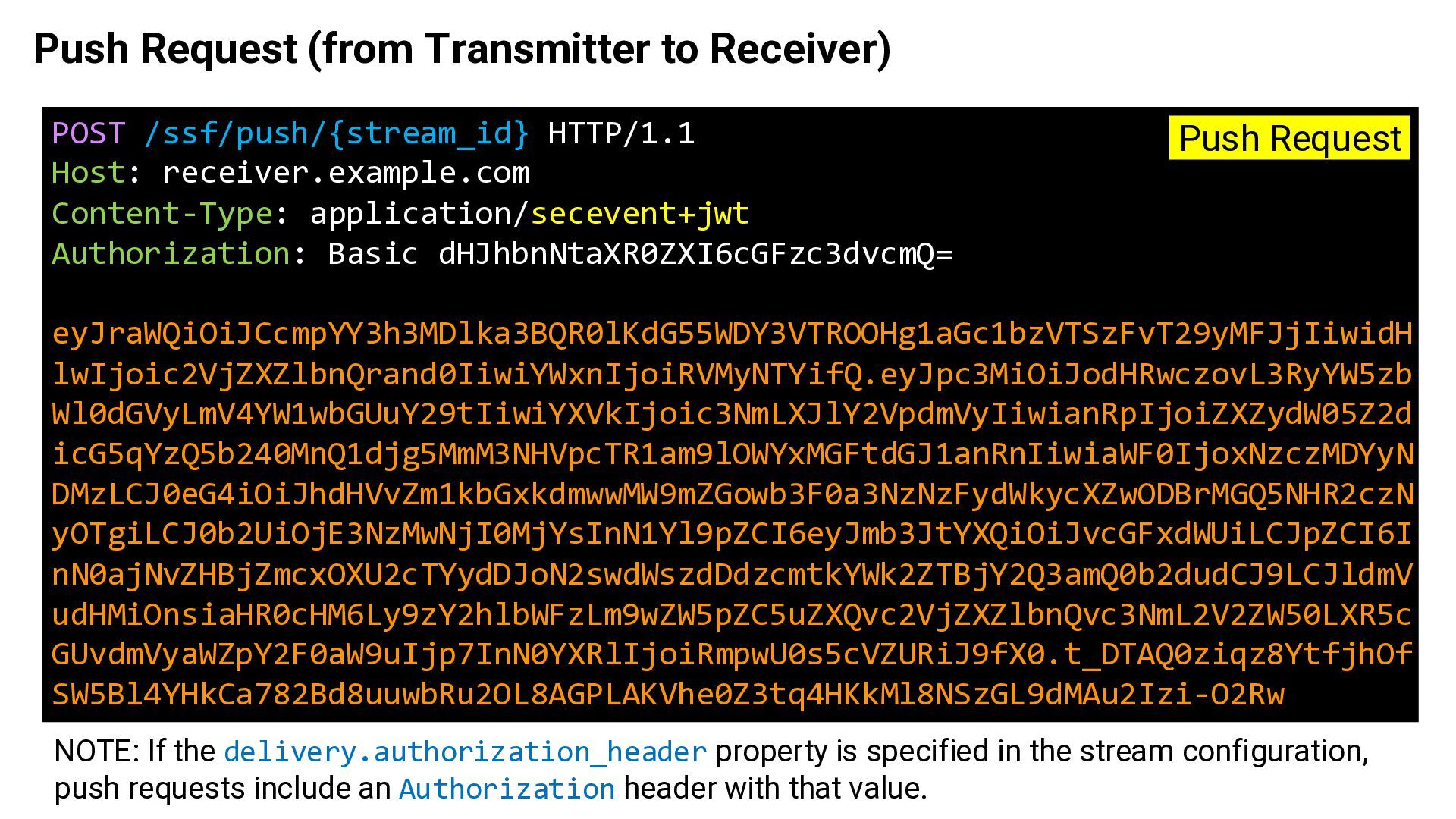
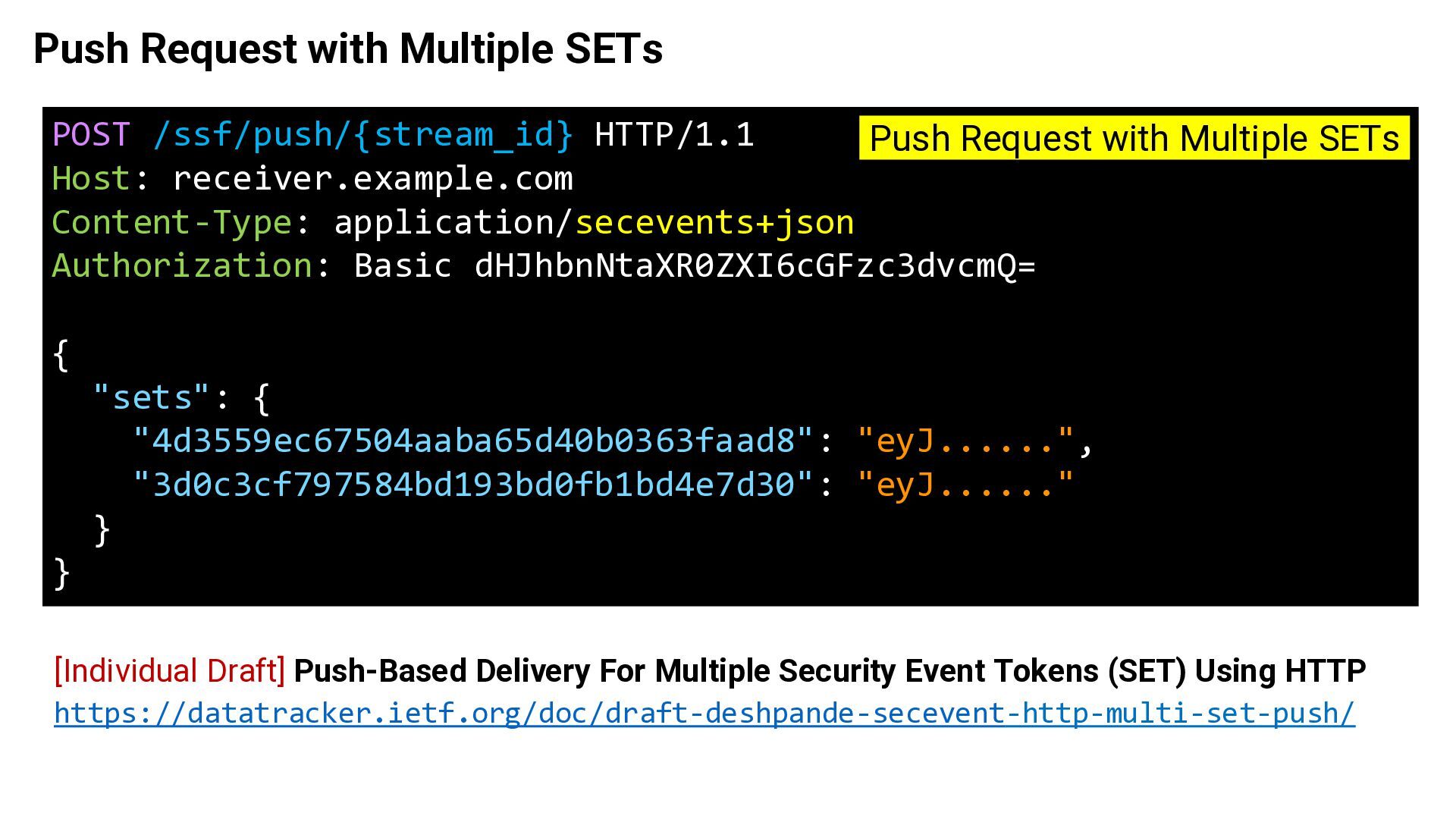
receiver.example.com Content-Type: application/secevent+jwt Authorization: Basic dHJhbnNtaXR0ZXI6cGFzc3dvcmQ= Push Request eyJraWQiOiJCcmpYY3h3MDlka3BQR0lKdG55WDY3VTROOHg1aGc1bzVTSzFvT29yMFJjIiwidH lwIjoic2VjZXZlbnQrand0IiwiYWxnIjoiRVMyNTYifQ.eyJpc3MiOiJodHRwczovL3RyYW5zb Wl0dGVyLmV4YW1wbGUuY29tIiwiYXVkIjoic3NmLXJlY2VpdmVyIiwianRpIjoiZXZydW05Z2d icG5qYzQ5b240MnQ1djg5MmM3NHVpcTR1am9lOWYxMGFtdGJ1anRnIiwiaWF0IjoxNzczMDYyN DMzLCJ0eG4iOiJhdHVvZm1kbGxkdmwwMW9mZGowb3F0a3NzNzFydWkycXZwODBrMGQ5NHR2czN yOTgiLCJ0b2UiOjE3NzMwNjI0MjYsInN1Yl9pZCI6eyJmb3JtYXQiOiJvcGFxdWUiLCJpZCI6I nN0ajNvZHBjZmcxOXU2cTYydDJoN2swdWszdDdzcmtkYWk2ZTBjY2Q3amQ0b2dudCJ9LCJldmV udHMiOnsiaHR0cHM6Ly9zY2hlbWFzLm9wZW5pZC5uZXQvc2VjZXZlbnQvc3NmL2V2ZW50LXR5c GUvdmVyaWZpY2F0aW9uIjp7InN0YXRlIjoiRmpwU0s5cVZURiJ9fX0.t_DTAQ0ziqz8YtfjhOf SW5Bl4YHkCa782Bd8uuwbRu2OL8AGPLAKVhe0Z3tq4HKkMl8NSzGL9dMAu2Izi-O2Rw NOTE: If the delivery.authorization_header property is specified in the stream configuration, push requests include an Authorization header with that value.
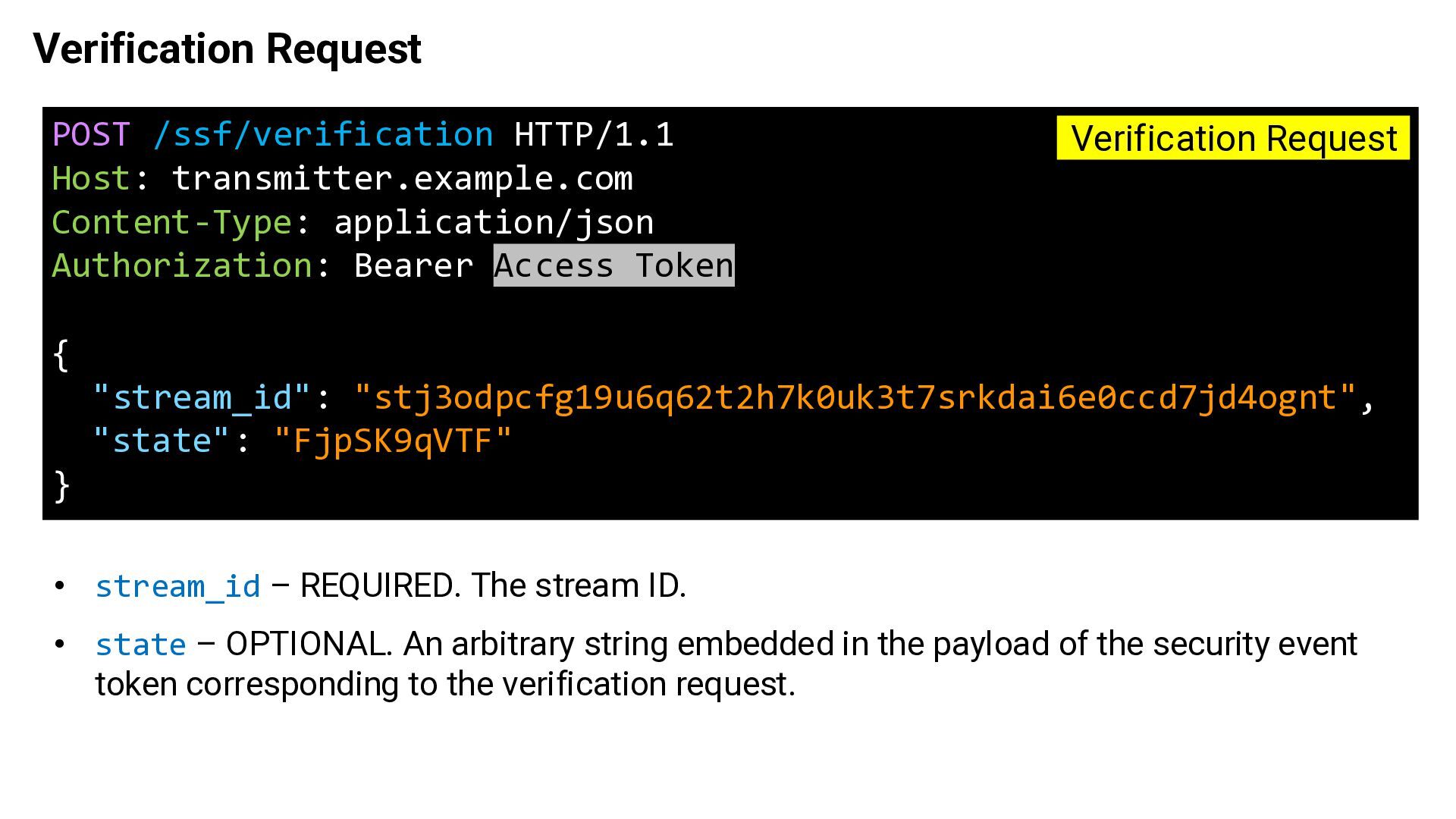
Bearer Access Token Verification Request { "stream_id": "stj3odpcfg19u6q62t2h7k0uk3t7srkdai6e0ccd7jd4ognt", "state": "FjpSK9qVTF" } • stream_id – REQUIRED. The stream ID. • state – OPTIONAL. An arbitrary string embedded in the payload of the security event token corresponding to the verification request.
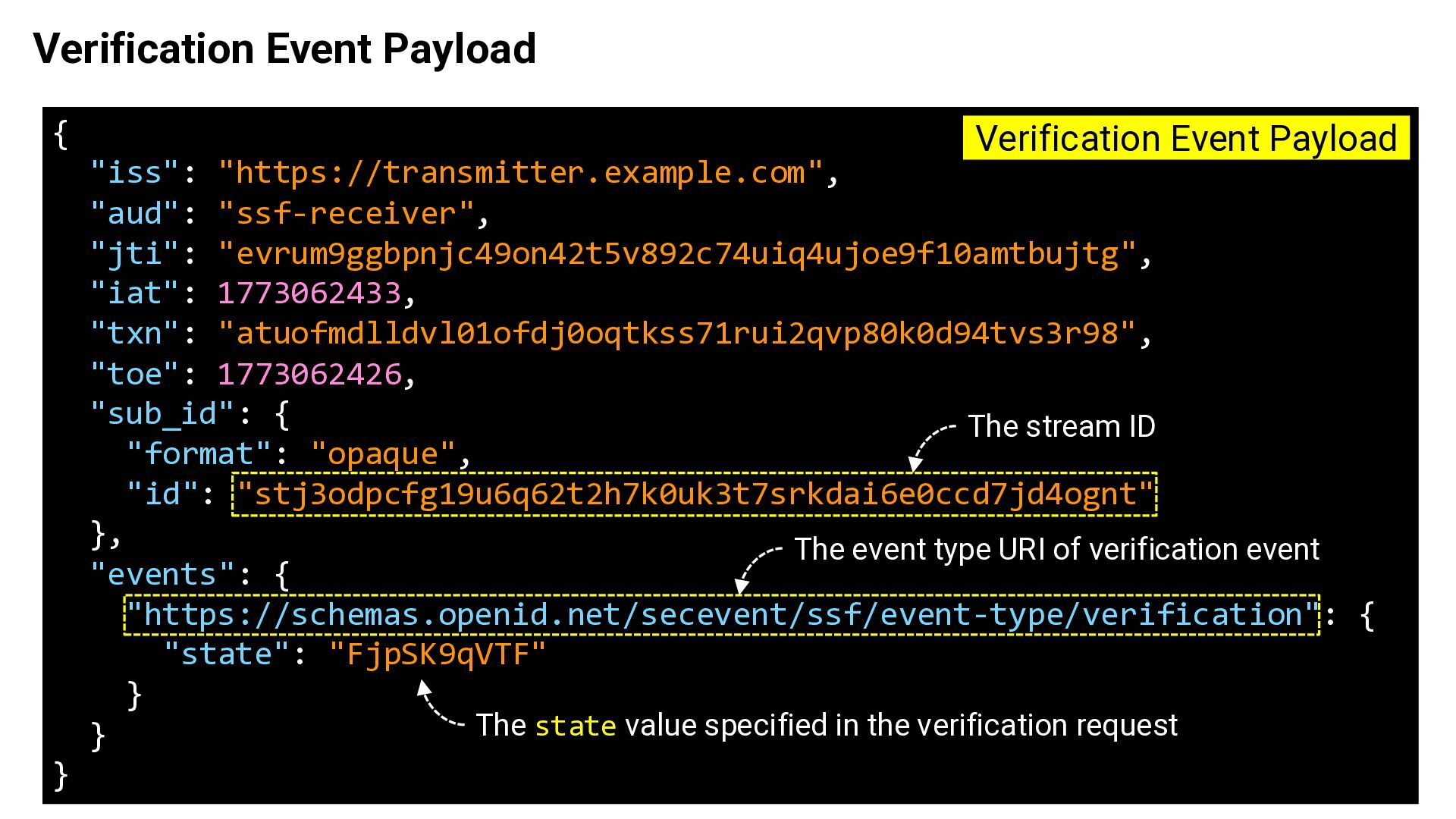
"ssf-receiver", "jti": "evrum9ggbpnjc49on42t5v892c74uiq4ujoe9f10amtbujtg", "iat": 1773062433, "txn": "atuofmdlldvl01ofdj0oqtkss71rui2qvp80k0d94tvs3r98", "toe": 1773062426, "sub_id": { The stream ID "format": "opaque", "id": "stj3odpcfg19u6q62t2h7k0uk3t7srkdai6e0ccd7jd4ognt" }, The event type URI of verification event "events": { "https://schemas.openid.net/secevent/ssf/event-type/verification": { "state": "FjpSK9qVTF" } The state value specified in the verification request } }


 oidfj
 toru_kubota
 hokkai7go
 miso
 masu_mi
 cyberagentdevelopers
 tacck
 rmetzger
 kworkdev
 shunghsiyu
 ikki0006
 erikjhordan_rey
 akuwano
 marcelosomers
 lemiorhan
 rakko
 holman
 baasie
 hannesfritz
 thekraken
 akademiya2063
 caitiem20
 speakerdeck
 sabderemane