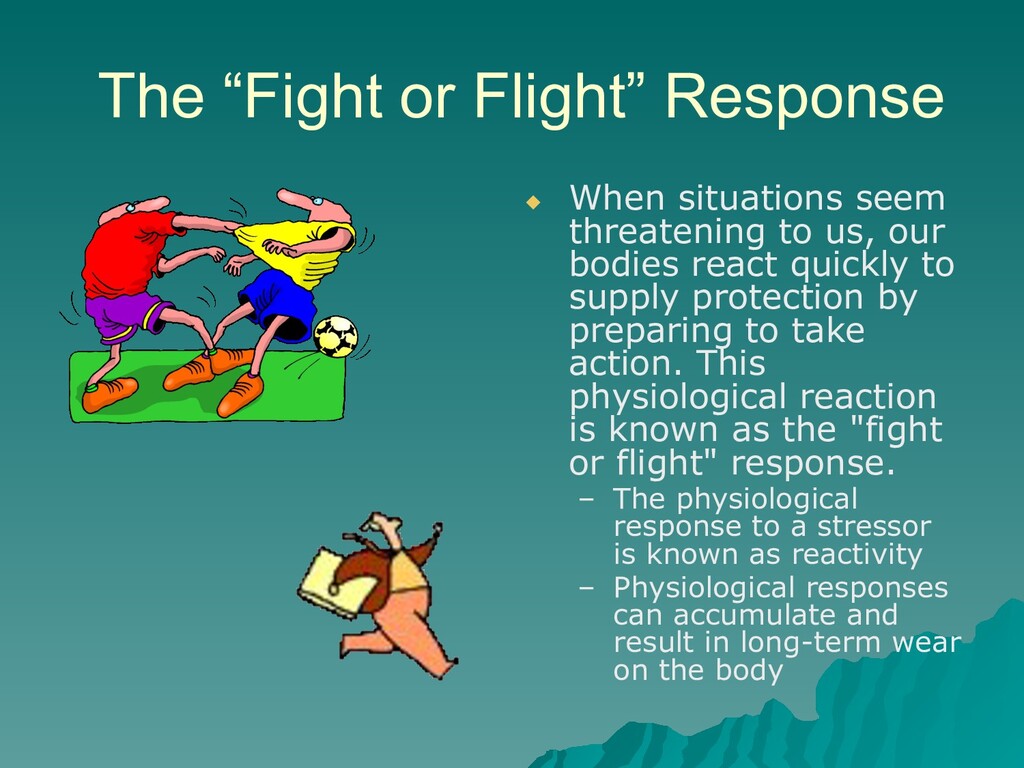
to us, our bodies react quickly to supply protection by preparing to take action. This physiological reaction is known as the "fight or flight" response. – The physiological response to a stressor is known as reactivity – Physiological responses can accumulate and result in long-term wear on the body
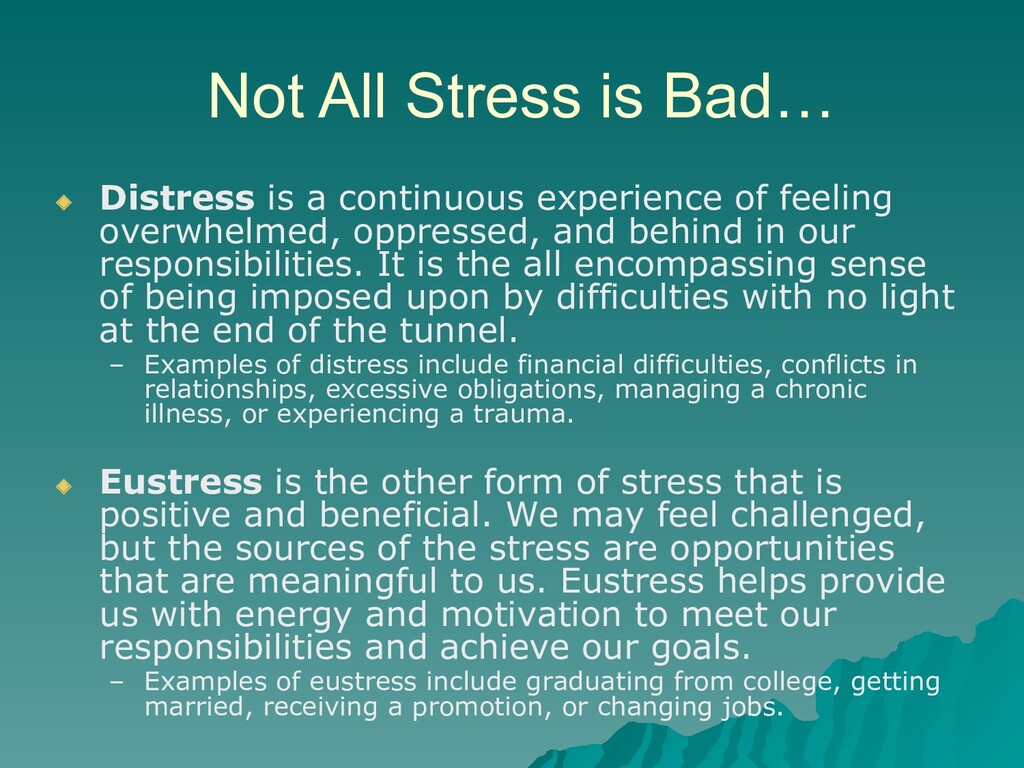
experience of feeling overwhelmed, oppressed, and behind in our responsibilities. It is the all encompassing sense of being imposed upon by difficulties with no light at the end of the tunnel. – Examples of distress include financial difficulties, conflicts in relationships, excessive obligations, managing a chronic illness, or experiencing a trauma. ◆ Eustress is the other form of stress that is positive and beneficial. We may feel challenged, but the sources of the stress are opportunities that are meaningful to us. Eustress helps provide us with energy and motivation to meet our responsibilities and achieve our goals. – Examples of eustress include graduating from college, getting married, receiving a promotion, or changing jobs.
situation for many people is taking a test. If you find testing to be stressful, you might notice certain physical, behavioral, mental, and emotional responses. – Physical Response? – Behavioral Response? – Mental Response? – Emotional Response?
stress than others. Determine your level of vulnerability to stress by completing the following worksheet: Vulnerability to Stress ◆ Email the completed worksheet (as an attachment) to [email protected]
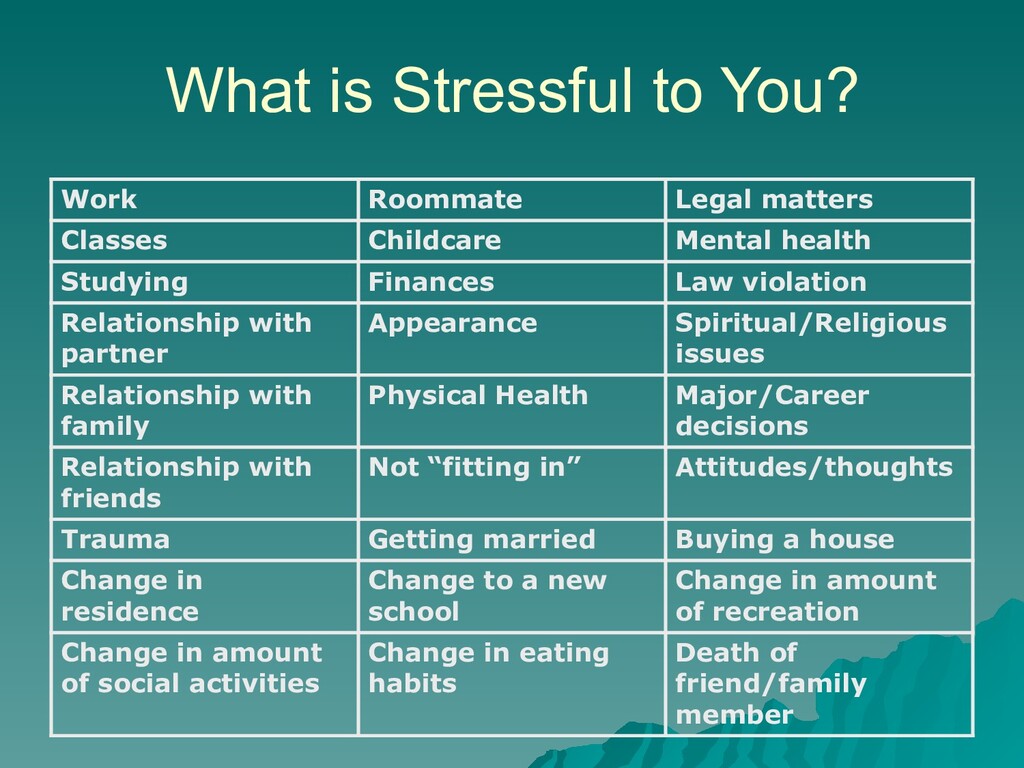
Childcare Mental health Studying Finances Law violation Relationship with partner Appearance Spiritual/Religious issues Relationship with family Physical Health Major/Career decisions Relationship with friends Not “fitting in” Attitudes/thoughts Trauma Getting married Buying a house Change in residence Change to a new school Change in amount of recreation Change in amount of social activities Change in eating habits Death of friend/family member
warning signs, that stress is creeping into your life? If we keep pushing ourselves, eventually something inside of use will send "red flags," or warning signs that stress is becoming a problem.
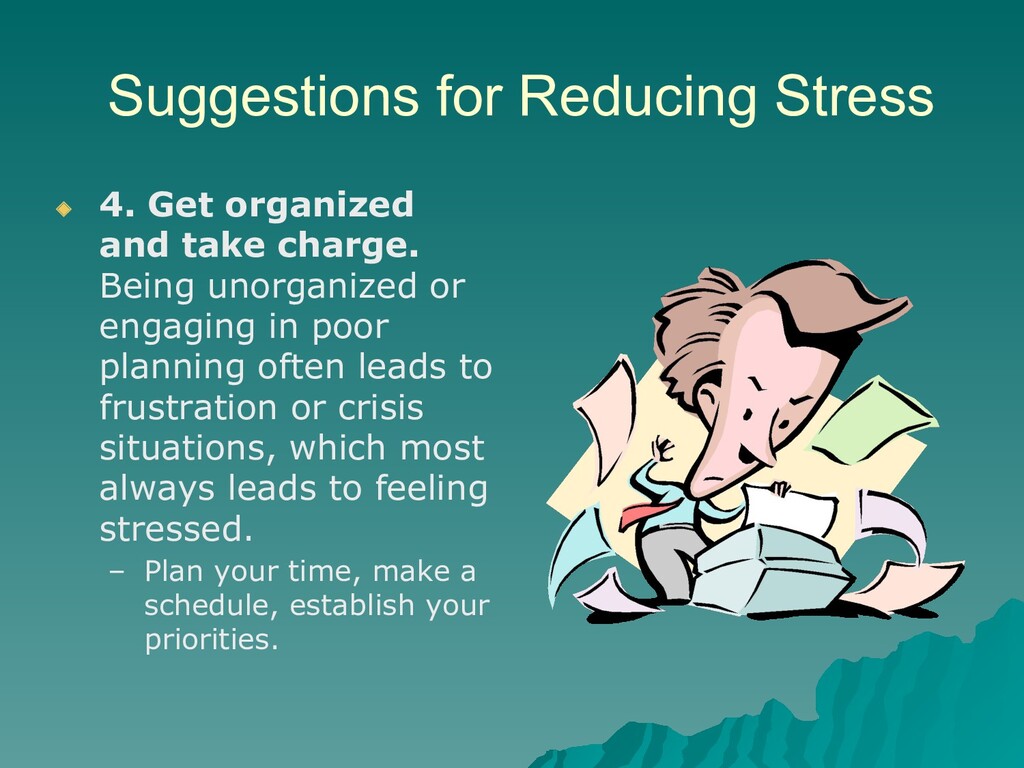
charge. Being unorganized or engaging in poor planning often leads to frustration or crisis situations, which most always leads to feeling stressed. – Plan your time, make a schedule, establish your priorities.
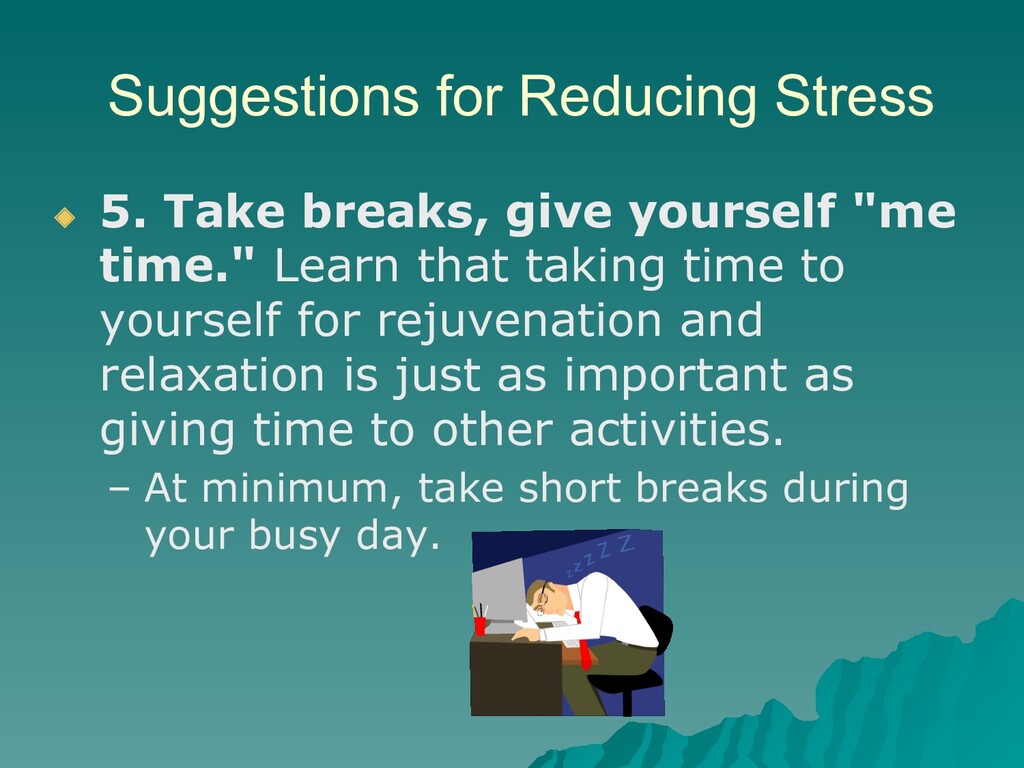
"me time." Learn that taking time to yourself for rejuvenation and relaxation is just as important as giving time to other activities. – At minimum, take short breaks during your busy day.
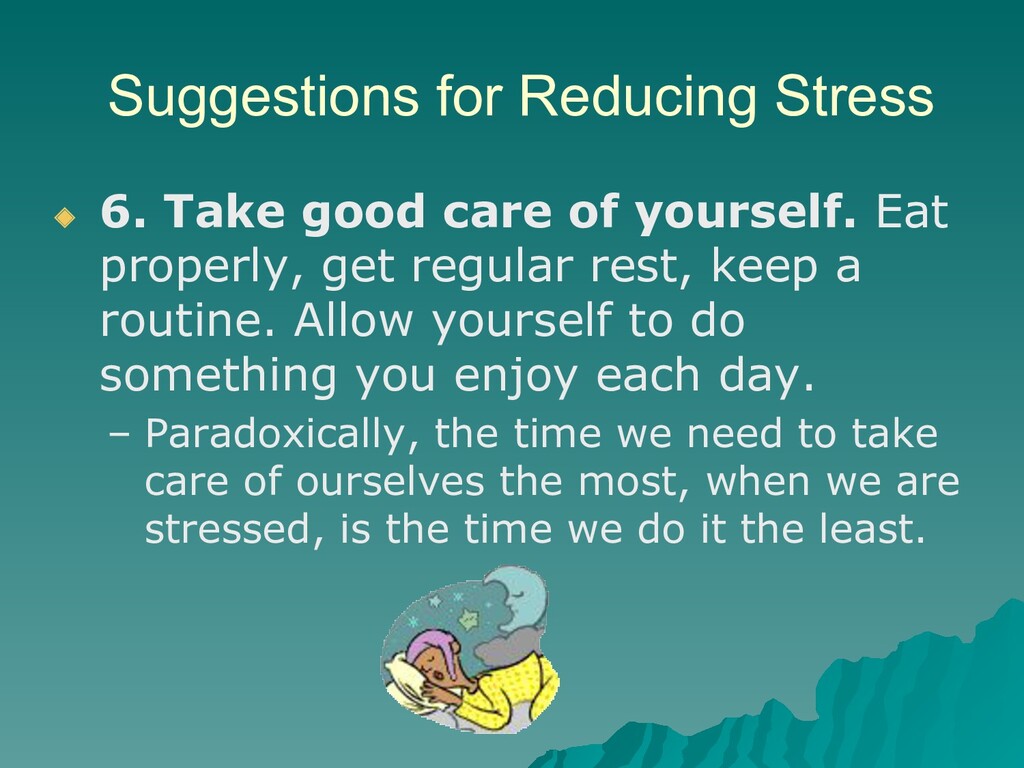
yourself. Eat properly, get regular rest, keep a routine. Allow yourself to do something you enjoy each day. – Paradoxically, the time we need to take care of ourselves the most, when we are stressed, is the time we do it the least.
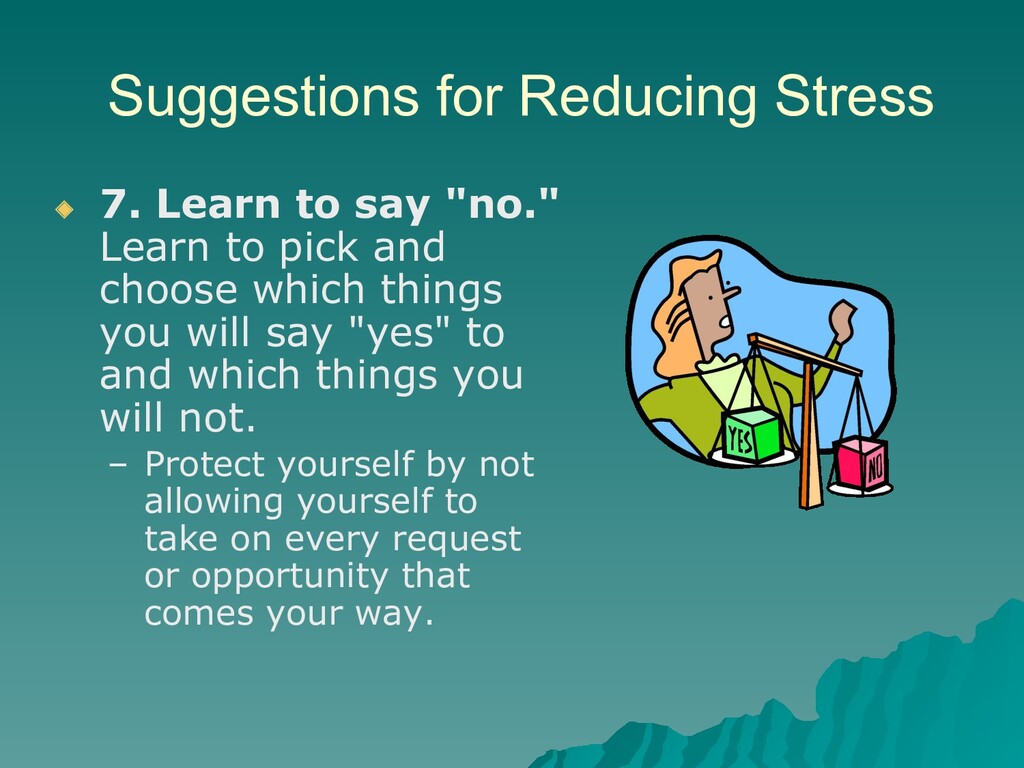
Learn to pick and choose which things you will say "yes" to and which things you will not. – Protect yourself by not allowing yourself to take on every request or opportunity that comes your way.
limits and cut down on the number of things you try to do each day, particularly if you do not have enough time for them or for yourself. – Be realistic about what you can accomplish effectively each day. – Monitor your pace. Rushing through things can lead to mistakes or poor performance. Take the time you need to do a good job. ◆ Poorly done tasks can lead to added stress.
situations) that is particularly stressful to you. ◆ Come up with a plan for handling this situation (using the information that you have gained from this presentation). ◆ Use the Stress Management Worksheet as a guide.
you appraise a situation to make it less stressful ◆ Remember stress is normal but watch out for symptoms of stress ◆ Use coping skills/ways to reduce stress ◆ Practice relaxation techniques ◆ Contact TRiO advisor for counseling at 662-4365


 yatabe
 rashwhitman
 signer
 hiola
 cbtlibrary
 juanmartin2026
 eller86
 yoshimura_datam
 akiraasano
 terasawat
 danielanewman
 carmenintech
 axbom
 mojombo
 dougneiner
 techseoconnect
 marketingsoph
 tessaabrams
 charlesmeaden
 inesmontani
 3n
 iamctodd