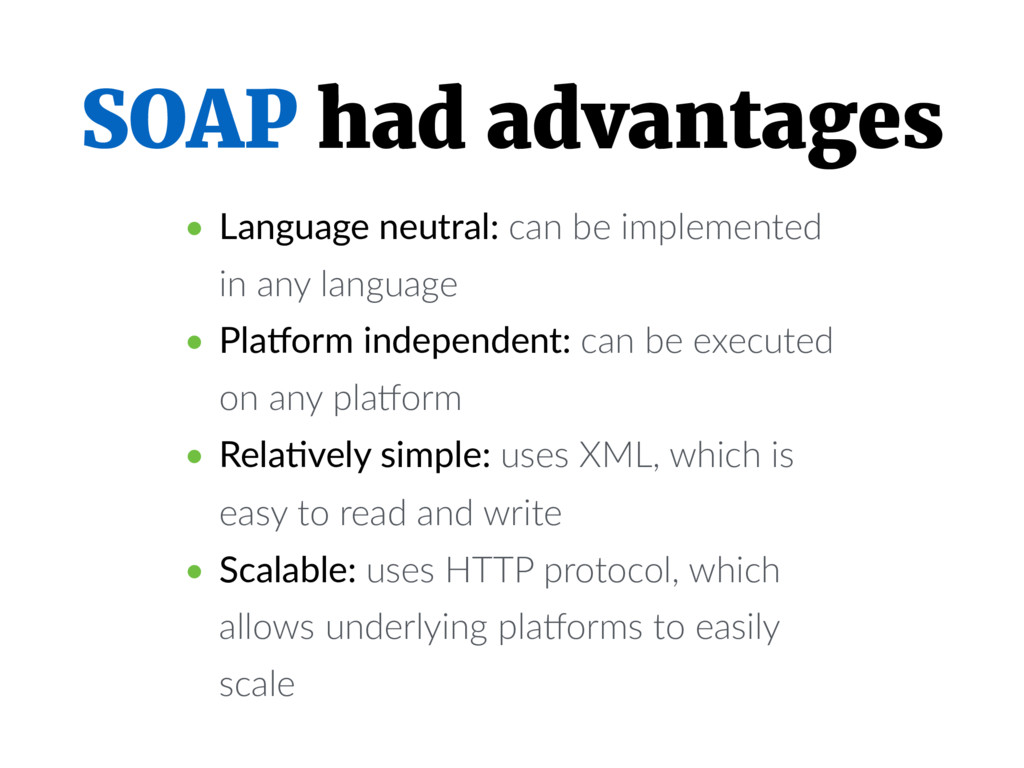
any language • Pla.orm independent: can be executed on any plaHorm • Rela5vely simple: uses XML, which is easy to read and write • Scalable: uses HTTP protocol, which allows underlying plaHorms to easily scale
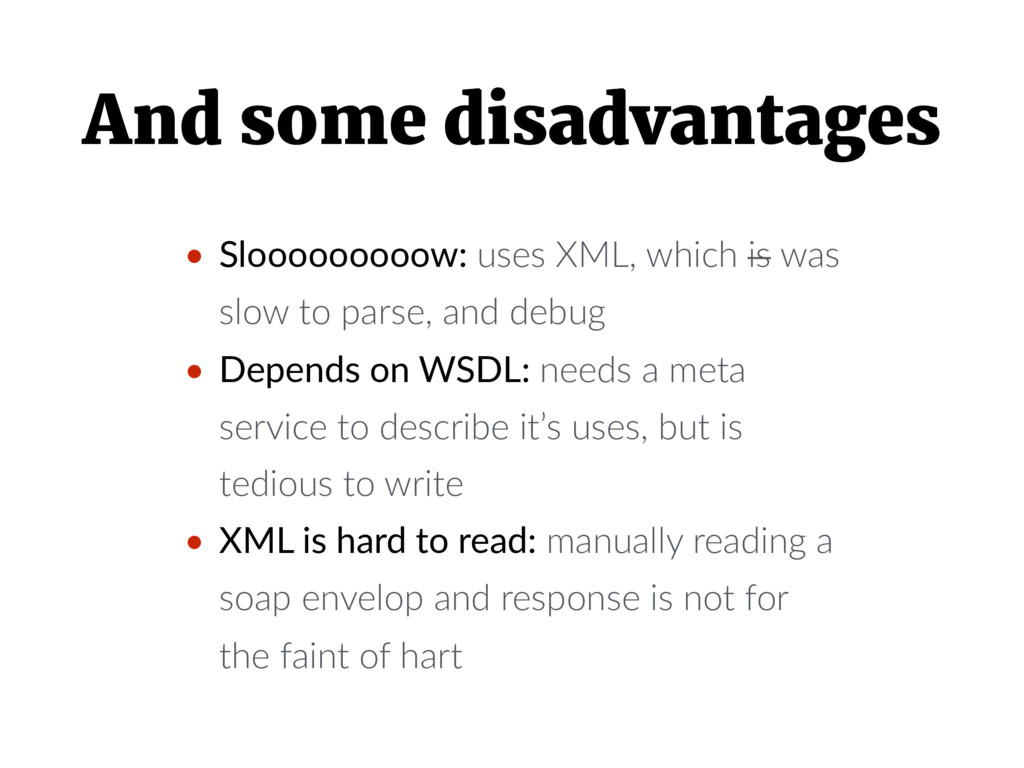
slow to parse, and debug • Depends on WSDL: needs a meta service to describe it’s uses, but is tedious to write • XML is hard to read: manually reading a soap envelop and response is not for the faint of hart
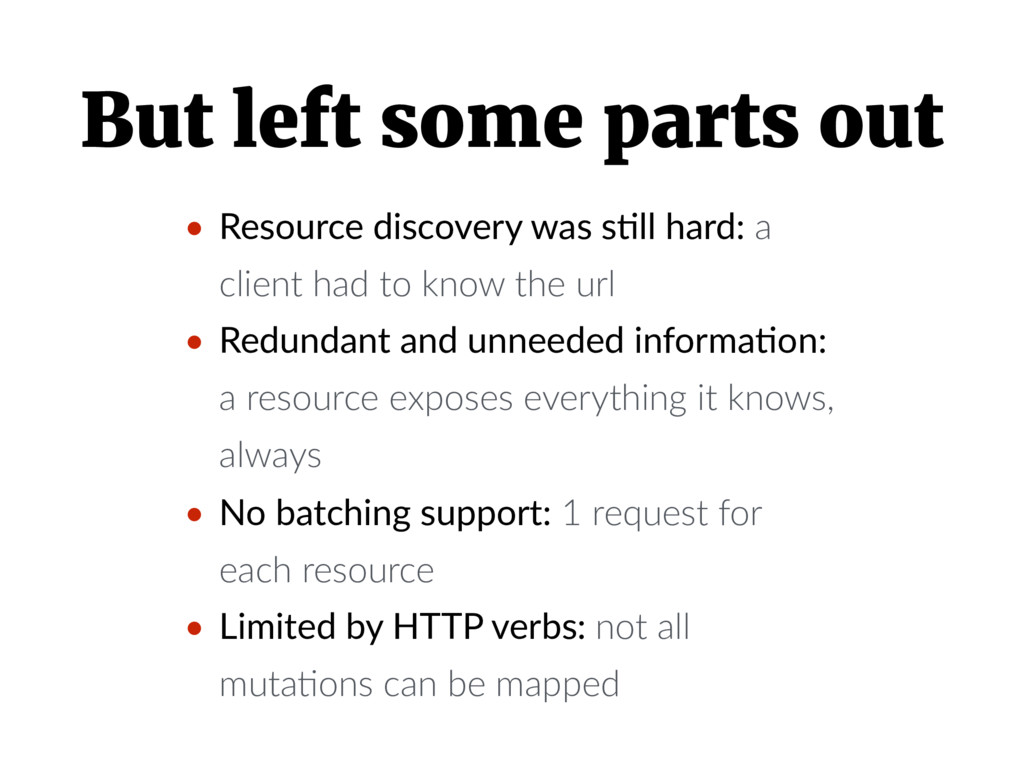
hard: a client had to know the url • Redundant and unneeded informa5on: a resource exposes everything it knows, always • No batching support: 1 request for each resource • Limited by HTTP verbs: not all mutaBons can be mapped
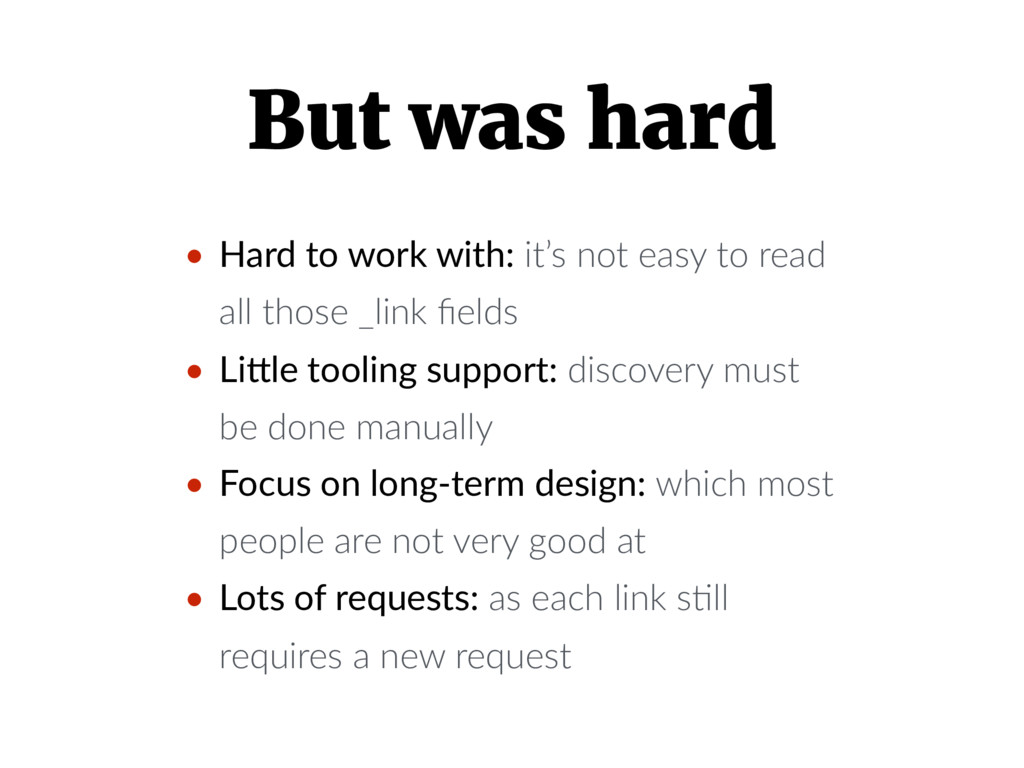
easy to read all those _link fields • LiIle tooling support: discovery must be done manually • Focus on long-term design: which most people are not very good at • Lots of requests: as each link sBll requires a new request
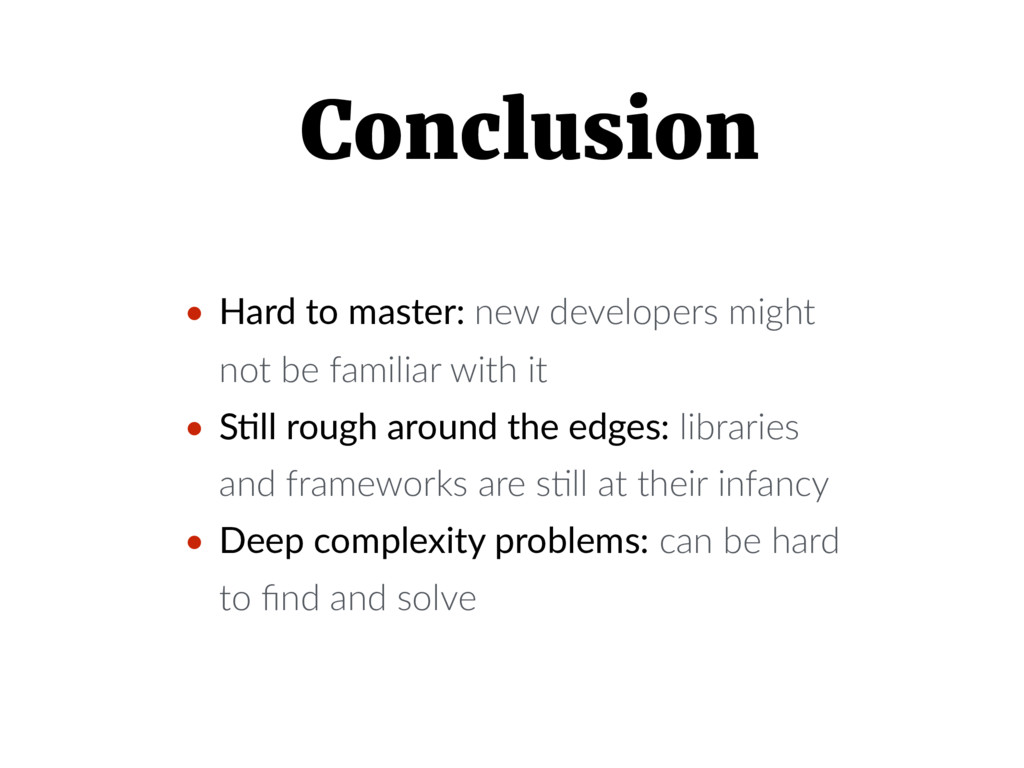
familiar with it • S5ll rough around the edges: libraries and frameworks are sBll at their infancy • Deep complexity problems: can be hard to find and solve
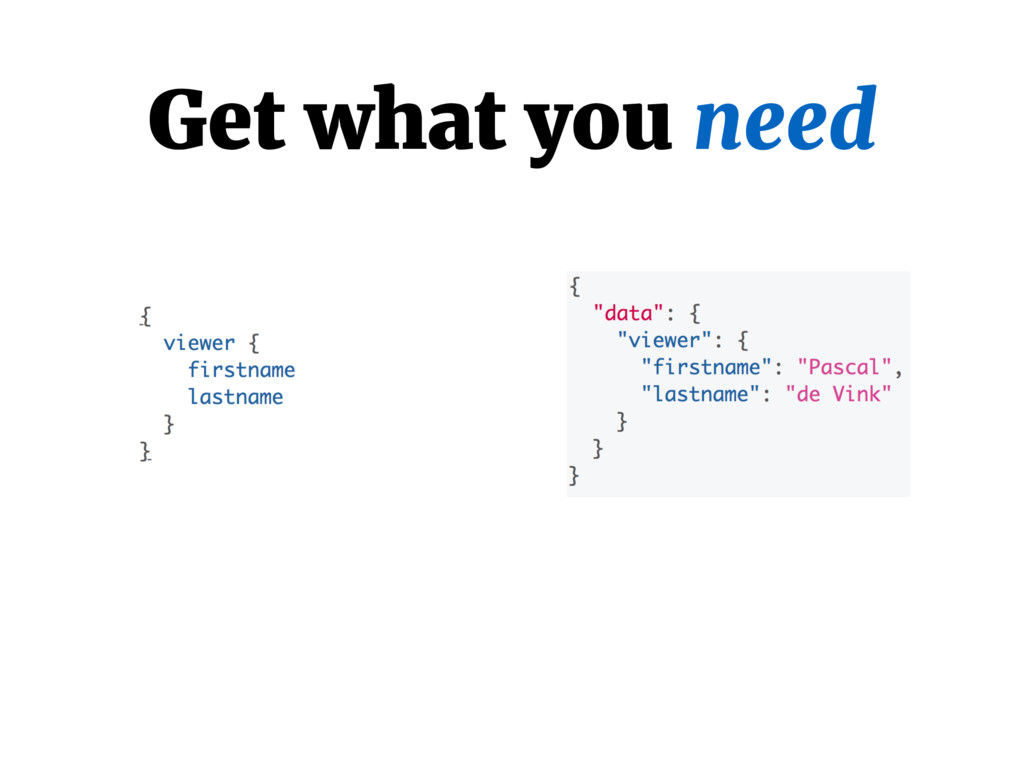
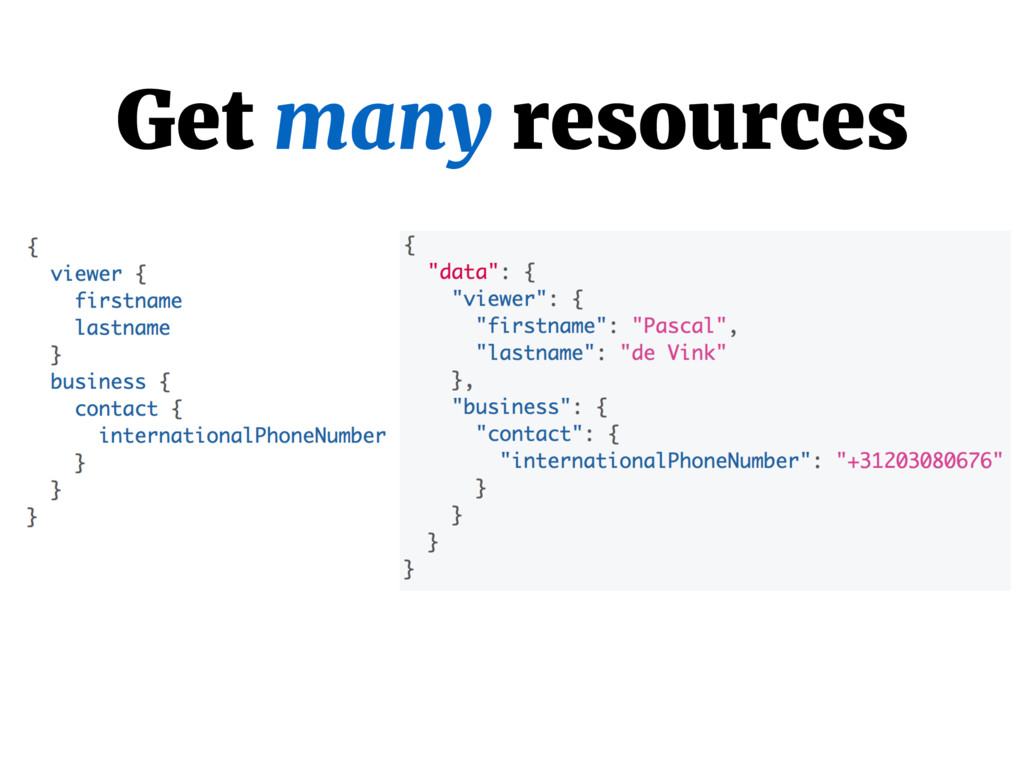
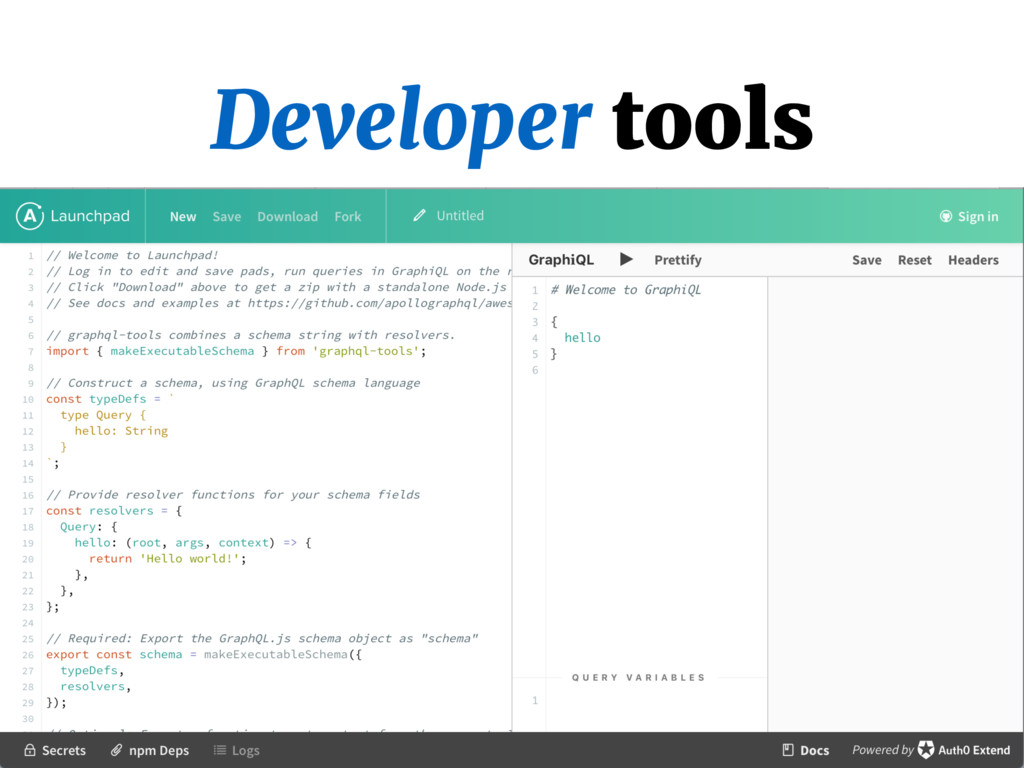
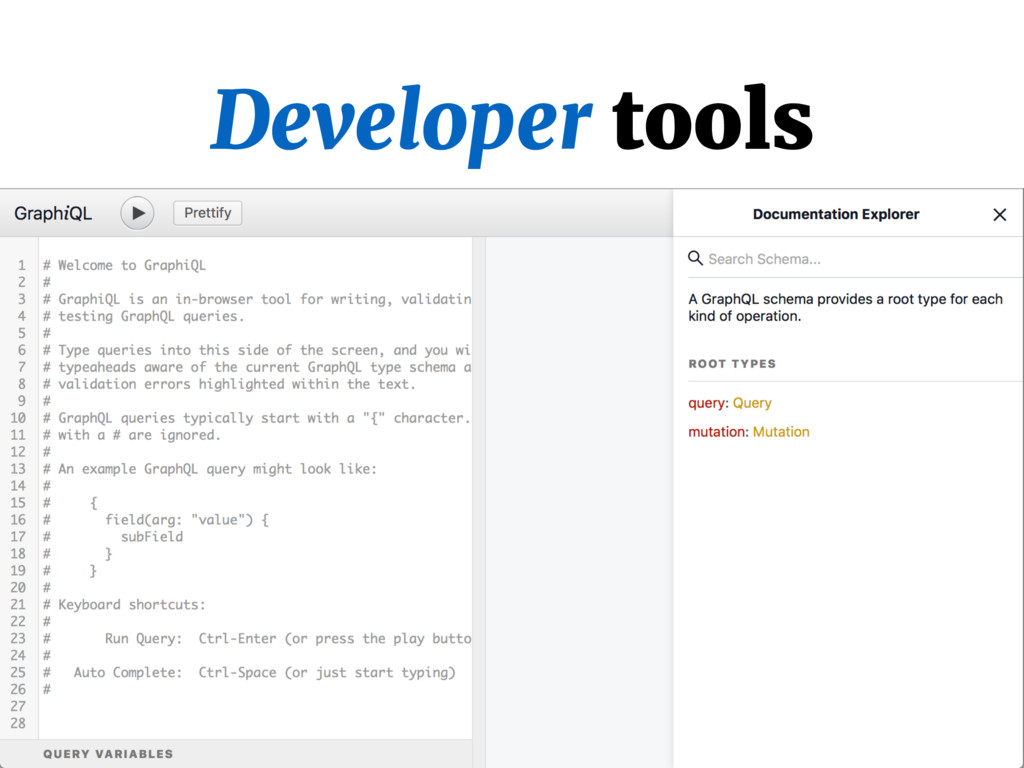
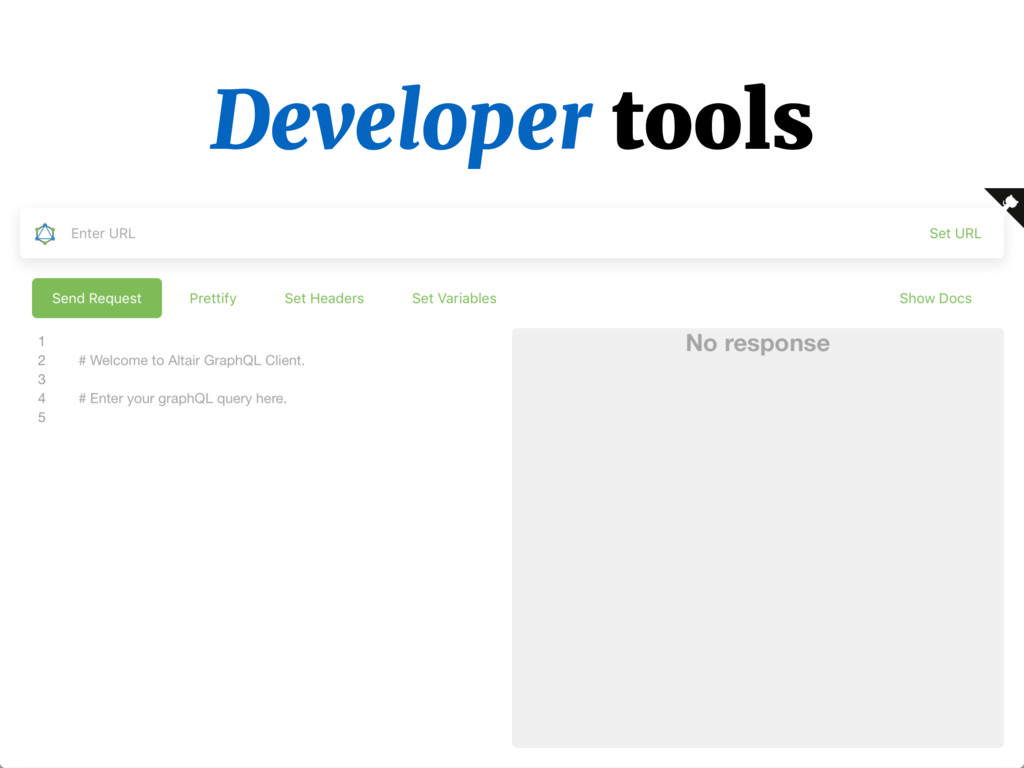
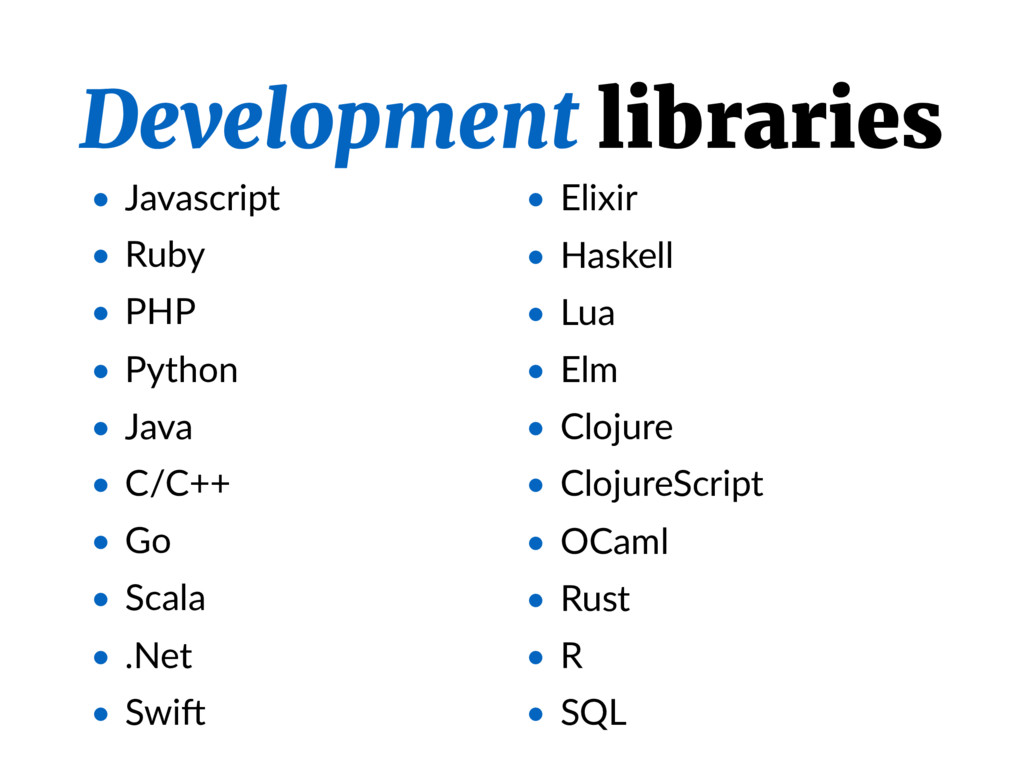
• Powerful tools: from developer tools to libraries and frameworks • Lightweight communica5on: using only what you need reduces overhead • Inline documenta5on: no more separate documentaBon to ship


 pascaldevink
 uyuki234
 dske104
 oku053
 iwatsukayura
 minodriven
 ivargrimstad
 y0hgi
y0hgi
 seike460
 rkaga
rkaga
 a_matsuda
 shihochan
 oniak3ibm
 reverentgeek
 lara
lara
 scottboms
 tammyeverts
 chriscoyier
 raygrieselhuber
 andyhume
 hatefulcrawdad
 deanohume
 szymonslowik








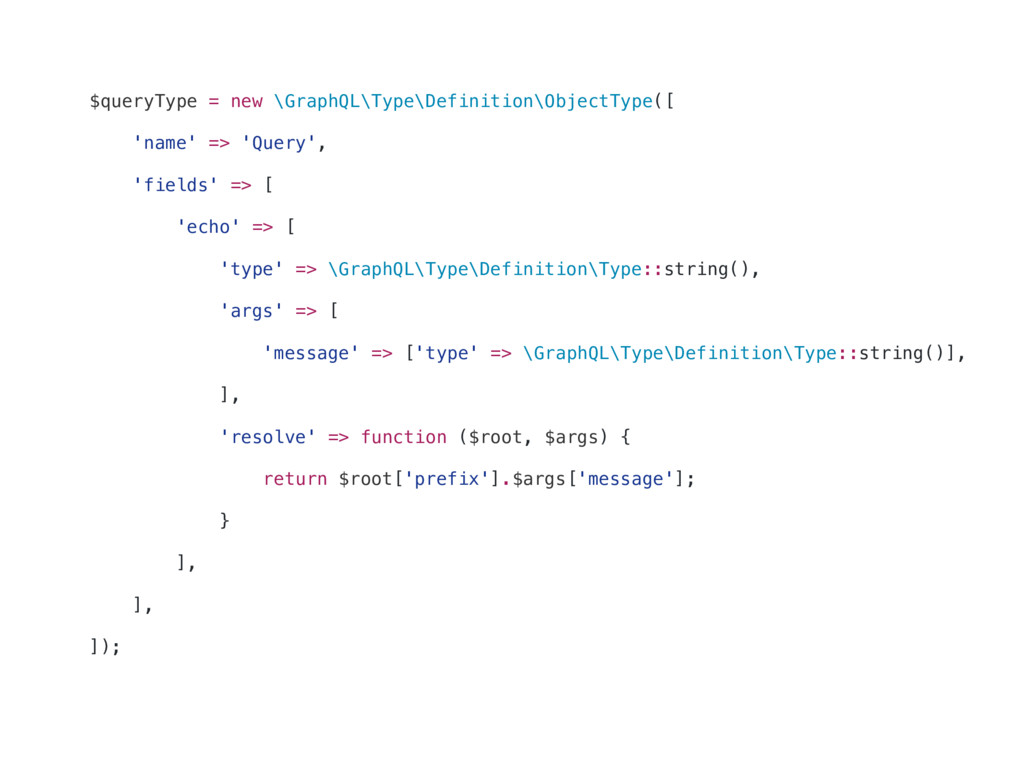
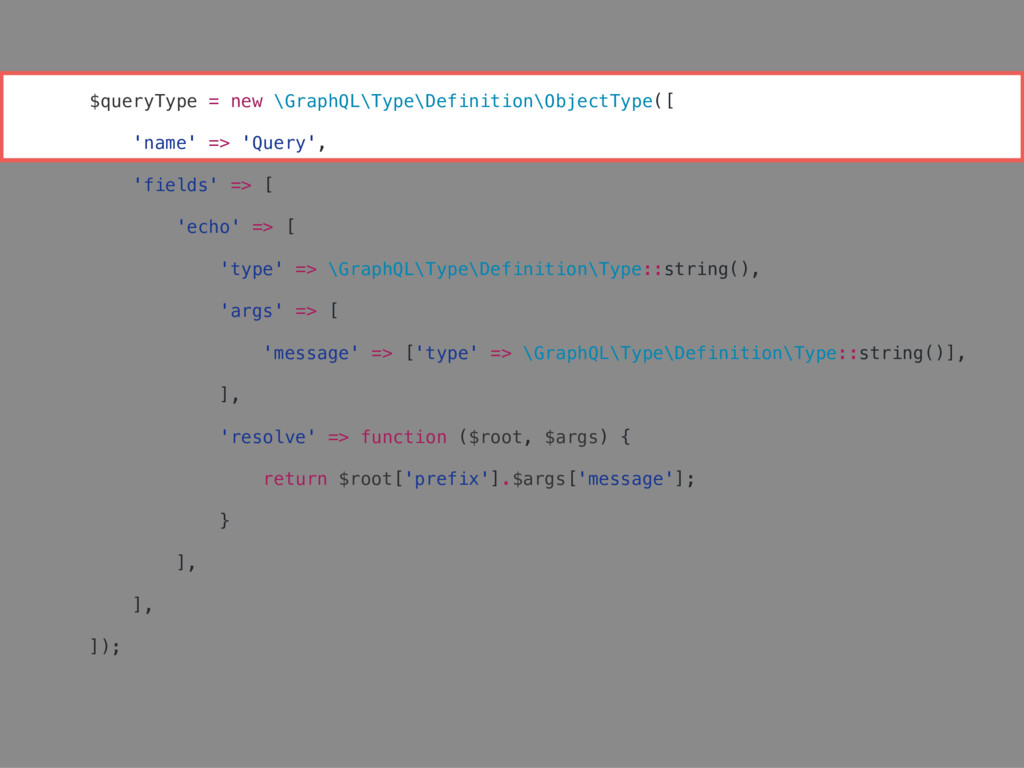
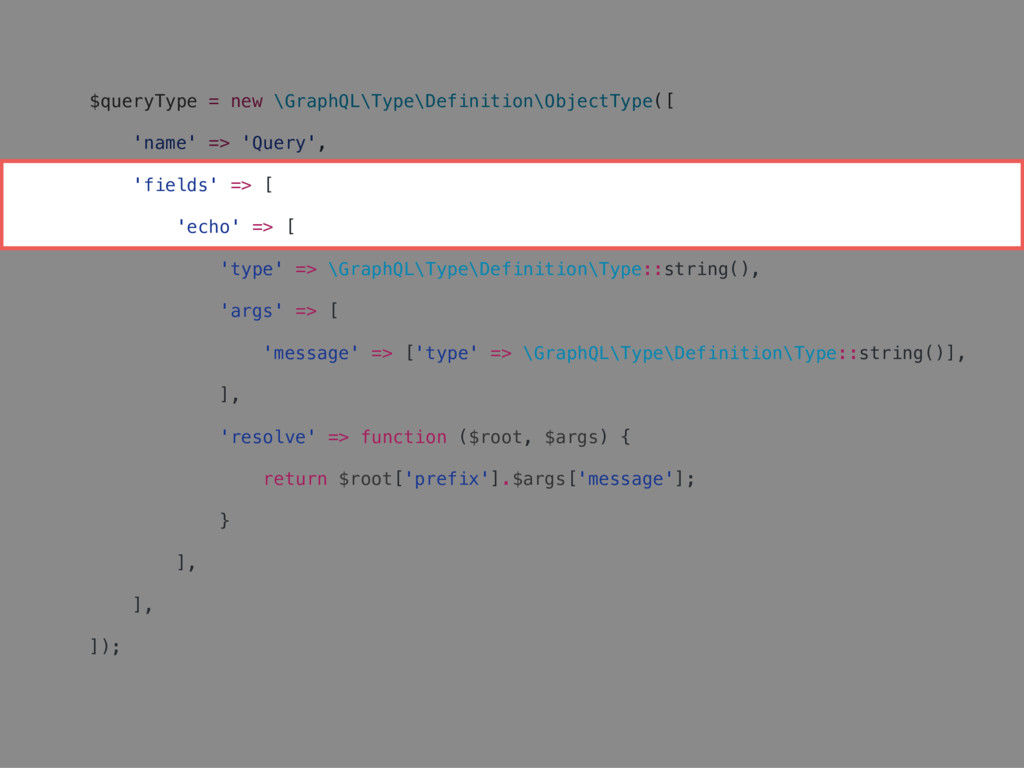
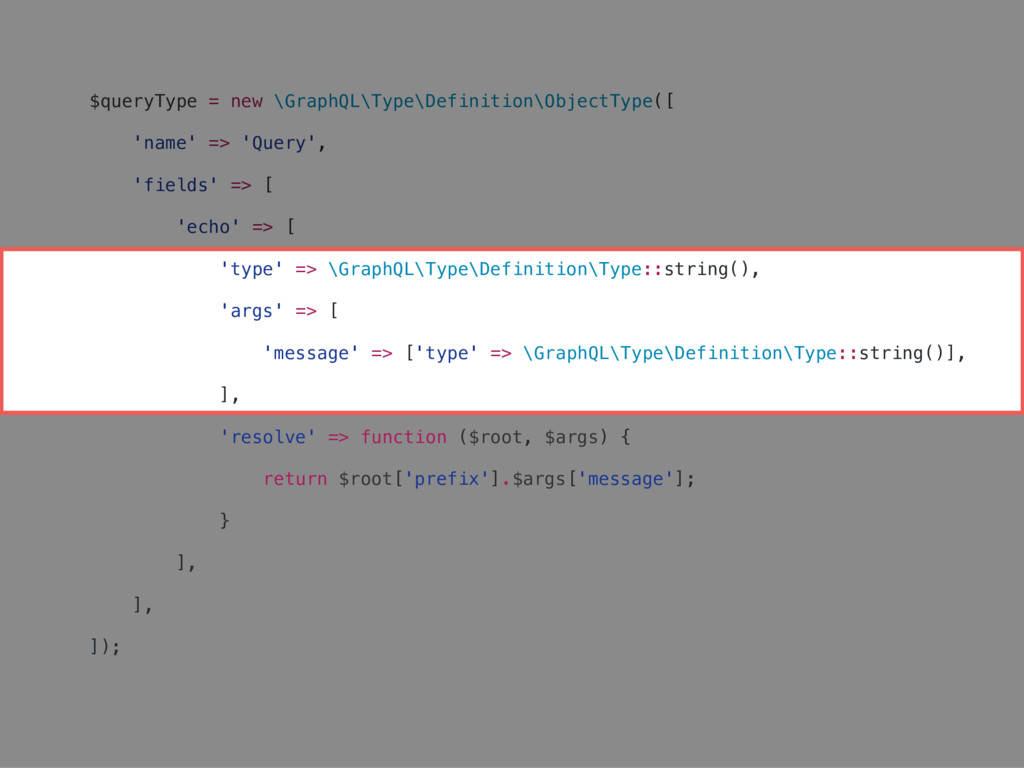
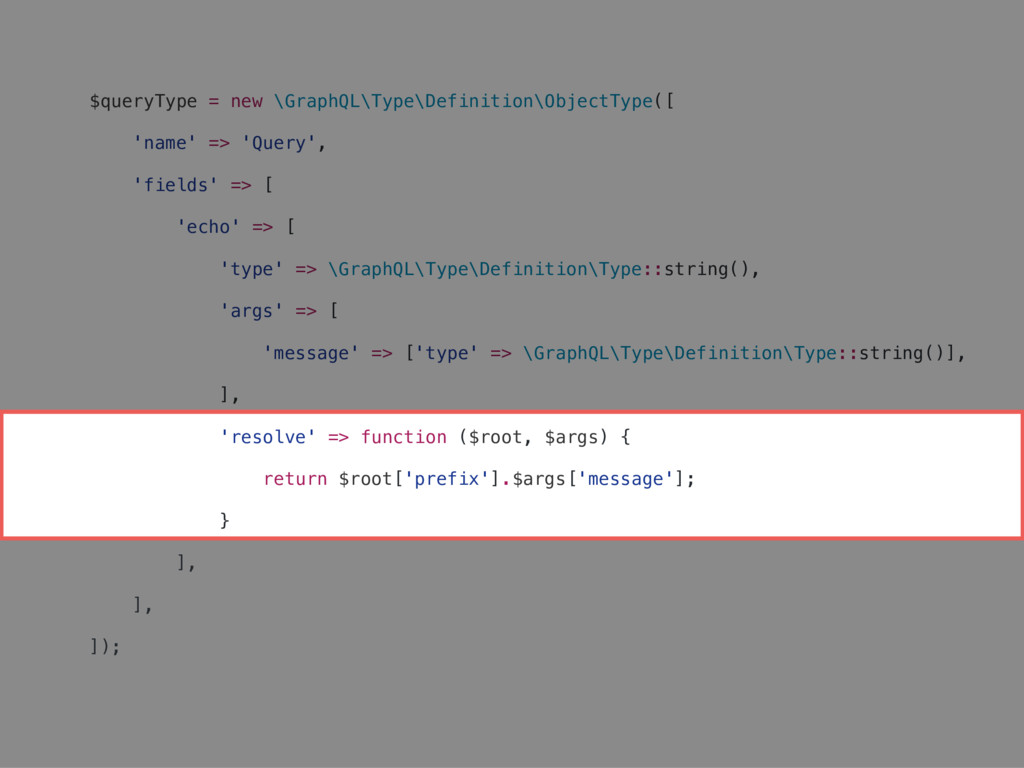
![$schema = new Schema([ 'query' => $queryType, ]); $rawInput =](https://files.speakerdeck.com/presentations/d224a14f600d412fa641938fb221e98f/slide_35.jpg)
![$schema = new Schema([ 'query' => $queryType, ]); $rawInput =](https://files.speakerdeck.com/presentations/d224a14f600d412fa641938fb221e98f/slide_36.jpg)
![$schema = new Schema([ 'query' => $queryType, ]); $rawInput =](https://files.speakerdeck.com/presentations/d224a14f600d412fa641938fb221e98f/slide_37.jpg)
![$schema = new Schema([ 'query' => $queryType, ]); $rawInput =](https://files.speakerdeck.com/presentations/d224a14f600d412fa641938fb221e98f/slide_38.jpg)
![$schema = new Schema([ 'query' => $queryType, ]); $rawInput =](https://files.speakerdeck.com/presentations/d224a14f600d412fa641938fb221e98f/slide_39.jpg)





!['resolve' => function ($root, $args) { return $this->dataLoader($args[‘id']); }](https://files.speakerdeck.com/presentations/d224a14f600d412fa641938fb221e98f/slide_59.jpg)