Upgrade to Pro — share decks privately, control downloads, hide ads and more …

2nd Editon Career Transition Design

Sponsored · Your Podcast. Everywhere. Effortlessly. Share. Educate. Inspire. Entertain. You do you. We'll handle the rest. →
Avatar for philipmarriott philipmarriott
May 31, 2012
29

2nd Editon Career Transition Design

Avatar for philipmarriott

philipmarriott

May 31, 2012

Transcript

  1. 1 Ian Martin Limited “At a Glance” For over fifty

    years, Ian Martin Limited has been a leader in innovative staffing solutions and serving client organizations in Canada and the United States. We dedicate this book to our clients who have graciously received Ian Martin’s people to their workplaces over the years and to our candidates who have been a part of history. Ian Martin Limited has recruited thousands of people across an array of industries. We have played a strong supporting role in sectors such as automotive, manufacturing, aerospace, nuclear power, hydro electric power and wind power generation, space robotics, information technology, oil and gas, and the list goes on. Much stays the same when it comes to people; candidates still seek career opportunities and clients still depend upon hiring talented good people who fit within their organizations; they both long for simplicity and honesty. Ian Martin Limited took on life when Ian Martin Limited and Mary Masson established the business in 1957 and they were successful at creating something new, something significant and daring on the Canadian staffing landscape. Bill Masson, the son of Mary Masson, learned the business and he and his wife Gail took ownership in 1986 with new ideas, the same values and renewed energy. They built and managed the Ottawa, Toronto, and Houston operations in the earlier days and since have expanded to 19 offices throughout Canada and the United States. Anchors in their philosophies include developing and empowering good staff, sound methodology, rewarding staff and giving back to the community. Ian Martin Limited built its reputation for integrity by being fair and honest with candidates, clients, and employees every day. Bill and Gail Masson continue to stay active in a range of community and charitable organizations. Ian Martin Limited has invested in the future with technology; on line candidate registration via a robust website and data base; the IML intranet connects the branch networks and every internal employee to facilitate integrated recruiting; powerful search capabilities are utilized to attract quality candidates locally, nationally and internationally. Business takes vision, planning and execution. In a similar way, this book offers you a practical plan and ‘how to’ that will guide you regardless if you are a recent graduate or you are a seasoned executive. Invest in your future!
  2. 2 ACKNOWLEDGEMENTS This 2nd Edition is a culmination of materials

    gathered over the past 15 years, from many wonderful people who have shared their anecdotal job hunt experiences, from our insight and from thousands of interviews as a recruiter and career counselor. These practical works have proven to be precise, comfortable and unbeaten in assisting individuals in their career search. I want to thank the many participants for their contributions, their experiences and for their willingness to share their thoughts, their kindness, criticism and friendship. I will be forever grateful to my daughter, Sarah Adkins, who edited, co-authored and was the driving force for me to write. I also wish to thank the President of Ian Martin Limited Bill Masson, Derek Millar and their Managers who embraced this book, recognized its value to people and supported production of this 2nd Edition from their budgets. author Claude D. Chapman co-author Sarah Adkins
  3. 3 FOREWORD The search for new employment is a challenging,

    sometimes uncomfortable yet an exciting time. The information contained in ‘Career Transition Design’ will provide you with the tools to set yourself apart from others in your career transition. This book will also guide you through uncertainty such as dealing with job change, creating a professional resume and exposure to the ‘art of being interviewed’. It includes simple research tools and ‘how to’ develop a strategy while meeting many new interesting people through networking which could uncover a hidden job. You would be remiss if you did not take advantage of the priceless experiences of hundreds of people in similar circumstances. Be Sure to Browse www.ianmartin.com This book is designed to provide accurate and authoritative information on the subject of career transitioning. While samples used in the book may be based on actual experiences, most of the names of individuals and corporations have been changed for educational purposes and to protect the privacy of individuals. It is distributed with the understanding that neither the author nor the publisher is engaged in rendering legal, accounting, tax or other professional services by publishing this book. As each individual situation is unique, questions which are specific to the individual should be addressed to an appropriate professional to ensure that the situation has been evaluated carefully and appropriately. The author and publisher specifically disclaim any liability, loss or risk which in incurred as a consequence, directly or indirectly, of the use and application of any of the contents of this work. This book is being distributed by Ian Martin Limited solely for promotional purposes and without charge. Therefore, it has no commercial value for Ian Martin Limited. Career Transition Design. Copyright © 2003 by Claude D. Chapman. All rights reserved. Printed in Canada. No part of this publication may be reproduced, stored in a retrieval system or transmitted in any form or by any means, electronic, mechanical, photocopying, recording or otherwise without the written permission of the author.
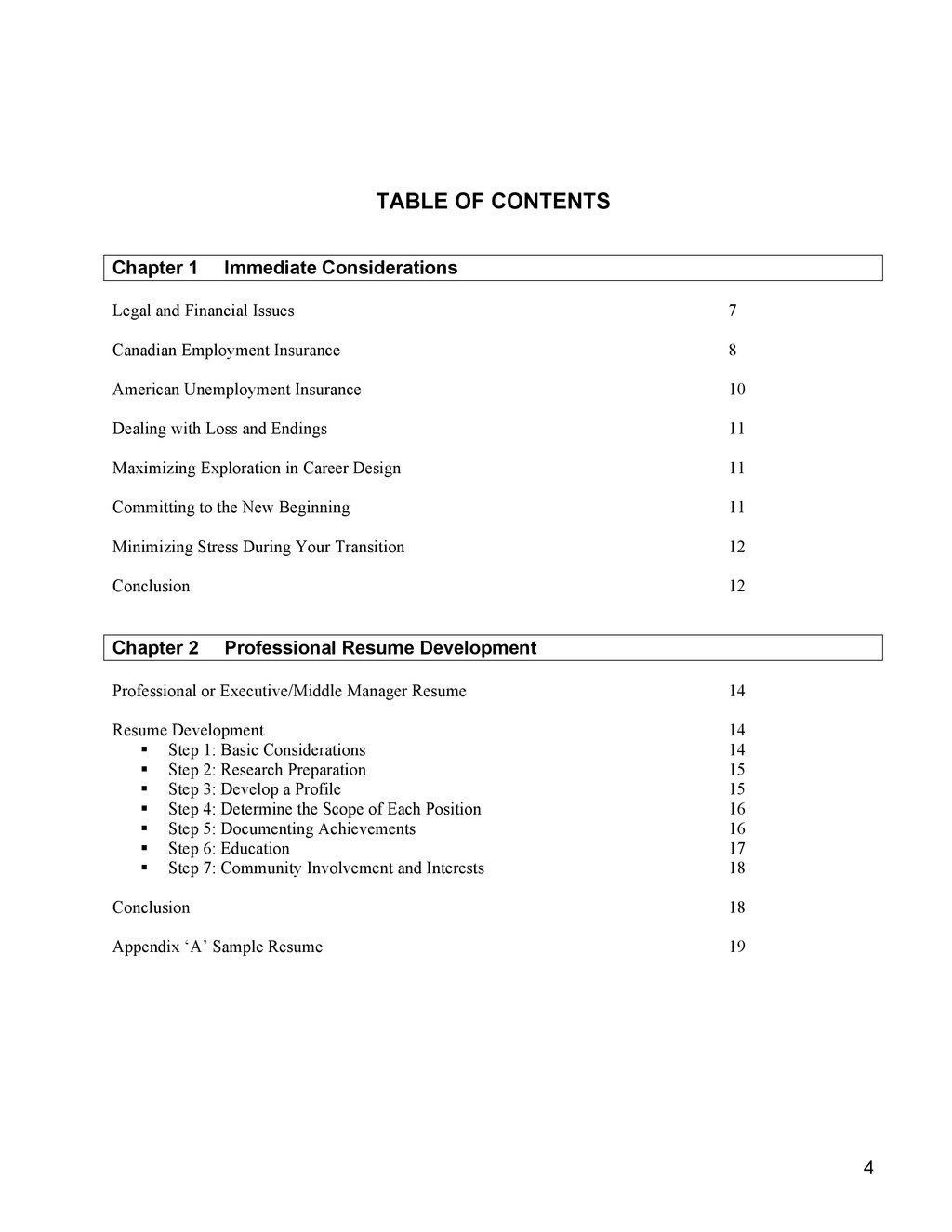
  4. 4 TABLE OF CONTENTS Chapter 1 Immediate Considerations Legal and

    Financial Issues 7 Canadian Employment Insurance 8 American Unemployment Insurance 10 Dealing with Loss and Endings 11 Maximizing Exploration in Career Design 11 Committing to the New Beginning 11 Minimizing Stress During Your Transition 12 Conclusion 12 Chapter 2 Professional Resume Development Professional or Executive/Middle Manager Resume 14 Resume Development 14 § Step 1: Basic Considerations 14 § Step 2: Research Preparation 15 § Step 3: Develop a Profile 15 § Step 4: Determine the Scope of Each Position 16 § Step 5: Documenting Achievements 16 § Step 6: Education 17 § Step 7: Community Involvement and Interests 18 Conclusion 18 Appendix ‘A’ Sample Resume 19
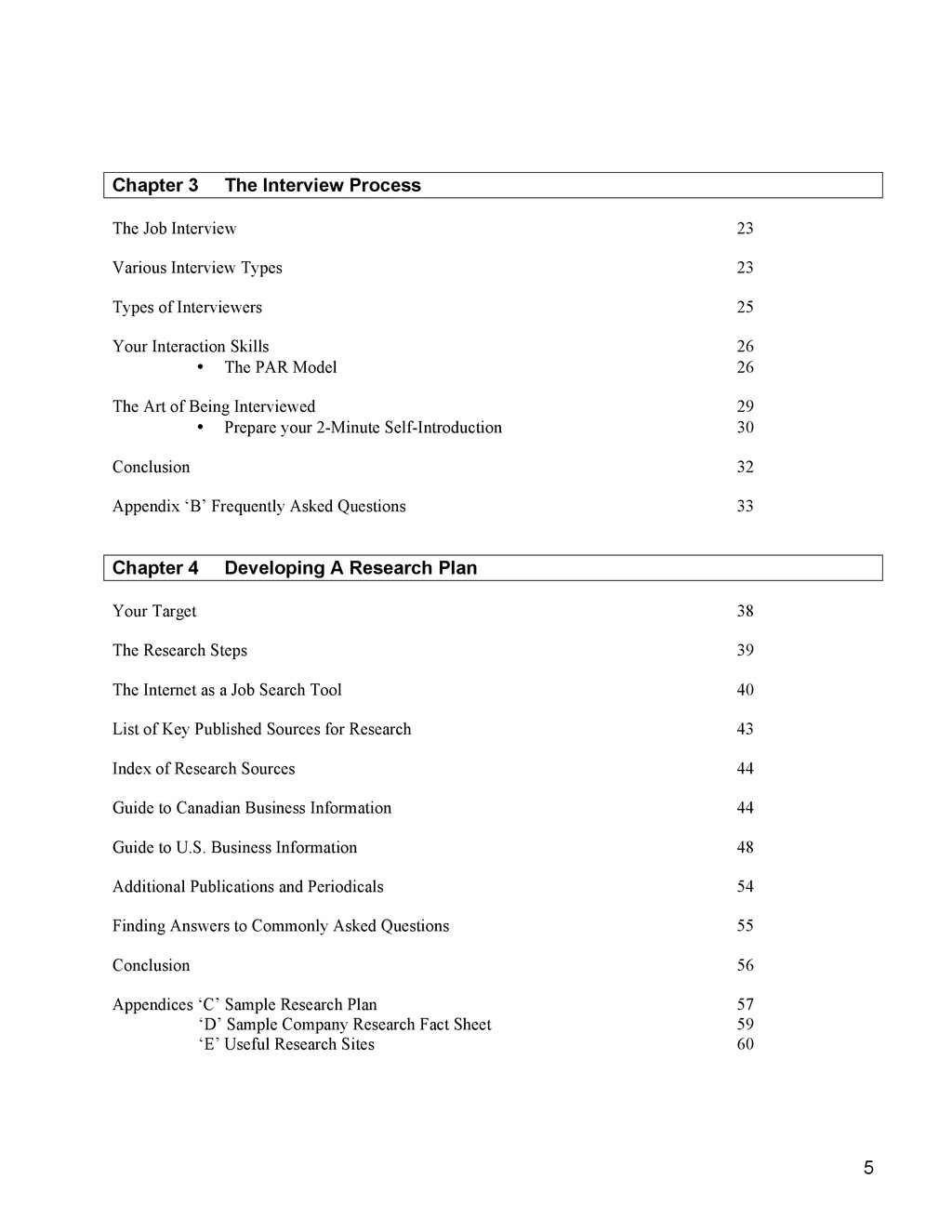
  5. 5 Chapter 3 The Interview Process The Job Interview 23

    Various Interview Types 23 Types of Interviewers 25 Your Interaction Skills 26 • The PAR Model 26 The Art of Being Interviewed 29 • Prepare your 2-Minute Self-Introduction 30 Conclusion 32 Appendix ‘B’ Frequently Asked Questions 33 Chapter 4 Developing A Research Plan Your Target 38 The Research Steps 39 The Internet as a Job Search Tool 40 List of Key Published Sources for Research 43 Index of Research Sources 44 Guide to Canadian Business Information 44 Guide to U.S. Business Information 48 Additional Publications and Periodicals 54 Finding Answers to Commonly Asked Questions 55 Conclusion 56 Appendices ‘C’ Sample Research Plan 57 ‘D’ Sample Company Research Fact Sheet 59 ‘E’ Useful Research Sites 60
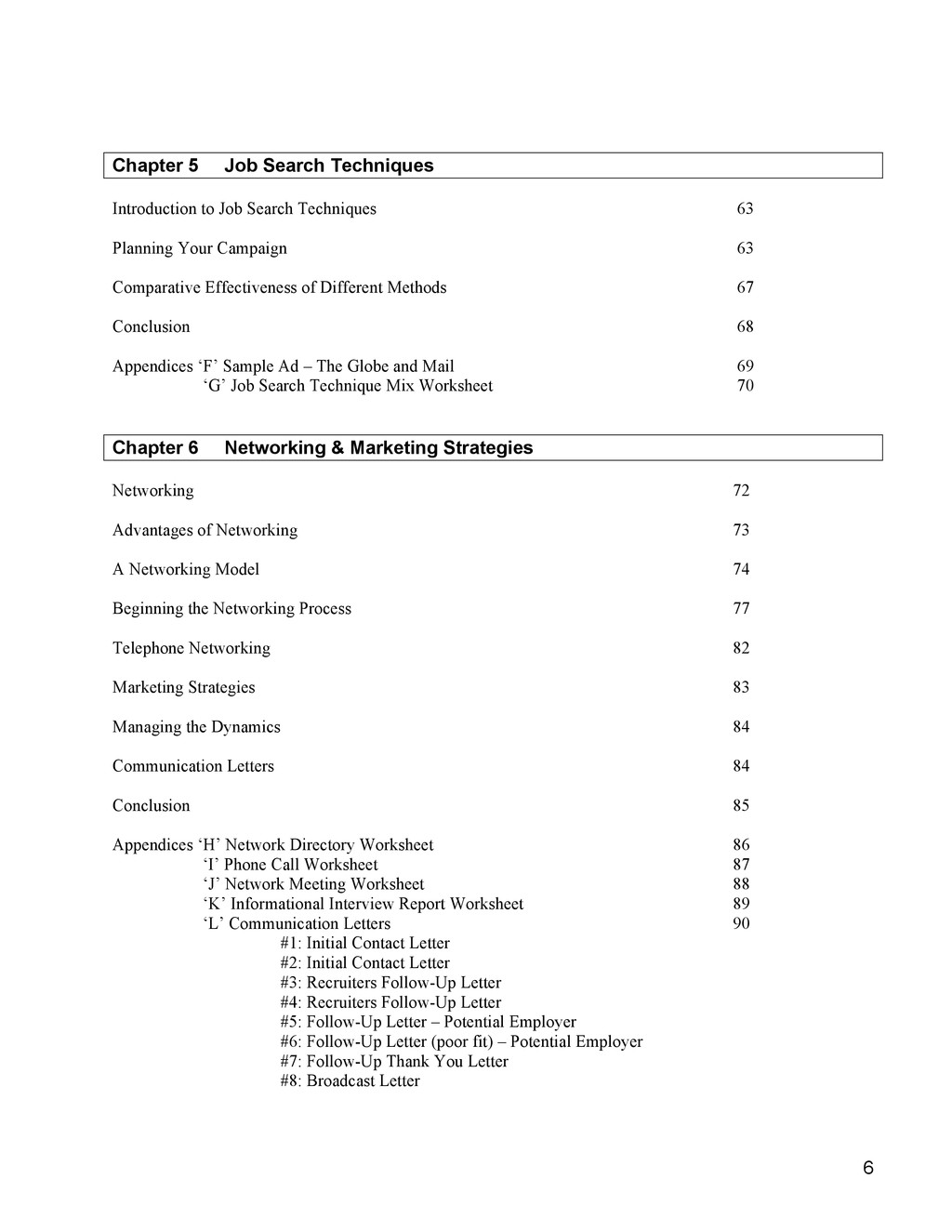
  6. 6 Chapter 5 Job Search Techniques Introduction to Job Search

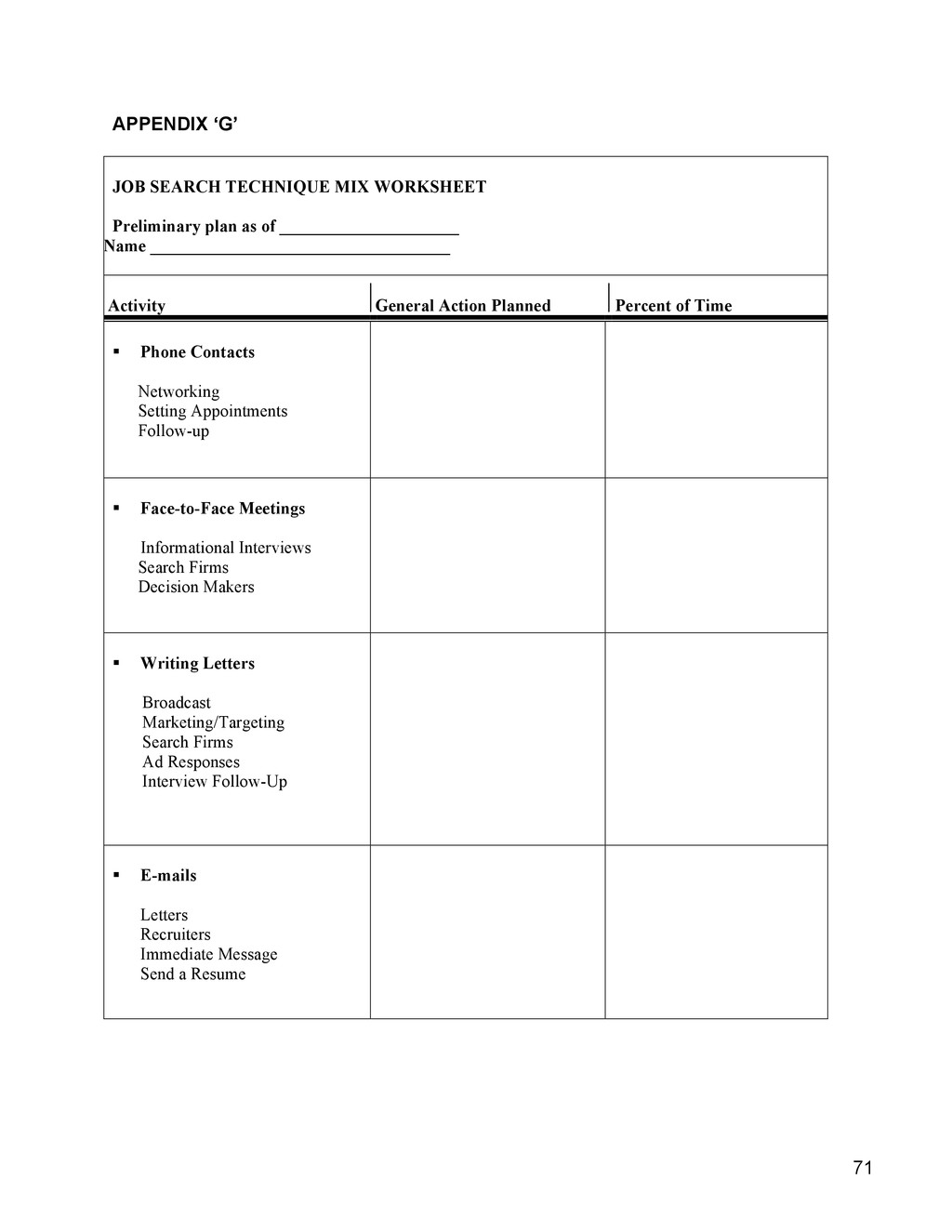
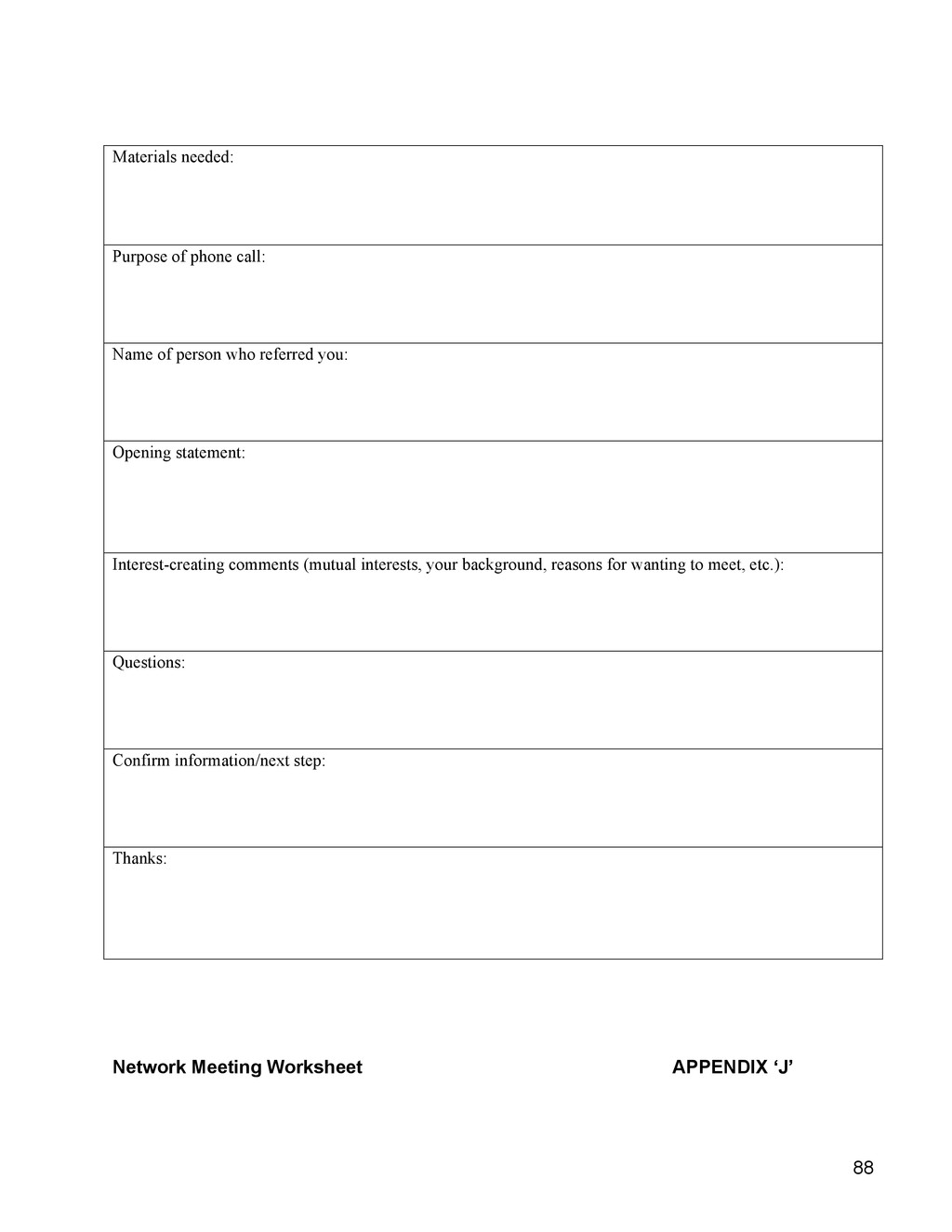
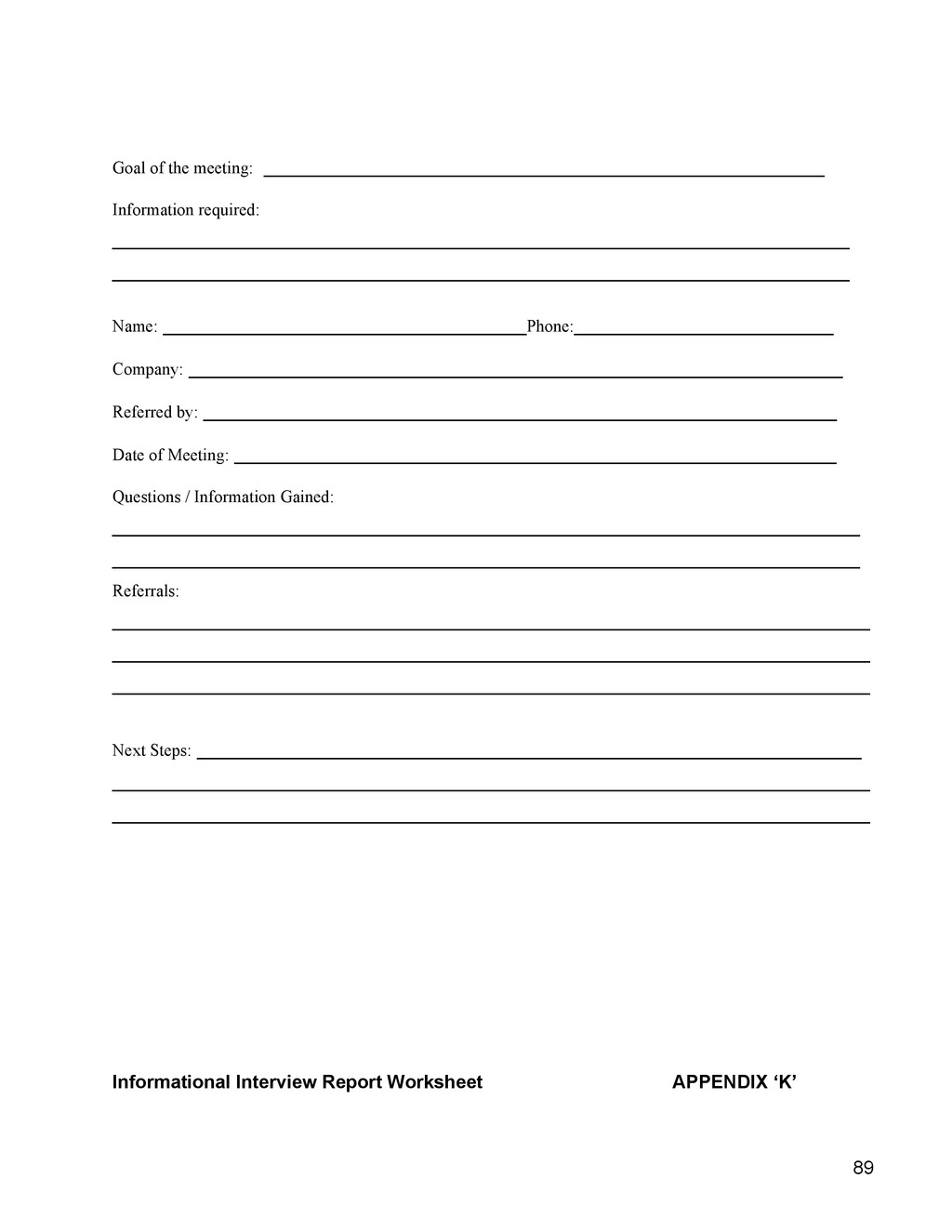
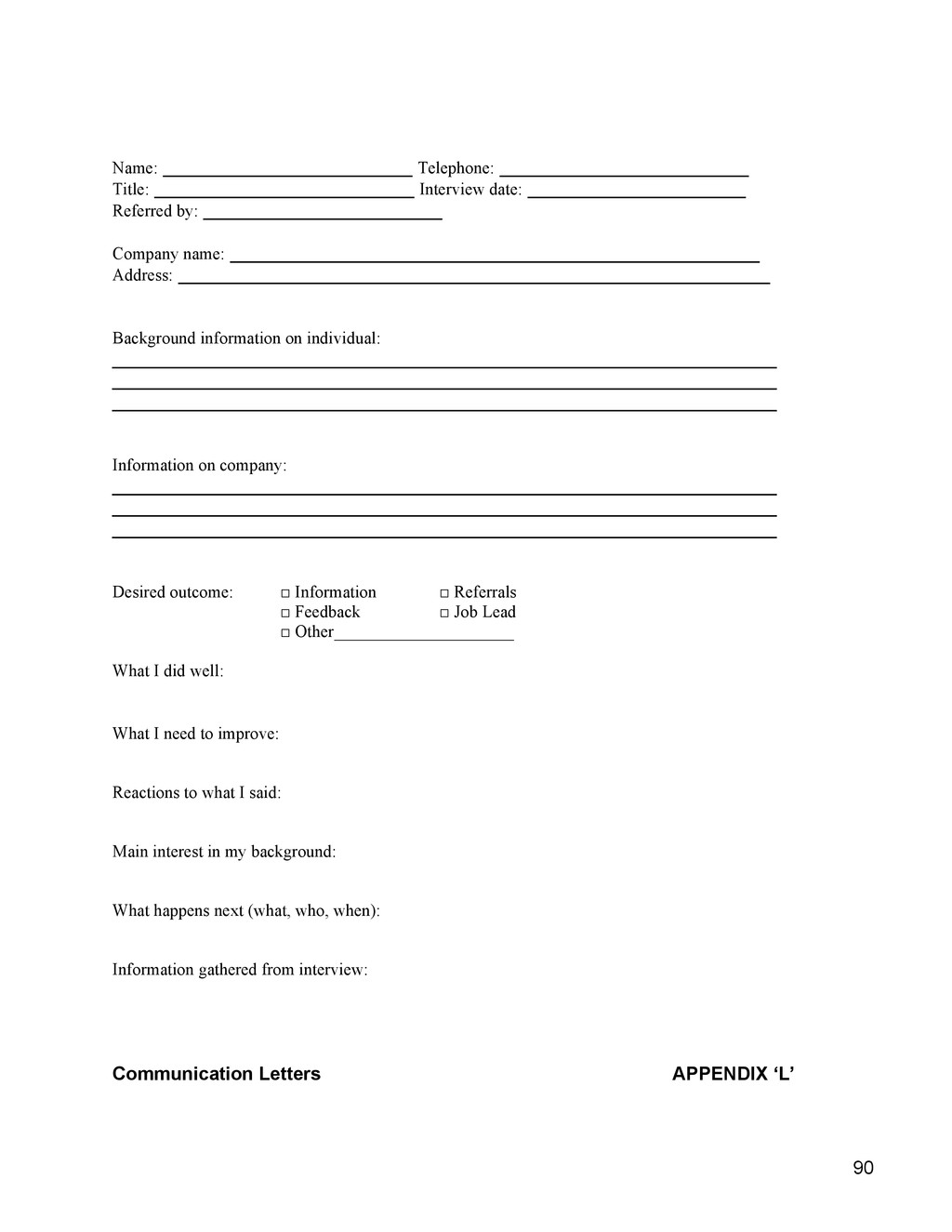
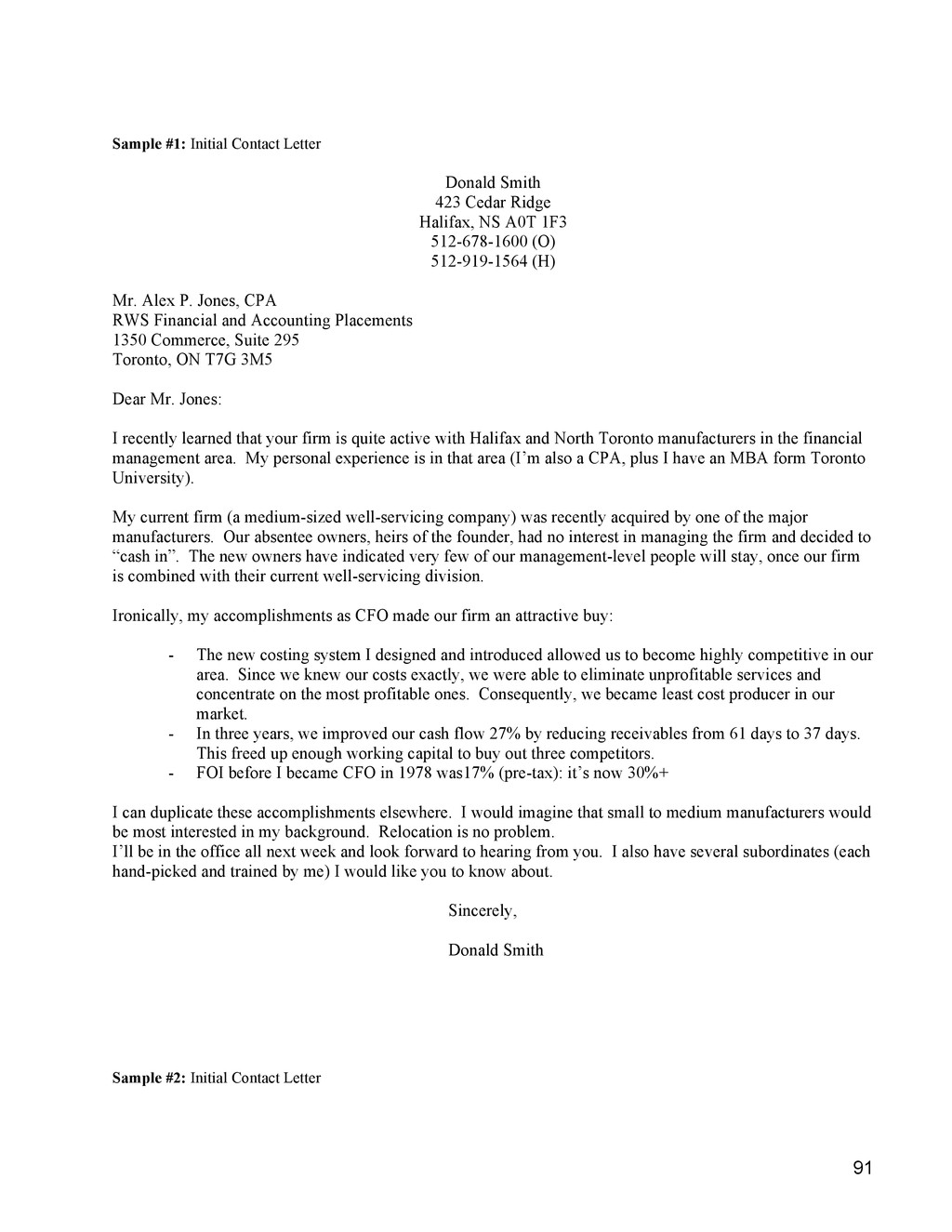
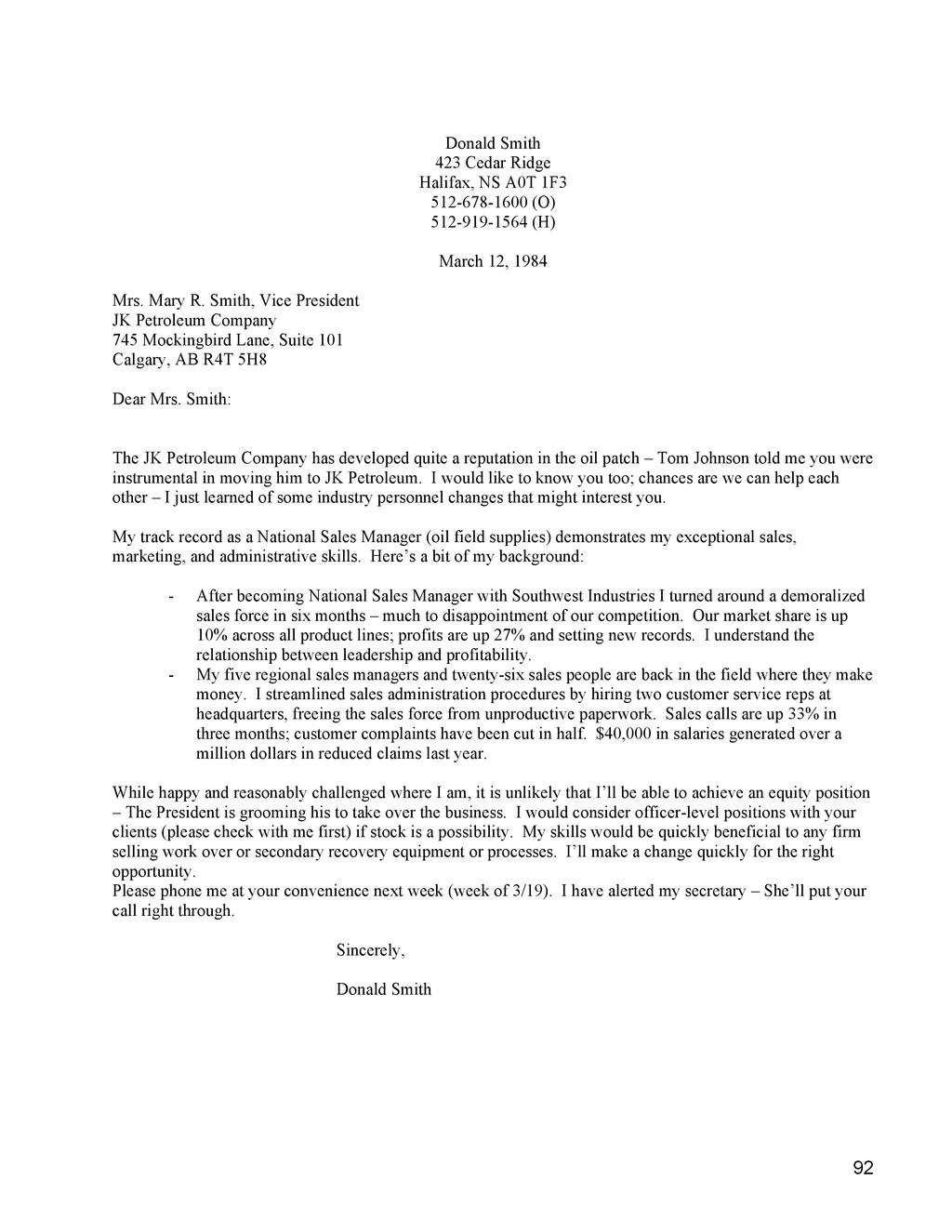
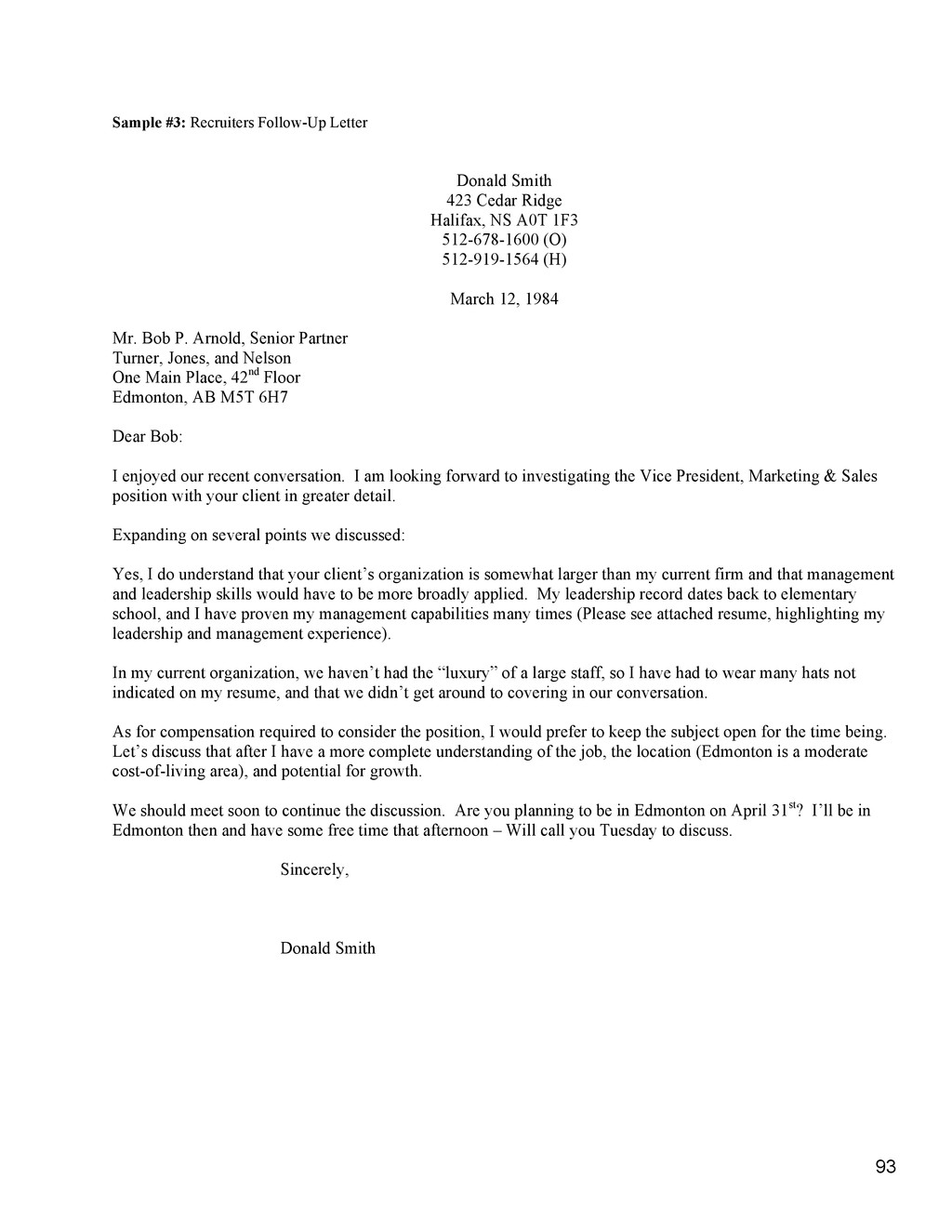
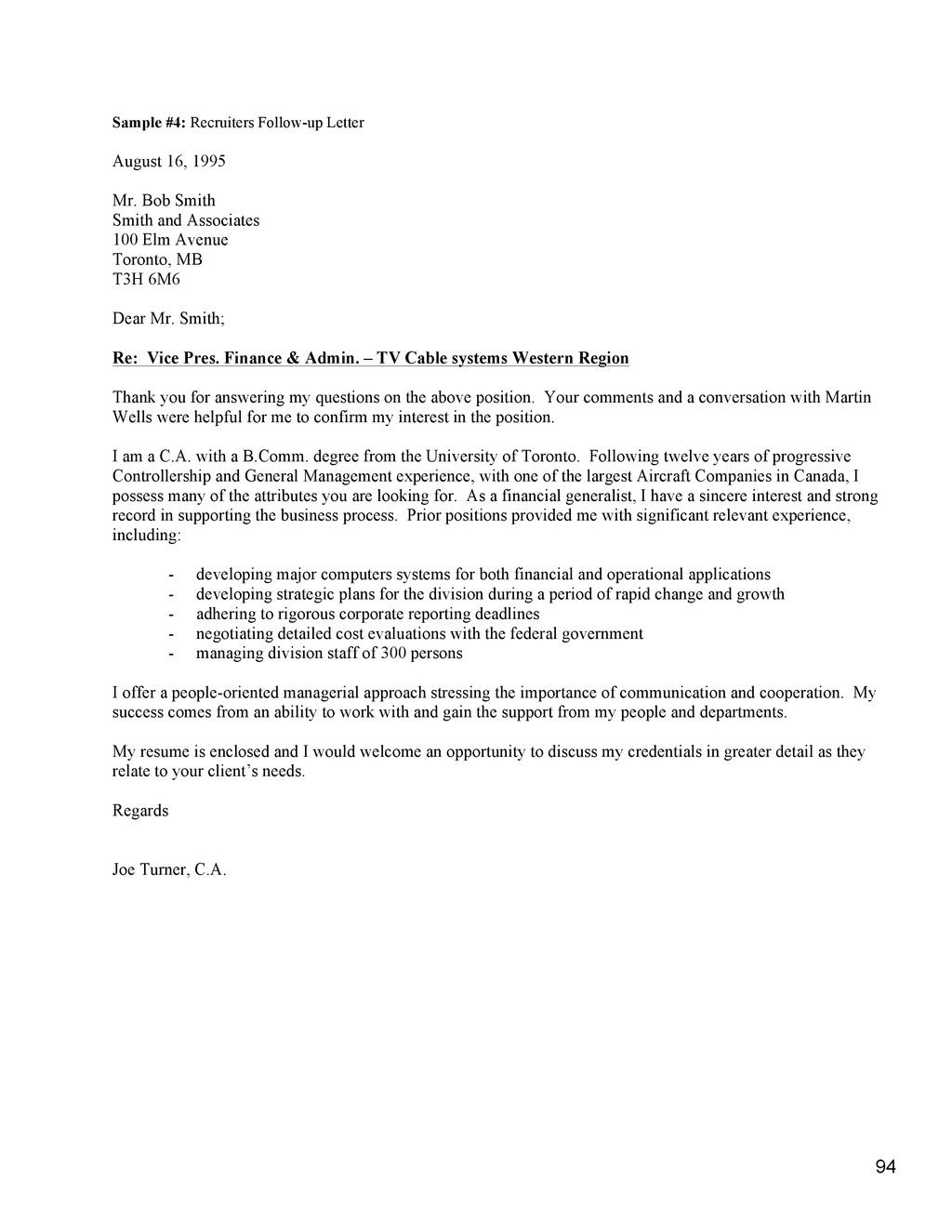
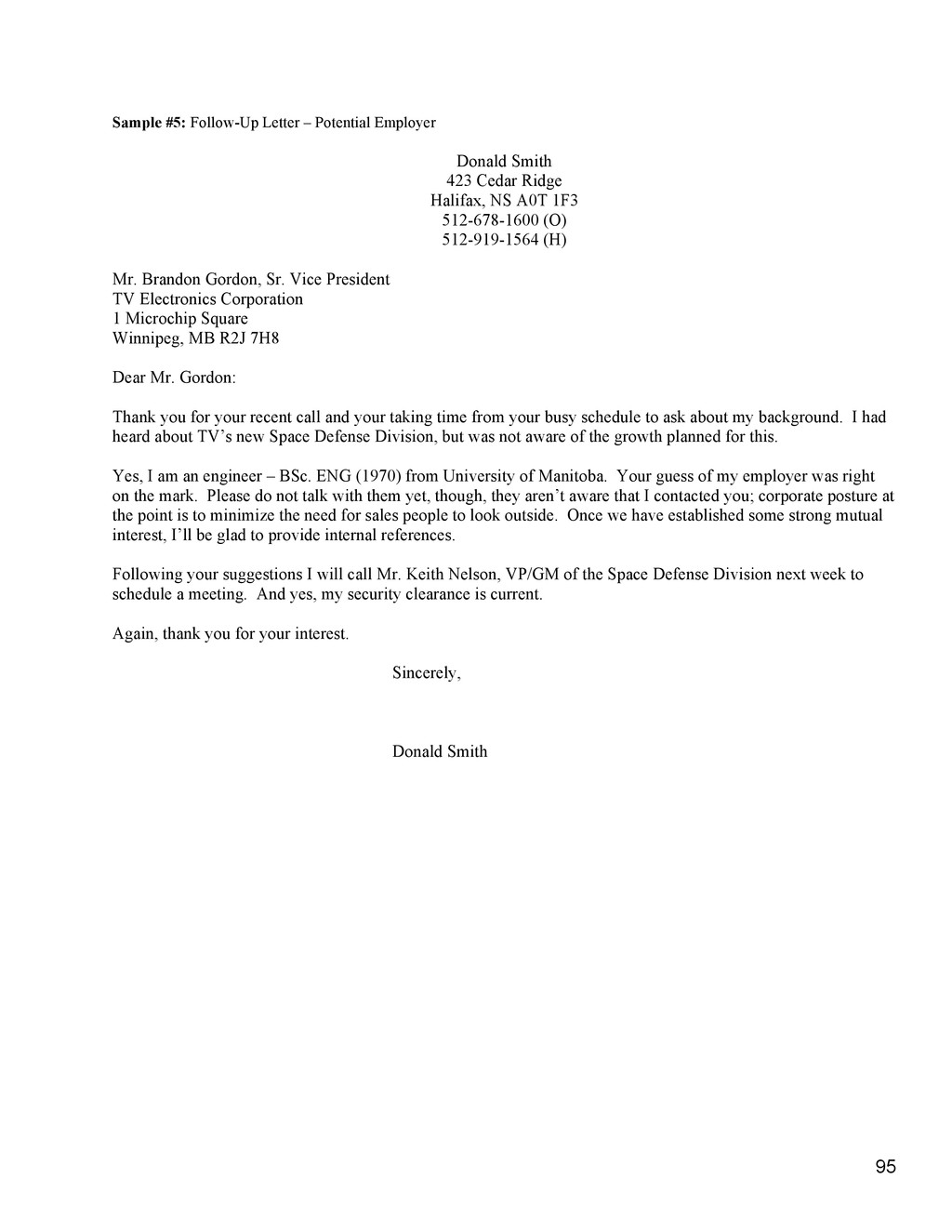
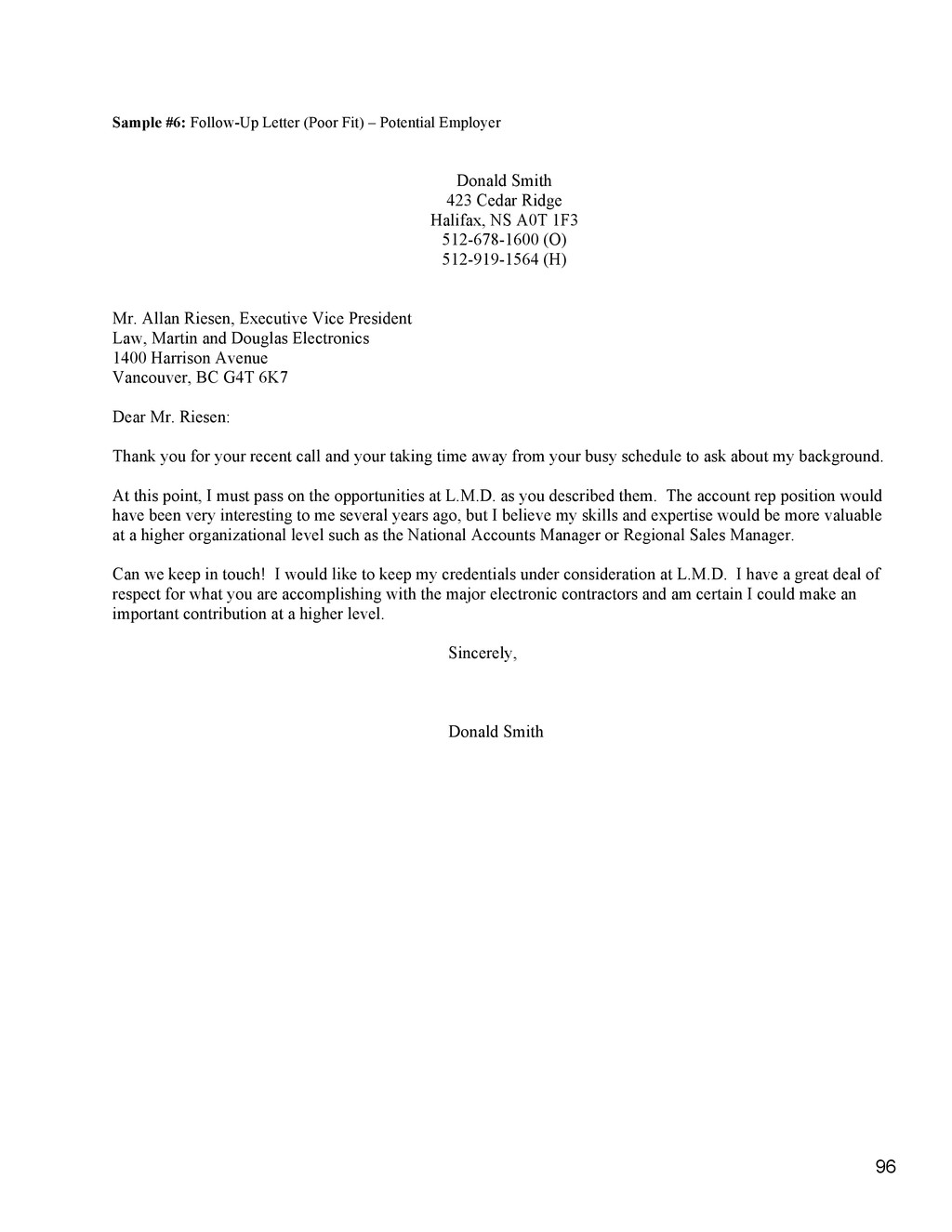
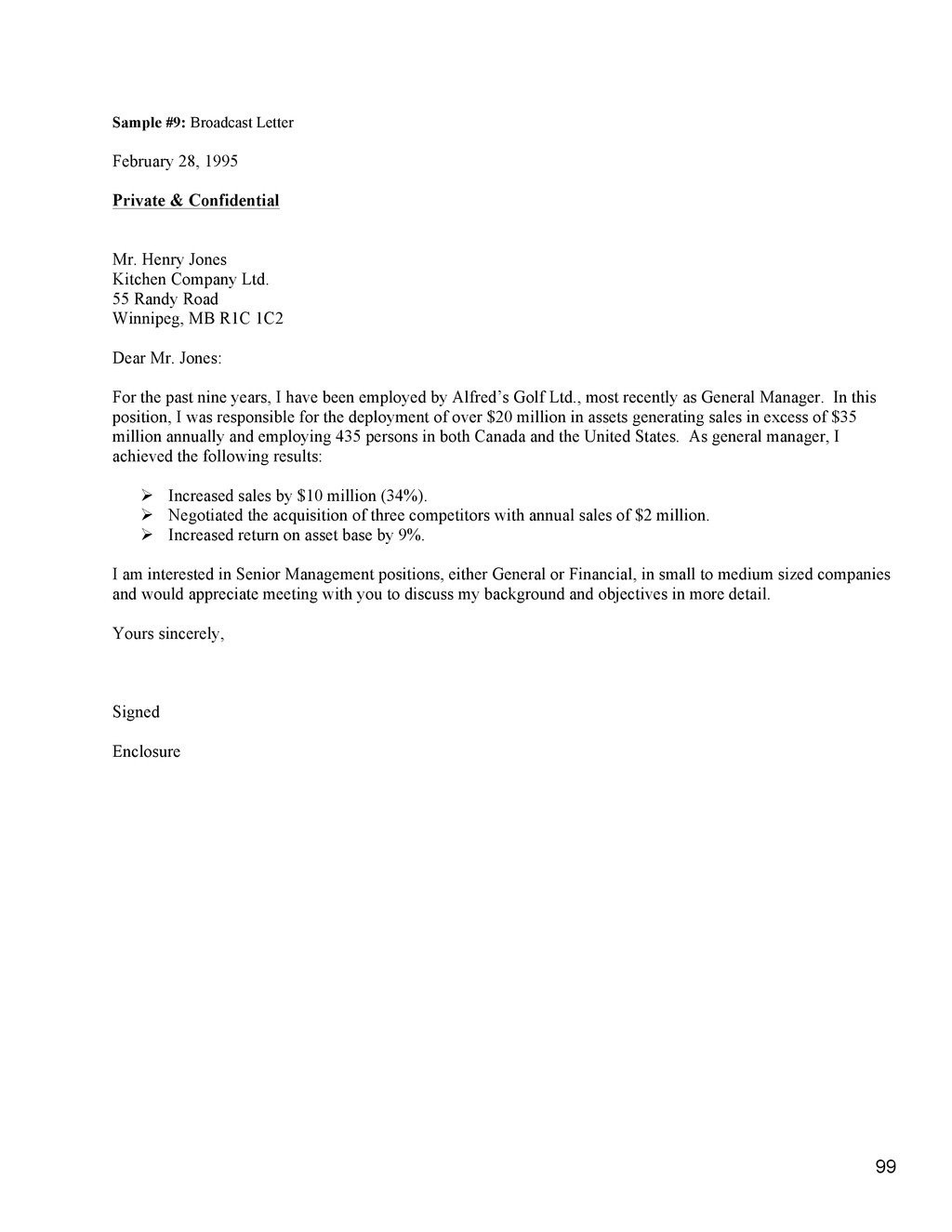
    Techniques 63 Planning Your Campaign 63 Comparative Effectiveness of Different Methods 67 Conclusion 68 Appendices ‘F’ Sample Ad – The Globe and Mail 69 ‘G’ Job Search Technique Mix Worksheet 70 Chapter 6 Networking & Marketing Strategies Networking 72 Advantages of Networking 73 A Networking Model 74 Beginning the Networking Process 77 Telephone Networking 82 Marketing Strategies 83 Managing the Dynamics 84 Communication Letters 84 Conclusion 85 Appendices ‘H’ Network Directory Worksheet 86 ‘I’ Phone Call Worksheet 87 ‘J’ Network Meeting Worksheet 88 ‘K’ Informational Interview Report Worksheet 89 ‘L’ Communication Letters 90 #1: Initial Contact Letter #2: Initial Contact Letter #3: Recruiters Follow-Up Letter #4: Recruiters Follow-Up Letter #5: Follow-Up Letter – Potential Employer #6: Follow-Up Letter (poor fit) – Potential Employer #7: Follow-Up Thank You Letter #8: Broadcast Letter
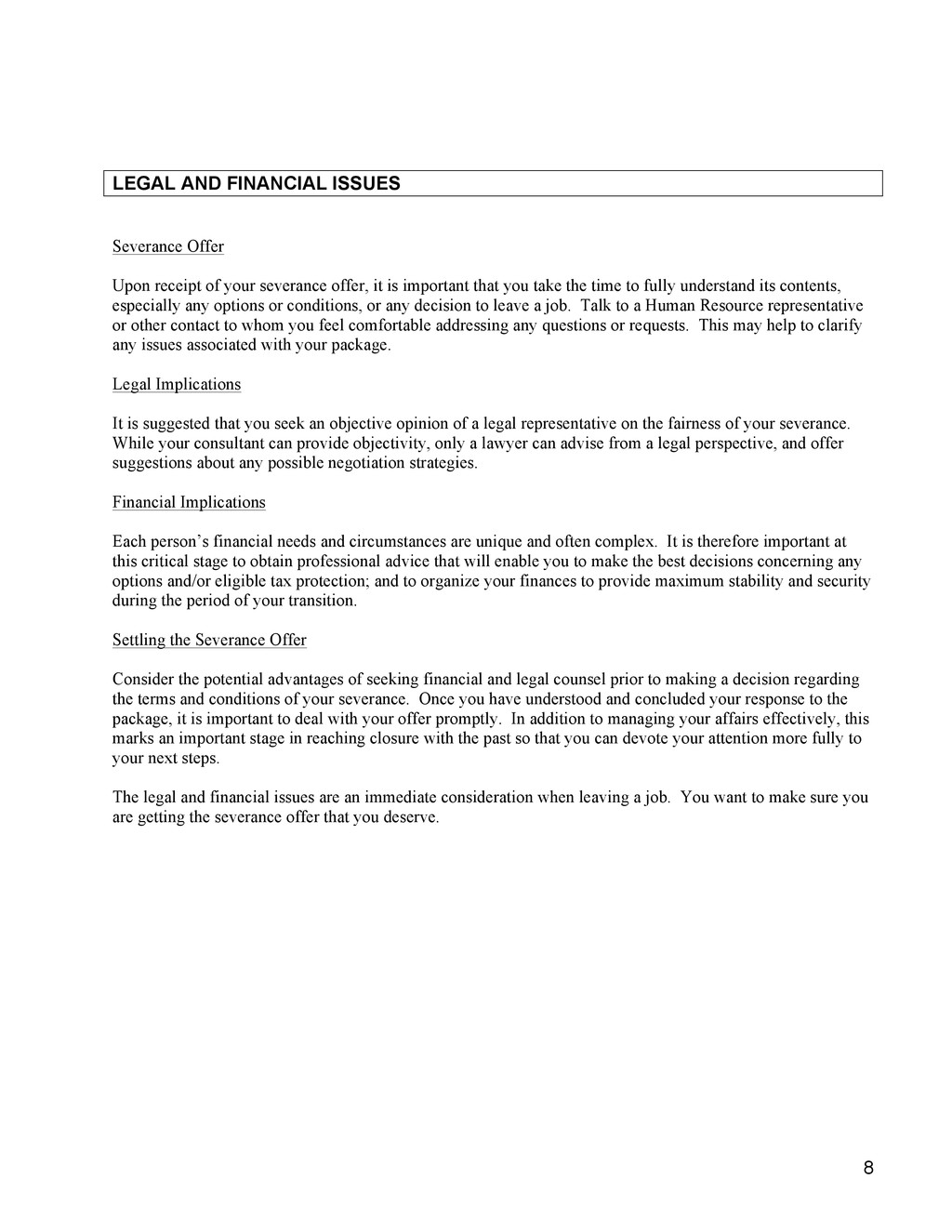
  7. 8 LEGAL AND FINANCIAL ISSUES Severance Offer Upon receipt of

    your severance offer, it is important that you take the time to fully understand its contents, especially any options or conditions, or any decision to leave a job. Talk to a Human Resource representative or other contact to whom you feel comfortable addressing any questions or requests. This may help to clarify any issues associated with your package. Legal Implications It is suggested that you seek an objective opinion of a legal representative on the fairness of your severance. While your consultant can provide objectivity, only a lawyer can advise from a legal perspective, and offer suggestions about any possible negotiation strategies. Financial Implications Each person’s financial needs and circumstances are unique and often complex. It is therefore important at this critical stage to obtain professional advice that will enable you to make the best decisions concerning any options and/or eligible tax protection; and to organize your finances to provide maximum stability and security during the period of your transition. Settling the Severance Offer Consider the potential advantages of seeking financial and legal counsel prior to making a decision regarding the terms and conditions of your severance. Once you have understood and concluded your response to the package, it is important to deal with your offer promptly. In addition to managing your affairs effectively, this marks an important stage in reaching closure with the past so that you can devote your attention more fully to your next steps. The legal and financial issues are an immediate consideration when leaving a job. You want to make sure you are getting the severance offer that you deserve.
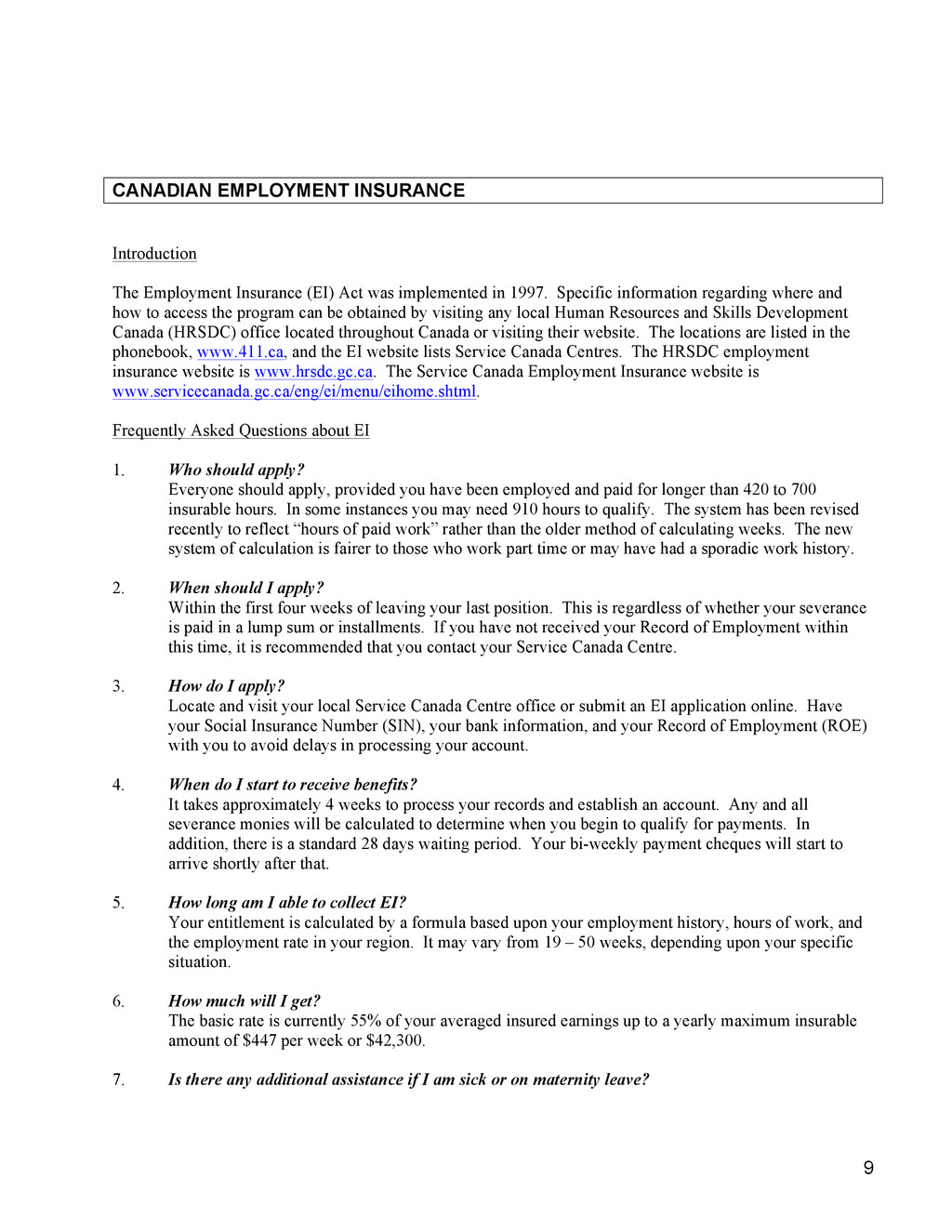
  8. 9 CANADIAN EMPLOYMENT INSURANCE Introduction The Employment Insurance (EI) Act

    was implemented in 1997. Specific information regarding where and how to access the program can be obtained by visiting any local Human Resources and Skills Development Canada (HRSDC) office located throughout Canada or visiting their website. The locations are listed in the phonebook, www.411.ca, and the EI website lists Service Canada Centres. The HRSDC employment insurance website is www.hrsdc.gc.ca. The Service Canada Employment Insurance website is www.servicecanada.gc.ca/eng/ei/menu/eihome.shtml. Frequently Asked Questions about EI 1. Who should apply? Everyone should apply, provided you have been employed and paid for longer than 420 to 700 insurable hours. In some instances you may need 910 hours to qualify. The system has been revised recently to reflect “hours of paid work” rather than the older method of calculating weeks. The new system of calculation is fairer to those who work part time or may have had a sporadic work history. 2. When should I apply? Within the first four weeks of leaving your last position. This is regardless of whether your severance is paid in a lump sum or installments. If you have not received your Record of Employment within this time, it is recommended that you contact your Service Canada Centre. 3. How do I apply? Locate and visit your local Service Canada Centre office or submit an EI application online. Have your Social Insurance Number (SIN), your bank information, and your Record of Employment (ROE) with you to avoid delays in processing your account. 4. When do I start to receive benefits? It takes approximately 4 weeks to process your records and establish an account. Any and all severance monies will be calculated to determine when you begin to qualify for payments. In addition, there is a standard 28 days waiting period. Your bi-weekly payment cheques will start to arrive shortly after that. 5. How long am I able to collect EI? Your entitlement is calculated by a formula based upon your employment history, hours of work, and the employment rate in your region. It may vary from 19 – 50 weeks, depending upon your specific situation. 6. How much will I get? The basic rate is currently 55% of your averaged insured earnings up to a yearly maximum insurable amount of $447 per week or $42,300. 7. Is there any additional assistance if I am sick or on maternity leave?
  9. 10 Special provision has been made for persons who are

    either sick or are on maternity leave. They can have their benefits increased by up to 55% of their base salary. Your Responsibilities EI has been developed to protect you while you are in transition. HRDC makes it very clear that EI is not a “free ride” and you have to assume the responsibility for finding re-employment. Therefore, to be eligible for Employment Insurance you must: § be willing and able to work § be able to indicate that you have been actively looking for work by keeping records of your job search activities. § follow instruction from your HRDC coordinator § accurately report all benefits and monies earned while accepting EI (even if you have not yet been paid) AMERICAN UNEMPLOYMENT INSURANCE
  10. 11 Unemployment Insurance was created in 1935 in response to

    the Great Depression, when millions of people lost their jobs. For more information you can visit your local unemployment insurance claims office or the US Department of Labor website at http://www.dol.gov and www.dol.gov/dol/topic/unemployment-insurance. Frequently Asked Questions 1. What is unemployment compensation? The Federal-State unemployment insurance system pays benefits to eligible workers who are unemployed and looking for work. Unemployment payments (compensation) provide an unemployed worker time to find a new job equivalent to the one lost without major financial distress. 2. What should I do about pension and health benefits? You may be entitled to certain pension protections and health benefits even if you lose your job. If your company provided a group health insurance plan, you may be able to continue health benefits for a period of time. 3. Who is eligible? For eligibility you must meet the State requirements for wages earned or time worked during an established (one year) period of time referred to as a "base period". (In most States, this is usually the first four out of the last five completed calendar quarters prior to the time that your claim is filed.) You must be determined to be unemployed through no fault of your own (determined under State law), and meet other eligibility requirements of State law. 4. How do I apply? Contact the State Unemployment Insurance agency after becoming unemployed. In some States, you can now file a claim by telephone. It generally takes two to three weeks after you file your claim to receive your first benefit check. When you file the claim, you will be asked certain questions, such as addresses and dates about your former employment. To make sure your claim is not delayed, be sure to give complete and correct information. 5. How do I continue my eligibility? You must file weekly or biweekly claims at the end of the week, and respond to questions concerning your continued eligibility. You must report any earnings from work you had during the week(s). You must also report any job offers or refusal of work during the week. These claims are usually filed by mail or telephone; the State will provide filing instructions. When directed, you must report to your local Unemployment Insurance Claims Office. Your Responsibilities Unemployment Insurance has been developed to protect you while you are in transition. The US Department of Labor makes it very clear that unemployment insurance is not a “free ride” and you have to assume the responsibility for finding re-employment. Therefore, to be eligible for employment insurance you must: § be willing and able to work § be able to indicate that you have been actively looking for work by keeping records of your job search activities. § follow instruction from your local Unemployment Insurance Claims coordinator § accurately report all benefits and monies earned while accepting UI (even if you have not yet been paid)
  11. 12 DEALING WITH LOSS AND ENDINGS Dealing with the loss

    and ending of your job can be very tough. Here are some activities to consider when facing this type of situation: § Identify all the assets that you can take with you – knowledge, skills, experience and other qualifications. § Consider the positive mementos you may have, such as photographs, promotional items, notes of appreciation, plaques, awards, etc. § Consider the good relationships and useful contacts/network you can retain. § Consider who can provide you with good personal references. § Look for ways to signify appropriate closure with goodbyes, lunches or other social occasions. § Get rid of items that keep you locked in the past. § Reach out and talk to those people who are part of your immediate support group including your consultant. § Listen to and try to make sense of objective opinions. § Associate with positive and optimistic people. § Relax and enjoy life on a different level. § Focus on the future. MAXIMIZING EXPLORATION IN CAREER DESIGN There are some practical ways to help you through the design of your career. Maximize your exploration by going a little beyond your comfort zone. Start by making a list of things to do, focus and commit your time to accomplish your priorities. Always ask for help or ideas if you feel stuck. Look for opportunities to network with people, so that you can meet new people and discover new job opportunities. To begin your job searching there needs to be a good level of commitment from you. COMMITTING TO THE NEW BEGINNING Being committed to your job search is very important, but also make sure to minimize your stress by taking proper care of yourself. Your body needs breaks. § Focus on positions that fit with your most transferable skills, marketable strengths and your field of expertise. § Always be prepared to interview the interviewer. Obtain clarity about accountabilities, responsibilities and performance expectations. § Give yourself time to adjust, probably 6 months.
  12. 13 MINIMIZING STRESS DURING YOUR TRANSITION To minimize stress during

    your transition it is important to take care of yourself in a balanced healthy way. Pay attention to your body. If you are feeling more irritable, drinking more, losing interest in previously enjoyed activities, getting sick more often or having chest pains, these may be signals that you are over- stressed. Recognize them as symptoms and begin to deal with your stress by figuring out what the real cause of the stress is and then determine what can be done to relieve your stress. Use relaxation techniques, watch what you eat and maintain a regular schedule of active exercise. At the end of the day this will reduce your stress and you will have more energy. Your self-esteem or self-confidence is one of the most important areas to control. Think positively instead of focusing on the negative and you can keep your level of stress under control. Take advantage of your immediate support group, such as family and friends, and your consultant to help you manage your career transition effectively. CONCLUSION In conclusion, it is essential to take care of the immediate considerations when leaving a job. Get the severance offer you deserve, look into receiving Employment Insurance while looking for another job. Effectively manage your loss of employment, and commit yourself to the development of a new employment. Maintaining your ability to manage changes, stress, and a positive outlook are as important as your health and well-being. Finding your next position should be viewed as an opportunity to gain more valuable experience. You already know that you possess transferable skills, knowledge and experience, so take the next step stress free.
  13. 14

  14. 15 PROFESSIONAL OR EXECUTIVE/MIDDLE MANAGER RESUME Introduction An executive or

    middle manager resume takes a tremendous amount of research and effort to produce; it is a document that accurately reflects past achievements while at the same time sets oneself apart from others. This chapter will move you past the difficulties of developing your resume as it offers a style comfortable for individuals to document their achievements on paper. There are many different styles of resumes in the market place and everyone has a different opinion. My opinion is simple. Lets produce a resume that will set you apart from the next CEO, Vice-President, General Manager, etc. while simultaneously beginning your preparation for your next interview. Avoid sending your resume to organizations, recruiters, etc. in large quantities. Be very selective as to where and who sees your resume; the main reason being confidentiality. Now, let’s follow the resume development steps to producing a professional or executive/middle manager resume that will set you apart from the next person. RESUME DEVELOPMENT Step 1: Basic Considerations Think about some basic considerations as you begin the development of your resume. These considerations overview the length of your resume, which font and size is appropriate, and how many resumes should be given out. Listed below are basic considerations: • Three pages are acceptable. § An appendix, published articles, and major engineering projects, etc. are an addition to be presented when asked. • Use plain white paper, there is no need to use fancy paper. • Forget binders or hard covers because they seldom fit in a file. • Resume distribution by fax and e-mail is most acceptable. • No photographs, as this tends to be a distraction. • Use a normal Arial or New Times 12pt font, no fancy printing is required. • Your resume must be professional, grammatically correct with no spelling mistakes. It is acceptable to use bullets for incomplete sentences. • Avoid calling the resume a CV (Curriculum Vitae) which is ‘resume’ in Latin. • Carefully verify credentials, dates etc. as accuracy is critical. • Resume embellishments are grounds for rejection and/or dismissal. • Be concise and accurate with quantifiable accomplishments. • A statement such as, ‘References on Request’ is not necessary because you would be asked for references later, if required. • In most cases, one resume is all that is required. Additional skills and qualifications that match a particular organization or position can be included in a covering letter. • Your resume should start with your name, address, phone number(s) and e-mail at the top of the page. It is important to be accessible.
  15. 16 After these basic considerations have been taken into account,

    you can begin your research. Step 2: Research Preparation To begin your research for the development of your resume there are many pieces of material to gather and prepare. Gather old notes, old resumes, letters of recognition and previous performance appraisals, etc. Include any critical comments from past superiors. Now, for each position held in the last 15 years prepare a list of 5 or 6 statements of achievements which are specific quantifiable and measurable. For example, “Re- organized an administration department, eliminated two administrators and as a result saved $110K in salaries and improved efficiency processes by 20%” (See achievements paragraph in step 5). As a final preparation in your research, list your demonstrated expertise and strengths and list areas you need to improve, providing at least three examples of each. Use the research you have prepared to proceed with your resume development. You are on your way to developing an effective profile for your resume. Step 3: Develop a Profile Write a Profile that describes you in three or four sentences. Draw from your list of identified areas of expertise and strengths, aiming to catch the interest of the reader right away. Your profile may also be used to form part of a covering letter or marketing letter. Refer to the following examples of profiles: Example #1: “A successful Chief Executive Officer with extensive experience in building large organizations through business acquisitions and re-engineering within the Manufacturers sector. Recognized expertise in: strategic thinking, negotiations, client delivery, cost effective structures, leadership, management skills and being a leader of business teams. Within competitive markets, motivated to provide high standards, quality and excellence; a results oriented professional with a proven track record of achievements in best practices, strategic business planning and decision making skills. An approachable manager who is a team builder and with proven interpersonal and communication skills.” Example #2: An experienced general manager with a proven track record in developing customer service strategies and in managing sales and marketing, administration and distribution organizations. Expertise in brand positioning, market analysis, segmentation, and developing a differential customer service offering. Possesses a strong result oriented management perspective toward all challenges with excellent customer communication skills at the front line and at the executive boardroom level. Strong leader in achieving break through service levels by generating a common team focus based on best practices and change management processes. Example #3: A highly motivated general manager with diverse experience in the private and public sector environments. Recognized expertise in: problem solving, innovative profitable solutions, management skills, negotiations being sensitive to internal and external stakeholders, human resource management, corporate finance, getting to the issues quickly, and implementing significant change when required. Results oriented professional with a proven track record of achievements in strategic business planning,
  16. 17 organizational renewal, team building, and computer systems. A progressive

    individual who leads in a quiet but firm manner always promoting a consensus approach, with proven interpersonal and communication skills and with strong client service delivery attributes. It is important to develop an effective profile accurately outlining your expertise and strengths to grab the interest of the reader. By looking at your resume the reader will learn something positive about you immediately and they will want to continue reading your resume. Following your Profile is your Career History. Career History is discussed in the following two steps; 4 and 5. These steps determine the scope of each position and documenting achievements. Your Career History is the most extensive part of the resume, enabling a reader to gain a good overview of the jobs you have had in your career. Step 4: Determine the Scope of Each Position Place each position you have held in chronological order starting from the most recent. For each one of the positions held in the last 15 years, describe the scope of the position to include who you reported to, size of budget, revenue, profit and loss responsibility, number of people supervised, territory responsible for, and a very brief account of your general responsibilities. Refer to the following examples: Example #1: Reporting directly to the President, responsible for the overall management including the bottom line for a chain of ten weekly newspapers with a budget of over $6M and a staff of 80 (unionized and non - unionized) spread over three provinces, Manitoba, Saskatchewan and Alberta. Example #2: Reporting directly to the Board of Directors, responsible for the profitability of 176 convenient stores with overall revenues of $850M with a staff of 900 across Canada. Example #3: Reporting directly to the President, responsible for developing and managing a team based operating and decision making organization with a staff of 110 management and operating personnel, generating sales in excess of $70M and earnings of $13M while managing an asset base of $37M in Houston, Texas. These examples capture the scope of the position briefly but it can be very powerful. To complete your Career History it is essential to document your achievements. Step 5: Documenting Achievements The next valuable step is to examine your preliminary list of achievements, explore your career history and develop a comprehensive inventory of significant achievements (approximately 5 for each position held) for the past 15 years. Considerable time and thought must be put into tracking your achievements, especially in terms of what is specific, measurable and quantifiable. Recruiters and employers are interested in what you have achieved as opposed to the traditional resumes with only lists of responsibilities. Your achievements inventory is the key to setting you apart from the next person. Develop your inventory of achievements by following the PAR model that is discussed in Chapter 3. The P stands for the Project or Topic, the A is the Action you took and R is the specific quantifiable Results. The PAR model will help you organize your thoughts and stay focused.
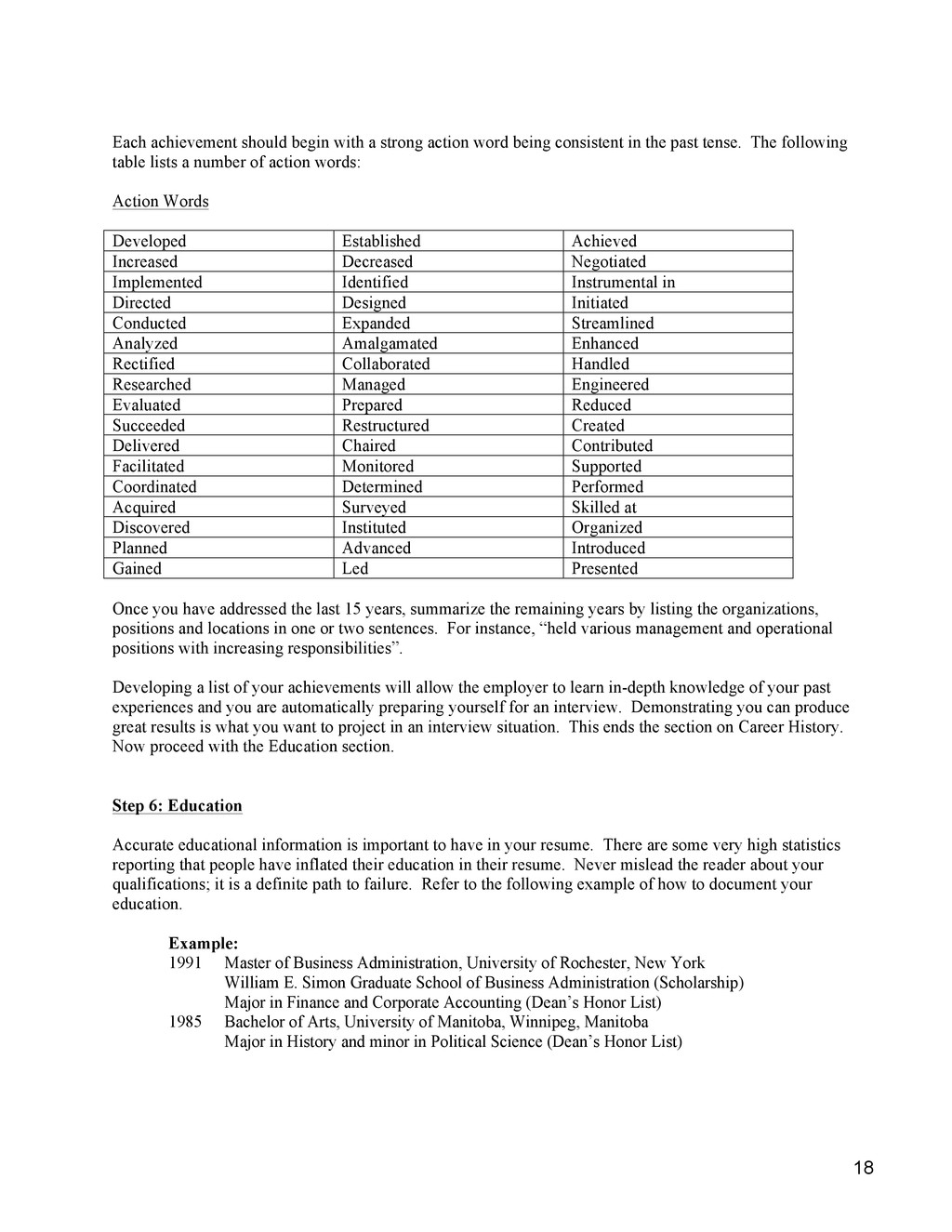
  17. 18 Each achievement should begin with a strong action word

    being consistent in the past tense. The following table lists a number of action words: Action Words Developed Established Achieved Increased Decreased Negotiated Implemented Identified Instrumental in Directed Designed Initiated Conducted Expanded Streamlined Analyzed Amalgamated Enhanced Rectified Collaborated Handled Researched Managed Engineered Evaluated Prepared Reduced Succeeded Restructured Created Delivered Chaired Contributed Facilitated Monitored Supported Coordinated Determined Performed Acquired Surveyed Skilled at Discovered Instituted Organized Planned Advanced Introduced Gained Led Presented Once you have addressed the last 15 years, summarize the remaining years by listing the organizations, positions and locations in one or two sentences. For instance, “held various management and operational positions with increasing responsibilities”. Developing a list of your achievements will allow the employer to learn in-depth knowledge of your past experiences and you are automatically preparing yourself for an interview. Demonstrating you can produce great results is what you want to project in an interview situation. This ends the section on Career History. Now proceed with the Education section. Step 6: Education Accurate educational information is important to have in your resume. There are some very high statistics reporting that people have inflated their education in their resume. Never mislead the reader about your qualifications; it is a definite path to failure. Refer to the following example of how to document your education. Example: 1991 Master of Business Administration, University of Rochester, New York William E. Simon Graduate School of Business Administration (Scholarship) Major in Finance and Corporate Accounting (Dean’s Honor List) 1985 Bachelor of Arts, University of Manitoba, Winnipeg, Manitoba Major in History and minor in Political Science (Dean’s Honor List)
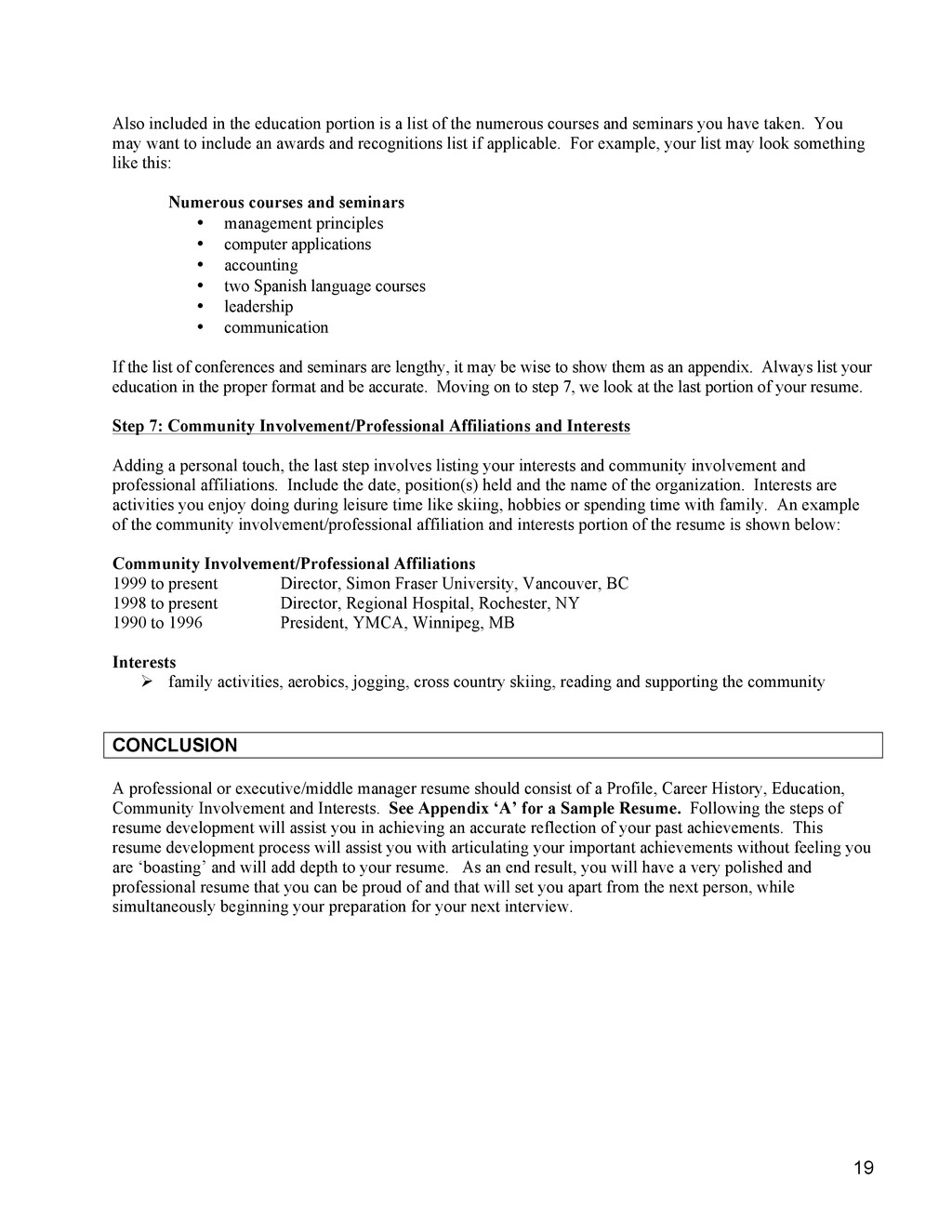
  18. 19 Also included in the education portion is a list

    of the numerous courses and seminars you have taken. You may want to include an awards and recognitions list if applicable. For example, your list may look something like this: Numerous courses and seminars • management principles • computer applications • accounting • two Spanish language courses • leadership • communication If the list of conferences and seminars are lengthy, it may be wise to show them as an appendix. Always list your education in the proper format and be accurate. Moving on to step 7, we look at the last portion of your resume. Step 7: Community Involvement/Professional Affiliations and Interests Adding a personal touch, the last step involves listing your interests and community involvement and professional affiliations. Include the date, position(s) held and the name of the organization. Interests are activities you enjoy doing during leisure time like skiing, hobbies or spending time with family. An example of the community involvement/professional affiliation and interests portion of the resume is shown below: Community Involvement/Professional Affiliations 1999 to present Director, Simon Fraser University, Vancouver, BC 1998 to present Director, Regional Hospital, Rochester, NY 1990 to 1996 President, YMCA, Winnipeg, MB Interests Ø family activities, aerobics, jogging, cross country skiing, reading and supporting the community CONCLUSION A professional or executive/middle manager resume should consist of a Profile, Career History, Education, Community Involvement and Interests. See Appendix ‘A’ for a Sample Resume. Following the steps of resume development will assist you in achieving an accurate reflection of your past achievements. This resume development process will assist you with articulating your important achievements without feeling you are ‘boasting’ and will add depth to your resume. As an end result, you will have a very polished and professional resume that you can be proud of and that will set you apart from the next person, while simultaneously beginning your preparation for your next interview.
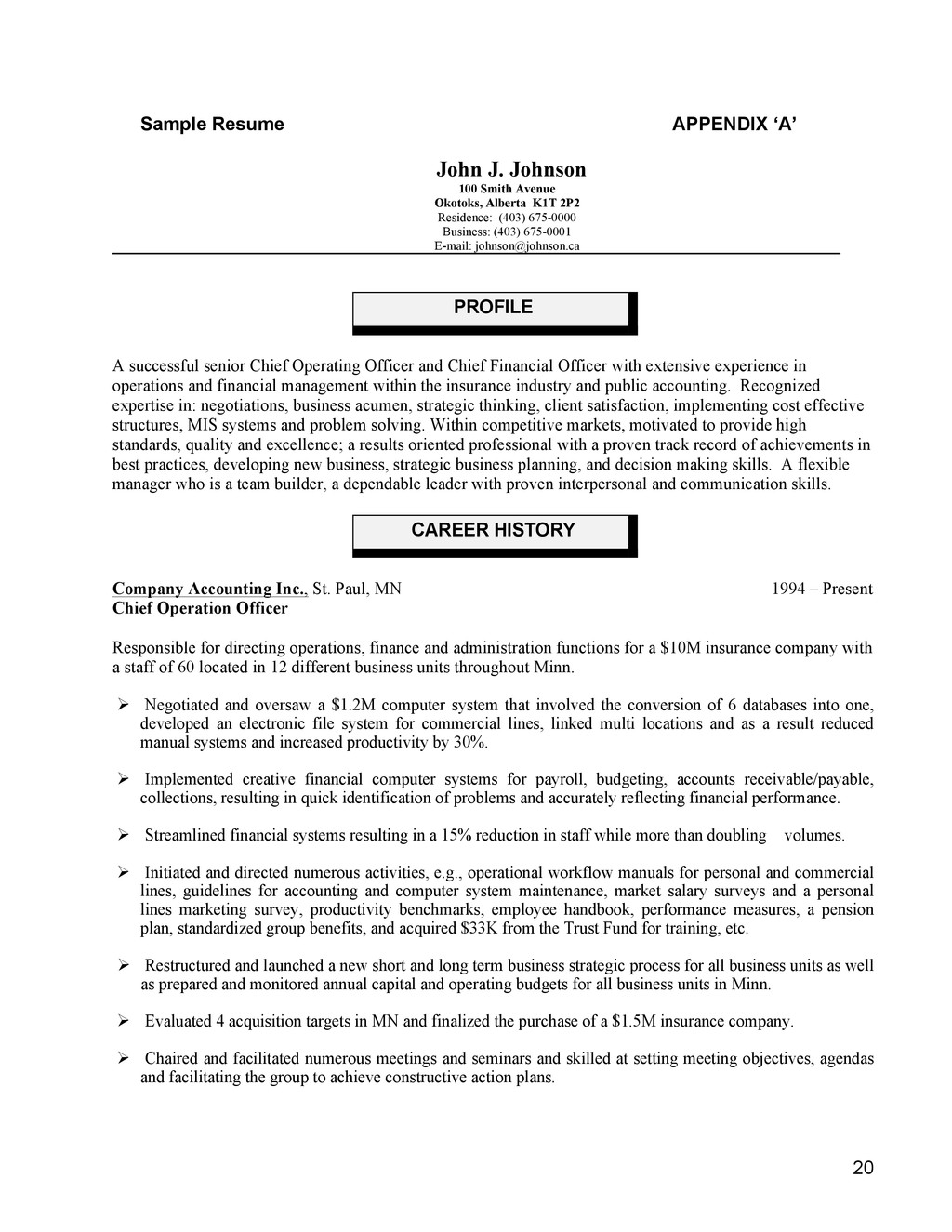
  19. 20 Sample Resume APPENDIX ‘A’ John J. Johnson 100 Smith

    Avenue Okotoks, Alberta K1T 2P2 Residence: (403) 675-0000 Business: (403) 675-0001 E-mail: [email protected] PROFILE A successful senior Chief Operating Officer and Chief Financial Officer with extensive experience in operations and financial management within the insurance industry and public accounting. Recognized expertise in: negotiations, business acumen, strategic thinking, client satisfaction, implementing cost effective structures, MIS systems and problem solving. Within competitive markets, motivated to provide high standards, quality and excellence; a results oriented professional with a proven track record of achievements in best practices, developing new business, strategic business planning, and decision making skills. A flexible manager who is a team builder, a dependable leader with proven interpersonal and communication skills. CAREER HISTORY Company Accounting Inc., St. Paul, MN 1994 – Present Chief Operation Officer Responsible for directing operations, finance and administration functions for a $10M insurance company with a staff of 60 located in 12 different business units throughout Minn. Ø Negotiated and oversaw a $1.2M computer system that involved the conversion of 6 databases into one, developed an electronic file system for commercial lines, linked multi locations and as a result reduced manual systems and increased productivity by 30%. Ø Implemented creative financial computer systems for payroll, budgeting, accounts receivable/payable, collections, resulting in quick identification of problems and accurately reflecting financial performance. Ø Streamlined financial systems resulting in a 15% reduction in staff while more than doubling volumes. Ø Initiated and directed numerous activities, e.g., operational workflow manuals for personal and commercial lines, guidelines for accounting and computer system maintenance, market salary surveys and a personal lines marketing survey, productivity benchmarks, employee handbook, performance measures, a pension plan, standardized group benefits, and acquired $33K from the Trust Fund for training, etc. Ø Restructured and launched a new short and long term business strategic process for all business units as well as prepared and monitored annual capital and operating budgets for all business units in Minn. Ø Evaluated 4 acquisition targets in MN and finalized the purchase of a $1.5M insurance company. Ø Chaired and facilitated numerous meetings and seminars and skilled at setting meeting objectives, agendas and facilitating the group to achieve constructive action plans.
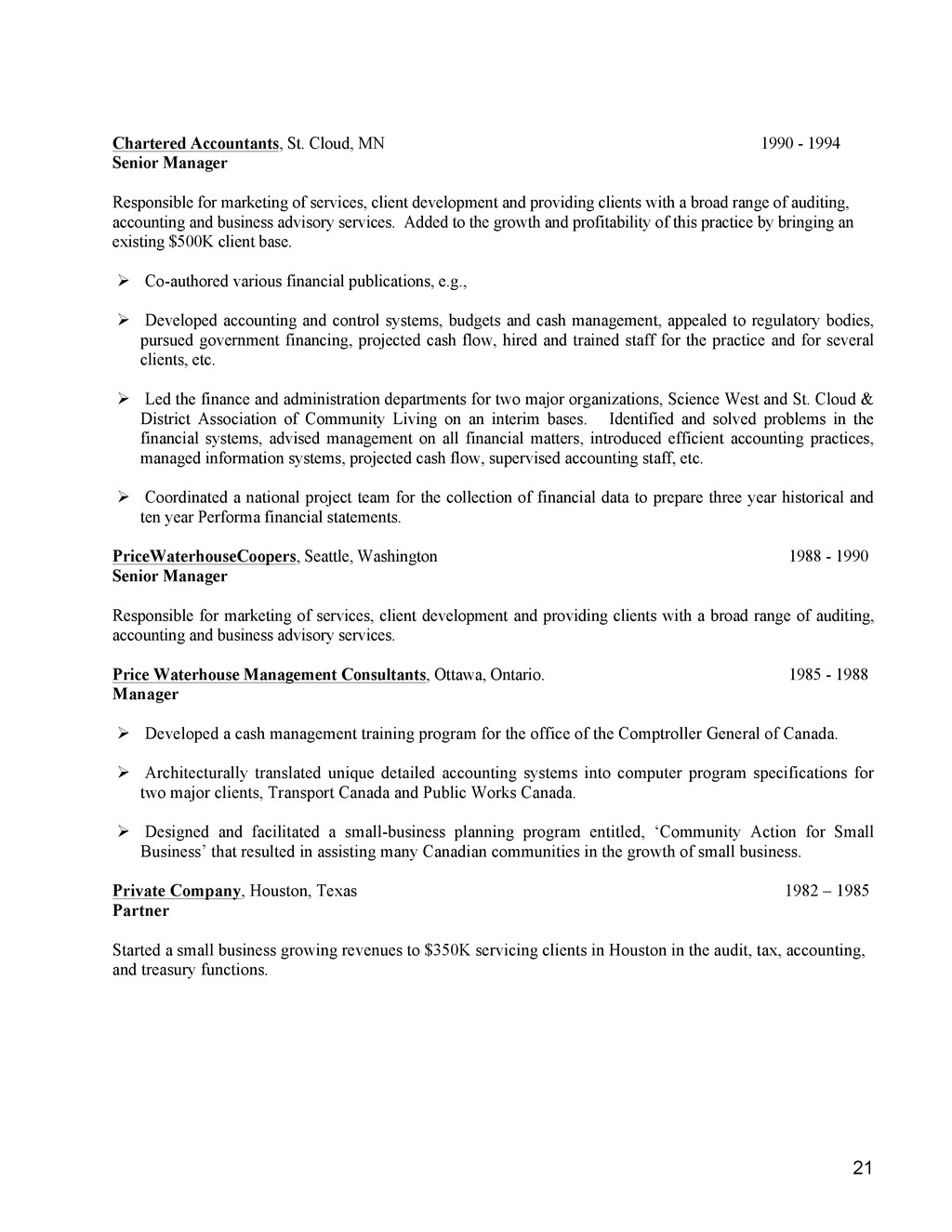
  20. 21 Chartered Accountants, St. Cloud, MN 1990 - 1994 Senior

    Manager Responsible for marketing of services, client development and providing clients with a broad range of auditing, accounting and business advisory services. Added to the growth and profitability of this practice by bringing an existing $500K client base. Ø Co-authored various financial publications, e.g., Ø Developed accounting and control systems, budgets and cash management, appealed to regulatory bodies, pursued government financing, projected cash flow, hired and trained staff for the practice and for several clients, etc. Ø Led the finance and administration departments for two major organizations, Science West and St. Cloud & District Association of Community Living on an interim bases. Identified and solved problems in the financial systems, advised management on all financial matters, introduced efficient accounting practices, managed information systems, projected cash flow, supervised accounting staff, etc. Ø Coordinated a national project team for the collection of financial data to prepare three year historical and ten year Performa financial statements. PriceWaterhouseCoopers, Seattle, Washington 1988 - 1990 Senior Manager Responsible for marketing of services, client development and providing clients with a broad range of auditing, accounting and business advisory services. Price Waterhouse Management Consultants, Ottawa, Ontario. 1985 - 1988 Manager Ø Developed a cash management training program for the office of the Comptroller General of Canada. Ø Architecturally translated unique detailed accounting systems into computer program specifications for two major clients, Transport Canada and Public Works Canada. Ø Designed and facilitated a small-business planning program entitled, ‘Community Action for Small Business’ that resulted in assisting many Canadian communities in the growth of small business. Private Company, Houston, Texas 1982 – 1985 Partner Started a small business growing revenues to $350K servicing clients in Houston in the audit, tax, accounting, and treasury functions.
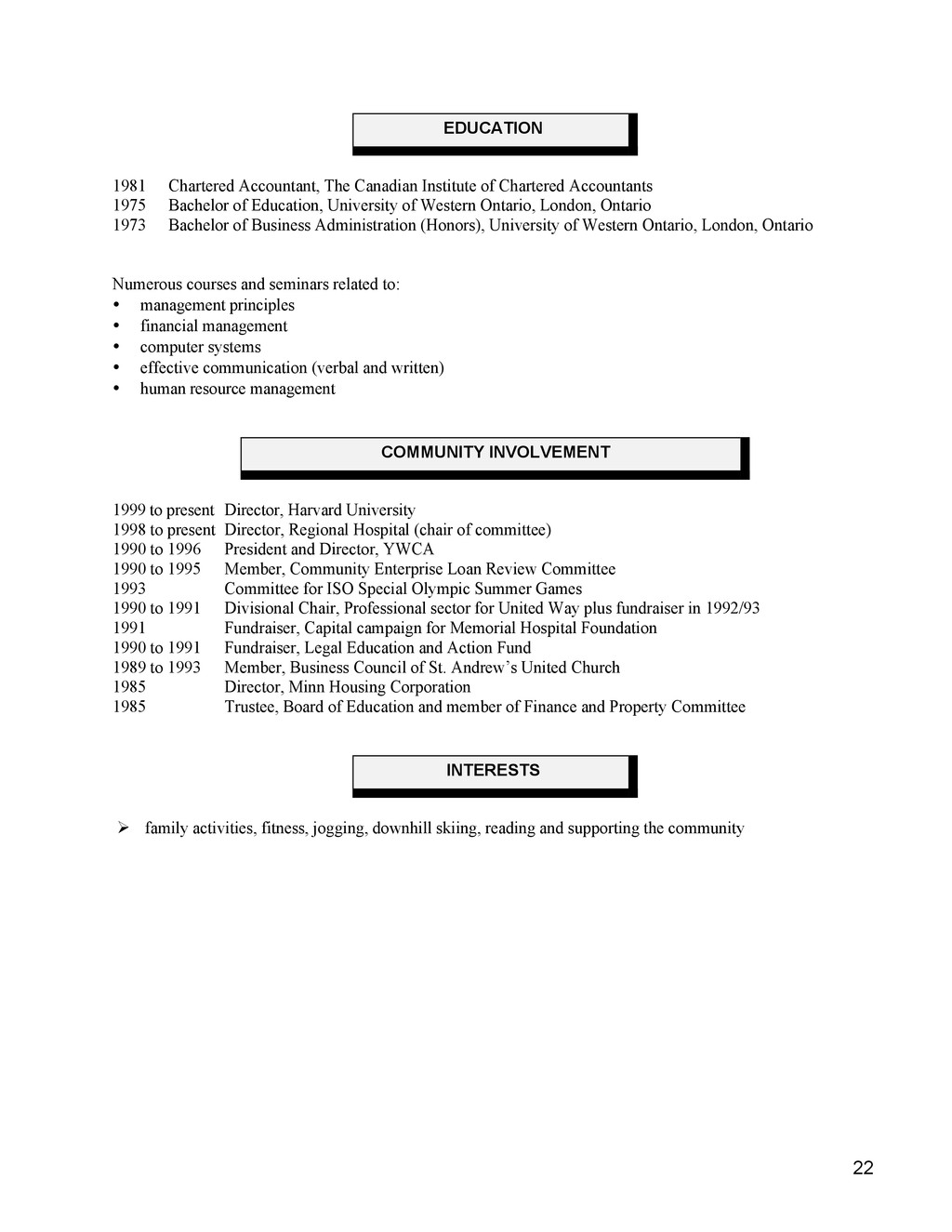
  21. 22 EDUCATION 1981 Chartered Accountant, The Canadian Institute of Chartered

    Accountants 1975 Bachelor of Education, University of Western Ontario, London, Ontario 1973 Bachelor of Business Administration (Honors), University of Western Ontario, London, Ontario Numerous courses and seminars related to: • management principles • financial management • computer systems • effective communication (verbal and written) • human resource management COMMUNITY INVOLVEMENT 1999 to present Director, Harvard University 1998 to present Director, Regional Hospital (chair of committee) 1990 to 1996 President and Director, YWCA 1990 to 1995 Member, Community Enterprise Loan Review Committee 1993 Committee for ISO Special Olympic Summer Games 1990 to 1991 Divisional Chair, Professional sector for United Way plus fundraiser in 1992/93 1991 Fundraiser, Capital campaign for Memorial Hospital Foundation 1990 to 1991 Fundraiser, Legal Education and Action Fund 1989 to 1993 Member, Business Council of St. Andrew’s United Church 1985 Director, Minn Housing Corporation 1985 Trustee, Board of Education and member of Finance and Property Committee INTERESTS Ø family activities, fitness, jogging, downhill skiing, reading and supporting the community
  22. 23

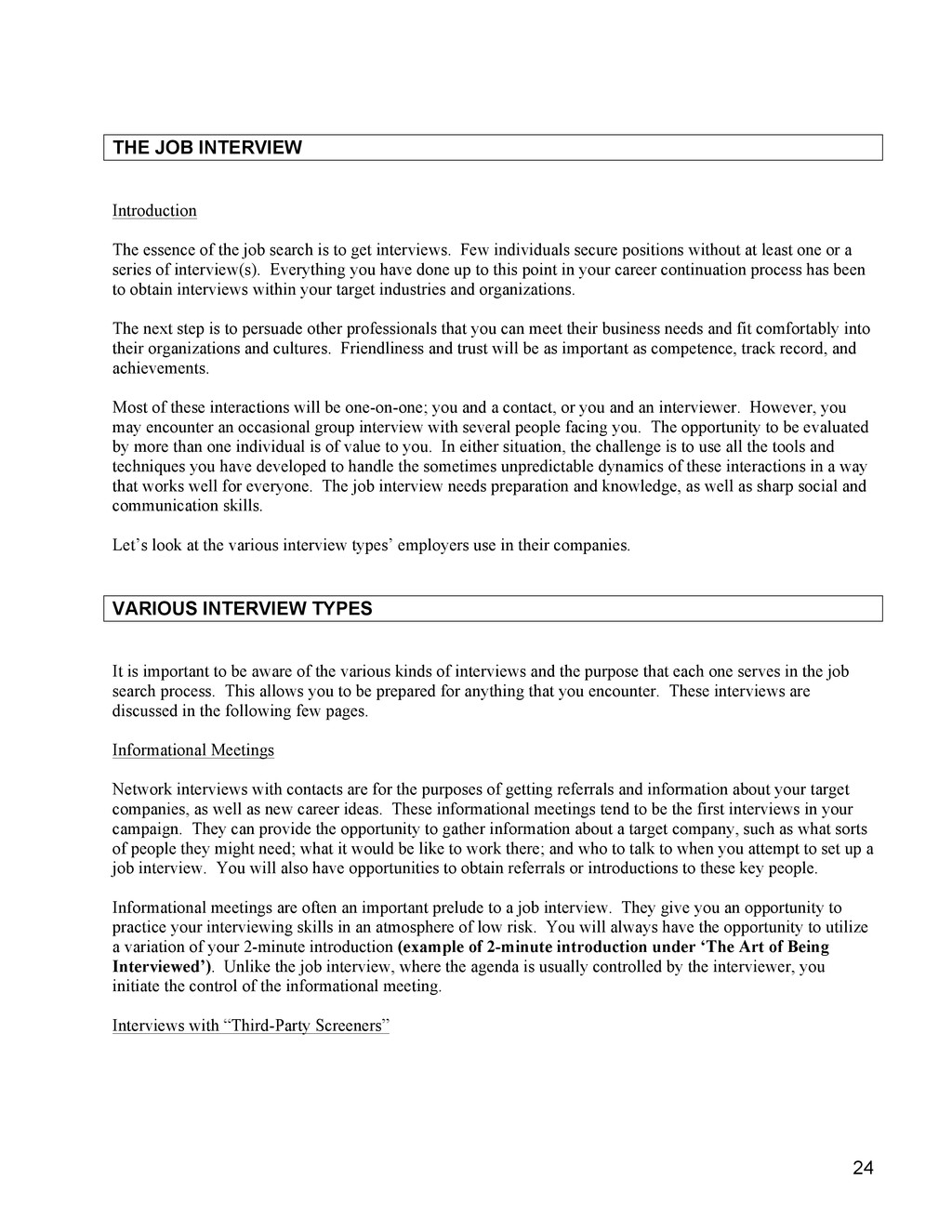
  23. 24 THE JOB INTERVIEW Introduction The essence of the job

    search is to get interviews. Few individuals secure positions without at least one or a series of interview(s). Everything you have done up to this point in your career continuation process has been to obtain interviews within your target industries and organizations. The next step is to persuade other professionals that you can meet their business needs and fit comfortably into their organizations and cultures. Friendliness and trust will be as important as competence, track record, and achievements. Most of these interactions will be one-on-one; you and a contact, or you and an interviewer. However, you may encounter an occasional group interview with several people facing you. The opportunity to be evaluated by more than one individual is of value to you. In either situation, the challenge is to use all the tools and techniques you have developed to handle the sometimes unpredictable dynamics of these interactions in a way that works well for everyone. The job interview needs preparation and knowledge, as well as sharp social and communication skills. Let’s look at the various interview types’ employers use in their companies. VARIOUS INTERVIEW TYPES It is important to be aware of the various kinds of interviews and the purpose that each one serves in the job search process. This allows you to be prepared for anything that you encounter. These interviews are discussed in the following few pages. Informational Meetings Network interviews with contacts are for the purposes of getting referrals and information about your target companies, as well as new career ideas. These informational meetings tend to be the first interviews in your campaign. They can provide the opportunity to gather information about a target company, such as what sorts of people they might need; what it would be like to work there; and who to talk to when you attempt to set up a job interview. You will also have opportunities to obtain referrals or introductions to these key people. Informational meetings are often an important prelude to a job interview. They give you an opportunity to practice your interviewing skills in an atmosphere of low risk. You will always have the opportunity to utilize a variation of your 2-minute introduction (example of 2-minute introduction under ‘The Art of Being Interviewed’). Unlike the job interview, where the agenda is usually controlled by the interviewer, you initiate the control of the informational meeting. Interviews with “Third-Party Screeners”
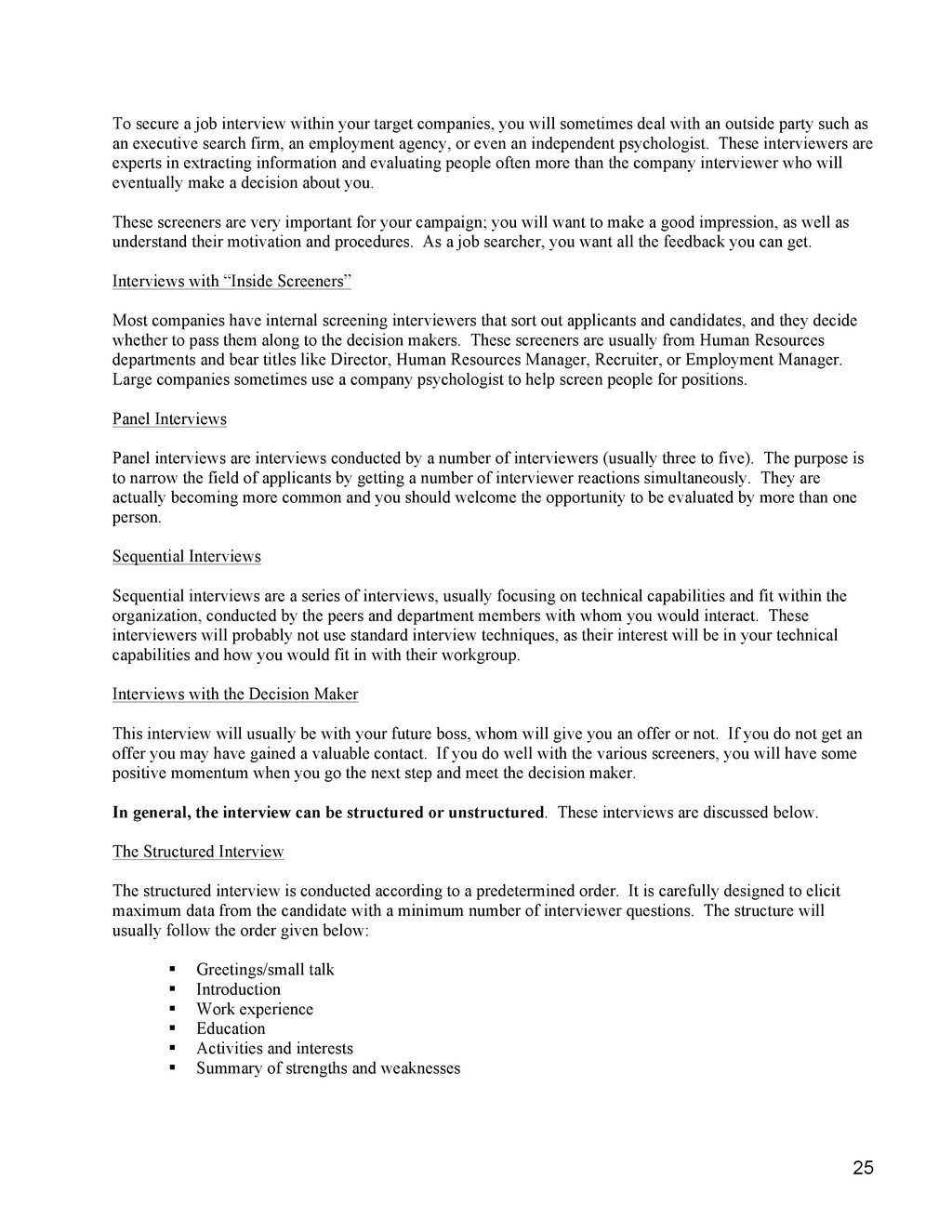
  24. 25 To secure a job interview within your target companies,

    you will sometimes deal with an outside party such as an executive search firm, an employment agency, or even an independent psychologist. These interviewers are experts in extracting information and evaluating people often more than the company interviewer who will eventually make a decision about you. These screeners are very important for your campaign; you will want to make a good impression, as well as understand their motivation and procedures. As a job searcher, you want all the feedback you can get. Interviews with “Inside Screeners” Most companies have internal screening interviewers that sort out applicants and candidates, and they decide whether to pass them along to the decision makers. These screeners are usually from Human Resources departments and bear titles like Director, Human Resources Manager, Recruiter, or Employment Manager. Large companies sometimes use a company psychologist to help screen people for positions. Panel Interviews Panel interviews are interviews conducted by a number of interviewers (usually three to five). The purpose is to narrow the field of applicants by getting a number of interviewer reactions simultaneously. They are actually becoming more common and you should welcome the opportunity to be evaluated by more than one person. Sequential Interviews Sequential interviews are a series of interviews, usually focusing on technical capabilities and fit within the organization, conducted by the peers and department members with whom you would interact. These interviewers will probably not use standard interview techniques, as their interest will be in your technical capabilities and how you would fit in with their workgroup. Interviews with the Decision Maker This interview will usually be with your future boss, whom will give you an offer or not. If you do not get an offer you may have gained a valuable contact. If you do well with the various screeners, you will have some positive momentum when you go the next step and meet the decision maker. In general, the interview can be structured or unstructured. These interviews are discussed below. The Structured Interview The structured interview is conducted according to a predetermined order. It is carefully designed to elicit maximum data from the candidate with a minimum number of interviewer questions. The structure will usually follow the order given below: § Greetings/small talk § Introduction § Work experience § Education § Activities and interests § Summary of strengths and weaknesses
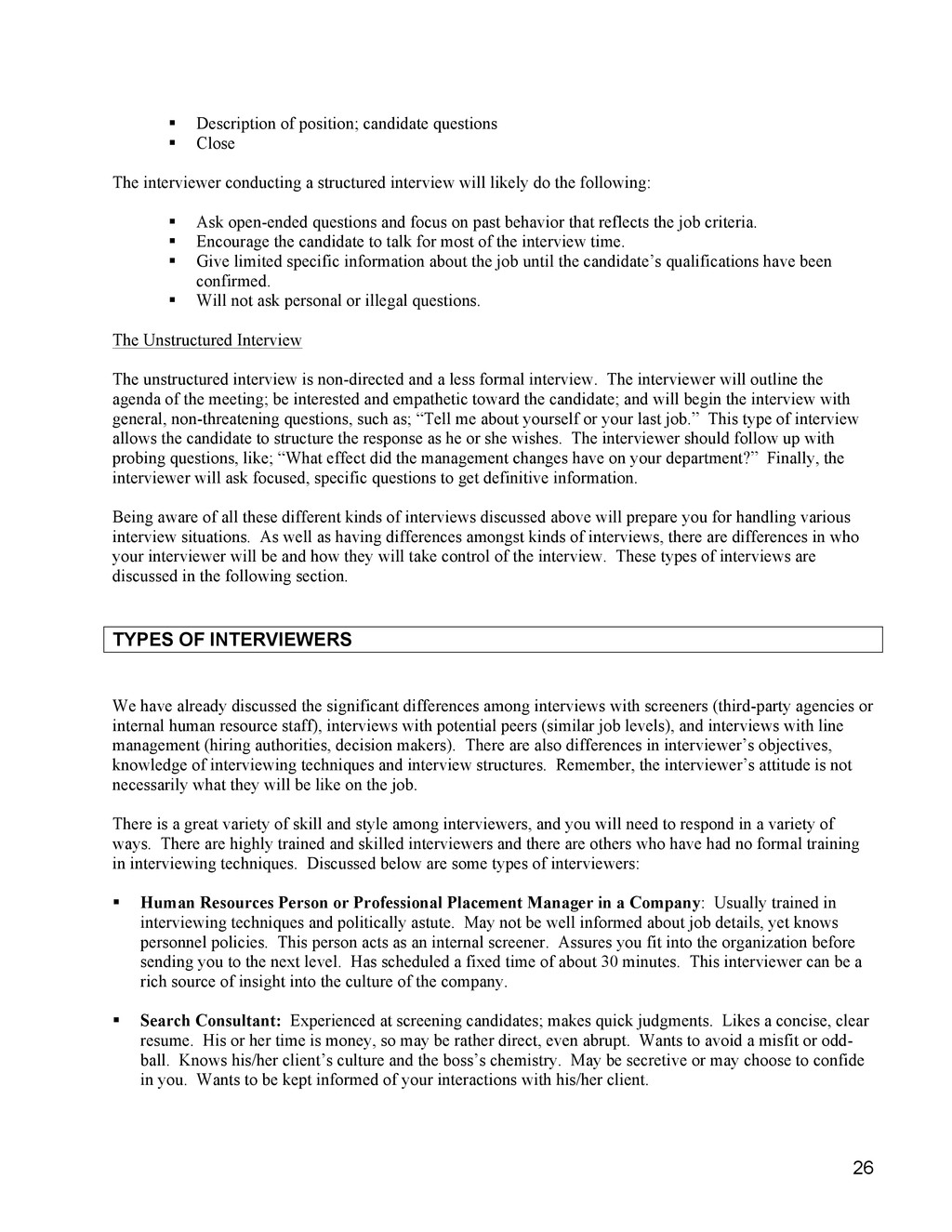
  25. 26 § Description of position; candidate questions § Close The

    interviewer conducting a structured interview will likely do the following: § Ask open-ended questions and focus on past behavior that reflects the job criteria. § Encourage the candidate to talk for most of the interview time. § Give limited specific information about the job until the candidate’s qualifications have been confirmed. § Will not ask personal or illegal questions. The Unstructured Interview The unstructured interview is non-directed and a less formal interview. The interviewer will outline the agenda of the meeting; be interested and empathetic toward the candidate; and will begin the interview with general, non-threatening questions, such as; “Tell me about yourself or your last job.” This type of interview allows the candidate to structure the response as he or she wishes. The interviewer should follow up with probing questions, like; “What effect did the management changes have on your department?” Finally, the interviewer will ask focused, specific questions to get definitive information. Being aware of all these different kinds of interviews discussed above will prepare you for handling various interview situations. As well as having differences amongst kinds of interviews, there are differences in who your interviewer will be and how they will take control of the interview. These types of interviews are discussed in the following section. TYPES OF INTERVIEWERS We have already discussed the significant differences among interviews with screeners (third-party agencies or internal human resource staff), interviews with potential peers (similar job levels), and interviews with line management (hiring authorities, decision makers). There are also differences in interviewer’s objectives, knowledge of interviewing techniques and interview structures. Remember, the interviewer’s attitude is not necessarily what they will be like on the job. There is a great variety of skill and style among interviewers, and you will need to respond in a variety of ways. There are highly trained and skilled interviewers and there are others who have had no formal training in interviewing techniques. Discussed below are some types of interviewers: § Human Resources Person or Professional Placement Manager in a Company: Usually trained in interviewing techniques and politically astute. May not be well informed about job details, yet knows personnel policies. This person acts as an internal screener. Assures you fit into the organization before sending you to the next level. Has scheduled a fixed time of about 30 minutes. This interviewer can be a rich source of insight into the culture of the company. § Search Consultant: Experienced at screening candidates; makes quick judgments. Likes a concise, clear resume. His or her time is money, so may be rather direct, even abrupt. Wants to avoid a misfit or odd- ball. Knows his/her client’s culture and the boss’s chemistry. May be secretive or may choose to confide in you. Wants to be kept informed of your interactions with his/her client.
  26. 27 § Functional Head or Staff Department Manager: Technically strong;

    likes to talk shop, problems and solutions. Wants to know if you are competent and professional, and if you fit into the Department. Not always a great listener or interviewer. May have some standard questions but relies on your resume. May be manager of another department with which you would be working. § Peers: Probably not trained interviewers. Peers are interested in how you would fit in and how your skills compare with others in the group. They might ask behavioral questions to determine how you would react to common situations in the group. § Line Manager or Decision Maker: Tries to sense whether you can solve the problems and get the job done. Sometimes has to sell you (and the position) to his or her top management. Wonders how you will fit his or her style/team. § Company President/Founder/Entrepreneur: May want to tell how he or she built the business. Concerned how you fit into the culture of the company. May have to sell you to the Board and may want you to meet the members. May look to you for conceptual thinking to see the big picture. They may want you to be someone who can make changes. You could be passed around among his or her top team to get their support. In preparing to handle contrasting styles of interviews and interviewers, be flexible, avoid being defensive, and remember your own agenda. There are many kinds and types of interviewers that you need to be prepared and practiced for so have a good handle on the interview process. To do this you must look at interaction skills, which is another important component of the interview process. YOUR INTERACTION SKILLS Introduction It is possible to study, learn and understand all about interviews and still not be able to do them well. It is important to have a good handle on your social skills, and with practice interviews they can improve. You may feel pressured because there is a lot at risk that is taken such as, acceptance, a chance to prove yourself, and maybe even a job. It is human nature to fear the unknown and unexpected. The best remedies for nervousness are preparation, practice and a positive mind set. The interview is an information-gathering conversation between two or more individuals. Although you may not get an offer at least you gain a valuable contact. With practice a person eventually overcomes feelings of awkwardness or fear and enjoys the valuable experience. Interaction skills are used throughout your career and daily life, so feel comfortable with your skills. The most important concept that you are going to learn is the P.A.R. The PAR Model The PAR model is an excellent tool for preparing your inventory of achievements and dealing with interview questions. When being asked questions in a job interview you will be able to tell employers how you link what actions you took with the job criteria. The PAR model will assist you to present your thoughts in a
  27. 28 concise and organized way. You should have already started

    using this model when developing your resume in Chapter 2, but now it can be used for your interview. You will focus on the Action part of the PAR Model in the interview process. This model can be effective to ensure that you market yourself in the best possible way by telling the whole story. This model allows you to link your actions with typical job criteria; that is what will set you apart from the next person. PROJECT § State clearly and concisely what the project/topic is about. ACTION § The action represents what steps you have taken to implement the event. The objective is to link your actions with the position criteria. Your actions might include research, budgeting, led a focus group, dealt with barriers, developed an implementation plan, etc. These actions link to the job criteria, such as, financial, leadership, planning and organization, and management skills. RESULTS § Wrap it up with specific and quantifiable results, such as, new business increased by 5%, revenues increased by 110%, reduced costs by 15%, etc.. The result is the conclusion to your story. This concept is very valuable and proper to be successful but it takes practice. Practice by using the questions in Appendix ‘B’. The following is an example of how actions are linked to job criteria: Project: (launch a product) Action: 1. Research and analysis → Planning & Organization 2. Budget → Financial 3. Focus group → Communication & Interpersonal 4. Advertising/Media → Management Skills 5. Implementation plan → Leadership Result: Successfully launch a product and increase market share by 5%. You have prepared an inventory of achievements using the PAR model. Once the inventory is in place, one can often use an example that fits or answers several questions in Appendix ‘B’. Just for fun, try using the same achievement example to answer five questions. If you have done your homework, you will discover that you can answer any question effectively. Do not get side tracked or ‘thrown for a loop’ by questions that ask “What was the most difficult…?” “What were you most proud of?” Simply use any one of your well thought out achievements from your inventory. It works. The Approach to Preparing and Practicing § Review your resume; achievements, skills, values, communication styles, and research data. § Study the processes and think of how you would answer the frequently asked questions suggested in Appendix ‘B’. § Observe and listen to others participating in interviews or role-play with a partner using audio and video tapes. § Get feedback from your consultant or friends by having them review the recordings.
  28. 29 With preparation and practice; you have the opportunity to

    learn from experience for your job interview, through analyzing and critiquing your performance in various interactions and with feedback from friendly contacts. As part of your preparation have your thoughts organized for the interview: § How you will briefly tell your life story, your work experience, and your current situation (using your 2- minute introduction). § Which achievements, skills, and strengths you want to highlight. § What additional research you might need to do on the company, department, or interviewer prior to the interview; review a research plan, questions to consider and resource alternatives. The internet has up-to- date information, so it is always a good place to check before an interview. Now that you have prepared and practiced there are a few general tips to consider when you are being interviewed. General Tips for the Interviewee: § Identify the type of interview quickly and respond accordingly. § Listen carefully to every question and be sure you understand it before answering. § Every time you speak you should be selling yourself and effectively applying the PAR Model to tell your story. § Maintain calm and be yourself. § Be prepared to answer a more sensitive question, briefly and truthfully. § After you answer a question, don’t elaborate or ramble. If you don’t know the answer, be honest and say so. § Be aware of the typical job criteria prior to the interview, so you can prepare many responses in advance to meet those criteria. In some interviews, interaction with others can be challenging. You will encounter a few tough questions in every interview, but with practice you will be able to give a good answer. Managing the Interview Questions The outcome of the interview depends on how well you manage your responses. There are a variety of interview questions that you may encounter so, practice and preparation will be beneficial to answer the questions in your interview (See Appendix ‘B’). Most skilled interviewers today will ask a lot of behavioral questions; questions that ask you to describe how you achieved something or what you did in the past. The premise is that past behavior is a prediction for future behavior; it’s true. On the other hand, you might also be asked what you would do in a hypothetical work situation. You may answer these questions by recalling situations and achievements that demonstrate your experience on the skills in question. Follow the PAR Model to assist you to focus and tell a complete story. Preparing and practicing your interaction skills is very important. A person could have a professional looking resume but, can they properly express their achievements concisely and effectively? Using the PAR Model to answer interview questions will enable you to stand out amongst others being interviewed. Being aware of the interview process gives you the edge and being comfortable with more knowledge of how to be interviewed.
  29. 30 THE ART OF BEING INTERVIEWED The Art of Being

    Interviewed is discussed on the following pages. It focuses on remembering the basics, research preparation and skillfully delivering a 2-minute self-introduction, effectively applying the PAR model, addressing derived qualities and job criteria, and wrapping up an interview with well thought out questions. Remember the Basics 1. Be certain of the time and place of the interview and the name of the interviewer(s). Write it down and if you are uncertain then ask. 2. Plan on arriving 10 minutes early for the interview. 3. Bring a pen and notebook with you as you may want to take notes of your own. 4. Repeat the interviewer’s name. Hearing ones own name makes a person feel important. Repeat the name a couple of times during the first part of the interview, but do not over do it. 5. Step forward and give the person you meet a firm handshake. You don’t have to wait for them to put out their hand. Men and Women prefer a firm handshake rather than a soft handshake. 6. Wait till your interviewer sits down or invites you to sit down before seating yourself. 7. Physical factors to consider are: § Clothing and style that is appropriate for the company. Wear a blue/grey/black business suit unless otherwise advised § Gestures (be aware of gestures that are distracting to the interviewer(s)) § Be aware of your facial expressions, smile and body language § Composed while seated; no fidgeting 8. Basic communications skills include: § Enthusiastic, professional, calm § Sincere, articulate, positive § Active listening § Good eye contact (in a panel interview be sure to shift eye contact to all interviewers) § Use of silence (its OK to have a bit of silence) § Understood or requested clarification of a question § Voice audible/well modulated § Answered questions comfortably and concisely § Have appropriate examples from your inventory of achievements § Stay on track § Relate strengths and skills to the employer’s needs § Use your research knowledge § Avoid discussing salary until the later stages 9. Obtain important information at the interview § Key needs of the organization
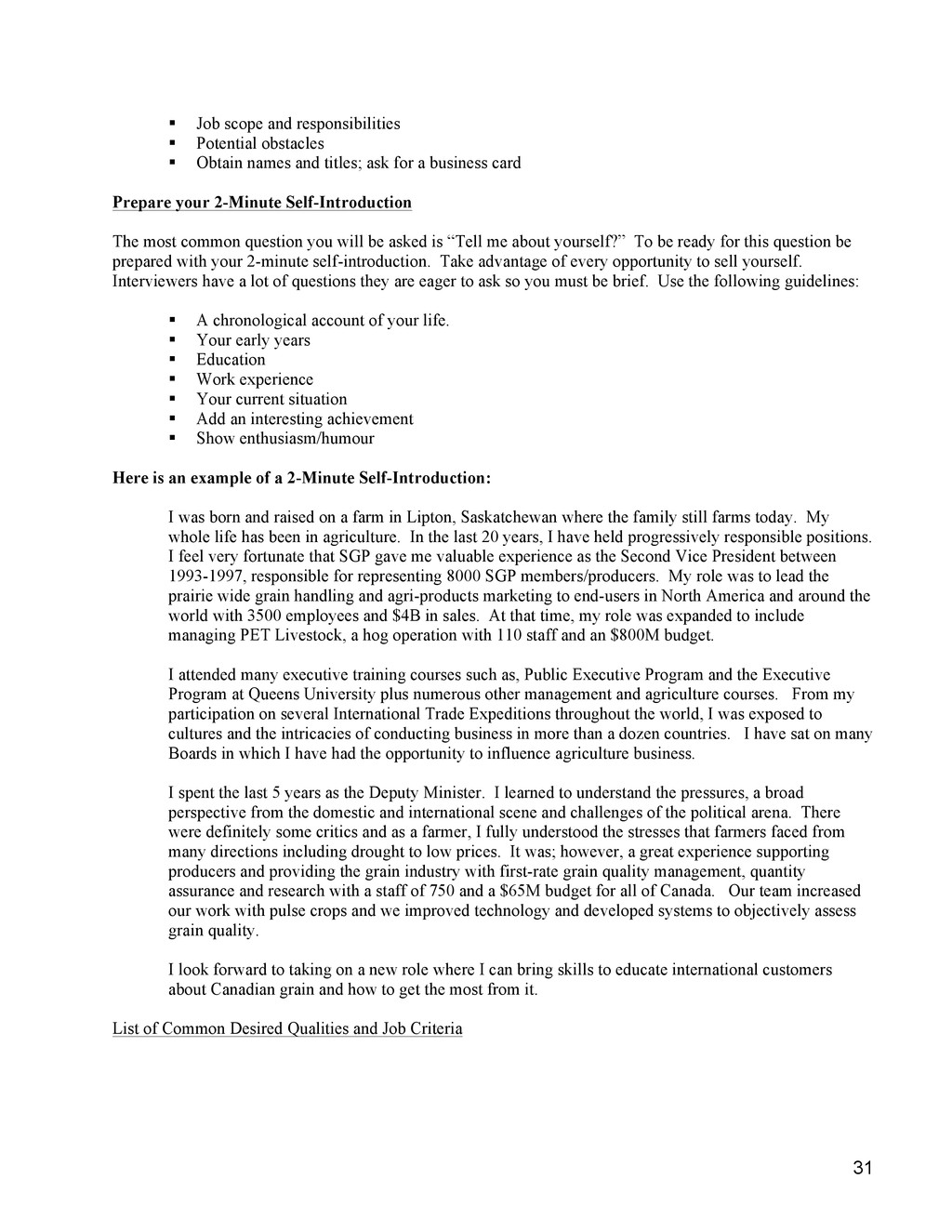
  30. 31 § Job scope and responsibilities § Potential obstacles §

    Obtain names and titles; ask for a business card Prepare your 2-Minute Self-Introduction The most common question you will be asked is “Tell me about yourself?” To be ready for this question be prepared with your 2-minute self-introduction. Take advantage of every opportunity to sell yourself. Interviewers have a lot of questions they are eager to ask so you must be brief. Use the following guidelines: § A chronological account of your life. § Your early years § Education § Work experience § Your current situation § Add an interesting achievement § Show enthusiasm/humour Here is an example of a 2-Minute Self-Introduction: I was born and raised on a farm in Lipton, Saskatchewan where the family still farms today. My whole life has been in agriculture. In the last 20 years, I have held progressively responsible positions. I feel very fortunate that SGP gave me valuable experience as the Second Vice President between 1993-1997, responsible for representing 8000 SGP members/producers. My role was to lead the prairie wide grain handling and agri-products marketing to end-users in North America and around the world with 3500 employees and $4B in sales. At that time, my role was expanded to include managing PET Livestock, a hog operation with 110 staff and an $800M budget. I attended many executive training courses such as, Public Executive Program and the Executive Program at Queens University plus numerous other management and agriculture courses. From my participation on several International Trade Expeditions throughout the world, I was exposed to cultures and the intricacies of conducting business in more than a dozen countries. I have sat on many Boards in which I have had the opportunity to influence agriculture business. I spent the last 5 years as the Deputy Minister. I learned to understand the pressures, a broad perspective from the domestic and international scene and challenges of the political arena. There were definitely some critics and as a farmer, I fully understood the stresses that farmers faced from many directions including drought to low prices. It was; however, a great experience supporting producers and providing the grain industry with first-rate grain quality management, quantity assurance and research with a staff of 750 and a $65M budget for all of Canada. Our team increased our work with pulse crops and we improved technology and developed systems to objectively assess grain quality. I look forward to taking on a new role where I can bring skills to educate international customers about Canadian grain and how to get the most from it. List of Common Desired Qualities and Job Criteria
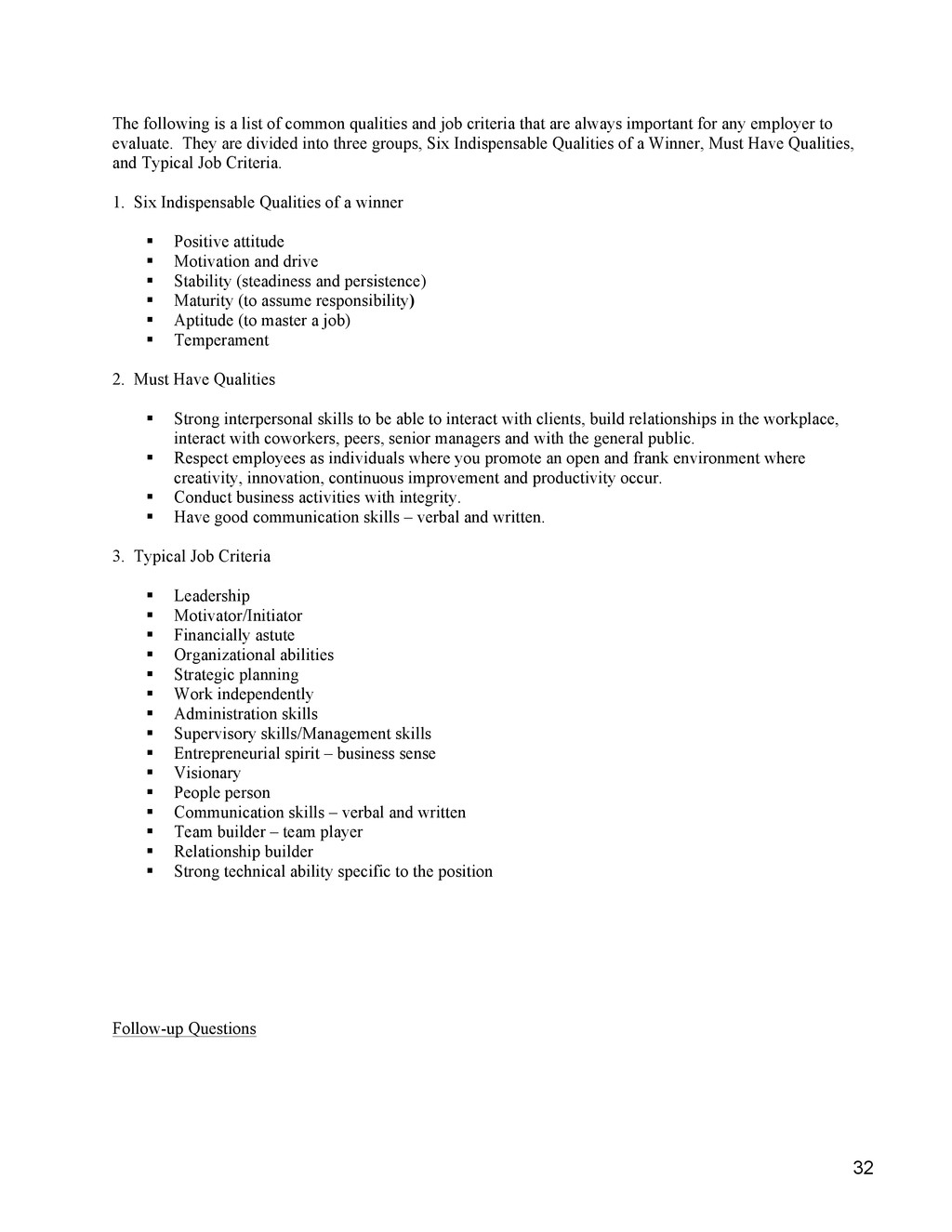
  31. 32 The following is a list of common qualities and

    job criteria that are always important for any employer to evaluate. They are divided into three groups, Six Indispensable Qualities of a Winner, Must Have Qualities, and Typical Job Criteria. 1. Six Indispensable Qualities of a winner § Positive attitude § Motivation and drive § Stability (steadiness and persistence) § Maturity (to assume responsibility) § Aptitude (to master a job) § Temperament 2. Must Have Qualities § Strong interpersonal skills to be able to interact with clients, build relationships in the workplace, interact with coworkers, peers, senior managers and with the general public. § Respect employees as individuals where you promote an open and frank environment where creativity, innovation, continuous improvement and productivity occur. § Conduct business activities with integrity. § Have good communication skills – verbal and written. 3. Typical Job Criteria § Leadership § Motivator/Initiator § Financially astute § Organizational abilities § Strategic planning § Work independently § Administration skills § Supervisory skills/Management skills § Entrepreneurial spirit – business sense § Visionary § People person § Communication skills – verbal and written § Team builder – team player § Relationship builder § Strong technical ability specific to the position Follow-up Questions
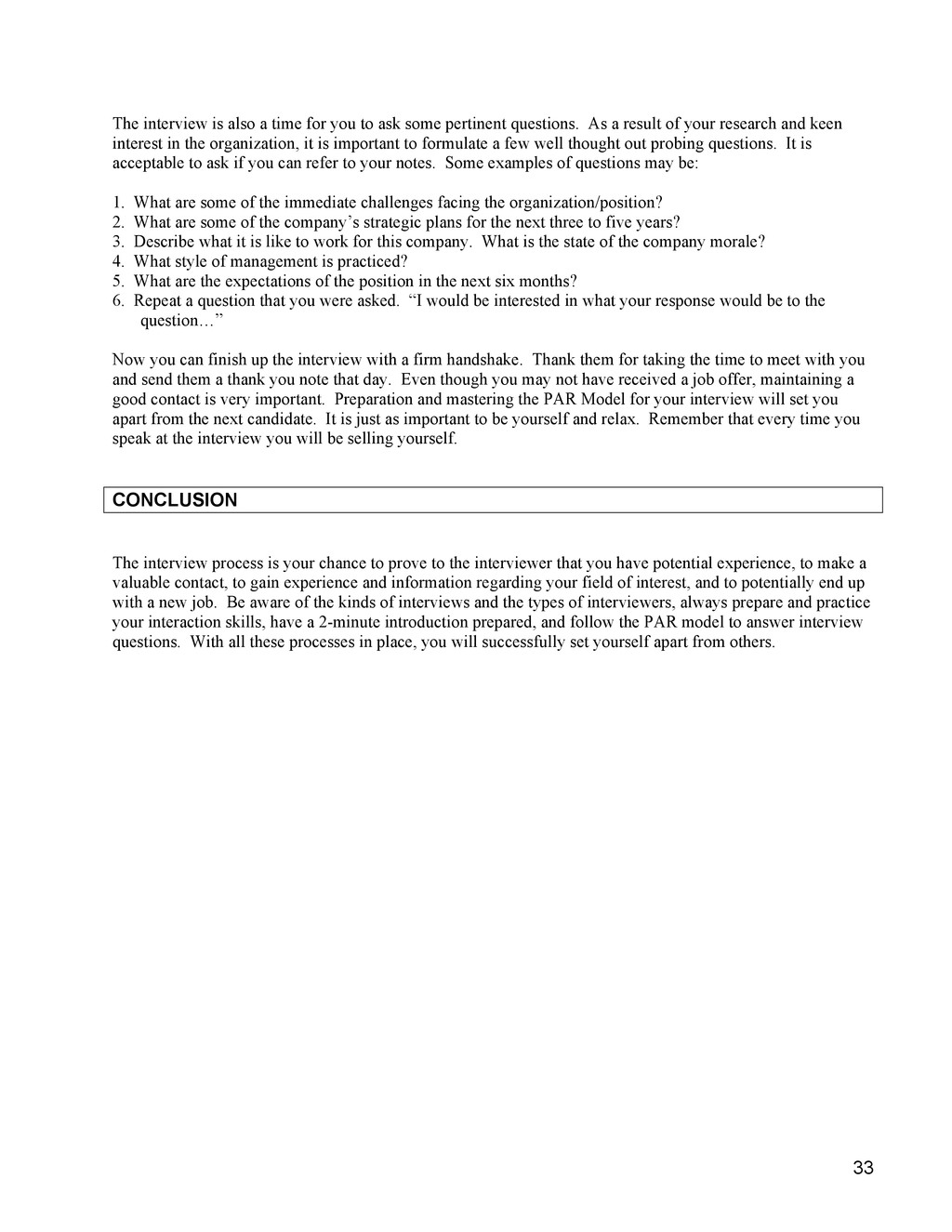
  32. 33 The interview is also a time for you to

    ask some pertinent questions. As a result of your research and keen interest in the organization, it is important to formulate a few well thought out probing questions. It is acceptable to ask if you can refer to your notes. Some examples of questions may be: 1. What are some of the immediate challenges facing the organization/position? 2. What are some of the company’s strategic plans for the next three to five years? 3. Describe what it is like to work for this company. What is the state of the company morale? 4. What style of management is practiced? 5. What are the expectations of the position in the next six months? 6. Repeat a question that you were asked. “I would be interested in what your response would be to the question…” Now you can finish up the interview with a firm handshake. Thank them for taking the time to meet with you and send them a thank you note that day. Even though you may not have received a job offer, maintaining a good contact is very important. Preparation and mastering the PAR Model for your interview will set you apart from the next candidate. It is just as important to be yourself and relax. Remember that every time you speak at the interview you will be selling yourself. CONCLUSION The interview process is your chance to prove to the interviewer that you have potential experience, to make a valuable contact, to gain experience and information regarding your field of interest, and to potentially end up with a new job. Be aware of the kinds of interviews and the types of interviewers, always prepare and practice your interaction skills, have a 2-minute introduction prepared, and follow the PAR model to answer interview questions. With all these processes in place, you will successfully set yourself apart from others.
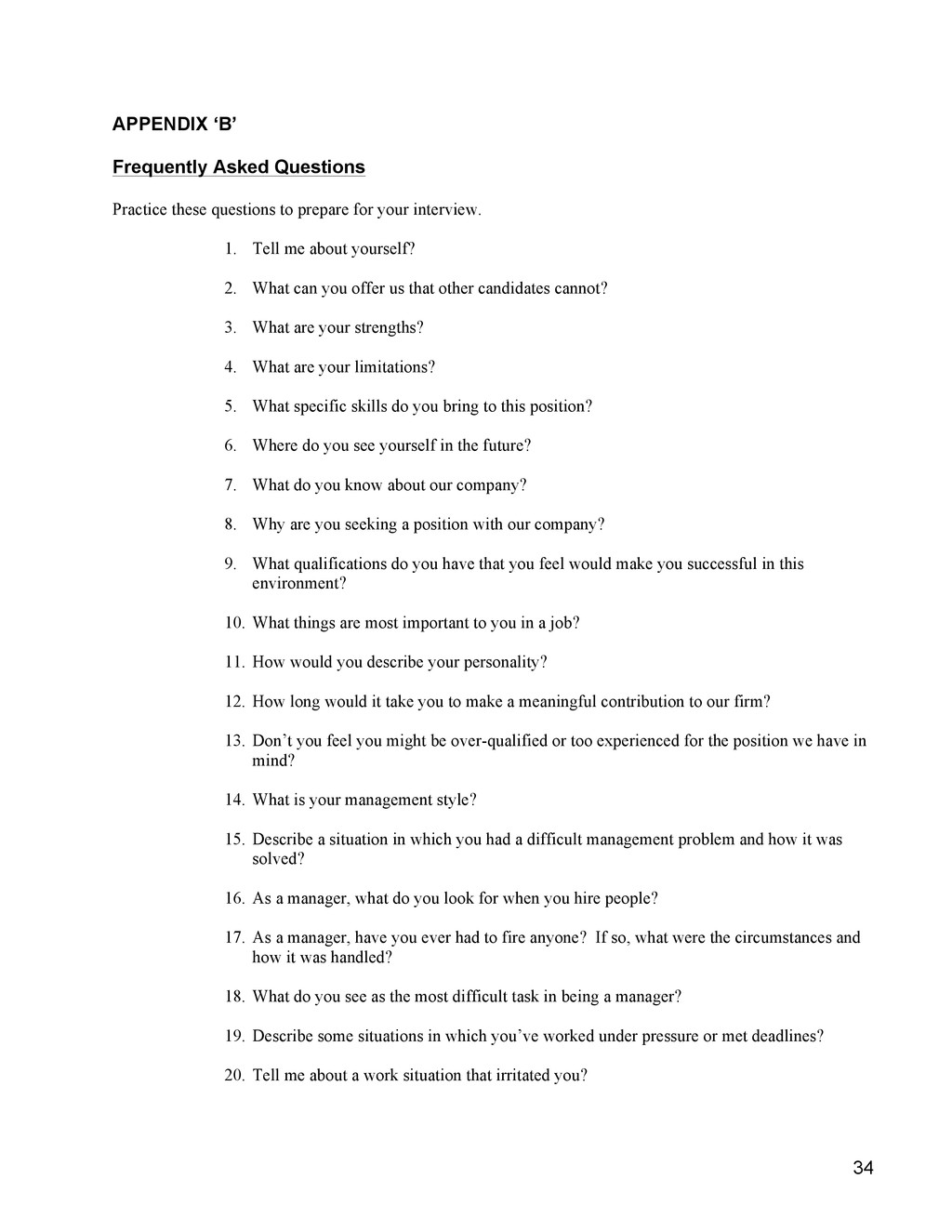
  33. 34 APPENDIX ‘B’ Frequently Asked Questions Practice these questions to

    prepare for your interview. 1. Tell me about yourself? 2. What can you offer us that other candidates cannot? 3. What are your strengths? 4. What are your limitations? 5. What specific skills do you bring to this position? 6. Where do you see yourself in the future? 7. What do you know about our company? 8. Why are you seeking a position with our company? 9. What qualifications do you have that you feel would make you successful in this environment? 10. What things are most important to you in a job? 11. How would you describe your personality? 12. How long would it take you to make a meaningful contribution to our firm? 13. Don’t you feel you might be over-qualified or too experienced for the position we have in mind? 14. What is your management style? 15. Describe a situation in which you had a difficult management problem and how it was solved? 16. As a manager, what do you look for when you hire people? 17. As a manager, have you ever had to fire anyone? If so, what were the circumstances and how it was handled? 18. What do you see as the most difficult task in being a manager? 19. Describe some situations in which you’ve worked under pressure or met deadlines? 20. Tell me about a work situation that irritated you?
  34. 35 21. Tell me about an objective in your last

    job which you failed to meet and why? 22. Would you describe a few situations in which your work was criticized? 23. What have you learned from your mistakes? 24. What important trends do you see coming in the industry? 25. Why are you leaving your present job? 26. Describe what you feel would be an ideal working environment? 27. Looking back, how do you perceive your past employer? 28. What have you done that helped increase sales or profit? 29. How much financial responsibility have you had to account for? 30. How many people have you managed in your recent jobs? 31. Give examples of times when you were a leader. 32. How do you think your subordinates perceive you? 33. In your last position, what were the things that you liked most? And liked least? 34. In your recent position, what were some of your most significant accomplishments? 35. Why haven’t you found a new position after so many months? 36. What do you think of your previous boss? 37. If I spoke with your previous boss, what would he or she say are your greatest strengths and weaknesses? 38. In your most recent position, what problems did you identify that had previously been overlooked? 39. What do you feel you should earn in the proposed position? 40. If we were to offer you this position, what changes would you make in our organization? 41. Do you have any objections to taking our battery of psychological tests? 42. What other types of jobs or companies are you considering at this time? 43. What sort of outside reading do you do?
  35. 36 44. What motivates you the most? 45. Give one

    or two examples of your creativity. 46. What are your long-range goals? 47. What sort of relationships do you have with your associates, both at the same level and above and below you? 48. What are some of your outside activities and interests? 49. Tell me when you had to create synergies between (people, other units, and organizations) for more effective results? 50. Give us an example of a decision or activity where you involved other employees? 51. Give an example of a decision or activity where you involved other employees? 52. Give me an example of a complex project in which you led and what course of action did you follow? 53. Give me an example of a creative way to live within budget. 54. Explain what your vision is/was for your current, past organization. Explain how that vision is reflected in your strategic plan? 55. Give an example of when you led by example involving participation, motivating and inspiring others? 56. Tell us about how you supported, developed, mentored and nurtured employees? 57. Give me an example of when you had a conflict with a Board Member, staff or superior and tell me how you handled it? 58. What would you want to avoid in your next job? 59. Give an example of a major decision which had significant impact on the organization and how did you make that decision? 60. Tell us about a partnership/alliance which you struck that made a significant impact on the organization and how did you accomplish it? 61. How do you think your employees would characterize you as a leader and what do you base this characterization? 62. How have you personally contributed to the enhancement of your current/past position? 63. Give me an example of a case where you mentored/coached an employee who was recognized as having potential but needed guidance?
  36. 37 64. Give an example of when you decided not

    to involve employees in your decision and what was the reaction from staff in your non- involvement? 65. What are the three most compelling reasons why we should hire you? 66. How would you describe a team player? 67. What are some techniques that you find useful to motivate others and promote teamwork? 68. Do you have any questions about this position? 69. Is there anything else you would like to tell us about yourself?
  37. 38

  38. 39 YOUR TARGET Introduction To begin the development of your

    research plan we need to focus in on your targets. Your target is an employer you intend to approach and penetrate with a carefully thought out strategy. You should target 20 companies at one time. In developing a research plan our first step is to identify and research these targets. Identifying potential targets § Identify your job preferences. § Assemble a list of 50 – 100 companies that would be of interest to you. § Know your career goal and look for companies in the right geographical area. § A general manager role is much broader and more difficult to narrow. § Use your contacts and existing network to identify good prospects (your knowledge of your industry, its competitors and perhaps its principal suppliers). § Broaden your list by reviewing directories, the Fortune 500, Report on Business Magazine Top 1000 Annual, other Business Magazines, Industry Association books and business reference books and the internet. § Consult the public library’s business department. § Using an internet search engine type in a key word. § Look in the yellow pages. § Supplement these lists with Networking. § Ask your contacts for information about other companies that they feel would fit your qualifications and job preferences. § Validate your information by talking to knowledgeable people and know what information you need. § Your network contacts will respect your efforts and will go out of their way to help you, especially when they know you have done your “homework”. § If you get a response to an advertisement, it may turn out to be a hot target. § Personally visit your contact list, as this may turn up possible targets. Research Your Targets § If the ideal job exists at a particular company, you can afford to spend many hours of research on the company that might help you identify the decision maker, locate the hidden job and sell yourself as the successful candidate. § Through preparation you will present yourself as a distinguished candidate. § You can spend more time researching the target companies that interest you the most. § Follow the research steps on the following page, helping lead you from your target to accepting a new job.
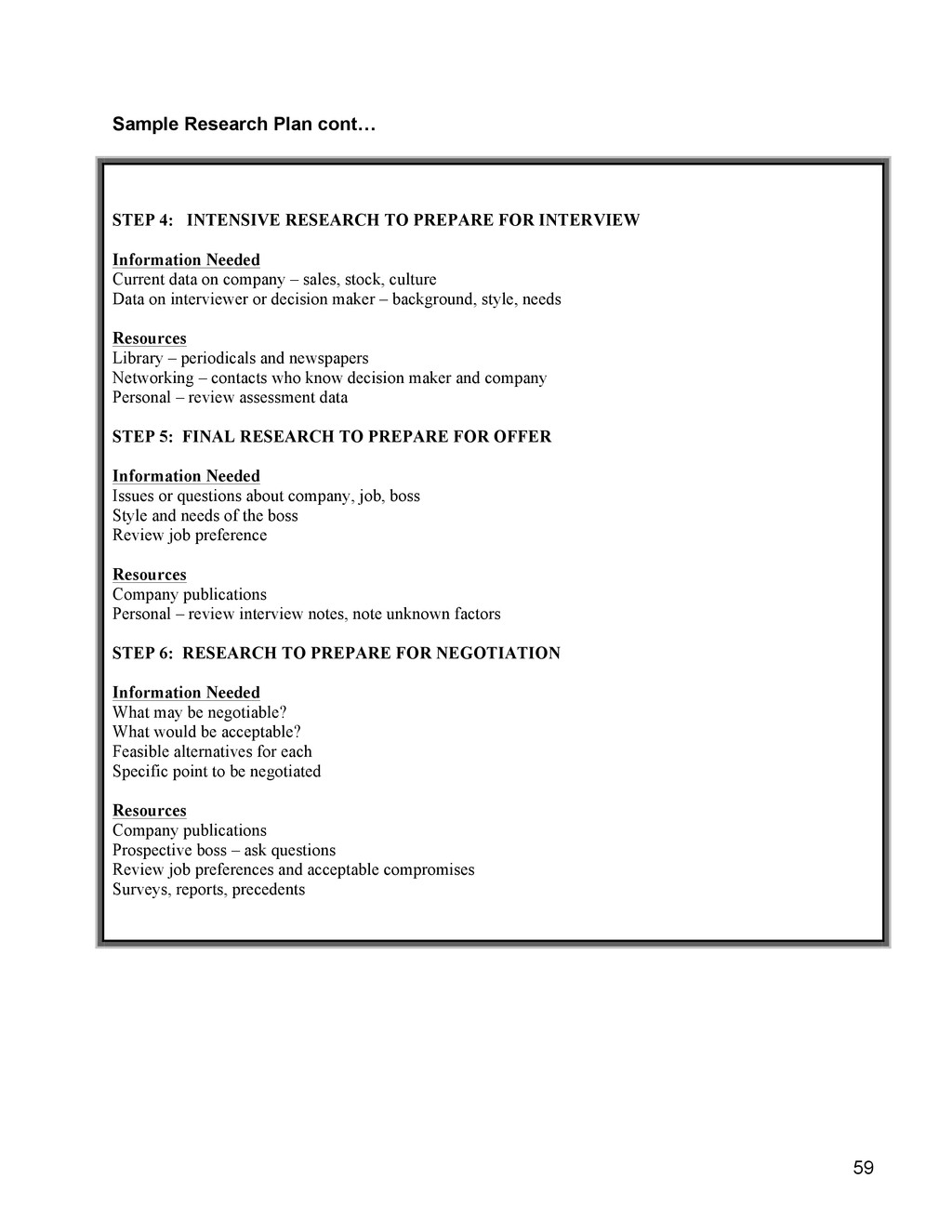
  39. 40 THE RESEARCH STEPS Leading from Target to Employment Tentative

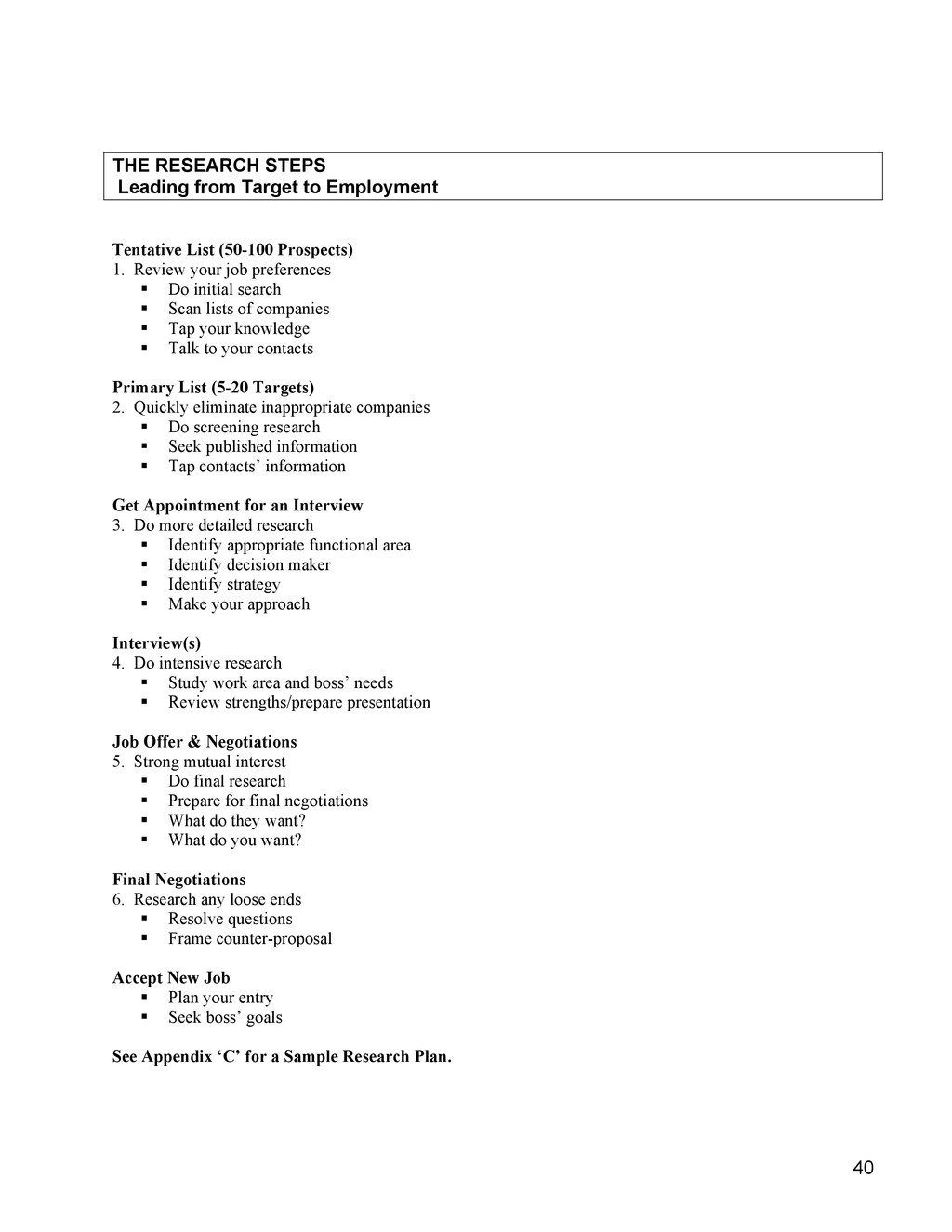
    List (50-100 Prospects) 1. Review your job preferences § Do initial search § Scan lists of companies § Tap your knowledge § Talk to your contacts Primary List (5-20 Targets) 2. Quickly eliminate inappropriate companies § Do screening research § Seek published information § Tap contacts’ information Get Appointment for an Interview 3. Do more detailed research § Identify appropriate functional area § Identify decision maker § Identify strategy § Make your approach Interview(s) 4. Do intensive research § Study work area and boss’ needs § Review strengths/prepare presentation Job Offer & Negotiations 5. Strong mutual interest § Do final research § Prepare for final negotiations § What do they want? § What do you want? Final Negotiations 6. Research any loose ends § Resolve questions § Frame counter-proposal Accept New Job § Plan your entry § Seek boss’ goals See Appendix ‘C’ for a Sample Research Plan.
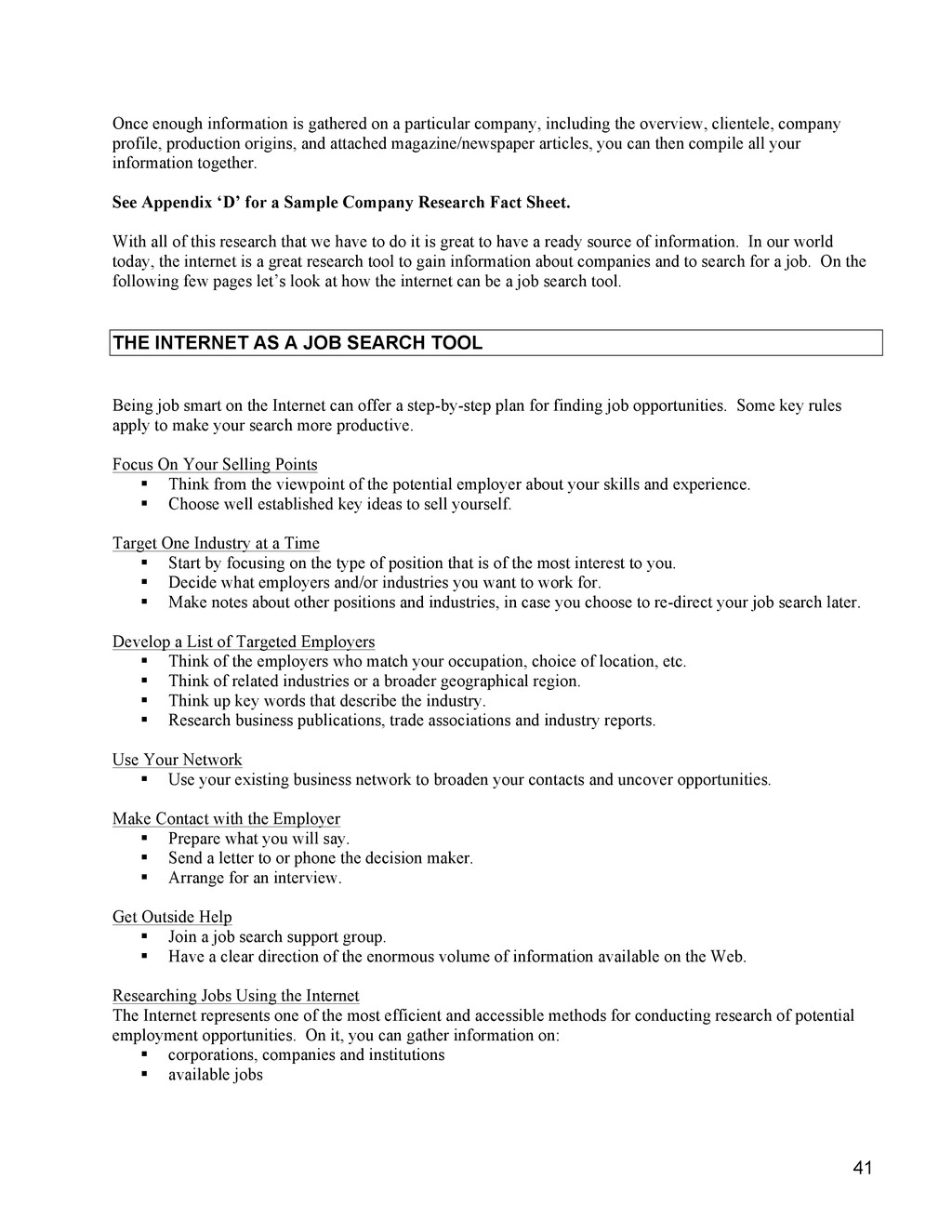
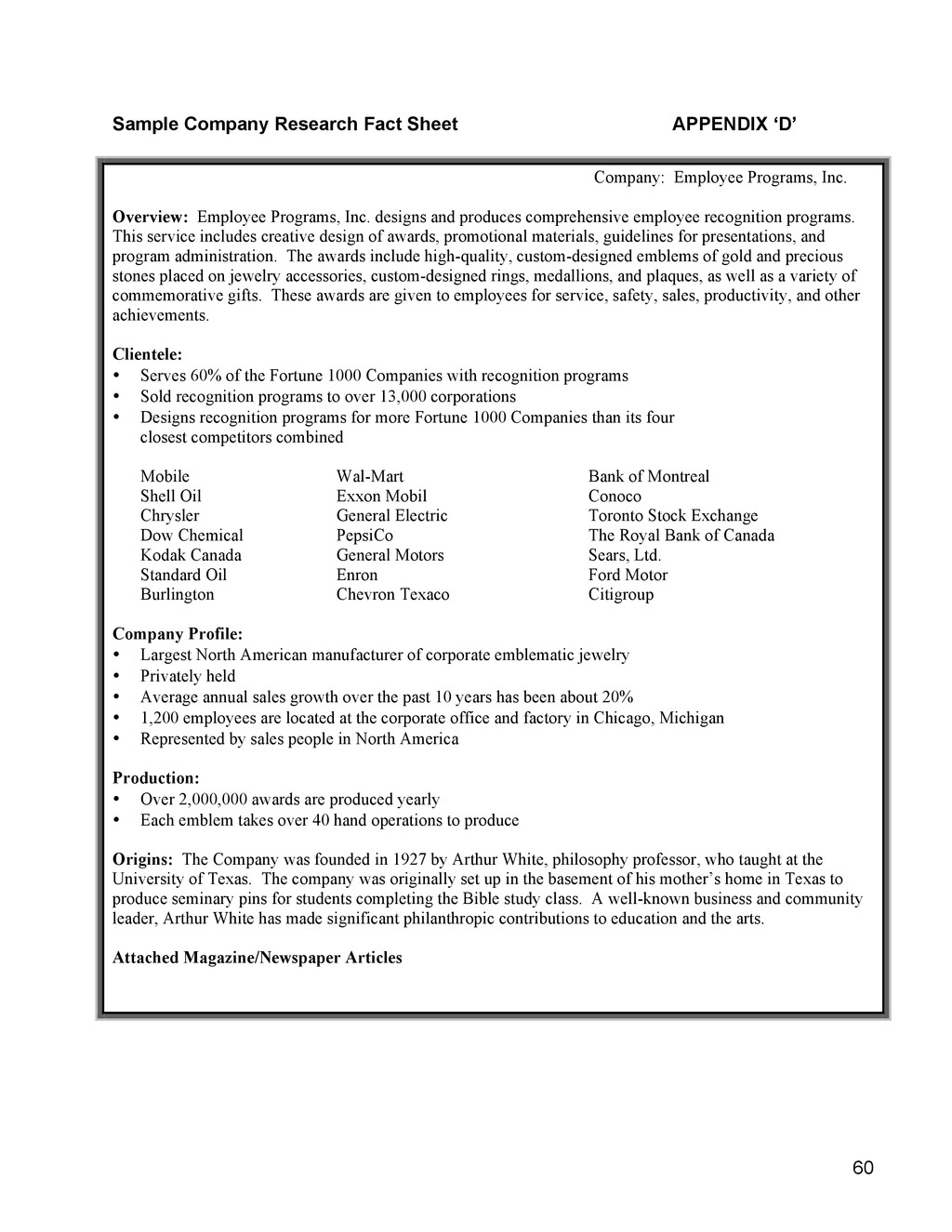
  40. 41 Once enough information is gathered on a particular company,

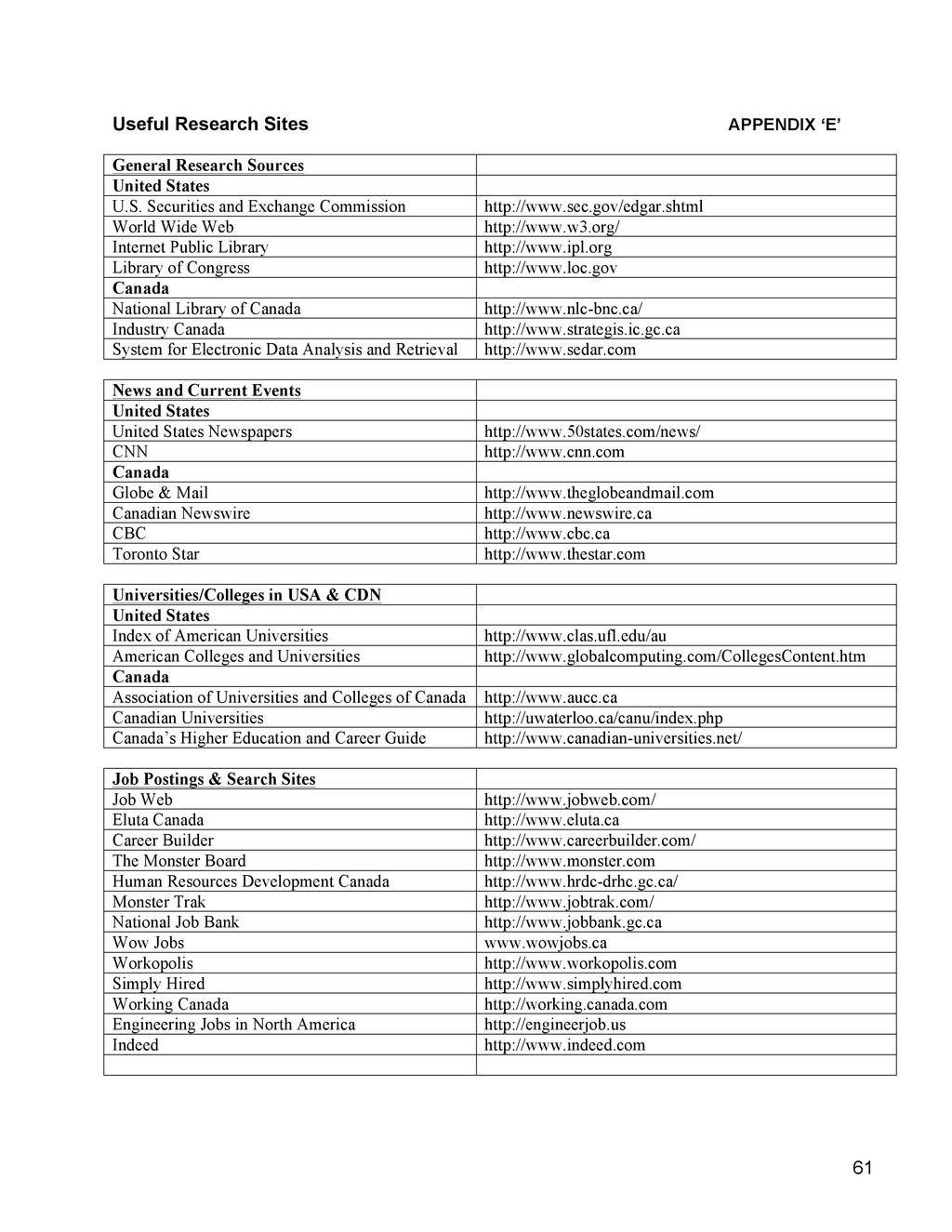
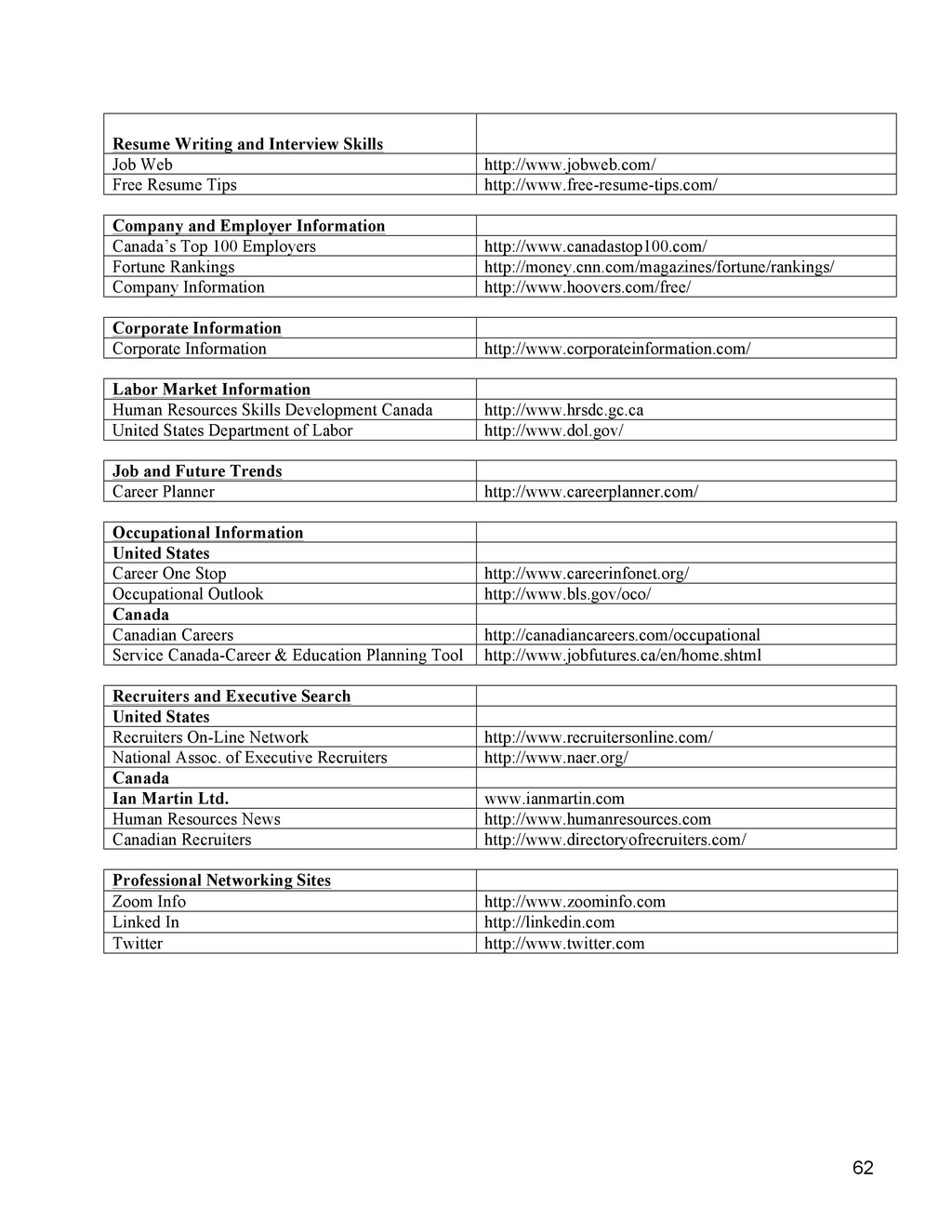
    including the overview, clientele, company profile, production origins, and attached magazine/newspaper articles, you can then compile all your information together. See Appendix ‘D’ for a Sample Company Research Fact Sheet. With all of this research that we have to do it is great to have a ready source of information. In our world today, the internet is a great research tool to gain information about companies and to search for a job. On the following few pages let’s look at how the internet can be a job search tool. THE INTERNET AS A JOB SEARCH TOOL Being job smart on the Internet can offer a step-by-step plan for finding job opportunities. Some key rules apply to make your search more productive. Focus On Your Selling Points § Think from the viewpoint of the potential employer about your skills and experience. § Choose well established key ideas to sell yourself. Target One Industry at a Time § Start by focusing on the type of position that is of the most interest to you. § Decide what employers and/or industries you want to work for. § Make notes about other positions and industries, in case you choose to re-direct your job search later. Develop a List of Targeted Employers § Think of the employers who match your occupation, choice of location, etc. § Think of related industries or a broader geographical region. § Think up key words that describe the industry. § Research business publications, trade associations and industry reports. Use Your Network § Use your existing business network to broaden your contacts and uncover opportunities. Make Contact with the Employer § Prepare what you will say. § Send a letter to or phone the decision maker. § Arrange for an interview. Get Outside Help § Join a job search support group. § Have a clear direction of the enormous volume of information available on the Web. Researching Jobs Using the Internet The Internet represents one of the most efficient and accessible methods for conducting research of potential employment opportunities. On it, you can gather information on: § corporations, companies and institutions § available jobs
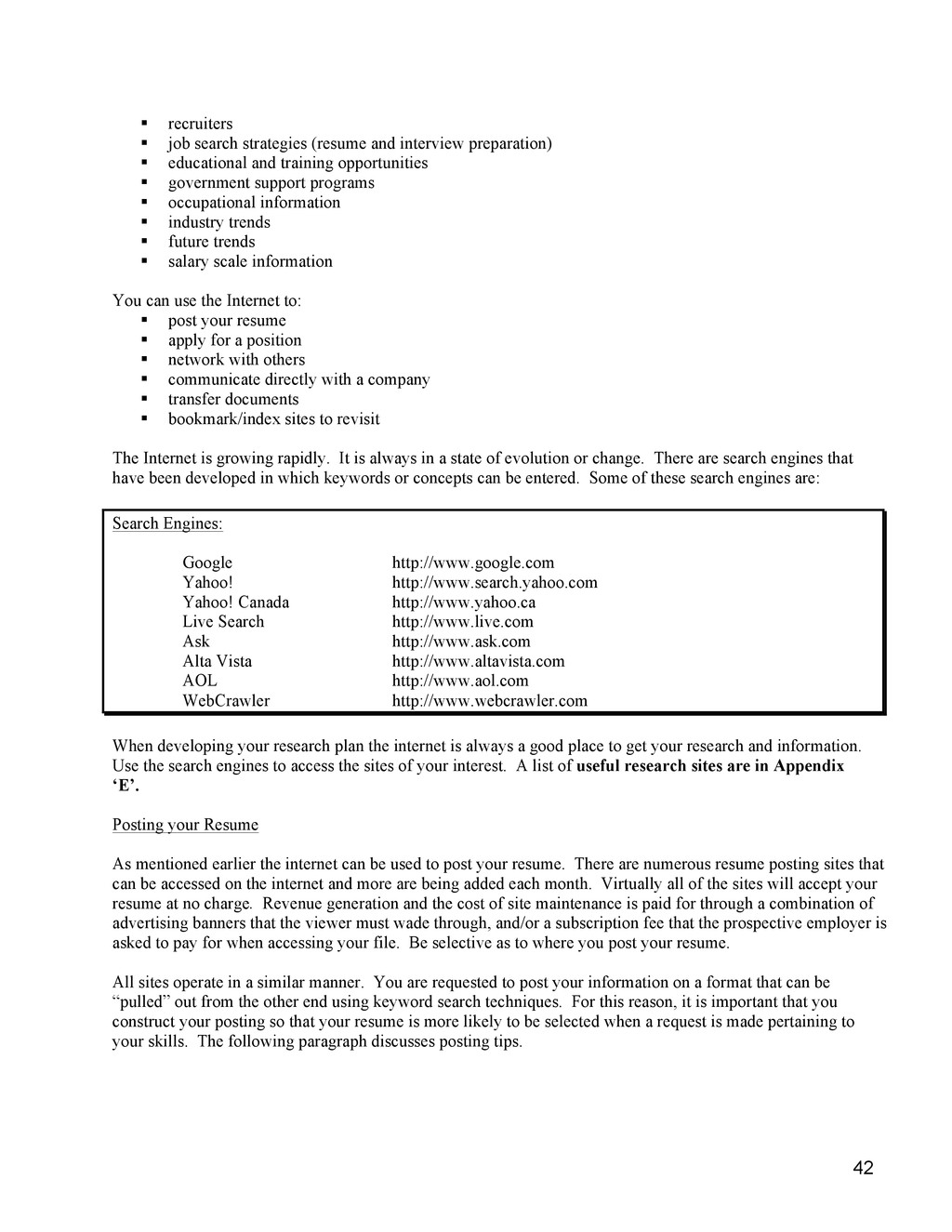
  41. 42 § recruiters § job search strategies (resume and interview

    preparation) § educational and training opportunities § government support programs § occupational information § industry trends § future trends § salary scale information You can use the Internet to: § post your resume § apply for a position § network with others § communicate directly with a company § transfer documents § bookmark/index sites to revisit The Internet is growing rapidly. It is always in a state of evolution or change. There are search engines that have been developed in which keywords or concepts can be entered. Some of these search engines are: Search Engines: Google http://www.google.com Yahoo! http://www.search.yahoo.com Yahoo! Canada http://www.yahoo.ca Live Search http://www.live.com Ask http://www.ask.com Alta Vista http://www.altavista.com AOL http://www.aol.com WebCrawler http://www.webcrawler.com When developing your research plan the internet is always a good place to get your research and information. Use the search engines to access the sites of your interest. A list of useful research sites are in Appendix ‘E’. Posting your Resume As mentioned earlier the internet can be used to post your resume. There are numerous resume posting sites that can be accessed on the internet and more are being added each month. Virtually all of the sites will accept your resume at no charge. Revenue generation and the cost of site maintenance is paid for through a combination of advertising banners that the viewer must wade through, and/or a subscription fee that the prospective employer is asked to pay for when accessing your file. Be selective as to where you post your resume. All sites operate in a similar manner. You are requested to post your information on a format that can be “pulled” out from the other end using keyword search techniques. For this reason, it is important that you construct your posting so that your resume is more likely to be selected when a request is made pertaining to your skills. The following paragraph discusses posting tips.
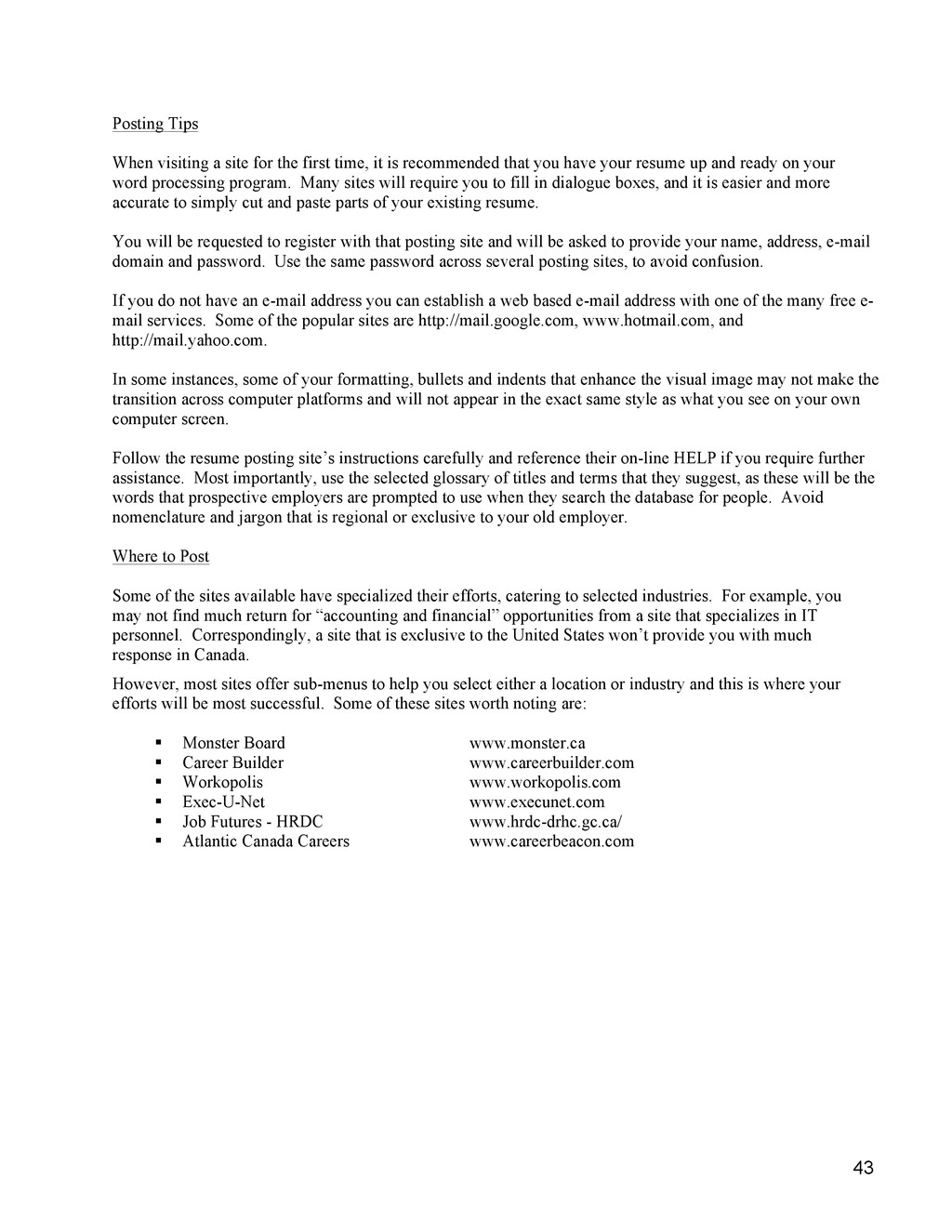
  42. 43 Posting Tips When visiting a site for the first

    time, it is recommended that you have your resume up and ready on your word processing program. Many sites will require you to fill in dialogue boxes, and it is easier and more accurate to simply cut and paste parts of your existing resume. You will be requested to register with that posting site and will be asked to provide your name, address, e-mail domain and password. Use the same password across several posting sites, to avoid confusion. If you do not have an e-mail address you can establish a web based e-mail address with one of the many free e- mail services. Some of the popular sites are http://mail.google.com, www.hotmail.com, and http://mail.yahoo.com. In some instances, some of your formatting, bullets and indents that enhance the visual image may not make the transition across computer platforms and will not appear in the exact same style as what you see on your own computer screen. Follow the resume posting site’s instructions carefully and reference their on-line HELP if you require further assistance. Most importantly, use the selected glossary of titles and terms that they suggest, as these will be the words that prospective employers are prompted to use when they search the database for people. Avoid nomenclature and jargon that is regional or exclusive to your old employer. Where to Post Some of the sites available have specialized their efforts, catering to selected industries. For example, you may not find much return for “accounting and financial” opportunities from a site that specializes in IT personnel. Correspondingly, a site that is exclusive to the United States won’t provide you with much response in Canada. However, most sites offer sub-menus to help you select either a location or industry and this is where your efforts will be most successful. Some of these sites worth noting are: § Monster Board www.monster.ca § Career Builder www.careerbuilder.com § Workopolis www.workopolis.com § Exec-U-Net www.execunet.com § Job Futures - HRDC www.hrdc-drhc.gc.ca/ § Atlantic Canada Careers www.careerbeacon.com
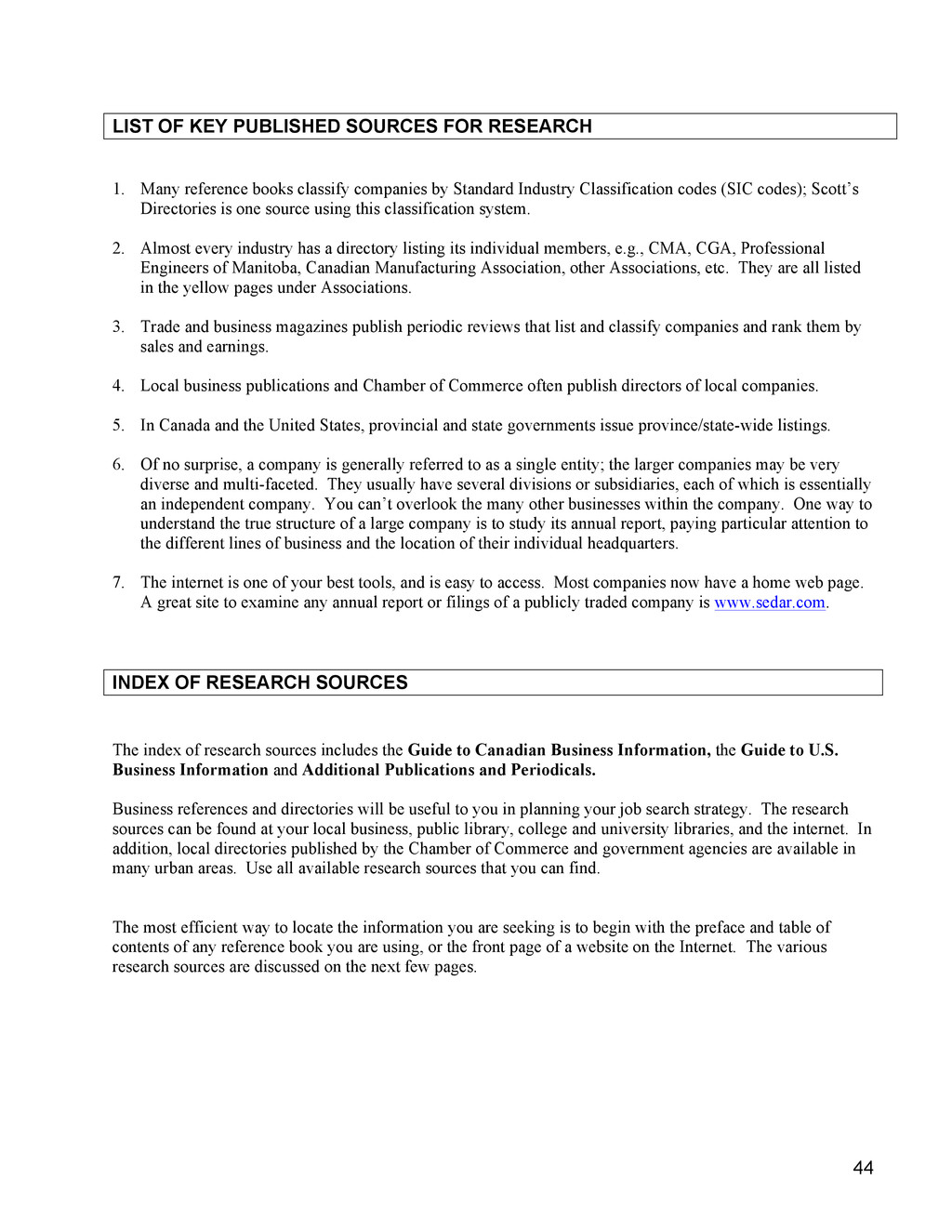
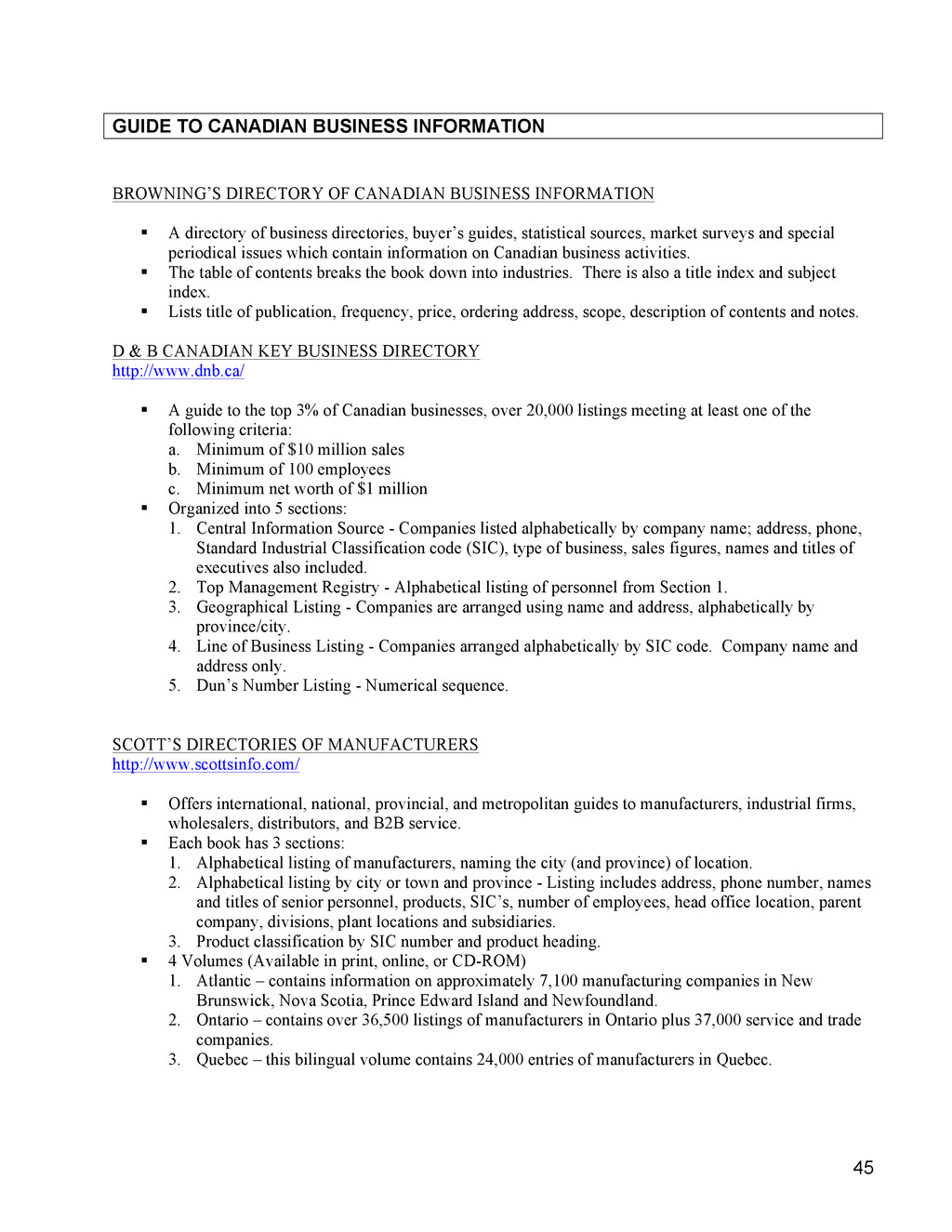
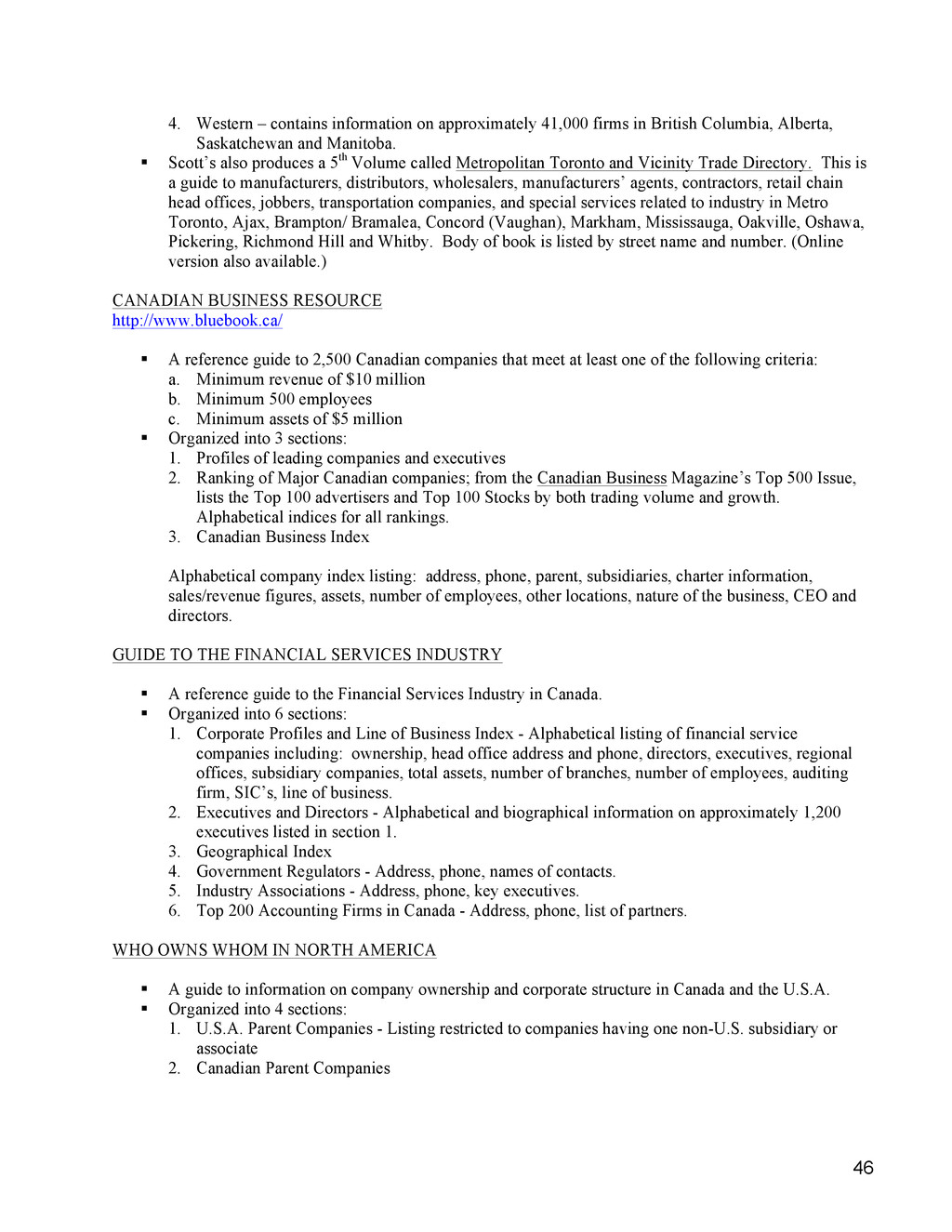
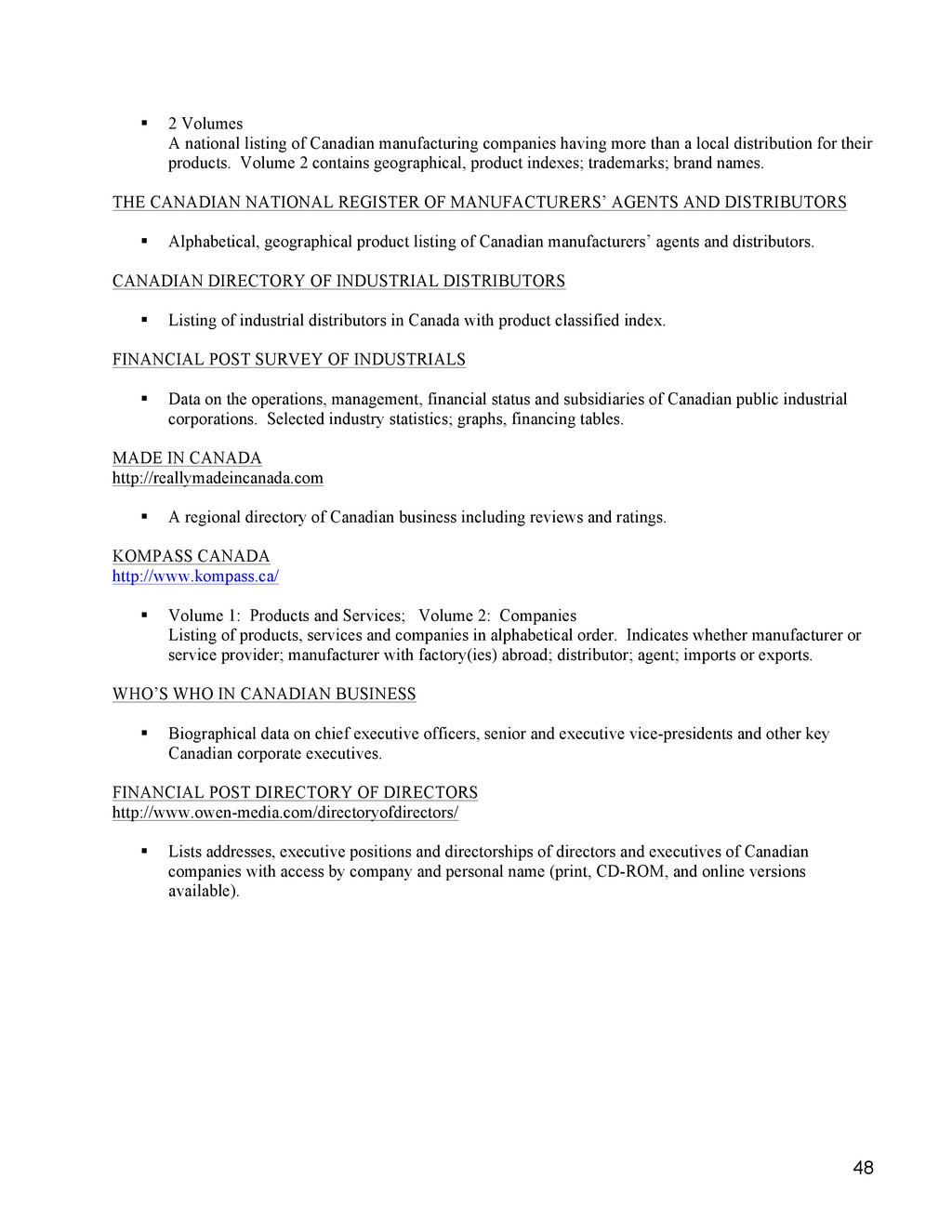
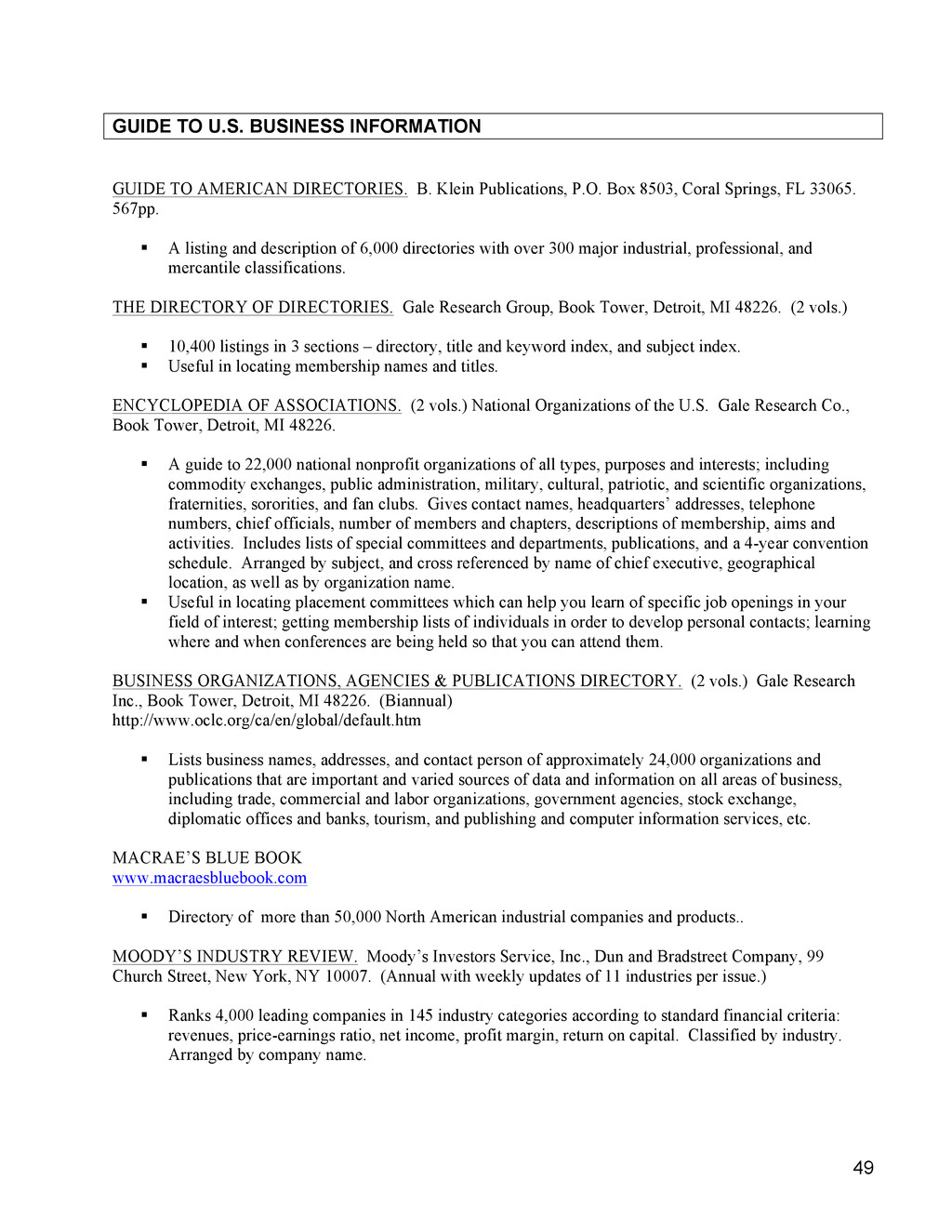
  43. 44 LIST OF KEY PUBLISHED SOURCES FOR RESEARCH 1. Many

    reference books classify companies by Standard Industry Classification codes (SIC codes); Scott’s Directories is one source using this classification system. 2. Almost every industry has a directory listing its individual members, e.g., CMA, CGA, Professional Engineers of Manitoba, Canadian Manufacturing Association, other Associations, etc. They are all listed in the yellow pages under Associations. 3. Trade and business magazines publish periodic reviews that list and classify companies and rank them by sales and earnings. 4. Local business publications and Chamber of Commerce often publish directors of local companies. 5. In Canada and the United States, provincial and state governments issue province/state-wide listings. 6. Of no surprise, a company is generally referred to as a single entity; the larger companies may be very diverse and multi-faceted. They usually have several divisions or subsidiaries, each of which is essentially an independent company. You can’t overlook the many other businesses within the company. One way to understand the true structure of a large company is to study its annual report, paying particular attention to the different lines of business and the location of their individual headquarters. 7. The internet is one of your best tools, and is easy to access. Most companies now have a home web page. A great site to examine any annual report or filings of a publicly traded company is www.sedar.com. INDEX OF RESEARCH SOURCES The index of research sources includes the Guide to Canadian Business Information, the Guide to U.S. Business Information and Additional Publications and Periodicals. Business references and directories will be useful to you in planning your job search strategy. The research sources can be found at your local business, public library, college and university libraries, and the internet. In addition, local directories published by the Chamber of Commerce and government agencies are available in many urban areas. Use all available research sources that you can find. The most efficient way to locate the information you are seeking is to begin with the preface and table of contents of any reference book you are using, or the front page of a website on the Internet. The various research sources are discussed on the next few pages.
  44. 45 GUIDE TO CANADIAN BUSINESS INFORMATION BROWNING’S DIRECTORY OF CANADIAN

    BUSINESS INFORMATION § A directory of business directories, buyer’s guides, statistical sources, market surveys and special periodical issues which contain information on Canadian business activities. § The table of contents breaks the book down into industries. There is also a title index and subject index. § Lists title of publication, frequency, price, ordering address, scope, description of contents and notes. D & B CANADIAN KEY BUSINESS DIRECTORY http://www.dnb.ca/ § A guide to the top 3% of Canadian businesses, over 20,000 listings meeting at least one of the following criteria: a. Minimum of $10 million sales b. Minimum of 100 employees c. Minimum net worth of $1 million § Organized into 5 sections: 1. Central Information Source - Companies listed alphabetically by company name; address, phone, Standard Industrial Classification code (SIC), type of business, sales figures, names and titles of executives also included. 2. Top Management Registry - Alphabetical listing of personnel from Section 1. 3. Geographical Listing - Companies are arranged using name and address, alphabetically by province/city. 4. Line of Business Listing - Companies arranged alphabetically by SIC code. Company name and address only. 5. Dun’s Number Listing - Numerical sequence. SCOTT’S DIRECTORIES OF MANUFACTURERS http://www.scottsinfo.com/ § Offers international, national, provincial, and metropolitan guides to manufacturers, industrial firms, wholesalers, distributors, and B2B service. § Each book has 3 sections: 1. Alphabetical listing of manufacturers, naming the city (and province) of location. 2. Alphabetical listing by city or town and province - Listing includes address, phone number, names and titles of senior personnel, products, SIC’s, number of employees, head office location, parent company, divisions, plant locations and subsidiaries. 3. Product classification by SIC number and product heading. § 4 Volumes (Available in print, online, or CD-ROM) 1. Atlantic – contains information on approximately 7,100 manufacturing companies in New Brunswick, Nova Scotia, Prince Edward Island and Newfoundland. 2. Ontario – contains over 36,500 listings of manufacturers in Ontario plus 37,000 service and trade companies. 3. Quebec – this bilingual volume contains 24,000 entries of manufacturers in Quebec.
  45. 46 4. Western – contains information on approximately 41,000 firms

    in British Columbia, Alberta, Saskatchewan and Manitoba. § Scott’s also produces a 5th Volume called Metropolitan Toronto and Vicinity Trade Directory. This is a guide to manufacturers, distributors, wholesalers, manufacturers’ agents, contractors, retail chain head offices, jobbers, transportation companies, and special services related to industry in Metro Toronto, Ajax, Brampton/ Bramalea, Concord (Vaughan), Markham, Mississauga, Oakville, Oshawa, Pickering, Richmond Hill and Whitby. Body of book is listed by street name and number. (Online version also available.) CANADIAN BUSINESS RESOURCE http://www.bluebook.ca/ § A reference guide to 2,500 Canadian companies that meet at least one of the following criteria: a. Minimum revenue of $10 million b. Minimum 500 employees c. Minimum assets of $5 million § Organized into 3 sections: 1. Profiles of leading companies and executives 2. Ranking of Major Canadian companies; from the Canadian Business Magazine’s Top 500 Issue, lists the Top 100 advertisers and Top 100 Stocks by both trading volume and growth. Alphabetical indices for all rankings. 3. Canadian Business Index Alphabetical company index listing: address, phone, parent, subsidiaries, charter information, sales/revenue figures, assets, number of employees, other locations, nature of the business, CEO and directors. GUIDE TO THE FINANCIAL SERVICES INDUSTRY § A reference guide to the Financial Services Industry in Canada. § Organized into 6 sections: 1. Corporate Profiles and Line of Business Index - Alphabetical listing of financial service companies including: ownership, head office address and phone, directors, executives, regional offices, subsidiary companies, total assets, number of branches, number of employees, auditing firm, SIC’s, line of business. 2. Executives and Directors - Alphabetical and biographical information on approximately 1,200 executives listed in section 1. 3. Geographical Index 4. Government Regulators - Address, phone, names of contacts. 5. Industry Associations - Address, phone, key executives. 6. Top 200 Accounting Firms in Canada - Address, phone, list of partners. WHO OWNS WHOM IN NORTH AMERICA § A guide to information on company ownership and corporate structure in Canada and the U.S.A. § Organized into 4 sections: 1. U.S.A. Parent Companies - Listing restricted to companies having one non-U.S. subsidiary or associate 2. Canadian Parent Companies
  46. 47 3. Foreign Parent Companies - Registered outside North America

    and have subsidiaries or affiliates in Canada or the U.S. Companies in sections 1, 2, and 3 are in alphabetical order and highlight parent company’s address, industry code, direct, indirect and dormant subsidiaries, associate companies, trade investments, country of incorporation. 4. Index - Subsidiary and associate companies listed in alphabetical order with cross-references to name and country of incorporation of parent. DIRECTORY OF ASSOCIATIONS IN CANADA § A guide to 18,000 international, national, inter-provincial and provincial associations in Canada. § Organized into 2 sections: 1. Alphabetical - Entry includes association name, address, phone, name of senior official, number of individual or corporate members, number of staff, membership or serial publications, regional addresses, phone and names of directors. 2. Classified Subject Index - Associations listed alphabetically under 800 cross-referenced subject headings. B.O.S.S. – BUSINESS OPPORTUNITIES SOURCING SYSTEM § Volume 1: Product; Volume 2: Company Each entry in Company volume includes address, telephone, number of employees, total sales, export manager, country(ies) to which firm exports and individual products manufactured FRASER’S CANADIAN TRADE INDEX http://www.frasers.com/ § Useful for finding suppliers and manufacturers by product classifications and trade names. § 4 Volumes Canadian manufacturers, wholesalers, agents, distributors, and representatives of foreign manufacturers. Volume 1 and 2 contain classified product listing. Volume 3 lists firms and trade marks alphabetically. GUIDE TO CANADIAN MANUFACTURERS § Information on the largest 10,000 manufacturers in Canada. Details include purchases of raw materials, capital machinery, and square footage of operations. Lists manufacturers alphabetical, by sales, geographical, SIC code listings. CANADIAN MANUFACURING MAGAZINE http://www.canadian manufacturing.com § Canada’s largest online database of industrial firms. Offers online publications including the 10 most read industrial magazines. § Access to the online job centre, company listings, and websites. CANADIAN TRADE INDEX http://www.ctdirectory.com § Lists over 30,000 firms related to industry, commerce and foreign trade.
  47. 48 § 2 Volumes A national listing of Canadian manufacturing

    companies having more than a local distribution for their products. Volume 2 contains geographical, product indexes; trademarks; brand names. THE CANADIAN NATIONAL REGISTER OF MANUFACTURERS’ AGENTS AND DISTRIBUTORS § Alphabetical, geographical product listing of Canadian manufacturers’ agents and distributors. CANADIAN DIRECTORY OF INDUSTRIAL DISTRIBUTORS § Listing of industrial distributors in Canada with product classified index. FINANCIAL POST SURVEY OF INDUSTRIALS § Data on the operations, management, financial status and subsidiaries of Canadian public industrial corporations. Selected industry statistics; graphs, financing tables. MADE IN CANADA http://reallymadeincanada.com § A regional directory of Canadian business including reviews and ratings. KOMPASS CANADA http://www.kompass.ca/ § Volume 1: Products and Services; Volume 2: Companies Listing of products, services and companies in alphabetical order. Indicates whether manufacturer or service provider; manufacturer with factory(ies) abroad; distributor; agent; imports or exports. WHO’S WHO IN CANADIAN BUSINESS § Biographical data on chief executive officers, senior and executive vice-presidents and other key Canadian corporate executives. FINANCIAL POST DIRECTORY OF DIRECTORS http://www.owen-media.com/directoryofdirectors/ § Lists addresses, executive positions and directorships of directors and executives of Canadian companies with access by company and personal name (print, CD-ROM, and online versions available).
  48. 49 GUIDE TO U.S. BUSINESS INFORMATION GUIDE TO AMERICAN DIRECTORIES.

    B. Klein Publications, P.O. Box 8503, Coral Springs, FL 33065. 567pp. § A listing and description of 6,000 directories with over 300 major industrial, professional, and mercantile classifications. THE DIRECTORY OF DIRECTORIES. Gale Research Group, Book Tower, Detroit, MI 48226. (2 vols.) § 10,400 listings in 3 sections – directory, title and keyword index, and subject index. § Useful in locating membership names and titles. ENCYCLOPEDIA OF ASSOCIATIONS. (2 vols.) National Organizations of the U.S. Gale Research Co., Book Tower, Detroit, MI 48226. § A guide to 22,000 national nonprofit organizations of all types, purposes and interests; including commodity exchanges, public administration, military, cultural, patriotic, and scientific organizations, fraternities, sororities, and fan clubs. Gives contact names, headquarters’ addresses, telephone numbers, chief officials, number of members and chapters, descriptions of membership, aims and activities. Includes lists of special committees and departments, publications, and a 4-year convention schedule. Arranged by subject, and cross referenced by name of chief executive, geographical location, as well as by organization name. § Useful in locating placement committees which can help you learn of specific job openings in your field of interest; getting membership lists of individuals in order to develop personal contacts; learning where and when conferences are being held so that you can attend them. BUSINESS ORGANIZATIONS, AGENCIES & PUBLICATIONS DIRECTORY. (2 vols.) Gale Research Inc., Book Tower, Detroit, MI 48226. (Biannual) http://www.oclc.org/ca/en/global/default.htm § Lists business names, addresses, and contact person of approximately 24,000 organizations and publications that are important and varied sources of data and information on all areas of business, including trade, commercial and labor organizations, government agencies, stock exchange, diplomatic offices and banks, tourism, and publishing and computer information services, etc. MACRAE’S BLUE BOOK www.macraesbluebook.com § Directory of more than 50,000 North American industrial companies and products.. MOODY’S INDUSTRY REVIEW. Moody’s Investors Service, Inc., Dun and Bradstreet Company, 99 Church Street, New York, NY 10007. (Annual with weekly updates of 11 industries per issue.) § Ranks 4,000 leading companies in 145 industry categories according to standard financial criteria: revenues, price-earnings ratio, net income, profit margin, return on capital. Classified by industry. Arranged by company name.
  49. 50 U.S. INDUSTRIAL DIRECTORY. A Reed International Publication. (Annual) §

    Four volumes provide over 50,000 company names, addresses, trade names, phone numbers of industrial entries, as well as addresses and phone numbers of local sales offices and distributors. DIRECTORY OF INDUSTRY DATA SOURCES. Ballinger Publishing Company, Harper & Row, Publishers, Inc., 54 South Church Street, Cambridge, MA 02138. § Lists 3,000 publishers of industry data sources including bibliographic and source data bases, indexing and abstracting services, and market research firms; describes monographs, surveys, periodical special issues, market studies, etc., covering 65 industries. Lists company names, address and phone. Arranged alphabetically and by type of publication service. § Three volumes cover the United States and Canada. Two volumes cover Western Europe. NATIONAL TRADE AND PROFESSIONAL ASSOCIATIONS OF THE U.S. Columbia Books, Inc., 1350 New York Avenue, N.W., Suite 207, Washington, D.C. 20005. (Annual in January) § Lists over 6,000 entries including name, year established, name of chief executive, address, phone number of staff members, budget, size of membership; date, expected attendance, and location of annual meeting; publications; historical and descriptive data. Arranged alphabetically and by geographical, subject, budget, and acronym. DIRECTORY OF U.S. LABOR ORGANIZATIONS. BNA Books, Bureau of National Affairs, Inc., 1231 25th Street, N.W., Washington, D.C. 20037. (Biennial, fall of even years) § Lists over 200 national unions, professional and state employee associations engaged in labor representation. Includes name, address, names of elected officials and department heads, publications, conventions, membership figures, number of locals. § Separate sections for AFL-CIO, railroad unions, other federations, and for individual national unions. Arranged alphabetically by personal name. CONSULTANTS AND CONSULTING ORGANIZATIONS DIRECTORY. Gale Research Inc., Book Tower, Detroit, MI 48226. § Lists more than 26,000 consulting organizations and consultants in two volumes. § Arranged by industry, by consulting functional category, by geographic location, by personal name, and by consulting firm. § Includes name, address, website, telephone, principal executives, staff size, purpose, and activity. DIRECTORY OF CONSULTANTS. National Association of Regulatory Utility Commissioners, Box 684, Washington, D.C. 20044. (Annual in December) § Lists consultants and consulting firms active in utility and transportation industries. Includes firm or individual name, address, and phone; names of regulatory agencies by which engaged in the past; purpose and dates of past engagements; areas of specialization; qualifications and experience. Arranged alphabetically.
  50. 51 THE CAREER GUIDE: DUN’S EMPLOYMENT OPPORTUNITIES DIRECTORY. Dun’s Marketing

    Services, Dun & Bradstreet Corporation, 49 Old Bloomfield Road, Mountain Lakes, NJ 07046. (Annual in November) § Lists more than 5,000 companies that have 1,000 or more employees and that may provide career opportunities in sales, marketing, management, engineering, life and physical sciences, computer science, mathematics, statistics planning, accounting and finance, liberal arts fields, and other technical and professional areas. Also covers personnel consultants throughout the country. Includes some public sector employers (e.g., governments, schools) not found in similar lists. Based on data supplied by questionnaire and personal interview. § Entries include company name, location of headquarters, other offices and plants; may also include name, title, address and phone number of employment contact; disciplines or occupational groups hired; brief overview of company, types of positions that may be available, training and career development programs, benefits offered. § Companies are arranged alphabetically; consultants are geographical. THE GUIDE TO LONG TERM JOBS ABROAD http://www.transitionsabroad.com/listings/work/careers/index.shtml § Principal content is information on how to seek work abroad. § Lists agencies, consultants, associations, government agencies, overseas branches, affiliates, and subsidiaries of organizations which offer or assist in locating permanent jobs abroad. Coverage is worldwide. § Offers books, articles, and other resources on international careers including regular postings from industry experts . THE BIG GUIDE TO LIVING AND WORKING OVERSEAS. Intercultural Systems / Systèmes Interculturels (ISSI) Inc. 296 Sackville Street, Toronto, ON M5A 3G2 § Best-selling author, Jean-Marc Hachey shares international employment strategies. Organized into five parts representing five phases of successfully building an international career. § Includes job hunting solutions, jobs by profession and region, employer profiles, advice on aquiring international experience, and career fair information. § Links to job boards and career building websites. D & B DIRECTORY OF SERVICE COMPANIES. Dun’s Marketing Services, Inc., 3 Sylvan Way, Parsippany, NJ 07054. http://www.dnblearn.com § Lists 50,000 largest service enterprises nationwide including both public and private companies. CORPORATE TECHNOLOGY DIRECTORY. Corporate Technology Information Services, Inc., 1 Market Street, P.O. Box 81281, Wellesley Hills, MA 02181-0003. § Comprehensive reference of over 90,000 U.S. entities that manufacture or develop high technology products. Indexed by name, location, parent name and product. THE DIRECTORY OF EXECUTIVE RECRUITERS. Kennedy & Kennedy, Inc., Templeton Road, Fitzwilliam, NH 03447. (Annual)
  51. 52 www.kennedyinfo.com/js/der.html § Lists over 13,000 recruiters from 6,000 executive

    recruiter firms. § Arranged by retainer and contingency categories of search, as well as by function, by industry, and by geographic location. § Includes firm name, principals of firm, address, salary level, and key contact. DIRECTORY OF CORPORATE AFFILIATIONS. National Register Publishing Co., Inc., MacMillan Inc., 3004 Glenview Road, Wilmette, IL 60091. (Annual) http://www.corporateaffiliations.com § Provides detailed information on “who owns whom” as a result of mergers and acquisitions. Contained are companies listed on the New York Stock Exchange, the American Stock Exchange, the “Fortune 500,” and others. Total listing of 50,000 U.S. parent companies and 26,000 subsidiaries. § This directory is useful when one is seeking out the detailed corporate structure of a parent company, or when a company is not listed in other directories because it is a subsidiary division or affiliate. AMERICA’S CORPORATE FAMILIES: BILLION DOLLAR DIRECTORY. (2 vols.) D & B Learn, Inc., 3 Sylvan Way, Parsippany, NJ 07054. § Identifies over 8,000 major U.S. parent companies and their subsidiaries and divisions (over 44,000). To be listed, companies must conduct business in at least two locations with controlling interest in at least one subsidiary, and have a net worth of at least $500,000. § Gives DUN’S number and state of incorporation for parent companies, as well as directory information for all companies; also lists Standard Industrial Classification (SIC) codes and stock exchange symbols, principal bank, accounting and legal firms. Organizations and Their Executives STANDARD AND POOR’S REGISTER OF CORPORATIONS, DIRECTORS, AND EXECUTIVES. (3 vols.) 25 Broadway, New York, NY 10004. (Annual) § A guide to the business community providing information on public companies of the U.S. There are three volumes: Volume I, Corporate Listings Alphabetical directory listing by business name of over 100,000 corporations, including names and titles of officers and directors, Standard Industrial Classification (SIC) codes, and annual sales. Volume II, Directors and Executives Biographies of 70,000 individuals serving as officers, directors, trustees, etc., and their principal business affiliations and residence addresses; year and place of birth, and fraternal memberships, if available. Volume III, Indexes Listings are indexed by SIC codes and geography. An obituary section records recent deaths of executive personnel. New executives appearing for the first time are included with brief business biographies, as are companies appearing for the first time in Vol. 1. STANDARD AND POOR’S STOCK REPORTS. (Revised weekly) http://www.standardandpoors.com
  52. 53 § The stock reports of 800 companies traded on

    the American Stock Exchange. D & B MILLION DOLLAR DIRECTORY. (5 vols.) Dun’s Marketing Services Inc., 3 Sylvan Way, Parsippany, NJ 07054. (Annual) http://www.dnbmdd.com/mddi § A guide to 1,600,000 public companies in the U.S. and Canada with net worth of half a million or more; includes industrial corporations, bank and trust companies, wholesalers, retailers and domestic subsidiaries of foreign corporations. The 5th volume lists the top 50,000 moneymaking companies. § Alphabetical listings by business name, including address, telephone number, name and title of officers and directors, (SIC) code, annual sales, number of employees, some division names of principal and secondary businesses, as well as principal bank, legal, and accounting firms. POLKS BANK DIRECTORY. – North American Edition. R.L. Polk Company, 2001 Elm Hill Pike, Nashville, TN 37210-3848. (Semiannual) § A major detailed directory listing banks, other financial institutions, and government agencies by address; also includes geographic indexing, names and titles of officers, financial information, names of discontinued banks, and maps. Useful for corporations and government agencies. WHO OWNS WHOM? Dun & Bradstreet Limited, Holmers Farm Way, High Wycombe, Bucks HP12 4UL, England. http://www.dnb.com/us/dbproducts/sales_marketing/research_verify/directories/ § Indicates ownership of subsidiary and associate companies and how they fit into their parent group. BEST’S INSURANCE REPORTS, PROPERTY AND CASUALTY. A.M. Best Co., Ambest Road, Oldwick, NJ 08858. (Annual) http://ambest.com/sales/BIR/ § As well as addresses, this reference gives in-depth analyses, operating statistics, financial data and ratings, and names of officers in over 1,300 major stock and mutual property-casualty insurance companies. In addition, provides summary data on over 2,000 smaller mutual companies and on 300 casualty companies operating in Canada. BEST’S INSURANCE REPORTS, LIFE AND HEALTH. http://www.ambest.com/sales/birlh/default.asp § Supplies 1,800 individual company reports in addition to summaries of 600 smaller companies to the property and casualty industry. STANDARD & POOR’S SECURITIES DEALERS OF NORTH AMERICA. 25 Broadway, NY, NY 10004. (Semiannual with supplements published every 6 weeks) http://mmdaccess.com § Lists over 16,000 security dealers alphabetically and by geographic region. Gives names, titles, and addresses of company officers; employer’s I.D. number, and clearing facilities.
  53. 54 THOMAS REGISTER OF AMERICAN MANUFACTURERS. (21 vols.) Thomas Publishing

    Co., One Penn Plaza, New York, NY 10019. (Annual) http://www.thomasnet.com § One can locate more than 607,000 industrial companies, both large and small in this unique source. Also lists names of officers, capital assets, and parent or subsidiary company. § There are 21 Volumes: Volumes 1 to 11. Lists firms under their product headings. Volume 12. Index to products and services (67,000 categories). Volume 13. Company profiles. Volume 14. Index to the manufacturers by their trade brand names. Volume 15 – 21. Bound catalogues of more than 1,400 of the manufacturing firms. DIRECTORY OF AMERICAN FIRMS OPERATING IN FOREIGN COUNTRIES. (3 vols.) World Trade Academy Press, 50 E. 42nd Street, NY, NY 10017. (updated irregularly) § Directory listings of approximately 3,000 American corporations with factories and branch offices in 36 countries; names of key contact personnel are given. D & B PRINCIPAL INTERNATIONAL BUSINESSES. (1 vol.) § Lists nearly 55,000 prominent companies in 143 countries. Grouped by geographic location, product, and alphabetically. Text is simultaneously translated into French, Spanish, and German (as well as English). Organizations by Specific Category STANDARD DIRECTORY OF ADVERTISERS/ADVERTISING REDBOOKS. National Register Publishing. Co., Inc., Wilmette, IL 60091. (Annual, with supplements published 5 times yearly) http://www.redbooks.com § Lists 21,000 U.S. and international advertisers who each spend more than 200,000 dollars annually on advertising including their names, telephone numbers, products and advertised with brand/trade names; the names of 80,000 executives and their titles, as well as the advertising agency handling the account, account executives, media used, and distribution. § Published in 2 editions; in one volume, companies are listed by product classification or service; in the second volume, companies are grouped according to geographic location. § A useful tool in locating marketing officers, names of parent companies, subsidiaries and affiliates. STANDARD DIRECTORY OF ADVERTISING AGENCIES. National Register Publishing. Co., Inc., Wilmette, IL 60091. (Published 3 times yearly, plus monthly supplements) http://www.redbooks.com § Lists a total of 4,400 U.S. and foreign agency establishments. The various sections include: Special Market Index. The view-at-a-glance of agencies specializing in the fields of Finance, Medicine, Resort and Travel, Black and Spanish Markets, Media Service Organizations, and Sales Promotion Agencies. Media Services. Listing of sales promotion agencies, media services, and time-buying organizations.
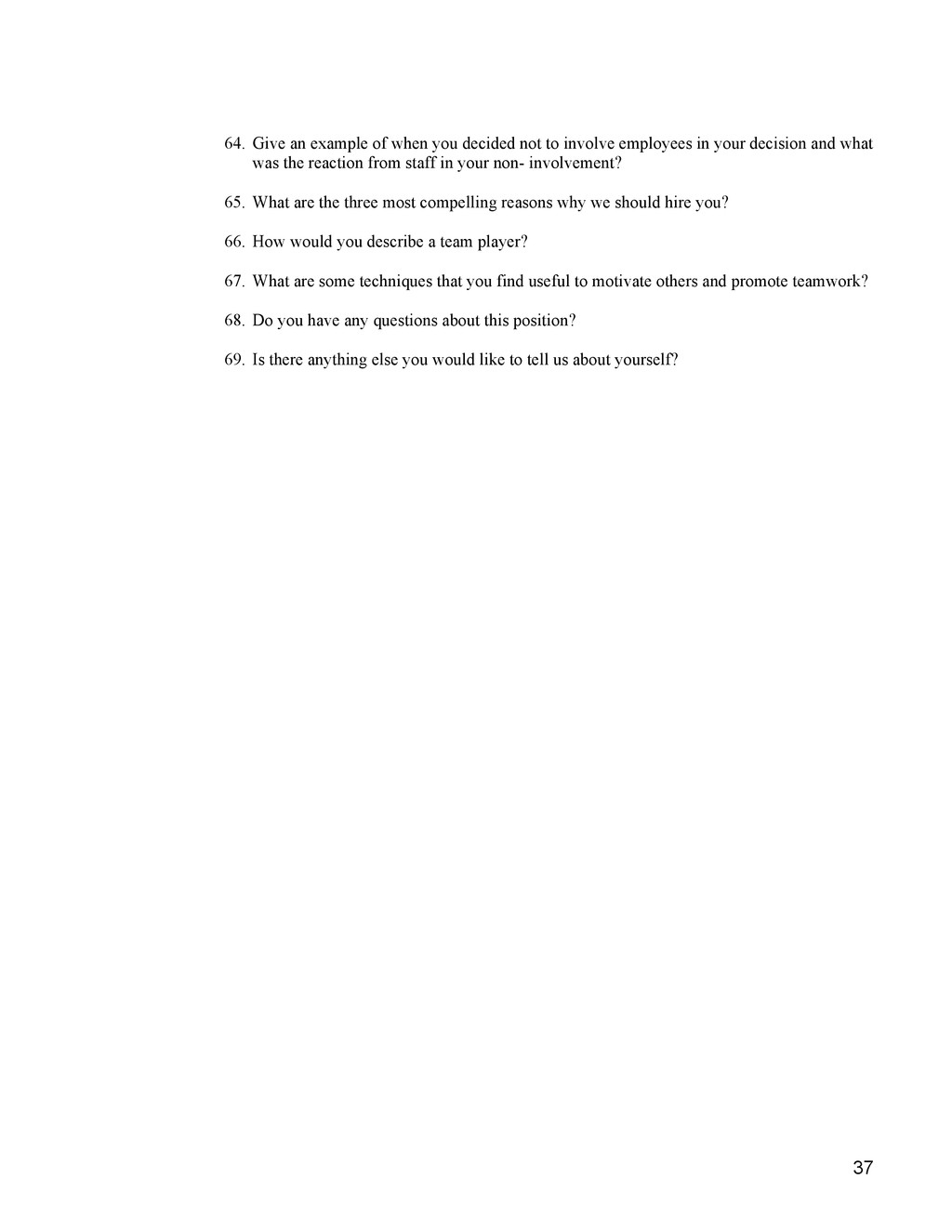

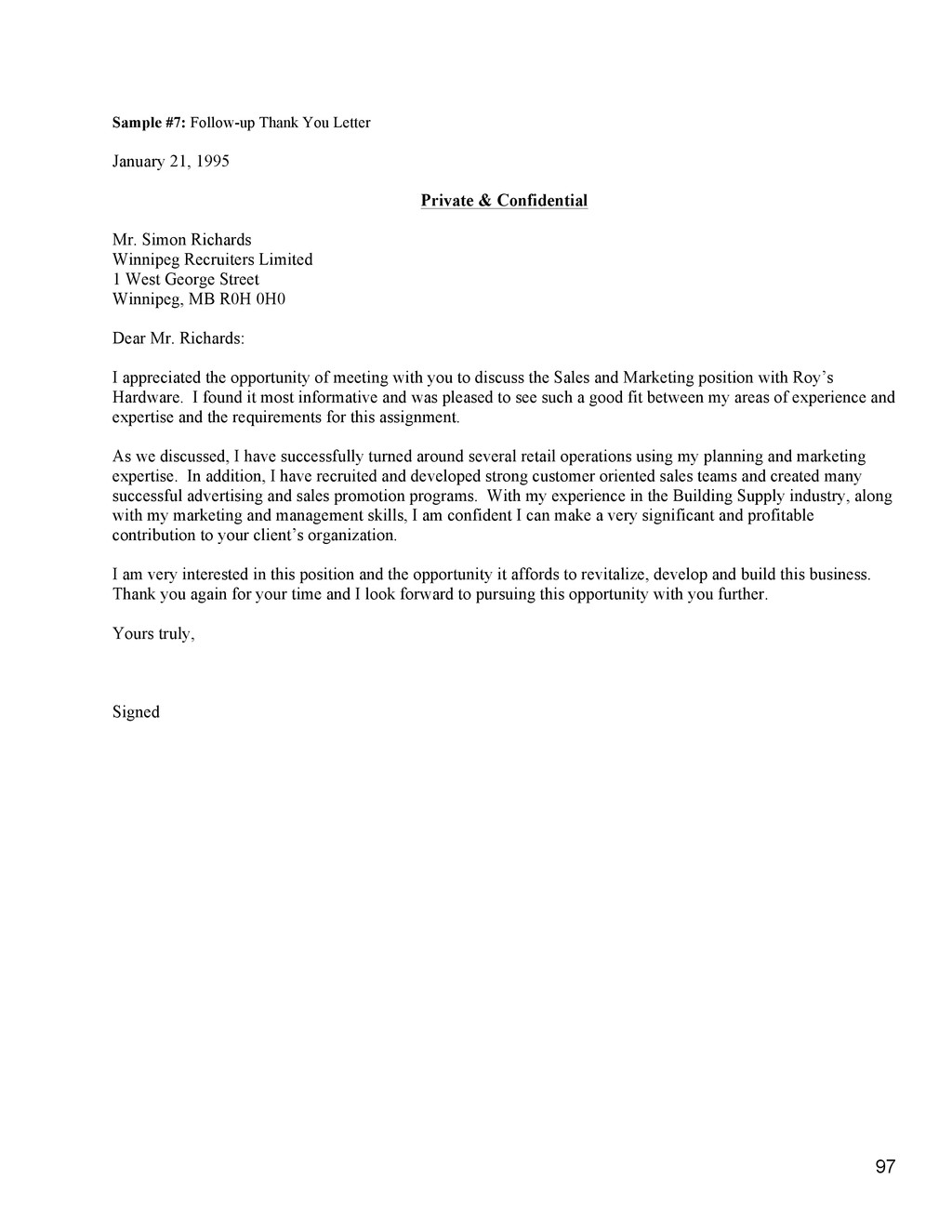
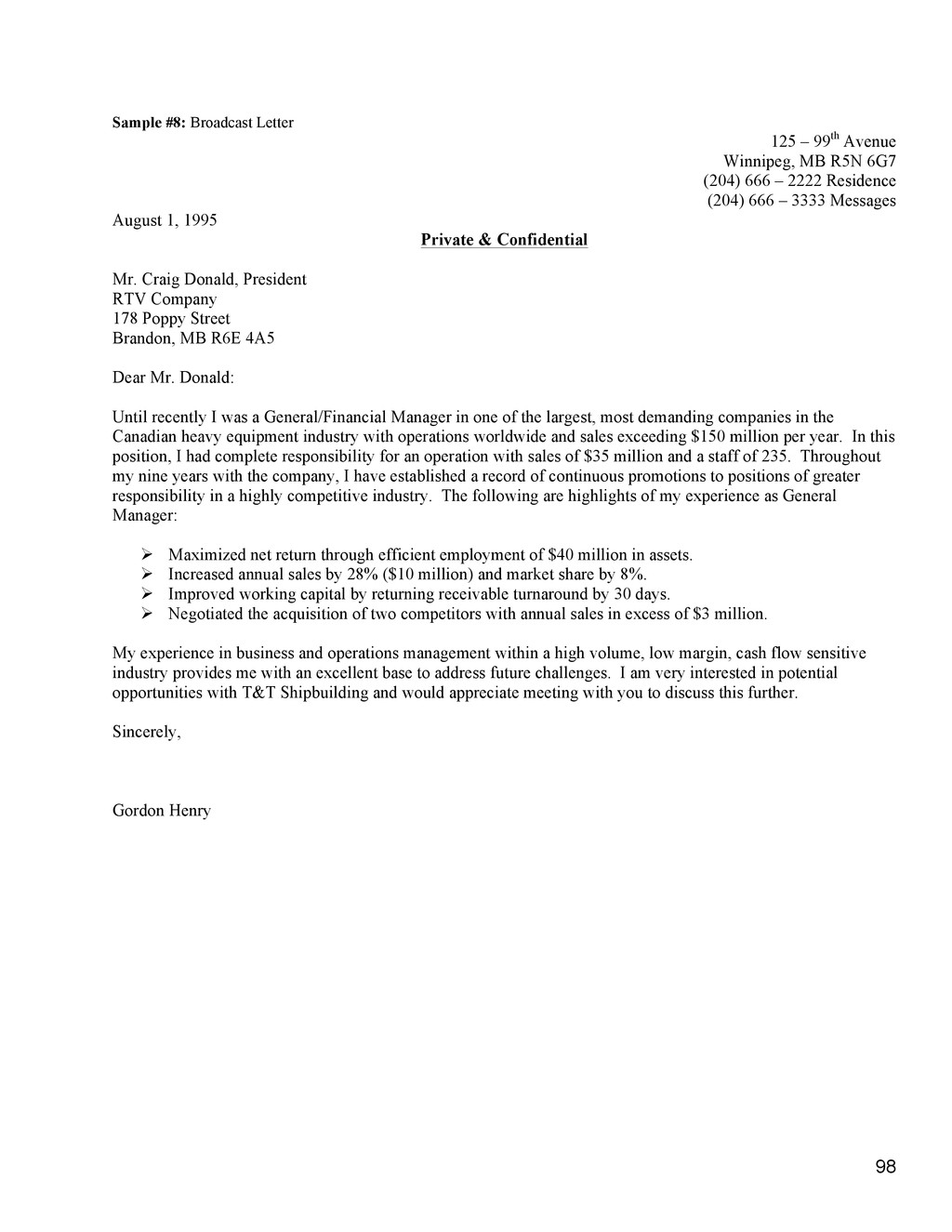
  54. 55 § Alphabetical listing of advertising agencies, including branches, personnel,

    and accounts. Listing of largest agencies (ranked by annual billings). § Geographical index of advertising agencies listing names, addresses, and telephone numbers of agencies by state and city. THE RAND MCNALLY BANKERS DIRECTORY. (3 vols.) Financial Publishing Division, P.O. Box 7600, Chicago, IL 60680. (Updated every month) § Two U.S. volumes include individual listings for every head office, branch, and agency representative office located in the U.S. PRATT’S GUIDE TO PRIVATE EQUITY VENTURE CAPITAL SOURCES. Venture Economics, Inc., 16 Laurel Ave., Wellesley Hills, MA 02181. (Annual) http://www.thomasreuters.com/products_services/media/pratts_guide § Directory listings of over 4,000, mainly U.S., actively investing private equity and venture capital firms, corporate venture groups, and small investment corporations. The listings include the investment and industry preferences of each firm. § Articles on investment and other related topics are included. O’DWYER’S DIRECTORY OF PUBLIC RELATIONS FIRMS. J.R. O’Dwyer Co., Inc., 271 Madison Ave., NY, NY 10016. http://www.odwyerpr.com/ § Found here are directory entries of over 1,900 U.S. and Canadian public relations firms, listed alphabetically, including their overseas offices, clients, and billings. Indexed by firm specialty, client and geography; including a ranking of the top 150 public relations firms. ADDITIONAL PUBLICATIONS AND PERIODICALS Books and magazines ordered online may be a convenient way for you to get the information. Annual Reports A company’s annual report will be useful in identifying matters crucial to your joining the firm. In addition to the balance sheet and the auditor’s report, the annual report also contains a letter from the chairman reflecting the personality, well-being, and direction of the company. Books Financial Post Survey of Mines and Energy Resources Financial Post Survey of Predecessor and Defunct Companies National List of Advertisers - http;//www.rogerspublishing.ca Franchise Annual Directory of Executive Recruiters - http://www.kennedyinfo.com/js/der.html Computer Systems Sources Magazines Report on Business Magazine Top 1000 Annual – http://www.robmagazine.com/
  55. 56 Canadian Business Magazine Corporate Canada’s 500 Biggest Winners Annual

    Financial Post Magazine 500 Ranking for Industry and Finance Annual Trade Publications Marketing Canadian Insurance Annual – http://www.cdnins.com/ Canadian Mines Handbook – http://www.northernminer.com/Products/mineshandbook/cdnmineshandbook.asp The Book Trade in Canada Canadian Real Estate Companies – http://www.realestatecanada.com/ United States Real Estate Directory – http://www.1realestate.com/ Government Government of Canada Telephone Directory – http://direct.srv.gc.ca/cgi-bin/direct500/BE Guide to Federal Programs and Services Government Business Opportunities Industry Profiles – Industry, Science and Technology Canada Export Canada - http://www.edc.ca Miscellaneous Canadian Business Index Financial Reporting in Canada Canadian Classification and Dictionary of Occupations – http://www.fedpubs.com/subject/immigration/ccdo.htm Venture Capital Companies Member Profile – http://www.cvca.ca FACTS – Directory of Investment Counselors and Portfolio Managers International Employment News Executive Remuneration (Top-Middle Management) Management Compensation in Canada Publication Profiles FINDING ANSWERS TO COMMONLY ASKED QUESTIONS Listed below are the typical questions that job seekers can ask. The questions fall into the general categories of location, industries, companies and employment. LOCATION What companies are nearby? In what province/state does a company have facilities? INDUSTRIES What are the high-growth industries? What are the salary levels in specific industries? Who are the competitors? What industries use specific types of professionals?
  56. 57 COMPANIES Identify the products of a company? Can consulting

    organizations be identified by field? What are sources of company reports and analysis? Who are key people in the company and what are their backgrounds? EMPLOYMENT What are the names of employment agencies and/or executive recruiters that specialize in a particular field? How does one find out about government employment opportunities? Answers can be found with internet sources, such as the following: INTERNET SOURCES Scott’s Directories http://www.scottsinfo.com/ Canadian Trade Index http://www.ctdirectory.com Kompass National http://www.kompass.ca/ Value Line Investment Surveys http://www.valueline.com/ Statistics Canada http://www.statcan.gc.ca/ Dun & Bradstreet Key Business Directory http://www.dnb.ca/ Job Mart http://www.cadjobmart.com/ CONCLUSION Getting the information you require, will help to develop your research plan. Target companies and do extensive research on them in hopes of finding employment opportunities. Internet is an essential job search tool today. It is a way to find opportunities, to research jobs, and gives you a chance to post your resume to those organizations of your interest. Canadian and US business information and publications and periodicals are accessible on the internet and local libraries. These important resources are required to find out the information you need to approach a company and possibly to find a job. Common questions that job seekers can ask deal with location, industries, companies and employment. Be prepared to answer these questions and make sure you have done your homework!
  57. 58 Sample Research Plan APPENDIX ‘C’ STEP 1: INITIAL SEARCH

    TO GET TENTATIVE TARGET LIST Information Needed Names of service and consumer products companies Resources Dun & Bradstreet Scott’s Directories B.O.S.S. – Product info globe data base Telephone calls – Chambers of Commerce in selected cities Industry contacts STEP 2: RESEARCH TO GET SCREENED TARGET LIST Information Needed For companies on tentative list – size of company, revenues, # of employees Product Line How products are marketed – external vs. internal Resources Dun & Bradstreet B.O.S.S. – Company annual reports Periodicals Telephone calls – industry contacts STEP 3: DETAILED RESEARCH TO GET APPOINTMENT FOR INTERVIEW Information Needed Names and background data on top marketing executive Data on marketing organization meetings – structure, sales, growth trends, and objectives Resources Public Library – Who’s Who directories, periodicals Telephone calls or informational meetings – financial analysts, sales oriented search firms, annual report, contacts who know the company
  58. 59 Sample Research Plan cont… STEP 4: INTENSIVE RESEARCH TO

    PREPARE FOR INTERVIEW Information Needed Current data on company – sales, stock, culture Data on interviewer or decision maker – background, style, needs Resources Library – periodicals and newspapers Networking – contacts who know decision maker and company Personal – review assessment data STEP 5: FINAL RESEARCH TO PREPARE FOR OFFER Information Needed Issues or questions about company, job, boss Style and needs of the boss Review job preference Resources Company publications Personal – review interview notes, note unknown factors STEP 6: RESEARCH TO PREPARE FOR NEGOTIATION Information Needed What may be negotiable? What would be acceptable? Feasible alternatives for each Specific point to be negotiated Resources Company publications Prospective boss – ask questions Review job preferences and acceptable compromises Surveys, reports, precedents
  59. 60 Sample Company Research Fact Sheet APPENDIX ‘D’ Company: Employee

    Programs, Inc. Overview: Employee Programs, Inc. designs and produces comprehensive employee recognition programs. This service includes creative design of awards, promotional materials, guidelines for presentations, and program administration. The awards include high-quality, custom-designed emblems of gold and precious stones placed on jewelry accessories, custom-designed rings, medallions, and plaques, as well as a variety of commemorative gifts. These awards are given to employees for service, safety, sales, productivity, and other achievements. Clientele: • Serves 60% of the Fortune 1000 Companies with recognition programs • Sold recognition programs to over 13,000 corporations • Designs recognition programs for more Fortune 1000 Companies than its four closest competitors combined Mobile Wal-Mart Bank of Montreal Shell Oil Exxon Mobil Conoco Chrysler General Electric Toronto Stock Exchange Dow Chemical PepsiCo The Royal Bank of Canada Kodak Canada General Motors Sears, Ltd. Standard Oil Enron Ford Motor Burlington Chevron Texaco Citigroup Company Profile: • Largest North American manufacturer of corporate emblematic jewelry • Privately held • Average annual sales growth over the past 10 years has been about 20% • 1,200 employees are located at the corporate office and factory in Chicago, Michigan • Represented by sales people in North America Production: • Over 2,000,000 awards are produced yearly • Each emblem takes over 40 hand operations to produce Origins: The Company was founded in 1927 by Arthur White, philosophy professor, who taught at the University of Texas. The company was originally set up in the basement of his mother’s home in Texas to produce seminary pins for students completing the Bible study class. A well-known business and community leader, Arthur White has made significant philanthropic contributions to education and the arts. Attached Magazine/Newspaper Articles
  60. 61 Useful Research Sites APPENDIX ‘E’ General Research Sources United

    States U.S. Securities and Exchange Commission http://www.sec.gov/edgar.shtml World Wide Web http://www.w3.org/ Internet Public Library http://www.ipl.org Library of Congress http://www.loc.gov Canada National Library of Canada http://www.nlc-bnc.ca/ Industry Canada http://www.strategis.ic.gc.ca System for Electronic Data Analysis and Retrieval http://www.sedar.com News and Current Events United States United States Newspapers http://www.50states.com/news/ CNN http://www.cnn.com Canada Globe & Mail http://www.theglobeandmail.com Canadian Newswire http://www.newswire.ca CBC http://www.cbc.ca Toronto Star http://www.thestar.com Universities/Colleges in USA & CDN United States Index of American Universities http://www.clas.ufl.edu/au American Colleges and Universities http://www.globalcomputing.com/CollegesContent.htm Canada Association of Universities and Colleges of Canada http://www.aucc.ca Canadian Universities http://uwaterloo.ca/canu/index.php Canada’s Higher Education and Career Guide http://www.canadian-universities.net/ Job Postings & Search Sites Job Web http://www.jobweb.com/ Eluta Canada http://www.eluta.ca Career Builder http://www.careerbuilder.com/ The Monster Board http://www.monster.com Human Resources Development Canada http://www.hrdc-drhc.gc.ca/ Monster Trak http://www.jobtrak.com/ National Job Bank http://www.jobbank.gc.ca Wow Jobs www.wowjobs.ca Workopolis http://www.workopolis.com Simply Hired http://www.simplyhired.com Working Canada http://working.canada.com Engineering Jobs in North America http://engineerjob.us Indeed http://www.indeed.com
  61. 62 Resume Writing and Interview Skills Job Web http://www.jobweb.com/ Free

    Resume Tips http://www.free-resume-tips.com/ Company and Employer Information Canada’s Top 100 Employers http://www.canadastop100.com/ Fortune Rankings http://money.cnn.com/magazines/fortune/rankings/ Company Information http://www.hoovers.com/free/ Corporate Information Corporate Information http://www.corporateinformation.com/ Labor Market Information Human Resources Skills Development Canada http://www.hrsdc.gc.ca United States Department of Labor http://www.dol.gov/ Job and Future Trends Career Planner http://www.careerplanner.com/ Occupational Information United States Career One Stop http://www.careerinfonet.org/ Occupational Outlook http://www.bls.gov/oco/ Canada Canadian Careers http://canadiancareers.com/occupational Service Canada-Career & Education Planning Tool http://www.jobfutures.ca/en/home.shtml Recruiters and Executive Search United States Recruiters On-Line Network http://www.recruitersonline.com/ National Assoc. of Executive Recruiters http://www.naer.org/ Canada Ian Martin Ltd. www.ianmartin.com Human Resources News http://www.humanresources.com Canadian Recruiters http://www.directoryofrecruiters.com/ Professional Networking Sites Zoom Info http://www.zoominfo.com Linked In http://linkedin.com Twitter http://www.twitter.com
  62. 64 Job search techniques must be done carefully in order

    for you to seek the job you desire. Executives are also in tune with individuals who have good networking skills. The key is to set yourself apart from other job seekers. Here are some points to consider: • Be open to all methods. • Integrate your methods into a planned campaign. • Practice the communication skills required for a successful job search campaign. • Monitor your productivity as you go along. • Correct your course when you find something isn’t working. The job search techniques discussed include targeting companies, networking, search firms, private employment agencies, answered advertisements and marketing letters. Planning your job search campaign should include all of these elements. PLANNING YOUR JOB SEARCH CAMPAIGN Introduction It is important to use effective job search techniques when planning your campaign to better your chances of finding a job. The first thing to do is to keep good records and to avoid getting bogged down, confused and waste time and money. Getting two to three job offers typically requires dozens of interviews, which in turn requires dozens of contacts. These are too many contacts to have to remember without recording them. Always look at the realities of the job opportunities, be flexible and ready to go to a different plan if needed. There is a constant turnover of people at all levels. The problem for companies and job seekers is that there is no perfect way to match job openings with job seekers. Use a wide variety of methods, including those you may not be accustomed to. Produce faster results by going beyond publicized openings. It is a much bigger market. To narrow in on such a big market you need to target the companies you think are best suited to your skills. Targeting Companies Targeting companies, as discussed in Chapter 4, is very important as it is the first thing you need to do to begin your job search. With a good focus on your target companies you will be more efficient in what you are looking for in the huge job market. To get information consult friends, business acquaintances and your network hoping to benefit from their experience and advice. Concentrating on specific targeted companies that meet your criteria is much more effective than hoping to find one such company by sending letters to hundreds of randomly selected companies. Targeting companies is a very effective job search technique for planning your campaign. Let’s now discuss networking, which is a very important technique that is part of the campaign and is ongoing in the business world. Networking Networking is the systematic use of personal contacts to assist you in planning your campaign. Networking requires diligent work in these ways:
  63. 65 • To find out more information about an industry,

    target company, or decision maker. • To discover the hidden jobs, especially in your target companies. • To have an opportunity to get introduced to the decision maker in order to convince him or her that you would be a prime candidate. • To get additional contacts in order to expand your original network. • To practice informational interviewing so that you will be comfortable in the job interview. When networking, you are seeking advice, counsel, names, and referrals. There are two different pathways you can take. In the first path one of your primary contacts was able to give you a direct referral to the decision maker. The second path takes one more step as one of your primary contacts gives you a secondary contact and this secondary contact leads you to the decision maker. The contact network is by far the most important source of jobs; plan on spending a good portion of your job search in networking. More on networking is discussed in Chapter 6. Search Firms Executive Search has grown into a huge industry and there are thousands of search firms in the United States and Canada. In order to gain access to the portion of the job opportunities handled by search firms (and other third-party organizations), it is beneficial to understand how they work and for whom. Search firms are important in the job market, but they by no means dominate it. Companies still do most of their own recruiting, partly because of the fees charged by search firms (20%-35% of annual salary). It is valuable for companies to use search firms for higher-level positions and in situations where confidentiality is essential. There are two main types of search firms; retainer and contingency. Retainer firms are paid by the company to locate qualified people for a specific position usually at the $50,000/year level and upward. They get a portion of their fee up front, whether the employer hires their candidates or not. Their search assignment for a given job or jobs is an exclusive one. These retainer firms represent themselves as ethical and professional companies; they can be giant international firms with many offices, or they can be small one-person shops. Contingency firms, on the other hand, get paid only when the company hires an individual whom they have presented, and they may handle positions at lower salary levels. Moreover, employers may have more than one contingency firm working on a particular job opening. In contrast to the retainer firm, contingency firms may distribute resumes widely, presenting one’s qualifications to companies that they think might be interested. National search firms often claim to have wonderful filing and communication systems, but you cannot assume that contacting one office of a national firm will put you in touch with other branch offices in other cities. In fact, search consultants may not necessarily share their assignments or their sources of candidates with their associate at the next desk. Always do your own contacting without relying on somebody else to get it done. With search firms in your own city, try to arrange a personal interview, using your contact network. Perhaps the Personnel or Human Resources Department at your recent employer can introduce you to the firms that they use regularly. The search consultant may remember a positive meeting, even if he or she has no immediate opportunity for you.
  64. 66 If you are unable to get a personal interview

    with a search firm, a cover letter and your resume is the next best option. To save time, search consultants may want to first screen you by phone before meeting you, particularly if a meeting would require airfare. Although a phone interview is not the easiest or best means of introduction, be prepared and do your best. Try to extract as much information as you can from the search person about the nature of the job and the company; then, offer to expand on how you might fit the company’s needs in a letter. When a search firm contacts you for a screening interview, they usually do not immediately divulge the identity of their client; nevertheless, you may be able to elicit sufficient information about the size, industry, and geographic location to identify the potential employer. It is not wise to bypass the search firm. When a search consultant arranges a company interview for you, he or she will want to be informed about how things went. The consultant can be a good source of feedback for you as to how you were received by the client company. Understanding search firms can allow you to get a handle on the jobs opportunities that search firms have to fill for other companies. A third job technique is looking into private employment agencies. Private Employment Agencies Employment agencies generally handle the lower-level salaried positions, less than $45,000 a year. They are not likely to be productive sources for executive positions. However, many of them specialize and become expert in certain types of positions, locations, or industries. Often, they take the place of an employment department in medium-size and smaller firms and will be aware of higher-level opportunities. You will want to find out which agencies are most involved in the industry, function, or companies that interest you and, at least, make contact with them. Be rather assertive in working with agencies in order to maintain control of your job search. Your success with an agency will often depend more on the particular counselor you meet than on the overall reputation of the agency. You can judge the quality of the counselor somewhat by the manner in which he or she interviews you. As with search firms, you need to keep the agency counselor well informed on the outcome of any interviews they arrange for you. This will help maintain their interest in your job search, and they can provide you with good feedback. Answering Advertisements Major newspapers have pages of job ads that usually require written responses. A few advertisers will accept phone calls and screen you on the phone for a possible appointment. A sample ad from a newspaper the “Globe and Mail” is found in Appendix ‘F’. Have a good focus on advertised ads to have better chances for a higher response rate. The advertised jobs are published in local or national newspapers and posted on job sites on the internet. Remember that only 10 – 20% of job opportunities are advertised, professional recruiters account for approximately 30 – 35% and the remaining opportunities are uncovered through networking. Methods of Seeking Advertised and Hidden Jobs: • Targeting and networking to locate the openings. • Answering advertisements that describe opportunities.
  65. 67 • Approaching search firms or agencies to inquire about

    advertisements, mailing tailored marketing letters to a selected list of target companies. There are a number of reasons explaining the low response rate of hidden ads (the company name is not revealed). § The advertisers avoid the burden of replying to applicants, which often number in the hundreds. § They avoid unwanted phone calls and “in-person” applicants. § Agencies or search firms may place hidden ads to build up their files even if they have no job openings. § It would not be wise to rely on hidden ads as a productive means of job search. Companies use hidden ads to: § Maintain secrecy, even within the company. § Get a feel for availability of candidates and going salaries. § Get more applicants (done primarily by smaller companies). § Save agency or search firm fees. Listed below are various sources of ads. § The Globe & Mail and a few major city papers tend to publish more middle to upper level positions, such as a general manager or corporate officer. § Professional journals may have employment sections. § Job sites on the internet. Ads typically generate few interviews (or even replies) because of the intense competition: an attractive ad in a major publication for a management position will often draw hundreds of replies. Your response must have the following to increase your chances of being contacted: § Is first-class in appearance and content and grabs the attention of the reader. § Clearly and immediately matches their needs against your qualifications. § At the start of your letter, list each of their needs, along with a very brief statement of how you can meet it. § Arrives about a week after the ad appeared – and not on Monday. § By this time the screener will be ready to pick a handful of the best looking ones, including yours, to follow up by phone. § Avoids any obvious negatives that would serve as an excuse for screening out your letter. There are some advantages to advertised ads. You can research the internet, library or networking research on the company before you reply and you can call to find out more about the job: the true requirements, the circumstances, the screener, the interviewer, and the decision maker. With the resulting information, you can take special pains to tailor your written reply, such as expressing the reason for your interest in the company. It becomes one of your target companies. You may even choose to supplement your letter by a direct approach to the right person – the one you have identified as the decision maker. Most importantly, keep complete records of your ad responses and avoid committing too much of your time. As you tackle your first ads, study how you can distinguish yourself from the crowd while still minimizing your time and efforts. If an ad seems appropriate for your unique talents, follow up by phone or email a few days after your initial reply.
  66. 68 Marketing Letters A well written marketing letter can be

    a very effective job search technique. To the recipient, a letter can appear boring, stuffy, or formal; or it can be interesting, attention getting, informative, concise, warm, and/or provocative. Of course, we would like our letters to be interesting. If letters are a part of your campaign, plan on allowing time to rewrite them several times. The effectiveness of marketing letters can also be greatly enhanced – doubling your response rate – by a telephone follow-up a day or two after the letter is received. In this way, you will register an impression and perhaps get an interview before the letter is lost in the pile and forgotten. You will need to take this into account when you plan the rate of issuing broadcast letters (identical letters sent to different companies/individuals). There is a limit to the number of letters you can follow up by phone (perhaps 20 or 30 a week). Start your follow-up telephone call by simply asking for the person you want. Most of the time, your addressee will be in a meeting, on another line, out of town, or generally unavailable, and you will be invited to leave a message. Always leave a voice mail message if the person is not in or busy. Leave your name and phone number, briefly explaining why you are calling and that you will call back. If you are continually told how busy your addressee is, ask what is a good time to reach him or her – early in the morning? After the board meeting? Late afternoon? Saturday morning? Try to get some information about the individual’s work schedule. Be prepared for a few rejections but focus on getting a few acceptances. It is always important to maintain a positive mind set. COMPARATIVE EFFECTIVENESS OF DIFFERENT METHODS Now that we have discussed job search techniques to use, let’s compare them. Looking at the diagram below, Targeting/Networking has the highest percent of jobs obtained and answering ads has the lowest percentage of jobs obtained. Sources of Interviews Percent of Jobs Obtained Targeting/Networking 50 – 80% Search Firms 5 – 25% Marketing Letters 5 – 20% Answering Ads 5 – 10% All of the job search techniques are valuable to your job search. For example, answering ads has a low probability; you can’t afford to spend a great deal of your marketing time plowing through ads and composing artful replies. Rather, you must learn to do it quickly. Marketing letters can be very effective if your message is interesting. It is suggested to contact the important search firms (local and national), especially if you are an upper-income executive. Contact Strategies Contact strategies comprise of face-to-face discussions, phone contacts, writing letters and
  67. 69 emails. To plan your job campaign, you need to

    estimate how much you will rely on the various ways of contacting people. Use the Job Search Technique Mix Worksheet found at Appendix ‘G’. Prioritize your total available time with each of the following contact strategies: Face-to-face discussions involve informational meetings, referrals, decision makers, and search firms. Face- to-face discussion is where things really happen. For your informational discussions, you should request an appointment so that you can sit down with your contact to convey your message or elicit needed information face-to-face. This leaves a much more favorable and lasting impression in person than over the phone. Phone contacts deal with advice, referrals, target company introductions, search firms, and follow up of letters. The telephone has advantages over writing a letter: § There is instantaneous two-way communication, rather than a delay of days or weeks to deduce what is happening at the other end. § You can sense the receptivity at the other end and respond accordingly. § It is faster and more efficient: you can complete a phone call in less time than it takes to merely prepare to write a letter. Writing letters involves ad responses, search firms, marketing/targeting, and interview follow-up. Even though the phone has advantages over writing a letter, letters are appropriate under the following circumstances: § When you want to reach dozens or hundreds of companies or search firms, especially at distant points (“broadcast mailing”). § When you have exhausted all means of getting an appointment by telephone – you just can’t get through. § When you are answering an employment ad that requests a letter. E-mail is an effective communication tool used by most people. The caution is to write emails like you are speaking to someone. Avoid being too curt; write emails in a very personable manner. Similar to letters, emails must be sent out to selective individuals. Again, a prior phone call advising a contact that an email is on the way is appropriate. Sending a resume and cover letter via email is very acceptable. Whether you call a referral from a network source, write a letter first and follow it up with a call, or make a cold call to an individual, search firm, or target company, keep in mind that the telephone is the most important tool in your job campaign. Techniques of using the phone effectively will be studied in Chapter 6. CONCLUSION Job search techniques are essential in planning your campaign, leading you to a job which will be of interest to you and a company that needs your skills. Targeting companies allow you to narrow down a list of companies looking for your skills. Networking allows you to meet the right person that could connect you with a job opportunity or a decision maker. Search firms provide a service to companies to identify qualified people for a specific position, and this could be you. Answering advertisements and using marketing letters are not as effective for obtaining a job, but if done effectively it may be just what you need to obtain an important interview. Job search techniques are critical in your job search process.
  68. 70 APPENDIX ‘F’ Sample Ad - THE GLOBE & MAIL

    Chief Financial Officer Financial Services Company The Position. Chief Financial Officer. Responsible for all corporate financial functions, including Treasury, Accounting and financial planning and budgeting. Will prepare and present consolidated financial position of multi- subsidiary corporation. Will report to Chief Administrative Officer of parent holding company and work directly with C.E.O. and Committees of the Board. The Individual. Ten to fifteen years varied finance experience. Presently Treasurer or Controller of large firm, or CFO of smaller firm. Extremely strong verbal and written communication skills required. Must have extensive managerial experience and ability to handle multiple tasks – simultaneously. CA and MBA preferred. The Company. Toronto-based, privately held, rapidly growing investment management complex with $10 billion under management. Involved in traditional money management, mutual funds and venture capital. Company is increasing corporate staff with select, senior qualified professionals to consolidate past growth and review new business opportunities. To Respond. If you are qualified and are prepared to make a well-thought out yet quick career change, please send a detailed resume, including references to: Box 607, The Globe & Mail Note: Go to Appendix ‘L’ in Chapter 6 for a typical response to the above ad.
  69. 71 APPENDIX ‘G’ JOB SEARCH TECHNIQUE MIX WORKSHEET Preliminary plan

    as of _____________________ Name ___________________________________ Activity General Action Planned Percent of Time § Phone Contacts Networking Setting Appointments Follow-up § Face-to-Face Meetings Informational Interviews Search Firms Decision Makers § Writing Letters Broadcast Marketing/Targeting Search Firms Ad Responses Interview Follow-Up § E-mails Letters Recruiters Immediate Message Send a Resume
  70. 72

  71. 73 NETWORKING Networking involves establishing and maintaining relationships in order

    to exchange information and ideas of common interest. For a job search, it provides a focused approach to meeting new people, learning job/career information and gaining access to hidden career opportunities. Networking provides the opportunity to extend your job research and identify opportunities often not advertised. We do not recommend the popular method of seeking out hidden opportunities through “broadcast mailing”, flooding the market with unsolicited resumes in hope that someone might be hiring. A more controlled approach works better. While networking is an unsolicited approach, you can open doors with a referral. Networking is a more effective way to gather information, and it helps to develop skills that will be useful in other stages of your career. In order to be successful, this large complex task of networking is divided into small simple steps. In the process, you obtain information (about careers, companies and people) and build personal contacts that eventually will make you known to potential employers. Your contacts become your team of supporters, leading toward your objective, which is meeting new people and discovering job opportunities. Networking will expose you to a number of opportunities. Talking to just one person can be as effective as advertising to thousands. What people are able to help you? 1. Decision-makers: people who have the potential to employ you in their own company. They may not have a job opening when you arrive but, after learning about your achievements, they can create a position. In addition, while you may be approaching a decision-maker for referrals, the interview can quickly shift into a specific need in his or her company. 2. Referrals to decision-makers: people who can lead you directly to a job opportunity through their immediate contacts. 3. Referrals to other contacts: people who can provide you with a lead to your target company or to another person. 4. Advisors on your search: people in a position to inform you about a new profession or career change. You can learn details about new companies and industries and even add to your target list. 5. Referrals from people with wide connections: suppliers or providers of service to your targeted job market. They know people in your industry or your target group and may be willing to make inquiries on your behalf. These different types of contacts may lead you to new people and to discover new job opportunities.
  72. 74 ADVANTAGES OF NETWORKING The advantages of networking make your

    job search easier and more effective, while meeting your needs at the same time. 1. You are no longer a complete stranger as you are meeting people on a referral basis. You build relationships with your contacts. Networking will provide the expertise you will need for making the unavoidable cold call. 2. You can plot your own course of action. The path that you wish to take is up to you. Your network list sets the way. 3. You can set your own pace. You can mix research interviews with direct interviews and add variety to your search. You should mix different kinds of interviews in your schedule to vary your routine. 4. You can be original. You are not competing for an “open” position. Without competition, attention is focused on your achievements and skills rather than on specific criteria. 5. You can be flexible. You are free to guide your interviewer’s attention to whatever achievements are appropriate for his/her needs. 6. You may create a position for yourself when you present your achievements. You can precipitate a job by relaying your value. There is always possibility for short term positions to lead to a permanent job. 7. Your referrals will help you get meetings with people they know. It is much easier and effective to have a third party recommend you. 8. With proper networking, a candidate will run into at least one job opportunity every 12 to 16 meetings. This is just an average, and not all opportunities will interest you. The networking ‘circle of contacts’ is illustrated in Figure 6.1.
  73. 75 A NETWORKING MODEL Figure 6.1 Success lies in being

    able to go beyond your already existing ‘circle of contacts’ to potential sources you have not yet met. It is not so much the people you know right now who can help you the most, but rather it is expanding the circle to include the people they know. The three phases in a networking model overlap to share some commonality. The networking model is described below in greater detail. Phase 1: Individuals you already know Individuals you already know may be able to help identify other opportunities or they may know more about your preferred field or target goal. Most people know someone who works at, is associated with or has some connection in your target area. Therefore, the first step is to prepare an extensive list of people you know. Explain your situation • you are conducting a job search • you are researching options • you would value their opinion Describe your career goal/ideal next job • identify the type of work desired (you are already focused on what you want to do) • specify the industry/sector most suitable Individuals you already know Getting to know others Those in a Hiring Position
  74. 76 Request their assistance • You are not there to

    ask for a job or ask whether they know of any openings. • Your objective is to ask if they know someone you should speak to. Get details on how/where to reach this referral • Follow-up, don’t ask the person you know to do the work. Avoid any request to send your resume along to someone no matter how genuine your contact is. Instead suggest that you would like to follow up with the contact. This way you are sure it gets done. You want to make an impression with this person and you can begin by building a relationship. Thank them and send a personal thank you note; handwritten. Thank you notes are an essential follow-up tool after a meeting. Buy some plain notes to use for your thank you notes. You are being ‘classy’ by saying thank you to the person for meeting with you and taking time out of their busy day. Mention that you enjoyed meeting with them, you value their opinion, and you feel you have benefited from the meeting. This note will enable your contact to see your name another time. Doing that little bit extra sets you apart from the next person. This note will be sure to make an impression on the person who receives it. Phase 2: Getting to know others Getting to know others within your target industry or field is valuable as they may be able to help identify opportunities and provide valuable information for you. Connect • establish telephone contact; try to arrange an information meeting • use a person referral. Describe your situation • you are exploring career options • you are interested in their field/organization/industry. Take the pressure off People may not be as responsive if you request a job and consequently may not be willing to give you their time and counsel. a) Focus on your objective and that is to learn something from them (about their field/organization/industry) and ask their advice b) You are interested in any contacts/referrals they may have whom you could approach. Tell them about yourself • make it brief, use your two minute introduction • provide a resume only if they ask for one Ask questions • treat this as an information interview • avoid being too technical unless they are at that level
  75. 77 • ask what they know about opportunities, but also

    ask questions about themselves; people like to talk about themselves and it helps build valuable rapport. Ask their advice • Could someone with my background fit this industry, organization, and environment? § if a “Yes” you may ask if they know someone (decision maker/hiring manager) to explore this further. You would then have a person in a hiring position as a contact § you may have the opportunity to express your interest in leaving your resume and staying in touch. Always request referral to other similar organizations/industries or people § remember that you are not asking whether they or anyone else is hiring. If they are hiring, or know someone who is, they will tell you voluntarily without having to pressure them § get details on how/where to reach this referral and you follow-up, as before. Thank them. Stay in touch. People will remember you better and be more willing to help you in the future if you maintain contact. Take the time to write a thank you note. Remember, it is classy and the contact will see your name another time. Phase 3: Those in a Hiring Position This involves knowing those who work in your target organization/field/market and have the power to hire you, or at least influence the decision. They also know other people in similar positions. Connect • same as with Phase 2 (use a personal referral) Describe your situation • same as with Phase 2 Take the pressure off • same as with Phase 2 • resist jumping into questions about possible openings. Otherwise, they may refer you to Human Resources and you risk losing the opportunity to establish your credibility and gain more valuable information. Tell them about yourself • start with your two minute introduction • You may be asked to provide more detail here since the people you deal with in Phase 3 better understand the specifics of your experience. Ask questions • you can afford to ask more technical questions since the contact is often the hiring manager in that field. • you can make a positive impression with well thought out questions and depth of knowledge, including what you may have already learned from Phase 3’s contact. Ask their advice
  76. 78 • similar to the approach of Phase 2, but

    at a higher level. Phase 3 can offer very valid feedback on your suitability for the kind of job you’re pursuing, so take advantage of the valuable advice. • be alert to signals that your contact is seriously interested in you beyond your discussion. Common signals include: § they start asking you more questions § the meeting is taking more time than planned § you’re invited to tour the premises § you’re invited to meet other staff § you’re invited back for another meeting § they ask to see your resume § they mention a job prospect which fits your skills and experience. • ask whether someone like you might possibly fit into an organization like theirs § if “No”, try to find out why in a sensitive manner, and look for another referral. You would then have another Phase 3 contact. § if “Yes”, indicate your similar thoughts (if interested) and suggest you explore that possibility further. You would then move to an actual job interview. § if “Yes, but not now…” results, express your interest in leaving your resume and staying in touch. Then request referral to other similar organizations/industries. • if more referrals result, get the details and follow-up. • Remember to send a thank-you note. It’s value is priceless Phase 3 leads to more prospects. In summary, the three phases of the networking model show that the more people you talk to, the better your chances are of hearing about hidden opportunities. If there is an opening currently available anywhere, you will hear about it through your networking activities and through the hiring managers. Asking for information and advice will allow your contacts to alert you to potential opportunities that surface through your career discussions. BEGINNING THE NETWORKING PROCESS Beginning your networking process involves 9 simple steps. These steps are described in detail below. Think of everyone you know and can remember! Begin by brainstorming and developing a list with as many names as possible. Go for quantity without discriminating at this stage. Plan to start with individuals you already know, as these include your immediate support group with whom you can practice and gain comfort and confidence. Networking is most effective when you can help your contacts by showing them your Target List, so be prepared. This network list is comprised of people you already know from friends to social clubs to business contacts to service organizations. To get you started with your list here are some sources of contacts to consider: Step 1: Develop Your Contact List
  77. 79 § Colleagues – past and present § Executives or

    previous companies (bosses, peers and subordinates) § University/college/high school classmates/professors § Educational placement officers § Professionals – lawyers, stockbrokers, accountants, bankers, real estate brokers, church leaders, insurance agents, politicians § Community members – clubs, associations, neighbors, local merchants § Officials of professional organizations, e.g., Associations § Family members, friends and neighbors Use the Network Directory Worksheet found in Appendix ‘H’ to assist you in identification and organization of your Network. Develop a company/organization Target List. The Target List contains organizations and industry sectors that employ people like you and may be economically sound, and in a growth/hiring mode. The more criteria you have, the easier it is to come up with an initial Target List. Ideally, you could have from 30 to 60 target organizations. The best place to do this research is the Business Section of a major library and/or the Internet. The objective of this first level of research is to come up with a criterion based, user- friendly document. The information you need at this stage is name, address, phone number and possibly names of any key executives. More detailed research is better left until you are focusing on a specific organization and you need more information to prepare for a potential interview. The objective of each phone call is to book a meeting, which is generally the most effective way to maximize each networking opportunity. The preparation for your phone call includes an introduction, the name of the referring contact where appropriate and the reasons why you wish to meet. This is in order to: • research information about their organization/industry • ascertain your marketability • receive a critique of your resume • ask for advice, ideas • ask for leads within this or other organizations See the Phone Call Worksheet found in Appendix ‘I’. Be prepared to overcome any of the typical hesitations such as, “I’m too busy; I don’t know of any openings, here or elsewhere; I don’t know anyone that could help you.” Remember to reiterate the name of the referring Step 2: Research and Develop Your Target List Step 3: Prepare Your Telephone Introductions/Correspondence
  78. 80 contact and their reason(s) for suggesting the meeting. This

    will help to validate your reason for calling. The telephone call is a very valuable tool when searching for job opportunities. Book a meeting Remember the objective of each call is to book a meeting. Only those people who know you well are likely to give you advice and leads into their network, without first establishing your credentials at a face-to-face meeting. Tell them you will not take longer than 20 to 30 minutes and that you will buy them a coffee before or after work, or suggest a chat over lunch or breakfast (breakfast is becoming a popular time of day to meet people). Expect to reach voice mail and be prepared to leave a brief message that links you to the referring contact. Leave a number and indicate briefly why you are calling and when you will call again. It is very acceptable to invite them to return your call. It is very important to acknowledge and be respectful of administrative assistants or message takers because you may request their help in reaching your target. Cold calls Cold calls are when you call someone for the first time and they haven’t heard of you before. The first step is to research companies that are of interest to you. It is then up to you to decide whether to phone, or send a letter first and follow-up with a phone call. By sending a letter first, the call is “warmed-up” and some people then find it easier to make the follow-up call. Companies to Approach To know the companies you want to approach research is required. As discussed in Chapter 4, publications that are useful in researching organizations are: the internet, sedar.com (Canada) and edgar.com (U.S.) which are the fillings, financial statements and annual reports for public companies, Contacts Target Marketing, Canadian Trade Index, Scott’s, Dunn and Bradstreet, and other specialized directories. These directories provide information on companies such as financial reports, size, industry, sales, and key individuals. As you are developing your list, identify the individual you will need to contact. This would be the functional manager who would have the authority to hire and to whom you would report. Confirm that key individuals are current by calling the company or checking the internet. For your meeting agenda, prepare a list of the topics you wish to cover including: • your 2 minute introduction • your reason for meeting • questions to obtain specific organization/industry information • critique of your resume • test/verify your marketability by industry, organization, environment Step 4: Begin Your Phone Calls Step 5: Prepare Your Meeting Agenda
  79. 81 • to discuss new leads to contact. Use the

    Network Meeting Worksheet found at Appendix ‘J’. Begin by thanking the individual for meeting with you, then briefly go over your reason for meeting and provide a 2-minute introduction. With your prepared agenda begin your questions. Request a critique of your resume. Ask for their advice on potential opportunities in other industry/organizations. This is the time to ask for advice which may lead to other contacts with whom you can network in this and other organizations. All leads are good leads and worthy of checking out. Ask your contact if you may use their name as a referral. You can be virtually assured that the response to your call will be helpful as soon as you mention the referring contact’s name and why they suggested you call. Avoid giving any copies of your resume to your contact to pass around, regardless of their genuine interest. You lose the opportunity to continue this chain of networking. Instead, thank them for the offer, but say that you will do your own legwork if your contact would not mind if you use their name. You could ask your contact to phone ahead to prime the lead(s) for your call. Remember to look for an opportunity to give as well as get. You may well have information of interest for your contact. Offer to leave your resume and request if you can stay in touch in case there may be a future opportunity of mutual interest. After each meeting, follow these critically important activities: § Write notes of the information exchanges at the meeting § Write a “Thank You” note to each helpful contact. Express appreciation for any advice and/or leads you received. Also state your intention to stay in touch to let the contact know the results of their suggestion(s). § Make a diary note to remember to follow up with a phone call to report back and/or to stay in touch regularly. Four to six week intervals would normally be appropriate for this and subsequent calls. This will keep your network growing successfully. § Continue to make calls to book appointments for more networking meetings. A disciplined approach to the post meeting follow-ups can significantly improve your chances in being well positioned for future work opportunities. Step 6: Manage Your Networking/Information Meeting Step 7: Attend to Your Post Meeting Priorities Step 8: Set Activity/Performance Standards to Keep You “On Target”
  80. 82 To stay on target, manage your effectiveness at networking

    by establishing the following activity/performance standards: § Number of phone calls needed to establish a week’s schedule of meetings. § Number of meetings per week. Set a realistic target. A minimum of three to five is manageable, where ten might be unrealistic. § Number of new leads per meeting. It is reasonable to set a target of one to two leads per meeting on average. On occasions, it is not unusual to obtain more. § Proportion of positive helpful responses from leads. A majority of the leads will be willing to help, providing your initial phone call is professional, you overcome any initial hesitation, and you have a face to face meeting. Effective networking requires a dedicated and disciplined effort for an undetermined period of time. Statistics show that when job seekers effectively network and respond to advertised jobs, they typically find appropriate opportunities within two to four months, and some within six months. We need to work to overcome the motivational barriers to networking. A career change is a challenge and can often be very emotional, but we need to face our fears and stick to the plan. Motivational barriers to networking can often be attributed to one or more of the following: • fear of failure or rejection • fear of the telephone • lack of prior experience in networking • lack of confidence in your networking skills • refusal to accept that this is really happening, and a false belief that a couple of calls to contacts will result in quick re-employment • inability to move on from the anger associated with job loss • inappropriate feelings of unworthiness to ask for and receive help • difficulty in believing that networking really works • difficulty in stretching a little out of your comfort zone If you relate to any of these motivational barriers to networking, acknowledge them and reach out for help to your consultant and trusted members of your support group. Give it your ‘best shot’! Stretch to meet important goals and overcome obstacles. Review the following example questions to develop your own list of goals: § What are some important long term trends affecting your industry? § If managers are thinking about this trend, what qualifications are they apt to be looking for when they hire new people? § Which are the leading companies in your industry? Which are growing? § What’s going on in your technical area? § What companies or search firms would you recommend I contact? § Where are some good sources of information about this industry/current trends? Step 9: Work to Overcome the Motivational Barriers to Networking
  81. 83 § Could you comment on my resume? Does the

    record of experience support my objective? § How could I be better prepared to respond to current industry needs? § Looking two steps ahead, I would value your advice at how best to move forward? § How did you break into this field? § Who are the recognized leaders in this field/industry? § What professional societies or associations should I join? § Where might I find additional information about this field/industry? § What is a typical career path for someone coming in at my level? § What professional publications should I read? § What would be the largest obstacles I would face if I were in this job? § What are the most necessary skills for this role? § Is there formal or on-the-job training? § May I keep in touch with you regularly? § With whom else would you suggest I speak? § How would you suggest I strategize my job search, given my skills and experience? § What do you look for in potential employees? Be creative, formulate and personalize the questions to fit your individual situation or goal. TELEPHONE NETWORKING Introduction The telephone is an effective tool for your job search. It will be necessary for you to use the telephone extensively to arrange a meeting, obtain information, apply for an advertised job, contact an organization you want to work at, and to follow-up on a previous contact. A telephone call brings a more immediate response, than for instance, a letter. It therefore requires a different set of skills to conduct it effectively. • A telephone call allows you one chance to say it well. • Telephone calls add the additional ingredients of tone, pace and clarity of speech whereas a letter requires word selection, structure and layout. • A telephone call should be as short as possible. Some people find telephoning easy to do and enjoyable. For others, talking to a stranger is intimidating and they prefer to avoid the conversation. Most of us are somewhere in the middle. With some concrete techniques and the opportunity to practice, you can become sufficiently skilled to make the telephone a valuable tool in your job search. Know who you are calling • Get the person’s name in advance and make sure you can pronounce it properly. • Learn as much as you can about him/her prior to calling, to establish rapport. • Use worksheet in Appendix ‘I’. Be prepared with what you want to say.
  82. 84 Be clear about the purpose of your call so

    that you can guide the discussion accordingly and know when your objective has been met. Have a general script with an introduction, body and conclusion, ready to use as a guide in your conversation. A script would contain the following key elements: Introduction • Who you are (prepare an opening statement). • How you got their name (through referral, by reputation, some other common link). • The purpose of the call. Body • Why the person should be interested in you and grant your request (a sample achievement of yours, details on the help you require). Conclusion • Where you go from here (suggest a meeting time, ask who else to approach, when/how). • Thank them and follow-up with a thank you note. Prepare for your call. • Have paper and a pen on hand. • Keep an appointment calendar in front of you. • Be relaxed and friendly • Consider calling 8 a.m. to 9 a.m. /5 p.m. to 6 p.m. MARKETING STRATEGIES The marketing strategies important to your job search are the letter, building alliances and personal marketing techniques. These are discussed in greater detail below. The Letter Once you have a list of prospective companies and key individuals prepared, the next step is writing a marketing letter (unless you prefer to contact directly by phone). Unlike the ad response letter, you are writing someone who is not expecting to receive your letter. Grab the attention of the reader from the beginning. Simply state who you are and what you have to offer and make it relevant to the company’s needs. See sample communication letters in Appendix ‘L’. After introducing yourself, you now have the opportunity of providing your reader with achievements and experience that address their needs. It is your chance to select the information that is directly relevant to them and clearly indicates how they would benefit from your experience. When writing the letter, tailor the information to the specific requirements of the target companies. Building Alliances The professional alliances you build now, and continue to nurture long after you are in a new position, will help you maintain an active flow of business information as well as provide you with a base of professional colleagues with whom you can talk with. The better supported you are by an alliance of diverse businesses, personal contacts and information sources, the better you can perform in today’s fast-paced environment, and the better prepared you will be for future changes.
  83. 85 Personal Marketing Techniques You will be embarking on a

    personal marketing campaign to introduce and sell yourself. Your marketing has already begun: your knowledge of the company/organization and its market features and benefits; your strategies for targeting and penetrating those organizations you might want to work with; and your planned approach to gathering research information through people and published data. It may take, on average, twenty phone calls to get one appointment; it may take five calls to get through to one individual. Be persistent; don’t give up after one try. Keep a record of those calls that do not get through so you can try them another time. MANAGING THE DYNAMICS To manage the dynamics in an informational interview, you should show a positive attitude, body language, a high energy level, and confidence. Sense the style of your contact and start adapting your own style to theirs. This will have a lot to do with how you should get started – small talk, get-to-the-point, big picture, analytical, etc. Agreeing on an agenda and a time allocation will also help build rapport and start off the interview. Watch for signals from your contact, such as: § They seem to be enjoying the meeting so it can be prolonged § Puzzled; needs clarification § Has new ideas so stop and listen § Busy, distraught, needs time to think, so plan for another meeting If you are planning another meeting a good strategy is to suggest topics you want to discuss more fully and then agree to reconvene in a few days. Make a promise to call and confirm the meeting time discussed. After your first few actual informational interviews, analyze your performance making note of what you would like to change or improve. Use the Informational Interview Report in Appendix ‘K’. It is always important to follow-up with a thank you note. This job search process is the building of valuable, ongoing, professional alliances. COMMUNICATION LETTERS Communication letters are extremely important because they reflect who you are. Therefore, they need to be well thought out, professional, efficient and market you in a positive light. The following is a list of the types of correspondence required to market you effectively: 1. Initial Contact Letter An initial contact letter describes who you are, where you are coming from and explains that you would like to meet the person you’re sending the letter to. This type of letter mentions achievements of the particular individual. The purpose of this letter is to spark interest without asking for a handout while projecting a good level of confidence to the company. 2. Recruiters Follow-Up Letter This letter gives you a chance to tell more about yourself. The idea of this follow-up letter is to address a concern and try to turn it into an advantage and delay talking about compensation until the interview. This
  84. 86 letter also states and reinforces the points raised in

    the initial letter, such as your achievements. Thanks are given for responding to the initial contact letter. 3. Follow-Up Letter – Potential Employer This letter consists of a thank you at the beginning. You are writing back to someone who wants to interview you for another job and someone who was asking about your background. The intention of this letter is to make a second contact and show your interest towards looking into a new job opportunity. 4. Follow-Up Letter (poor fit) – Potential Employer Begin the letter with a thank you. Someone is asking about your background. This letter gives the individual a chance to tell the contact that they feel the position they are offering is not quite what they where looking for. This is an opportunity to still keep in touch with the contact or potential employer and maybe something else will come up down the road. 5. Follow-Up Thank You Letter This letter is specifically to say thank you to the individual that took the time to meet with you out of their busy day. Thank them for the knowledge that you have gained from meeting with them. Address your interest in the position and that you are looking forward to pursuing this new opportunity. 6. Broadcast Letter A broadcast letter is sent to a President of a Company. The letter describes an individual that is looking for an opportunity in this particular company and mentions that they have the experience they need. This is a great letter to make you known to a company. 7. Ad Response Letter An ad response letter is a way to respond to an ad and is a chance to highlight your interest and qualifications that fit with the position. A resume is attached. Samples of the communication letters are found at Appendix ‘L’. CONCLUSION Networking and marketing strategies play a large part in career transition design. In the business world, networking is an effective way to meet new people and discover new job opportunities. The circle of contacts illustrates the must to go beyond those people you already know to find new people who may know other people in hiring positions. Following the nine steps of the networking process will help you cover all the basis of job searching from making your contact list to managing a meeting. Using the telephone is an important tool for your job search as it brings more of an immediate response. It is also important to have good marketing strategies such as a letter to introduce yourself to a company. Build alliances to have a support group for an active flow of business information. Market yourself to get appointments at the company you could work with. To manage the dynamics of an informational interview you should show confidence, a good attitude, and awareness for identifying the kind of meeting your contact is giving. Communication letters gives the reader a sense of who you are, they should be professional, accurate and sincere to catch the eye of the reader. Networking and marketing strategies will assist you to find that key position. Network Directory Worksheet APPENDIX ‘H’
  85. 87 #______ Name_______________________ Tel. (home) ____________________ Relationship__________________ Profession_____________________ Home address________________________________________________

    Company____________________ Tel. (office) _____________________ Address_____________________________________________________ Secretary’s name_____________________________________________ Date called___________________________________________________ Referred by___________________ Referral’s telephone______________ RESULTS________________________________________________________________________ • New names_________________________________________________________________ ___________________________________________________________________________ • Other appointment____________________________________________________________ ___________________________________________________________________________ • Other info (co/industry)________________________________________________________ FOLLOW –UP______________________________________________________________________ __________________________________________________________________________________ • Letter_______________________________________________________________________ • Call_________________________________________________________________________ COMMENTS________________________________________________________________________ ____________________________________________________________________________________ Phone Call Worksheet APPENDIX ‘I’
  86. 88 Materials needed: Purpose of phone call: Name of person

    who referred you: Opening statement: Interest-creating comments (mutual interests, your background, reasons for wanting to meet, etc.): Questions: Confirm information/next step: Thanks: Network Meeting Worksheet APPENDIX ‘J’
  87. 89 Goal of the meeting: ______________________________________________________ Information required: _______________________________________________________________________ _______________________________________________________________________

    Name: ___________________________________Phone:_________________________ Company: _______________________________________________________________ Referred by: _____________________________________________________________ Date of Meeting: __________________________________________________________ Questions / Information Gained: ________________________________________________________________________ ________________________________________________________________________ Referrals: _________________________________________________________________________ _________________________________________________________________________ _________________________________________________________________________ Next Steps: ________________________________________________________________ _________________________________________________________________________ _________________________________________________________________________ Informational Interview Report Worksheet APPENDIX ‘K’
  88. 90 Name: ________________________ Telephone: ________________________ Title: _________________________ Interview date: _____________________

    Referred by: _______________________ Company name: ___________________________________________________ Address: _________________________________________________________ Background information on individual: ________________________________________________________________ ________________________________________________________________ ________________________________________________________________ Information on company: ________________________________________________________________ ________________________________________________________________ ________________________________________________________________ Desired outcome: □ Information □ Referrals □ Feedback □ Job Lead □ Other_____________________ What I did well: What I need to improve: Reactions to what I said: Main interest in my background: What happens next (what, who, when): Information gathered from interview: Communication Letters APPENDIX ‘L’
  89. 91 Sample #1: Initial Contact Letter Donald Smith 423 Cedar

    Ridge Halifax, NS A0T 1F3 512-678-1600 (O) 512-919-1564 (H) Mr. Alex P. Jones, CPA RWS Financial and Accounting Placements 1350 Commerce, Suite 295 Toronto, ON T7G 3M5 Dear Mr. Jones: I recently learned that your firm is quite active with Halifax and North Toronto manufacturers in the financial management area. My personal experience is in that area (I’m also a CPA, plus I have an MBA form Toronto University). My current firm (a medium-sized well-servicing company) was recently acquired by one of the major manufacturers. Our absentee owners, heirs of the founder, had no interest in managing the firm and decided to “cash in”. The new owners have indicated very few of our management-level people will stay, once our firm is combined with their current well-servicing division. Ironically, my accomplishments as CFO made our firm an attractive buy: - The new costing system I designed and introduced allowed us to become highly competitive in our area. Since we knew our costs exactly, we were able to eliminate unprofitable services and concentrate on the most profitable ones. Consequently, we became least cost producer in our market. - In three years, we improved our cash flow 27% by reducing receivables from 61 days to 37 days. This freed up enough working capital to buy out three competitors. - FOI before I became CFO in 1978 was17% (pre-tax): it’s now 30%+ I can duplicate these accomplishments elsewhere. I would imagine that small to medium manufacturers would be most interested in my background. Relocation is no problem. I’ll be in the office all next week and look forward to hearing from you. I also have several subordinates (each hand-picked and trained by me) I would like you to know about. Sincerely, Donald Smith Sample #2: Initial Contact Letter
  90. 92 Donald Smith 423 Cedar Ridge Halifax, NS A0T 1F3

    512-678-1600 (O) 512-919-1564 (H) March 12, 1984 Mrs. Mary R. Smith, Vice President JK Petroleum Company 745 Mockingbird Lane, Suite 101 Calgary, AB R4T 5H8 Dear Mrs. Smith: The JK Petroleum Company has developed quite a reputation in the oil patch – Tom Johnson told me you were instrumental in moving him to JK Petroleum. I would like to know you too; chances are we can help each other – I just learned of some industry personnel changes that might interest you. My track record as a National Sales Manager (oil field supplies) demonstrates my exceptional sales, marketing, and administrative skills. Here’s a bit of my background: - After becoming National Sales Manager with Southwest Industries I turned around a demoralized sales force in six months – much to disappointment of our competition. Our market share is up 10% across all product lines; profits are up 27% and setting new records. I understand the relationship between leadership and profitability. - My five regional sales managers and twenty-six sales people are back in the field where they make money. I streamlined sales administration procedures by hiring two customer service reps at headquarters, freeing the sales force from unproductive paperwork. Sales calls are up 33% in three months; customer complaints have been cut in half. $40,000 in salaries generated over a million dollars in reduced claims last year. While happy and reasonably challenged where I am, it is unlikely that I’ll be able to achieve an equity position – The President is grooming his to take over the business. I would consider officer-level positions with your clients (please check with me first) if stock is a possibility. My skills would be quickly beneficial to any firm selling work over or secondary recovery equipment or processes. I’ll make a change quickly for the right opportunity. Please phone me at your convenience next week (week of 3/19). I have alerted my secretary – She’ll put your call right through. Sincerely, Donald Smith
  91. 93 Sample #3: Recruiters Follow-Up Letter Donald Smith 423 Cedar

    Ridge Halifax, NS A0T 1F3 512-678-1600 (O) 512-919-1564 (H) March 12, 1984 Mr. Bob P. Arnold, Senior Partner Turner, Jones, and Nelson One Main Place, 42nd Floor Edmonton, AB M5T 6H7 Dear Bob: I enjoyed our recent conversation. I am looking forward to investigating the Vice President, Marketing & Sales position with your client in greater detail. Expanding on several points we discussed: Yes, I do understand that your client’s organization is somewhat larger than my current firm and that management and leadership skills would have to be more broadly applied. My leadership record dates back to elementary school, and I have proven my management capabilities many times (Please see attached resume, highlighting my leadership and management experience). In my current organization, we haven’t had the “luxury” of a large staff, so I have had to wear many hats not indicated on my resume, and that we didn’t get around to covering in our conversation. As for compensation required to consider the position, I would prefer to keep the subject open for the time being. Let’s discuss that after I have a more complete understanding of the job, the location (Edmonton is a moderate cost-of-living area), and potential for growth. We should meet soon to continue the discussion. Are you planning to be in Edmonton on April 31st? I’ll be in Edmonton then and have some free time that afternoon – Will call you Tuesday to discuss. Sincerely, Donald Smith
  92. 94 Sample #4: Recruiters Follow-up Letter August 16, 1995 Mr.

    Bob Smith Smith and Associates 100 Elm Avenue Toronto, MB T3H 6M6 Dear Mr. Smith; Re: Vice Pres. Finance & Admin. – TV Cable systems Western Region Thank you for answering my questions on the above position. Your comments and a conversation with Martin Wells were helpful for me to confirm my interest in the position. I am a C.A. with a B.Comm. degree from the University of Toronto. Following twelve years of progressive Controllership and General Management experience, with one of the largest Aircraft Companies in Canada, I possess many of the attributes you are looking for. As a financial generalist, I have a sincere interest and strong record in supporting the business process. Prior positions provided me with significant relevant experience, including: - developing major computers systems for both financial and operational applications - developing strategic plans for the division during a period of rapid change and growth - adhering to rigorous corporate reporting deadlines - negotiating detailed cost evaluations with the federal government - managing division staff of 300 persons I offer a people-oriented managerial approach stressing the importance of communication and cooperation. My success comes from an ability to work with and gain the support from my people and departments. My resume is enclosed and I would welcome an opportunity to discuss my credentials in greater detail as they relate to your client’s needs. Regards Joe Turner, C.A.
  93. 95 Sample #5: Follow-Up Letter – Potential Employer Donald Smith

    423 Cedar Ridge Halifax, NS A0T 1F3 512-678-1600 (O) 512-919-1564 (H) Mr. Brandon Gordon, Sr. Vice President TV Electronics Corporation 1 Microchip Square Winnipeg, MB R2J 7H8 Dear Mr. Gordon: Thank you for your recent call and your taking time from your busy schedule to ask about my background. I had heard about TV’s new Space Defense Division, but was not aware of the growth planned for this. Yes, I am an engineer – BSc. ENG (1970) from University of Manitoba. Your guess of my employer was right on the mark. Please do not talk with them yet, though, they aren’t aware that I contacted you; corporate posture at the point is to minimize the need for sales people to look outside. Once we have established some strong mutual interest, I’ll be glad to provide internal references. Following your suggestions I will call Mr. Keith Nelson, VP/GM of the Space Defense Division next week to schedule a meeting. And yes, my security clearance is current. Again, thank you for your interest. Sincerely, Donald Smith
  94. 96 Sample #6: Follow-Up Letter (Poor Fit) – Potential Employer

    Donald Smith 423 Cedar Ridge Halifax, NS A0T 1F3 512-678-1600 (O) 512-919-1564 (H) Mr. Allan Riesen, Executive Vice President Law, Martin and Douglas Electronics 1400 Harrison Avenue Vancouver, BC G4T 6K7 Dear Mr. Riesen: Thank you for your recent call and your taking time away from your busy schedule to ask about my background. At this point, I must pass on the opportunities at L.M.D. as you described them. The account rep position would have been very interesting to me several years ago, but I believe my skills and expertise would be more valuable at a higher organizational level such as the National Accounts Manager or Regional Sales Manager. Can we keep in touch! I would like to keep my credentials under consideration at L.M.D. I have a great deal of respect for what you are accomplishing with the major electronic contractors and am certain I could make an important contribution at a higher level. Sincerely, Donald Smith
  95. 97 Sample #7: Follow-up Thank You Letter January 21, 1995

    Private & Confidential Mr. Simon Richards Winnipeg Recruiters Limited 1 West George Street Winnipeg, MB R0H 0H0 Dear Mr. Richards: I appreciated the opportunity of meeting with you to discuss the Sales and Marketing position with Roy’s Hardware. I found it most informative and was pleased to see such a good fit between my areas of experience and expertise and the requirements for this assignment. As we discussed, I have successfully turned around several retail operations using my planning and marketing expertise. In addition, I have recruited and developed strong customer oriented sales teams and created many successful advertising and sales promotion programs. With my experience in the Building Supply industry, along with my marketing and management skills, I am confident I can make a very significant and profitable contribution to your client’s organization. I am very interested in this position and the opportunity it affords to revitalize, develop and build this business. Thank you again for your time and I look forward to pursuing this opportunity with you further. Yours truly, Signed
  96. 98 Sample #8: Broadcast Letter 125 – 99th Avenue Winnipeg,

    MB R5N 6G7 (204) 666 – 2222 Residence (204) 666 – 3333 Messages August 1, 1995 Private & Confidential Mr. Craig Donald, President RTV Company 178 Poppy Street Brandon, MB R6E 4A5 Dear Mr. Donald: Until recently I was a General/Financial Manager in one of the largest, most demanding companies in the Canadian heavy equipment industry with operations worldwide and sales exceeding $150 million per year. In this position, I had complete responsibility for an operation with sales of $35 million and a staff of 235. Throughout my nine years with the company, I have established a record of continuous promotions to positions of greater responsibility in a highly competitive industry. The following are highlights of my experience as General Manager: Ø Maximized net return through efficient employment of $40 million in assets. Ø Increased annual sales by 28% ($10 million) and market share by 8%. Ø Improved working capital by returning receivable turnaround by 30 days. Ø Negotiated the acquisition of two competitors with annual sales in excess of $3 million. My experience in business and operations management within a high volume, low margin, cash flow sensitive industry provides me with an excellent base to address future challenges. I am very interested in potential opportunities with T&T Shipbuilding and would appreciate meeting with you to discuss this further. Sincerely, Gordon Henry
  97. 99 Sample #9: Broadcast Letter February 28, 1995 Private &

    Confidential Mr. Henry Jones Kitchen Company Ltd. 55 Randy Road Winnipeg, MB R1C 1C2 Dear Mr. Jones: For the past nine years, I have been employed by Alfred’s Golf Ltd., most recently as General Manager. In this position, I was responsible for the deployment of over $20 million in assets generating sales in excess of $35 million annually and employing 435 persons in both Canada and the United States. As general manager, I achieved the following results: Ø Increased sales by $10 million (34%). Ø Negotiated the acquisition of three competitors with annual sales of $2 million. Ø Increased return on asset base by 9%. I am interested in Senior Management positions, either General or Financial, in small to medium sized companies and would appreciate meeting with you to discuss my background and objectives in more detail. Yours sincerely, Signed Enclosure
  98. 100 Sample #10: Ad Response Letter The Vice President, Financial

    Services P.O. Box 007 Toronto, Ontario M2X 1B4 RE: Chief Financial Officer/Financial Services Company Dear Executives: This is in response to your employment ad from the Globe & Mail dated 2002-03-05 seeking a chief financial officer. After giving this opportunity considerable thought, I believe my background, extensive financial experience, and proven track record fits perfectly with the criteria mentioned in the ad. Prior positions have provided me with significant relevant experience, including: Varied finance experience: In 14 years at Nesbitt Thomson, have progressed through all phases of accounting and finance – from accounts payable to overall controllership and MIS management. Present responsibility: Treasurer of a regional discount brokerage house. Communication skills: Have made monthly oral presentations to top management and the Board; write succinctly and rapidly. Management capacity: In addition to handling large departmental responsibilities, served simultaneously on several management committees: a good “time- manager.” Professional background: MBA from York Univ., Chartered Accountant (Ontario). My resume gives you some of my accomplishments in the financial services industry – my chosen field for nearly 15 years. I am ready to take on the C.F.O. position and look forward to talking with you about it. Sincerely yours, Attachment: resume