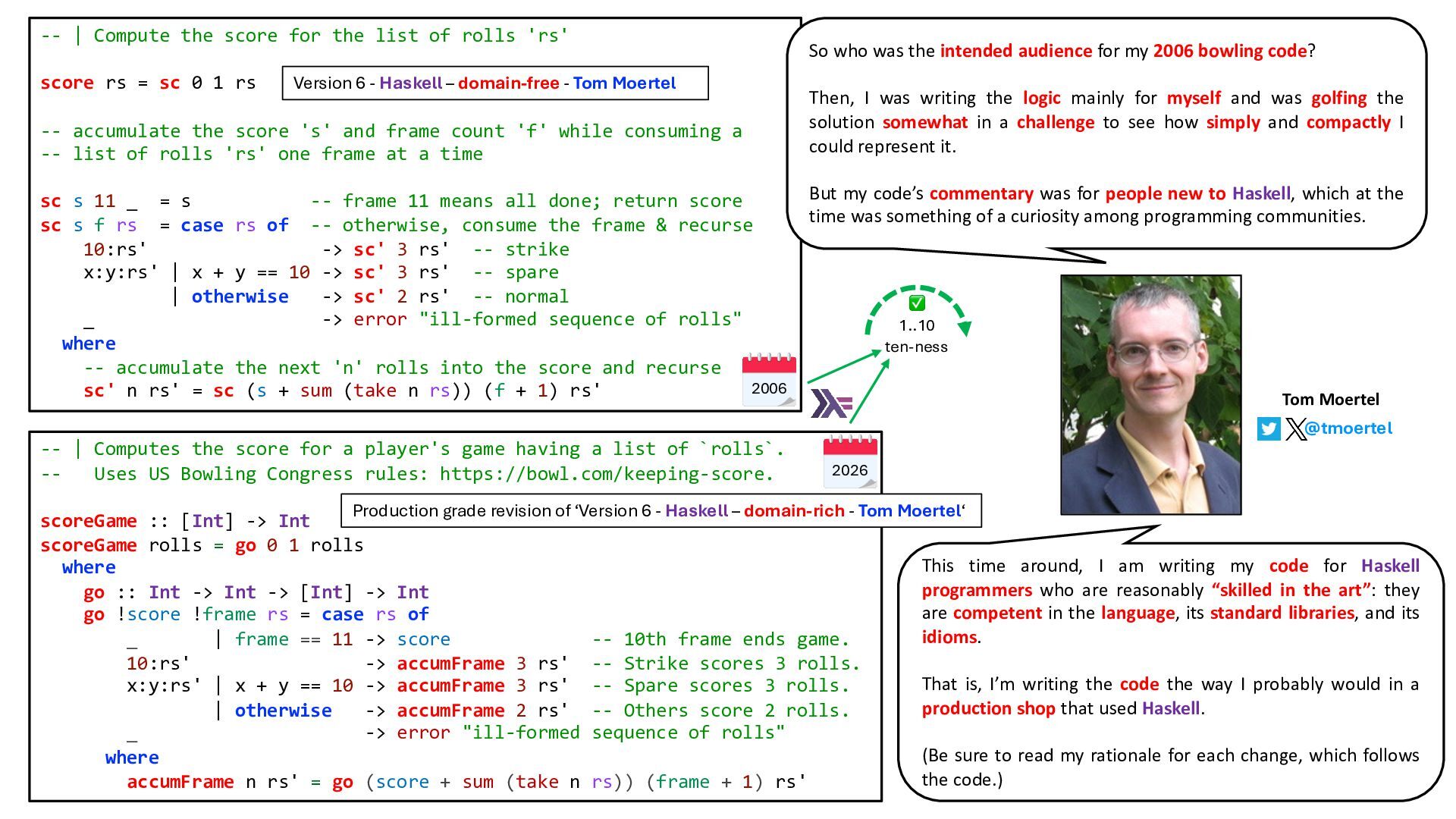
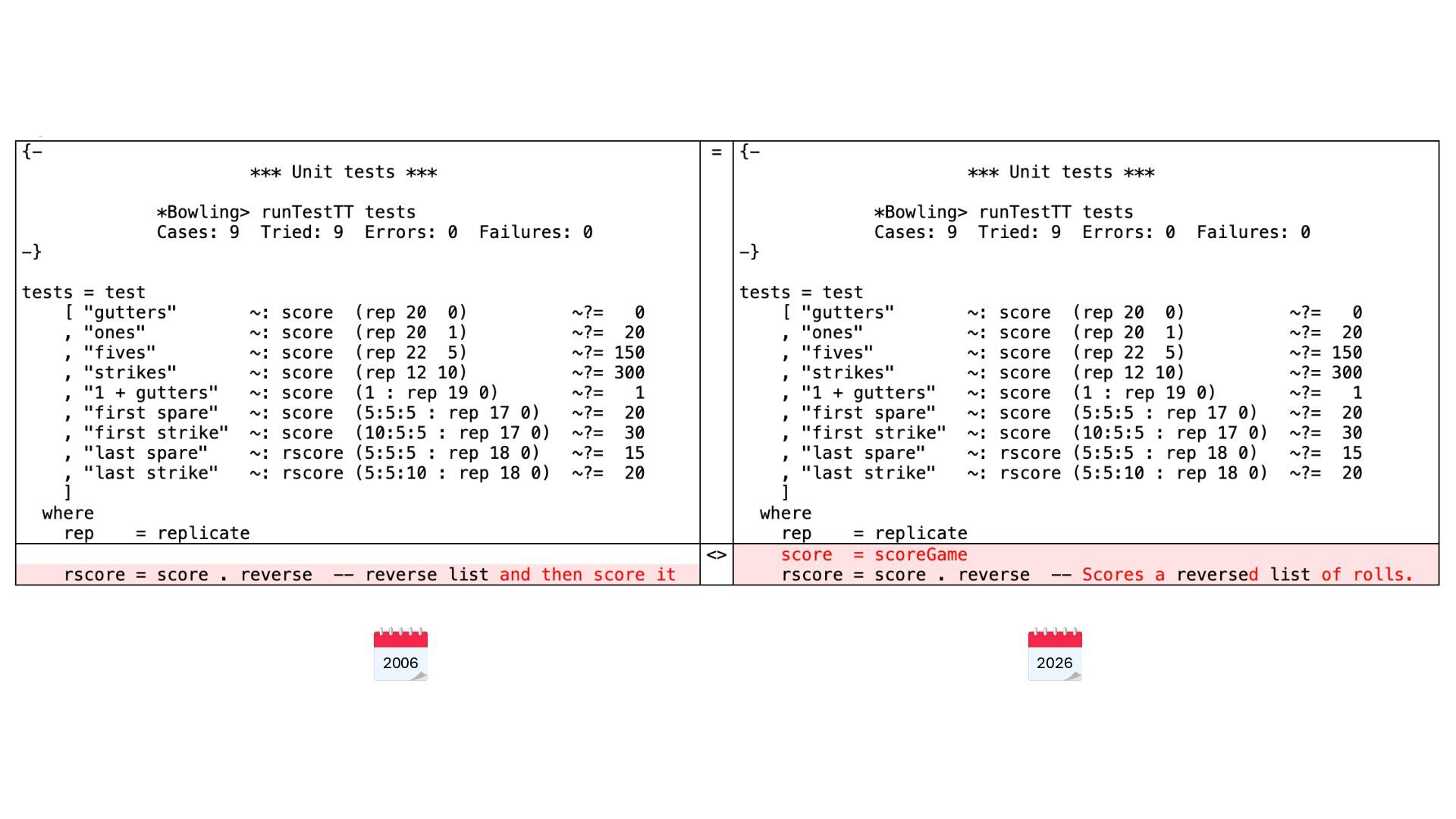
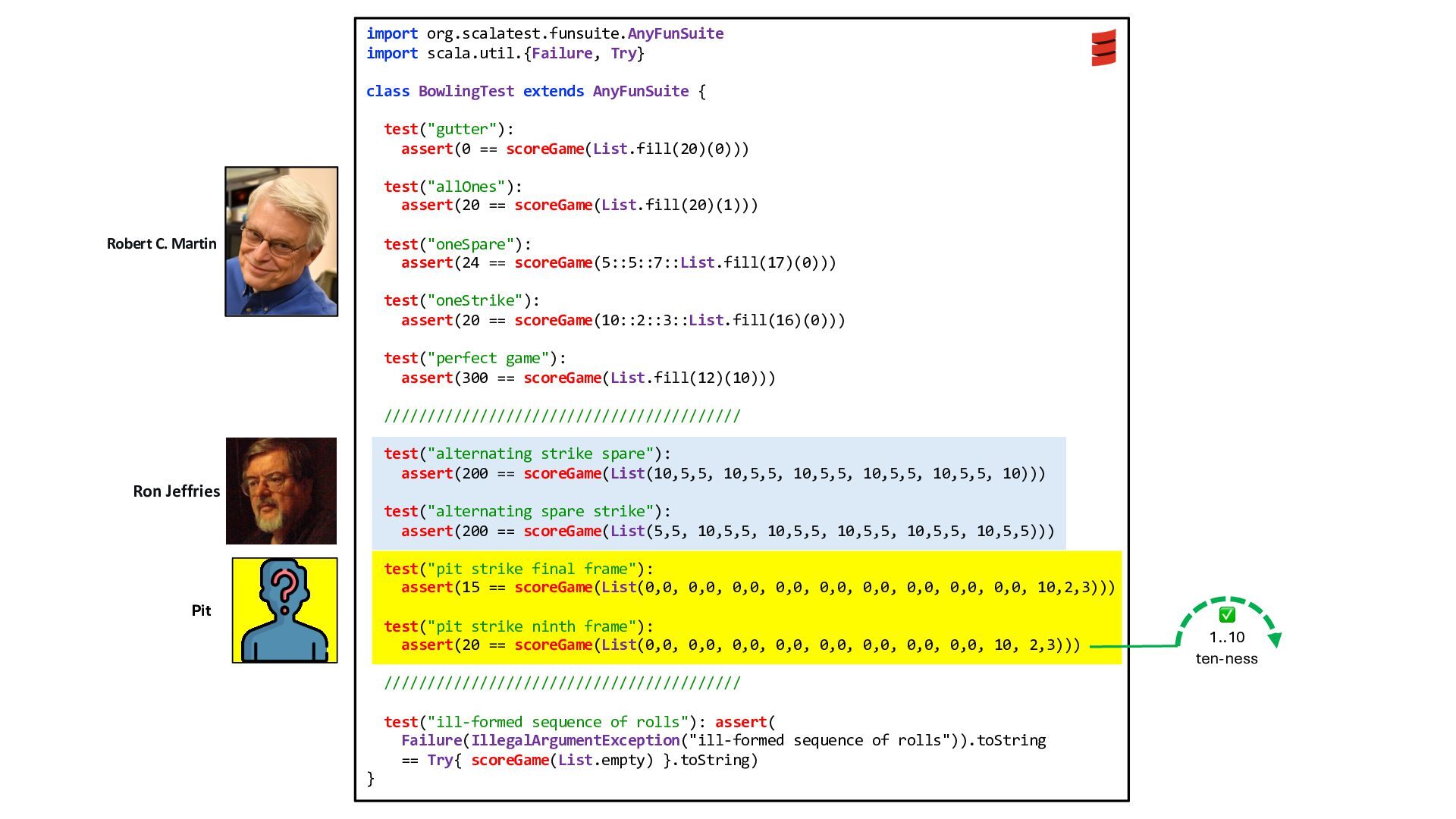
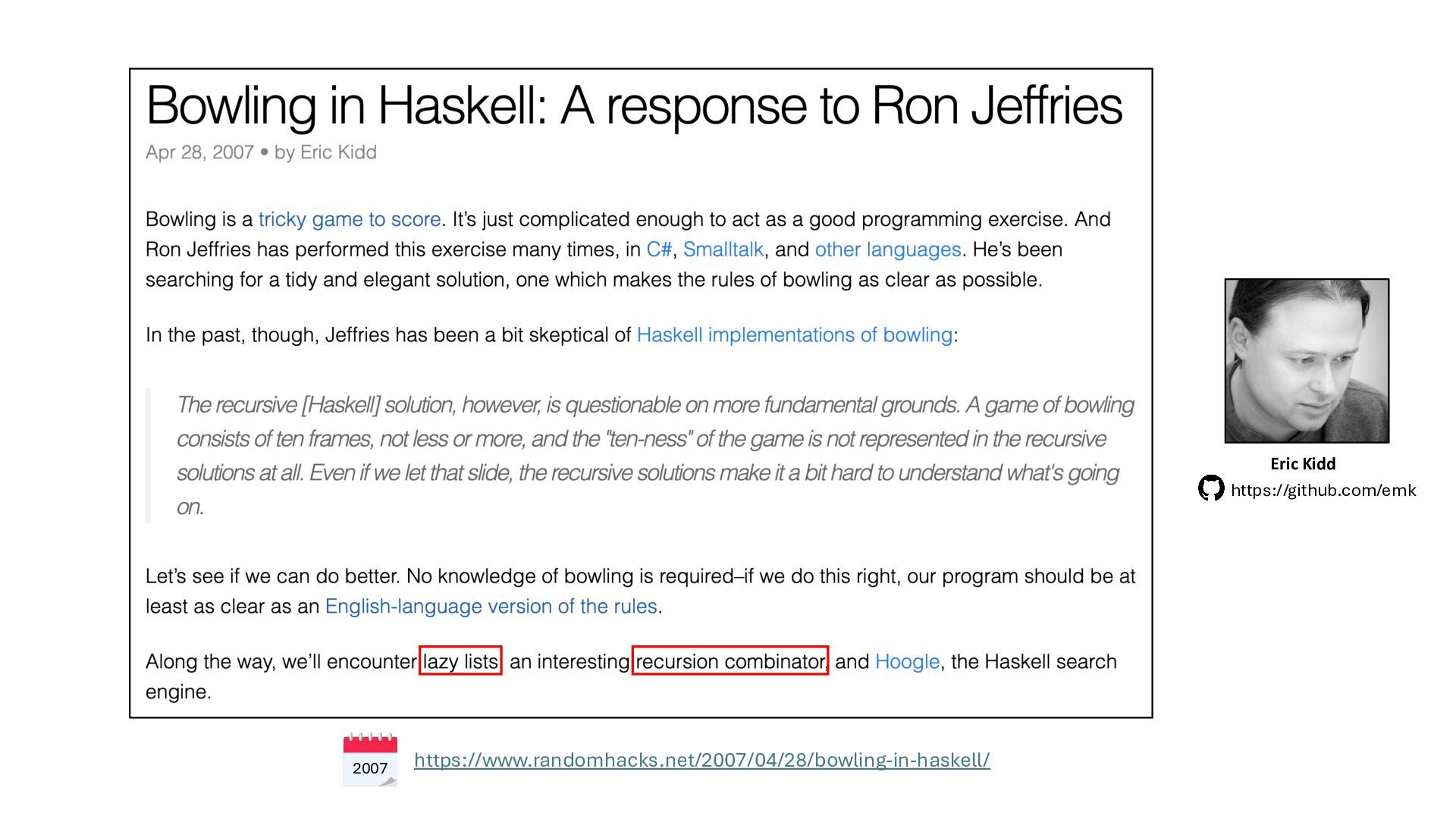
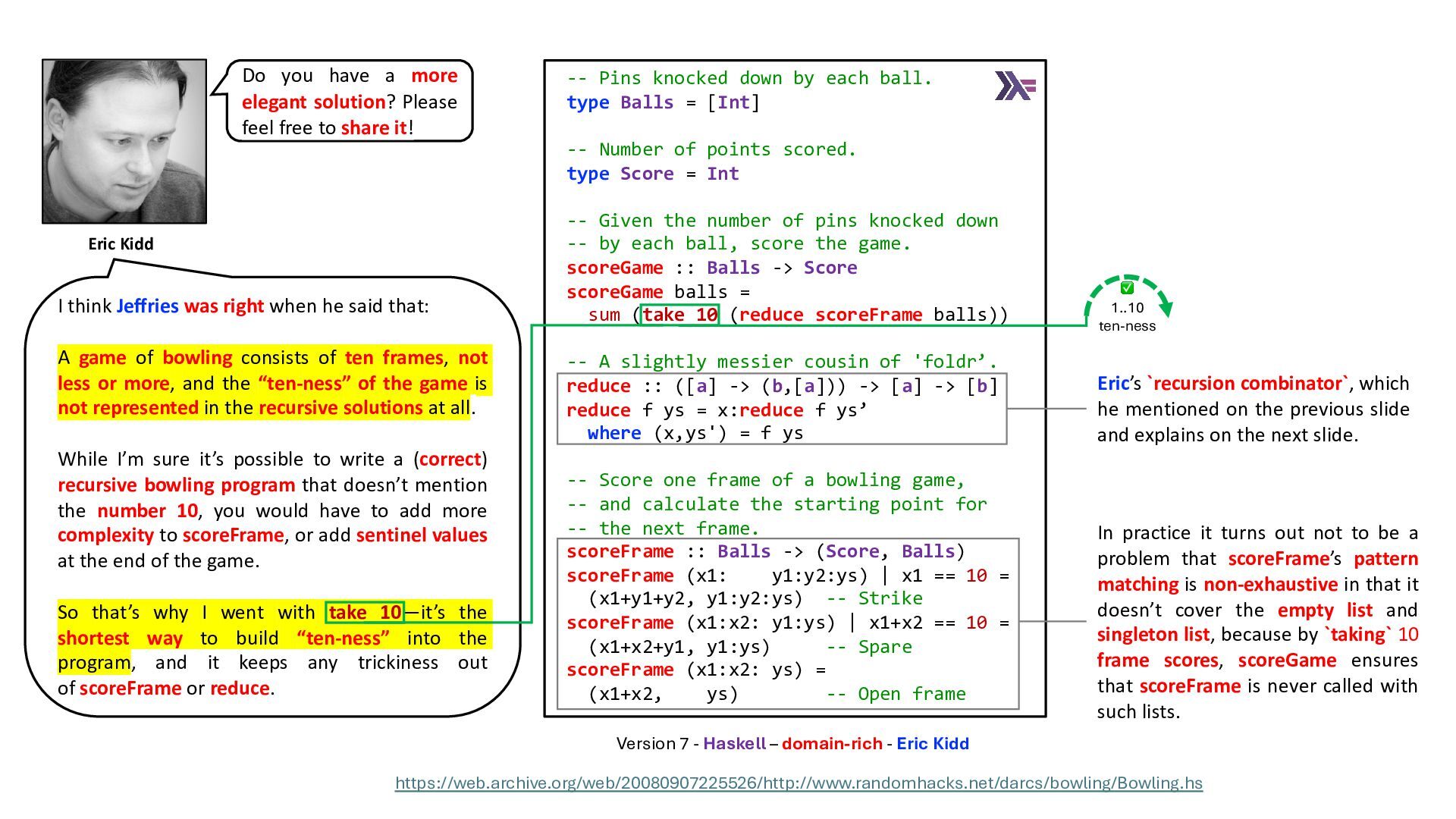
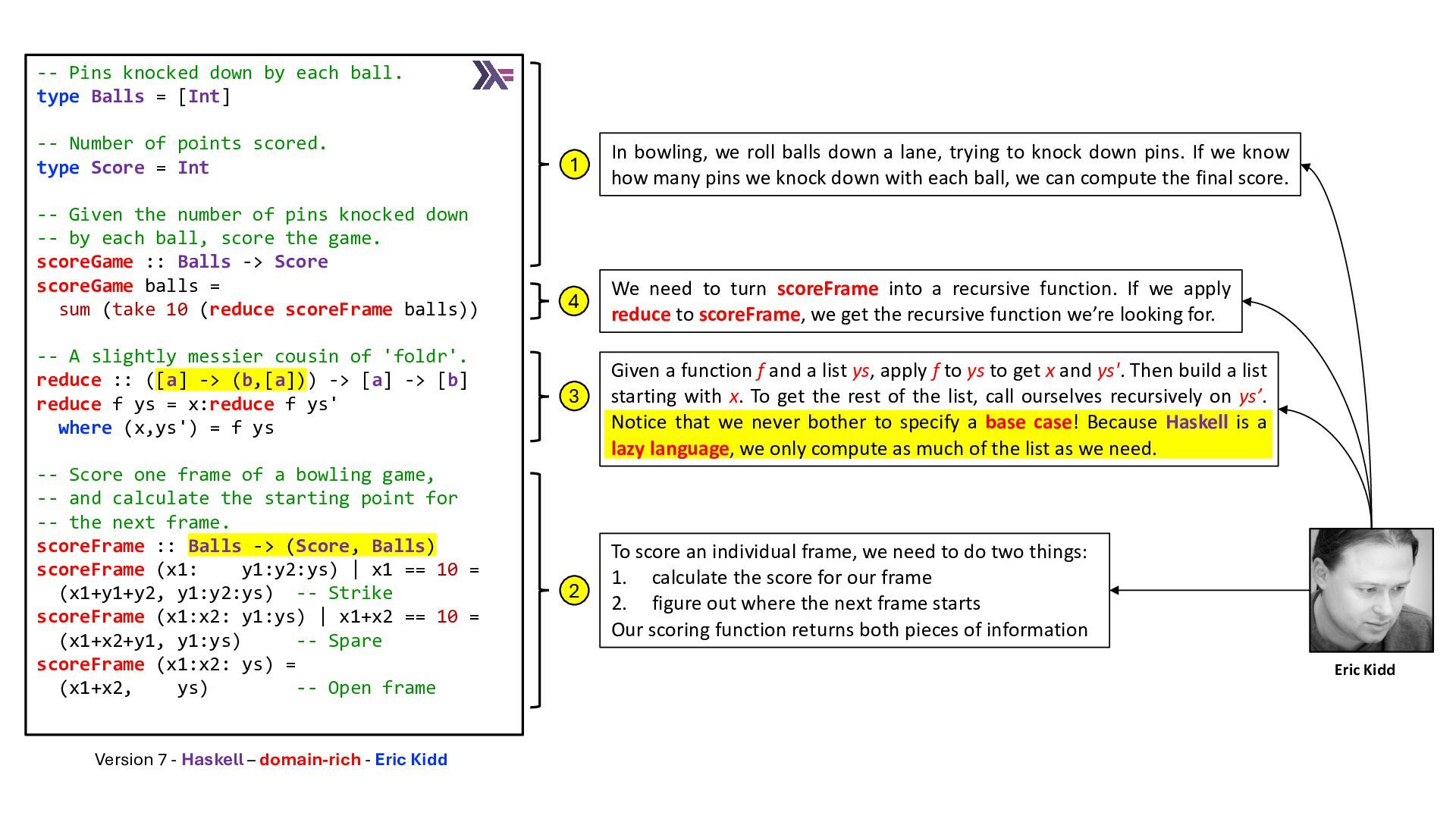
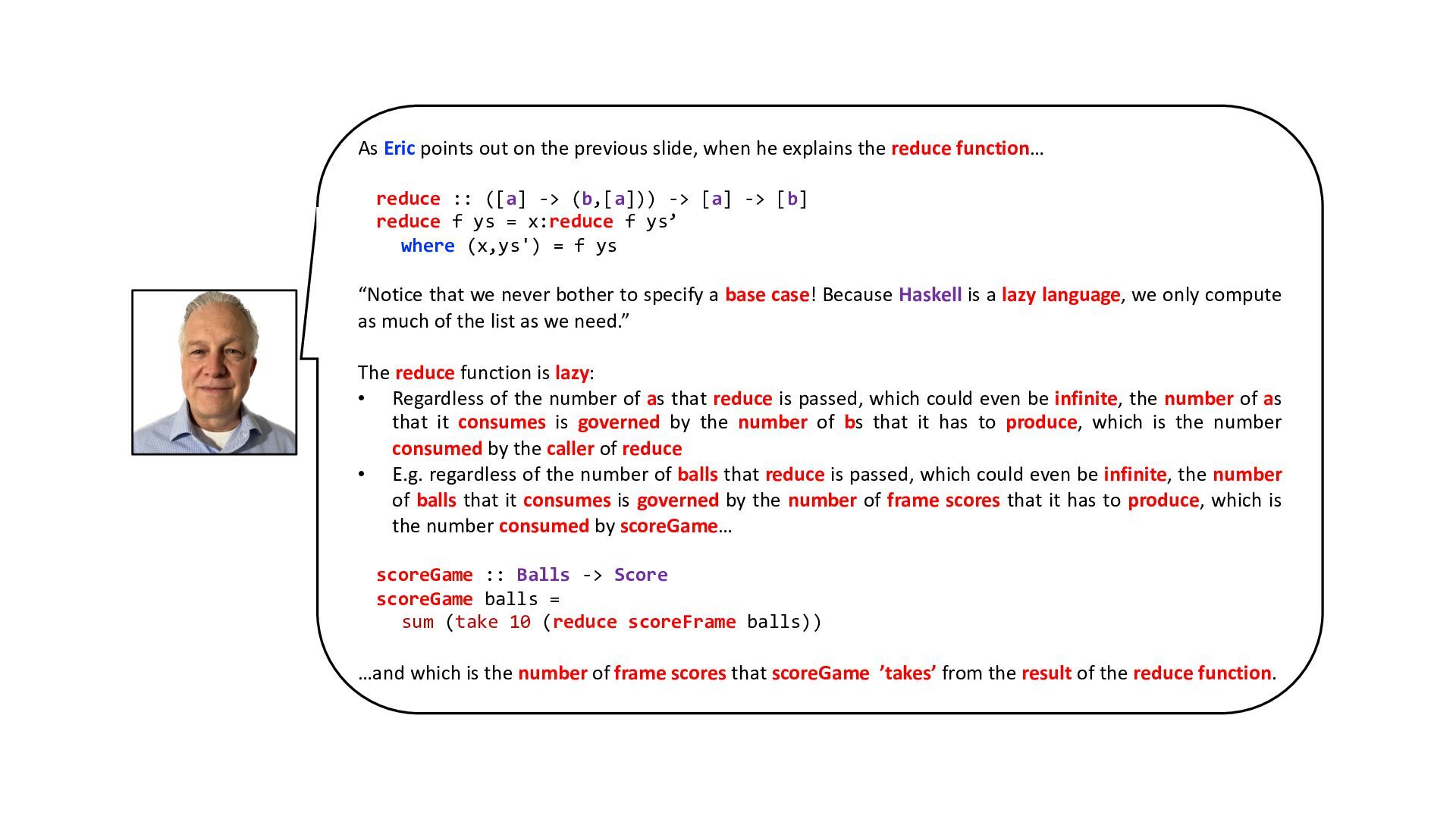
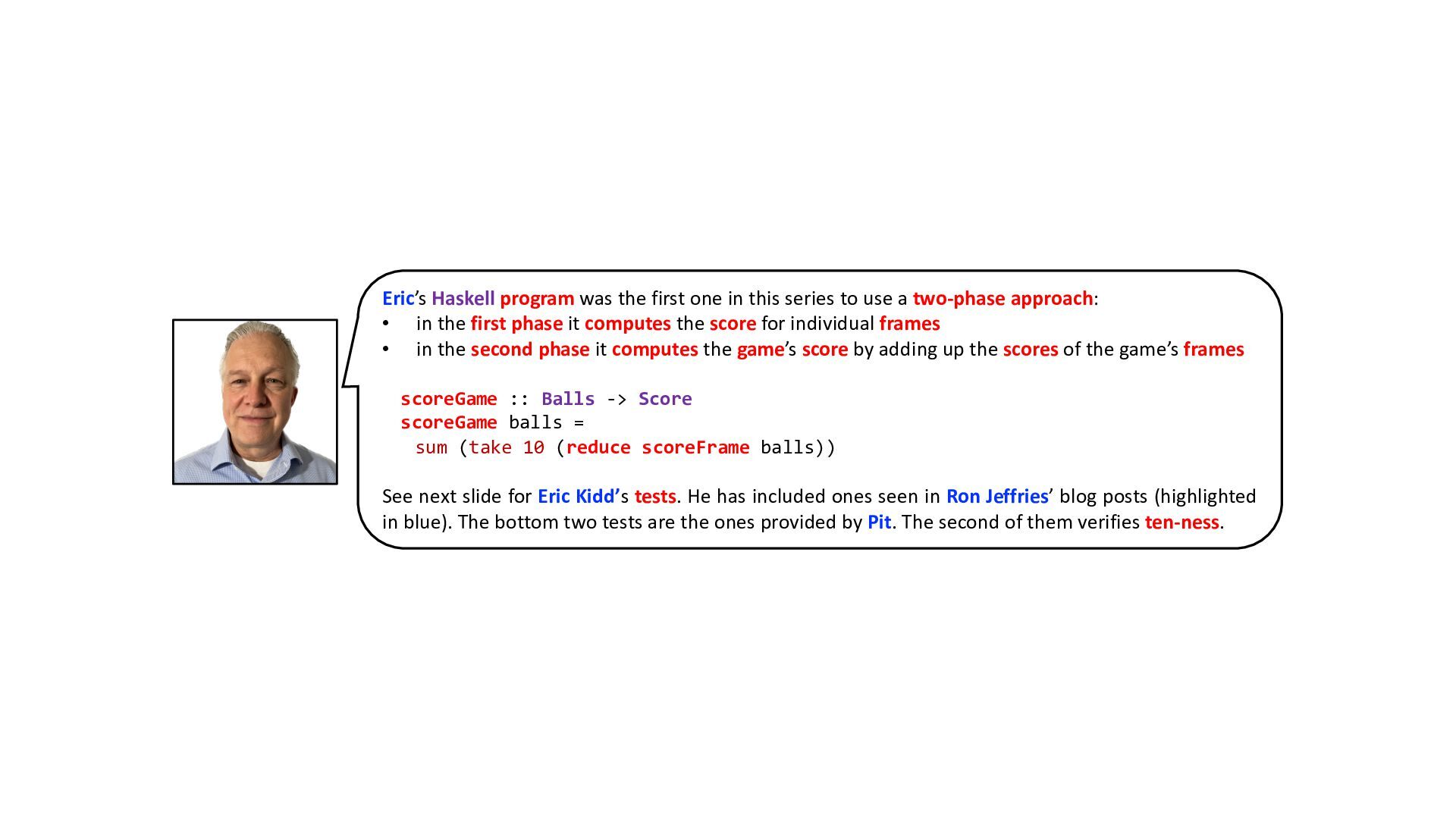
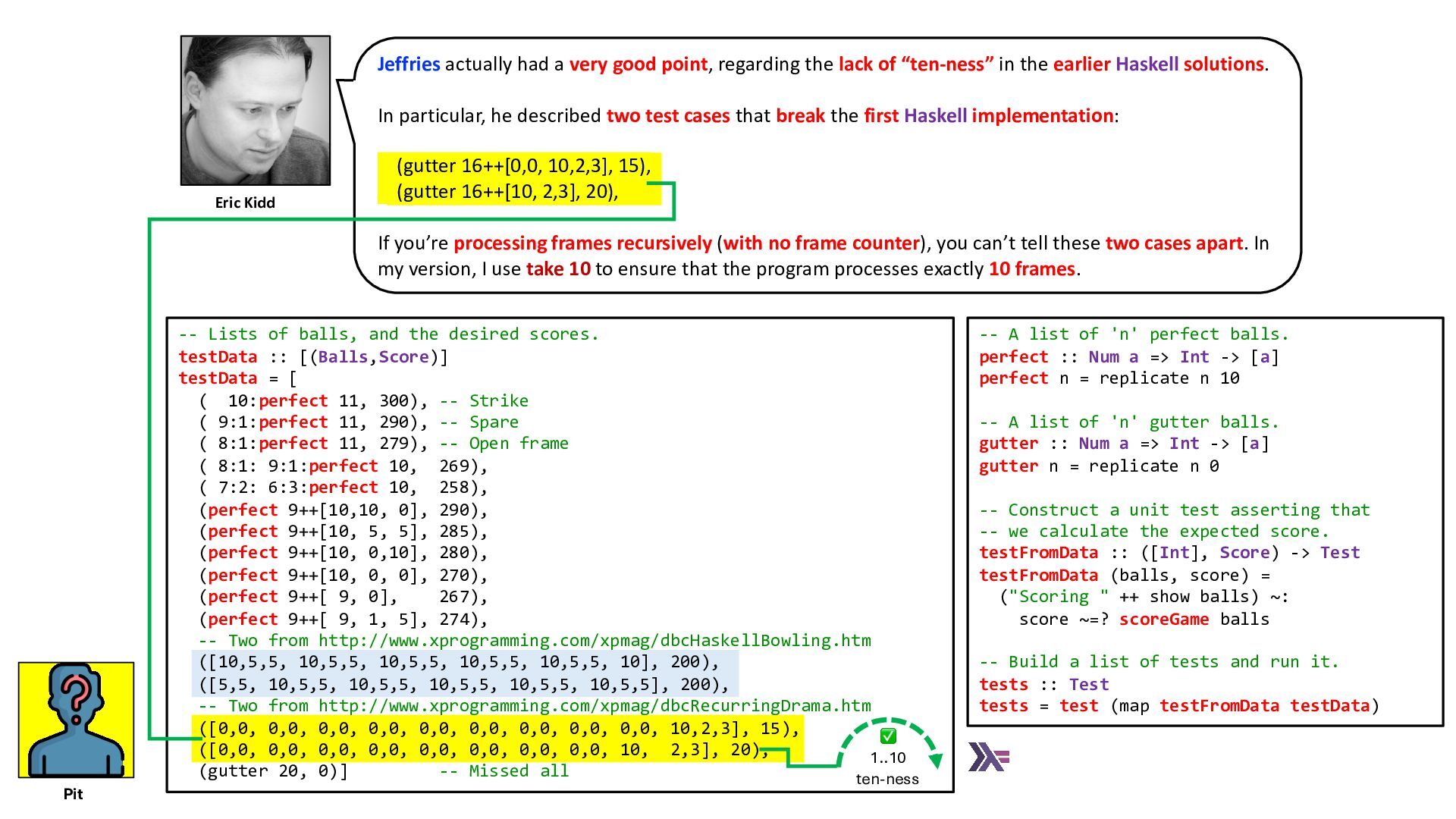
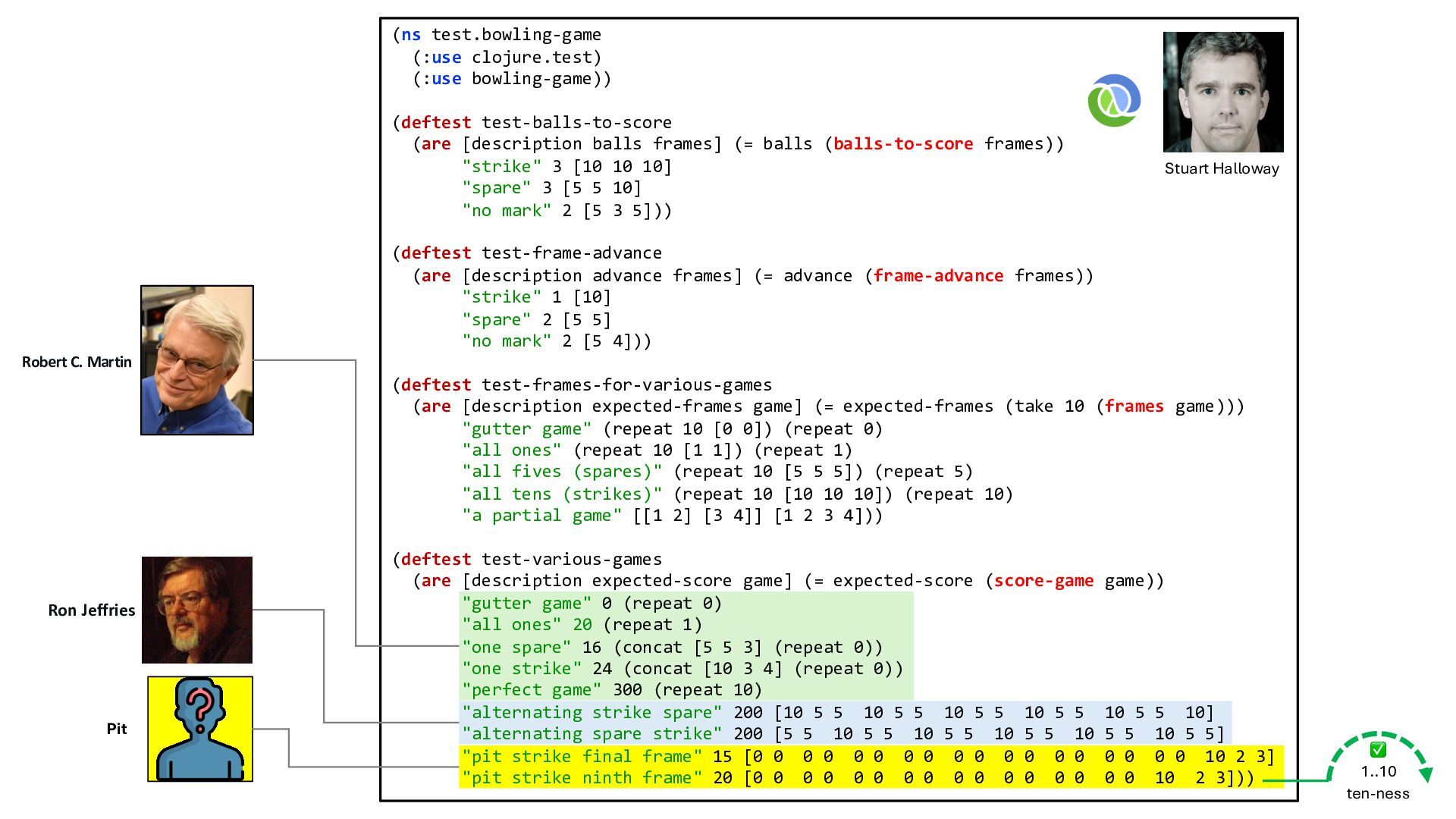
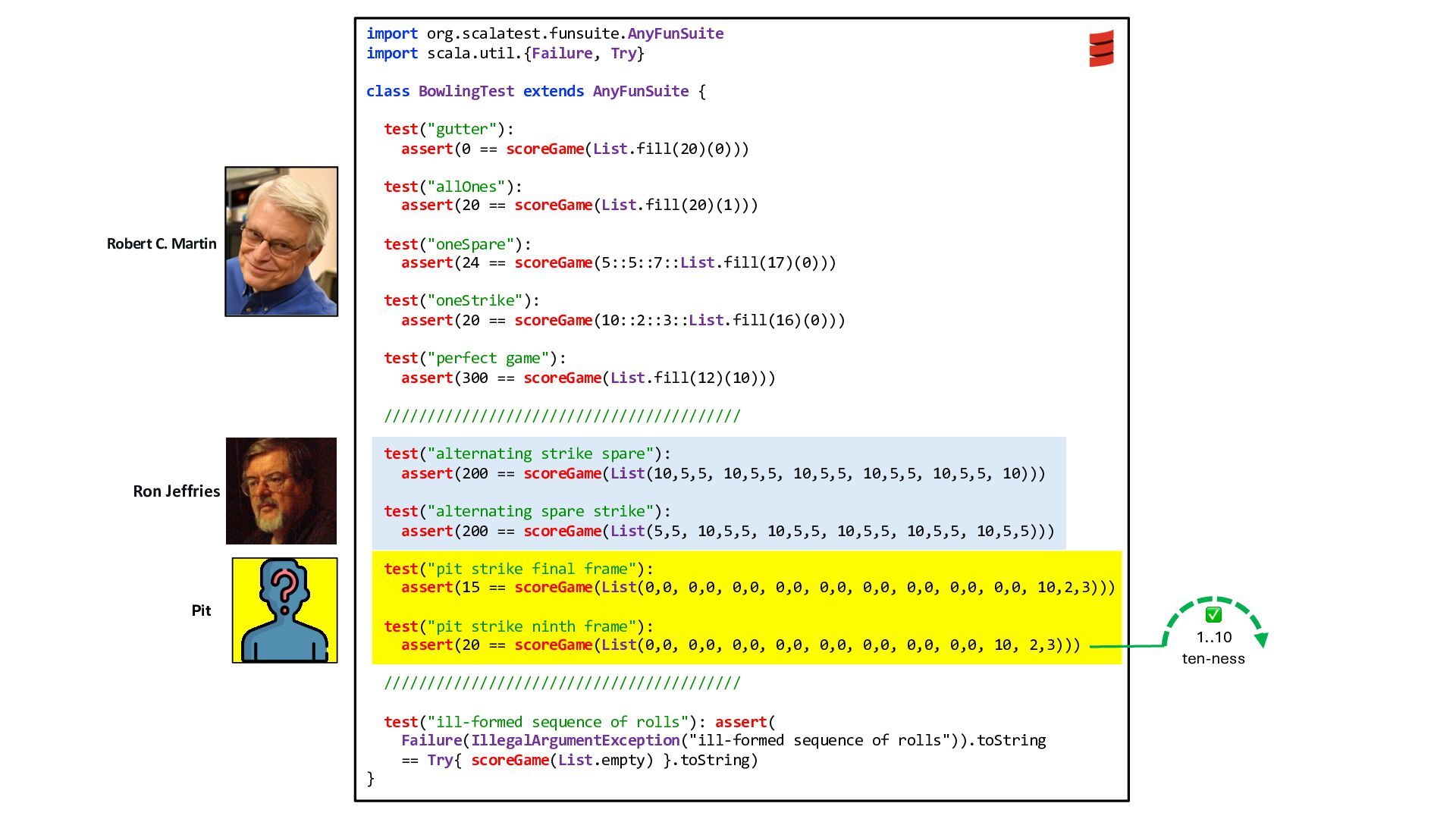
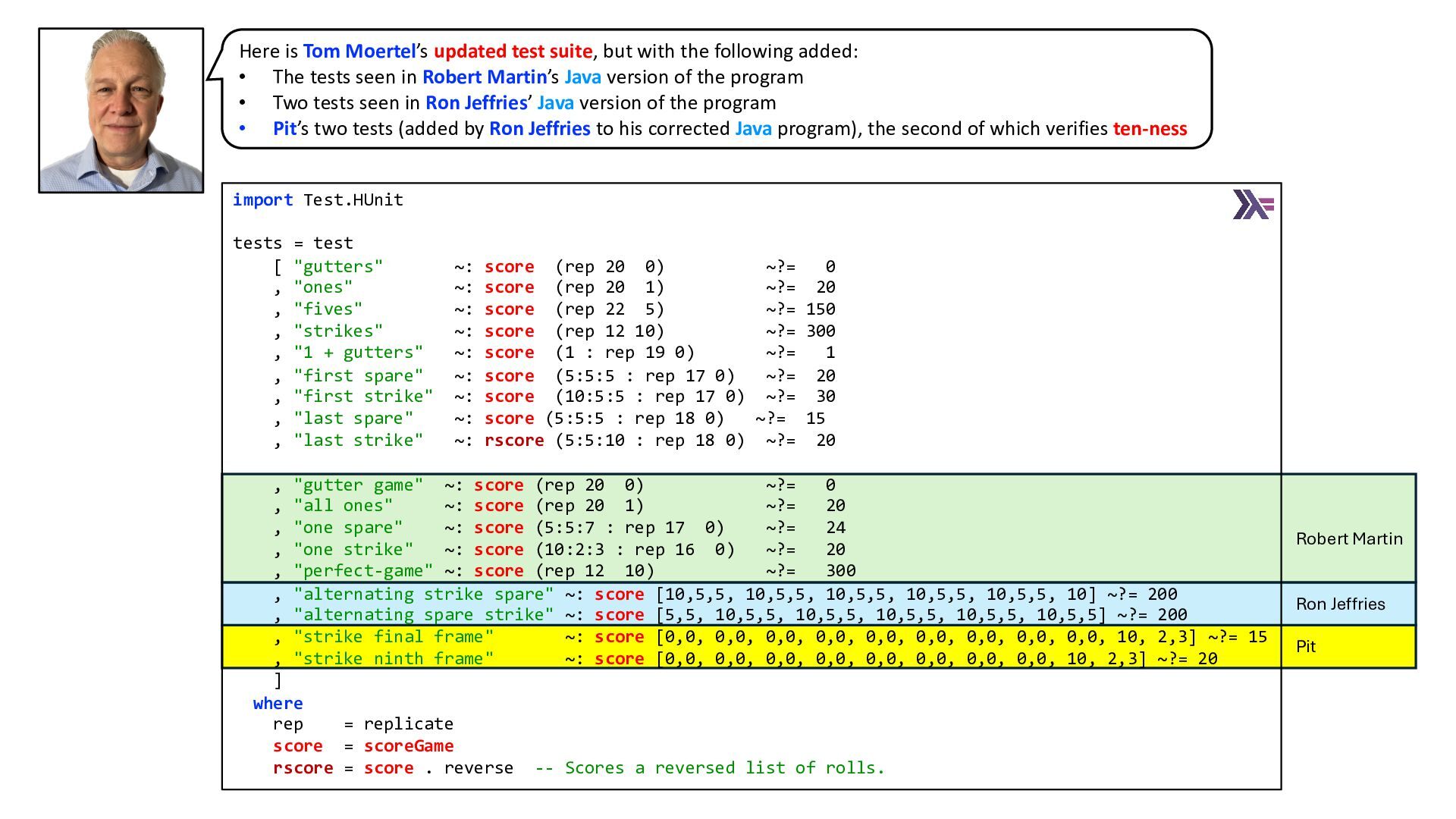
of “ten-ness” in the earlier Haskell solutions. In particular, he described two test cases that break the first Haskell implementation: Eric Kidd (gutter 16++[0,0, 10,2,3], 15), (gutter 16++[10, 2,3], 20), If you’re processing frames recursively (with no frame counter), you can’t tell these two cases apart. In my version, I use take 10 to ensure that the program processes exactly 10 frames. Pit -- Lists of balls, and the desired scores. testData :: [(Balls,Score)] testData = [ ( 10:perfect 11, 300), -- Strike ( 9:1:perfect 11, 290), -- Spare ( 8:1:perfect 11, 279), -- Open frame ( 8:1: 9:1:perfect 10, 269), ( 7:2: 6:3:perfect 10, 258), (perfect 9++[10,10, 0], 290), (perfect 9++[10, 5, 5], 285), (perfect 9++[10, 0,10], 280), (perfect 9++[10, 0, 0], 270), (perfect 9++[ 9, 0], 267), (perfect 9++[ 9, 1, 5], 274), -- Two from http://www.xprogramming.com/xpmag/dbcHaskellBowling.htm ([10,5,5, 10,5,5, 10,5,5, 10,5,5, 10,5,5, 10], 200), ([5,5, 10,5,5, 10,5,5, 10,5,5, 10,5,5, 10,5,5], 200), -- Two from http://www.xprogramming.com/xpmag/dbcRecurringDrama.htm ([0,0, 0,0, 0,0, 0,0, 0,0, 0,0, 0,0, 0,0, 0,0, 10,2,3], 15), ✅ ([0,0, 0,0, 0,0, 0,0, 0,0, 0,0, 0,0, 0,0, 10, 2,3], 20), 1..10 (gutter 20, 0)] -- Missed all ten-ness -- A list of 'n' perfect balls. perfect :: Num a => Int -> [a] perfect n = replicate n 10 -- A list of 'n' gutter balls. gutter :: Num a => Int -> [a] gutter n = replicate n 0 -- Construct a unit test asserting that -- we calculate the expected score. testFromData :: ([Int], Score) -> Test testFromData (balls, score) = ("Scoring " ++ show balls) ~: score ~=? scoreGame balls -- Build a list of tests and run it. tests :: Test tests = test (map testFromData testData)


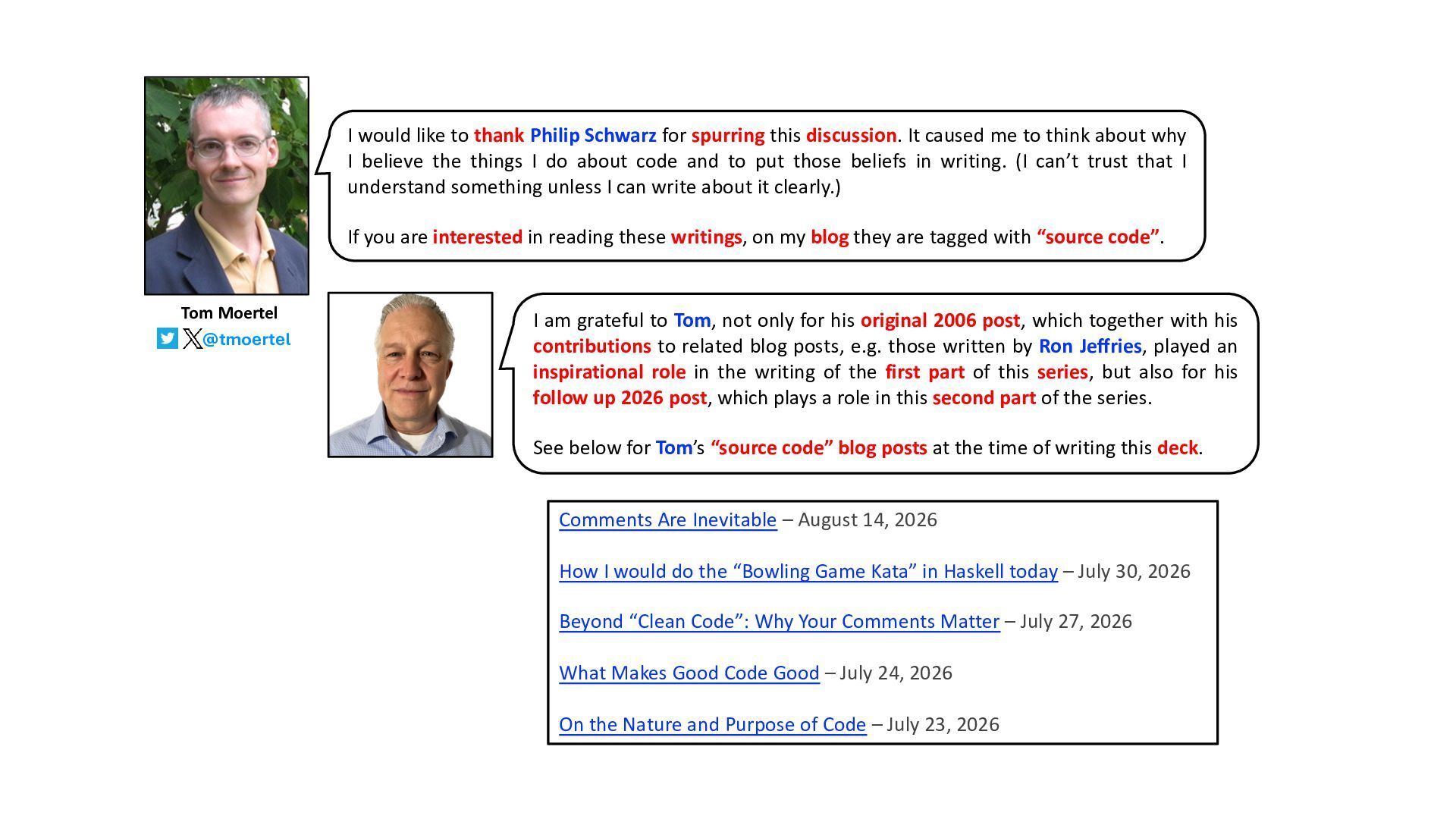
 philipschwarz
 signer
 tammyeverts
 coloredviolet
 eitanlees
 jacobian
 samtorres
 raygrieselhuber
 baasie
 frankvandijk
 aleyda
 ipullrank
 geoffreycrofte
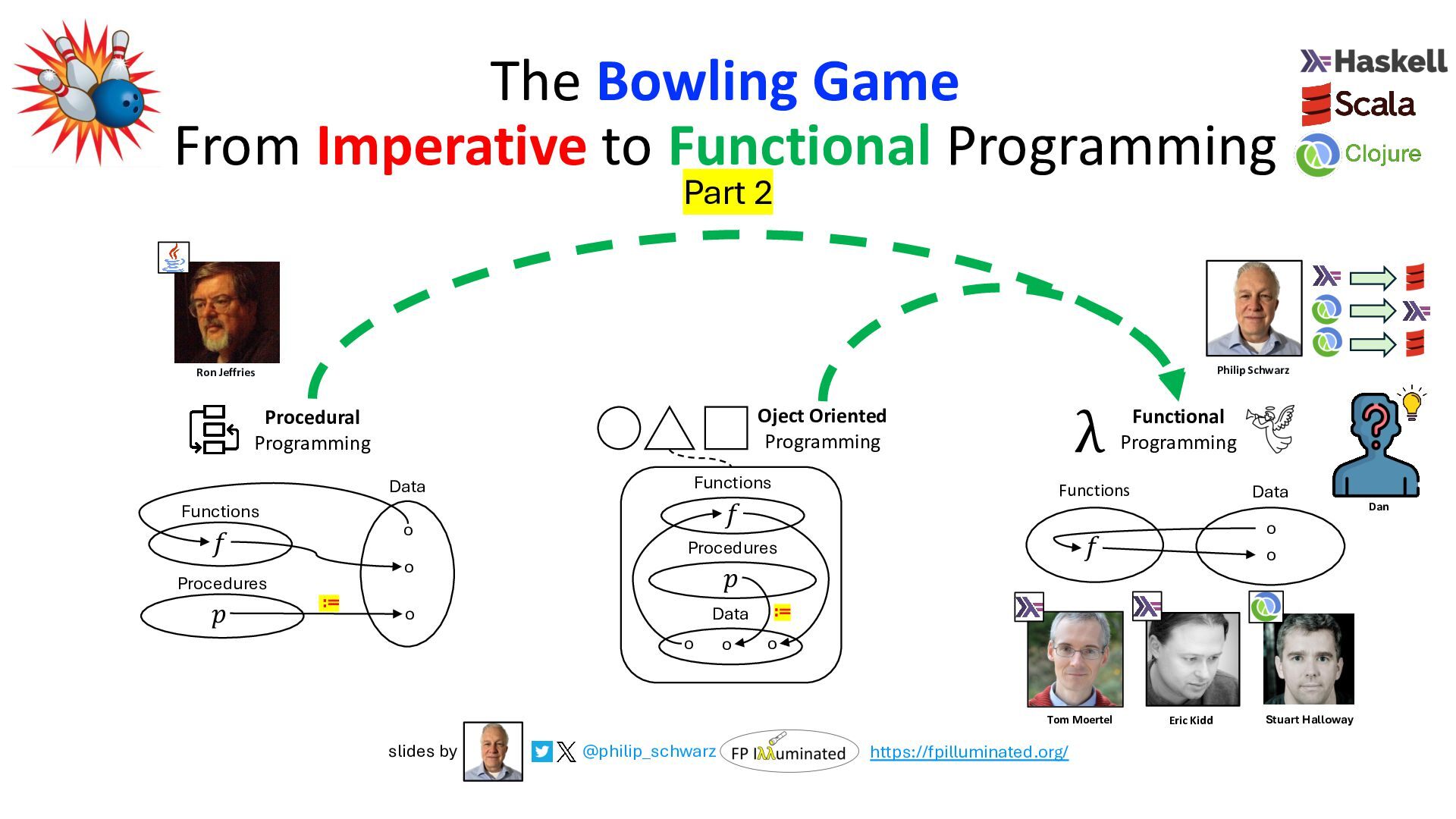
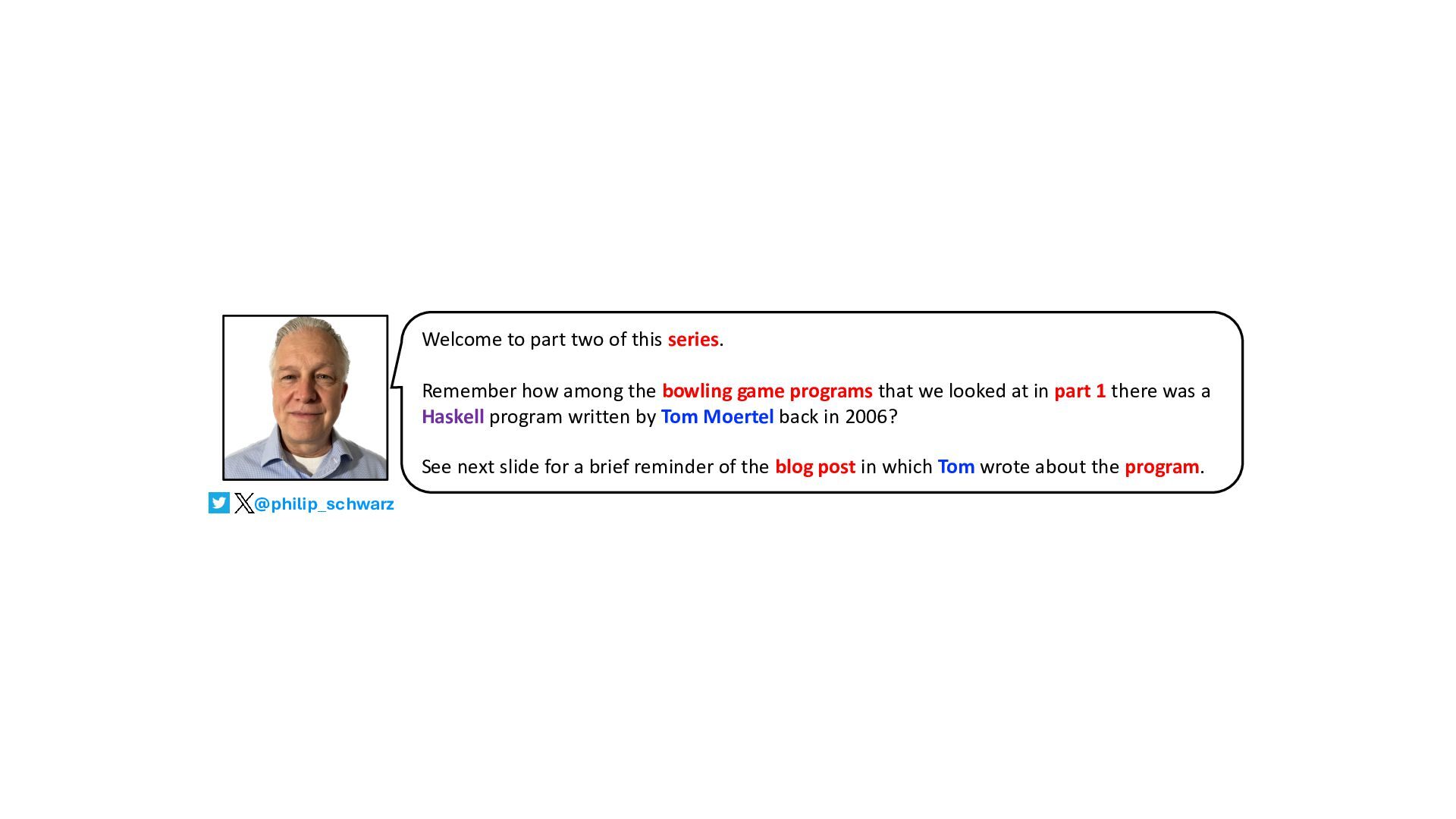
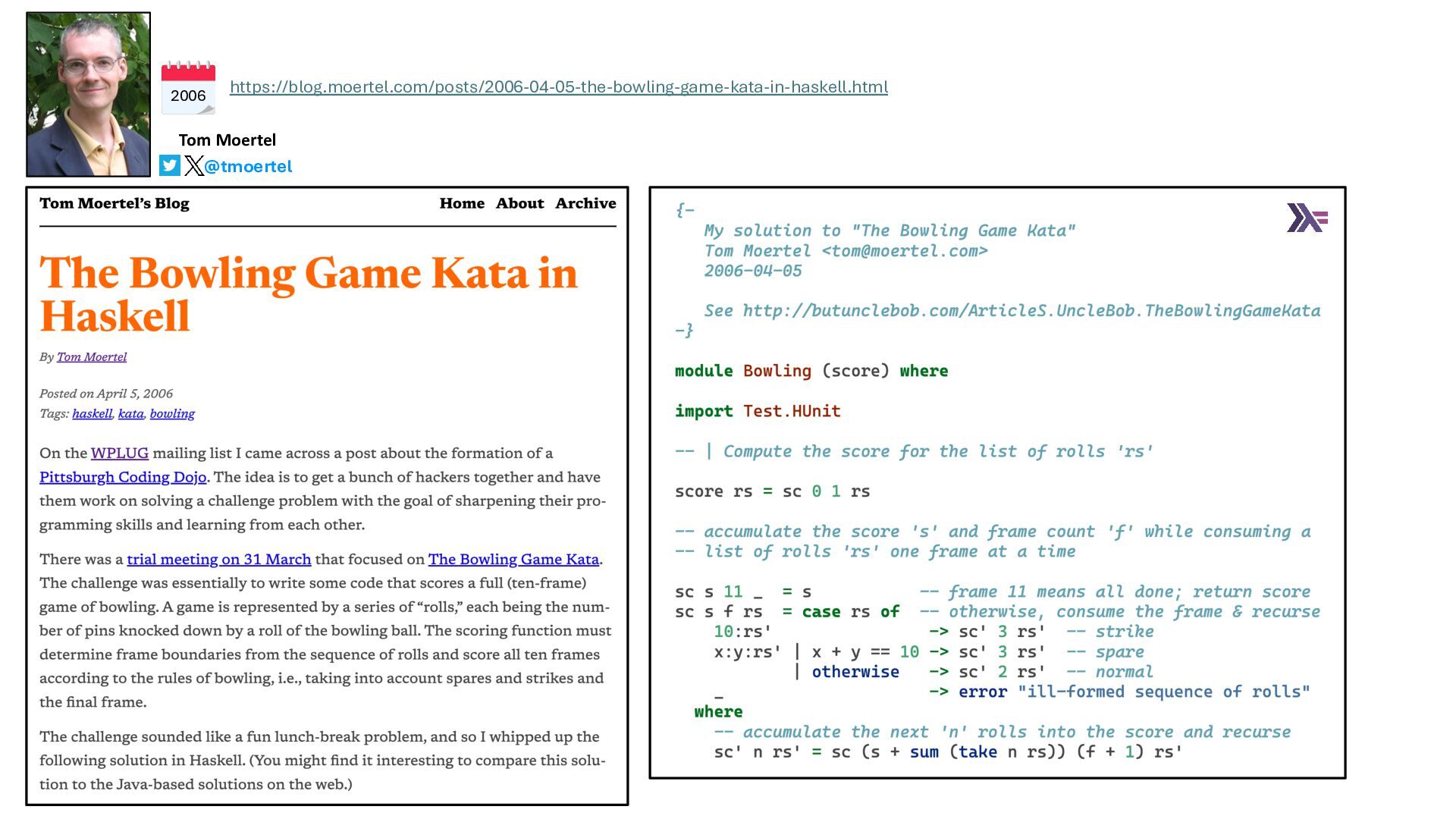
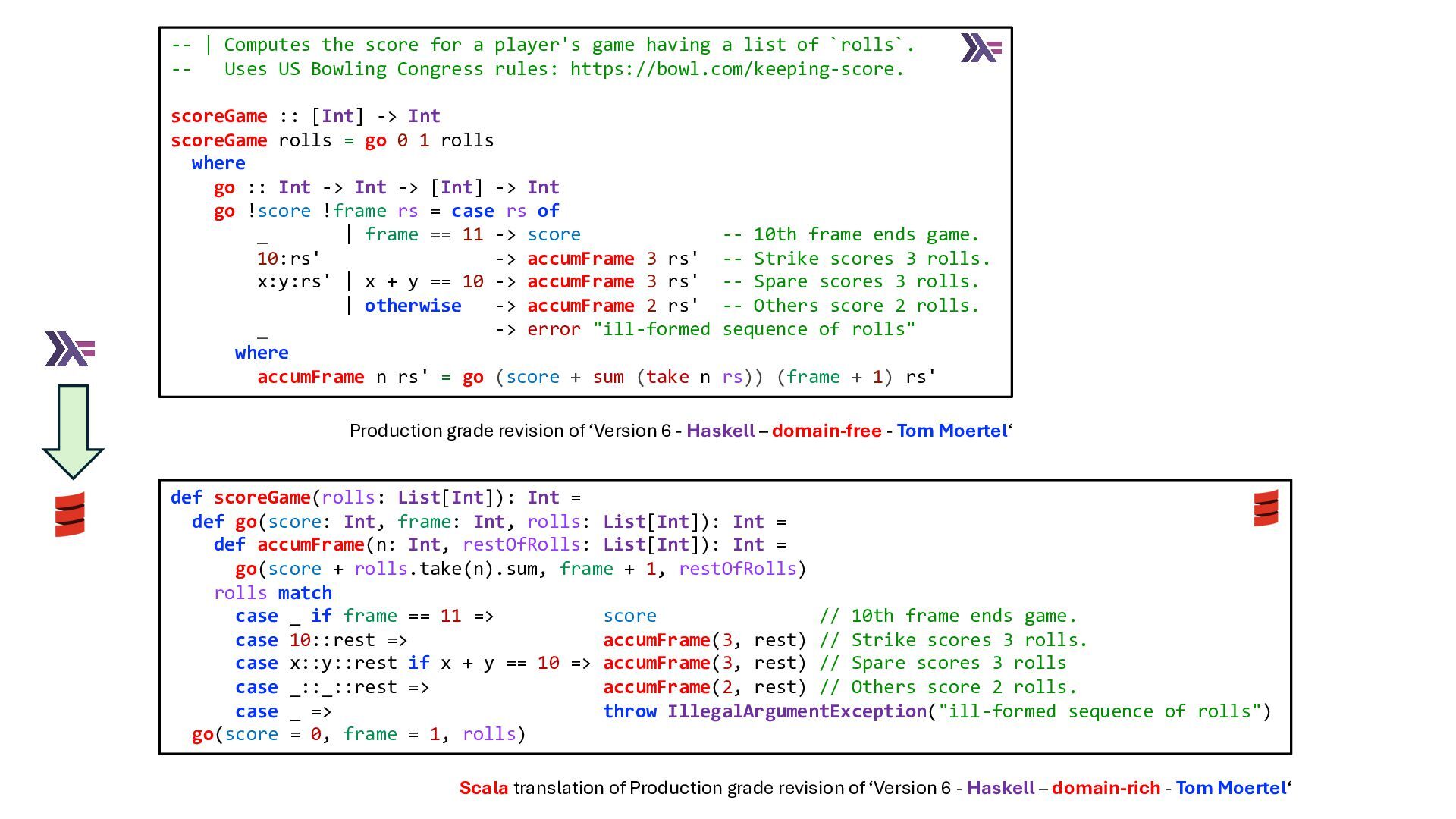
![def scoreGame(rolls: List[Int]): Int = def go(score: Int, frame: Int,](https://files.speakerdeck.com/presentations/8c745bb2b2ce45edabc7263e8092c4aa/slide_12.jpg)
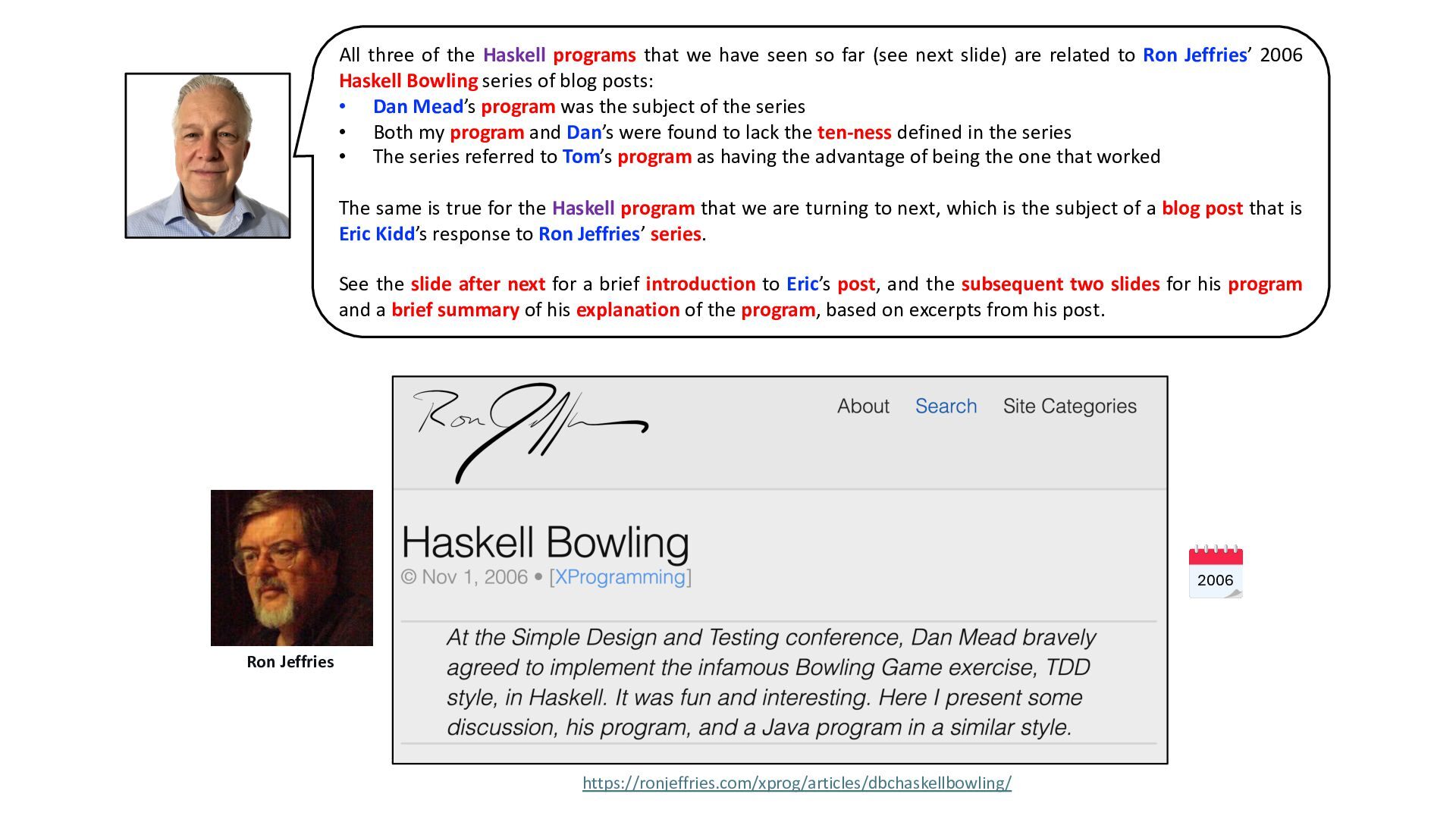
![score [x, y] score [10, x, y] score [x, y,](https://files.speakerdeck.com/presentations/8c745bb2b2ce45edabc7263e8092c4aa/slide_15.jpg)
![(ns bowling-game (:use clojure.contrib.seq-utils)) (defn strike? [rolls] (= 10 (first](https://files.speakerdeck.com/presentations/8c745bb2b2ce45edabc7263e8092c4aa/slide_37.jpg)
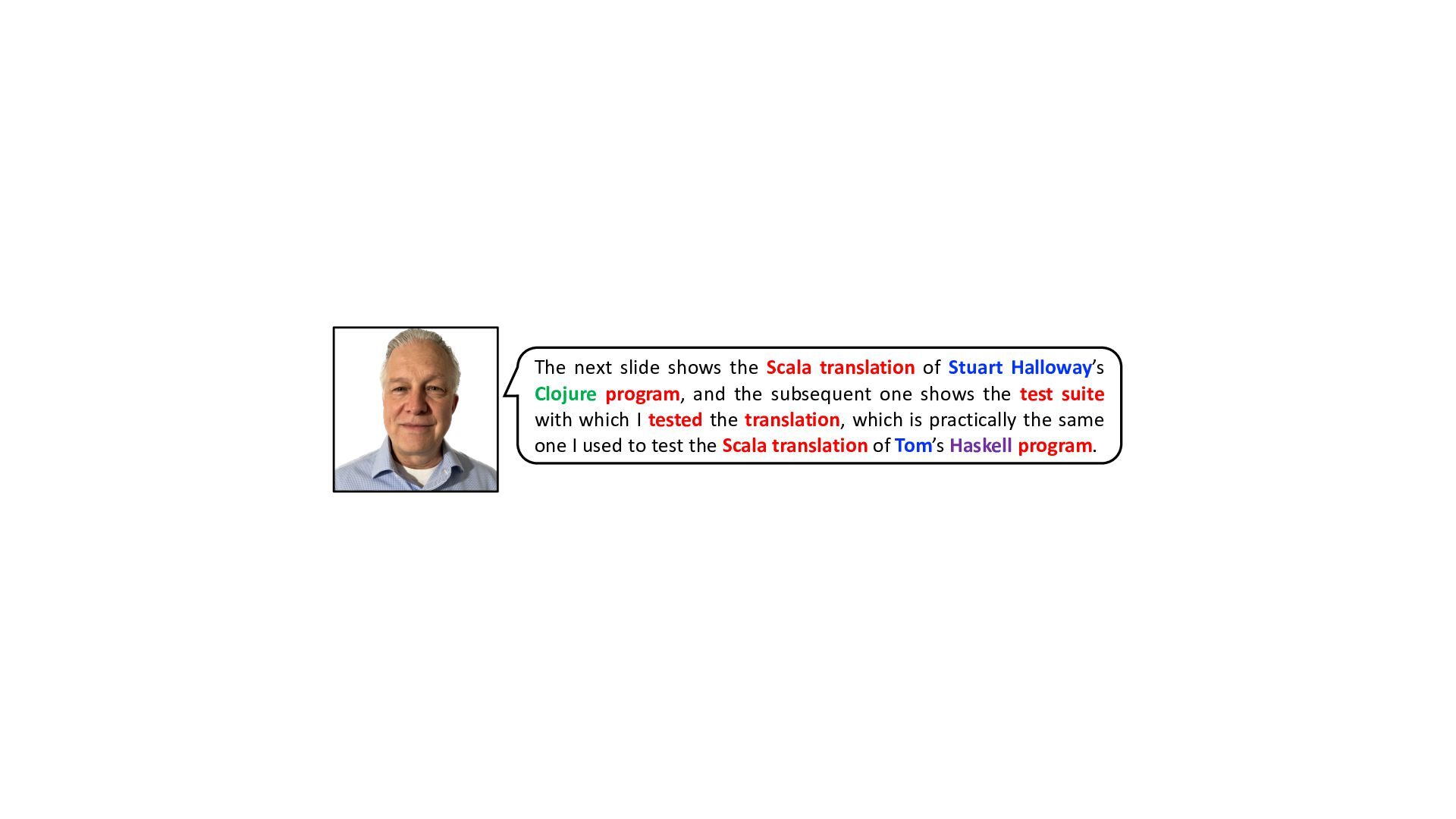
![def isStrike(rolls: List[Int]): Boolean = rolls.take(1).sum == 10 def isSpare(rolls:](https://files.speakerdeck.com/presentations/8c745bb2b2ce45edabc7263e8092c4aa/slide_40.jpg)
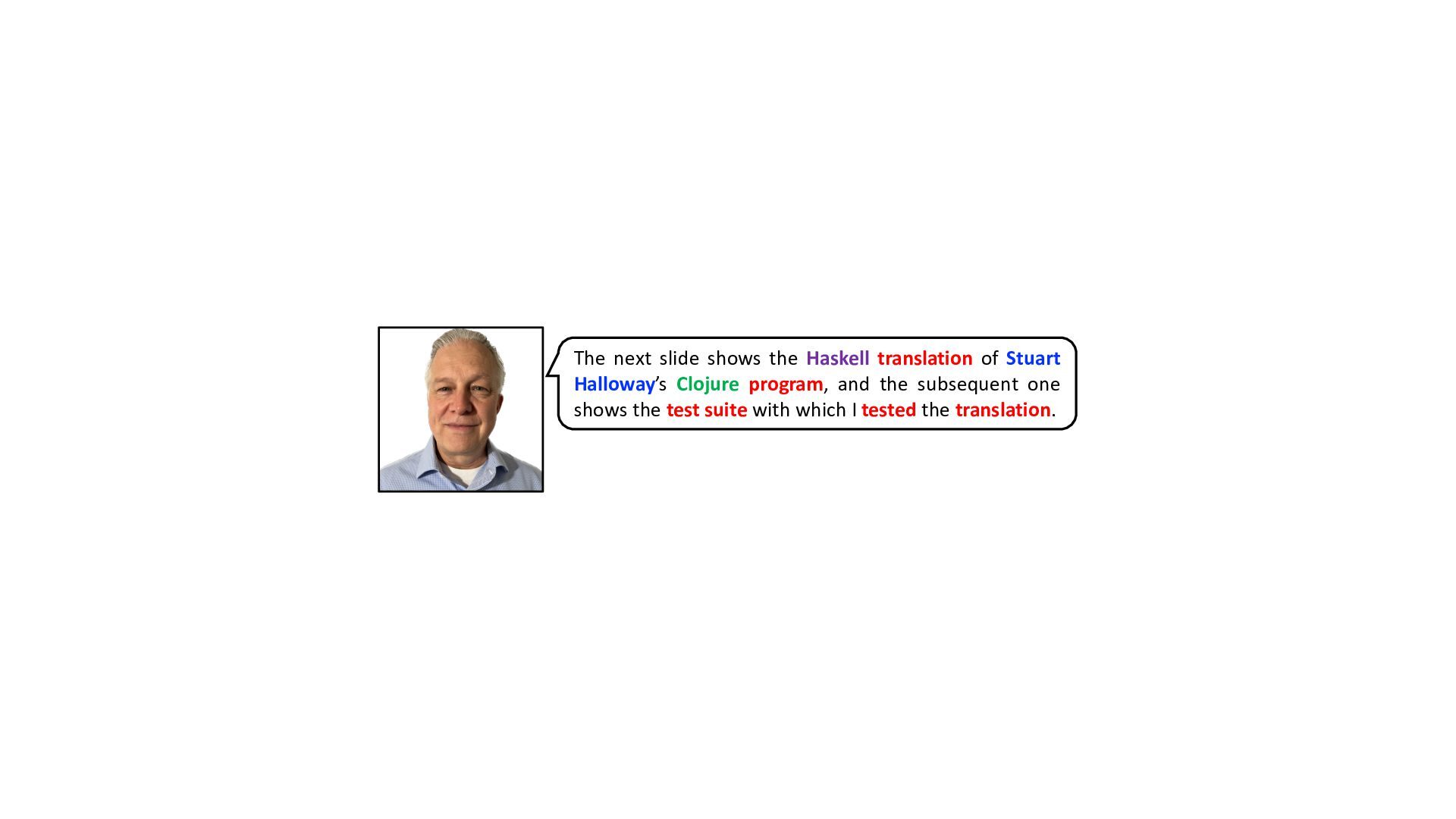
![isStrike :: [Int] -> Bool isStrike rolls = sum (take](https://files.speakerdeck.com/presentations/8c745bb2b2ce45edabc7263e8092c4aa/slide_43.jpg)
![def isStrike(rolls: List[Int]): Boolean = rolls.take(1).sum == 10 def isSpare(rolls:](https://files.speakerdeck.com/presentations/8c745bb2b2ce45edabc7263e8092c4aa/slide_46.jpg)