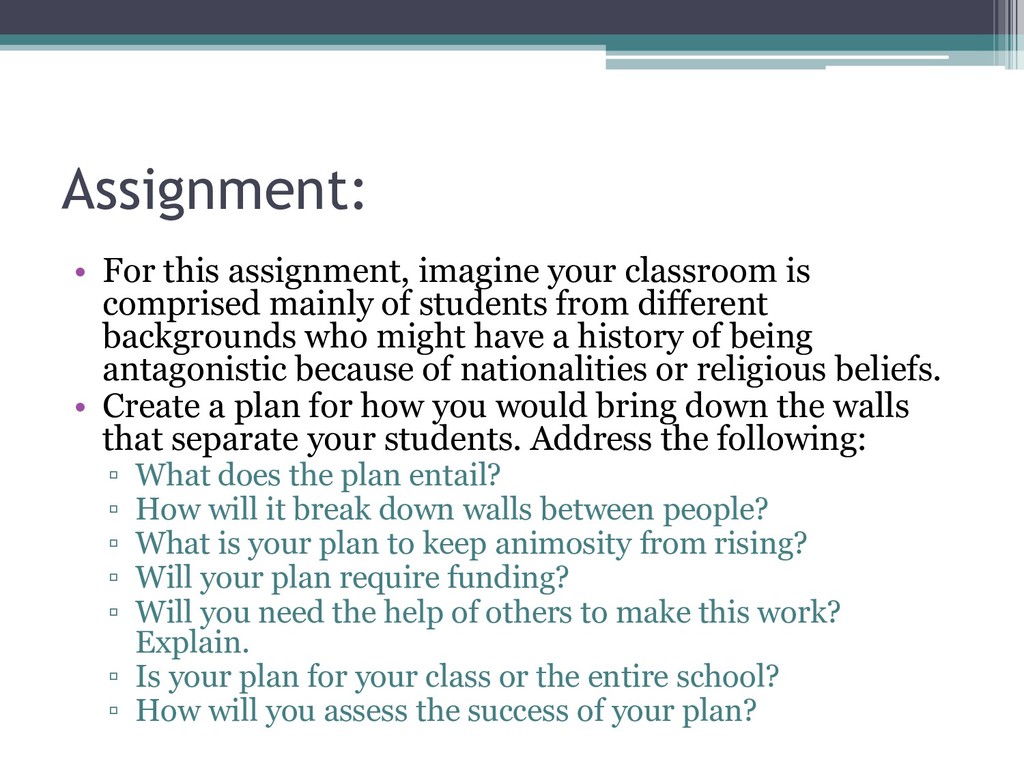
mainly of students from different backgrounds who might have a history of being antagonistic because of nationalities or religious beliefs. • Create a plan for how you would bring down the walls that separate your students. Address the following: ▫ What does the plan entail? ▫ How will it break down walls between people? ▫ What is your plan to keep animosity from rising? ▫ Will your plan require funding? ▫ Will you need the help of others to make this work? Explain. ▫ Is your plan for your class or the entire school? ▫ How will you assess the success of your plan?
the history of the issues at hand ▫ Until we understand the history behind the prejudices that divide us today, we cannot begin to move forward. ▫ “Our inter-group relations have not emerged in a vacuum, they are the outcome of our history” (DiAngelo & Sensoy, 2010).
shared experiences among students ▫ Sharing of cultures: traditions, holidays, foods, dance, etc. ▫ Team building activities to get students working together ▫ Get students to do things that do not focus on differences but instead allow students to get to know each other as individuals
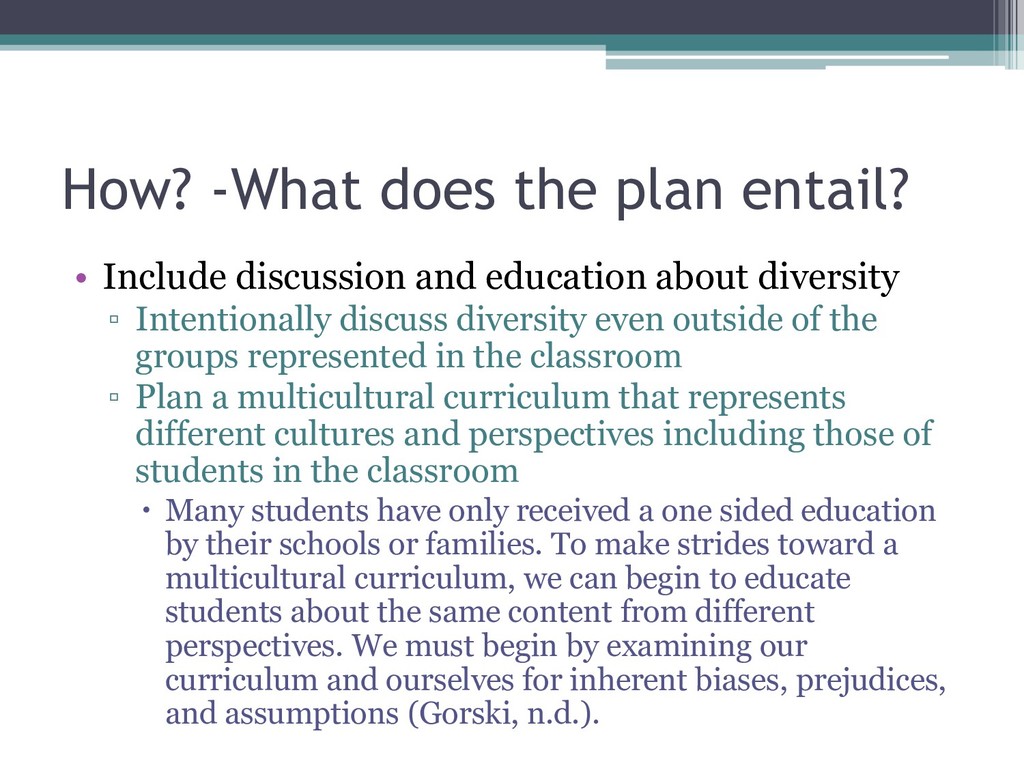
education about diversity ▫ Intentionally discuss diversity even outside of the groups represented in the classroom ▫ Plan a multicultural curriculum that represents different cultures and perspectives including those of students in the classroom Many students have only received a one sided education by their schools or families. To make strides toward a multicultural curriculum, we can begin to educate students about the same content from different perspectives. We must begin by examining our curriculum and ourselves for inherent biases, prejudices, and assumptions (Gorski, n.d.).
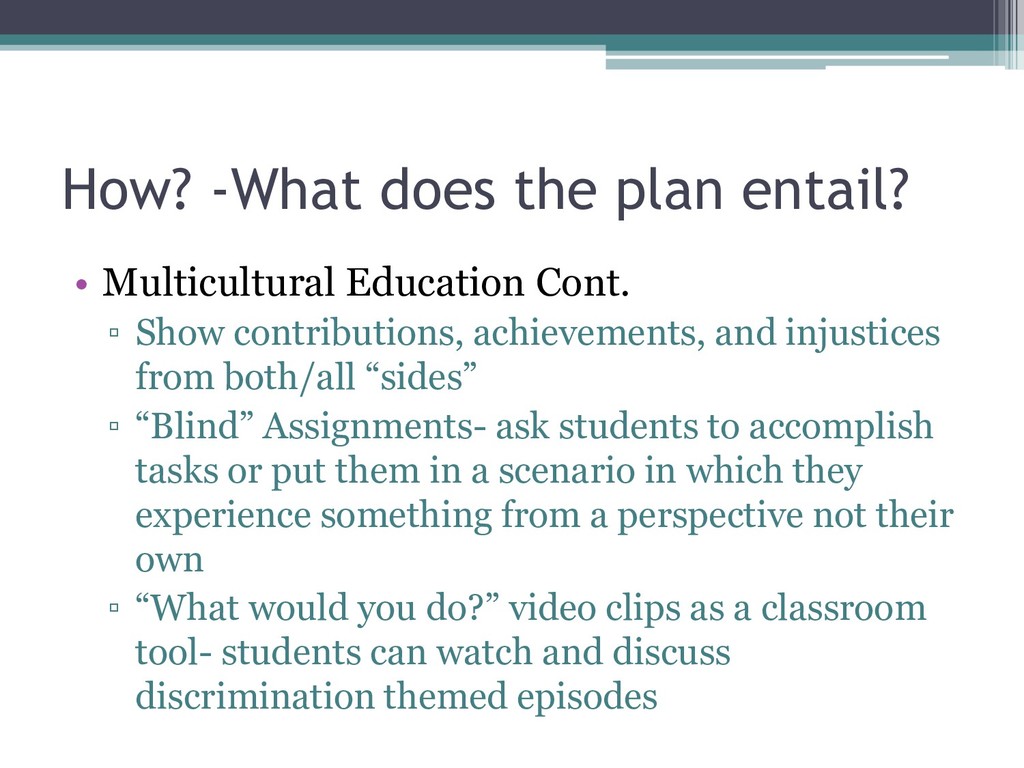
▫ Show contributions, achievements, and injustices from both/all “sides” ▫ “Blind” Assignments- ask students to accomplish tasks or put them in a scenario in which they experience something from a perspective not their own ▫ “What would you do?” video clips as a classroom tool- students can watch and discuss discrimination themed episodes
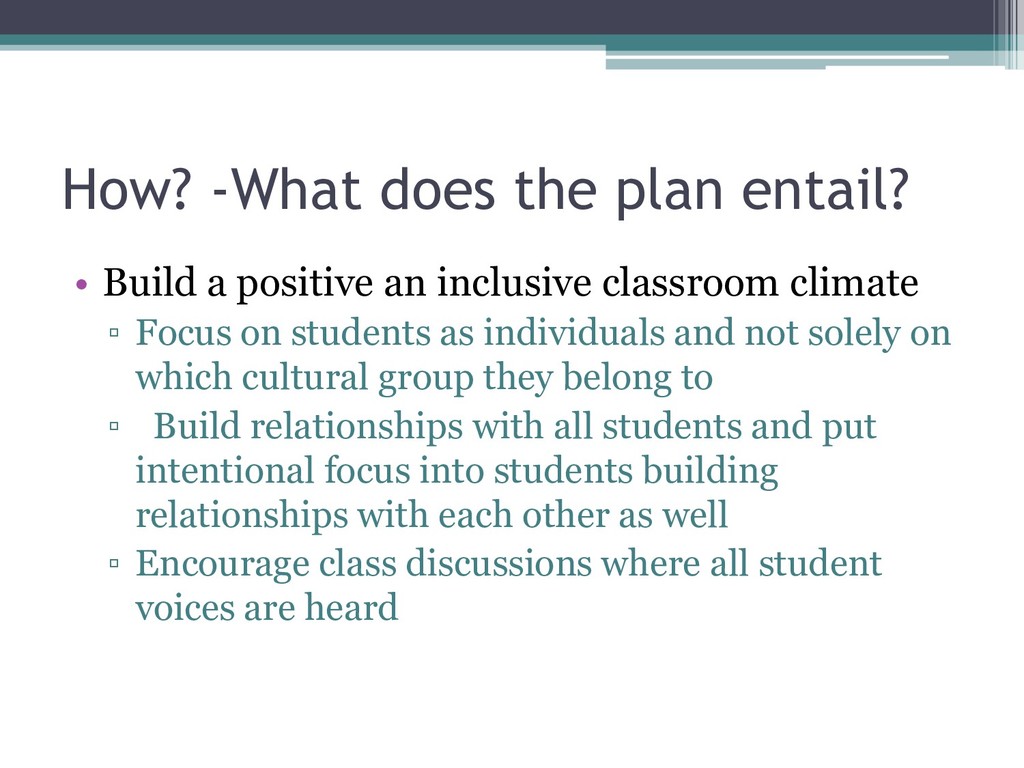
an inclusive classroom climate ▫ Focus on students as individuals and not solely on which cultural group they belong to ▫ Build relationships with all students and put intentional focus into students building relationships with each other as well ▫ Encourage class discussions where all student voices are heard
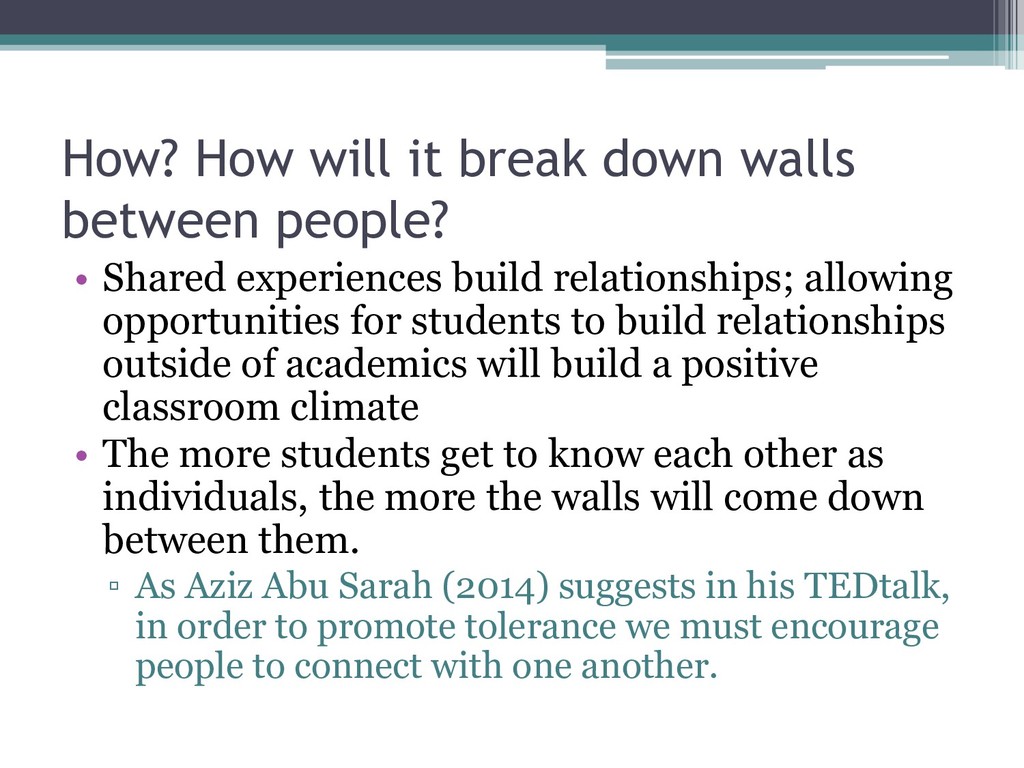
Shared experiences build relationships; allowing opportunities for students to build relationships outside of academics will build a positive classroom climate • The more students get to know each other as individuals, the more the walls will come down between them. ▫ As Aziz Abu Sarah (2014) suggests in his TEDtalk, in order to promote tolerance we must encourage people to connect with one another.
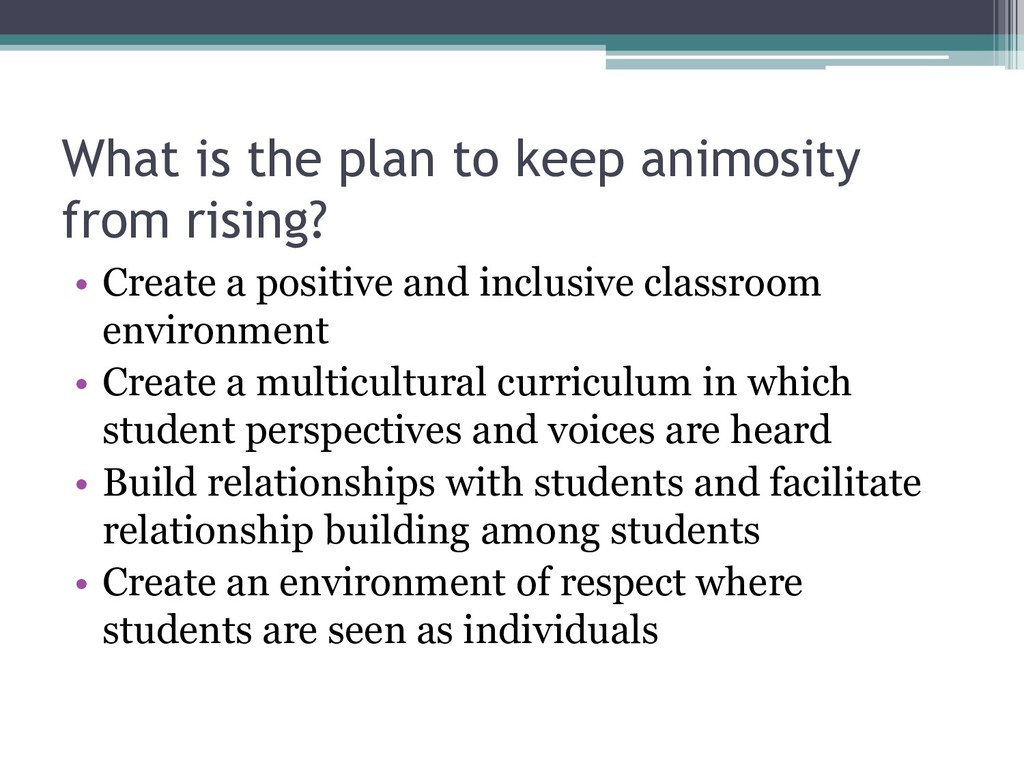
Create a positive and inclusive classroom environment • Create a multicultural curriculum in which student perspectives and voices are heard • Build relationships with students and facilitate relationship building among students • Create an environment of respect where students are seen as individuals
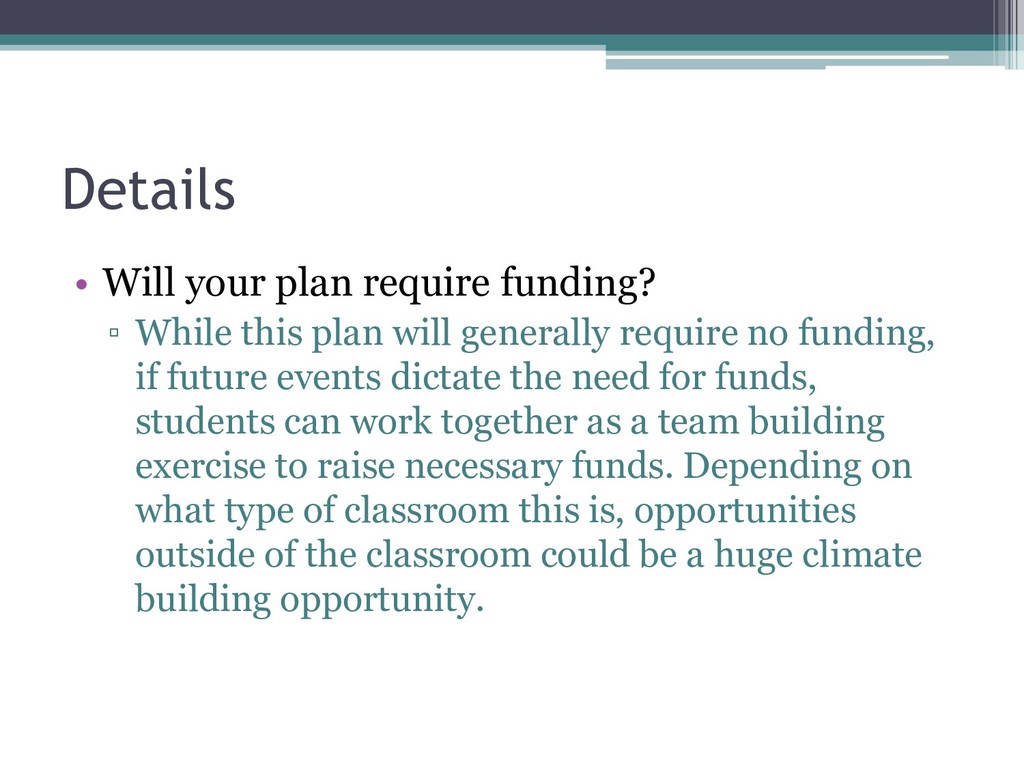
plan will generally require no funding, if future events dictate the need for funds, students can work together as a team building exercise to raise necessary funds. Depending on what type of classroom this is, opportunities outside of the classroom could be a huge climate building opportunity.
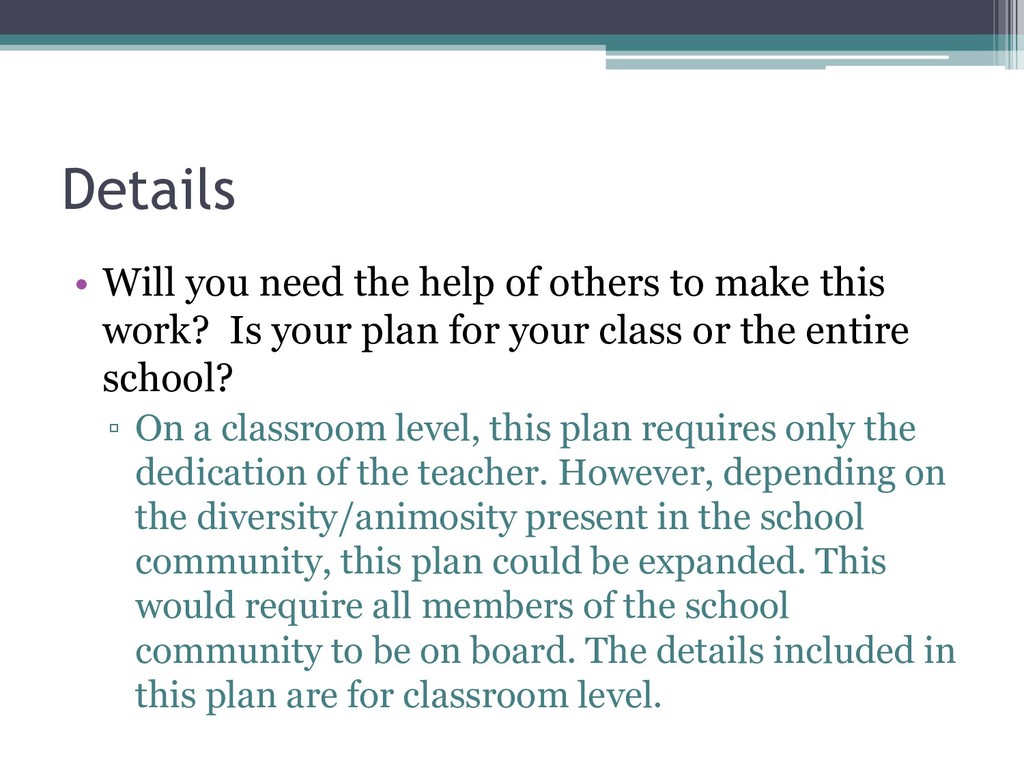
make this work? Is your plan for your class or the entire school? ▫ On a classroom level, this plan requires only the dedication of the teacher. However, depending on the diversity/animosity present in the school community, this plan could be expanded. This would require all members of the school community to be on board. The details included in this plan are for classroom level.
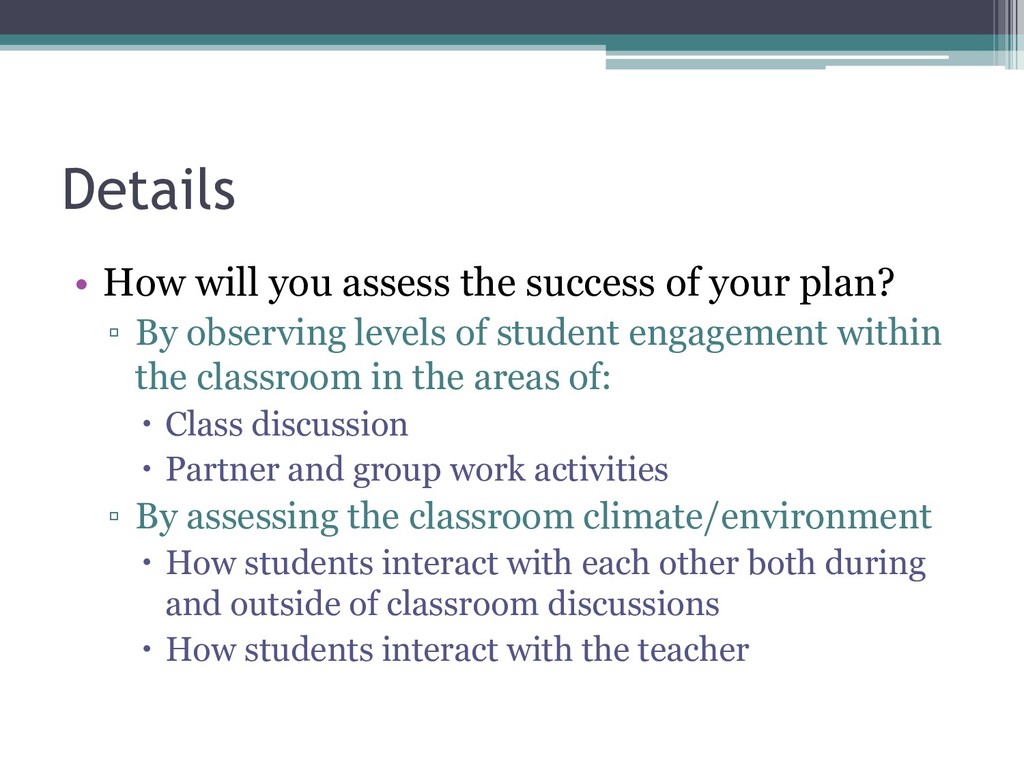
plan? ▫ By observing levels of student engagement within the classroom in the areas of: Class discussion Partner and group work activities ▫ By assessing the classroom climate/environment How students interact with each other both during and outside of classroom discussions How students interact with the teacher
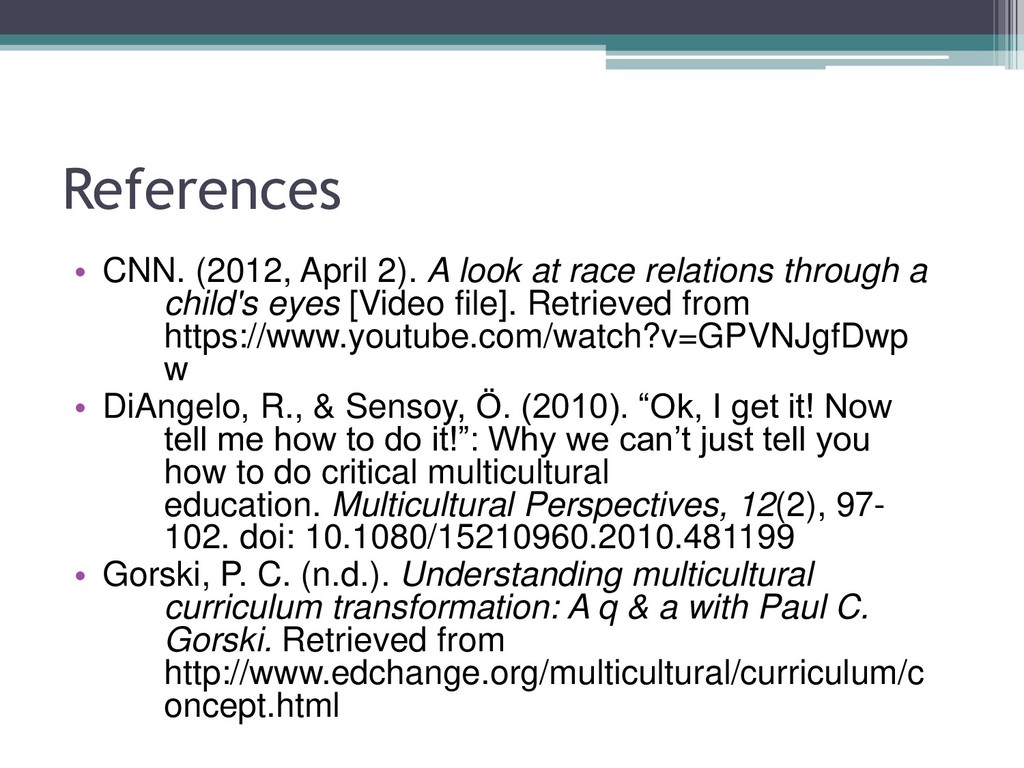
relations through a child's eyes [Video file]. Retrieved from https://www.youtube.com/watch?v=GPVNJgfDwp w • DiAngelo, R., & Sensoy, Ö. (2010). “Ok, I get it! Now tell me how to do it!”: Why we can’t just tell you how to do critical multicultural education. Multicultural Perspectives, 12(2), 97- 102. doi: 10.1080/15210960.2010.481199 • Gorski, P. C. (n.d.). Understanding multicultural curriculum transformation: A q & a with Paul C. Gorski. Retrieved from http://www.edchange.org/multicultural/curriculum/c oncept.html


 michielstock
 moore
moore
 rkendrick25
 bkeepers
 morganepeng
 inesmontani
 chrisshort
 62gerente
 jeffersonlam
 notwaldorf
 davetheseo
 shpigford