Upgrade to Pro — share decks privately, control downloads, hide ads and more …

openSUSE - the most tested linux distribution

openSUSE - the most tested linux distribution

Avatar for Martin Pluskal

Martin Pluskal

September 10, 2019

More Decks by Martin Pluskal

Other Decks in Technology

Transcript

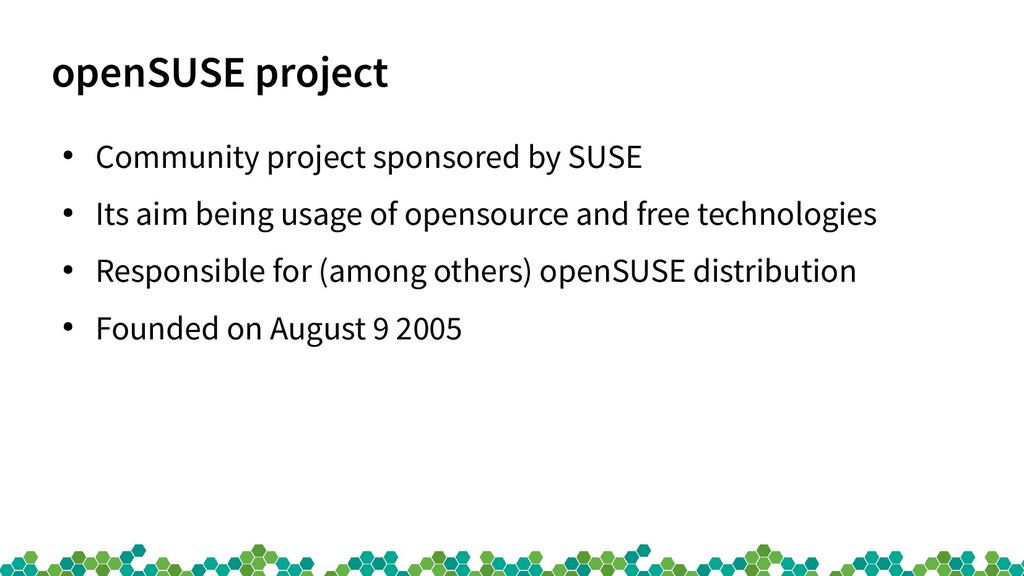
  1. openSUSE project • Community project sponsored by SUSE • Its

    aim being usage of opensource and free technologies • Responsible for (among others) openSUSE distribution • Founded on August 9 2005
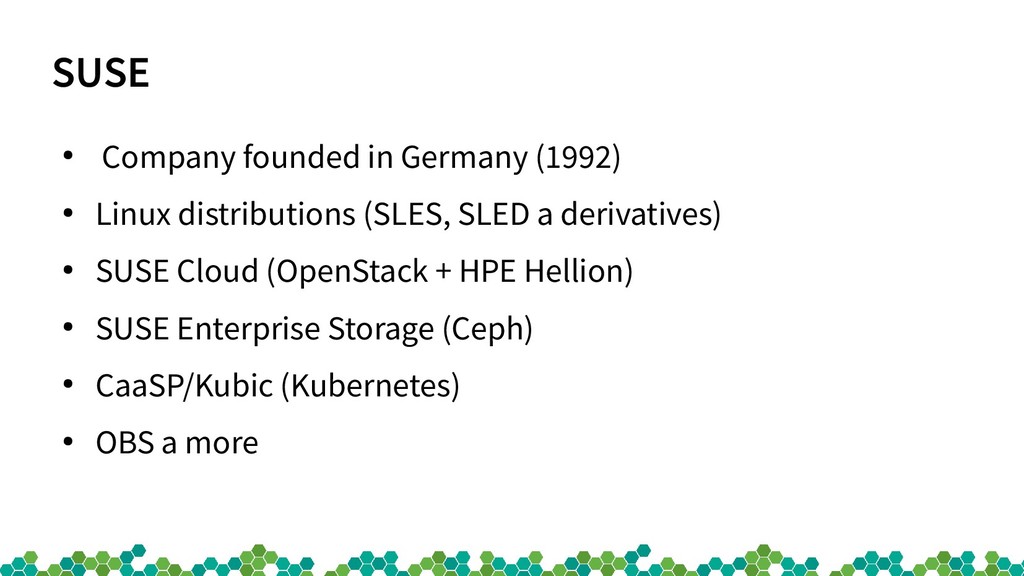
  2. SUSE • Company founded in Germany (1992) • Linux distributions

    (SLES, SLED a derivatives) • SUSE Cloud (OpenStack + HPE Hellion) • SUSE Enterprise Storage (Ceph) • CaaSP/Kubic (Kubernetes) • OBS a more
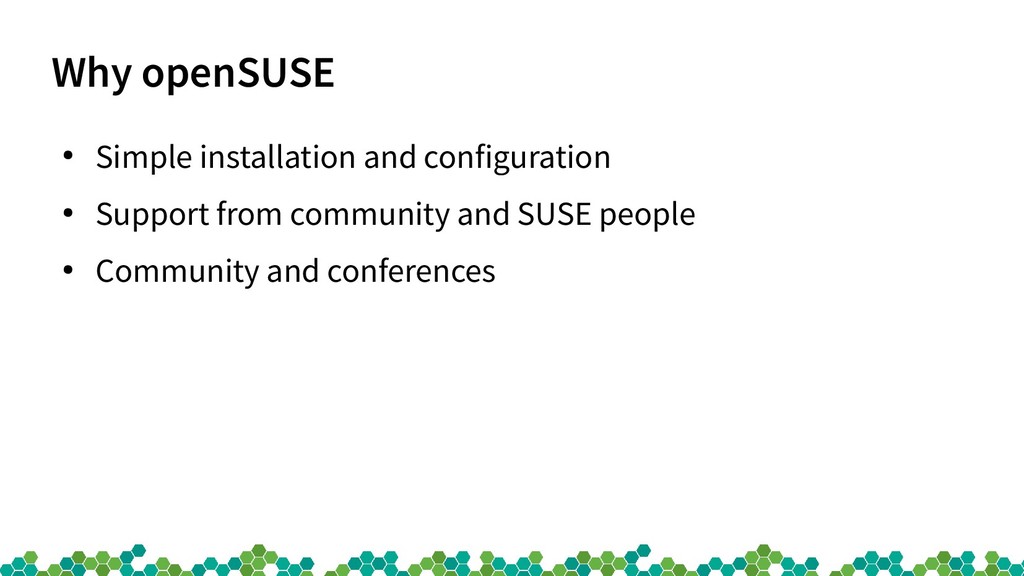
  3. Why openSUSE • Simple installation and configuration • Support from

    community and SUSE people • Community and conferences
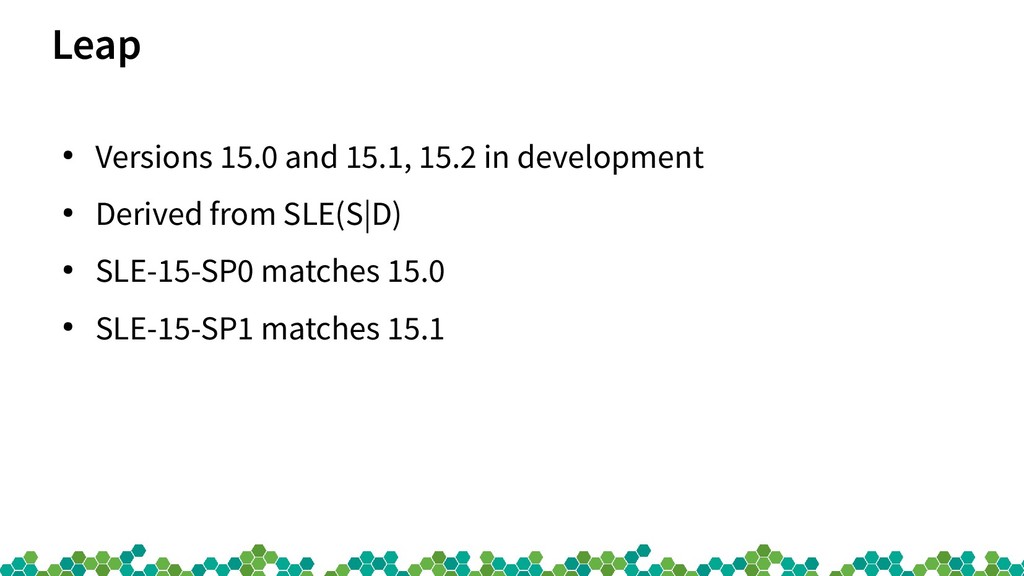
  4. Leap • Versions 15.0 and 15.1, 15.2 in development •

    Derived from SLE(S|D) • SLE-15-SP0 matches 15.0 • SLE-15-SP1 matches 15.1
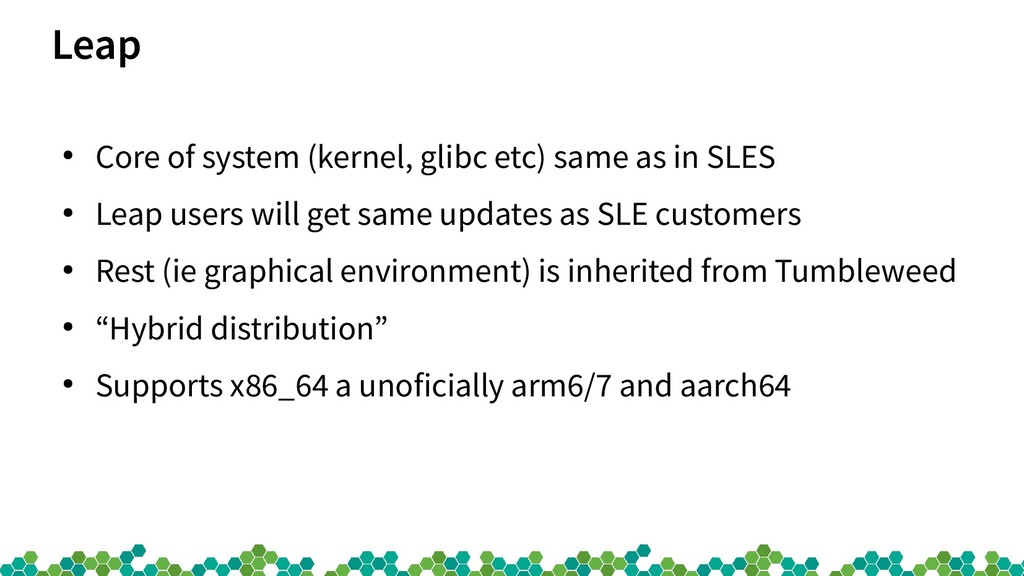
  5. Leap • Core of system (kernel, glibc etc) same as

    in SLES • Leap users will get same updates as SLE customers • Rest (ie graphical environment) is inherited from Tumbleweed • “Hybrid distribution” • Supports x86_64 a unoficially arm6/7 and aarch64
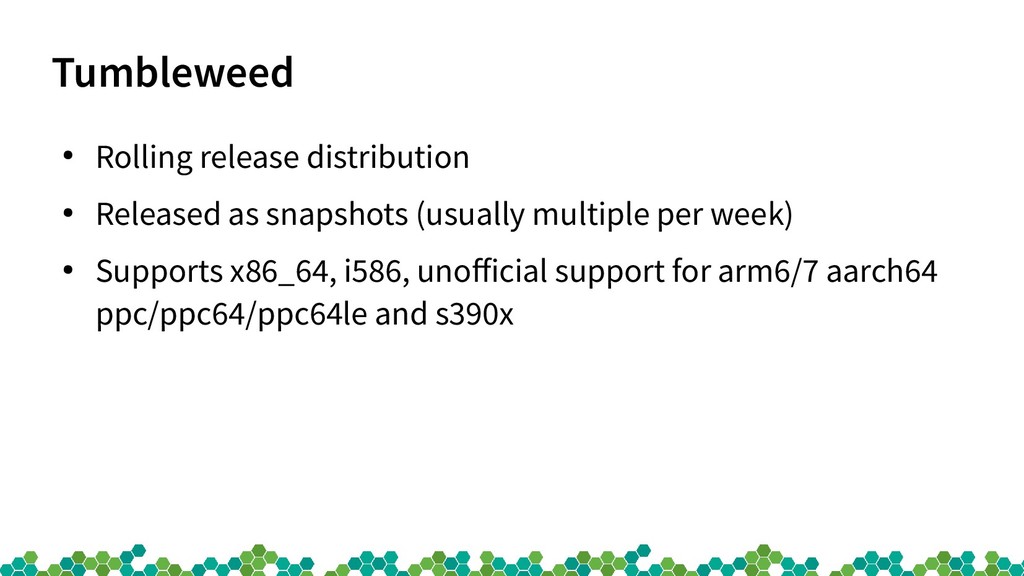
  6. Tumbleweed • Rolling release distribution • Released as snapshots (usually

    multiple per week) • Supports x86_64, i586, unofficial support for arm6/7 aarch64 ppc/ppc64/ppc64le and s390x
  7. Linux distribution • Compilation of thousands of packages • Have

    to be usable together • 30000 Debian • 49000 openSUSE • 47000 arch (including aur repository)
  8. Classic releases • Stable release every couple of months/years •

    Same package version during whole life or release • Fixes are backported
  9. What is rolling release? • Allways updated (and tested) •

    There is no stable release • Only release that is stable is the last snapshot • No roadmap of releases • Updates/new stuff is released when it passes QA (if there is QA)
  10. Why rolling release? • Software projects are developed at faster

    pace than most regular distributions • Linux kernel (3 months) • GNOME (6 months) • KDE Plasma (3 months) • Docker (3 months) • SaltStack (3-6 months)
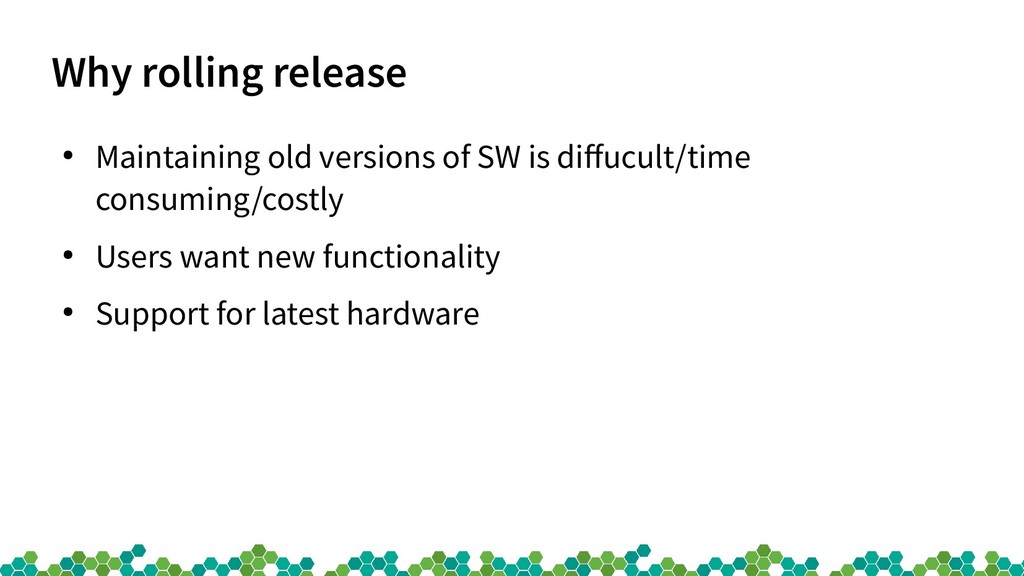
  11. Why rolling release • Maintaining old versions of SW is

    diffucult/time consuming/costly • Users want new functionality • Support for latest hardware
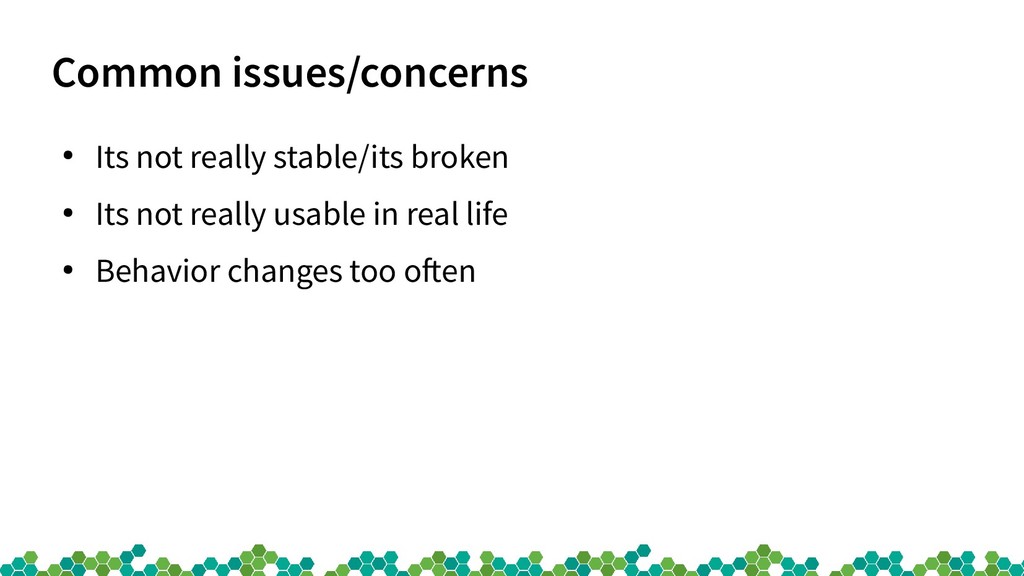
  12. Common issues/concerns • Its not really stable/its broken • Its

    not really usable in real life • Behavior changes too often
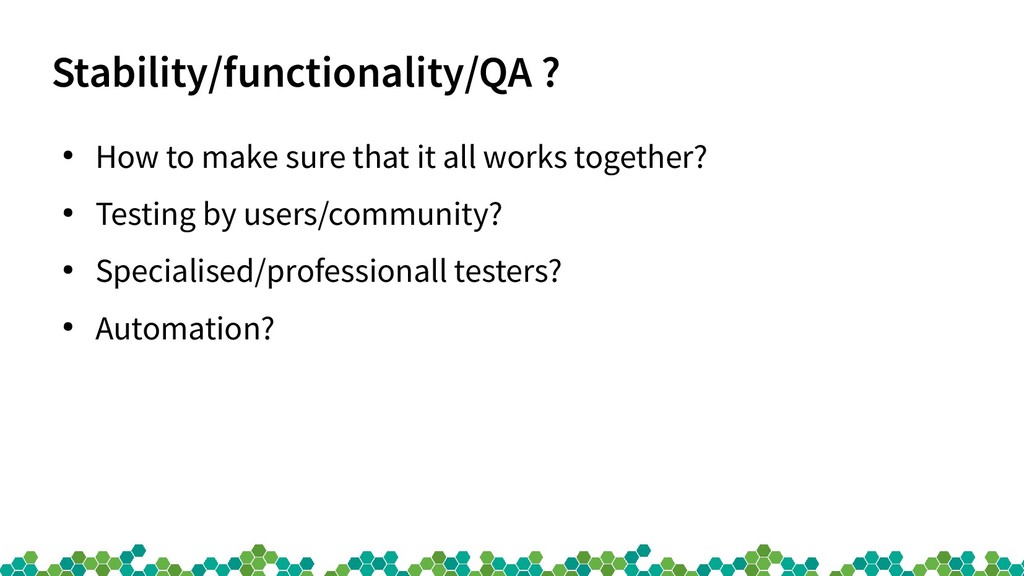
  13. Stability/functionality/QA ? • How to make sure that it all

    works together? • Testing by users/community? • Specialised/professionall testers? • Automation?
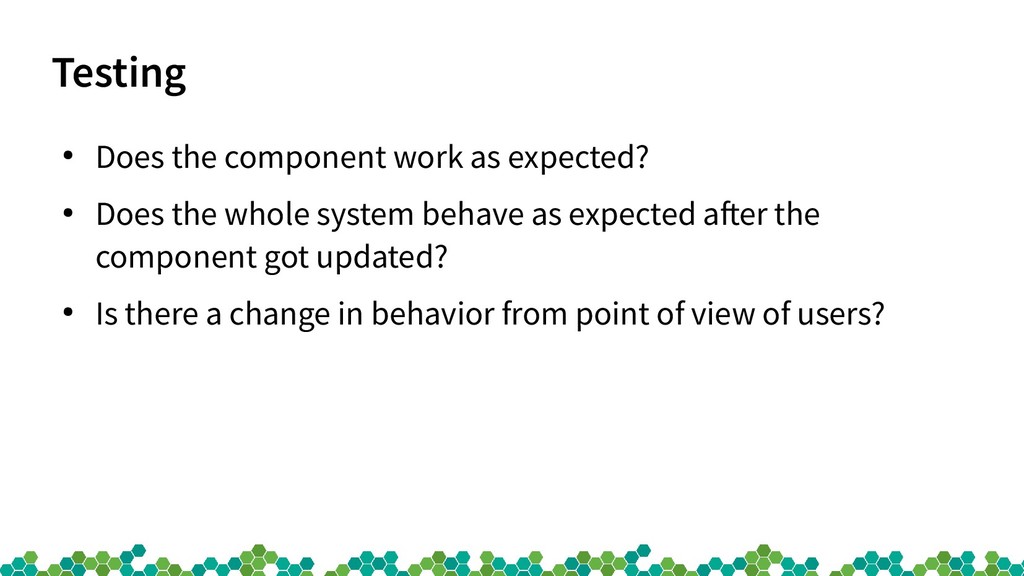
  14. Testing • Does the component work as expected? • Does

    the whole system behave as expected after the component got updated? • Is there a change in behavior from point of view of users?
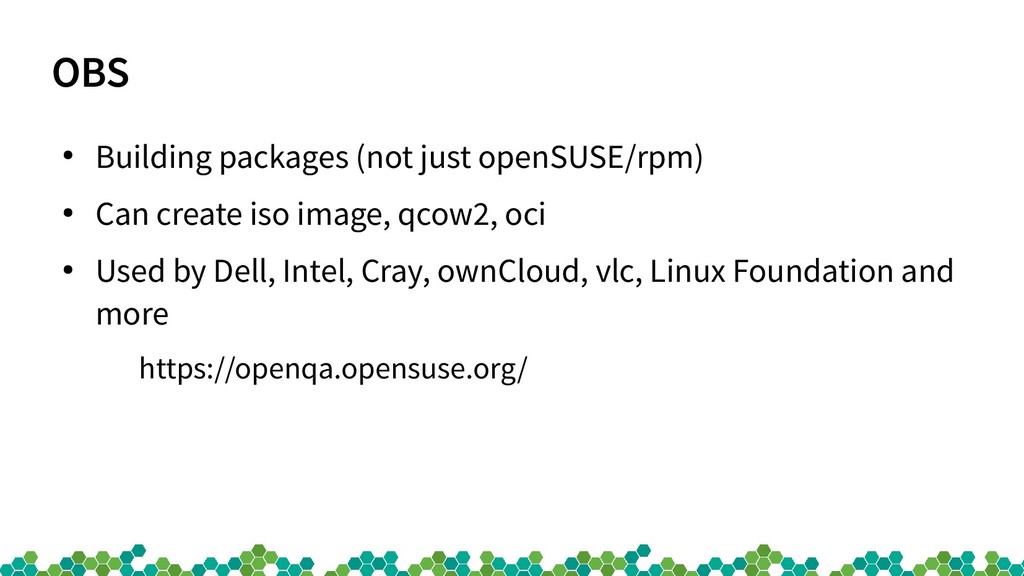
  15. OBS • Building packages (not just openSUSE/rpm) • Can create

    iso image, qcow2, oci • Used by Dell, Intel, Cray, ownCloud, vlc, Linux Foundation and more https://openqa.opensuse.org/
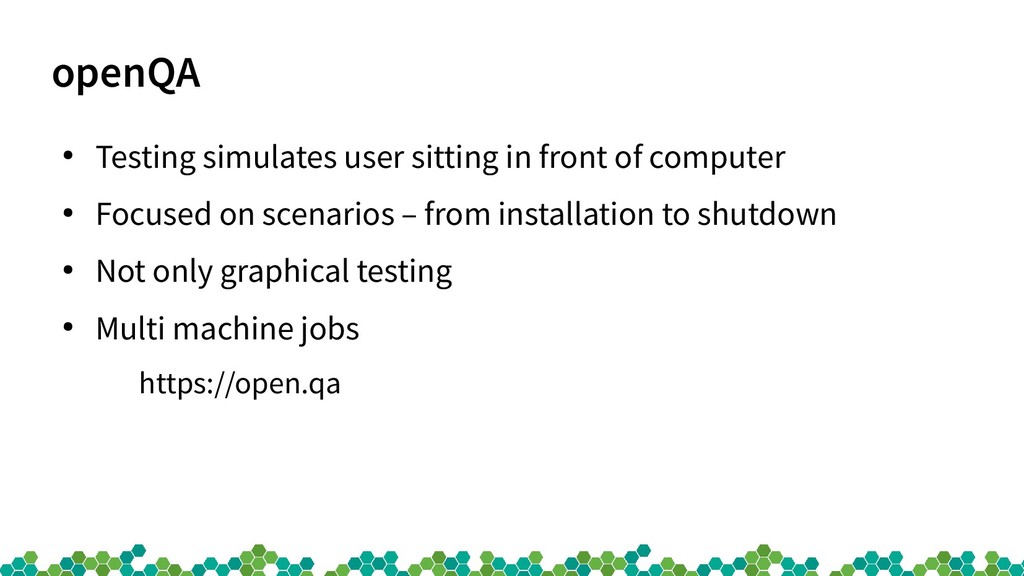
  16. openQA • Testing simulates user sitting in front of computer

    • Focused on scenarios – from installation to shutdown • Not only graphical testing • Multi machine jobs https://open.qa
  17. License This slide deck is licensed under the Creative Commons

    Attribution-ShareAlike 4.0 International license. It can be shared and adapted for any purpose (even commercially) as long as Attribution is given and any derivative work is distributed under the same license. Details can be found at https://creativecommons.org/licenses/by-sa/4.0/ General Disclaimer This document is not to be construed as a promise by any participating organisation to develop, deliver, or market a product. It is not a commitment to deliver any material, code, or functionality, and should not be relied upon in making purchasing decisions. openSUSE makes no representations or warranties with respect to the contents of this document, and specifically disclaims any express or implied warranties of merchantability or fitness for any particular purpose. The development, release, and timing of features or functionality described for openSUSE products remains at the sole discretion of openSUSE. Further, openSUSE reserves the right to revise this document and to make changes to its content, at any time, without obligation to notify any person or entity of such revisions or changes. All openSUSE marks referenced in this presentation are trademarks or registered trademarks of SUSE LLC, in the United States and other countries. All third-party trademarks are the property of their respective owners. Credits Template Richard Brown [email protected] Design & Inspiration openSUSE Design Team http://opensuse.github.io/branding- guidelines/