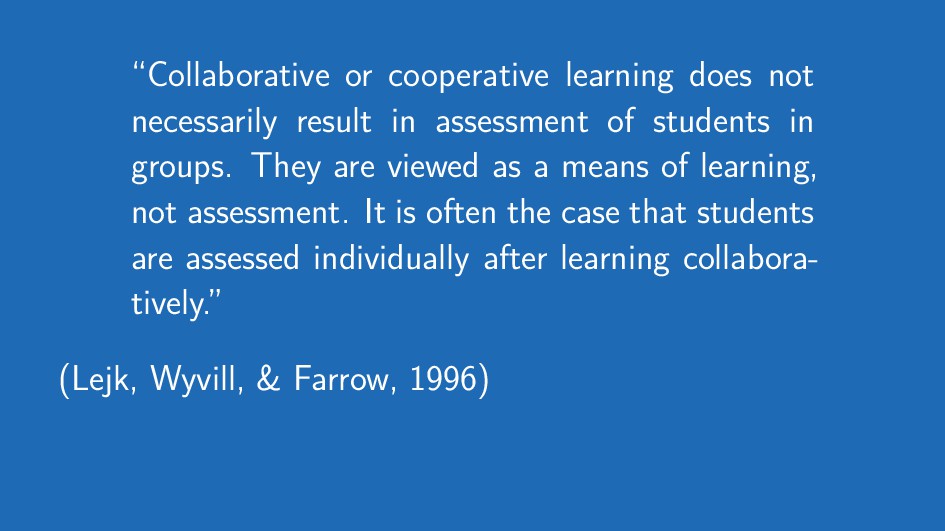
of students in groups. They are viewed as a means of learning, not assessment. It is often the case that students are assessed individually after learning collabora- tively.” (Lejk, Wyvill, & Farrow, 1996)
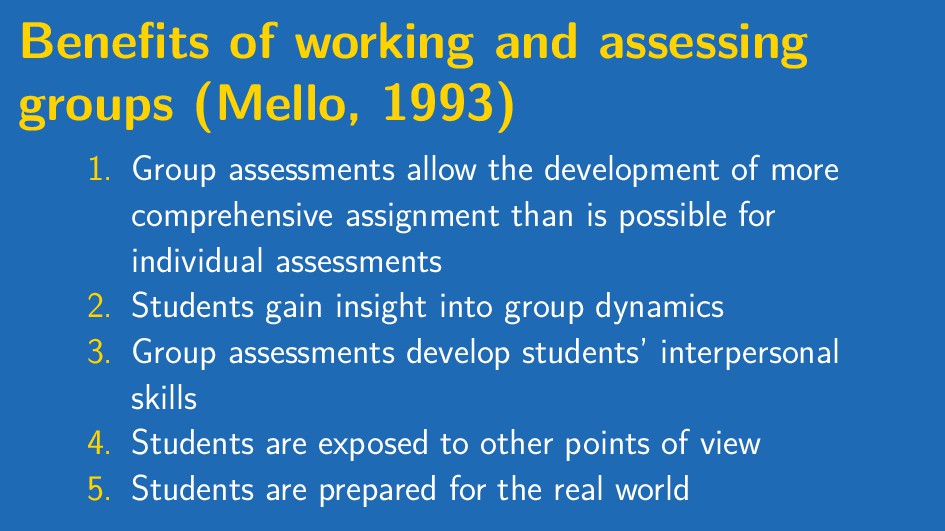
assessments allow the development of more comprehensive assignment than is possible for individual assessments 2. Students gain insight into group dynamics 3. Group assessments develop students’ interpersonal skills 4. Students are exposed to other points of view 5. Students are prepared for the real world
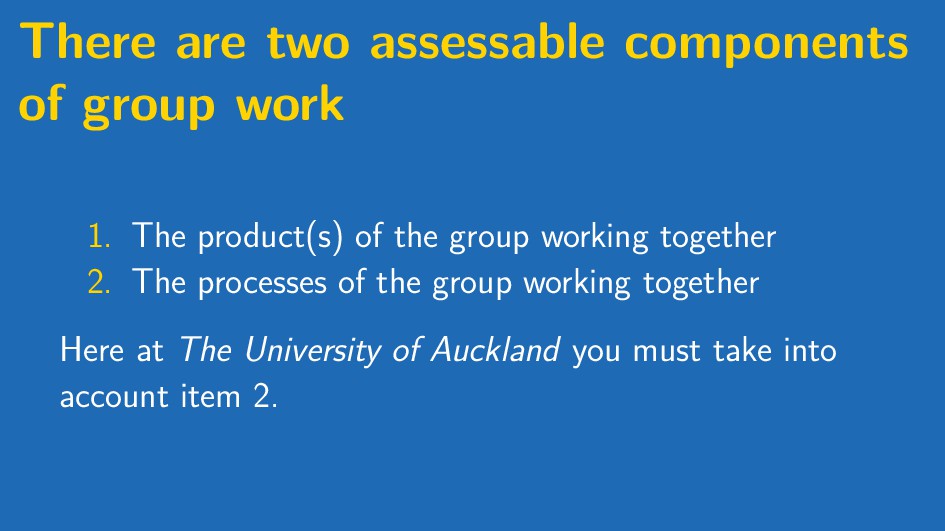
product(s) of the group working together 2. The processes of the group working together Here at The University of Auckland you must take into account item 2.
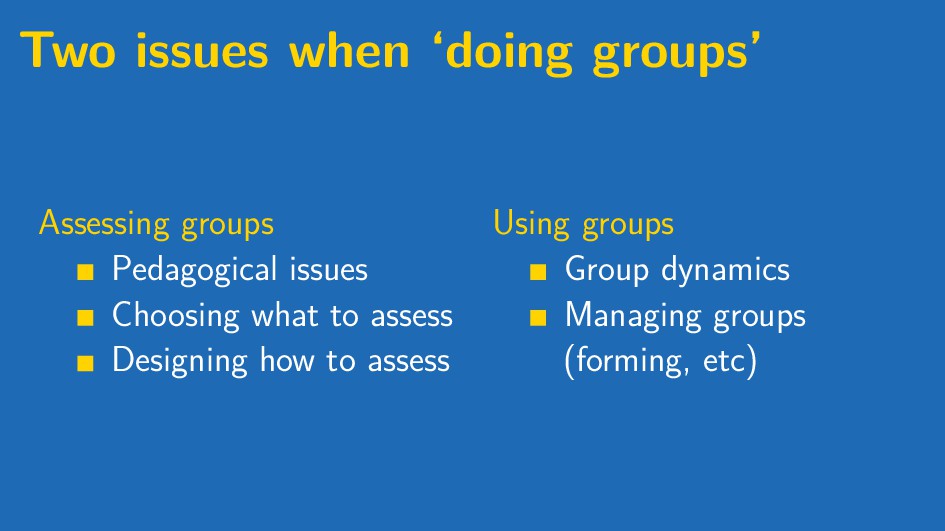
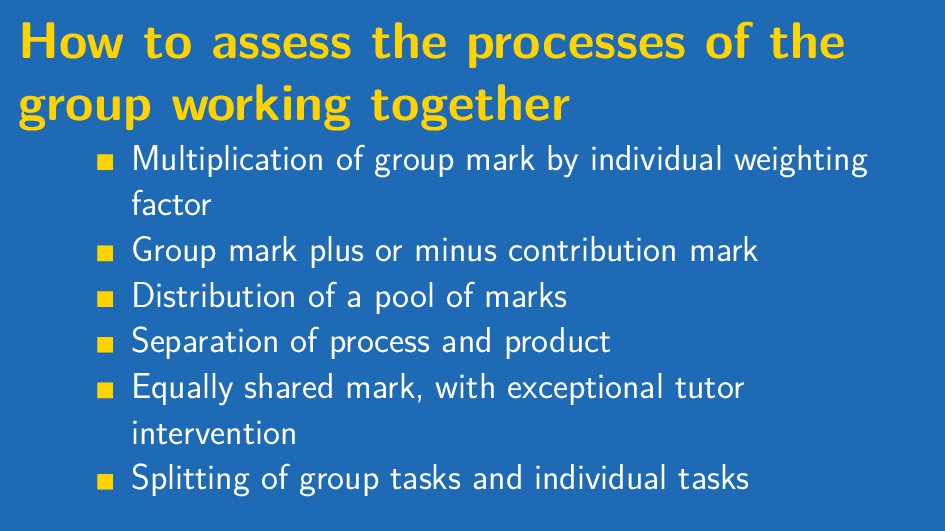
Multiplication of group mark by individual weighting factor Group mark plus or minus contribution mark Distribution of a pool of marks Separation of process and product Equally shared mark, with exceptional tutor intervention Splitting of group tasks and individual tasks
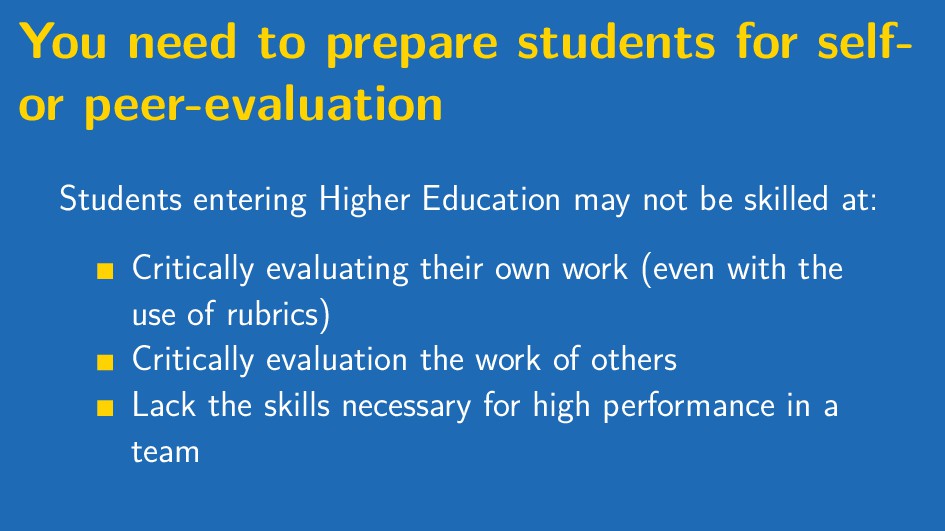
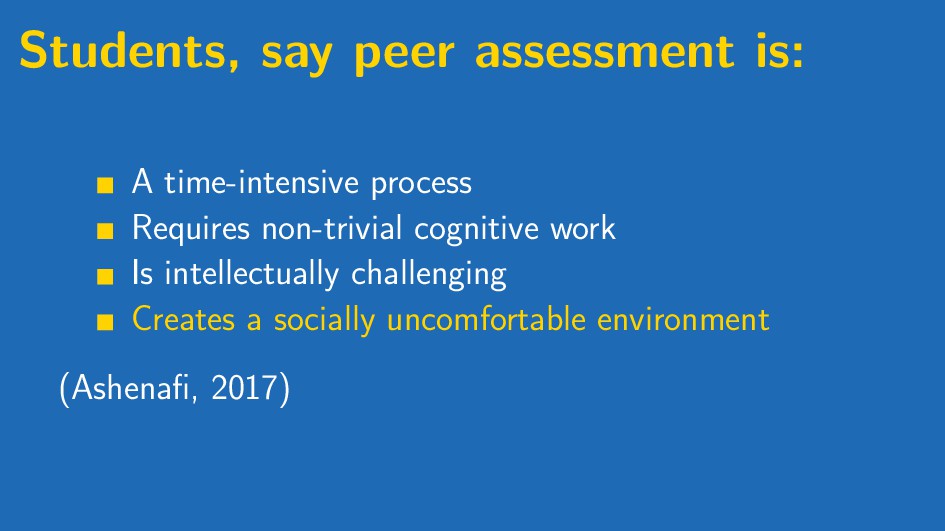
entering Higher Education may not be skilled at: Critically evaluating their own work (even with the use of rubrics) Critically evaluation the work of others Lack the skills necessary for high performance in a team
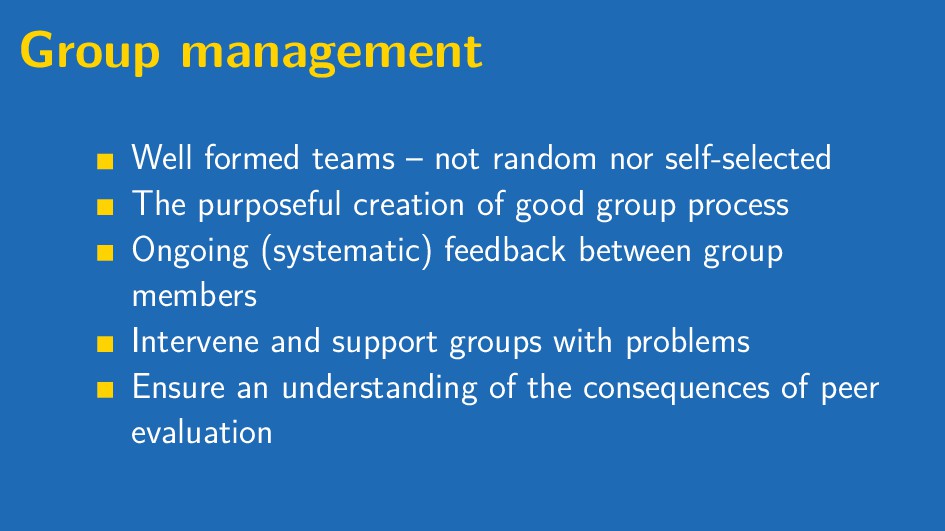
The purposeful creation of good group process Ongoing (systematic) feedback between group members Intervene and support groups with problems Ensure an understanding of the consequences of peer evaluation
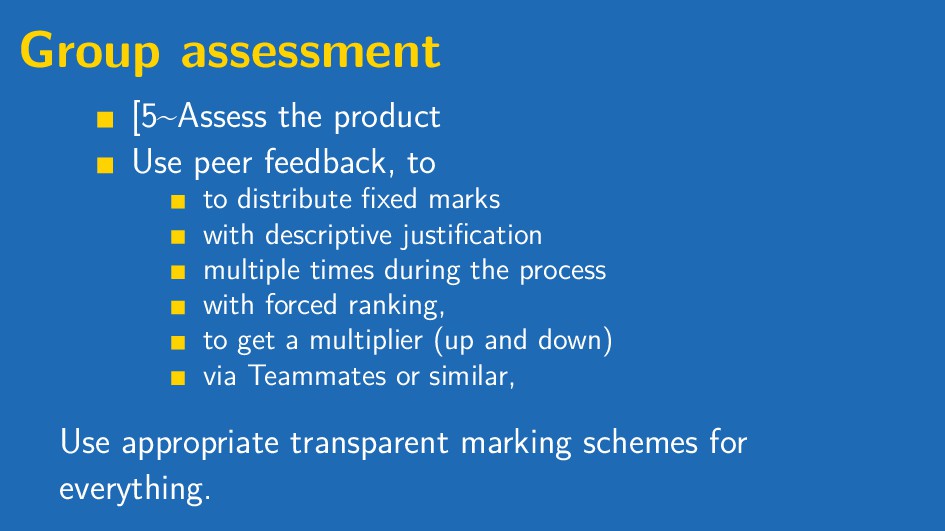
distribute fixed marks with descriptive justification multiple times during the process with forced ranking, to get a multiplier (up and down) via Teammates or similar, Use appropriate transparent marking schemes for everything.


 hiola
 sonakv
 signer
 baltimoreniso
 radlovacki1976
 akiraasano
 ainischool
 schroneko
 raygrieselhuber
 marktimemedia
 techseoconnect
 eitanlees
 aleyda
 jakevdp
 427marketing
 csswizardry
 bermonpainter
 frankvandijk
 lauravandoore