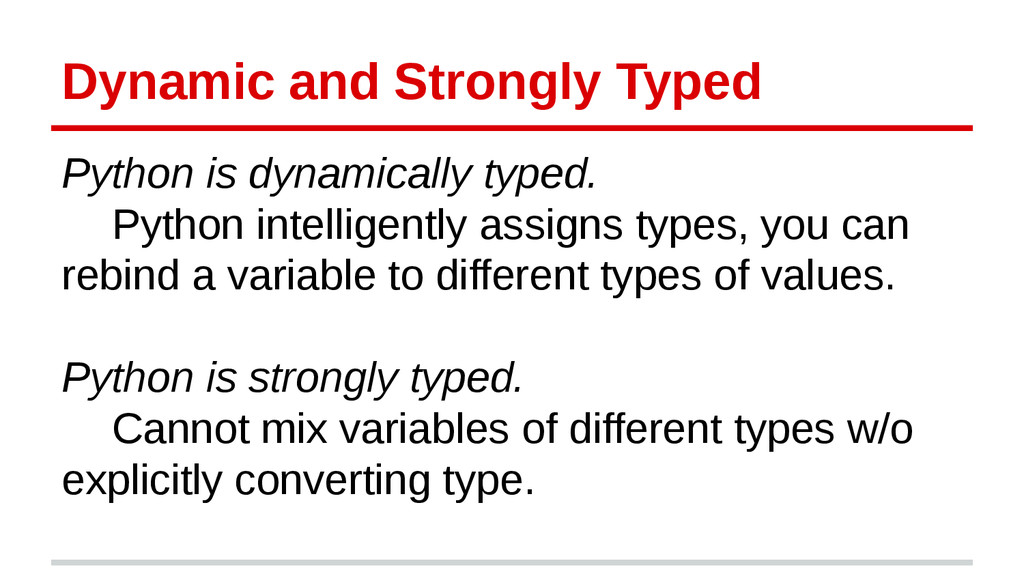
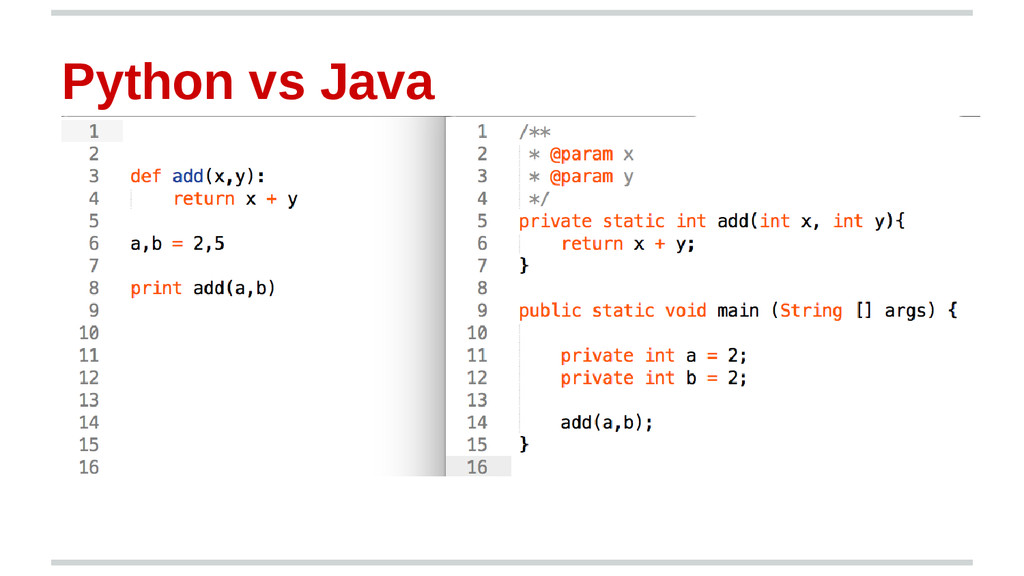
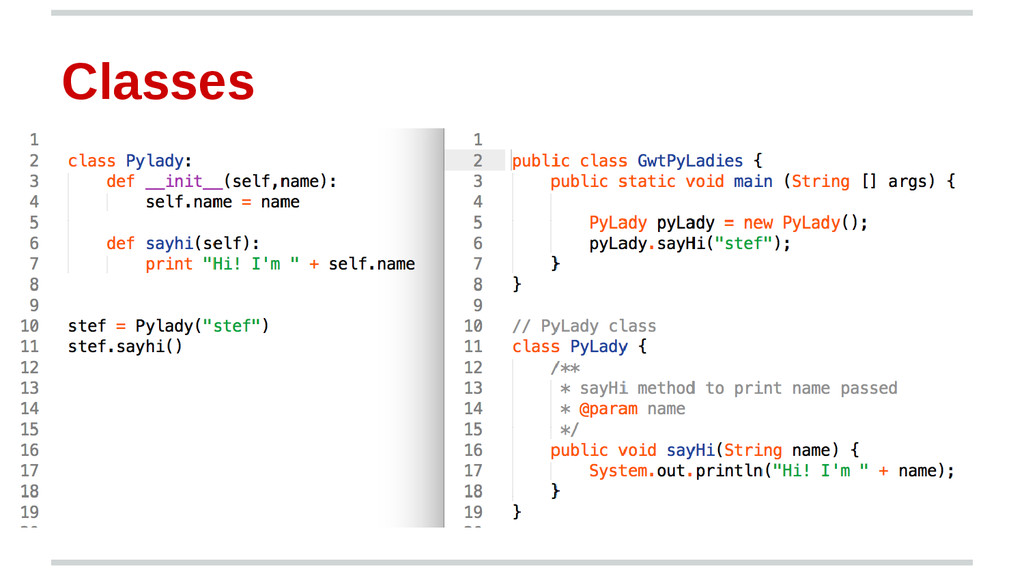
assigns types, you can rebind a variable to different types of values. Python is strongly typed. Cannot mix variables of different types w/o explicitly converting type.
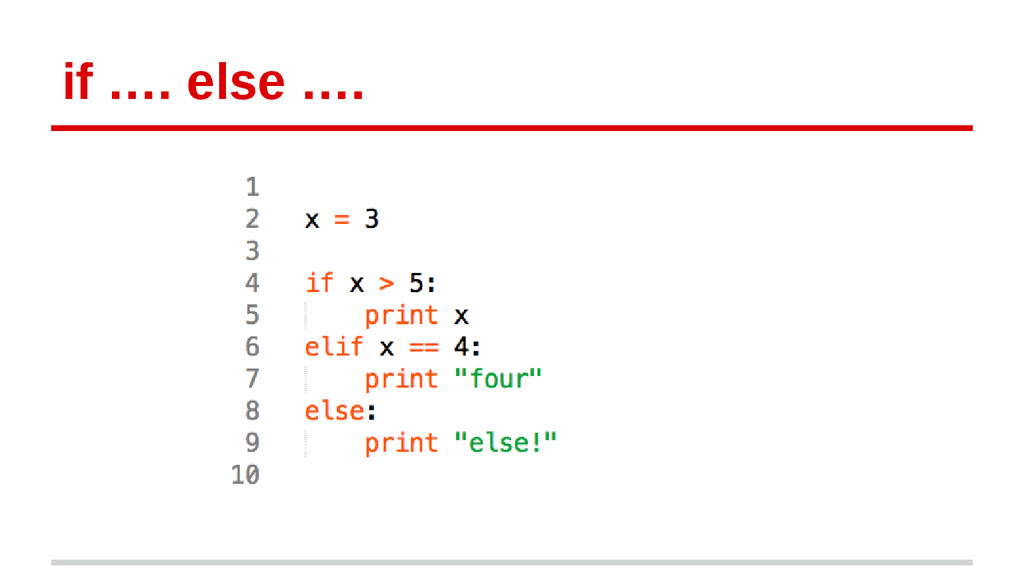
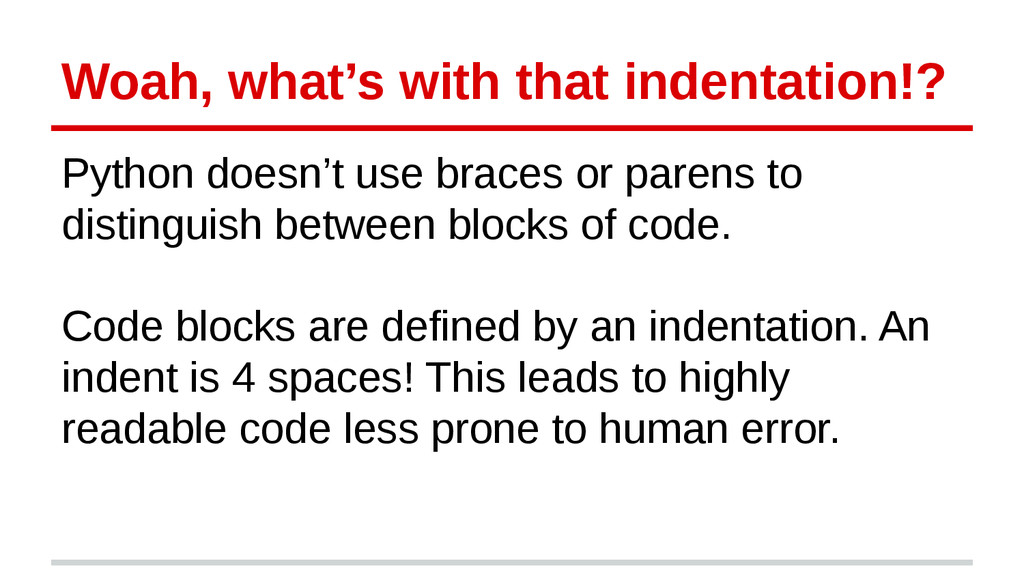
parens to distinguish between blocks of code. Code blocks are defined by an indentation. An indent is 4 spaces! This leads to highly readable code less prone to human error.
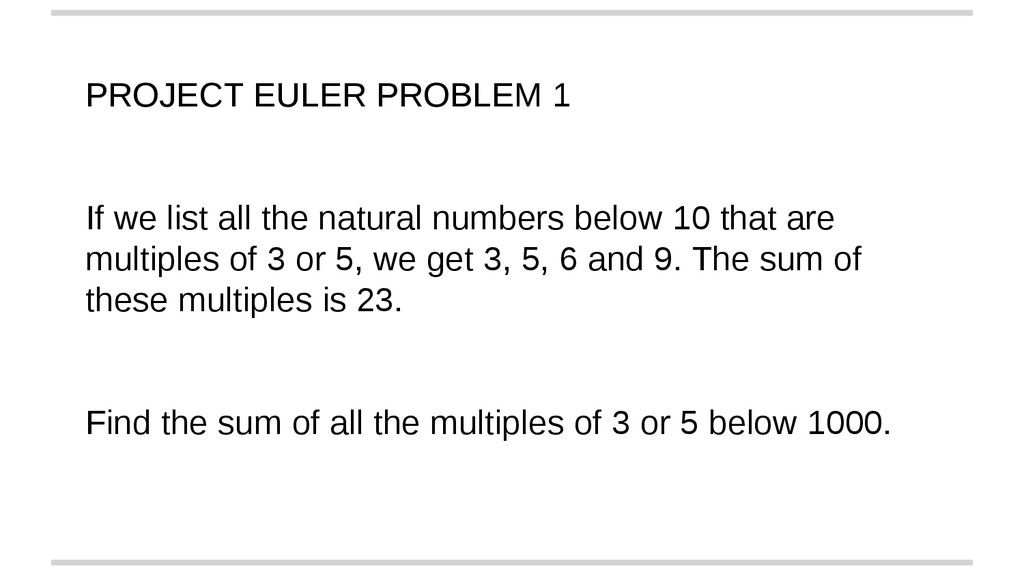
numbers below 10 that are multiples of 3 or 5, we get 3, 5, 6 and 9. The sum of these multiples is 23. Find the sum of all the multiples of 3 or 5 below 1000.
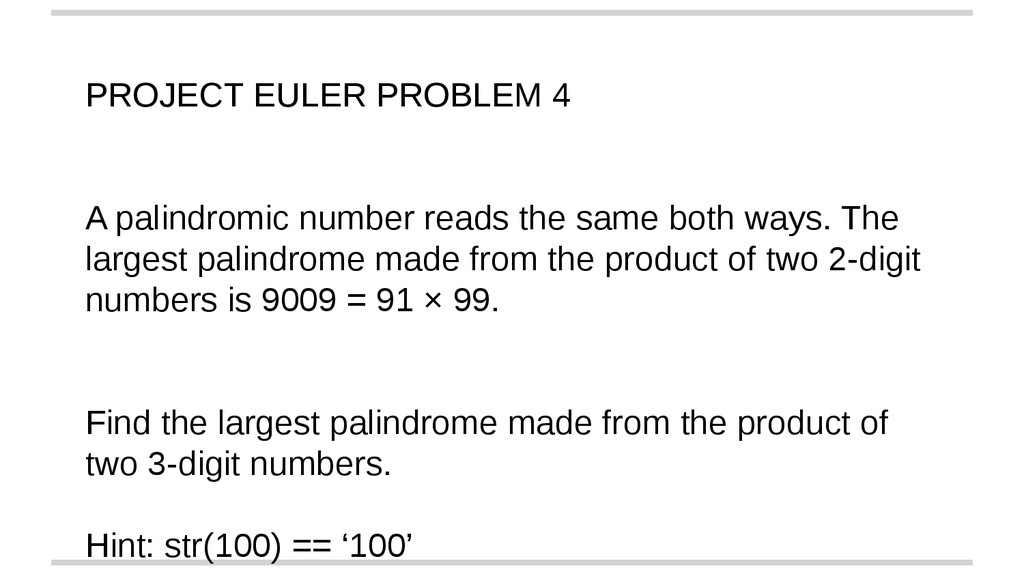
both ways. The largest palindrome made from the product of two 2-digit numbers is 9009 = 91 × 99. Find the largest palindrome made from the product of two 3-digit numbers. Hint: str(100) == ‘100’
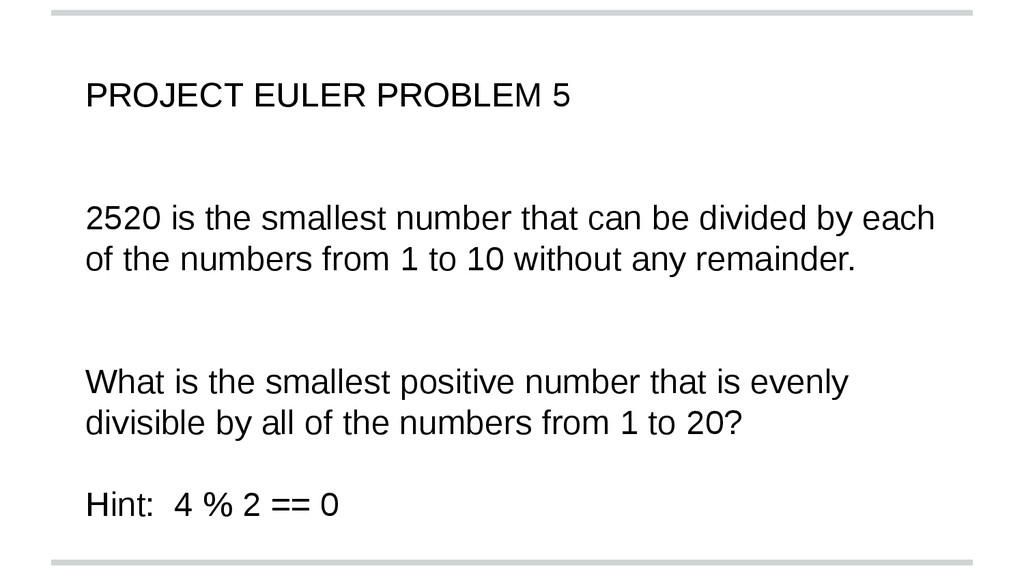
can be divided by each of the numbers from 1 to 10 without any remainder. What is the smallest positive number that is evenly divisible by all of the numbers from 1 to 20? Hint: 4 % 2 == 0


 pyladiesmanila
 aleyda
 jct
 madoxten
 nikkihalliwell
 bluesmoon
 destraynor
 helenjbeal
 marcduiker
 akihiro_kokubo
 inesmontani
 lemiorhan
 rasagy