Upgrade to Pro — share decks privately, control downloads, hide ads and more …

7 Smart Time Management Strategies for Workplac...

manisha
November 05, 2026
5

7 Smart Time Management Strategies for Workplace Productivity

Discover practical time management strategies to improve workplace productivity, prioritise tasks, manage deadlines and enhance employee efficiency. Explore customised corporate training solutions by Quadrant Edge Consultants.

manisha

November 05, 2026

Transcript

5 slides
  1. 7 SMART TIME MANAGEMENT STRATEGIES for Workplace Productivity Practical strategies

    to help you focus, prioritise, and achieve more every day. PAGE 1
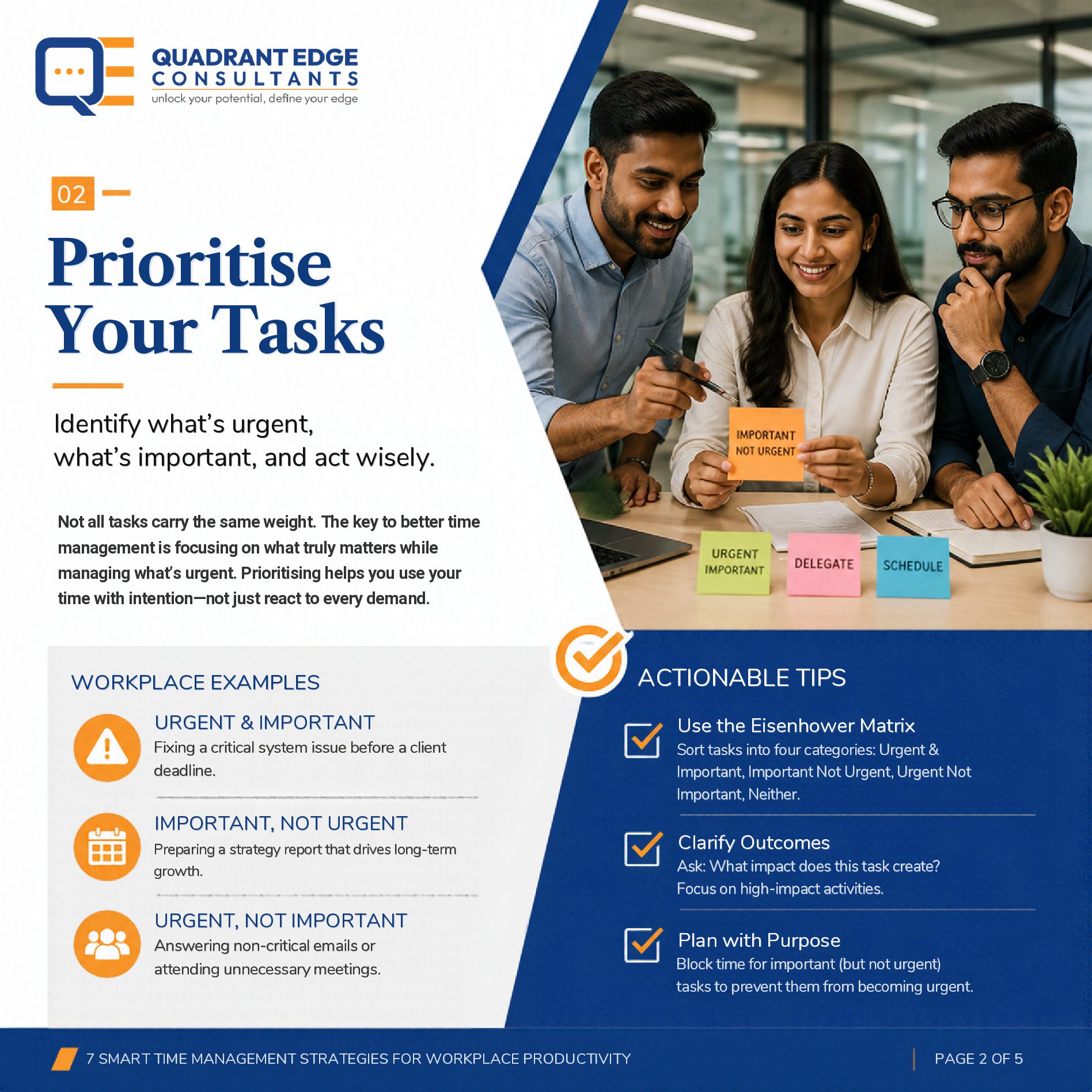
  2. 02 Prioritise Your Tasks Identify what’s urgent, what’s important, and

    act wisely. Not all tasks carry the same weight. The key to better time management is focusing on what truly matters while managing what’s urgent. Prioritising helps you use your time with intention—not just react to every demand. WORKPLACE EXAMPLES URGENT & IMPORTANT Fixing a critical system issue before a client deadline. IMPORTANT, NOT URGENT Preparing a strategy report that drives long-term growth. URGENT, NOT IMPORTANT Answering non-critical emails or attending unnecessary meetings. 7 SMART TIME MANAGEMENT STRATEGIES FOR WORKPLACE PRODUCTIVITY ACTIONABLE TIPS Use the Eisenhower Matrix Sort tasks into four categories: Urgent & Important, Important Not Urgent, Urgent Not Important, Neither. Clarify Outcomes Ask: What impact does this task create? Focus on high-impact activities. Plan with Purpose Block time for important (but not urgent) tasks to prevent them from becoming urgent. PAGE 2 OF 5
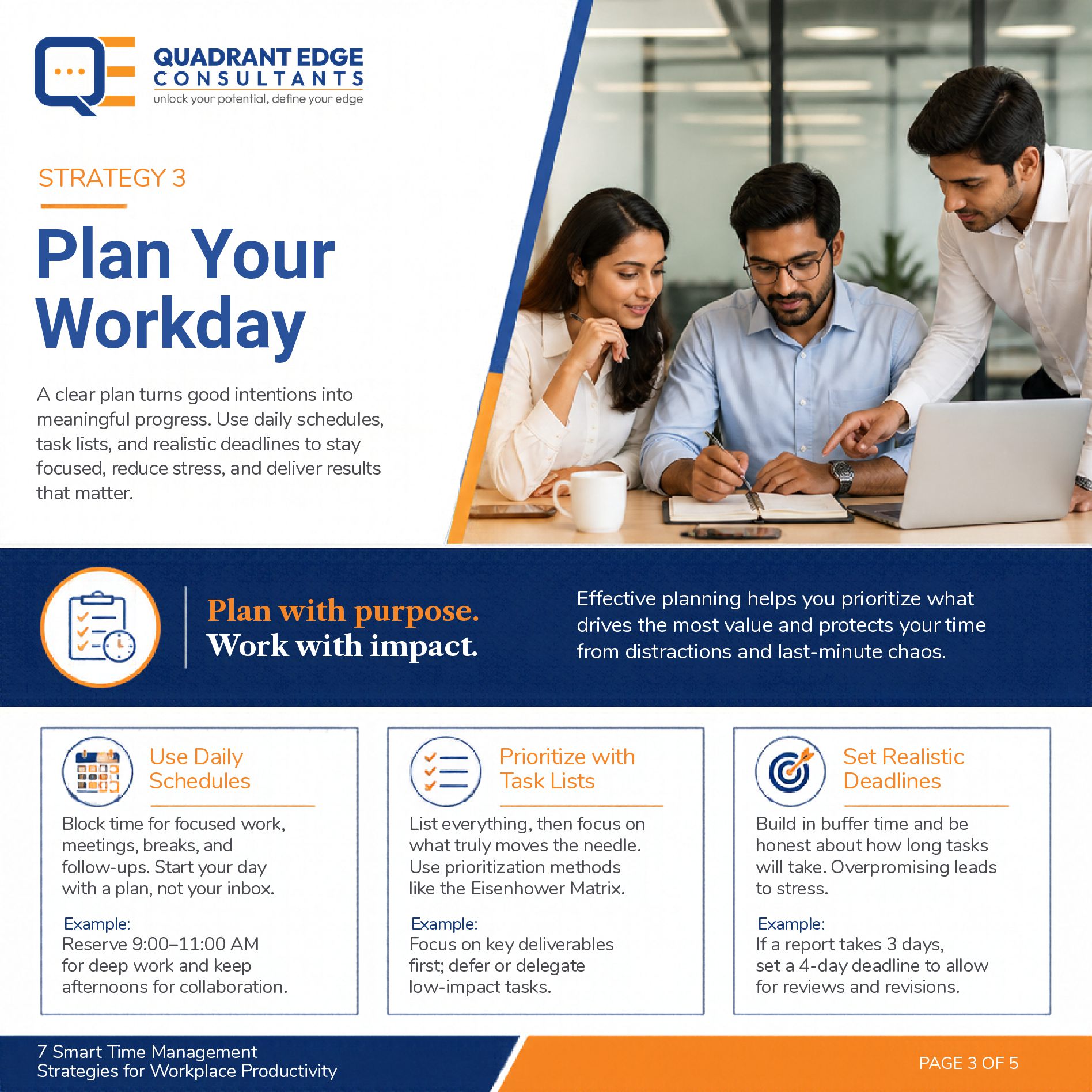
  3. STRATEGY 3 Plan Your Workday A clear plan turns good

    intentions into meaningful progress. Use daily schedules, task lists, and realistic deadlines to stay focused, reduce stress, and deliver results that matter. Plan with purpose. Work with impact. Use Daily Schedules Effective planning helps you prioritize what drives the most value and protects your time from distractions and last-minute chaos. Prioritize with Task Lists Set Realistic Deadlines Block time for focused work, meetings, breaks, and follow-ups. Start your day with a plan, not your inbox. List everything, then focus on what truly moves the needle. Use prioritization methods like the Eisenhower Matrix. Build in buffer time and be honest about how long tasks will take. Overpromising leads to stress. Example: Example: Example: Reserve 9:00–11:00 AM for deep work and keep afternoons for collaboration. 7 Smart Time Management Strategies for Workplace Productivity Focus on key deliverables first; defer or delegate low-impact tasks. If a report takes 3 days, set a 4-day deadline to allow for reviews and revisions. PAGE 3 OF 5
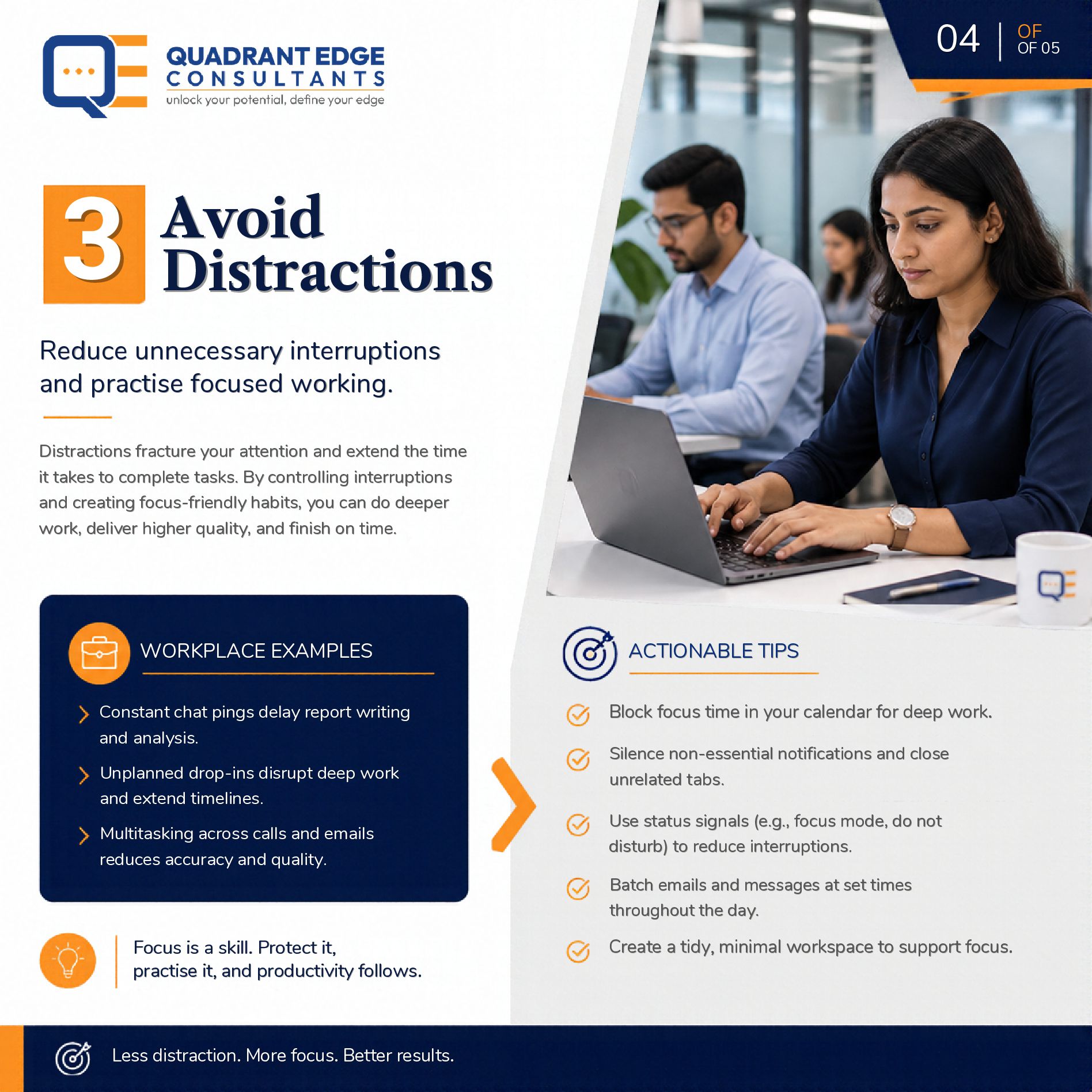
  4. 04 3 Avoid Distractions Reduce unnecessary interruptions and practise focused

    working. Distractions fracture your attention and extend the time it takes to complete tasks. By controlling interruptions and creating focus-friendly habits, you can do deeper work, deliver higher quality, and finish on time. WORKPLACE EXAMPLES Constant chat pings delay report writing and analysis. Unplanned drop-ins disrupt deep work and extend timelines. Multitasking across calls and emails reduces accuracy and quality. ACTIONABLE TIPS Block focus time in your calendar for deep work. Silence non-essential notifications and close unrelated tabs. Use status signals (e.g., focus mode, do not disturb) to reduce interruptions. Batch emails and messages at set times throughout the day. Focus is a skill. Protect it, practise it, and productivity follows. Less distraction. More focus. Better results. Create a tidy, minimal workspace to support focus. OF OF 05
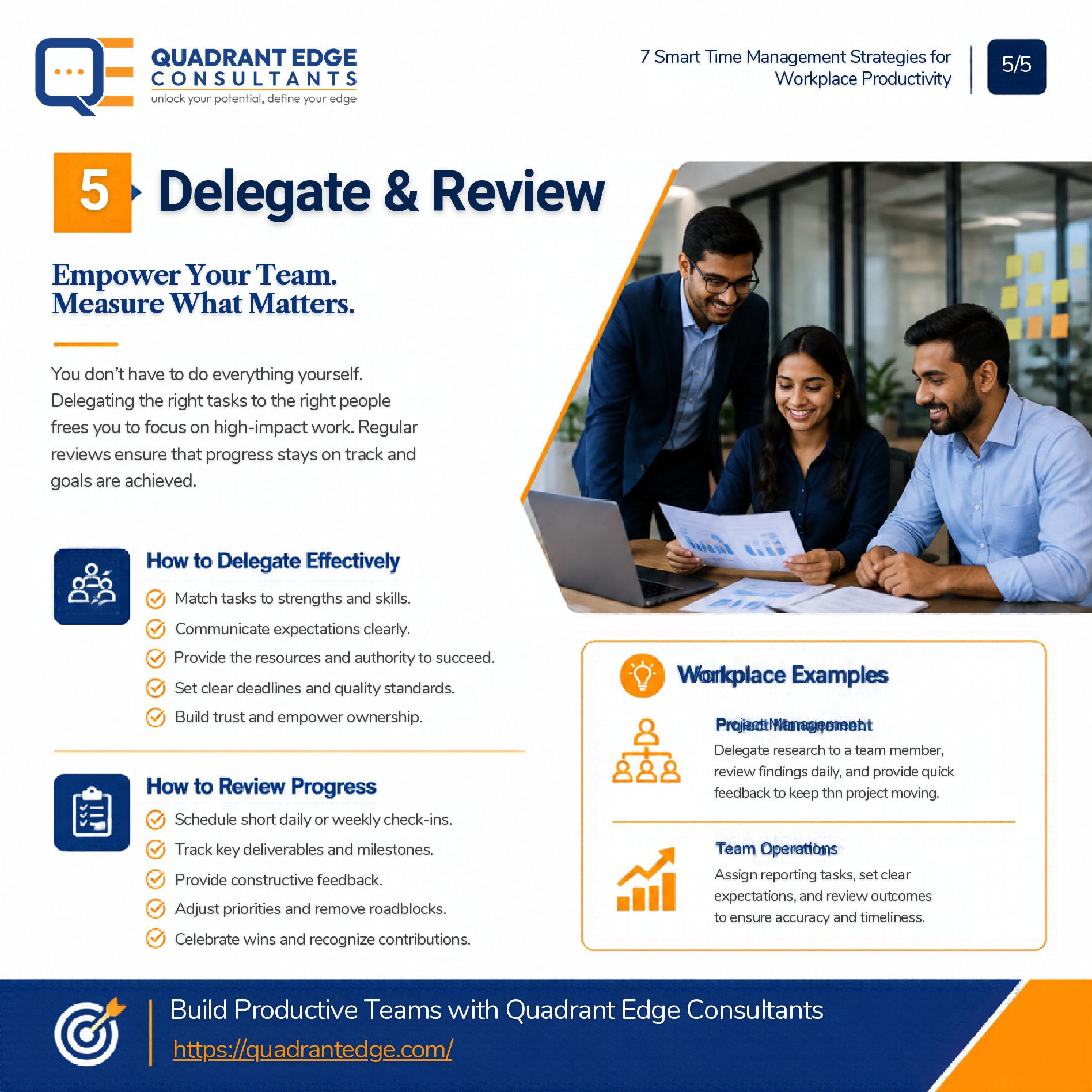
  5. 7 Smart Time Management Strategies for Workplace Productivity 5 Delegate

    & Review Empower Your Team. Measure What Matters. You don’t have to do everything yourself. Delegating the right tasks to the right people frees you to focus on high-impact work. Regular reviews ensure that progress stays on track and goals are achieved. Match tasks to strengths and skills. Communicate expectations clearly. Provide the resources and authority to succeed. Set clear deadlines and quality standards. Build trust and empower ownership. Workplace Examples Project Management Delegate research to a team member, review findings daily, and provide quick feedback to keep thn project moving. Schedule short daily or weekly check-ins. Track key deliverables and milestones. Team Operations Provide constructive feedback. Assign reporting tasks, set clear expectations, and review outcomes to ensure accuracy and timeliness. Adjust priorities and remove roadblocks. Celebrate wins and recognize contributions. Build Productive Teams with Quadrant Edge Consultants https://quadrantedge.com/ 5/5