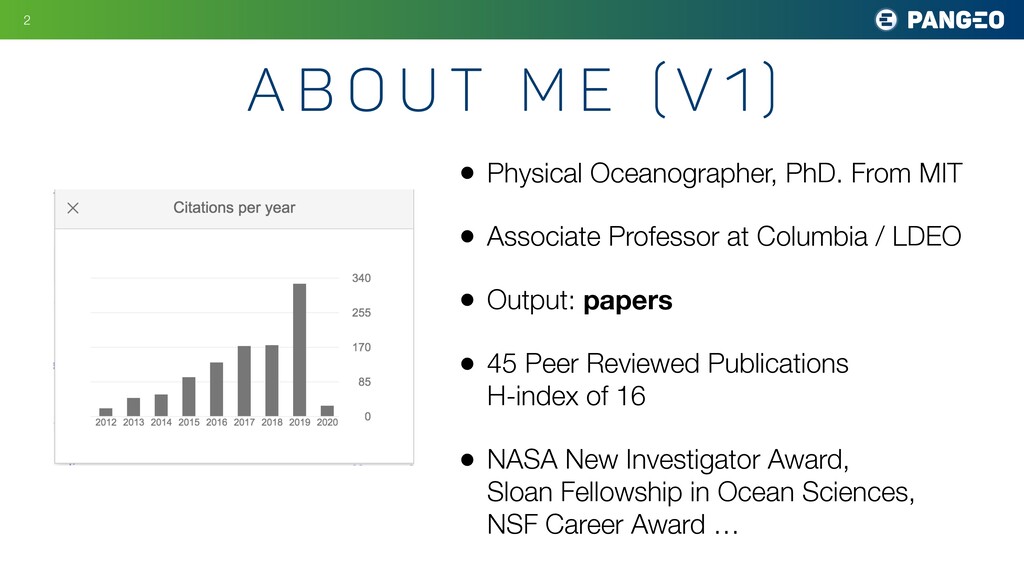
) !2 • Physical Oceanographer, PhD. From MIT • Associate Professor at Columbia / LDEO • Output: papers • 45 Peer Reviewed Publications H-index of 16 • NASA New Investigator Award, Sloan Fellowship in Ocean Sciences, NSF Career Award …
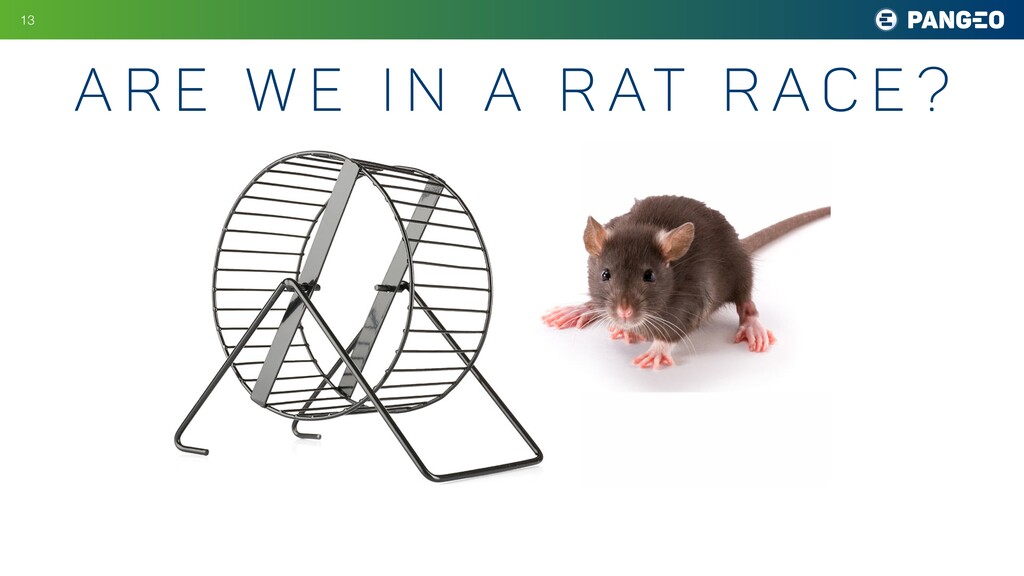
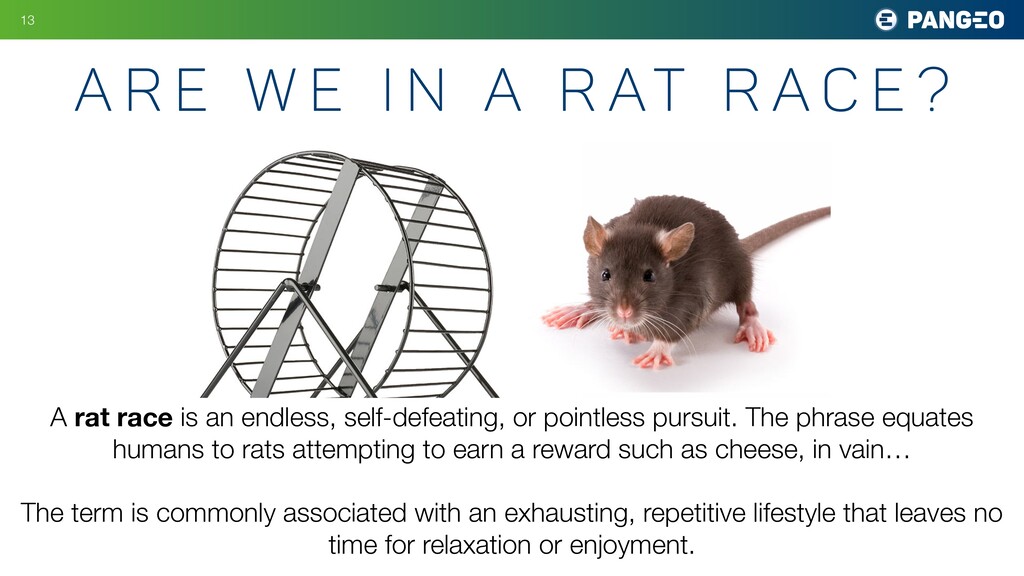
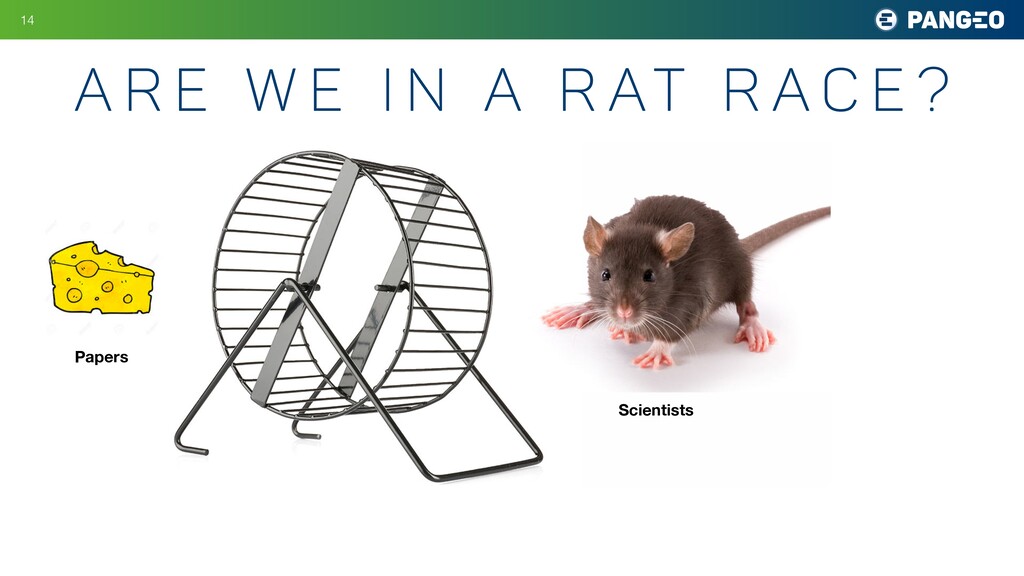
r a c e ? !13 A rat race is an endless, self-defeating, or pointless pursuit. The phrase equates humans to rats attempting to earn a reward such as cheese, in vain… The term is commonly associated with an exhausting, repetitive lifestyle that leaves no time for relaxation or enjoyment.
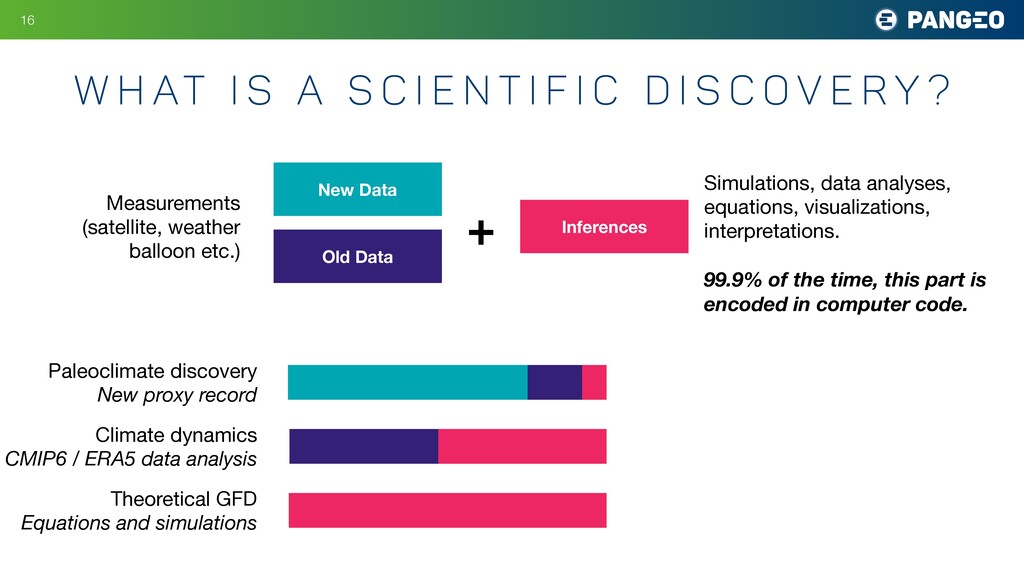
n t i f i c D i s c o v e r y ? !16 New Data Inferences + Measurements (satellite, weather balloon etc.) Simulations, data analyses, equations, visualizations, interpretations. 99.9% of the time, this part is encoded in computer code. Old Data Paleoclimate discovery New proxy record Climate dynamics CMIP6 / ERA5 data analysis Theoretical GFD Equations and simulations
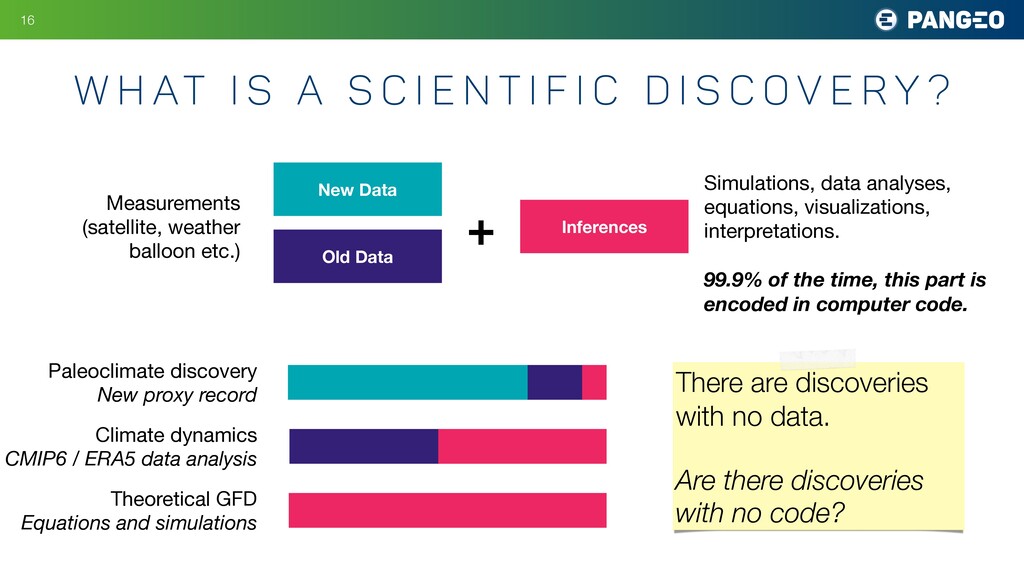
n t i f i c D i s c o v e r y ? !16 New Data Inferences + Measurements (satellite, weather balloon etc.) Simulations, data analyses, equations, visualizations, interpretations. 99.9% of the time, this part is encoded in computer code. Old Data Paleoclimate discovery New proxy record Climate dynamics CMIP6 / ERA5 data analysis Theoretical GFD Equations and simulations There are discoveries with no data. Are there discoveries with no code?
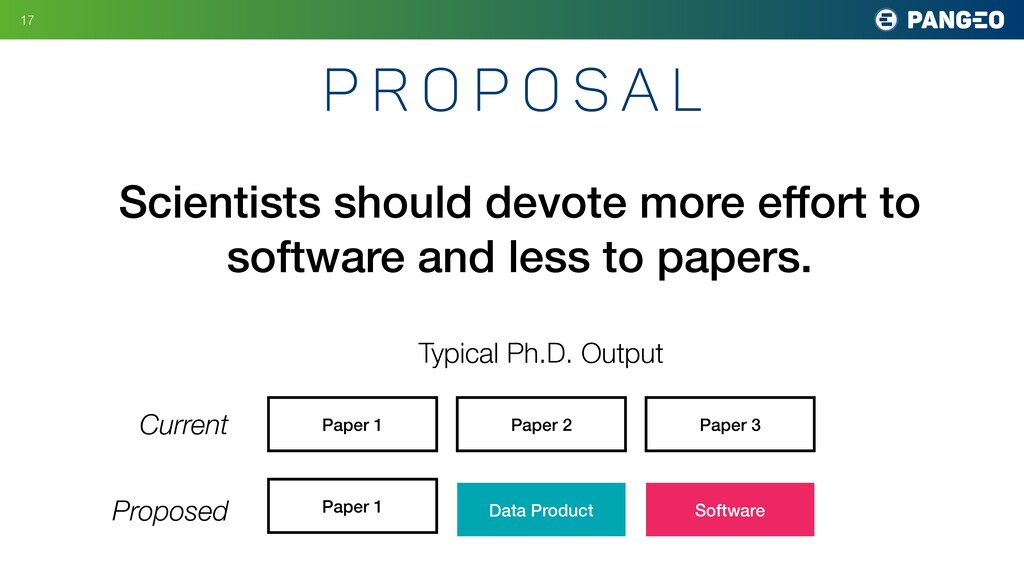
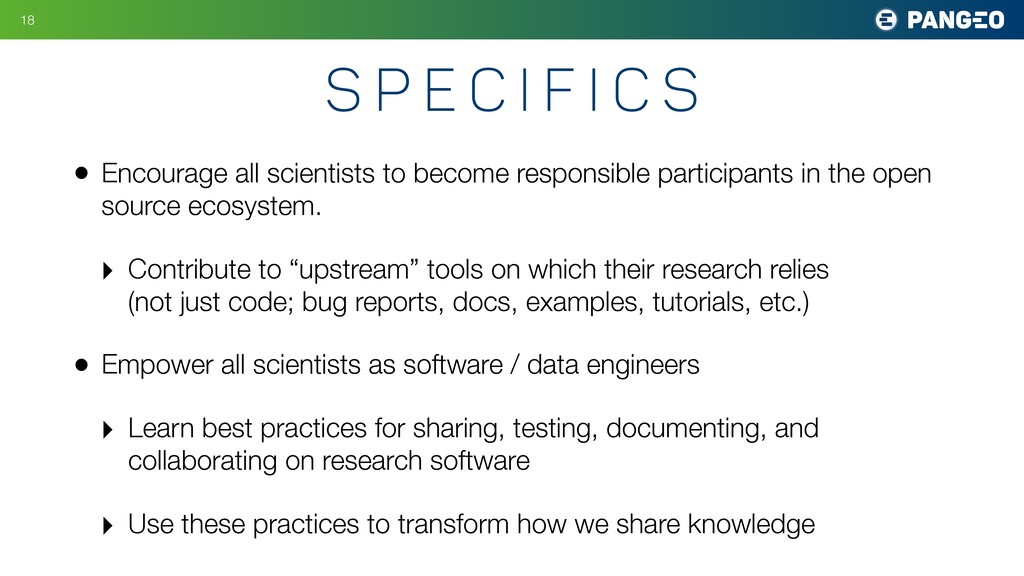
open source ecosystem. ‣ Contribute to “upstream” tools on which their research relies (not just code; bug reports, docs, examples, tutorials, etc.) • Empower all scientists as software / data engineers ‣ Learn best practices for sharing, testing, documenting, and collaborating on research software ‣ Use these practices to transform how we share knowledge S p e c i f i c s !18
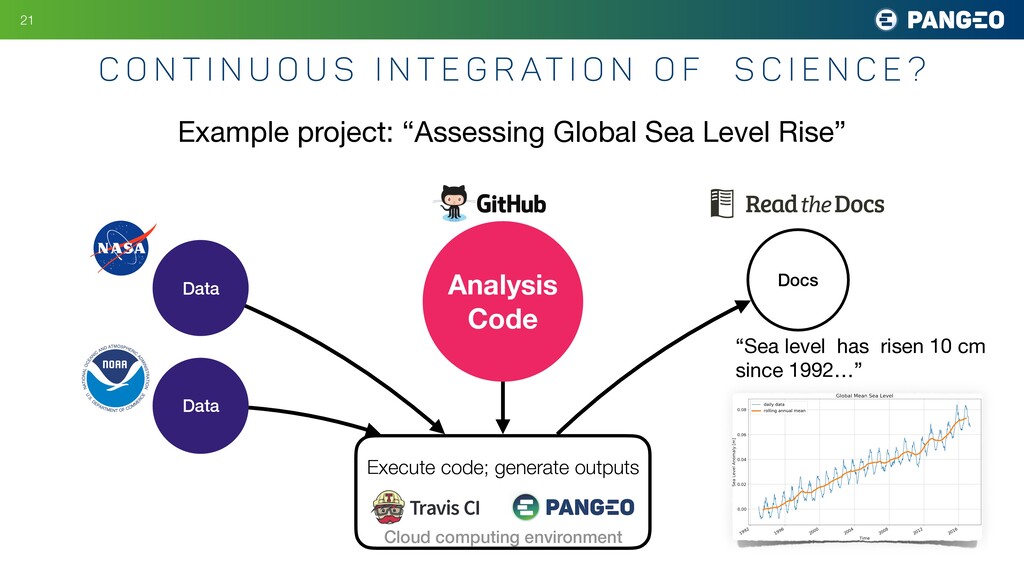
o u s I n t e g r at i o n o f S c i e n c e ? !21 Example project: “Assessing Global Sea Level Rise” Analysis Code Data Data Docs Execute code; generate outputs “Sea level has risen 10 cm since 1992…”
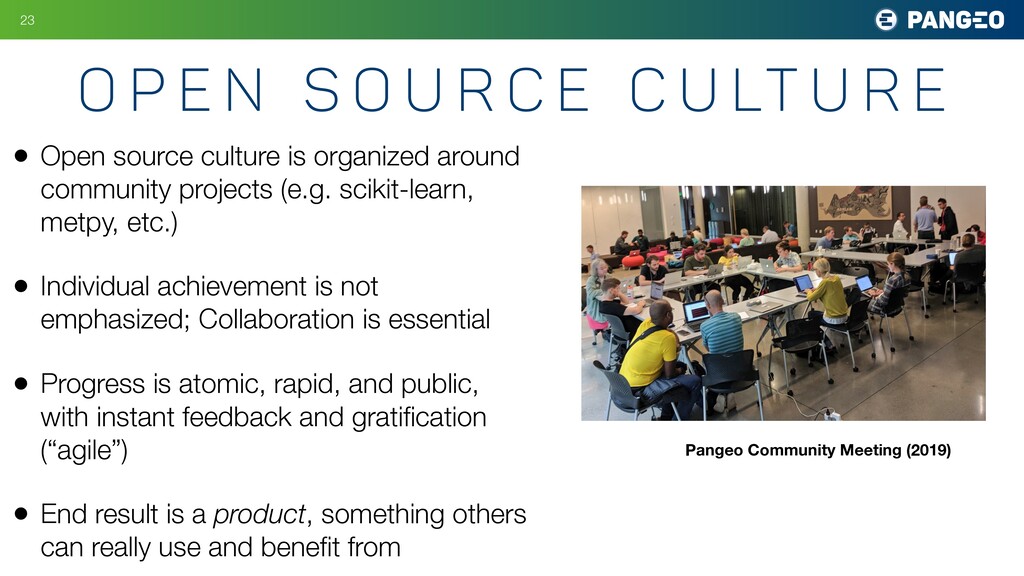
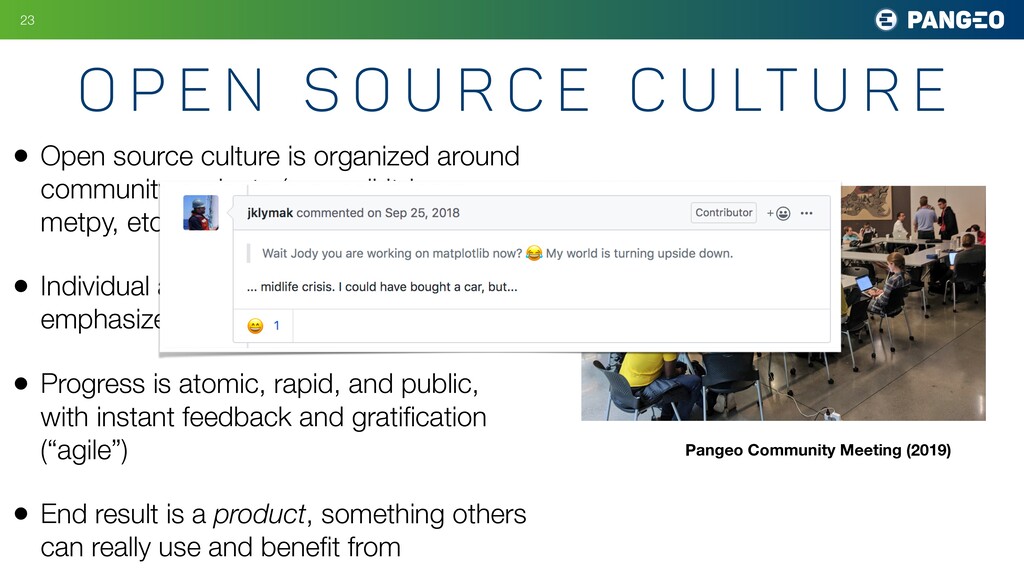
scikit-learn, metpy, etc.) • Individual achievement is not emphasized; Collaboration is essential • Progress is atomic, rapid, and public, with instant feedback and gratification (“agile”) • End result is a product, something others can really use and benefit from O P E N S O U R C E C U LT U R E !23 Pangeo Community Meeting (2019)
scikit-learn, metpy, etc.) • Individual achievement is not emphasized; Collaboration is essential • Progress is atomic, rapid, and public, with instant feedback and gratification (“agile”) • End result is a product, something others can really use and benefit from O P E N S O U R C E C U LT U R E !23 Pangeo Community Meeting (2019)
scikit-learn, metpy, etc.) • Individual achievement is not emphasized; Collaboration is essential • Progress is atomic, rapid, and public, with instant feedback and gratification (“agile”) • End result is a product, something others can really use and benefit from O P E N S O U R C E C U LT U R E !23 Pangeo Community Meeting (2019)
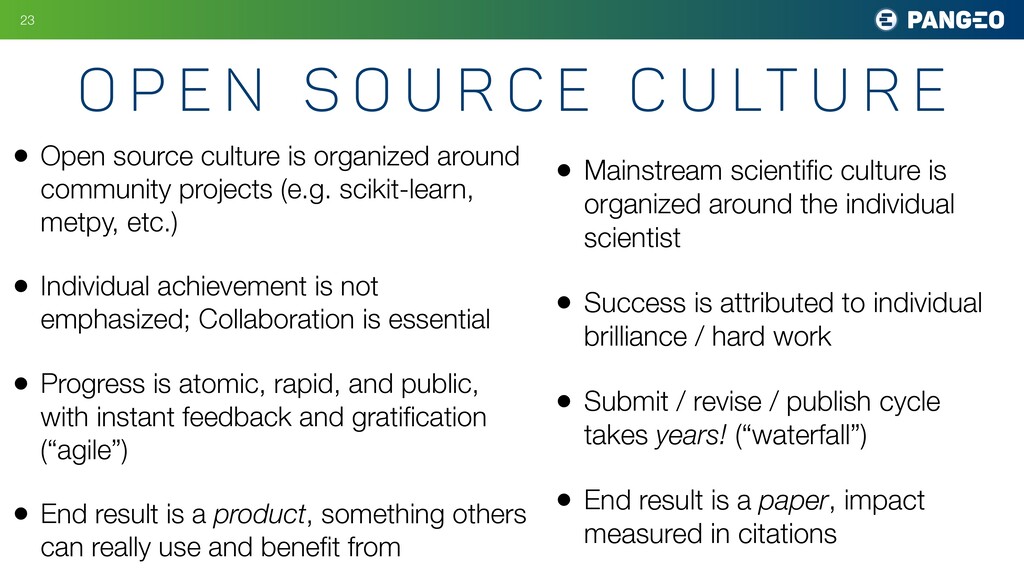
scikit-learn, metpy, etc.) • Individual achievement is not emphasized; Collaboration is essential • Progress is atomic, rapid, and public, with instant feedback and gratification (“agile”) • End result is a product, something others can really use and benefit from O P E N S O U R C E C U LT U R E !23 Pangeo Community Meeting (2019) • Mainstream scientific culture is organized around the individual scientist • Success is attributed to individual brilliance / hard work • Submit / revise / publish cycle takes years! (“waterfall”) • End result is a paper, impact measured in citations
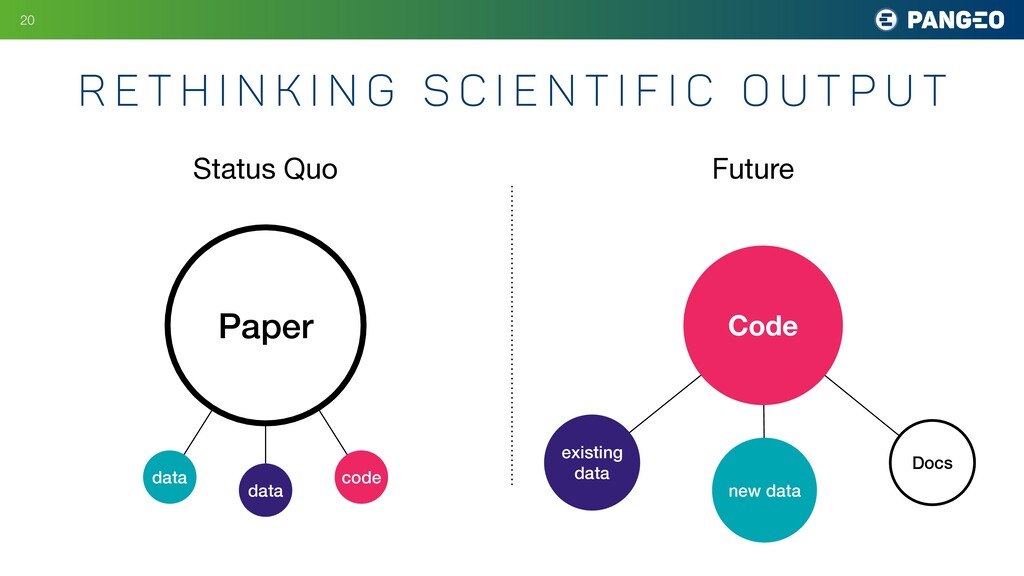
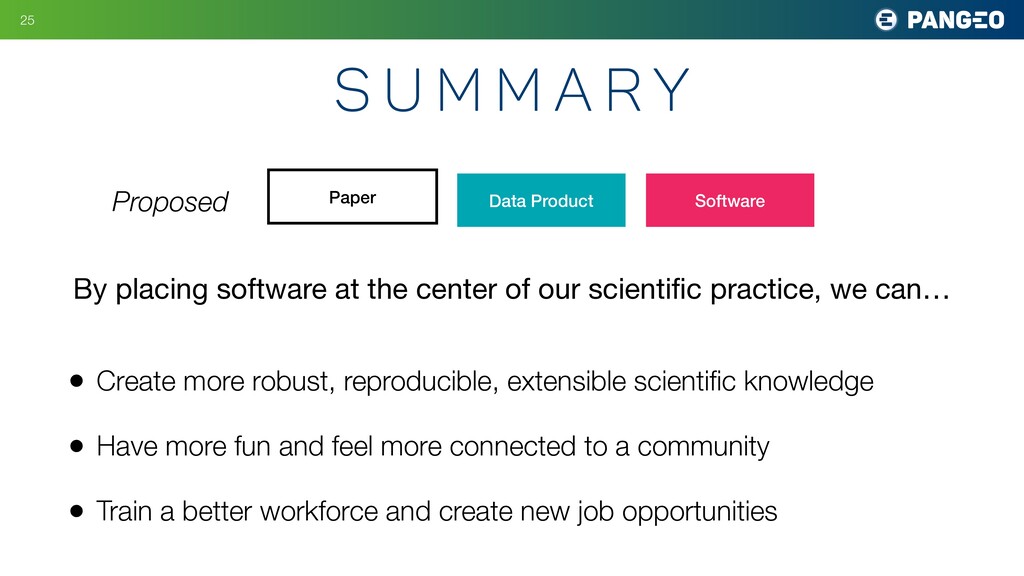
Product Software Paper By placing software at the center of our scientific practice, we can… • Create more robust, reproducible, extensible scientific knowledge • Have more fun and feel more connected to a community • Train a better workforce and create new job opportunities


 rabernat
 brainpadpr
 okana2ki
 miyayou
 mickey_kubo
 trycycle
 kusunokikeisuke
 nagano
 institutdelelevage
 sshimizu2006
 salt2
salt2
 kevinliebholz
 varn
varn
 stuffmc
 rasmusluckow
 addyosmani
 62gerente
 gr2m
gr2m
 jlugia
 baasie
 khoart
 keavy
keavy
 mongodb