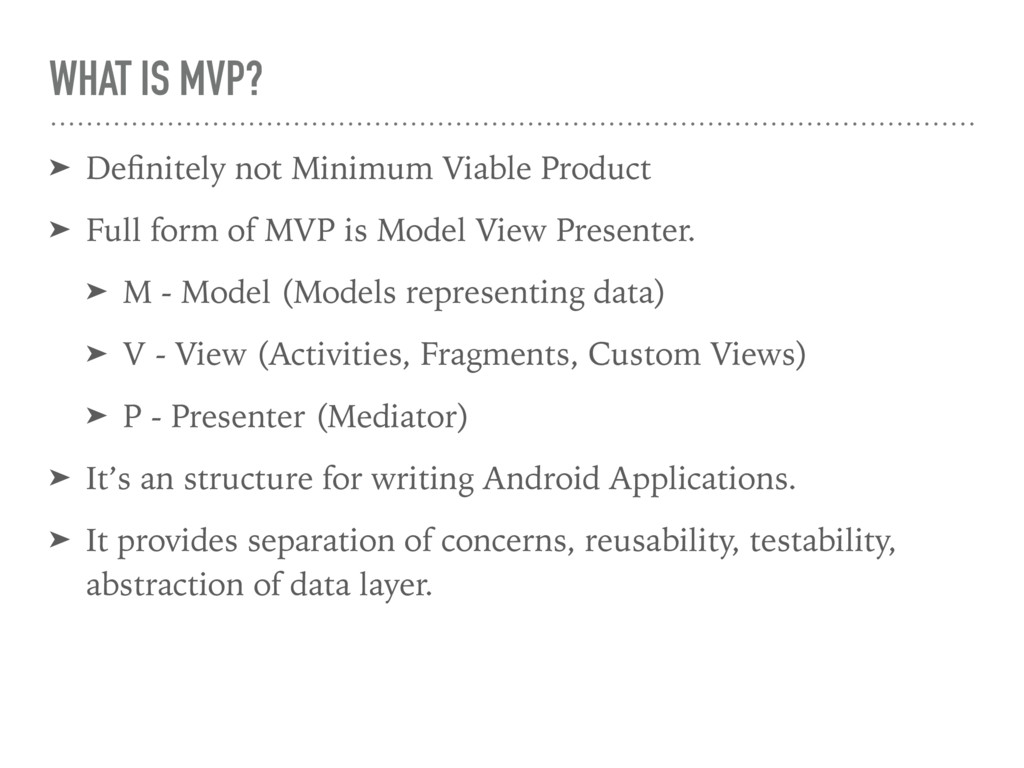
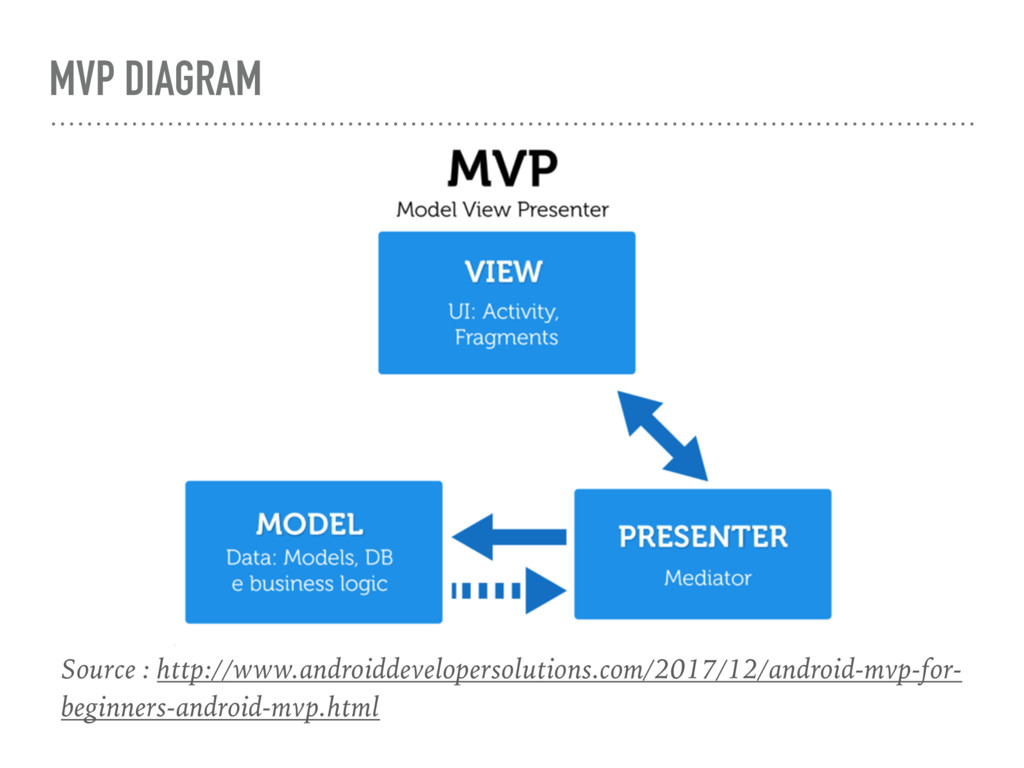
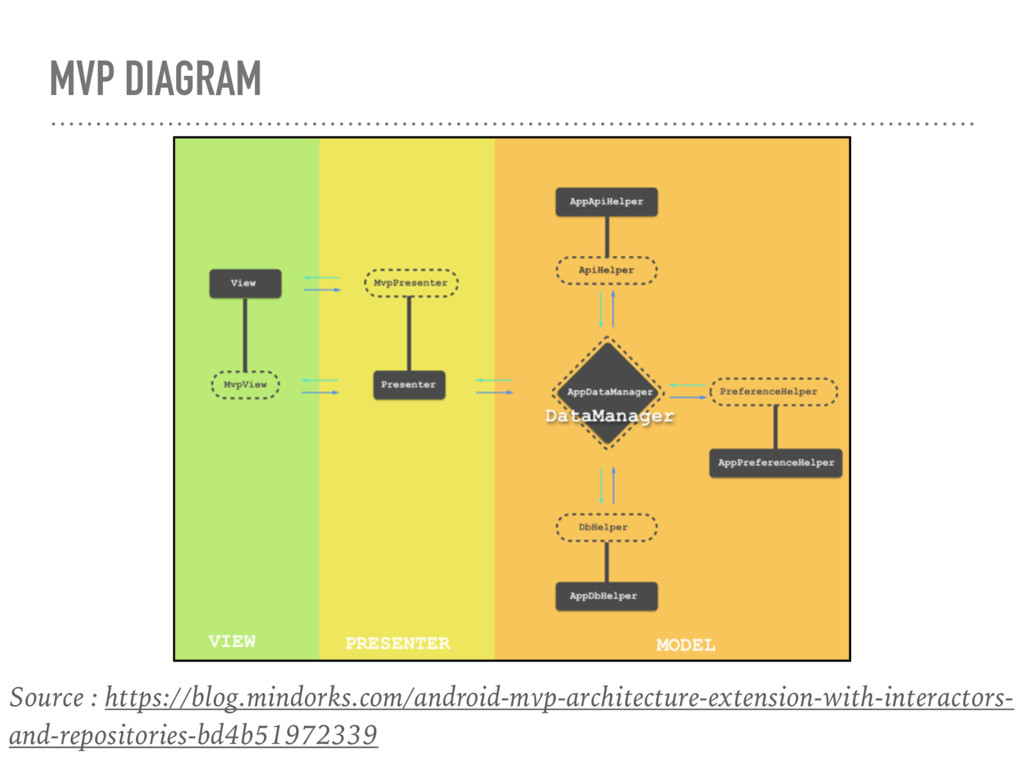
Full form of MVP is Model View Presenter. ➤ M - Model (Models representing data) ➤ V - View (Activities, Fragments, Custom Views) ➤ P - Presenter (Mediator) ➤ It’s an structure for writing Android Applications. ➤ It provides separation of concerns, reusability, testability, abstraction of data layer.
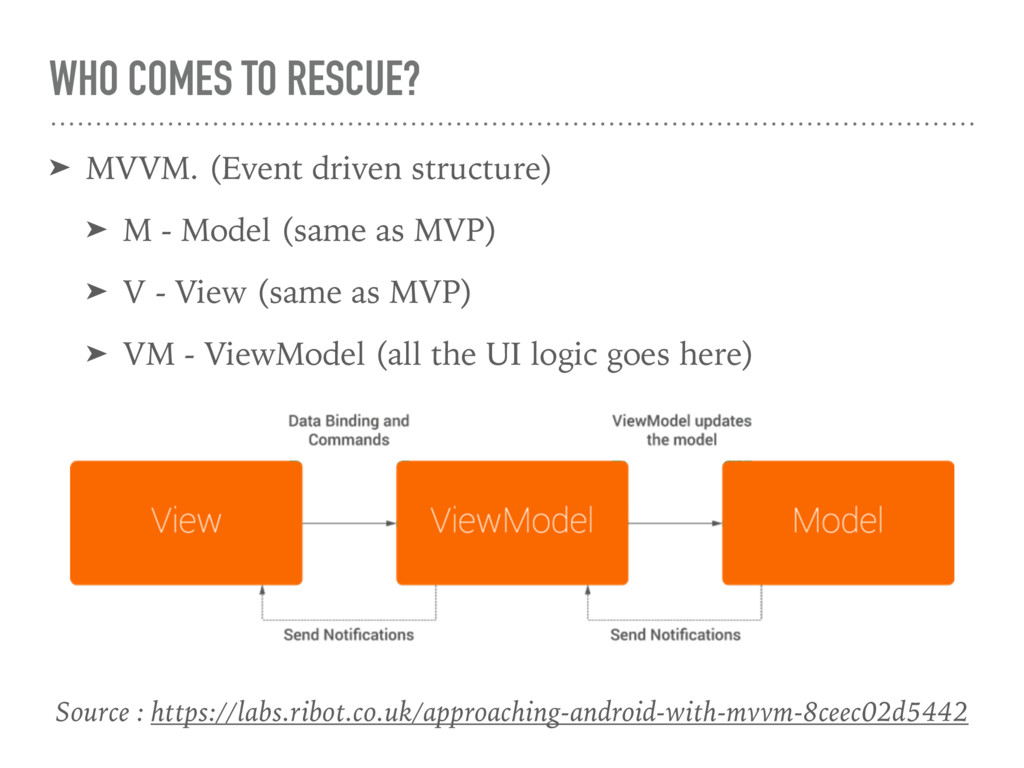
M - Model (same as MVP) ➤ V - View (same as MVP) ➤ VM - ViewModel (all the UI logic goes here) Source : https://labs.ribot.co.uk/approaching-android-with-mvvm-8ceec02d5442
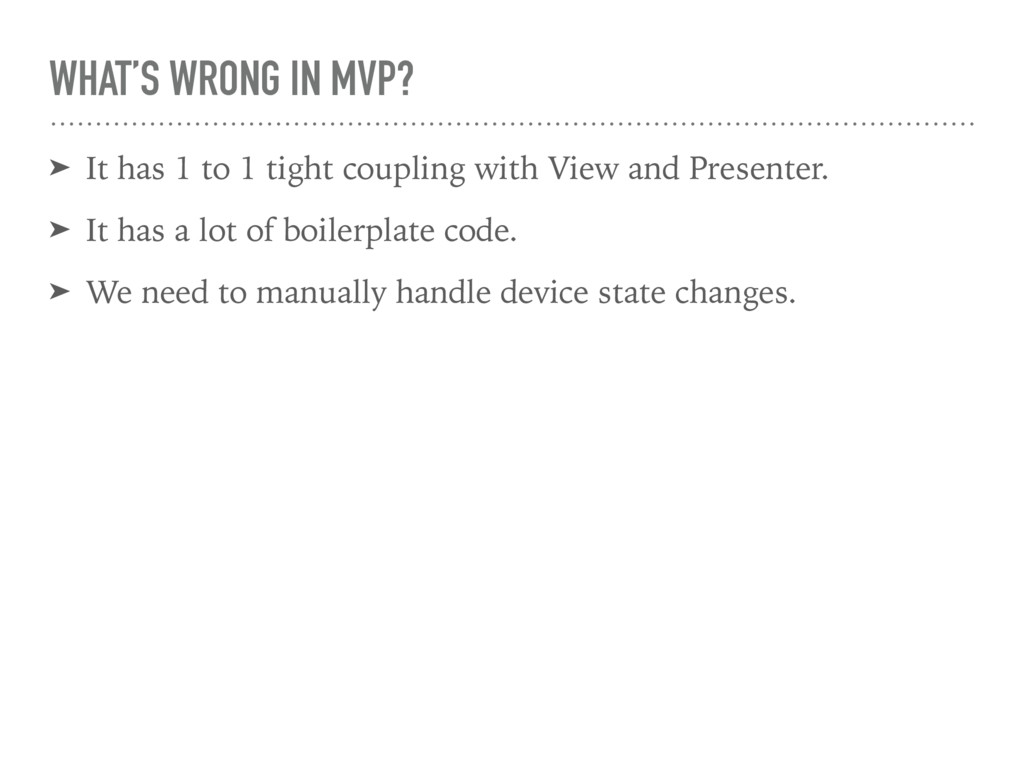
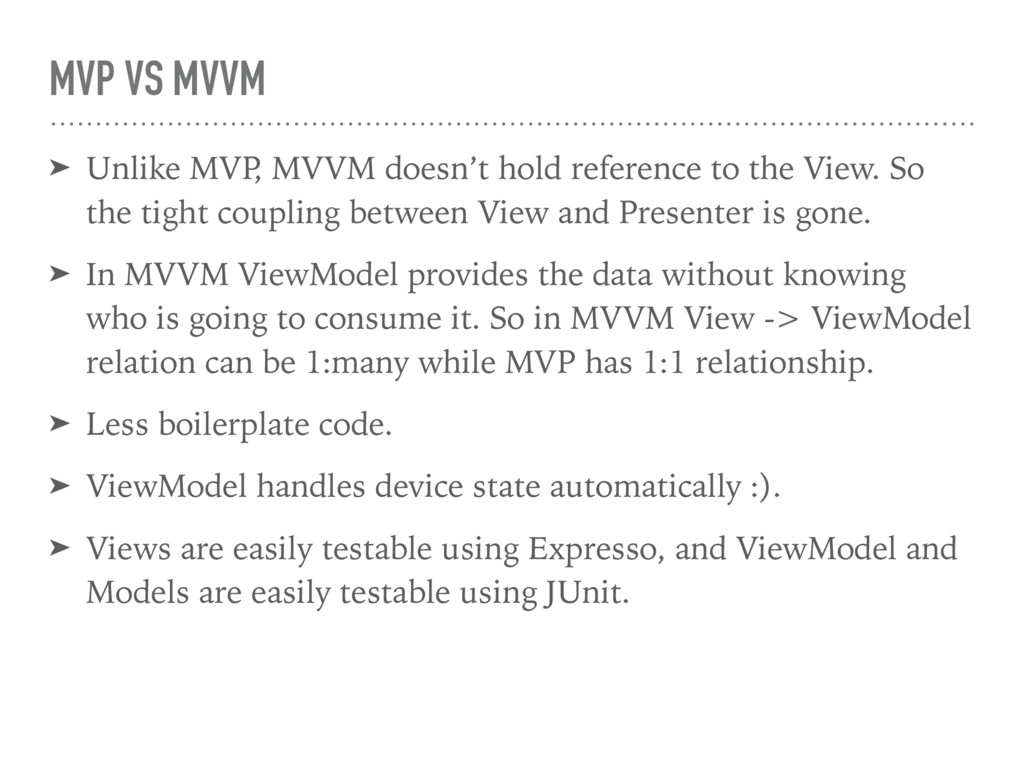
reference to the View. So the tight coupling between View and Presenter is gone. ➤ In MVVM ViewModel provides the data without knowing who is going to consume it. So in MVVM View -> ViewModel relation can be 1:many while MVP has 1:1 relationship. ➤ Less boilerplate code. ➤ ViewModel handles device state automatically :). ➤ Views are easily testable using Expresso, and ViewModel and Models are easily testable using JUnit.


 dske104
 uyuki234
 florets1
 koic
 steliosf
 falcon8823
 tomokon
 kasacchiful
 akase244
 minodriven
 iwatsukayura
 kishida
 jacobtomlinson
 reverentgeek
 keathley
 aleyda
 aemeredith
 cassininazir
 kimpetersen
 denniskardys
 addyosmani
 bkeepers
 samtorres