Upgrade to Pro — share decks privately, control downloads, hide ads and more …

Call a C API from Python becomes more enjoyable...

Call a C API from Python becomes more enjoyable with CFFI

Talk about CFFI for EuroPython 2017

Other Decks in Programming

Transcript

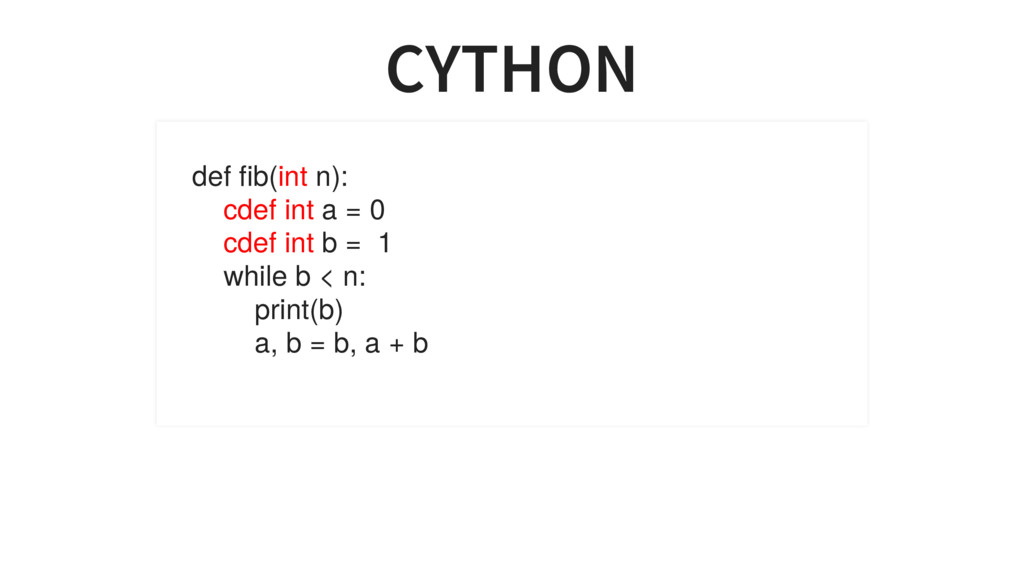
  1. CYTHON def fib(int n): cdef int a = 0 cdef

    int b = 1 while b < n: print(b) a, b = b, a + b
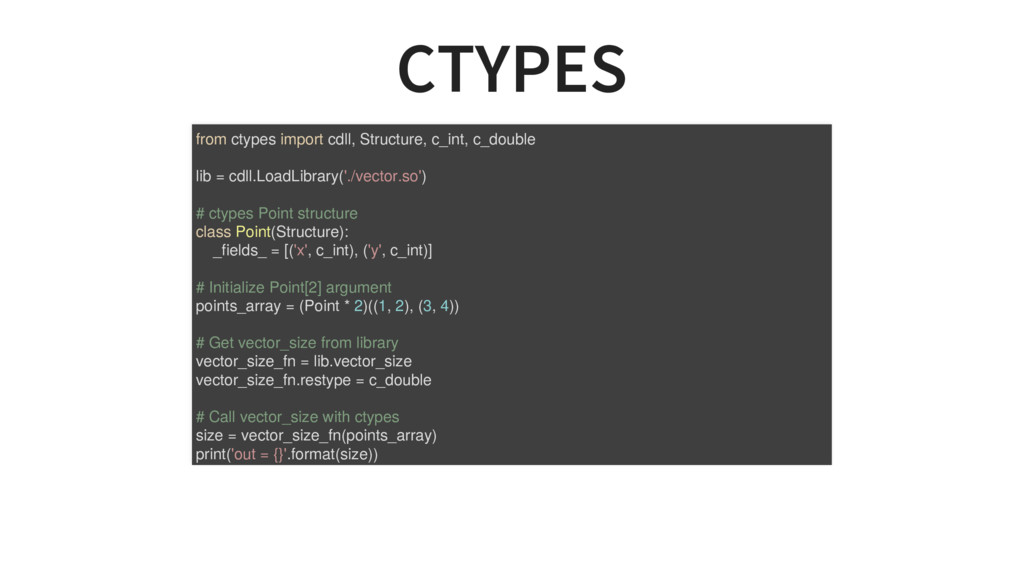
  2. CTYPES from ctypes import cdll, Structure, c_int, c_double lib =

    cdll.LoadLibrary('./vector.so') # ctypes Point structure class Point(Structure): _fields_ = [('x', c_int), ('y', c_int)] # Initialize Point[2] argument points_array = (Point * 2)((1, 2), (3, 4)) # Get vector_size from library vector_size_fn = lib.vector_size vector_size_fn.restype = c_double # Call vector_size with ctypes size = vector_size_fn(points_array) print('out = {}'.format(size))
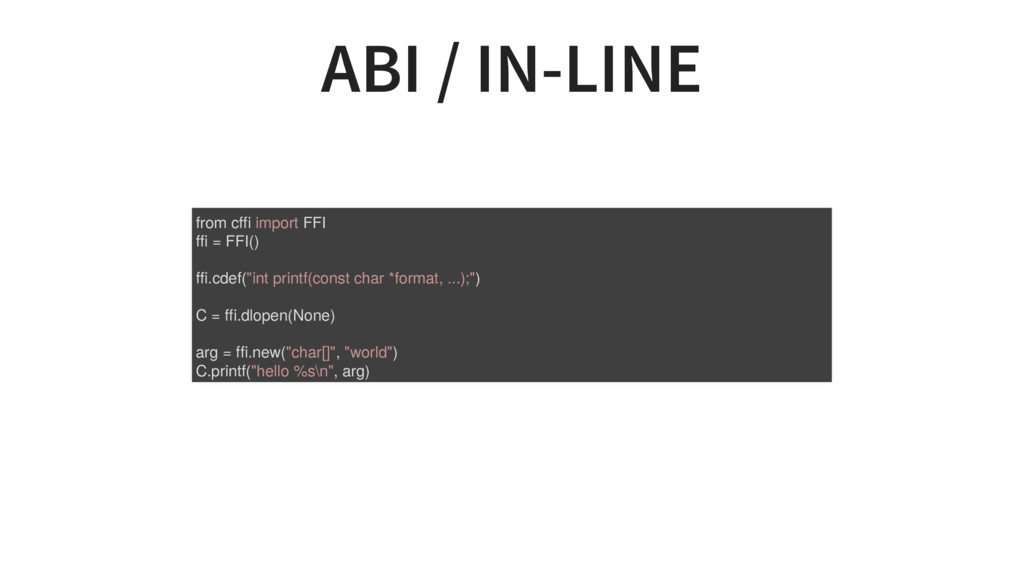
  3. ABI / IN-LINE from cffi import FFI ffi = FFI()

    ffi.cdef("int printf(const char *format, ...);") C = ffi.dlopen(None) arg = ffi.new("char[]", "world") C.printf("hello %s\n", arg)
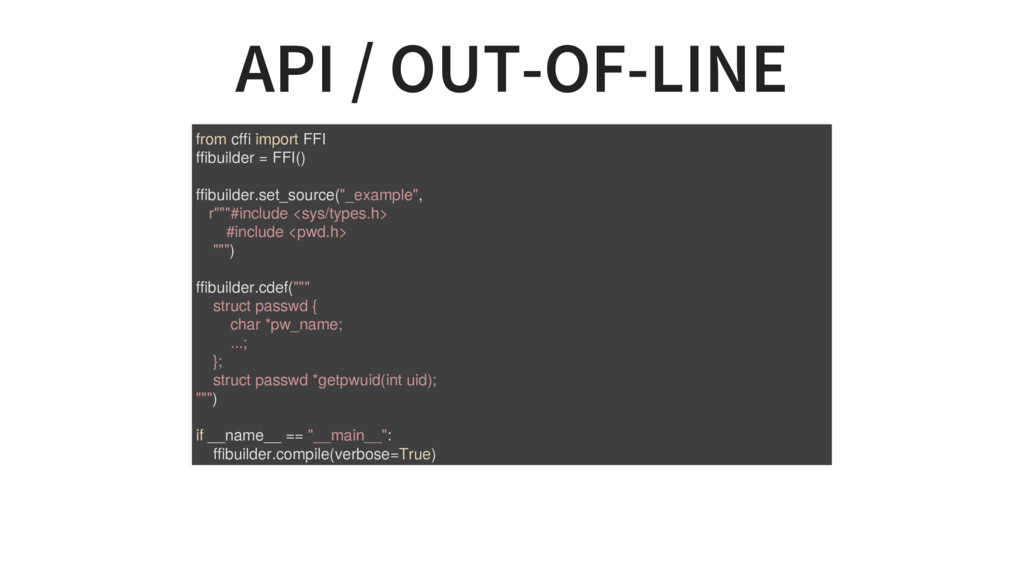
  4. API / OUT-OF-LINE from cffi import FFI ffibuilder = FFI()

    ffibuilder.set_source("_example", r"""#include <sys/types.h> #include <pwd.h> """) ffibuilder.cdef(""" struct passwd { char *pw_name; ...; }; struct passwd *getpwuid(int uid); """) if __name__ == "__main__": ffibuilder.compile(verbose=True)
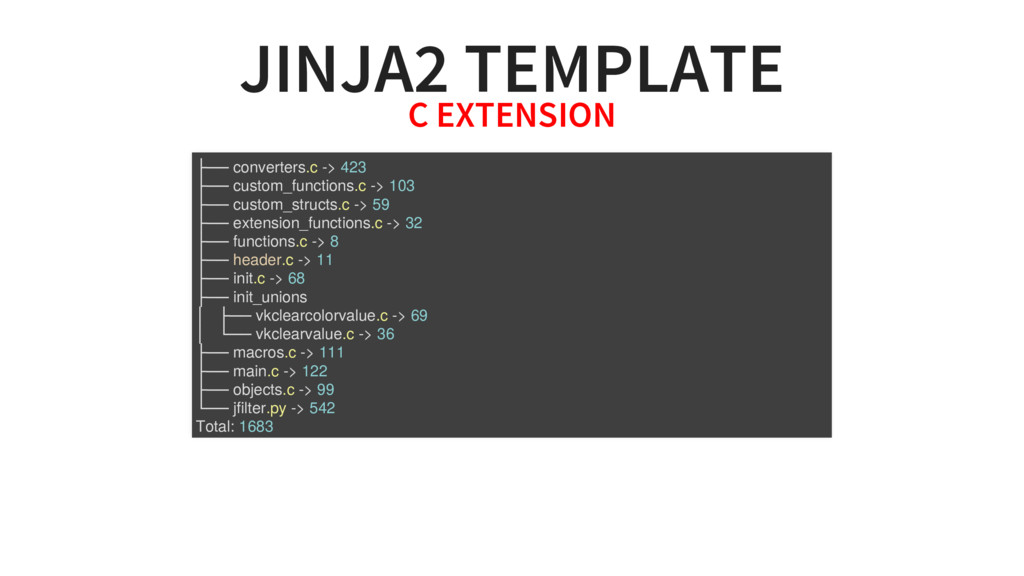
  5. JINJA2 TEMPLATE C EXTENSION ├── converters.c -> 423 ├── custom_functions.c

    -> 103 ├── custom_structs.c -> 59 ├── extension_functions.c -> 32 ├── functions.c -> 8 ├── header.c -> 11 ├── init.c -> 68 ├── init_unions │ ├── vkclearcolorvalue.c -> 69 │ └── vkclearvalue.c -> 36 ├── macros.c -> 111 ├── main.c -> 122 ├── objects.c -> 99 └── jfilter.py -> 542 Total: 1683
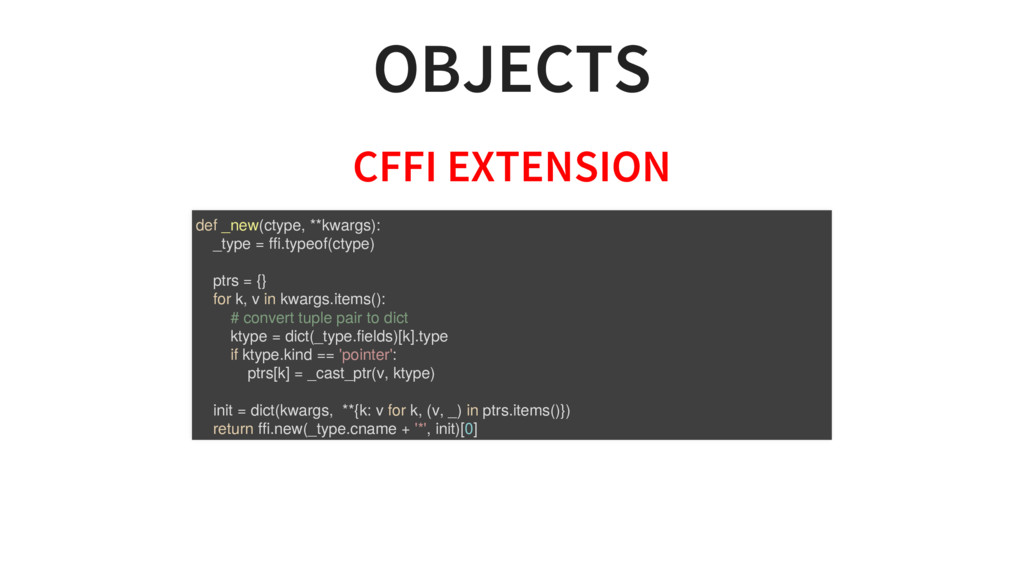
  6. OBJECTS CFFI EXTENSION def _new(ctype, **kwargs): _type = ffi.typeof(ctype) ptrs

    = {} for k, v in kwargs.items(): # convert tuple pair to dict ktype = dict(_type.fields)[k].type if ktype.kind == 'pointer': ptrs[k] = _cast_ptr(v, ktype) init = dict(kwargs, **{k: v for k, (v, _) in ptrs.items()}) return ffi.new(_type.cname + '*', init)[0]
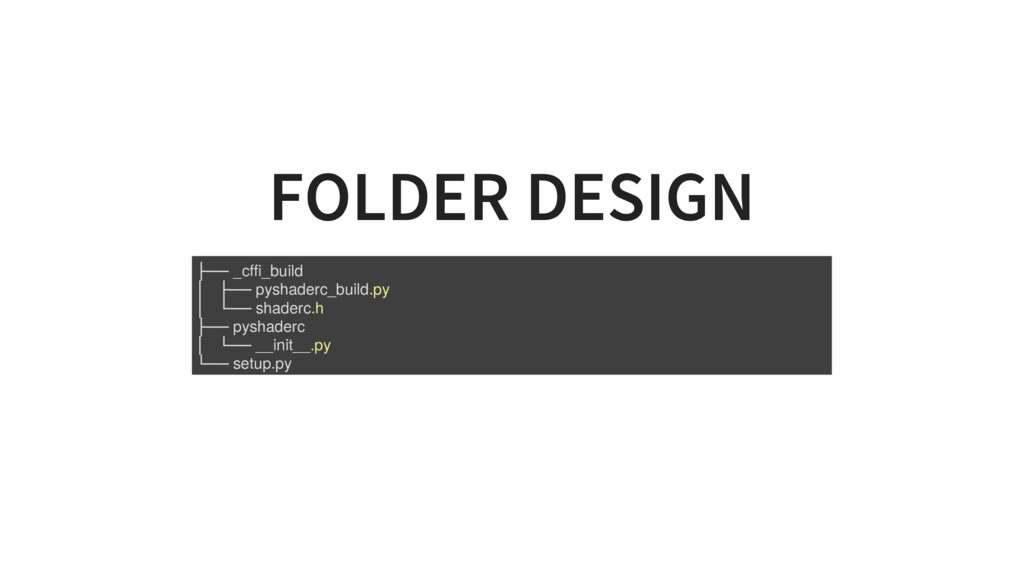
  7. FOLDER DESIGN ├── _cffi_build │ ├── pyshaderc_build.py │ └── shaderc.h

    ├── pyshaderc │ └── __init__.py └── setup.py
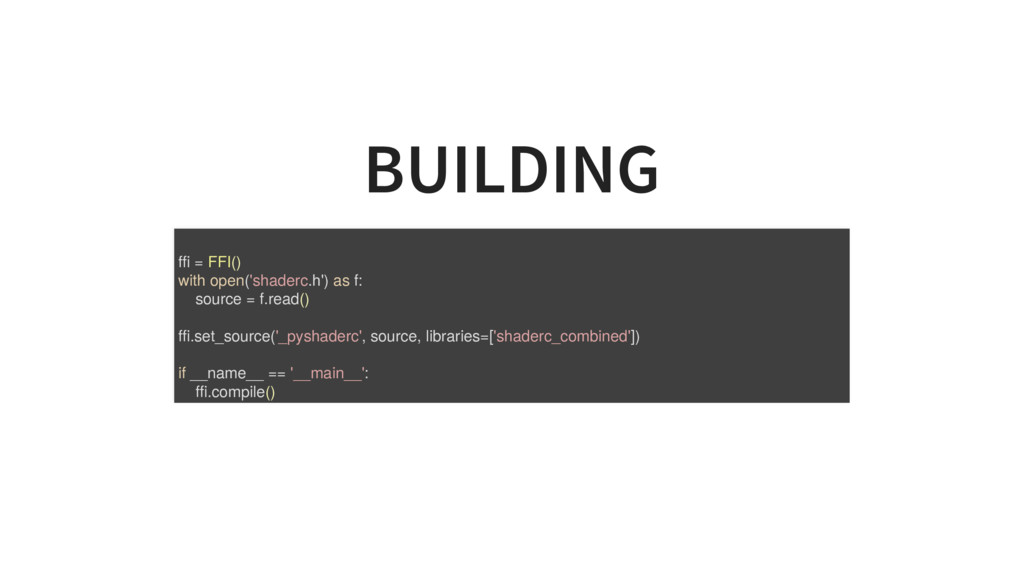
  8. BUILDING ffi = FFI() with open('shaderc.h') as f: source =

    f.read() ffi.set_source('_pyshaderc', source, libraries=['shaderc_combined']) if __name__ == '__main__': ffi.compile()
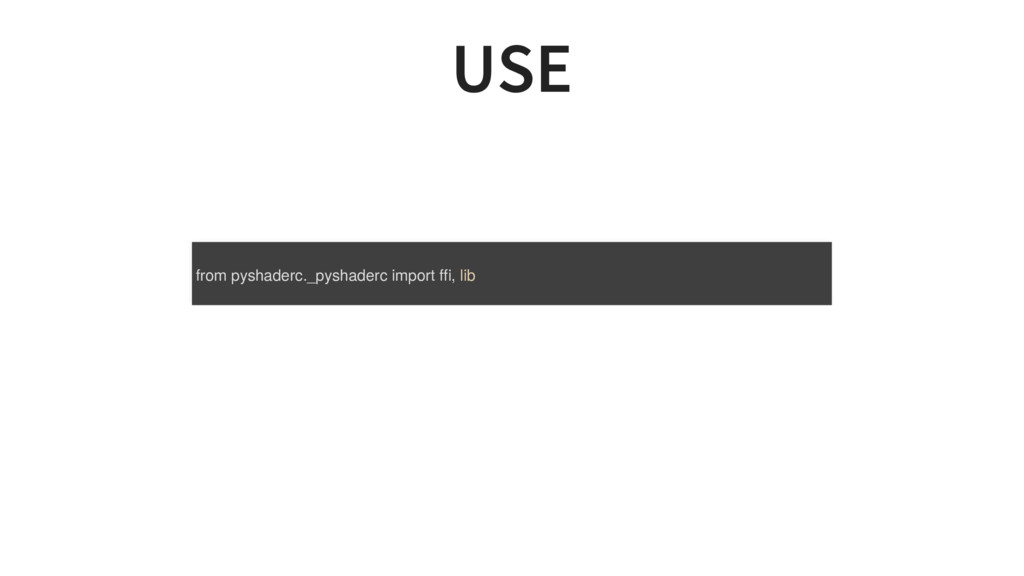
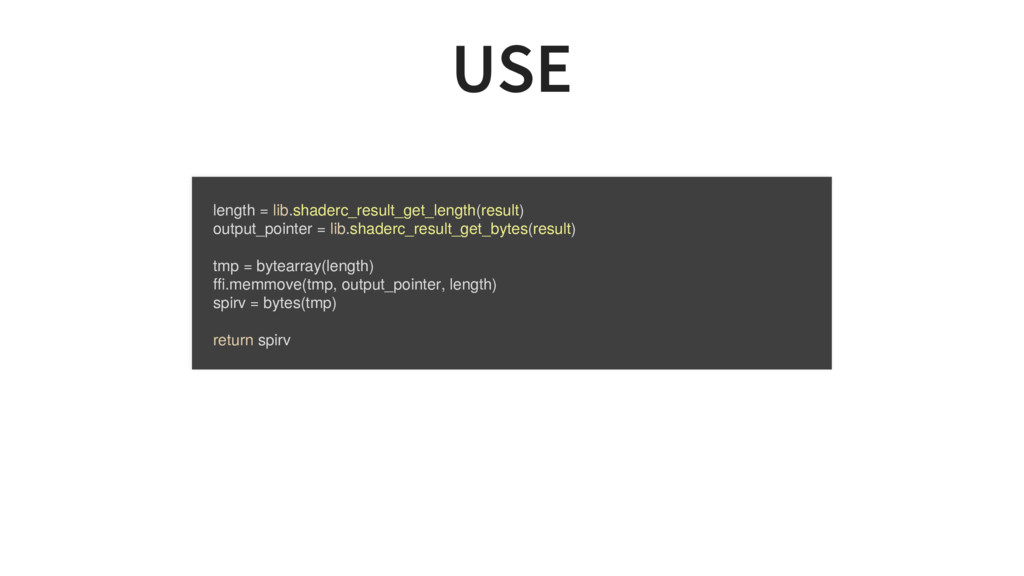
  9. USE

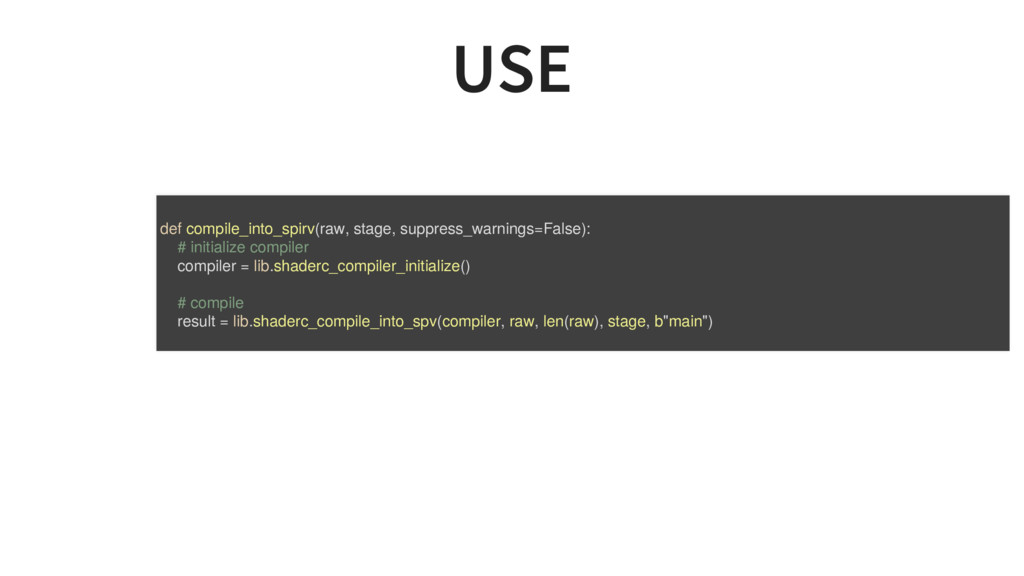
  10. USE def compile_into_spirv(raw, stage, suppress_warnings=False): # initialize compiler compiler =

    lib.shaderc_compiler_initialize() # compile result = lib.shaderc_compile_into_spv(compiler, raw, len(raw), stage, b"main")