Upgrade to Pro — share decks privately, control downloads, hide ads and more …

Learning in a VUCA world: IFRC FACT and ERU Glo...

Learning in a VUCA world: IFRC FACT and ERU Global Meeting (Vienna, 31 May…

Presentation at the IFRC FACT and ERU Global Meeting (Vienna, 31 May 2013), exploring how we learn in a world of volatility, uncertainty,

Avatar for RedaLearning

RedaLearning

May 31, 2013

Other Decks in Education

Transcript

  1. LEARNING IN A VUCA WORLD Reda Sadki Senior Officer, Learning

    systems International Federation of Red Cross and Red Crescent Societies FACT ERU Meeting, Vienna, 31 May 2013
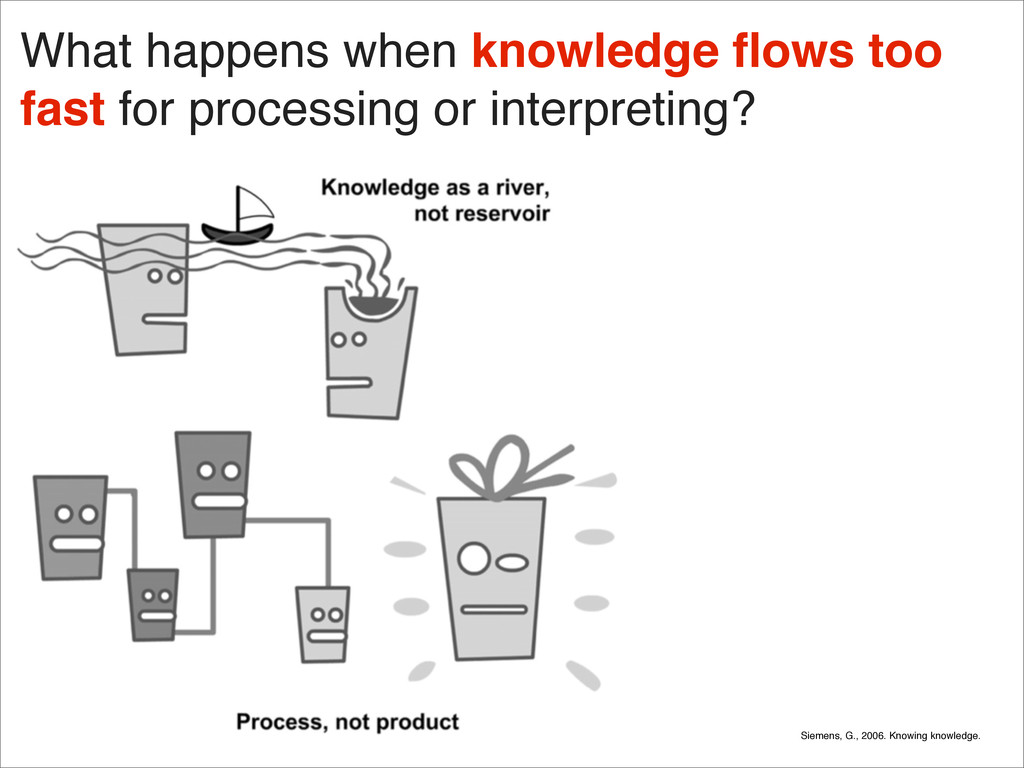
  2. What happens when knowledge flows too fast for processing or

    interpreting? Siemens, G., 2006. Knowing knowledge.
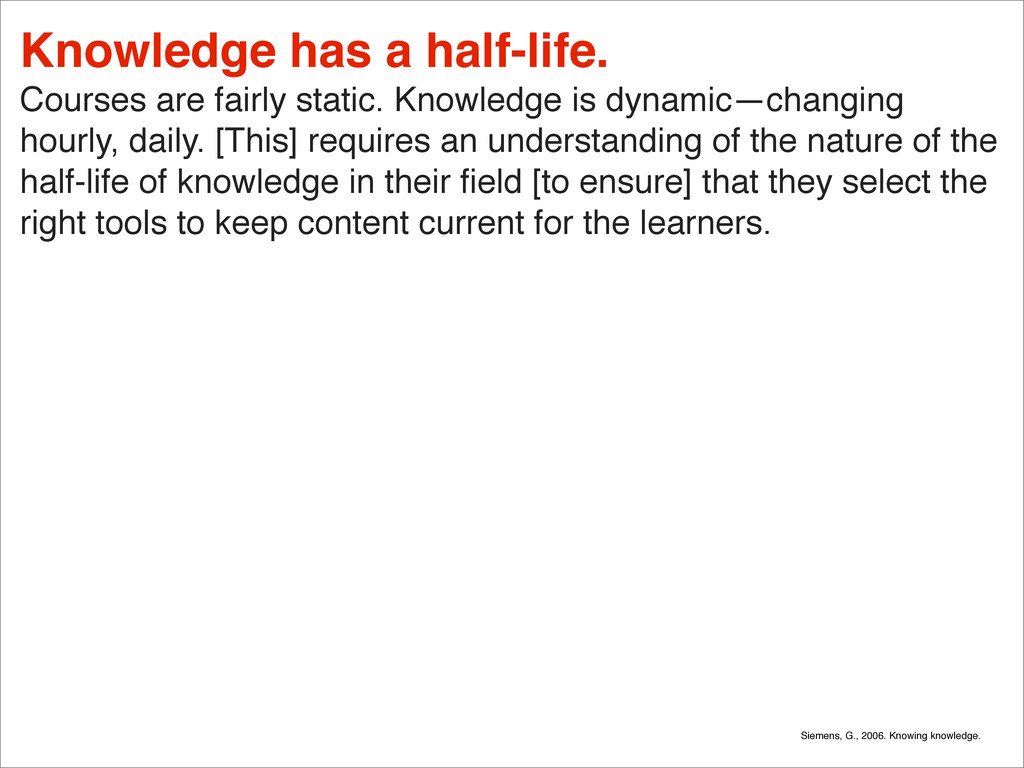
  3. Knowledge has a half-life. Courses are fairly static. Knowledge is

    dynamic—changing hourly, daily. [This] requires an understanding of the nature of the half-life of knowledge in their field [to ensure] that they select the right tools to keep content current for the learners. Siemens, G., 2006. Knowing knowledge.
  4. The skills and processes that will make us people of

    tomorrow are not yet embedded in our educational structures Siemens, G., 2006. Knowing knowledge.
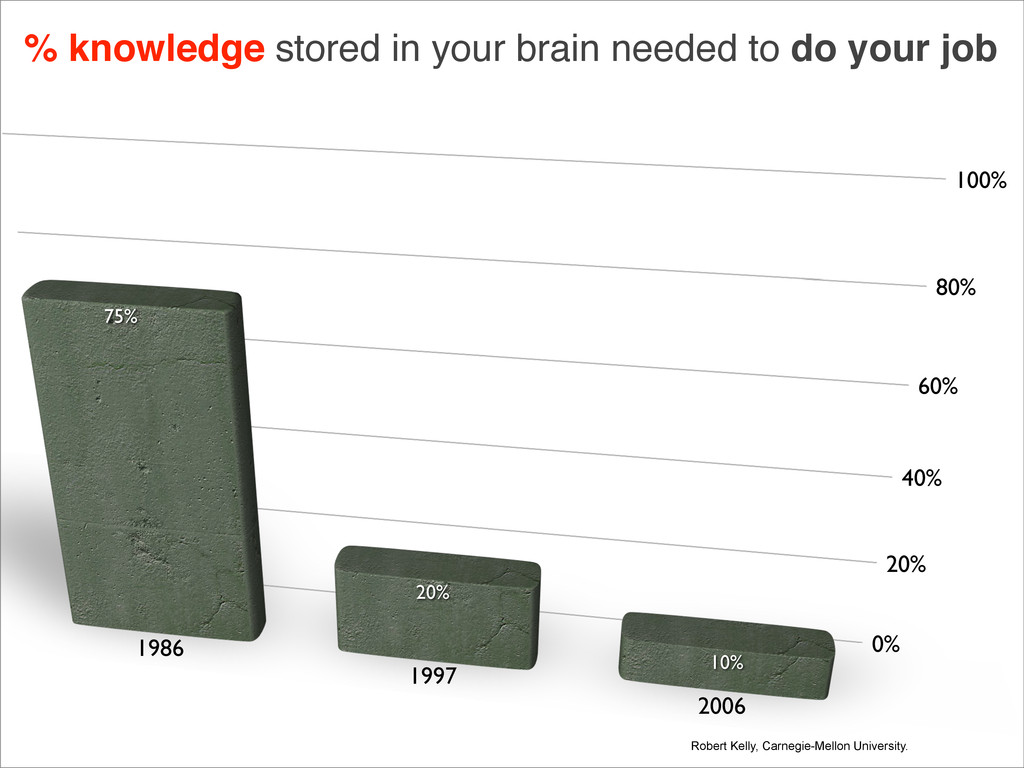
  5. % knowledge stored in your brain needed to do your

    job 0% 20% 40% 60% 80% 100% 75% 20% 10% 1986 1997 2006 Robert Kelly, Carnegie-Mellon University.
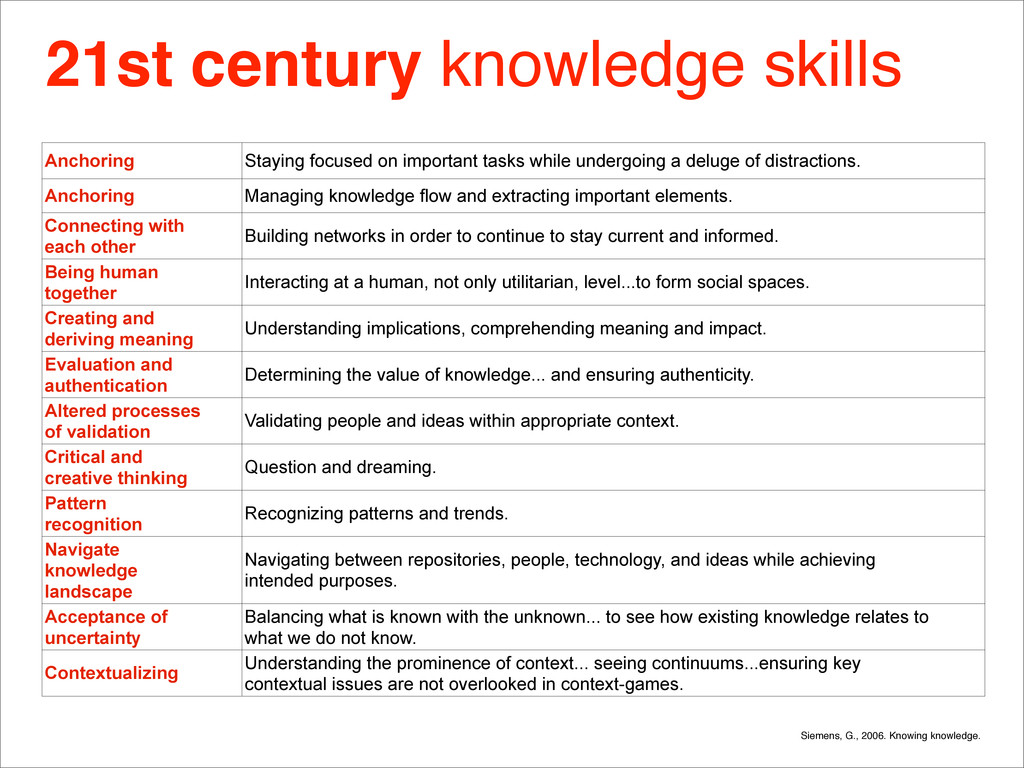
  6. 21st century knowledge skills Anchoring Staying focused on important tasks

    while undergoing a deluge of distractions. Anchoring Managing knowledge flow and extracting important elements. Connecting with each other Building networks in order to continue to stay current and informed. Being human together Interacting at a human, not only utilitarian, level...to form social spaces. Creating and deriving meaning Understanding implications, comprehending meaning and impact. Evaluation and authentication Determining the value of knowledge... and ensuring authenticity. Altered processes of validation Validating people and ideas within appropriate context. Critical and creative thinking Question and dreaming. Pattern recognition Recognizing patterns and trends. Navigate knowledge landscape Navigating between repositories, people, technology, and ideas while achieving intended purposes. Acceptance of uncertainty Balancing what is known with the unknown... to see how existing knowledge relates to what we do not know. Contextualizing Understanding the prominence of context... seeing continuums...ensuring key contextual issues are not overlooked in context-games. Siemens, G., 2006. Knowing knowledge.
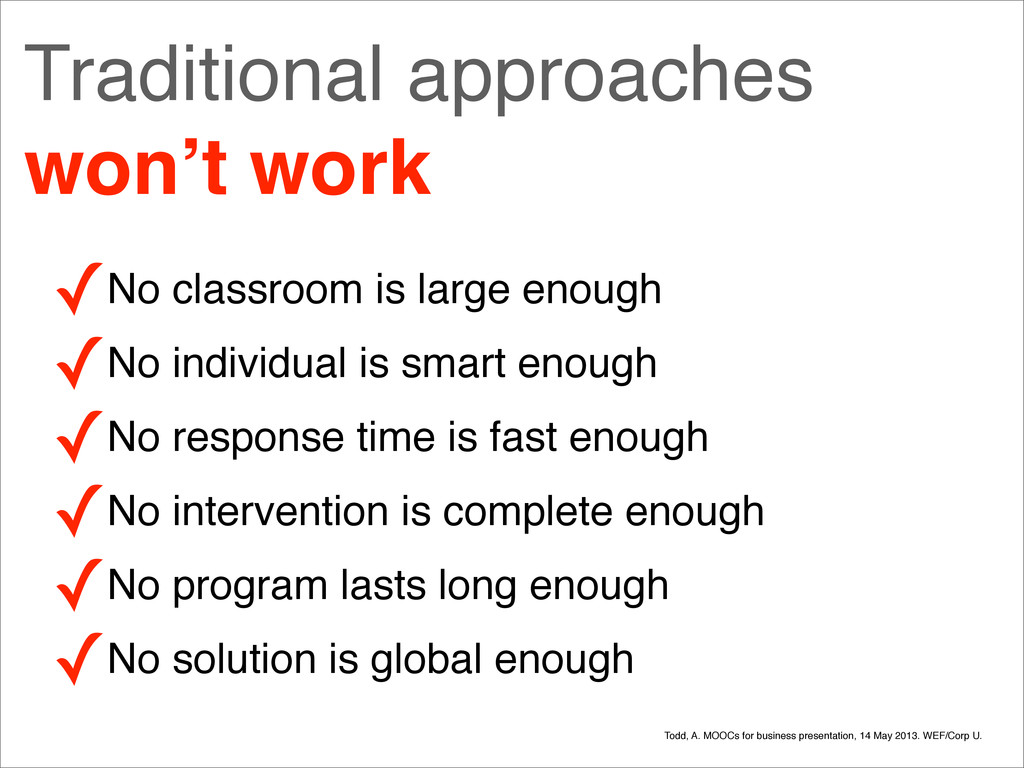
  7. Traditional approaches won’t work ✓No classroom is large enough ✓No

    individual is smart enough ✓No response time is fast enough ✓No intervention is complete enough ✓No program lasts long enough ✓No solution is global enough Todd, A. MOOCs for business presentation, 14 May 2013. WEF/Corp U.
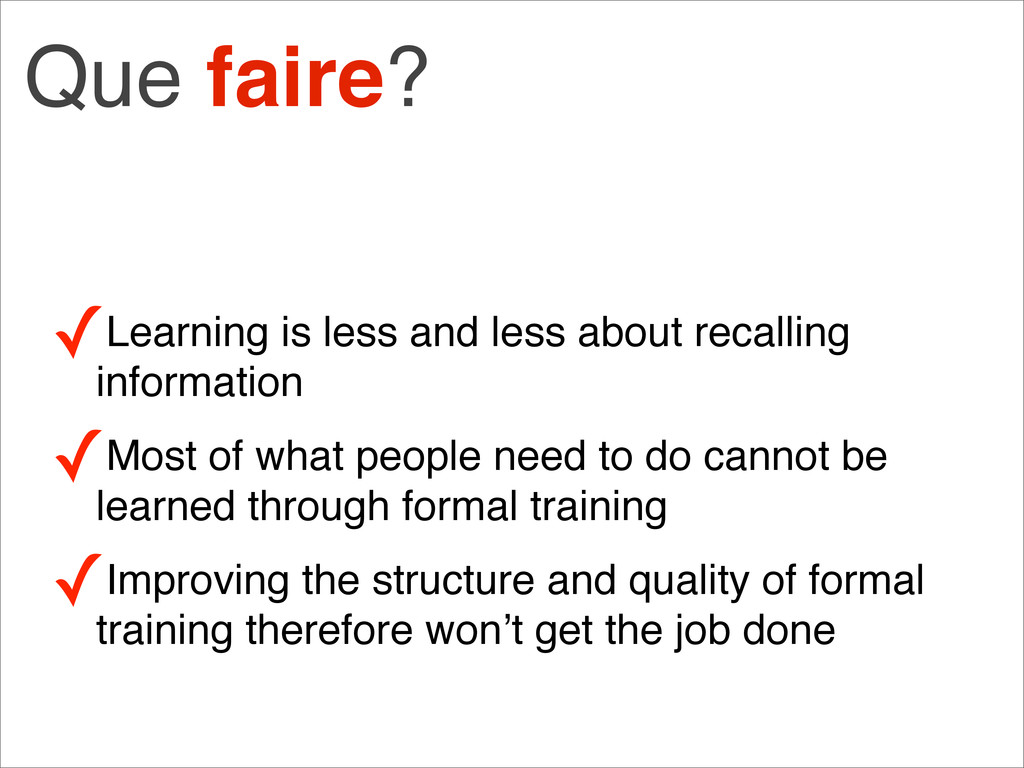
  8. Que faire? ✓Learning is less and less about recalling information

    ✓Most of what people need to do cannot be learned through formal training ✓Improving the structure and quality of formal training therefore won’t get the job done
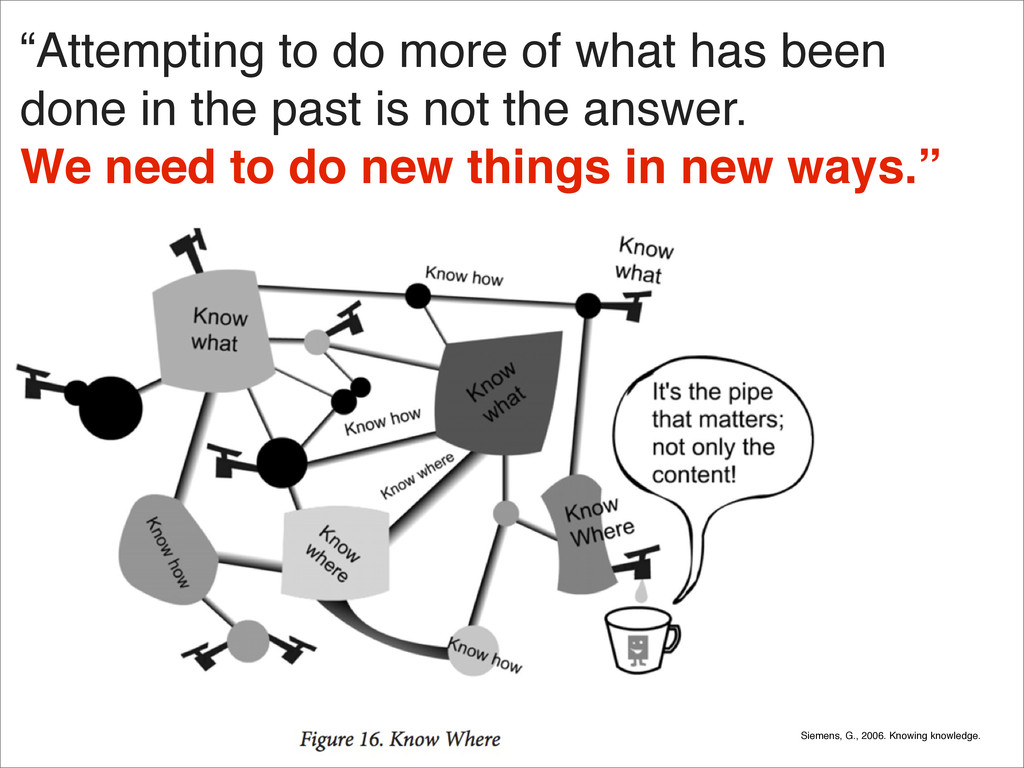
  9. “Attempting to do more of what has been done in

    the past is not the answer. We need to do new things in new ways.” Siemens, G., 2006. Knowing knowledge.
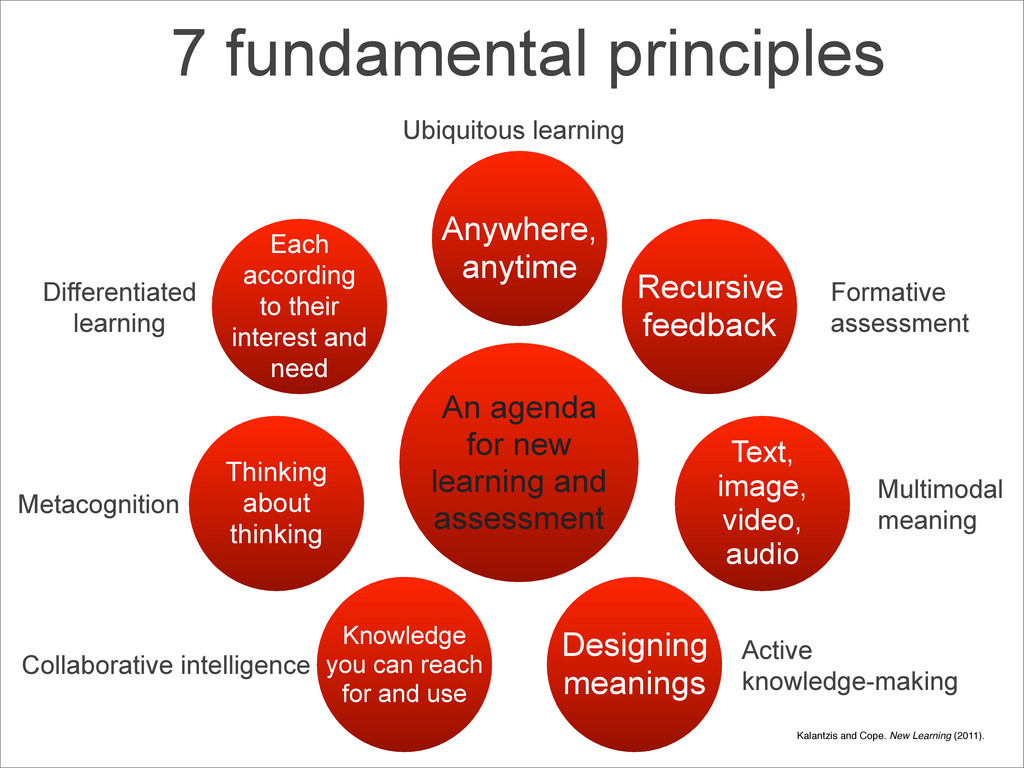
  10. 7 fundamental principles An agenda for new learning and assessment

    Anywhere, anytime Ubiquitous learning Recursive feedback Formative assessment Text, image, video, audio Multimodal meaning Designing meanings Active knowledge-making Knowledge you can reach for and use Collaborative intelligence Thinking about thinking Metacognition Each according to their interest and need Differentiated learning Kalantzis and Cope. New Learning (2011).
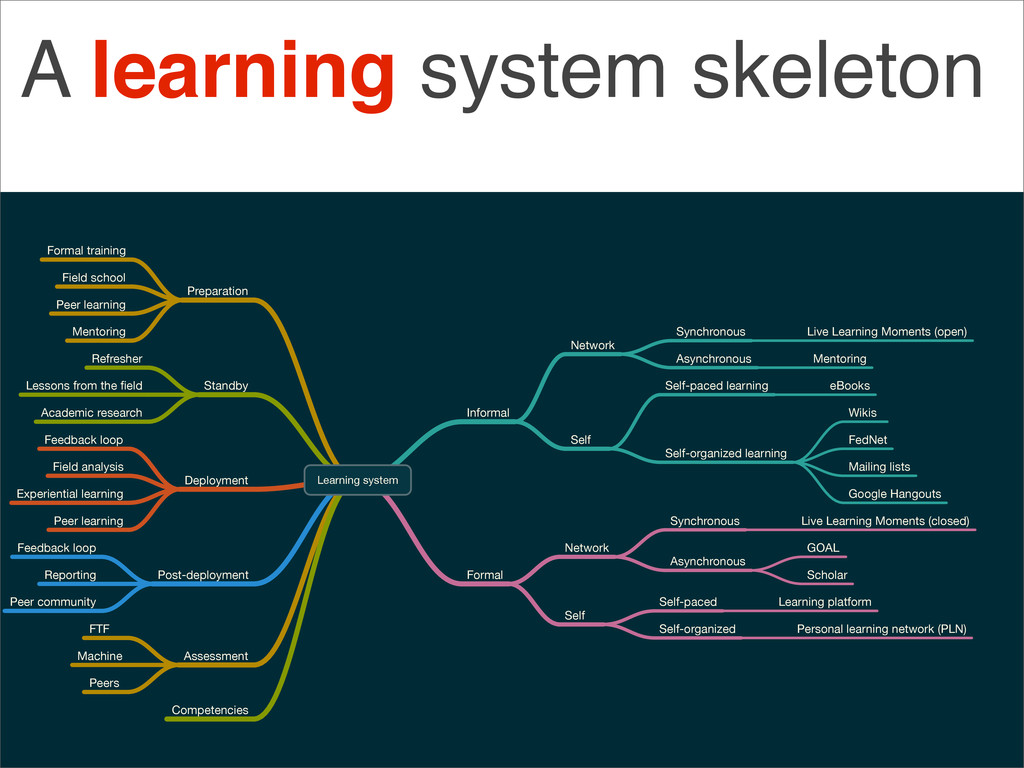
  11. Learning system Preparation Formal training Field school Peer learning Mentoring

    Standby Refresher Lessons from the field Academic research Informal Network Synchronous Live Learning Moments (open) Asynchronous Mentoring Self Self-paced learning eBooks Self-organized learning Wikis FedNet Mailing lists Deployment Feedback loop Field analysis Experiential learning Peer learning Formal Network Synchronous Live Learning Moments (closed) Asynchronous GOAL Scholar Self Self-paced Learning platform Self-organized Personal learning network (PLN) Post-deployment Feedback loop Reporting Peer community Assessment FTF Machine Peers Competencies Google Hangouts A learning system skeleton
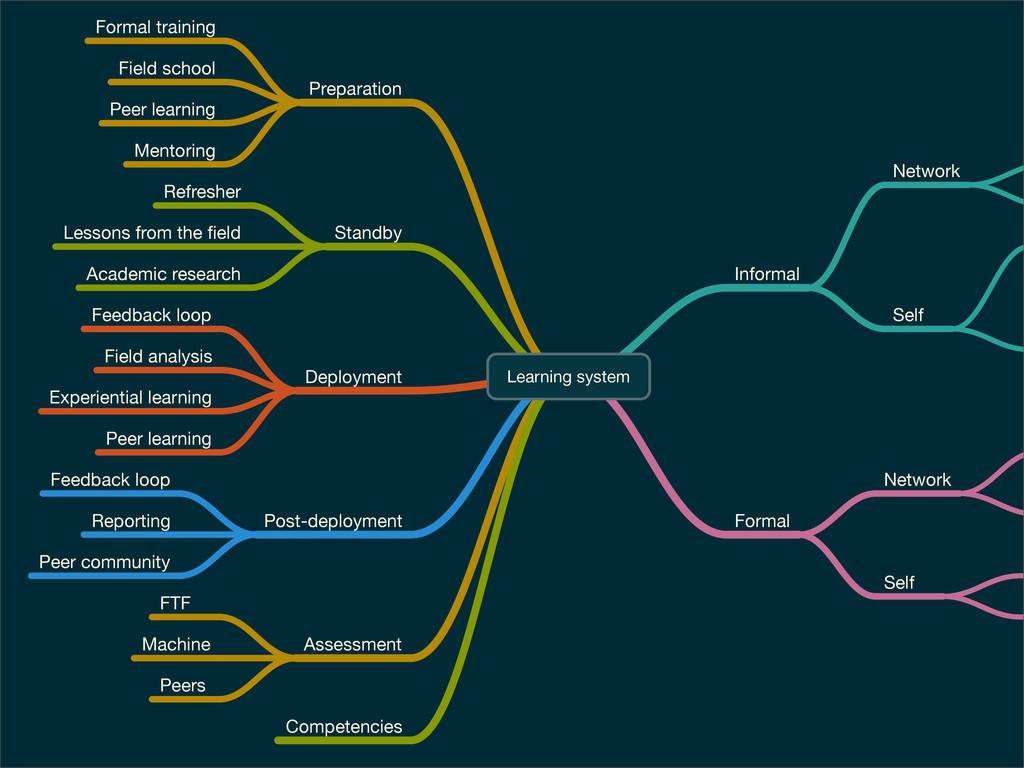
  12. Learning system Preparation Formal training Field school Peer learning Mentoring

    Standby Refresher Lessons from the field Academic research Informal Network Self Deployment Feedback loop Field analysis Experiential learning Peer learning Formal Network Self Post-deployment Feedback loop Reporting Peer community Assessment FTF Machine Peers Competencies
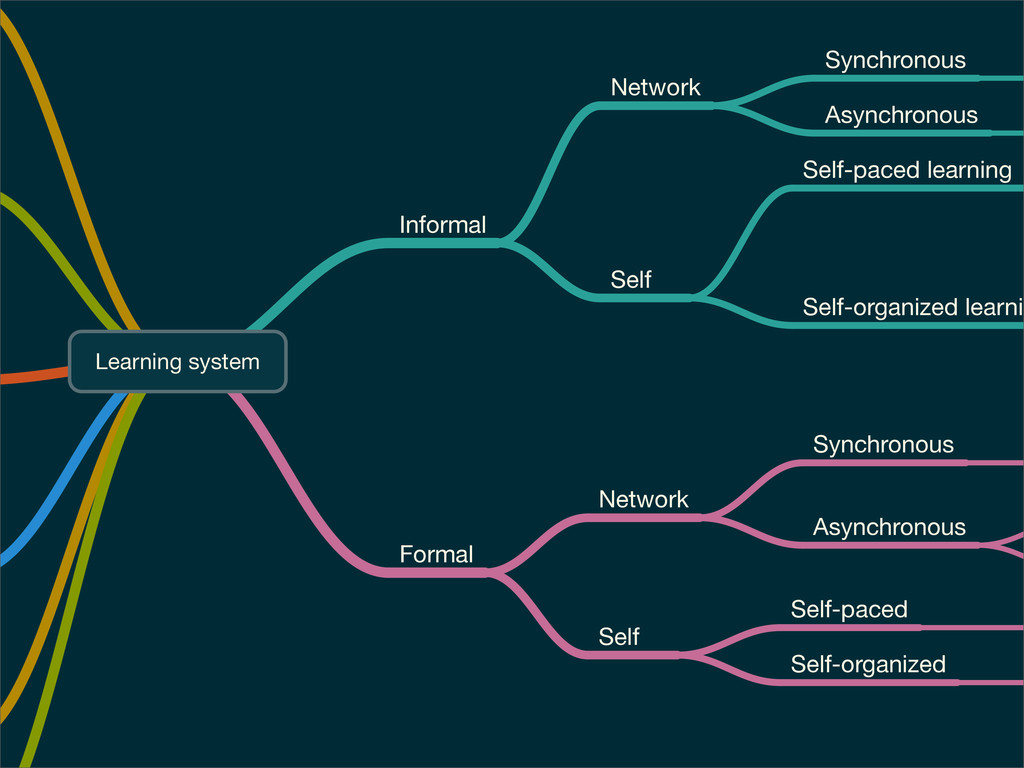
  13. Learning system Informal Network Synchronous Asynchronous Self Self-paced learning Self-organized

    learnin Formal Network Synchronous Asynchronous Self Self-paced Self-organized
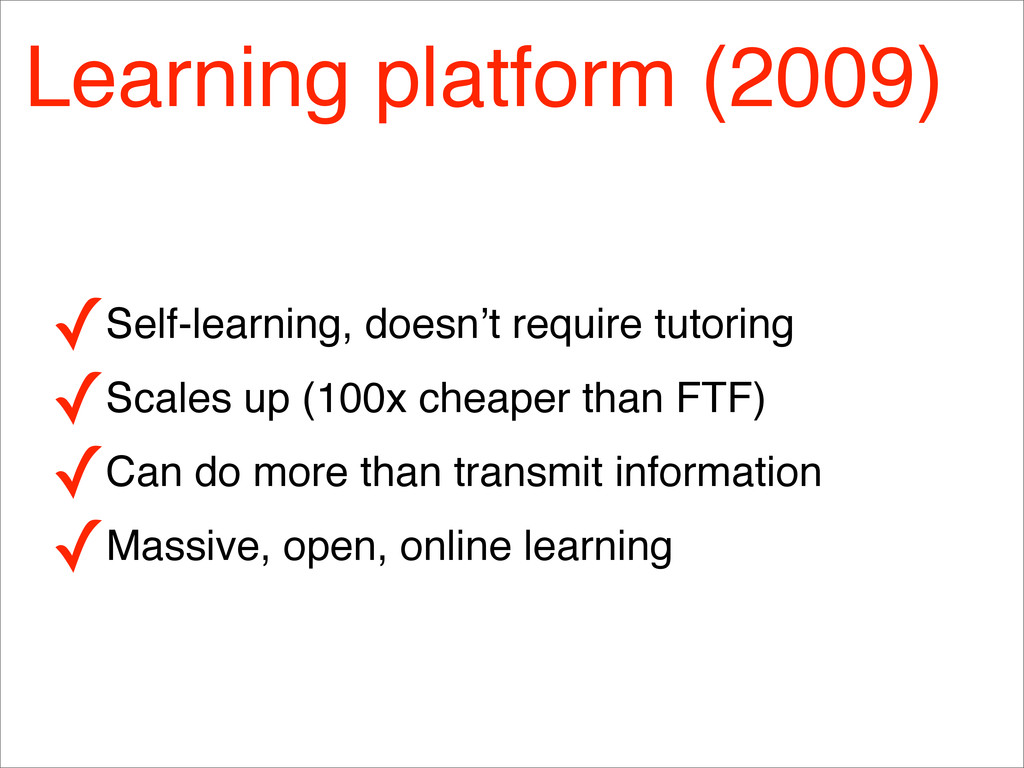
  14. Learning platform (2009) ✓Self-learning, doesn’t require tutoring ✓Scales up (100x

    cheaper than FTF) ✓Can do more than transmit information ✓Massive, open, online learning
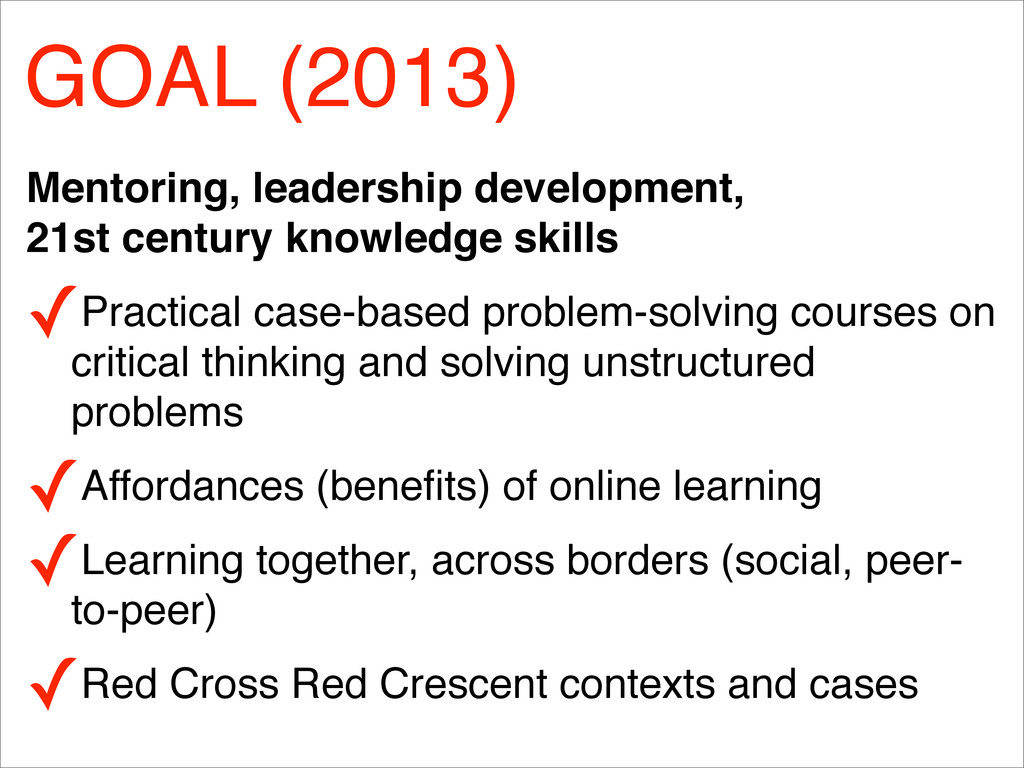
  15. GOAL (2013) Mentoring, leadership development, 21st century knowledge skills ✓Practical

    case-based problem-solving courses on critical thinking and solving unstructured problems ✓Affordances (benefits) of online learning ✓Learning together, across borders (social, peer- to-peer) ✓Red Cross Red Crescent contexts and cases
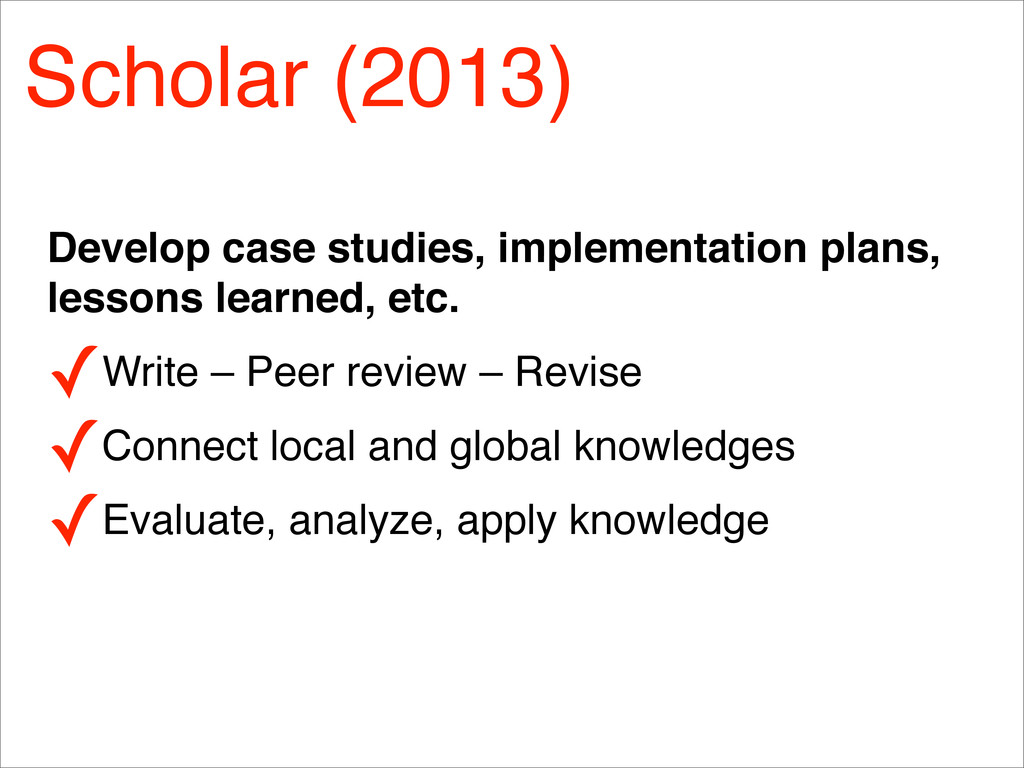
  16. Scholar (2013) Develop case studies, implementation plans, lessons learned, etc.

    ✓Write – Peer review – Revise ✓Connect local and global knowledges ✓Evaluate, analyze, apply knowledge
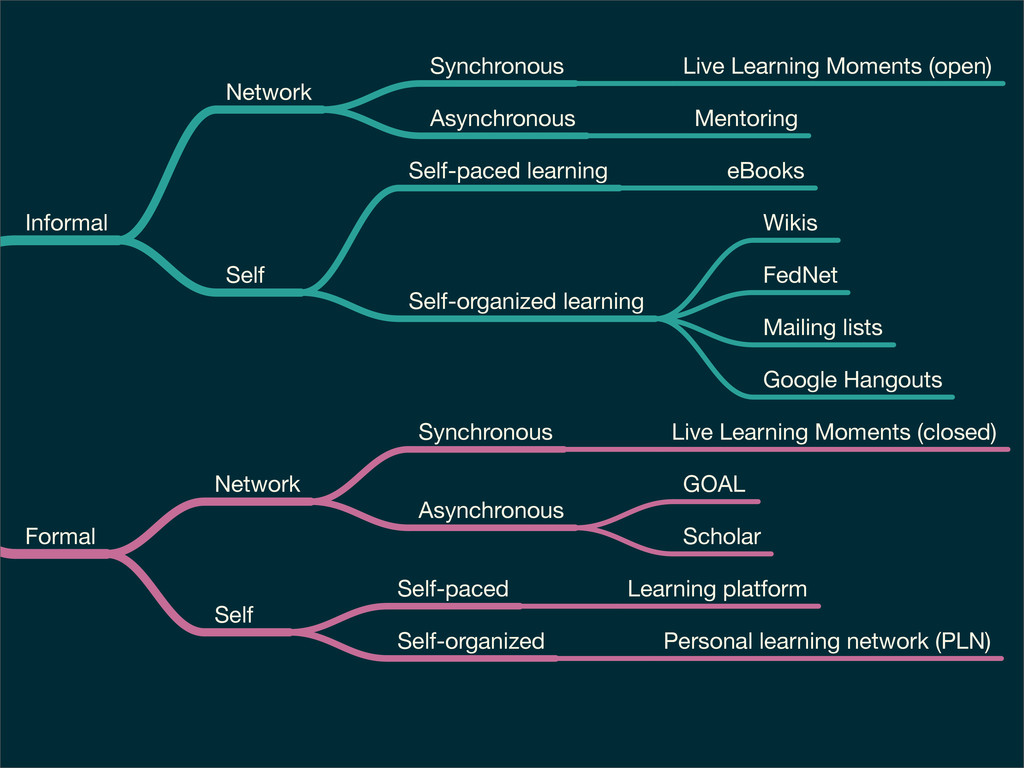
  17. Informal Network Synchronous Live Learning Moments (open) Asynchronous Mentoring Self

    Self-paced learning eBooks Self-organized learning Wikis FedNet Mailing lists Formal Network Synchronous Live Learning Moments (closed) Asynchronous GOAL Scholar Self Self-paced Learning platform Self-organized Personal learning network (PLN) Google Hangouts