website to rank higher in the search engines, multiple factors come into play. Google considers more than 200 factors to determine the ranking of a site in the search engine. These are mainly divided into following categories: 1. On-page factors 2. Off-page factors 3. Domain factors 4. Site factors
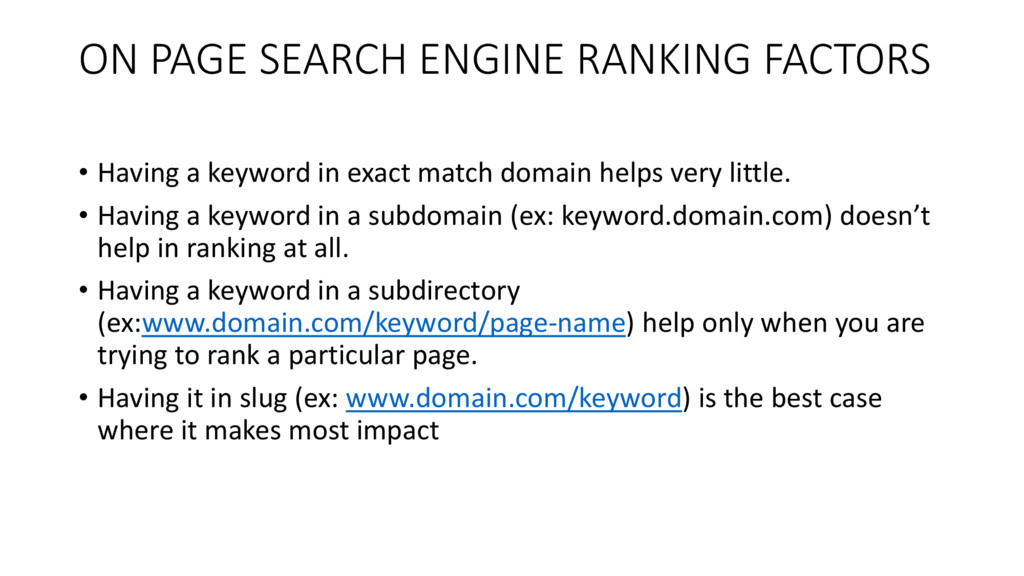
in exact match domain helps very little. • Having a keyword in a subdomain (ex: keyword.domain.com) doesn’t help in ranking at all. • Having a keyword in a subdirectory (ex:www.domain.com/keyword/page-name) help only when you are trying to rank a particular page. • Having it in slug (ex: www.domain.com/keyword) is the best case where it makes most impact
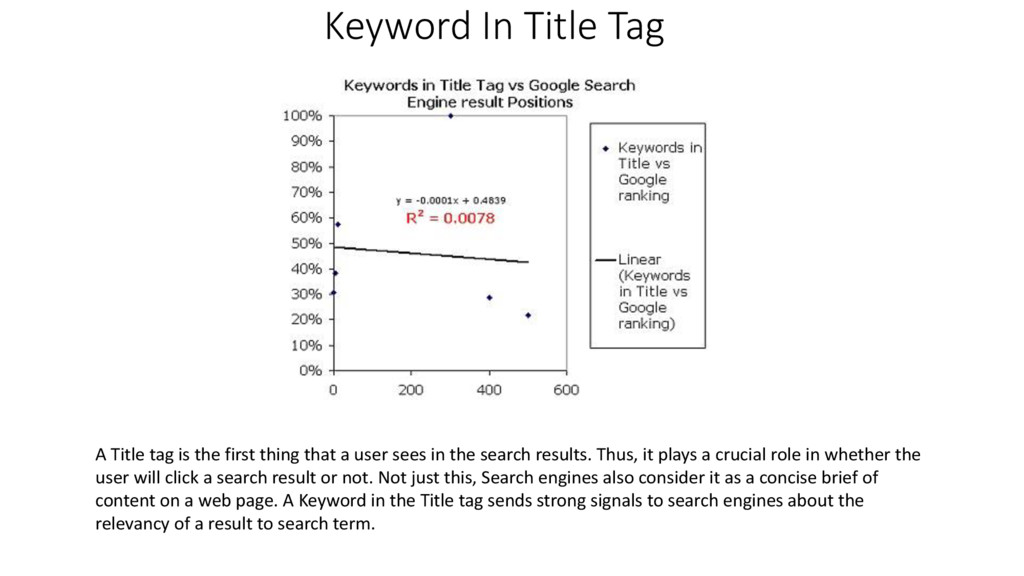
thing that a user sees in the search results. Thus, it plays a crucial role in whether the user will click a search result or not. Not just this, Search engines also consider it as a concise brief of content on a web page. A Keyword in the Title tag sends strong signals to search engines about the relevancy of a result to search term.
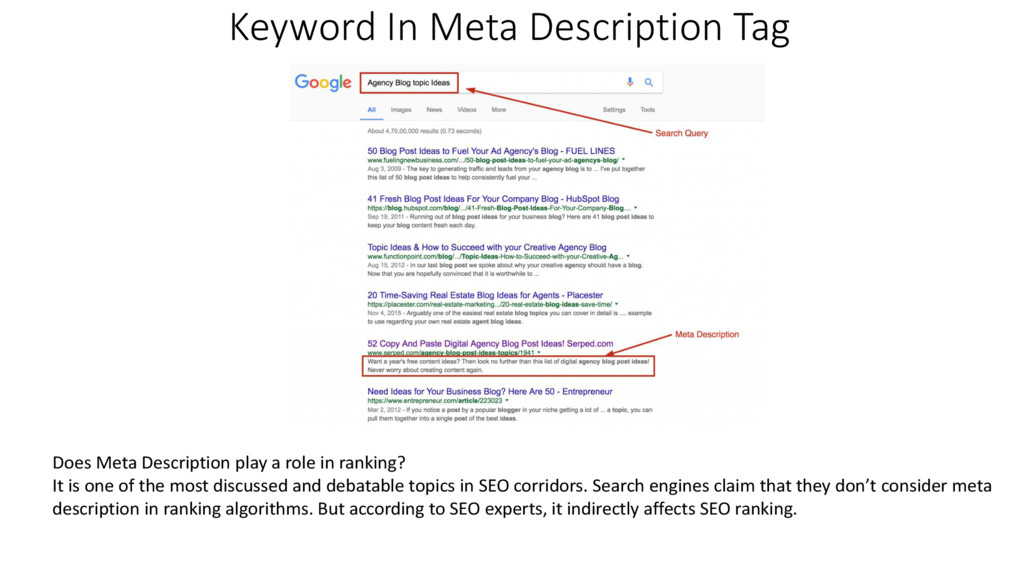
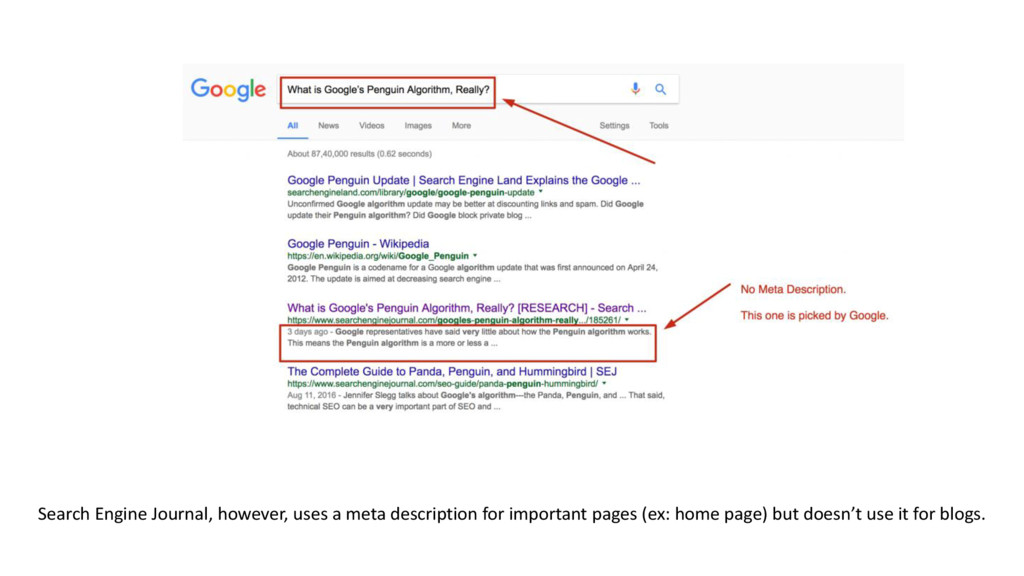
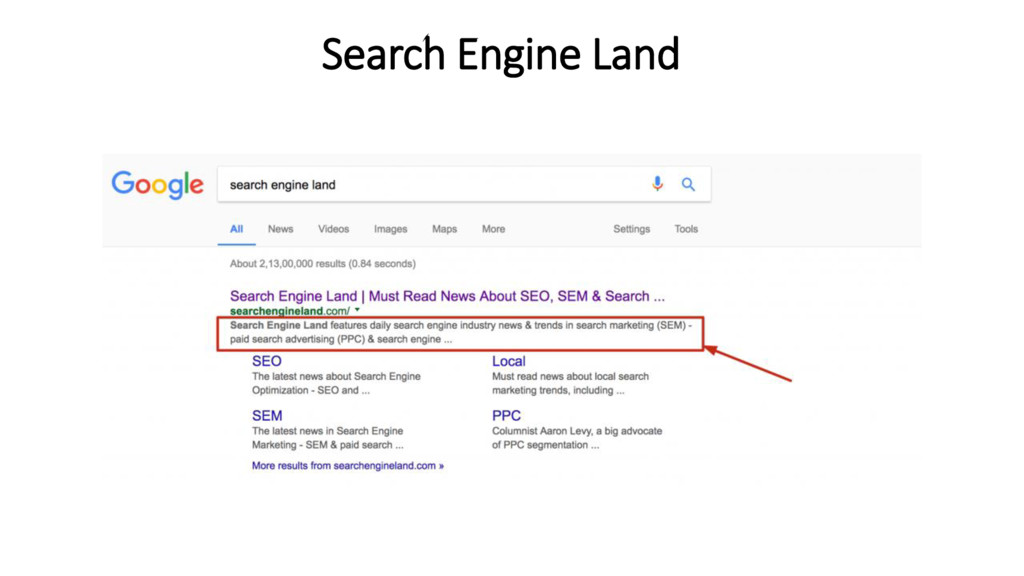
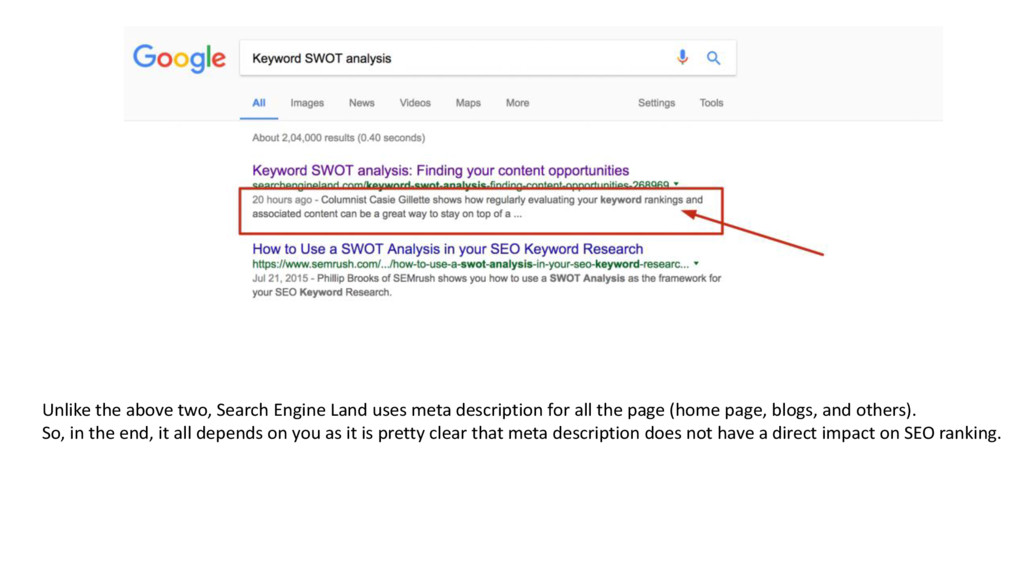
role in ranking? It is one of the most discussed and debatable topics in SEO corridors. Search engines claim that they don’t consider meta description in ranking algorithms. But according to SEO experts, it indirectly affects SEO ranking.
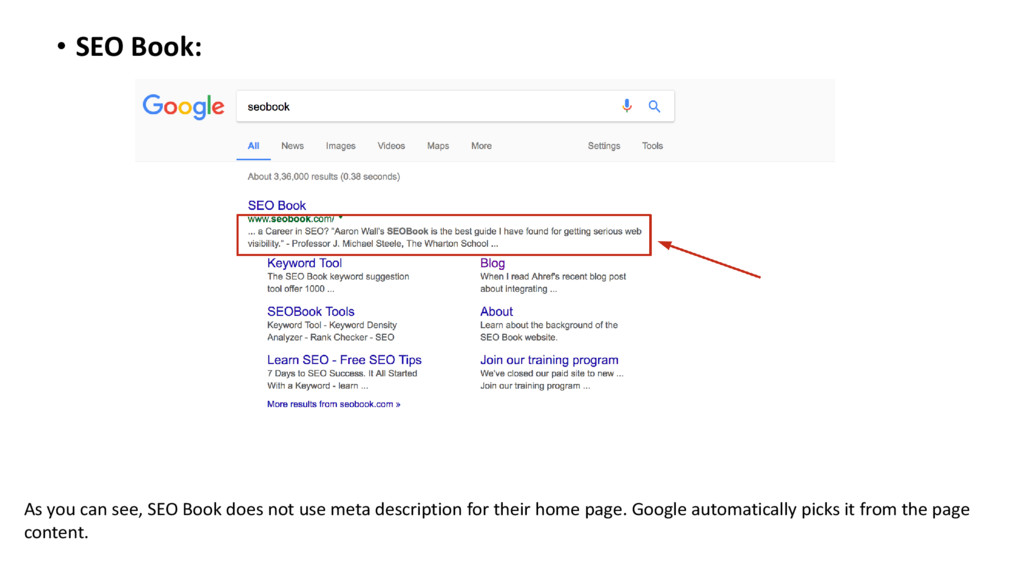
for all the page (home page, blogs, and others). So, in the end, it all depends on you as it is pretty clear that meta description does not have a direct impact on SEO ranking.
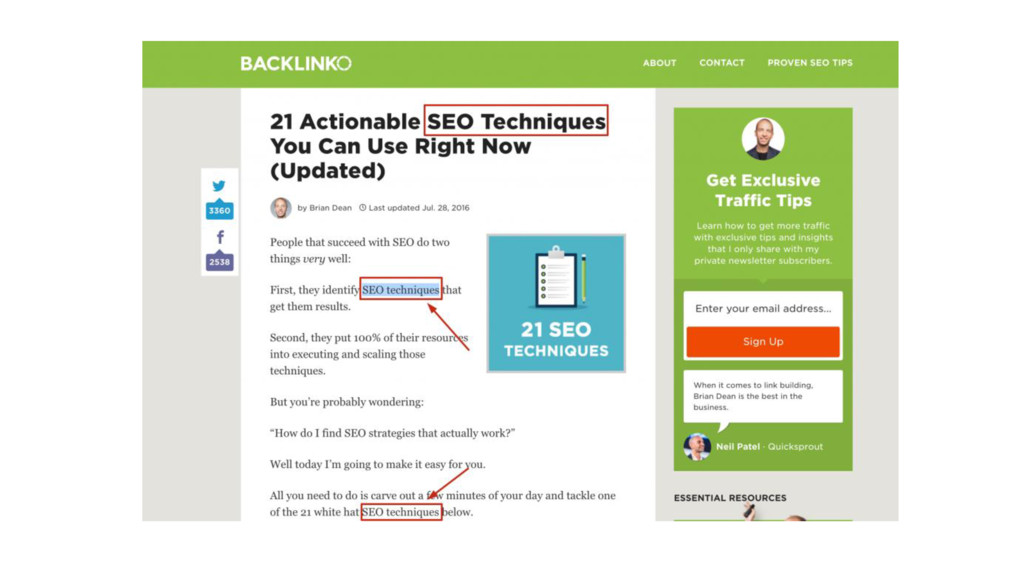
prominent text on a web page. It classifies the content to make it easier for a user to understand. At the same time, it also tells search engines about what should they associate a web page with and what should they recognized as important on a page. That’s why it is considered as the most important SEO and User experience signal on a web page. It is recommended to use one H1 tag per page and include a keyword in your H1 tag. Keywords In The Page Content From the days of stuffing your page with keywords to writing for readers (not search engines), SEO copywriting has come a long way. But, it is still relevant to include targeted keyword in your page copy. Here is how one of the Top SEO blogs – Backlinko – uses keywords in the page content.


 yu23ki14
 occhi
 koukihosaka
 mhrtech
 ivry_presentationmaterials
 satoshi7
 sh_fk2
 greenmidori
 carta_engineering
 yut0naga1_fa
 codmoninc
 riyaamemiya
 codingconduct
 mongodb
 tmiket
 jmmastey
 marcduiker
 trallard
 inesmontani
 bethany
 sugarenia
 notwaldorf
 geshan
 keathley