Upgrade to Pro
— share decks privately, control downloads, hide ads and more …
Speaker Deck
Sign up for free
Menu
Search
Features
All features
Private URLs
Password Protection
Custom URLS
Scheduled publishing
Remove Branding
Restrict embedding
Deck Collections
Notes
Features
All features
Private URLs
Password Protection
Custom URLS
Scheduled publishing
Remove Branding
Restrict embedding
Deck Collections
Notes
Explore
Featured decks
Featured speakers
Programming
Technology
Storyboards
Explore
Featured decks
Featured speakers
Programming
Technology
Storyboards
Pricing
Search
Sign in
Sign up for free
Haml & Sass en 10 minutes faciles
Search
Rémi Prévost
July 28, 2011
Programming
490
4
Share
Embed
Copy iframe code
Copy JS code
Copy link
Start on current slide
Haml & Sass en 10 minutes faciles
Présentation donnée le 28 juillet 2011 à l’édition bêta de l’OpenCode (Québec).
Rémi Prévost
July 28, 2011
More Decks by Rémi Prévost
See All by Rémi Prévost
Le futur du rôle de développeur·euse dans l’écosystème numérique
remi
0
57
Building a strong and explicit engineering culture
remi
0
270
Dispatch, a quick overview of neat Elixir features
remi
1
310
Ecto Embedded Schemas
remi
0
360
Constance et qualité du code dans une équipe
remi
0
340
Développement Web Moderne — méthodes de travail et principes éprouvés
remi
1
610
tmux, teamocil & friends
remi
1
470
RSpec: natural behavior testing for Rails applications
remi
3
490
Introduction à RSpec
remi
5
370
Other Decks in Programming
See All in Programming
Agentic Software Factoryに、すごく賢いIF文を。 / super smart IF statement into the Agentic Software Factory.
rkaga
8
2k
SREの越境 / SRE Collaboration
y0hgi
2
300
wkhtmltopdfの次どうするか問題2026
willnet
2
1.9k
月間100万人のサービス刷新で、 技術選定をHonoに振り切った話
yutobara
2
1.7k
Turning Architecture into Unit Tests in the AI Era (NSSpain XIV)
steliosf
PRO
1
130
モジュールの視点からSwiftを読み解く #iosdc
s_shimotori
0
350
機械に任せるテスト、人が見るテスト ⽣成AIで引き直した、運⽤保守フェーズの線引き
dske104
0
160
CodeRabbitの効果検証と過ごしてみた3ヶ月
armondando
0
170
Vue Fes Japan の “作る側”に関わってみて
naokihaba
0
130
Atomic Design, Enforced: Scaling Mobile Design Systems (next.app devCon / droidCon Berlin 2026)
steliosf
PRO
0
140
Domain-Driven Transformation
hschwentner
2
2.3k
なぜCTOを降りてFDEを選んだのか?〜なぜプロダクト企業がFDEで顧客の現場に踏み込むのか〜
gonta
1
160
Featured
See All Featured
Save Time (by Creating Custom Rails Generators)
garrettdimon
PRO
33
5.1k
Marketing Yourself as an Engineer | Alaka | Gurzu
gurzu
0
320
The Organizational Zoo: Understanding Human Behavior Agility Through Metaphoric Constructive Conversations (based on the works of Arthur Shelley, Ph.D)
kimpetersen
PRO
0
490
30 Presentation Tips
portentint
PRO
1
420
Making Projects Easy
brettharned
120
6.8k
Groundhog Day: Seeking Process in Gaming for Health
codingconduct
0
390
How to build a perfect <img>
jonoalderson
1
6.1k
Reality Check: Gamification 10 Years Later
codingconduct
0
2.3k
Paper Plane (Part 1)
katiecoart
PRO
2
11k
What Being in a Rock Band Can Teach Us About Real World SEO
427marketing
0
1.1k
I Don’t Have Time: Getting Over the Fear to Launch Your Podcast
jcasabona
35
2.9k
The AI Search Optimization Roadmap by Aleyda Solis
aleyda
2
6.3k
Transcript
Haml & Sass en 10 minutes faciles Rémi Prévost —
28 juillet 2011, OpenCode (beta)
Même ce gars-là les utilise!
Haml HTML Abstraction Markup Language
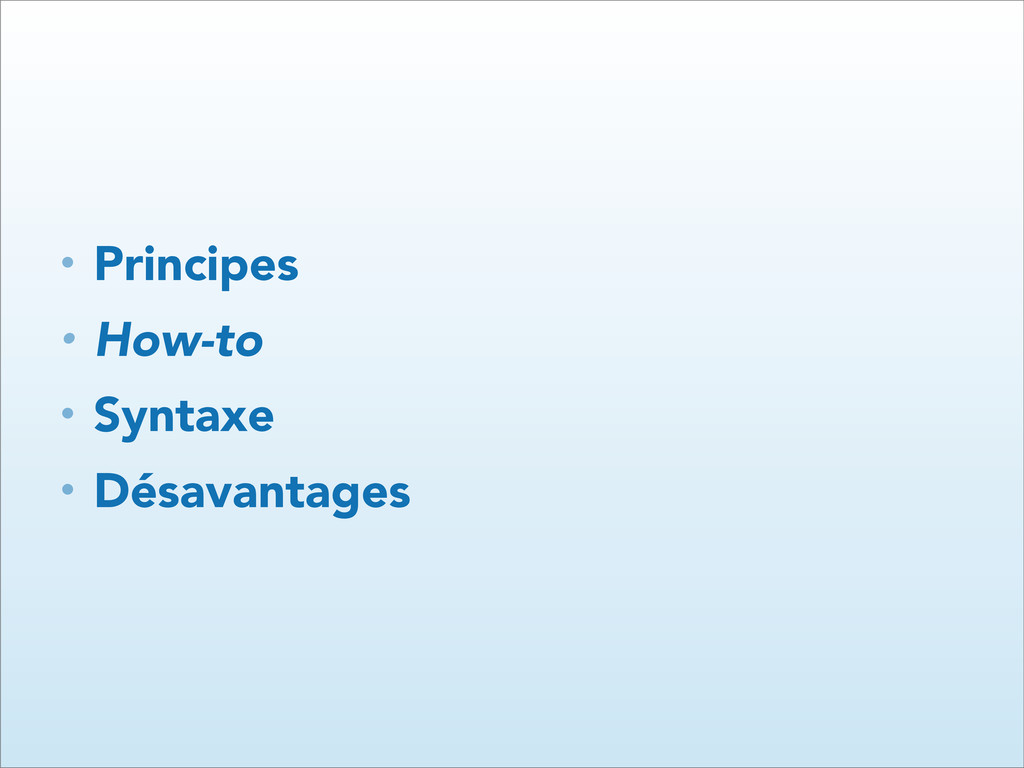
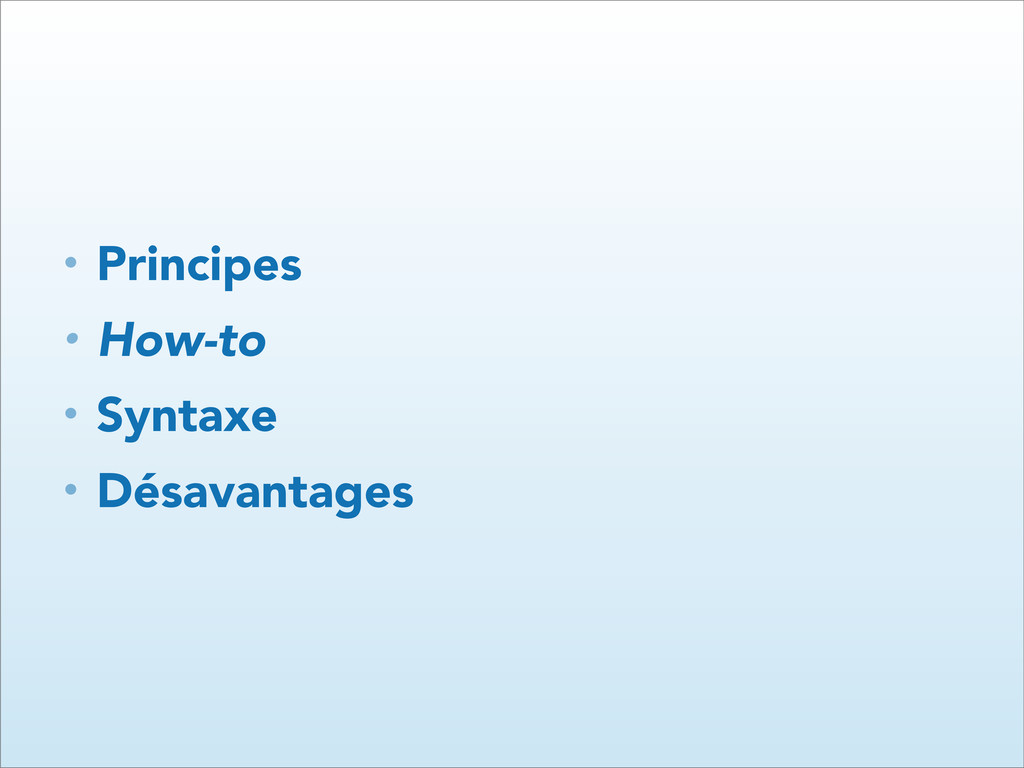
• Principes • How-to • Syntaxe • Désavantages
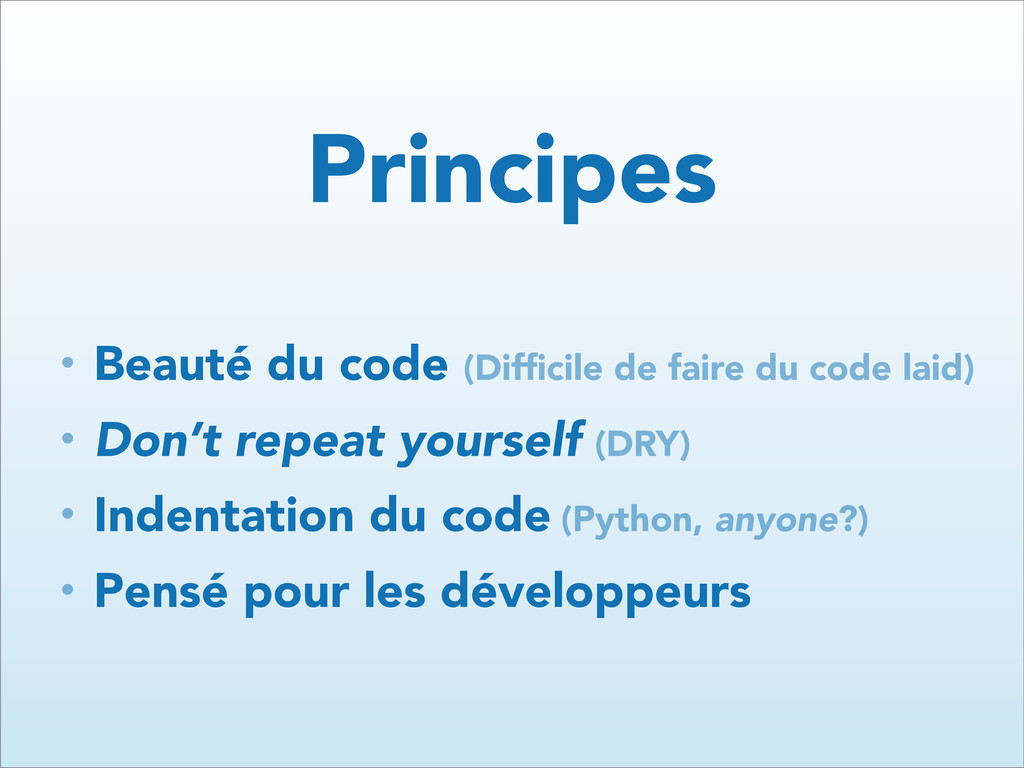
• Beauté du code (Difficile de faire du code laid)
• Don’t repeat yourself (DRY) • Indentation du code (Python, anyone?) • Pensé pour les développeurs Principes
How-to Comment ça marche?
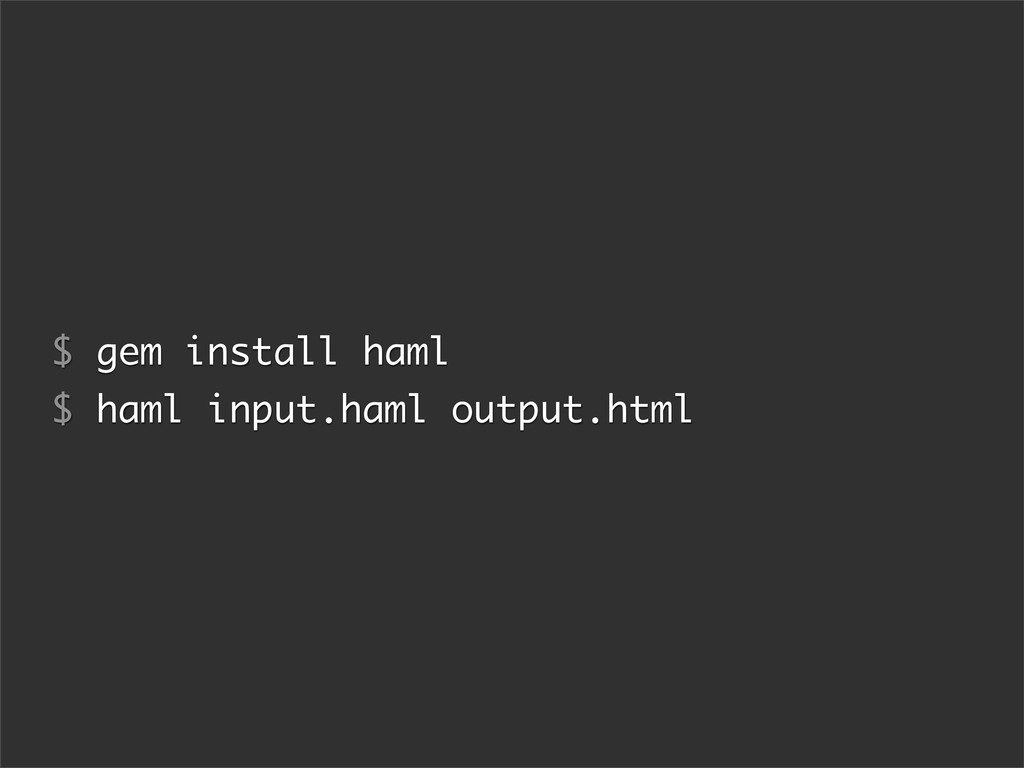
$ gem install haml $ haml input.haml output.html
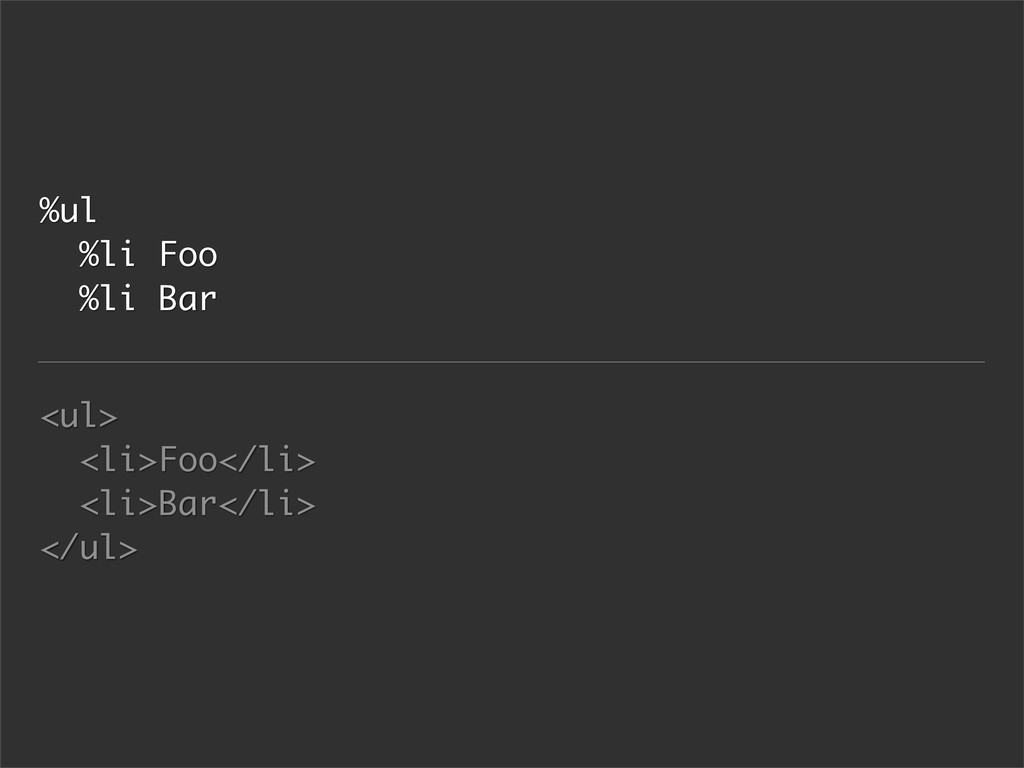
%ul %li Foo %li Bar <ul> <li>Foo</li> <li>Bar</li> </ul>
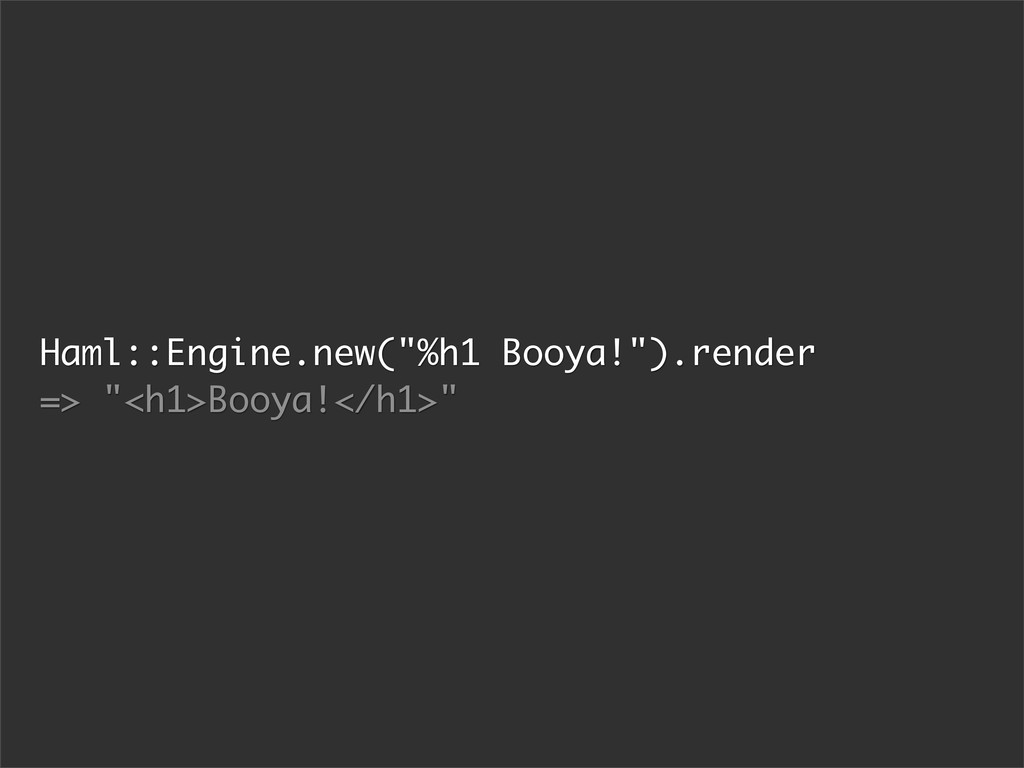
Haml::Engine.new("%h1 Booya!").render => "<h1>Booya!</h1>"
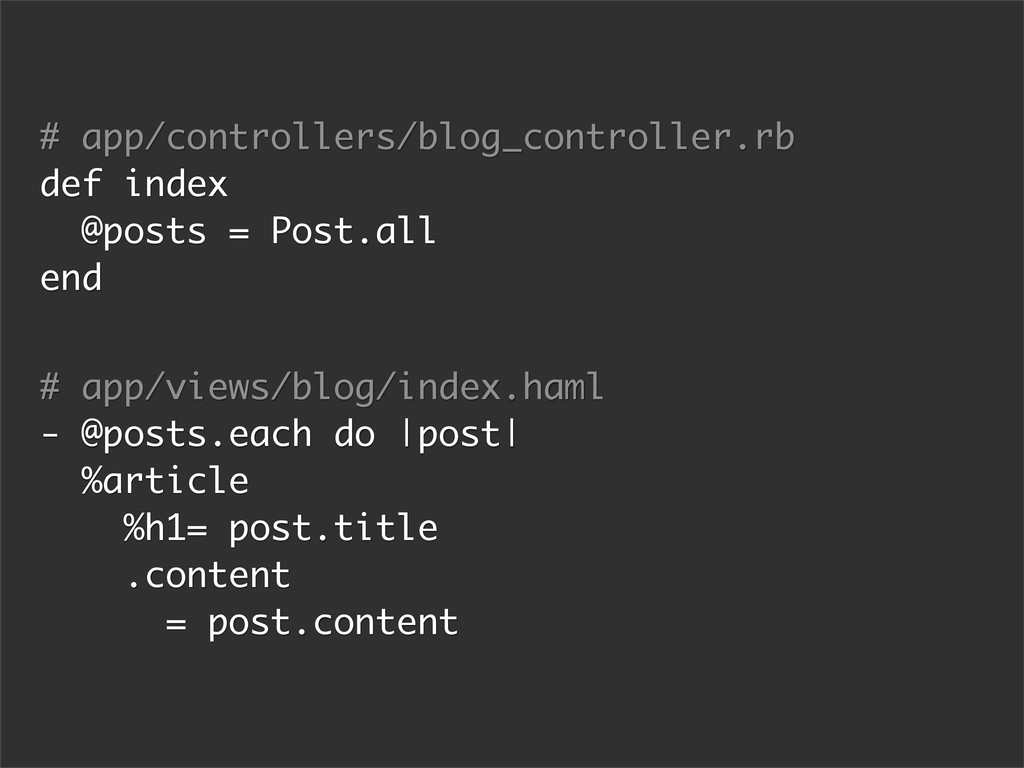
# app/controllers/blog_controller.rb def index @posts = Post.all end # app/views/blog/index.haml
- @posts.each do |post| %article %h1= post.title .content = post.content
Syntaxe Éléments, attributs, code…
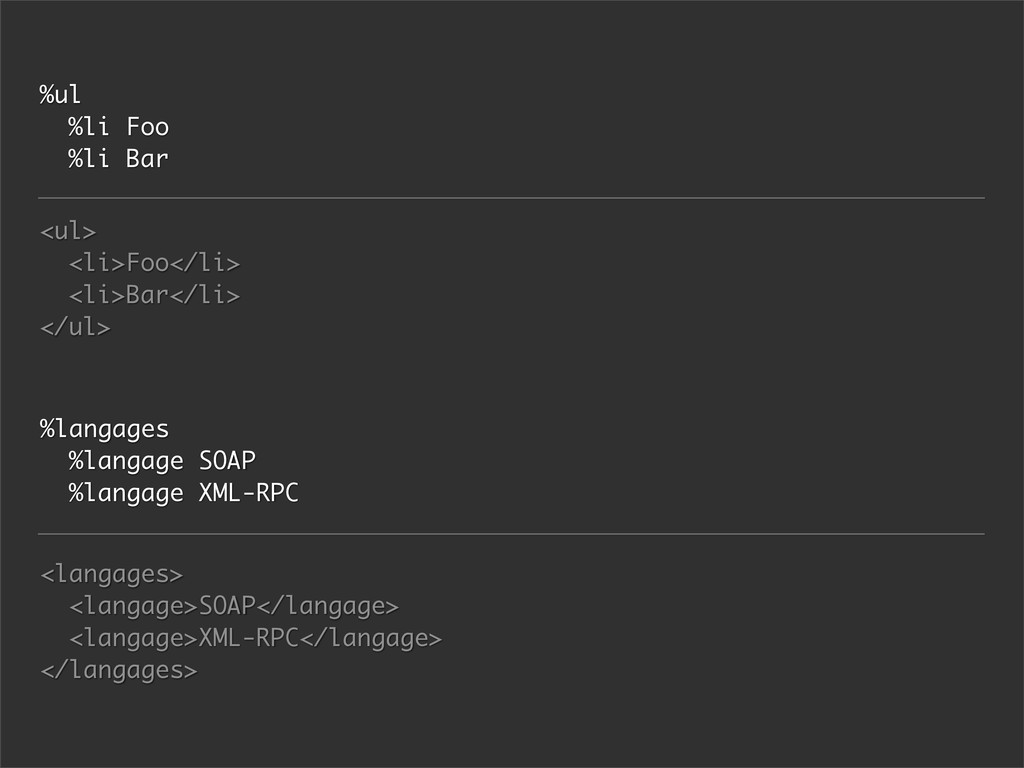
%ul %li Foo %li Bar <ul> <li>Foo</li> <li>Bar</li> </ul> %langages
%langage SOAP %langage XML-RPC <langages> <langage>SOAP</langage> <langage>XML-RPC</langage> </langages>
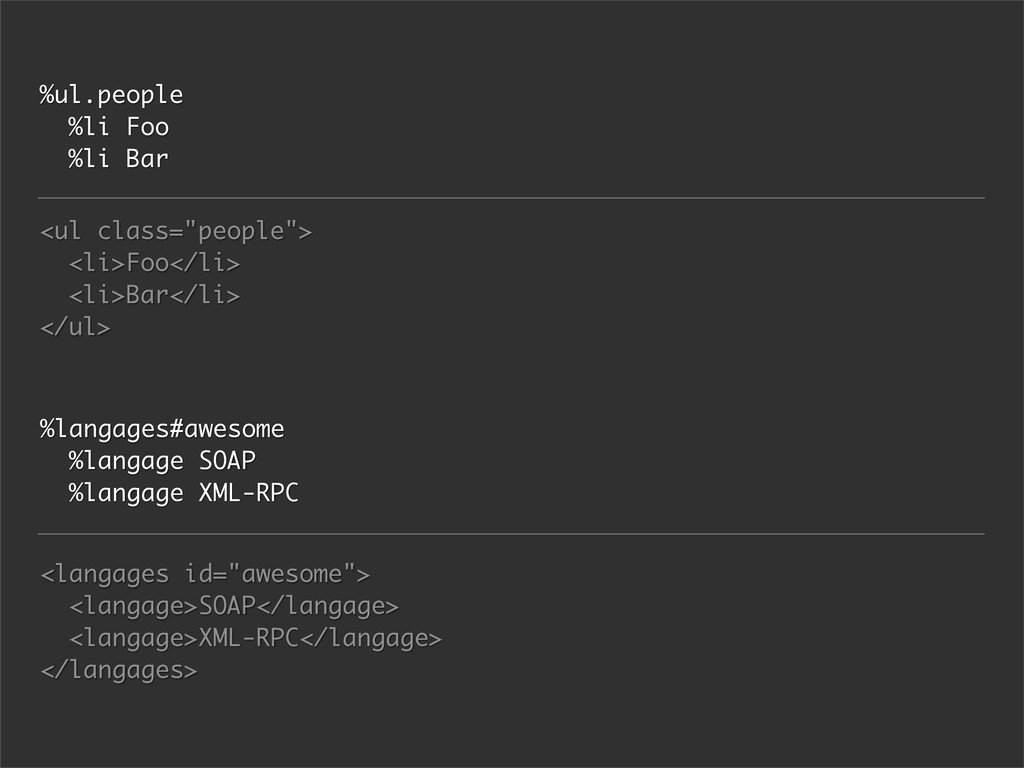
%ul.people %li Foo %li Bar <ul class="people"> <li>Foo</li> <li>Bar</li> </ul>
%langages#awesome %langage SOAP %langage XML-RPC <langages id="awesome"> <langage>SOAP</langage> <langage>XML-RPC</langage> </langages>
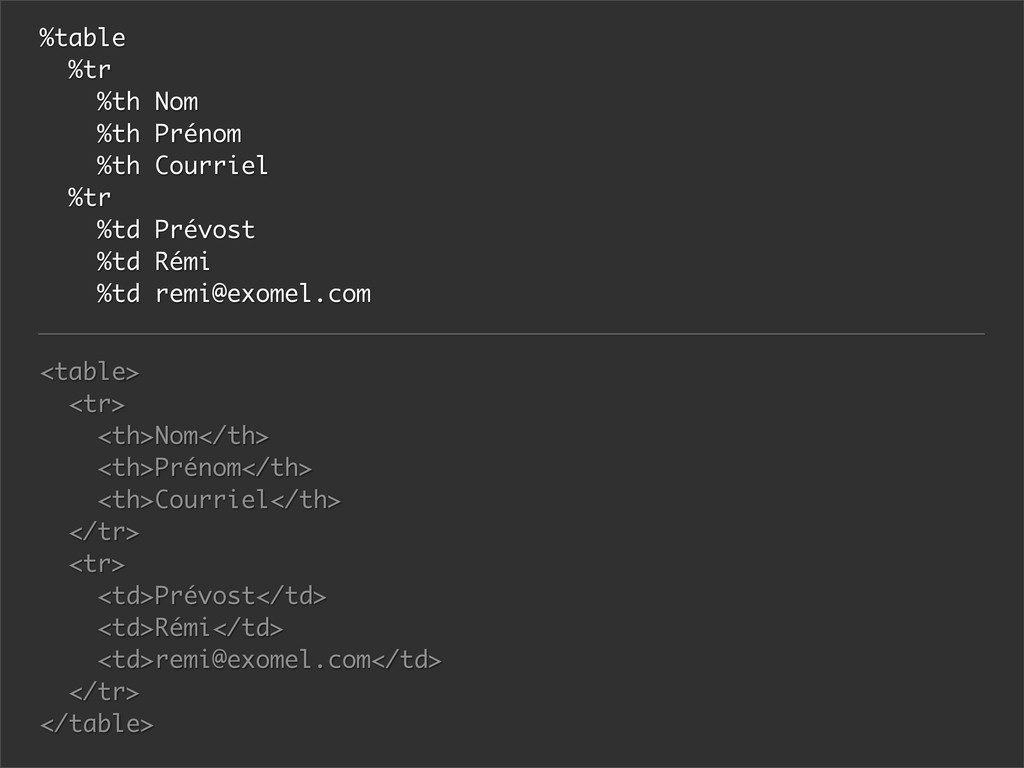
%table %tr %th Nom %th Prénom %th Courriel %tr %td
Prévost %td Rémi %td
[email protected]
<table> <tr> <th>Nom</th> <th>Prénom</th> <th>Courriel</th> </tr> <tr> <td>Prévost</td> <td>Rémi</td> <td>
[email protected]
</td> </tr> </table>
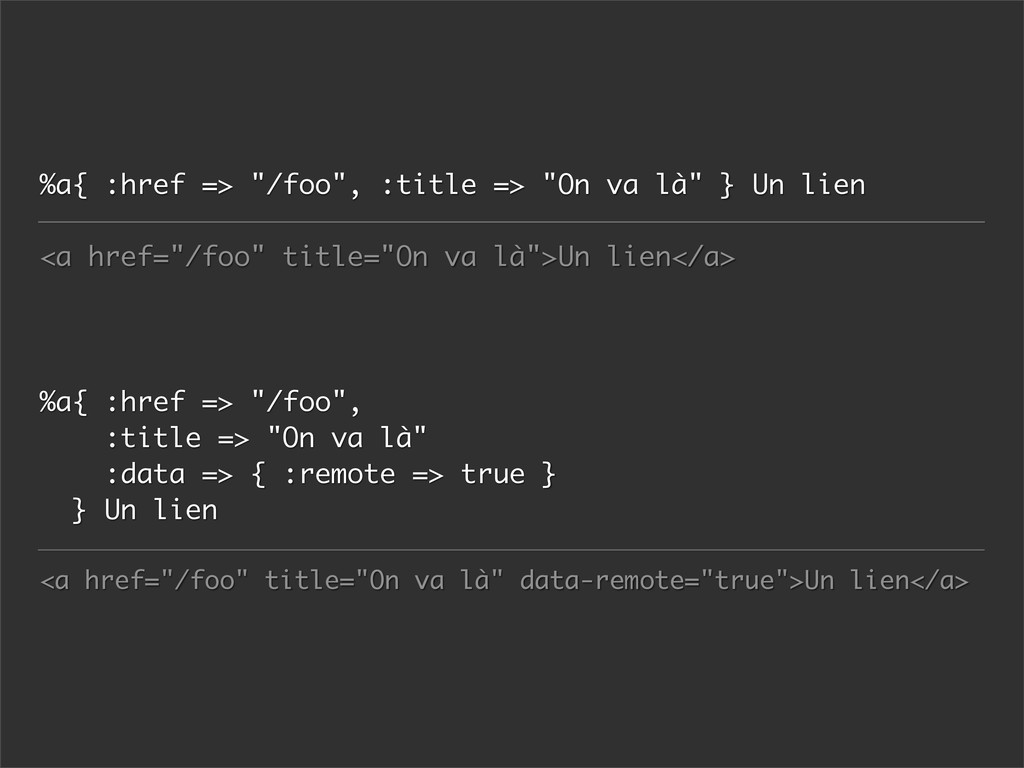
%a{ :href => "/foo", :title => "On va là" }
Un lien <a href="/foo" title="On va là">Un lien</a> %a{ :href => "/foo", :title => "On va là" :data => { :remote => true } } Un lien <a href="/foo" title="On va là" data-remote="true">Un lien</a>
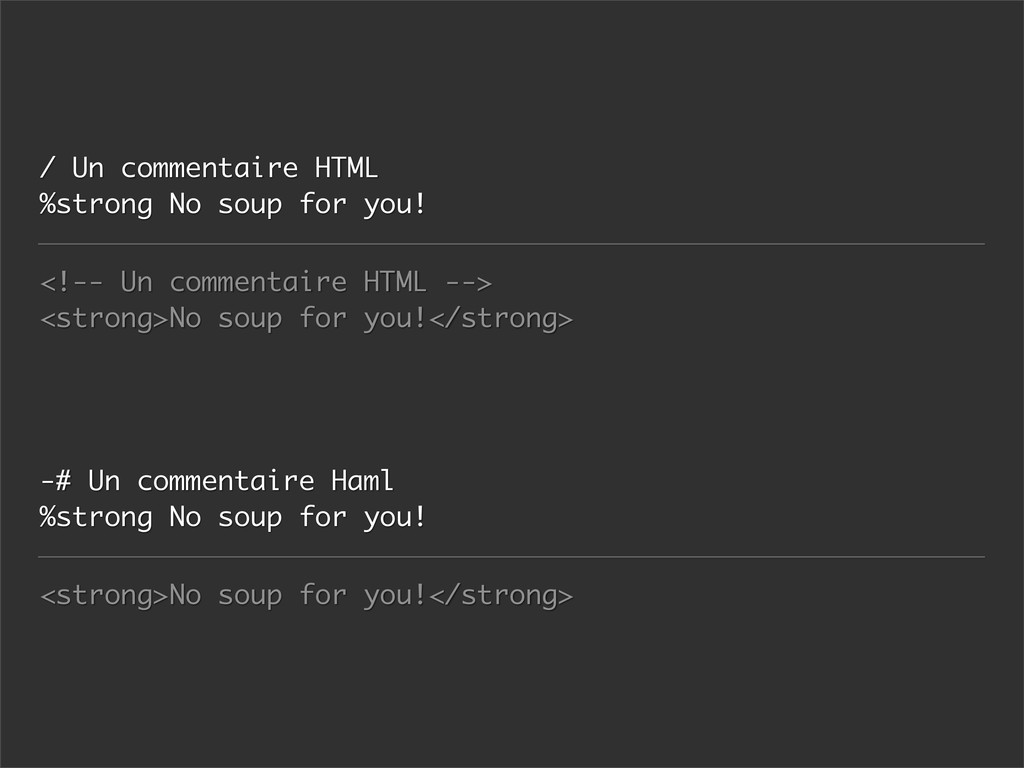
/ Un commentaire HTML %strong No soup for you! <!--
Un commentaire HTML --> <strong>No soup for you!</strong> -# Un commentaire Haml %strong No soup for you! <strong>No soup for you!</strong>
/[if lt IE 9] %script{ :src=> "//html5shim.googlecode.com/svn/trunk/html5.js" <!-- [if lt
IE 9]> <script src="//html5shim.googlecode.com/svn/trunk/html5.js"></script> <![endif]-->
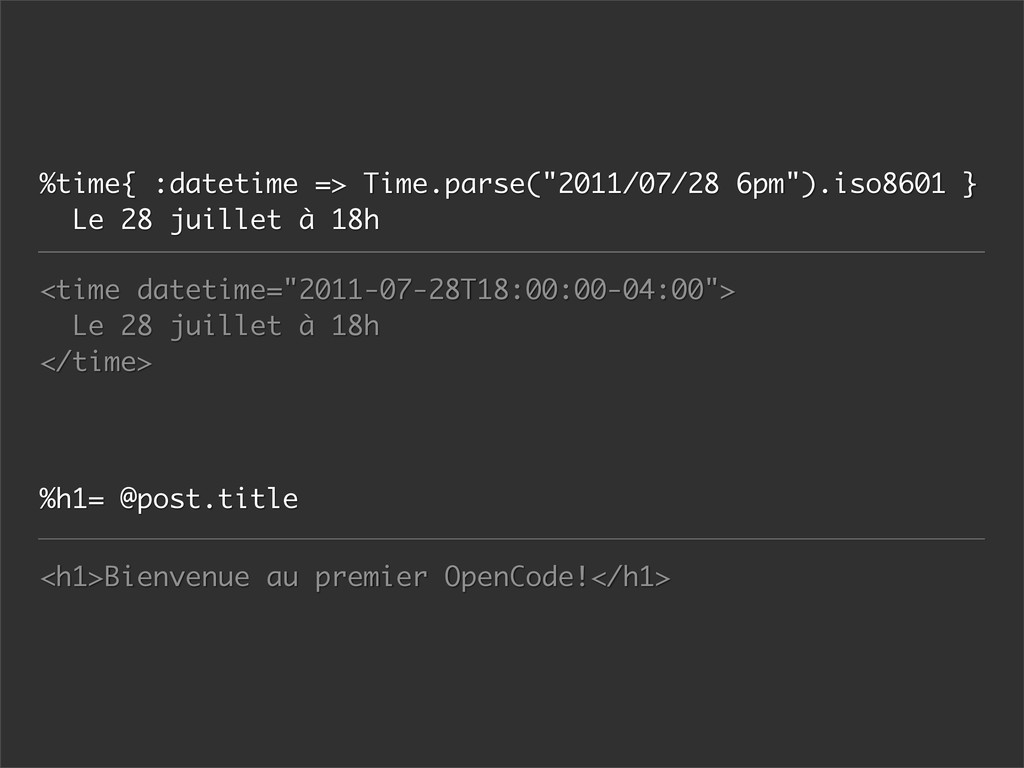
%time{ :datetime => Time.parse("2011/07/28 6pm").iso8601 } Le 28 juillet à
18h <time datetime="2011-07-28T18:00:00-04:00"> Le 28 juillet à 18h </time> %h1= @post.title <h1>Bienvenue au premier OpenCode!</h1>
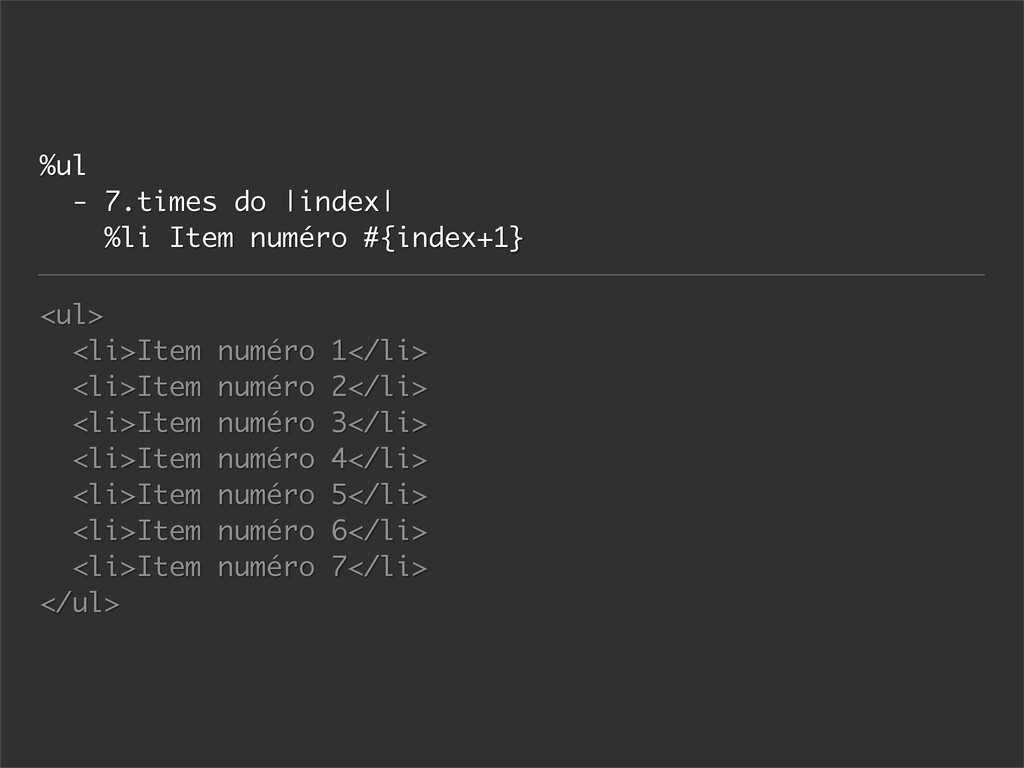
%ul - 7.times do |index| %li Item numéro #{index+1} <ul>
<li>Item numéro 1</li> <li>Item numéro 2</li> <li>Item numéro 3</li> <li>Item numéro 4</li> <li>Item numéro 5</li> <li>Item numéro 6</li> <li>Item numéro 7</li> </ul>
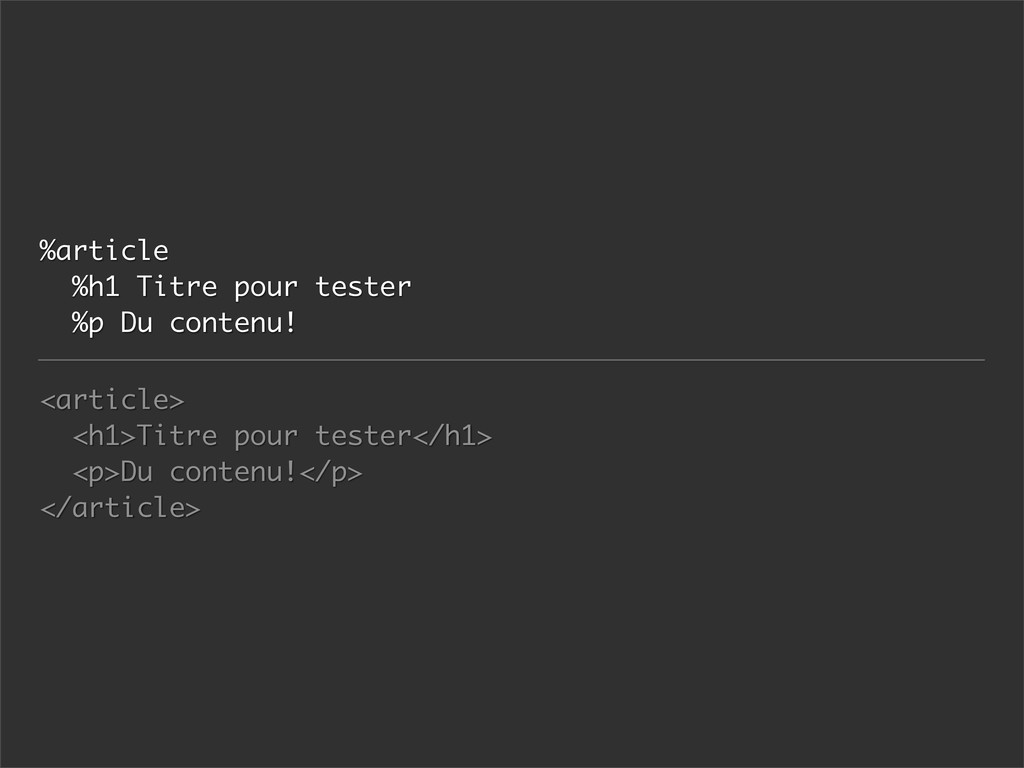
%article %h1 Titre pour tester %p Du contenu! <article> <h1>Titre
pour tester</h1> <p>Du contenu!</p> </article>
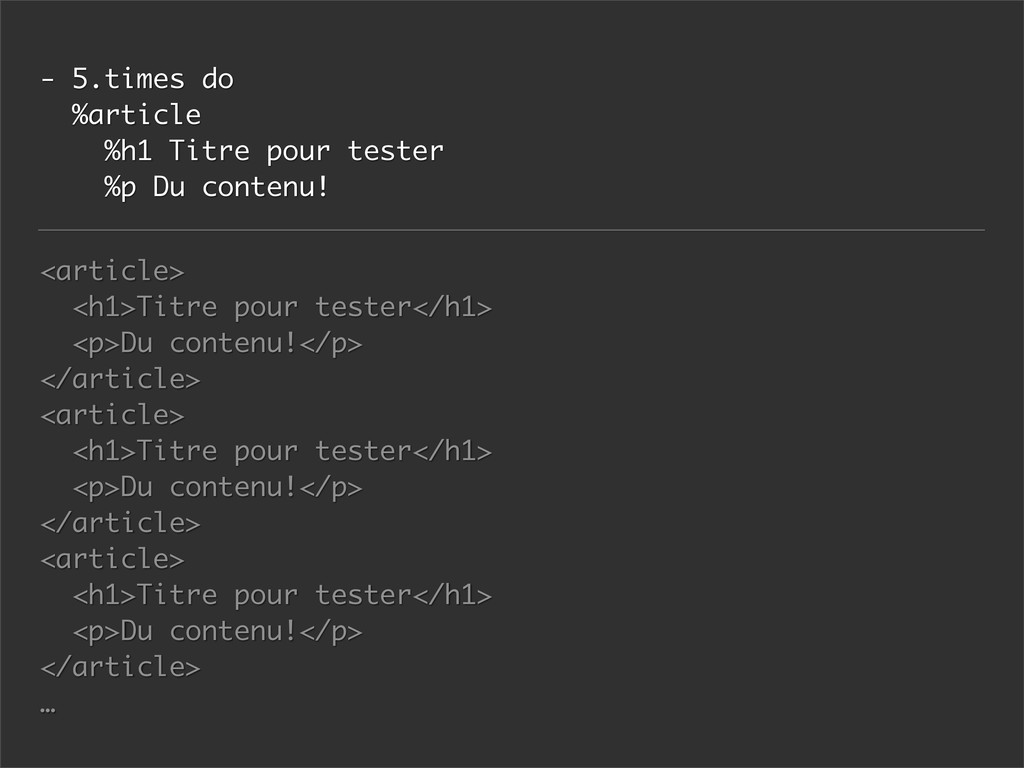
- 5.times do %article %h1 Titre pour tester %p Du
contenu! <article> <h1>Titre pour tester</h1> <p>Du contenu!</p> </article> <article> <h1>Titre pour tester</h1> <p>Du contenu!</p> </article> <article> <h1>Titre pour tester</h1> <p>Du contenu!</p> </article> …
%div.body :markdown # Titre de premier niveau * Premier item
* Deuxième item <div class="body"> <h1>Titre de premier niveau</h1> <ul> <li>Premier item</li> <li>Deuxième item</li> </ul> </div>
• Courbe d’apprentissage • Processus de compilation • Nouvelles conventions
à suivre Désavantages
Sass Syntactically Awesome Stylesheets
• Principes • How-to • Syntaxe • Désavantages
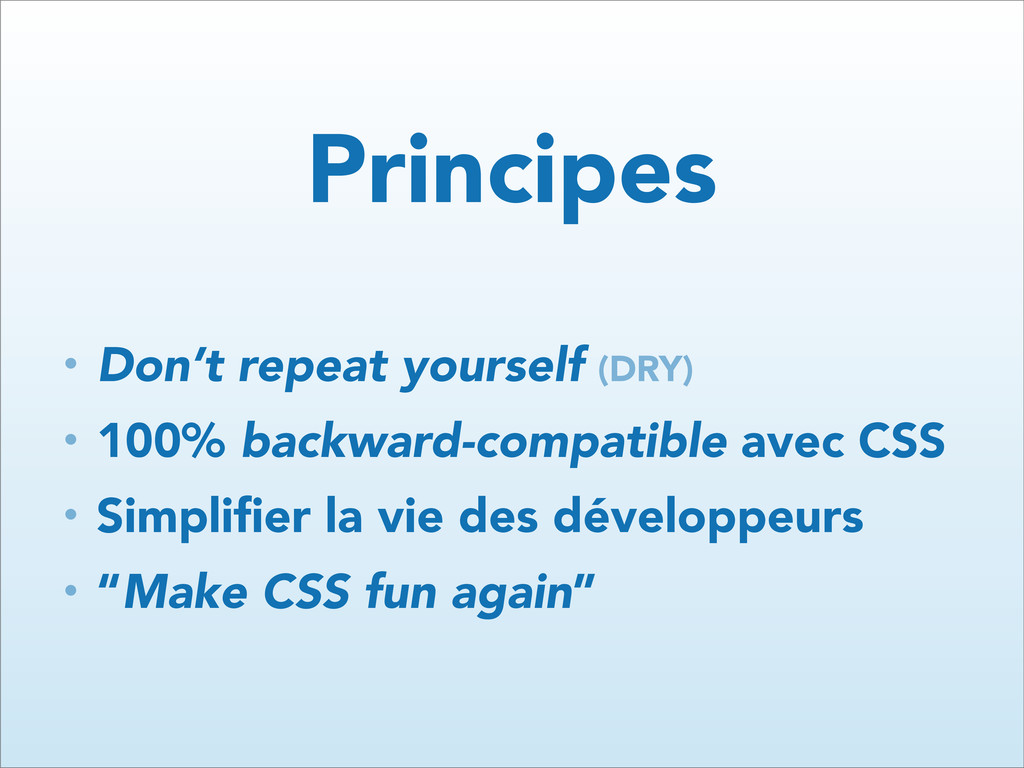
• Don’t repeat yourself (DRY) • 100% backward-compatible avec CSS
• Simplifier la vie des développeurs • “Make CSS fun again” Principes
How-to Comment ça marche?
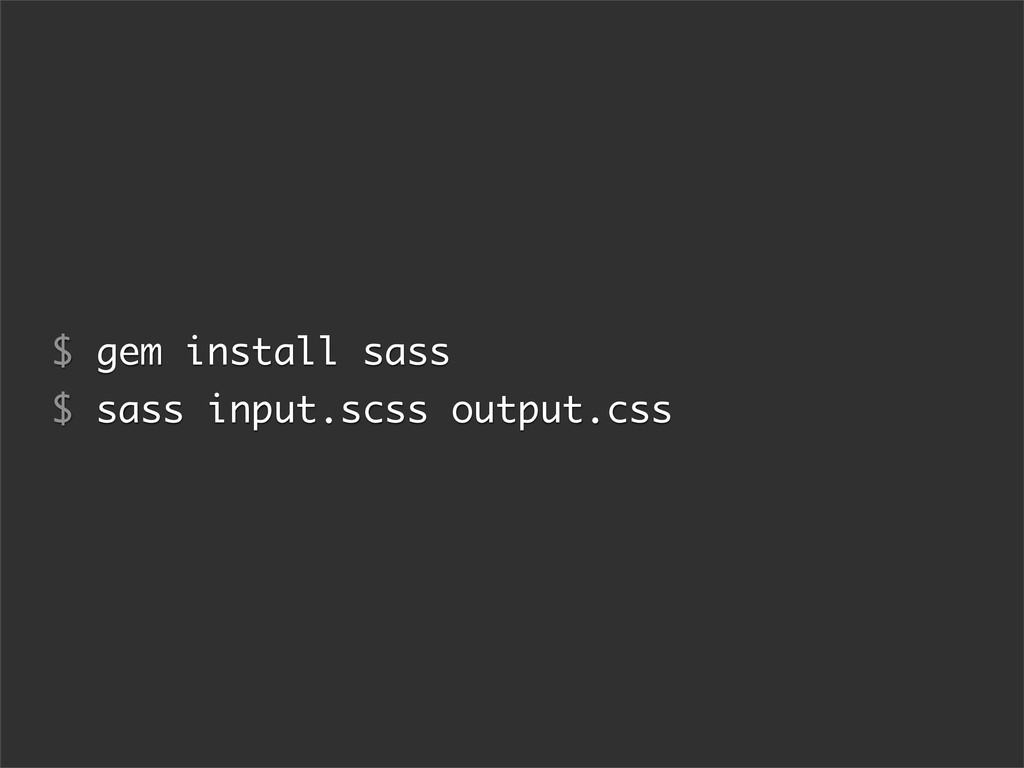
$ gem install sass $ sass input.scss output.css
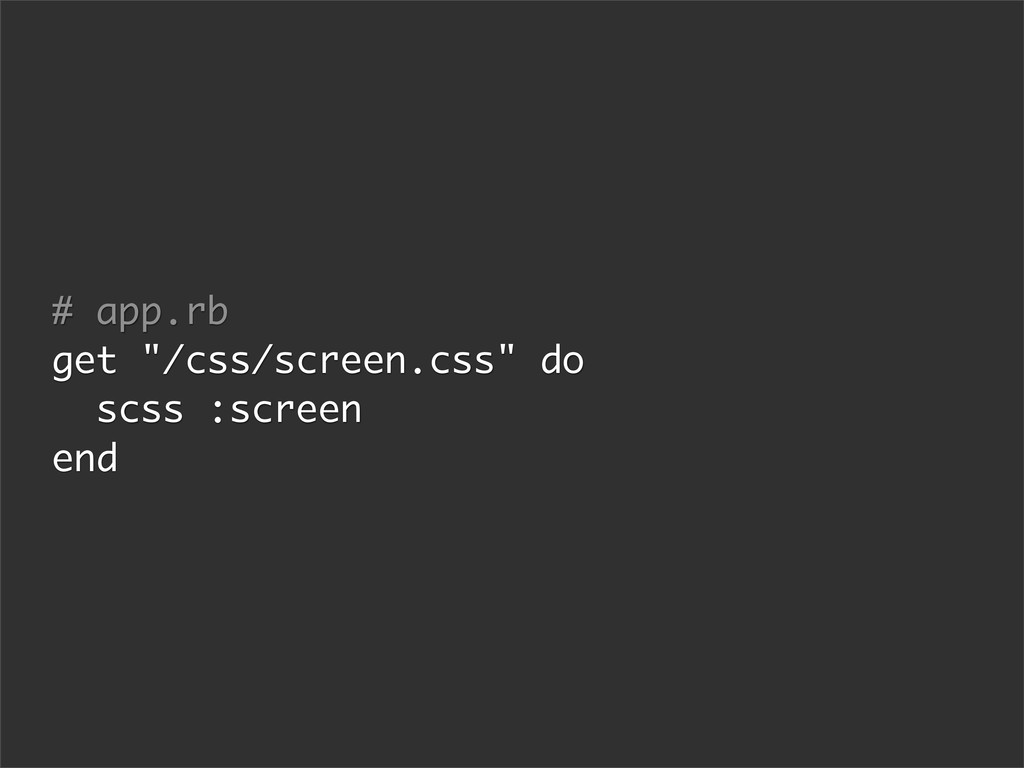
# app.rb get "/css/screen.css" do scss :screen end
Syntaxe Variables, nesting, opérations…
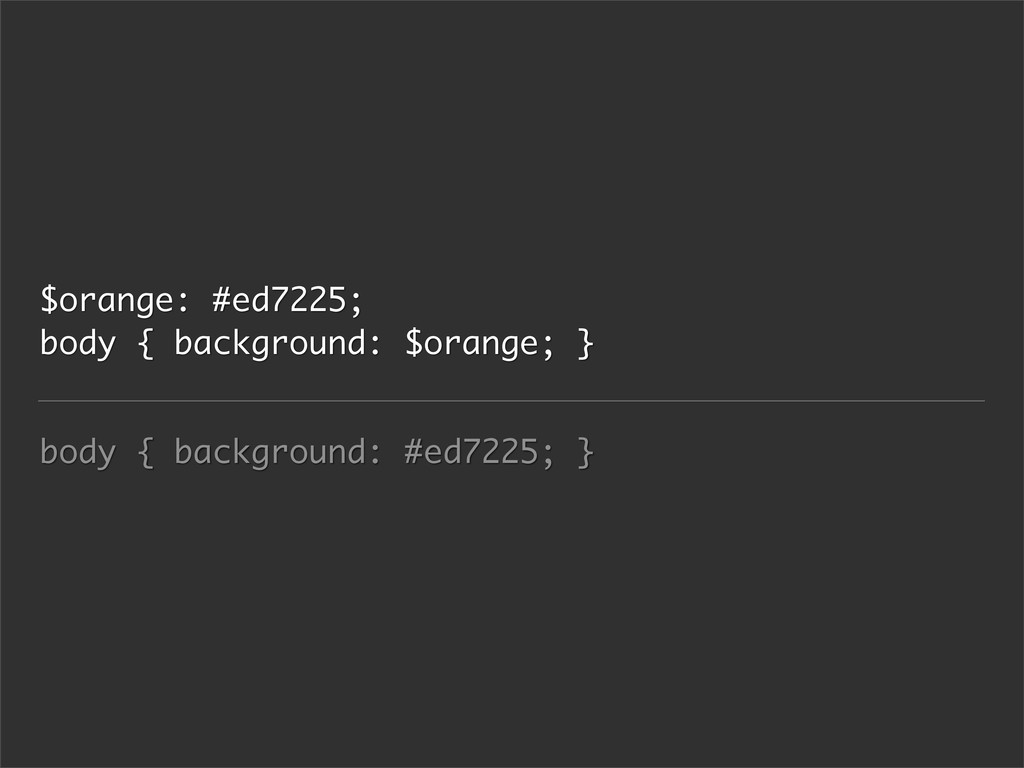
$orange: #ed7225; body { background: $orange; } body { background:
#ed7225; }
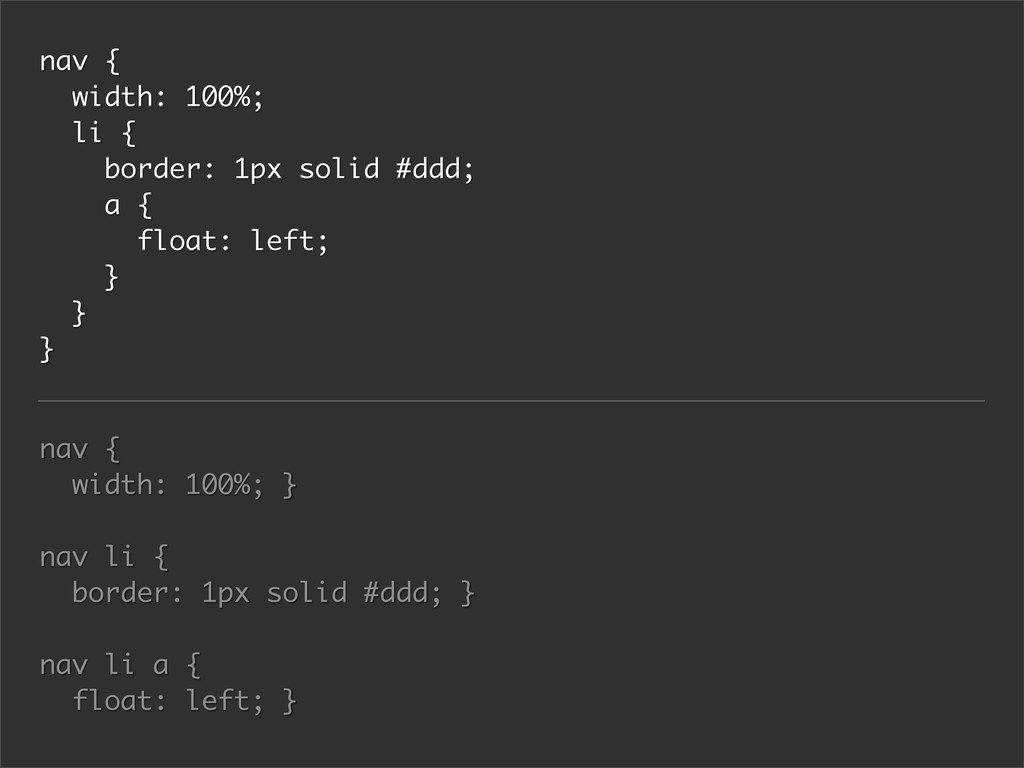
nav { width: 100%; li { border: 1px solid #ddd;
a { float: left; } } } nav { width: 100%; } nav li { border: 1px solid #ddd; } nav li a { float: left; }
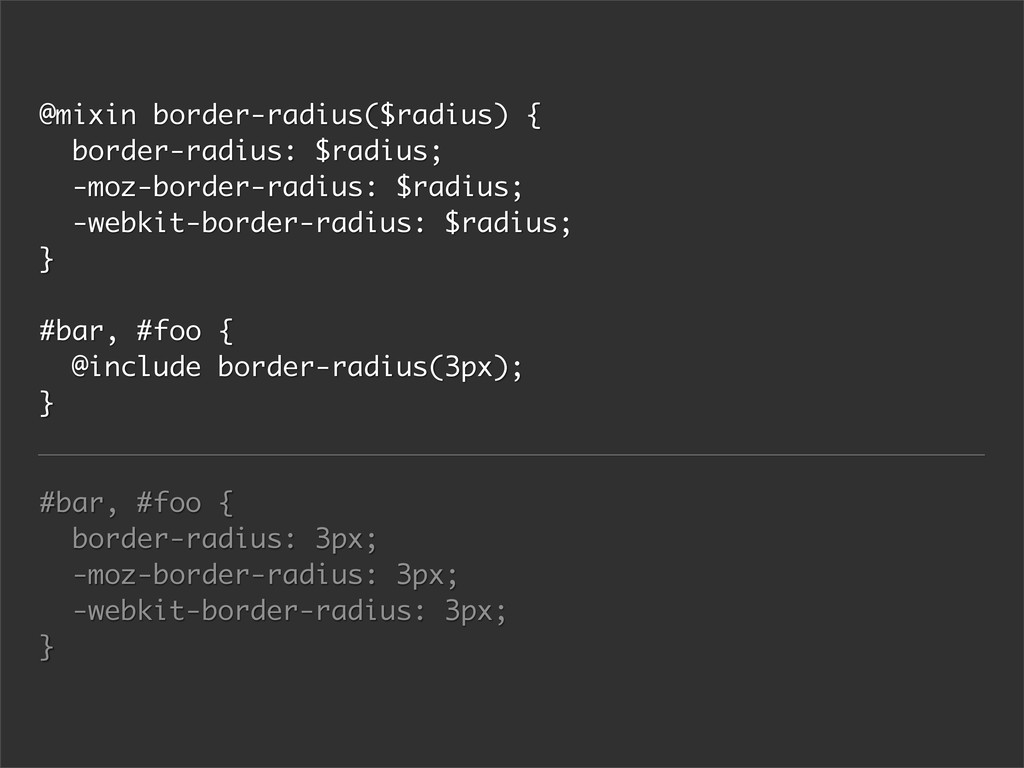
@mixin border-radius($radius) { border-radius: $radius; -moz-border-radius: $radius; -webkit-border-radius: $radius; }
#bar, #foo { @include border-radius(3px); } #bar, #foo { border-radius: 3px; -moz-border-radius: 3px; -webkit-border-radius: 3px; }
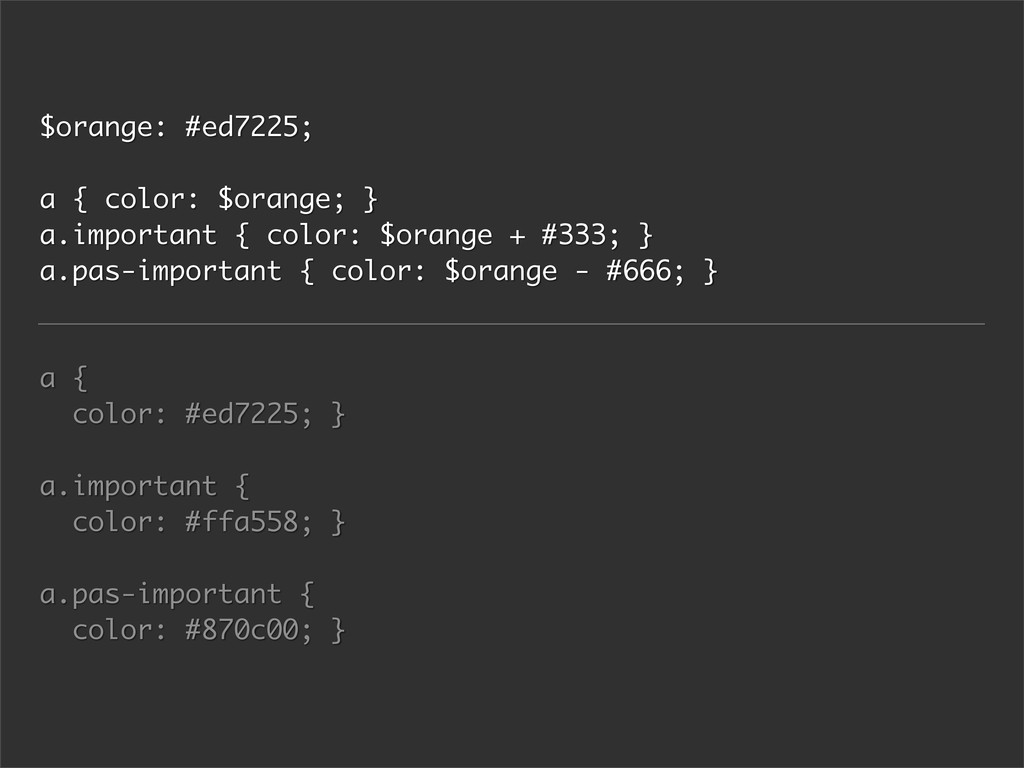
$orange: #ed7225; a { color: $orange; } a.important { color:
$orange + #333; } a.pas-important { color: $orange - #666; } a { color: #ed7225; } a.important { color: #ffa558; } a.pas-important { color: #870c00; }
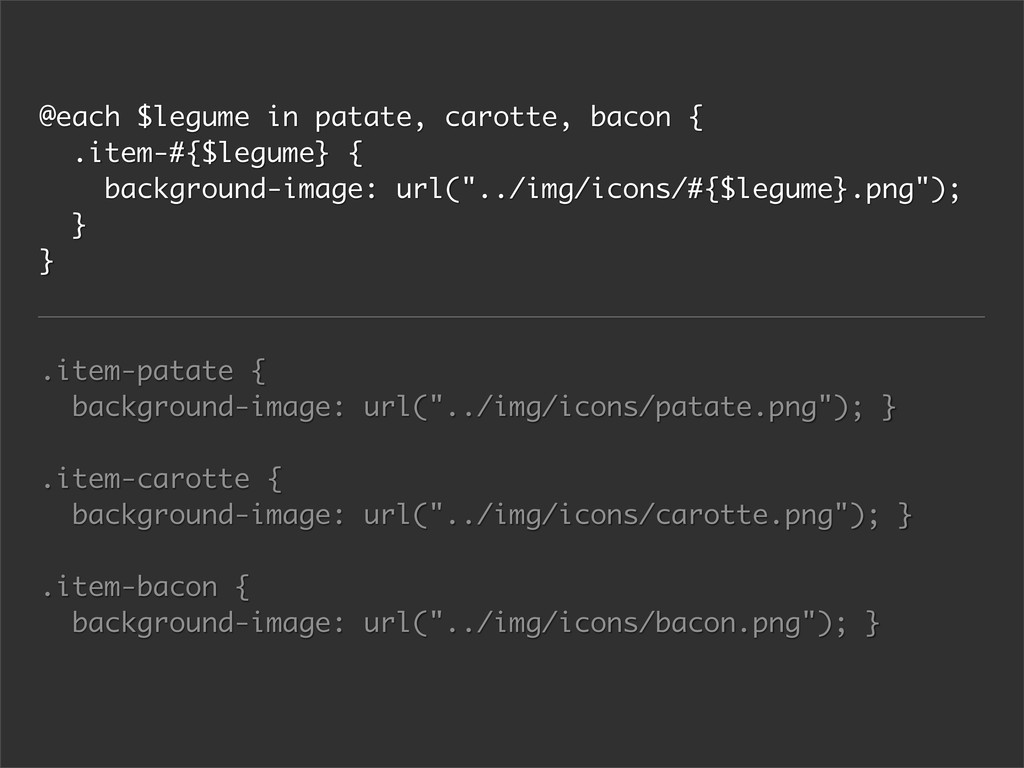
@each $legume in patate, carotte, bacon { .item-#{$legume} { background-image:
url("../img/icons/#{$legume}.png"); } } .item-patate { background-image: url("../img/icons/patate.png"); } .item-carotte { background-image: url("../img/icons/carotte.png"); } .item-bacon { background-image: url("../img/icons/bacon.png"); }
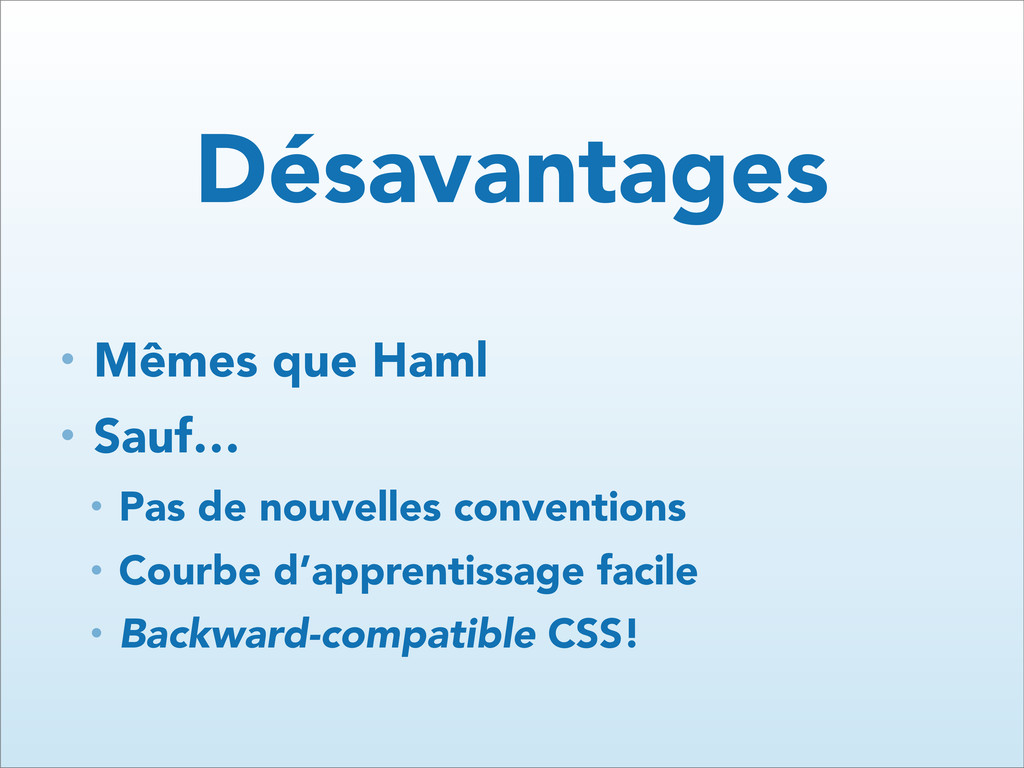
• Mêmes que Haml • Sauf… • Pas de nouvelles
conventions • Courbe d’apprentissage facile • Backward-compatible CSS! Désavantages
Discussion • Est-ce que ça en vaut la peine? •
Alternatives pour PHP, Python, … • Slim, Tequila, CoffeeKup, LESS? • CoffeeScript? • Haters?


 remi
remi
 rkaga
rkaga
 y0hgi
y0hgi
 willnet
 yutobara
 steliosf
 s_shimotori
 dske104
 armondando
 naokihaba
 hschwentner
 gonta
gonta
 garrettdimon
 gurzu
gurzu
 kimpetersen
 portentint
 brettharned
 codingconduct
 jonoalderson
 katiecoart
 427marketing
 jcasabona
 aleyda




![/[if lt IE 9] %script{ :src=> "//html5shim.googlecode.com/svn/trunk/html5.js" <!-- [if lt](https://files.speakerdeck.com/presentations/4e80d41671b5b7006300012b/slide_16.jpg)