satellite images using an extended version of the Haze Optimized Transform Robin Wilson, Edward Milton & Joanna Nield [email protected] @sciremotesense
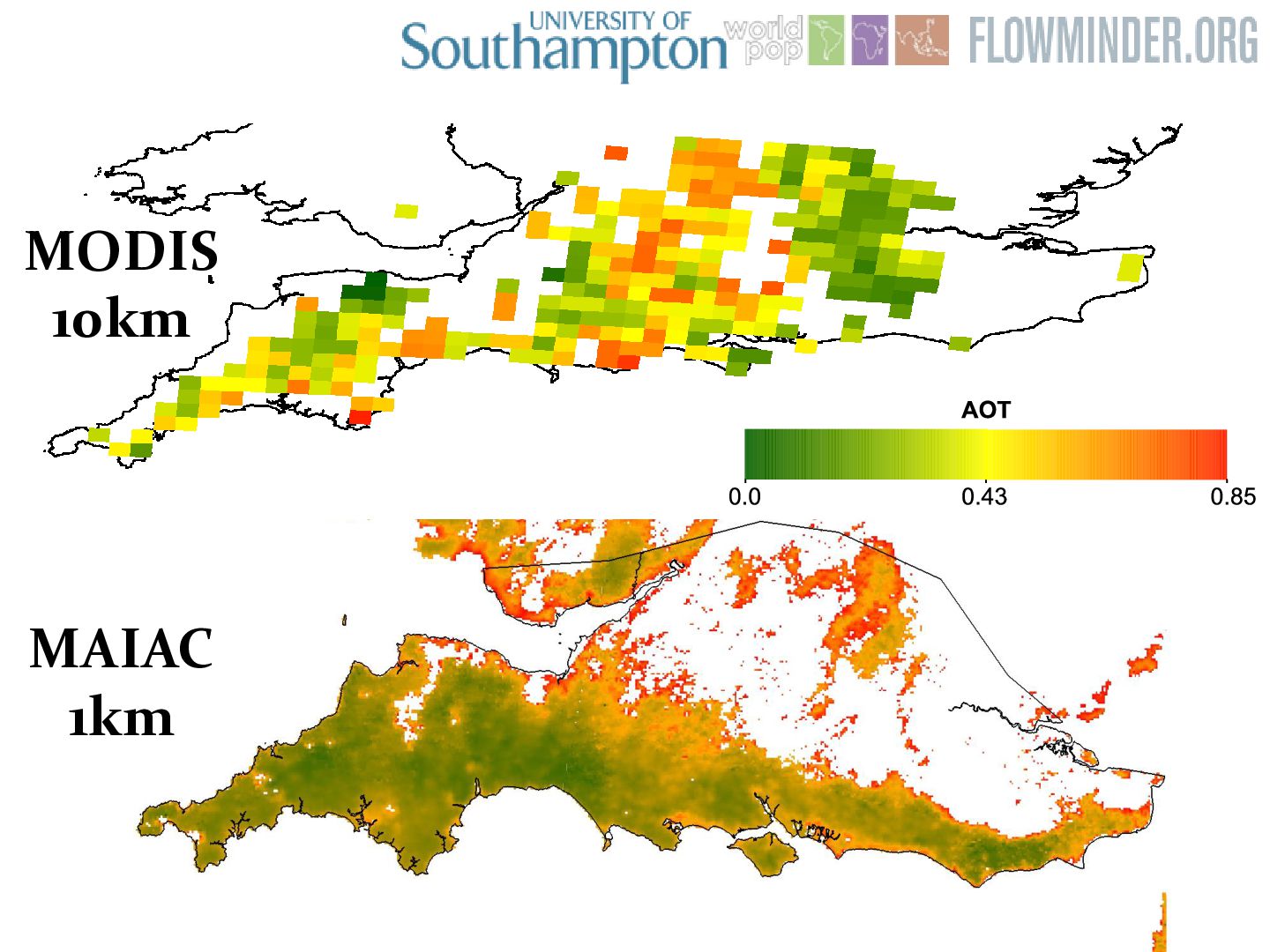
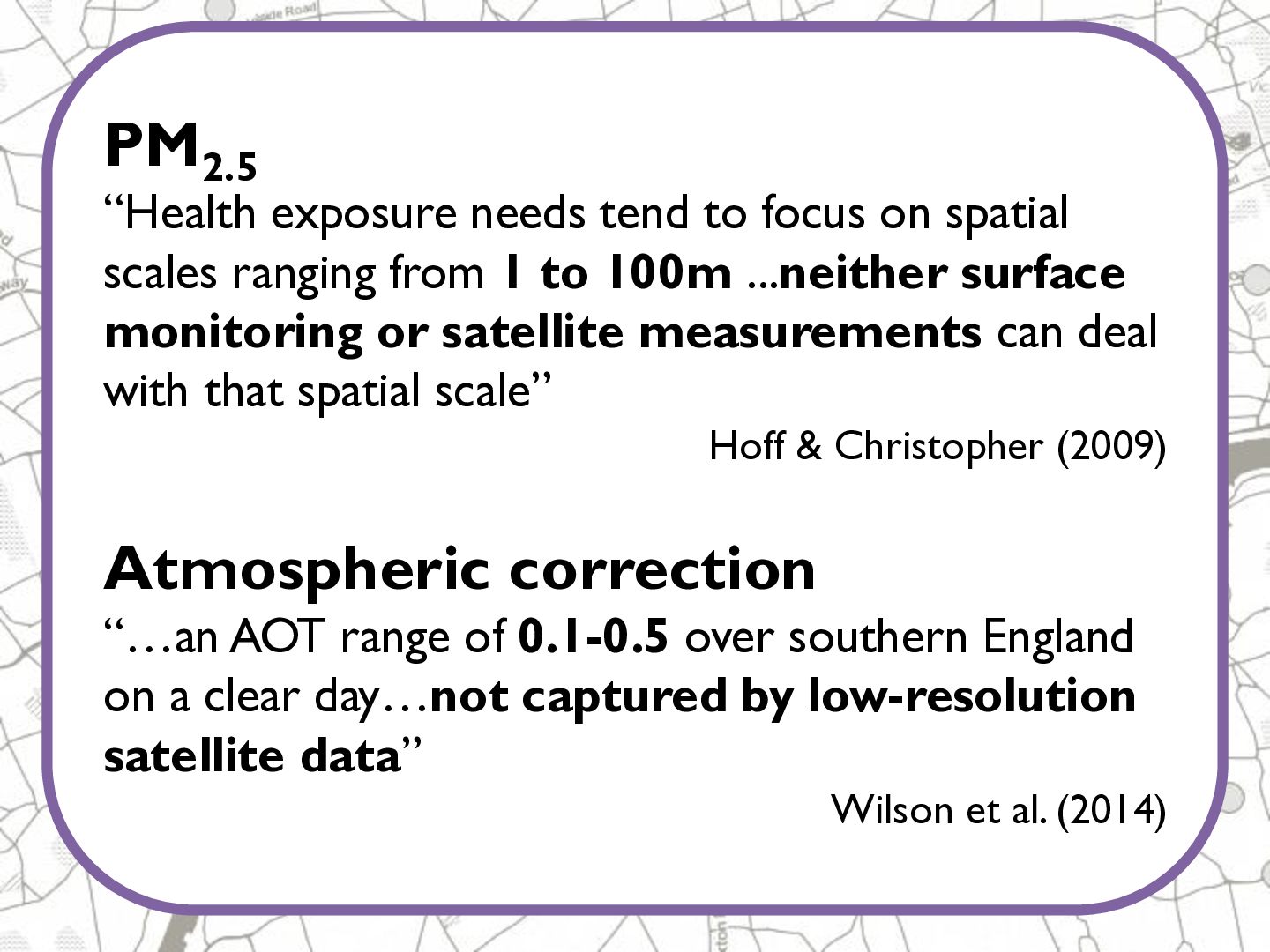
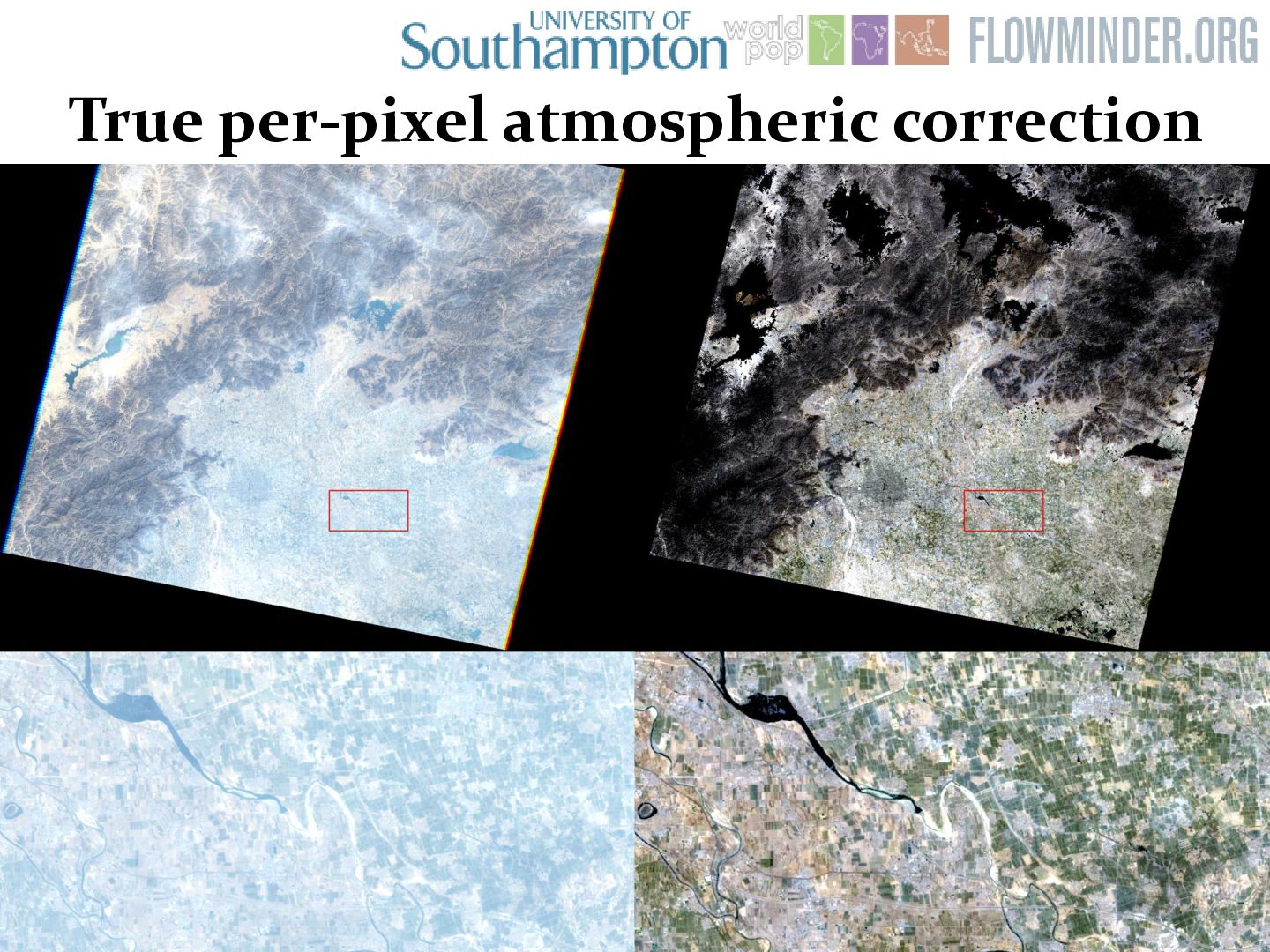
ranging from 1 to 100m ...neither surface monitoring or satellite measurements can deal with that spatial scale” Hoff & Christopher (2009) Atmospheric correction “…an AOT range of 0.1-0.5 over southern England on a clear day…not captured by low-resolution satellite data” Wilson et al. (2014)
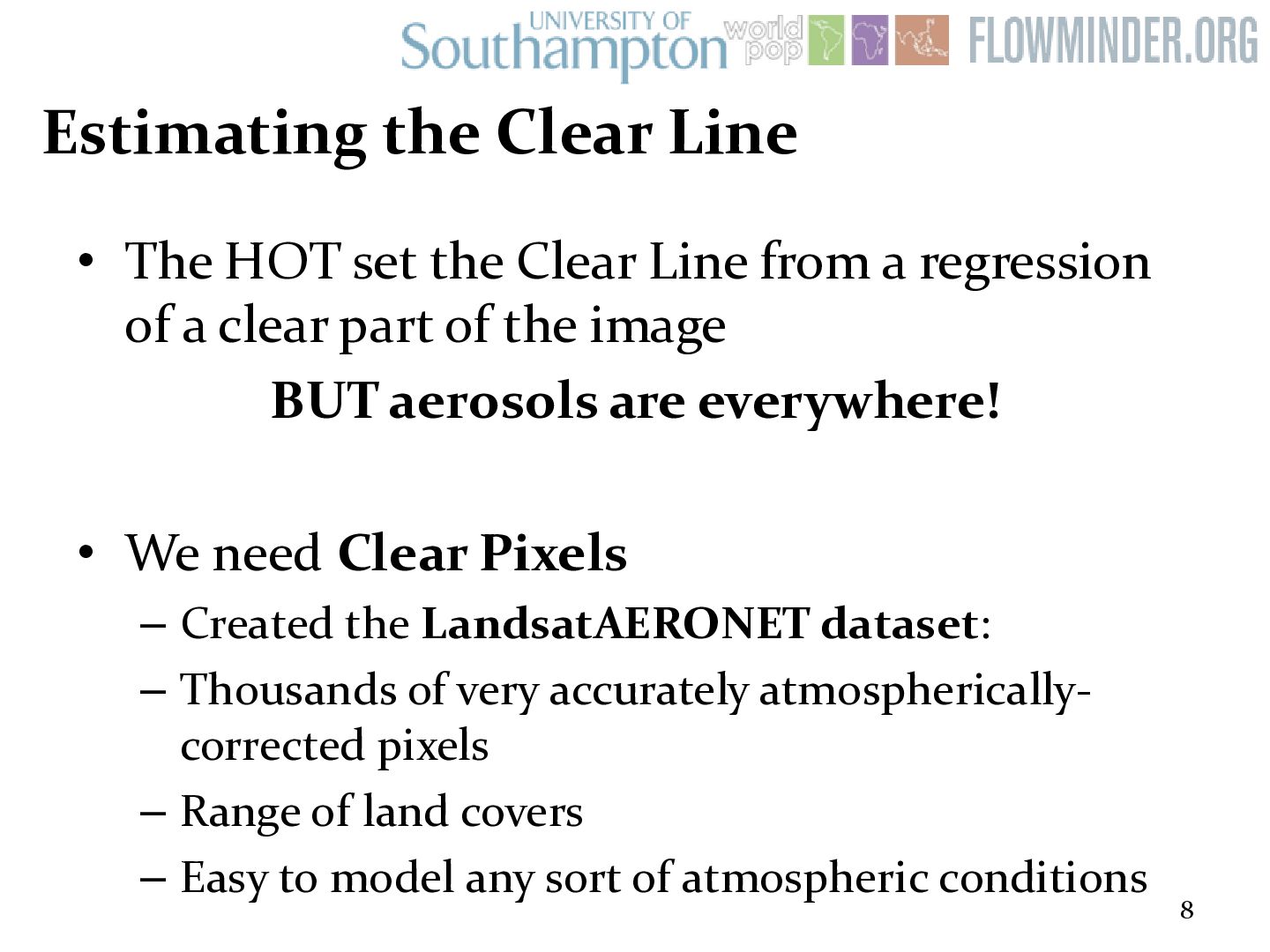
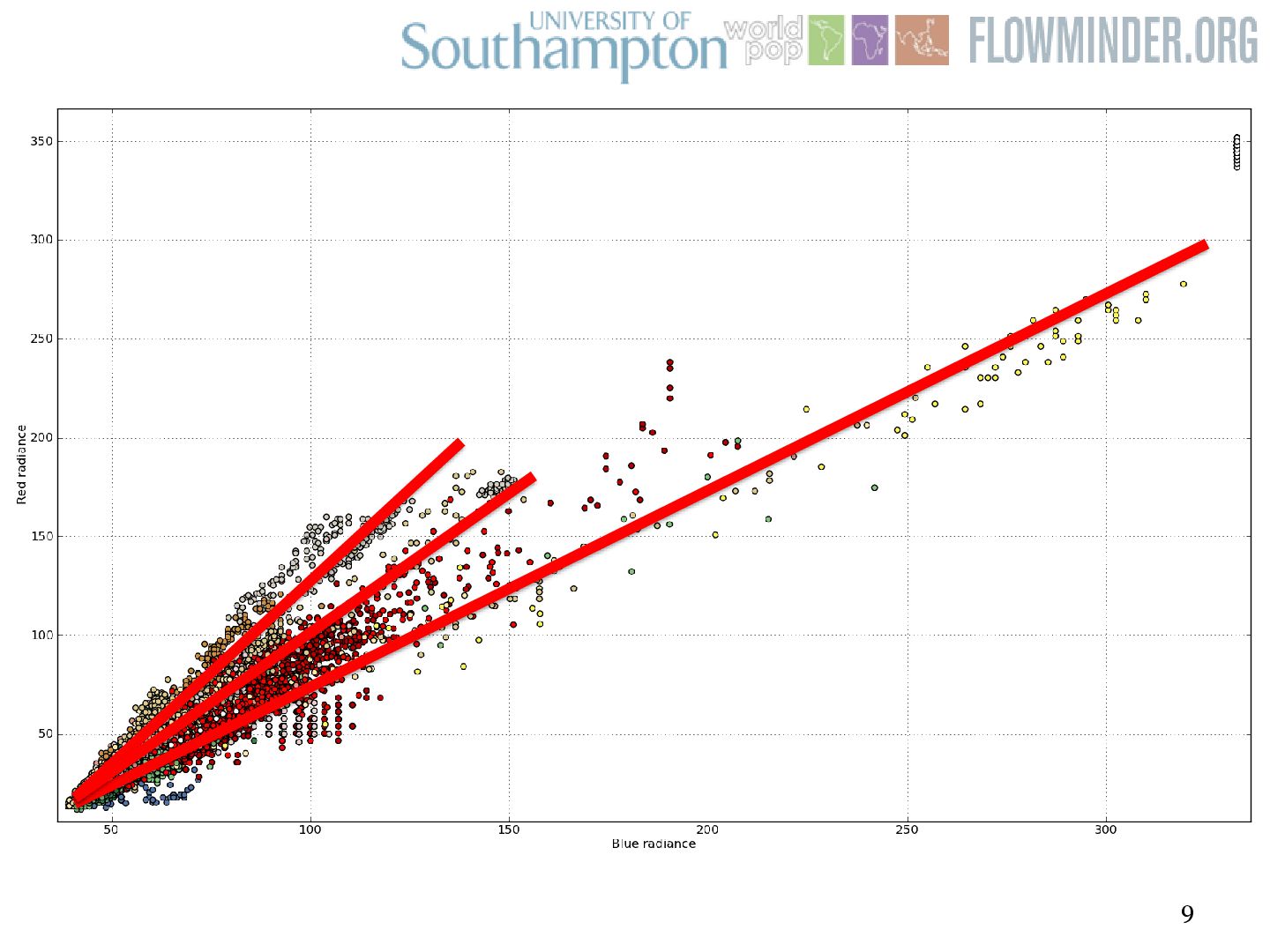
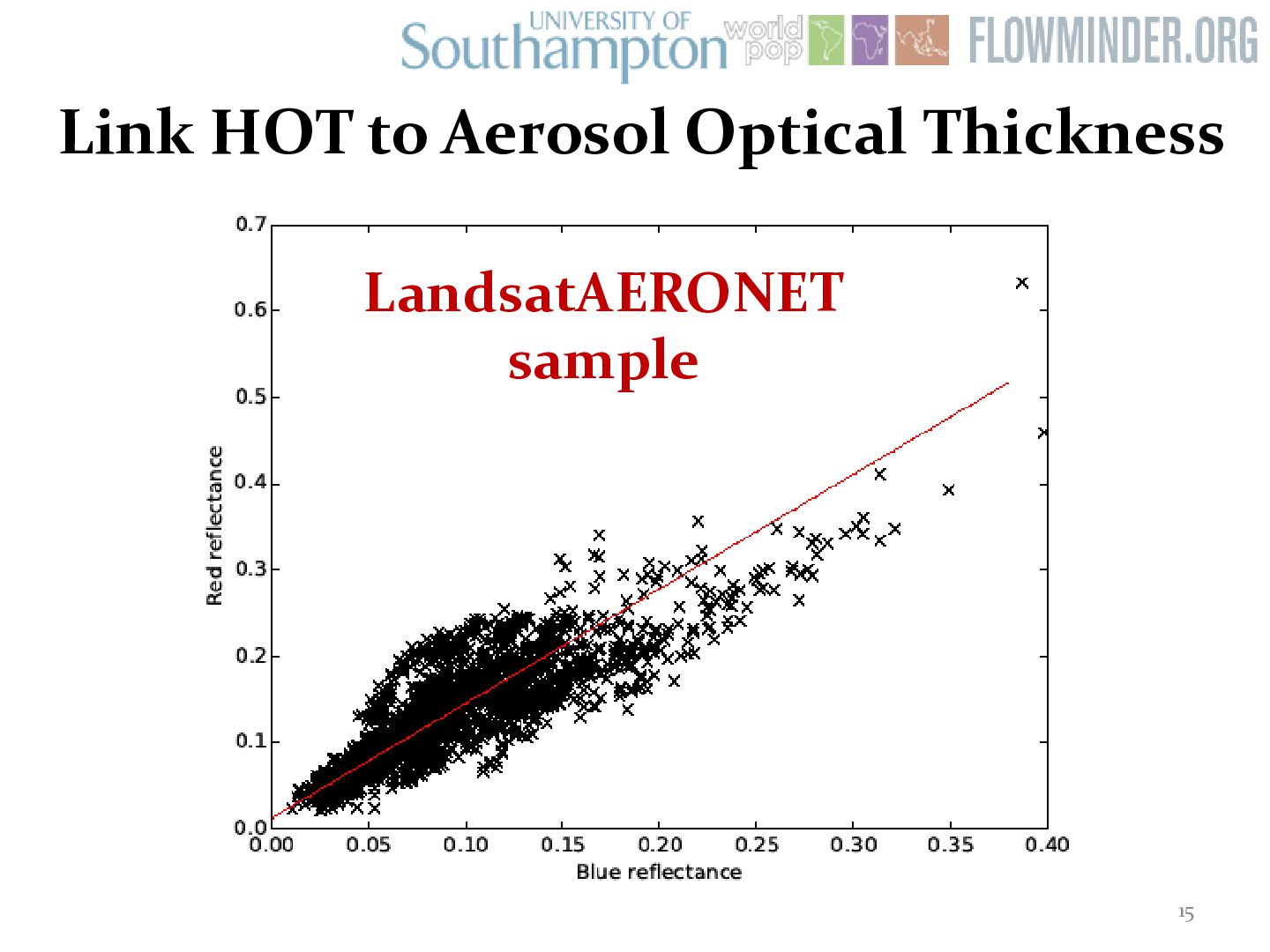
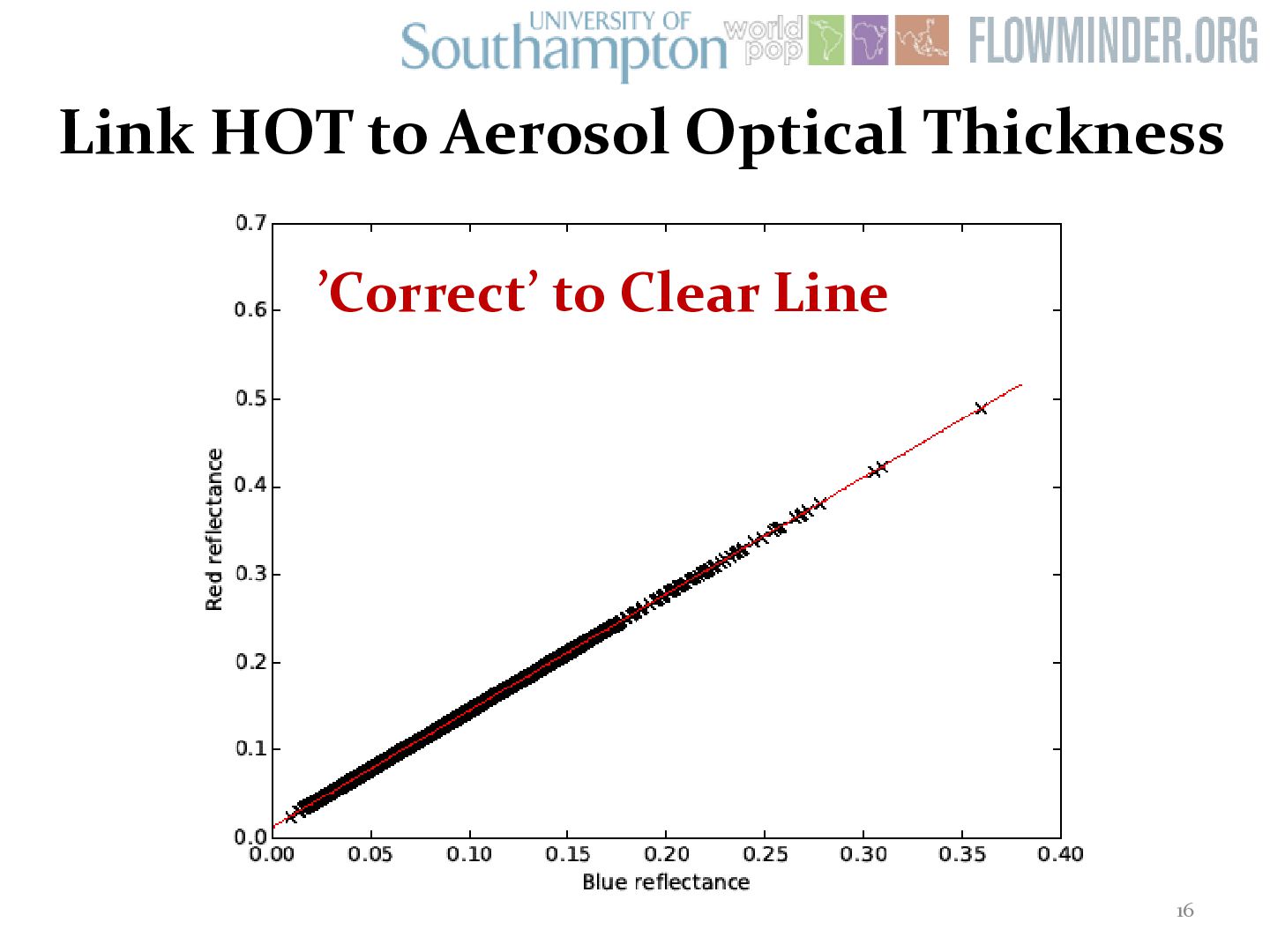
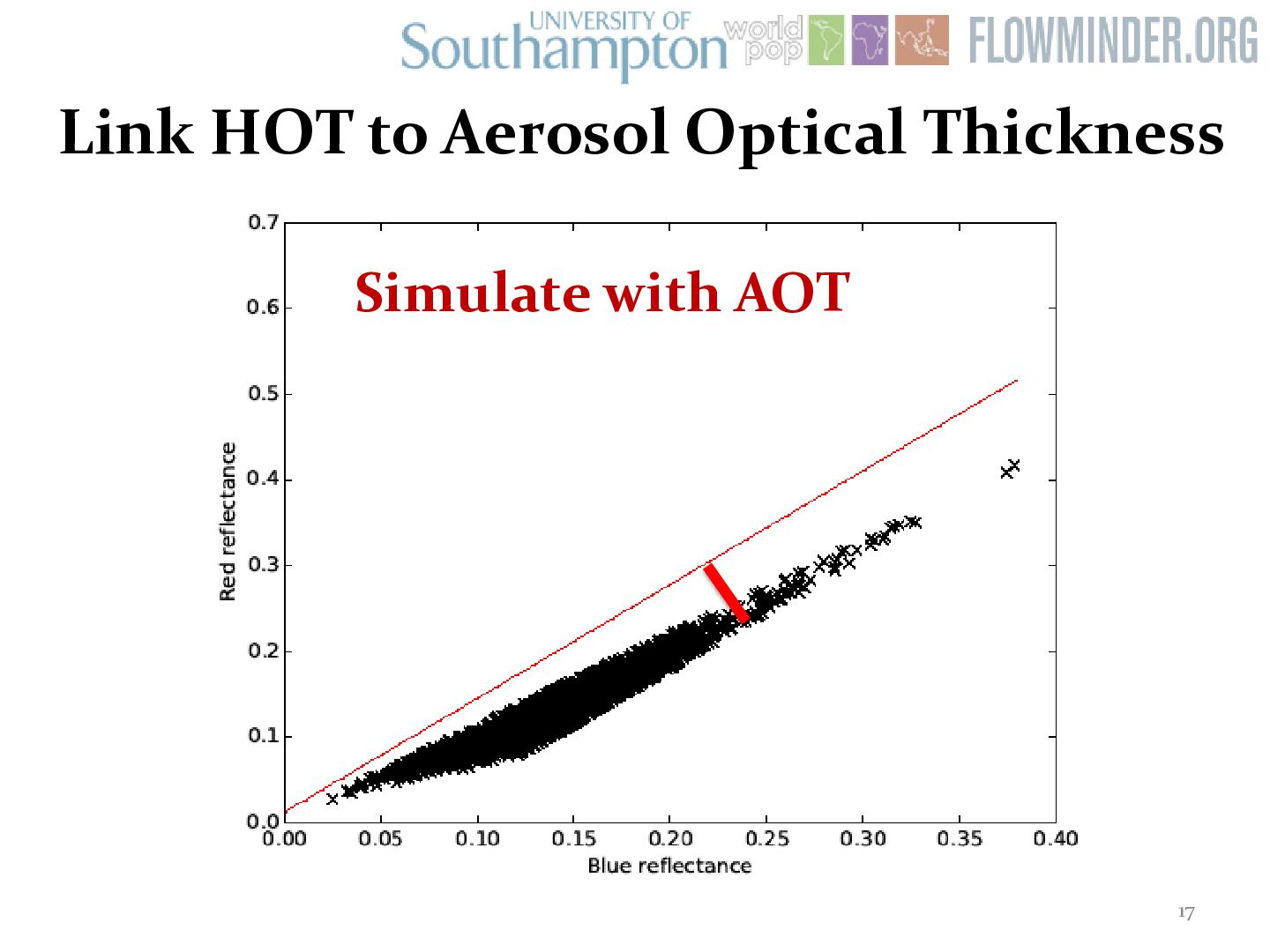
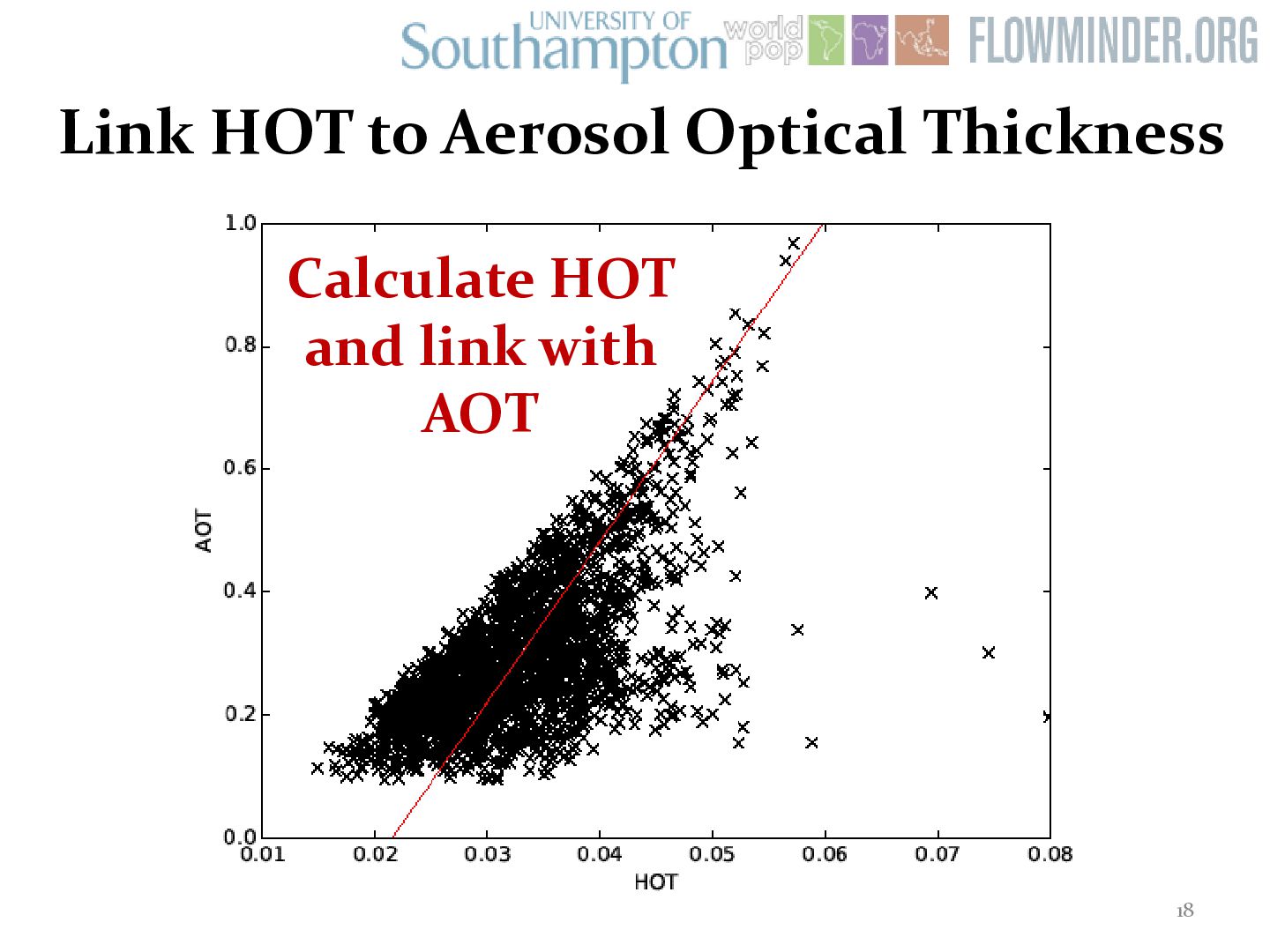
Line from a regression of a clear part of the image BUT aerosols are everywhere! • We need Clear Pixels – Created the LandsatAERONET dataset: – Thousands of very accurately atmospherically- corrected pixels – Range of land covers – Easy to model any sort of atmospheric conditions 8
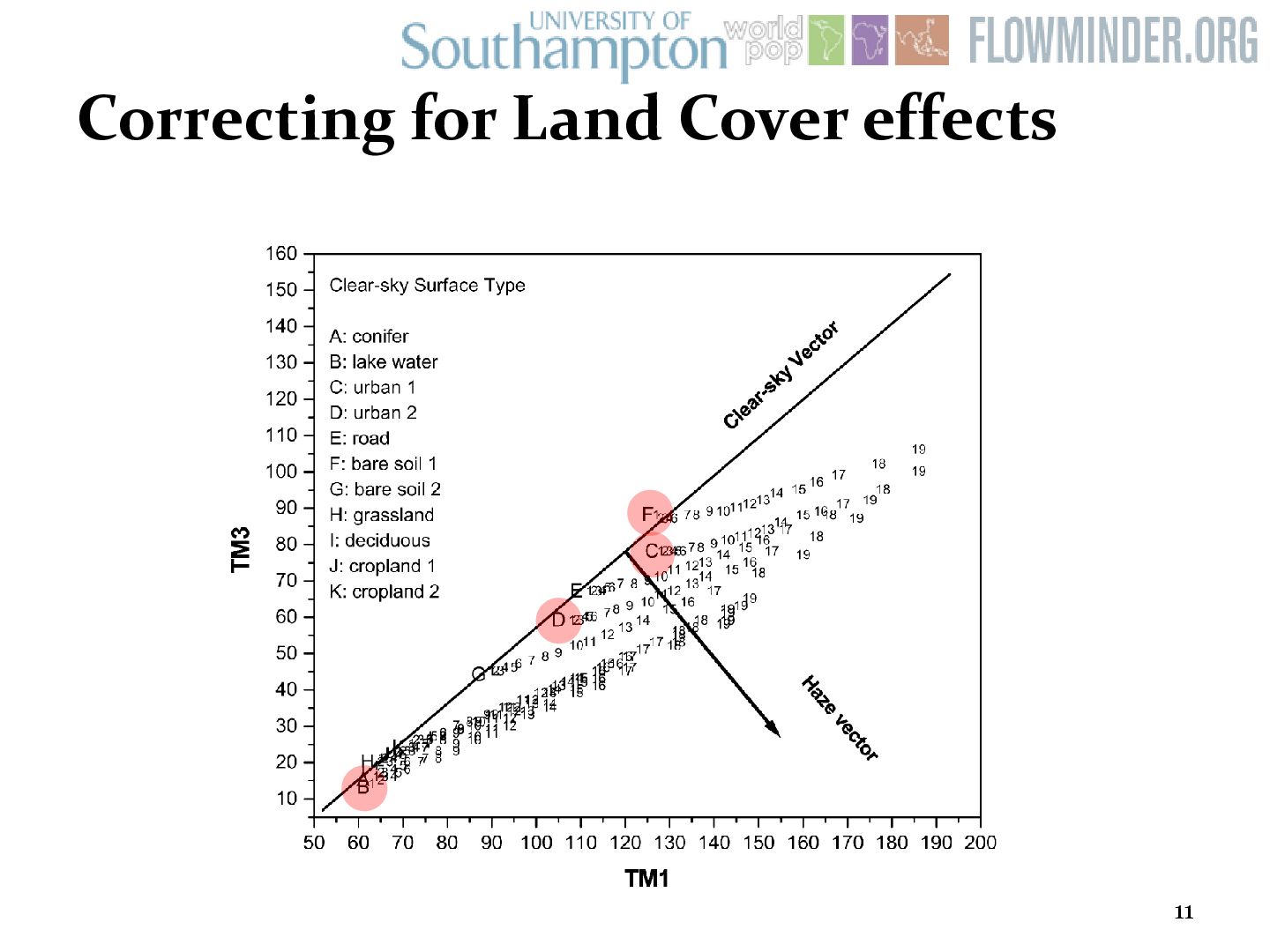
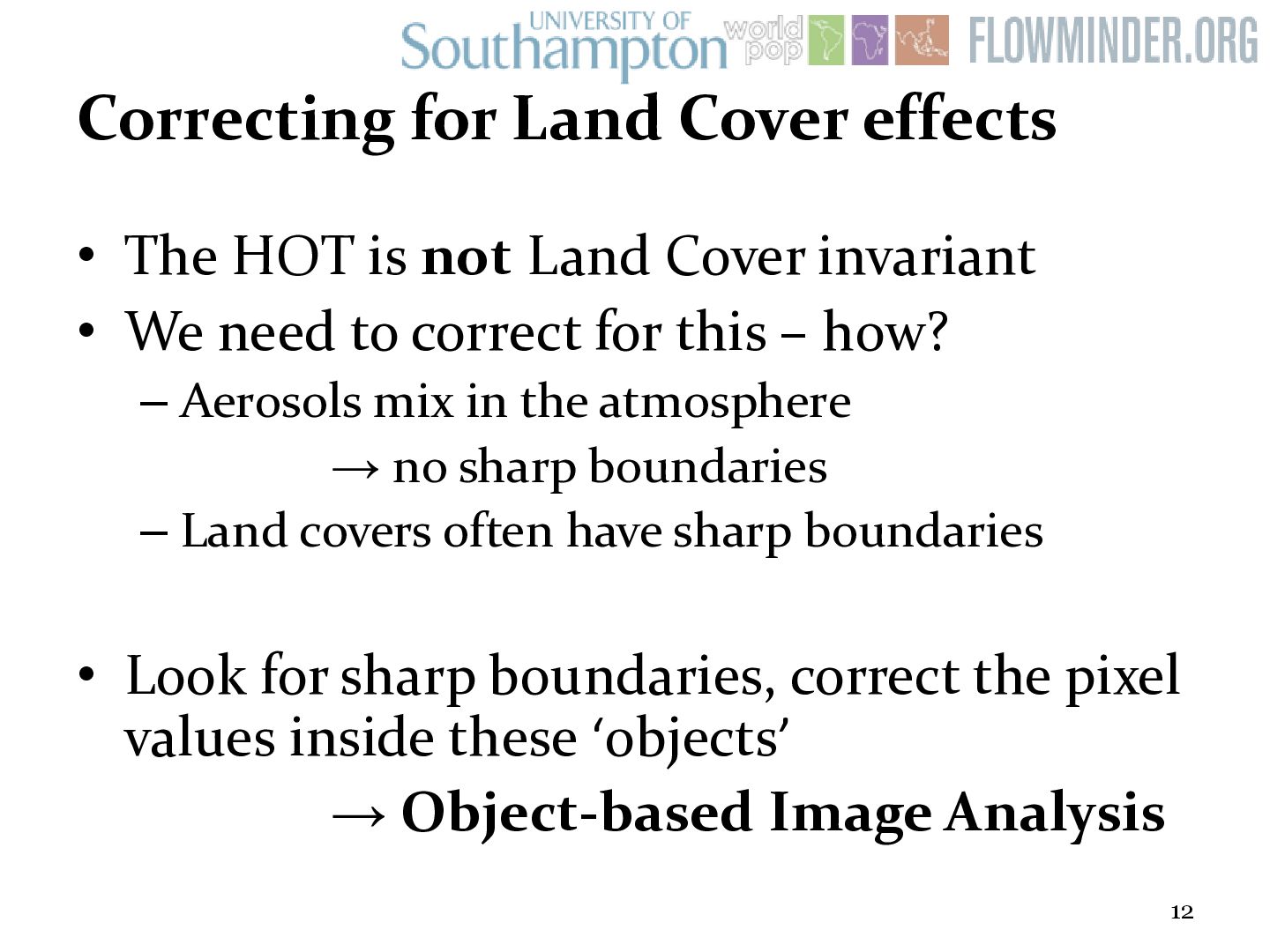
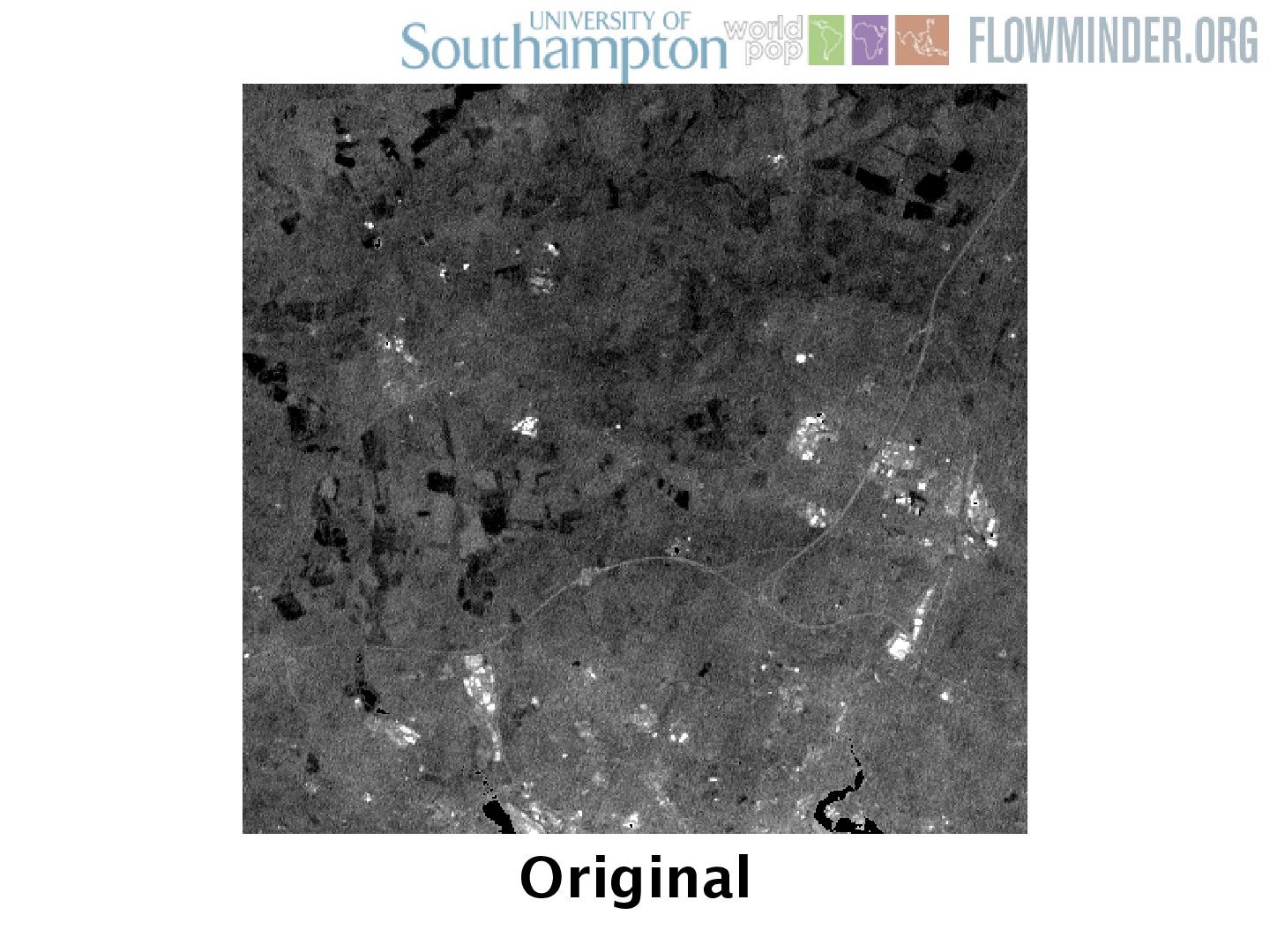
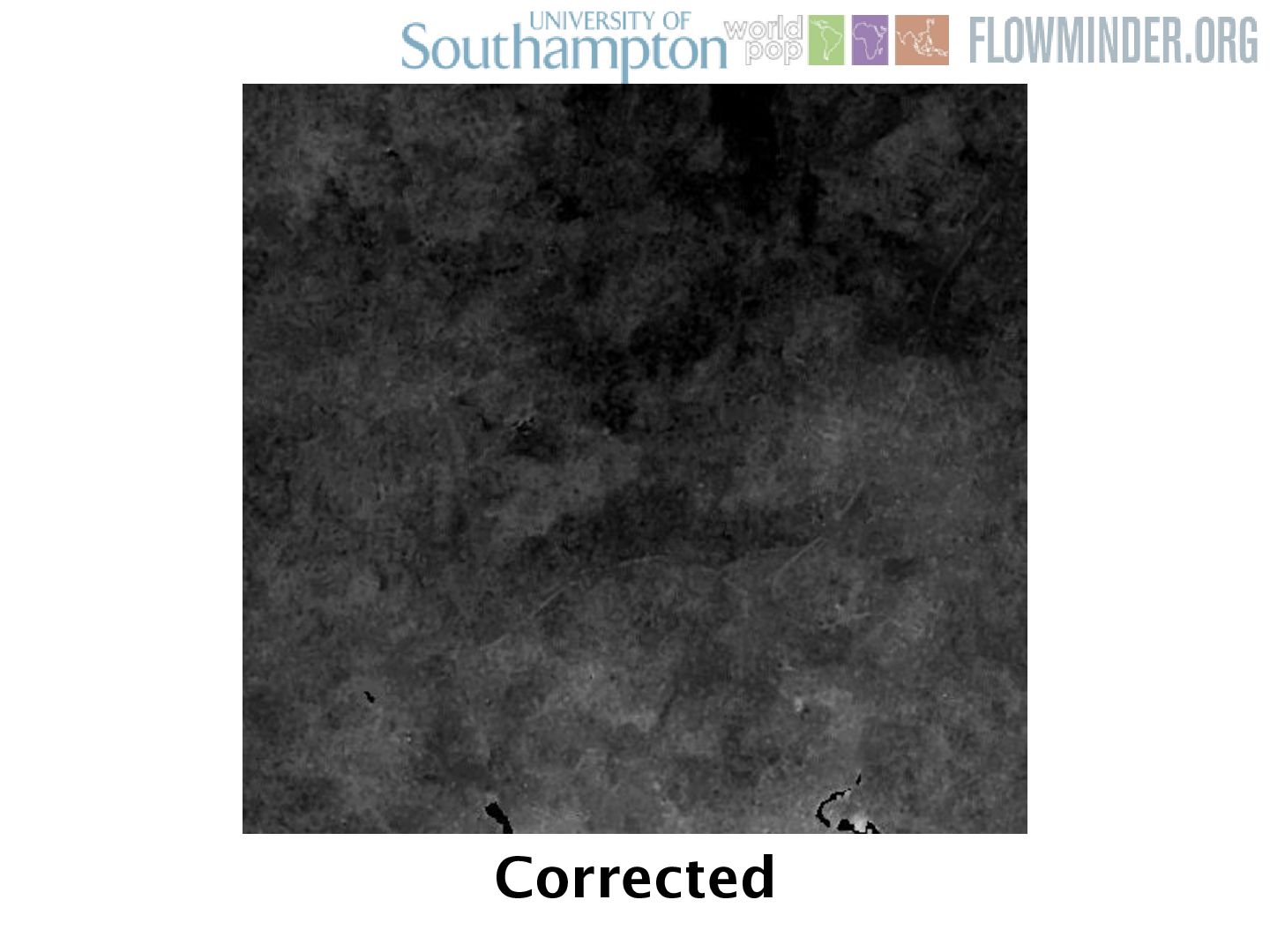
Land Cover invariant • We need to correct for this – how? – Aerosols mix in the atmosphere → no sharp boundaries – Land covers often have sharp boundaries • Look for sharp boundaries, correct the pixel values inside these ‘objects’ → Object-based Image Analysis 12
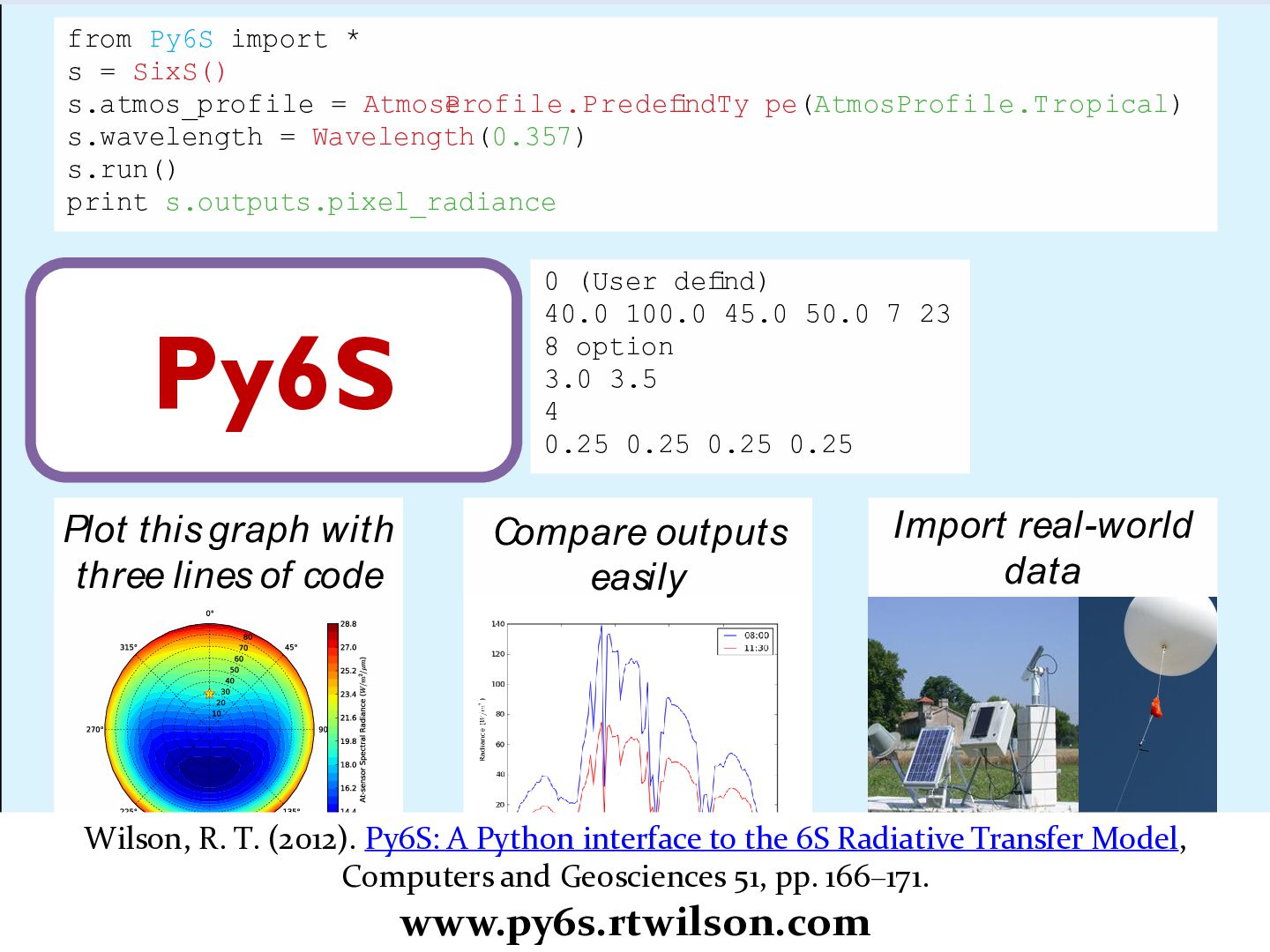
7 23 8 option 3.0 3.5 4 0.25 0.25 0.25 0.25 from Py6S import * s = SixS() s.atmos_profile = AtmosProfile.Predef i n e dTy pe(AtmosProfile.Tropical) s.wavelength = Wavelength(0.357) s.run() print s.outputs.pixel_radiance Instead of this: Plot this graph with three lines of code Compare outputs easily Import real-world data Wilson, R. T., Py6S: A Python interface to the 6S Radiative Transfer Model Computers and Geosciences, Accepted Manuscript Wilson, R. T. (2012). Py6S: A Python interface to the 6S Radiative Transfer Model, Computers and Geosciences 51, pp. 166–171. www.py6s.rtwilson.com Py6S
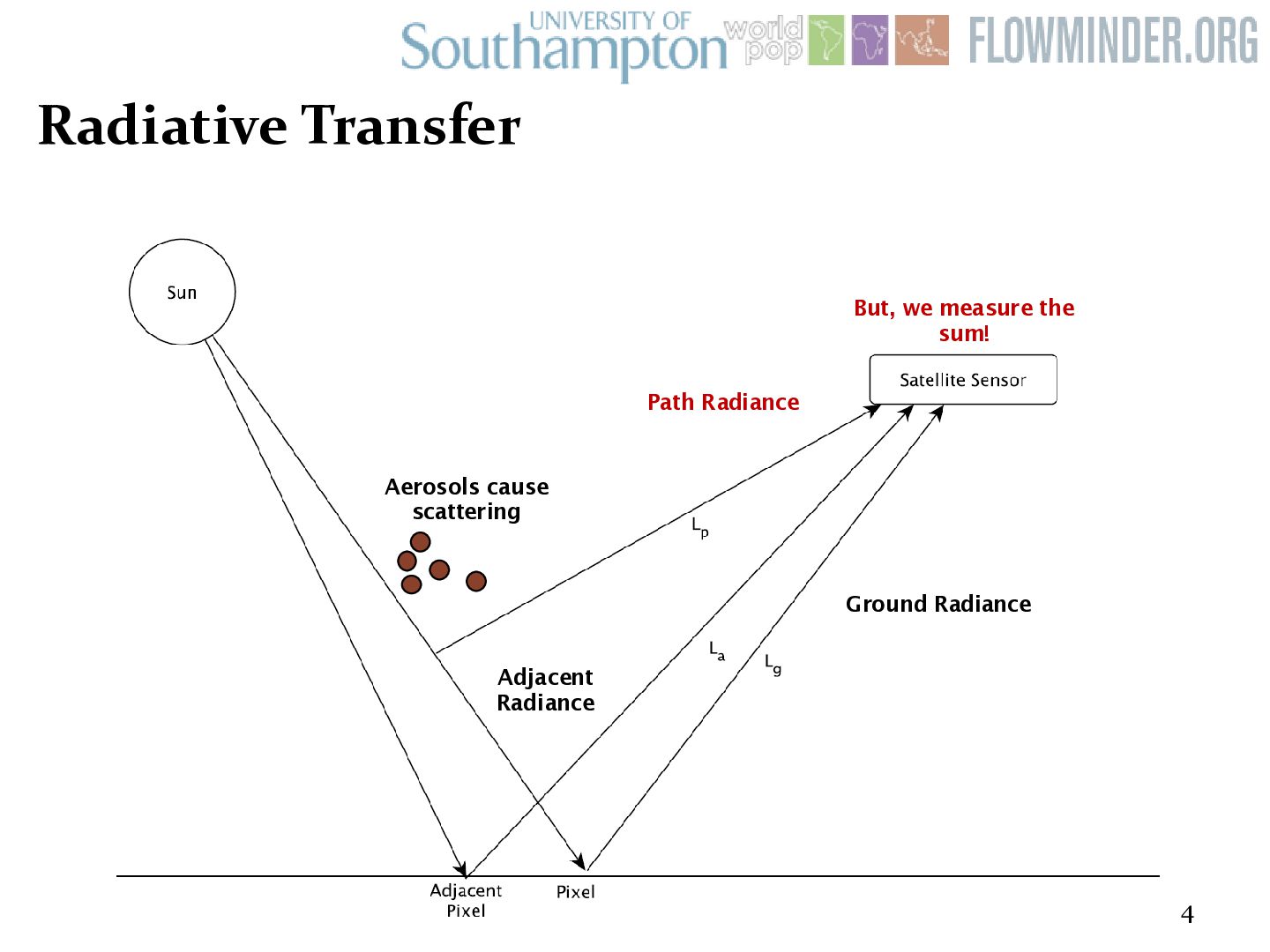
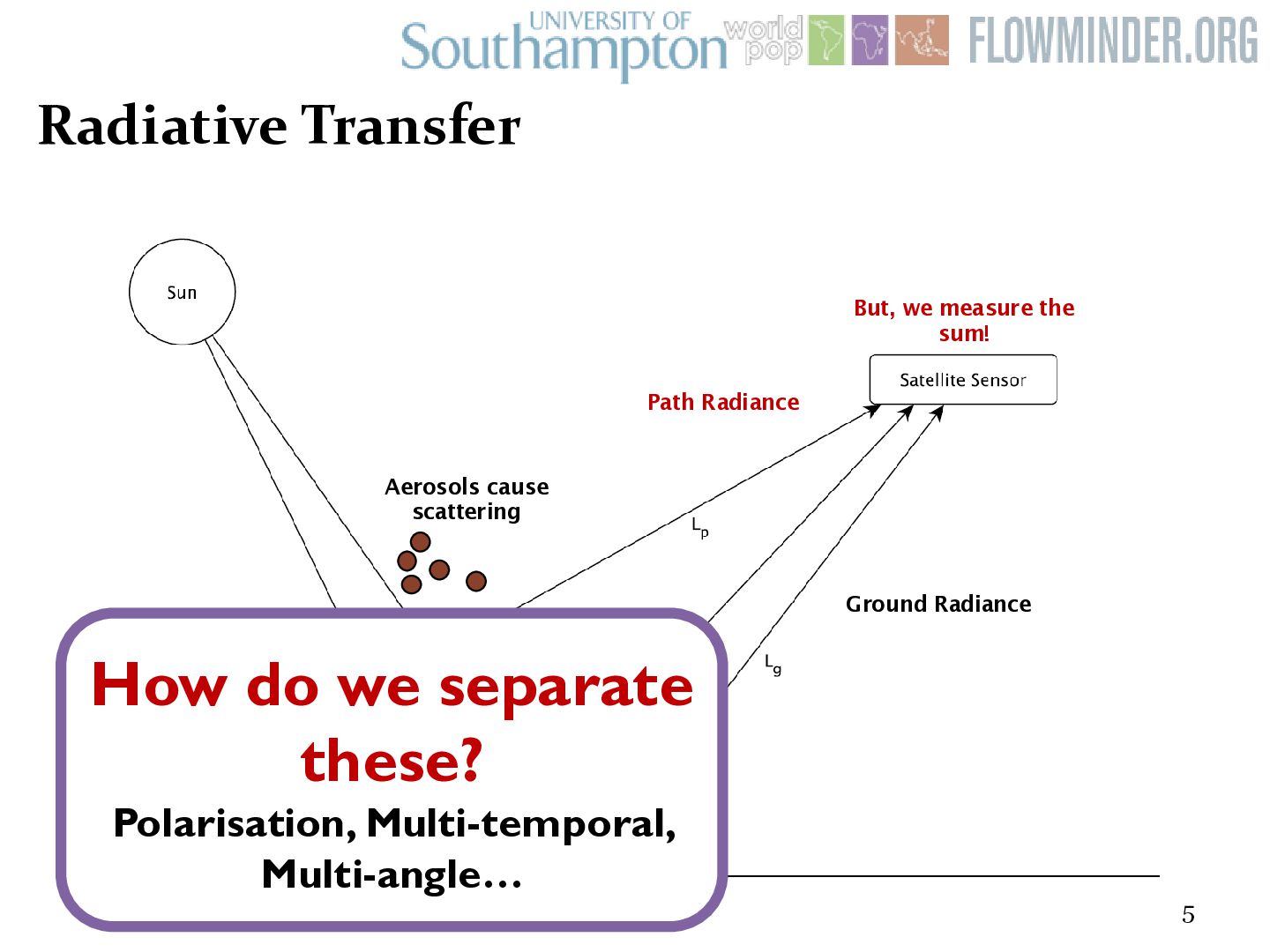
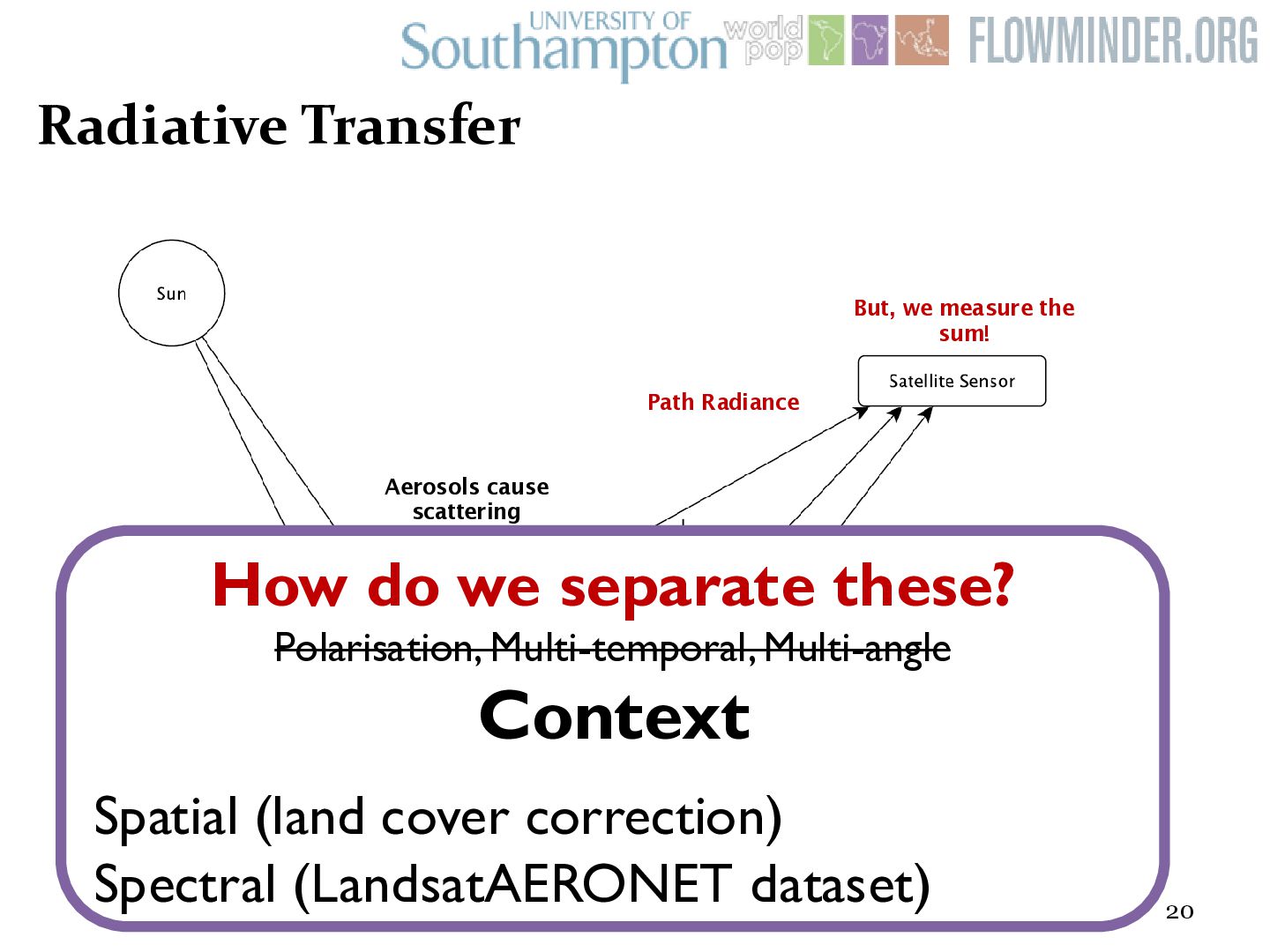
Adjacent Radiance But, we measure the sum! How do we separate these? Polarisation, Multi-temporal, Multi-angle Context Spatial (land cover correction) Spectral (LandsatAERONET dataset)


 robintw
 kevinliebholz
 takai
takai
 baasie
 emna__ayadi
 davidcarrasco
 asonas
 trishagee
 charlesmeaden
 jcasabona
 irinanazarova
 bethany
 eileencodes

![31 Any questions? [email protected] @sciremotesense](https://files.speakerdeck.com/presentations/8bd5c8e671474c939b2ddd89297e6a61/slide_30.jpg)