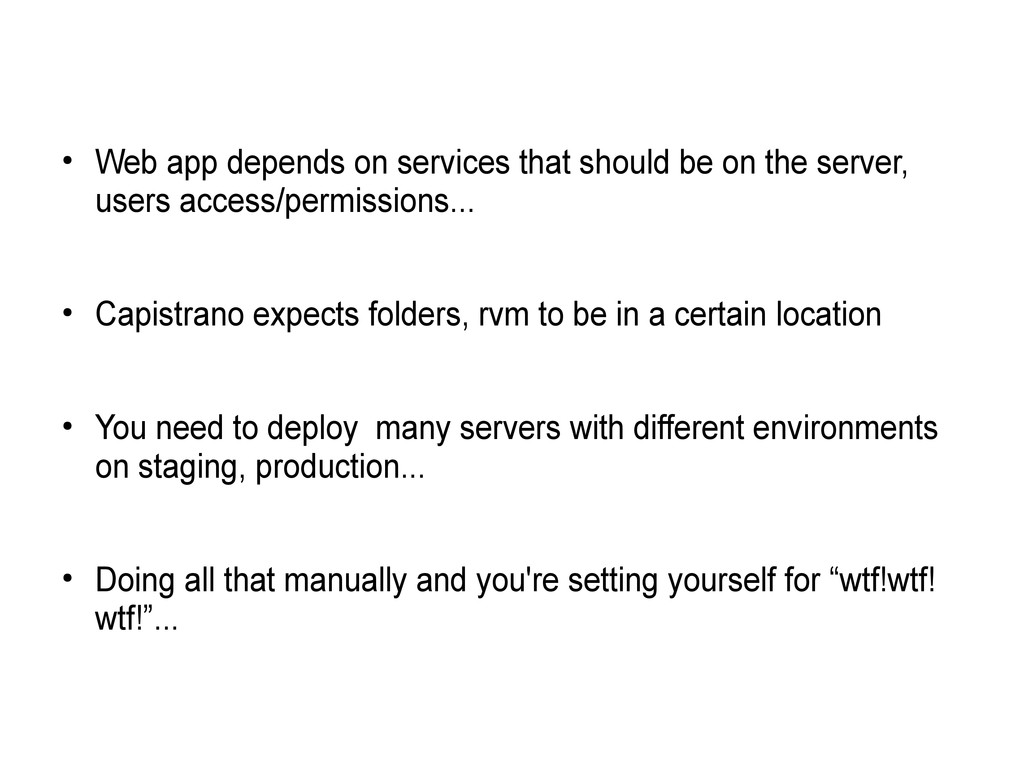
the server, users access/permissions... • Capistrano expects folders, rvm to be in a certain location • You need to deploy many servers with different environments on staging, production... • Doing all that manually and you're setting yourself for “wtf!wtf! wtf!”...
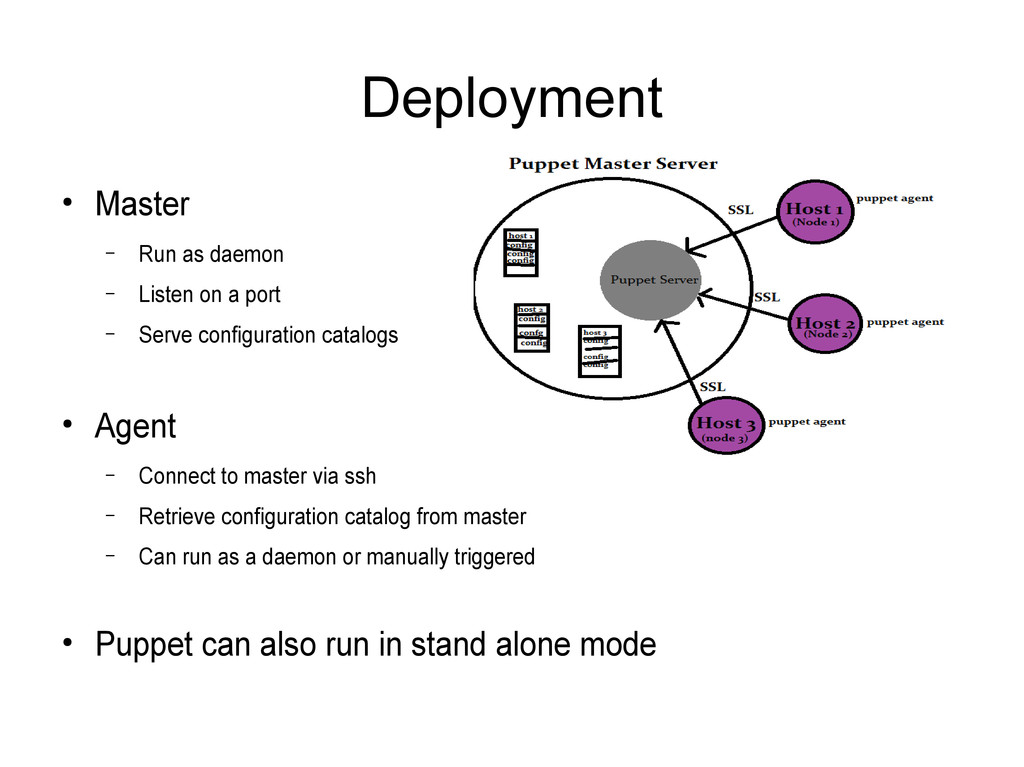
a port – Serve configuration catalogs • Agent – Connect to master via ssh – Retrieve configuration catalog from master – Can run as a daemon or manually triggered • Puppet can also run in stand alone mode
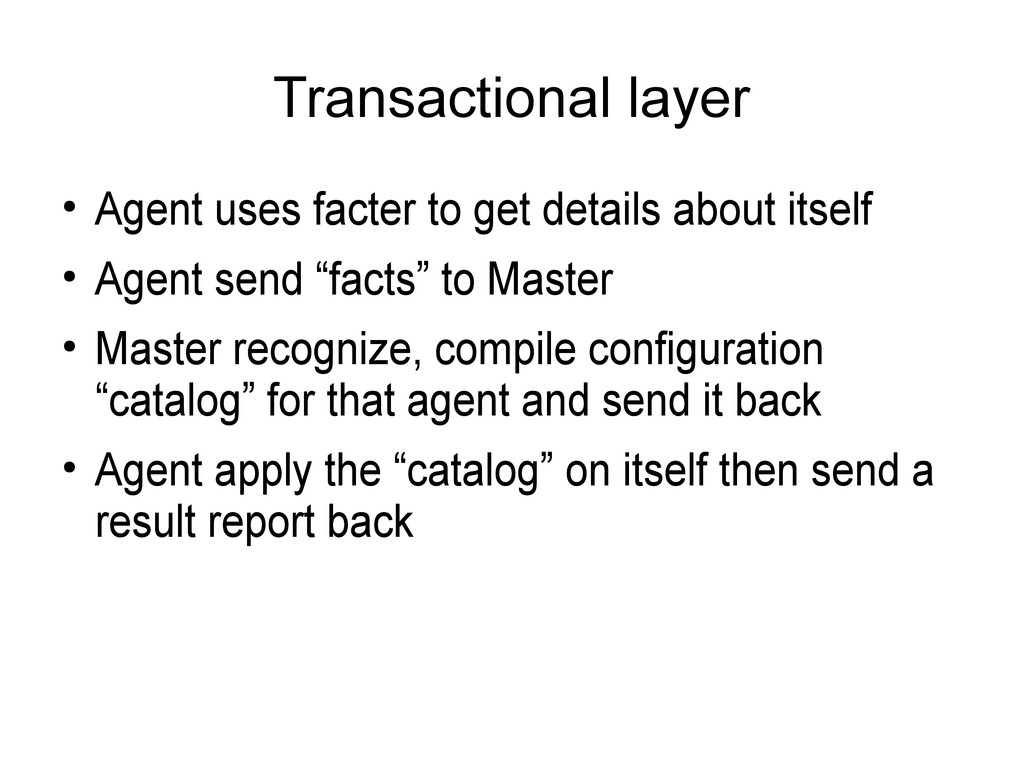
itself • Agent send “facts” to Master • Master recognize, compile configuration “catalog” for that agent and send it back • Agent apply the “catalog” on itself then send a result report back


 salimane
 atsuki_seo
 akit37
 soyuka
 mofurune
 palkan
 uyuki234
 armondando
 ogom
ogom
 rkaga
rkaga
 naokihaba
 tosite
 sts11142
 akosma
 techseoconnect
 schroneko
 watany
 addyosmani
 eileencodes
 aleyda
 lfama
lfama
 nwiizo
 kevinliebholz
 lynnandtonic
 twada
twada
![Puppet Salimane Adjao Moustapha [email protected] salimane.com](https://files.speakerdeck.com/presentations/09b5bd70e726013025e106b7ac3a0202/slide_0.jpg)

![Config language/ Resource Abstraction file { ['/meltwater', '/meltwater/likealyzer']: ensure =>](https://files.speakerdeck.com/presentations/09b5bd70e726013025e106b7ac3a0202/slide_6.jpg)

![Node definition node puppet-demo { file { ['/meltwater', '/meltwater/likealyzer']: ensure](https://files.speakerdeck.com/presentations/09b5bd70e726013025e106b7ac3a0202/slide_9.jpg)