Upgrade to Pro — share decks privately, control downloads, hide ads and more …

Forget databases - use files!

Forget databases - use files!

Talk at the Web and Speck meetup in Innsbruck on the 28.11.2019:
Nowadays, it is very common to throw databases on every problem. But is it really the best approach, does it scale, and are there better
solutions? In this talk, I will try to convince you to get rid of your
databases ;) and of course, I am also looking forward to a very lively
discussion about this topic.

Avatar for Wolfgang Gassler

Wolfgang Gassler

November 28, 2019

More Decks by Wolfgang Gassler

Other Decks in Technology

Transcript

  1. Forget databases - use files! Wolfgang Gassler Web & Speck,

    Nov 2019, Innsbruck Thx to Brian Ecker for his contributions
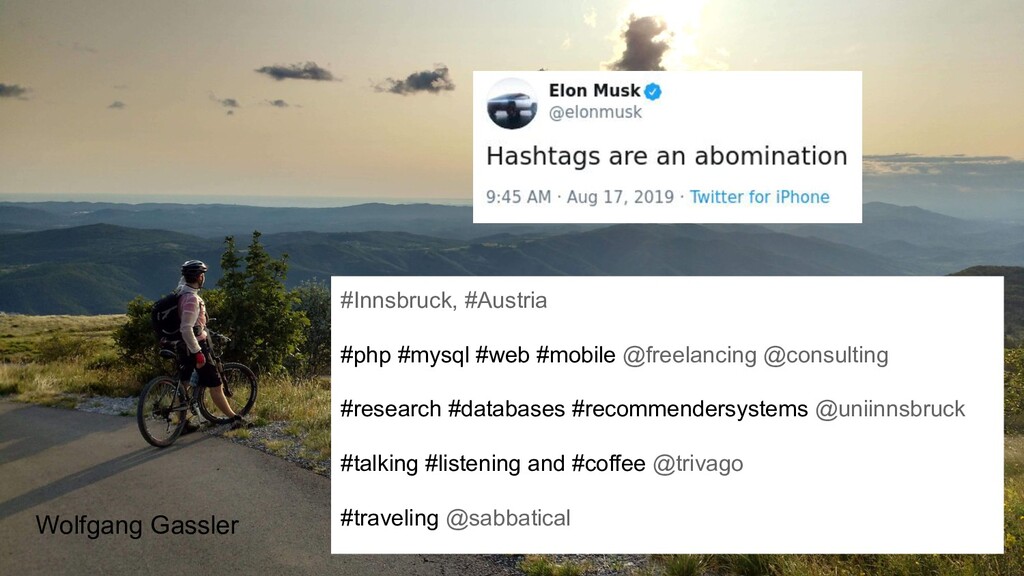
  2. #Innsbruck, #Austria #php #mysql #web #mobile @freelancing @consulting #research #databases

    #recommendersystems @uniinnsbruck #talking #listening and #coffee @trivago #traveling @sabbatical Wolfgang Gassler
  3. Forget databases - use files! Wolfgang Gassler Web & Speck,

    Nov 2019, Innsbruck Thx to Brian Ecker for his contributions
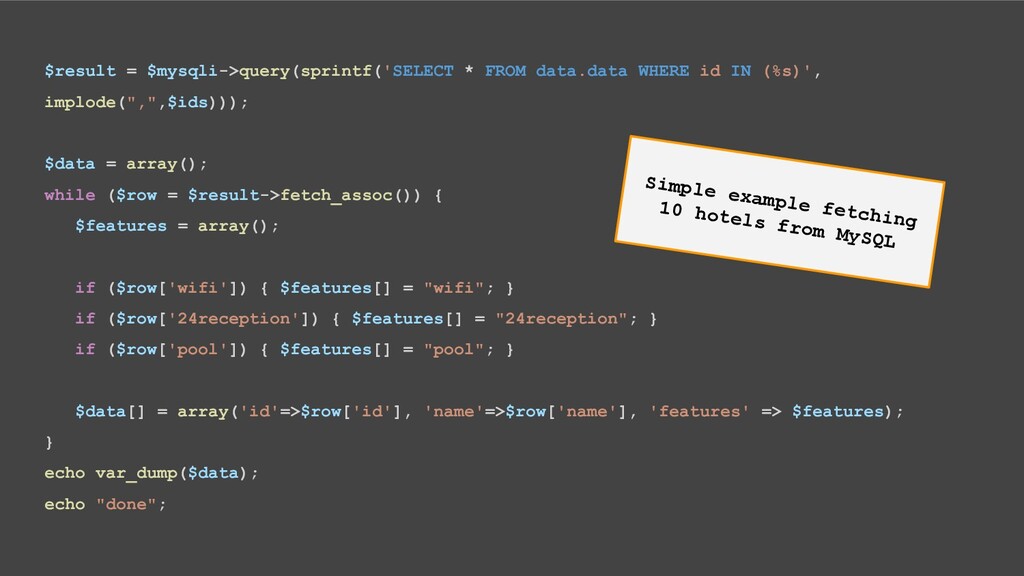
  4. $result = $mysqli->query(sprintf('SELECT * FROM data.data WHERE id IN (%s)',

    implode(",",$ids))); $data = array(); while ($row = $result->fetch_assoc()) { $features = array(); if ($row['wifi']) { $features[] = "wifi"; } if ($row['24reception']) { $features[] = "24reception"; } if ($row['pool']) { $features[] = "pool"; } $data[] = array('id'=>$row['id'], 'name'=>$row['name'], 'features' => $features); } echo var_dump($data); echo "done"; Simple example fetching 10 hotels from MySQL
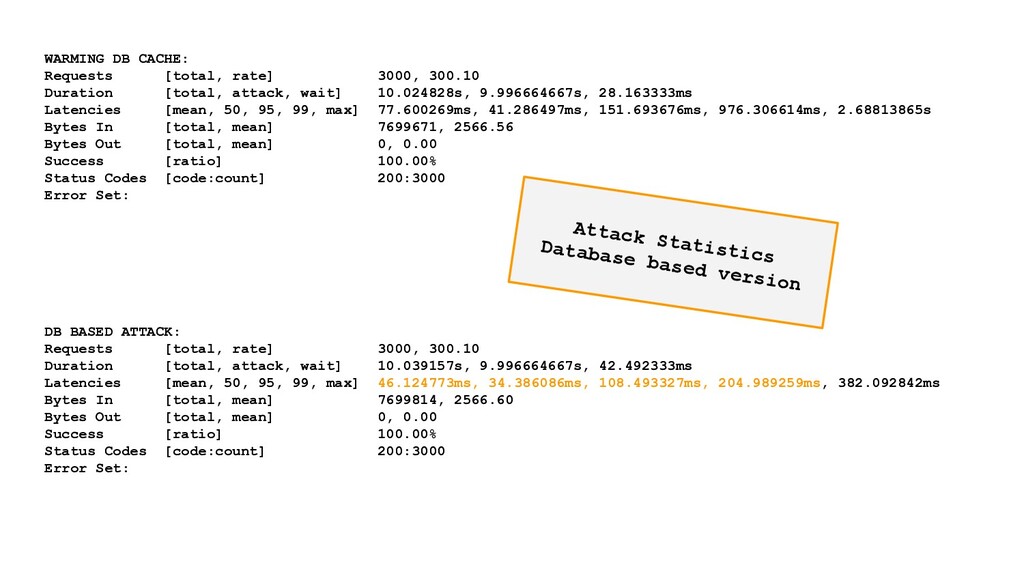
  5. WARMING DB CACHE: Requests [total, rate] 3000, 300.10 Duration [total,

    attack, wait] 10.024828s, 9.996664667s, 28.163333ms Latencies [mean, 50, 95, 99, max] 77.600269ms, 41.286497ms, 151.693676ms, 976.306614ms, 2.68813865s Bytes In [total, mean] 7699671, 2566.56 Bytes Out [total, mean] 0, 0.00 Success [ratio] 100.00% Status Codes [code:count] 200:3000 Error Set: DB BASED ATTACK: Requests [total, rate] 3000, 300.10 Duration [total, attack, wait] 10.039157s, 9.996664667s, 42.492333ms Latencies [mean, 50, 95, 99, max] 46.124773ms, 34.386086ms, 108.493327ms, 204.989259ms, 382.092842ms Bytes In [total, mean] 7699814, 2566.60 Bytes Out [total, mean] 0, 0.00 Success [ratio] 100.00% Status Codes [code:count] 200:3000 Error Set: Attack Statistics Database based version
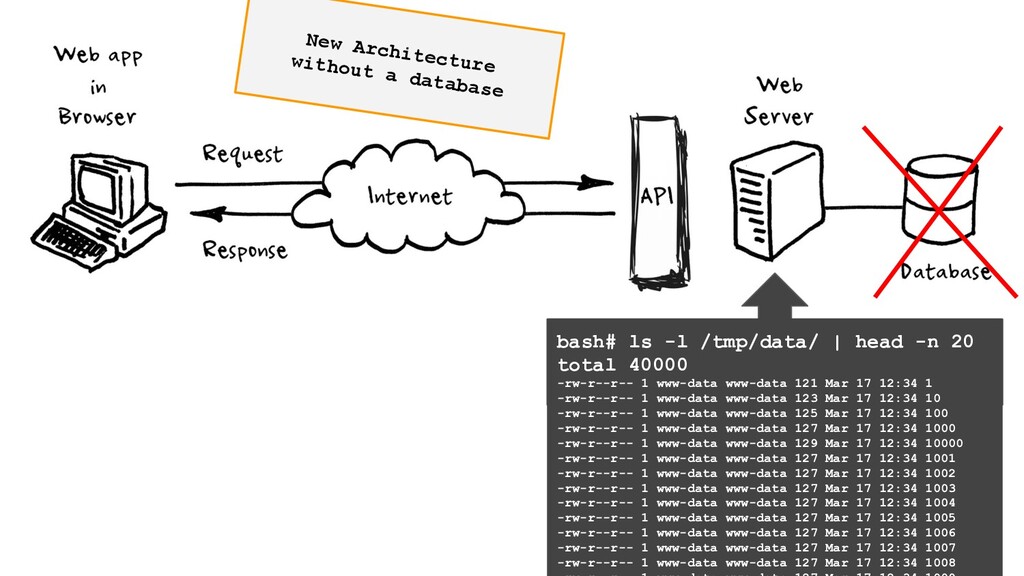
  6. bash# ls -l /tmp/data/ | head -n 20 total 40000

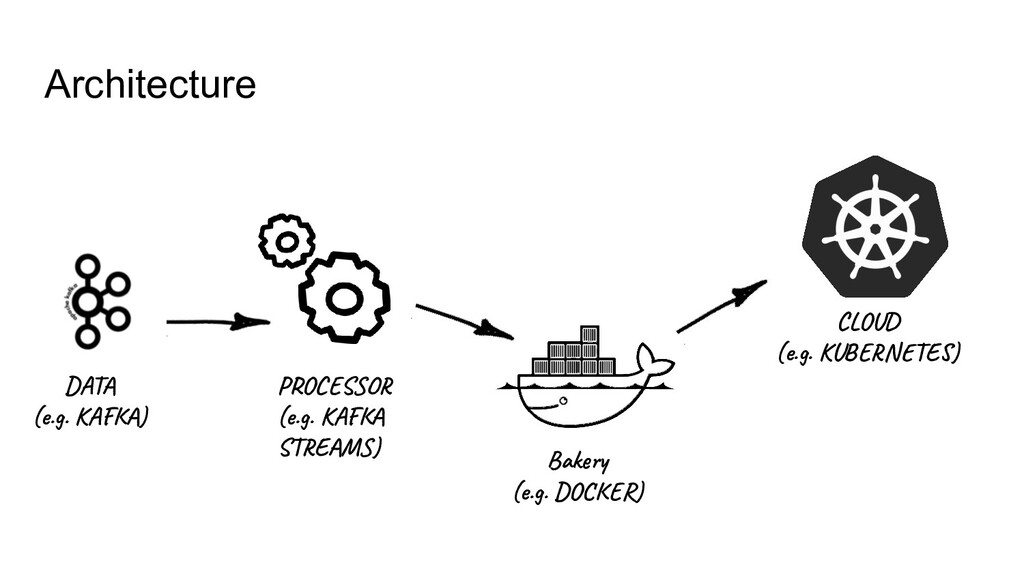
    -rw-r--r-- 1 www-data www-data 121 Mar 17 12:34 1 -rw-r--r-- 1 www-data www-data 123 Mar 17 12:34 10 -rw-r--r-- 1 www-data www-data 125 Mar 17 12:34 100 -rw-r--r-- 1 www-data www-data 127 Mar 17 12:34 1000 -rw-r--r-- 1 www-data www-data 129 Mar 17 12:34 10000 -rw-r--r-- 1 www-data www-data 127 Mar 17 12:34 1001 -rw-r--r-- 1 www-data www-data 127 Mar 17 12:34 1002 -rw-r--r-- 1 www-data www-data 127 Mar 17 12:34 1003 -rw-r--r-- 1 www-data www-data 127 Mar 17 12:34 1004 -rw-r--r-- 1 www-data www-data 127 Mar 17 12:34 1005 -rw-r--r-- 1 www-data www-data 127 Mar 17 12:34 1006 -rw-r--r-- 1 www-data www-data 127 Mar 17 12:34 1007 -rw-r--r-- 1 www-data www-data 127 Mar 17 12:34 1008 New Architecture without a database
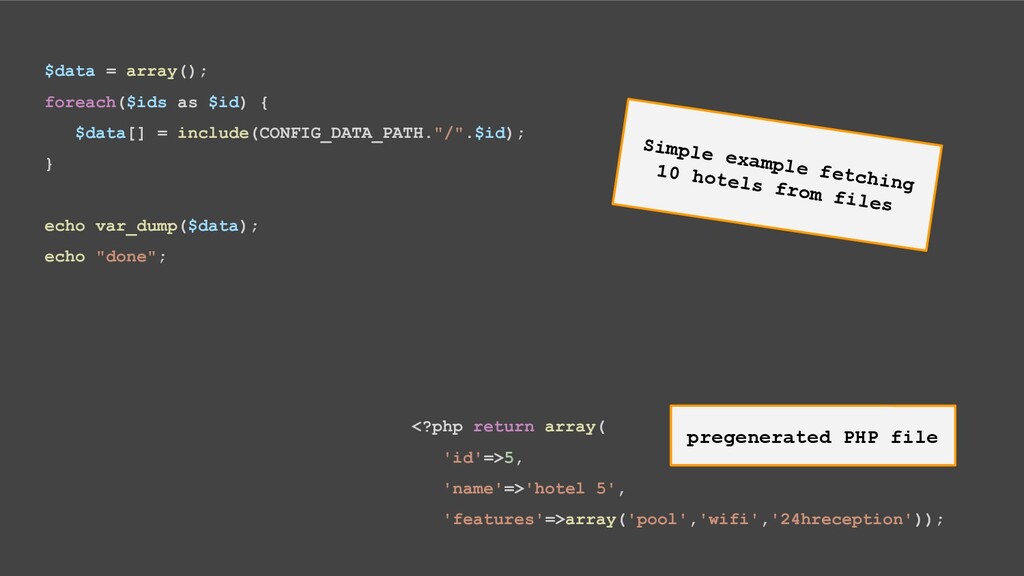
  7. $data = array(); foreach($ids as $id) { $data[] = include(CONFIG_DATA_PATH."/".$id);

    } echo var_dump($data); echo "done"; <?php return array( 'id'=>5, 'name'=>'hotel 5', 'features'=>array('pool','wifi','24hreception')); pregenerated PHP file Simple example fetching 10 hotels from files
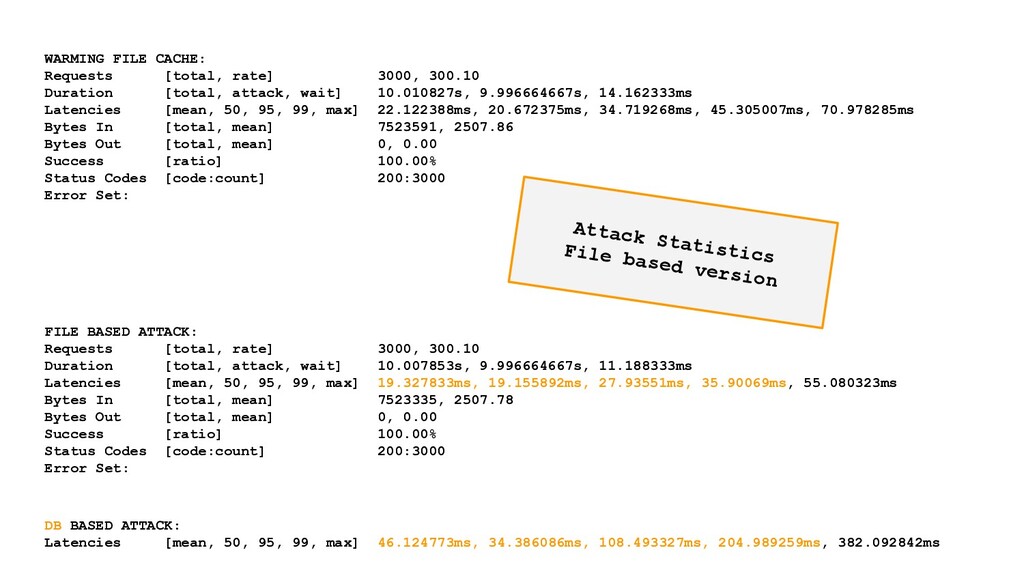
  8. WARMING FILE CACHE: Requests [total, rate] 3000, 300.10 Duration [total,

    attack, wait] 10.010827s, 9.996664667s, 14.162333ms Latencies [mean, 50, 95, 99, max] 22.122388ms, 20.672375ms, 34.719268ms, 45.305007ms, 70.978285ms Bytes In [total, mean] 7523591, 2507.86 Bytes Out [total, mean] 0, 0.00 Success [ratio] 100.00% Status Codes [code:count] 200:3000 Error Set: FILE BASED ATTACK: Requests [total, rate] 3000, 300.10 Duration [total, attack, wait] 10.007853s, 9.996664667s, 11.188333ms Latencies [mean, 50, 95, 99, max] 19.327833ms, 19.155892ms, 27.93551ms, 35.90069ms, 55.080323ms Bytes In [total, mean] 7523335, 2507.78 Bytes Out [total, mean] 0, 0.00 Success [ratio] 100.00% Status Codes [code:count] 200:3000 Error Set: Attack Statistics File based version DB BASED ATTACK: Latencies [mean, 50, 95, 99, max] 46.124773ms, 34.386086ms, 108.493327ms, 204.989259ms, 382.092842ms
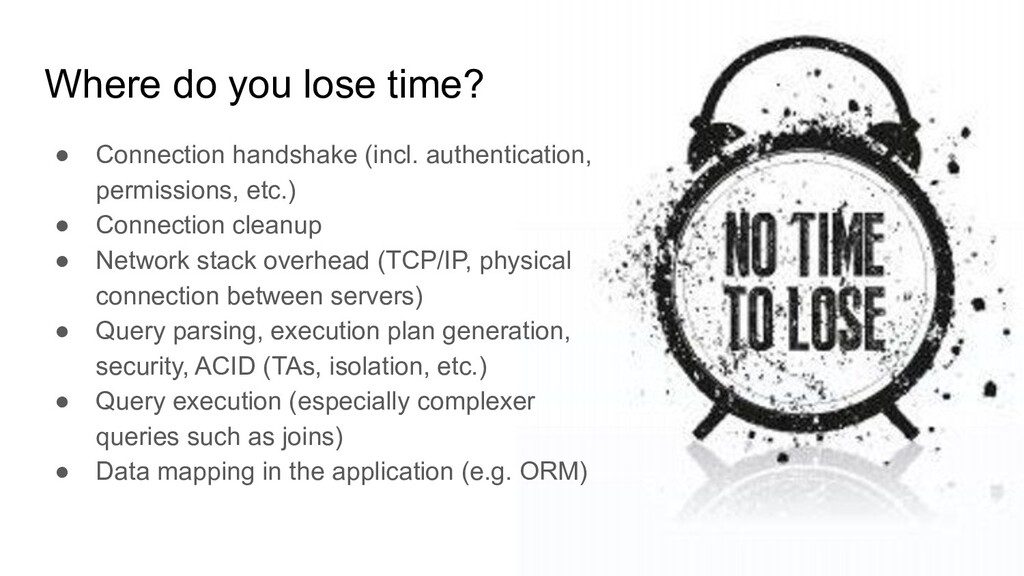
  9. Where do you lose time? • Connection handshake (incl. authentication,

    permissions, etc.) • Connection cleanup • Network stack overhead (TCP/IP, physical connection between servers) • Query parsing, execution plan generation, security, ACID (TAs, isolation, etc.) • Query execution (especially complexer queries such as joins) • Data mapping in the application (e.g. ORM)
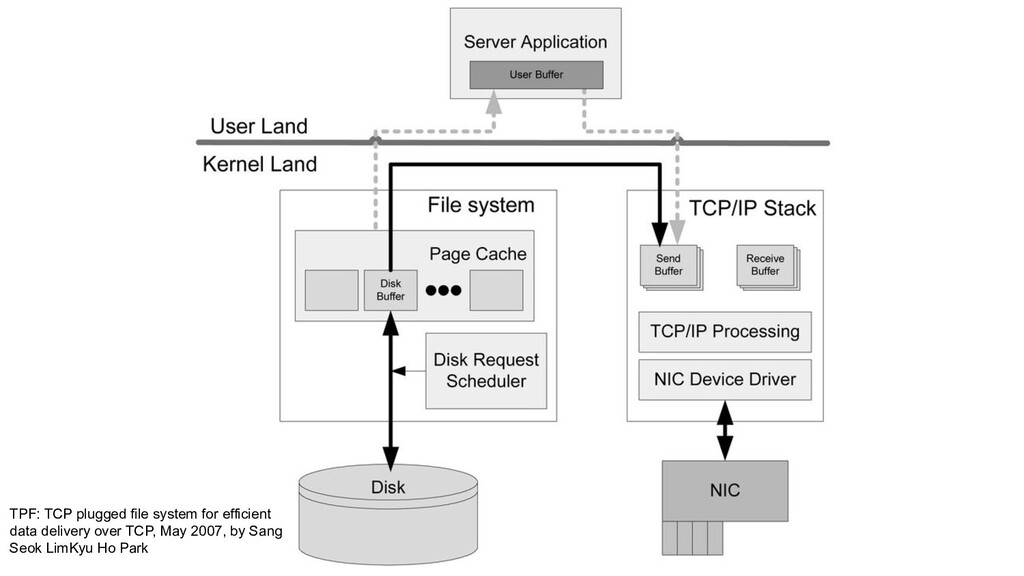
  10. TPF: TCP plugged file system for efficient data delivery over

    TCP, May 2007, by Sang Seok LimKyu Ho Park
  11. Advantages: Performance • Fast due to OS optimizations • Reads

    scale with number of application nodes • Move joins + fetching to stream processor layer (do work only once, not with every single request)
  12. Keep it stupid simple One system vs. application and database

    • Simpler monitoring and maintenance • No more db versioning, migrations • Idempotence • Simple roll backs (if files baked into docker image)
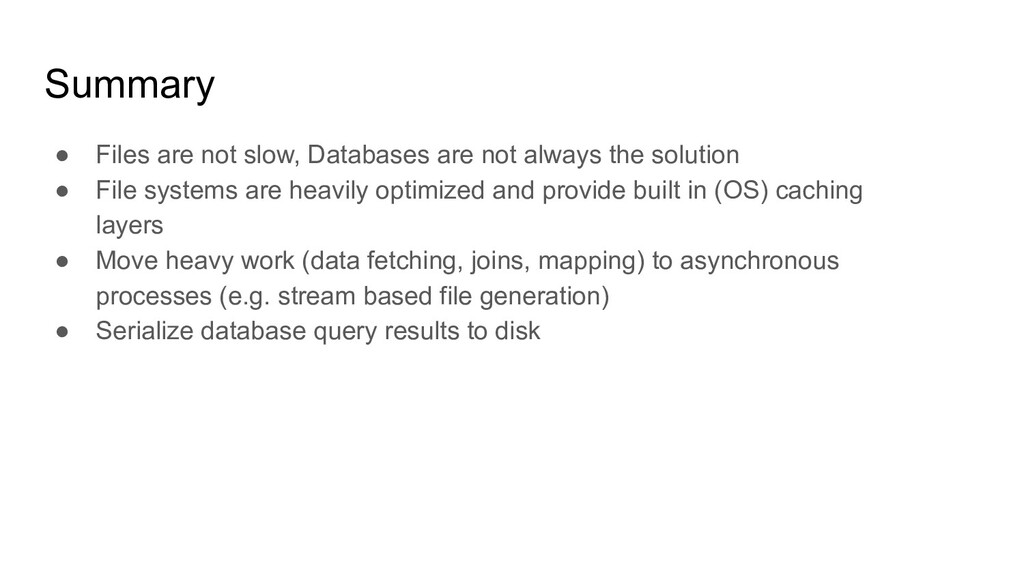
  13. Summary • Files are not slow, Databases are not always

    the solution • File systems are heavily optimized and provide built in (OS) caching layers • Move heavy work (data fetching, joins, mapping) to asynchronous processes (e.g. stream based file generation) • Serialize database query results to disk
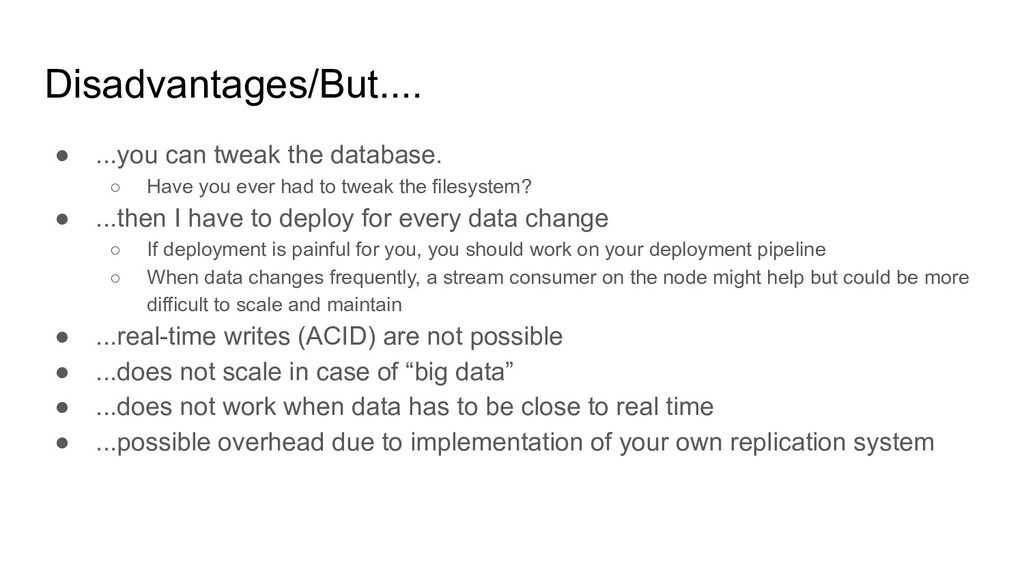
  14. Disadvantages/But.... • ...you can tweak the database. ◦ Have you

    ever had to tweak the filesystem? • ...then I have to deploy for every data change ◦ If deployment is painful for you, you should work on your deployment pipeline ◦ When data changes frequently, a stream consumer on the node might help but could be more difficult to scale and maintain • ...real-time writes (ACID) are not possible • ...does not scale in case of “big data” • ...does not work when data has to be close to real time • ...possible overhead due to implementation of your own replication system
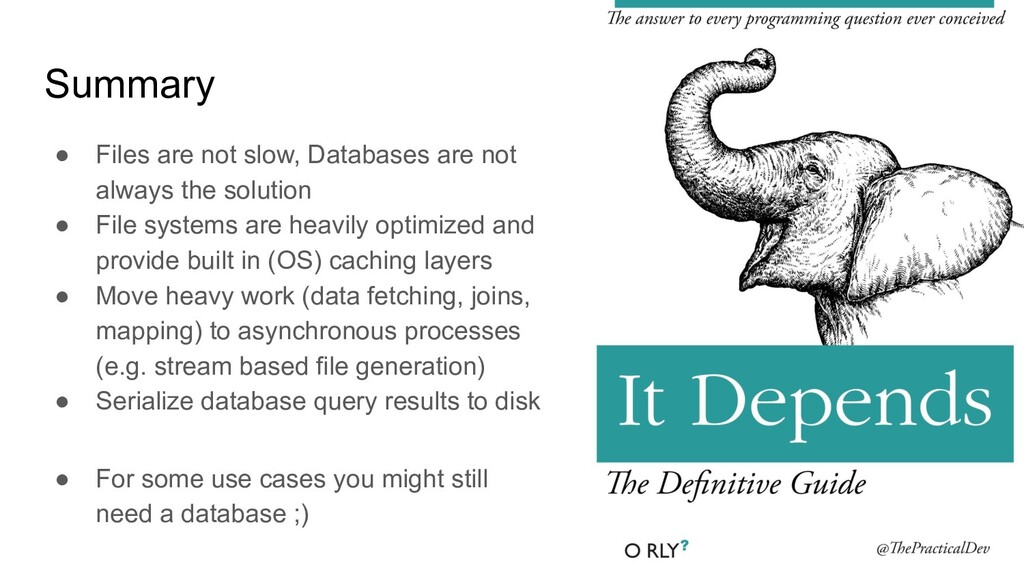
  15. Summary • Files are not slow, Databases are not always

    the solution • File systems are heavily optimized and provide built in (OS) caching layers • Move heavy work (data fetching, joins, mapping) to asynchronous processes (e.g. stream based file generation) • Serialize database query results to disk • For some use cases you might still need a database ;)