@Override public String toString() { return name(); } } Person p1 = new Person("Gerrit"); Person p2 = new Person("Sandra"); Person p3 = new Person("Lilli"); Person p4 = new Person("Anton"); List<Person> persons = Arrays.asList(p1, p2, p3, p4); System.out.println(p1); // -> Gerrit } MEMORY MANAGEMENT In the JVM...
@Override public String toString() { return name(); } } Person p1 = new Person("Gerrit"); Person p2 = new Person("Sandra"); Person p3 = new Person("Lilli"); Person p4 = new Person("Anton"); List<Person> persons = Arrays.asList(p1, p2, p3, p4); System.out.println(p1); // -> Gerrit } MEMORY MANAGEMENT In the JVM... Stack for thread 1 Frame for main Person p1 = ref Person p2 = ref Person p3 = ref Person p4 = ref List<Person> persons = ref
@Override public String toString() { return name(); } } Person p1 = new Person("Gerrit"); Person p2 = new Person("Sandra"); Person p3 = new Person("Lilli"); Person p4 = new Person("Anton"); List<Person> persons = Arrays.asList(p1, p2, p3, p4); System.out.println(p1); // -> Gerrit } MEMORY MANAGEMENT In the JVM... Stack for thread 1 Frame for main Person p1 = ref Person p2 = ref Person p3 = ref Person p4 = ref List<Person> persons = ref Heap area Person object p1 Person object p2 Person object p3 Person object p4 List object
@Override public String toString() { return name(); } } Person p1 = new Person("Gerrit"); Person p2 = new Person("Sandra"); Person p3 = new Person("Lilli"); Person p4 = new Person("Anton"); List<Person> persons = Arrays.asList(p1, p2, p3, p4); System.out.println(p1); // -> Gerrit } MEMORY MANAGEMENT In the JVM... Stack for thread 1 Frame for main Person p1 = ref Person p2 = ref Person p3 = ref Person p4 = ref List<Person> persons = ref Heap area Person object p1 Person object p2 Person object p3 Person object p4 List object All 4 persons and the list are reachable
@Override public String toString() { return name(); } } Person p1 = new Person("Gerrit"); Person p2 = new Person("Sandra"); Person p3 = new Person("Lilli"); Person p4 = new Person("Anton"); List<Person> persons = Arrays.asList(p1, p2, p3, p4); System.out.println(p1); // -> Gerrit p1 = null; } MEMORY MANAGEMENT In the JVM... Stack for thread 1 Frame for main Person p1 = null Person p2 = ref Person p3 = ref Person p4 = ref List<Person> persons = ref Heap area Person object p1 Person object p2 Person object p3 Person object p4 List object Setting p1 = null
@Override public String toString() { return name(); } } Person p1 = new Person("Gerrit"); Person p2 = new Person("Sandra"); Person p3 = new Person("Lilli"); Person p4 = new Person("Anton"); List<Person> persons = Arrays.asList(p1, p2, p3, p4); System.out.println(p1); // -> Gerrit p1 = null; System.out.println(persons.get(0)); // -> Gerrit } MEMORY MANAGEMENT In the JVM... Stack for thread 1 Frame for main Person p1 = null Person p2 = ref Person p3 = ref Person p4 = ref List<Person> persons = ref Heap area Person object p1 Person object p2 Person object p3 Person object p4 List object Person 1 is still reachable via the persons list
@Override public String toString() { return name(); } } Person p1 = new Person("Gerrit"); Person p2 = new Person("Sandra"); Person p3 = new Person("Lilli"); Person p4 = new Person("Anton"); List<Person> persons = Arrays.asList(p1, p2, p3, p4); System.out.println(p1); // -> Gerrit p1 = null; System.out.println(persons.get(0)); // -> Gerrit persons = null; } MEMORY MANAGEMENT In the JVM... Stack for thread 1 Frame for main Person p1 = null Person p2 = ref Person p3 = ref Person p4 = ref List<Person> persons = null Heap area Person object p1 Person object p2 Person object p3 Person object p4 List object Setting persons = null
@Override public String toString() { return name(); } } Person p1 = new Person("Gerrit"); Person p2 = new Person("Sandra"); Person p3 = new Person("Lilli"); Person p4 = new Person("Anton"); List<Person> persons = Arrays.asList(p1, p2, p3, p4); System.out.println(p1); // -> Gerrit p1 = null; System.out.println(persons.get(0)); // -> Gerrit persons = null; } MEMORY MANAGEMENT In the JVM... Stack for thread 1 Frame for main Person p1 = null Person p2 = ref Person p3 = ref Person p4 = ref List<Person> persons = null Heap area Person object p1 Person object p2 Person object p3 Person object p4 List object Only p2, p3 and p4 are reachable
@Override public String toString() { return name(); } } Person p1 = new Person("Gerrit"); Person p2 = new Person("Sandra"); Person p3 = new Person("Lilli"); Person p4 = new Person("Anton"); List<Person> persons = Arrays.asList(p1, p2, p3, p4); System.out.println(p1); // -> Gerrit p1 = null; System.out.println(persons.get(0)); // -> Gerrit persons = null; } MEMORY MANAGEMENT In the JVM... Stack for thread 1 Frame for main Person p1 = null Person p2 = ref Person p3 = ref Person p4 = ref List<Person> persons = null Heap area Person object p1 Person object p2 Person object p3 Person object p4 List object p1 and persons are garbage
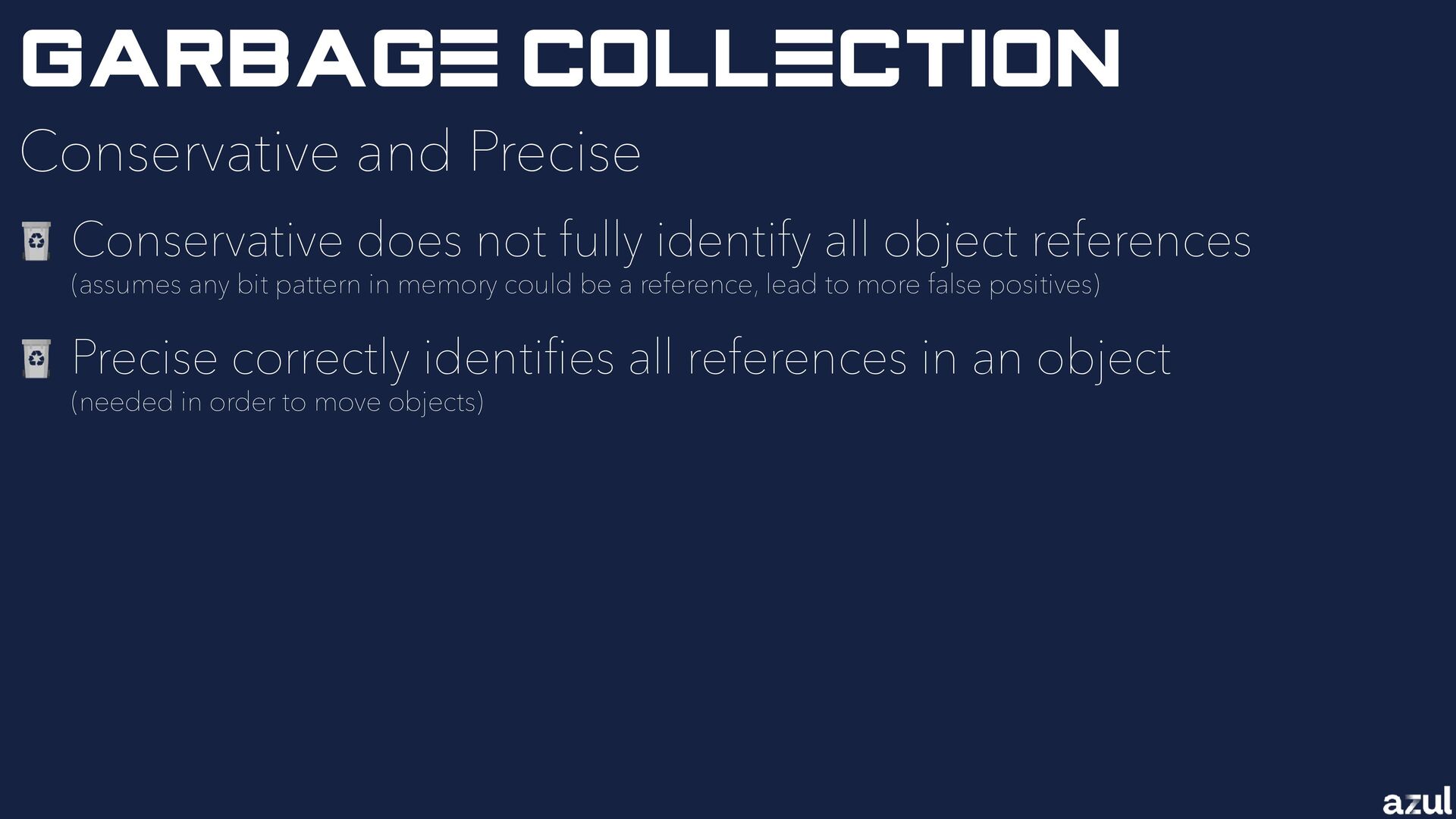
all object references (assumes any bit pattern in memory could be a reference, lead to more false positives) Precise correctly identi fi es all references in an object (needed in order to move objects)
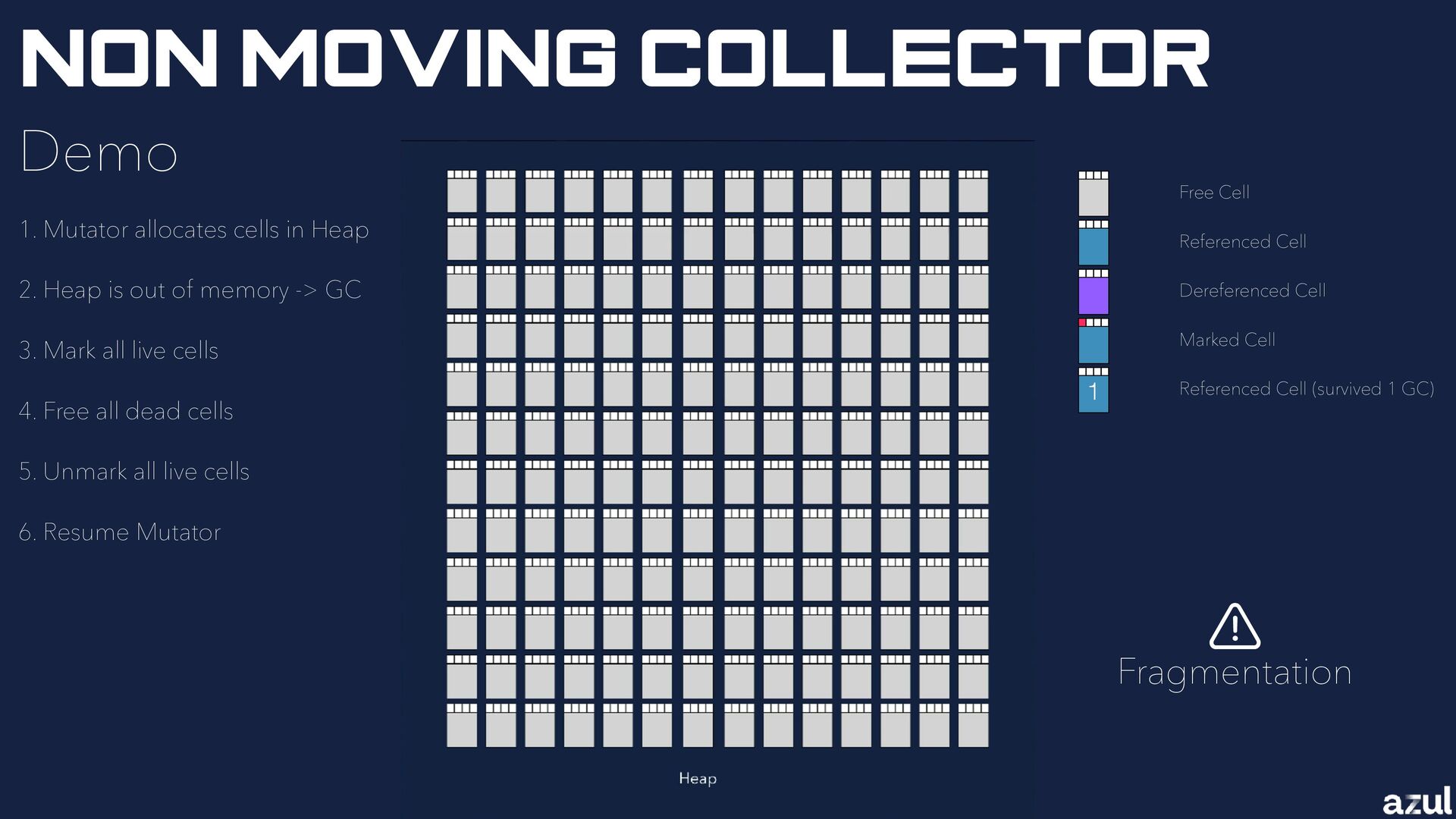
Cell 1 Referenced Cell (survived 1 GC) Demo 1. Mutator allocates cells in Heap 2. Heap is out of memory -> GC 3. Mark all live cells 4. Free all dead cells 5. Unmark all live cells 6. Resume Mutator Fragmentation
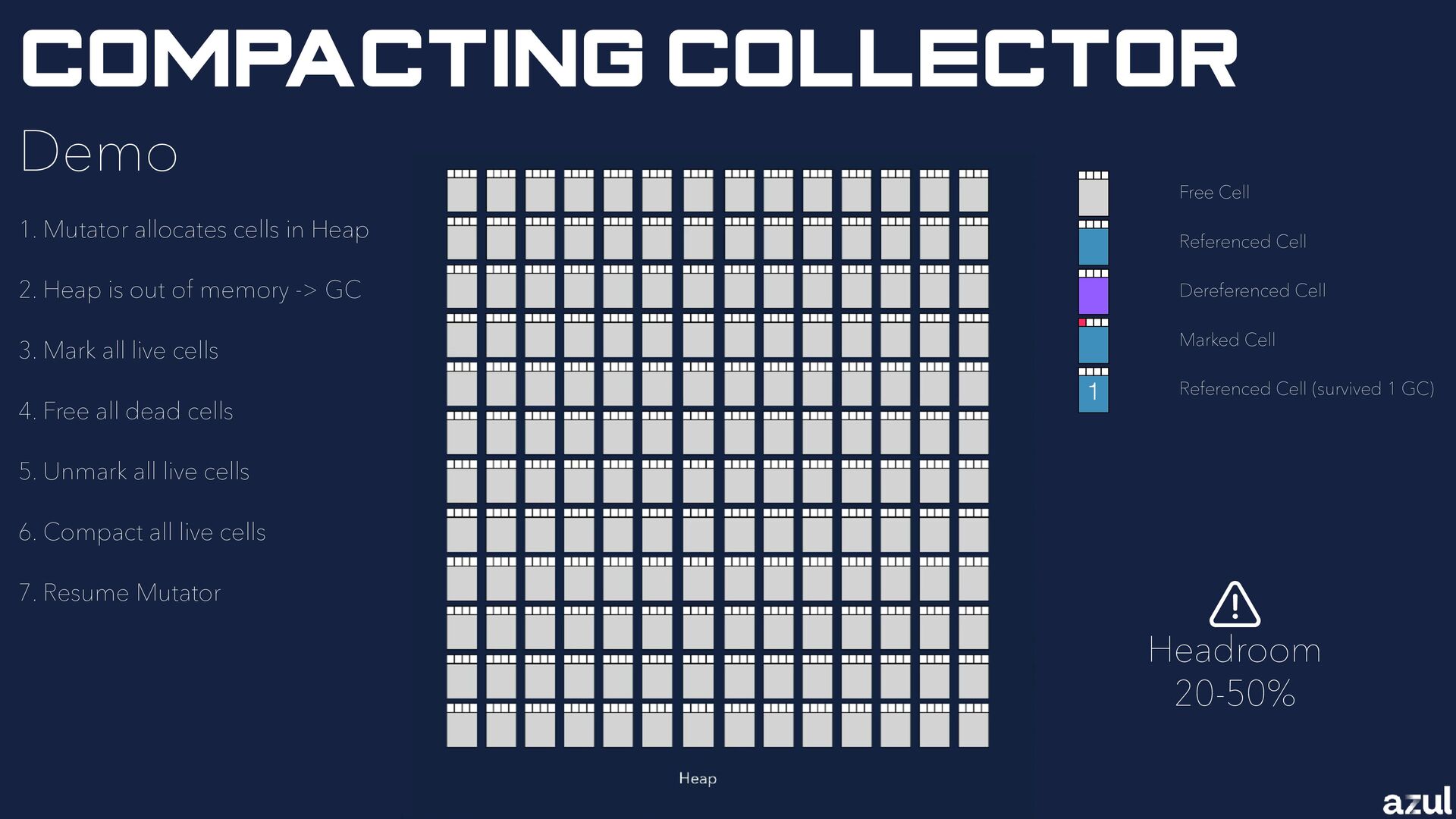
Cell 1 Referenced Cell (survived 1 GC) 1. Mutator allocates cells in Heap 2. Heap is out of memory -> GC 3. Mark all live cells 4. Free all dead cells 5. Unmark all live cells 6. Compact all live cells 7. Resume Mutator Headroom 20-50%
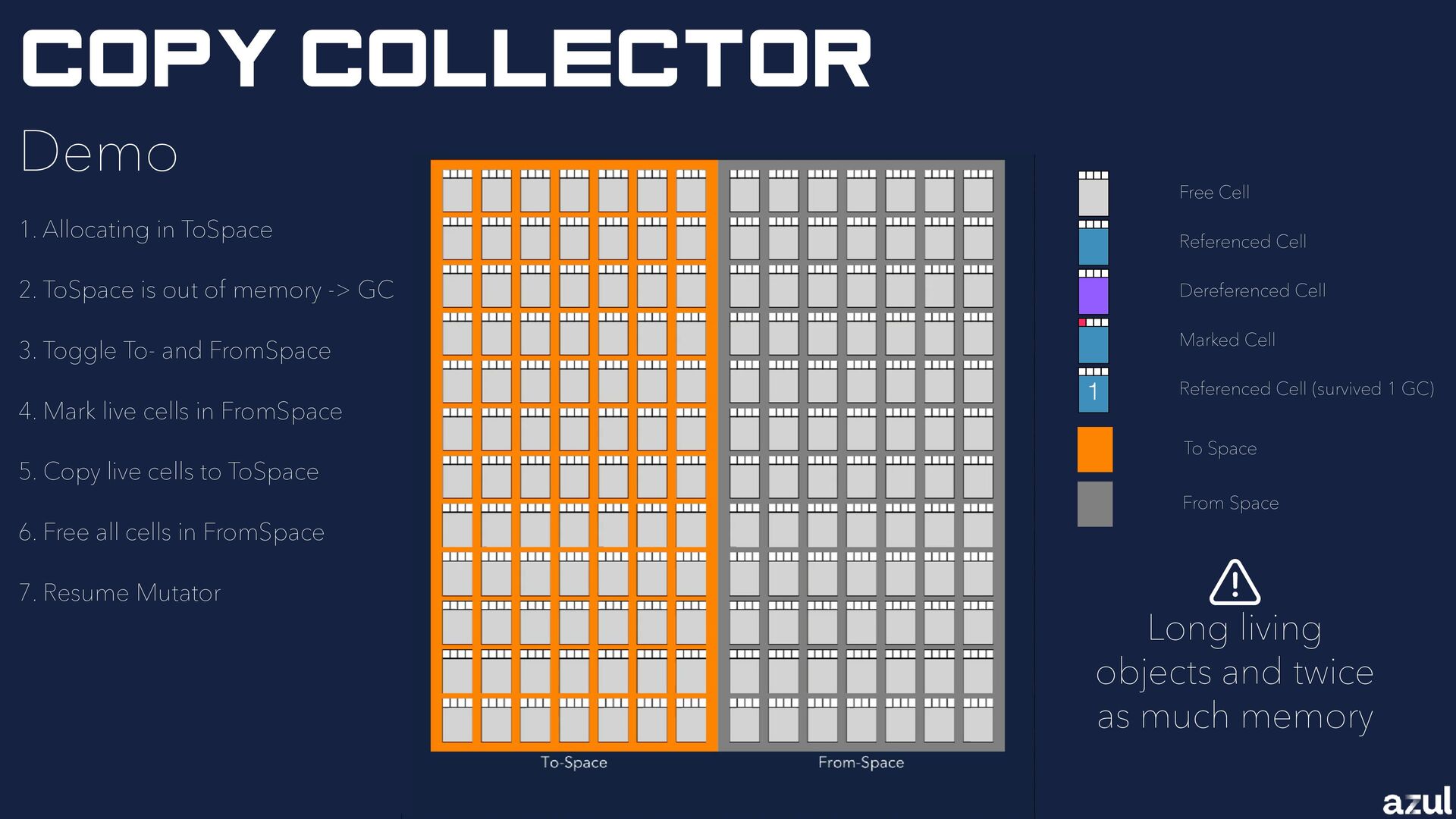
Cell Dereferenced Cell Marked Cell 1 Referenced Cell (survived 1 GC) 1. Allocating in ToSpace 2. ToSpace is out of memory -> GC 3. Toggle To- and FromSpace 4. Mark live cells in FromSpace 5. Copy live cells to ToSpace 6. Free all cells in FromSpace 7. Resume Mutator Long living objects and twice as much memory
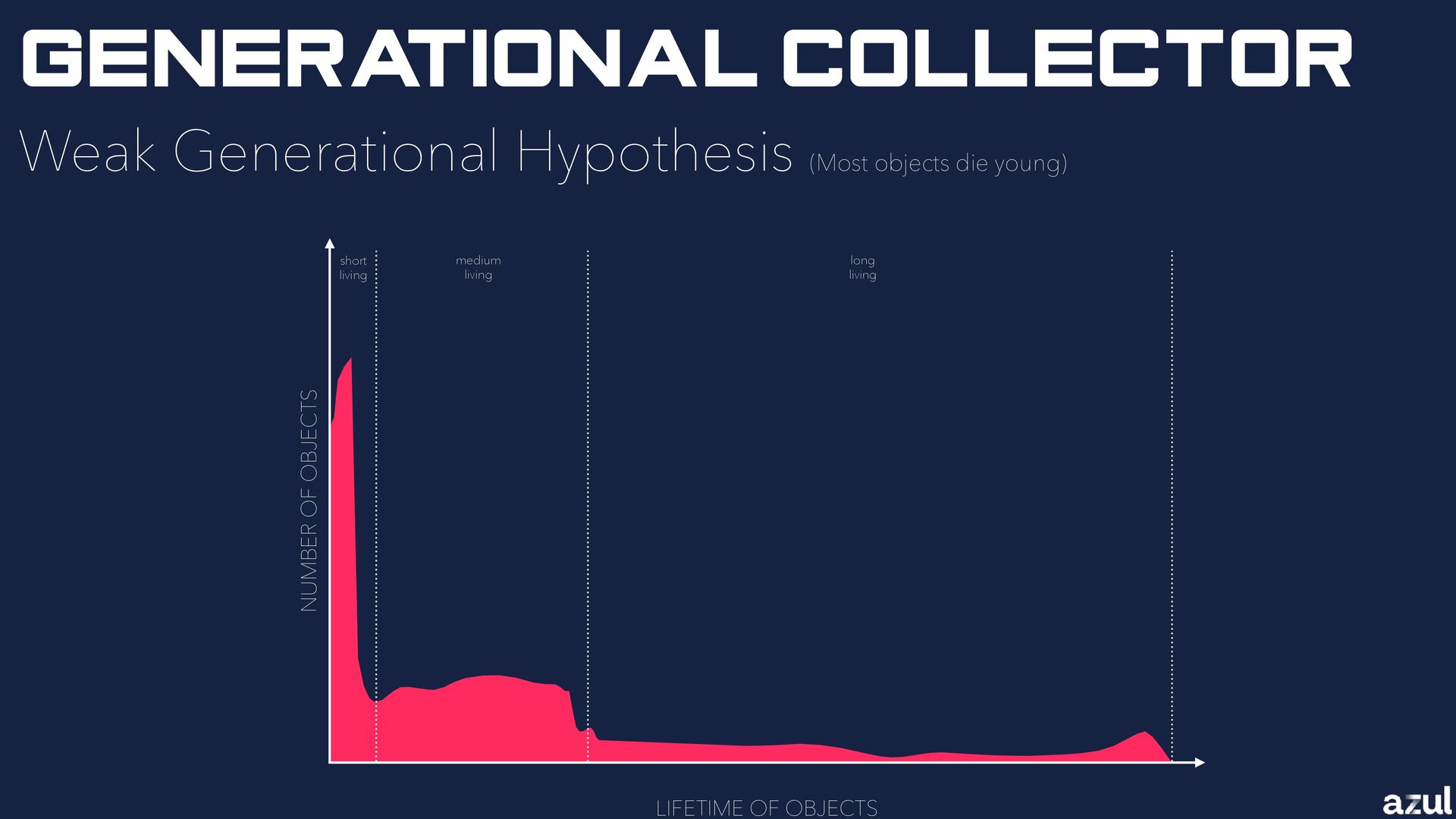
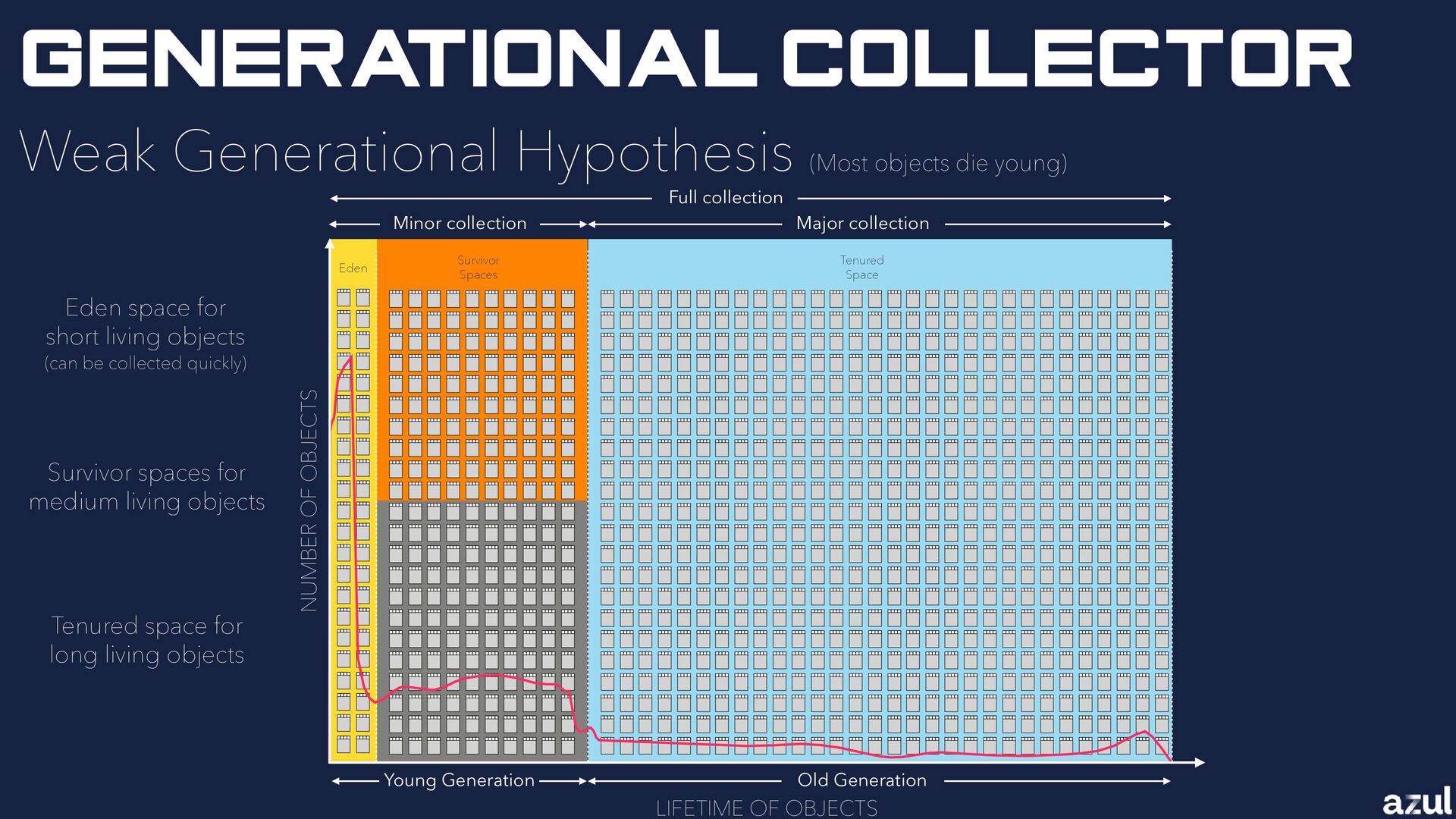
long living Weak Generational Hypothesis (Most objects die young) LIFETIME OF OBJECTS NUMBER OF OBJECTS Major collection Minor collection Survivor Spaces Eden Tenured Space Old Generation Young Generation Full collection Eden space for short living objects (can be collected quickly) Survivor spaces for medium living objects Tenured space for long living objects GenerA tiOnAl COLLeCTOR
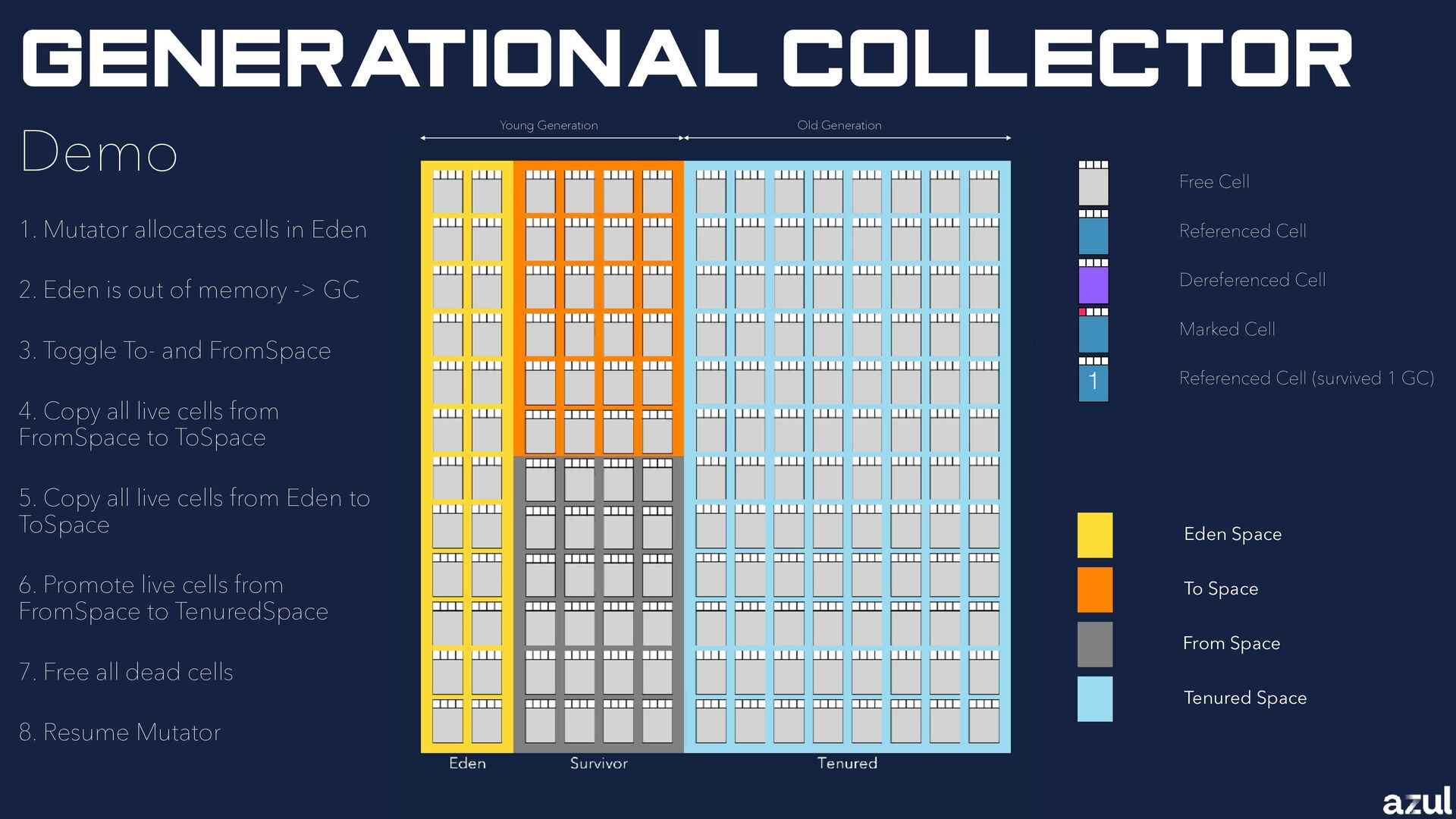
Space Young Generation Old Generation Demo Free Cell Referenced Cell Dereferenced Cell Marked Cell 1 Referenced Cell (survived 1 GC) 1. Mutator allocates cells in Eden 2. Eden is out of memory -> GC 3. Toggle To- and FromSpace 4. Copy all live cells from FromSpace to ToSpace 5. Copy all live cells from Eden to ToSpace 6. Promote live cells from FromSpace to TenuredSpace 7. Free all dead cells 8. Resume Mutator
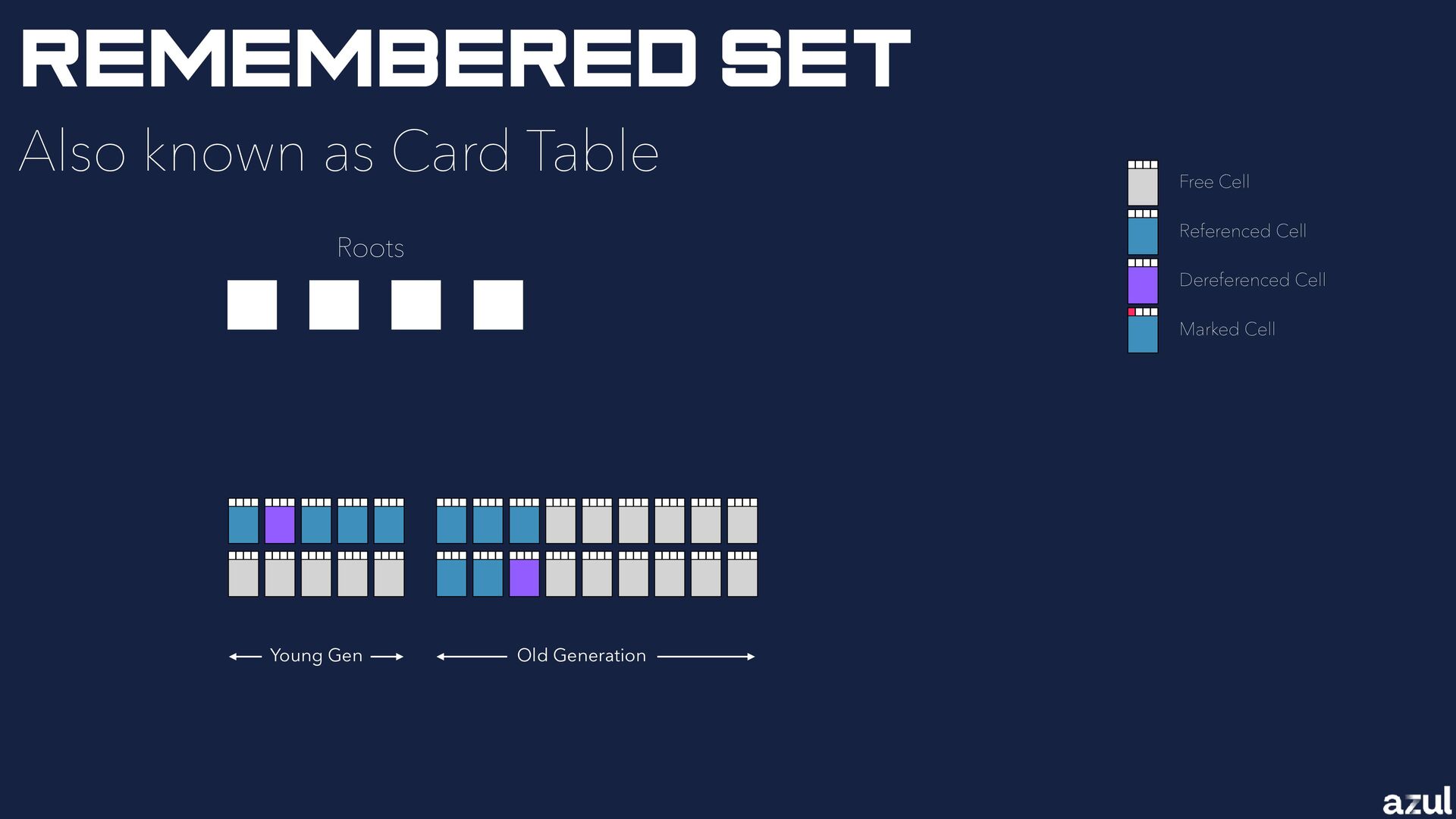
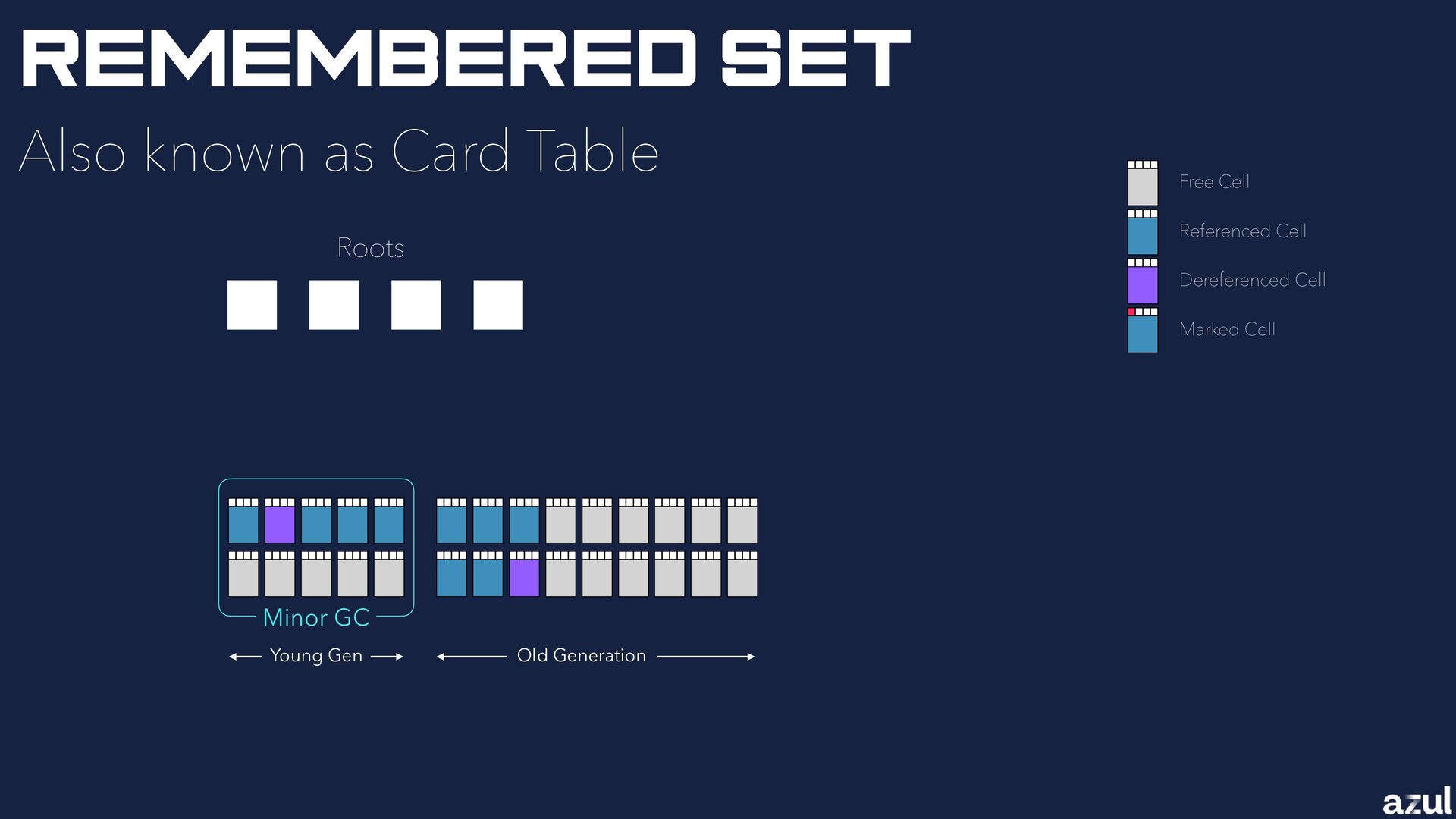
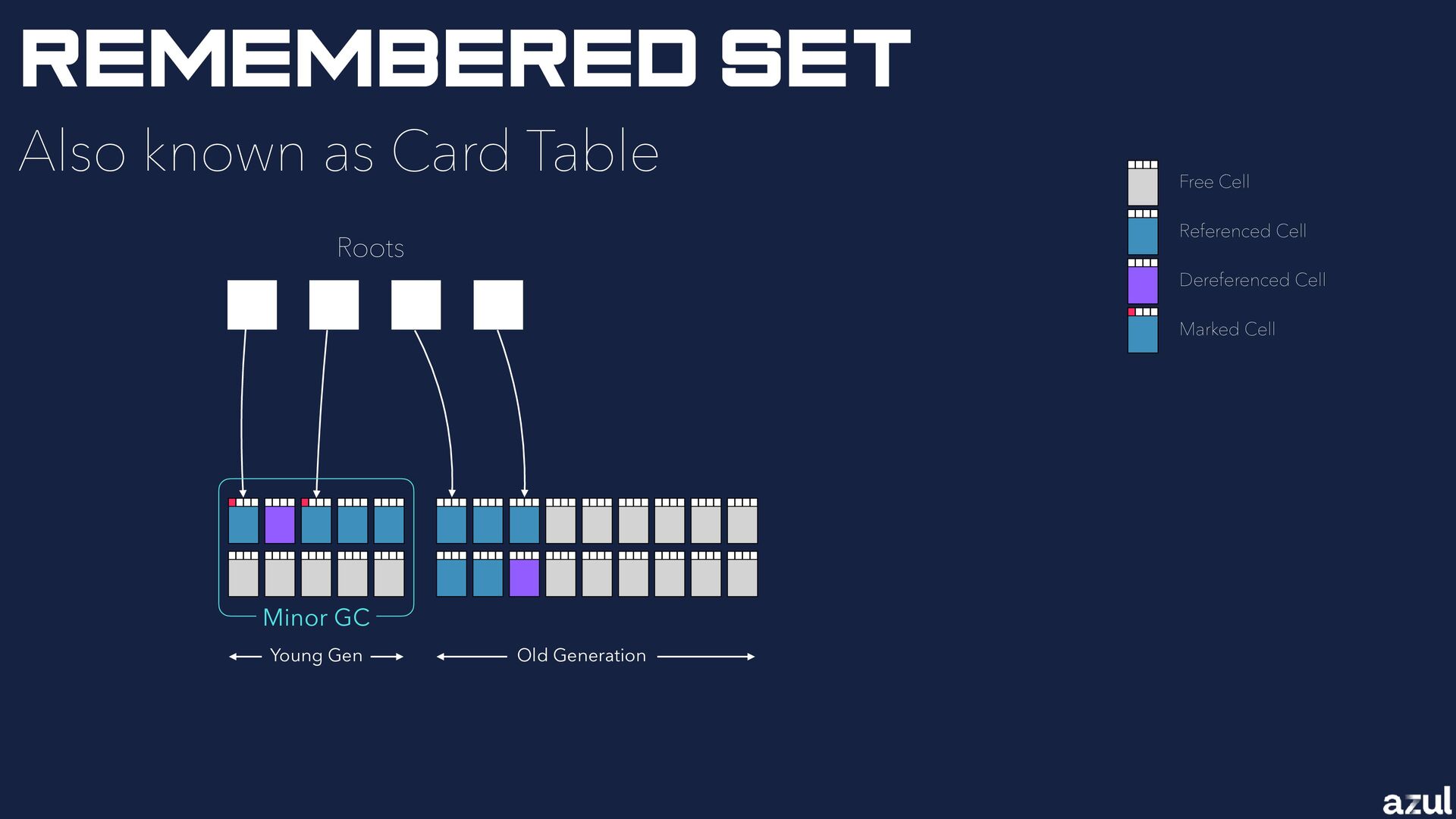
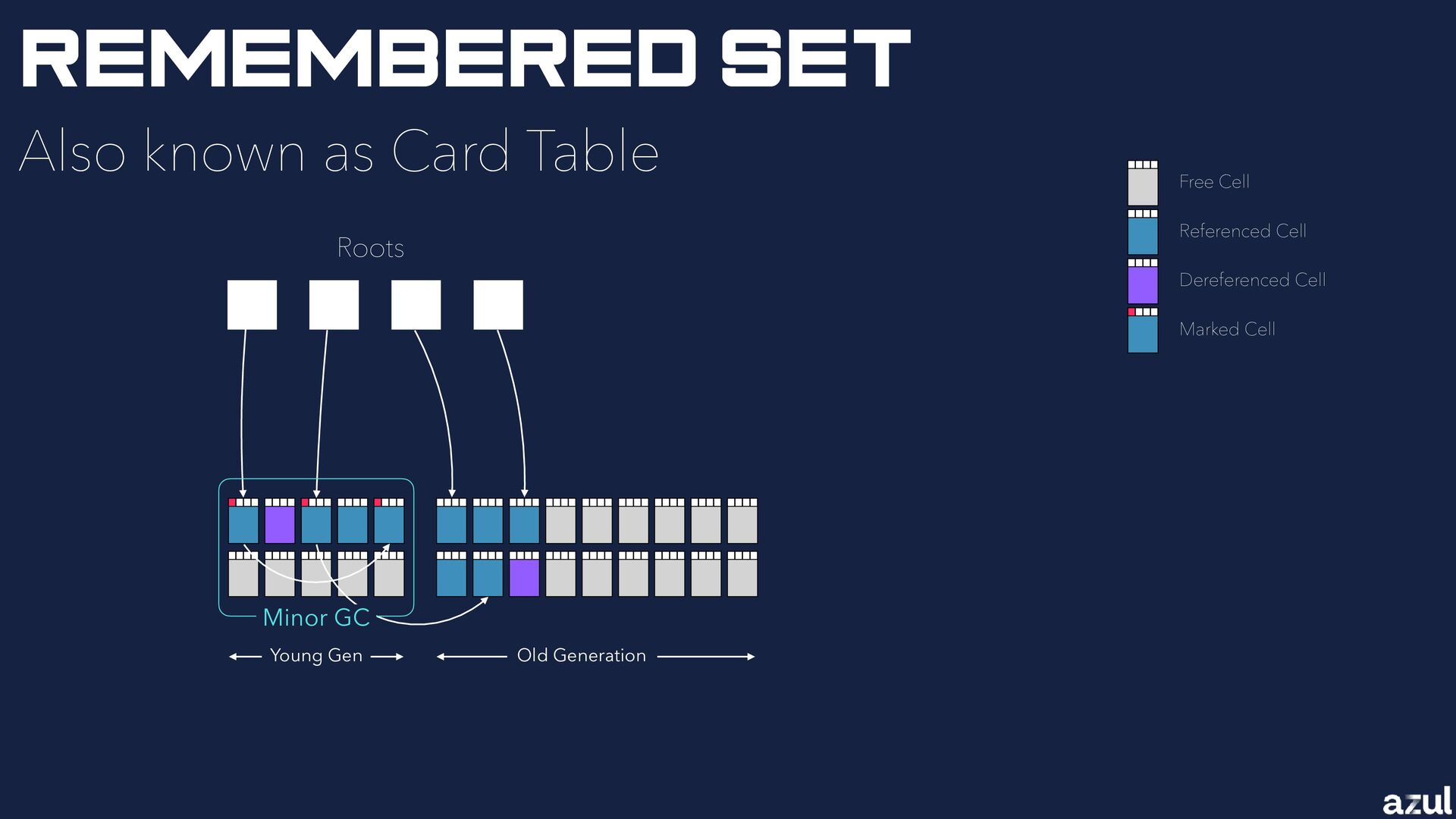
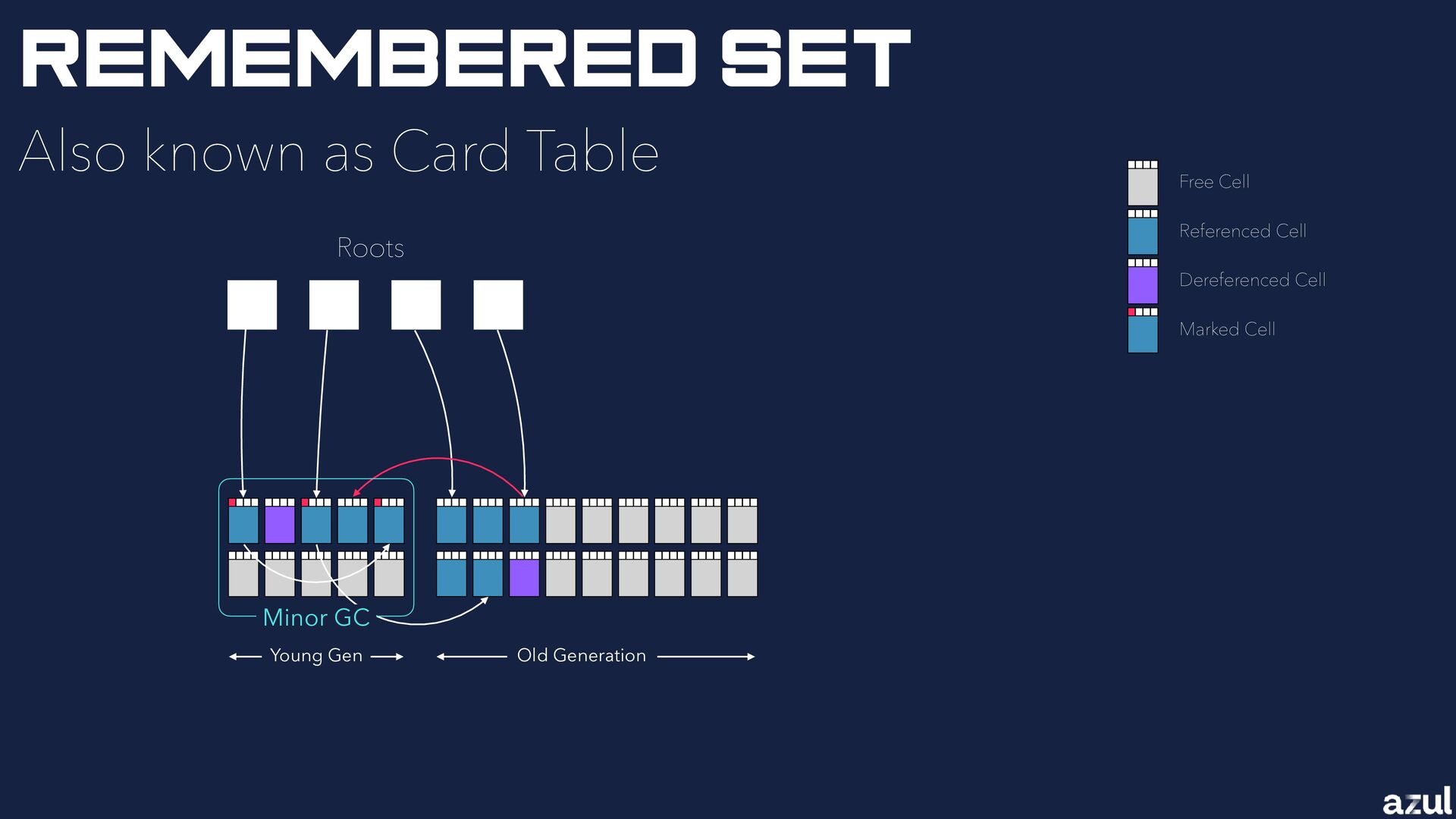
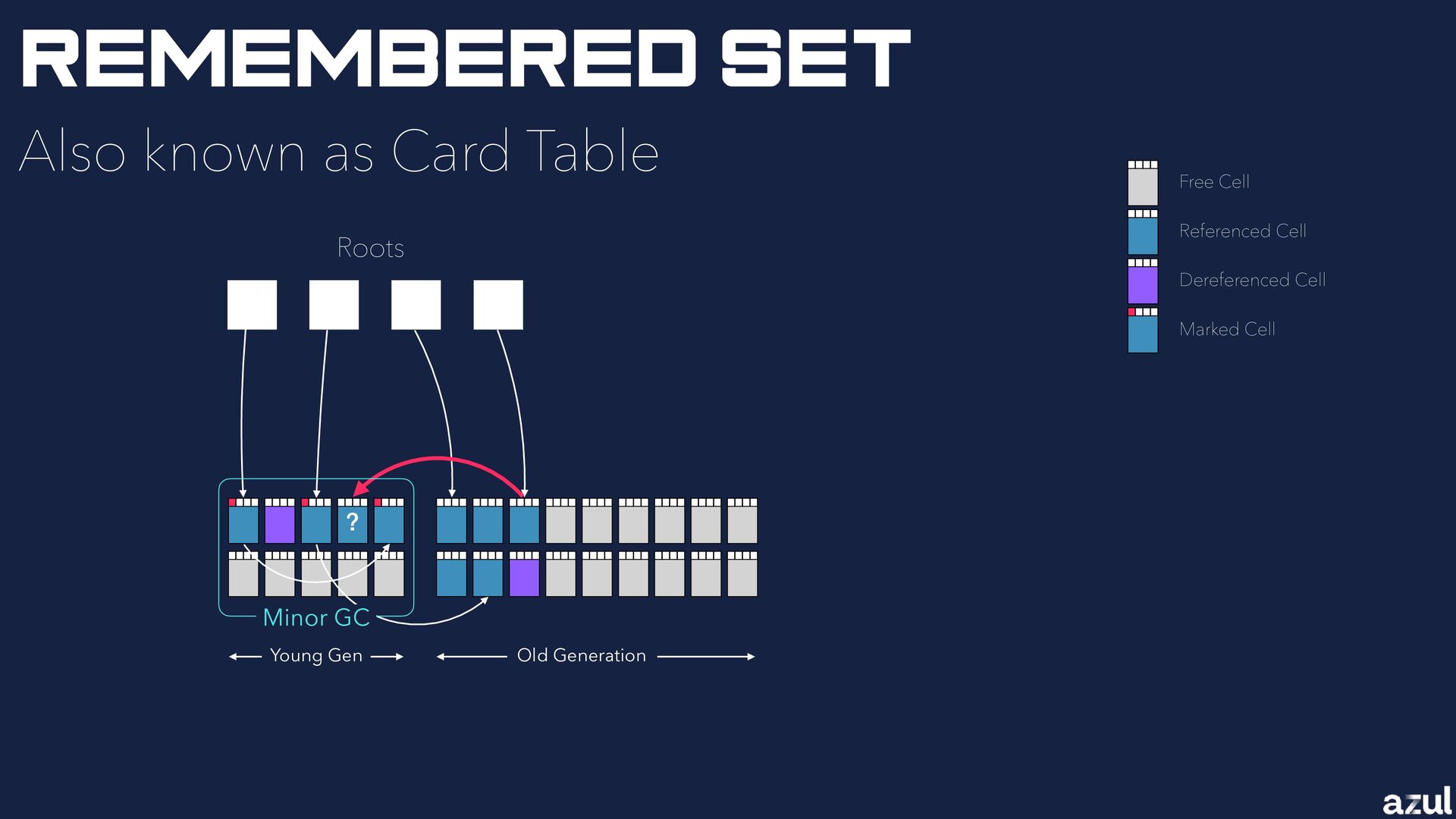
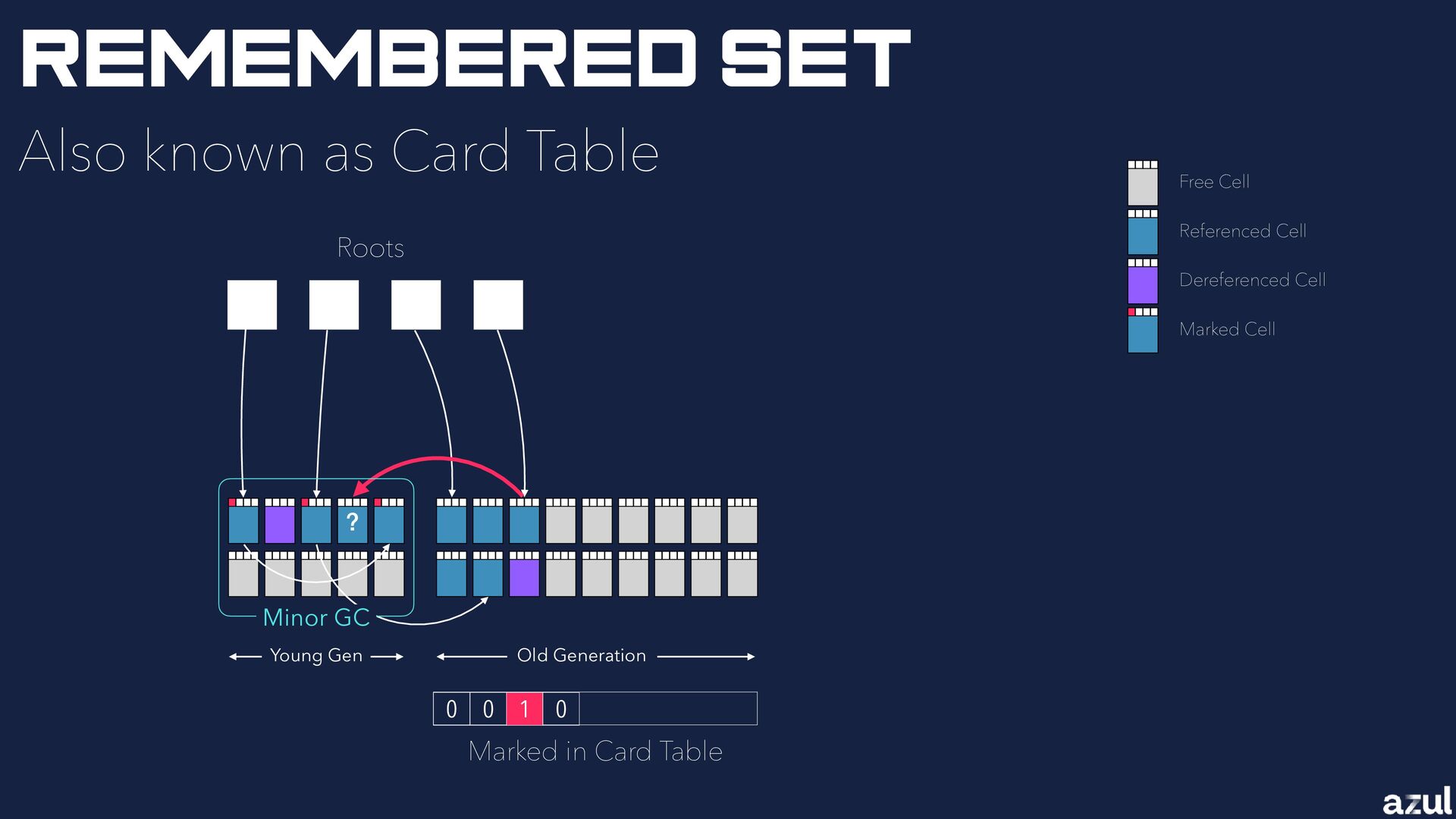
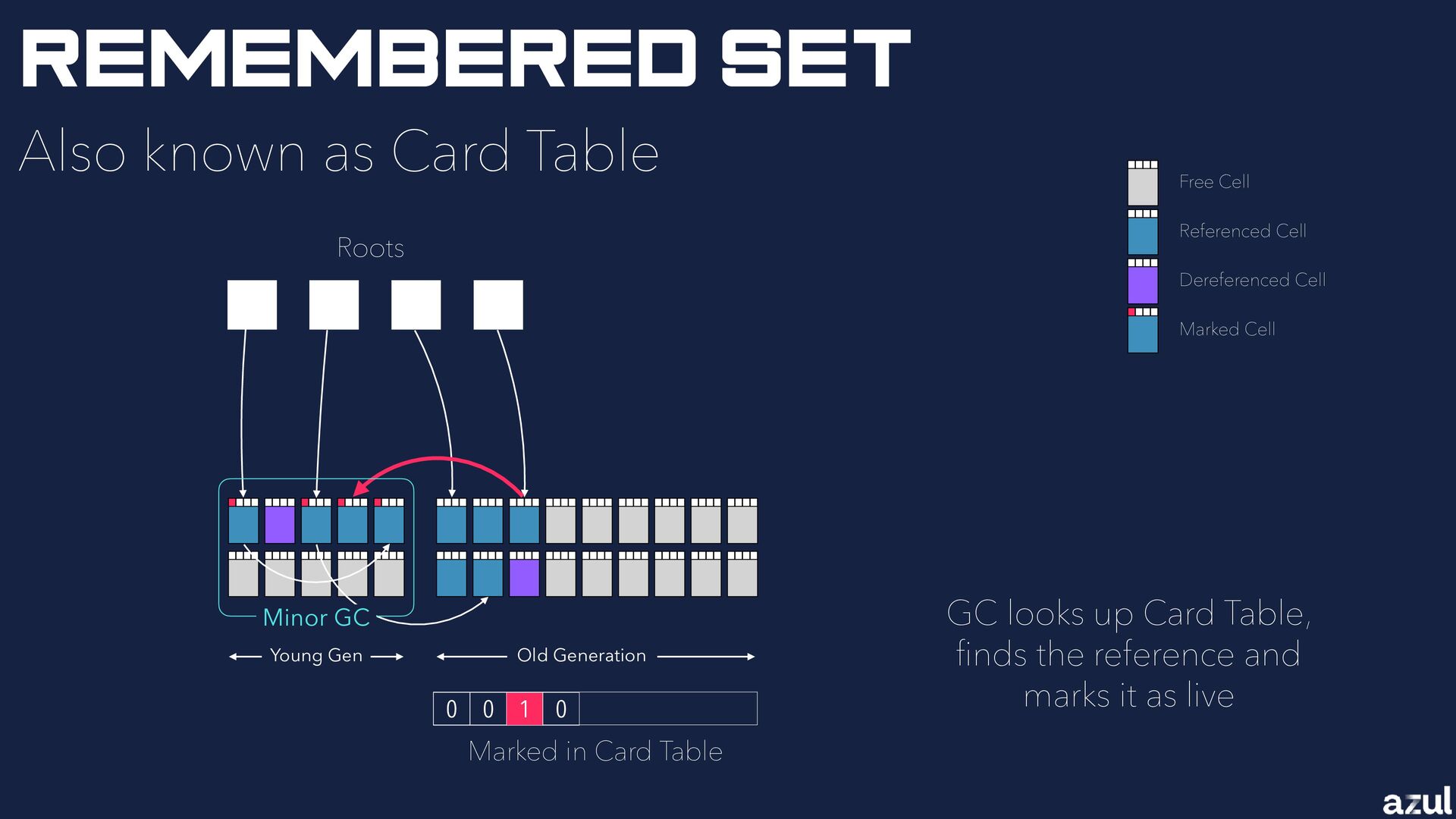
Generation Young Gen 0 1 0 0 Marked in Card Table GC looks up Card Table, fi nds the reference and marks it as live Minor GC remembered set Also known as Card Table
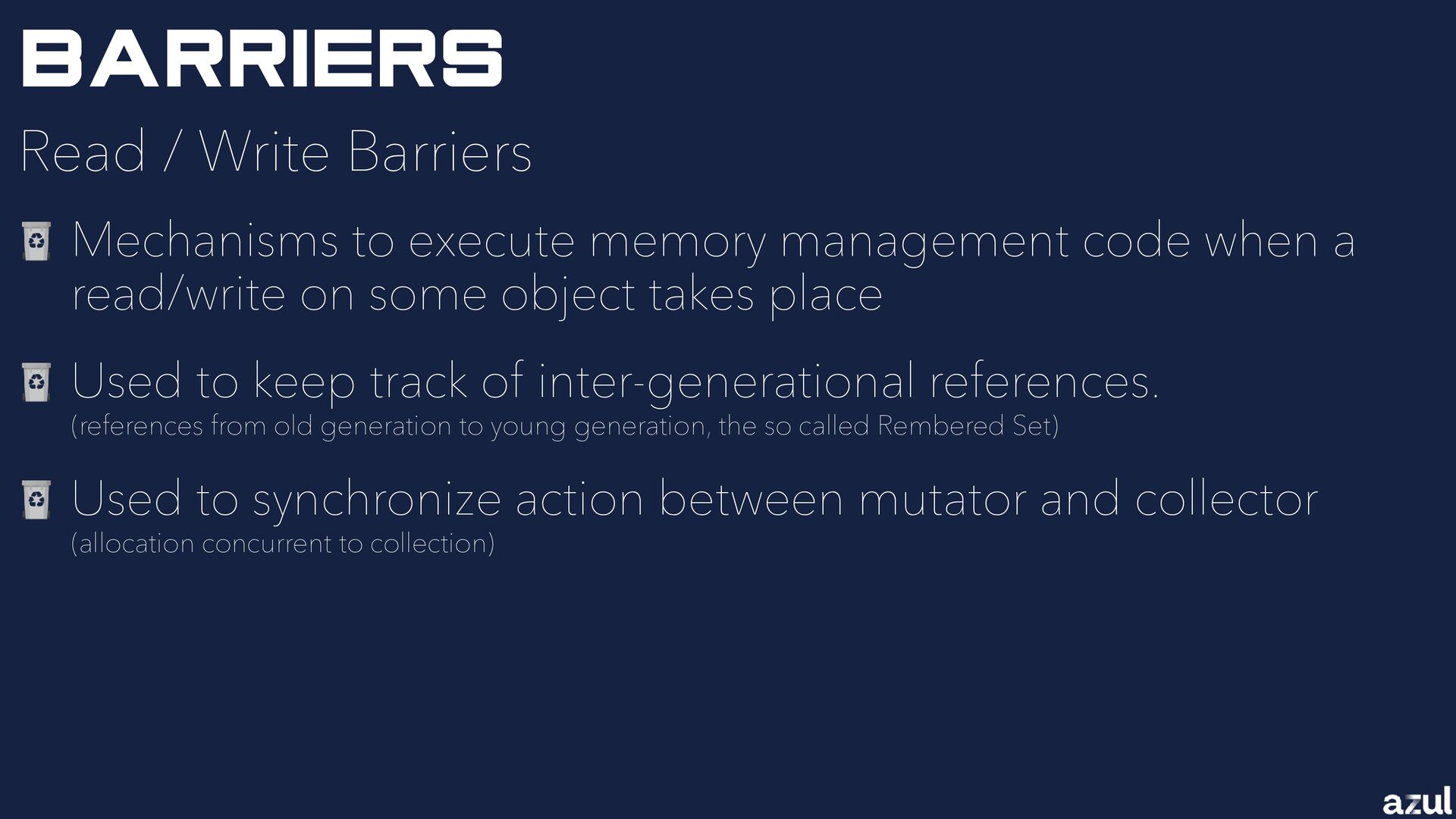
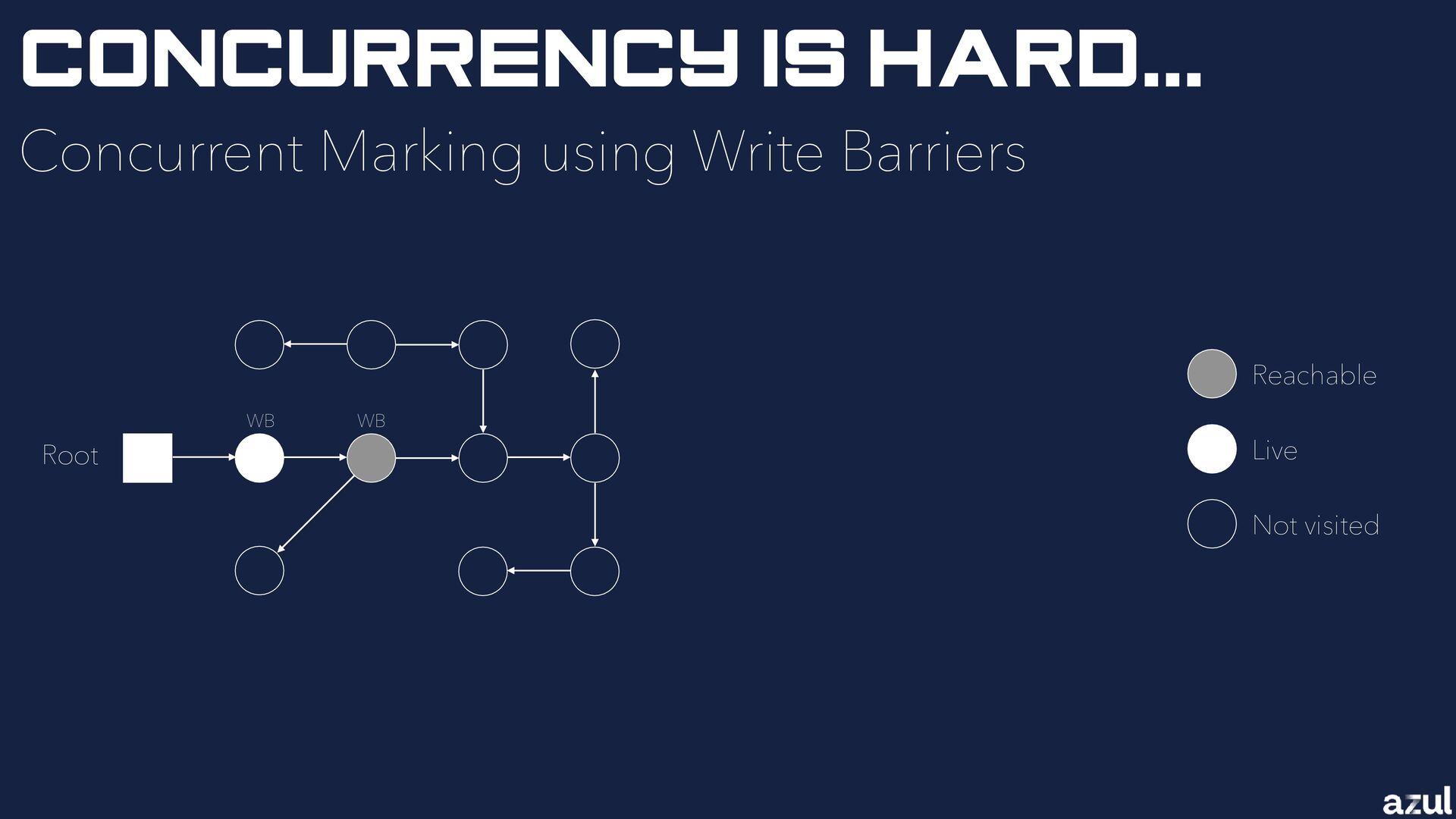
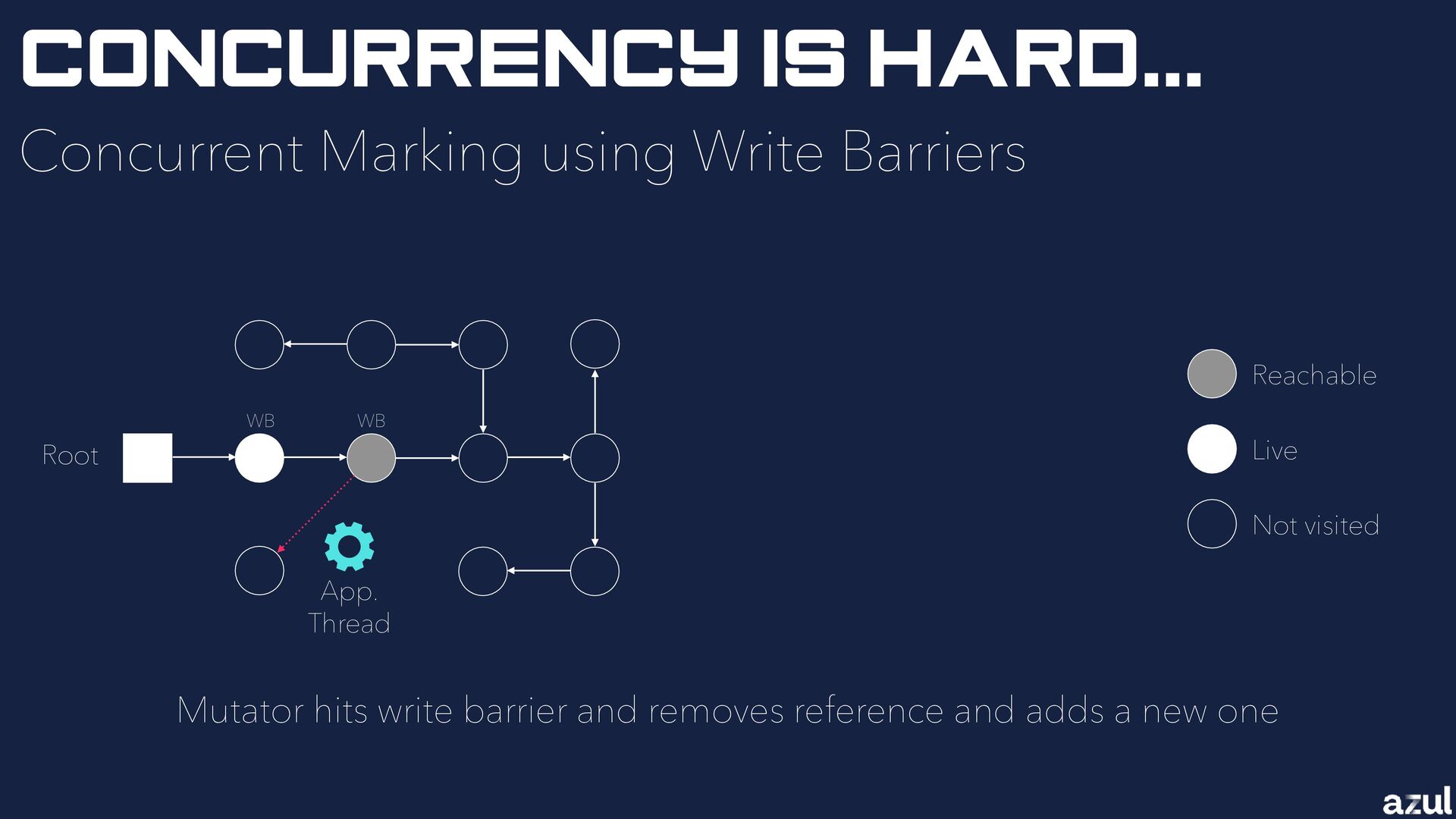
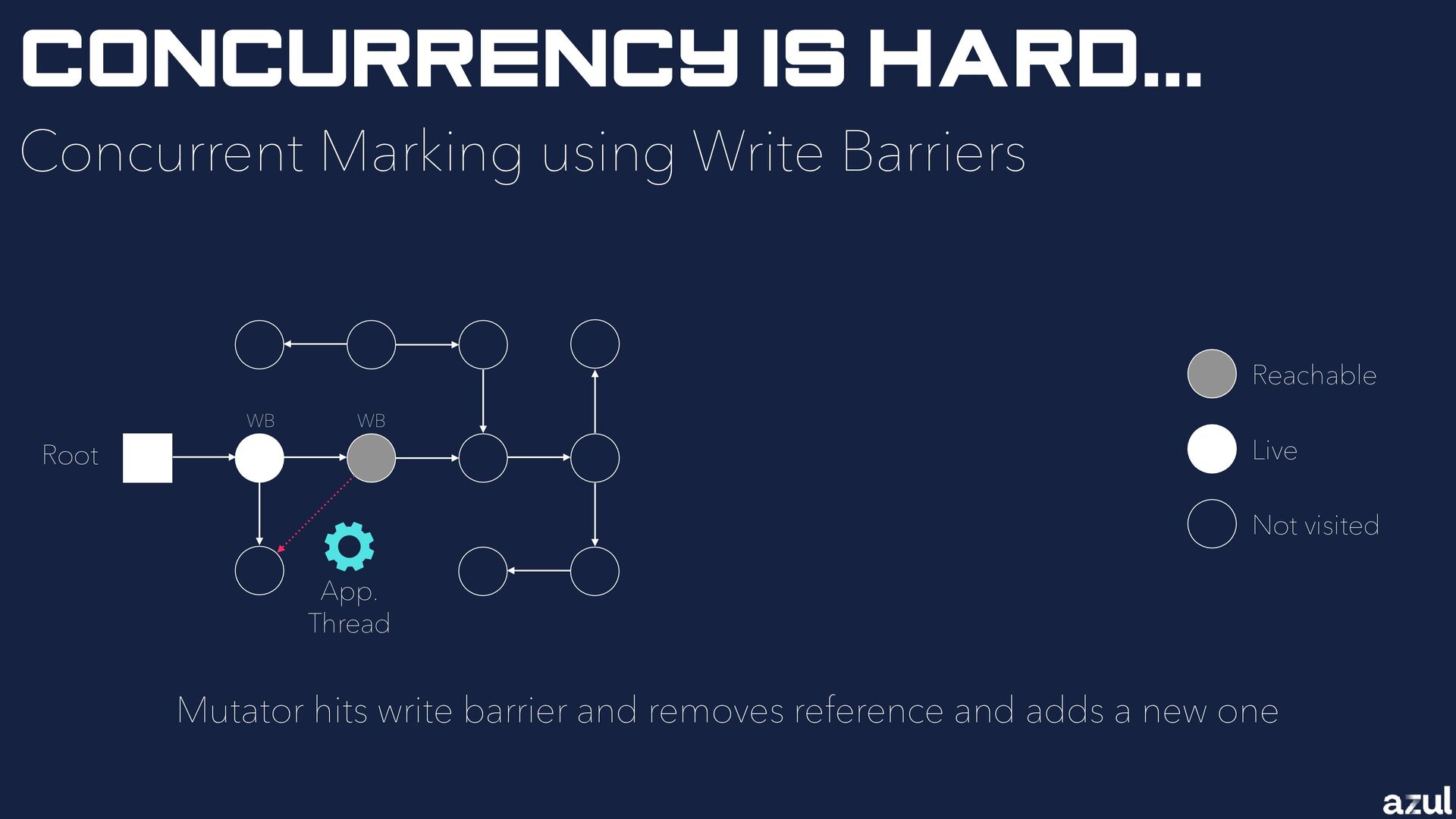
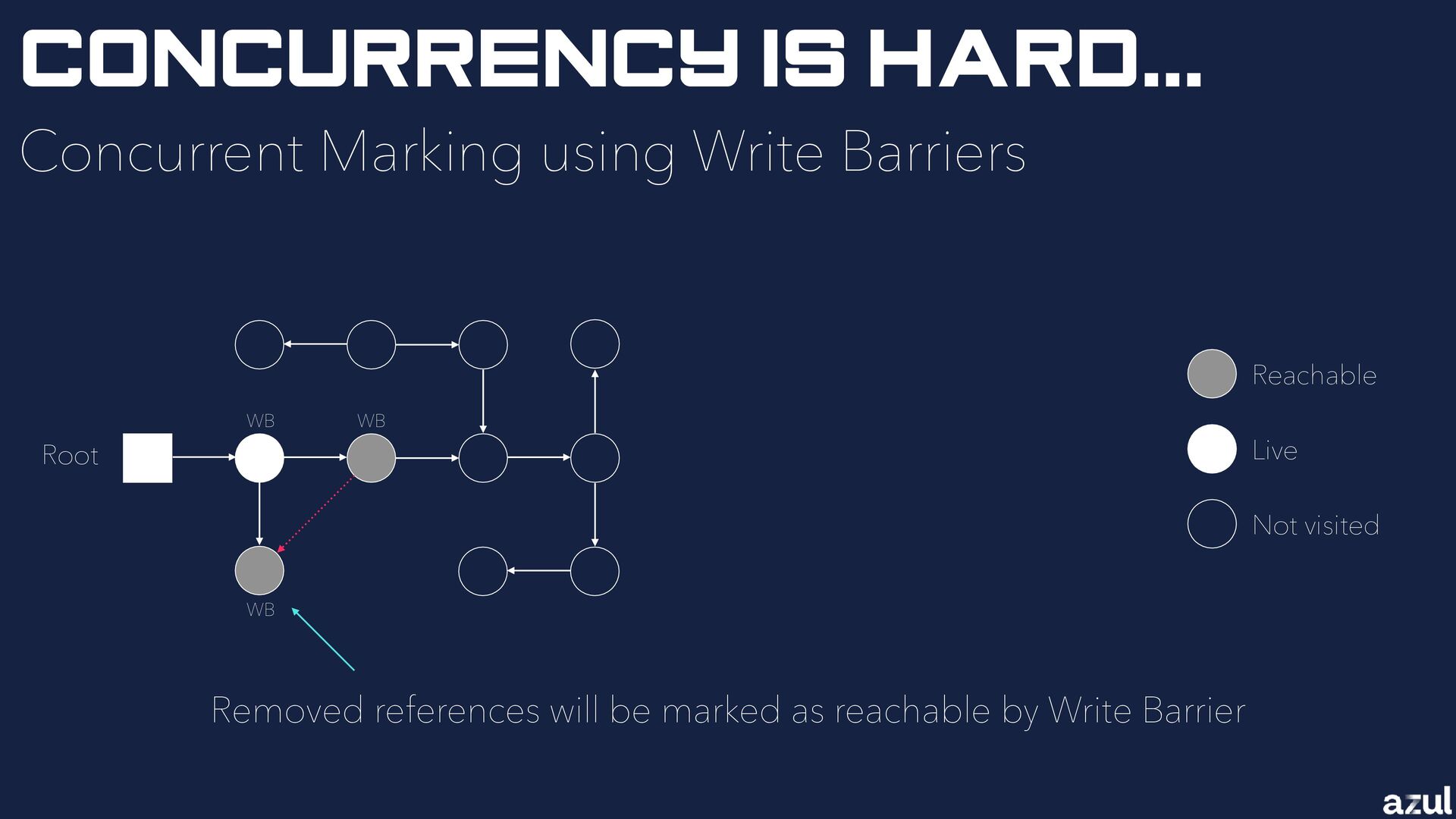
code when a read/write on some object takes place Used to keep track of inter-generational references. (references from old generation to young generation, the so called Rembered Set)
code when a read/write on some object takes place Used to keep track of inter-generational references. (references from old generation to young generation, the so called Rembered Set) Used to synchronize action between mutator and collector (allocation concurrent to collection)
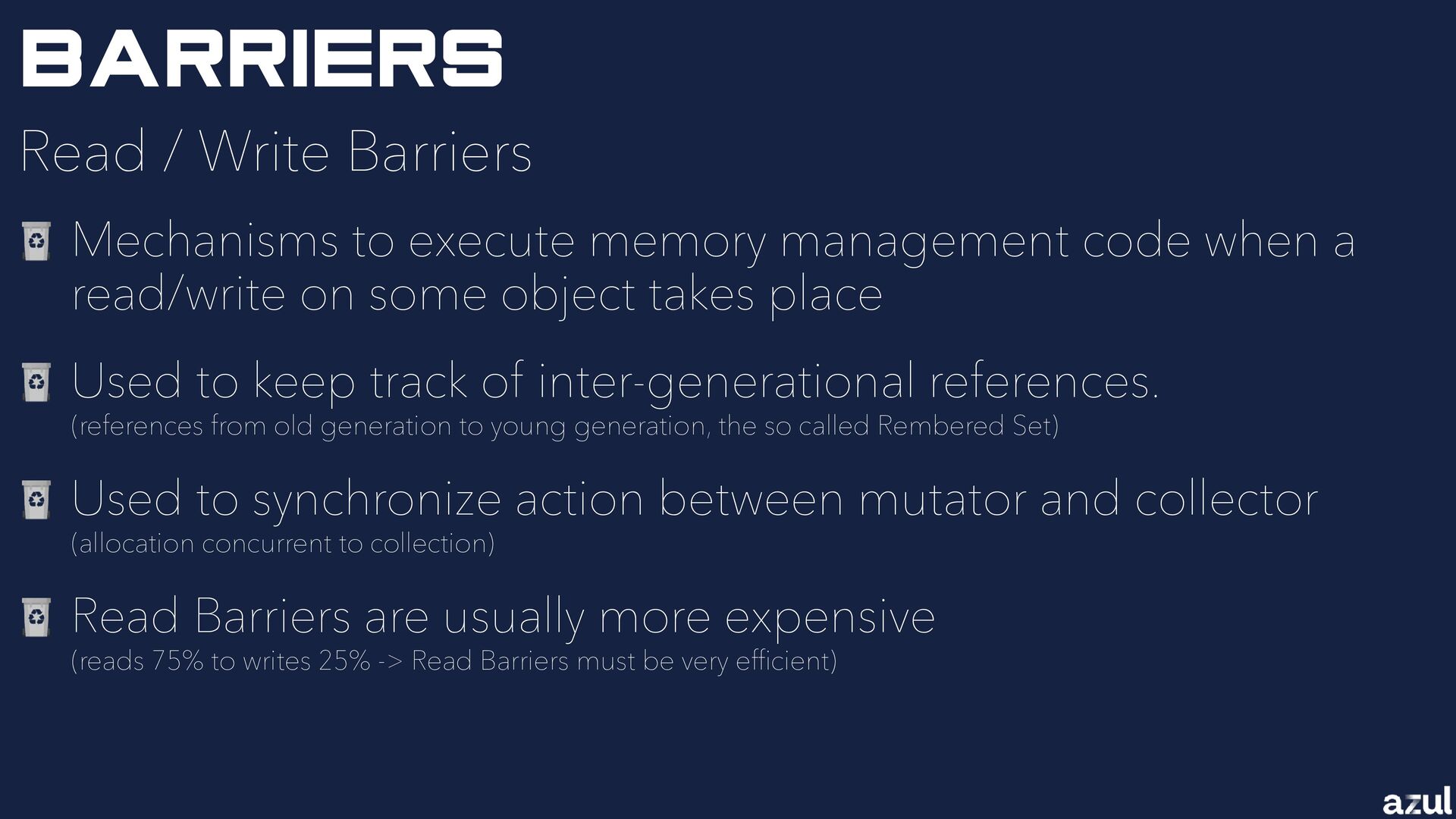
code when a read/write on some object takes place Used to keep track of inter-generational references. (references from old generation to young generation, the so called Rembered Set) Used to synchronize action between mutator and collector (allocation concurrent to collection) Read Barriers are usually more expensive (reads 75% to writes 25% -> Read Barriers must be very ef fi cient)
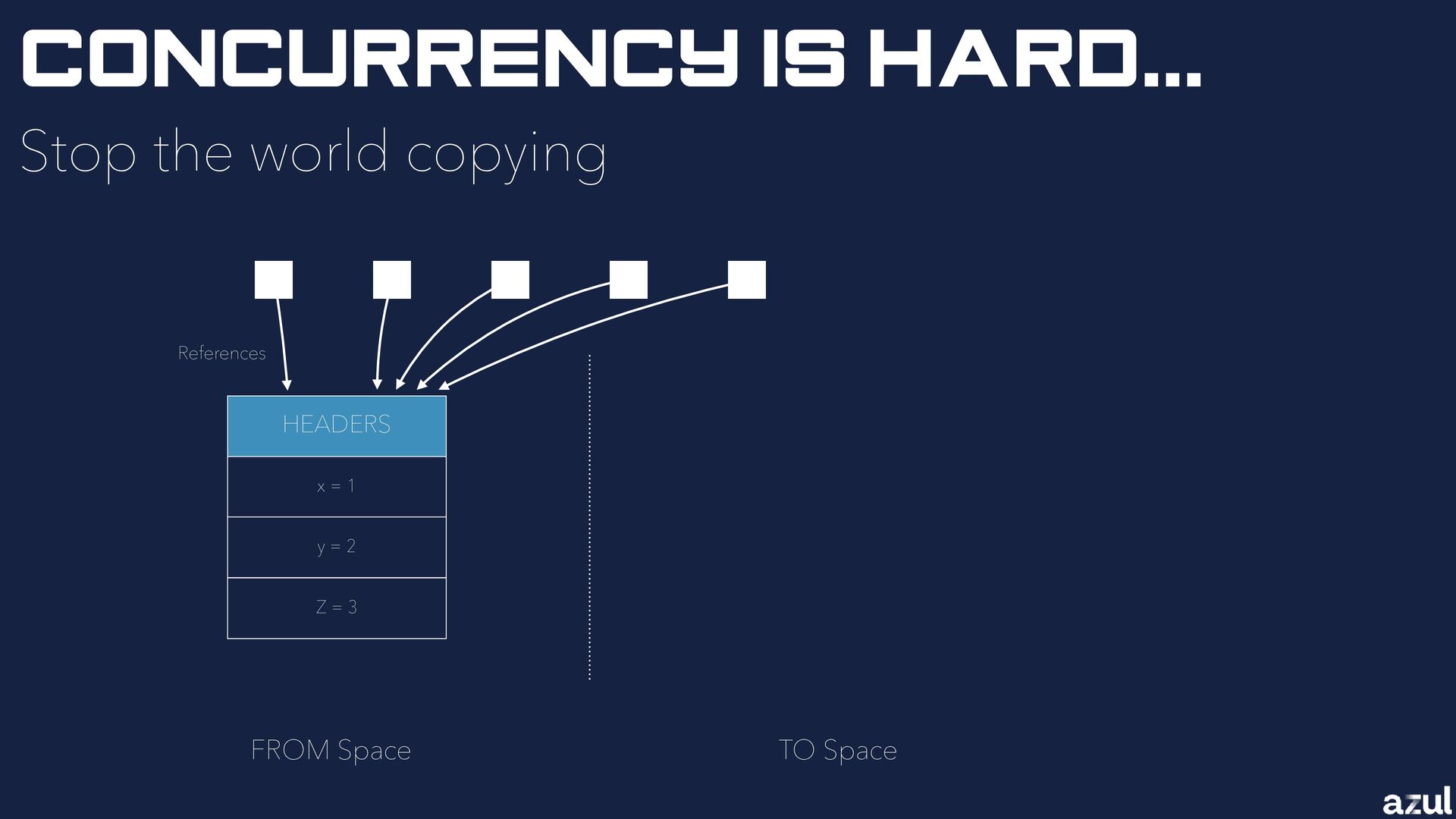
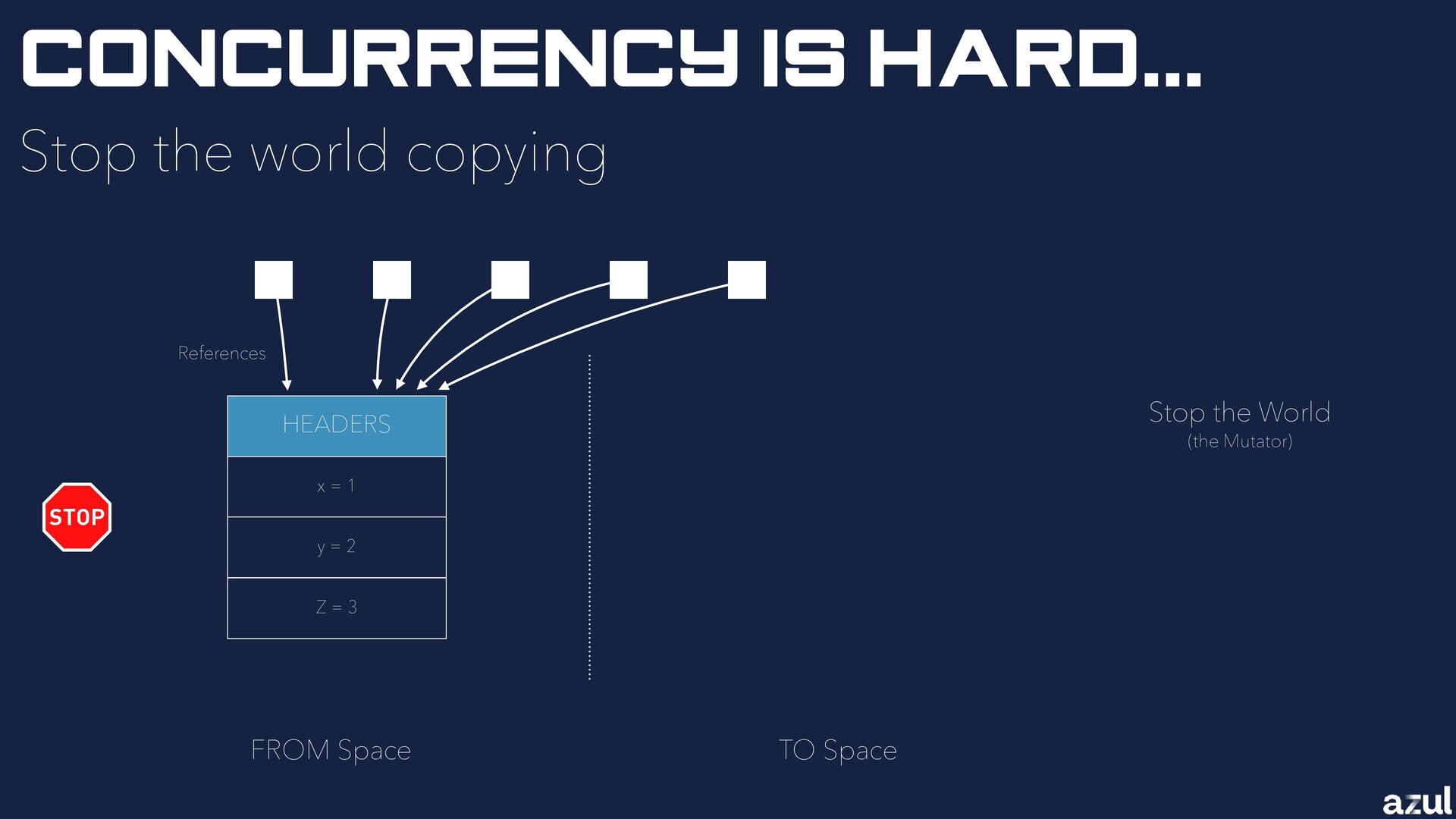
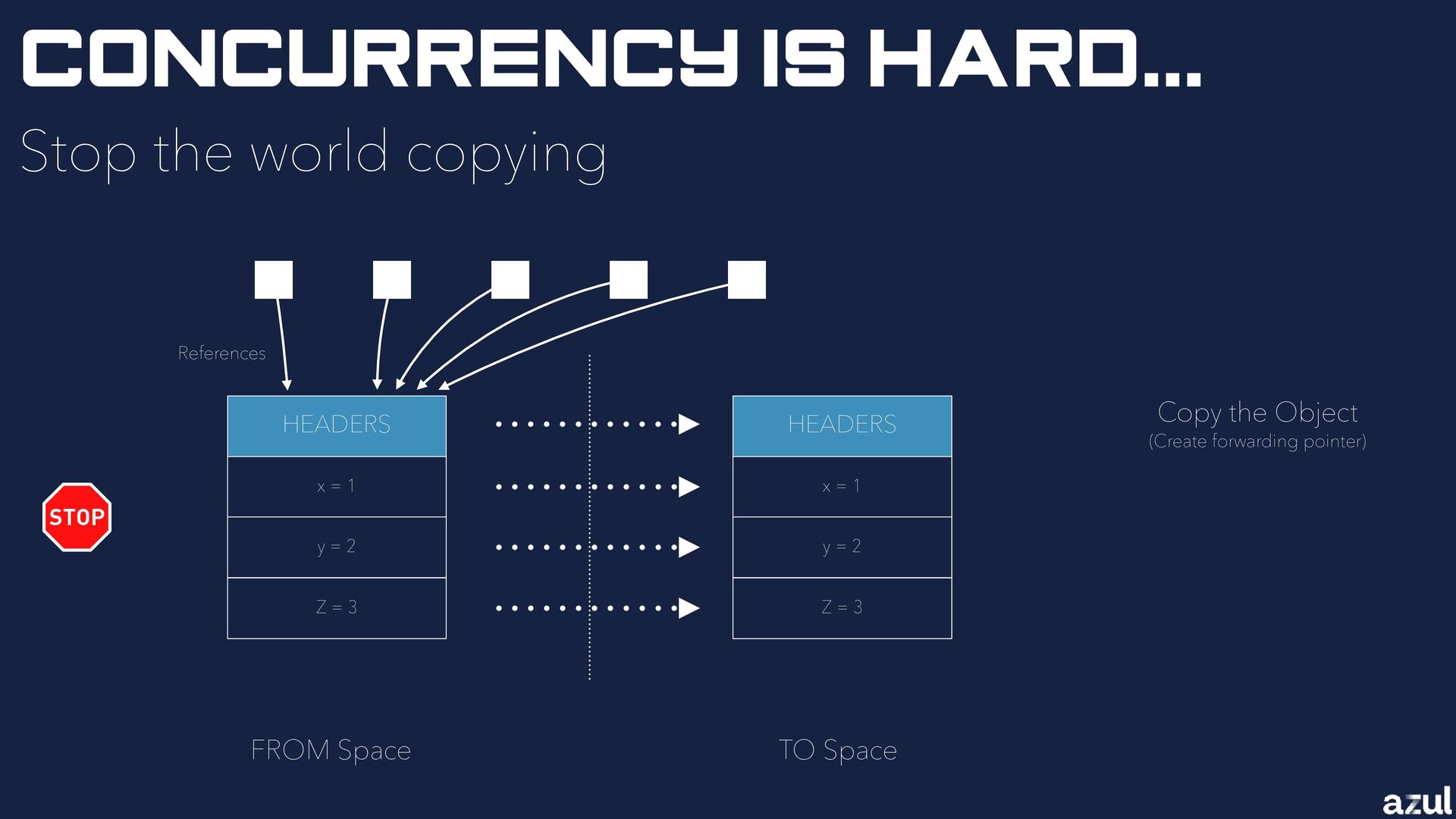
STOP Copy the Object (Create forwarding pointer) References Stop the world copying FROM Space TO Space HEADERS x = 1 y = 2 Z = 3 CONCURReNCY IS HARD...
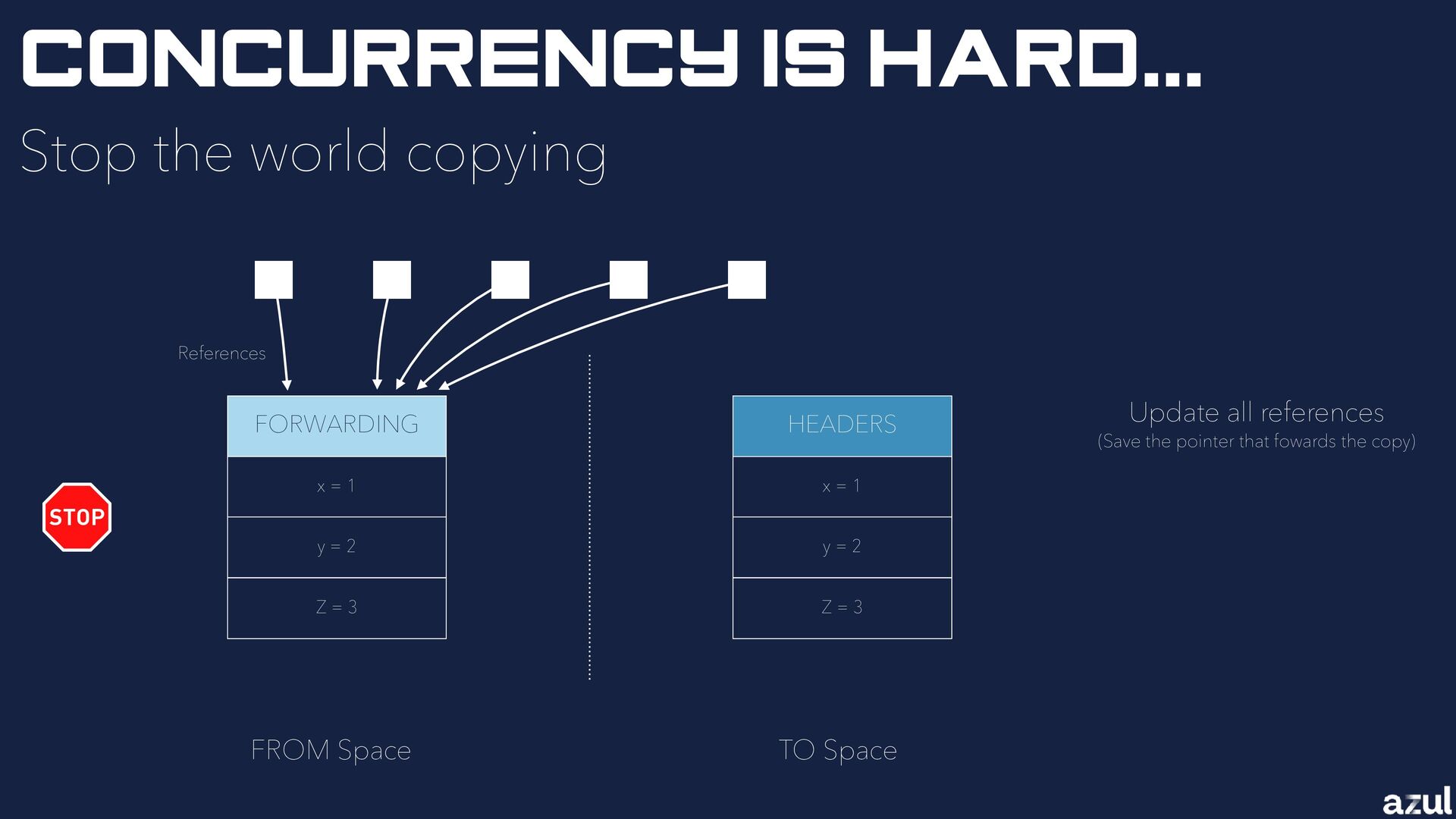
HEADERS x = 1 y = 2 Z = 3 STOP Update all references (Save the pointer that fowards the copy) References Stop the world copying FROM Space TO Space CONCURReNCY IS HARD...
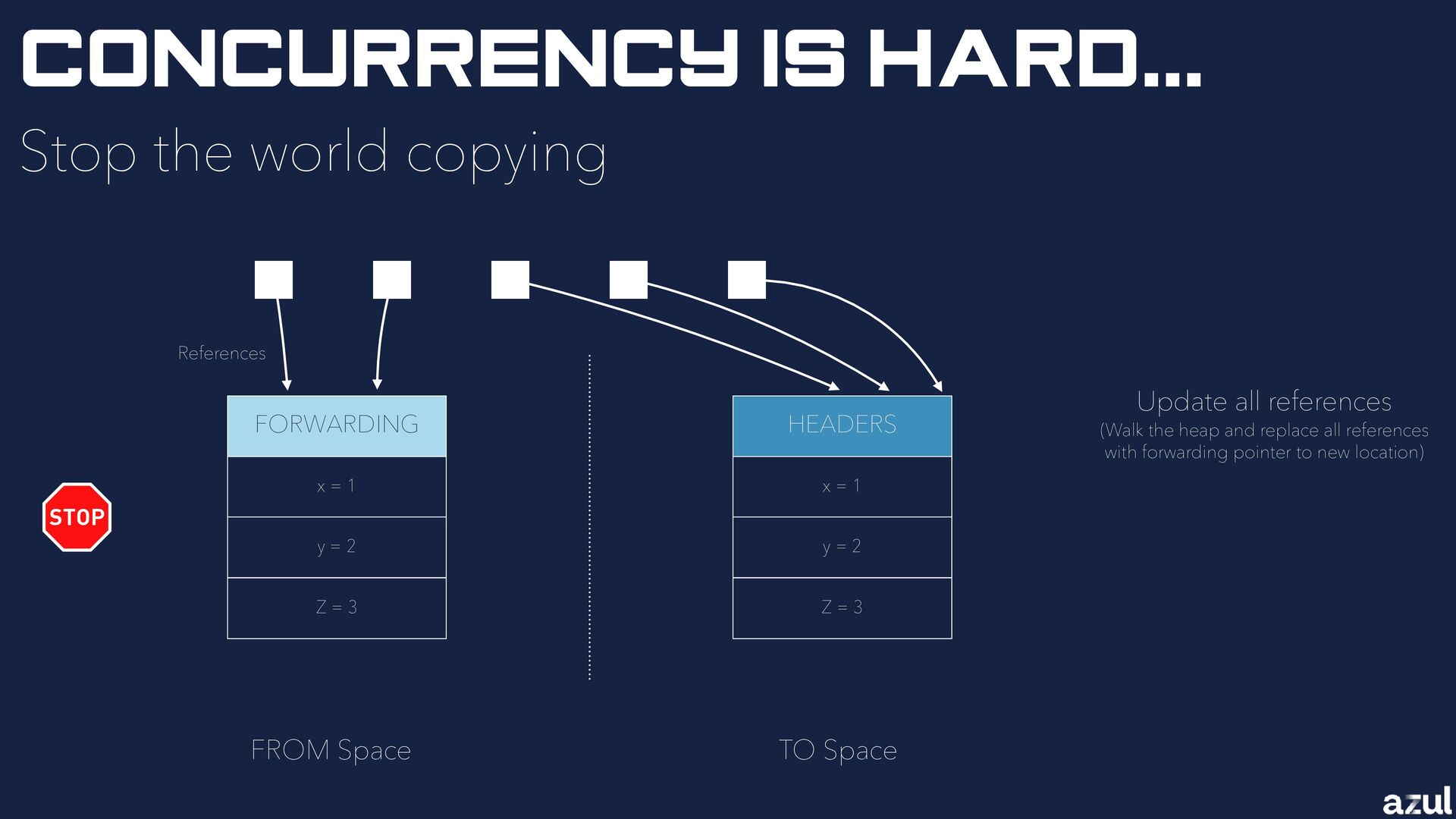
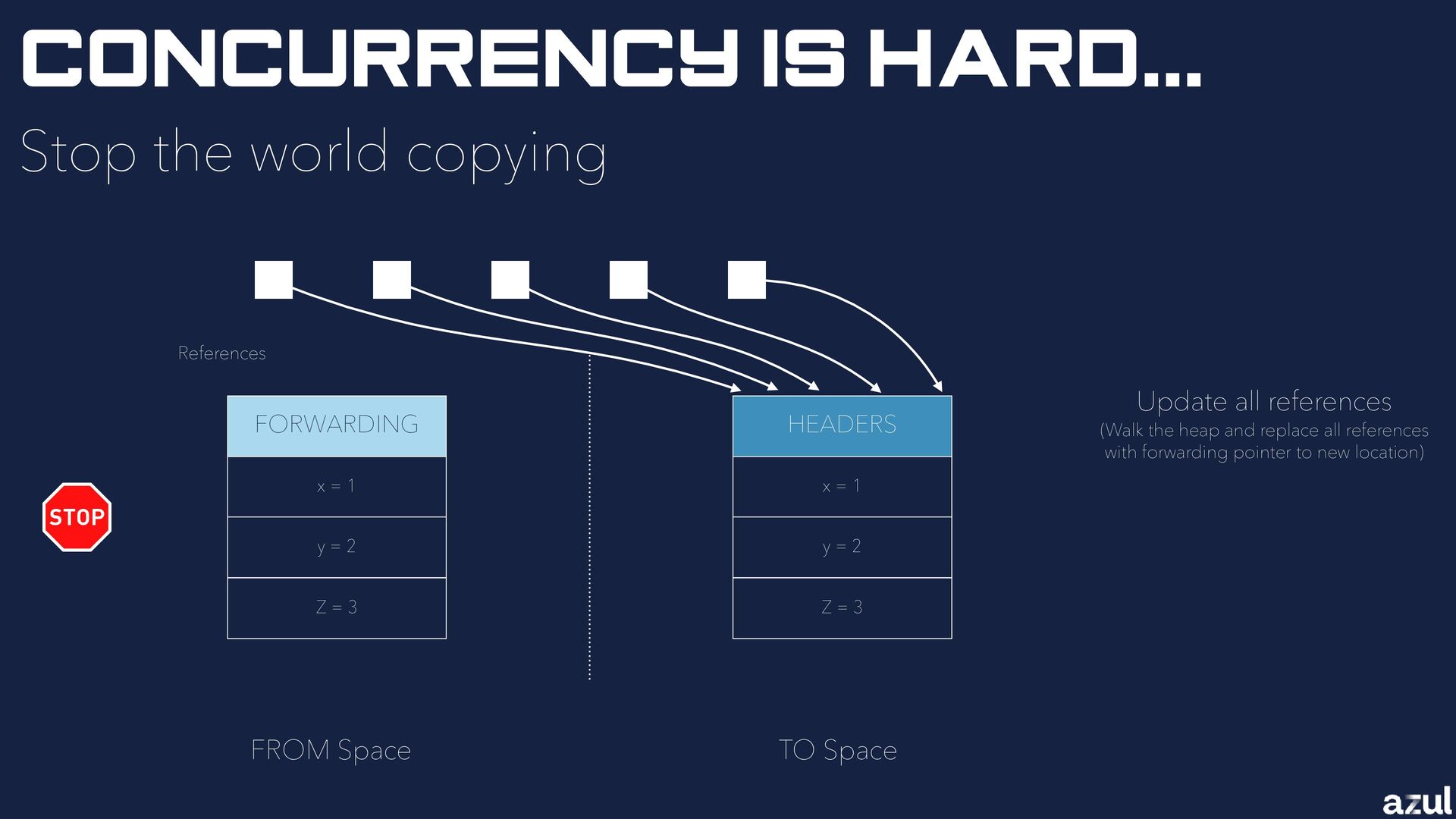
HEADERS x = 1 y = 2 Z = 3 STOP Update all references (Walk the heap and replace all references with forwarding pointer to new location) References Stop the world copying FROM Space TO Space CONCURReNCY IS HARD...
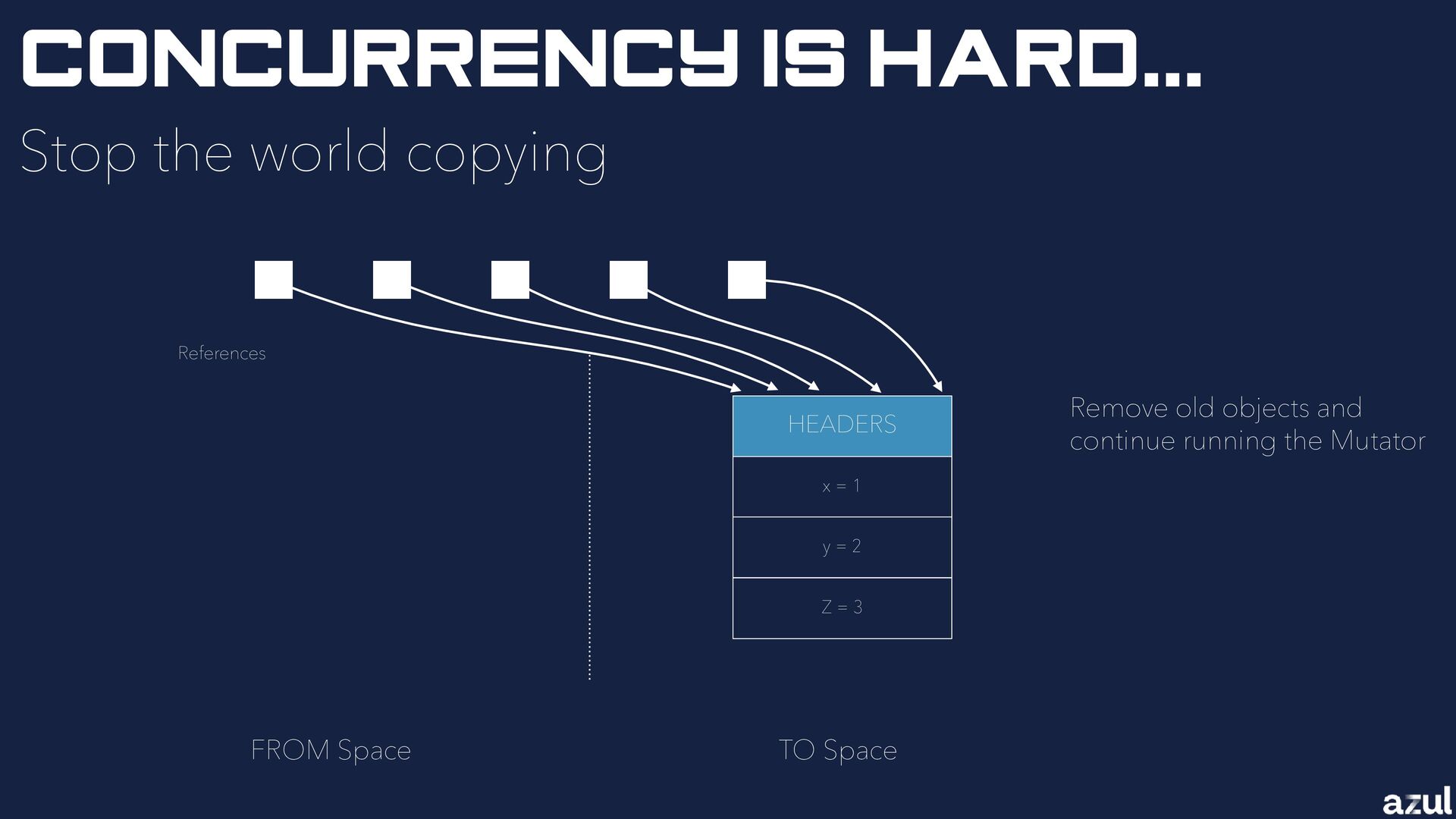
HEADERS x = 1 y = 2 Z = 3 STOP Update all references (Walk the heap and replace all references with forwarding pointer to new location) References Stop the world copying FROM Space TO Space CONCURReNCY IS HARD...
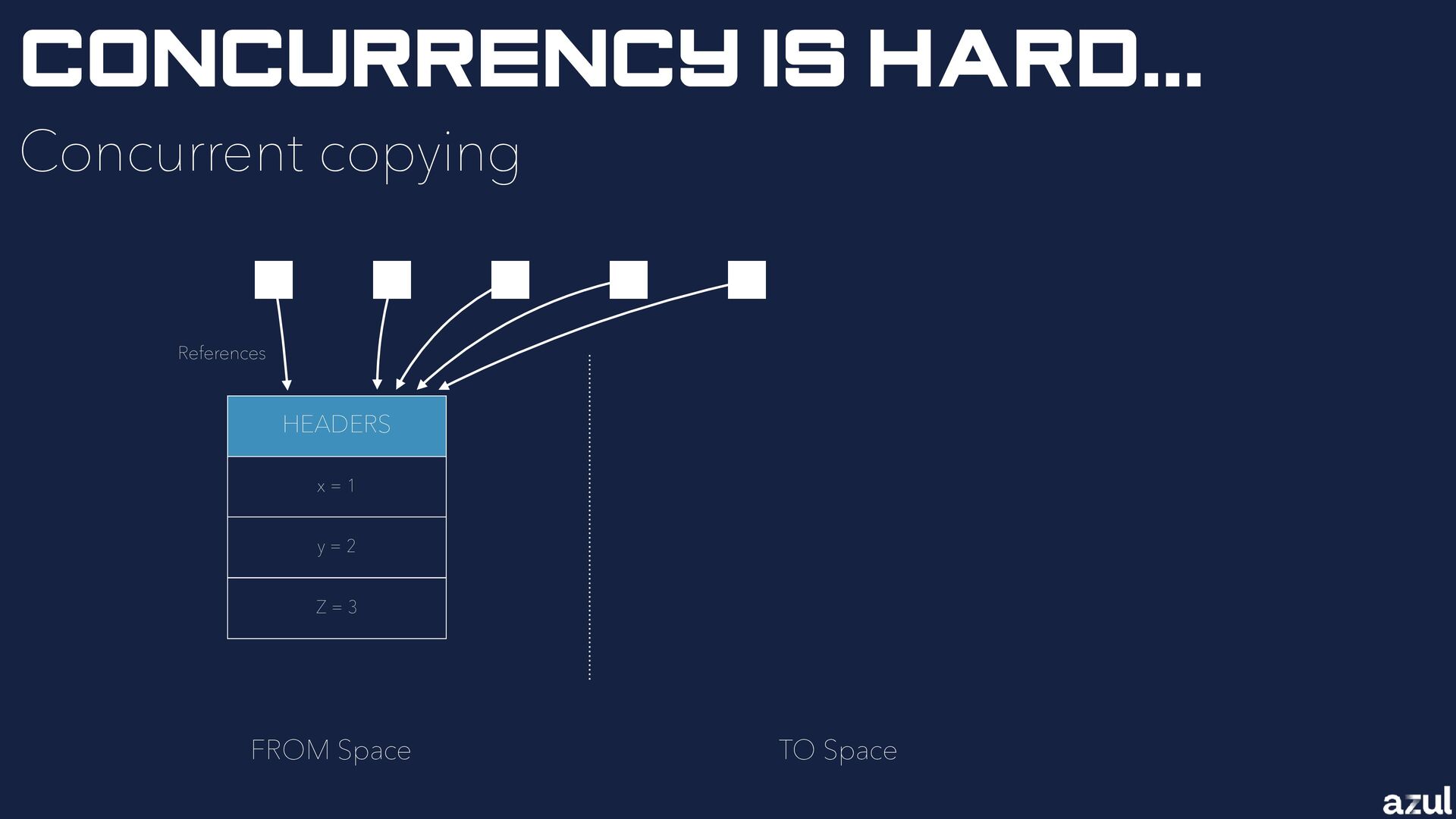
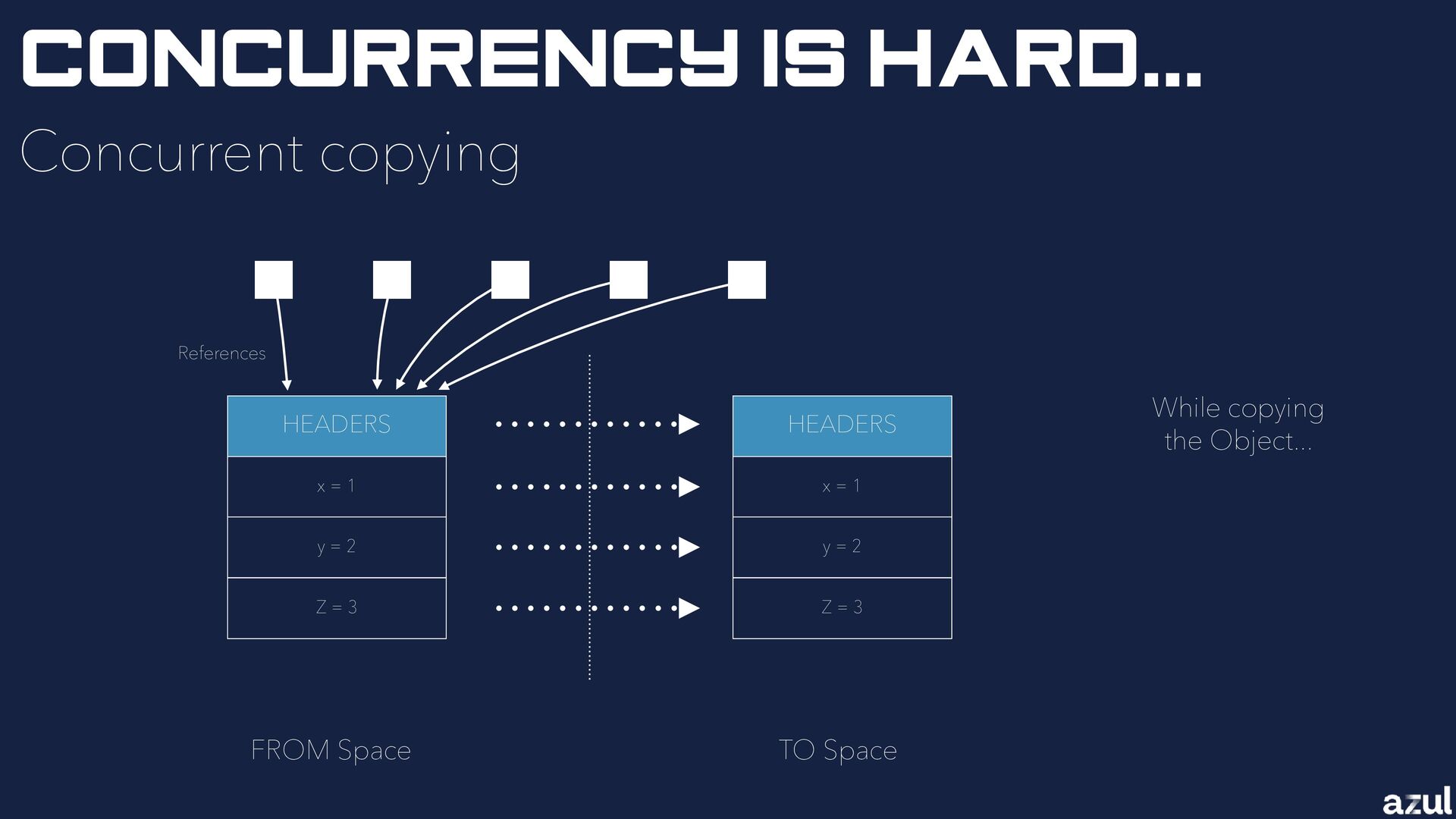
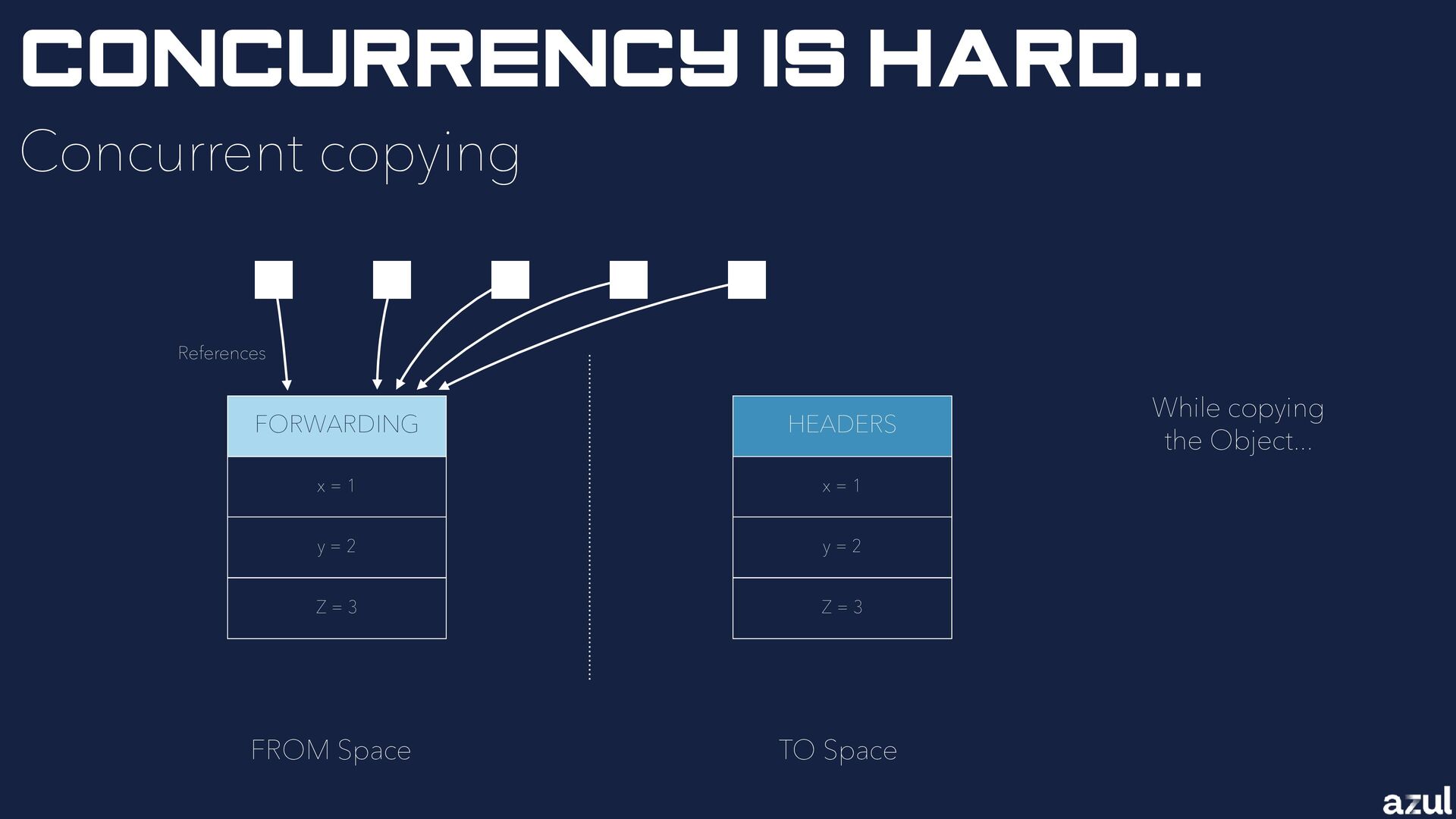
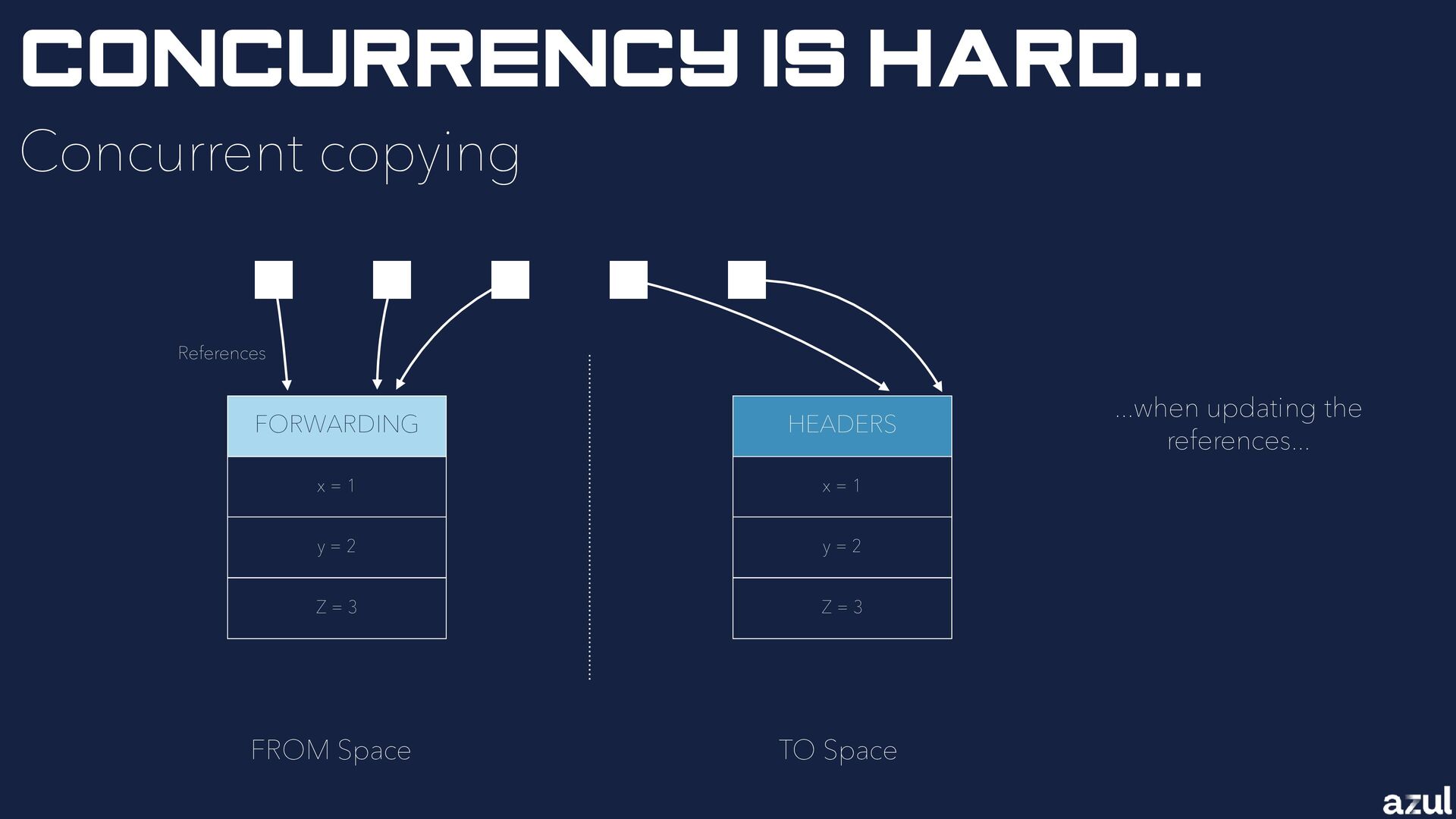
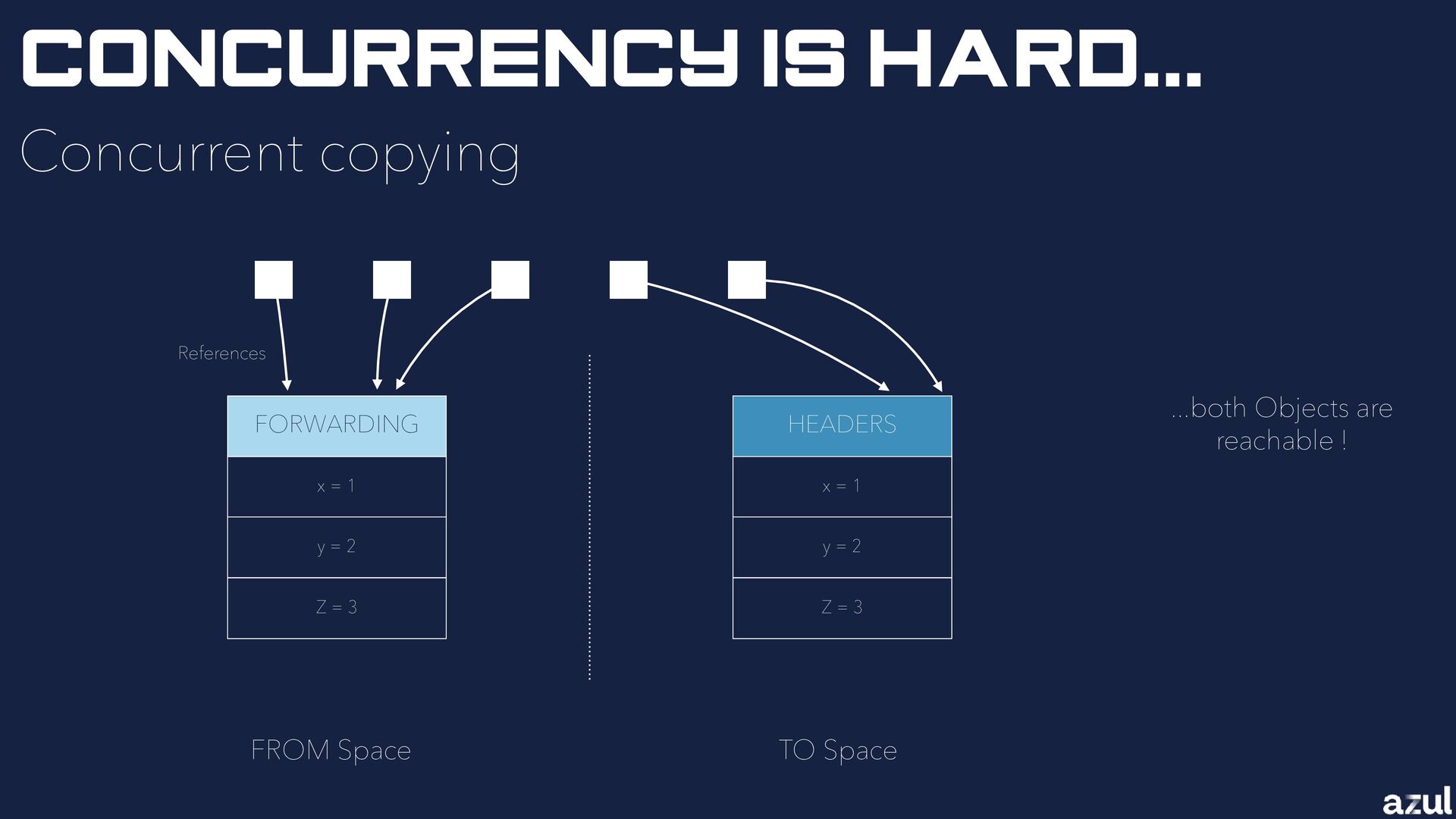
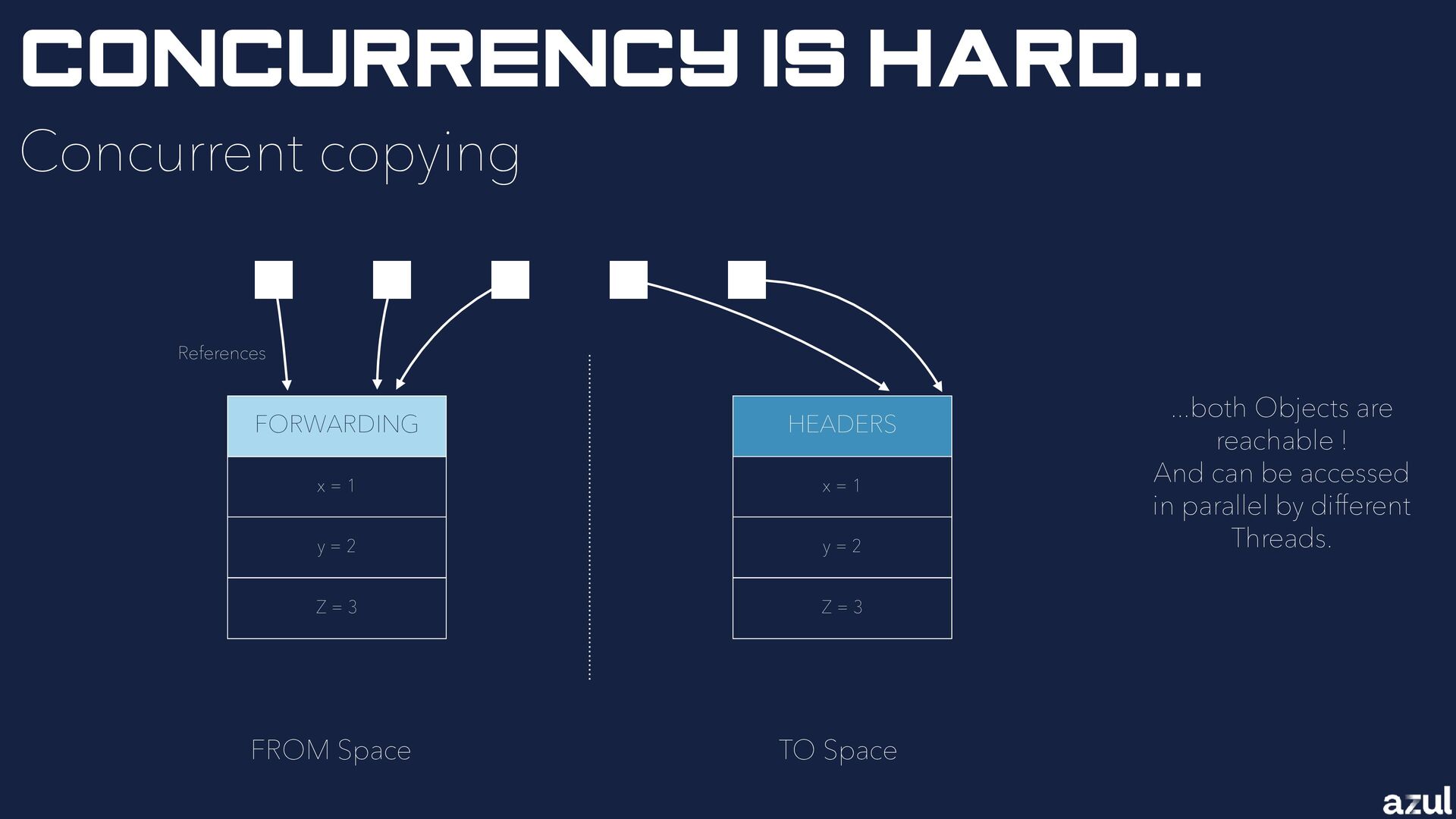
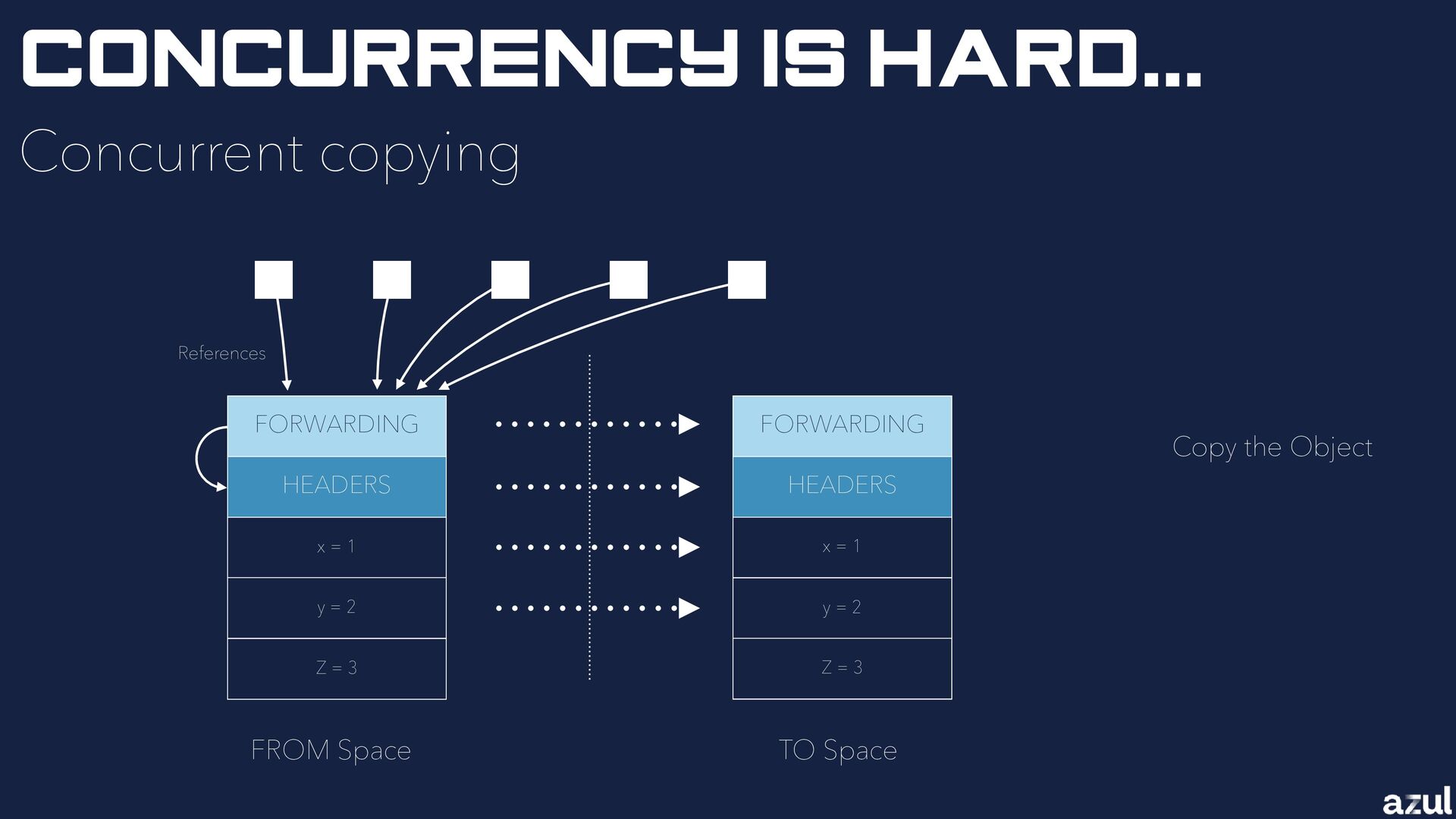
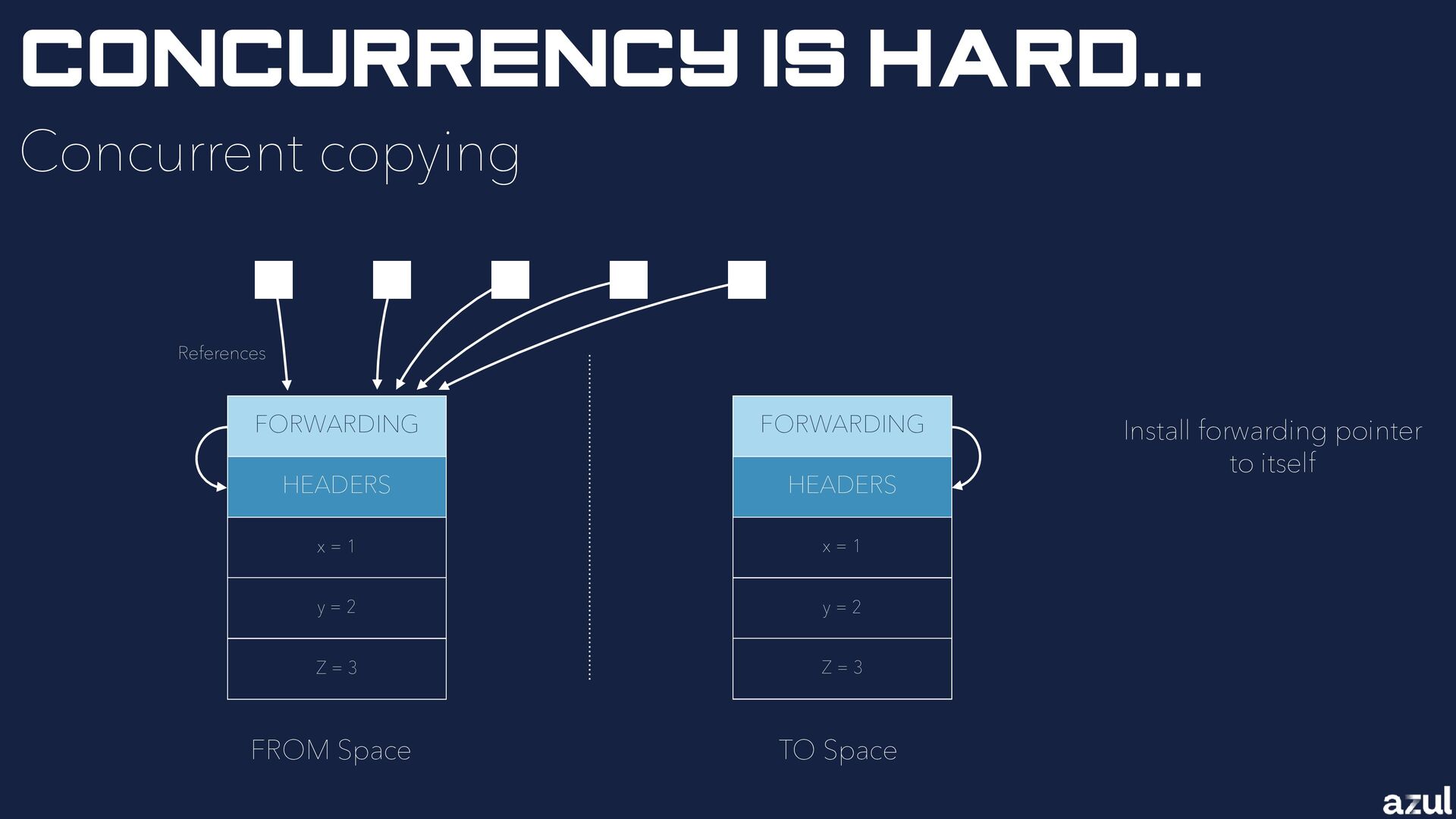
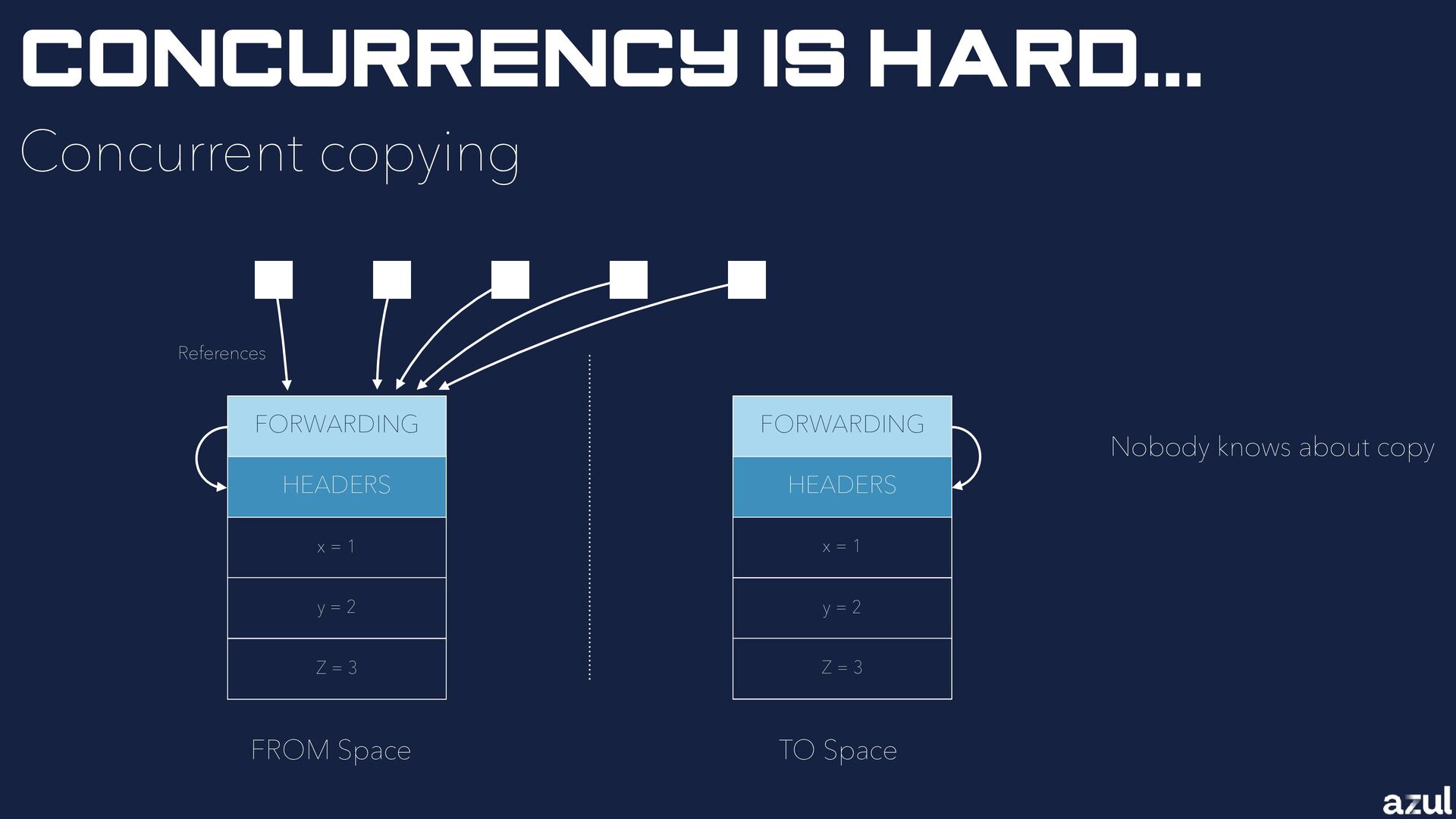
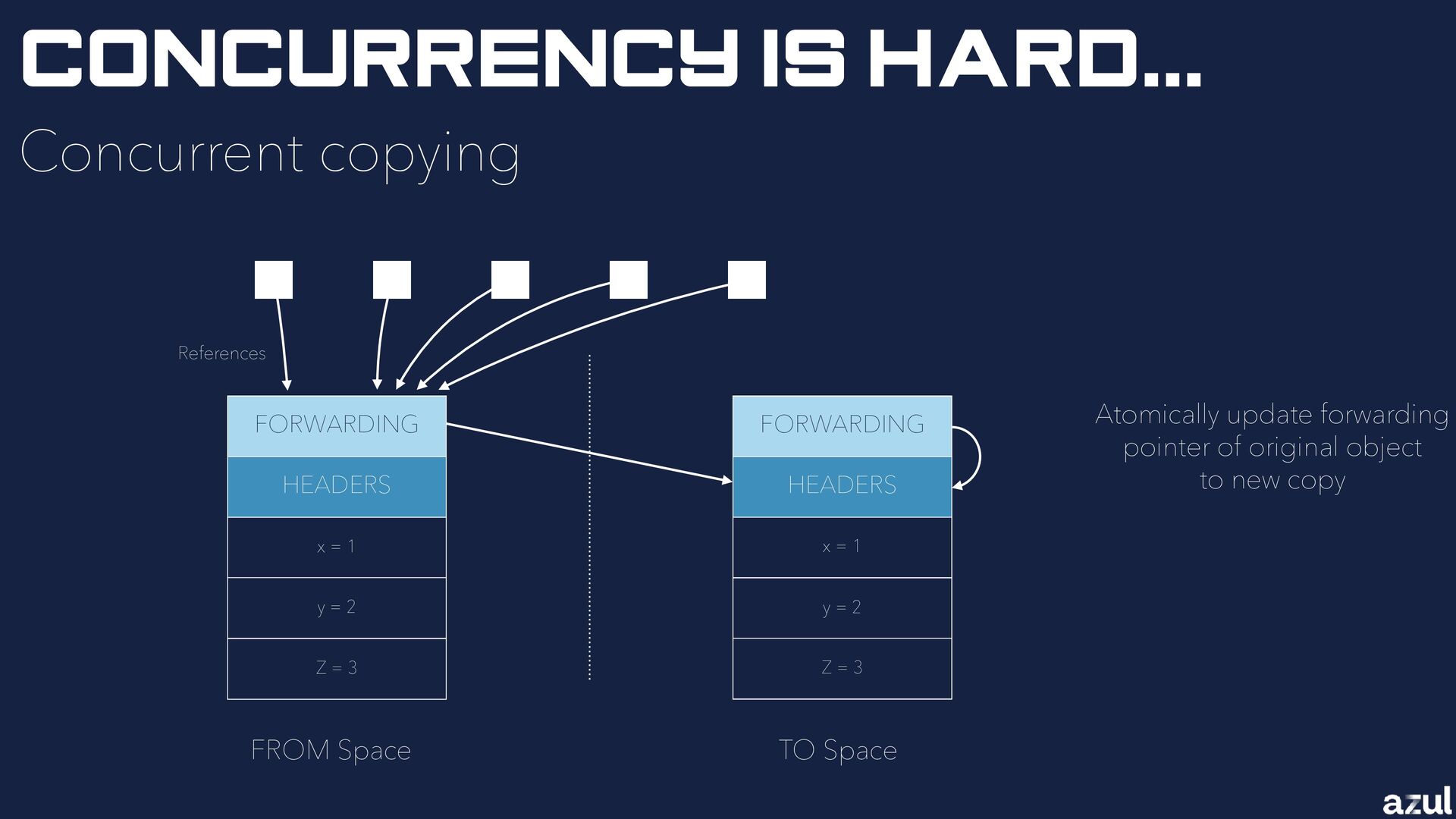
x = 1 y = 2 Z = 3 HEADERS ...both Objects are reachable ! And can be accessed in parallel by different Threads. Concurrent copying FROM Space TO Space References CONCURReNCY IS HARD... FORWARDING
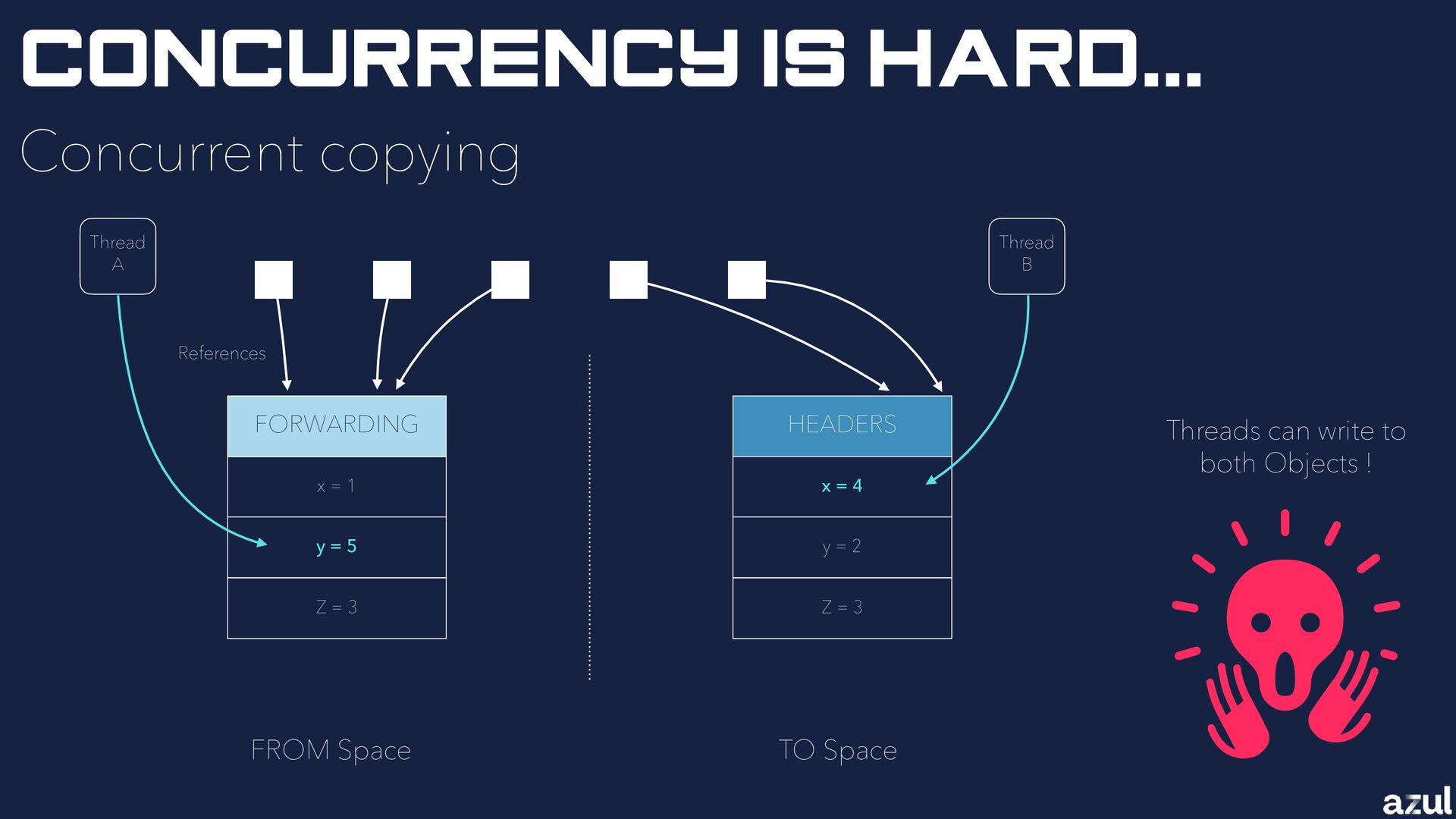
x = 4 y = 2 Z = 3 HEADERS Threads can write to both Objects ! Thread B Thread A Concurrent copying FROM Space TO Space References CONCURReNCY IS HARD... FORWARDING
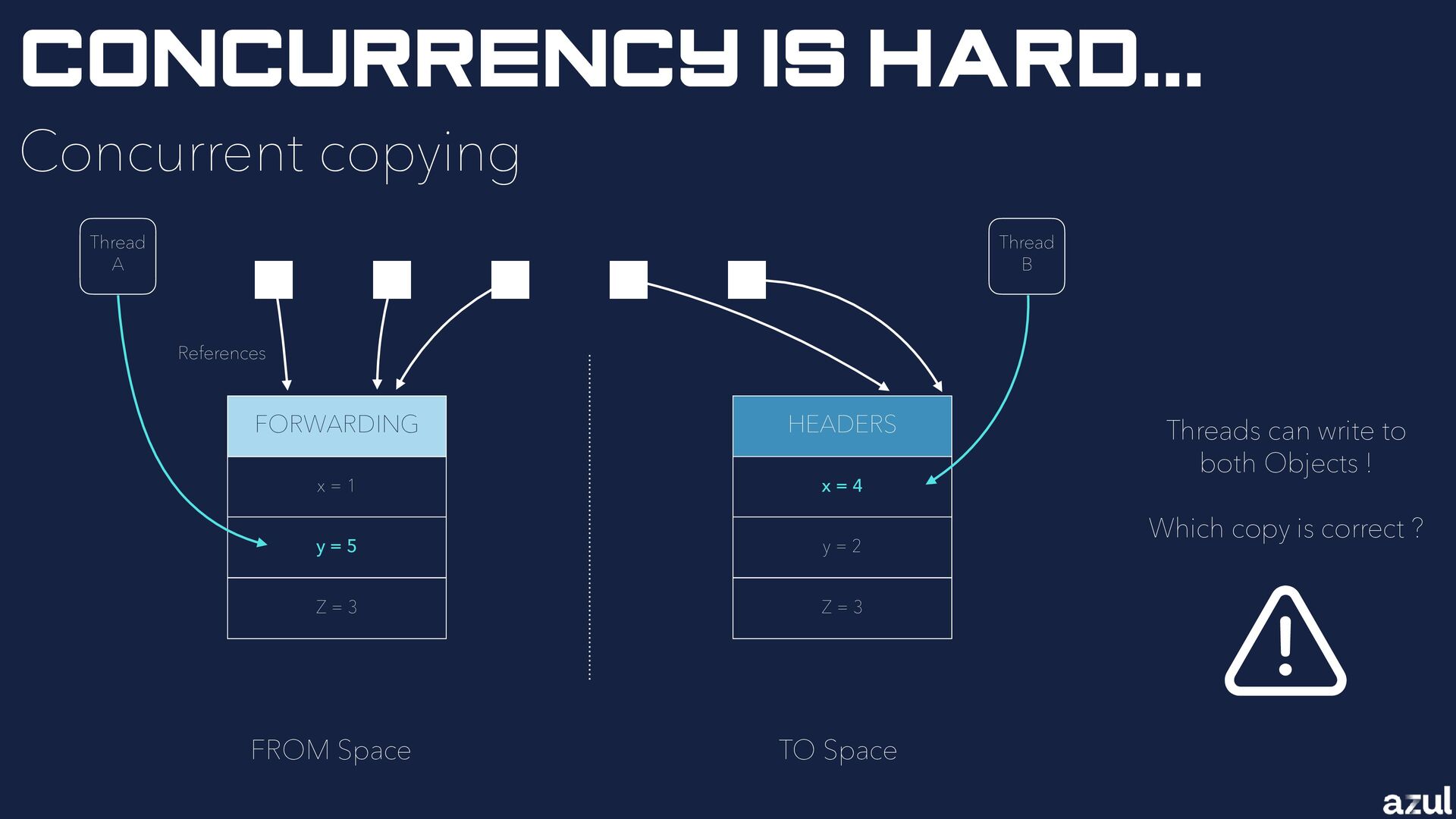
x = 4 y = 2 Z = 3 HEADERS Threads can write to both Objects ! Which copy is correct ? Thread B Thread A Concurrent copying FROM Space TO Space References CONCURReNCY IS HARD... FORWARDING
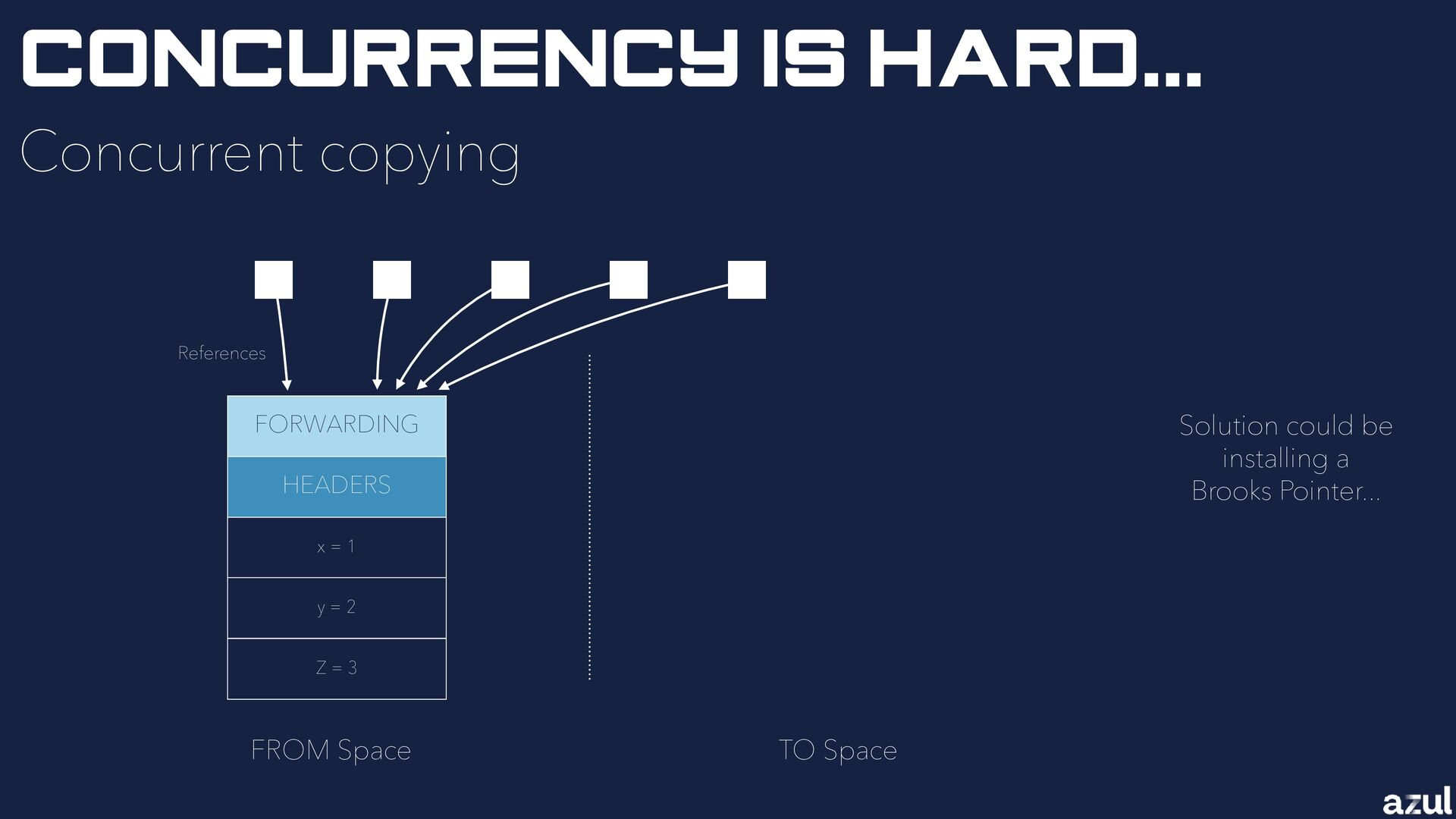
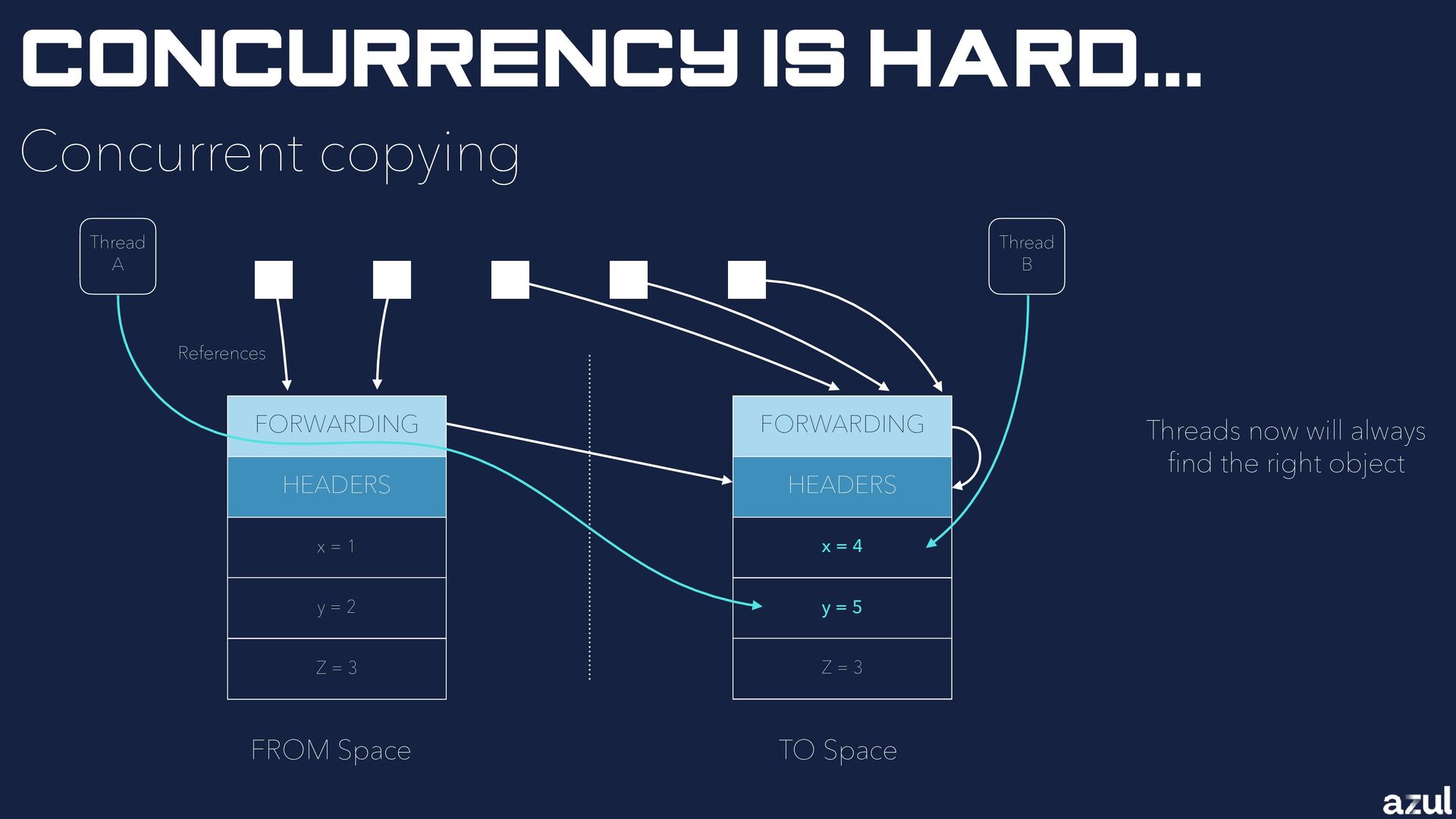
HEADERS FORWARDING x = 1 y = 2 Z = 3 HEADERS Threads now will always fi nd the right object Thread B Thread A References Concurrent copying FROM Space TO Space CONCURReNCY IS HARD...
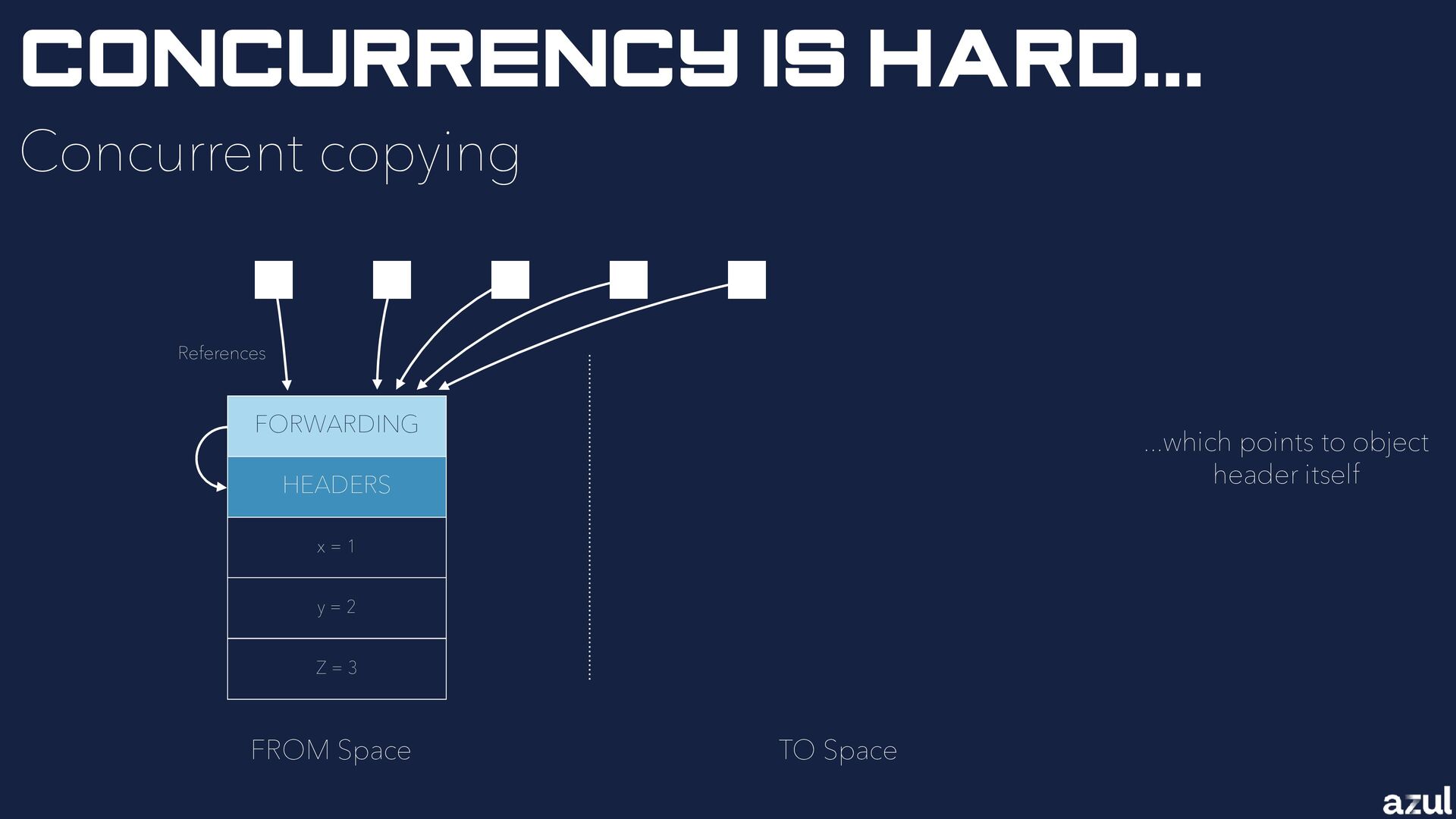
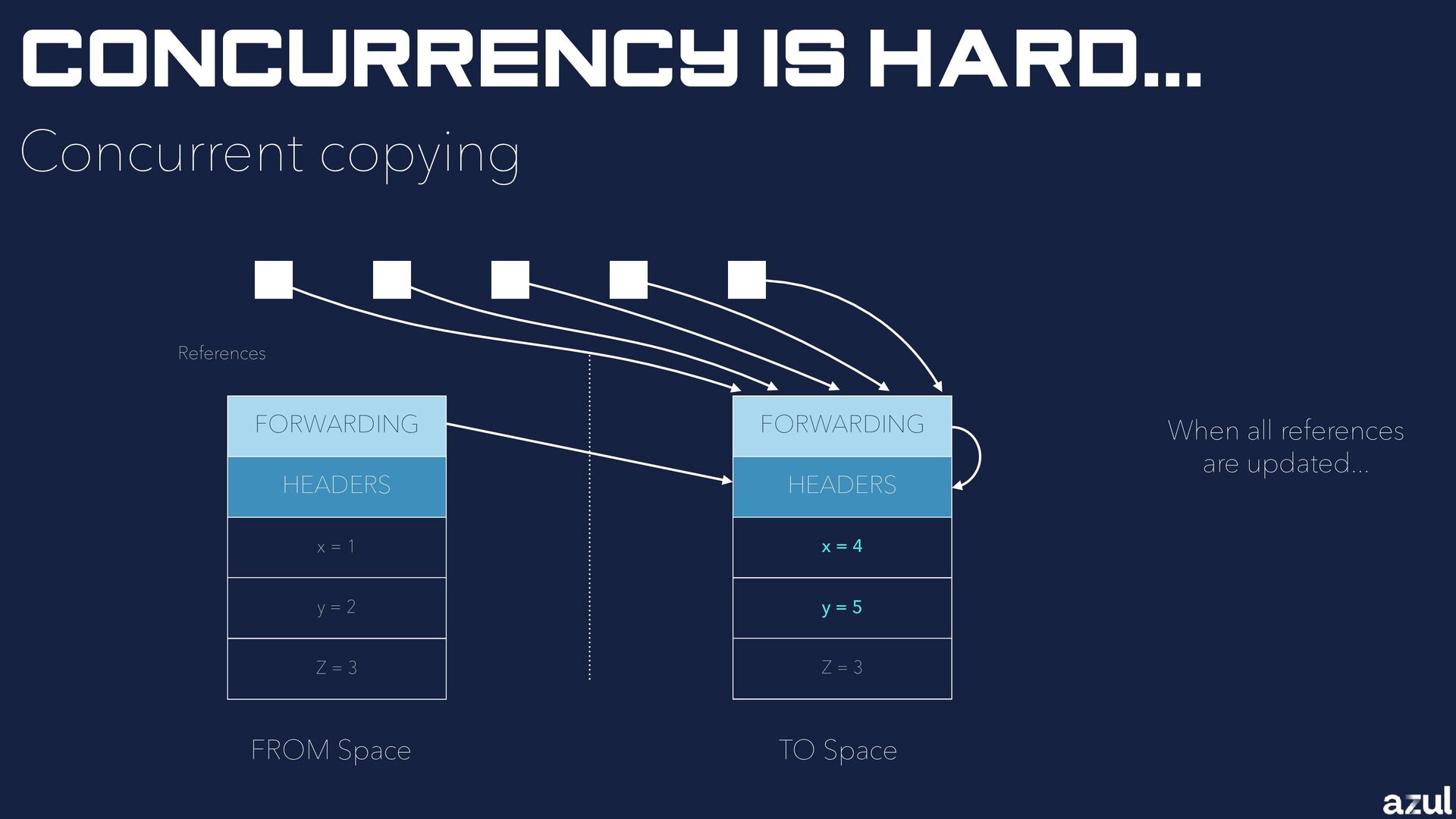
HEADERS FORWARDING x = 1 y = 2 Z = 3 HEADERS When all references are updated... References Concurrent copying FROM Space TO Space CONCURReNCY IS HARD...
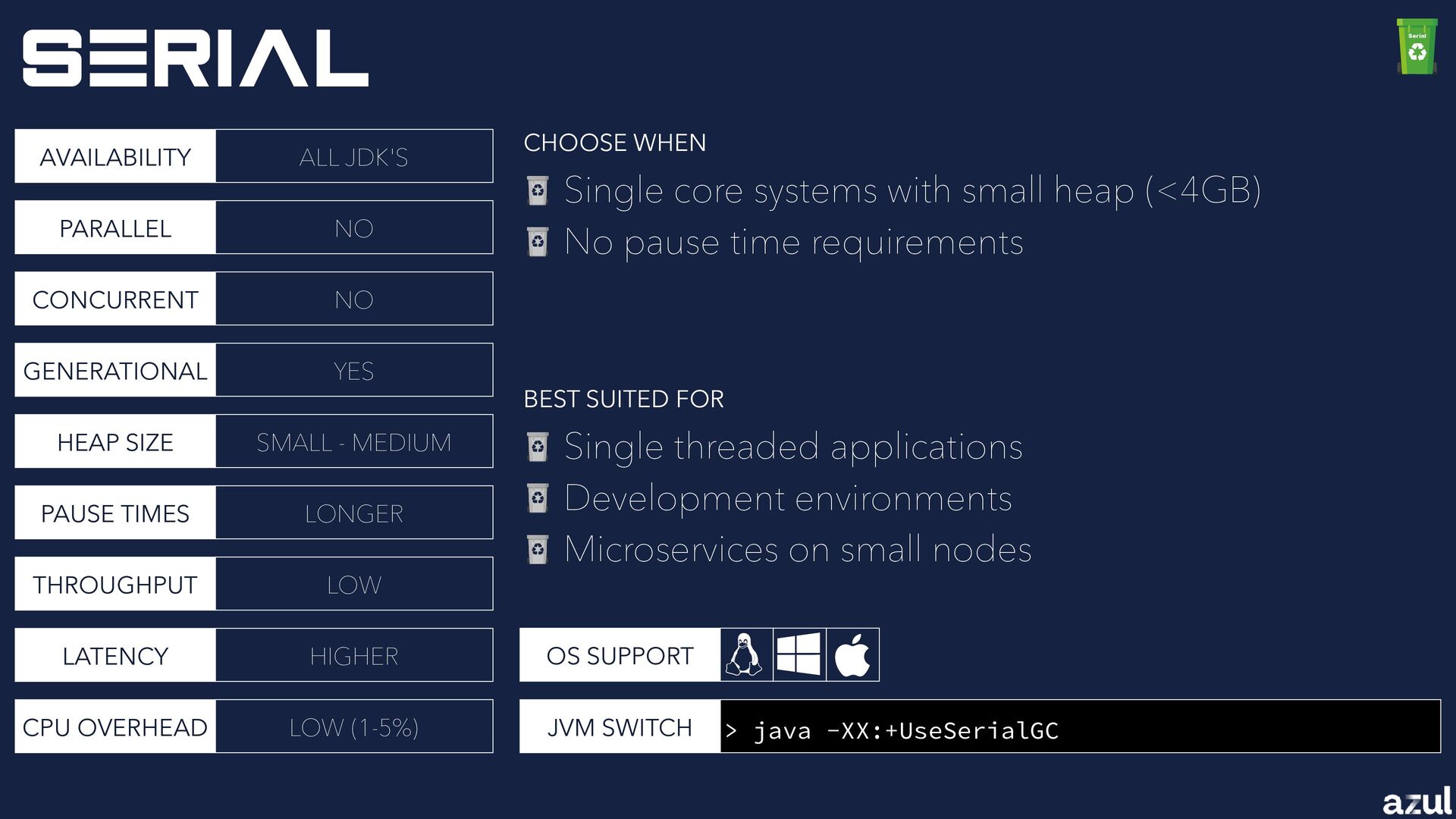
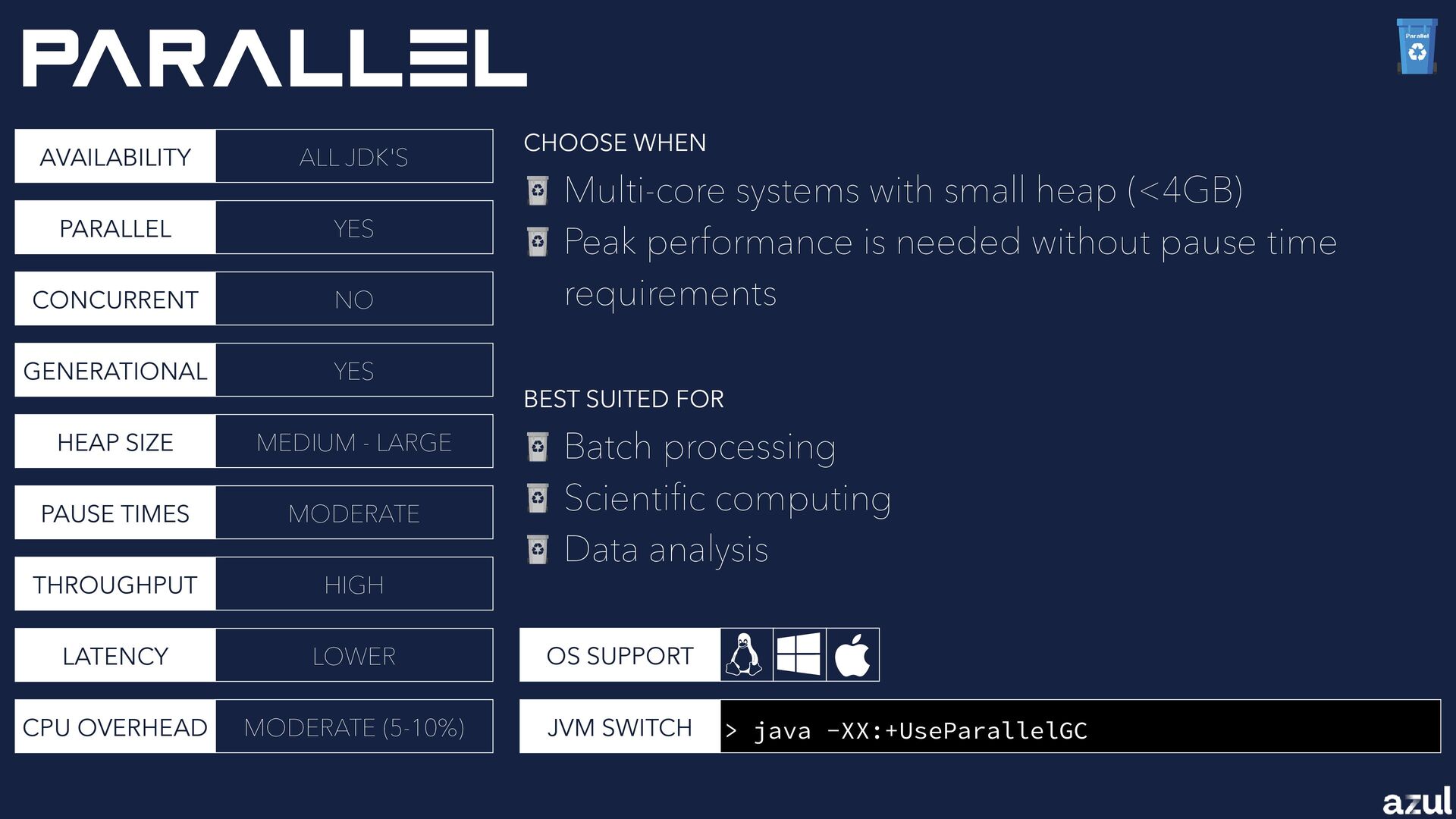
CPU OVERHEAD SERIaL Single core systems with small heap (<4GB) No pause time requirements ALL JDK'S NO NO YES SMALL - MEDIUM LONGER LOW HIGHER LOW (1-5%) JVM SWITCH > java -XX:+UseSerialGC CHOOSE WHEN BEST SUITED FOR Single threaded applications Development environments Microservices on small nodes Serial OS SUPPORT
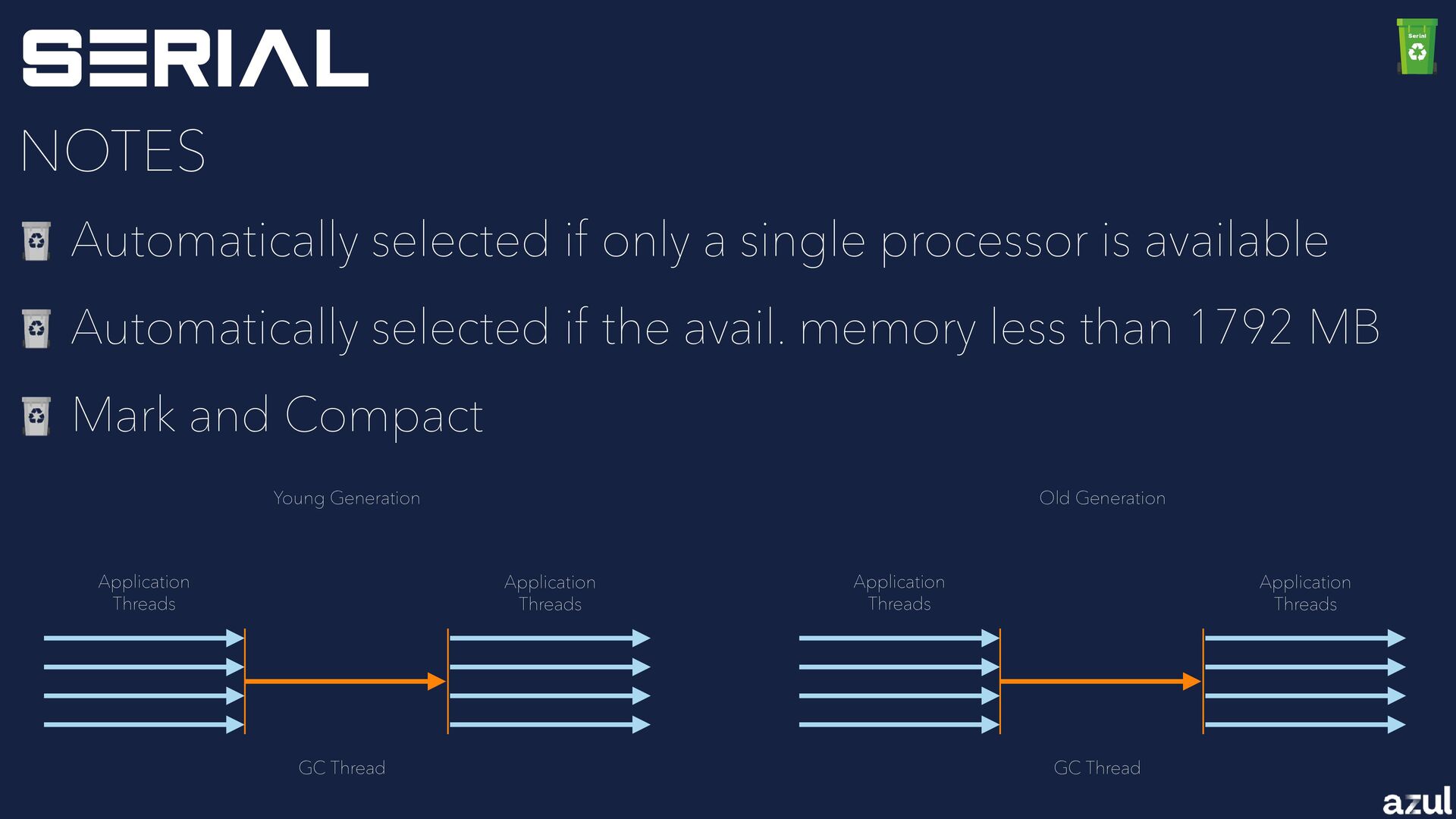
selected if the avail. memory less than 1792 MB Mark and Compact SERIaL NOTES Serial Application Threads Application Threads GC Thread Application Threads Application Threads GC Thread Young Generation Old Generation
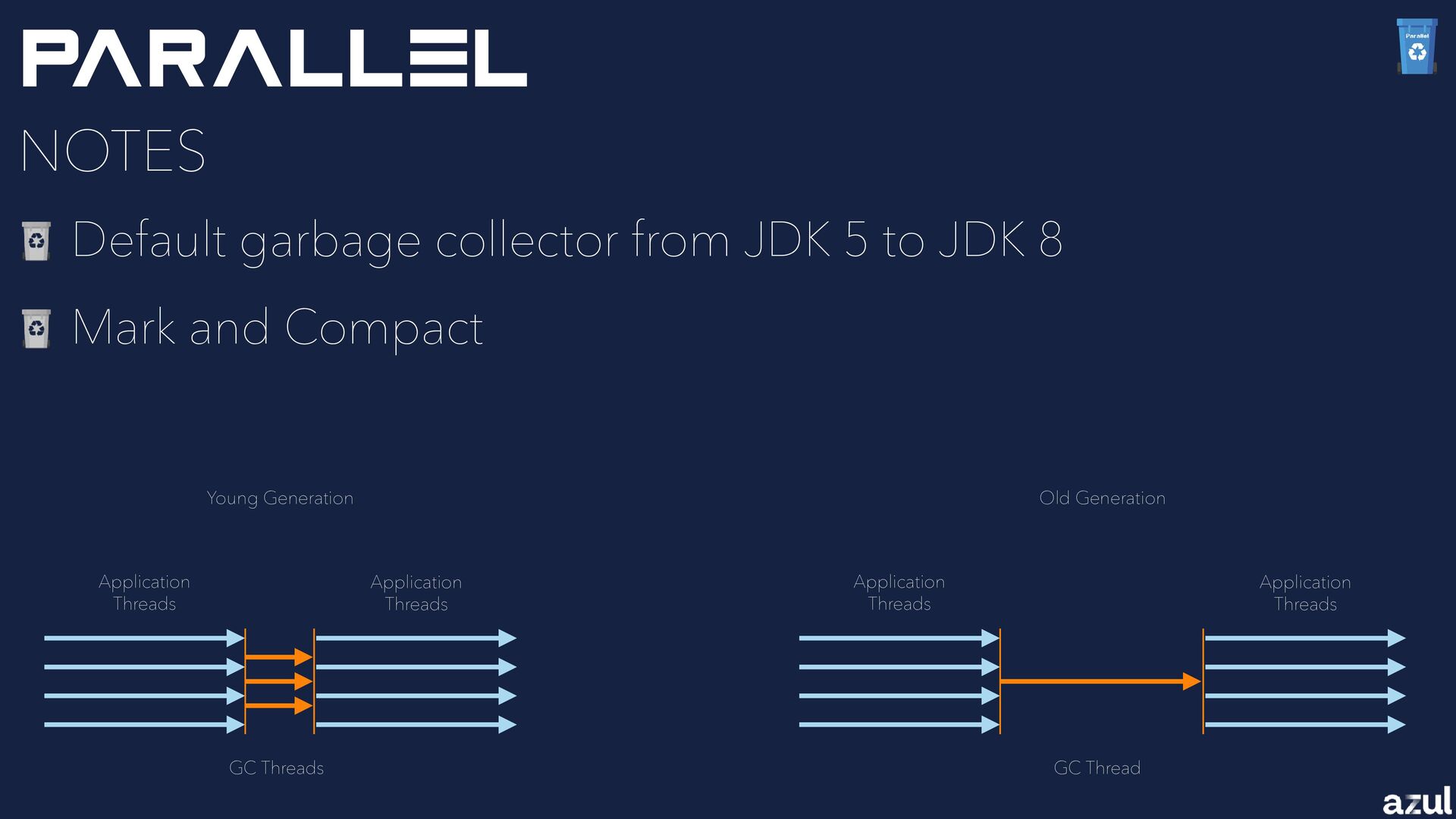
CPU OVERHEAD parallEl Multi-core systems with small heap (<4GB) Peak performance is needed without pause time requirements ALL JDK'S YES NO YES MEDIUM - LARGE MODERATE HIGH LOWER MODERATE (5-10%) JVM SWITCH > java -XX:+UseParallelGC CHOOSE WHEN BEST SUITED FOR Batch processing Scienti fi c computing Data analysis Parallel OS SUPPORT
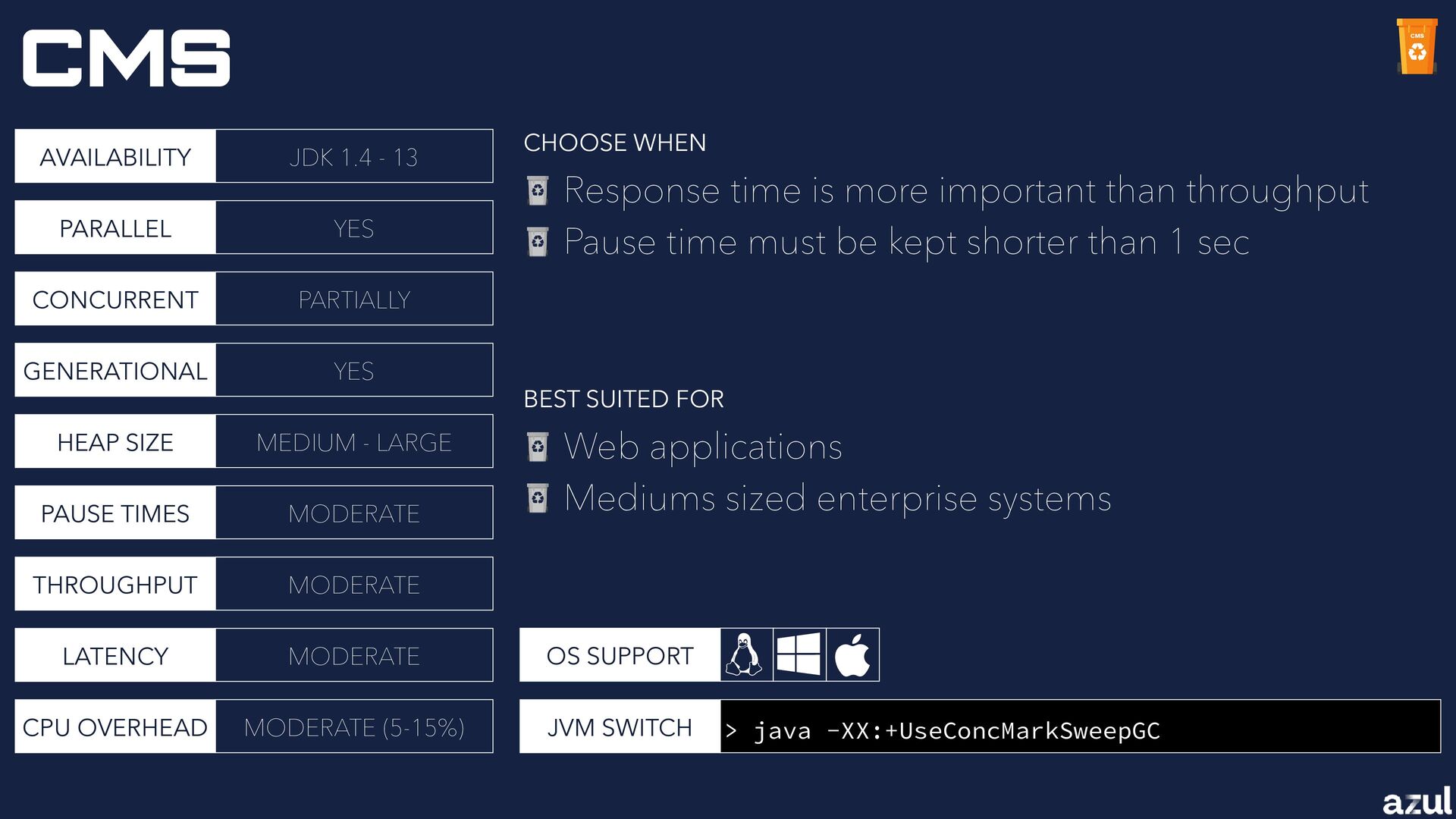
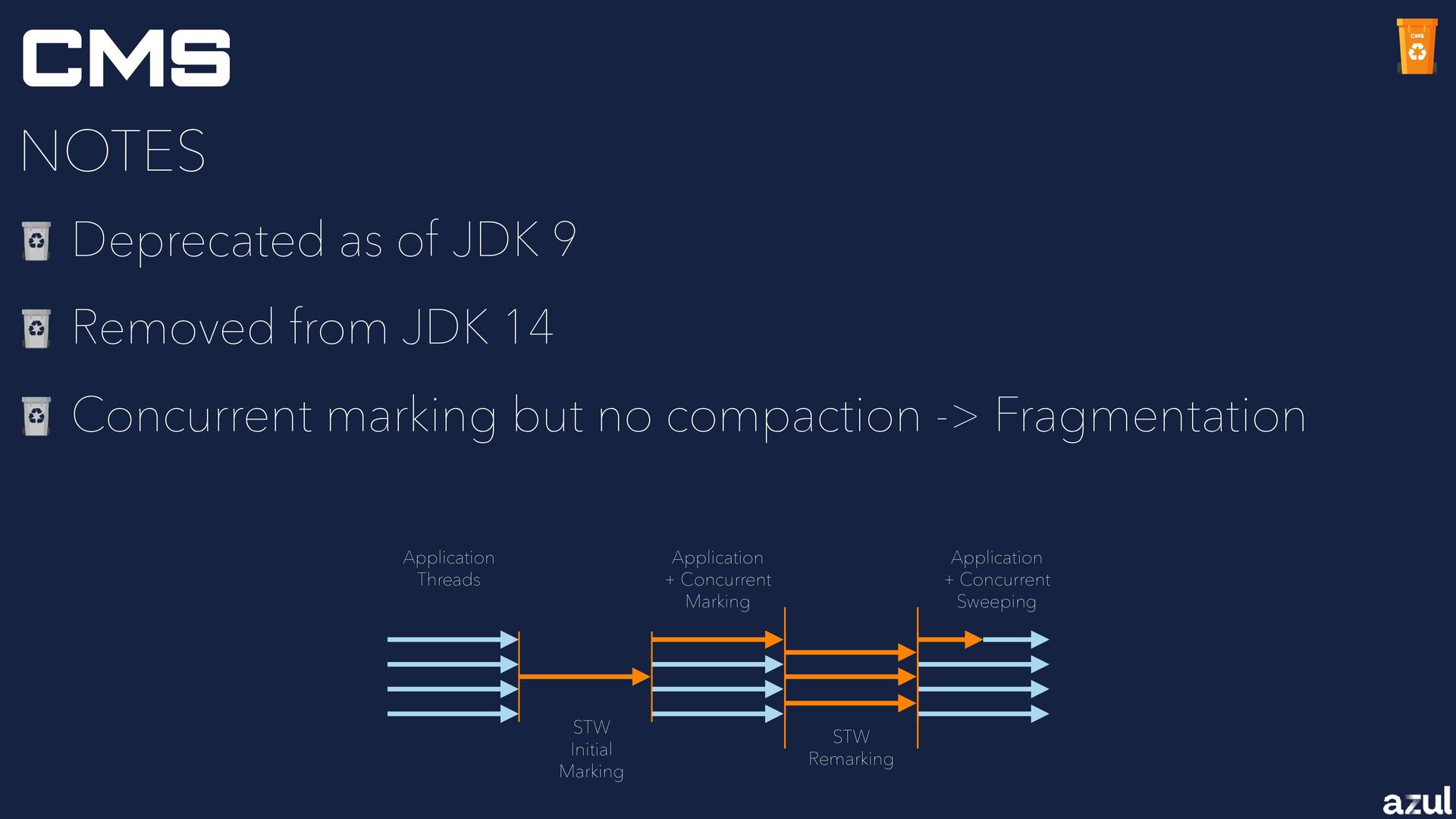
CPU OVERHEAD CMS Response time is more important than throughput Pause time must be kept shorter than 1 sec JDK 1.4 - 13 YES PARTIALLY YES MEDIUM - LARGE MODERATE MODERATE MODERATE MODERATE (5-15%) JVM SWITCH > java -XX:+UseConcMarkSweepGC CHOOSE WHEN BEST SUITED FOR Web applications Mediums sized enterprise systems CMS OS SUPPORT
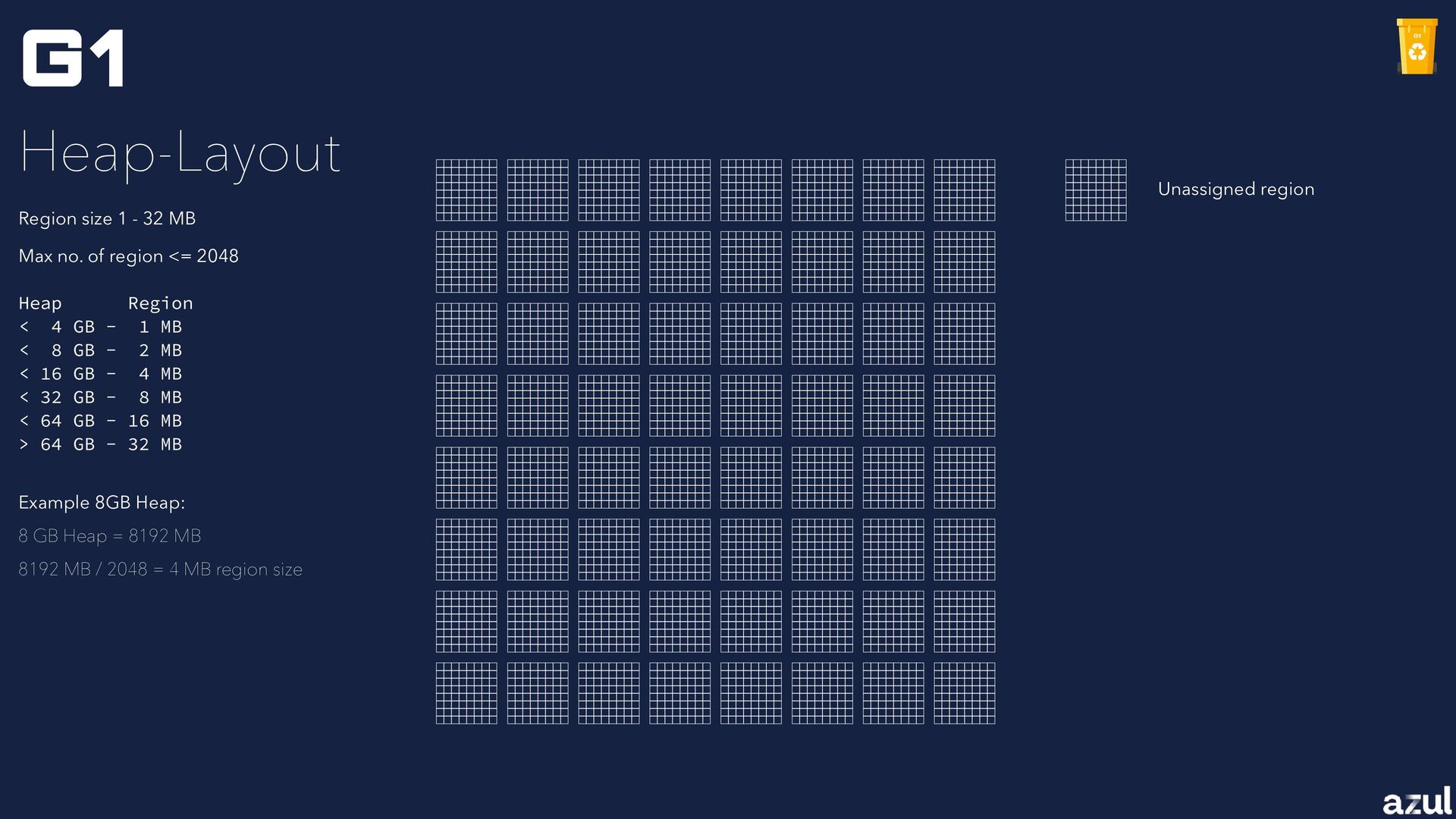
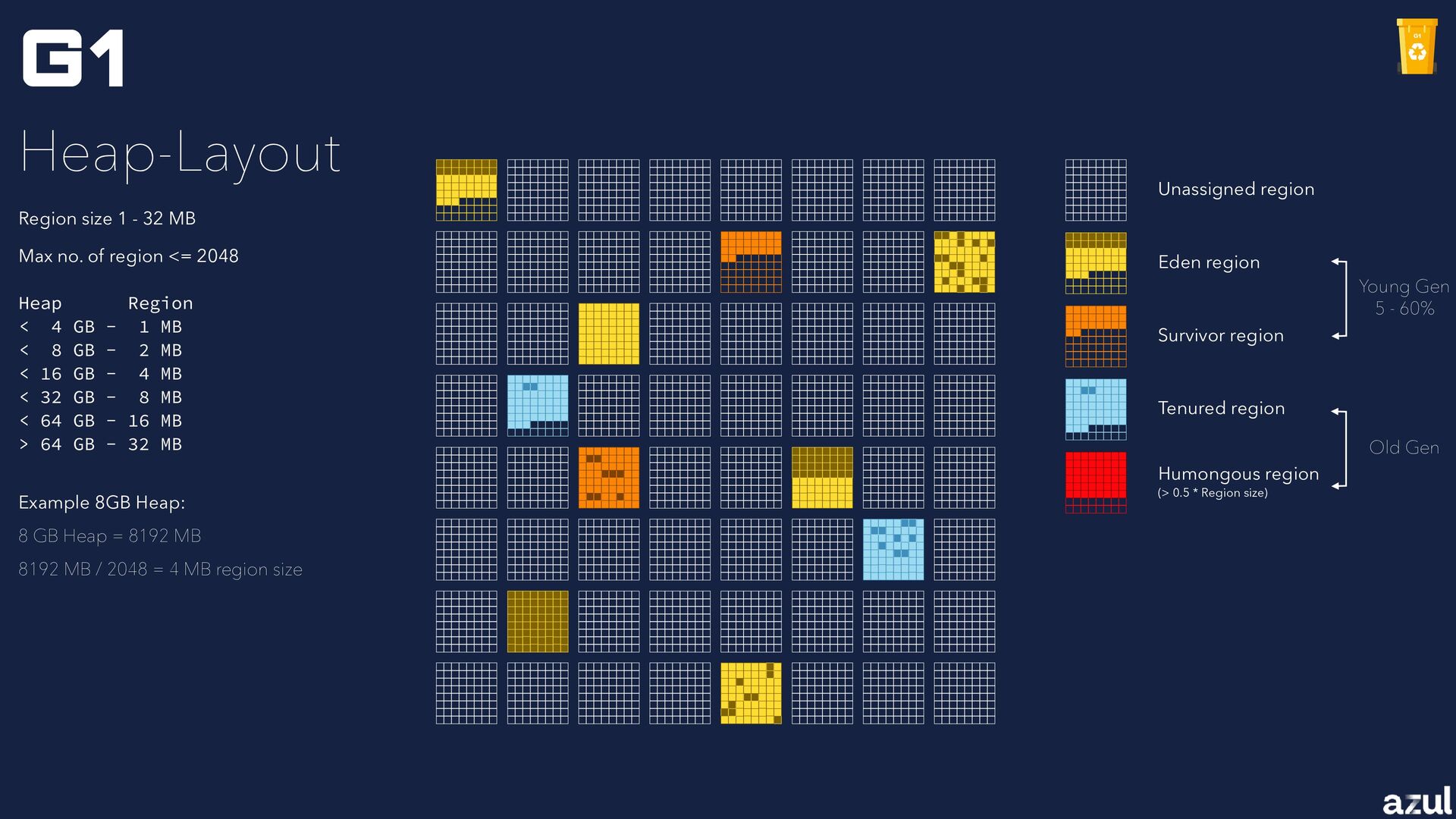
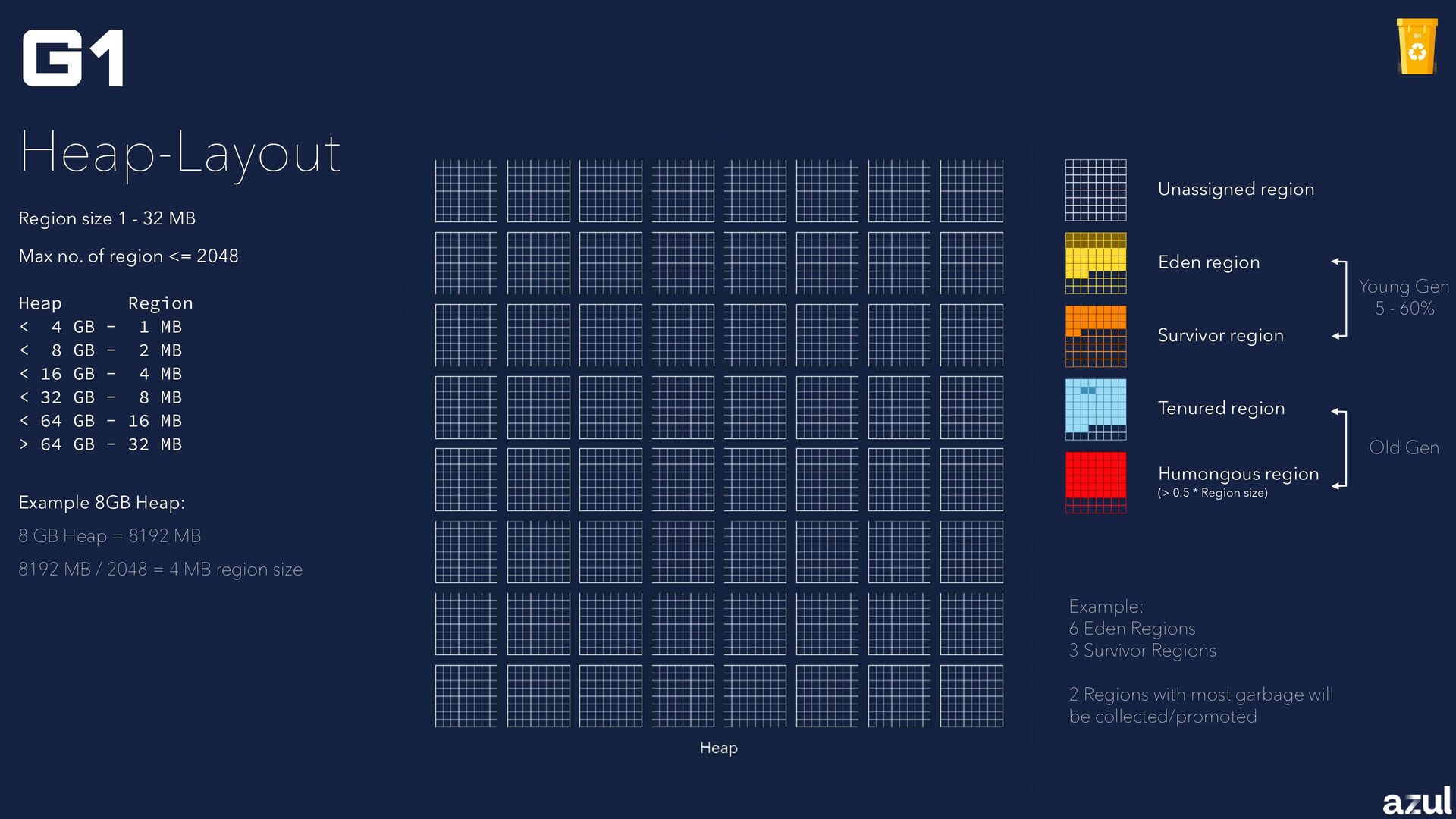
GB Heap = 8192 MB 8192 MB / 2048 = 4 MB region size Heap Region < 4 GB - 1 MB < 8 GB - 2 MB < 16 GB - 4 MB < 32 GB - 8 MB < 64 GB - 16 MB > 64 GB - 32 MB Example 8GB Heap: Region size 1 - 32 MB Example: 6 Eden Regions 3 Survivor Regions 2 Regions with most garbage will be collected/promoted Eden region Survivor region Tenured region Unassigned region Young Gen 5 - 60% Humongous region (> 0.5 * Region size) Old Gen
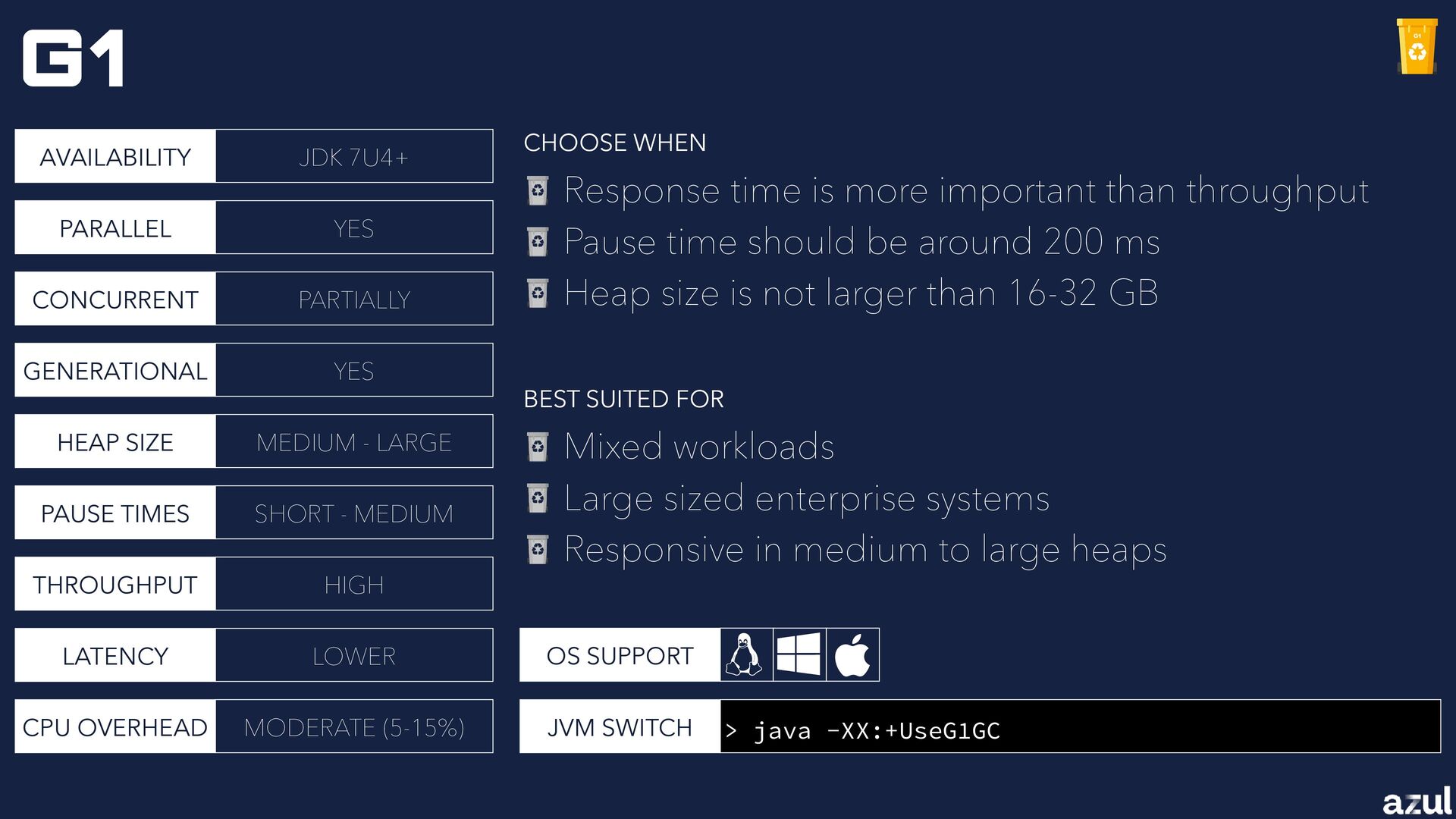
CPU OVERHEAD G1 Response time is more important than throughput Pause time should be around 200 ms Heap size is not larger than 16-32 GB JDK 7U4+ YES PARTIALLY YES MEDIUM - LARGE SHORT - MEDIUM HIGH LOWER MODERATE (5-15%) JVM SWITCH > java -XX:+UseG1GC CHOOSE WHEN BEST SUITED FOR Mixed workloads Large sized enterprise systems Responsive in medium to large heaps G1 OS SUPPORT
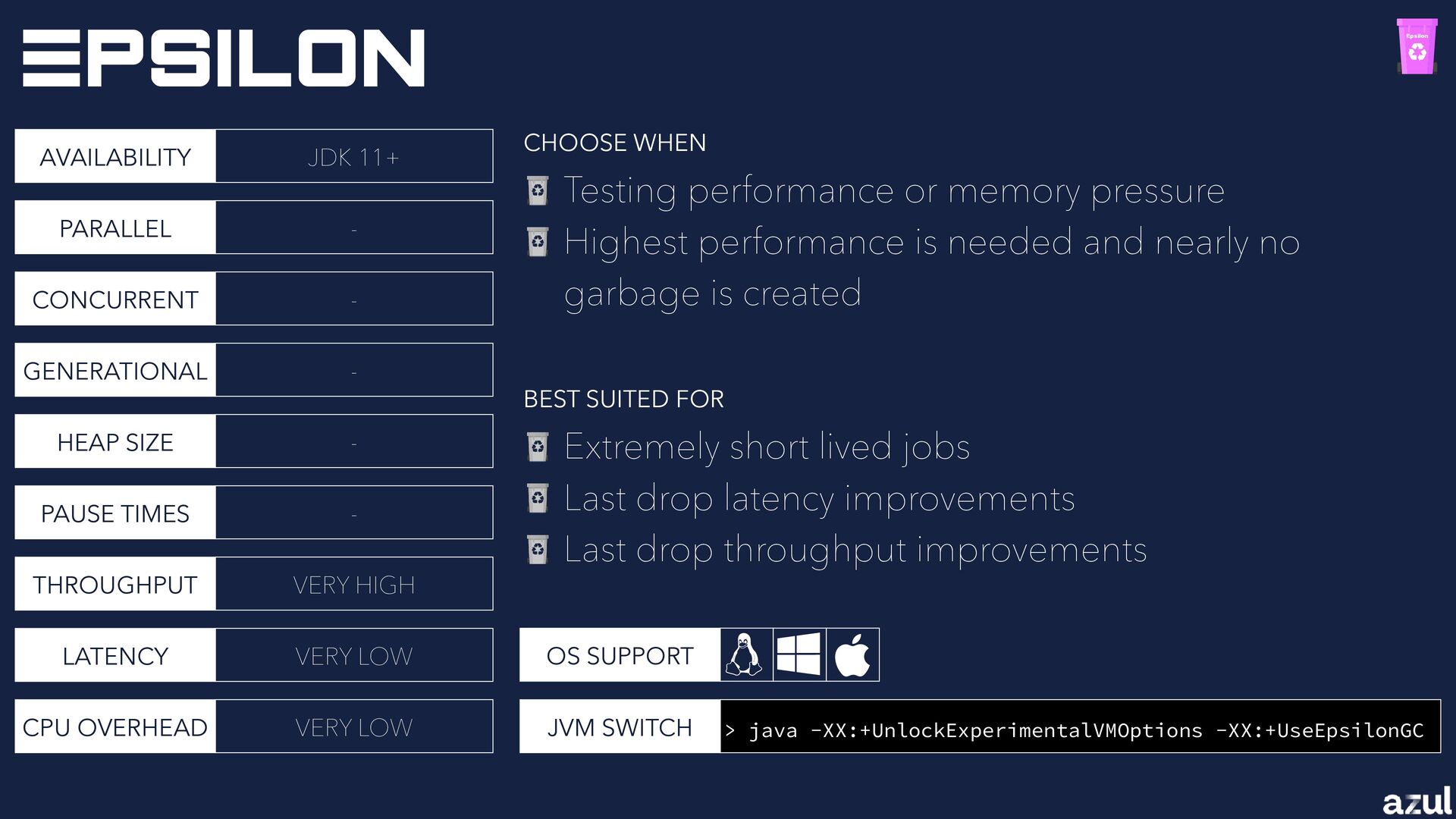
CPU OVERHEAD Epsilon EPSILON JDK 11+ - - - - - VERY HIGH VERY LOW VERY LOW JVM SWITCH > java -XX:+UnlockExperimentalVMOptions -XX:+UseEpsilonGC CHOOSE WHEN BEST SUITED FOR Testing performance or memory pressure Highest performance is needed and nearly no garbage is created Extremely short lived jobs Last drop latency improvements Last drop throughput improvements OS SUPPORT
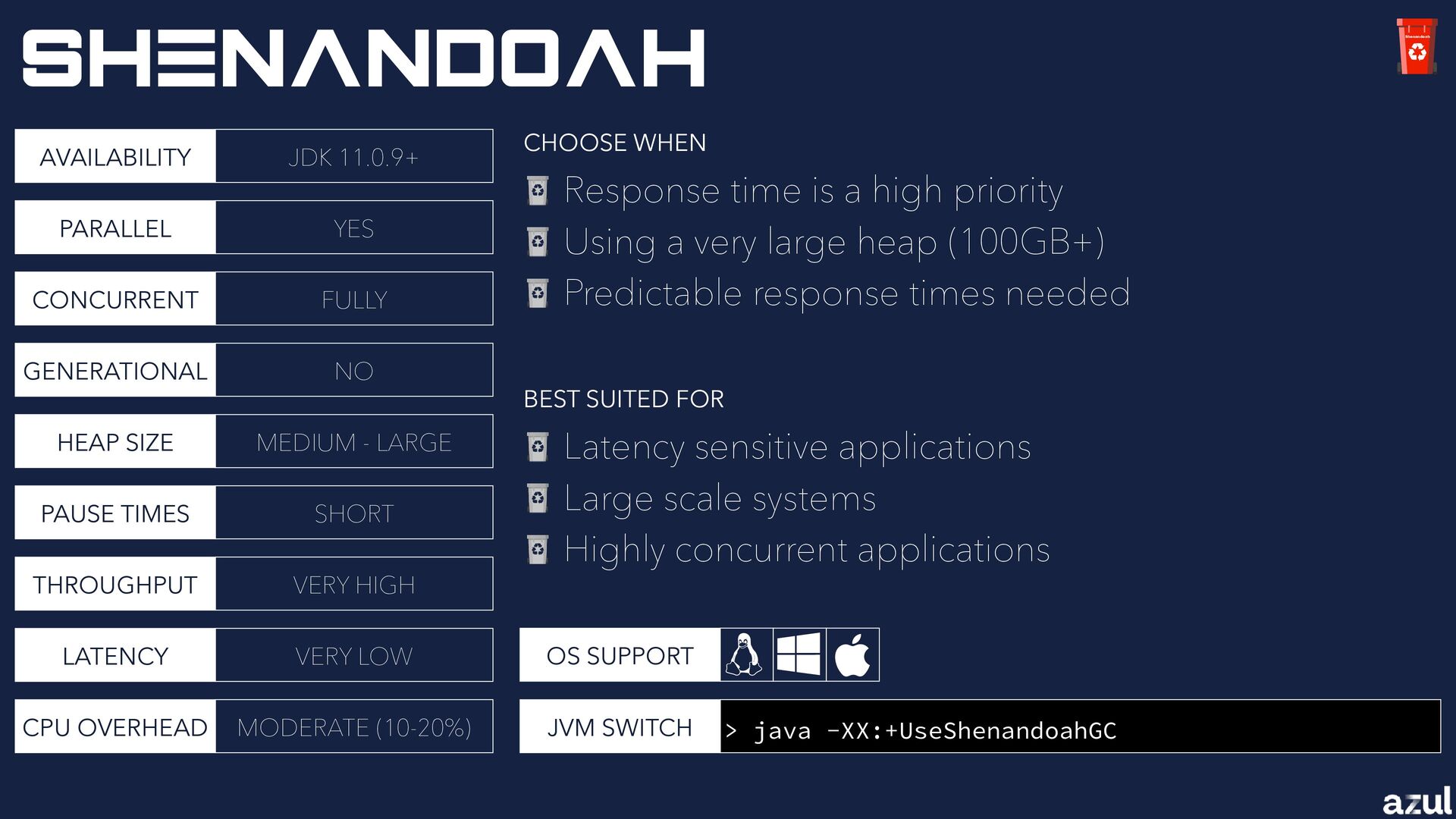
CPU OVERHEAD shEnandOah Response time is a high priority Using a very large heap (100GB+) Predictable response times needed JDK 11.0.9+ YES FULLY NO MEDIUM - LARGE SHORT VERY HIGH VERY LOW MODERATE (10-20%) JVM SWITCH > java -XX:+UseShenandoahGC CHOOSE WHEN BEST SUITED FOR Latency sensitive applications Large scale systems Highly concurrent applications Shenandoah OS SUPPORT
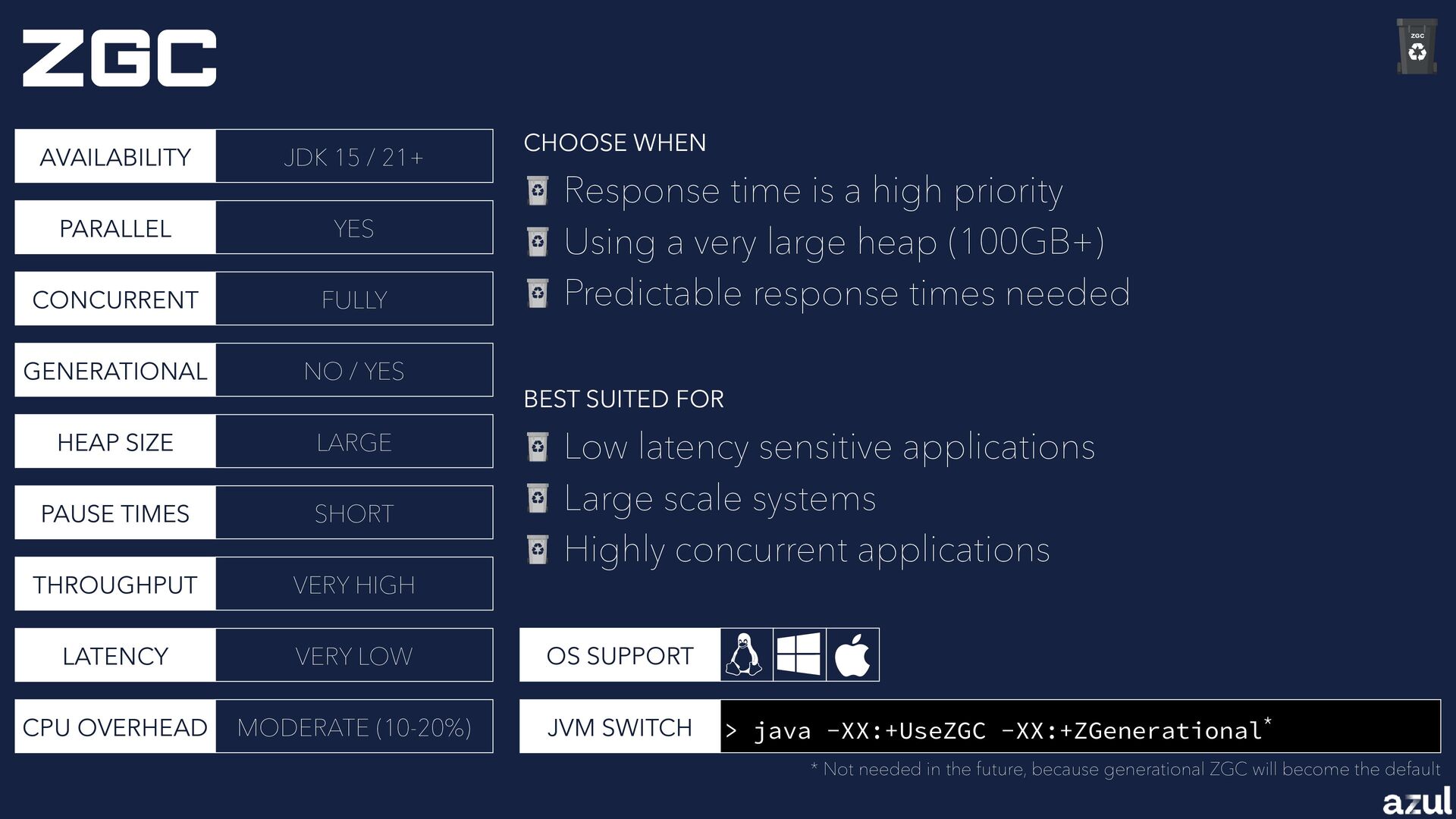
CPU OVERHEAD ZGC Response time is a high priority Using a very large heap (100GB+) Predictable response times needed JDK 15 / 21+ YES FULLY NO / YES LARGE SHORT VERY HIGH VERY LOW MODERATE (10-20%) JVM SWITCH > java -XX:+UseZGC -XX:+ZGenerational* CHOOSE WHEN BEST SUITED FOR Low latency sensitive applications Large scale systems Highly concurrent applications ZGC OS SUPPORT * Not needed in the future, because generational ZGC will become the default
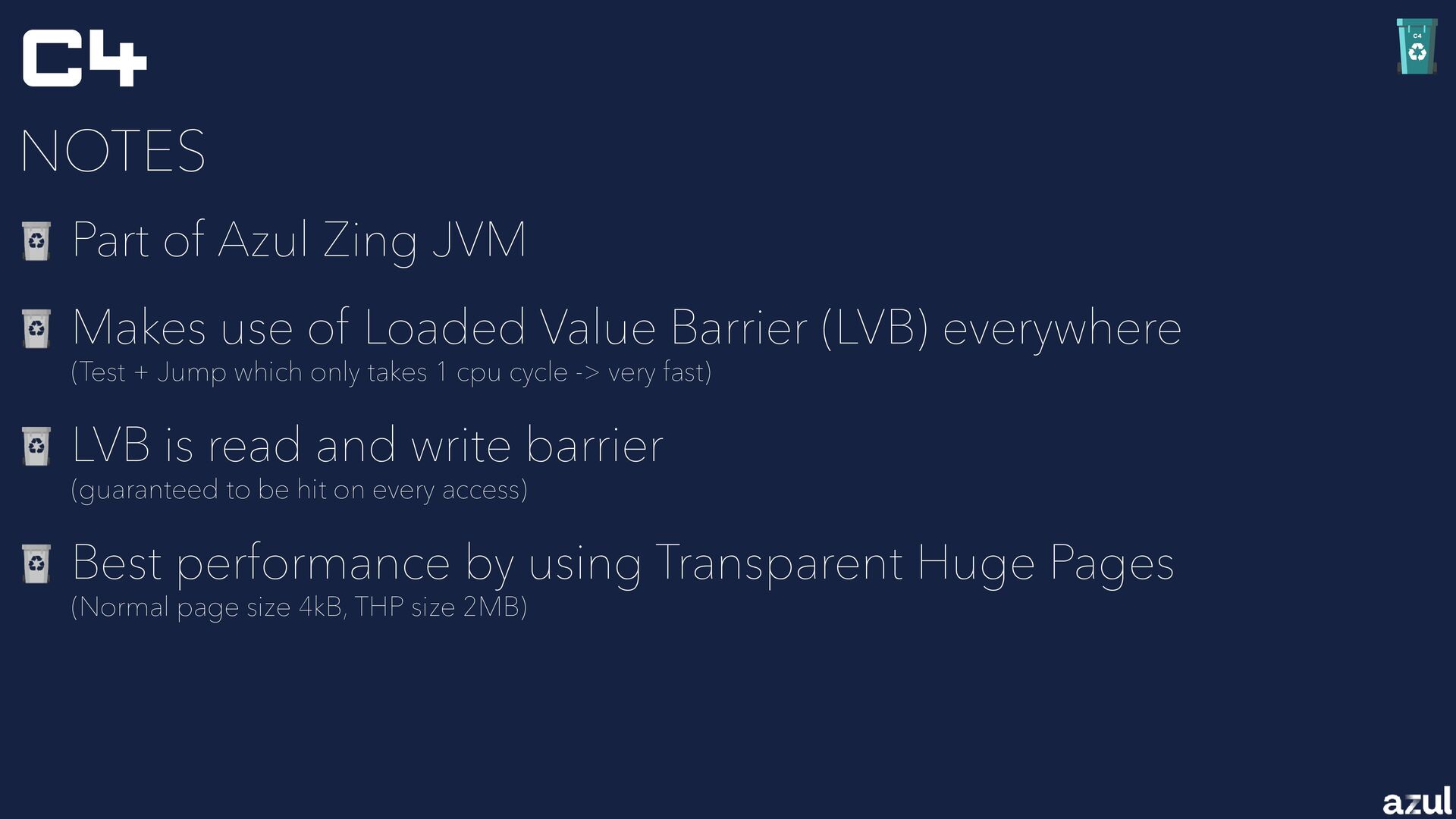
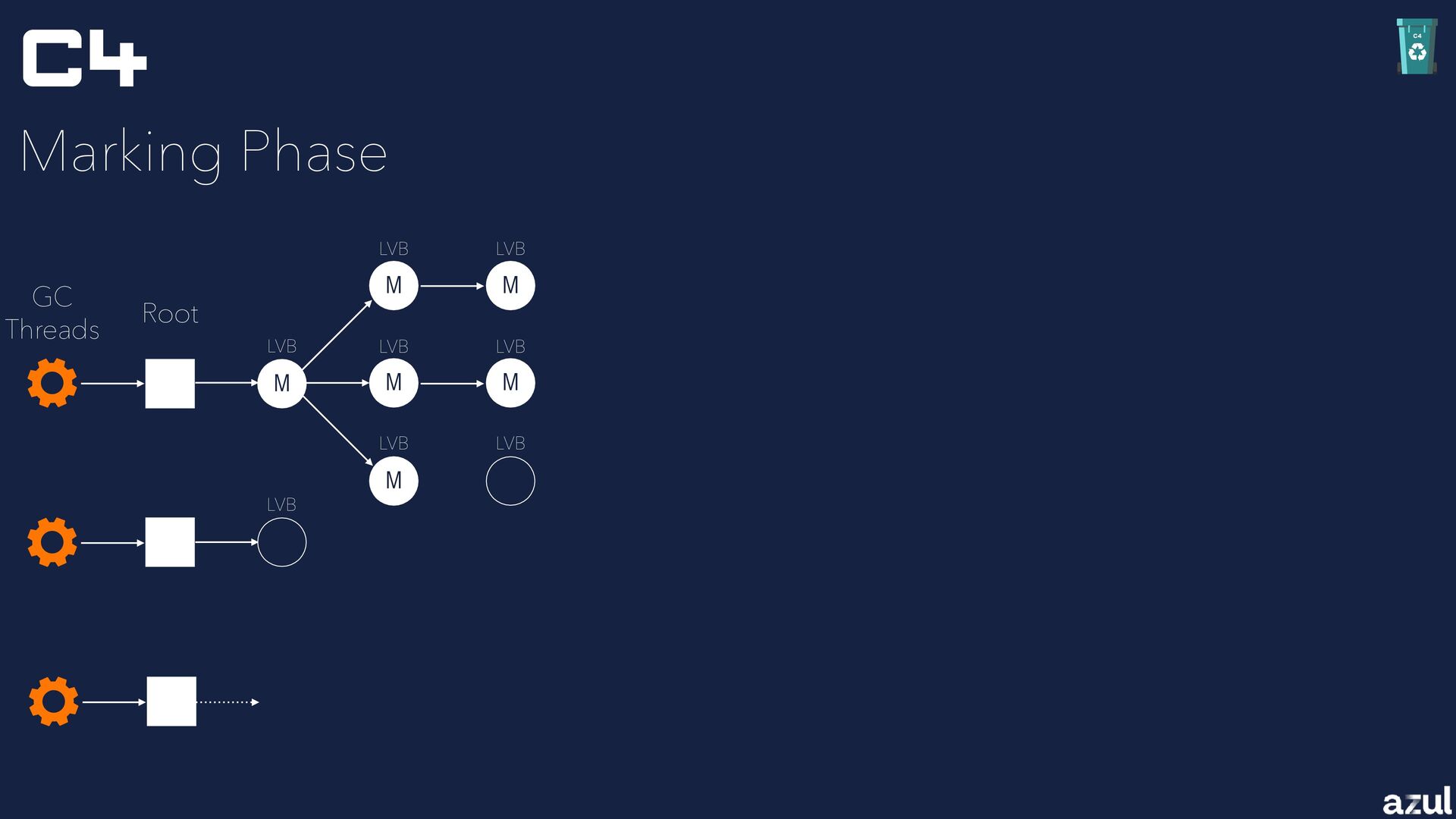
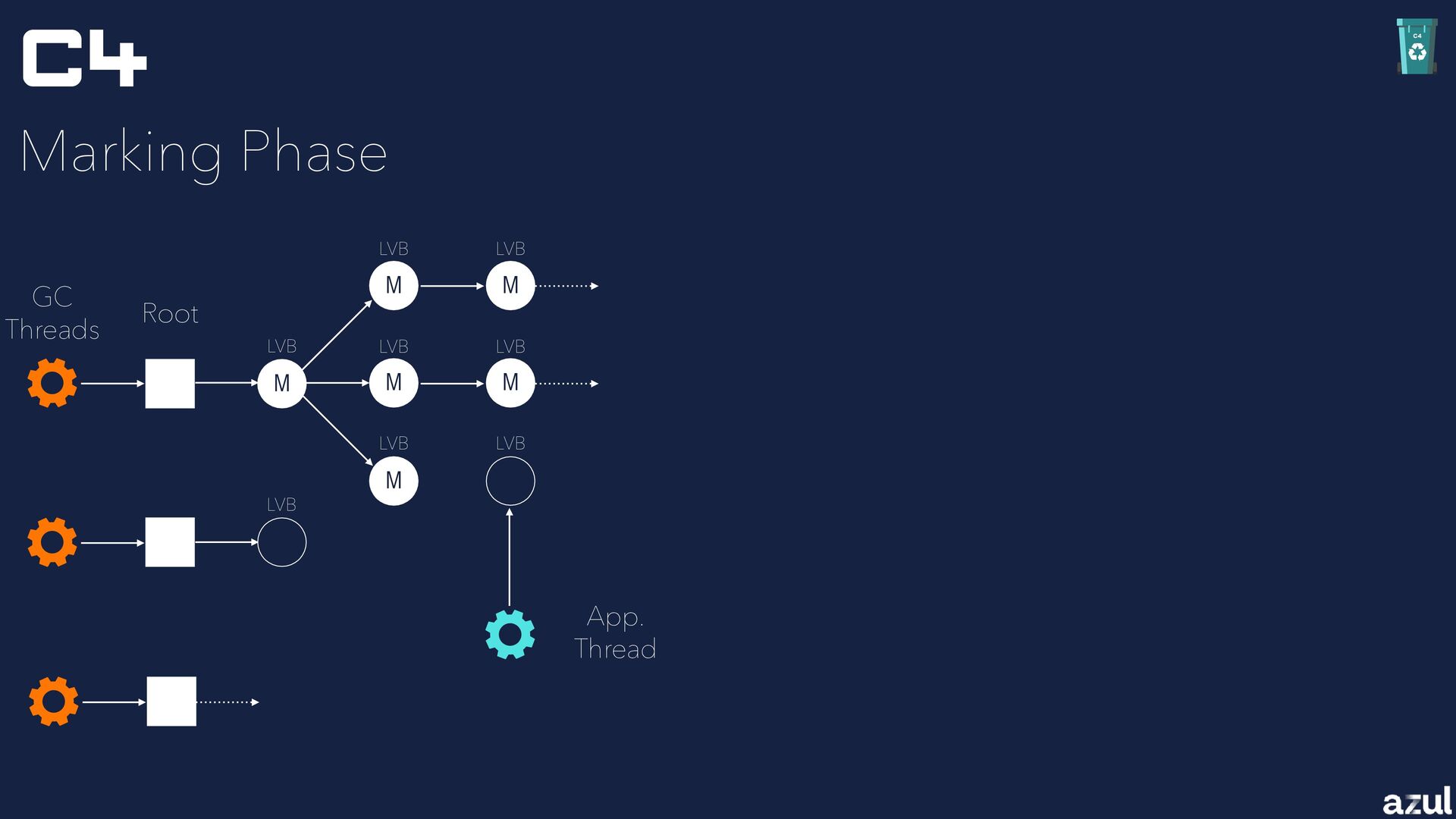
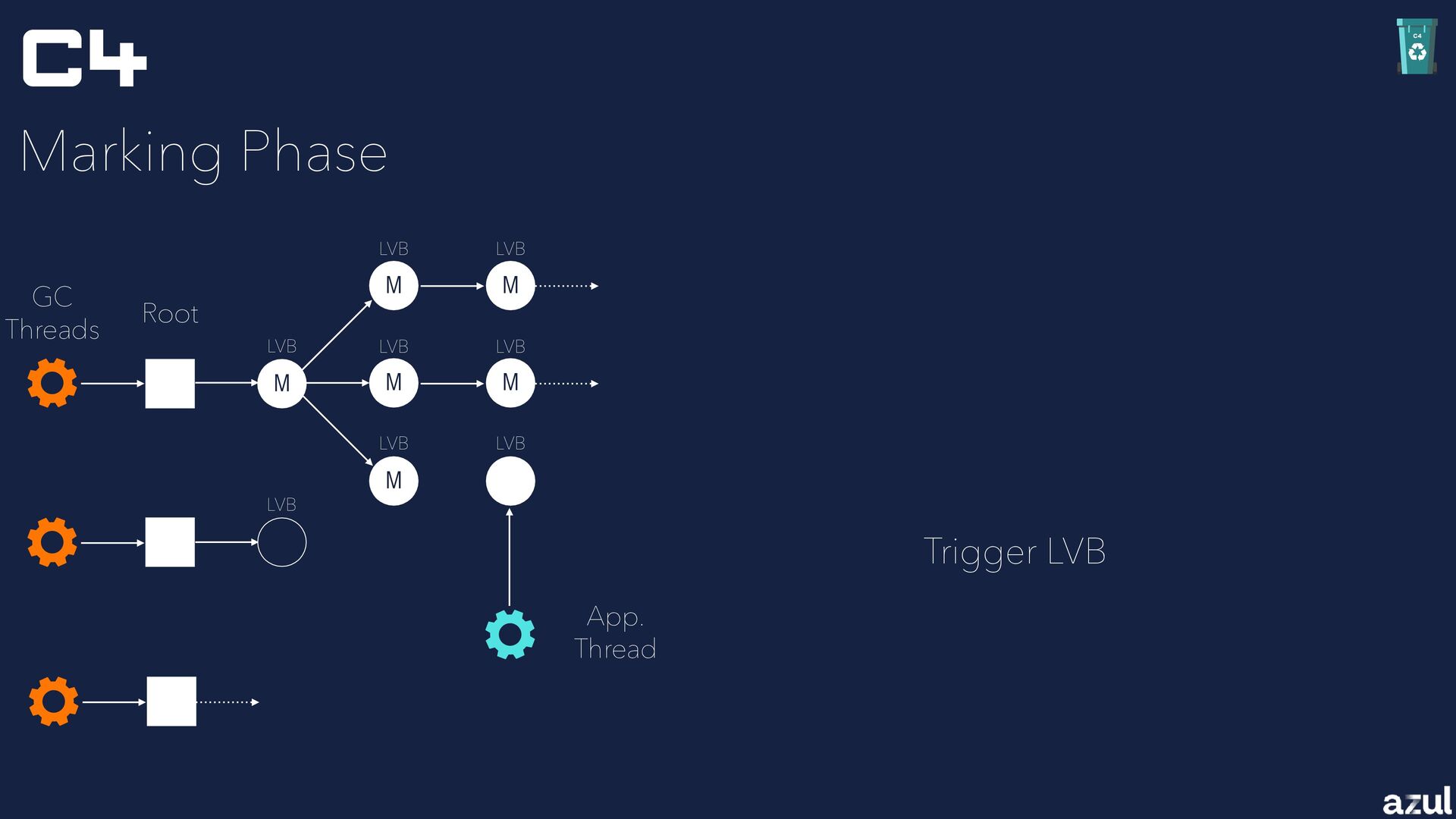
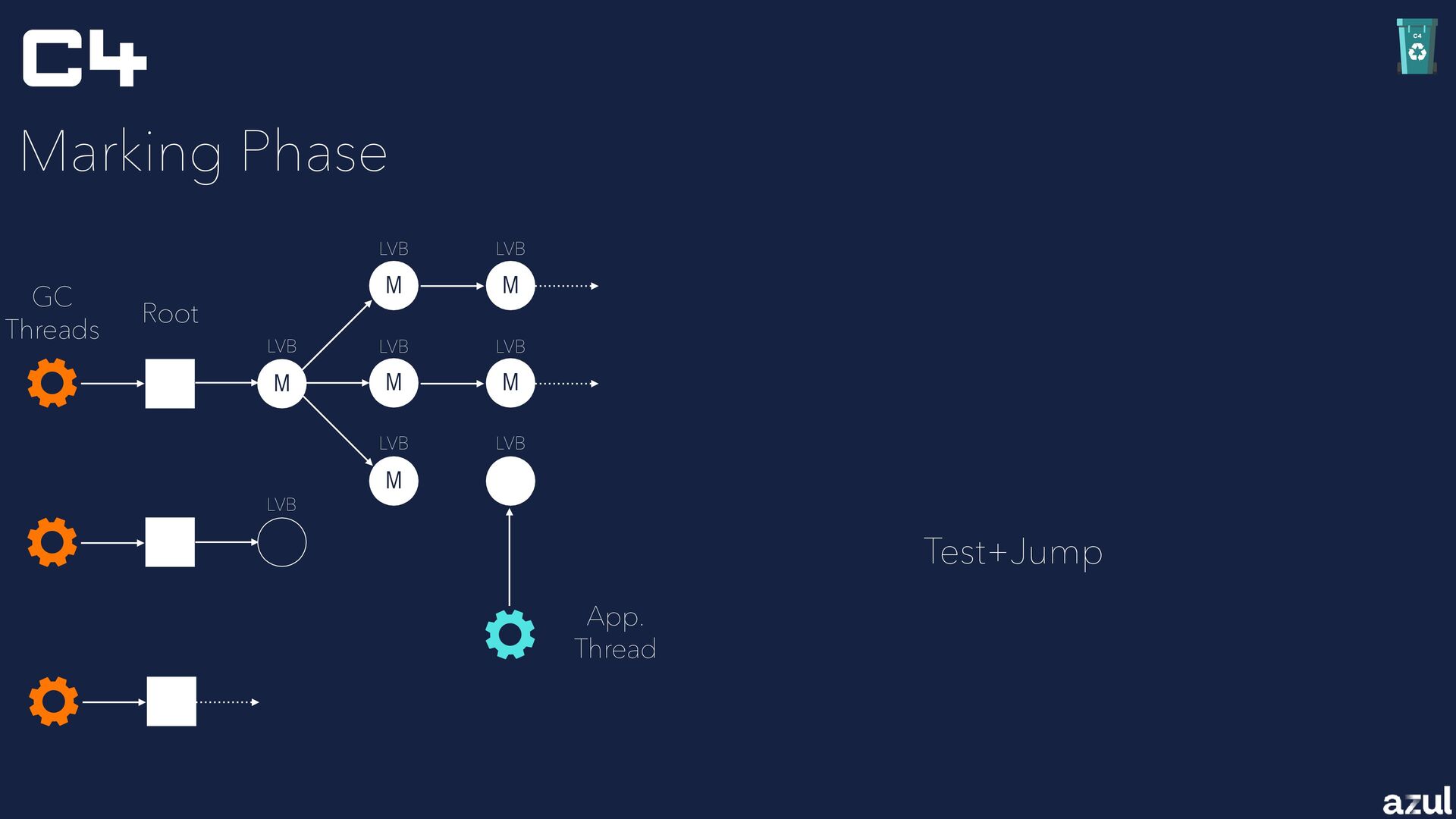
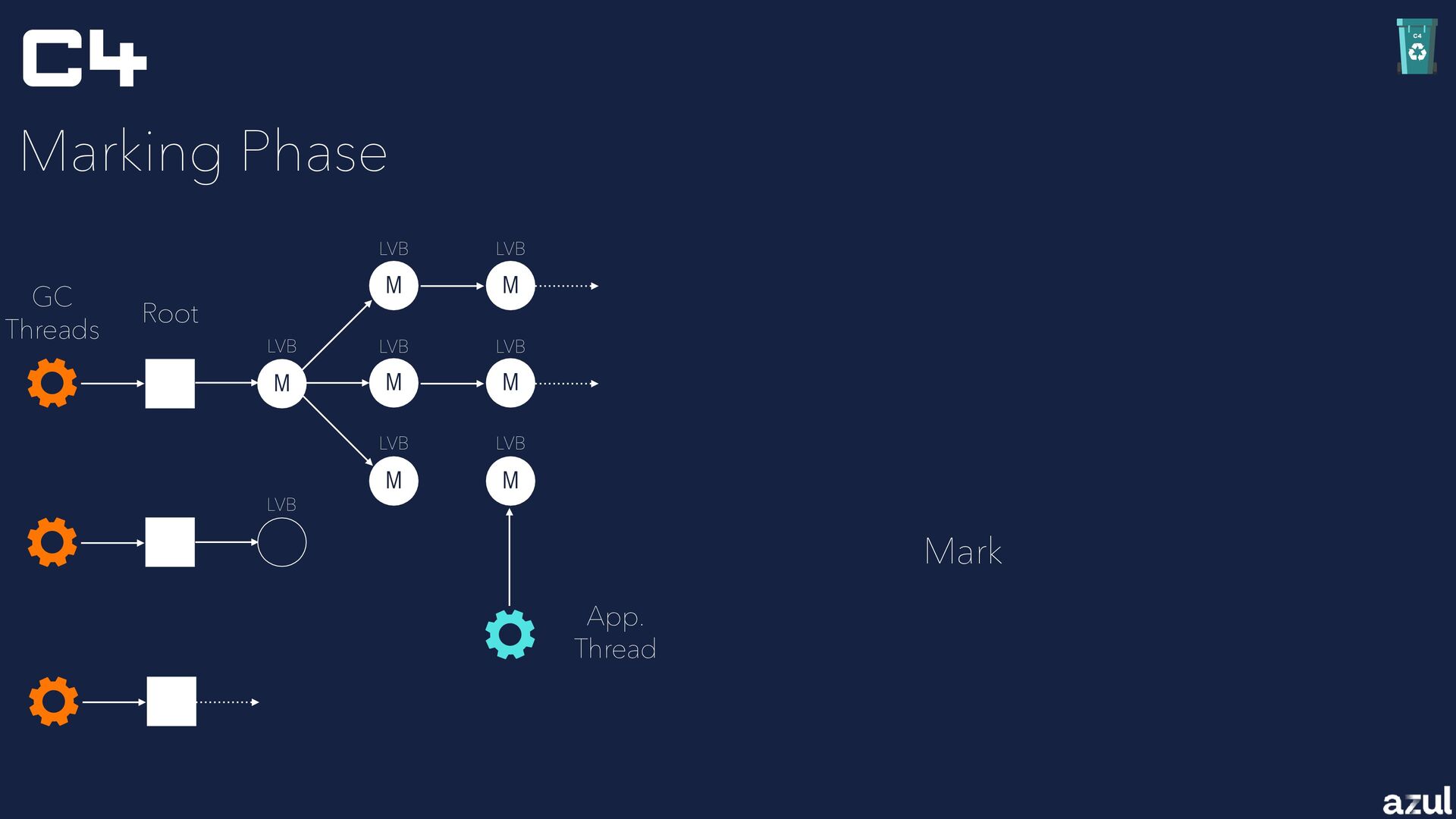
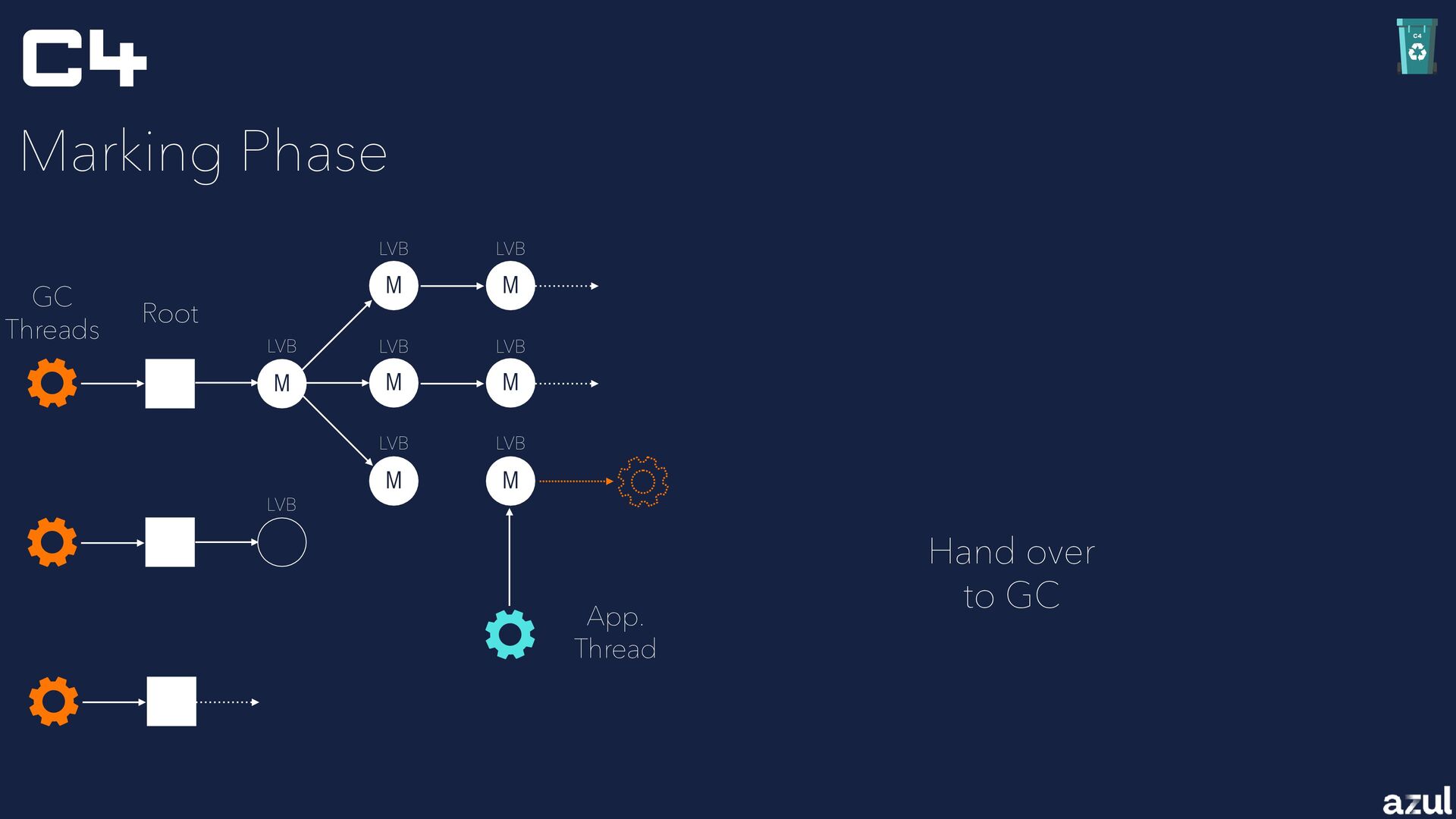
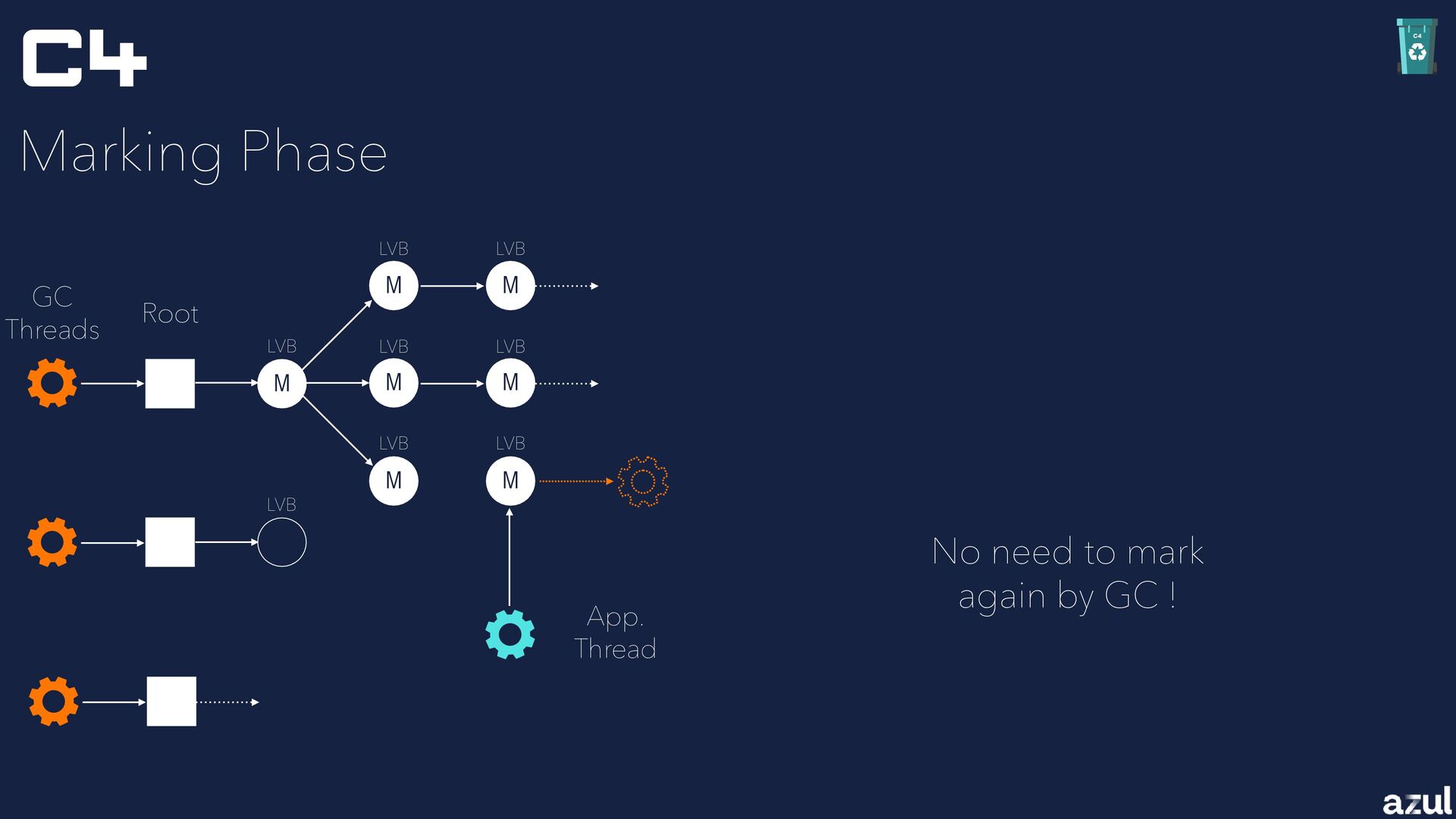
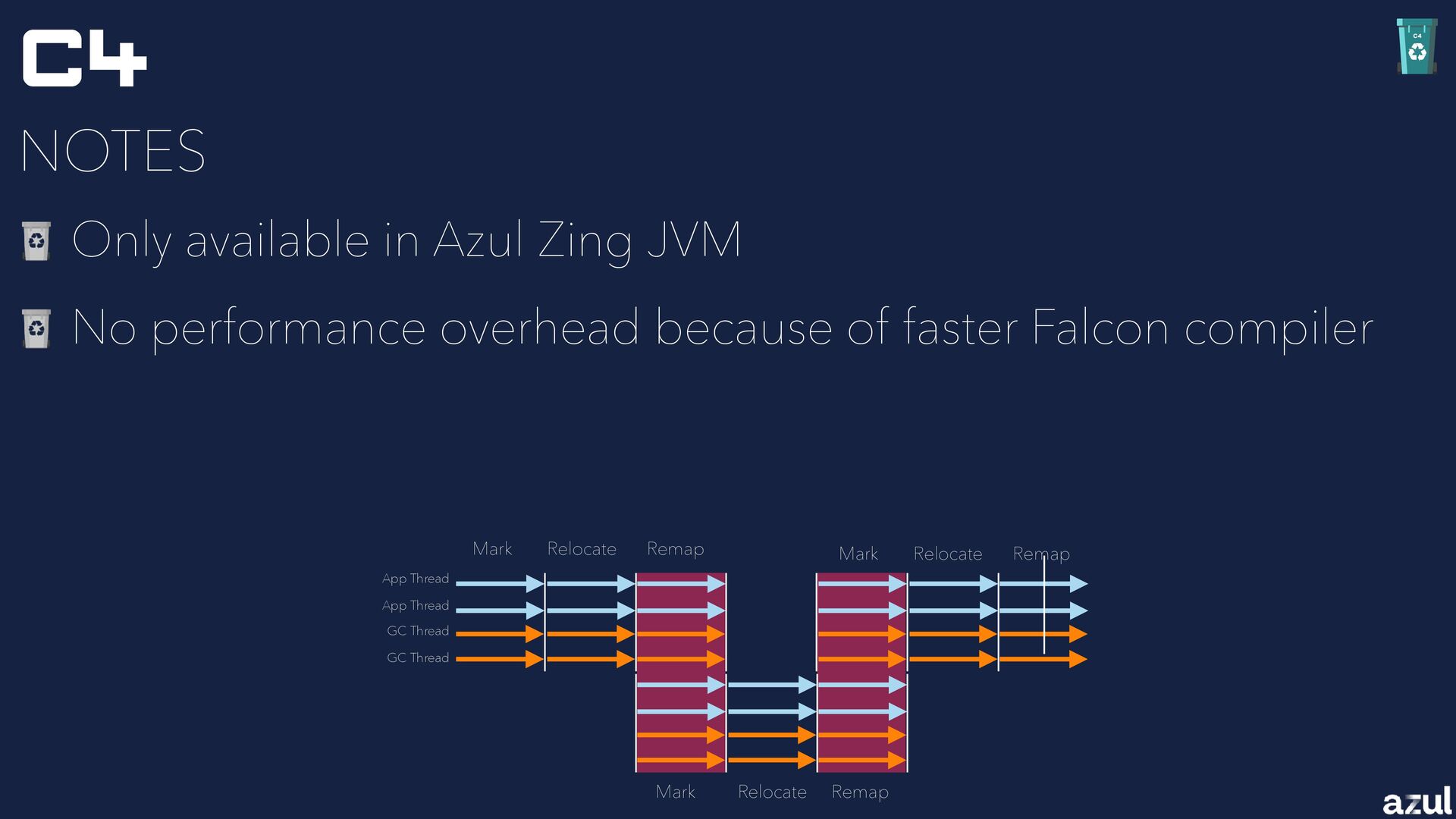
Barrier (LVB) everywhere (Test + Jump which only takes 1 cpu cycle -> very fast) LVB is read and write barrier (guaranteed to be hit on every access) Best performance by using Transparent Huge Pages (Normal page size 4kB, THP size 2MB) C4 NOTES C4
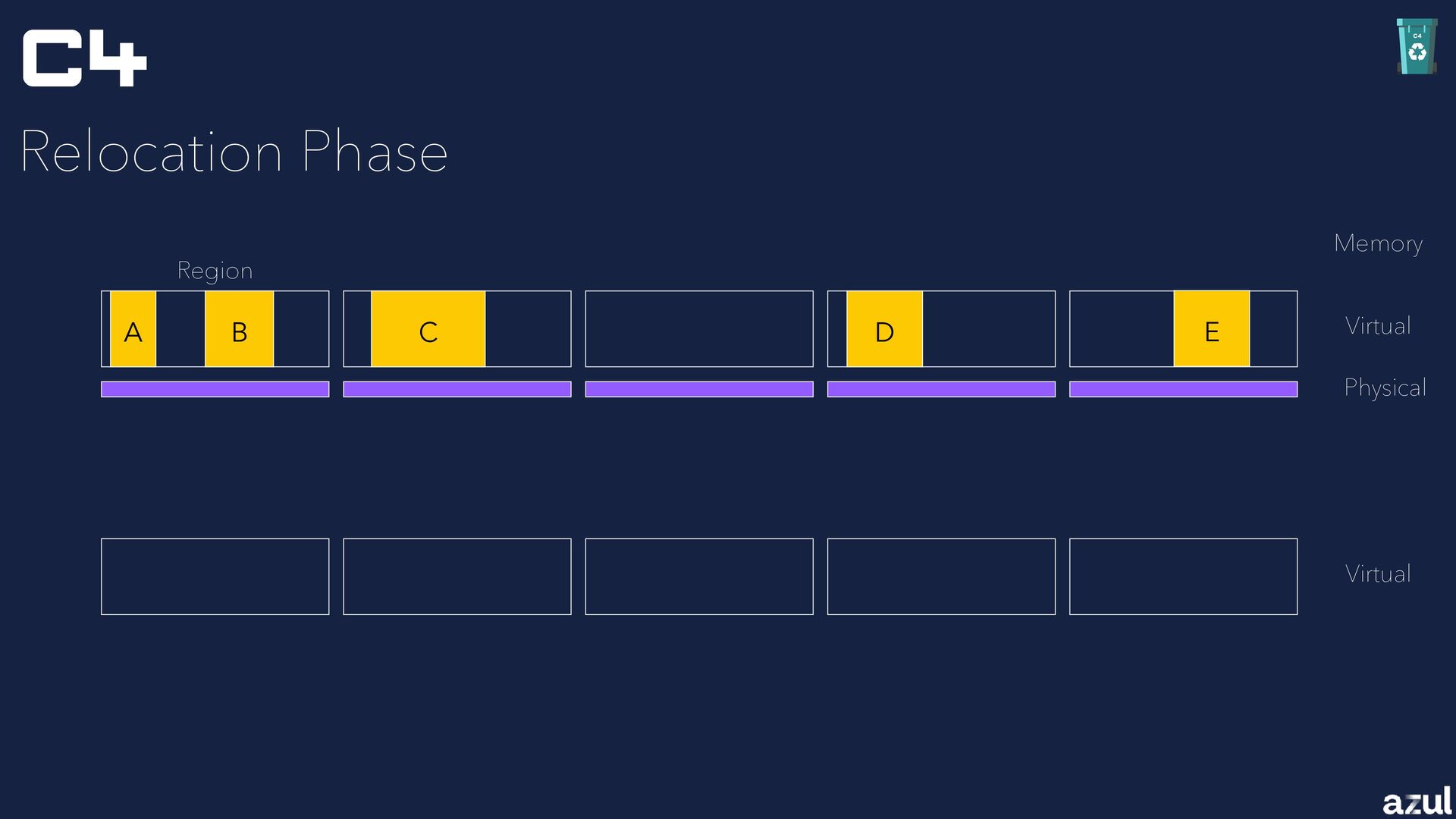
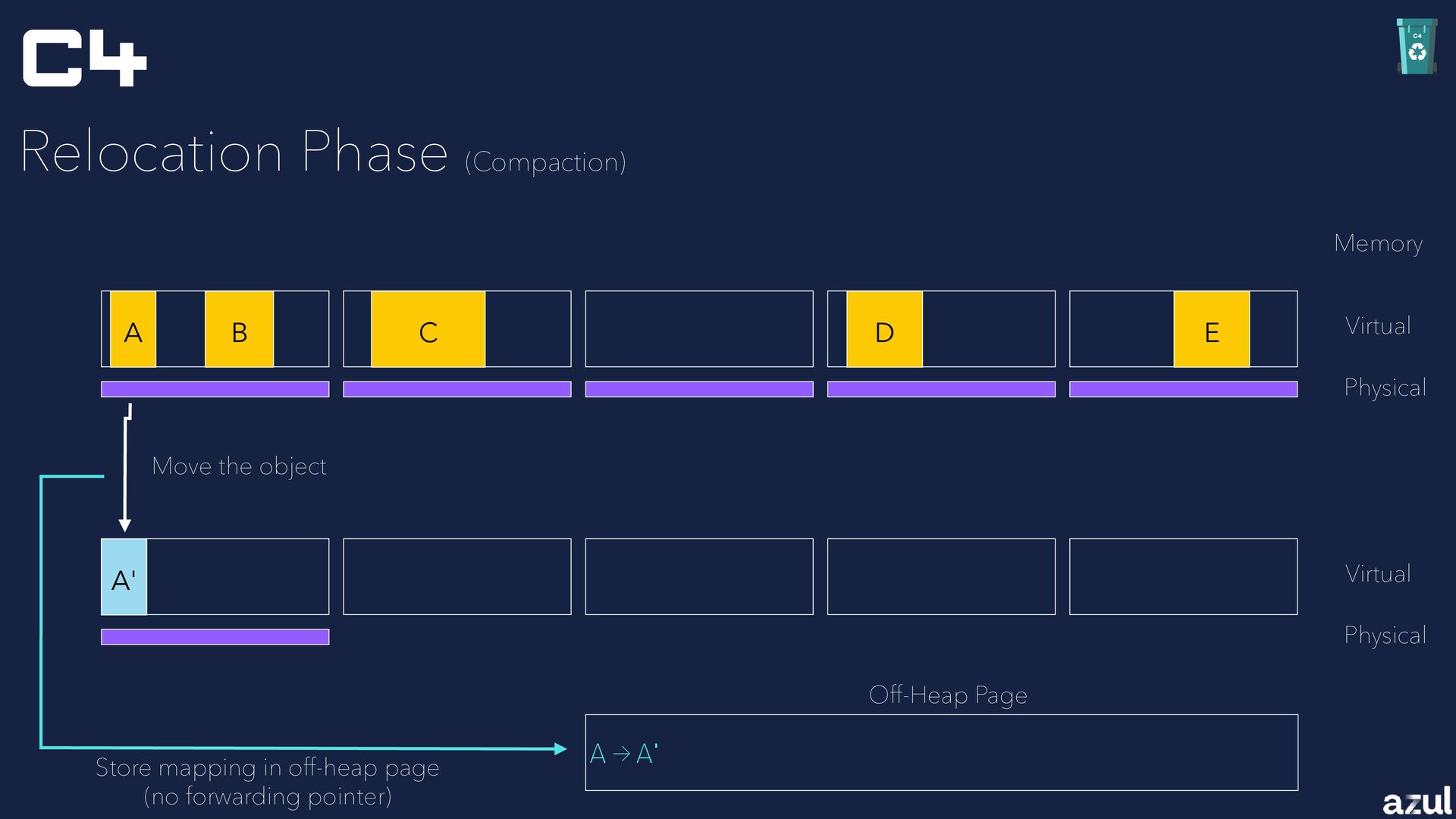
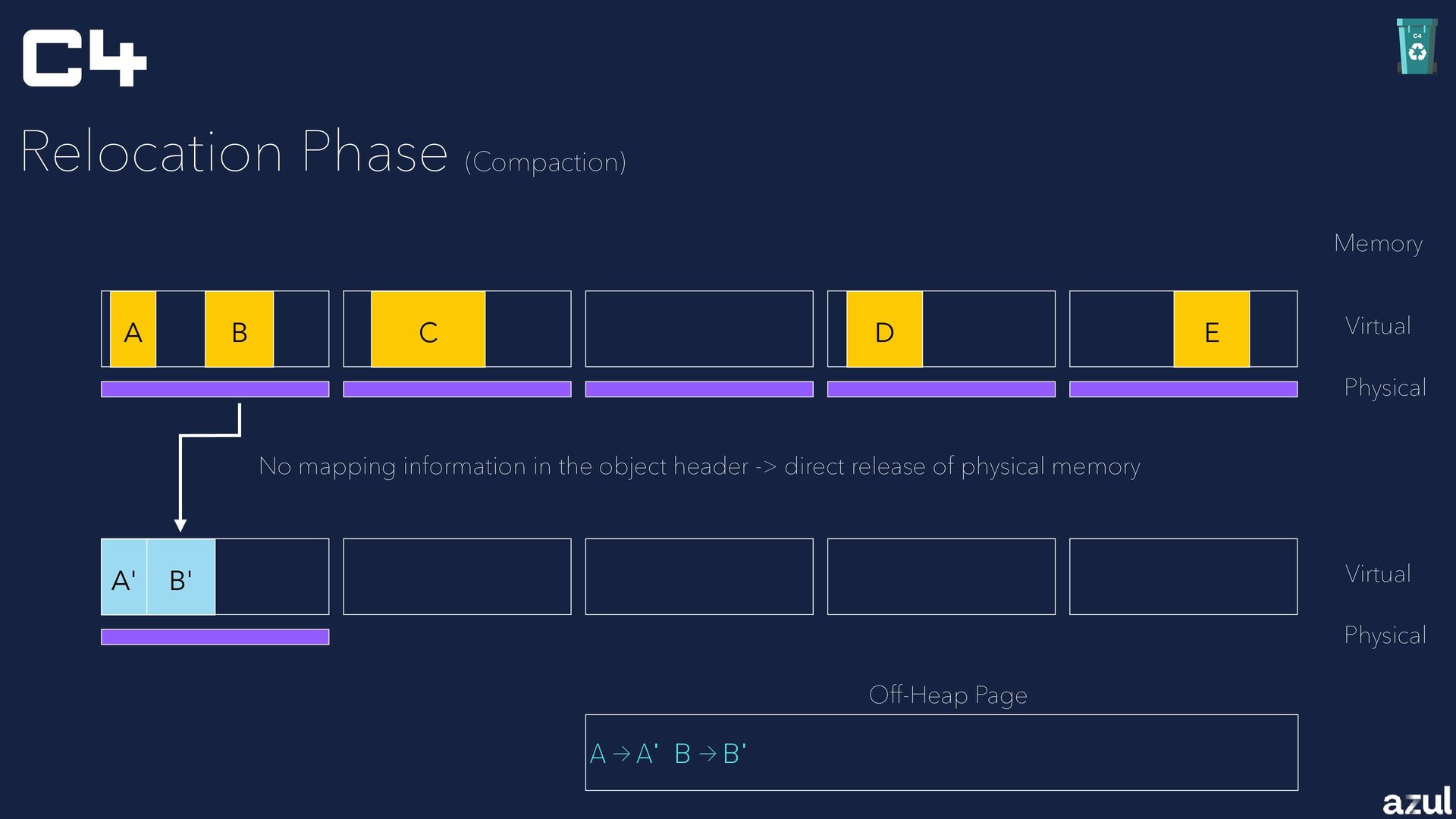
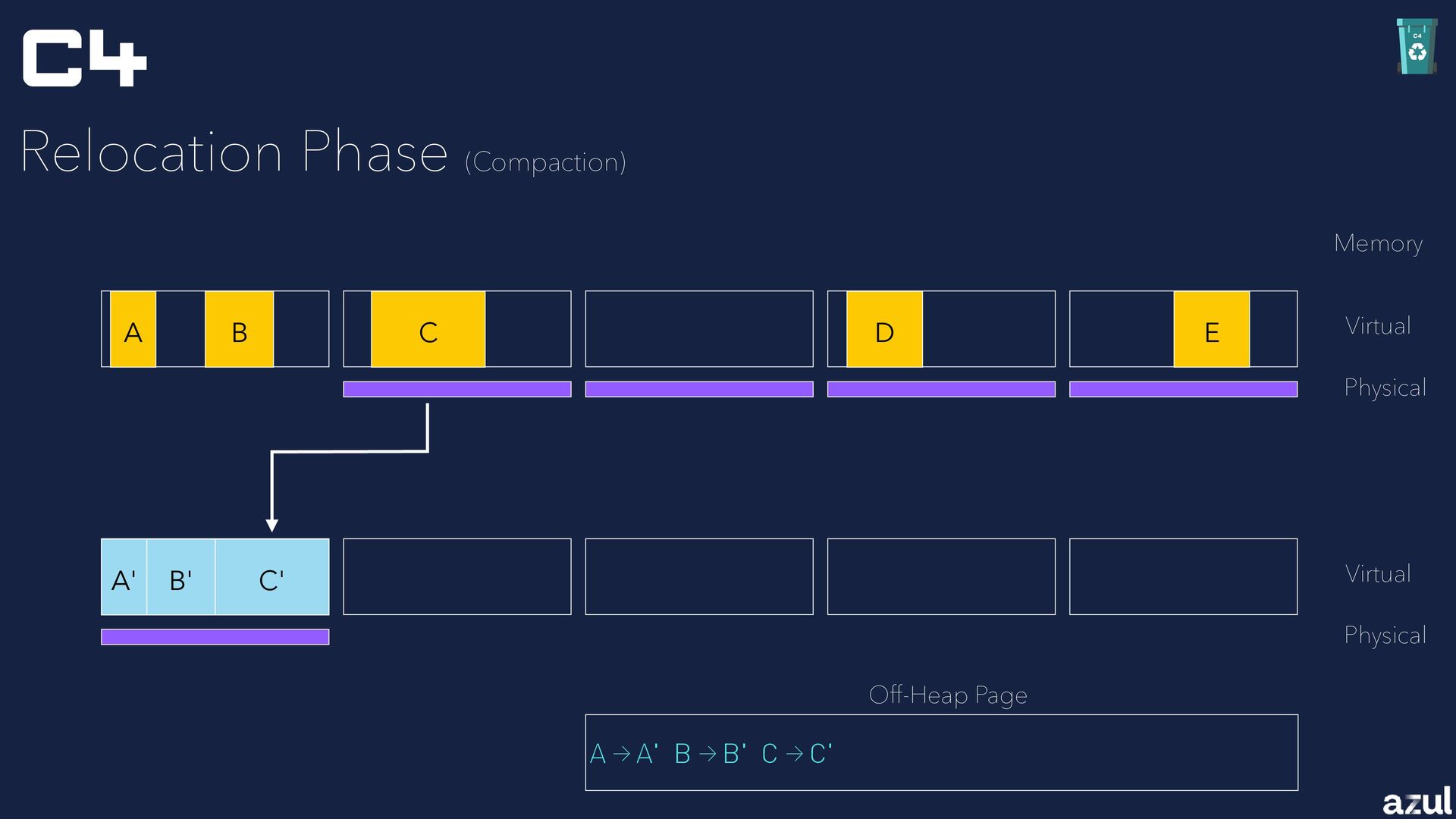
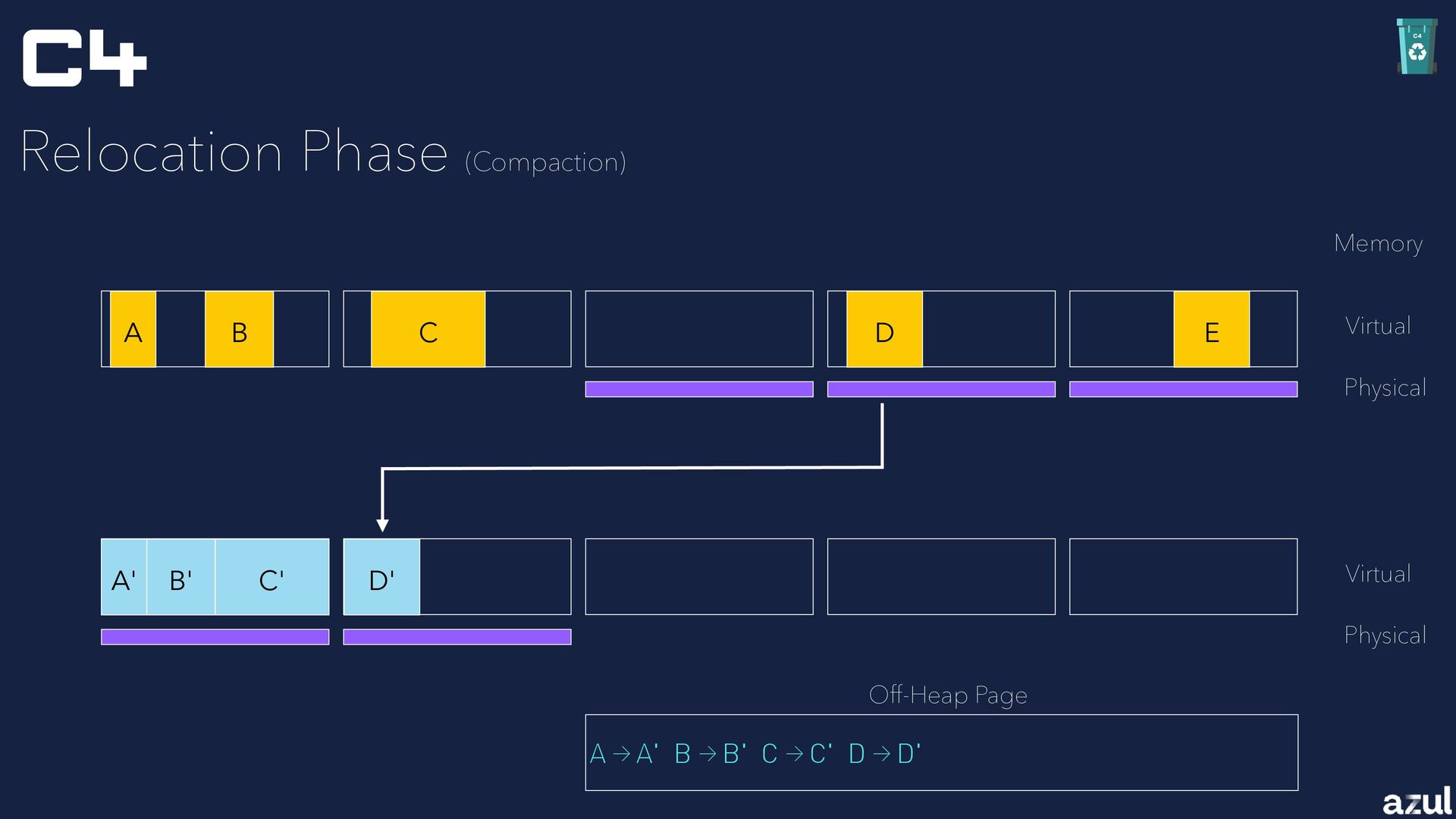
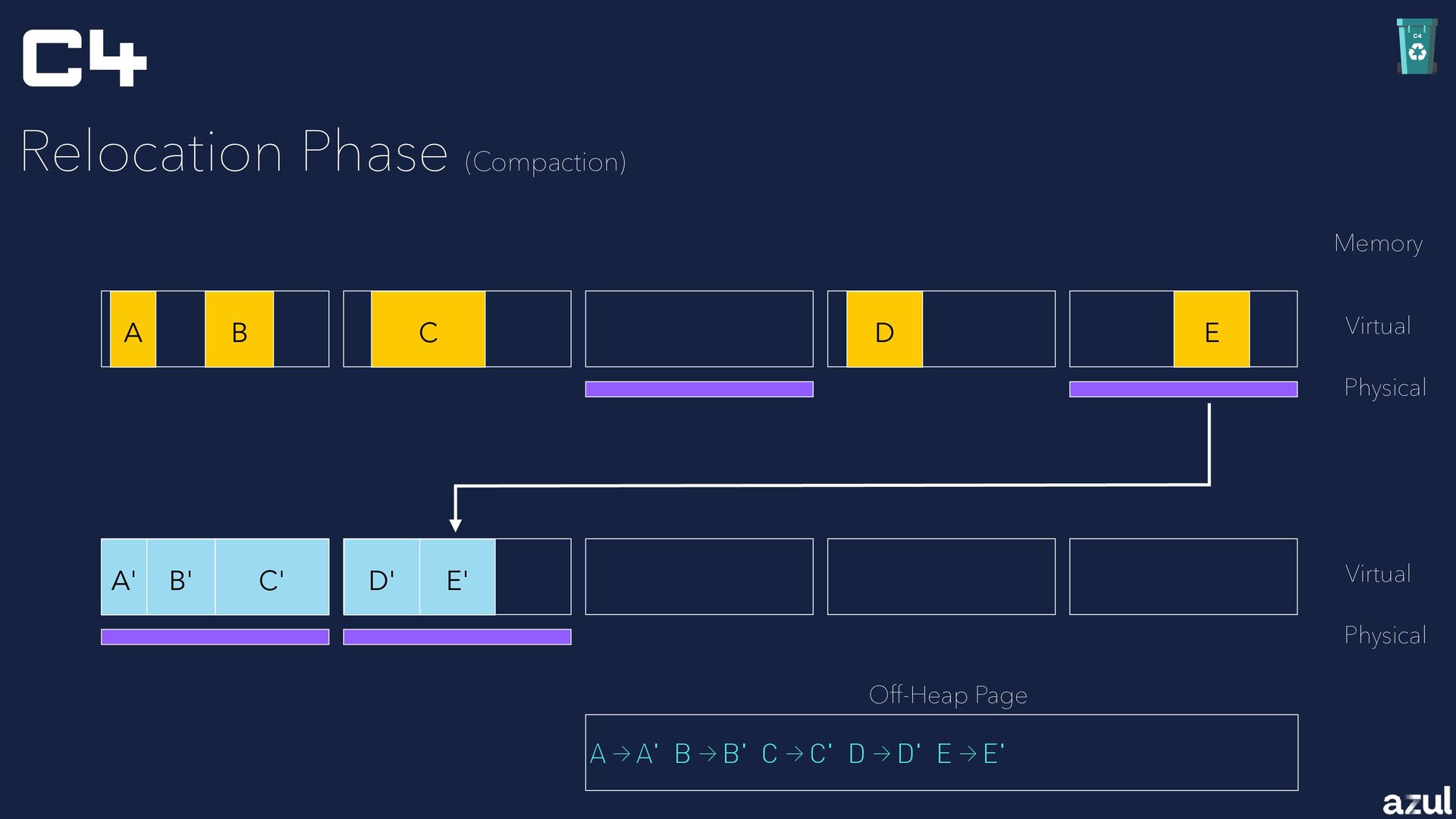
B' Virtual A > A' B > B' Off-Heap Page Relocation Phase (Compaction) Physical Physical No mapping information in the object header -> direct release of physical memory
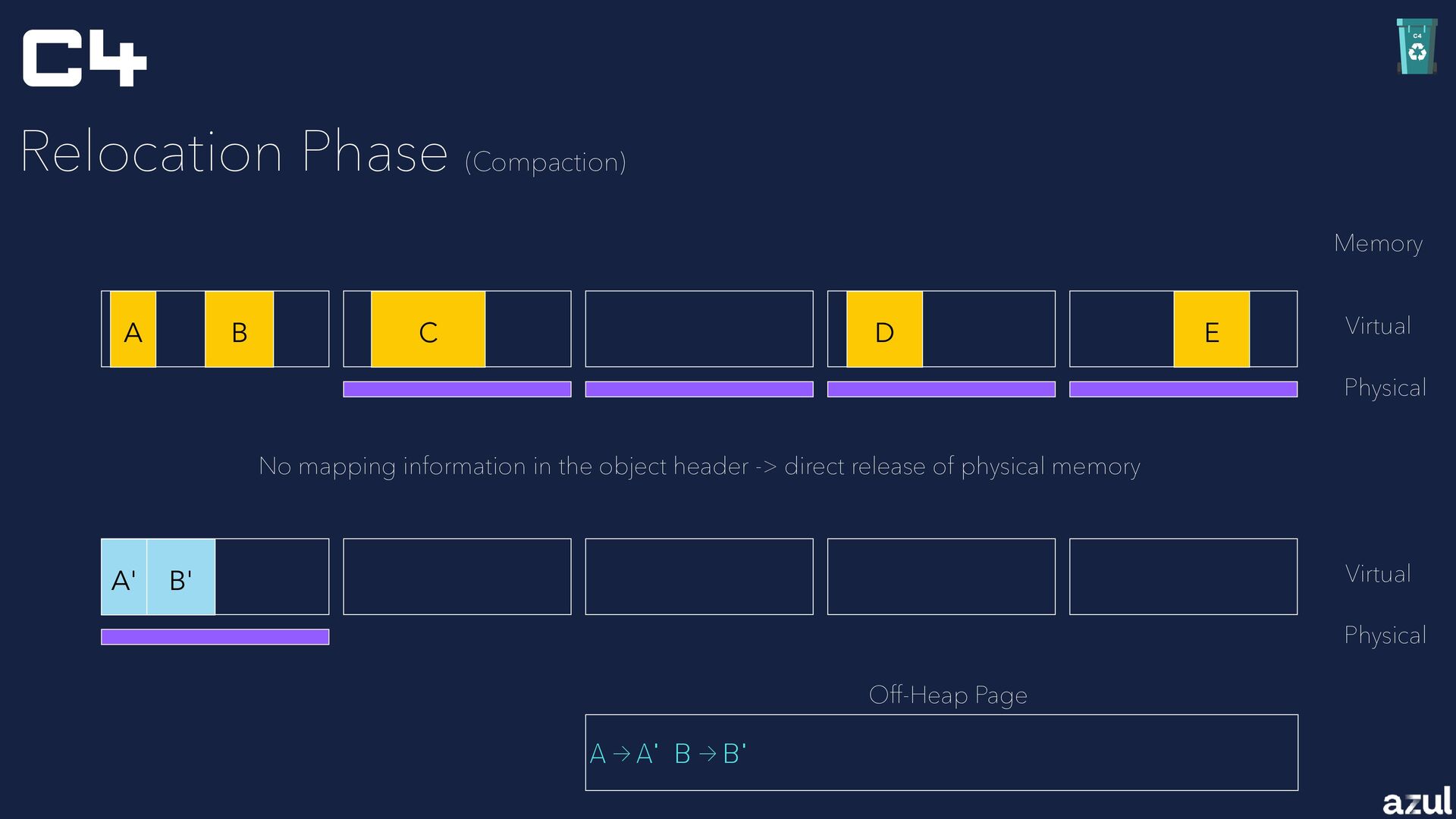
B' Virtual A > A' B > B' Off-Heap Page Relocation Phase (Compaction) Physical Physical No mapping information in the object header -> direct release of physical memory
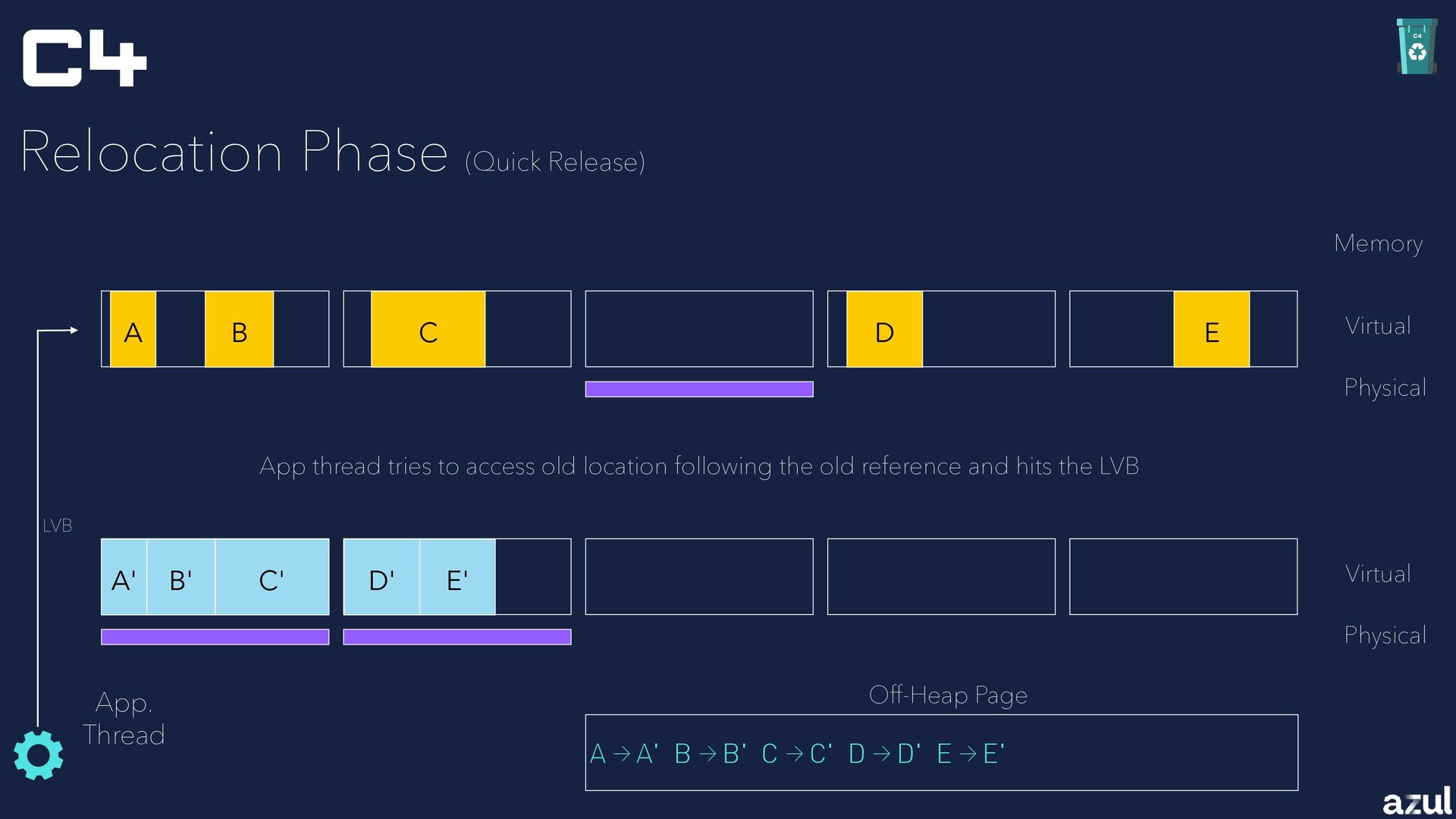
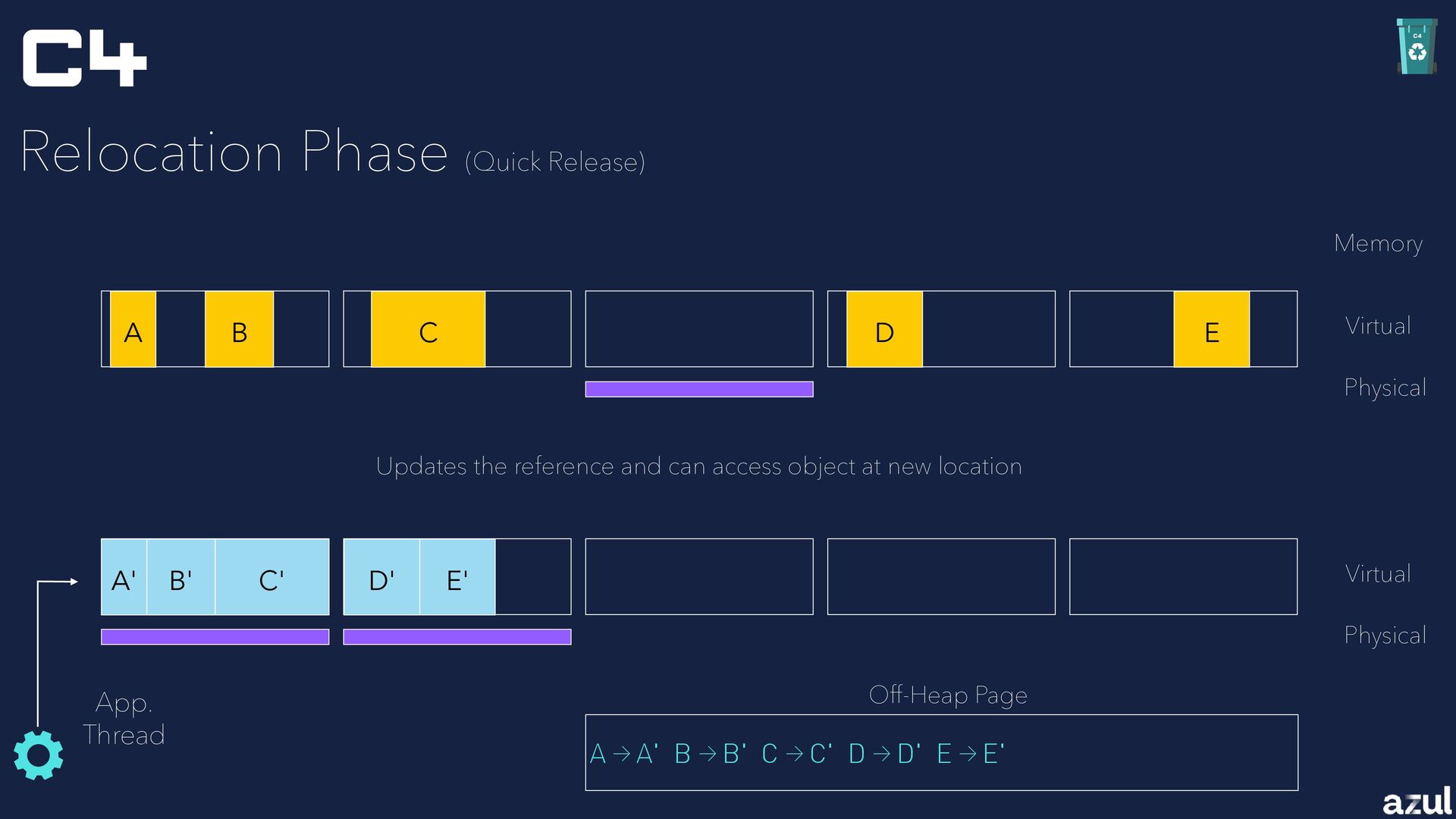
A' B' C' D' Virtual Physical E' A > A' B > B' C > C' D > D' E > E' Off-Heap Page Relocation Phase (Quick Release) App thread tries to access old location following the old reference and hits the LVB App. Thread LVB
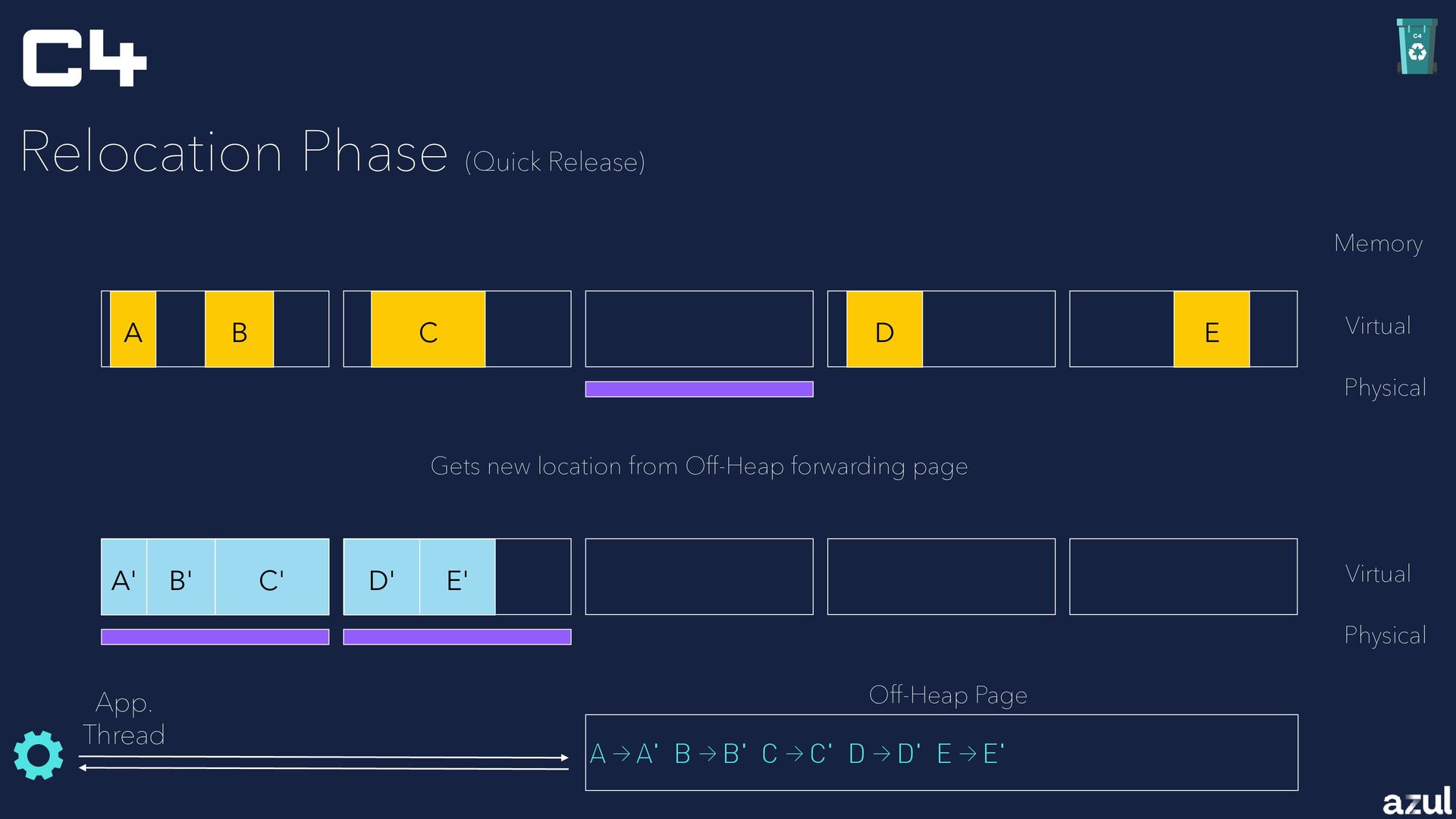
A' B' C' D' Virtual Physical E' A > A' B > B' C > C' D > D' E > E' Off-Heap Page Relocation Phase (Quick Release) Gets new location from Off-Heap forwarding page App. Thread
A' B' C' D' Virtual Physical E' A > A' B > B' C > C' D > D' E > E' Off-Heap Page Relocation Phase (Quick Release) Updates the reference and can access object at new location App. Thread
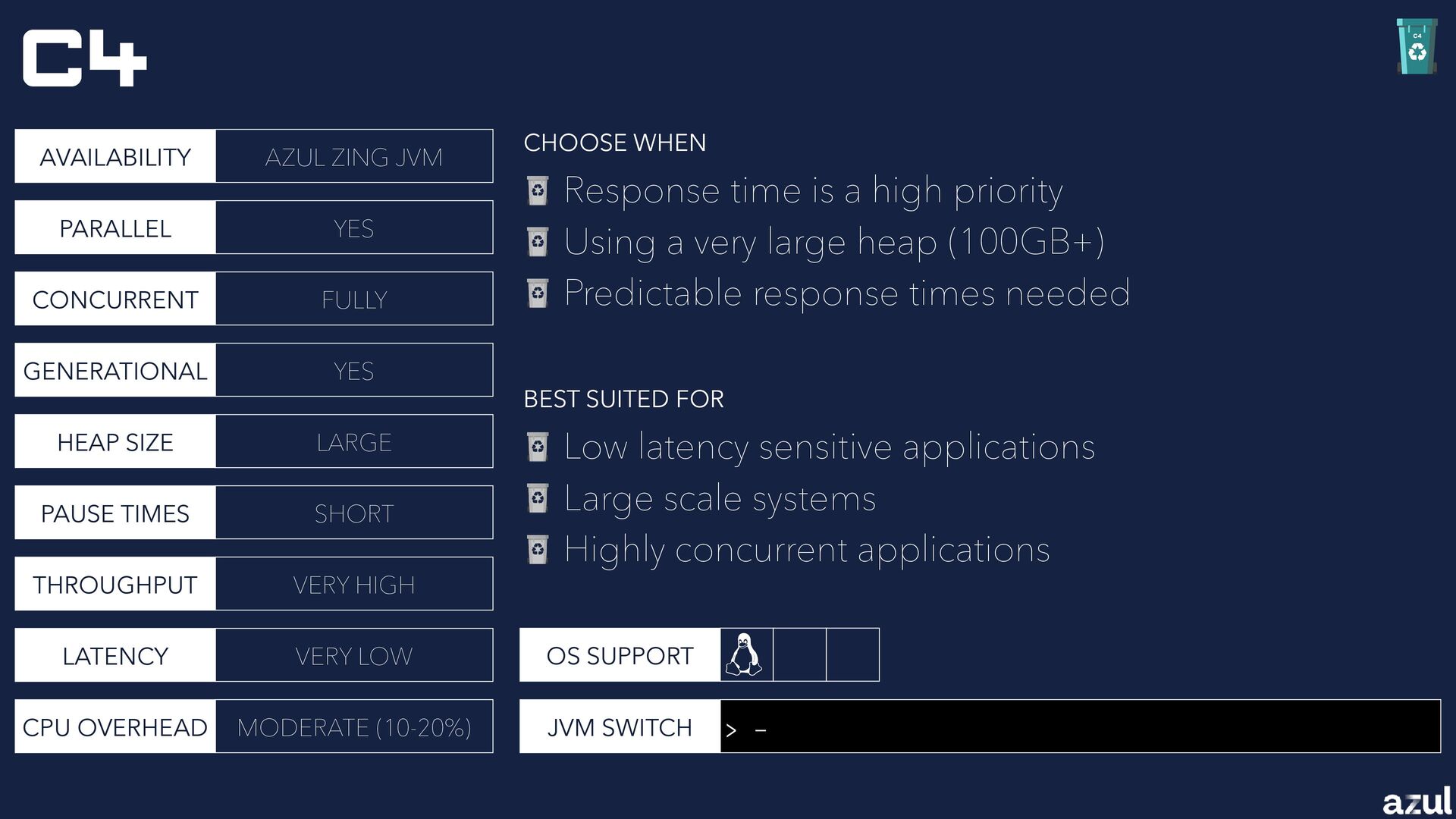
CPU OVERHEAD C4 Response time is a high priority Using a very large heap (100GB+) Predictable response times needed AZUL ZING JVM YES FULLY YES LARGE SHORT VERY HIGH VERY LOW MODERATE (10-20%) JVM SWITCH > - CHOOSE WHEN BEST SUITED FOR Low latency sensitive applications Large scale systems Highly concurrent applications C4 OS SUPPORT
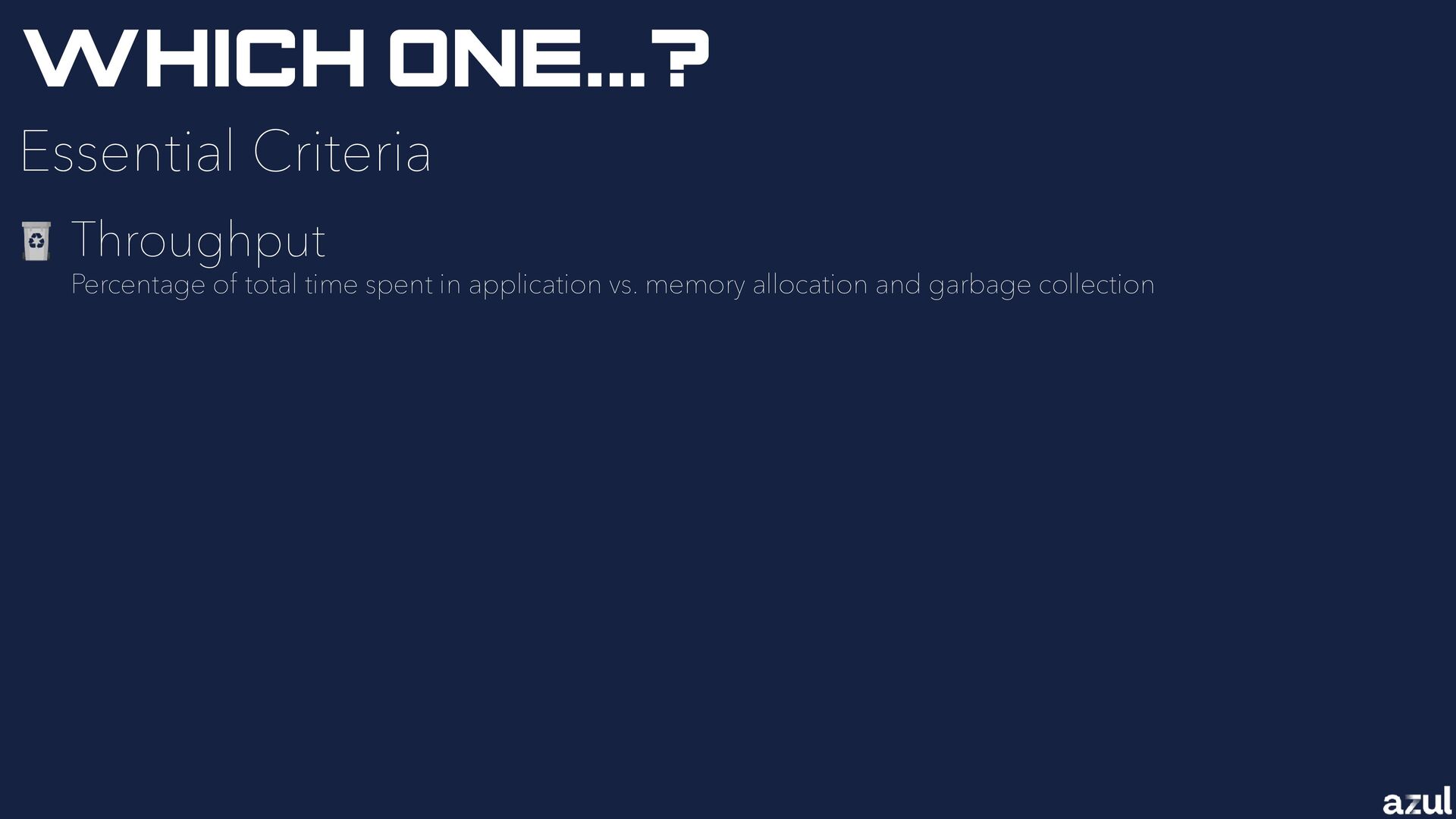
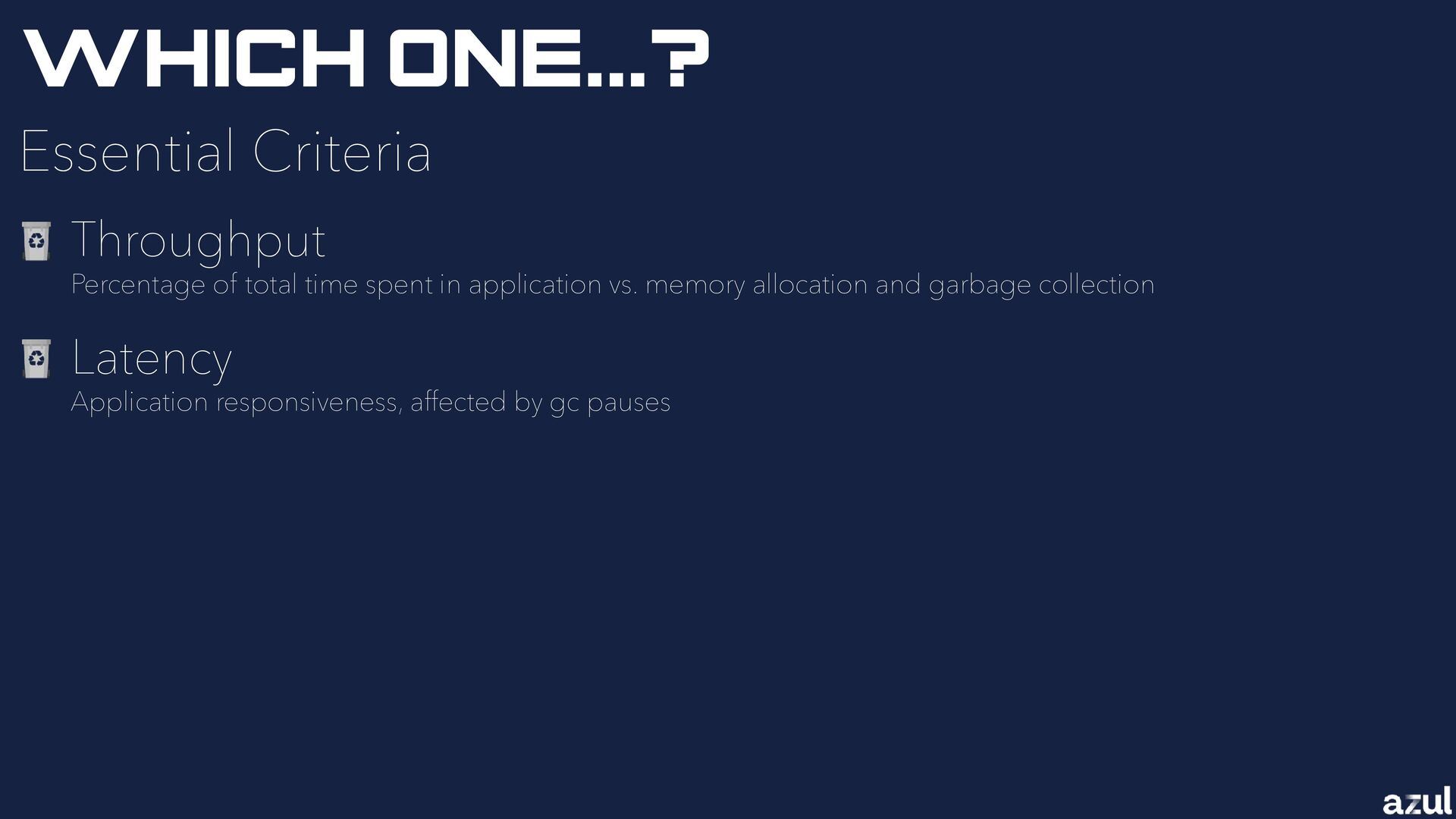
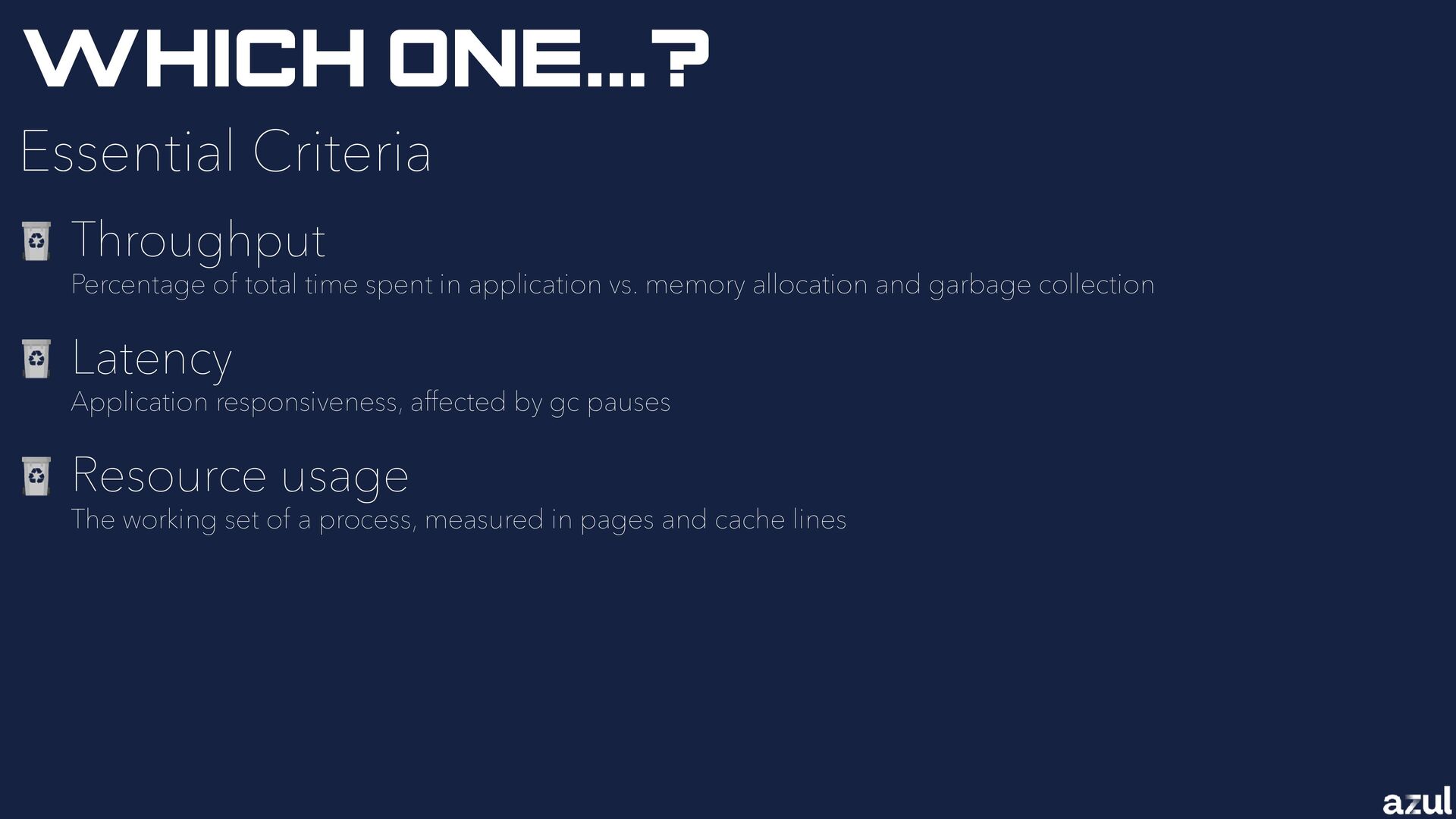
in application vs. memory allocation and garbage collection Latency Application responsiveness, affected by gc pauses Resource usage The working set of a process, measured in pages and cache lines
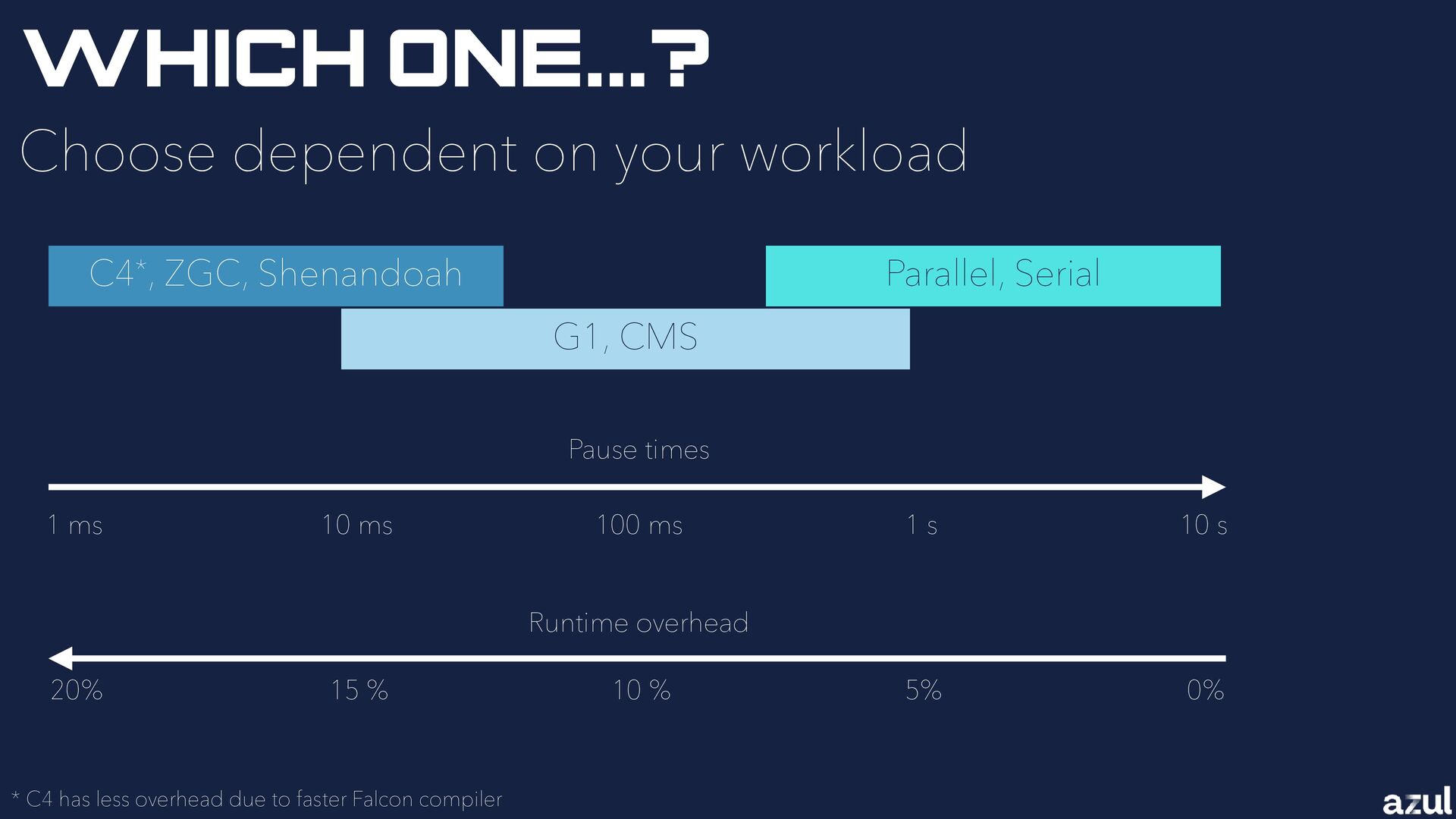
G1, CMS Parallel, Serial 1 ms 10 ms 100 ms 1 s 10 s Pause times Runtime overhead 20% 15 % 10 % 5% 0% * C4 has less overhead due to faster Falcon compiler
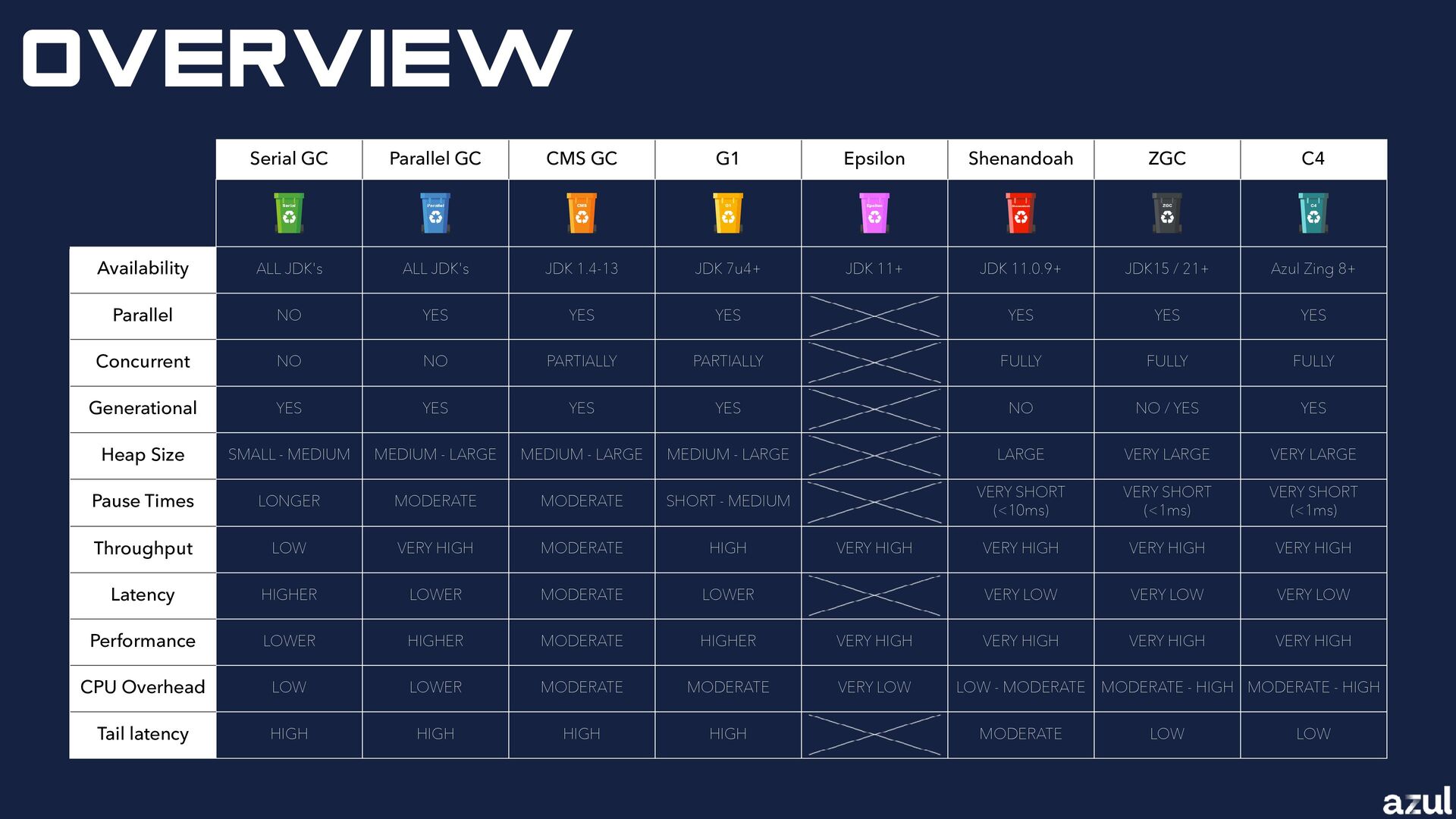
Parallel GC CMS GC G1 Epsilon Shenandoah ZGC C4 Availability ALL JDK's ALL JDK's JDK 1.4-13 JDK 7u4+ JDK 11+ JDK 11.0.9+ JDK15 / 21+ Azul Zing 8+ Parallel NO YES YES YES YES YES YES Concurrent NO NO PARTIALLY PARTIALLY FULLY FULLY FULLY Generational YES YES YES YES NO NO / YES YES Heap Size SMALL - MEDIUM MEDIUM - LARGE MEDIUM - LARGE MEDIUM - LARGE LARGE VERY LARGE VERY LARGE Pause Times LONGER MODERATE MODERATE SHORT - MEDIUM VERY SHORT (<10ms) VERY SHORT (<1ms) VERY SHORT (<1ms) Throughput LOW VERY HIGH MODERATE HIGH VERY HIGH VERY HIGH VERY HIGH VERY HIGH Latency HIGHER LOWER MODERATE LOWER VERY LOW VERY LOW VERY LOW Performance LOWER HIGHER MODERATE HIGHER VERY HIGH VERY HIGH VERY HIGH VERY HIGH CPU Overhead LOW LOWER MODERATE MODERATE VERY LOW LOW - MODERATE MODERATE - HIGH MODERATE - HIGH Tail latency HIGH HIGH HIGH HIGH MODERATE LOW LOW Overview
jHiccup A non intrusive tool to monitor platform "hiccups" incl. JVM stalls (https://github.com/giltene/jHiccup) VisualVM All in one Java troubleshooting tool (https://visualvm.github.io/) GCeasy Universal GC Log Analyzer (https://gceasy.io) JPro fi ler All in one Java pro fi ler (https://www.ej-technologies.com/jpro fi ler) YourKit Java Pro fi ler CPU and Java pro fi ler (https://www.yourkit.com/features/) $


 utakaha
 florets1
 deka_morita
 o0h
o0h
 marcoroth
 uyuki234
 l2hyunwoo
 skydoves
 har1101
 nokomoro3
 takai
takai
 hschwentner
 aleyda
 rabernat
 addyosmani
 reverentgeek
 tammyeverts
 lemiorhan
 tenderlove
 smashingmag
 honzajavorek
 baasie




![public static void main(String[] args) { record Person(String name) {](https://files.speakerdeck.com/presentations/48ff35dd2b6f4780bec3a2cc2c7104db/slide_13.jpg)
![public static void main(String[] args) { record Person(String name) {](https://files.speakerdeck.com/presentations/48ff35dd2b6f4780bec3a2cc2c7104db/slide_14.jpg)
![public static void main(String[] args) { record Person(String name) {](https://files.speakerdeck.com/presentations/48ff35dd2b6f4780bec3a2cc2c7104db/slide_15.jpg)
![public static void main(String[] args) { record Person(String name) {](https://files.speakerdeck.com/presentations/48ff35dd2b6f4780bec3a2cc2c7104db/slide_16.jpg)
![public static void main(String[] args) { record Person(String name) {](https://files.speakerdeck.com/presentations/48ff35dd2b6f4780bec3a2cc2c7104db/slide_17.jpg)
![public static void main(String[] args) { record Person(String name) {](https://files.speakerdeck.com/presentations/48ff35dd2b6f4780bec3a2cc2c7104db/slide_18.jpg)
![public static void main(String[] args) { record Person(String name) {](https://files.speakerdeck.com/presentations/48ff35dd2b6f4780bec3a2cc2c7104db/slide_19.jpg)
![public static void main(String[] args) { record Person(String name) {](https://files.speakerdeck.com/presentations/48ff35dd2b6f4780bec3a2cc2c7104db/slide_20.jpg)
![public static void main(String[] args) { record Person(String name) {](https://files.speakerdeck.com/presentations/48ff35dd2b6f4780bec3a2cc2c7104db/slide_21.jpg)