Upgrade to Pro — share decks privately, control downloads, hide ads and more …

Null Safety in Java: JSpecify in Action

Sponsored · SiteGround - Reliable hosting with speed, security, and support you can count on.

Null Safety in Java: JSpecify in Action

NullPointerExceptions are among the most common errors in Java applications. JSpecify now offers a standardized approach to clearly document nullability in Java code and verify it through static analysis. Open-source projects like Spring Boot have begun extending their code with JSpecify.

In this presentation, I'll demonstrate how I successfully implement JSpecify in all new client projects.

First, we'll look at what JSpecify is and how it differs from other nullability annotations like JetBrains' @Nullable or JSR-305.

Then we'll move on to practical application. I'll show you how to configure JSpecify in a Spring Boot project and how to integrate it with Maven, NullAway, ErrorProne, and IntelliJ.

We'll also discuss how to migrate existing projects to greater null safety step by step and which typical pitfalls to avoid.

This presentation is aimed at Java developers who want to improve their code quality. Basic knowledge of Spring Boot is helpful, but not required.

After this presentation, you'll be able to use JSpecify in your own projects and know what to look out for.

Avatar for Simon Martinelli

Simon Martinelli PRO

February 05, 2026
Tweet

More Decks by Simon Martinelli

Other Decks in Programming

Transcript

  1. About Me • 30 years in software engineering • 25

    years with Java • Self-employed since 2009 • Teaching at two Universities • Co-lead Berne, JUG Switzerland
  2. The Billion Dollar Mistake • Tony Hoare introduced the null

    reference in ALGOL W in the 1960s • Many years later 2009, he said it was a mistake that has cost the industry billions in bugs, crashes, and wasted time
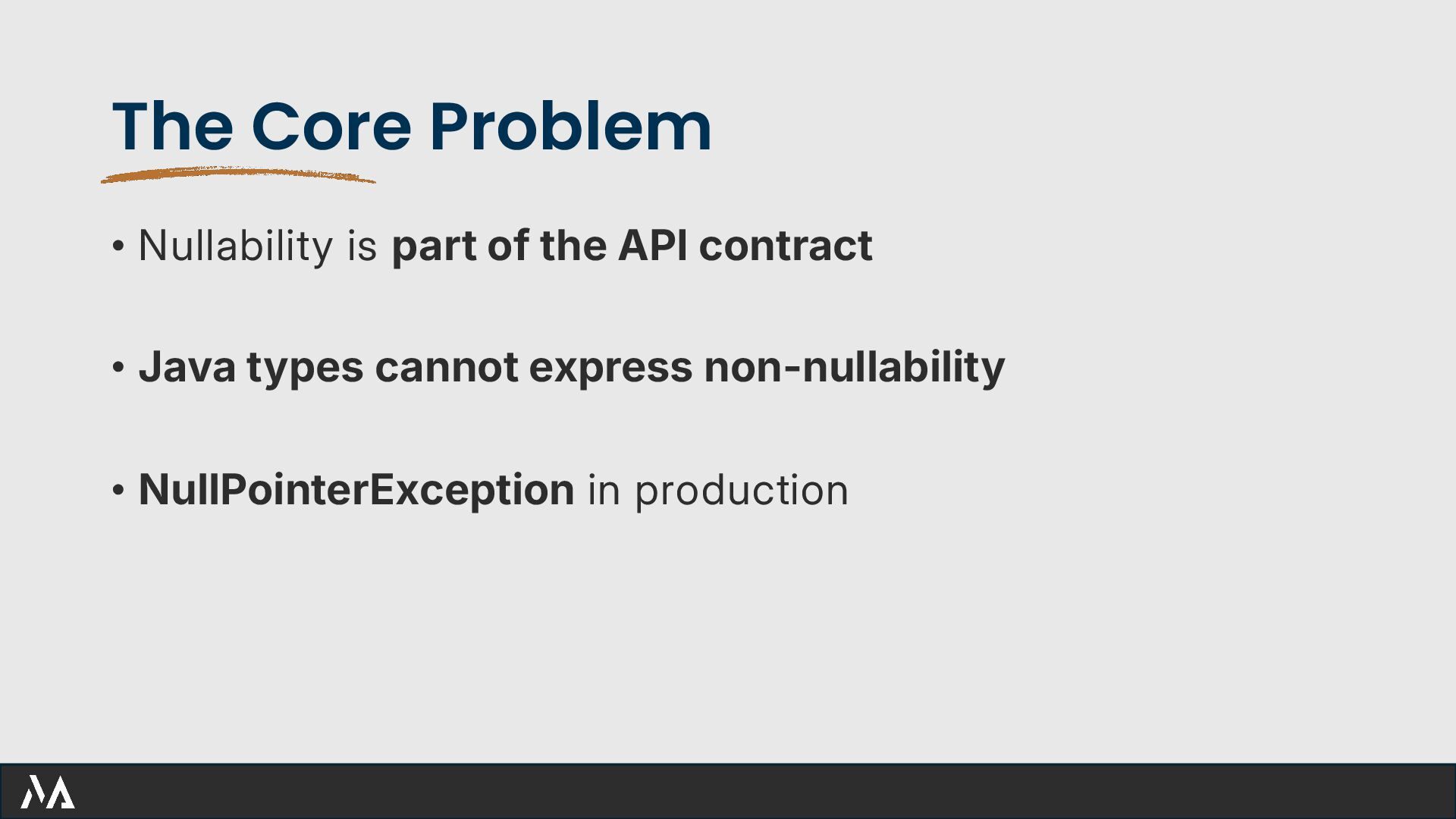
  3. The Core Problem • Nullability is part of the API

    contract • Java types cannot express non-nullability • NullPointerException in production
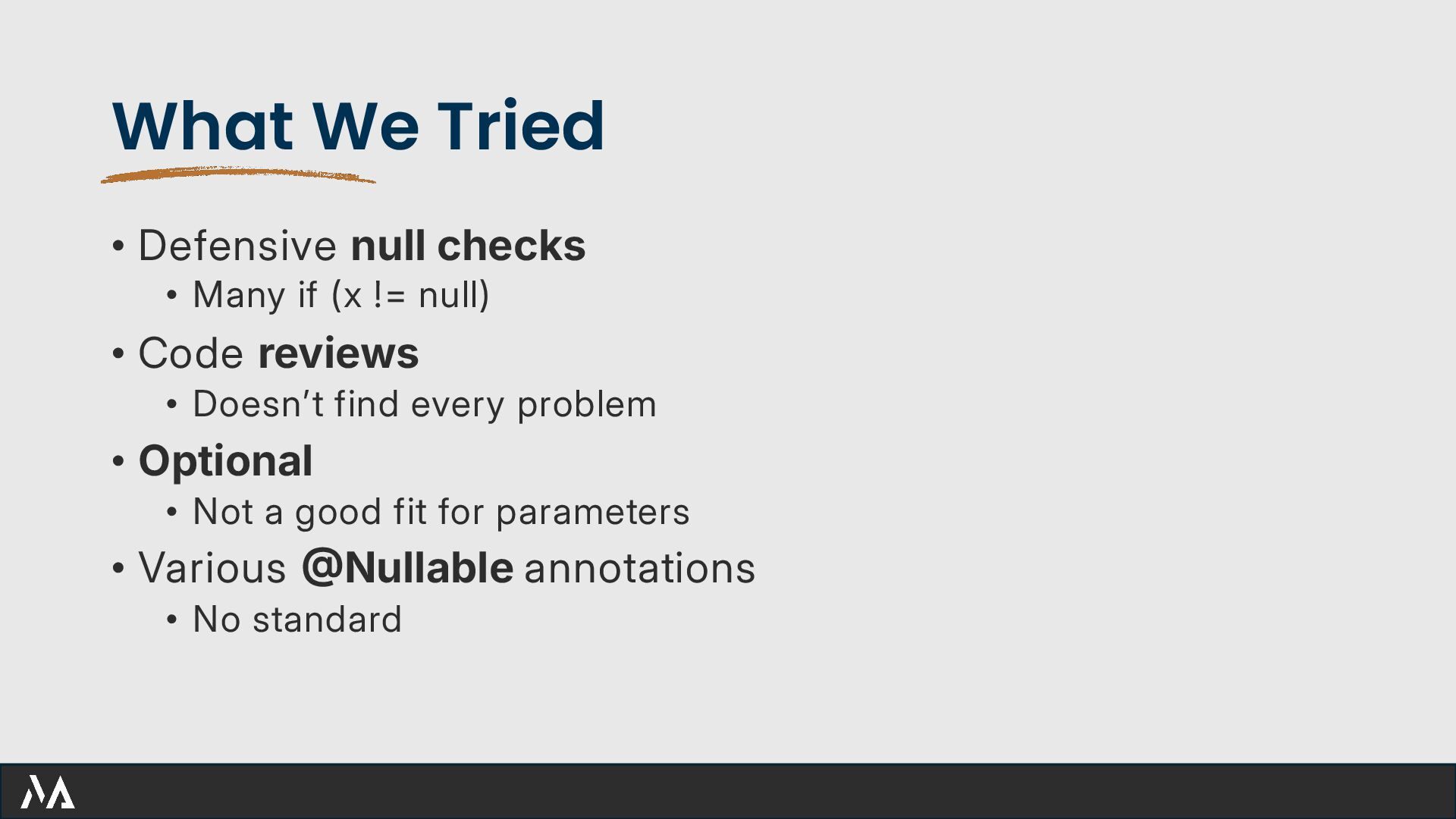
  4. What We Tried • Defensive null checks • Many if

    (x != null) • Code reviews • Doesn’t find every problem • Optional • Not a good fit for parameters • Various Nullable annotations • No standard
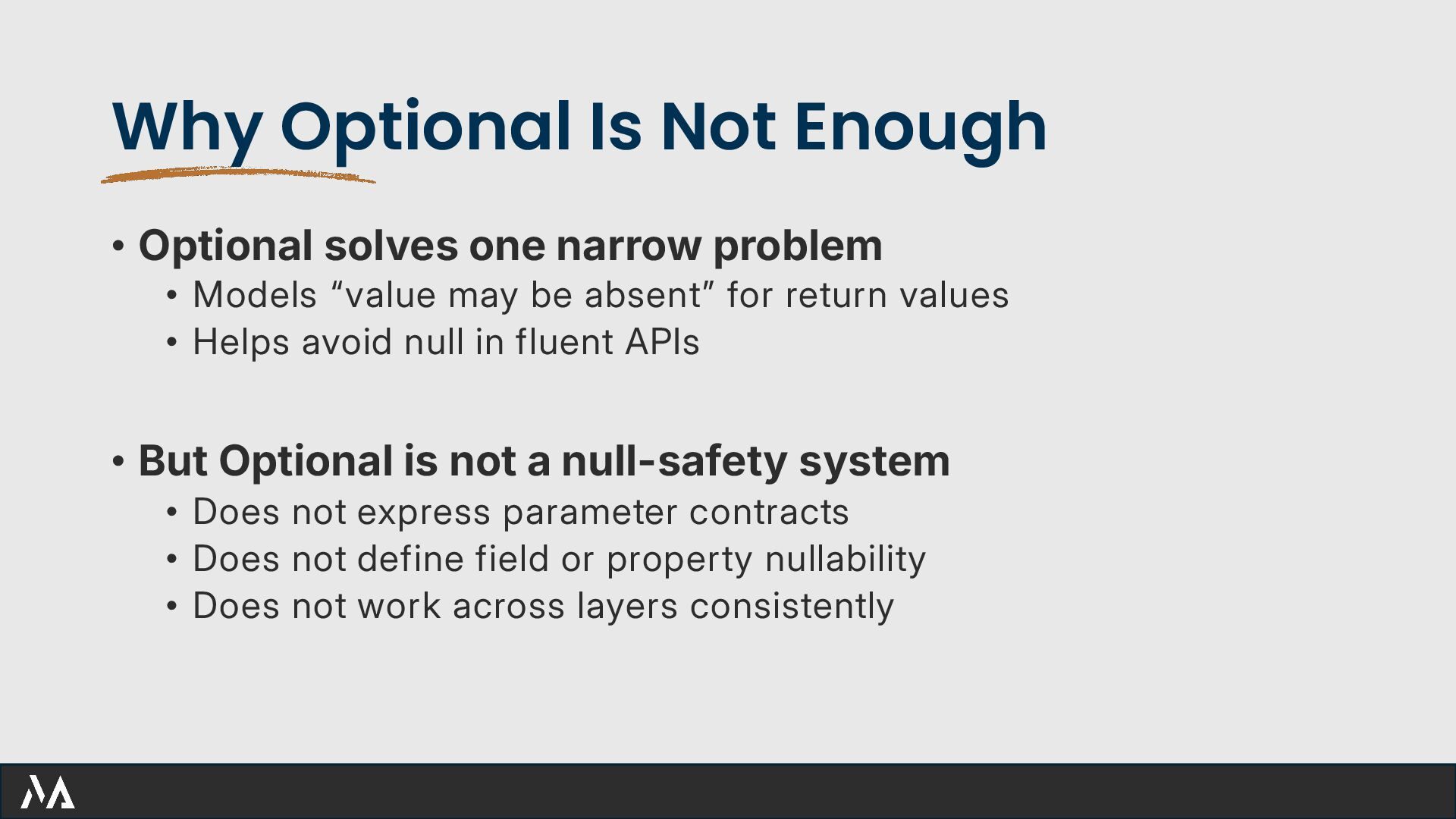
  5. Why Optional Is Not Enough • Optional solves one narrow

    problem • Models “value may be absent” for return values • Helps avoid null in fluent APIs • But Optional is not a null-safety system • Does not express parameter contracts • Does not define field or property nullability • Does not work across layers consistently
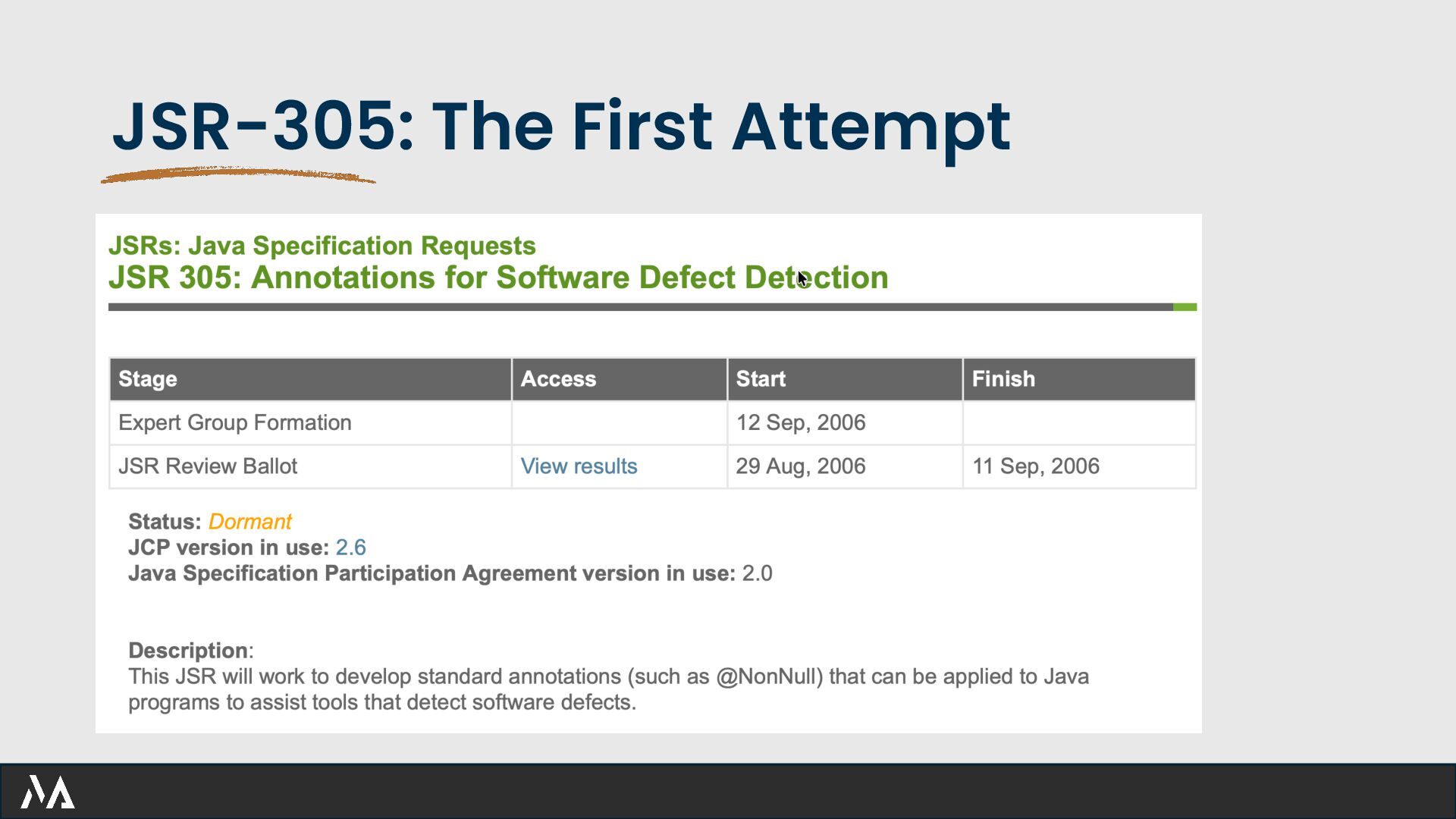
  6. What Went Wrong with JSR-305 • Never finalized • No

    active ownership • Different tools interpreted it differently • Ecosystem fragmentation
  7. Jakarta Validation aka Bean Validation • Answers a different question

    • Is the value valid at runtime? • Not: can this value ever be null? • Is reactive, not preventive • Violations are detected after the code runs • Often at REST or persistence boundaries • No compile-time guarantees • Compiler allows null dereferences • IDE cannot enforce API contracts
  8. Checker Framework • The Checker Framework extends Java’s type system

    with pluggable type checkers.Supports nullness, immutability, units • https://checkerframework.org • The Core Problem: It’s Too Heavy for Most Teams • Cognitive Overhead Is High • Annotation Explosion • Poor Fit for Incremental Adoption • Tooling Friction in Daily Development • Ecosystem Alignment Is Weak
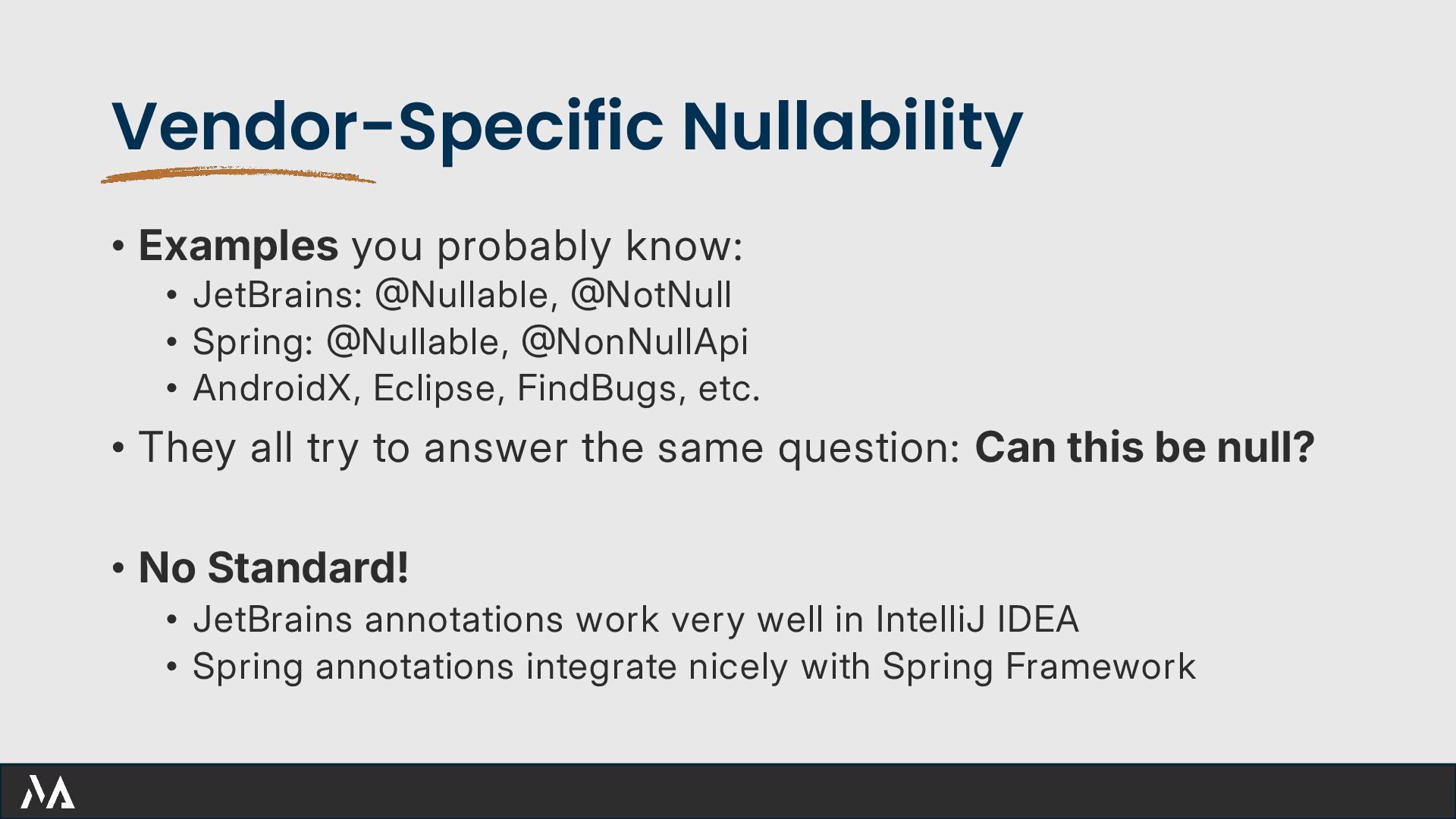
  9. Vendor-Specific Nullability • Examples you probably know: • JetBrains: Nullable,

    NotNull • Spring: Nullable, NonNullApi • AndroidX, Eclipse, FindBugs, etc. • They all try to answer the same question: Can this be null? • No Standard! • JetBrains annotations work very well in IntelliJ IDEA • Spring annotations integrate nicely with Spring Framework
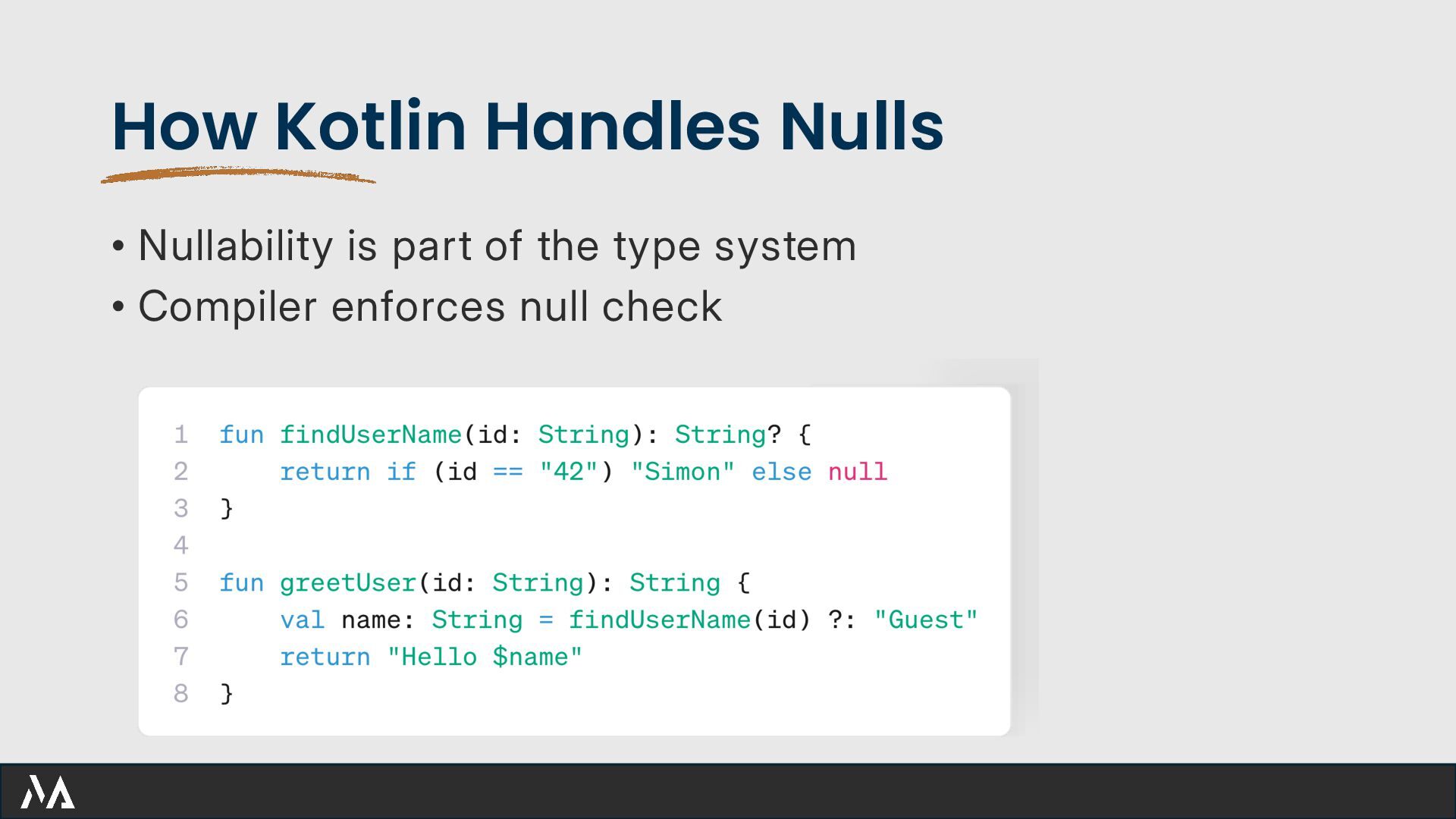
  10. How Kotlin Handles Nulls • Nullability is part of the

    type system • Compiler enforces null check
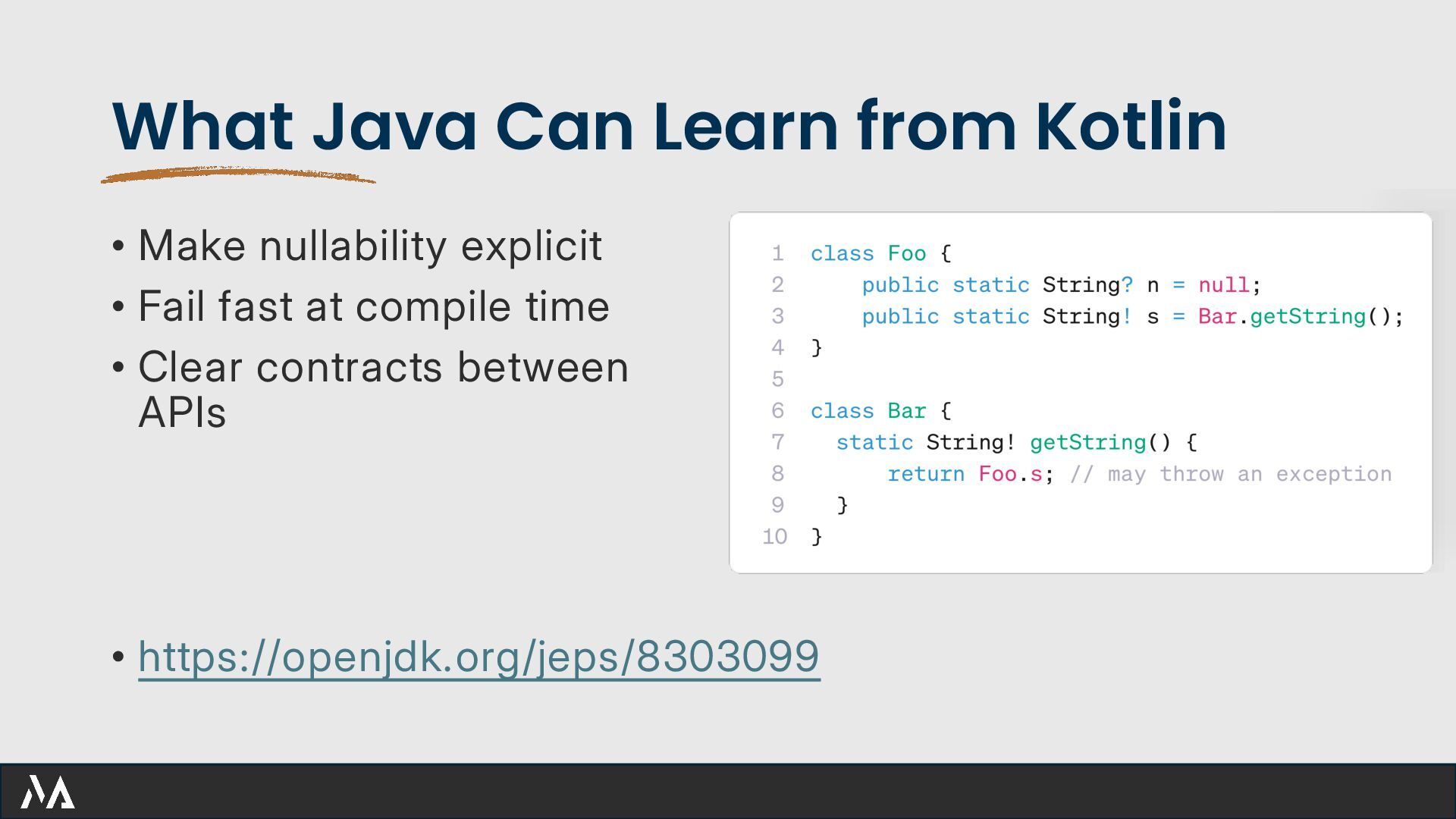
  11. What Java Can Learn from Kotlin • Make nullability explicit

    • Fail fast at compile time • Clear contracts between APIs • https://openjdk.org/jeps/8303099
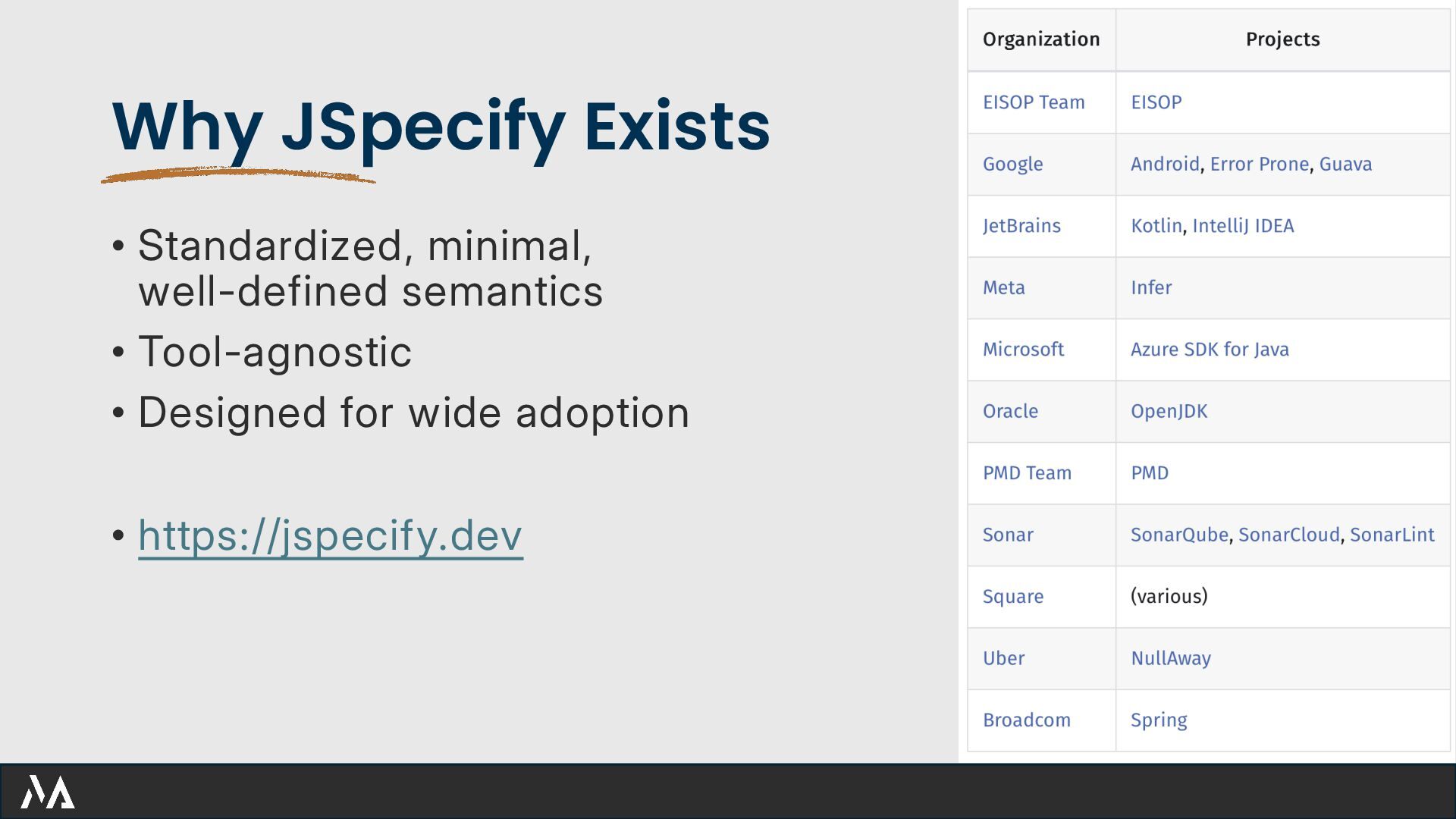
  12. Why JSpecify Exists • Standardized, minimal, well-defined semantics • Tool-agnostic

    • Designed for wide adoption • https://jspecify.dev
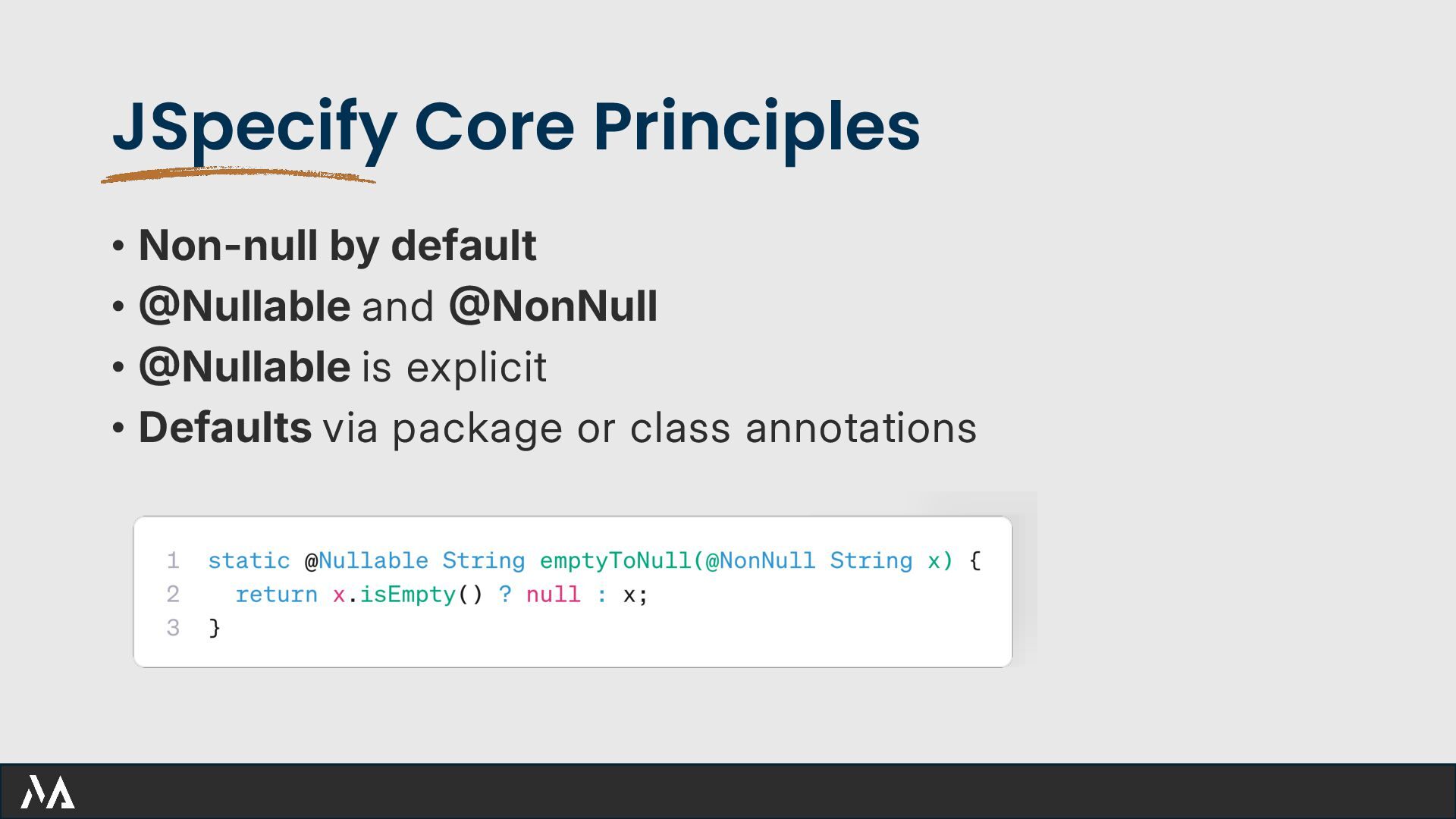
  13. JSpecify Core Principles • Non-null by default • Nullable and

    NonNull • Nullable is explicit • Defaults via package or class annotations
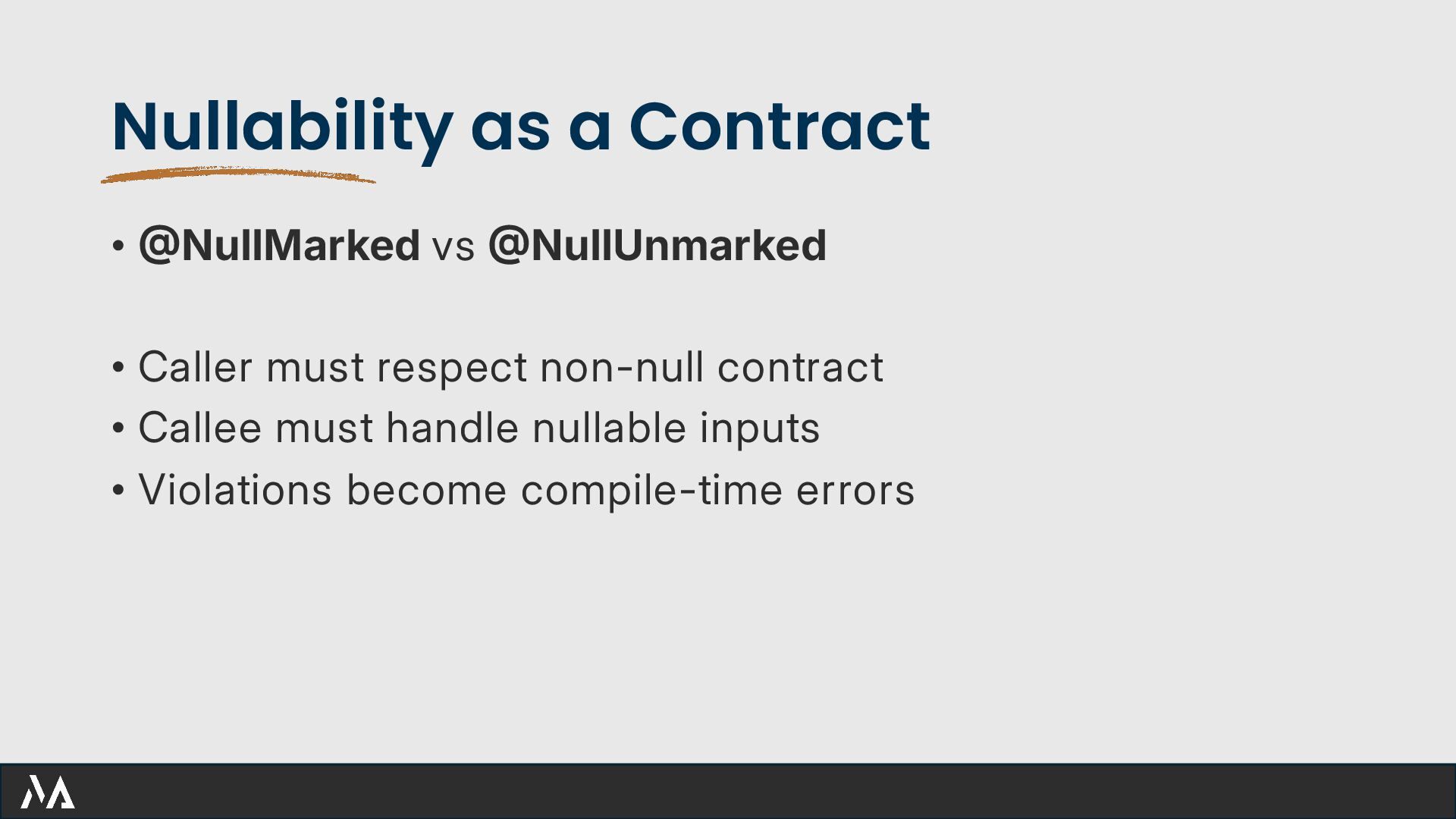
  14. Nullability as a Contract • NullMarked vs NullUnmarked • Caller

    must respect non-null contract • Callee must handle nullable inputs • Violations become compile-time errors
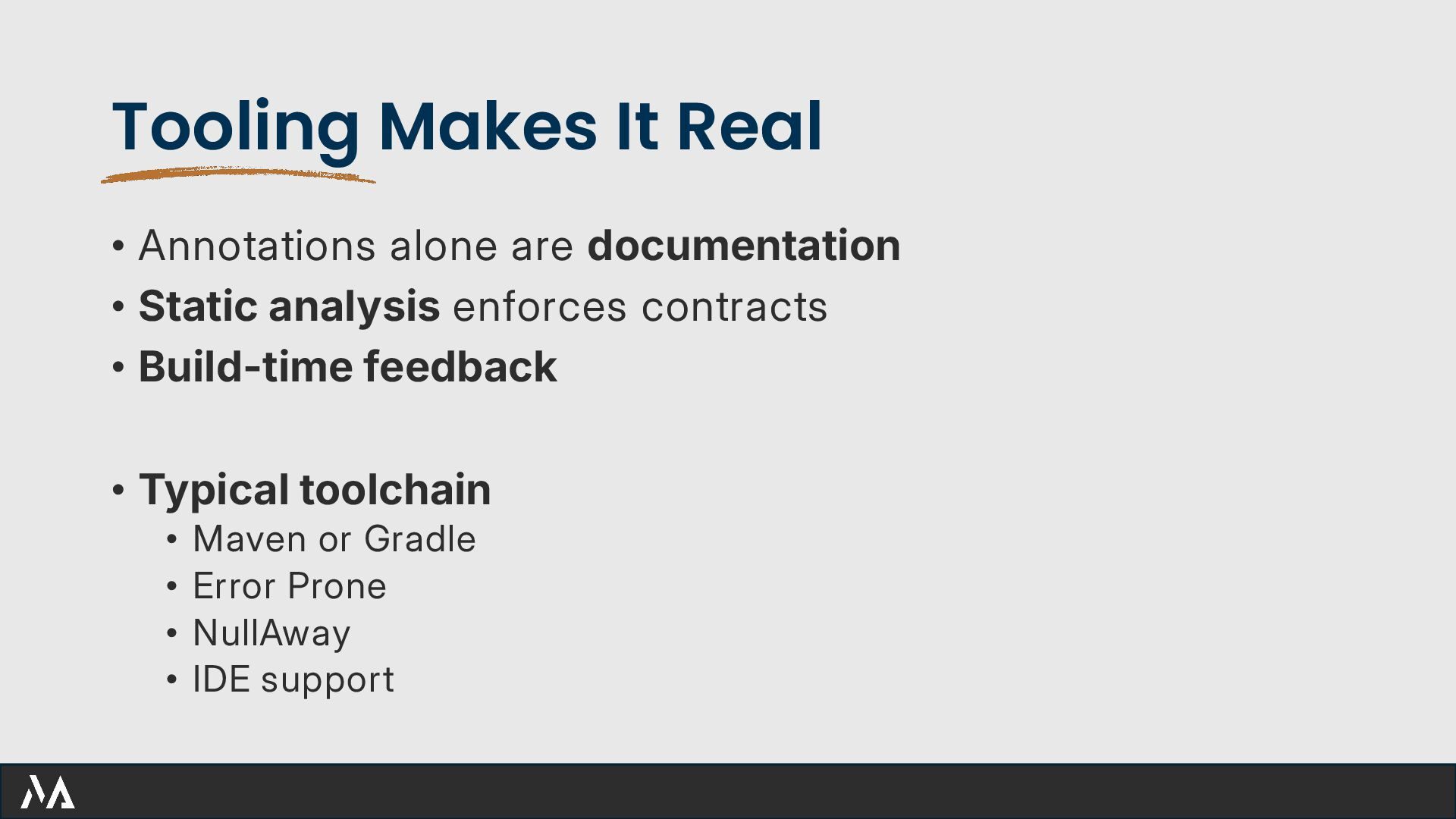
  15. Tooling Makes It Real • Annotations alone are documentation •

    Static analysis enforces contracts • Build-time feedback • Typical toolchain • Maven or Gradle • Error Prone • NullAway • IDE support
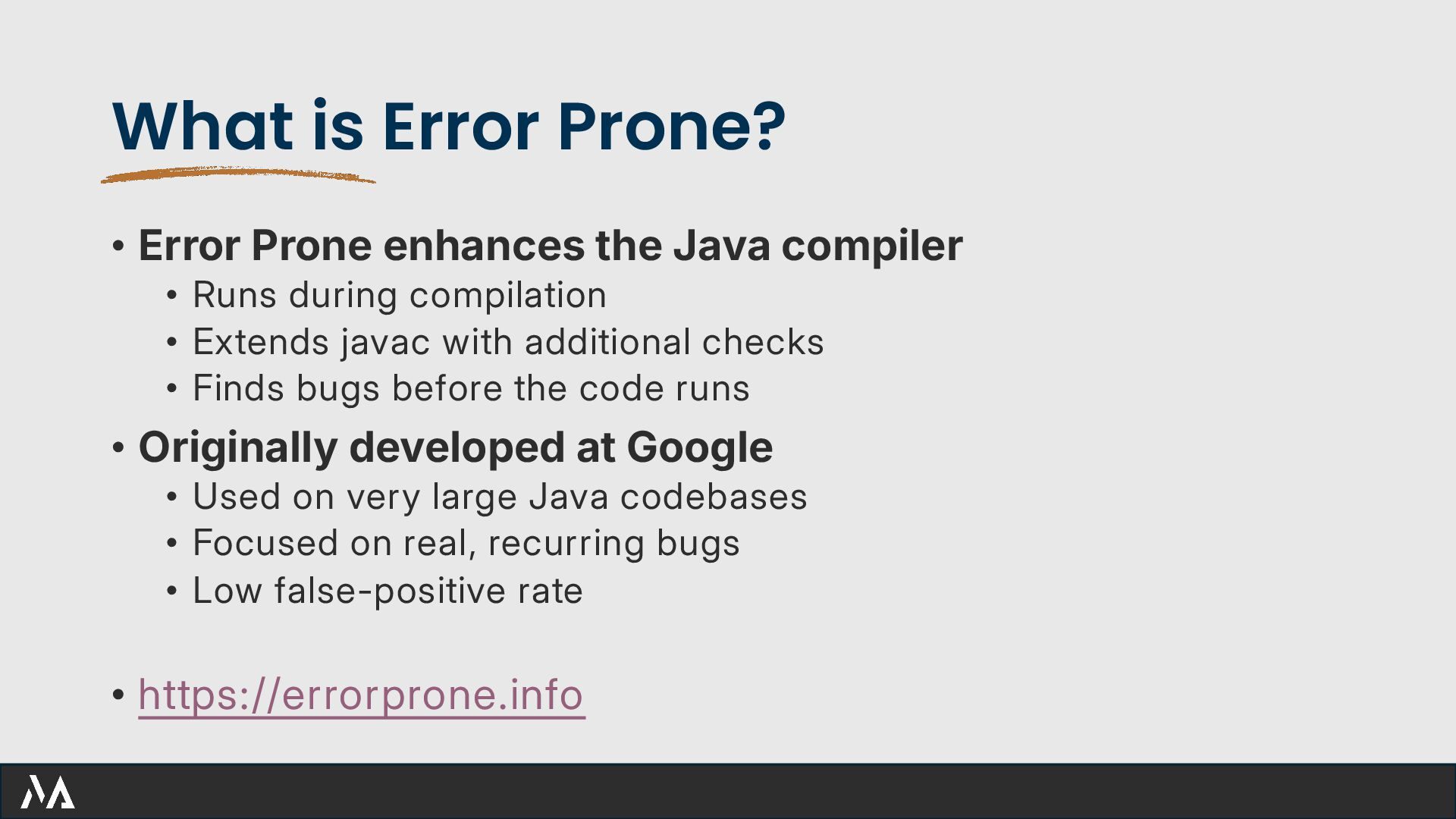
  16. What is Error Prone? • Error Prone enhances the Java

    compiler • Runs during compilation • Extends javac with additional checks • Finds bugs before the code runs • Originally developed at Google • Used on very large Java codebases • Focused on real, recurring bugs • Low false-positive rate • https://errorprone.info
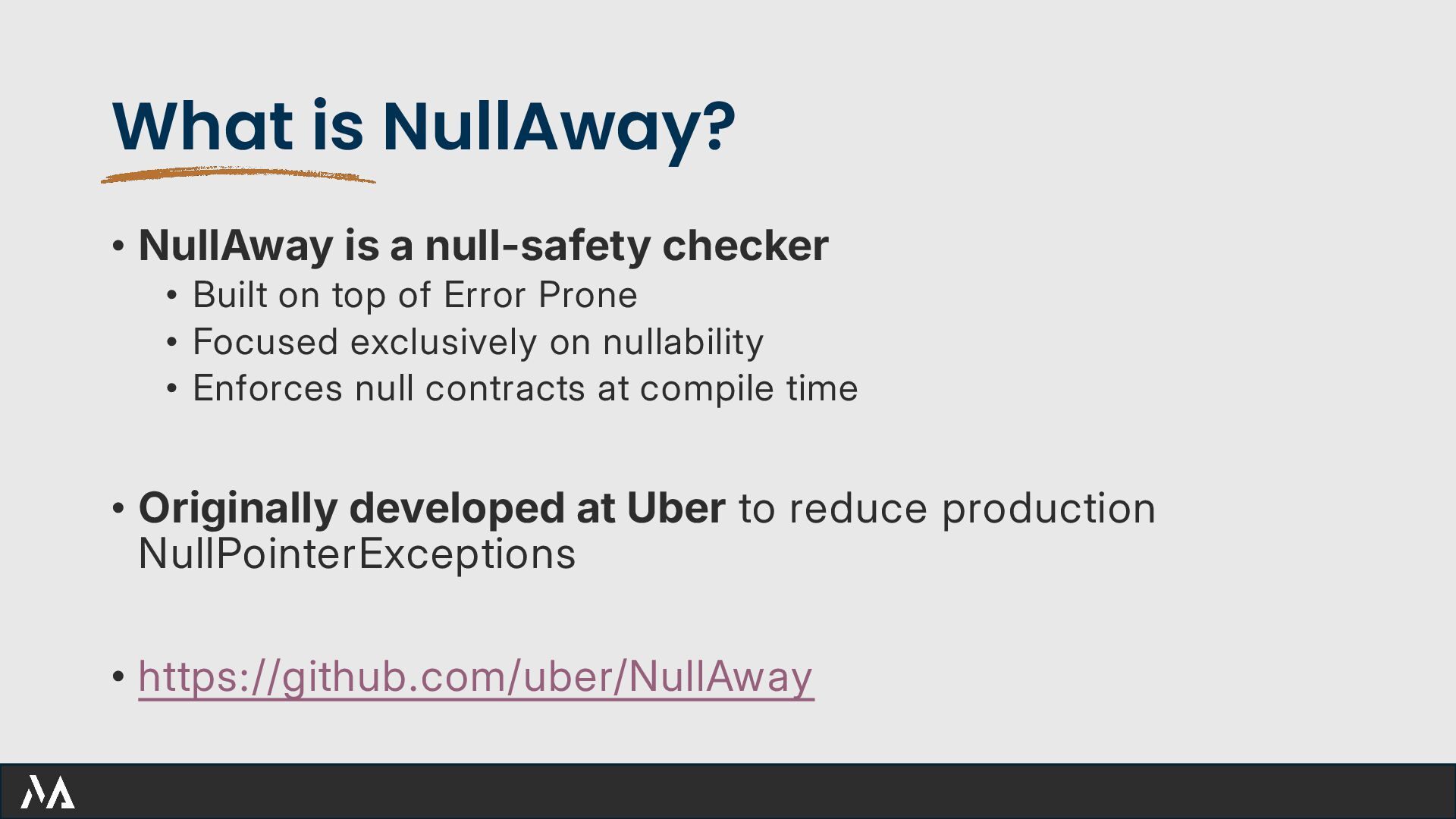
  17. What is NullAway? • NullAway is a null-safety checker •

    Built on top of Error Prone • Focused exclusively on nullability • Enforces null contracts at compile time • Originally developed at Uber to reduce production NullPointerExceptions • https://github.com/uber/NullAway
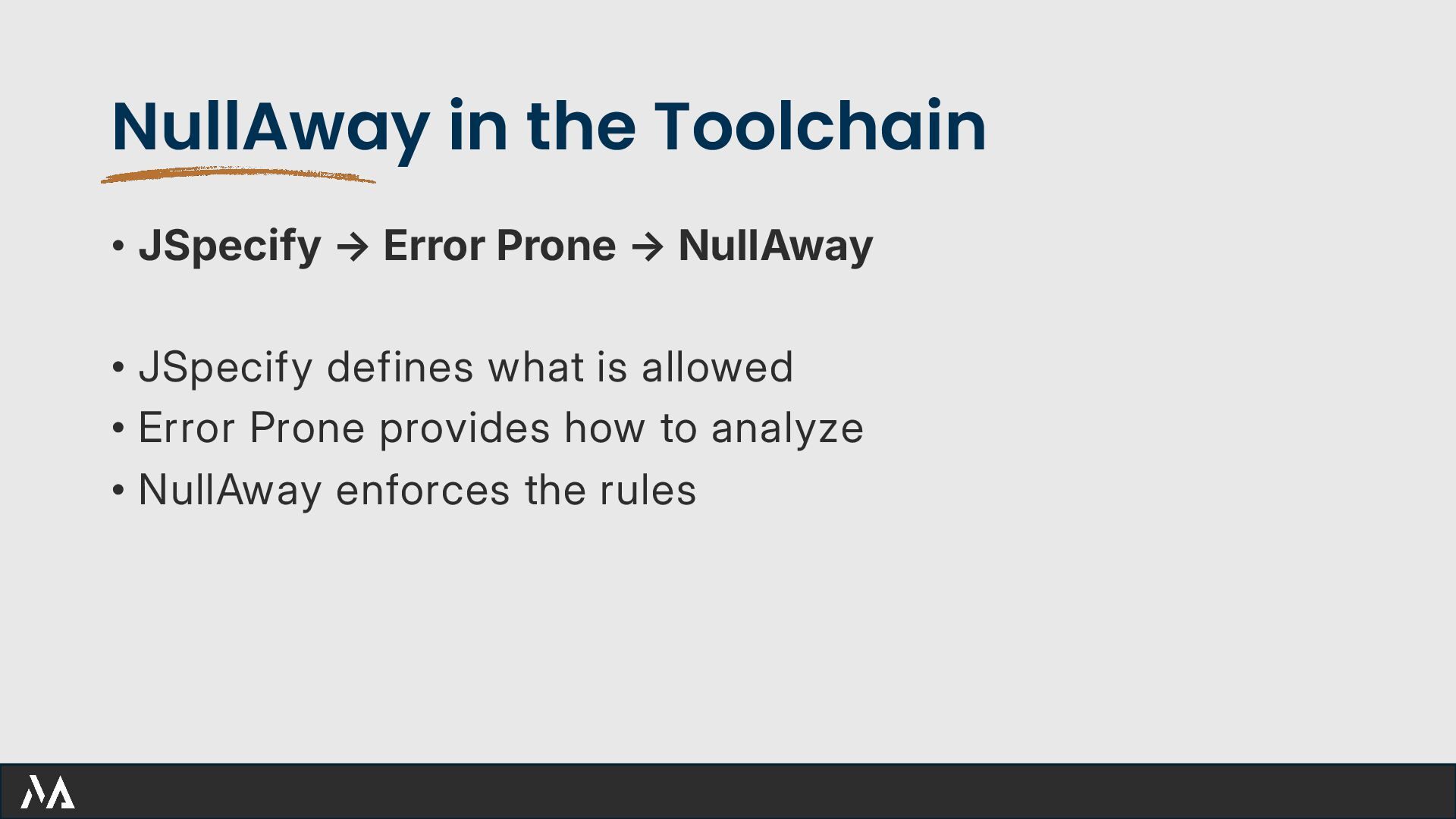
  18. NullAway in the Toolchain • JSpecify → Error Prone →

    NullAway • JSpecify defines what is allowed • Error Prone provides how to analyze • NullAway enforces the rules
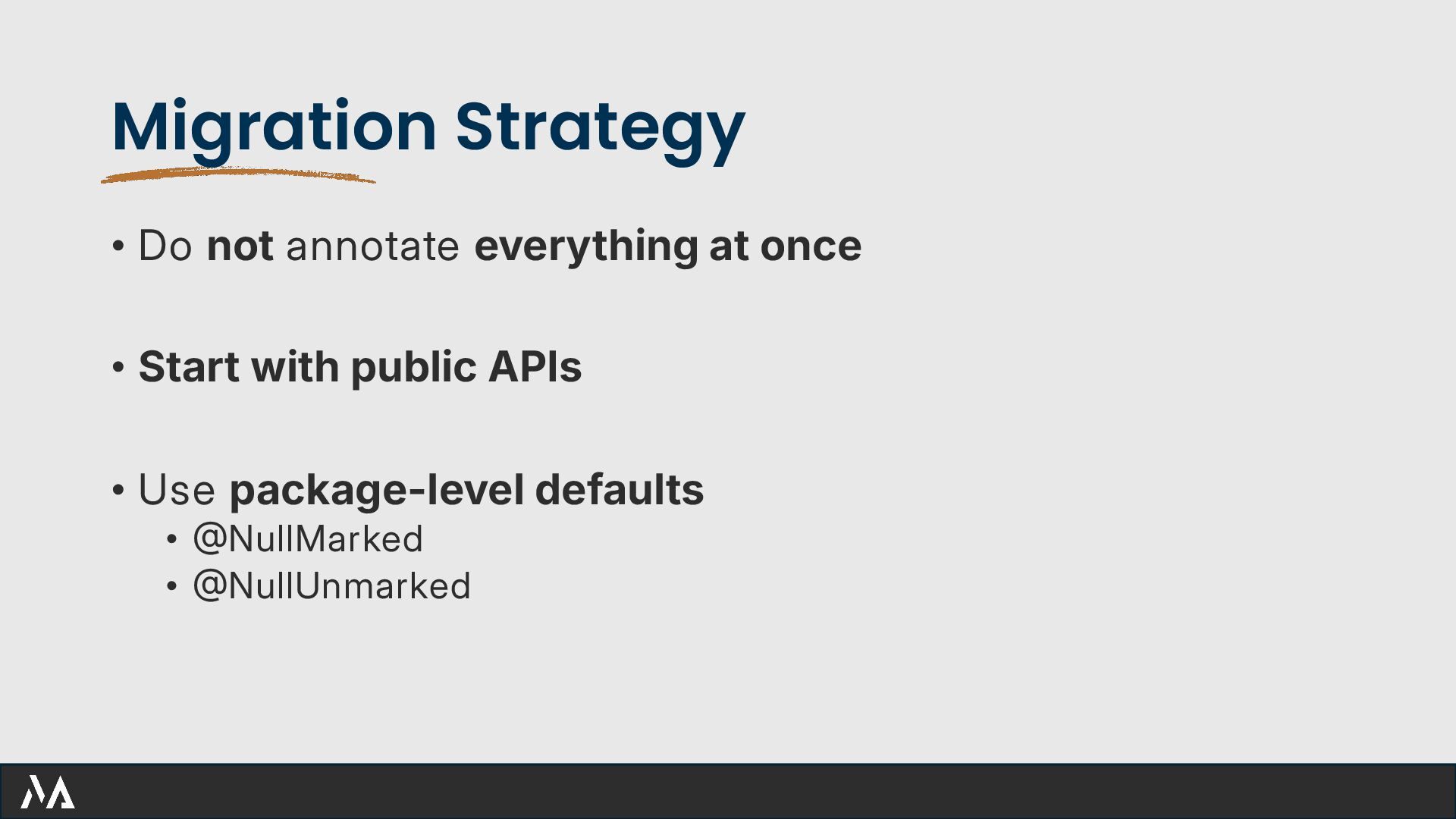
  19. Migration Strategy • Do not annotate everything at once •

    Start with public APIs • Use package-level defaults • NullMarked • NullUnmarked
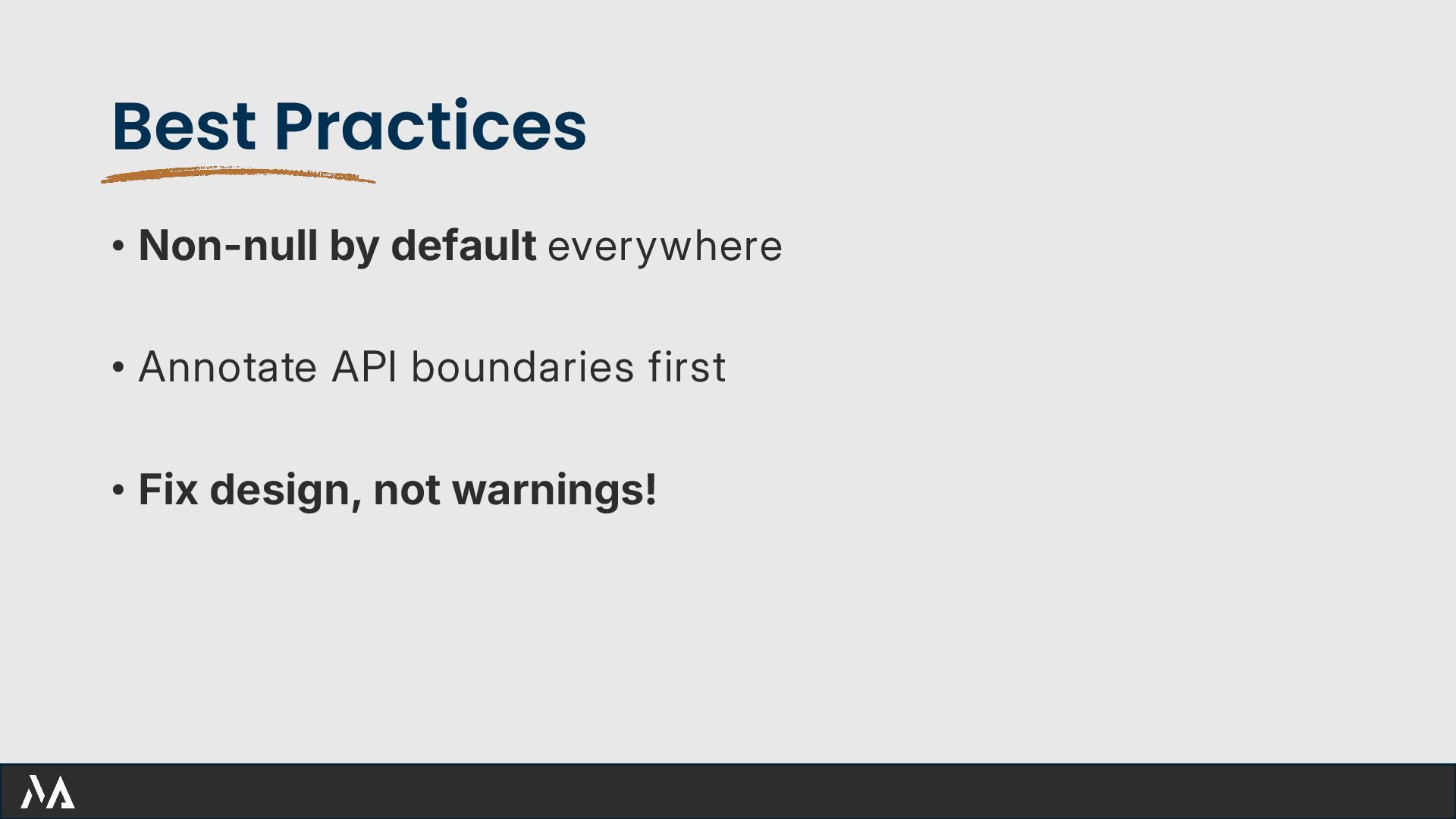
  20. Best Practices • Non-null by default everywhere • Annotate API

    boundaries first • Fix design, not warnings!
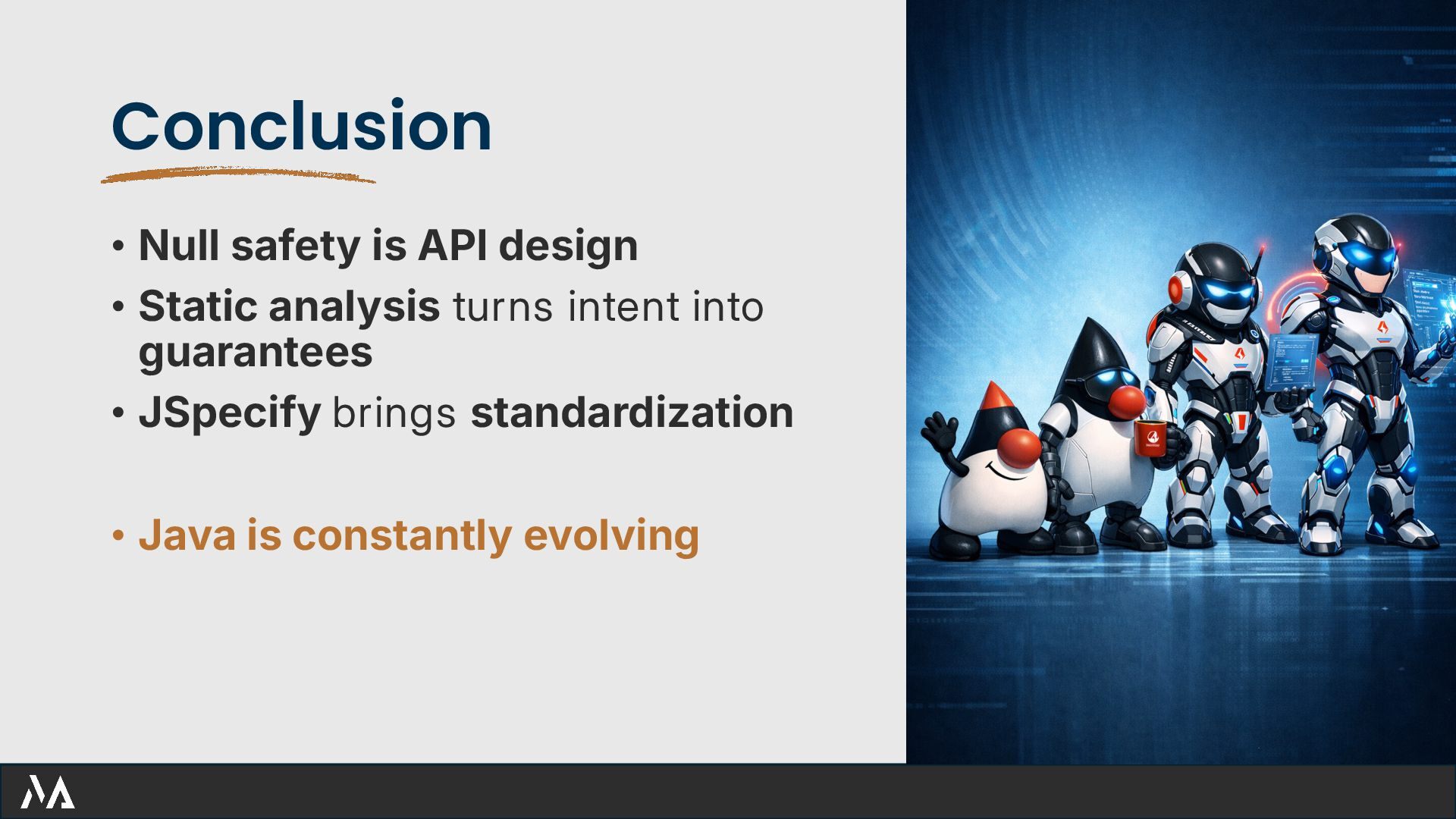
  21. Conclusion • Null safety is API design • Static analysis

    turns intent into guarantees • JSpecify brings standardization • Java is constantly evolving
  22. Thank you! • Web martinelli.ch • EMail [email protected] • Bluesky

    @martinelli.ch • X/Twitter @simas_ch • LinkedIn https://linkedin.com/in/ simonmartinelli