Upgrade to Pro — share decks privately, control downloads, hide ads and more …

CMA Part 1 Exam Overview: Content, Preparation ...

CMA Part 1 Exam Overview: Content, Preparation & Career Impact

CMA Part 1 focuses on Financial Planning, Performance, and Analytics and is the first step toward earning the Certified Management Accountant (CMA) credential from the Institute of Management Accountants (IMA). This exam evaluates essential skills in financial reporting, budgeting, cost management, internal controls, and data analytics. With the support of Prephow, candidates can access structured study plans, practice tests, and resources to boost confidence and ensure exam readiness, paving the way for strategic roles in finance and management accounting.

Your CMA Part 1 Success Starts Here: https://www.prephow.com/cma-part-1-practice-test.html

Avatar for Sophia Mitchell

Sophia Mitchell

February 20, 2026

Other Decks in Business

Transcript

  1. preencoded.png CMA Part 1 Exam Overview: Content, Preparation & Career

    Impact CMA Part 1 focuses on Financial Planning, Performance, and Analytics and is the first step toward earning the Certified Management Accountant (CMA) credential offered by the Institute of Management Accountants (IMA). This exam evaluates essential skills in financial reporting, budgeting, cost management, internal controls, and data analytics. Passing Part 1 demonstrates strong analytical abilities and a solid foundation in management accounting, preparing candidates for strategic roles in finance and business.
  2. preencoded.png Introduction to the CMA Certification What is the CMA?

    The Certified Management Accountant (CMA) is a professional credential focused on management accounting, financial planning, performance, and strategic decision- making. Role of the IMA The Institute of Management Accountants (IMA) governs the exam, sets standards, and provides resources, networking, and continuing education. Global Recognition CMA is recognized worldwide by employers seeking professionals who bridge finance and strategy — valuable for careers in corporate finance, FP&A, and consulting.
  3. preencoded.png Understanding CMA Part 1 Focus Area Part 1 centers

    on Financial Planning, Performance, and Analytics: budgeting, forecasting, performance measures, and analytics tools used to drive decisions. Why Part 1 Matters It builds the foundational skills for analyzing financial performance and translating insights into strategic actions — essential for management accounting roles. How It Differs from Part 2 Part 2 emphasizes financial decision making, mergers, and advanced topics like investment decisions and risk management; Part 1 is more planning- and analytics-focused. Tip: Early mastery of Part 1 concepts makes Part 2 study faster and more applied.
  4. preencoded.png Eligibility & Exam Structure Eligibility Typically requires a bachelor’s

    degree (or equivalent) and two years of relevant professional experience to obtain certification after passing both parts. Exam Format Computer-based testing: Multiple-choice questions (MCQs) followed by essay (performance task) items that require written analysis and recommendations. Scheduling Testing windows are offered quarterly. Register through the IMA portal, select a testing center or online proctoring, and confirm deadlines early.
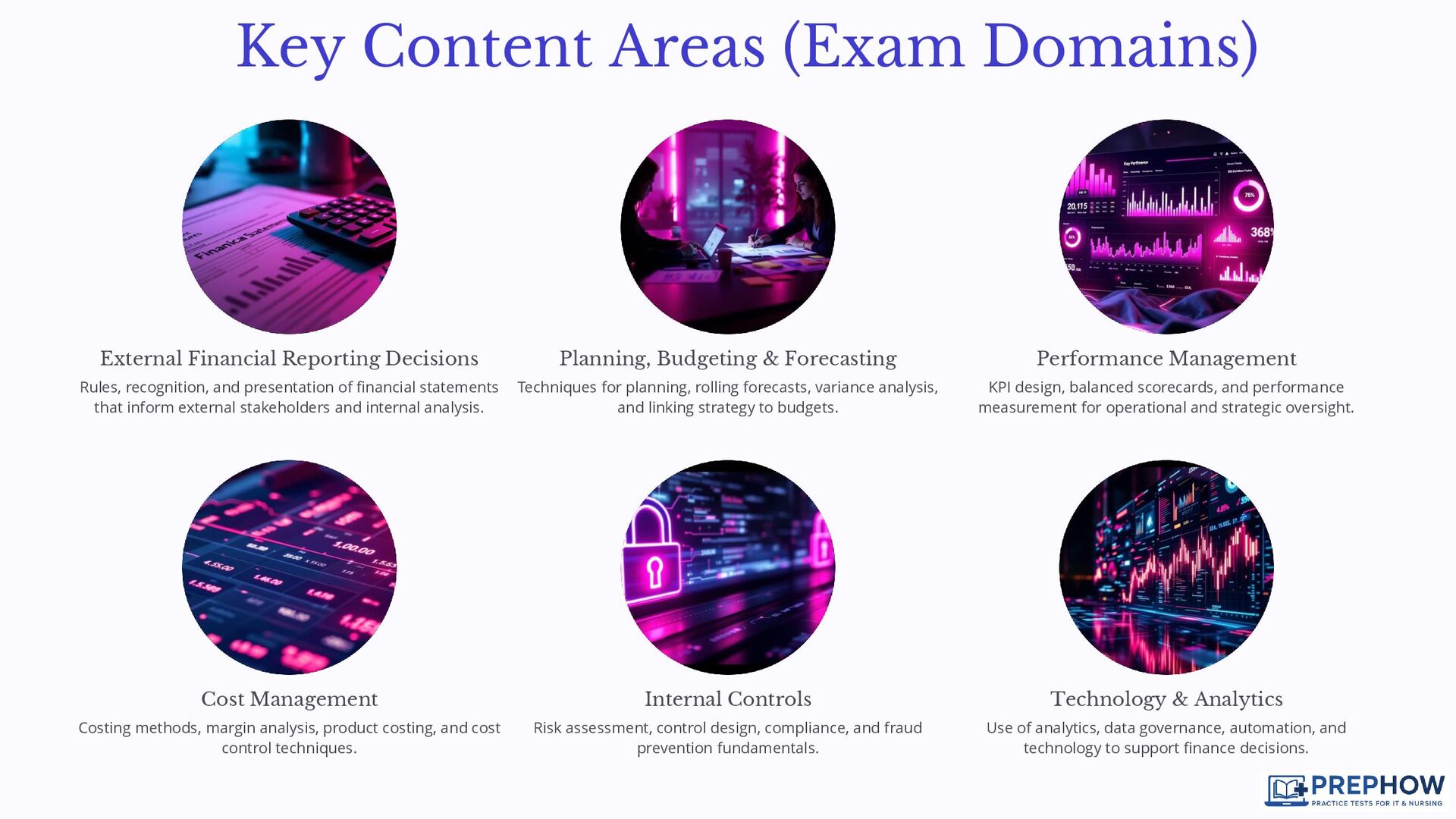
  5. preencoded.png Key Content Areas (Exam Domains) External Financial Reporting Decisions

    Rules, recognition, and presentation of financial statements that inform external stakeholders and internal analysis. Planning, Budgeting & Forecasting Techniques for planning, rolling forecasts, variance analysis, and linking strategy to budgets. Performance Management KPI design, balanced scorecards, and performance measurement for operational and strategic oversight. Cost Management Costing methods, margin analysis, product costing, and cost control techniques. Internal Controls Risk assessment, control design, compliance, and fraud prevention fundamentals. Technology & Analytics Use of analytics, data governance, automation, and technology to support finance decisions.
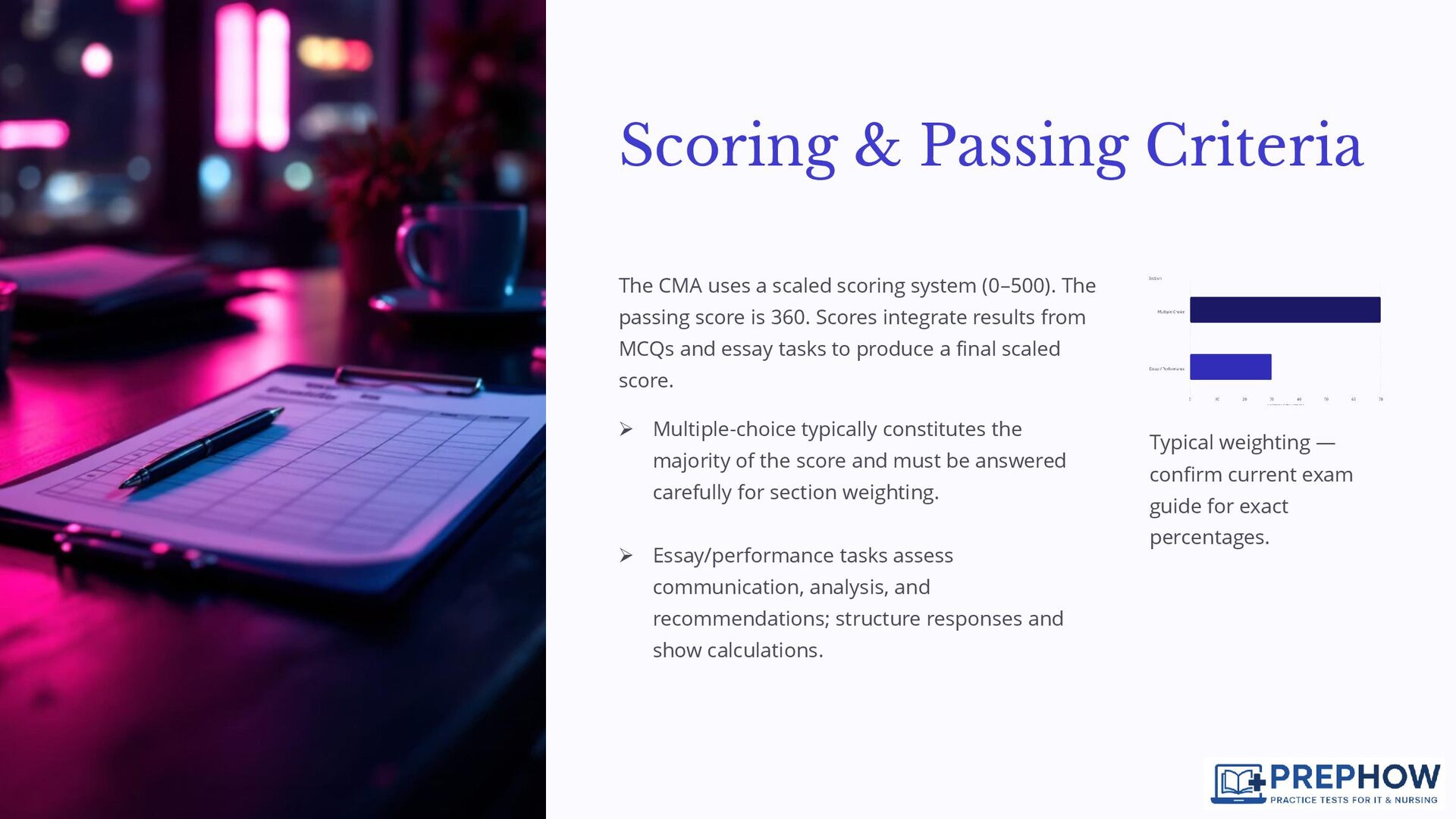
  6. preencoded.png Scoring & Passing Criteria The CMA uses a scaled

    scoring system (0–500). The passing score is 360. Scores integrate results from MCQs and essay tasks to produce a final scaled score. ➢ Multiple-choice typically constitutes the majority of the score and must be answered carefully for section weighting. ➢ Essay/performance tasks assess communication, analysis, and recommendations; structure responses and show calculations. Typical weighting — confirm current exam guide for exact percentages.
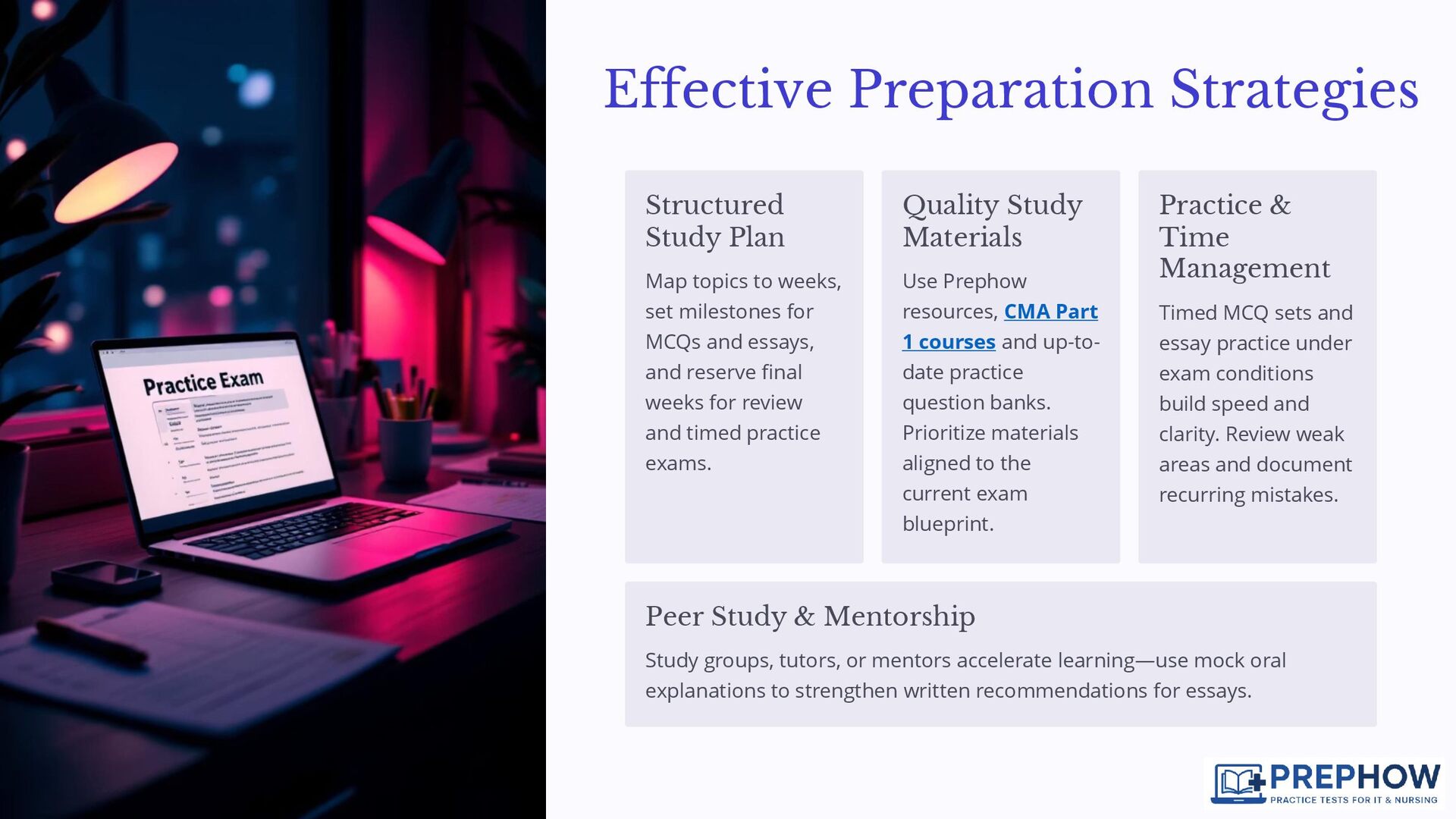
  7. preencoded.png Effective Preparation Strategies Structured Study Plan Map topics to

    weeks, set milestones for MCQs and essays, and reserve final weeks for review and timed practice exams. Quality Study Materials Use Prephow resources, CMA Part 1 courses and up-to- date practice question banks. Prioritize materials aligned to the current exam blueprint. Practice & Time Management Timed MCQ sets and essay practice under exam conditions build speed and clarity. Review weak areas and document recurring mistakes. Peer Study & Mentorship Study groups, tutors, or mentors accelerate learning—use mock oral explanations to strengthen written recommendations for essays.
  8. preencoded.png Skills Gained Develop analytical reporting, budgeting, performance measurement, and

    data- driven decision-making skills that are directly transferable to finance and management roles. ✓ Financial analysis & forecasting ✓ Performance metric design ✓ Data interpretation for strategic decisions Opportunities & Compensation Passing Part 1 improves your candidacy for roles in FP&A, management accounting, and operations finance. Combined with Part 2 and experience, CMAs often see higher salary trajectories and faster promotions. Employers value the CMA for its practical focus on strategy and operations — start positioning internships and projects to highlight these competencies. Career Impact of Passing CMA Part 1
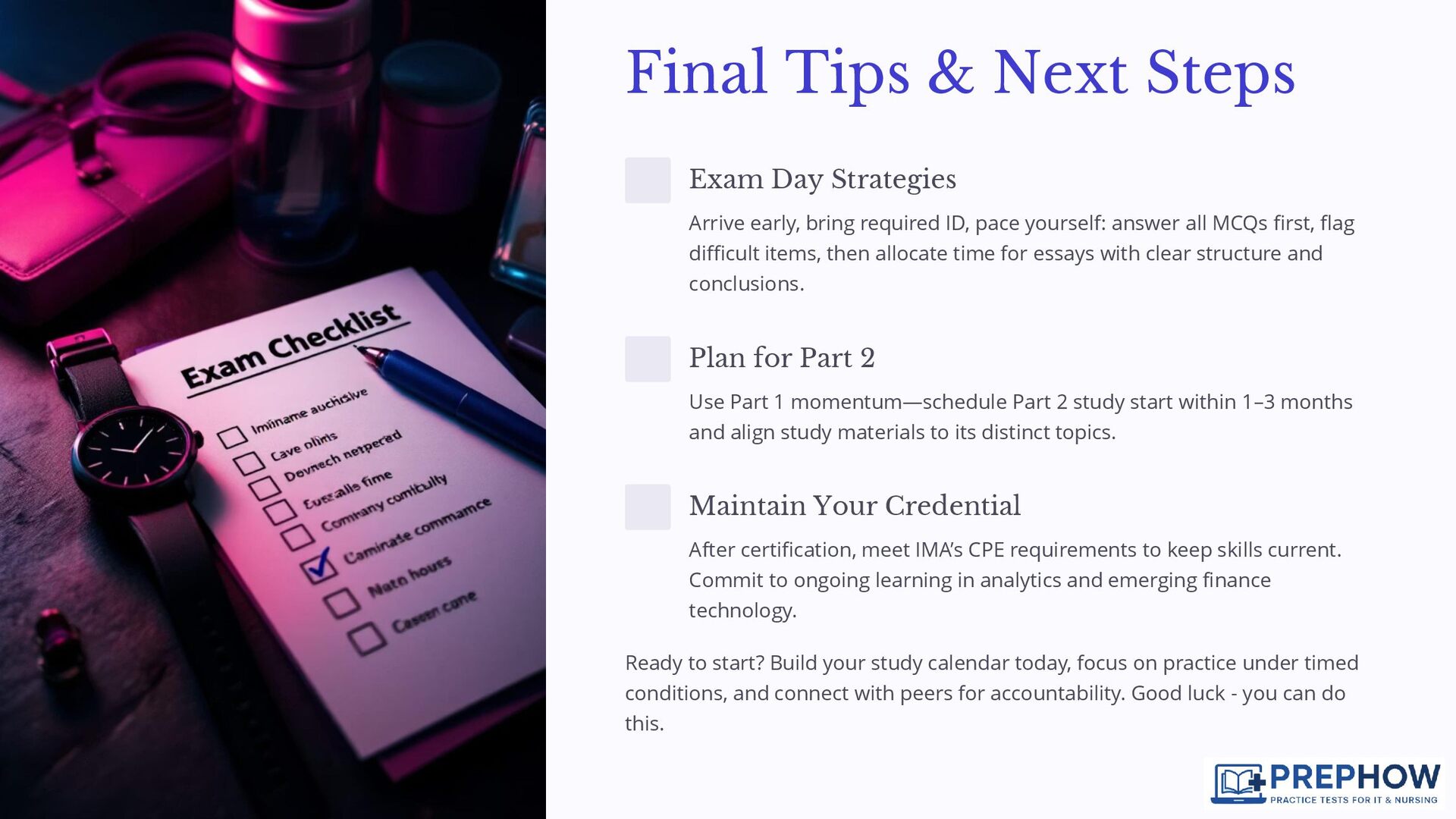
  9. preencoded.png Final Tips & Next Steps Exam Day Strategies Arrive

    early, bring required ID, pace yourself: answer all MCQs first, flag difficult items, then allocate time for essays with clear structure and conclusions. Plan for Part 2 Use Part 1 momentum—schedule Part 2 study start within 1–3 months and align study materials to its distinct topics. Maintain Your Credential After certification, meet IMA’s CPE requirements to keep skills current. Commit to ongoing learning in analytics and emerging finance technology. Ready to start? Build your study calendar today, focus on practice under timed conditions, and connect with peers for accountability. Good luck - you can do this.