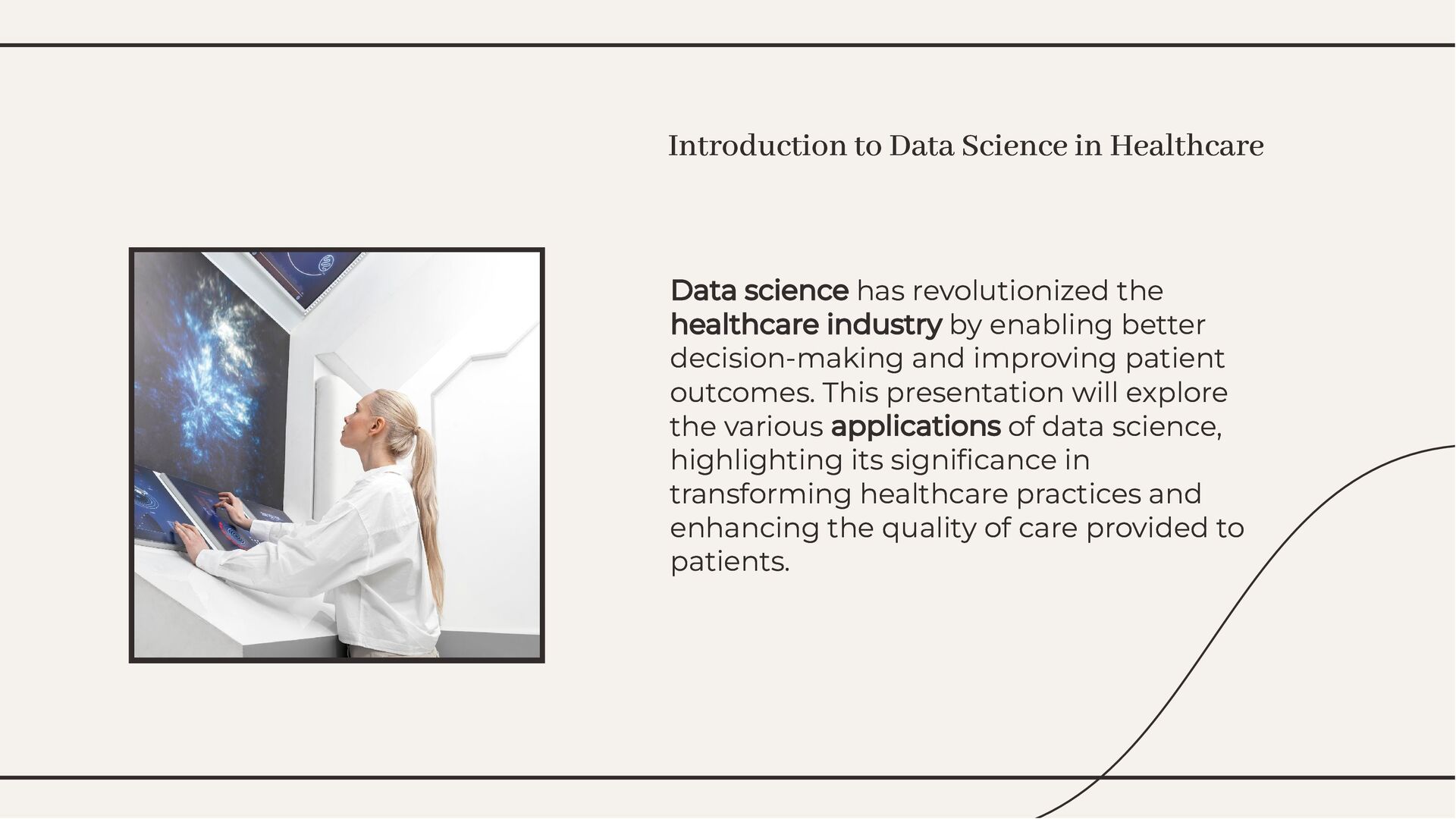
decision-making and improving patient outcomes. This presentation will explore the various applications of data science, highlighting its significance in transforming healthcare practices and enhancing the quality of care provided to patients. Data science has revolutionized the healthcare industry by enabling better decision-making and improving patient outcomes. This presentation will explore the various applications of data science, highlighting its significance in transforming healthcare practices and enhancing the quality of care provided to patients. Introduction to Data Science in Healthcare Introduction to Data Science in Healthcare
of the most impactful applications of data science is predictive analytics, which utilizes historical and real-time data to forecast patient outcomes. For instance, predictive models can identify patients at high risk for conditions such as heart disease or diabetes, allowing for early interventions that can prevent complications and reduce mortality rates. Personalized Treatment Plans: Data science enables the customization of treatment plans based on individual patient data, including genetic information and lifestyle factors. This approach not only improves the effectiveness of treatments but also enhances patient satisfaction by tailoring healthcare to individual needs Disease Diagnosis and Prognosis: Advanced algorithms can analyze medical images and patient symptoms to assist in diagnosing diseases more accurately and quickly. This capability is particularly valuable in fields such as radiology, where data-driven models can highlight anomalies in imaging that may be overlooked by human eyes
patient needs and prevent complications. By analyzing historical data, providers can identify at-risk populations and tailor interventions, ultimately leading to improved health outcomes and more efficient resource allocation. The use of predictive analytics allows healthcare providers to anticipate patient needs and prevent complications. By analyzing historical data, providers can identify at-risk populations and tailor interventions, ultimately leading to improved health outcomes and more efficient resource allocation. Predictive Analytics in Patient Care Predictive Analytics in Patient Care
on real-time data. This approach enhances clinical workflows, reduces errors, and fosters a culture of continuous improvement within healthcare organizations, ensuring that patient care is both effective and efficient. Data science empowers healthcare professionals to make informed decisions based on real-time data. This approach enhances clinical workflows, reduces errors, and fosters a culture of continuous improvement within healthcare organizations, ensuring that patient care is both effective and efficient. The integration of data science into healthcare is not just a trend; it is a fundamental shift that will shape the future of the industry. By leveraging data- driven insights, healthcare systems can achieve greater efficiency, enhance patient care, and ultimately improve public health outcomes on a larger scale. The integration of data science into healthcare is not just a trend; it is a fundamental shift that will shape the future of the industry. By leveraging data- driven insights, healthcare systems can achieve greater efficiency, enhance patient care, and ultimately improve public health outcomes on a larger scale. Conclusion: The Future of Healthcare Conclusion: The Future of Healthcare


 carmenintech
 soysaucechin
 lara
lara
 ipullrank
 maltzj
 jct
jct
 coloredviolet
 chrisshort
 shpigford
 kimpetersen
 techseoconnect
 aleyda