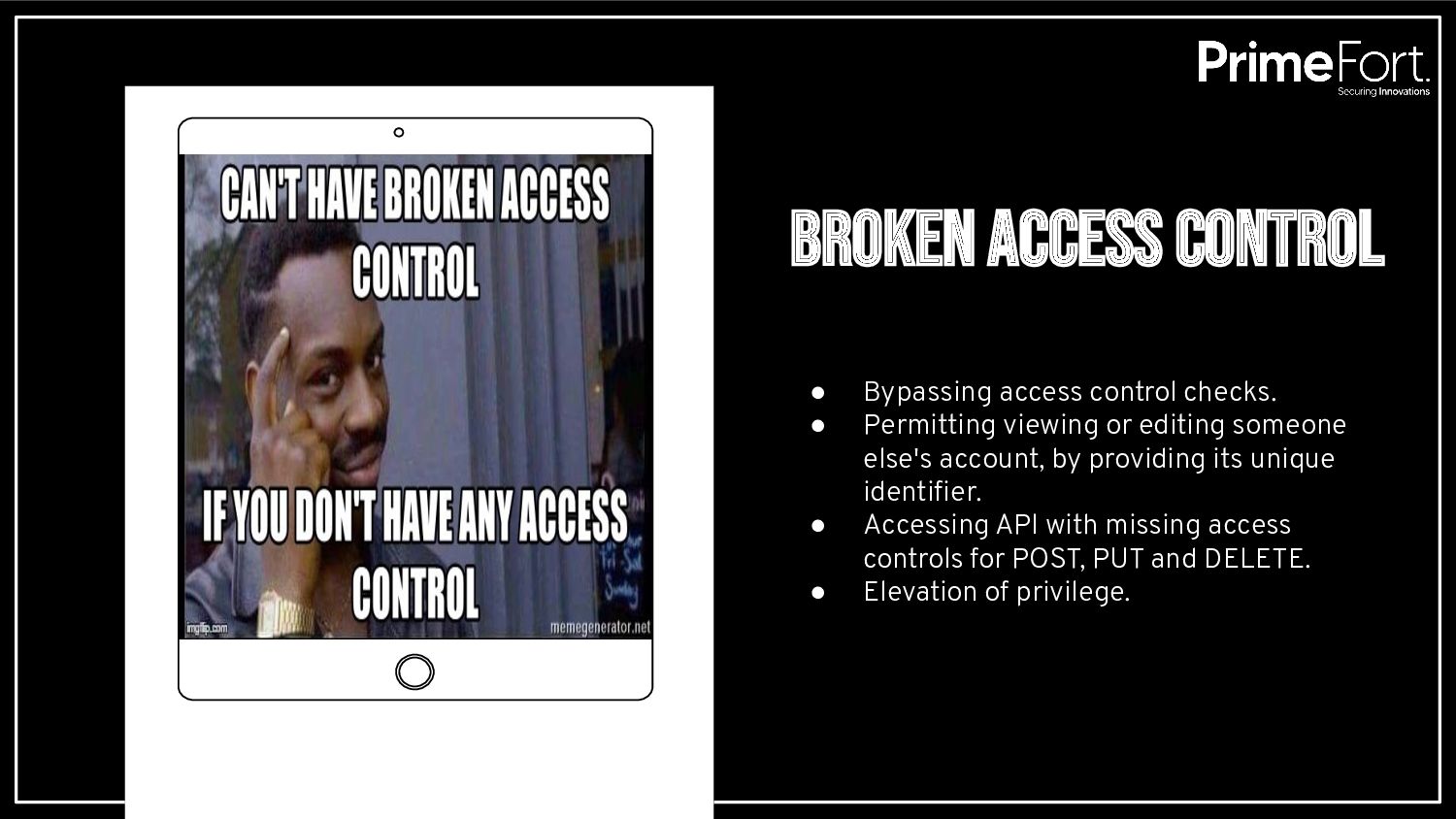
viewing or editing someone else's account, by providing its unique identifier. • Accessing API with missing access controls for POST, PUT and DELETE. • Elevation of privilege.
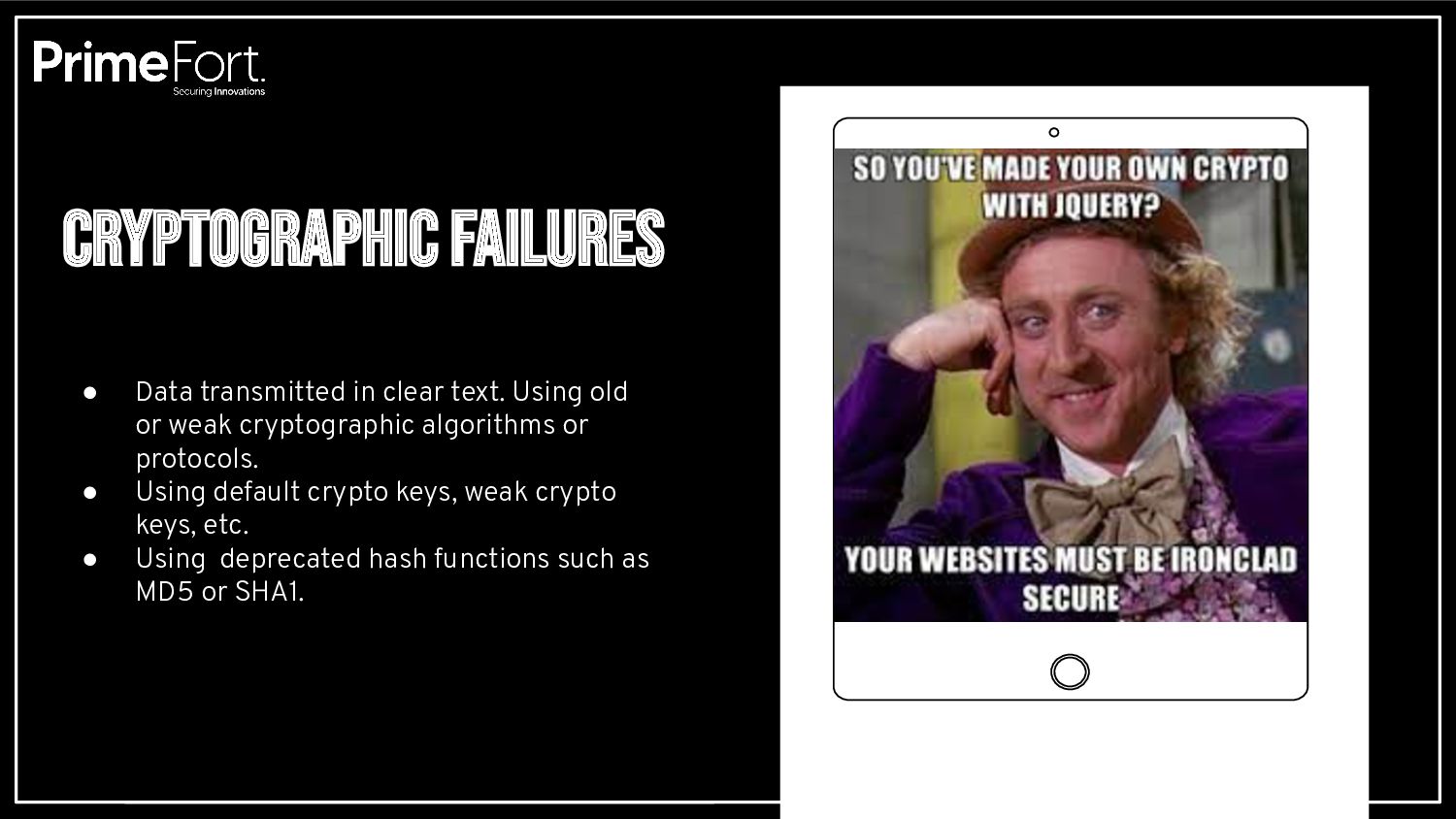
or weak cryptographic algorithms or protocols. • Using default crypto keys, weak crypto keys, etc. • Using deprecated hash functions such as MD5 or SHA1.
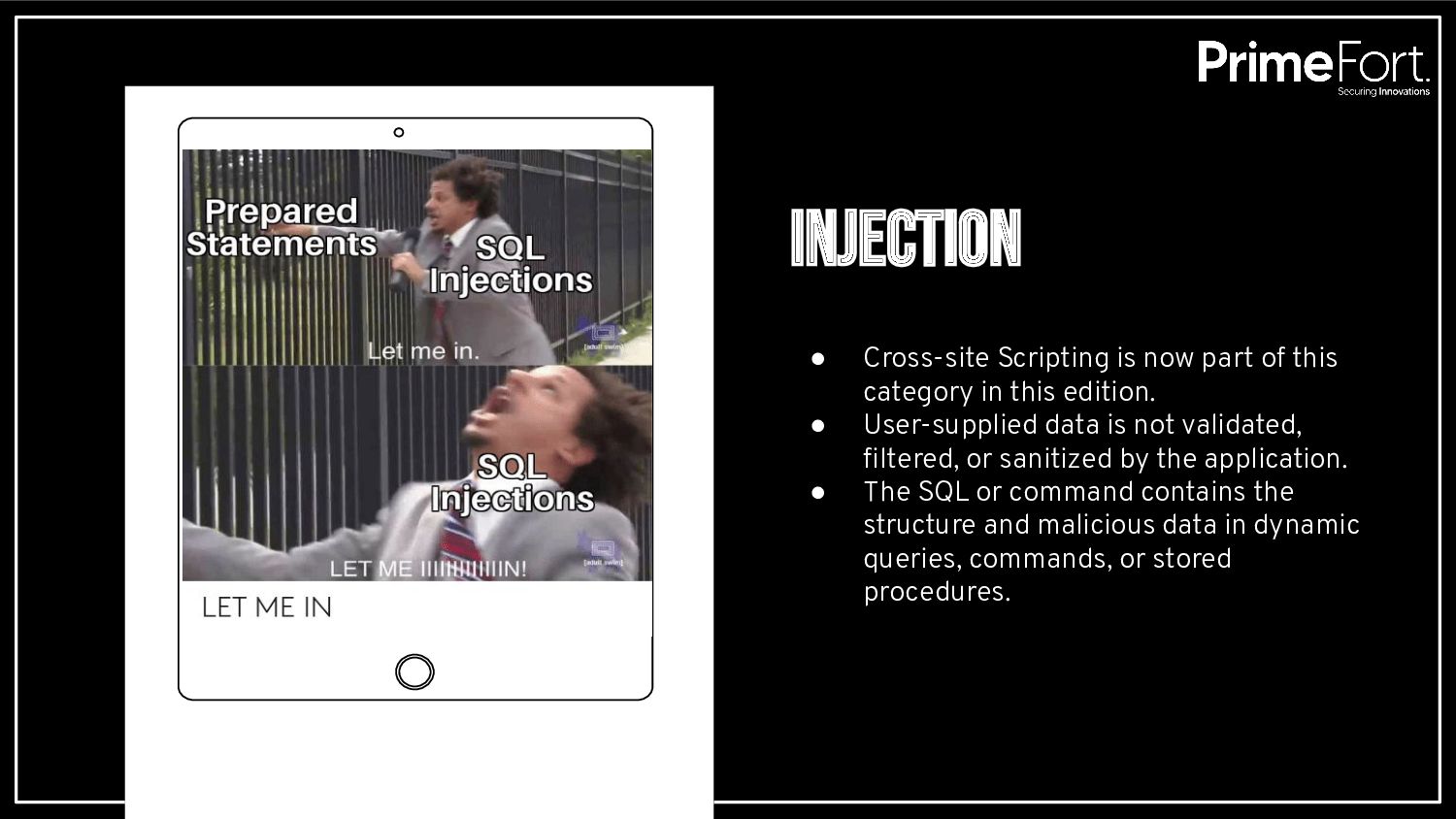
in this edition. • User-supplied data is not validated, filtered, or sanitized by the application. • The SQL or command contains the structure and malicious data in dynamic queries, commands, or stored procedures.
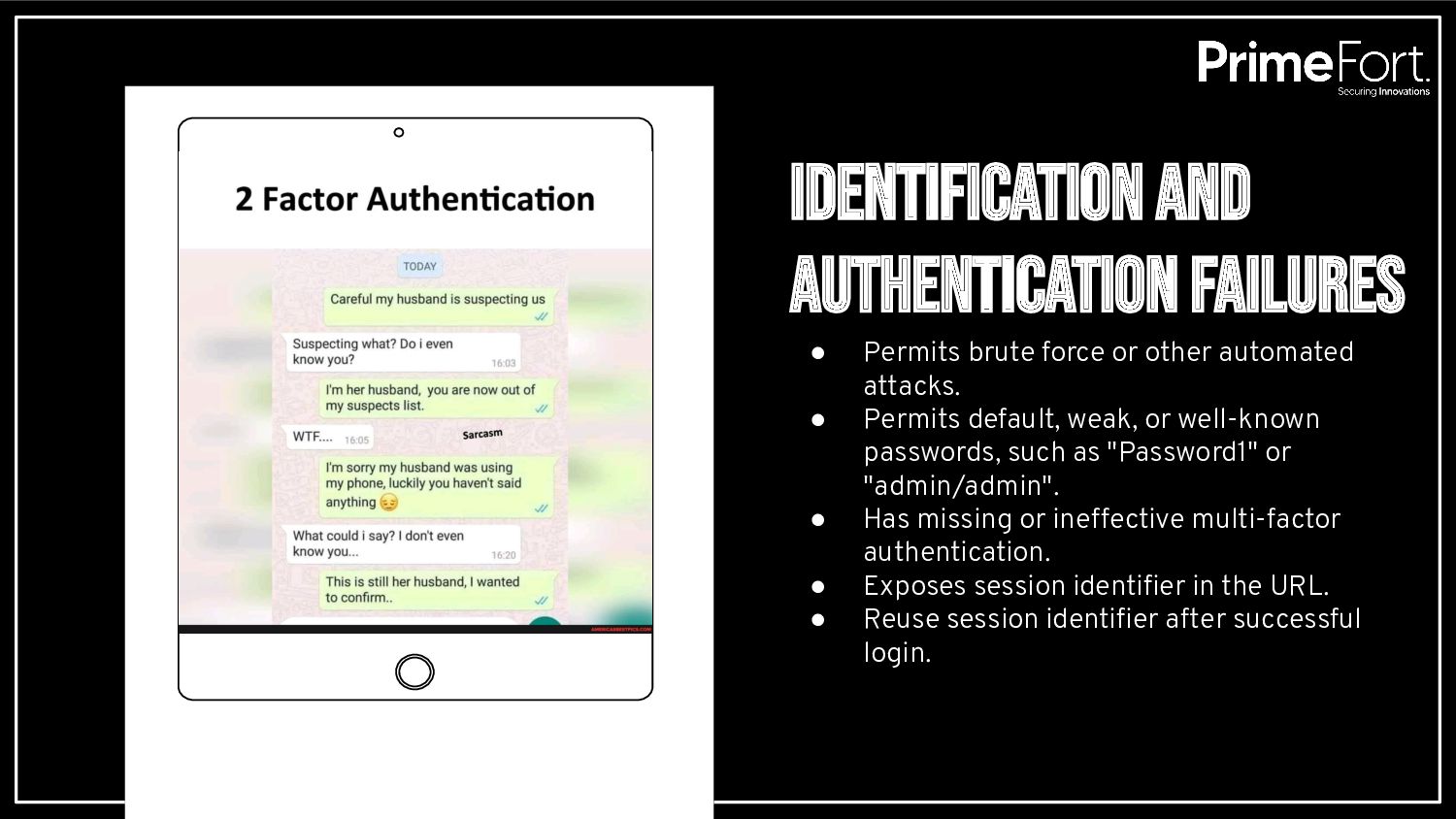
automated attacks. • Permits default, weak, or well-known passwords, such as "Password1" or "admin/admin". • Has missing or ineffective multi-factor authentication. • Exposes session identifier in the URL. • Reuse session identifier after successful login.
similar mechanisms to verify the software or data. • Ensure libraries and dependencies, such as npm or Maven, are consuming trusted repositories. • Ensure that there is a review process for code and configuration changes. • Ensure that unsigned or unencrypted serialized data is not sent to untrusted clients.
locally. • Warnings and errors generate no, inadequate, or unclear log messages. • Logs of applications and APIs are not monitored for suspicious activity. • Auditable events, such as logins, failed logins, and high-value transactions, are not logged.


 sudhakarmuthumani
 rfdnxbro
 persolserverworks
 jozono
 oikon48
 daidaidai
 pfn
 prog893
 takuroabe
 ludicmind
 codmoninc
 jyouryuusui
 masakiokuda
 ipullrank
 baasie
 rkendrick25
 jakevdp
 emna__ayadi
 dugsong
 watany
 rmw
 tamaranovitovic
 orderedlist
 tammyeverts
 addyosmani