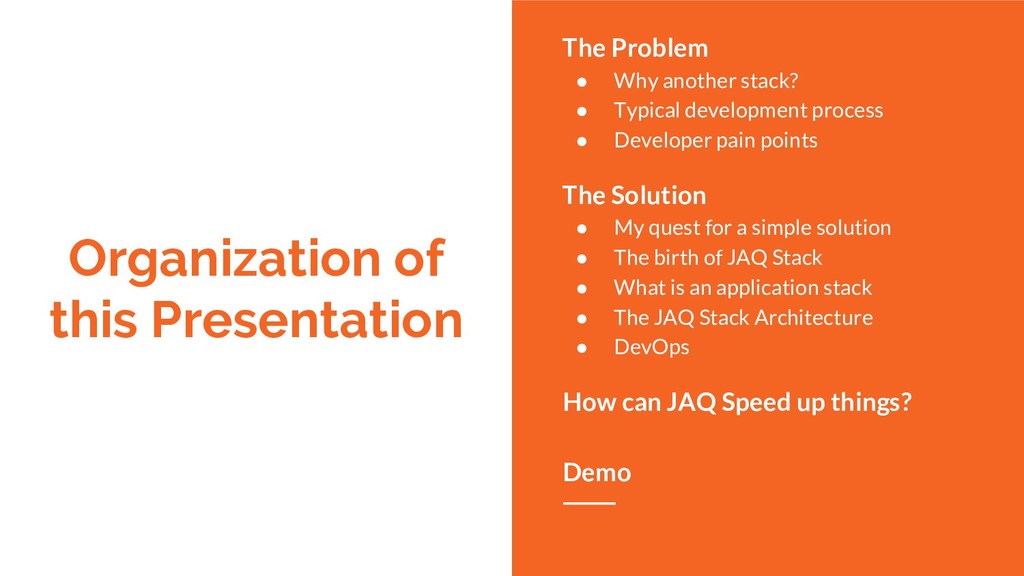
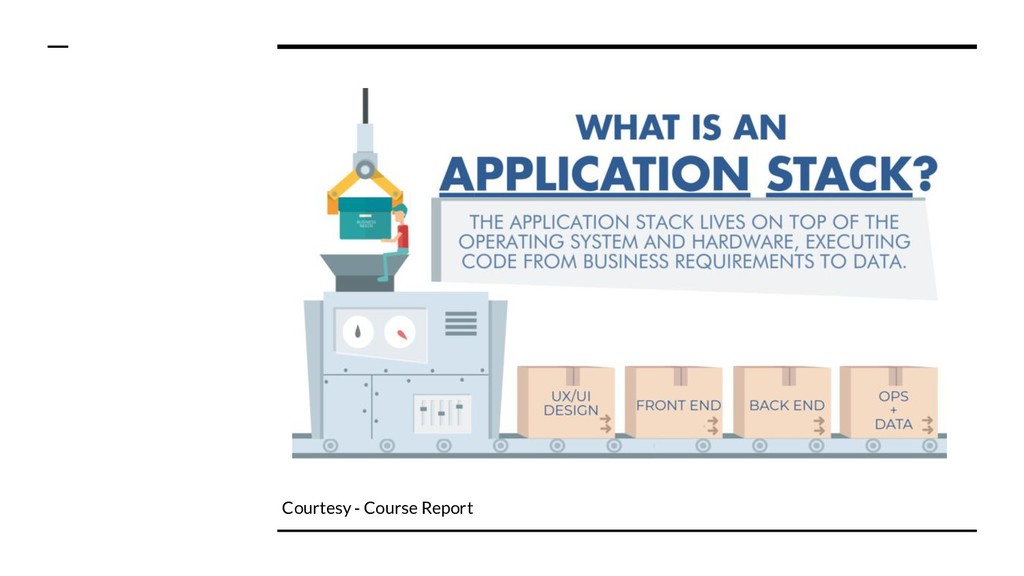
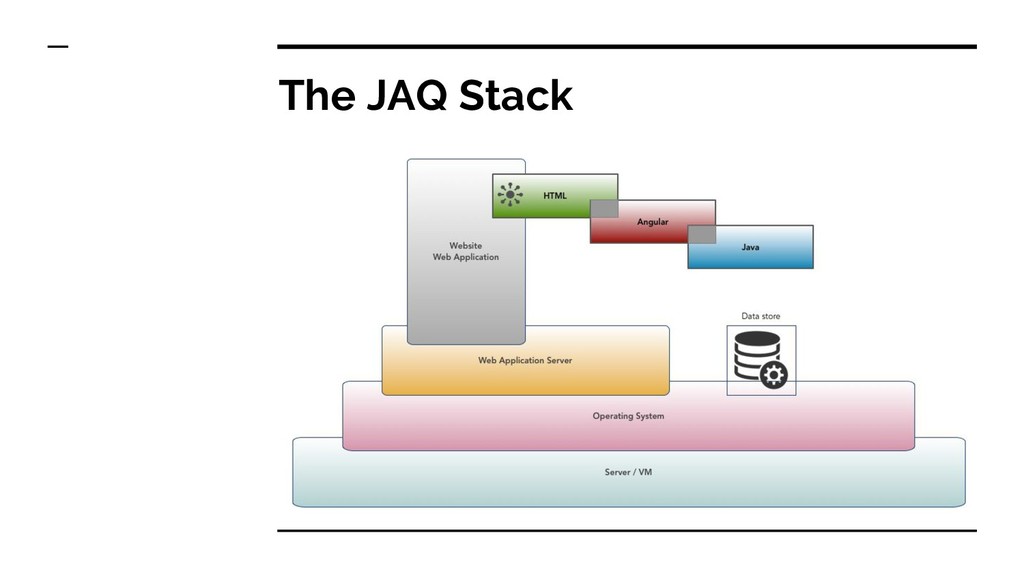
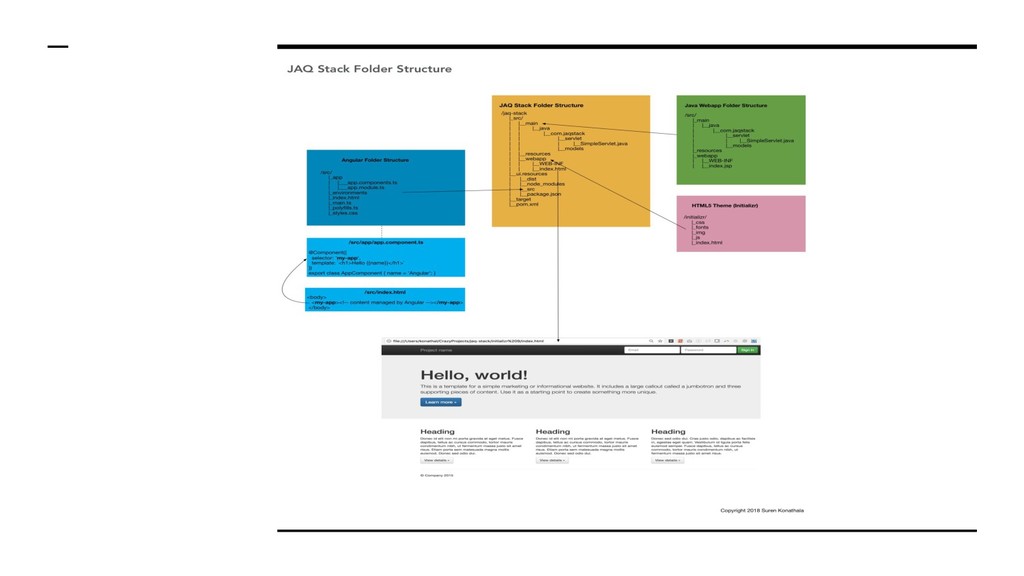
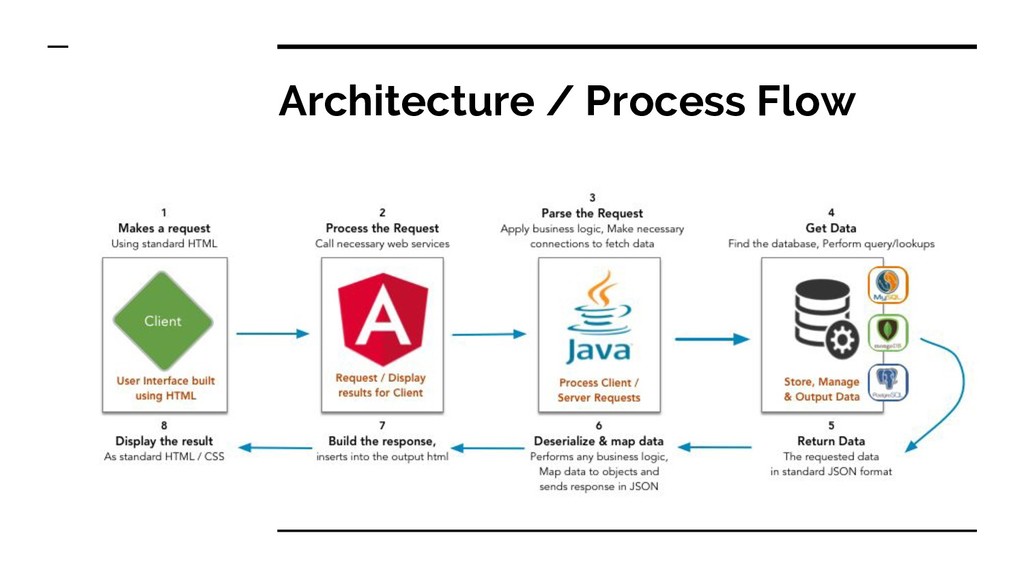
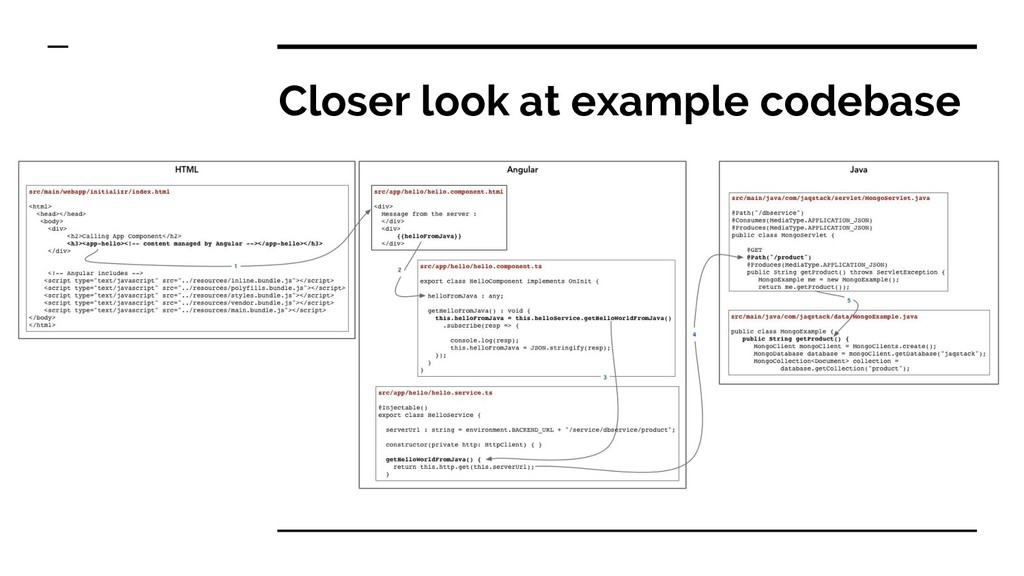
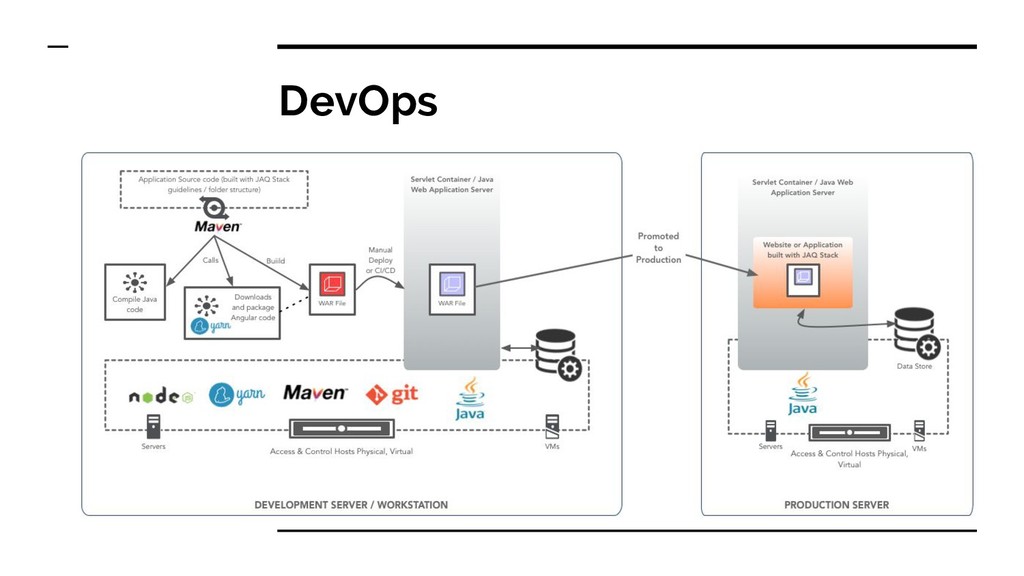
• Typical development process • Developer pain points The Solution • My quest for a simple solution • The birth of JAQ Stack • What is an application stack • The JAQ Stack Architecture • DevOps How can JAQ Speed up things? Demo
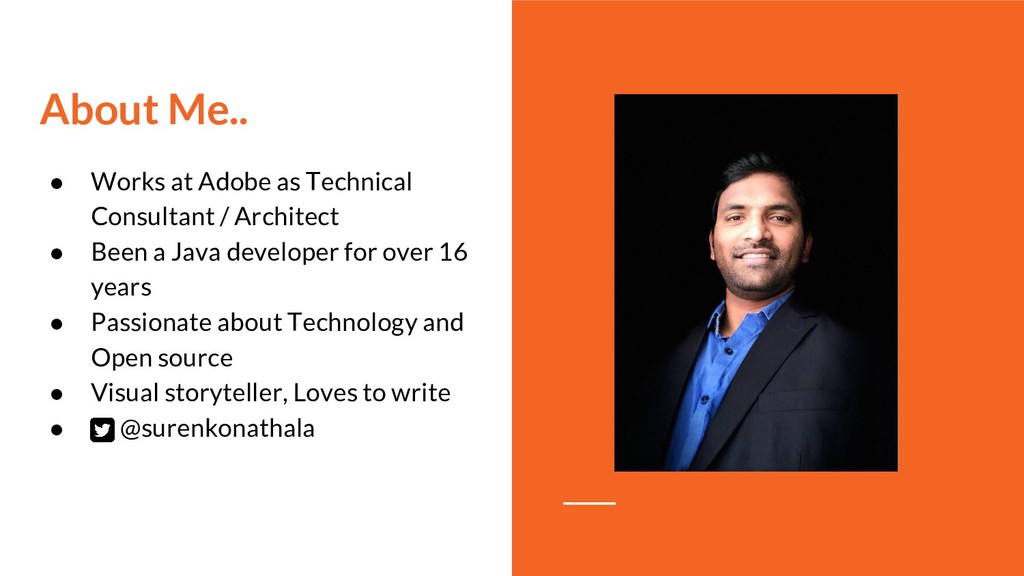
Architect • Been a Java developer for over 16 years • Passionate about Technology and Open source • Visual storyteller, Loves to write • @surenkonathala
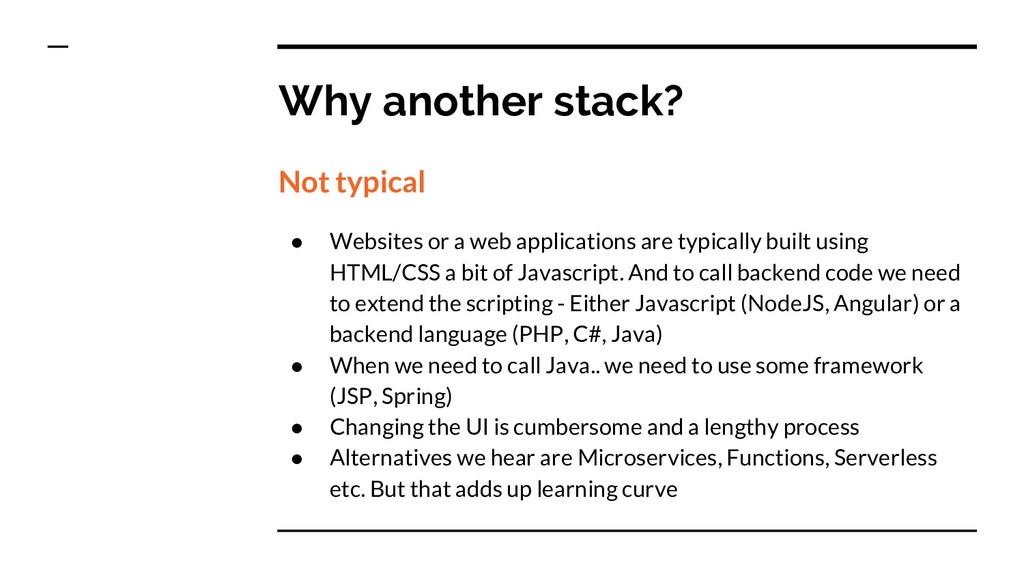
applications are typically built using HTML/CSS a bit of Javascript. And to call backend code we need to extend the scripting - Either Javascript (NodeJS, Angular) or a backend language (PHP, C#, Java) • When we need to call Java.. we need to use some framework (JSP, Spring) • Changing the UI is cumbersome and a lengthy process • Alternatives we hear are Microservices, Functions, Serverless etc. But that adds up learning curve
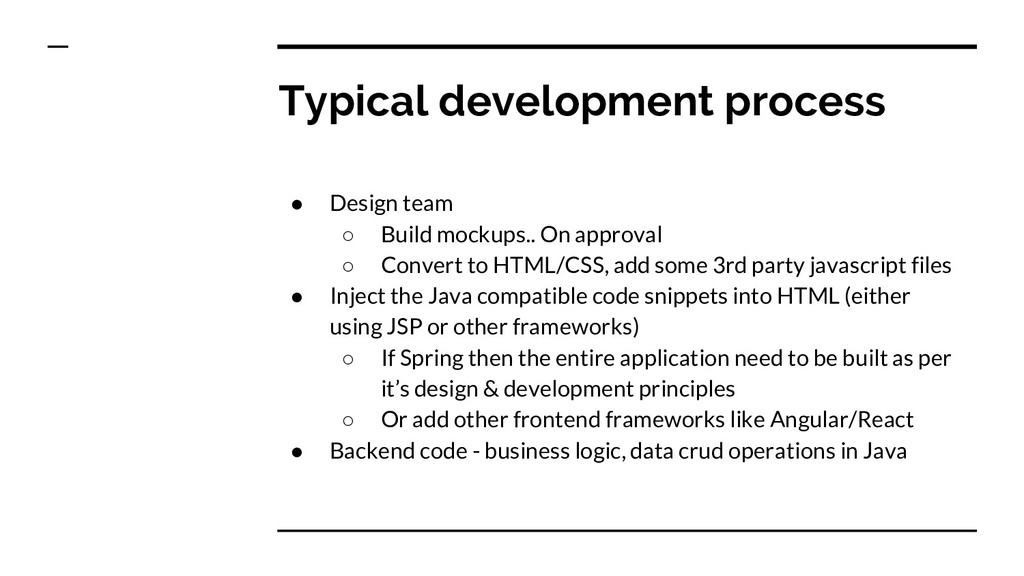
approval ◦ Convert to HTML/CSS, add some 3rd party javascript files • Inject the Java compatible code snippets into HTML (either using JSP or other frameworks) ◦ If Spring then the entire application need to be built as per it’s design & development principles ◦ Or add other frontend frameworks like Angular/React • Backend code - business logic, data crud operations in Java
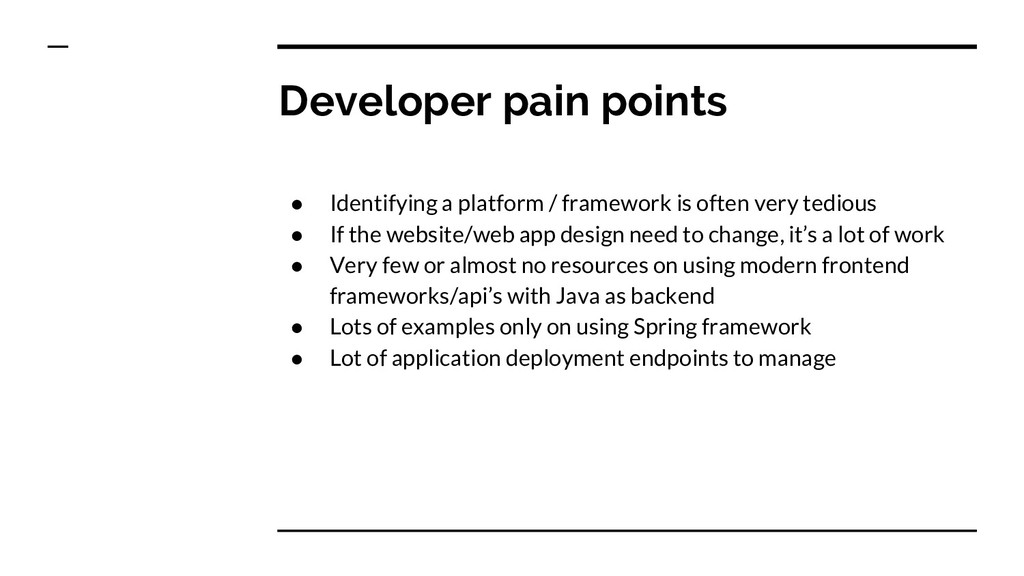
often very tedious • If the website/web app design need to change, it’s a lot of work • Very few or almost no resources on using modern frontend frameworks/api’s with Java as backend • Lots of examples only on using Spring framework • Lot of application deployment endpoints to manage
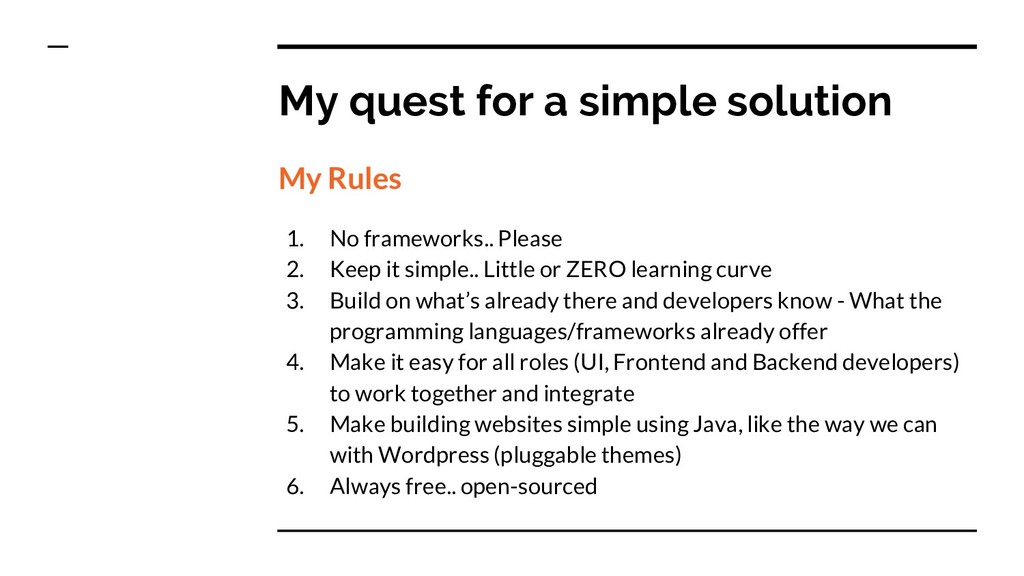
frameworks.. Please 2. Keep it simple.. Little or ZERO learning curve 3. Build on what’s already there and developers know - What the programming languages/frameworks already offer 4. Make it easy for all roles (UI, Frontend and Backend developers) to work together and integrate 5. Make building websites simple using Java, like the way we can with Wordpress (pluggable themes) 6. Always free.. open-sourced
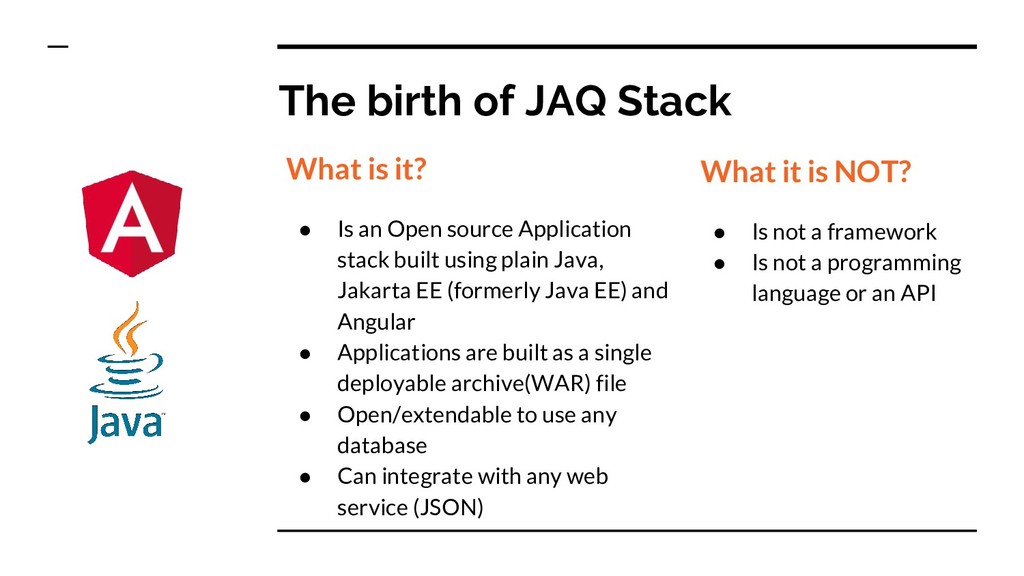
an Open source Application stack built using plain Java, Jakarta EE (formerly Java EE) and Angular • Applications are built as a single deployable archive(WAR) file • Open/extendable to use any database • Can integrate with any web service (JSON) What it is NOT? • Is not a framework • Is not a programming language or an API
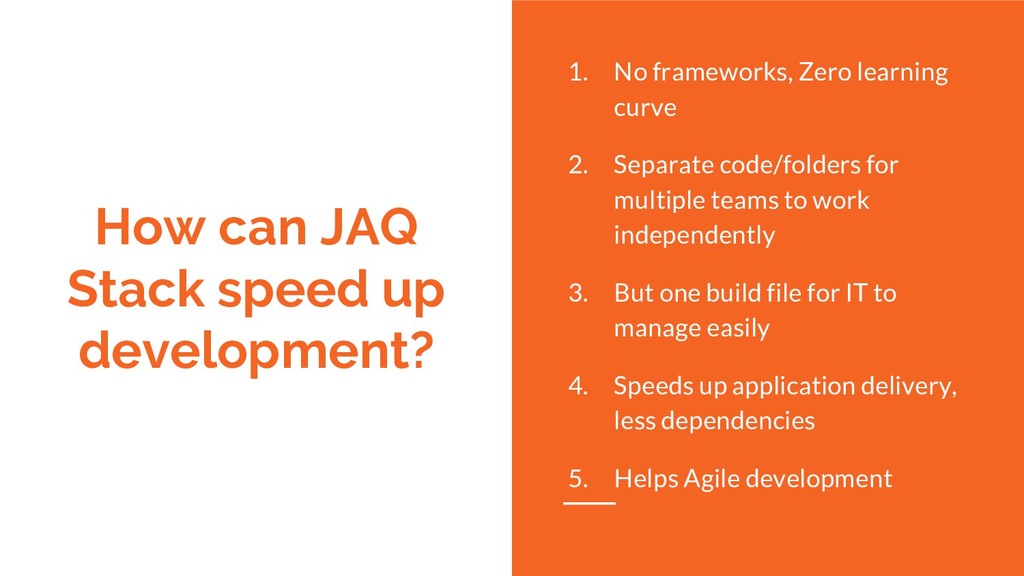
Zero learning curve 2. Separate code/folders for multiple teams to work independently 3. But one build file for IT to manage easily 4. Speeds up application delivery, less dependencies 5. Helps Agile development


 tosite
 sylph01
 deka_morita
 yasaichi
 yub0n
yub0n
 colorful12
 o0h
o0h
 tmikov2023
 uyuki234
 lynnswap
 econanringo
 dske104
 akihiro_kokubo
 hannesfritz
 codingconduct
 szymonslowik
 tmiket
 elsirapls
 baasie
 csswizardry
 productmarketing
 aleyda
 aemeredith
 kevinliebholz