Share
Embed
Rack and Middleware
Introduction to Rack and Middleware for YYC Ruby meetup, Feb 2015.
Tim Uruski
February 03, 2015
Transcript
60 slides
-
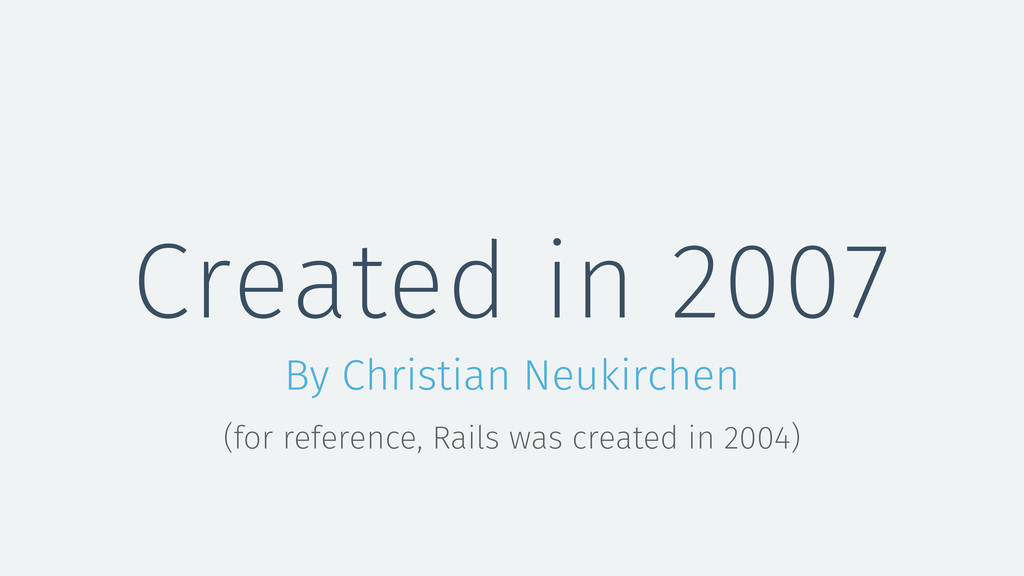
Created in 2007 By Christian Neukirchen (for reference, Rails was
created in 2004) -
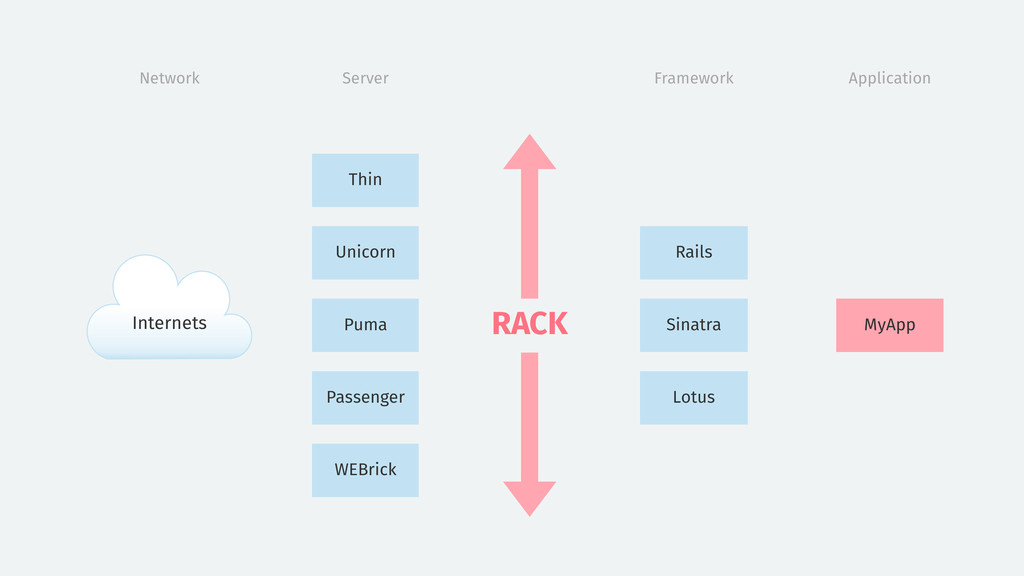
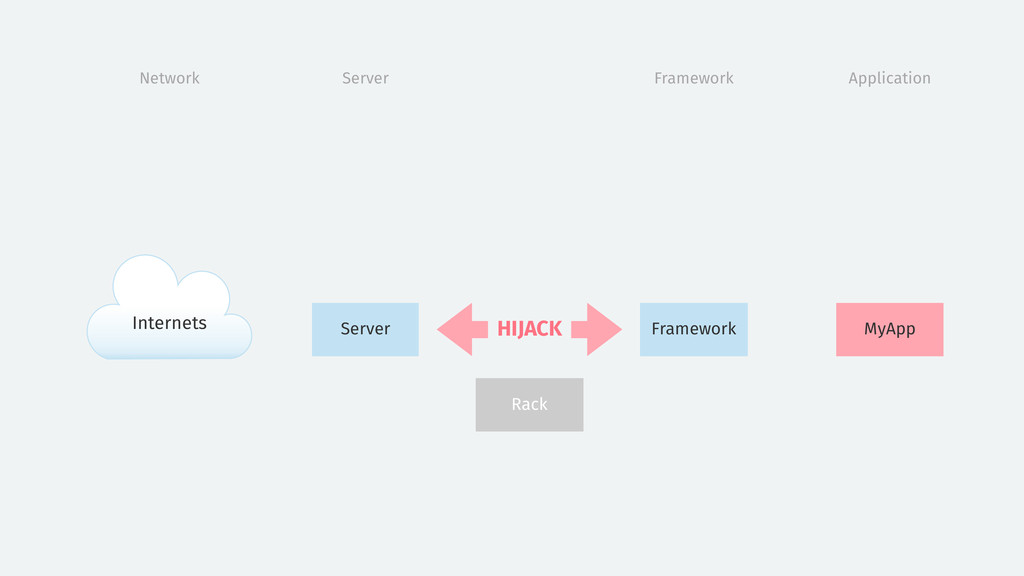
MyApp Thin Unicorn Puma Passenger WEBrick Internets Rails Sinatra Lotus
Server Framework Network Application RACK -
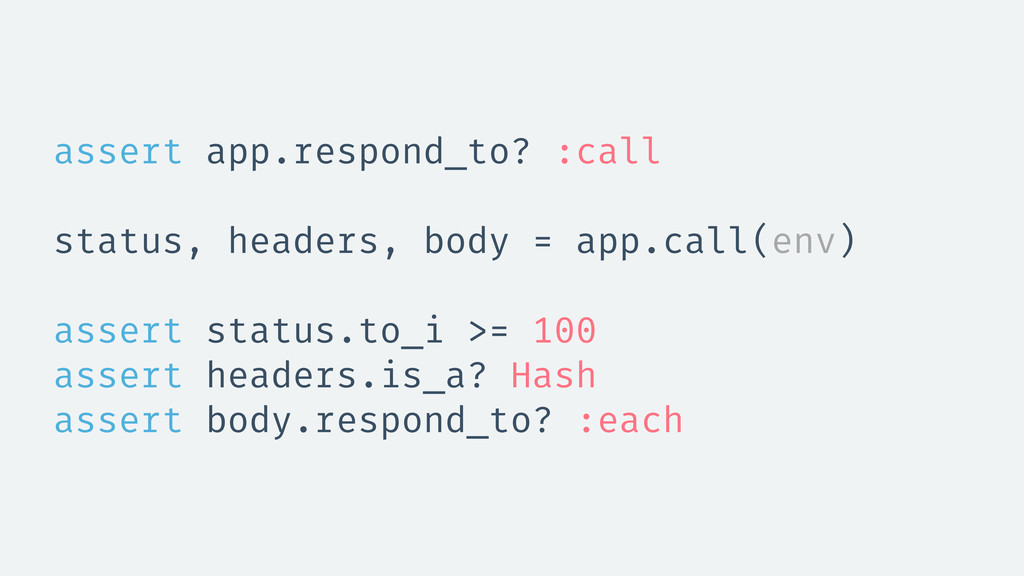
assert app.respond_to? :call status, headers, body = app.call(env) assert status.to_i
>= 100 assert headers.is_a? Hash assert body.respond_to? :each -
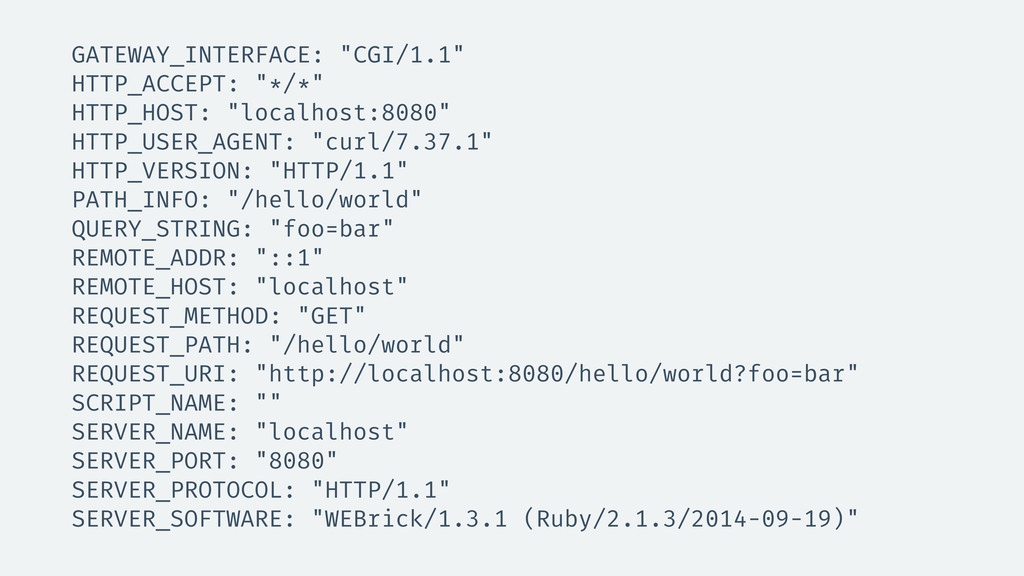
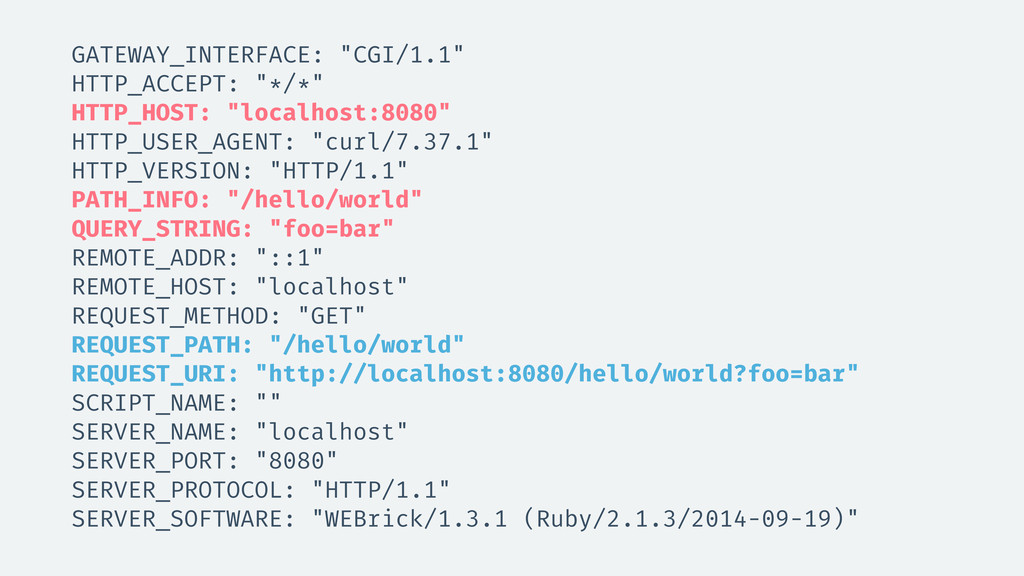
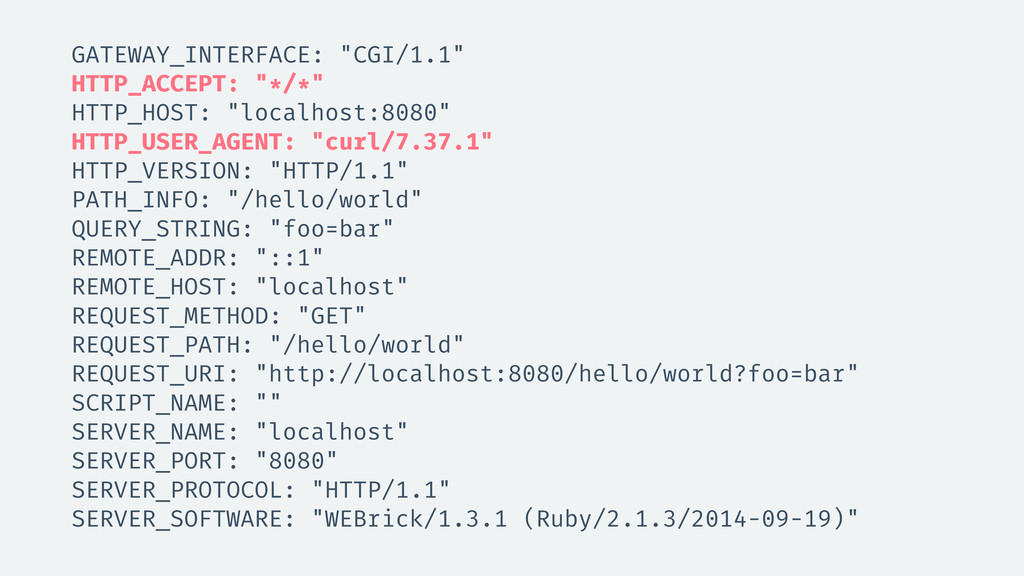
GATEWAY_INTERFACE: "CGI/1.1" HTTP_ACCEPT: "*/*" HTTP_HOST: "localhost:8080" HTTP_USER_AGENT: "curl/7.37.1" HTTP_VERSION: "HTTP/1.1"
PATH_INFO: "/hello/world" QUERY_STRING: "foo=bar" REMOTE_ADDR: "::1" REMOTE_HOST: "localhost" REQUEST_METHOD: "GET" REQUEST_PATH: "/hello/world" REQUEST_URI: "http://localhost:8080/hello/world?foo=bar" SCRIPT_NAME: "" SERVER_NAME: "localhost" SERVER_PORT: "8080" SERVER_PROTOCOL: "HTTP/1.1" SERVER_SOFTWARE: "WEBrick/1.3.1 (Ruby/2.1.3/2014-09-19)" -
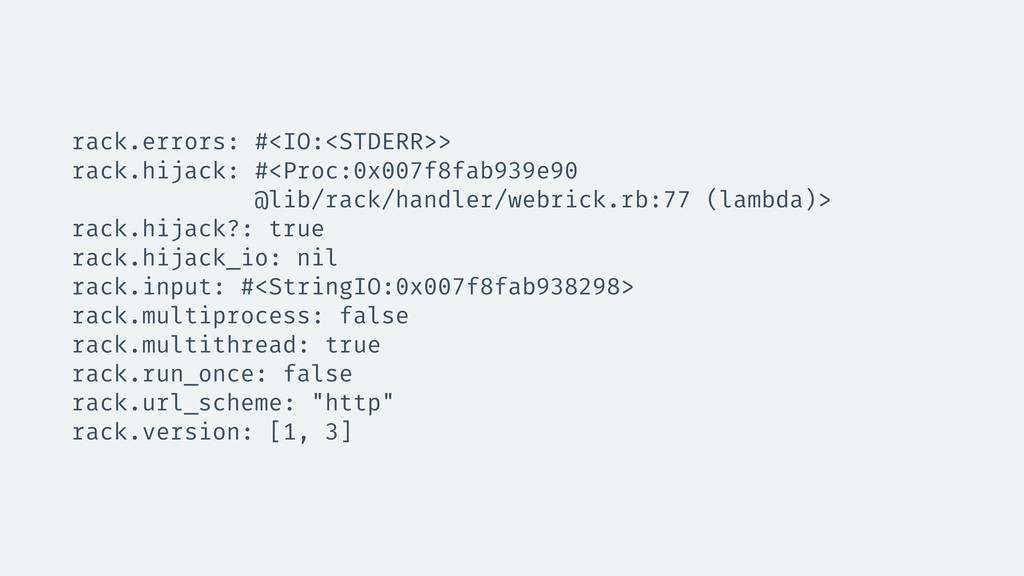
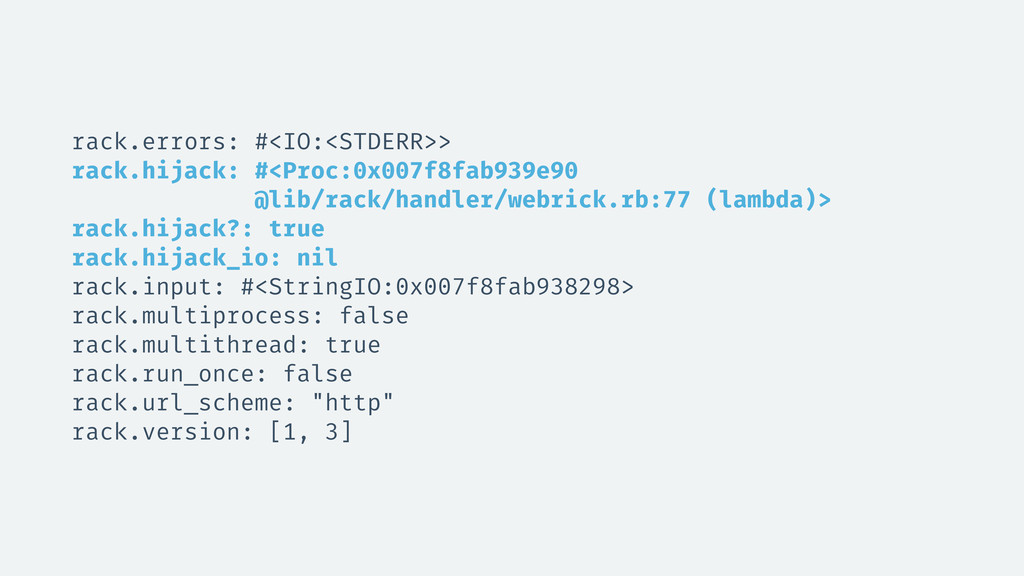
rack.errors: #<IO:<STDERR>> rack.hijack: #<Proc:0x007f8fab939e90 @lib/rack/handler/webrick.rb:77 (lambda)> rack.hijack?: true rack.hijack_io: nil
rack.input: #<StringIO:0x007f8fab938298> rack.multiprocess: false rack.multithread: true rack.run_once: false rack.url_scheme: "http" rack.version: [1, 3] -
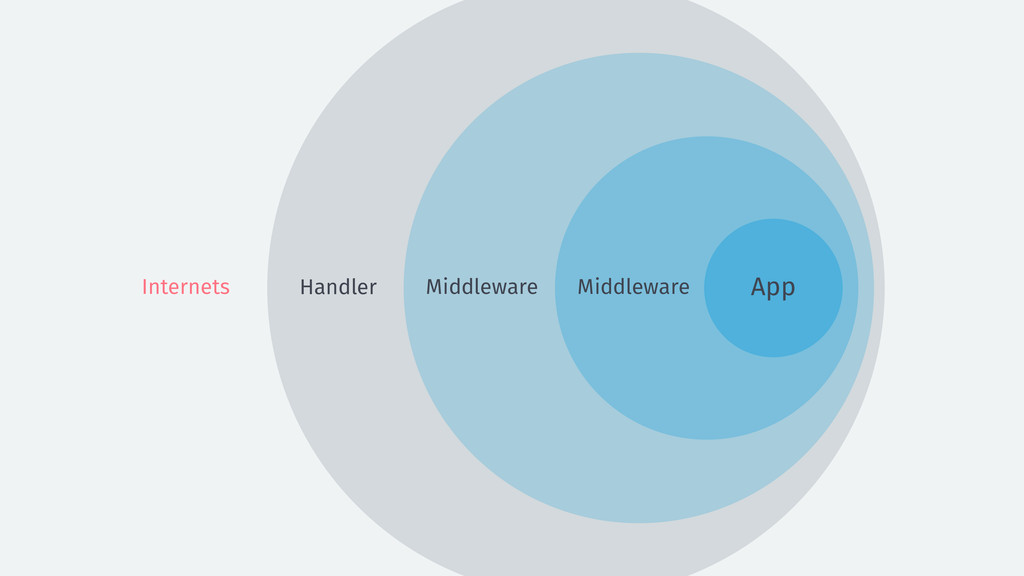
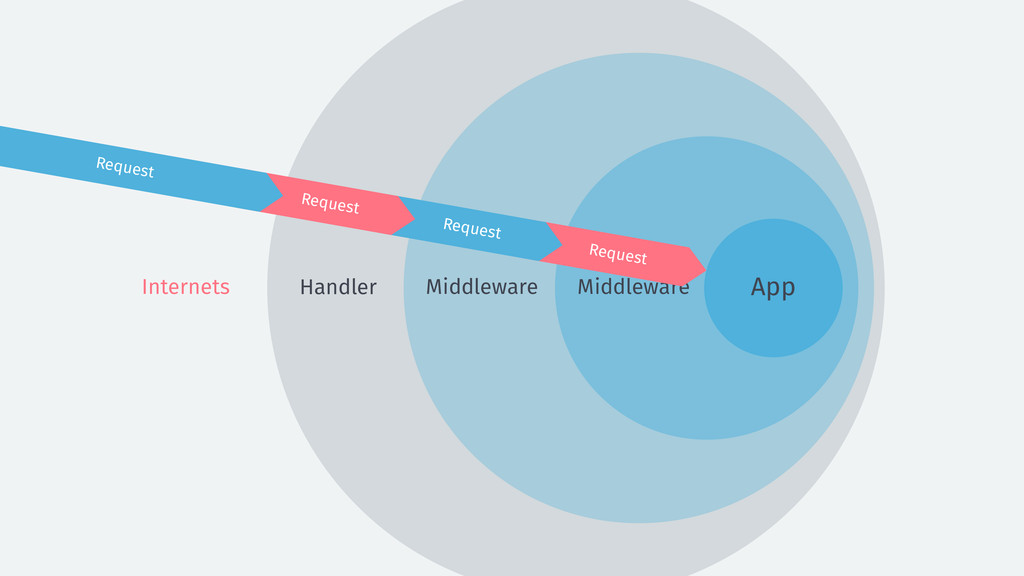
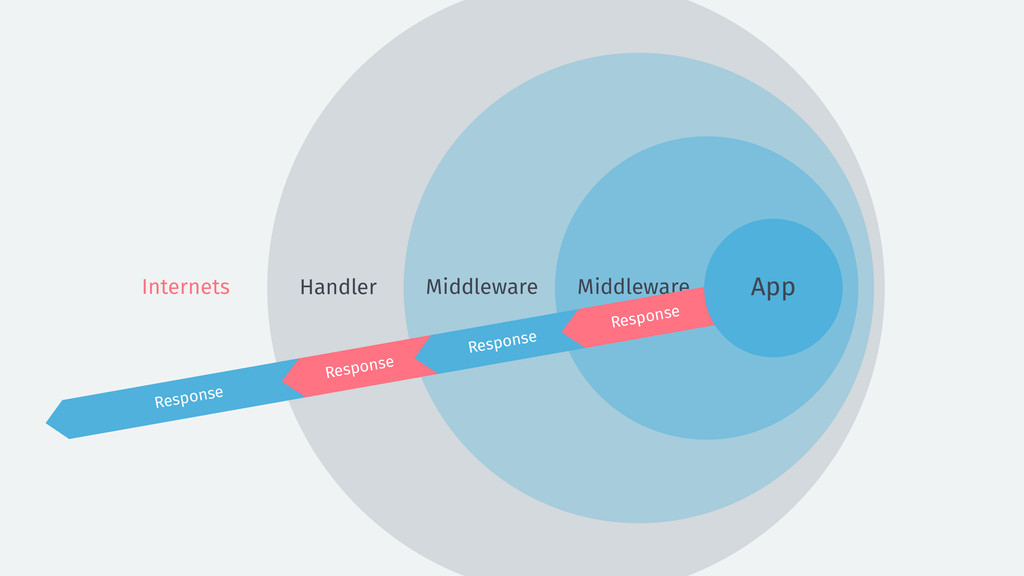
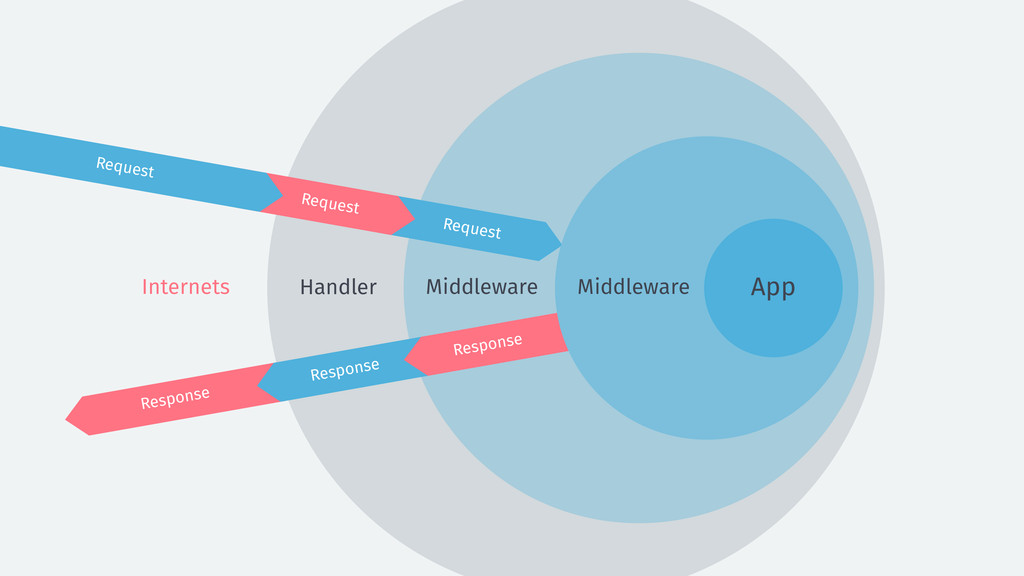
Handler Middleware Internets Request Request Request Request Internets Response Response
Response Middleware App -
qux = ->(env){ [200,{},['Hello world']] } bar = ->(env){ qux.call(env)
} foo = ->(env){ bar.call(env) } run foo -
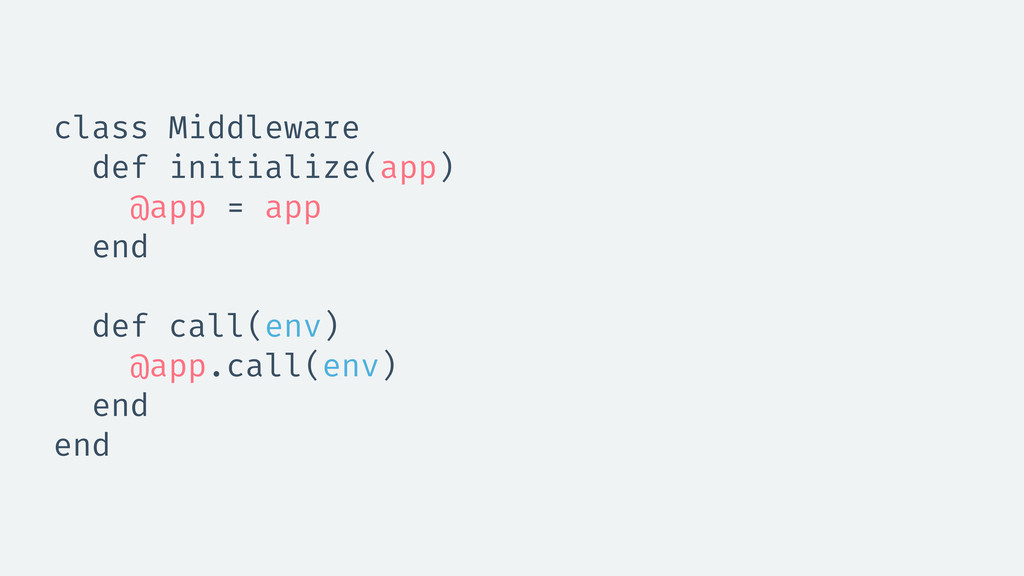
class Middleware def initialize(app) @app = app end def call(env)
@app.call(env) end end -
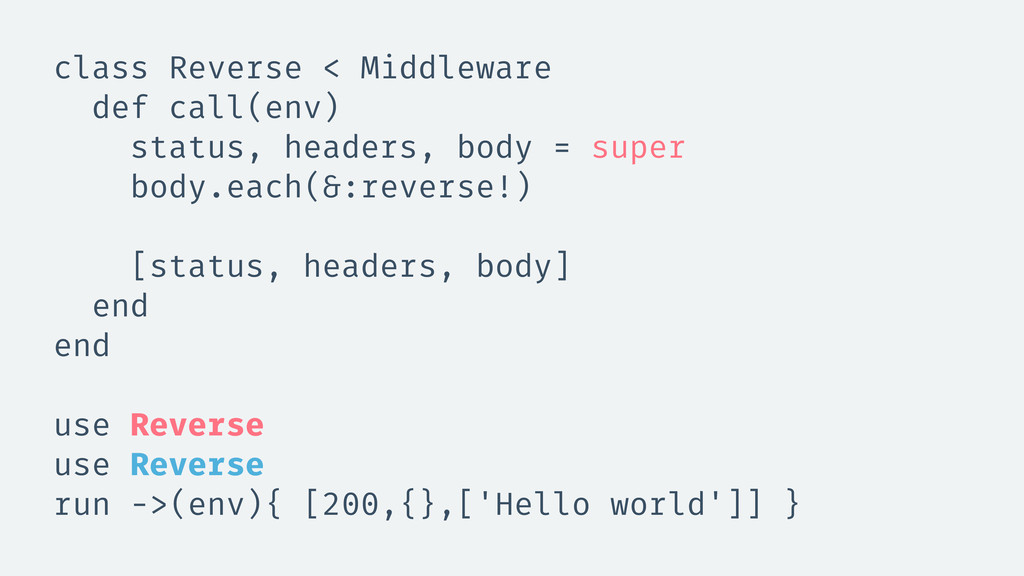
class Reverse < Middleware def call(env) status, headers, body =
super body.each(&:reverse!) [status, headers, body] end end use Reverse use Reverse run ->(env){ [200,{},['Hello world']] } -
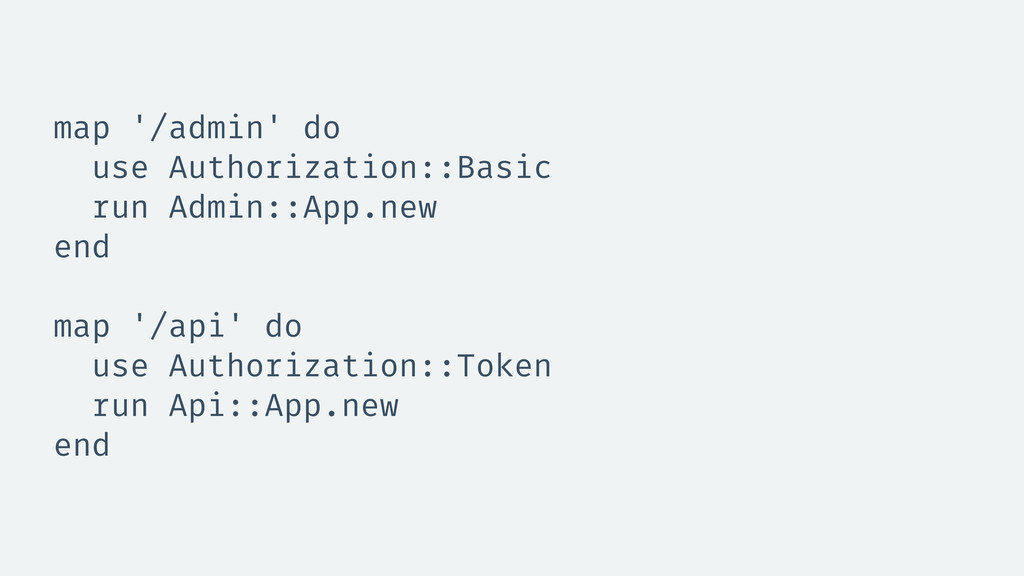
map '/admin' do use Authorization::Basic run Admin::App.new end map '/api'
do use Authorization::Token run Api::App.new end -
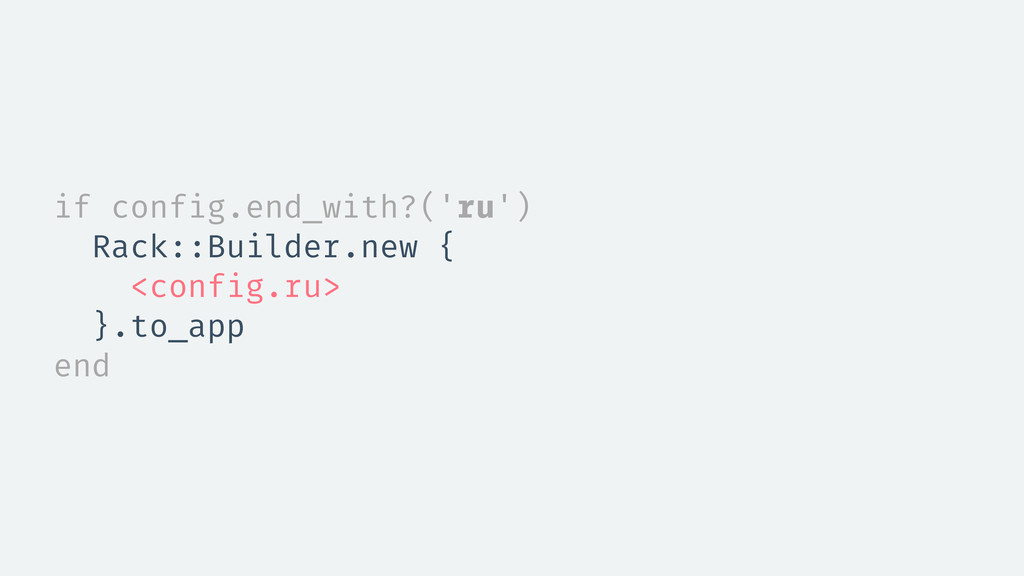
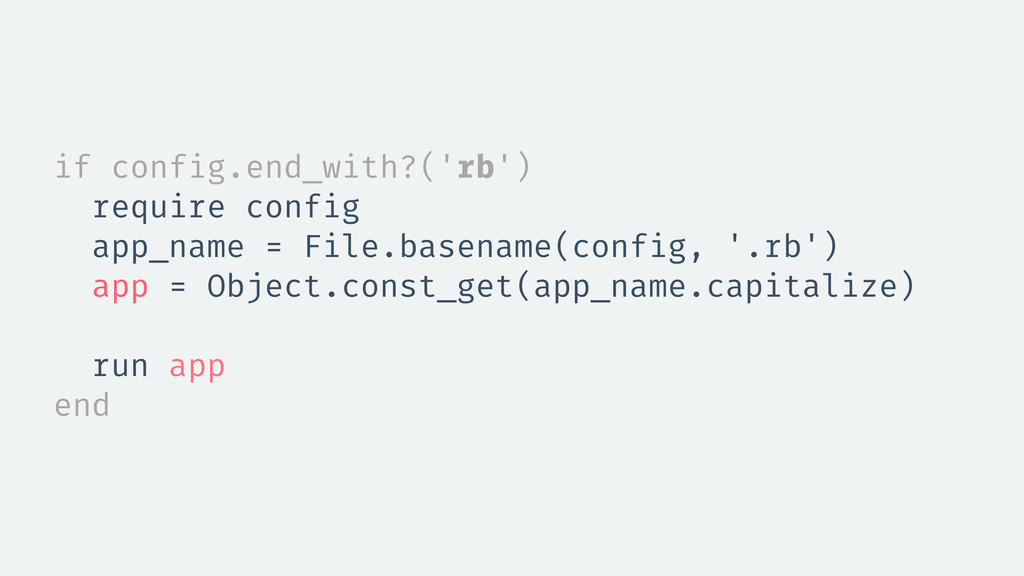
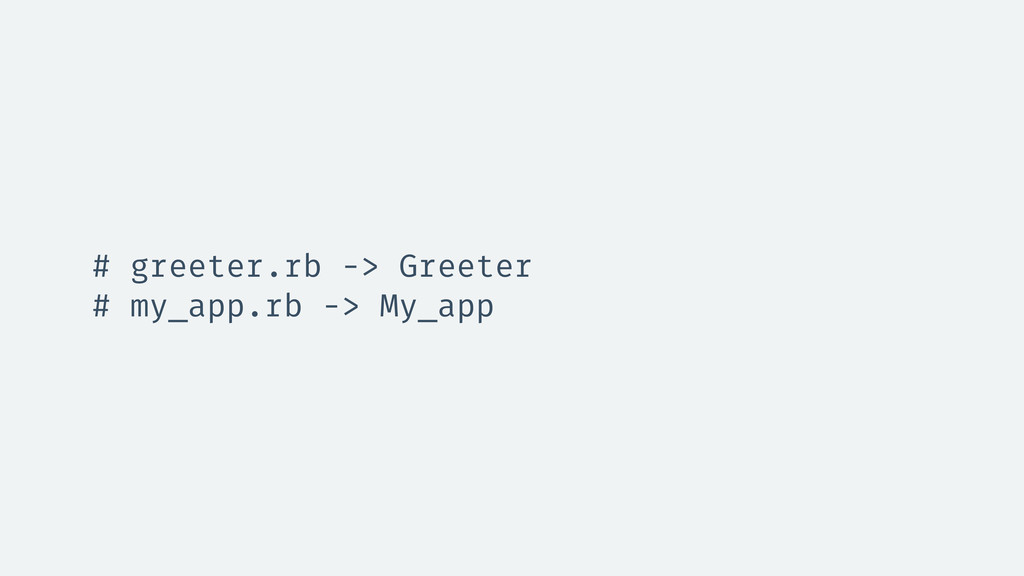
if config.end_with?('rb') require config app_name = File.basename(config, '.rb') app =
Object.const_get(app_name.capitalize) run app end -
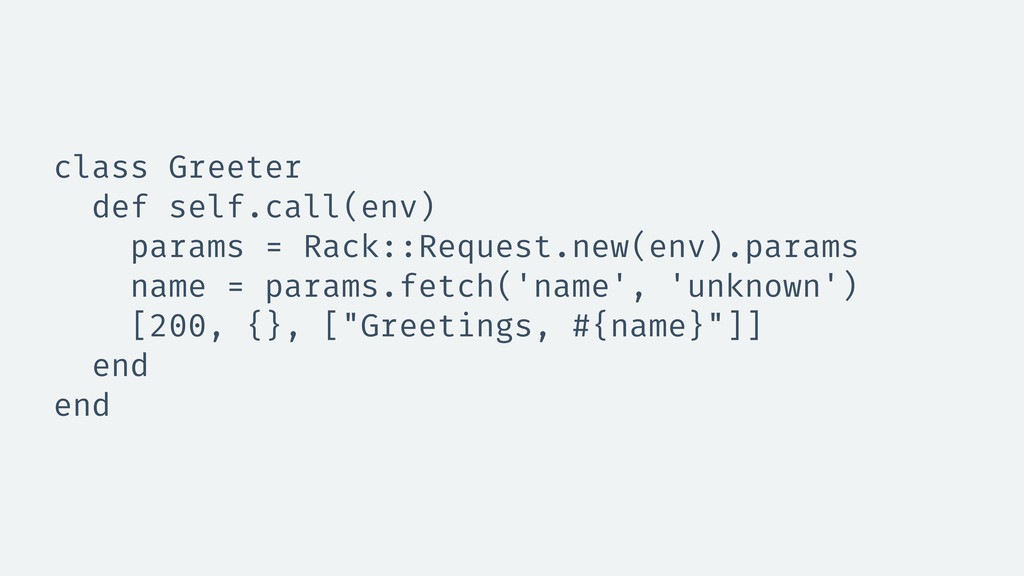
class Greeter def self.call(env) params = Rack::Request.new(env).params name = params.fetch('name',
'unknown') [200, {}, ["Greetings, #{name}"]] end end -
def call(env) response = @app.call(env) response = Rack::Response.new(response) response['Etag'] =
'abc123' response.redirect('/faq') response.set_cookie('user_id', 123) response.write 'Hello world' end -
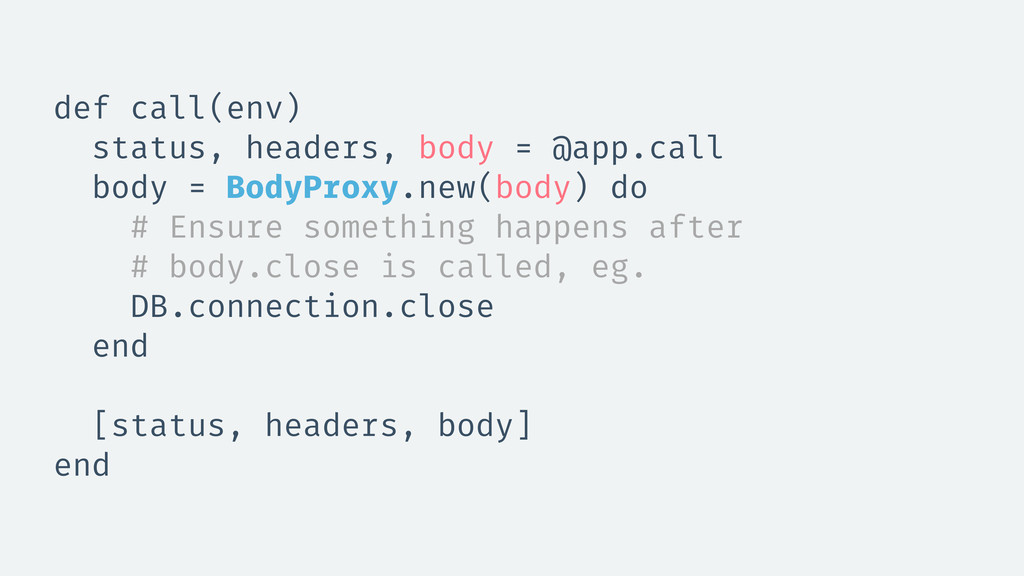
def call(env) status, headers, body = @app.call body = BodyProxy.new(body)
do # Ensure something happens after # body.close is called, eg. DB.connection.close end [status, headers, body] end -
include Rack::Utils parse_query 'foo=bar&foo=qux' #=> {'foo' => ['bar','qux']} parse_nested_query 'foo[]=bar&foo[]=qux'
#=> {'foo' => ['bar','qux']} parse_nested_query 'foo[x]=bar&foo[y]=qux' #=> {'foo' => {'x' => 'bar', 'y' => 'qux'}} -
include Rack::Utils build_query {foo: ['bar','qux']} #=> 'foo=bar&foo=qux' build_nested_query {foo: ['bar',
'qux']} #=> 'foo[]=bar&foo[]=qux' build_nested_query {foo: {x: 'bar', y: 'qux'}} #=> 'foo[x]=bar&foo[y]=qux' -
Callbacks Cascade Chunked CommonCookies CommonLogger ConditionalGet Config ContentLength ContentType Context
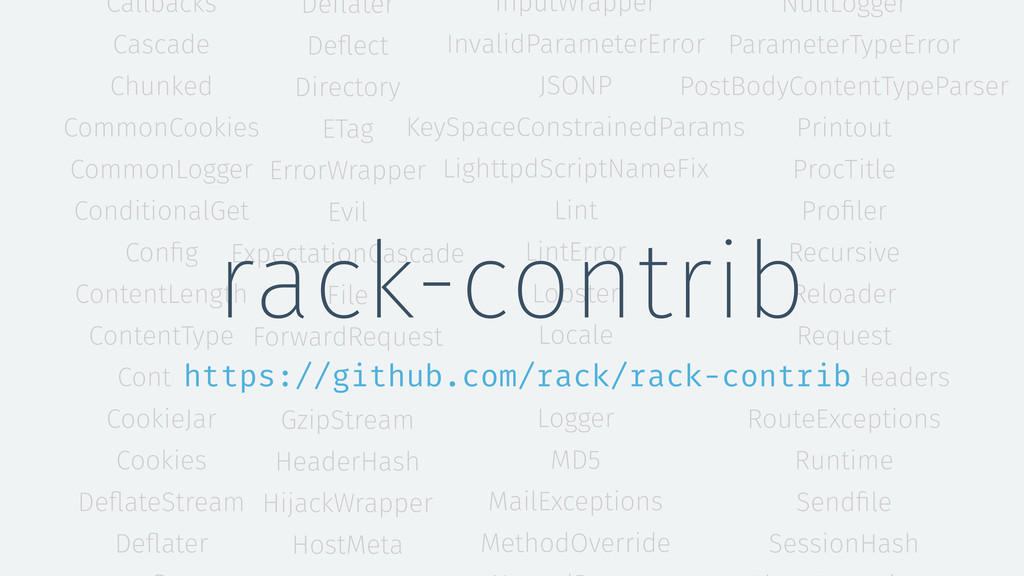
CookieJar Cookies DeflateStream Deflater Deflater Deflect Directory ETag ErrorWrapper Evil ExpectationCascade File ForwardRequest GarbageCollector GzipStream HeaderHash HijackWrapper HostMeta InputWrapper InvalidParameterError JSONP KeySpaceConstrainedParams LighttpdScriptNameFix Lint LintError Lobster Locale Lock Logger MD5 MailExceptions MethodOverride NullLogger ParameterTypeError PostBodyContentTypeParser Printout ProcTitle Profiler Recursive Reloader Request ResponseHeaders RouteExceptions Runtime Sendfile SessionHash rack-contrib https://github.com/rack/rack-contrib -
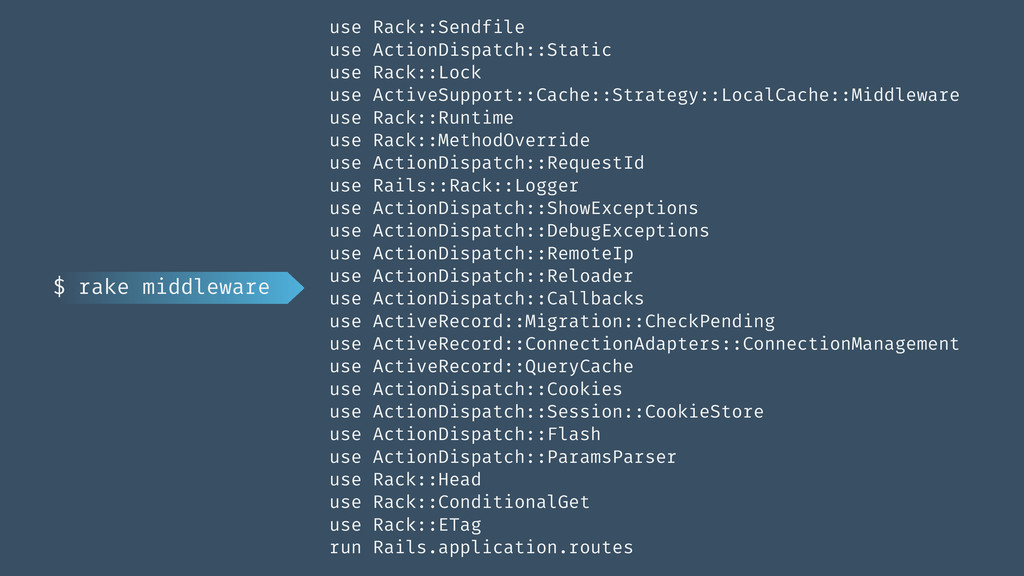
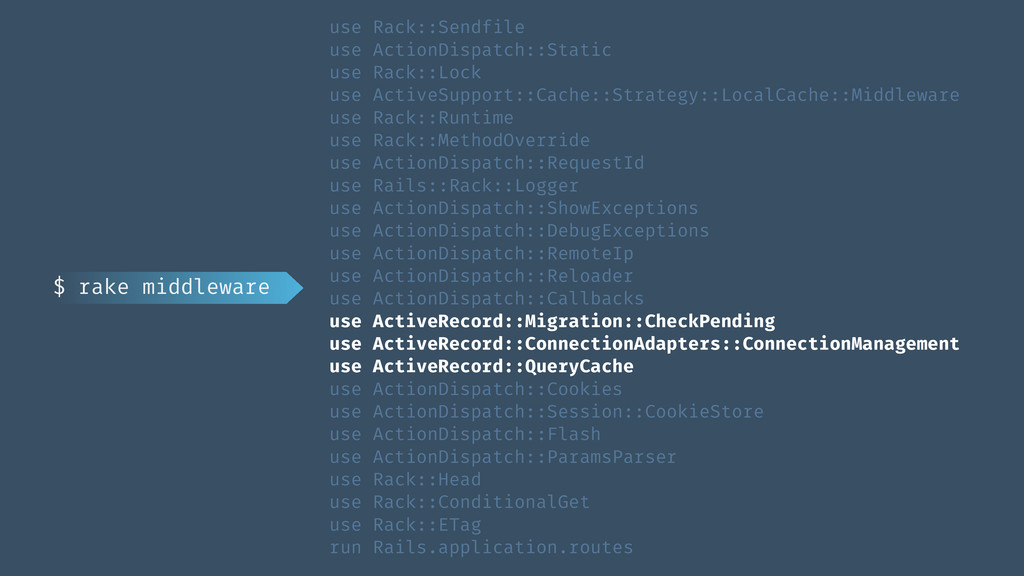
use Rack::Sendfile use ActionDispatch::Static use Rack::Lock use ActiveSupport::Cache::Strategy::LocalCache::Middleware use Rack::Runtime
use Rack::MethodOverride use ActionDispatch::RequestId use Rails::Rack::Logger use ActionDispatch::ShowExceptions use ActionDispatch::DebugExceptions use ActionDispatch::RemoteIp use ActionDispatch::Reloader use ActionDispatch::Callbacks use ActiveRecord::Migration::CheckPending use ActiveRecord::ConnectionAdapters::ConnectionManagement use ActiveRecord::QueryCache use ActionDispatch::Cookies use ActionDispatch::Session::CookieStore use ActionDispatch::Flash use ActionDispatch::ParamsParser use Rack::Head use Rack::ConditionalGet use Rack::ETag run Rails.application.routes $ rake middleware -
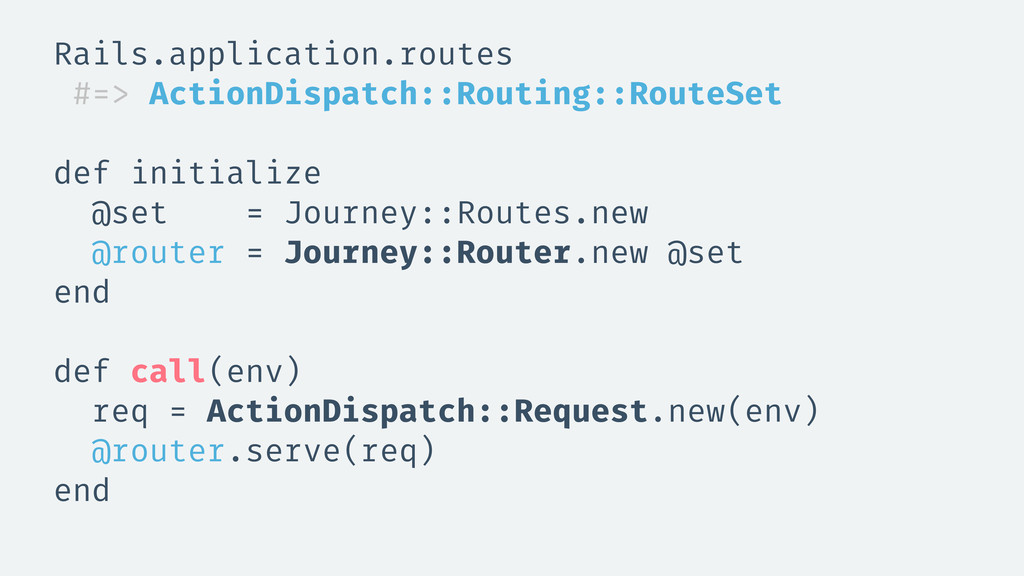
Rails.application.routes #=> ActionDispatch::Routing::RouteSet def initialize @set = Journey::Routes.new @router =
Journey::Router.new @set end def call(env) req = ActionDispatch::Request.new(env) @router.serve(req) end -
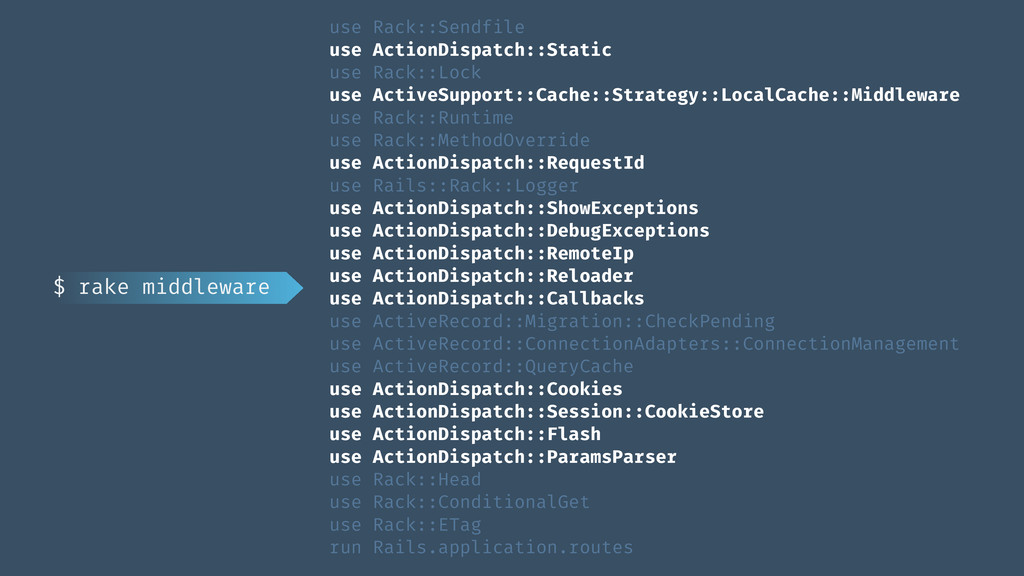
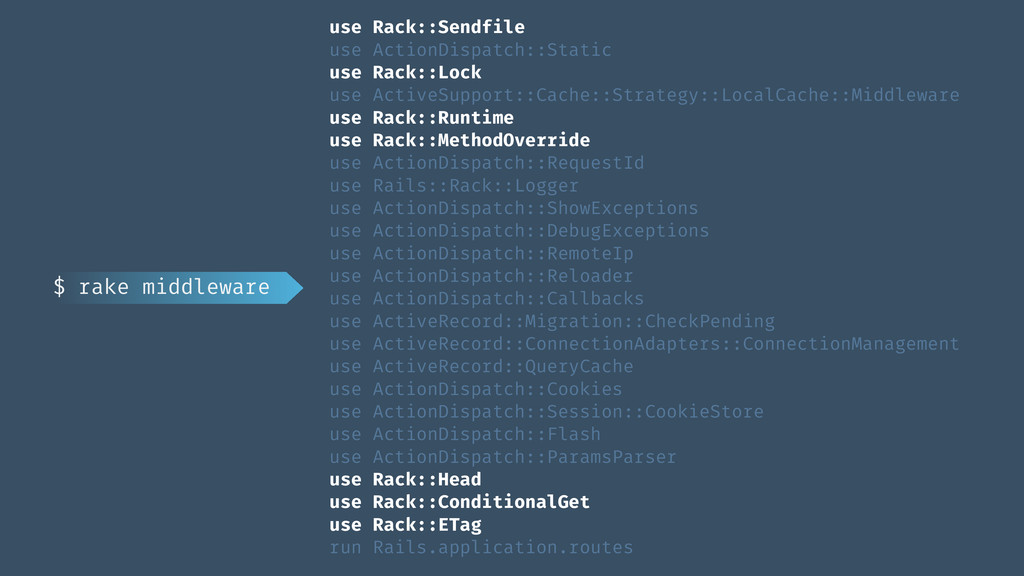
use Rack::Sendfile use ActionDispatch::Static use Rack::Lock use ActiveSupport::Cache::Strategy::LocalCache::Middleware use Rack::Runtime
use Rack::MethodOverride use ActionDispatch::RequestId use Rails::Rack::Logger use ActionDispatch::ShowExceptions use ActionDispatch::DebugExceptions use ActionDispatch::RemoteIp use ActionDispatch::Reloader use ActionDispatch::Callbacks use ActiveRecord::Migration::CheckPending use ActiveRecord::ConnectionAdapters::ConnectionManagement use ActiveRecord::QueryCache use ActionDispatch::Cookies use ActionDispatch::Session::CookieStore use ActionDispatch::Flash use ActionDispatch::ParamsParser use Rack::Head use Rack::ConditionalGet use Rack::ETag run Rails.application.routes $ rake middleware -
app = Proc.new do |env| io = env['rack.hijack'].call begin io.write("Status:
200\r\n") io.write("Connection: close\r\n") io.write("Content-Type: text/plain\r\n") io.write("\r\n") 10.times do |i| io.write("Line #{i + 1}!\n") io.flush sleep 0.1 end ensure io.close end end -
app = Proc.new do |env| io = env['rack.hijack'].call begin io.write("Status:
200\r\n") io.write("Connection: close\r\n") io.write("Content-Type: text/plain\r\n") io.write("\r\n") 10.times do |i| io.write("Line #{i + 1}!\n") io.flush sleep 0.1 end ensure io.close end end -
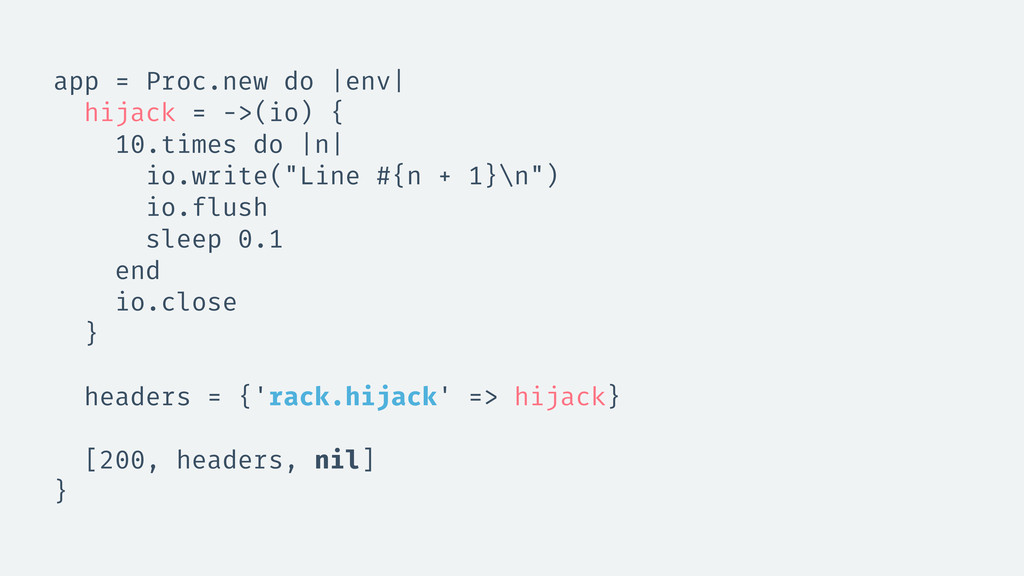
app = Proc.new do |env| hijack = ->(io) { 10.times
do |n| io.write("Line #{n + 1}\n") io.flush sleep 0.1 end io.close } headers = {'rack.hijack' => hijack} [200, headers, nil] } -
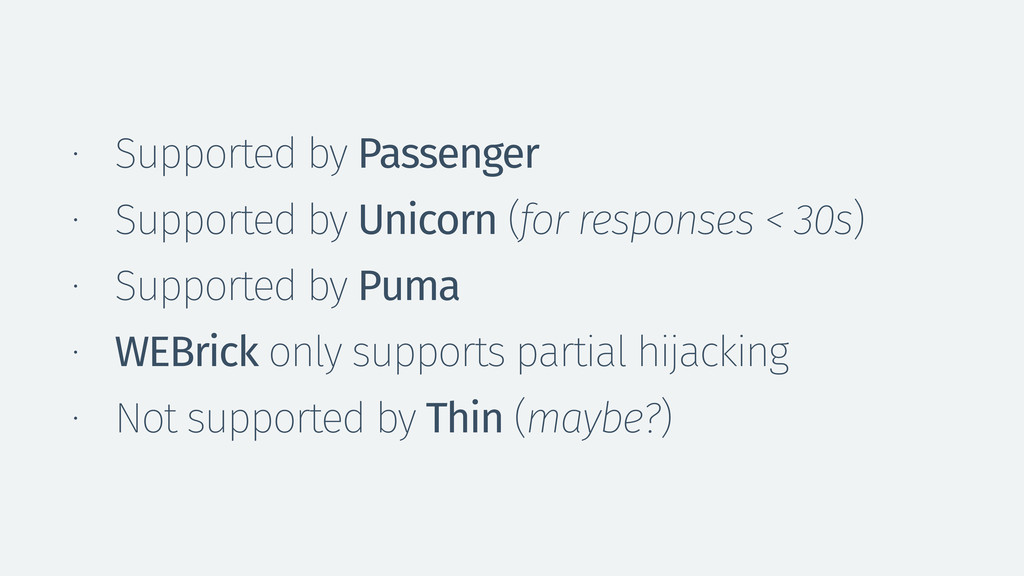
• Supported by Passenger • Supported by Unicorn (for responses
< 30s) • Supported by Puma • WEBrick only supports partial hijacking • Not supported by Thin (maybe?)