Upgrade to Pro — share decks privately, control downloads, hide ads and more …

Using UX Principles To Build Better Mobile and ...

Sponsored · Your Podcast. Everywhere. Effortlessly. Share. Educate. Inspire. Entertain. You do you. We'll handle the rest. →
Avatar for Tracey Jackson Tracey Jackson
November 17, 2015
48

Using UX Principles To Build Better Mobile and Web Applications

The purpose of the document is to propose a “hands on” workshop concept for Black Tech Week 2016 that will expose participants to User Experience (UX) design principles while showing them how to put the concepts into practice on “real world” projects. Supporting information for the proposal can be found in the appendix.

Avatar for Tracey Jackson

Tracey Jackson

November 17, 2015

Transcript

  1. 1 ! Tracey Jackson – Sr. UX Designer/Specialist
 Workshop Proposal

    Using UX Principles To Build Better Mobile and Web Applications !
  2. 2 Executive Summary The purpose of the document is to

    propose a “hands on” workshop concept for Black Tech Week 2016 that will expose participants to User Experience (UX) design principles while showing them how to put the concepts into practice on “real world” projects. Supporting information for the proposal can be found in the appendix.
  3. 3 About The Presenter Presenter Tracey Jackson Senior User Experience

    Designer PwC Digital Education and Certifications B.S. - Computer Information Systems Florida A&M University Master of Business Administration Kaplan University Online Certified UX Designer Nielsen Norman Group

  4. 4 About The Presenter (cont.) Presenter Biography:
 
 Tracey Jackson

    is currently a senior user experience designer with Pricewaterhouse Cooper’s Digital Experience Center. She has over five years experience in the UX discipline and nearly a decade working within web design and strategy. She has worked on complex internal applications and customer facing websites for some of the country's well known brands. Tracey has attended major design conferences (An Event Apart, I-Summit and Nielsen Norman) as well as numerous PwC sponsored business strategy learning events. She has also participated in the Winter 2014 edition of Goodie Hack in Atlanta, GA and Black Tech Week 2015 as a “Design Thinking” panelist.
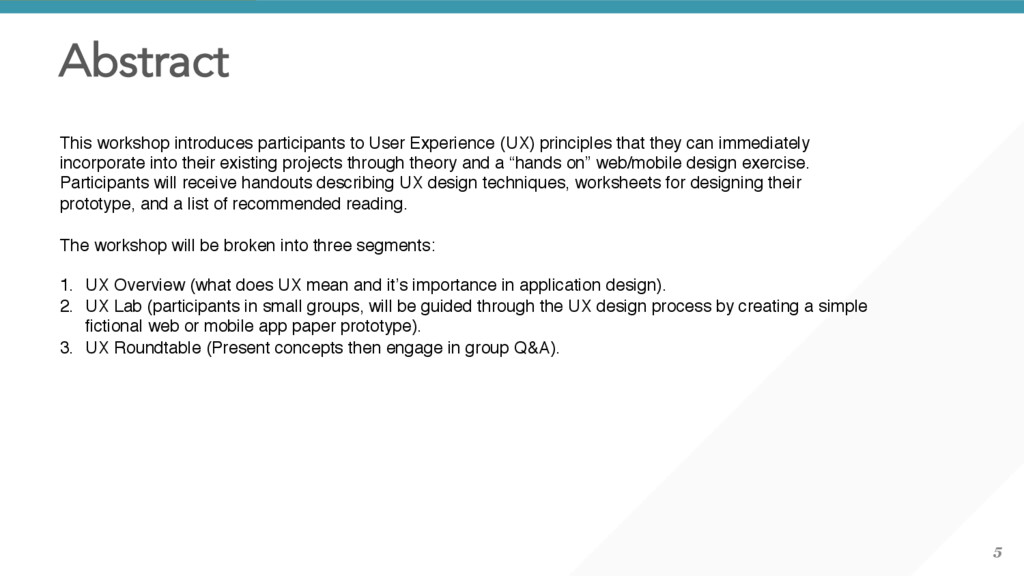
  5. 5 Abstract This workshop introduces participants to User Experience (UX)

    principles that they can immediately incorporate into their existing projects through theory and a “hands on” web/mobile design exercise. Participants will receive handouts describing UX design techniques, worksheets for designing their prototype, and a list of recommended reading. 

 
 The workshop will be broken into three segments: 
 1.  UX Overview (what does UX mean and it’s importance in application design). 2.  UX Lab (participants in small groups, will be guided through the UX design process by creating a simple fictional web or mobile app paper prototype). 3.  UX Roundtable (Present concepts then engage in group Q&A).
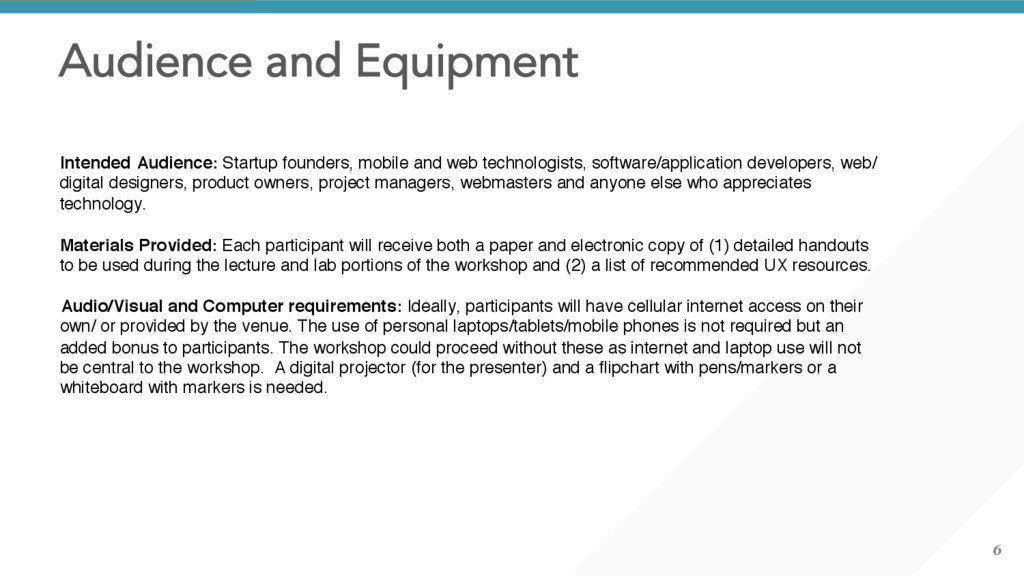
  6. 6 Audience and Equipment   Intended Audience: Startup founders, mobile

    and web technologists, software/application developers, web/ digital designers, product owners, project managers, webmasters and anyone else who appreciates technology.
 
 Materials Provided: Each participant will receive both a paper and electronic copy of (1) detailed handouts to be used during the lecture and lab portions of the workshop and (2) a list of recommended UX resources. 
 
 Audio/Visual and Computer requirements: Ideally, participants will have cellular internet access on their own/ or provided by the venue. The use of personal laptops/tablets/mobile phones is not required but an added bonus to participants. The workshop could proceed without these as internet and laptop use will not be central to the workshop. A digital projector (for the presenter) and a flipchart with pens/markers or a whiteboard with markers is needed.
  7. 7 Space & Enrollment   Space and Enrollment Restrictions: Enrollment

    limits will be left up to the event organizers on the basis of available space at the selected venue. The recommended cap for the workshop is 30 people and the room should have tables and chairs to ensure that the workshop environment is optional for learning, movement and collaboration. Other Critical Information: The workshop is based off the “Applying UX Principles: Reduce Cost. Increase Value” presentation included in the appendix of this proposal document.
  8. 9 Appendix   Tracey Jackson
 [email protected]
 305-992-2026   Contact Information

    Applying UX Principles: Reduce Cost. Increase Value. 
       Presentation Deck
  9. 14

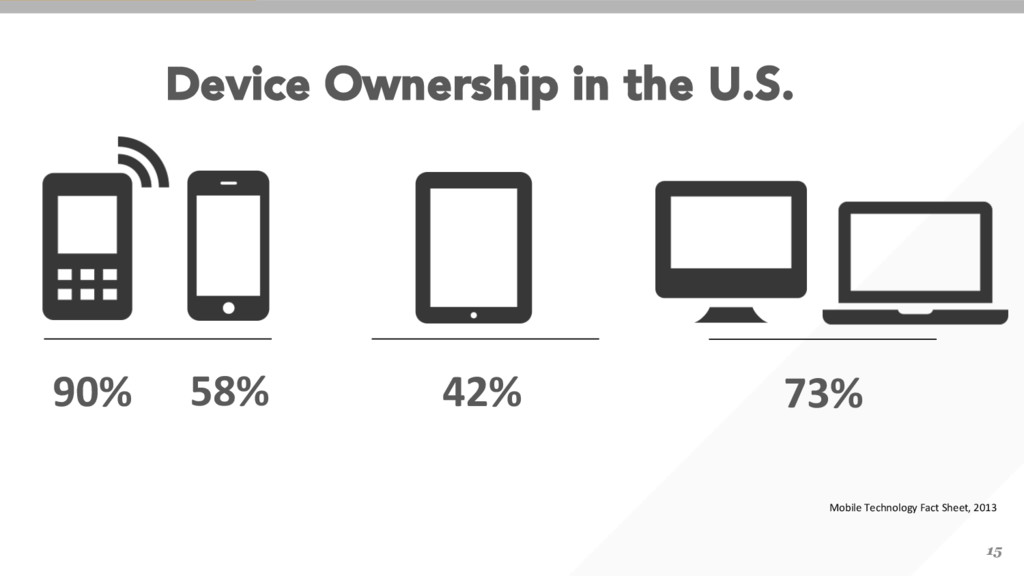
  10. 15 Mobile  Technology  Fact  Sheet,  2013   90%   58%

      42%   73%   Device Ownership in the U.S.
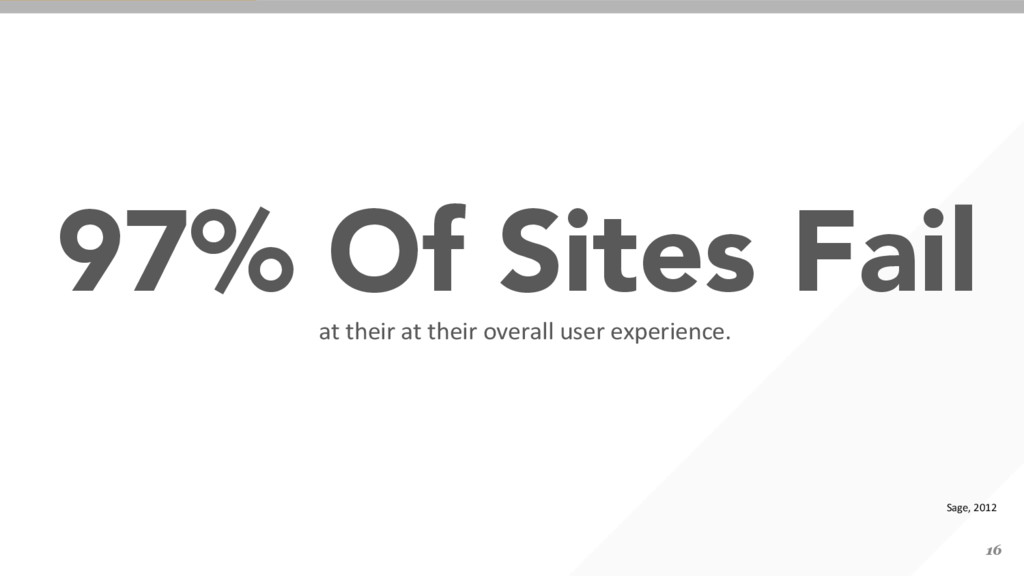
  11. 16 97% Of Sites Fail  at  their  at  their  overall

     user  experience.   Sage,  2012  
  12. 17 Poor  design,  too  many  clicks  to  get  things  

      done,  inability  to  easily  locate  content  or  to     smoothly  execute  a  transac7on  on  an     ecommerce  site  keep  businesses  and     organiza7ons  from  fulfilling  their   objec7ves  and  fulfilling  user’s  goals.   Relander,  2014   Why?
  13. 18 Poor  site  navigaBon.   Poor  communicaBon  through  visual  design

     and  content.   Poor  error  handling.   Lack  of  or  confusing  informaBon.   Not  built  to  support  mobile  devices.         Why?
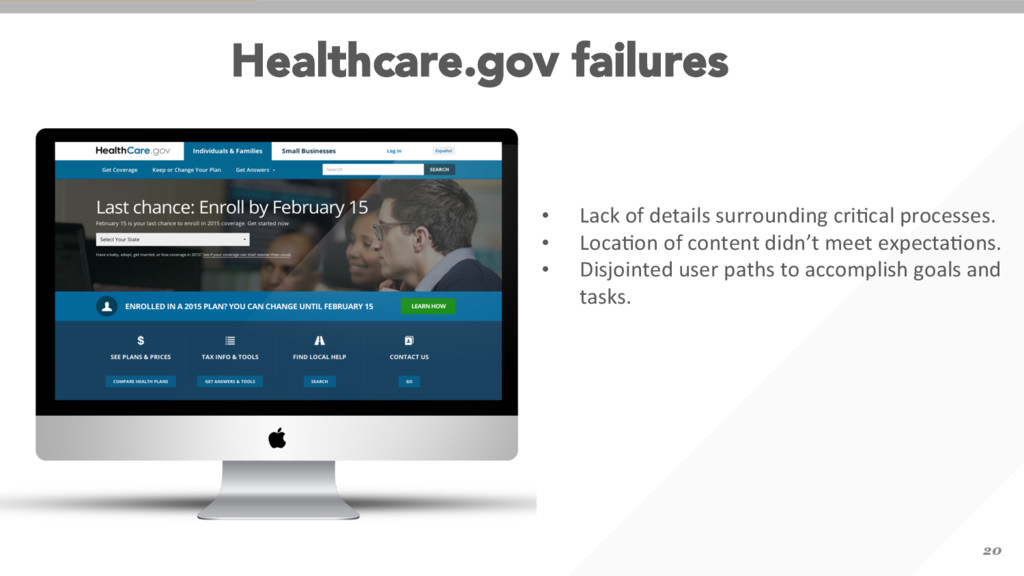
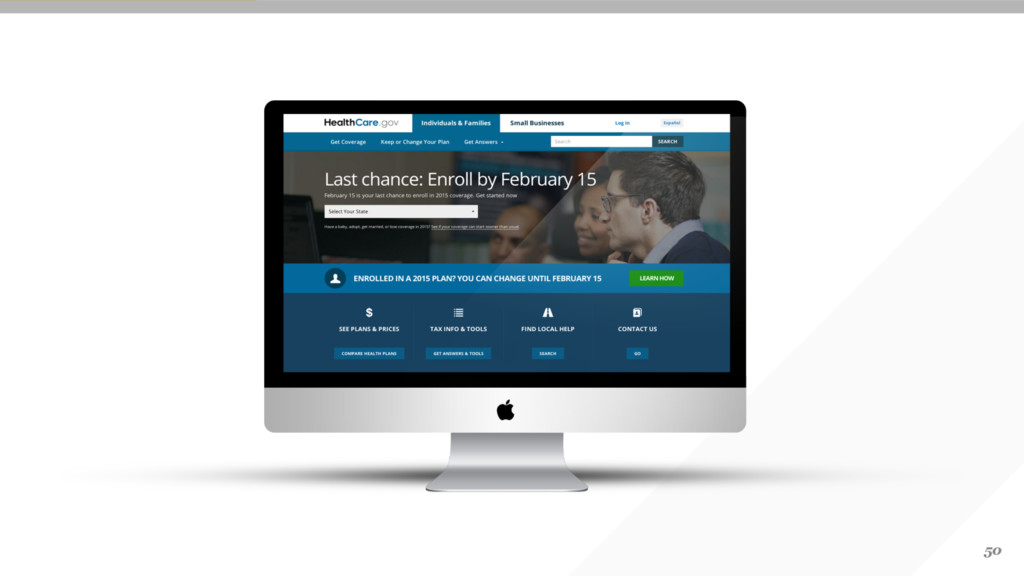
  14. 20 Healthcare.gov failures •  Lack  of  details  surrounding  criBcal  processes.

      •  LocaBon  of  content  didn’t  meet  expectaBons.   •  Disjointed  user  paths  to  accomplish  goals  and   tasks.  
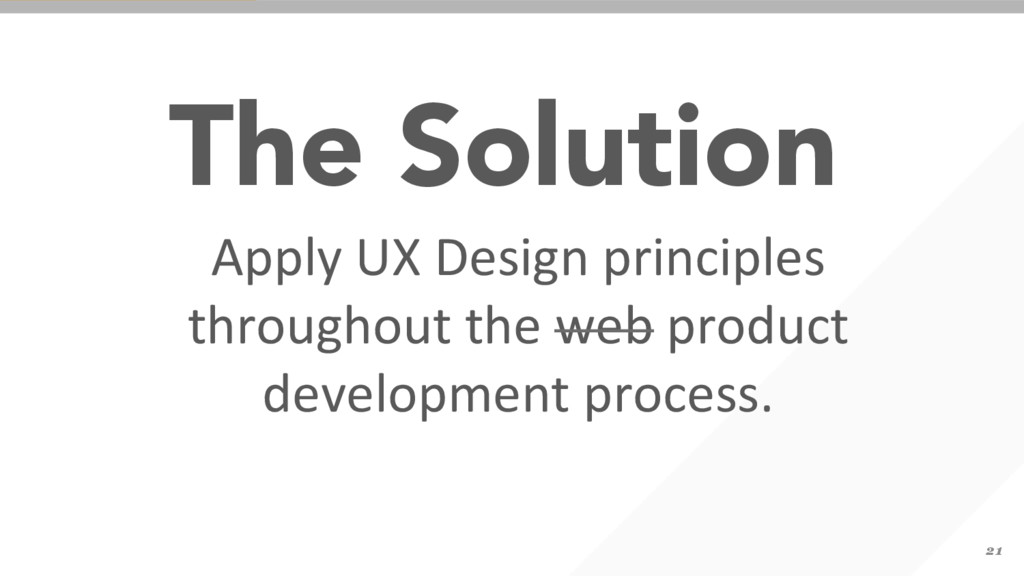
  15. 21 Apply  UX  Design  principles    throughout  the  web  product

        development  process.       The Solution
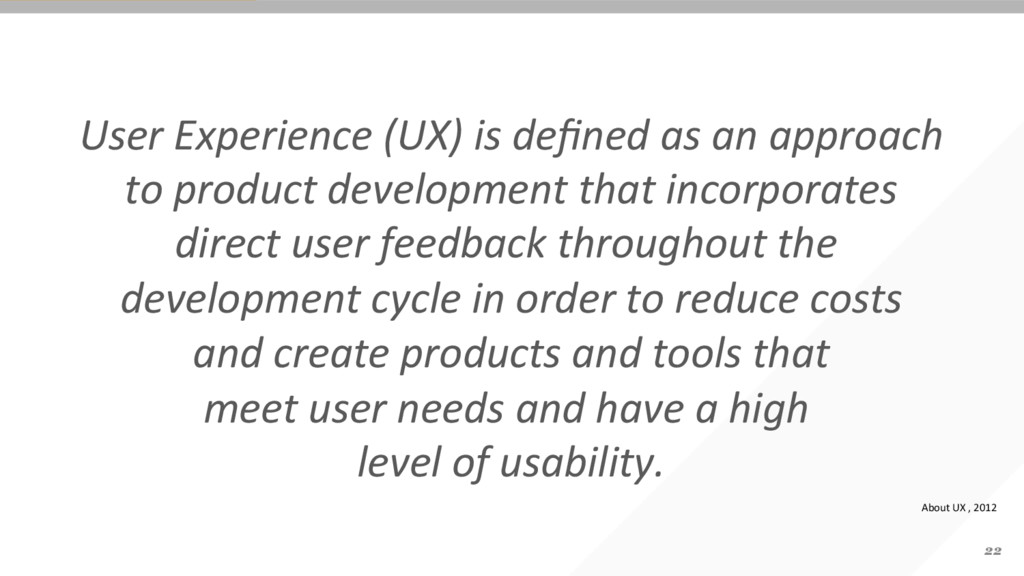
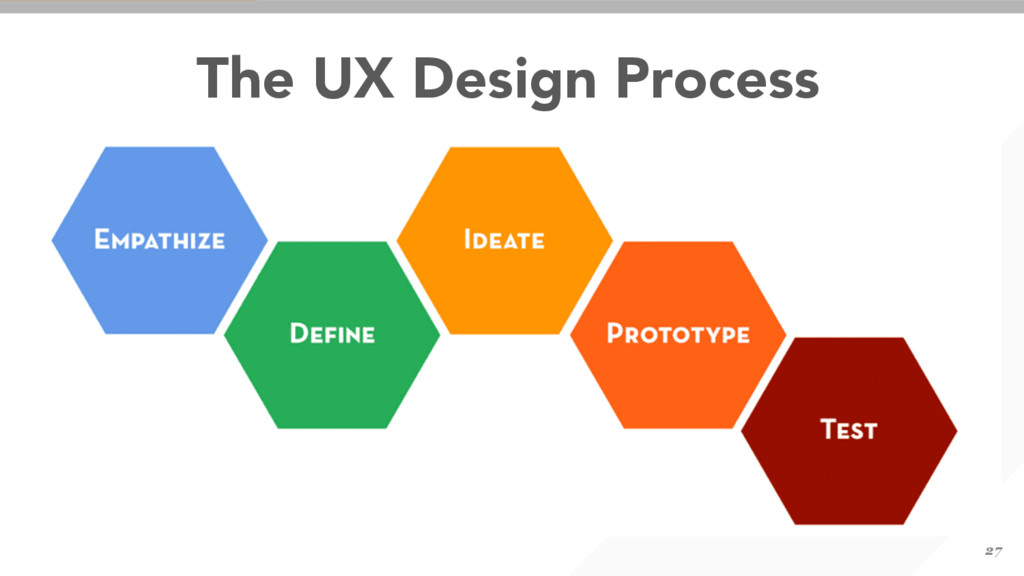
  16. 22 User  Experience  (UX)  is  defined  as  an  approach  to

     product  development  that  incorporates     direct  user  feedback  throughout  the     development  cycle  in  order  to  reduce  costs    and  create  products  and  tools  that     meet  user  needs  and  have  a  high     level  of  usability.   About  UX  ,  2012  
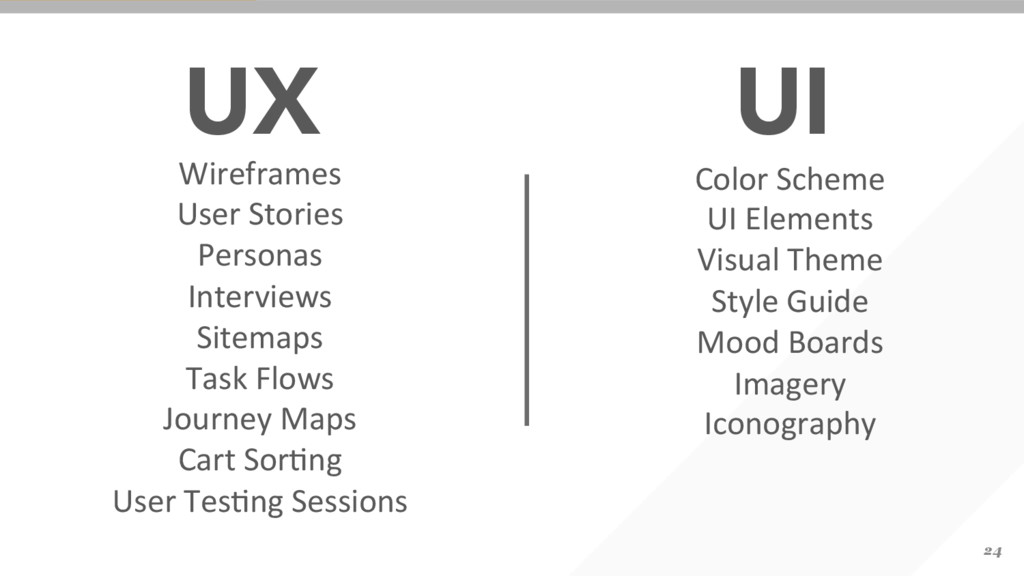
  17. 23 What Is UX UX Design is NOT to be

    confused with UI Design.
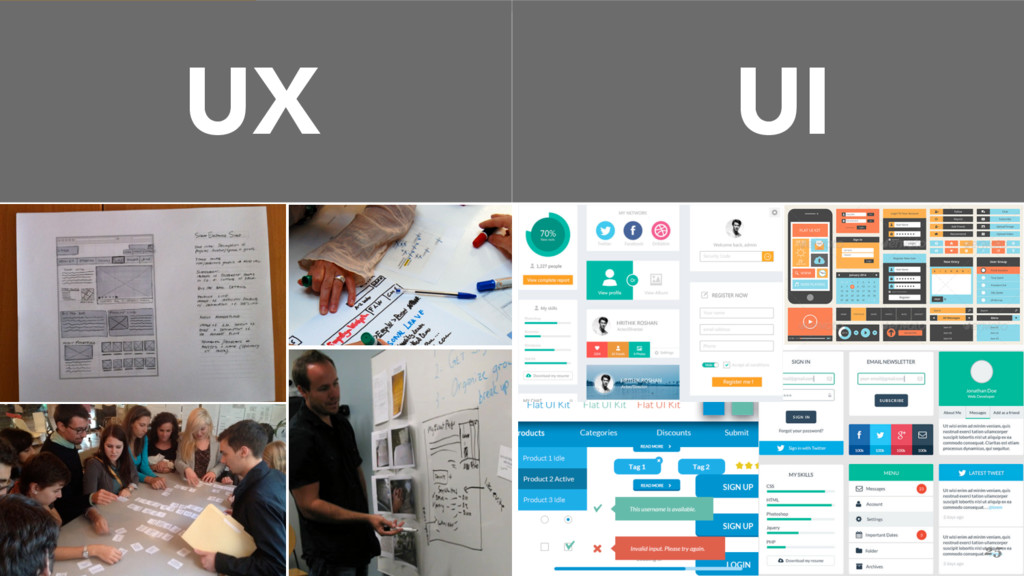
  18. 24 Wireframes   User  Stories   Personas   Interviews  

    Sitemaps   Task  Flows   Journey  Maps   Cart  SorBng   User  TesBng  Sessions     Color  Scheme   UI  Elements   Visual  Theme   Style  Guide   Mood  Boards   Imagery   Iconography     UX UI
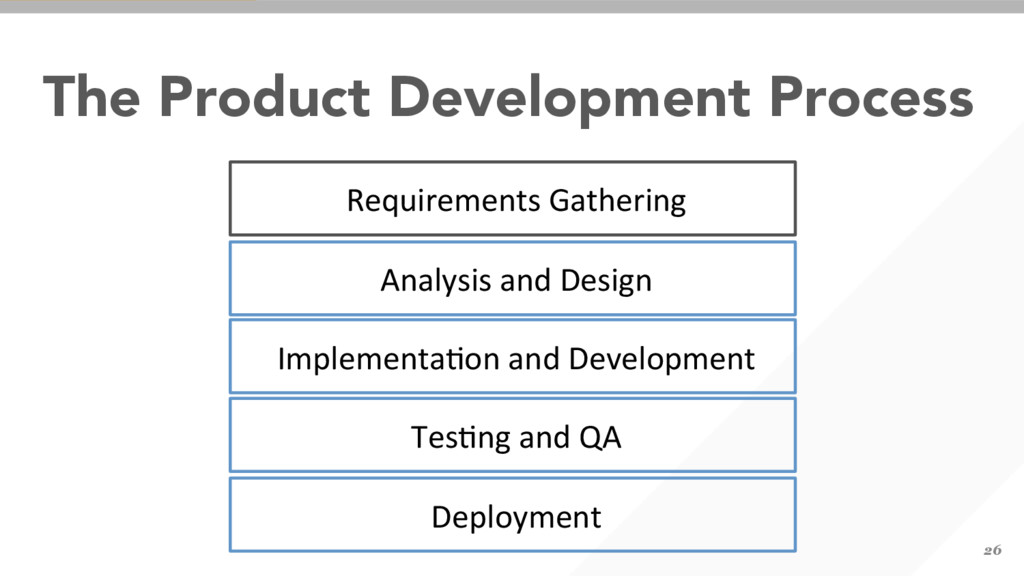
  19. 26 Requirements  Gathering   Analysis  and  Design   ImplementaBon  and

     Development   TesBng  and  QA   Deployment   The Product Development Process
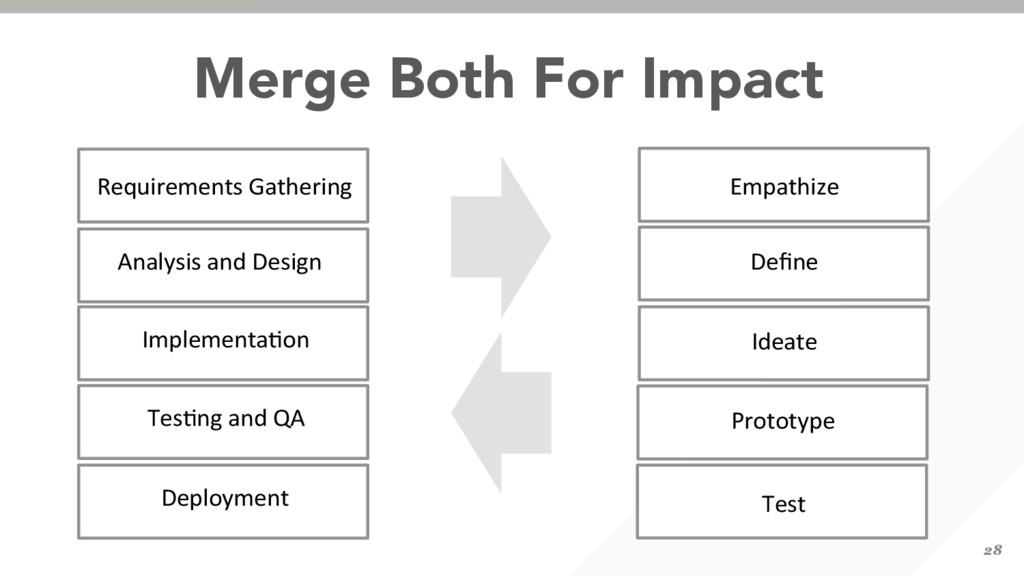
  20. 28 Requirements  Gathering   Analysis  and  Design   ImplementaBon  

    TesBng  and  QA   Deployment   Empathize   Define   Ideate   Prototype   Test   Merge Both For Impact
  21. Travis  Williams   Age:  28   Occupa4on:  Senior  Industrial  Designer

      Loca4on:  Houston,  TX   “There  is  a  beMer  way  to  share  projects  and    collaborate  real  7me,  to  make  my  workload  so    much  easier  to  manage.   Travis  loves  technology  and  is  always  thinking  about  new  ways  to  create   things  for  his  job.  He  is  highly  organized  and  detail  oriented.  He  is  rather  tech savvy  and  always  has  the  latest  tech  gadgets.  His  “phablet”  (phone  &  tablet)   is  not  about  making  calls  but  an  extension  to  help  him  complete  tasks.  It’s  a     personal  organizer  and  sketch  pad  for  his  design    concepts  in  addiBon  to     social  media  and  communicaBon.   Favorite  Brands  
  22. 38

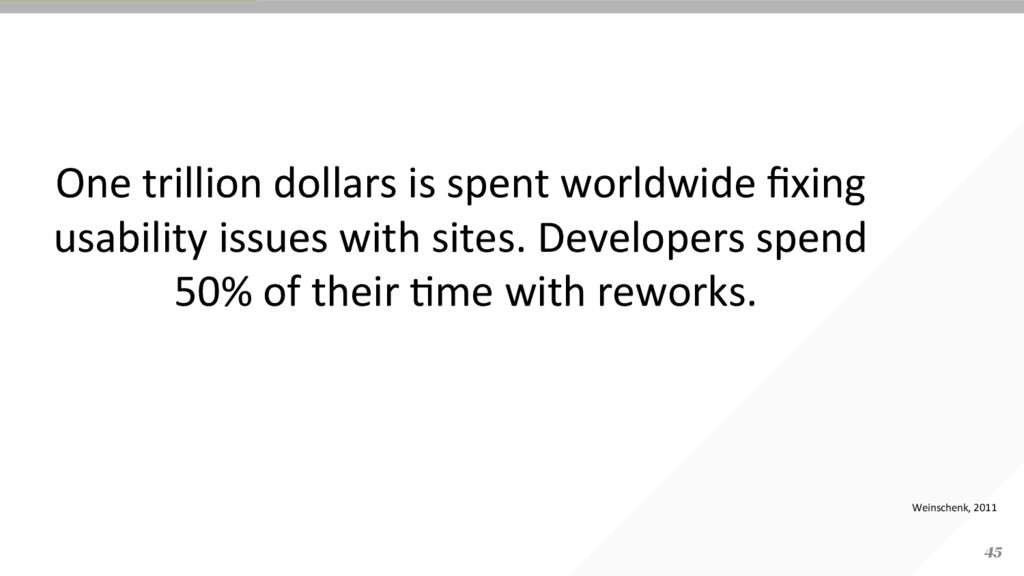
  23. 45 One  trillion  dollars  is  spent  worldwide  fixing   usability

     issues  with  sites.  Developers  spend   50%  of  their  Bme  with  reworks.     Weinschenk,  2011  
  24. 46 InserBng  UX  design  principles  during  product   development  helps

     to  ensures  users  will     receive    a  valuable  and  impacjul  experience   while  saving  money  and  Bme  in  the  long  run.    
  25. 47 Conversion  rates  have  a  tendency  to  be  higher  

      on  sites  or  mobile  apps  that  used  these     principles  in  the  product  development  process.     Good  design  can  be  thanked  for  high     conversion  rates.   Neilsen,  2013  
  26. 48 An  ecommerce  company  increased  its     revenue  by

     $300  million  with  a  user  centered  design  change  to  exisBng  product.   Spooll,  2009  
  27. 49 Developing  a  product  is  not  about  how  “slick”  

      it  looks.  It’s  about  people  being  able  to  easily     use  it.  
  28. 50

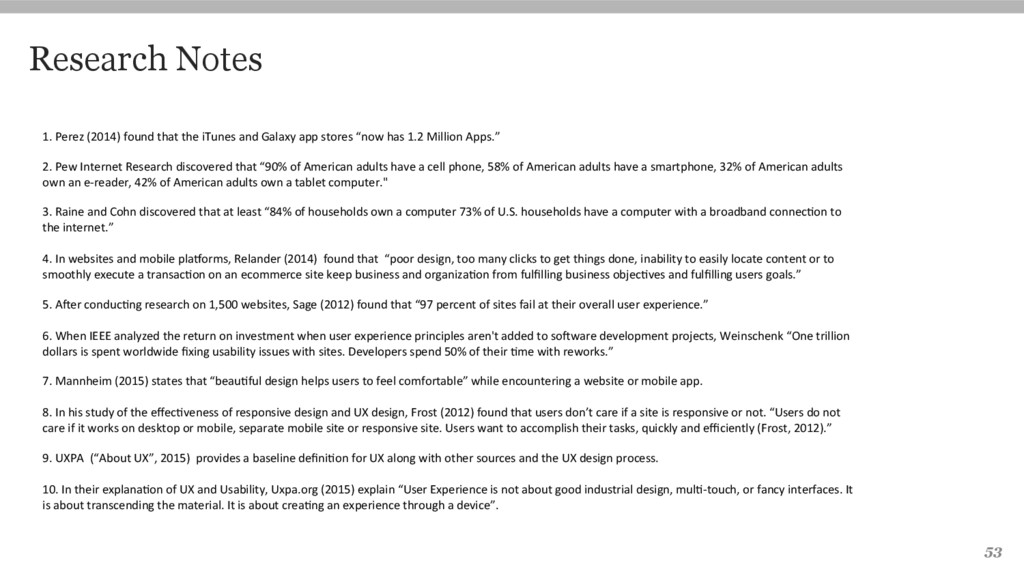
  29. 53 Research Notes 1.  Perez  (2014)  found  that  the  iTunes

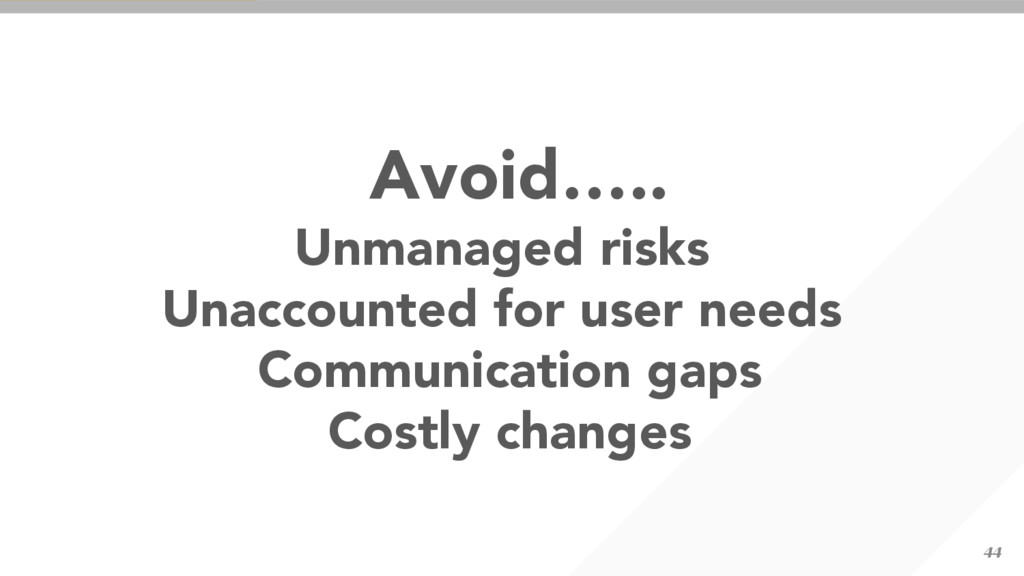
     and  Galaxy  app  stores  “now  has  1.2  Million  Apps.”     2.  Pew  Internet  Research  discovered  that  “90%  of  American  adults  have  a  cell  phone,  58%  of  American  adults  have  a  smartphone,  32%  of  American  adults   own  an  e-­‐reader,  42%  of  American  adults  own  a  tablet  computer."     3.  Raine  and  Cohn  discovered  that  at  least  “84%  of  households  own  a  computer  73%  of  U.S.  households  have  a  computer  with  a  broadband  connecBon  to   the  internet.”     4.  In  websites  and  mobile  plajorms,  Relander  (2014)    found  that    “poor  design,  too  many  clicks  to  get  things  done,  inability  to  easily  locate  content  or  to   smoothly  execute  a  transacBon  on  an  ecommerce  site  keep  business  and  organizaBon  from  fulfilling  business  objecBves  and  fulfilling  users  goals.”       5.  Aner  conducBng  research  on  1,500  websites,  Sage  (2012)  found  that  “97  percent  of  sites  fail  at  their  overall  user  experience.”     6.  When  IEEE  analyzed  the  return  on  investment  when  user  experience  principles  aren't  added  to  sonware  development  projects,  Weinschenk  “One  trillion   dollars  is  spent  worldwide  fixing  usability  issues  with  sites.  Developers  spend  50%  of  their  Bme  with  reworks.”     7.  Mannheim  (2015)  states  that  “beauBful  design  helps  users  to  feel  comfortable”  while  encountering  a  website  or  mobile  app.     8.  In  his  study  of  the  effecBveness  of  responsive  design  and  UX  design,  Frost  (2012)  found  that  users  don’t  care  if  a  site  is  responsive  or  not.  “Users  do  not   care  if  it  works  on  desktop  or  mobile,  separate  mobile  site  or  responsive  site.  Users  want  to  accomplish  their  tasks,  quickly  and  efficiently  (Frost,  2012).”     9.  UXPA    (“About  UX”,  2015)    provides  a  baseline  definiBon  for  UX  along  with  other  sources  and  the  UX  design  process.     10.  In  their  explanaBon  of  UX  and  Usability,  Uxpa.org  (2015)  explain  “User  Experience  is  not  about  good  industrial  design,  mulB-­‐touch,  or  fancy  interfaces.  It   is  about  transcending  the  material.  It  is  about  creaBng  an  experience  through  a  device”.    
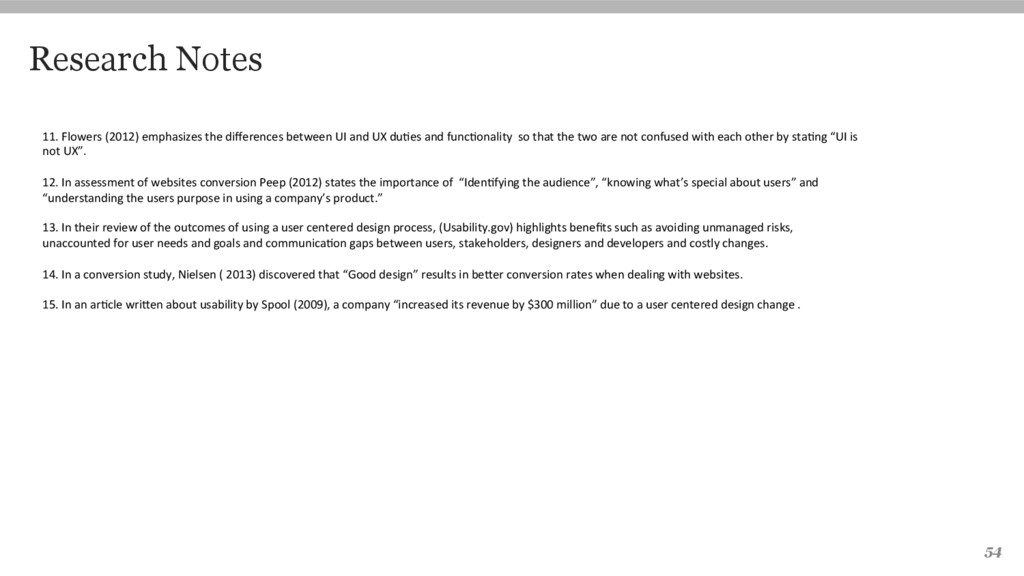
  30. 54 Research Notes 11.  Flowers  (2012)  emphasizes  the  differences  between

     UI  and  UX  duBes  and  funcBonality    so  that  the  two  are  not  confused  with  each  other  by  staBng  “UI  is   not  UX”.     12.  In  assessment  of  websites  conversion  Peep  (2012)  states  the  importance  of    “IdenBfying  the  audience”,  “knowing  what’s  special  about  users”  and   “understanding  the  users  purpose  in  using  a  company’s  product.”     13.  In  their  review  of  the  outcomes  of  using  a  user  centered  design  process,  (Usability.gov)  highlights  benefits  such  as  avoiding  unmanaged  risks,   unaccounted  for  user  needs  and  goals  and  communicaBon  gaps  between  users,  stakeholders,  designers  and  developers  and  costly  changes.     14.  In  a  conversion  study,  Nielsen  (  2013)  discovered  that  “Good  design”  results  in  beber  conversion  rates  when  dealing  with  websites.     15.  In  an  arBcle  wriben  about  usability  by  Spool  (2009),  a  company  “increased  its  revenue  by  $300  million”  due  to  a  user  centered  design  change  .