Upgrade to Pro — share decks privately, control downloads, hide ads and more …

Tobin Titus

Sponsored · Your Podcast. Everywhere. Effortlessly. Share. Educate. Inspire. Entertain. You do you. We'll handle the rest. →

Tobin Titus

Getting content to the user fast is one the chief concerns of web performance. Performance best practices for graphics currently include a number of recommendations that are usually aimed at reducing network utilization. These recommendations are important. However, as our landscape continues to shift to lower-cost devices on mobile networks, we face more challenges than we would have ever expected.

This sessions will cover physical limitations of these devices, choices of graphics formats, and how those limitations affect not just graphics, but your entire site or application performance.

Avatar for Tobin Titus

Tobin Titus

March 01, 2017

Other Decks in Technology

Transcript

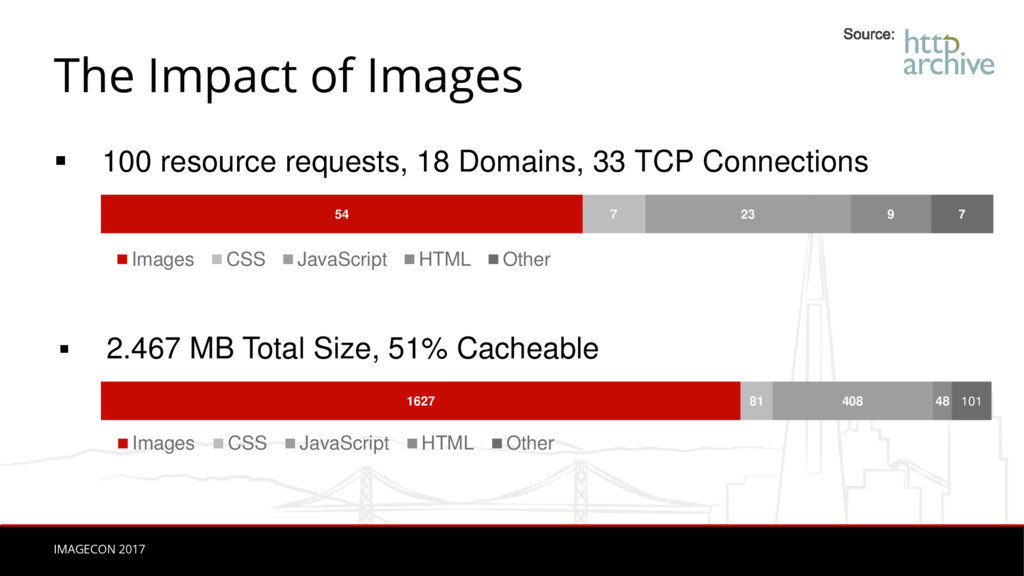
  1. IMAGECON 2017 The Impact of Images  100 resource requests,

    18 Domains, 33 TCP Connections 54 7 23 9 7 Images CSS JavaScript HTML Other 1627 81 408 48 101 Images CSS JavaScript HTML Other  2.467 MB Total Size, 51% Cacheable
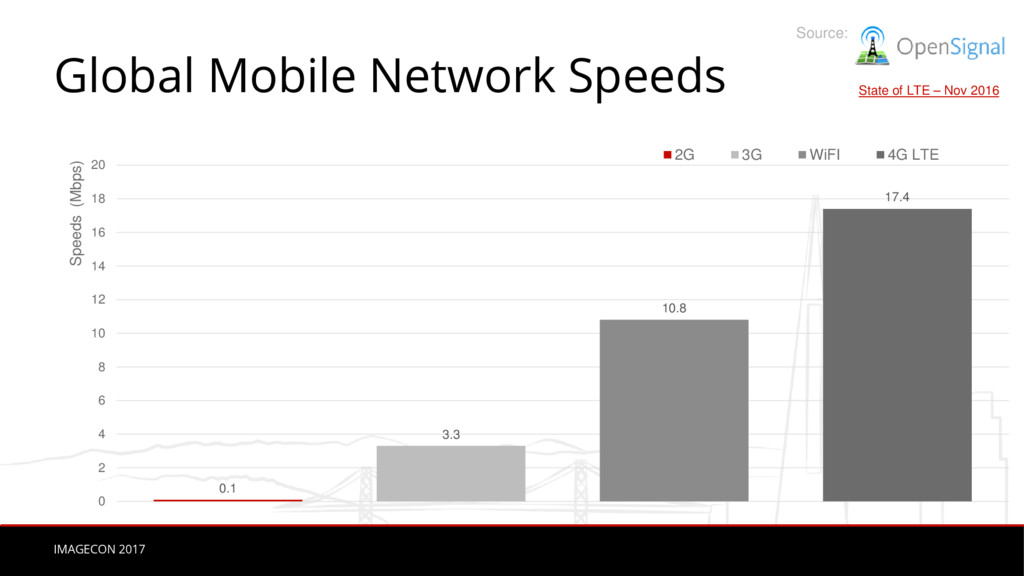
  2. IMAGECON 2017 Global Mobile Network Speeds 0.1 3.3 10.8 17.4

    0 2 4 6 8 10 12 14 16 18 20 Speeds (Mbps) 2G 3G WiFI 4G LTE Source: State of LTE – Nov 2016
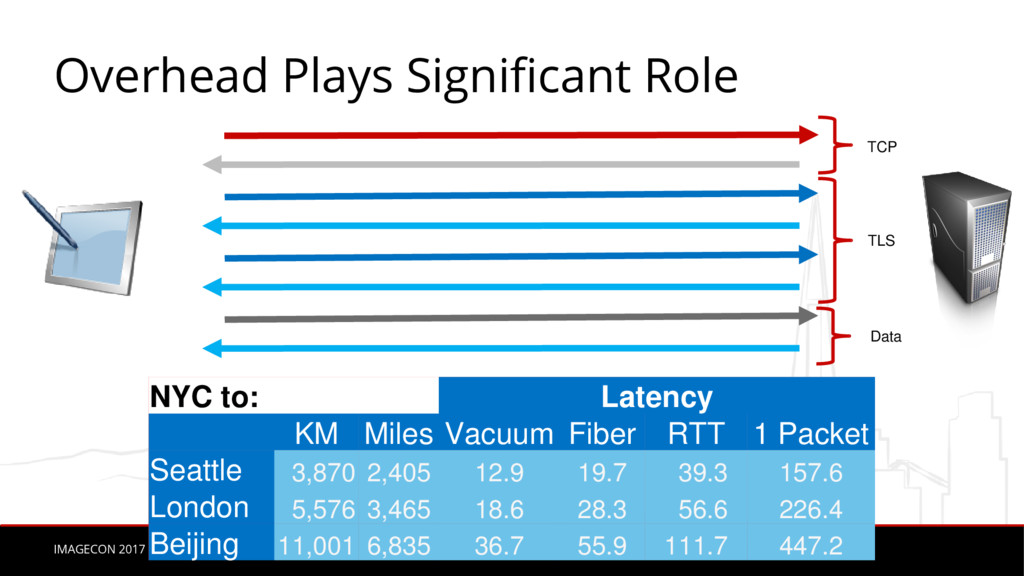
  3. IMAGECON 2017 Overhead Plays Significant Role NYC to: Latency KM

    Miles Vacuum Fiber RTT 1 Packet Seattle 3,870 2,405 12.9 19.7 39.3 157.6 London 5,576 3,465 18.6 28.3 56.6 226.4 Beijing 11,001 6,835 36.7 55.9 111.7 447.2 TCP TLS Data
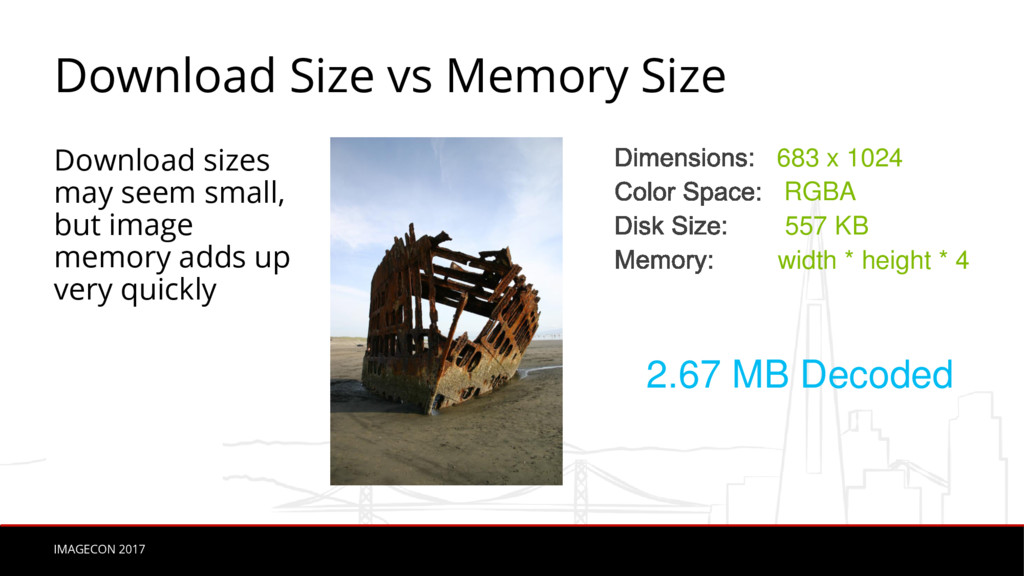
  4. IMAGECON 2017 Download Size vs Memory Size Download sizes may

    seem small, but image memory adds up very quickly 683 x 1024 RGBA 557 KB width * height * 4 2.67 MB Decoded
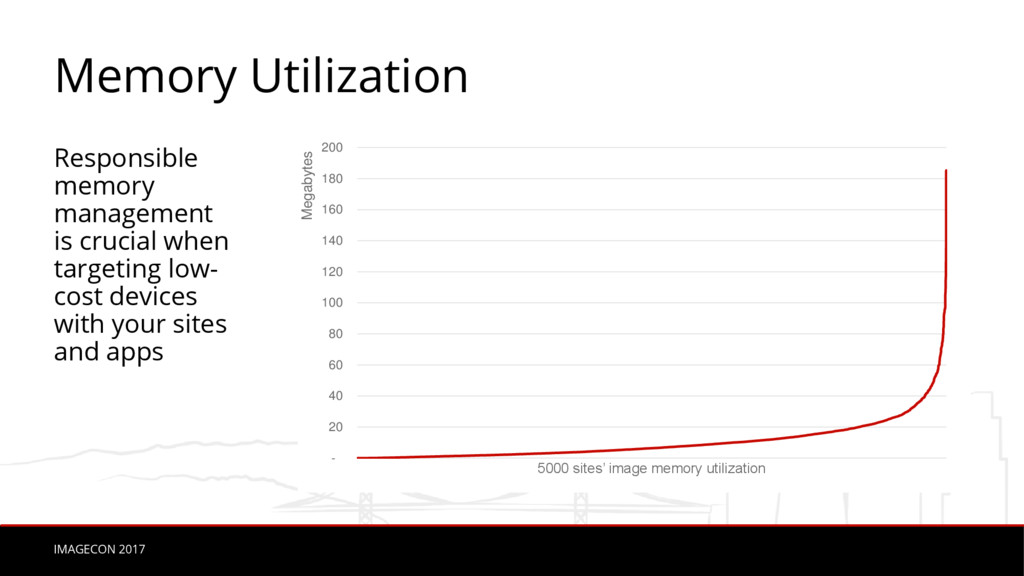
  5. IMAGECON 2017 Memory Utilization Responsible memory management is crucial when

    targeting low- cost devices with your sites and apps - 20 40 60 80 100 120 140 160 180 200 Megabytes 5000 sites’ image memory utilization
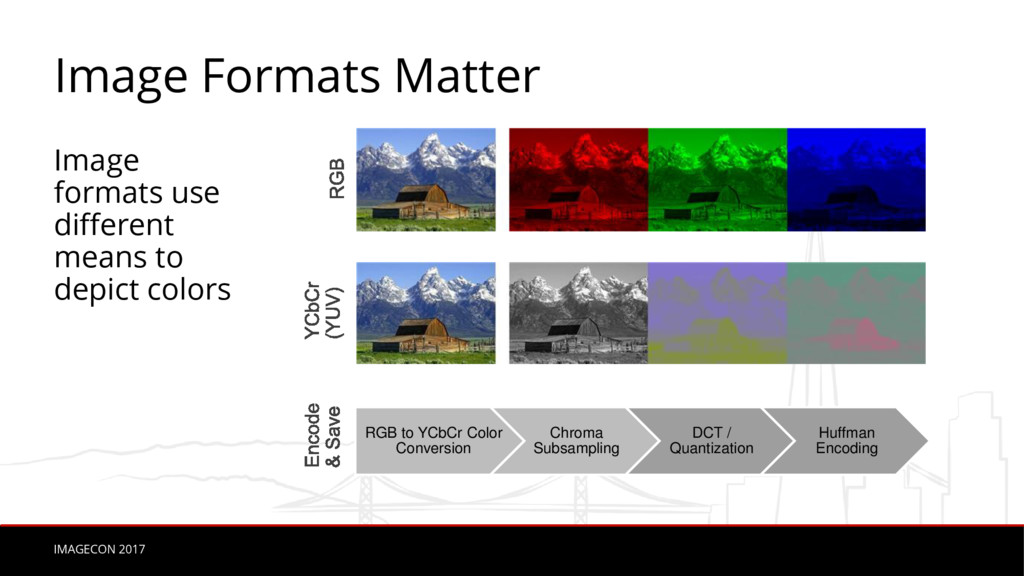
  6. IMAGECON 2017 Image Formats Matter Image formats use different means

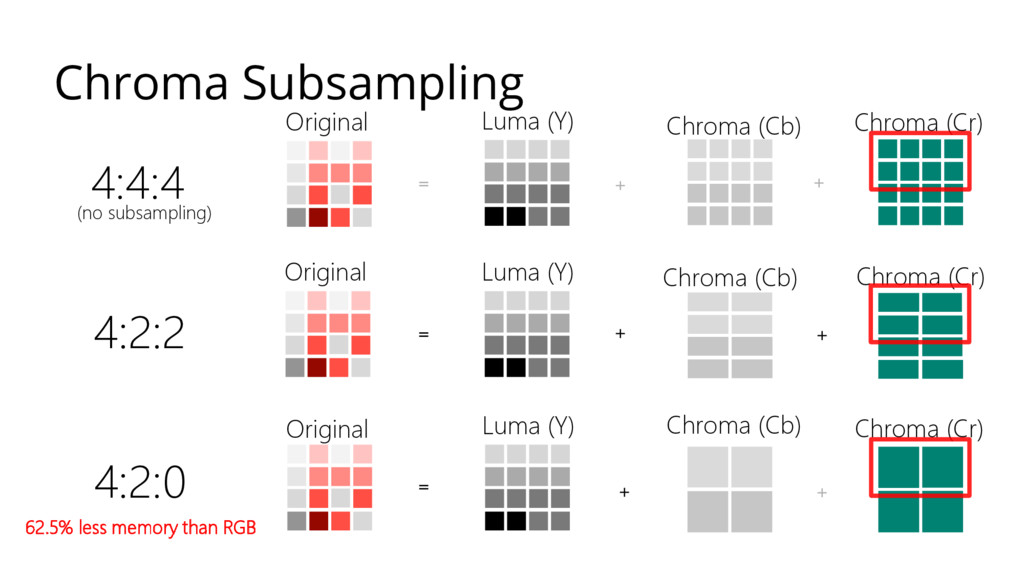
    to depict colors RGB to YCbCr Color Conversion Chroma Subsampling DCT / Quantization Huffman Encoding
  7. Chroma Subsampling + Original Luma (Y) Chroma (Cb) Chroma (Cr)

    = + + 4:4:4 Original Luma (Y) Chroma (Cb) Chroma (Cr) = + 4:2:0 Original Luma (Y) Chroma (Cb) Chroma (Cr) = + + 4:2:2 62.5% less memory than RGB (no subsampling)
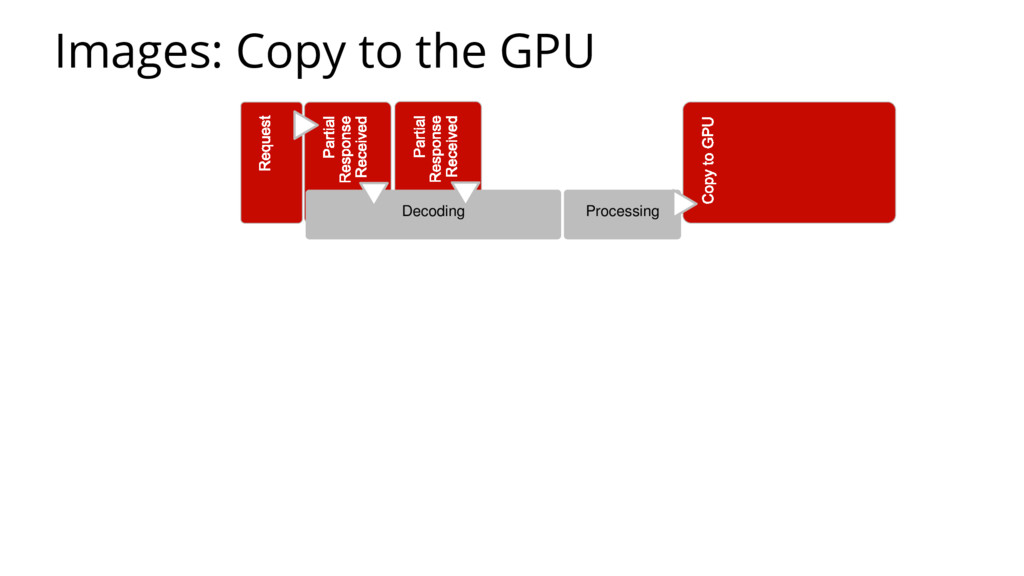
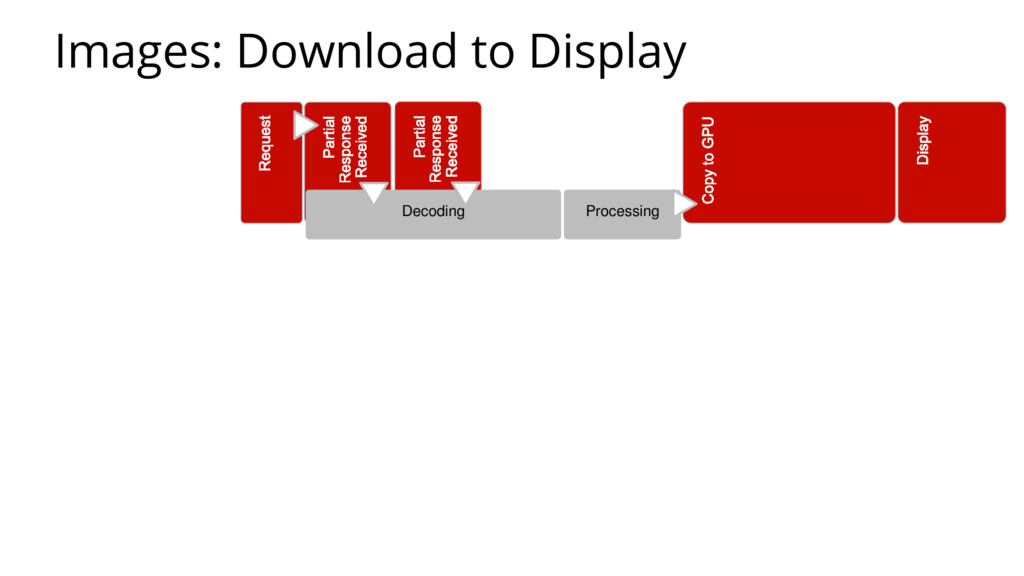
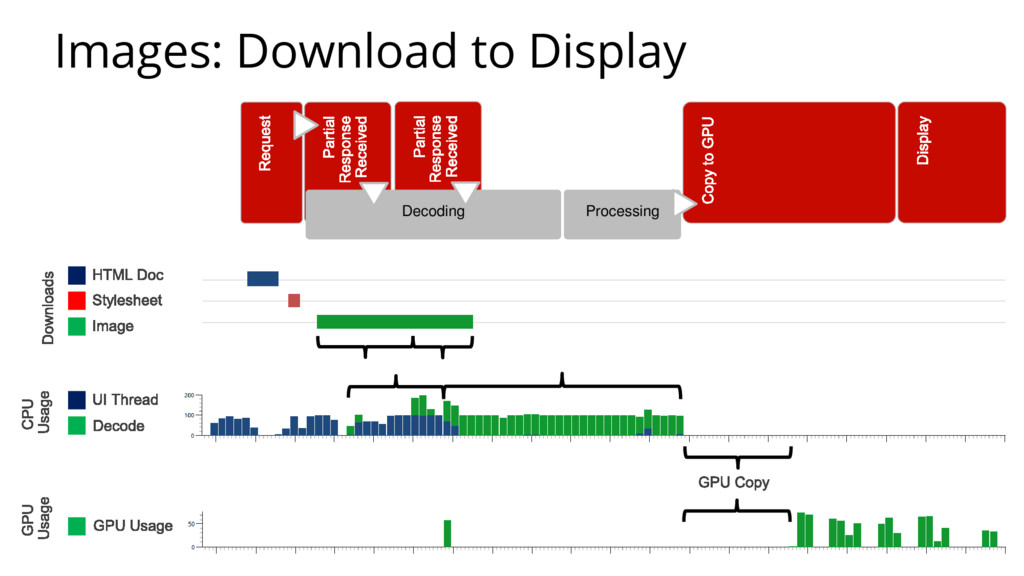
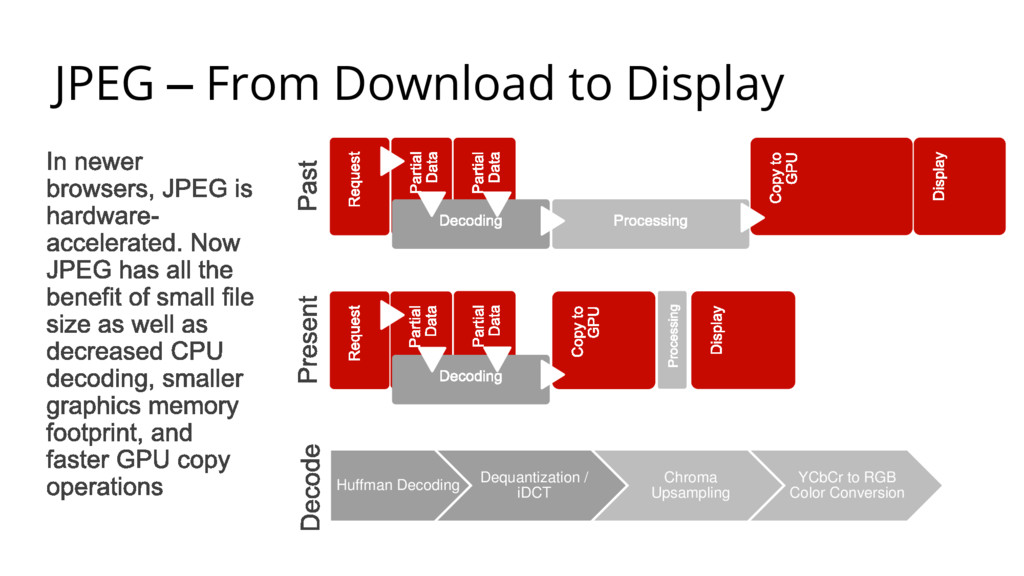
  8. JPEG images were previously decoded, upsampled and color-converted on the

    CPU before copying them to the GPU JPEG – From Download to Display Huffman Decoding Dequantization / iDCT Chroma Upsampling YCbCr to RGB Color Conversion
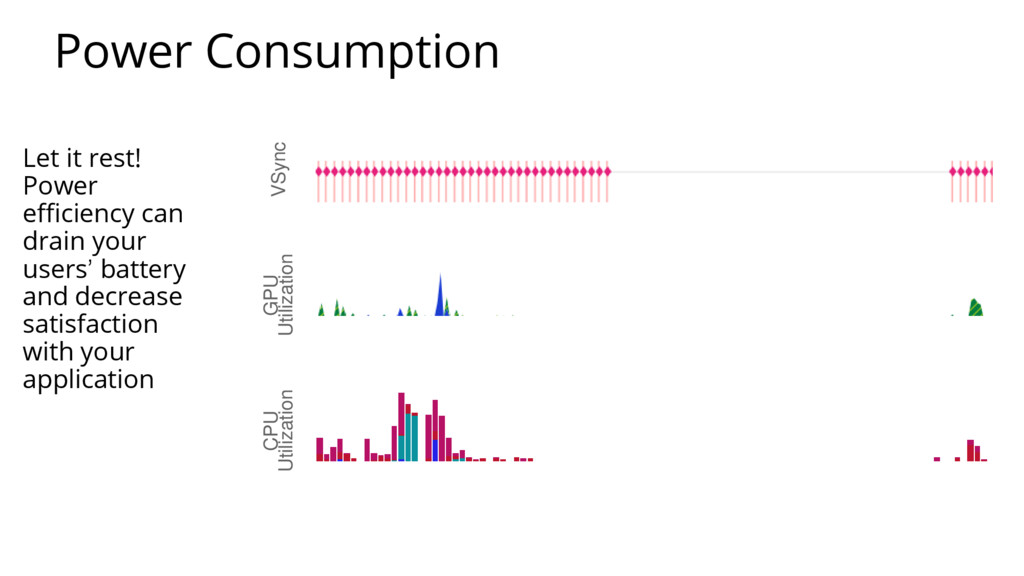
  9. Power Consumption Let it rest! Power efficiency can drain your

    users’ battery and decrease satisfaction with your application CPU Utilization GPU Utilization VSync
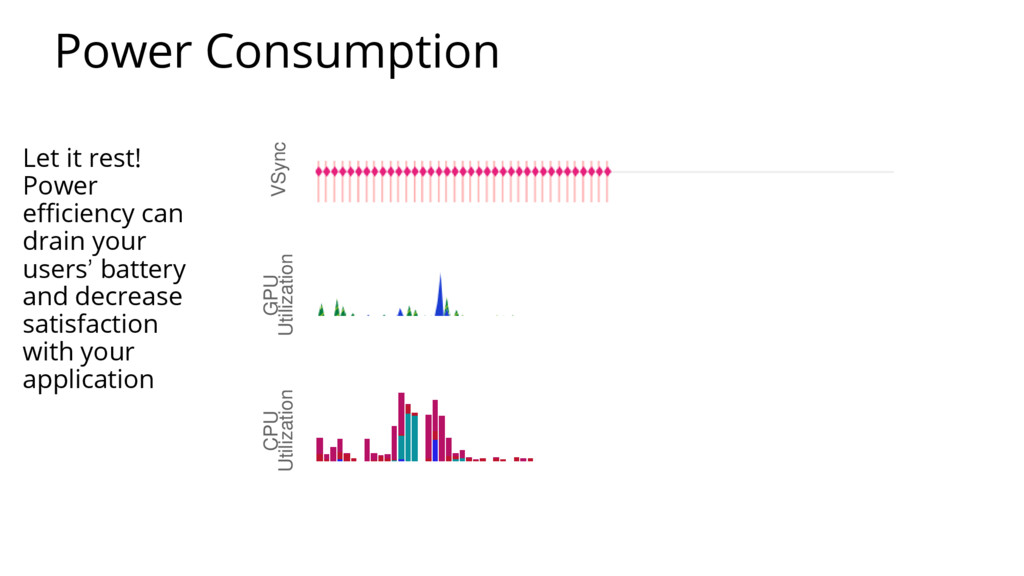
  10. Power Consumption Let it rest! Power efficiency can drain your

    users’ battery and decrease satisfaction with your application CPU Utilization GPU Utilization VSync
  11. Power Consumption Let it rest! Power efficiency can drain your

    users’ battery and decrease satisfaction with your application CPU Utilization GPU Utilization VSync
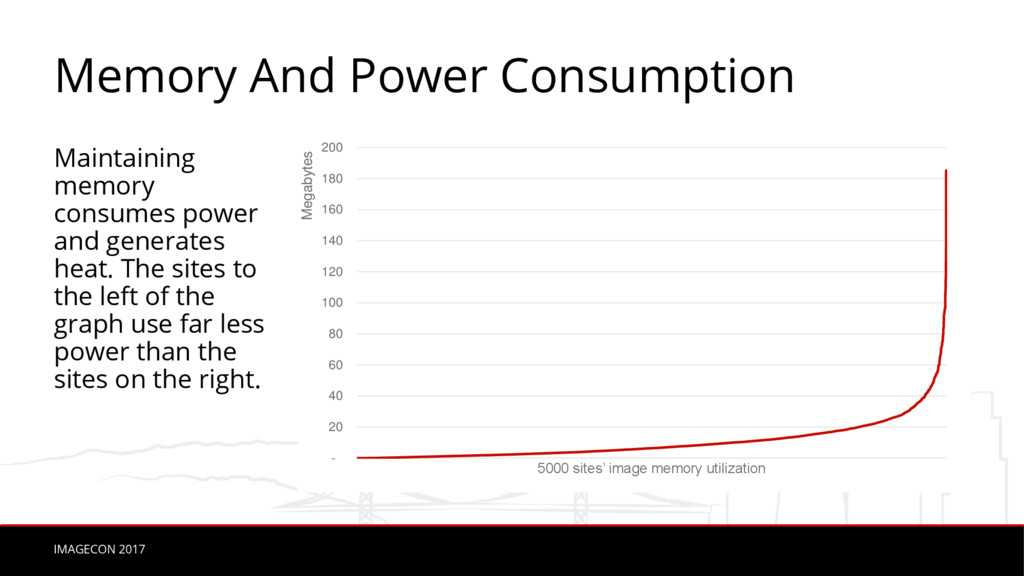
  12. IMAGECON 2017 Memory And Power Consumption Maintaining memory consumes power

    and generates heat. The sites to the left of the graph use far less power than the sites on the right. - 20 40 60 80 100 120 140 160 180 200 Megabytes 5000 sites’ image memory utilization
  13. IMAGECON 2017 Resources Overview Concepts High Performance Websites Steve Souders,

    September 2007 Event Faster Websites: Best Practices Steve Souders, June 2009 High Performance Browser Networking Ilya Grigorik, September 2013 A Picture Costs a Thousand Words Guy Podjamy, November 2013 High Performance Images Colin Bendell, Tim Kadlec, Yoav Weiss, Guy Podjarny, Kick Doyle & Mike McCall November 2016 Microsoft Guidance High-Performance Web Platform Tobin Titus, Build 2014 Web Runtime Performance Tobin Titus, Build 2013 Performance Tricks to Make Apps & Sites Faster Jatinder Mann, Build 2012 50 Performance Tricks for Windows Store Apps Jason Weber, Build 2011 W3C Web Performance Web Performance Working Group Homepage Blog Posts 1) JPEGXR updates (comparisons to WebP) 2) Debugging/Tuning Web Sites w/F12 Developer Tools 3) Measuring Performance with ETW/XPerf 4) Measuring Performance in Lab Environments 5) Browser Subsystems Overview 6) What Common Benchmarks Measure Tools Windows Performance Toolkit Fiddler Web Debugger Contact Tobin Titus Twitter: @tobint Email: [email protected]