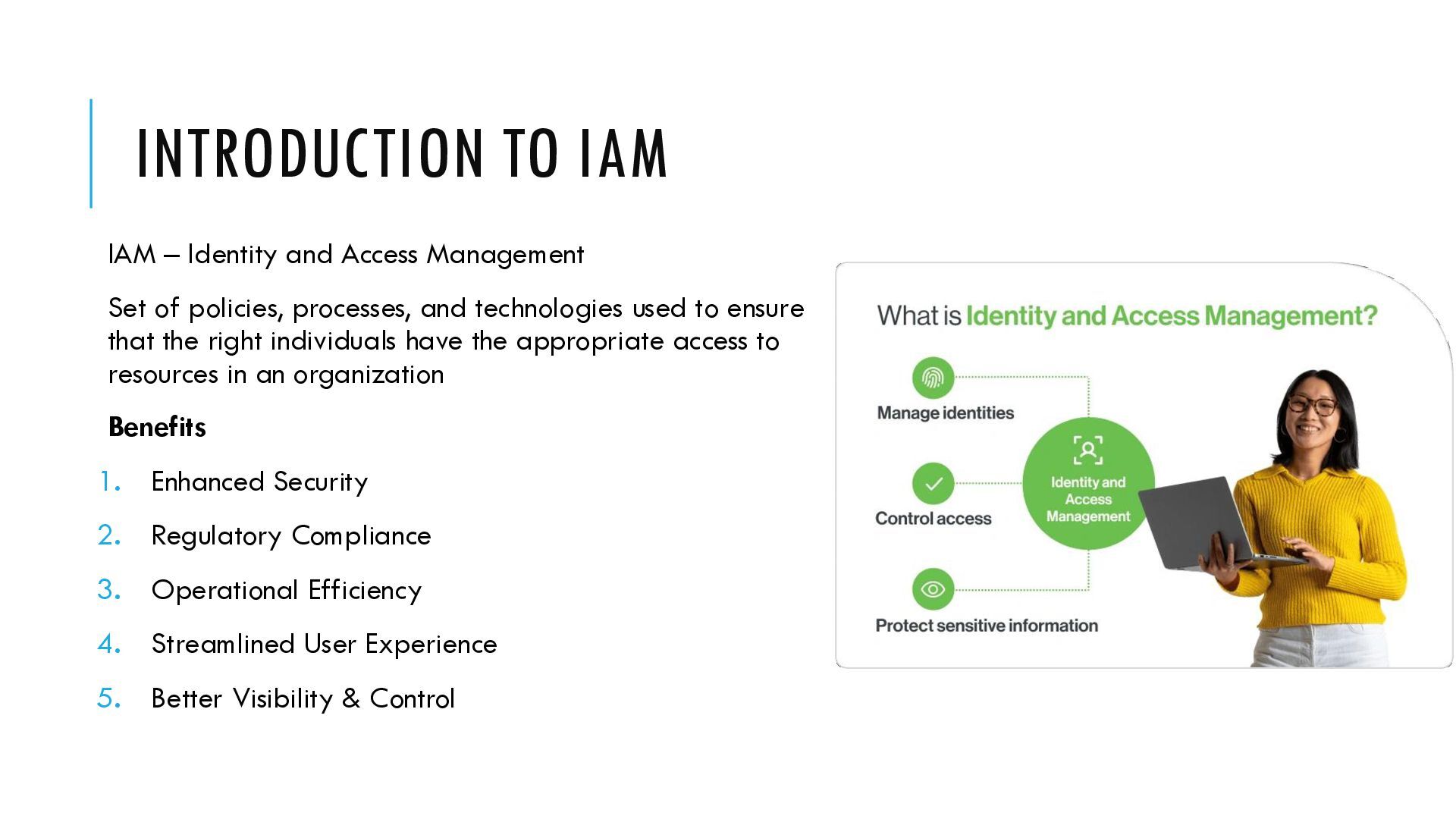
of policies, processes, and technologies used to ensure that the right individuals have the appropriate access to resources in an organization Benefits 1. Enhanced Security 2. Regulatory Compliance 3. Operational Efficiency 4. Streamlined User Experience 5. Better Visibility & Control
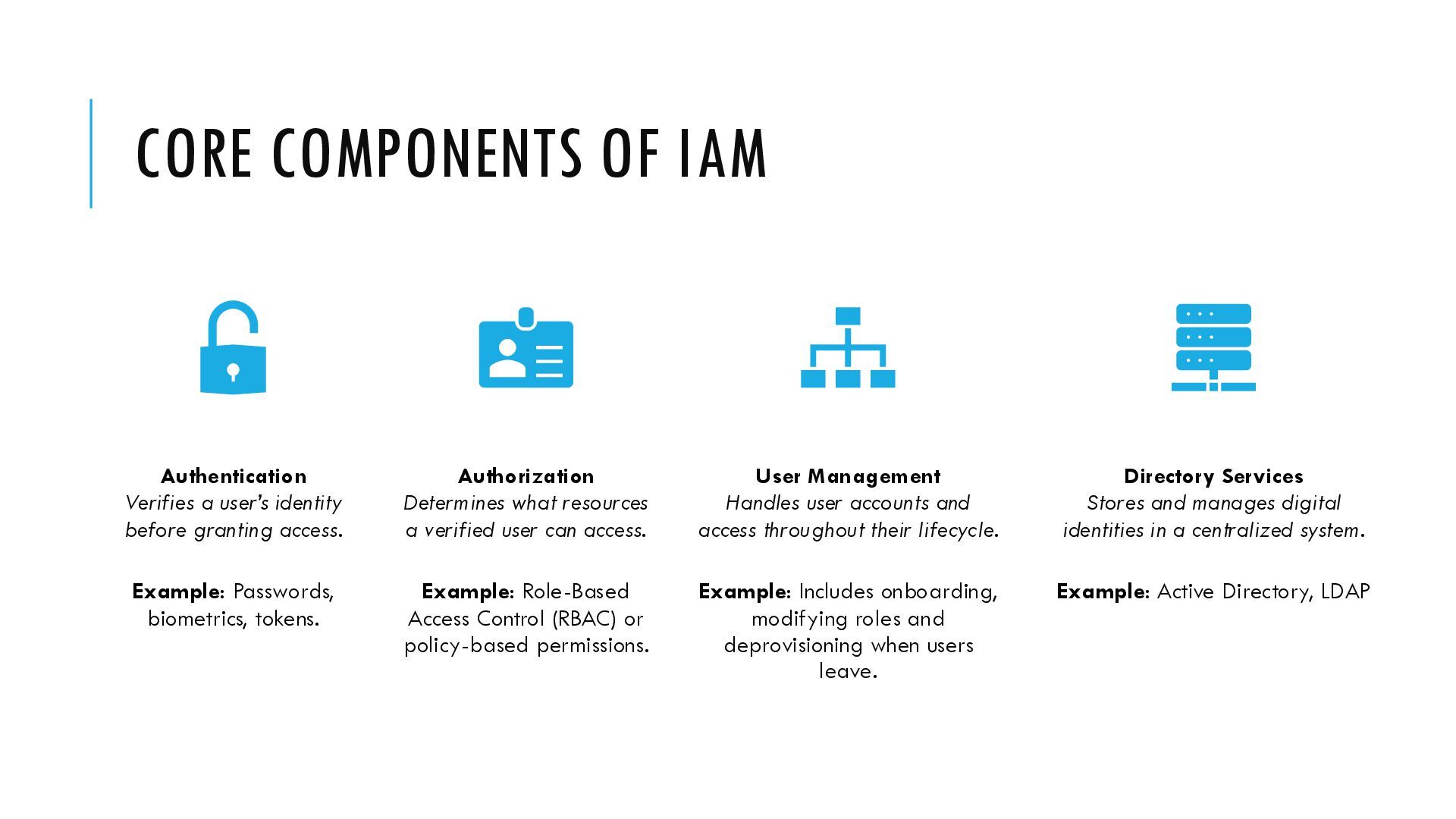
granting access. Example: Passwords, biometrics, tokens. Authorization Determines what resources a verified user can access. Example: Role-Based Access Control (RBAC) or policy-based permissions. User Management Handles user accounts and access throughout their lifecycle. Example: Includes onboarding, modifying roles and deprovisioning when users leave. Directory Services Stores and manages digital identities in a centralized system. Example: Active Directory, LDAP
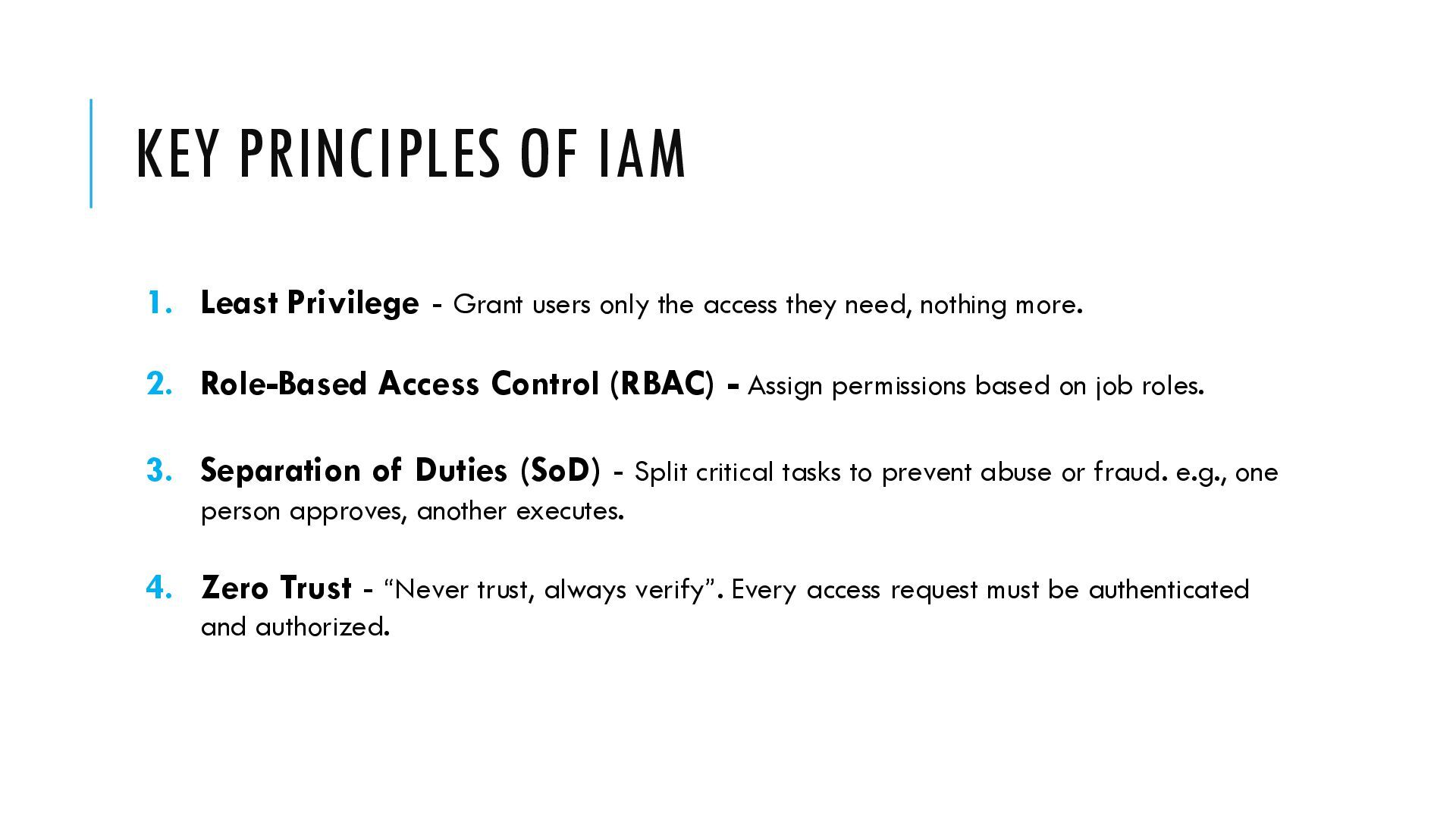
only the access they need, nothing more. 2. Role-Based Access Control (RBAC) - Assign permissions based on job roles. 3. Separation of Duties (SoD) - Split critical tasks to prevent abuse or fraud. e.g., one person approves, another executes. 4. Zero Trust - “Never trust, always verify”. Every access request must be authenticated and authorized.
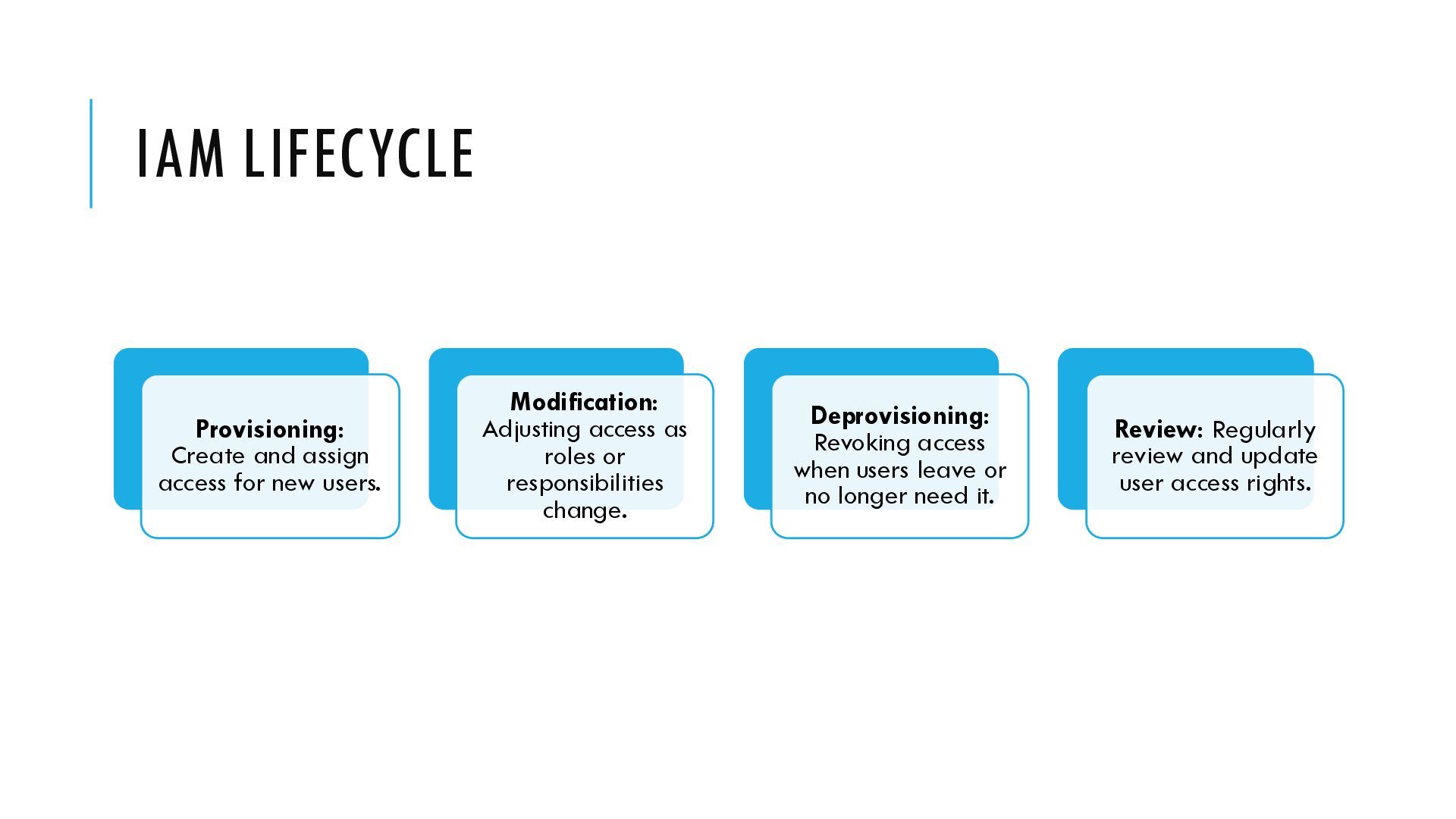
Modification: Adjusting access as roles or responsibilities change. Deprovisioning: Revoking access when users leave or no longer need it. Review: Regularly review and update user access rights.
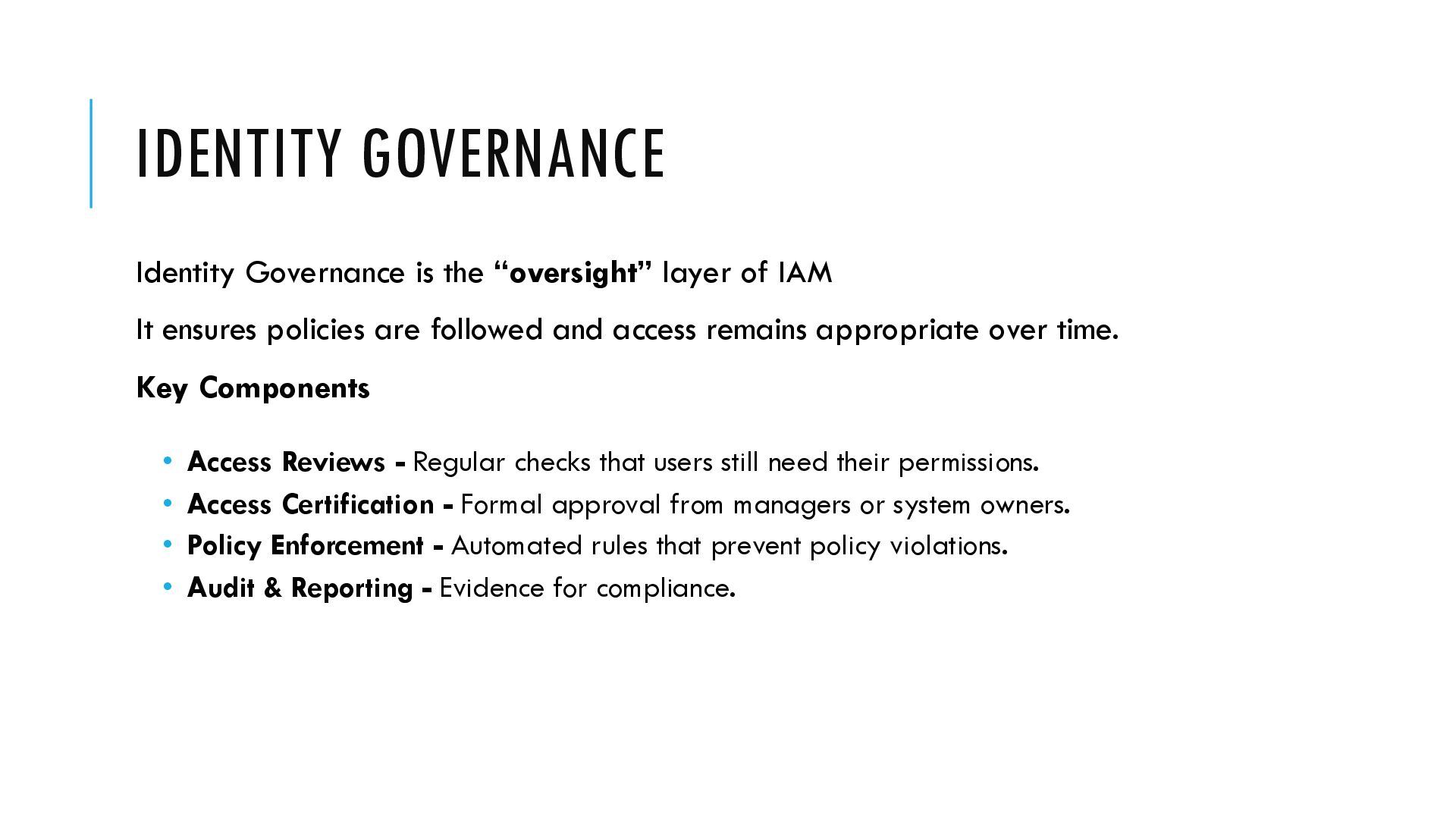
It ensures policies are followed and access remains appropriate over time. Key Components • Access Reviews - Regular checks that users still need their permissions. • Access Certification - Formal approval from managers or system owners. • Policy Enforcement - Automated rules that prevent policy violations. • Audit & Reporting - Evidence for compliance.
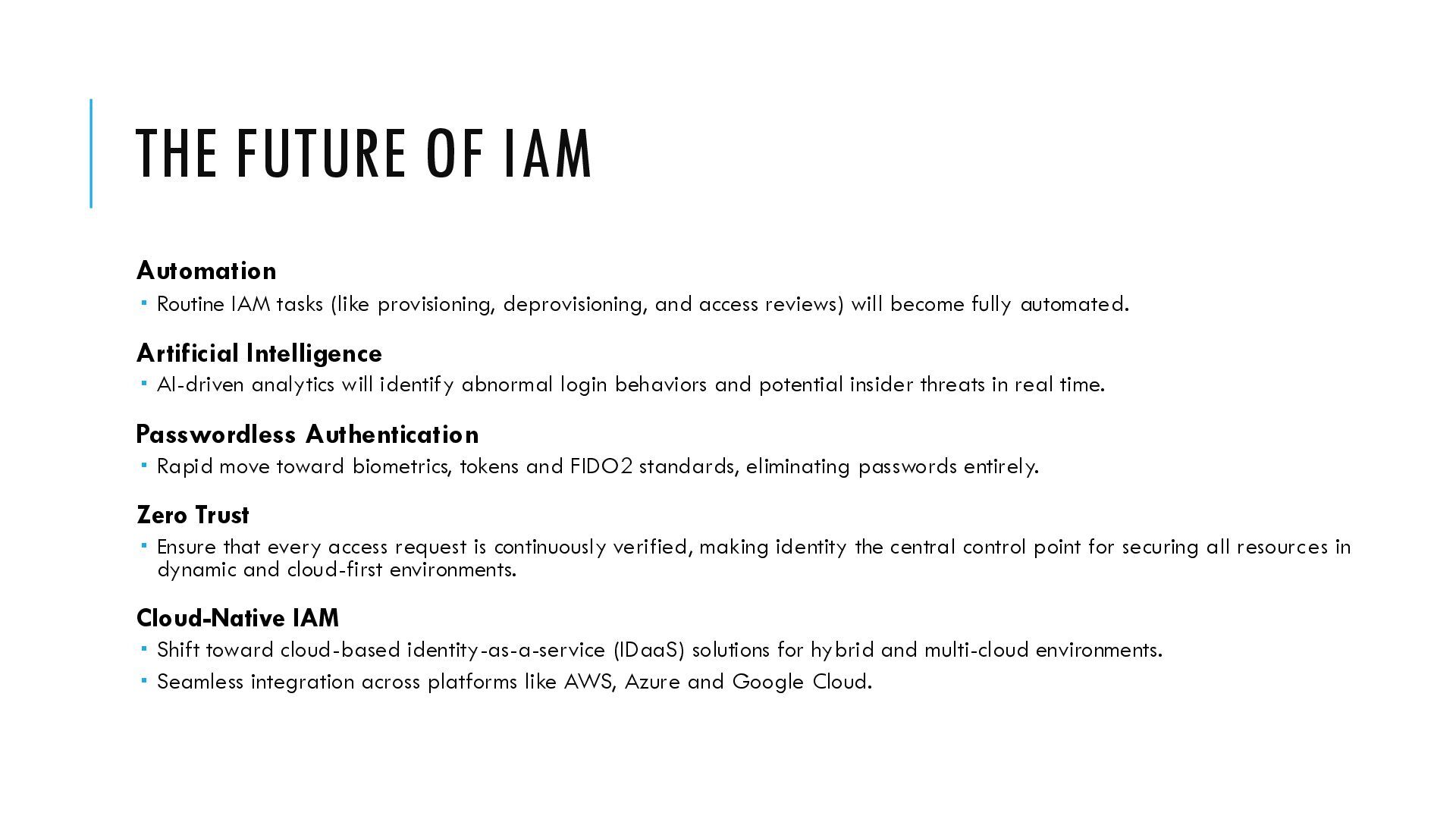
provisioning, deprovisioning, and access reviews) will become fully automated. Artificial Intelligence AI-driven analytics will identify abnormal login behaviors and potential insider threats in real time. Passwordless Authentication Rapid move toward biometrics, tokens and FIDO2 standards, eliminating passwords entirely. Zero Trust Ensure that every access request is continuously verified, making identity the central control point for securing all resources in dynamic and cloud-first environments. Cloud-Native IAM Shift toward cloud-based identity-as-a-service (IDaaS) solutions for hybrid and multi-cloud environments. Seamless integration across platforms like AWS, Azure and Google Cloud.

 SiteGround - Reliable hosting with speed, security, and support you can count on.


 tracymagoma
 tetsuya28
 terurou
 jyouryuusui
 pfn
pfn
 prog893
 y0hgi
y0hgi
 takuroabe
 yut0naga1_fa
 koukihosaka
 moznion
 riyaamemiya
 elsirapls
 sferik
 stuffmc
 mza
mza
 takai
takai
 soysaucechin
 cassininazir
 tammyeverts
 hannesfritz
 aleyda
 tmiket
 tamaranovitovic