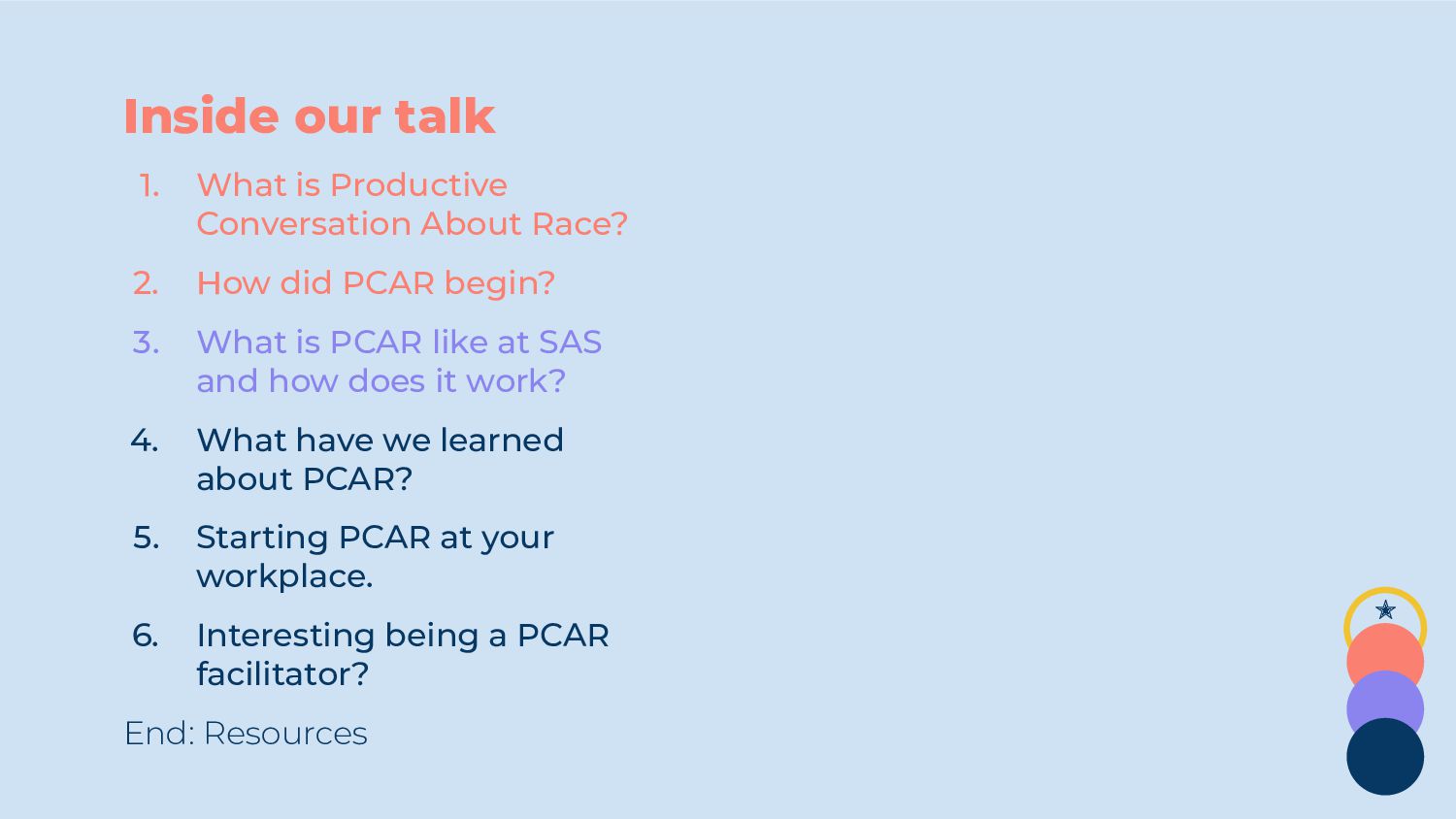
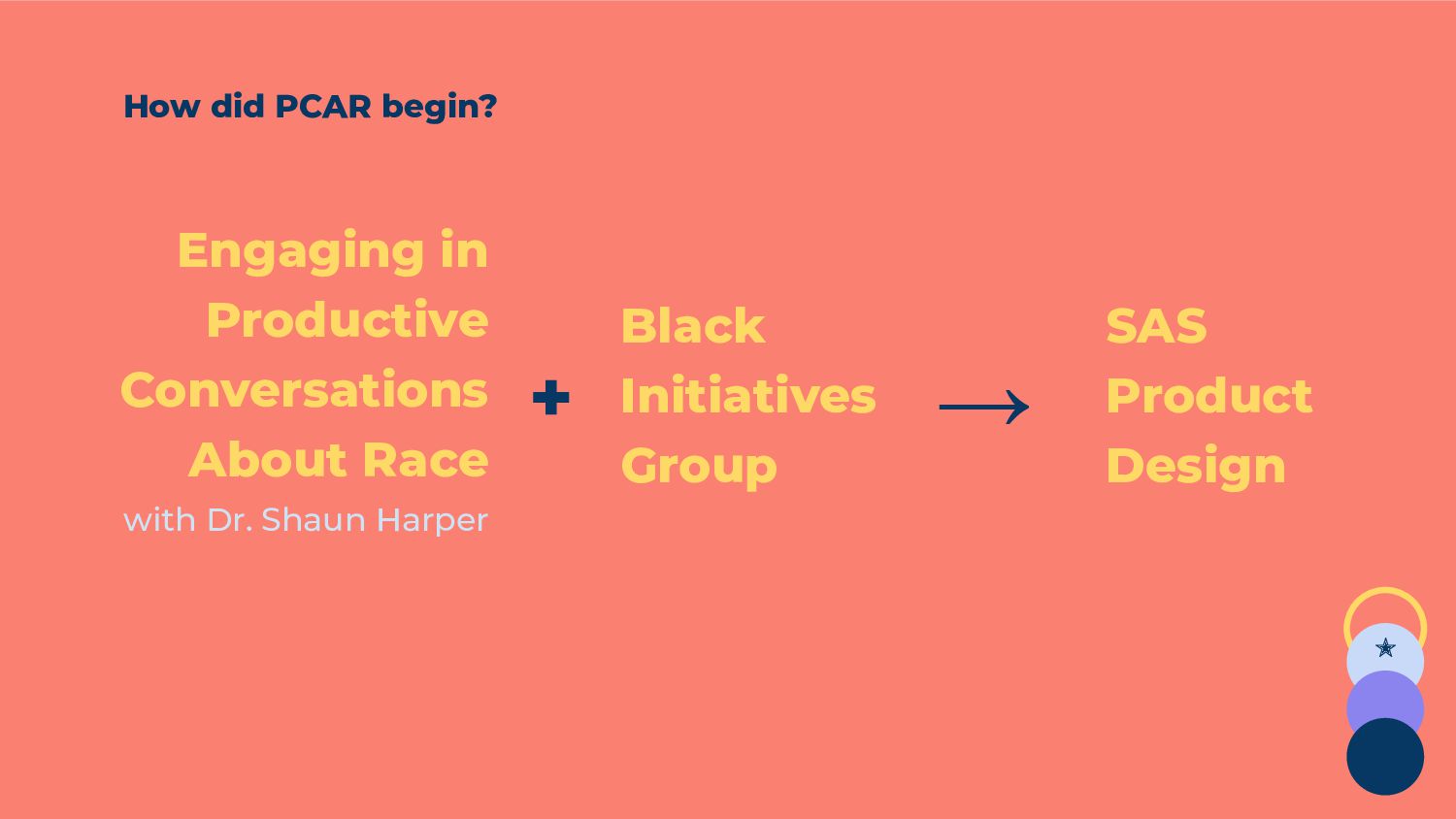
2. How did PCAR begin? 3. What is PCAR like at SAS and how does it work? 4. What have we learned about PCAR? 5. Starting PCAR at your workplace. 6. Interesting being a PCAR facilitator? End: Resources ★
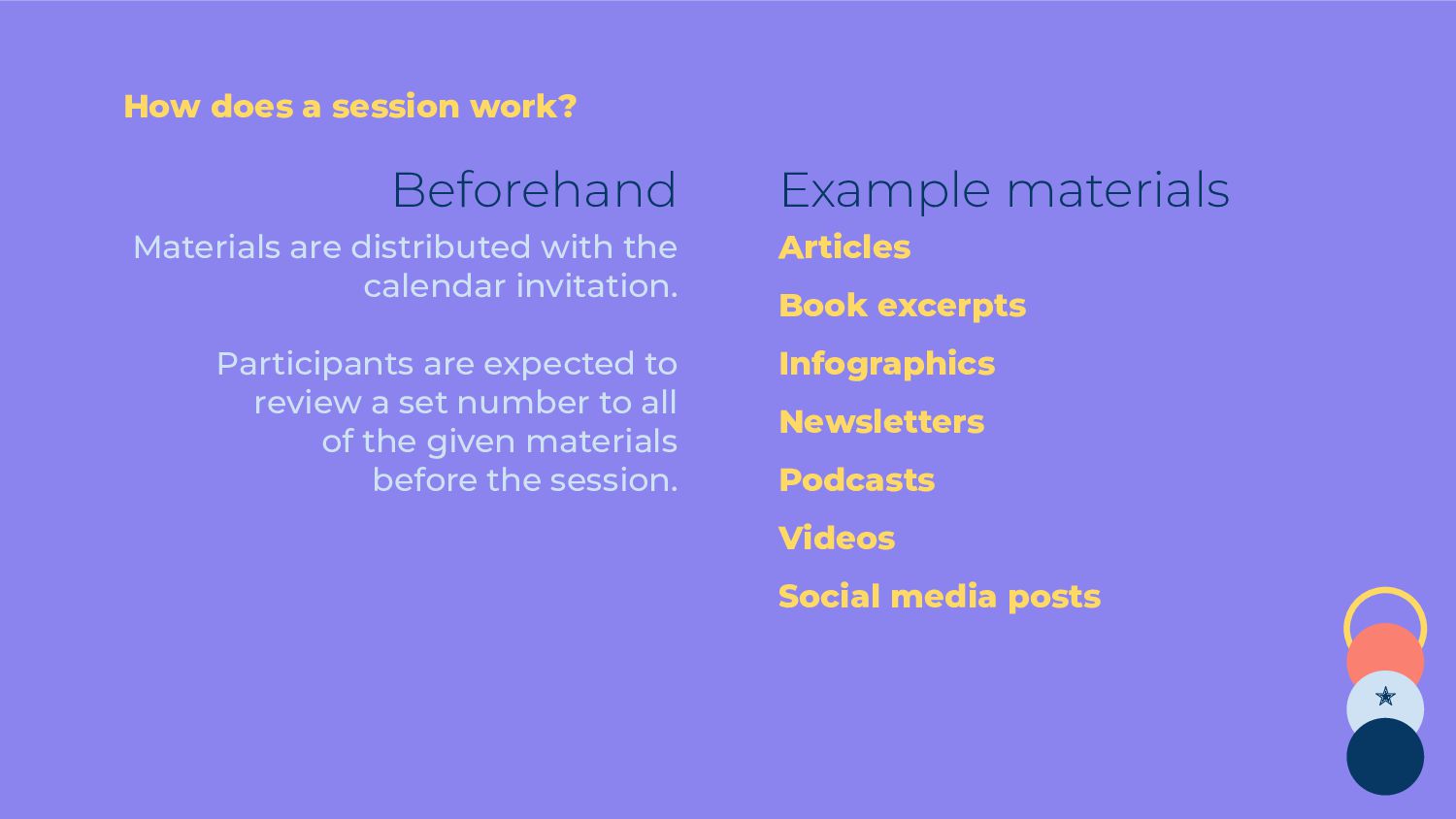
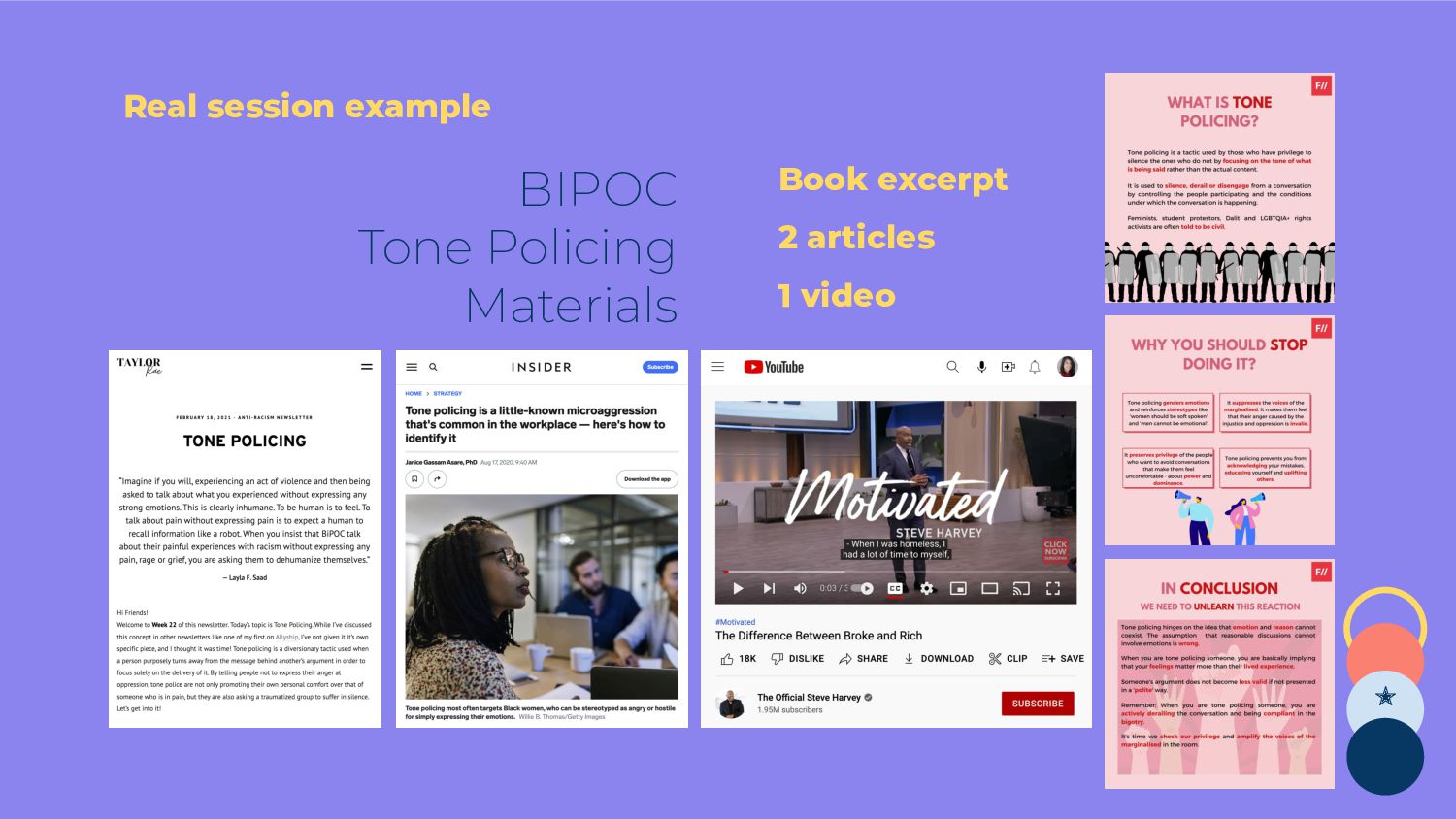
Infographics Newsletters Podcasts Videos Social media posts Beforehand Materials are distributed with the calendar invitation. Participants are expected to review a set number to all of the given materials before the session. ★
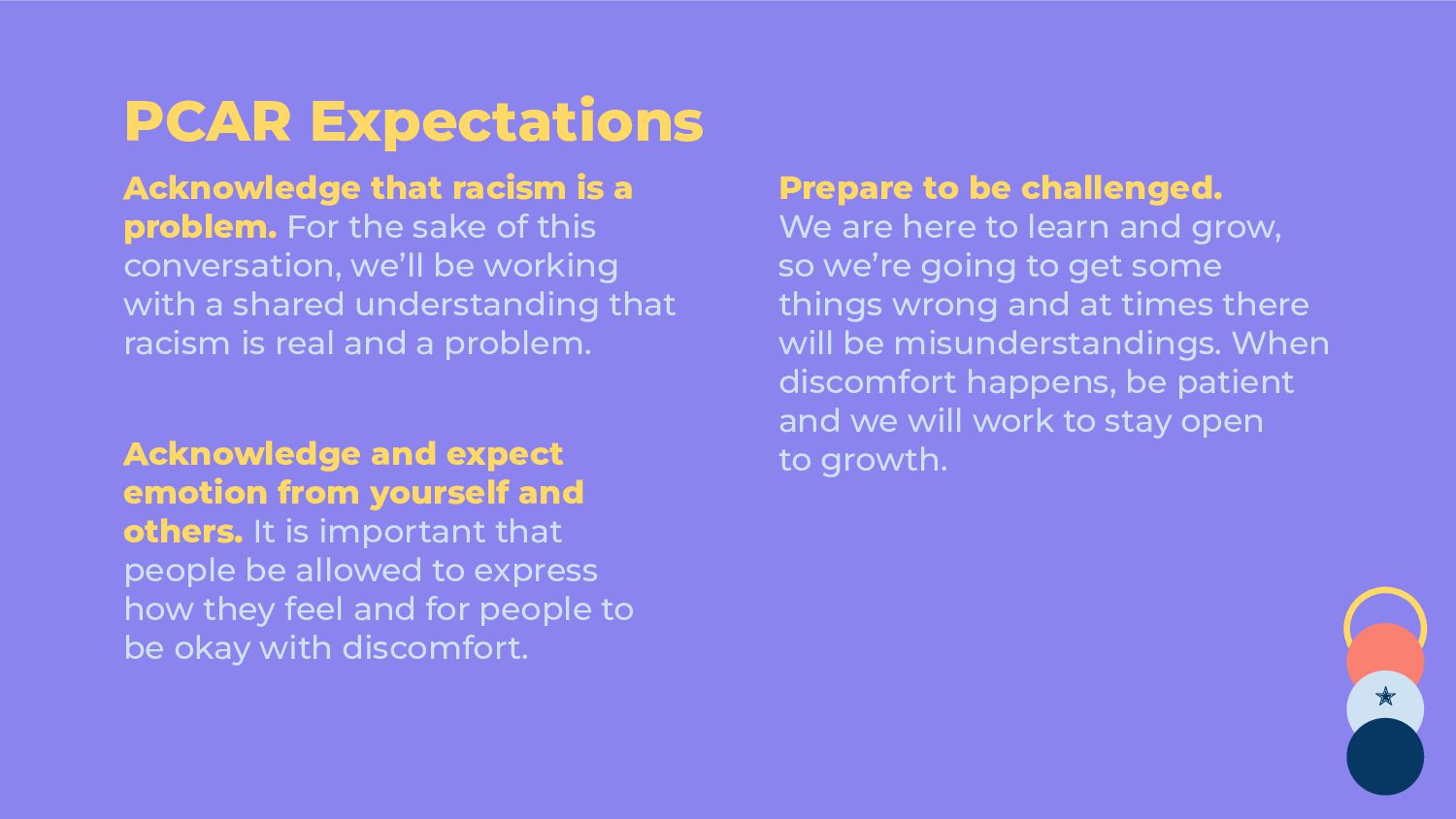
sake of this conversation, we’ll be working with a shared understanding that racism is real and a problem. Acknowledge and expect emotion from yourself and others. It is important that people be allowed to express how they feel and for people to be okay with discomfort. Prepare to be challenged. We are here to learn and grow, so we’re going to get some things wrong and at times there will be misunderstandings. When discomfort happens, be patient and we will work to stay open to growth. ★
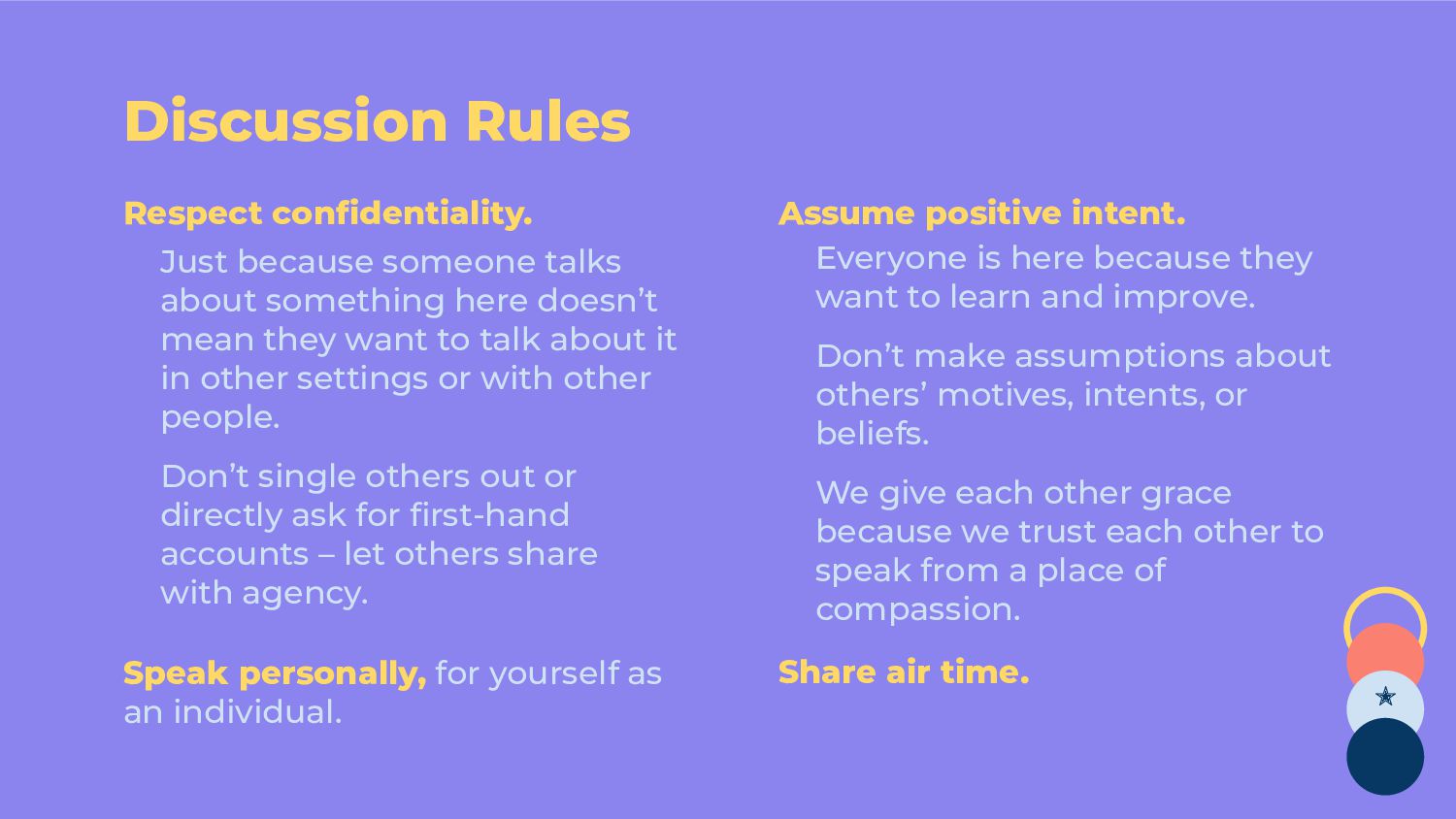
something here doesn’t mean they want to talk about it in other settings or with other people. Don’t single others out or directly ask for first-hand accounts – let others share with agency. Share air time. Respect confidentiality. Everyone is here because they want to learn and improve. Don’t make assumptions about others’ motives, intents, or beliefs. We give each other grace because we trust each other to speak from a place of compassion. Speak personally, for yourself as an individual. ★
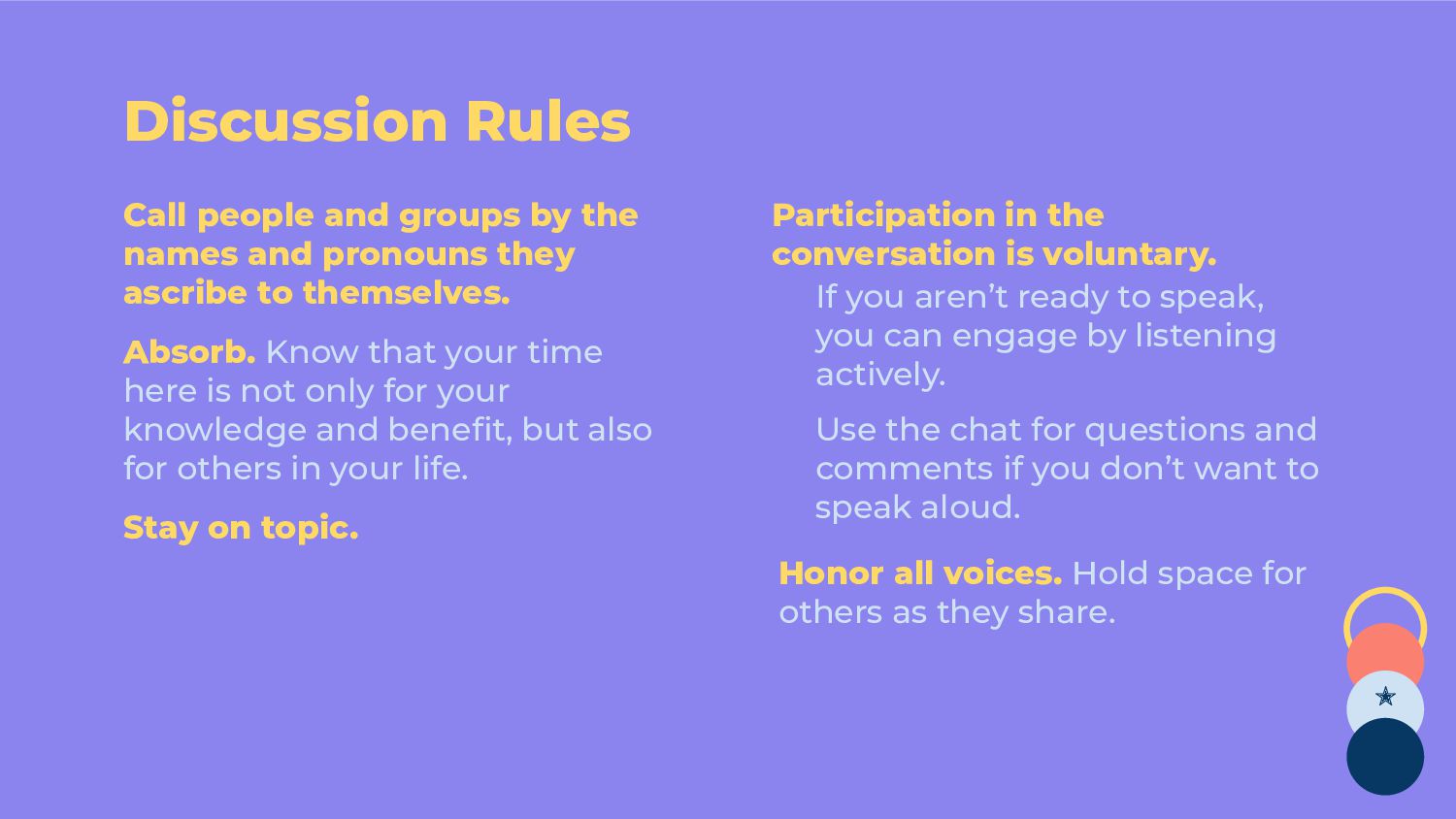
they share. Participation in the conversation is voluntary. If you aren’t ready to speak, you can engage by listening actively. Use the chat for questions and comments if you don’t want to speak aloud. Call people and groups by the names and pronouns they ascribe to themselves. Absorb. Know that your time here is not only for your knowledge and benefit, but also for others in your life. Stay on topic. ★
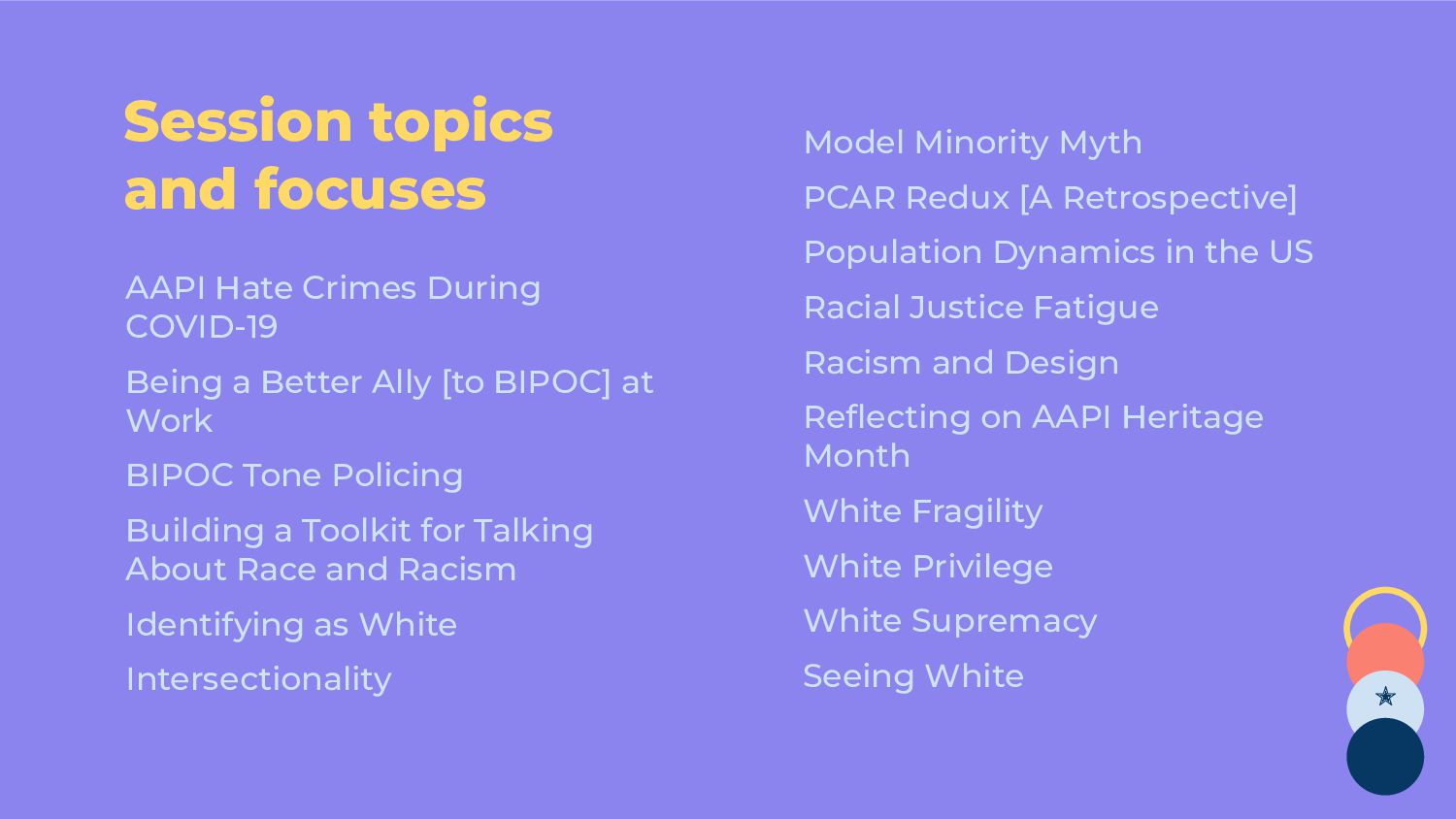
a Better Ally [to BIPOC] at Work BIPOC Tone Policing Building a Toolkit for Talking About Race and Racism Identifying as White Intersectionality Model Minority Myth PCAR Redux [A Retrospective] Population Dynamics in the US Racial Justice Fatigue Racism and Design Reflecting on AAPI Heritage Month White Fragility White Privilege White Supremacy Seeing White ★
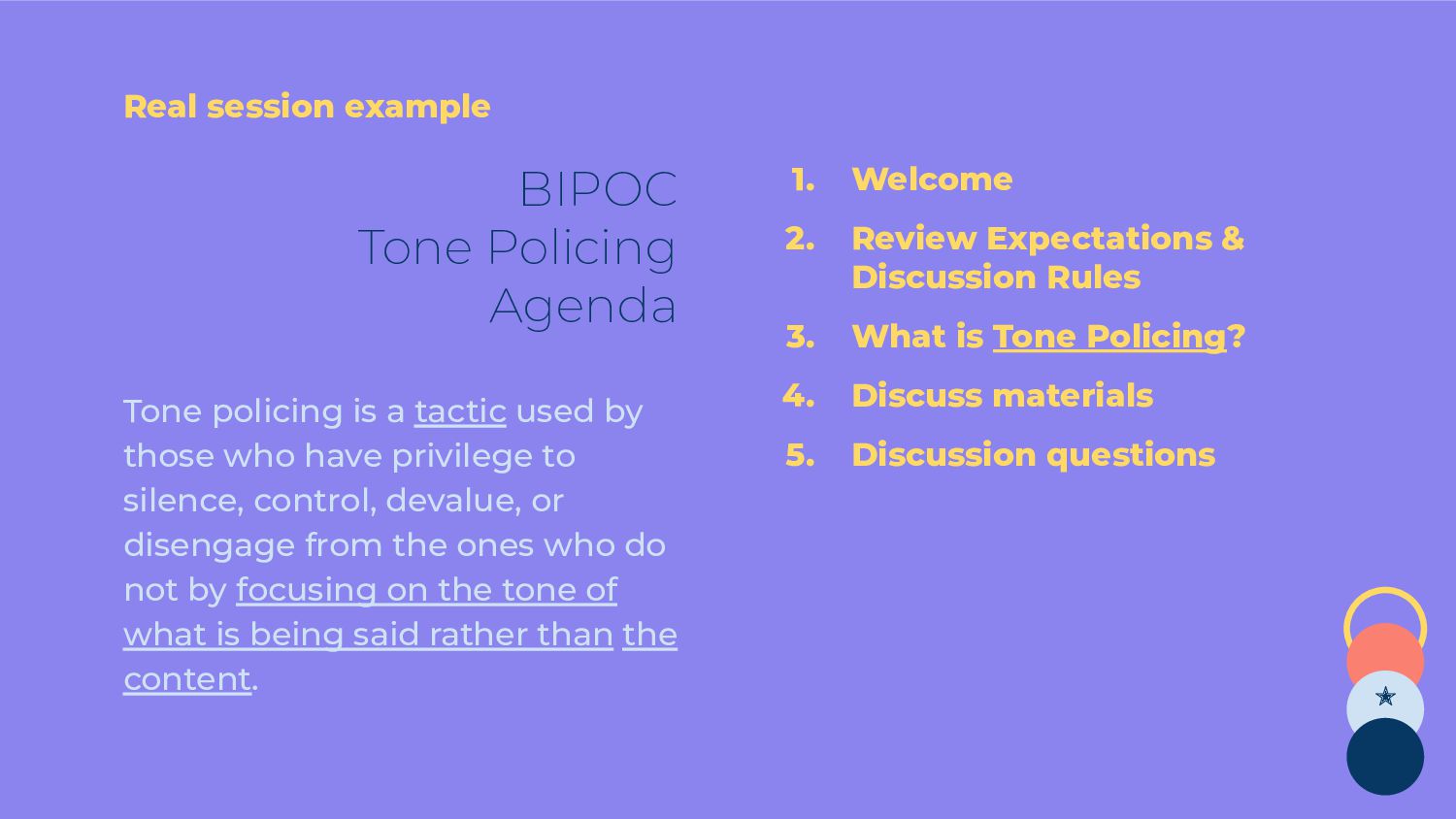
Rules 3. What is Tone Policing? 4. Discuss materials 5. Discussion questions BIPOC Tone Policing Agenda Tone policing is a tactic used by those who have privilege to silence, control, devalue, or disengage from the ones who do not by focusing on the tone of what is being said rather than the content. ★
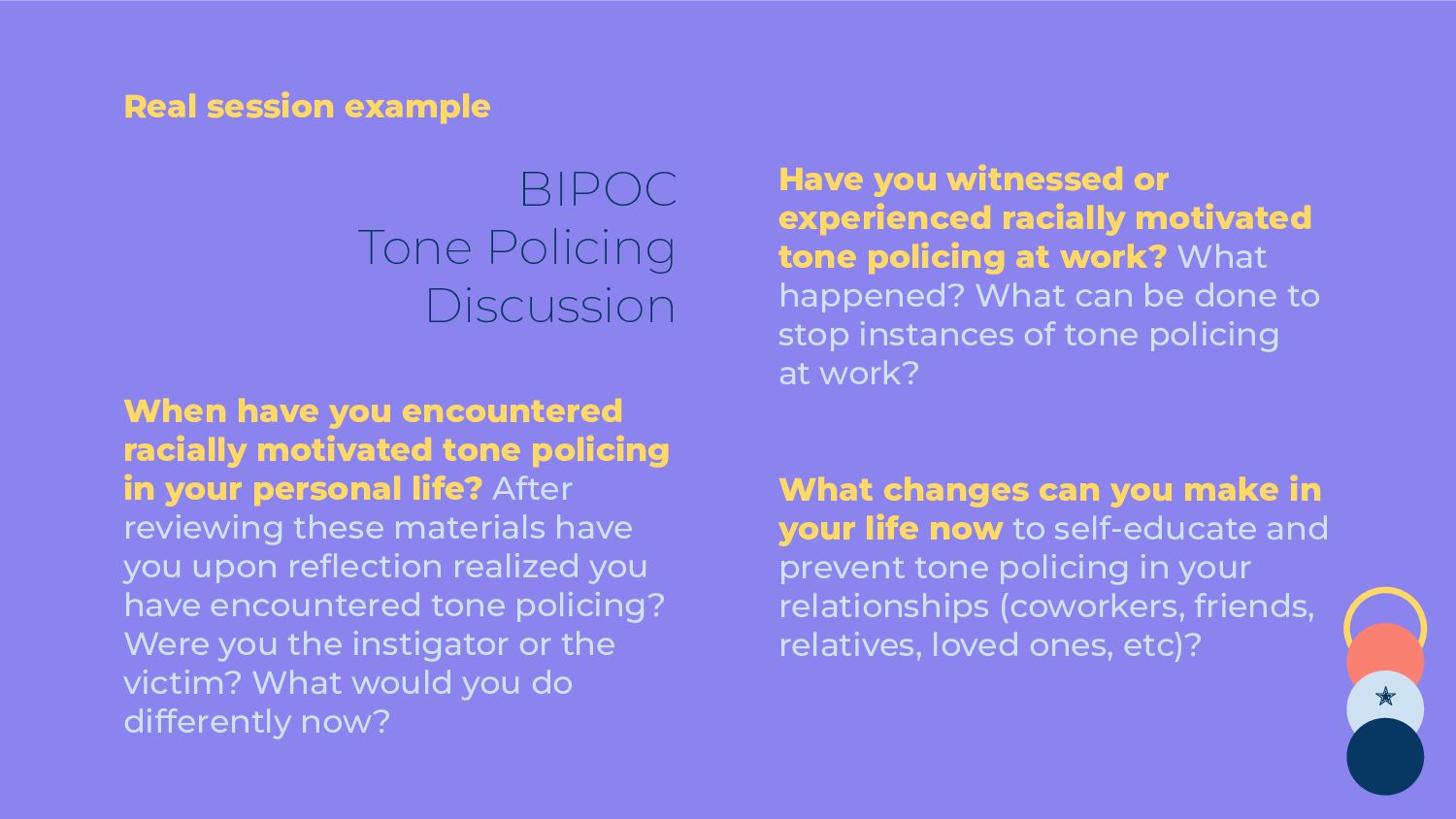
tone policing at work? What happened? What can be done to stop instances of tone policing at work? What changes can you make in your life now to self-educate and prevent tone policing in your relationships (coworkers, friends, relatives, loved ones, etc)? BIPOC Tone Policing Discussion When have you encountered racially motivated tone policing in your personal life? After reviewing these materials have you upon reflection realized you have encountered tone policing? Were you the instigator or the victim? What would you do differently now? ★
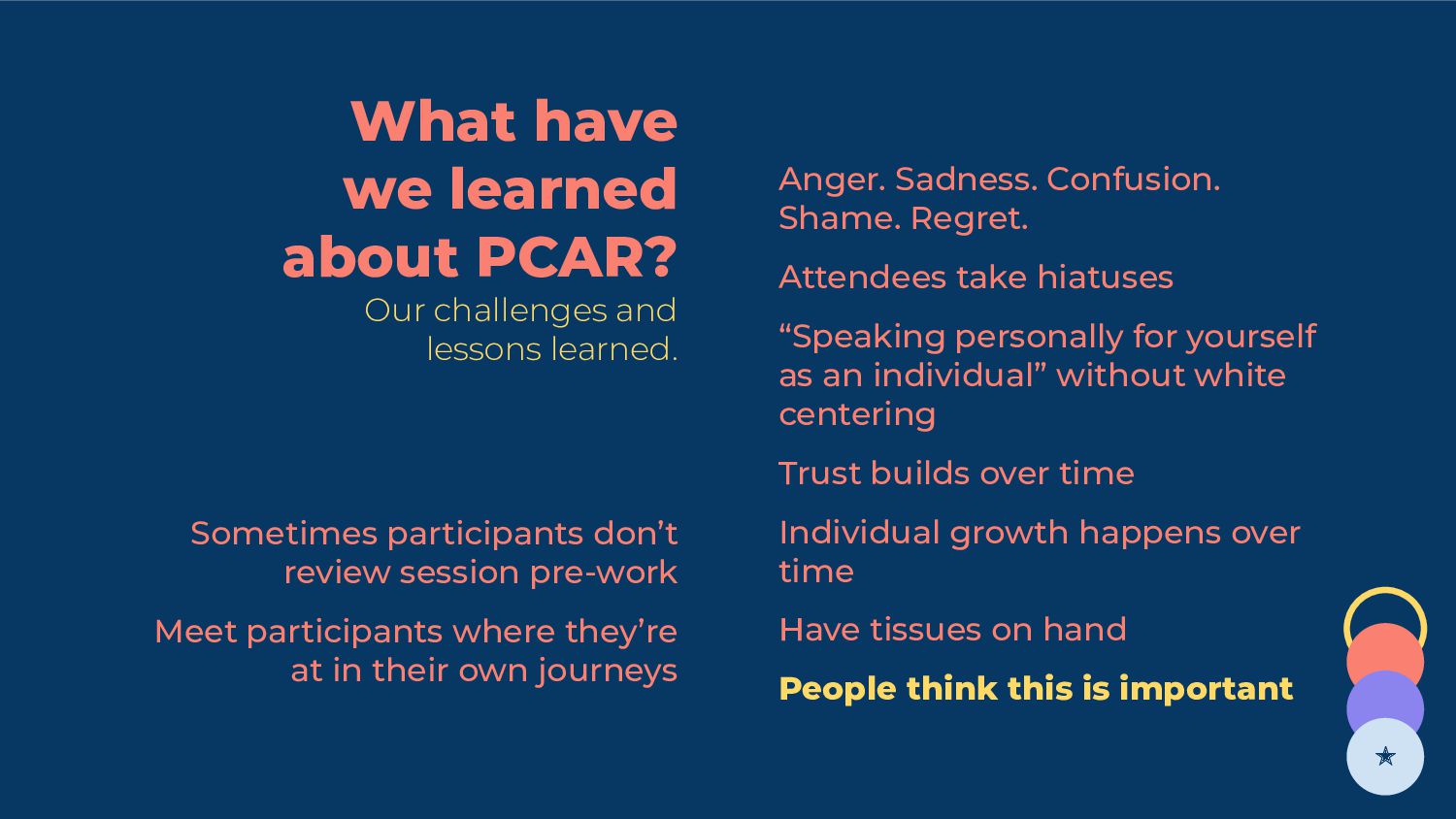
for yourself as an individual” without white centering Trust builds over time Individual growth happens over time Have tissues on hand People think this is important Sometimes participants don’t review session pre-work Meet participants where they’re at in their own journeys What have we learned about PCAR? Our challenges and lessons learned. ★
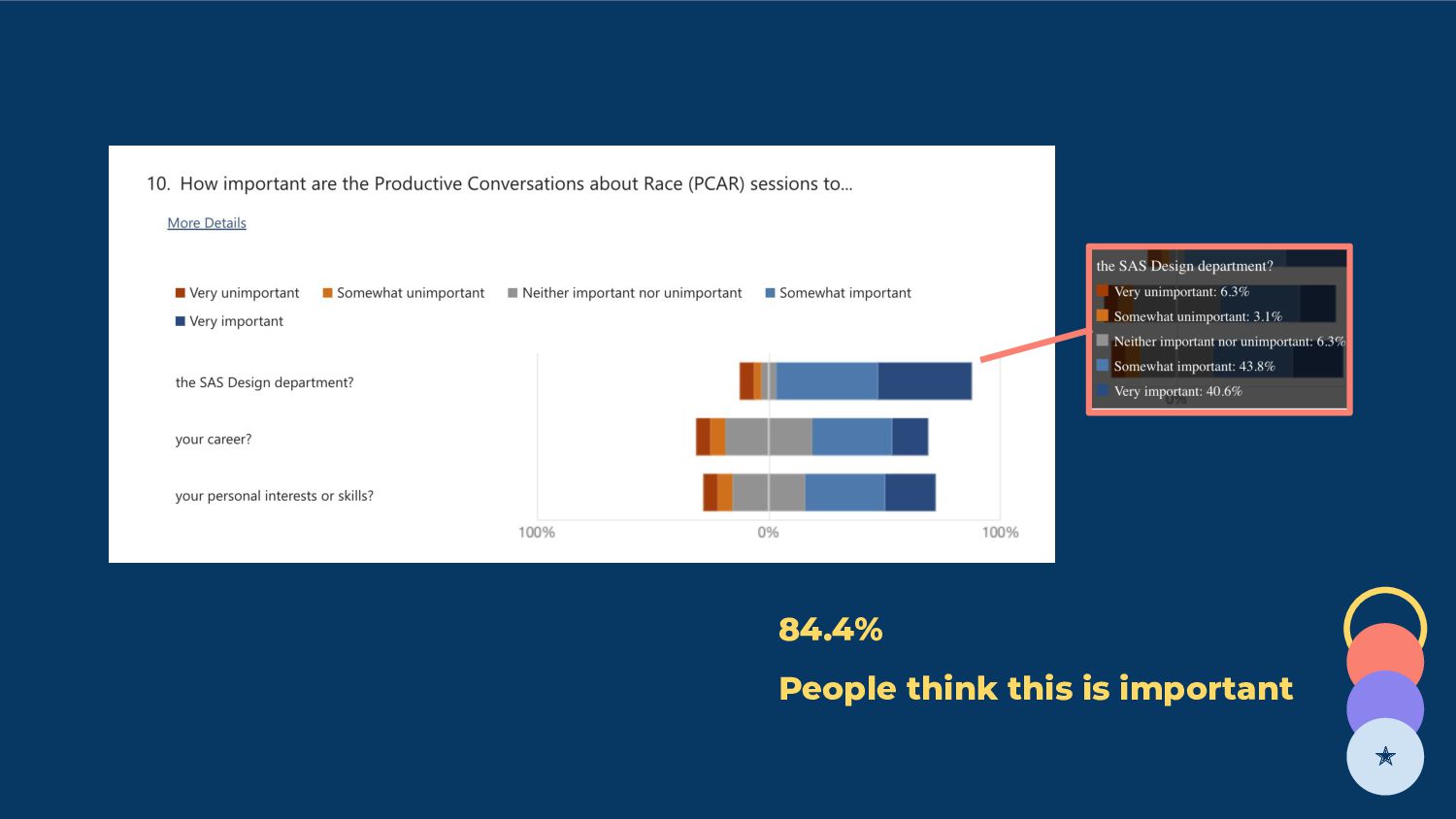
for yourself as an individual” itho84ut white centering Trust builds over time Individual growth happens over time 84.4% People think this is important ★
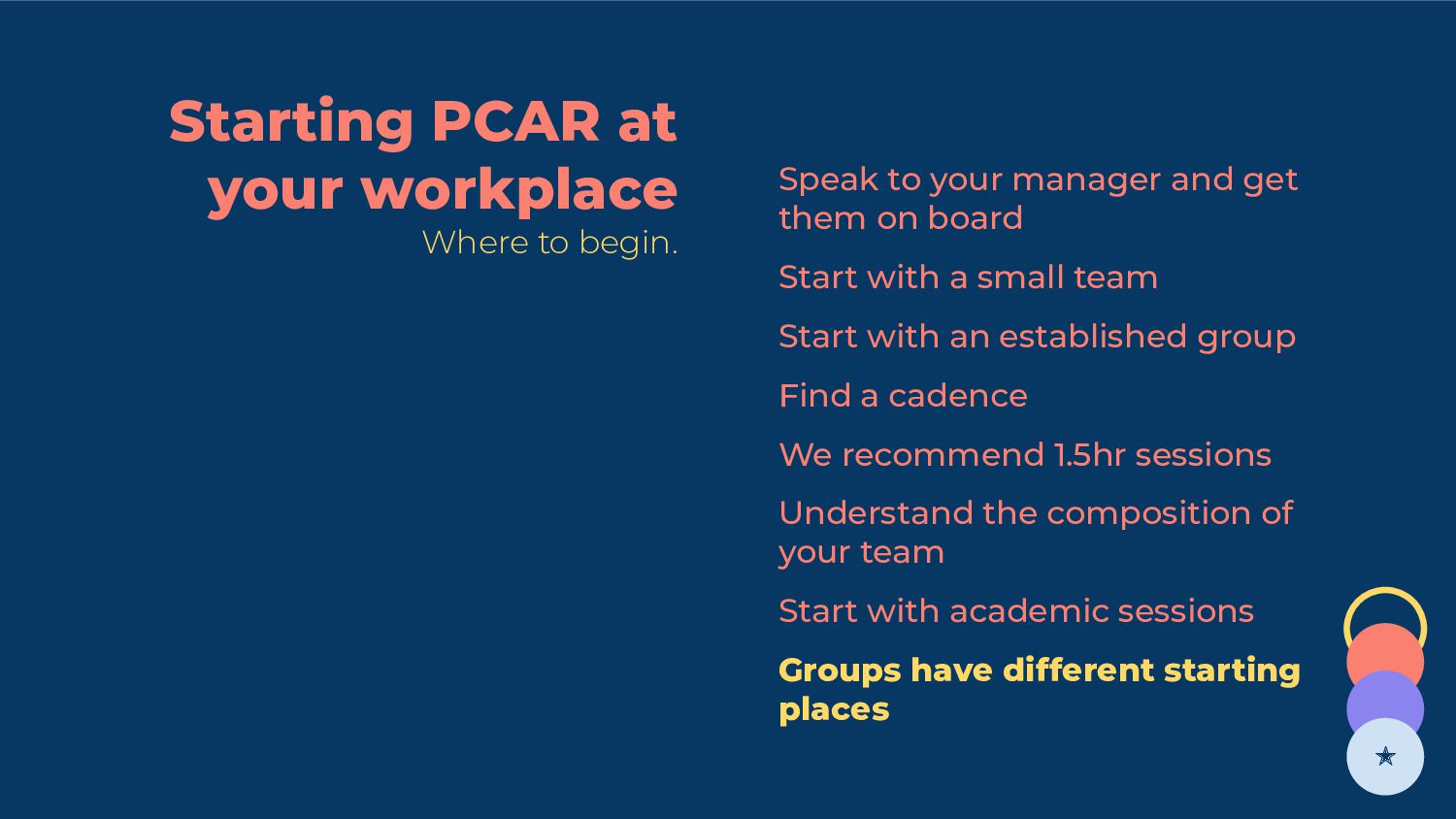
with a small team Start with an established group Find a cadence We recommend 1.5hr sessions Understand the composition of your team Start with academic sessions Groups have different starting places Starting PCAR at your workplace Where to begin. ★
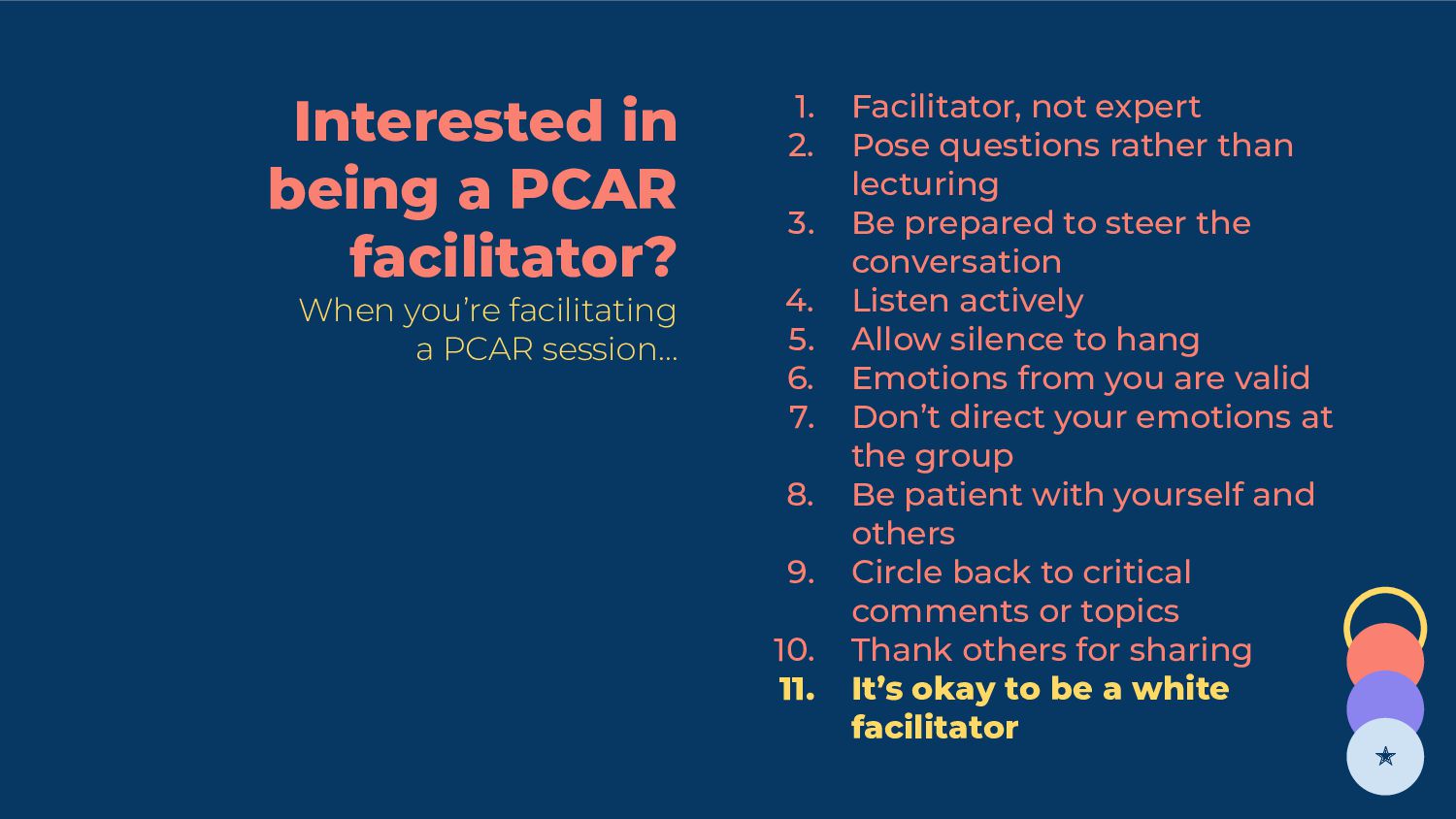
3. Be prepared to steer the conversation 4. Listen actively 5. Allow silence to hang 6. Emotions from you are valid 7. Don’t direct your emotions at the group 8. Be patient with yourself and others 9. Circle back to critical comments or topics 10. Thank others for sharing 11. It’s okay to be a white facilitator Interested in being a PCAR facilitator? When you’re facilitating a PCAR session… ★
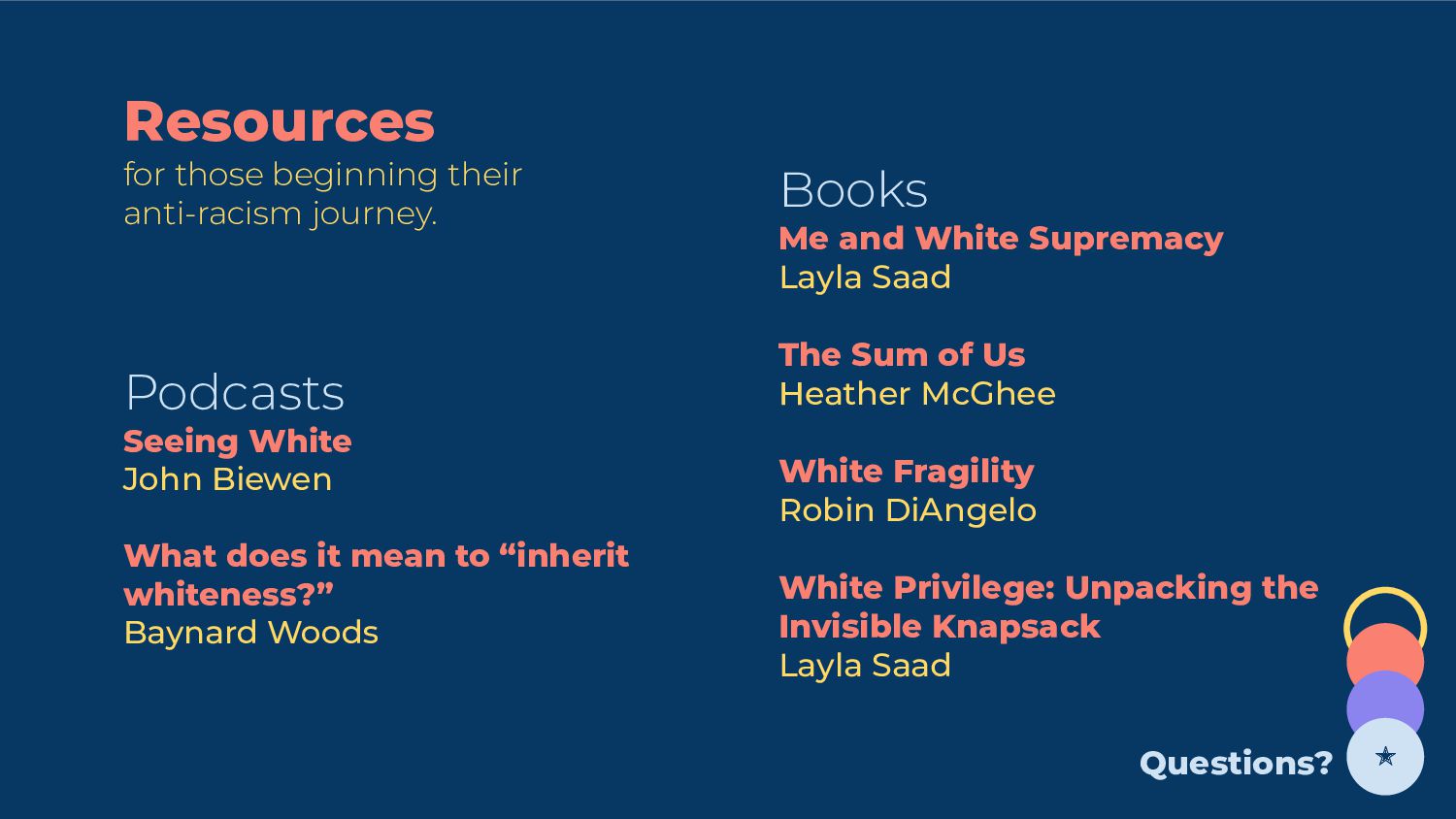
White Supremacy Layla Saad The Sum of Us Heather McGhee White Fragility Robin DiAngelo White Privilege: Unpacking the Invisible Knapsack Layla Saad Questions? Podcasts Seeing White John Biewen What does it mean to “inherit whiteness?” Baynard Woods ★

 Ship Features Fearlessly


 uxyall
 fumink7
 sugiyama_sukedachi
 rezaline
 miyayou
 muture
 pkshadeck
 bebe
bebe
 vivion
 ottatto
 nikkei_engineer_recruiting
 toy1618
 kimichan
 reverentgeek
 techseoconnect
 csswizardry
 frankvandijk
 tammyeverts
 sstephenson
 lauravandoore
 keithpitt
 aleyda
 keavy
keavy
 paigeccino