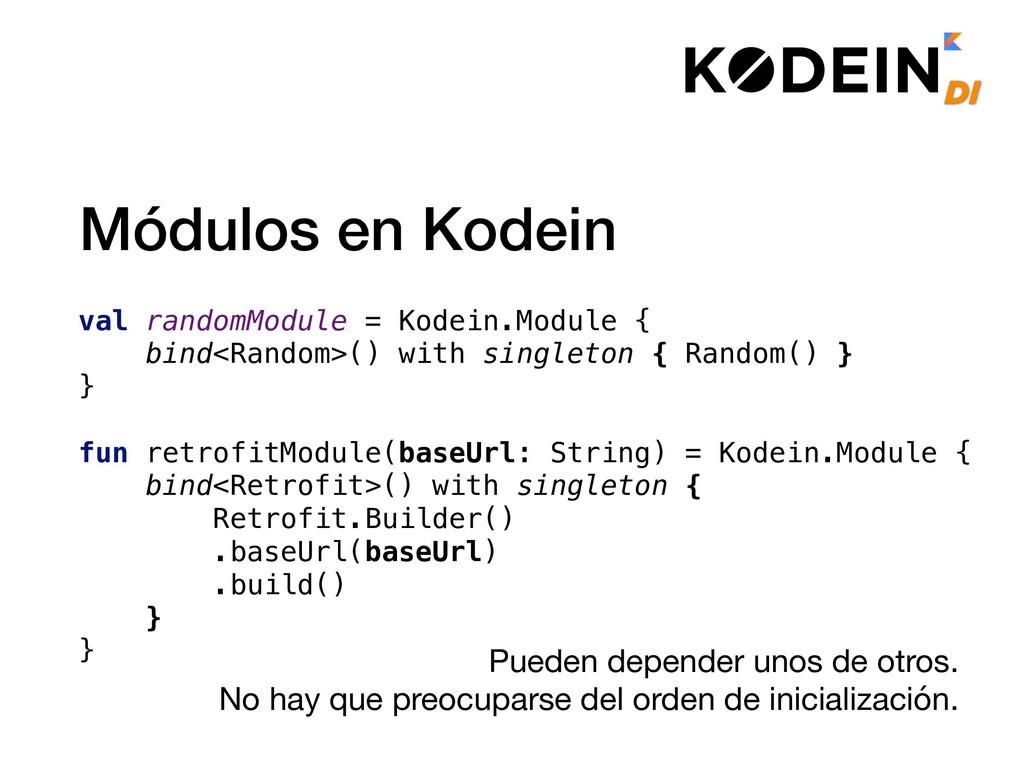
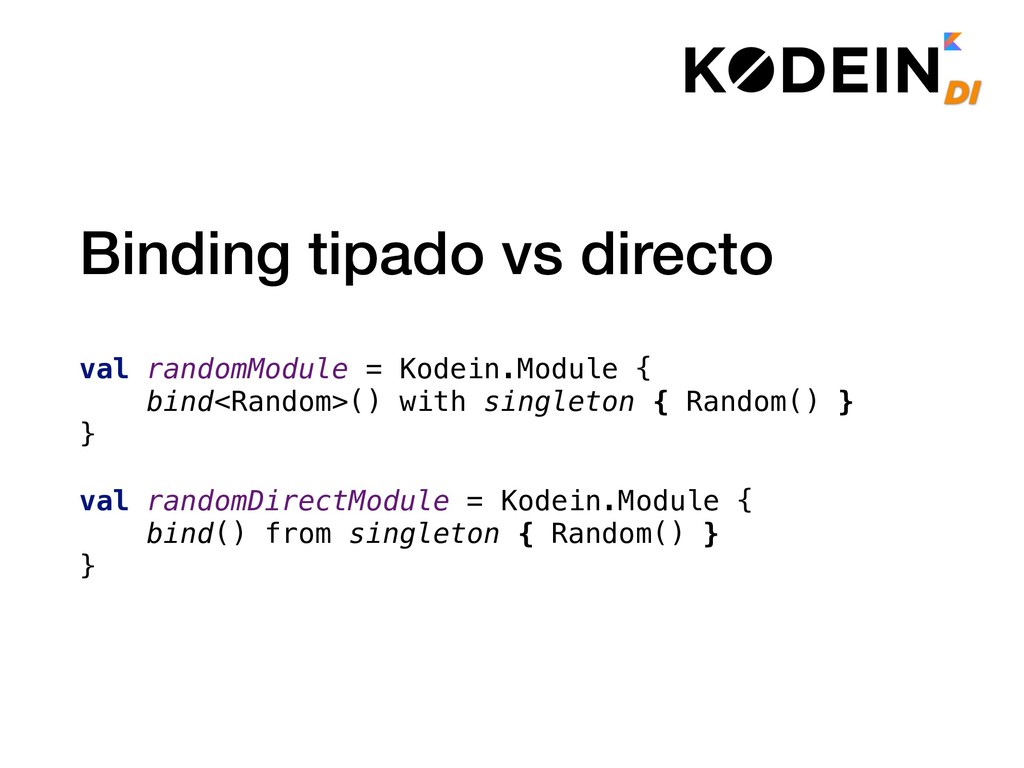
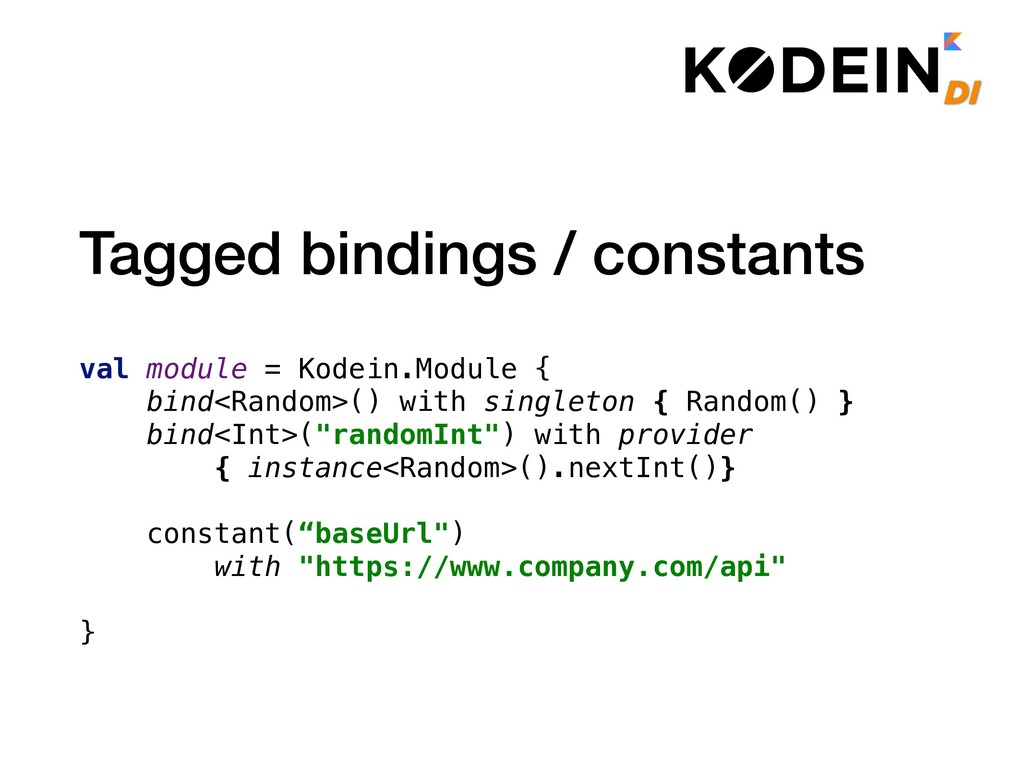
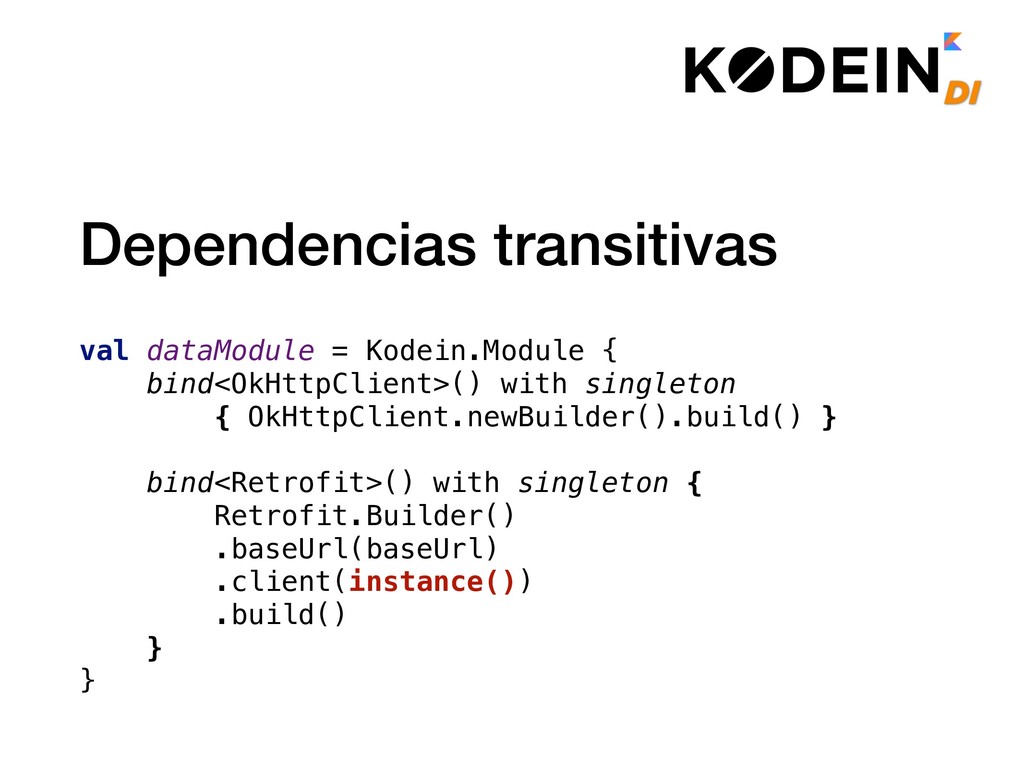
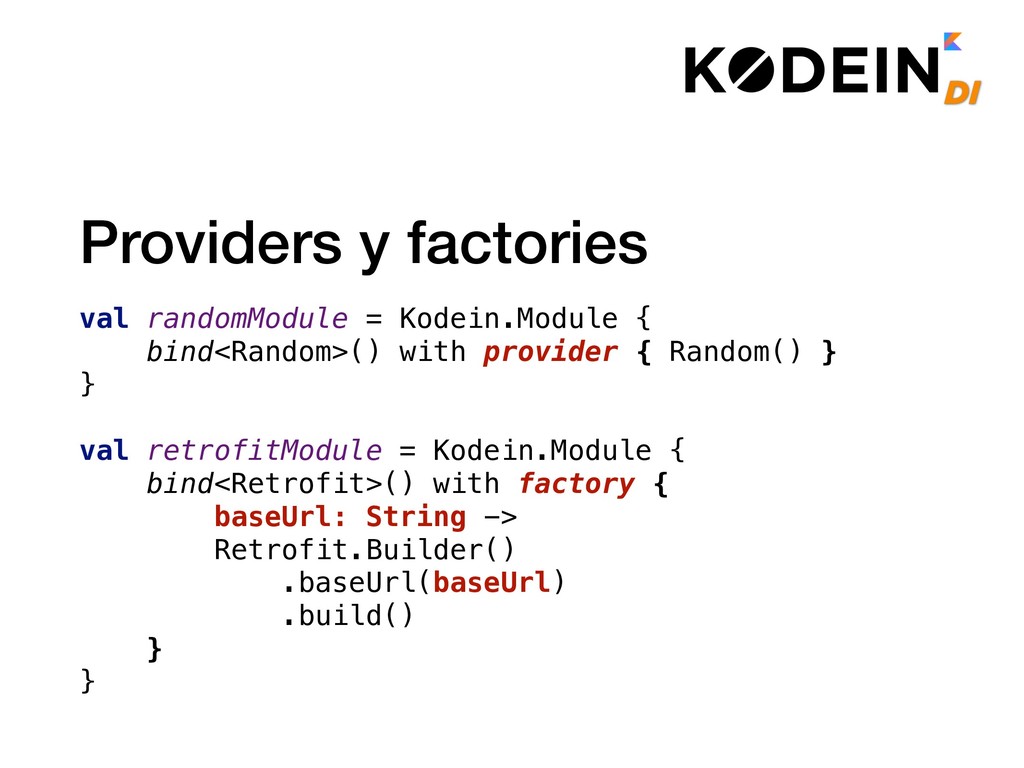
} } fun retrofitModule(baseUrl: String) = Kodein.Module { bind<Retrofit>() with singleton { Retrofit.Builder() .baseUrl(baseUrl) .build() } } Módulos en Kodein Pueden depender unos de otros. No hay que preocuparse del orden de inicialización.
Kodein.lazy { import(androidModule(this@App)) import(retrofitModule(baseUrl) } } // No Android val kodein = Kodein { import(…) import(…) } Uso de módulos
Kodein.lazy { import(androidModule(this@App)) import(retrofitModule(baseUrl) } } // No Android val kodein = Kodein { import(…) import(…) } Uso de módulos
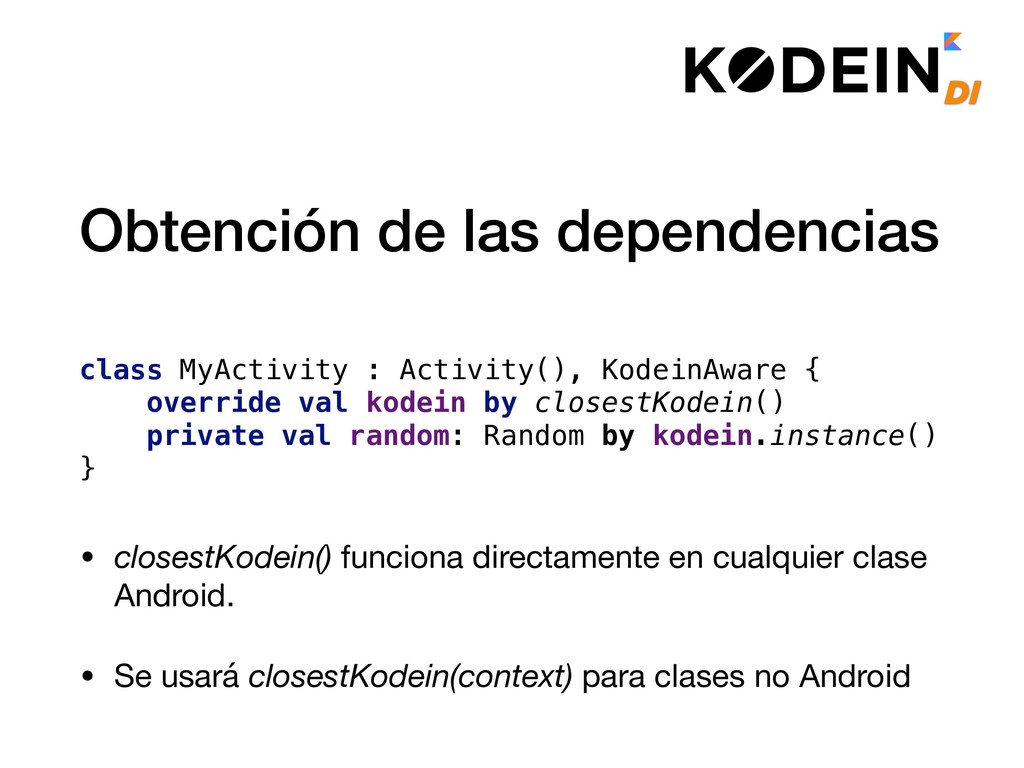
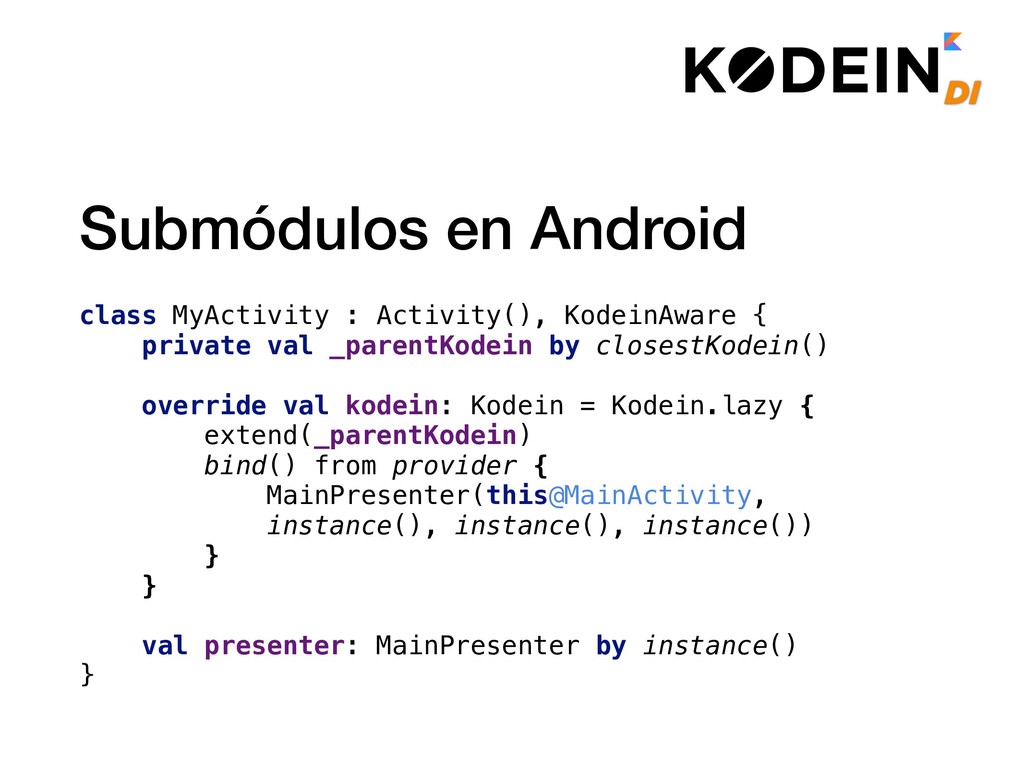
closestKodein() private val random: Random by kodein.instance() } Obtención de las dependencias • closestKodein() funciona directamente en cualquier clase Android. • Se usará closestKodein(context) para clases no Android
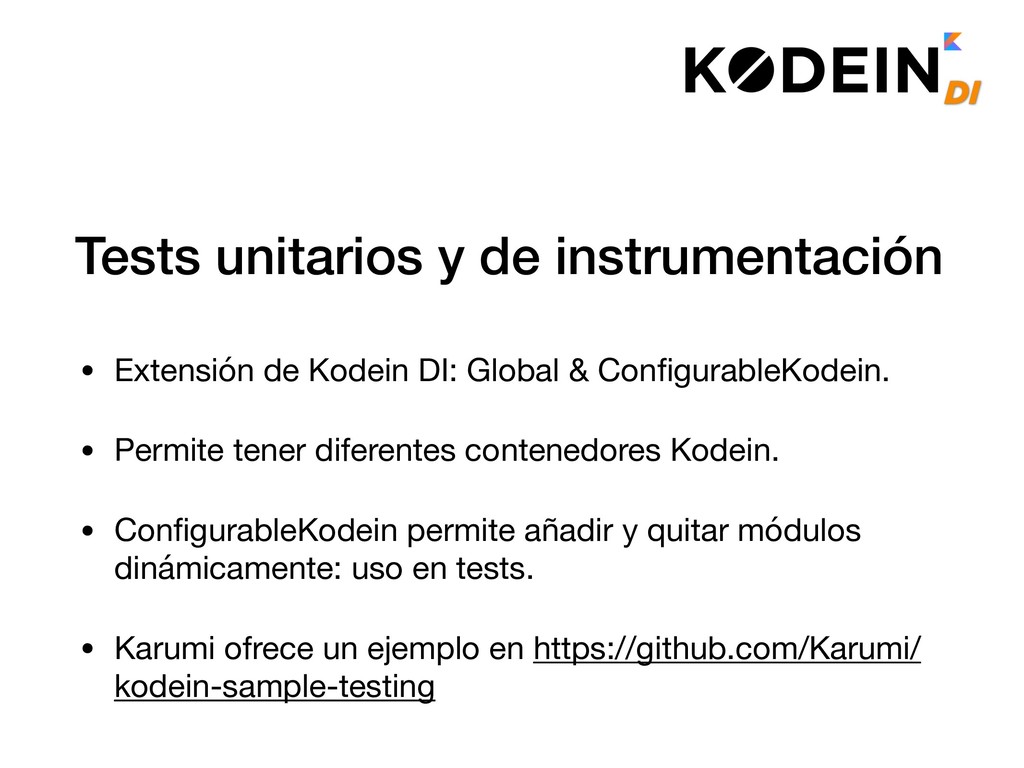
tener diferentes contenedores Kodein. • ConfigurableKodein permite añadir y quitar módulos dinámicamente: uso en tests. • Karumi ofrece un ejemplo en https://github.com/Karumi/ kodein-sample-testing Tests unitarios y de instrumentación
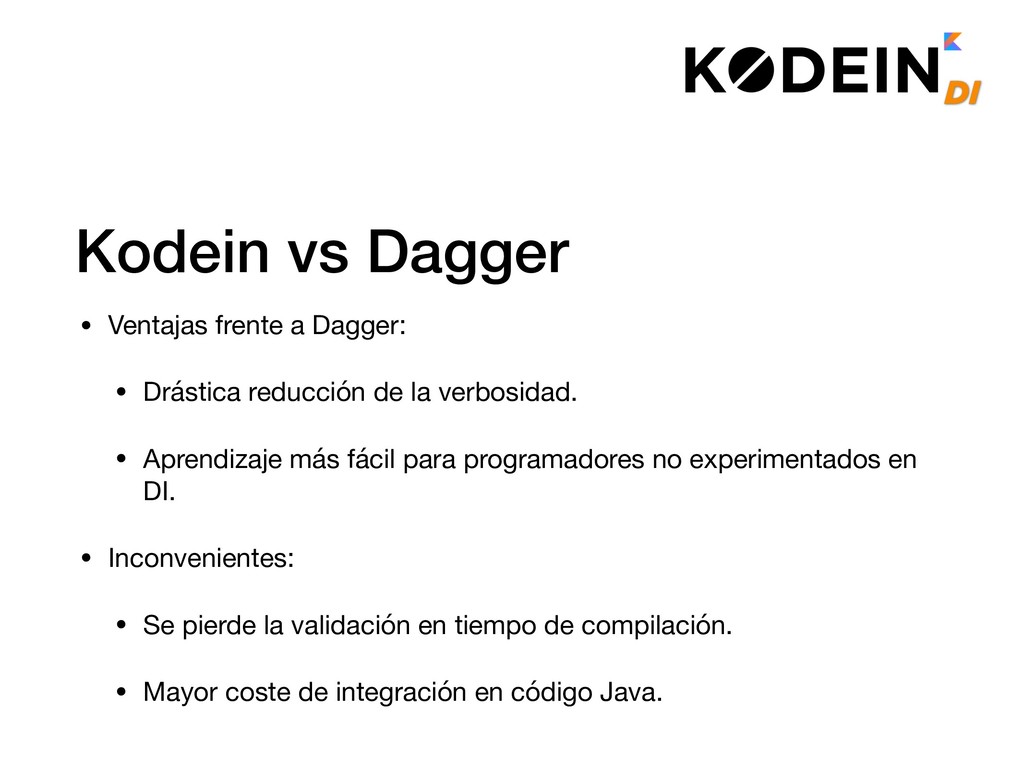
verbosidad. • Aprendizaje más fácil para programadores no experimentados en DI. • Inconvenientes: • Se pierde la validación en tiempo de compilación. • Mayor coste de integración en código Java. Kodein vs Dagger
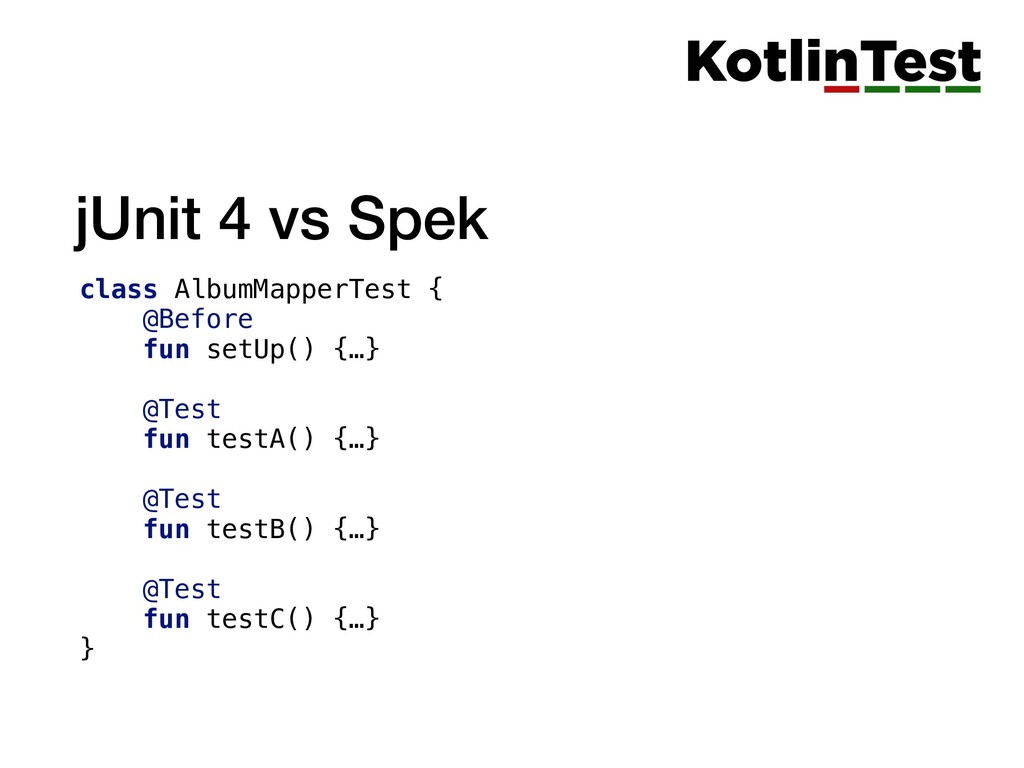
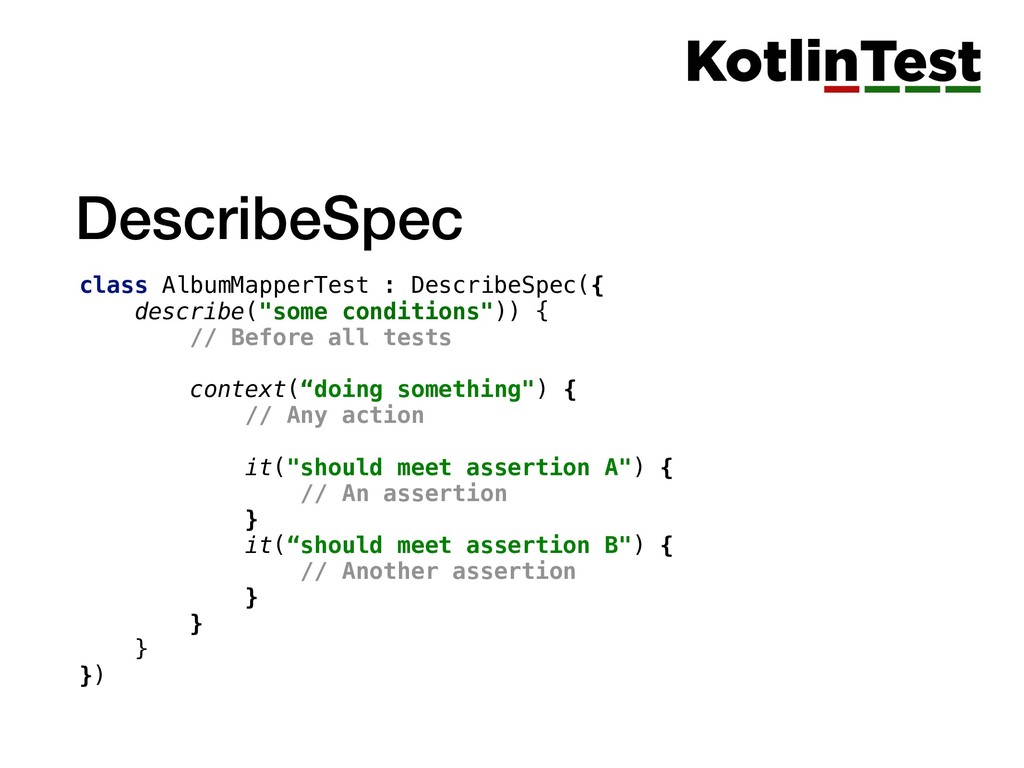
get an album list with two items") { assert(albums.size == 2) } it("should get expected first item in albums list") { assert(albums[0].id == lastFmValidAlbums[0].mbid) } it("should get expected second item in albums list") { assert(albums[1].id == lastFmValidAlbums[1].mbid) } } Ejemplo en Spek
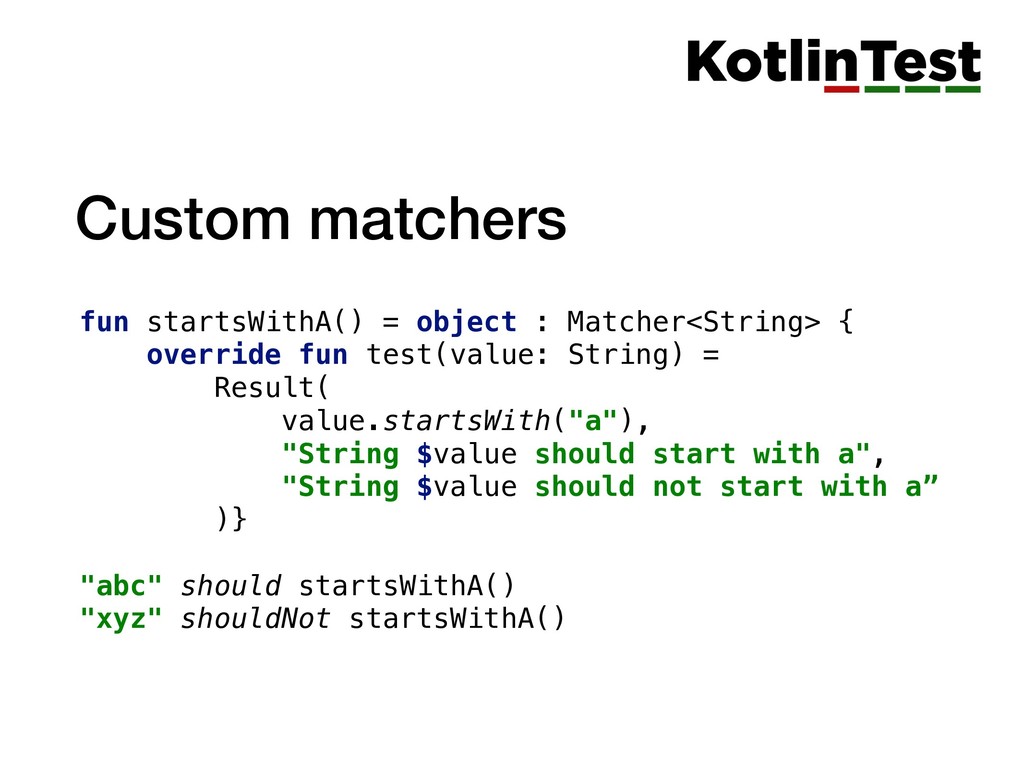
String) = Result( value.startsWith("a"), "String $value should start with a", "String $value should not start with a” )} "abc" should startsWithA() "xyz" shouldNot startsWithA() Custom matchers
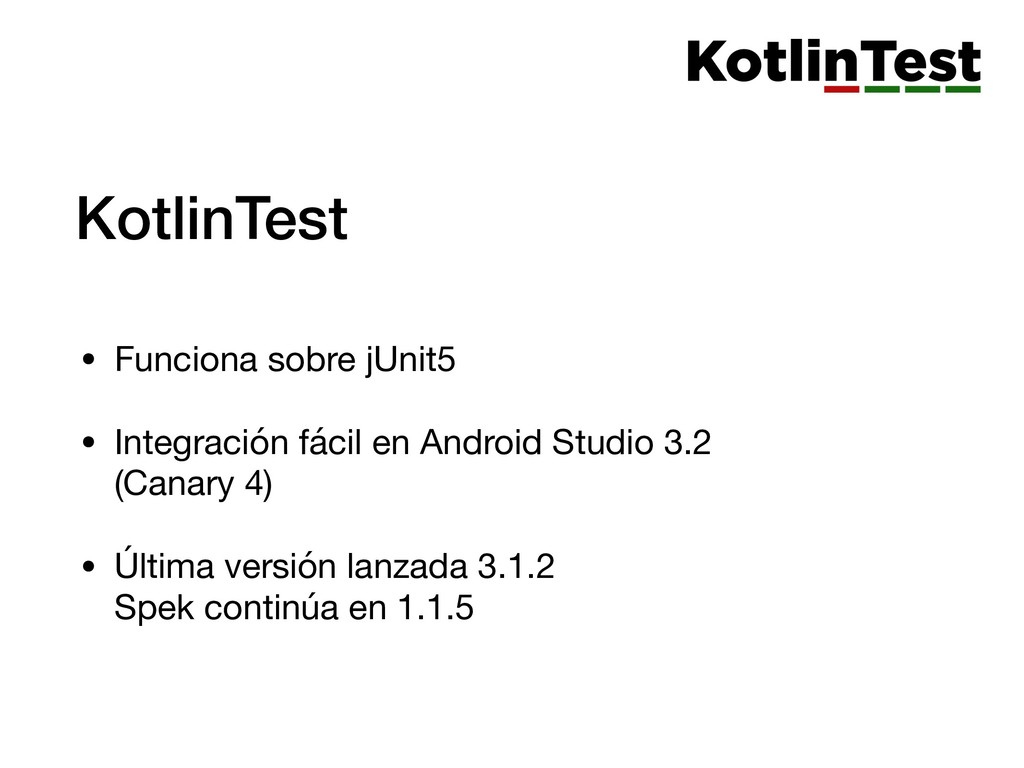
permite aumentar la legibilidad de los tests. • jUnit 5 (y todos los frameworks basados en él) ofrecen posibilidades mucho más potentes que jUnit 4. Conclusiones


 pfn
 sh_fk2
 kenichiodo
 kash1064
 bgpat
 taketakekaho
 codmoninc
 occhi
 terurou
 puhitaku
 persolserverworks
 keeg
 addyosmani
 denniskardys
 danielanewman
 jlugia
 lindahogenes
 3n
 techseoconnect
 colly
 rkendrick25
 auna
 stuffmc
 ryanjones