Upgrade to Pro — share decks privately, control downloads, hide ads and more …

My first year with event-sourcing @DeventerPHP ...

Sponsored · Your Podcast. Everywhere. Effortlessly. Share. Educate. Inspire. Entertain. You do you. We'll handle the rest. →

My first year with event-sourcing @DeventerPHP 2018-05-03

Over the last couple of years, I have heard of Event sourcing but did't really know where to start until I did a tutorial at DPC '17. After having some basic information it was time to start a Hackathon and after that something production worthy . In this talk I will Try to give the best information to get started and to know some of the problems you can face if you begin event-sourcing.

Avatar for Webbaard

Webbaard

May 03, 2018

Other Decks in Programming

Transcript

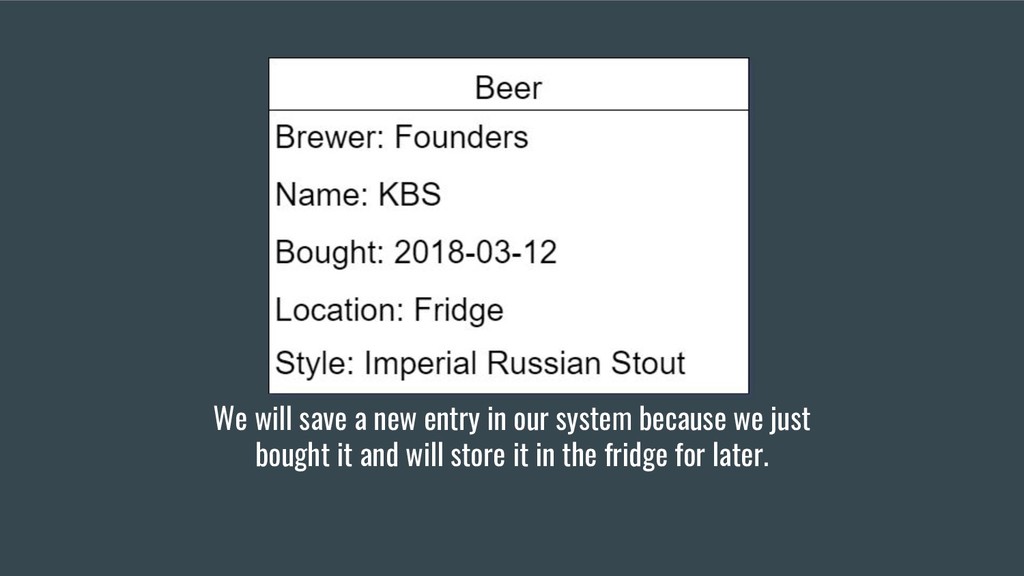
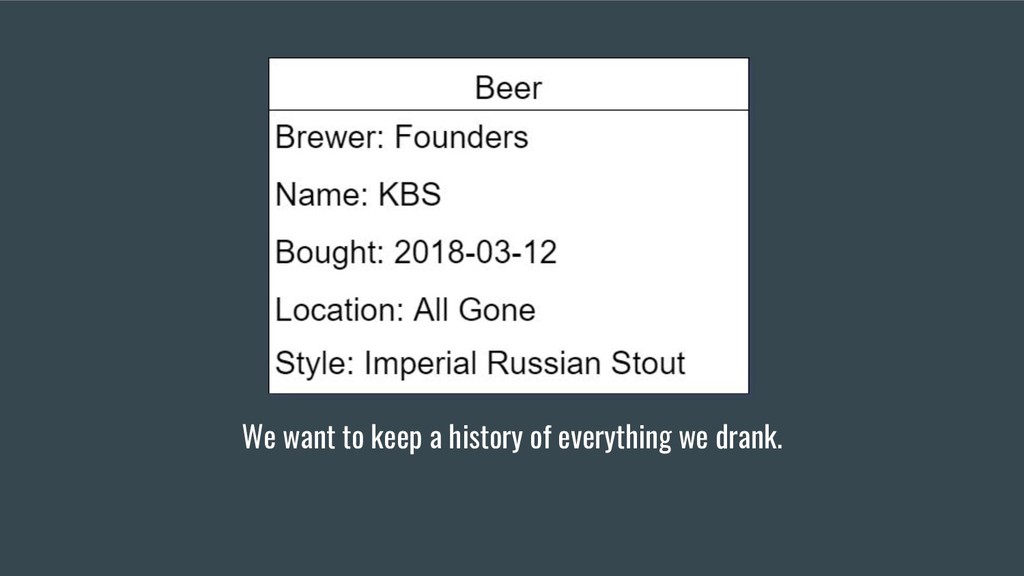
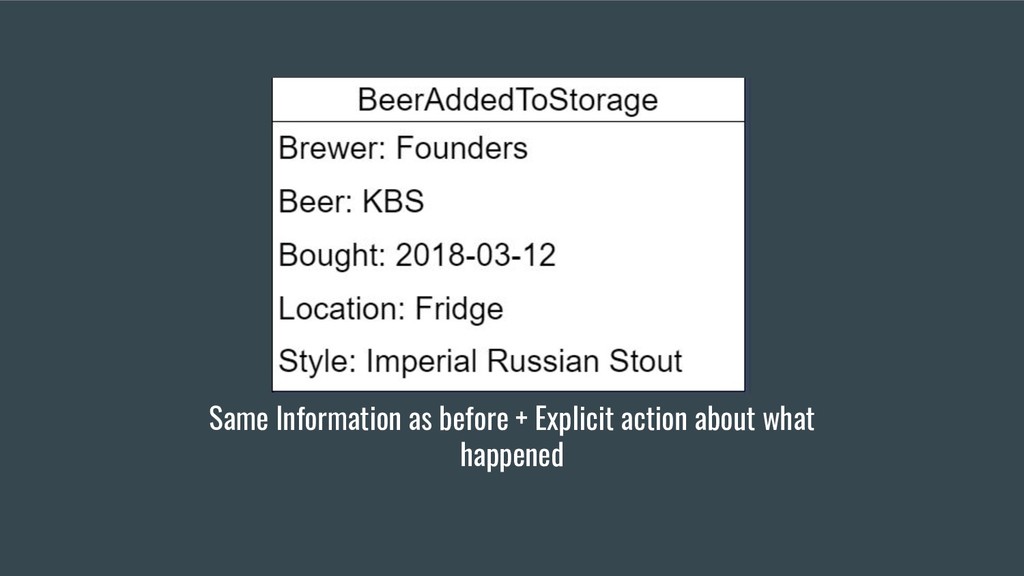
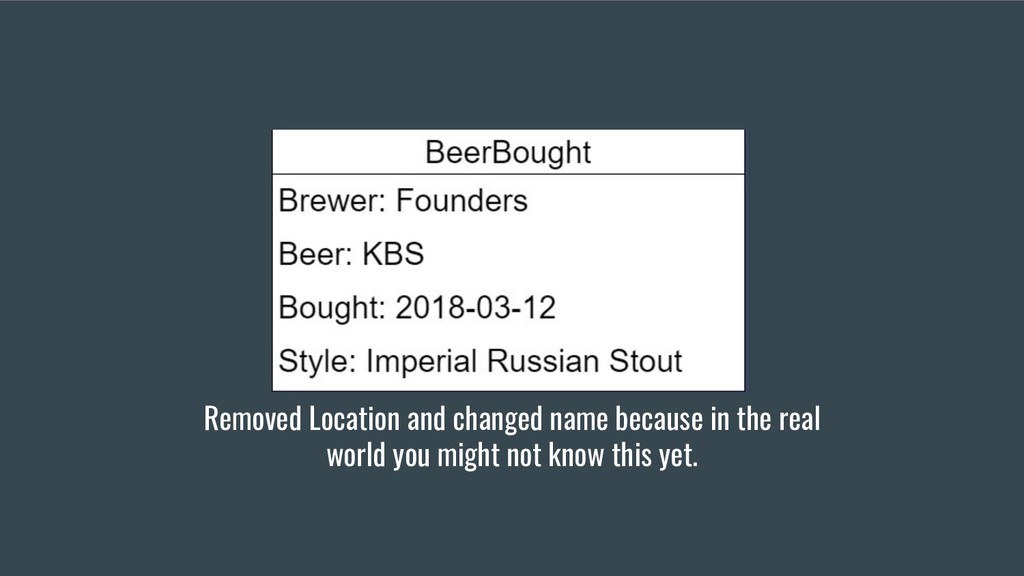
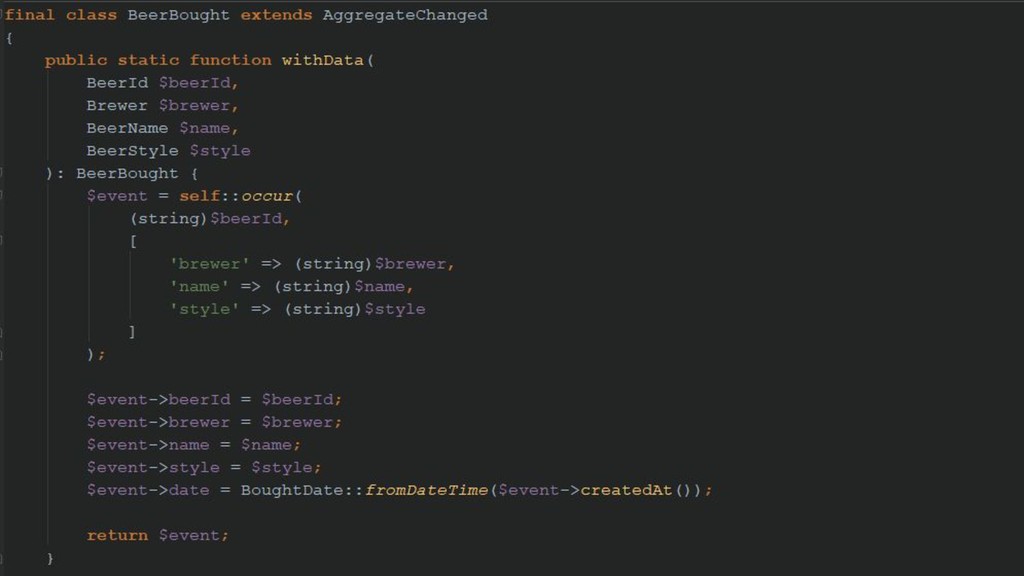
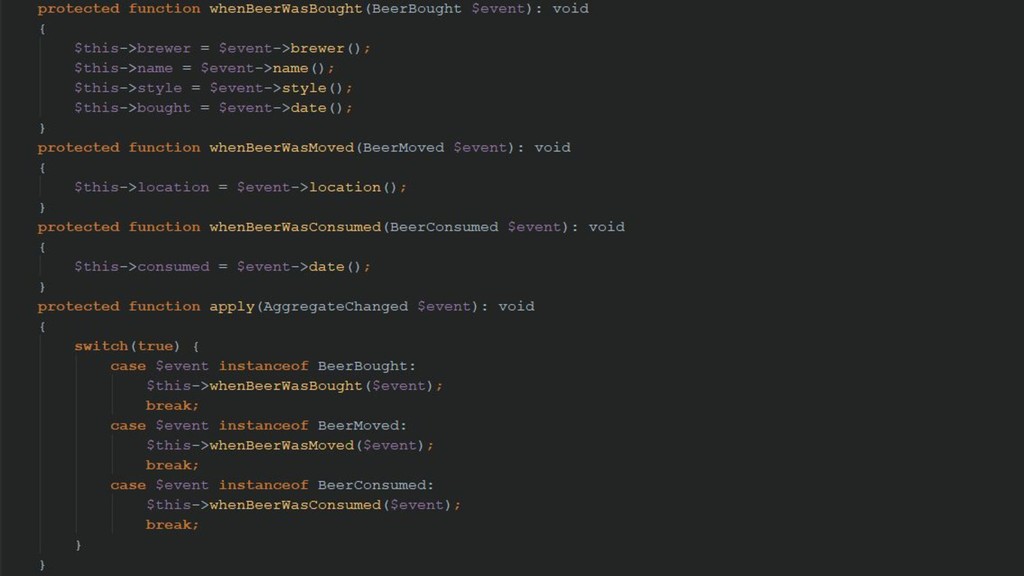
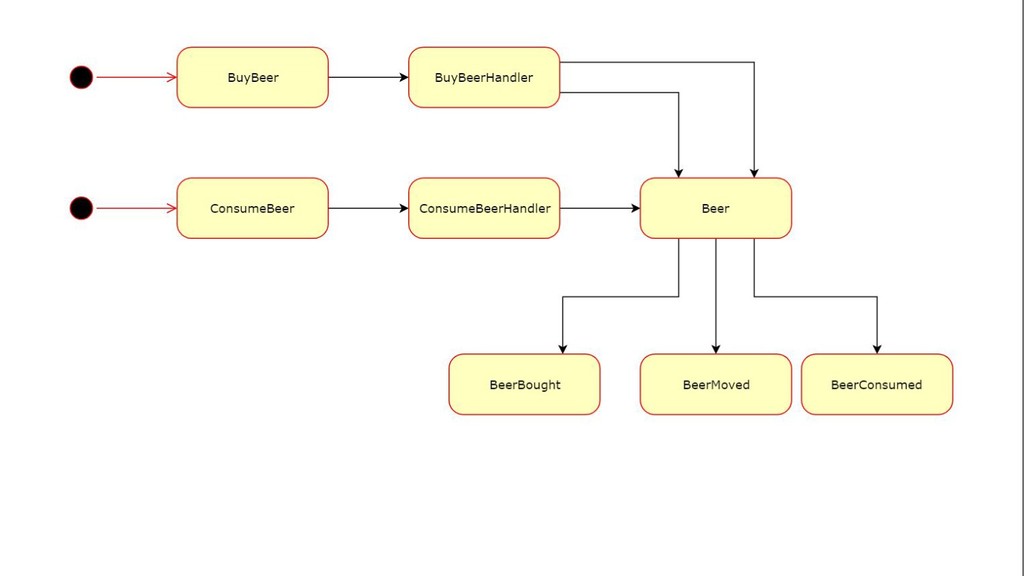
  1. We will save a new entry in our system because

    we just bought it and will store it in the fridge for later.
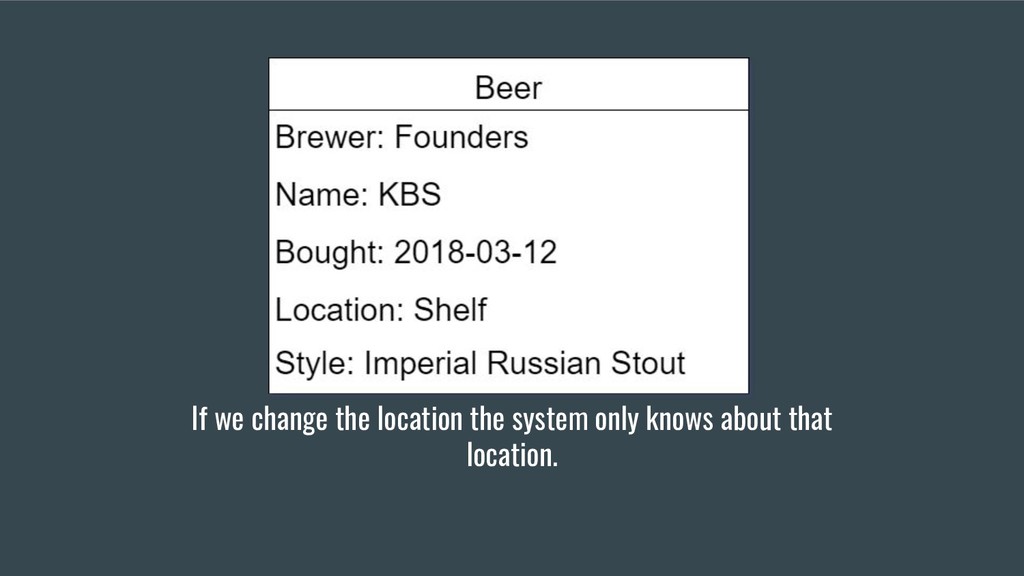
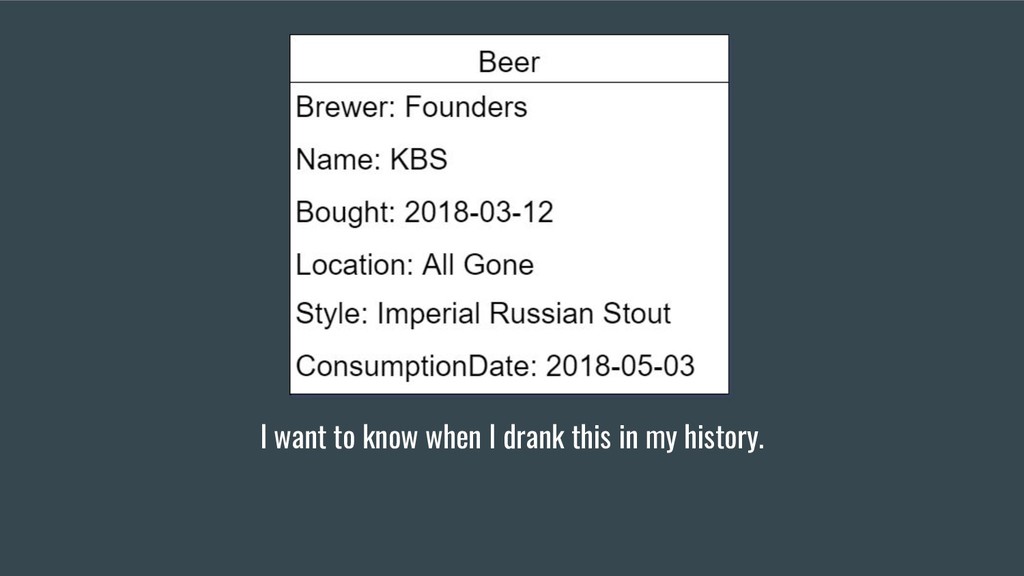
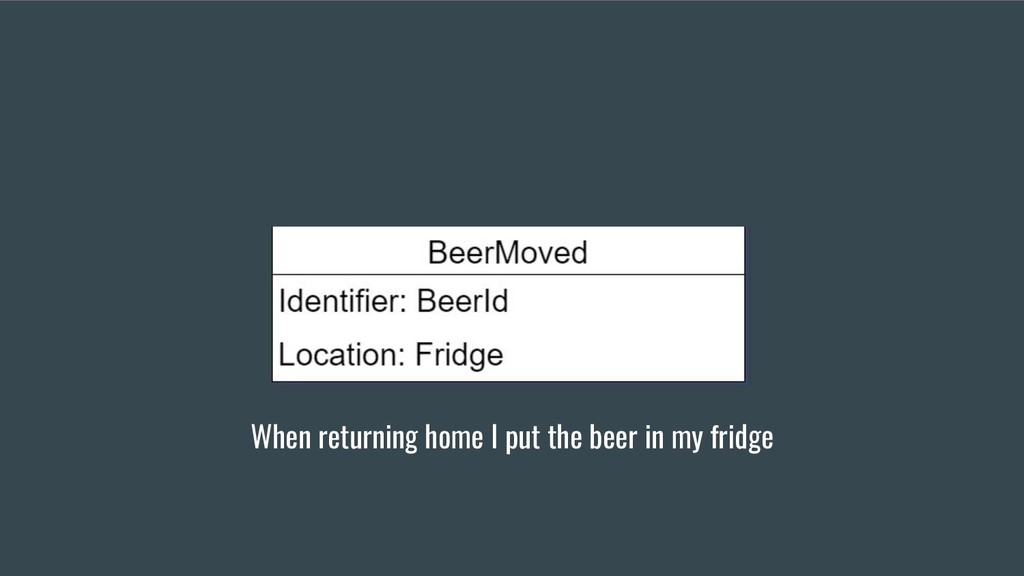
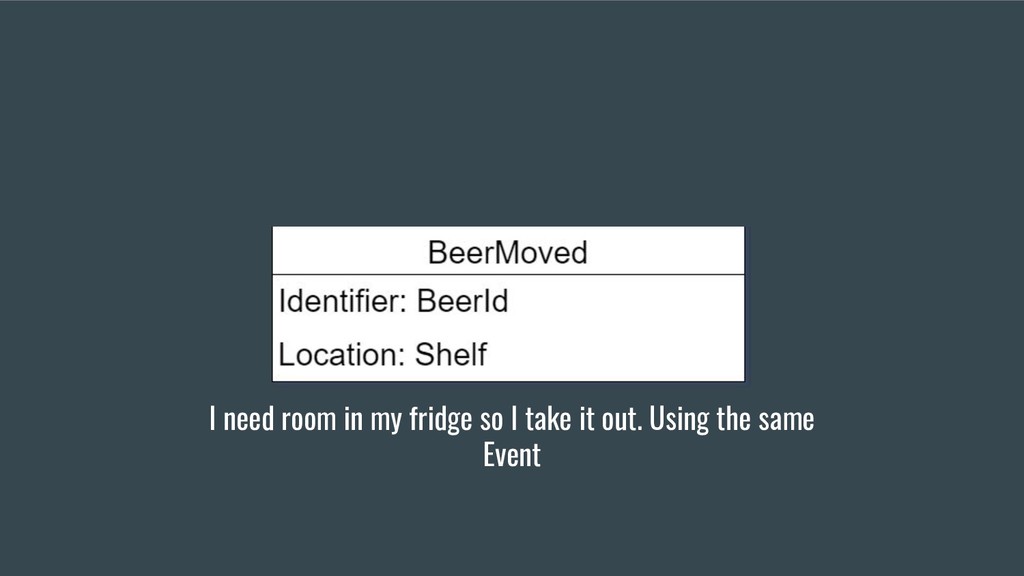
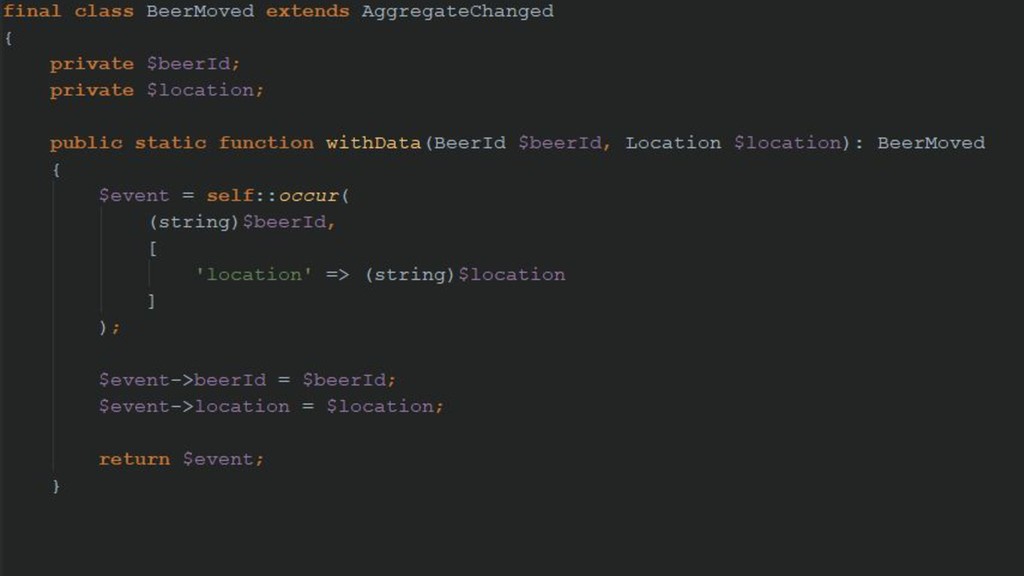
  2. I need room in my fridge so I take it

    out. Using the same Event
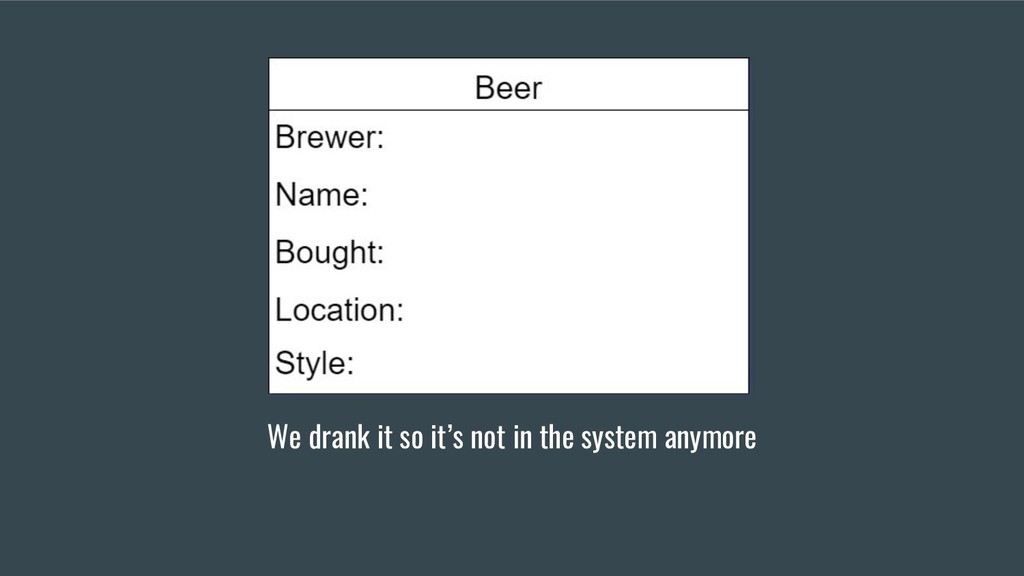
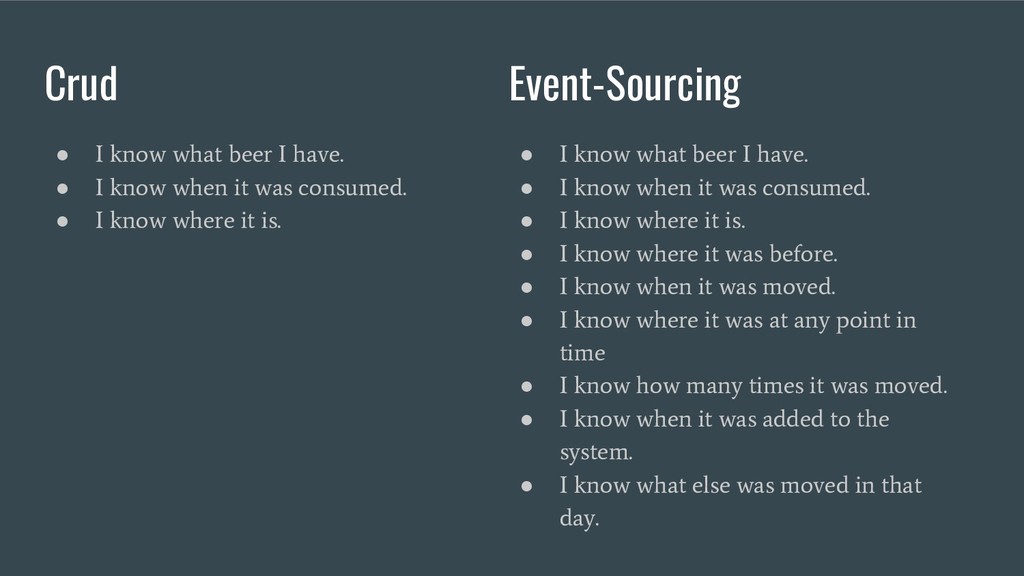
  3. Crud • I know what beer I have. • I

    know when it was consumed. • I know where it is. Event-Sourcing • I know what beer I have. • I know when it was consumed. • I know where it is. • I know where it was before. • I know when it was moved. • I know where it was at any point in time • I know how many times it was moved. • I know when it was added to the system. • I know what else was moved in that day.
  4. “Every software program relates to some activity or interest of

    its user.” Eric Evans, Domain-Driven Design: Tackling Complexity in the Heart of Software
  5. DDD

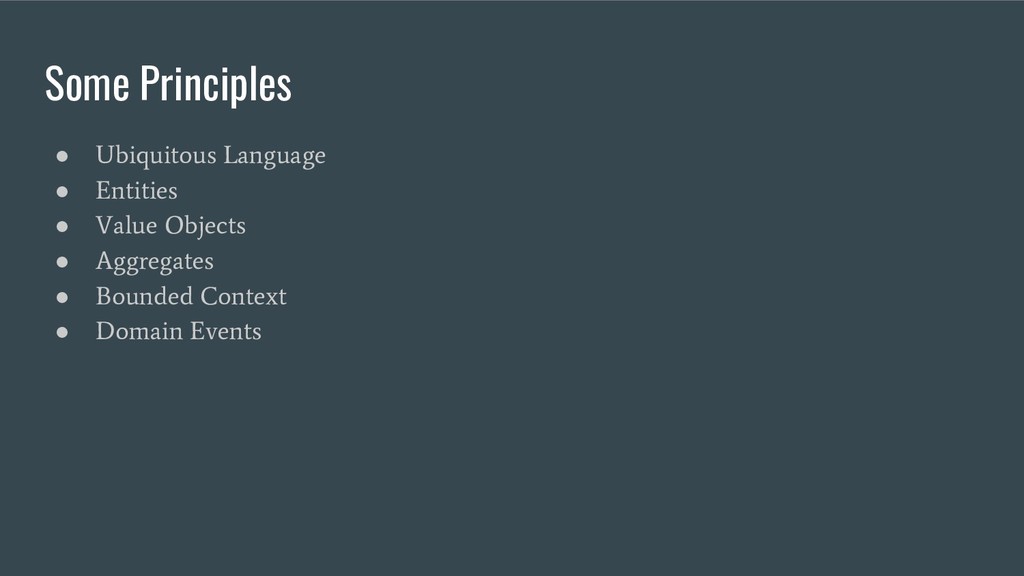
  6. Some Principles • Ubiquitous Language • Entities • Value Objects

    • Aggregates • Bounded Context • Domain Events
  7. “To communicate effectively, the code must be based on the

    same language used to write the requirements - the same language that the developers speak with each other and with domain experts.” Eric Evans, Domain-Driven Design: Tackling Complexity in the Heart of Software
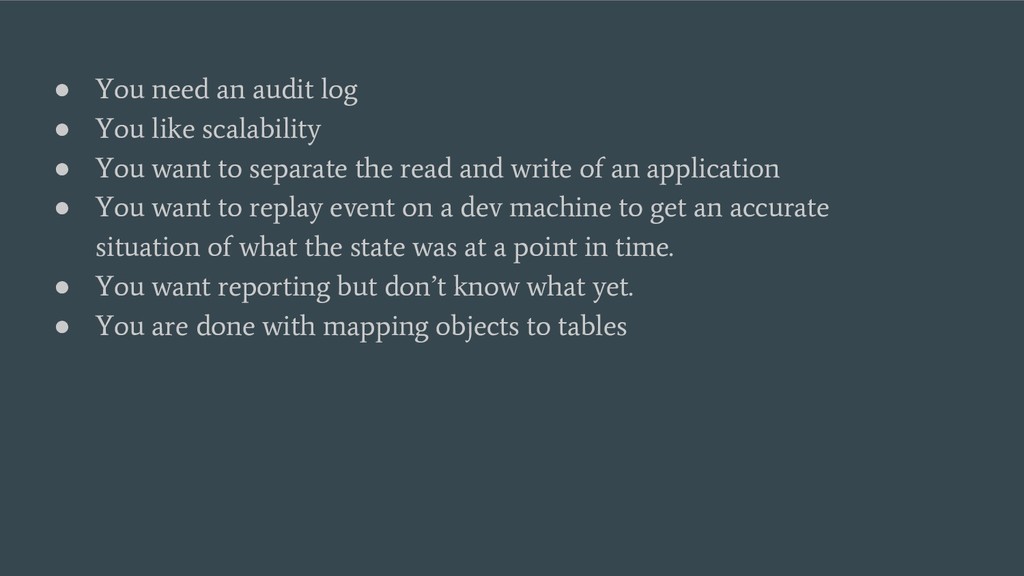
  8. • You need an audit log • You like scalability

    • You want to separate the read and write of an application • You want to replay event on a dev machine to get an accurate situation of what the state was at a point in time. • You want reporting but don’t know what yet. • You are done with mapping objects to tables
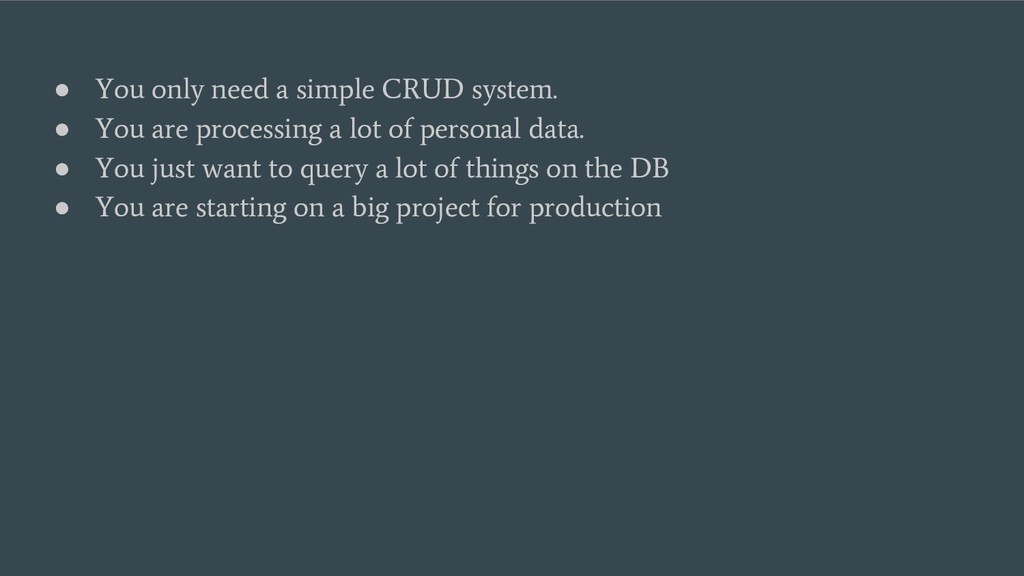
  9. • You only need a simple CRUD system. • You

    are processing a lot of personal data. • You just want to query a lot of things on the DB • You are starting on a big project for production
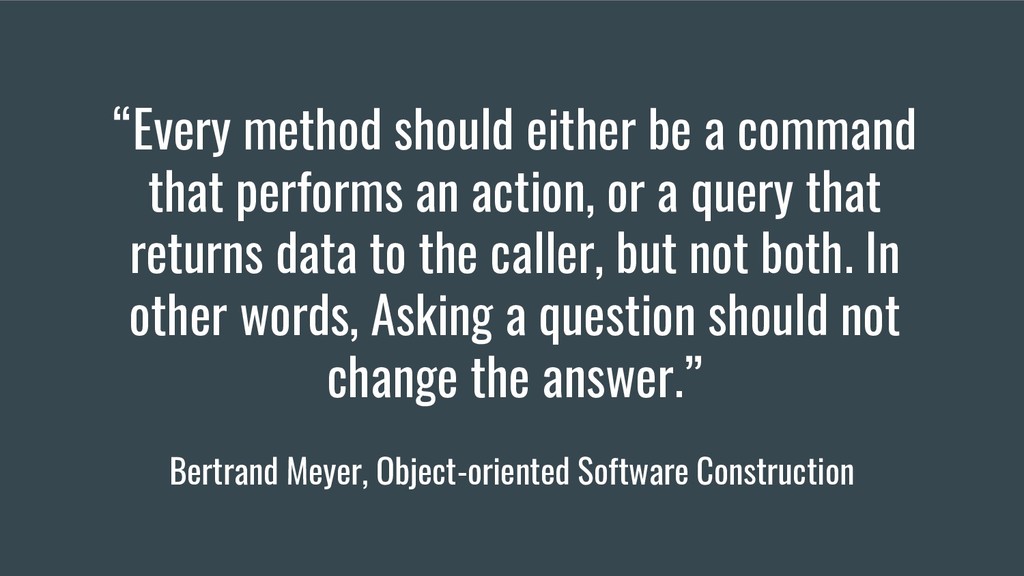
  10. “Every method should either be a command that performs an

    action, or a query that returns data to the caller, but not both. In other words, Asking a question should not change the answer.” Bertrand Meyer, Object-oriented Software Construction
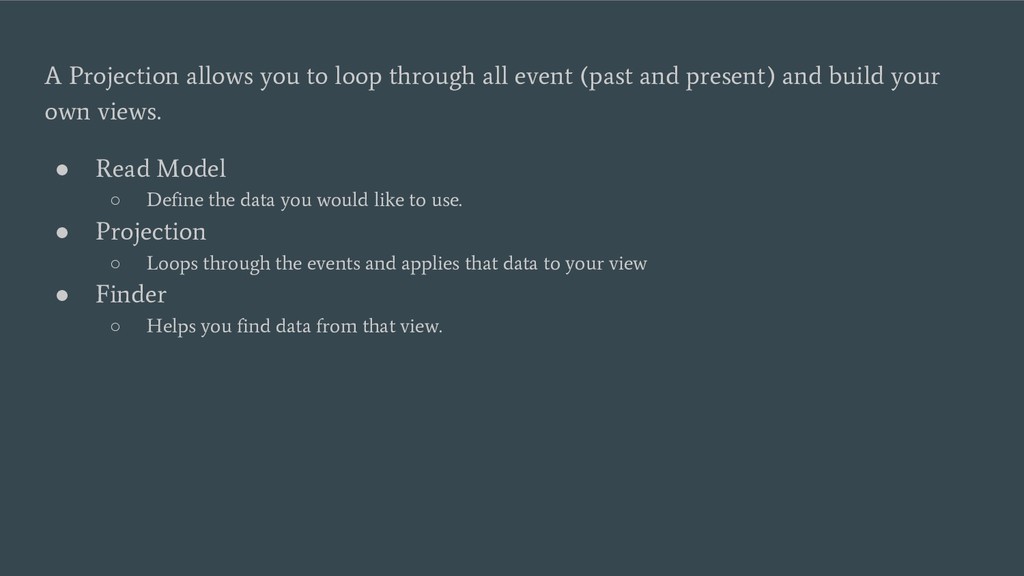
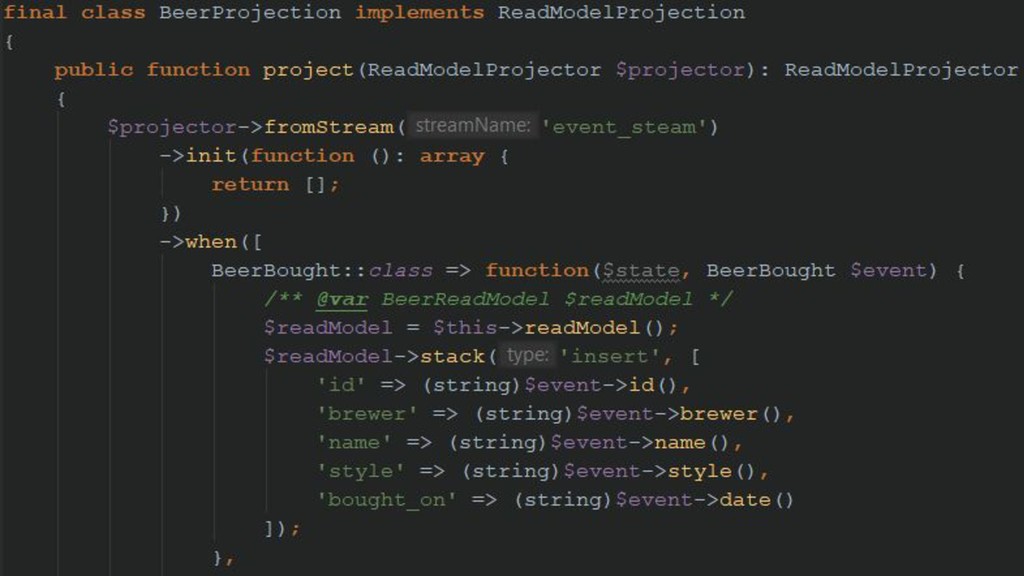
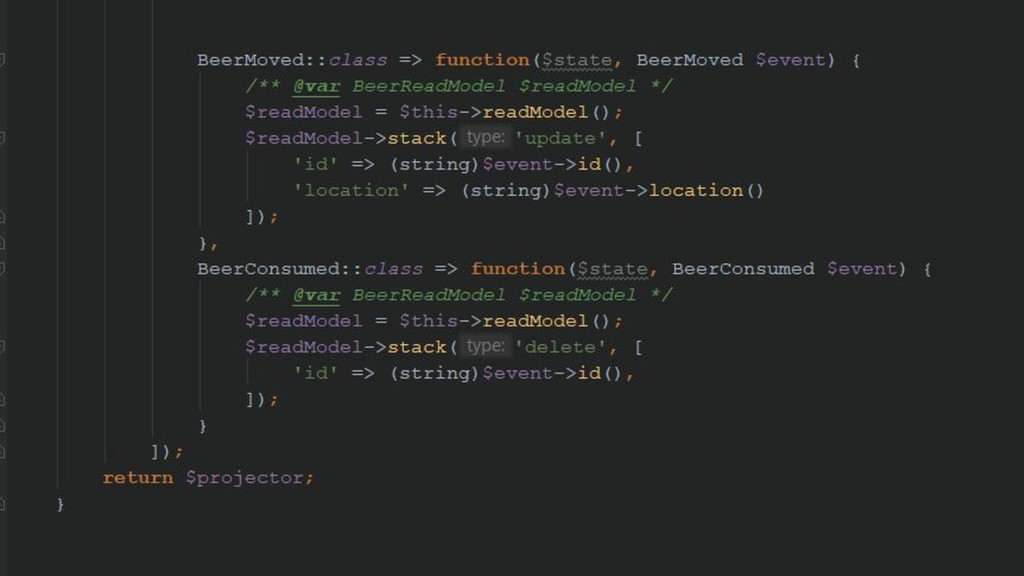
  11. A Projection allows you to loop through all event (past

    and present) and build your own views. • Read Model ◦ Define the data you would like to use. • Projection ◦ Loops through the events and applies that data to your view • Finder ◦ Helps you find data from that view.
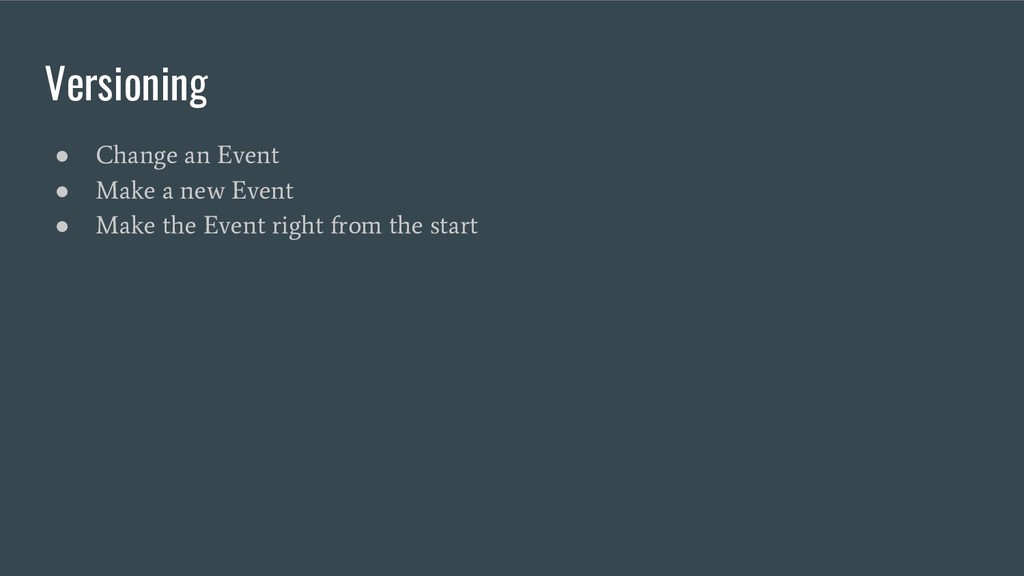
  12. Versioning • Change an Event • Make a new Event

    • Make the Event right from the start
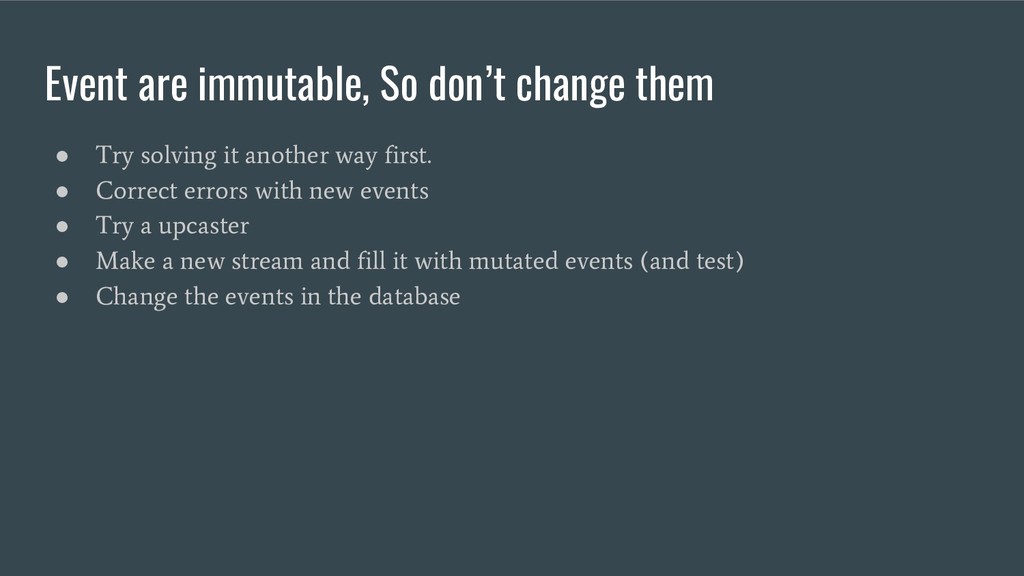
  13. Event are immutable, So don’t change them • Try solving

    it another way first. • Correct errors with new events • Try a upcaster • Make a new stream and fill it with mutated events (and test) • Change the events in the database
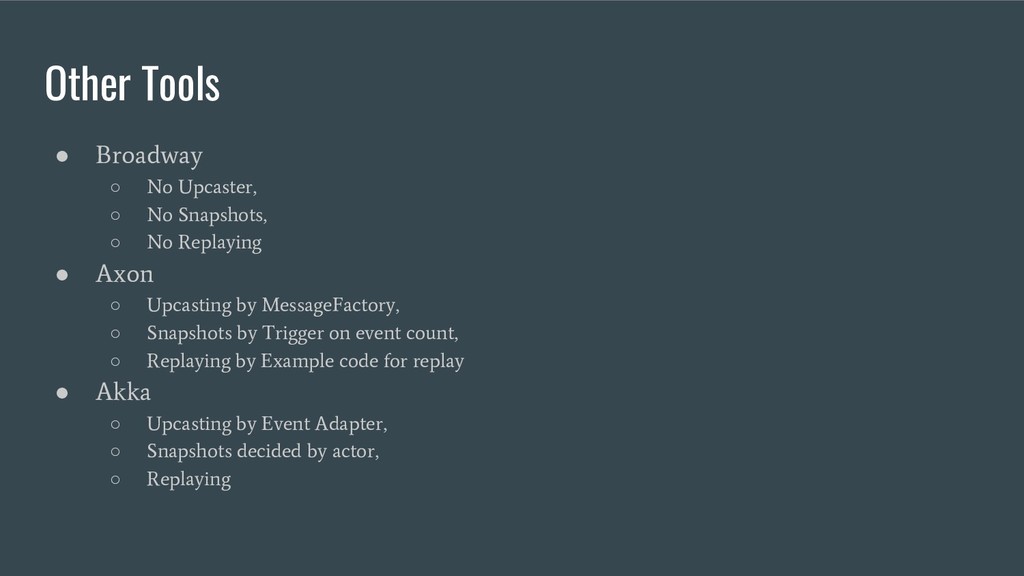
  14. Other Tools • Broadway ◦ No Upcaster, ◦ No Snapshots,

    ◦ No Replaying • Axon ◦ Upcasting by MessageFactory, ◦ Snapshots by Trigger on event count, ◦ Replaying by Example code for replay • Akka ◦ Upcasting by Event Adapter, ◦ Snapshots decided by actor, ◦ Replaying