and approaches described in this document reflect my personal perspectives, based on professional experience and experimentation in Data strategy, AI and Agentic AI, and Enterprise Architecture. The tools demonstrated for exploring how Enterprise Architects can be augmented, are Anthropic Claude and SAP LeanIX. They do not represent the views, strategies, or positions of my employer, past or present.
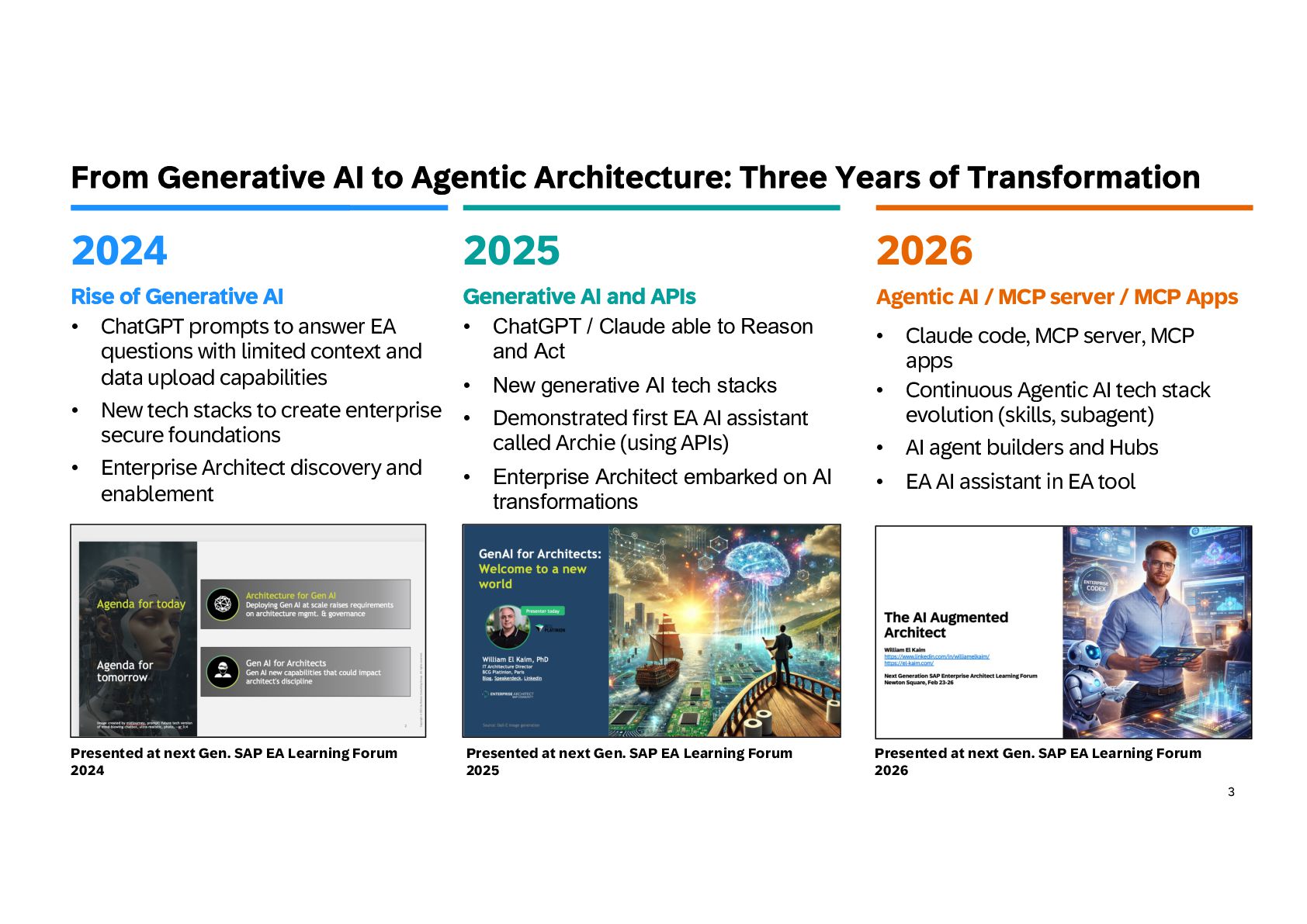
to Agentic Architecture: Three Years of Transformation 2024 2025 2026 Rise of Generative AI • ChatGPT prompts to answer EA questions with limited context and data upload capabilities • New tech stacks to create enterprise secure foundations • Enterprise Architect discovery and enablement Agentic AI / MCP server / MCP Apps • Claude code, MCP server, MCP apps • Continuous Agentic AI tech stack evolution (skills, subagent) • AI agent builders and Hubs • EA AI assistant in EA tool Generative AI and APIs • ChatGPT / Claude able to Reason and Act • New generative AI tech stacks • Demonstrated first EA AI assistant called Archie (using APIs) • Enterprise Architect embarked on AI transformations Presented at next Gen. SAP EA Learning Forum 2026 Presented at next Gen. SAP EA Learning Forum 2025 Presented at next Gen. SAP EA Learning Forum 2024
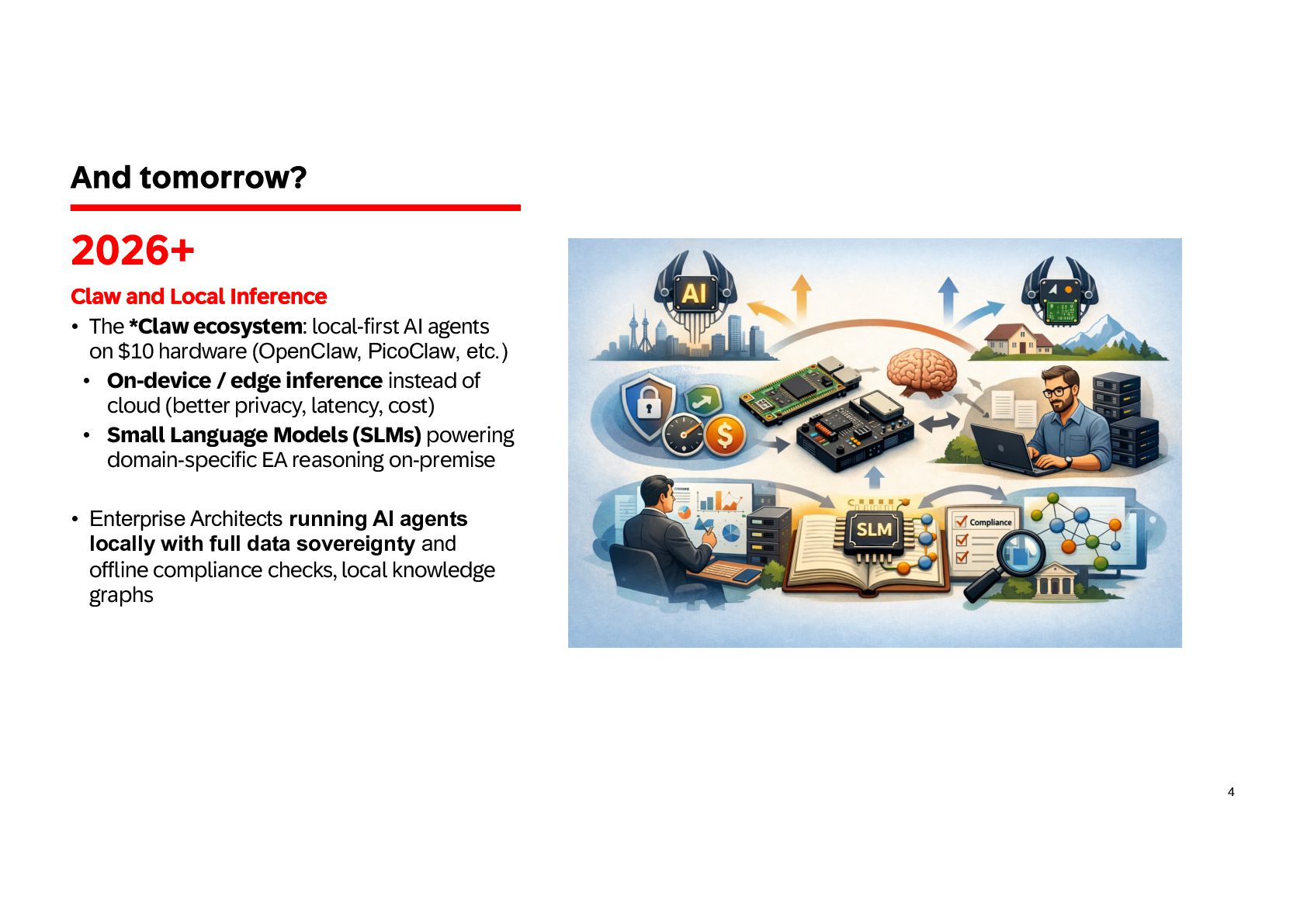
Claw and Local Inference • The *Claw ecosystem: local-first AI agents on $10 hardware (OpenClaw, PicoClaw, etc.) • On-device / edge inference instead of cloud (better privacy, latency, cost) • Small Language Models (SLMs) powering domain-specific EA reasoning on-premise • Enterprise Architects running AI agents locally with full data sovereignty and offline compliance checks, local knowledge graphs
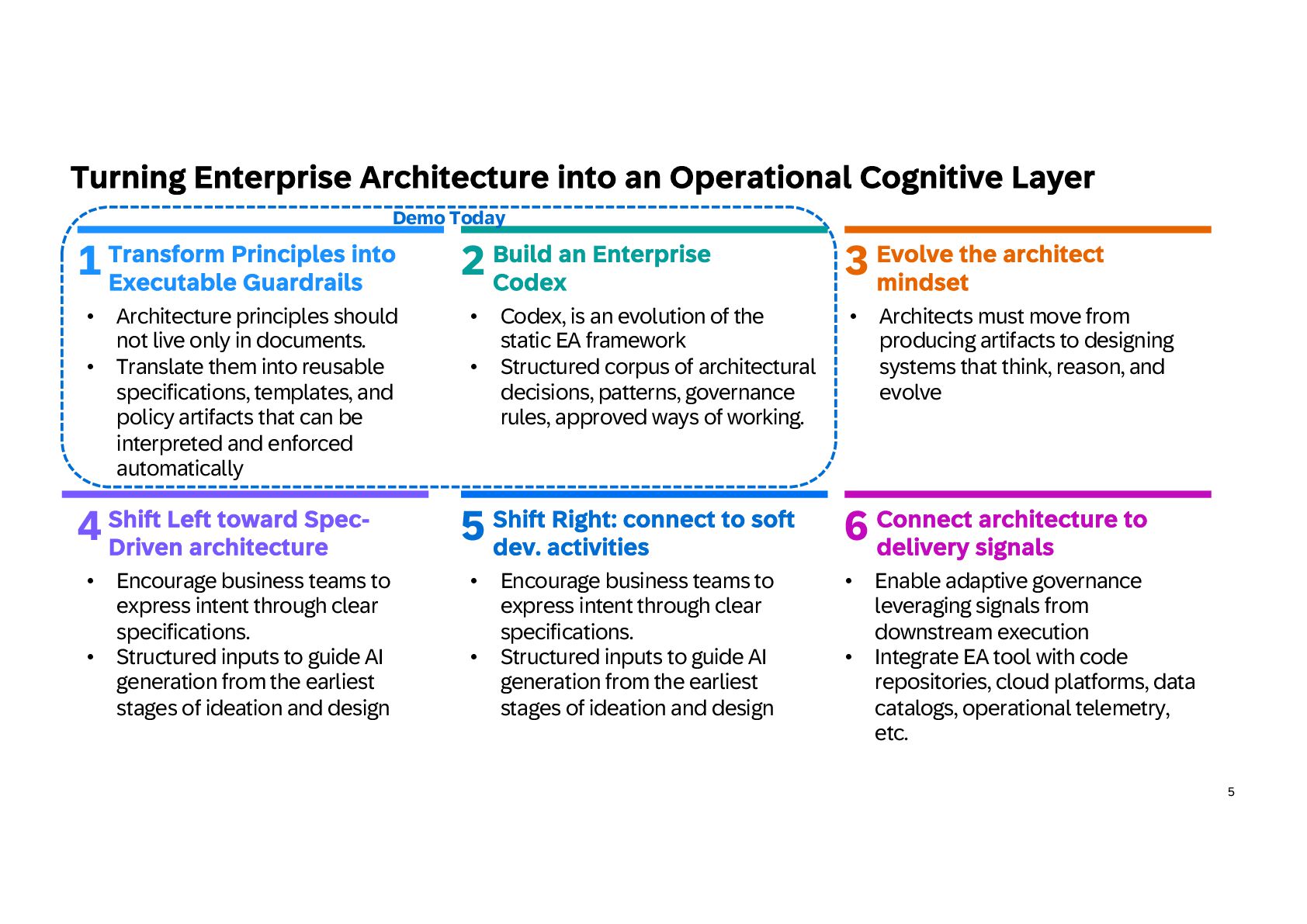
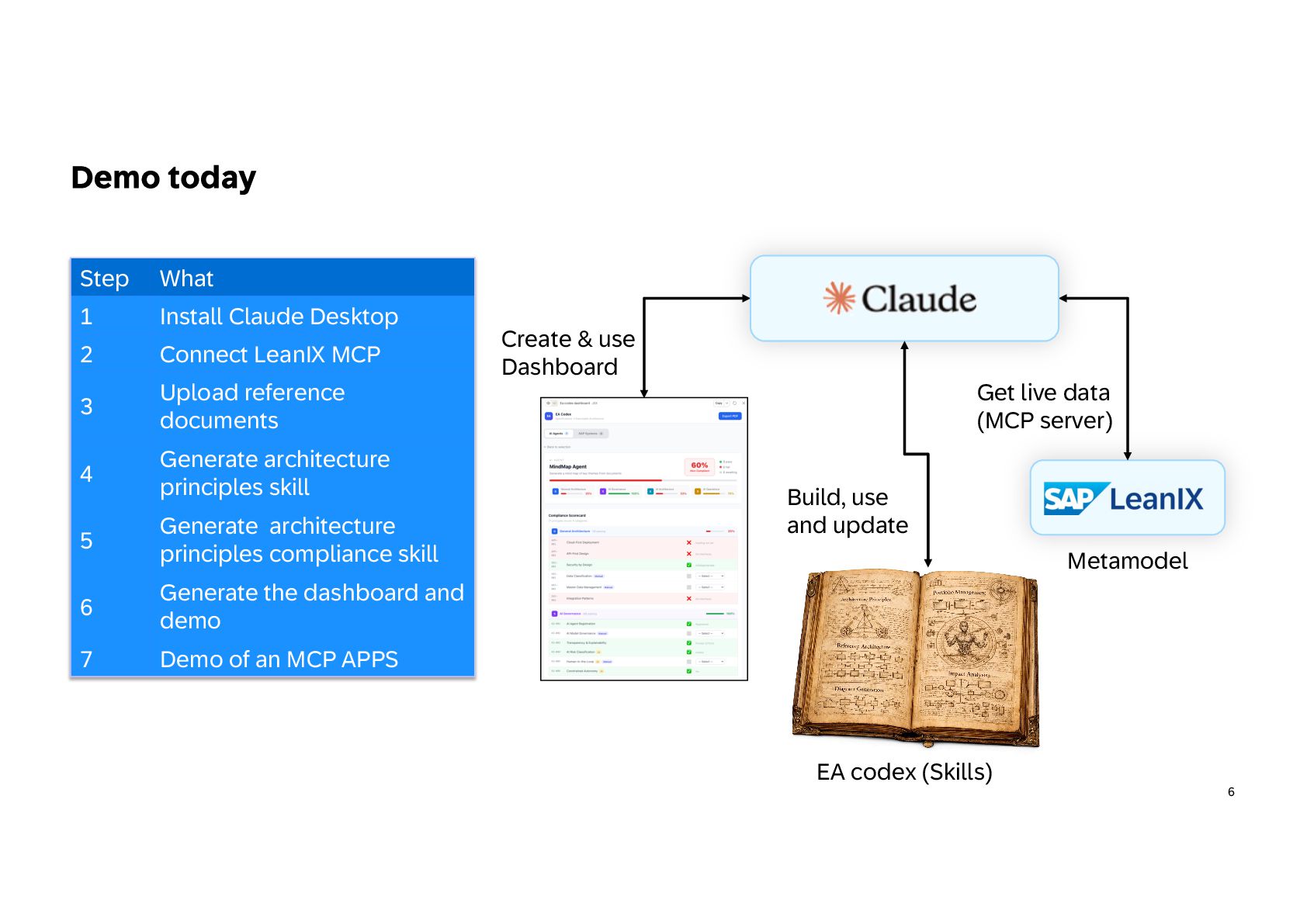
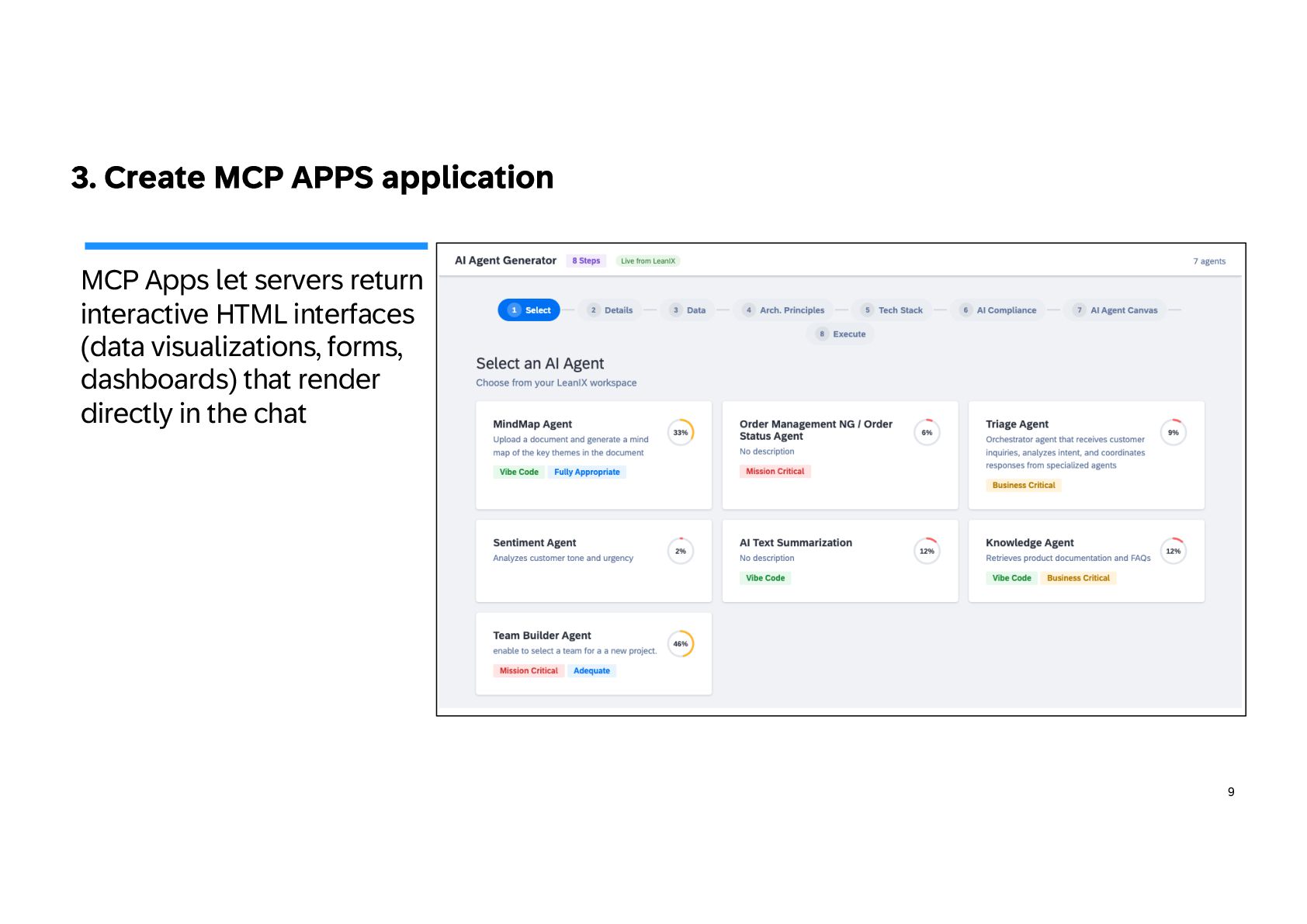
into an Operational Cognitive Layer 1 2 3 4 5 6 Transform Principles into Executable Guardrails • Architecture principles should not live only in documents. • Translate them into reusable specifications, templates, and policy artifacts that can be interpreted and enforced automatically Build an Enterprise Codex • Codex, is an evolution of the static EA framework • Structured corpus of architectural decisions, patterns, governance rules, approved ways of working. Shift Left toward Spec- Driven architecture Evolve the architect mindset Shift Right: connect to soft dev. activities Connect architecture to delivery signals • Encourage business teams to express intent through clear specifications. • Structured inputs to guide AI generation from the earliest stages of ideation and design • Encourage business teams to express intent through clear specifications. • Structured inputs to guide AI generation from the earliest stages of ideation and design • Enable adaptive governance leveraging signals from downstream execution • Integrate EA tool with code repositories, cloud platforms, data catalogs, operational telemetry, etc. • Architects must move from producing artifacts to designing systems that think, reason, and evolve Demo Today
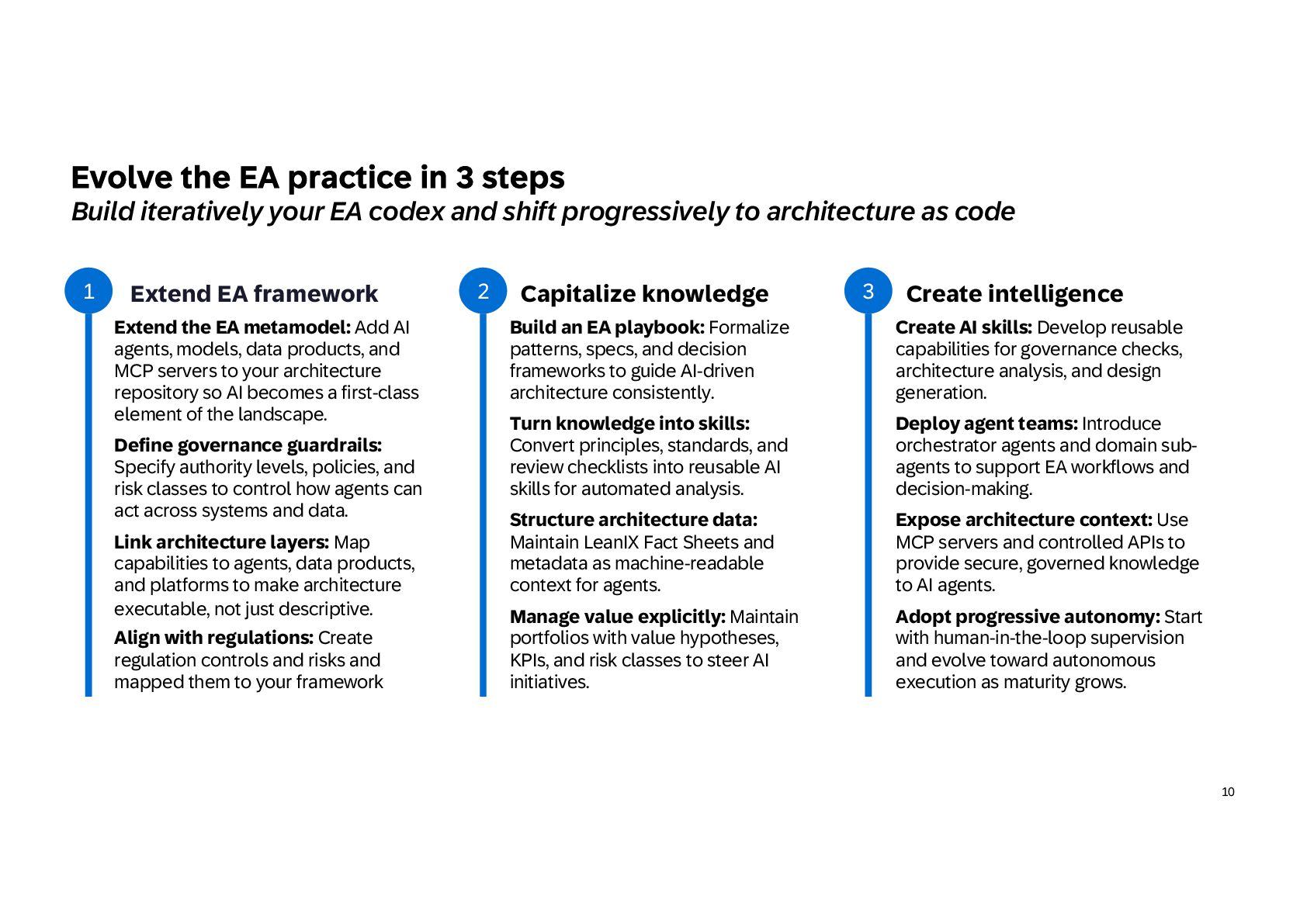
practice in 3 steps Build iteratively your EA codex and shift progressively to architecture as code Extend EA framework • Extend the EA metamodel: Add AI agents, models, data products, and MCP servers to your architecture repository so AI becomes a first-class element of the landscape. • Define governance guardrails: Specify authority levels, policies, and risk classes to control how agents can act across systems and data. • Link architecture layers: Map capabilities to agents, data products, and platforms to make architecture executable, not just descriptive. • Align with regulations: Create regulation controls and risks and mapped them to your framework 1 Capitalize knowledge • Build an EA playbook: Formalize patterns, specs, and decision frameworks to guide AI-driven architecture consistently. • Turn knowledge into skills: Convert principles, standards, and review checklists into reusable AI skills for automated analysis. • Structure architecture data: Maintain LeanIX Fact Sheets and metadata as machine-readable context for agents. • Manage value explicitly: Maintain portfolios with value hypotheses, KPIs, and risk classes to steer AI initiatives. 2 Create intelligence • Create AI skills: Develop reusable capabilities for governance checks, architecture analysis, and design generation. • Deploy agent teams: Introduce orchestrator agents and domain sub- agents to support EA workflows and decision-making. • Expose architecture context: Use MCP servers and controlled APIs to provide secure, governed knowledge to AI agents. • Adopt progressive autonomy: Start with human-in-the-loop supervision and evolve toward autonomous execution as maturity grows. 3
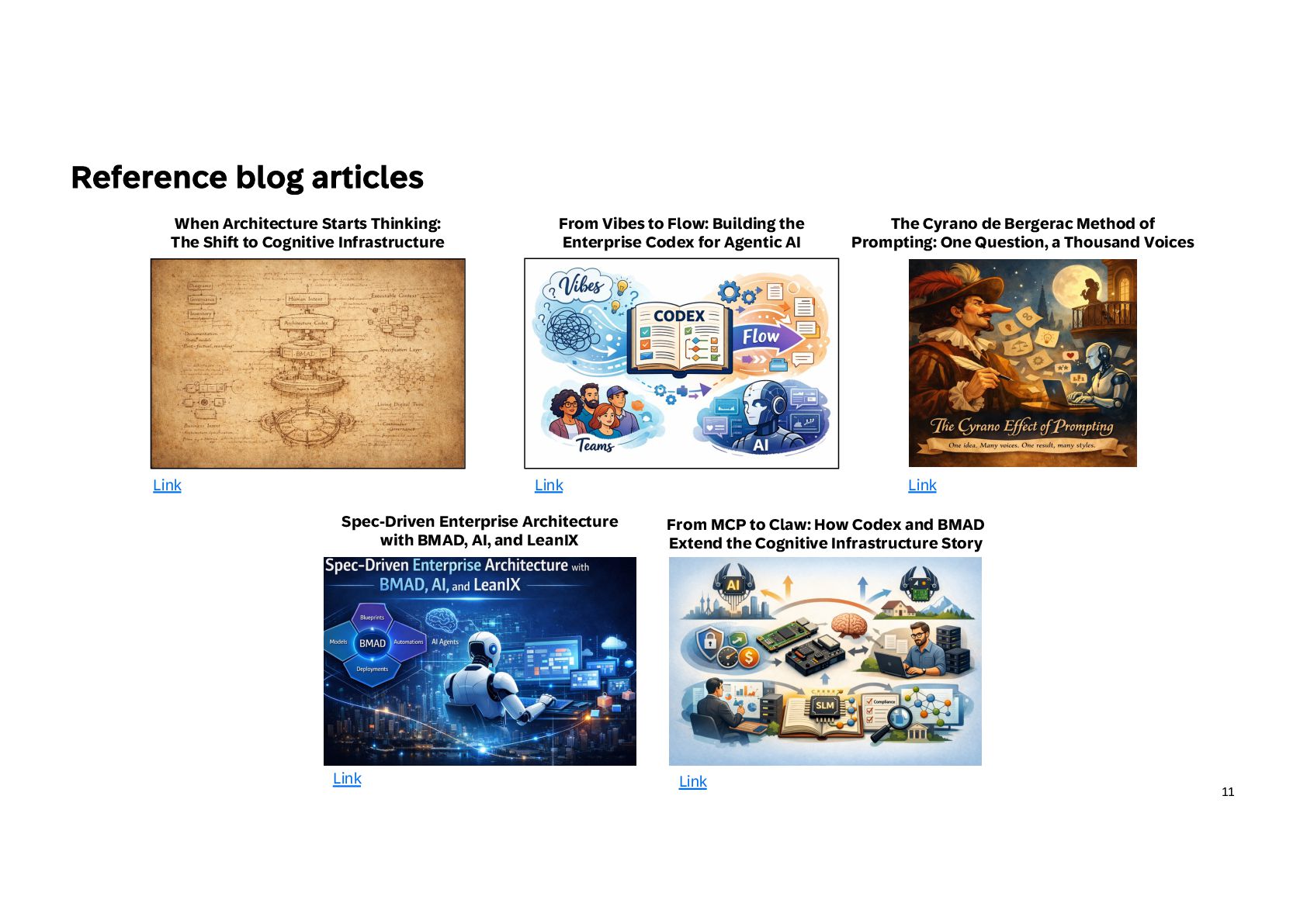
When Architecture Starts Thinking: The Shift to Cognitive Infrastructure Link From Vibes to Flow: Building the Enterprise Codex for Agentic AI Link Spec-Driven Enterprise Architecture with BMAD, AI, and LeanIX Link The Cyrano de Bergerac Method of Prompting: One Question, a Thousand Voices Link From MCP to Claw: How Codex and BMAD Extend the Cognitive Infrastructure Story Link


 welkaim
 persolserverworks
 yamanoku
 kentapapa
 codmoninc
 sh_fk2
 takonda
 keeg
keeg
 kentarofujii
 taketakekaho
 techtekt
 y0hgi
y0hgi
 kworkdev
 katarinadahlin
 morganepeng
 pedronauck
 leimatthew05
 kimpetersen
 aleyda
 addyosmani
 nmsamuel
 chriscoyier
 keathley
 nonsquared