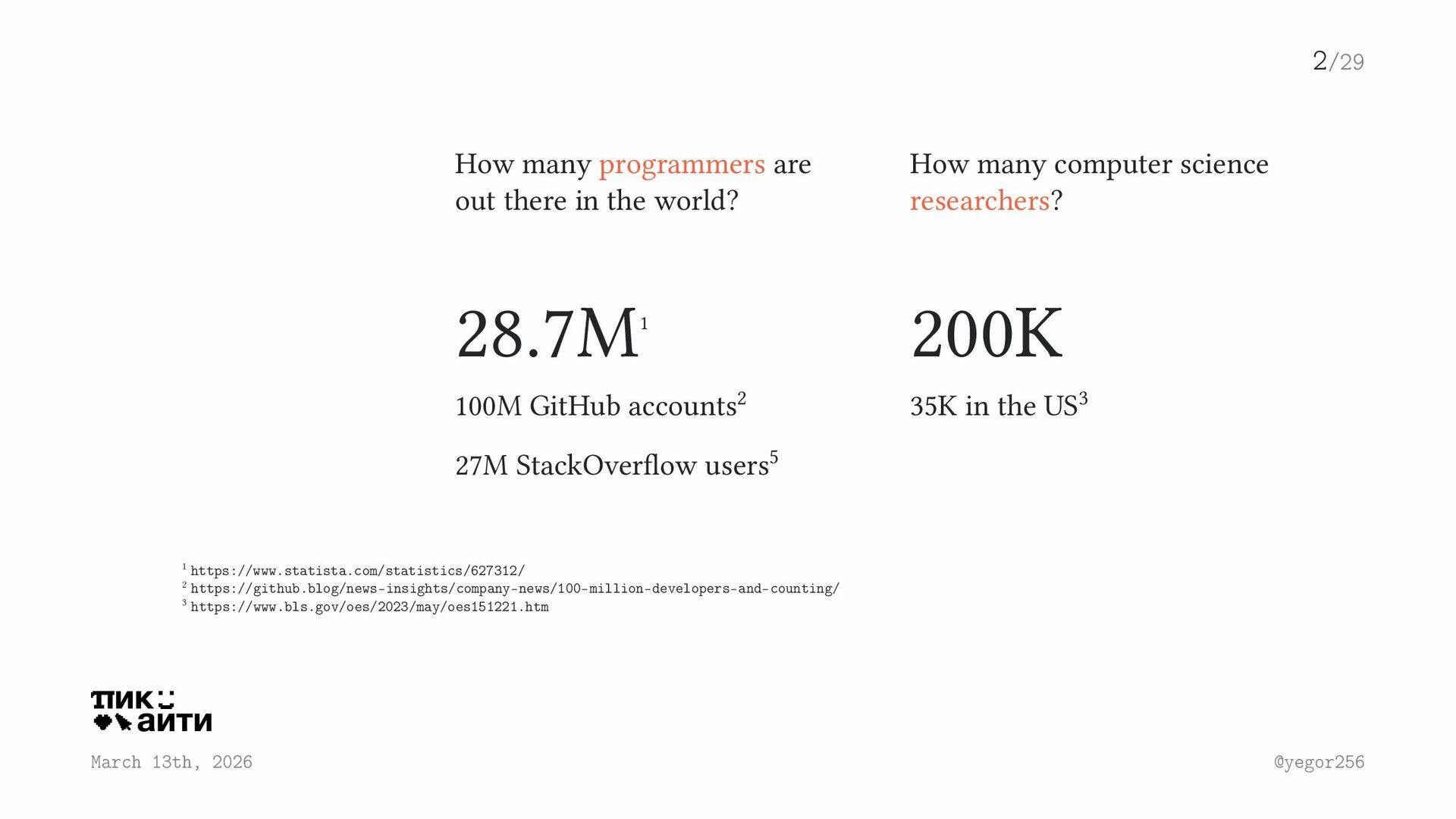
out there in the world? 28.7M1 100M GitHub accounts2 27M StackOverflow users5 How many computer science researchers? 200K 35K in the US3 2/29 March 13th, 2026 @yegor256
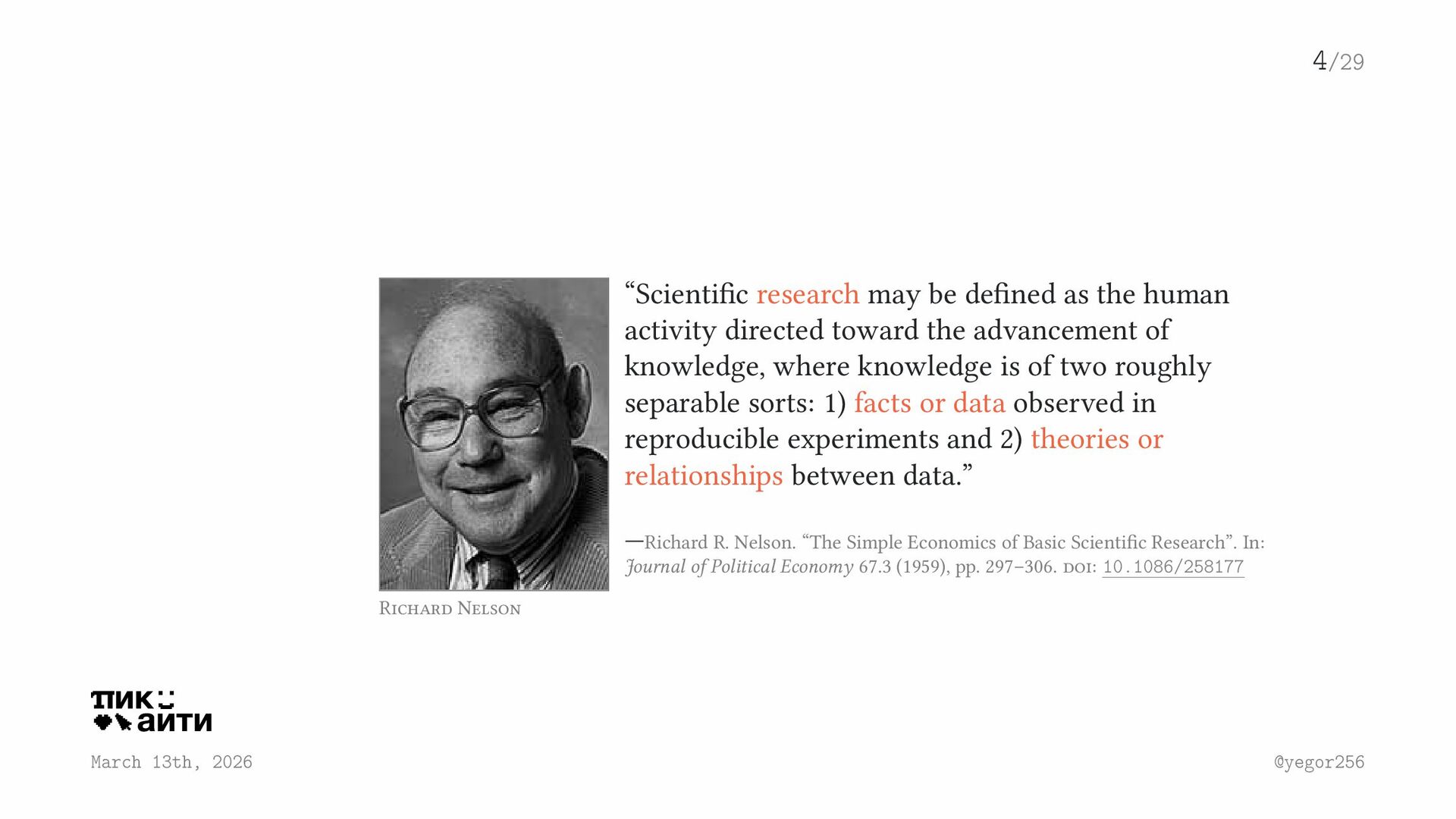
be defined as the human activity directed toward the advancement of knowledge, where knowledge is of two roughly separable sorts: 1) facts or data observed in reproducible experiments and 2) theories or relationships between data.” —Richard R. Nelson. “The Simple Economics of Basic Scientific Research”. In: Journal of Political Economy 67.3 (1959), pp. 297–306. doi: 10.1086/258177
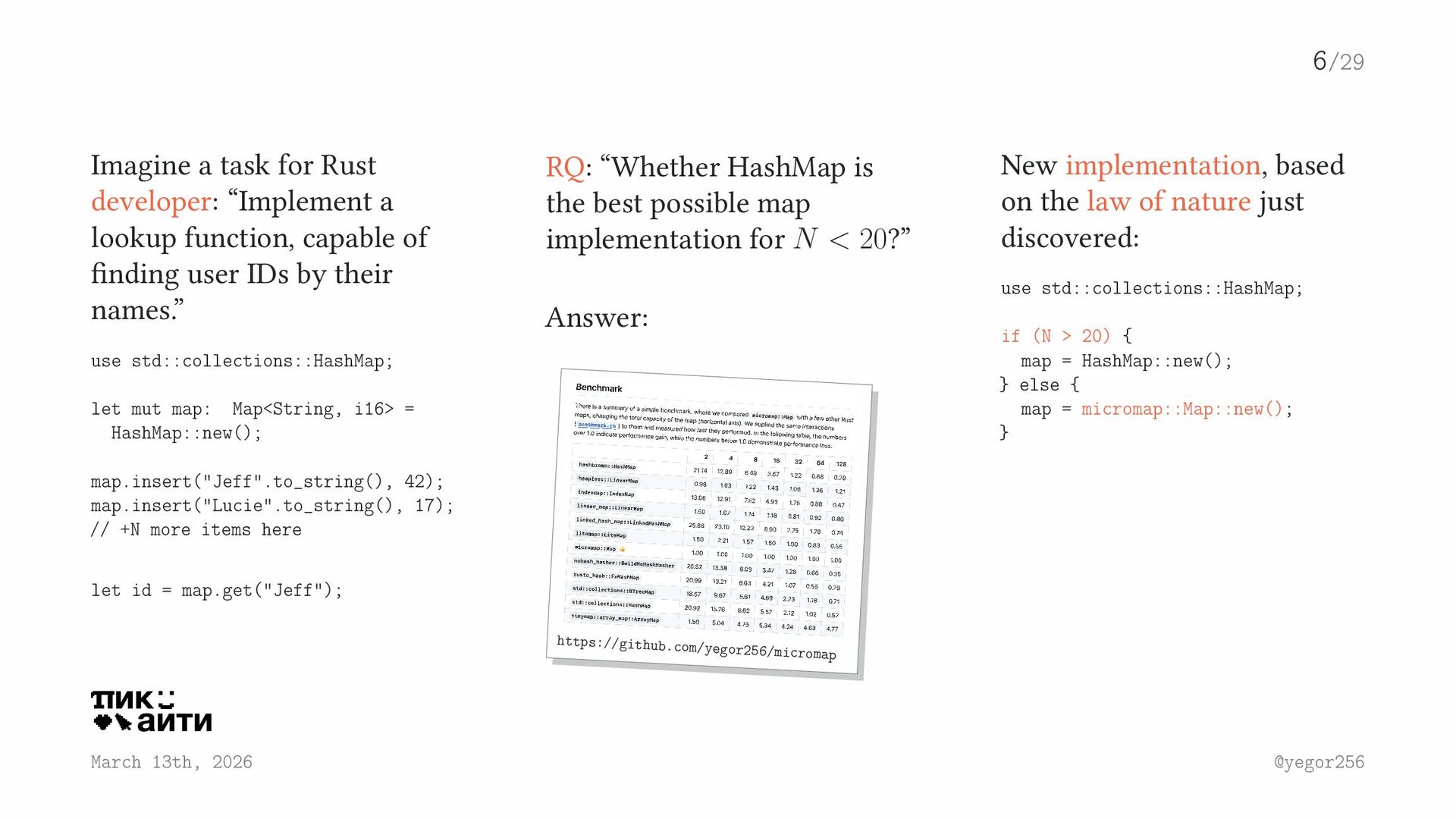
capable of finding user IDs by their names.” use std::collections::HashMap; let mut map: Map<String, i16> = HashMap::new(); map.insert("Jeff".to_string(), 42); map.insert("Lucie".to_string(), 17); // +N more items here let id = map.get("Jeff"); RQ: “Whether HashMap is the best possible map implementation for N < 20?” Answer: https://github.com/yegor256/micromap New implementation, based on the law of nature just discovered: use std::collections::HashMap; if (N > 20) { map = HashMap::new(); } else { map = micromap::Map::new(); } 6/29 March 13th, 2026 @yegor256
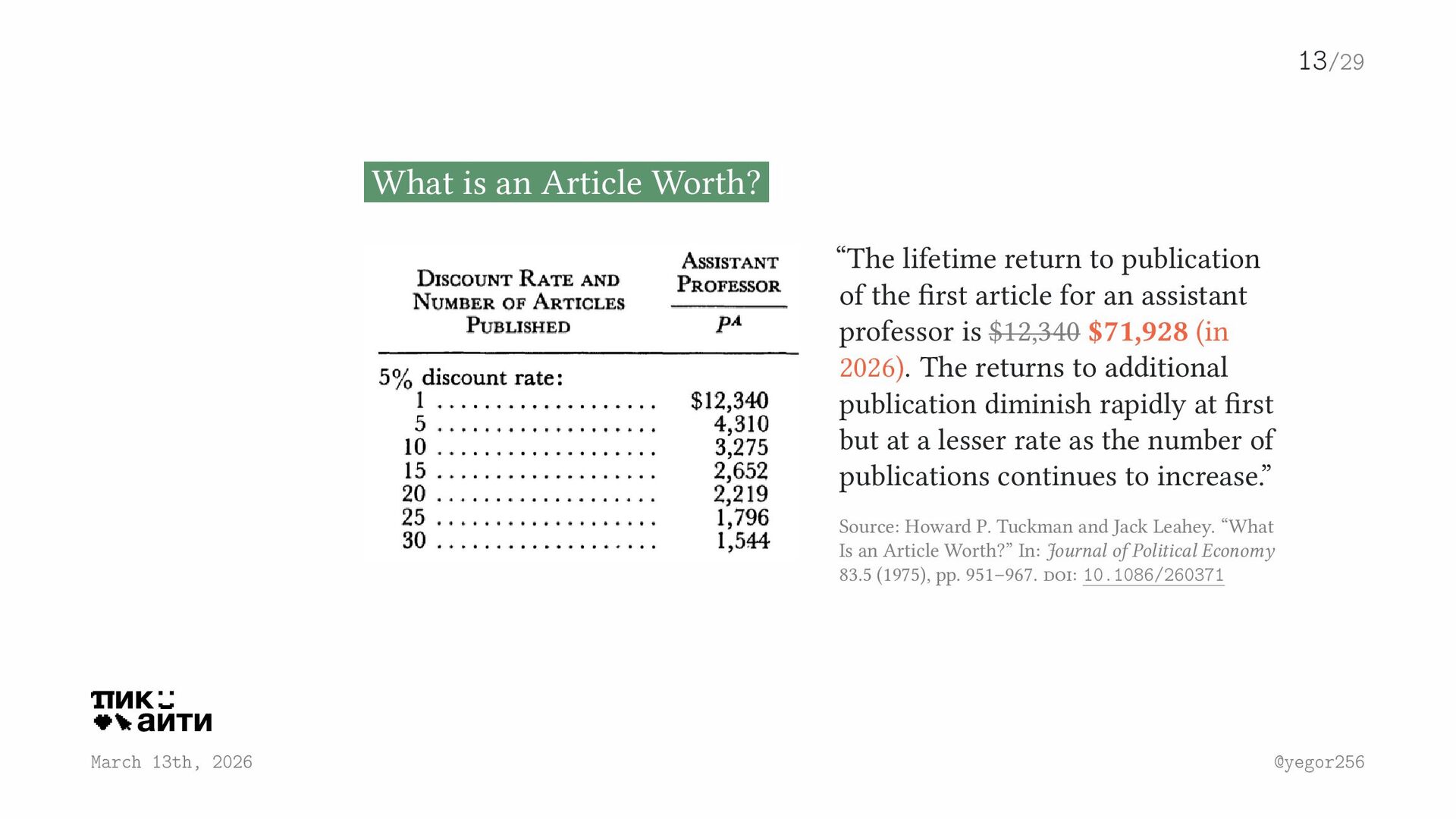
“The lifetime return to publication of the first article for an assistant professor is $12,340 $71,928 (in 2026). The returns to additional publication diminish rapidly at first but at a lesser rate as the number of publications continues to increase.” Source: Howard P. Tuckman and Jack Leahey. “What Is an Article Worth?” In: Journal of Political Economy 83.5 (1975), pp. 951–967. doi: 10.1086/260371
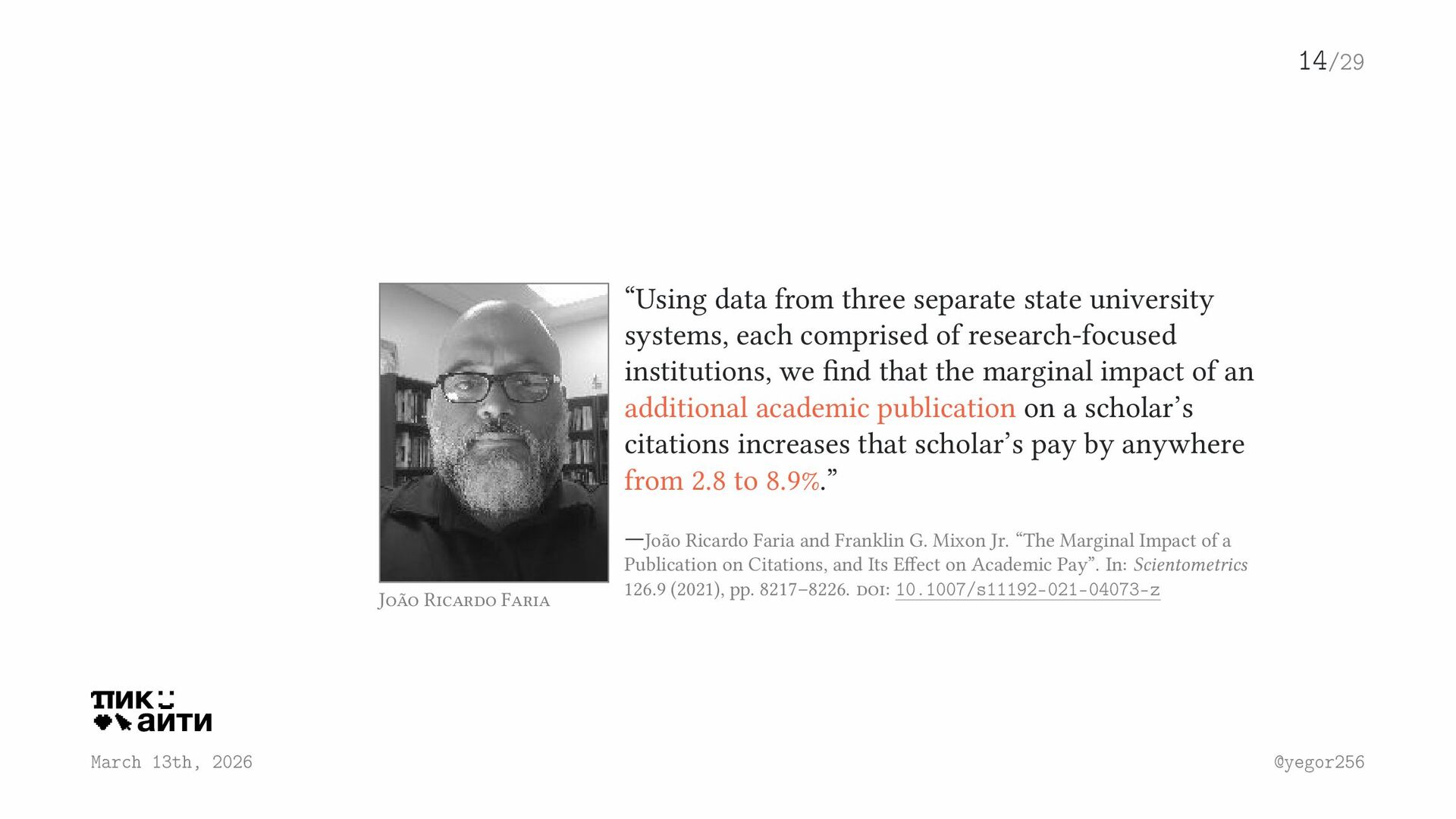
from three separate state university systems, each comprised of research-focused institutions, we find that the marginal impact of an additional academic publication on a scholar’s citations increases that scholar’s pay by anywhere from 2.8 to 8.9%.” —João Ricardo Faria and Franklin G. Mixon Jr. “The Marginal Impact of a Publication on Citations, and Its Effect on Academic Pay”. In: Scientometrics 126.9 (2021), pp. 8217–8226. doi: 10.1007/s11192-021-04073-z
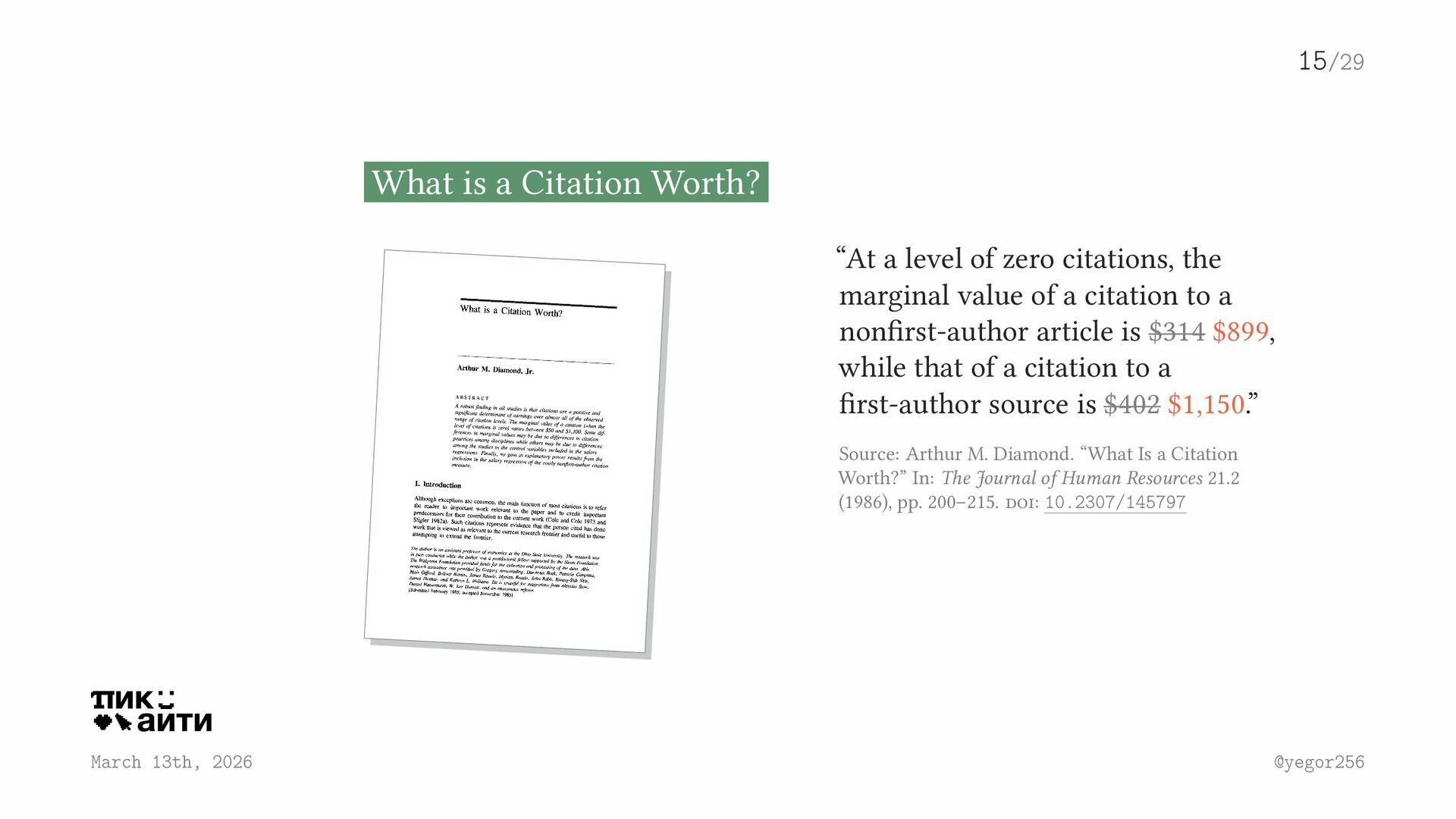
“At a level of zero citations, the marginal value of a citation to a nonfirst-author article is $314 $899, while that of a citation to a first-author source is $402 $1,150.” Source: Arthur M. Diamond. “What Is a Citation Worth?” In: The Journal of Human Resources 21.2 (1986), pp. 200–215. doi: 10.2307/145797
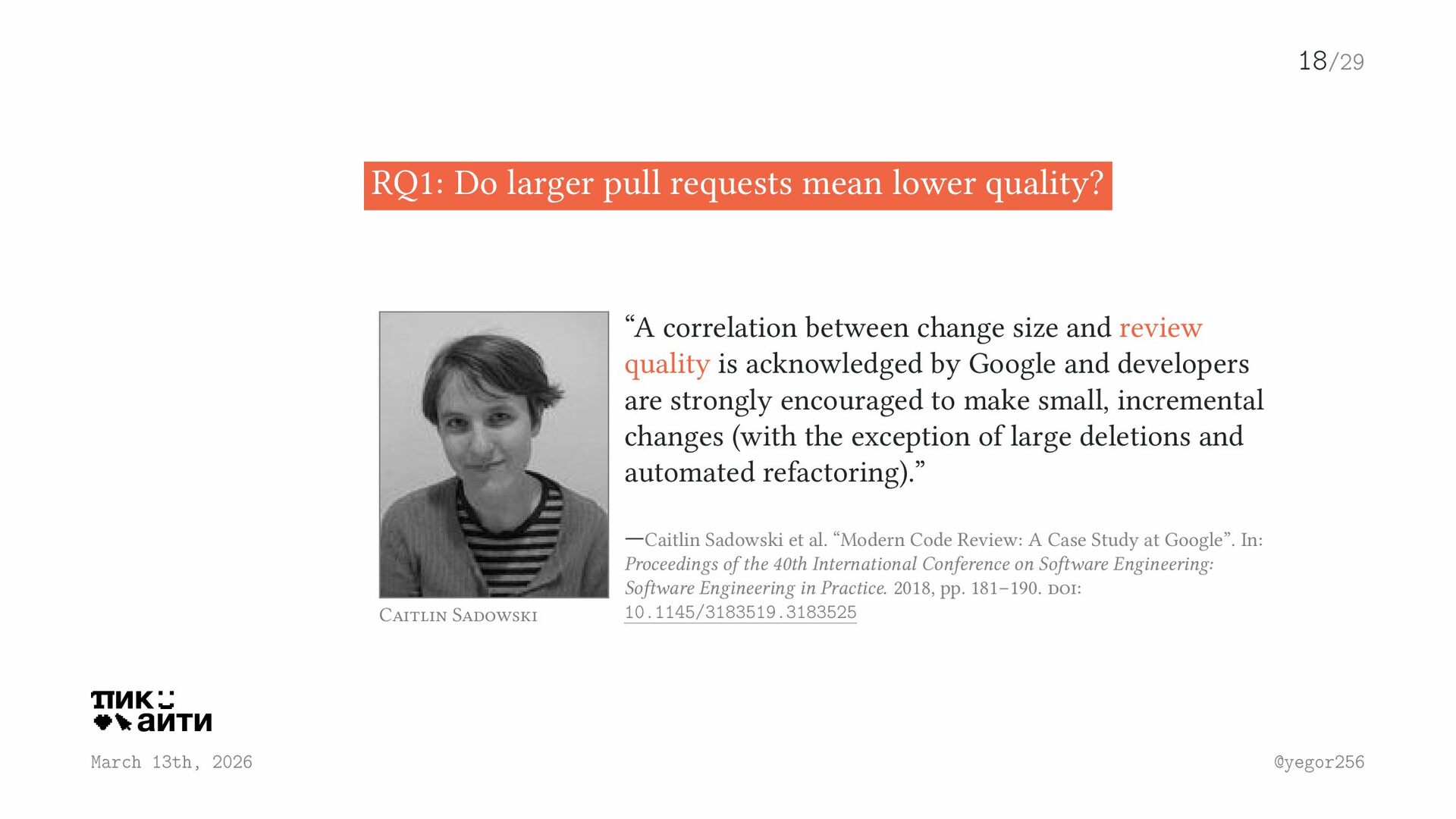
mean lower quality? Caitlin Sadowski “A correlation between change size and review quality is acknowledged by Google and developers are strongly encouraged to make small, incremental changes (with the exception of large deletions and automated refactoring).” —Caitlin Sadowski et al. “Modern Code Review: A Case Study at Google”. In: Proceedings of the 40th International Conference on Software Engineering: Software Engineering in Practice. 2018, pp. 181–190. doi: 10.1145/3183519.3183525
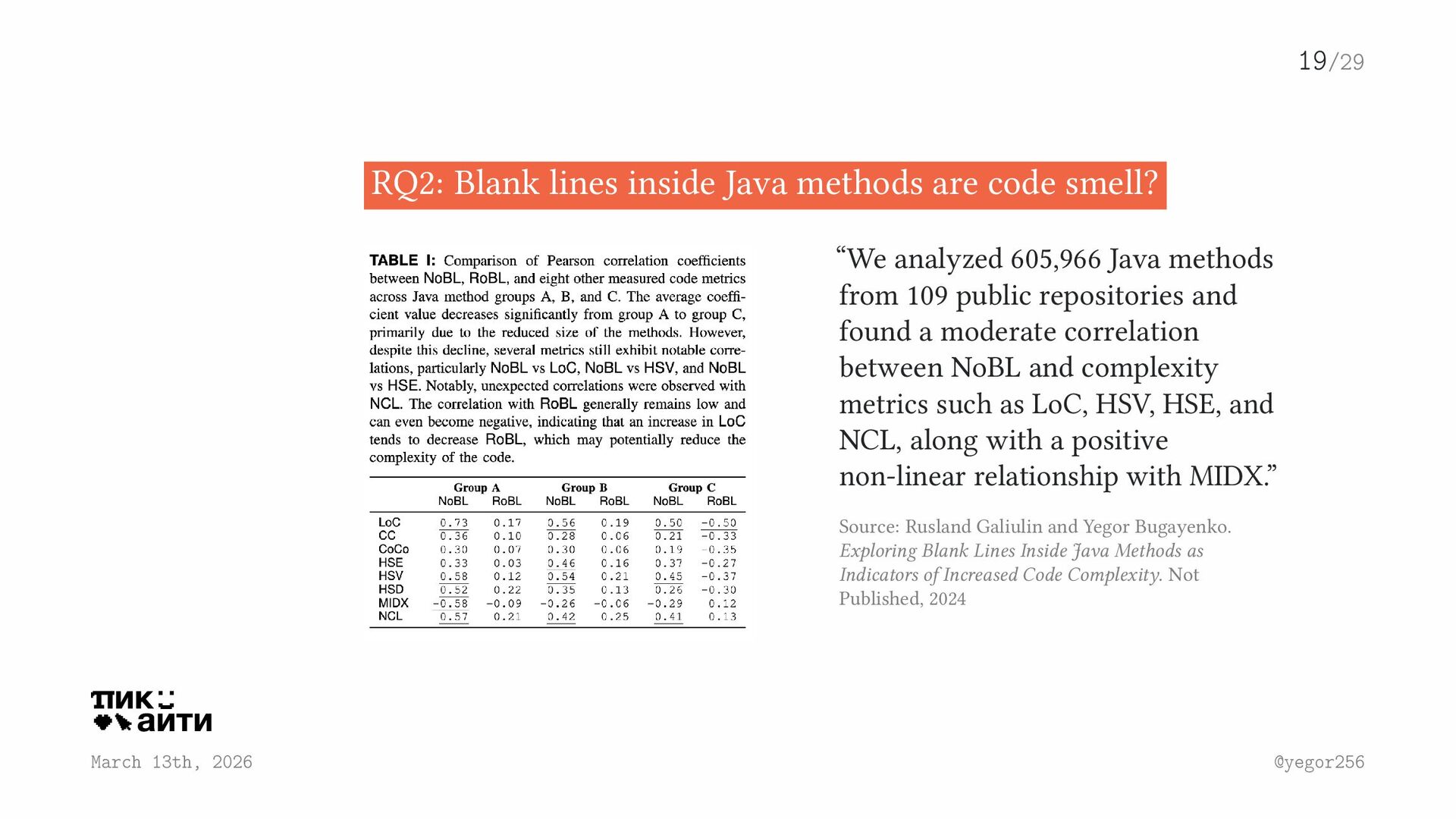
methods are code smell? “We analyzed 605,966 Java methods from 109 public repositories and found a moderate correlation between NoBL and complexity metrics such as LoC, HSV, HSE, and NCL, along with a positive non-linear relationship with MIDX.” Source: Rusland Galiulin and Yegor Bugayenko. Exploring Blank Lines Inside Java Methods as Indicators of Increased Code Complexity. Not Published, 2024
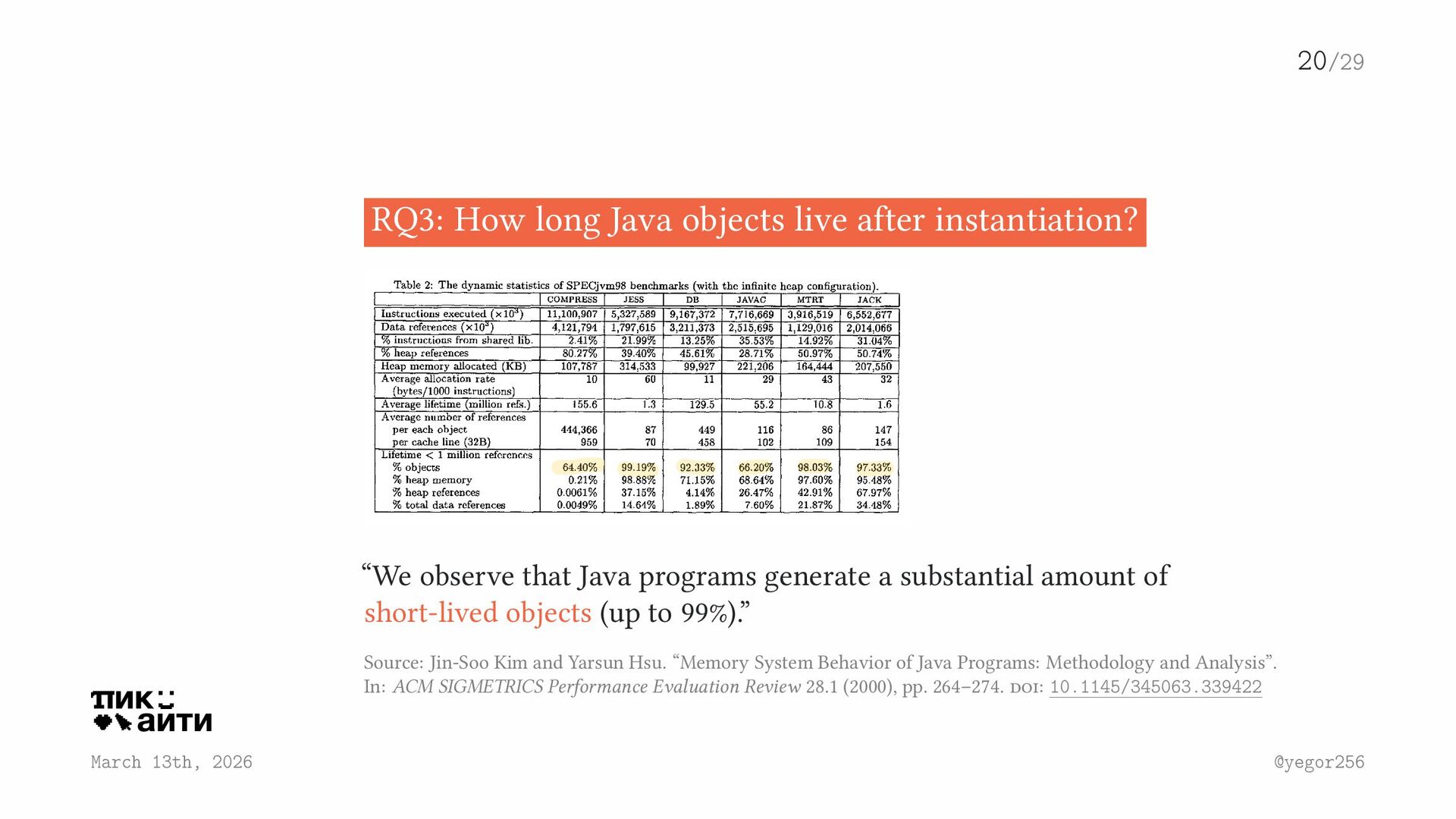
live after instantiation? “We observe that Java programs generate a substantial amount of short-lived objects (up to 99%).” Source: Jin-Soo Kim and Yarsun Hsu. “Memory System Behavior of Java Programs: Methodology and Analysis”. In: ACM SIGMETRICS Performance Evaluation Review 28.1 (2000), pp. 264–274. doi: 10.1145/345063.339422
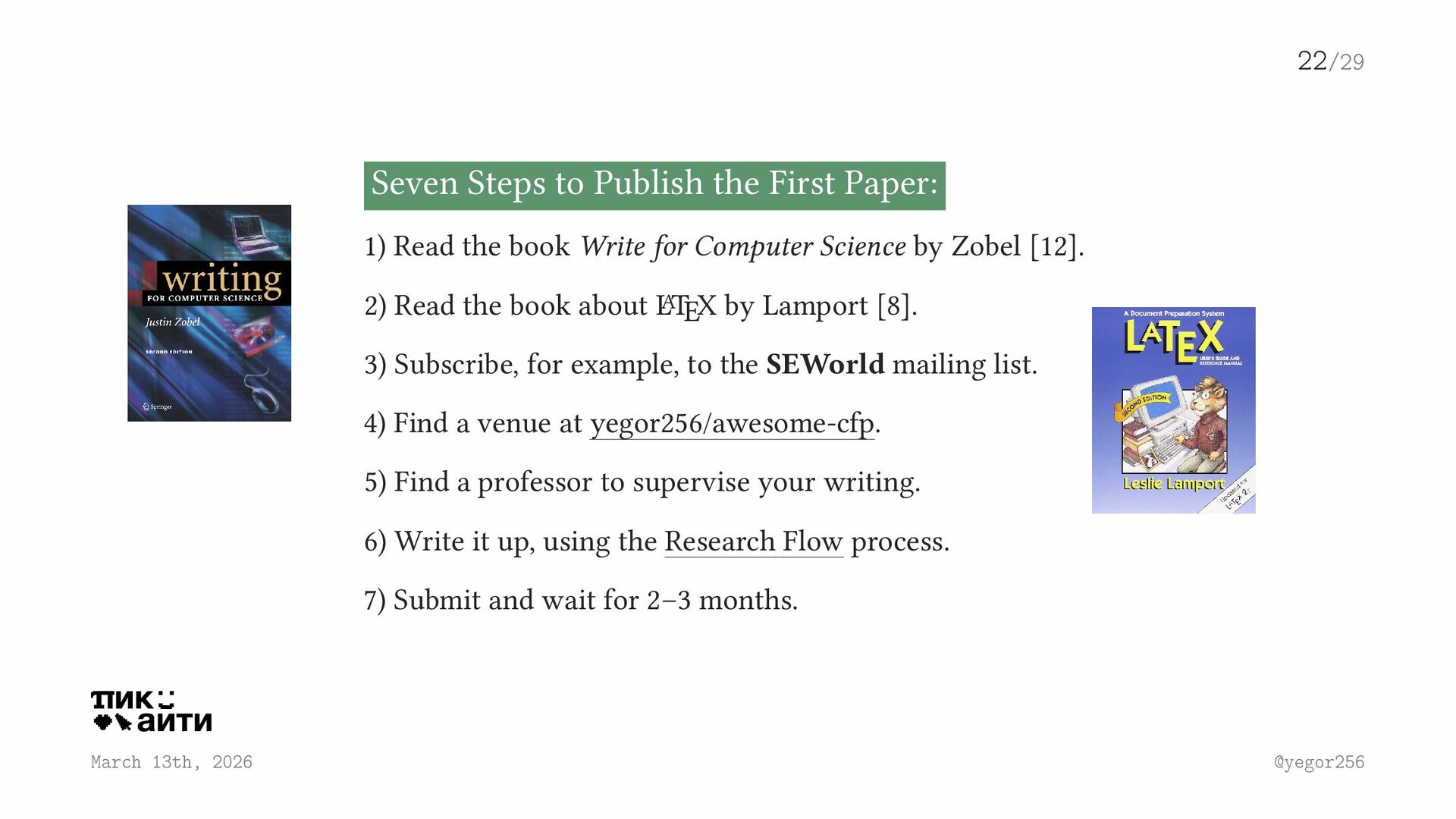
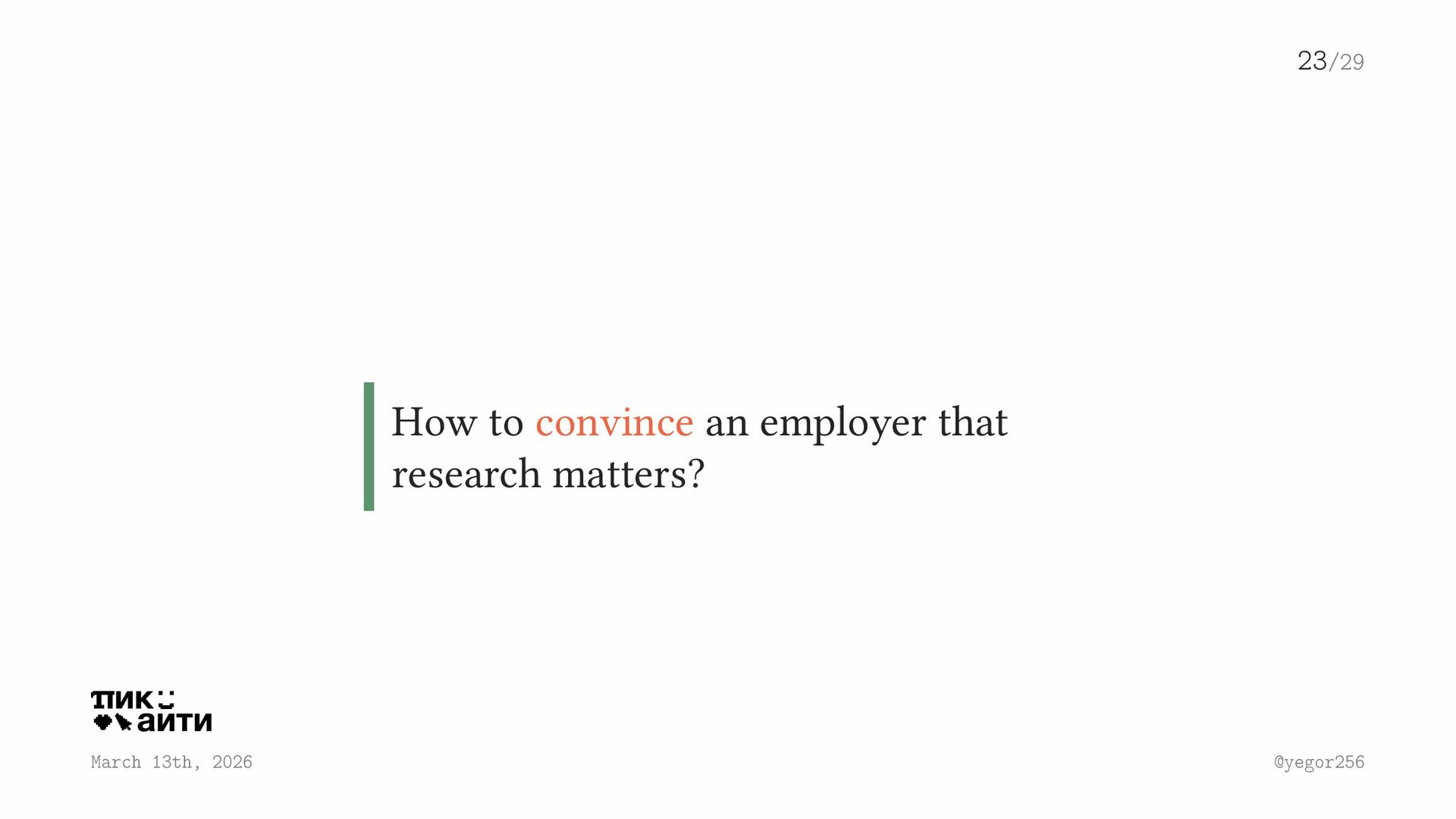
First Paper: 1) Read the book Write for Computer Science by Zobel [12]. 2) Read the book about L A TEX by Lamport [8]. 3) Subscribe, for example, to the SEWorld mailing list. 4) Find a venue at yegor256/awesome-cfp. 5) Find a professor to supervise your writing. 6) Write it up, using the Research Flow process. 7) Submit and wait for 2–3 months.
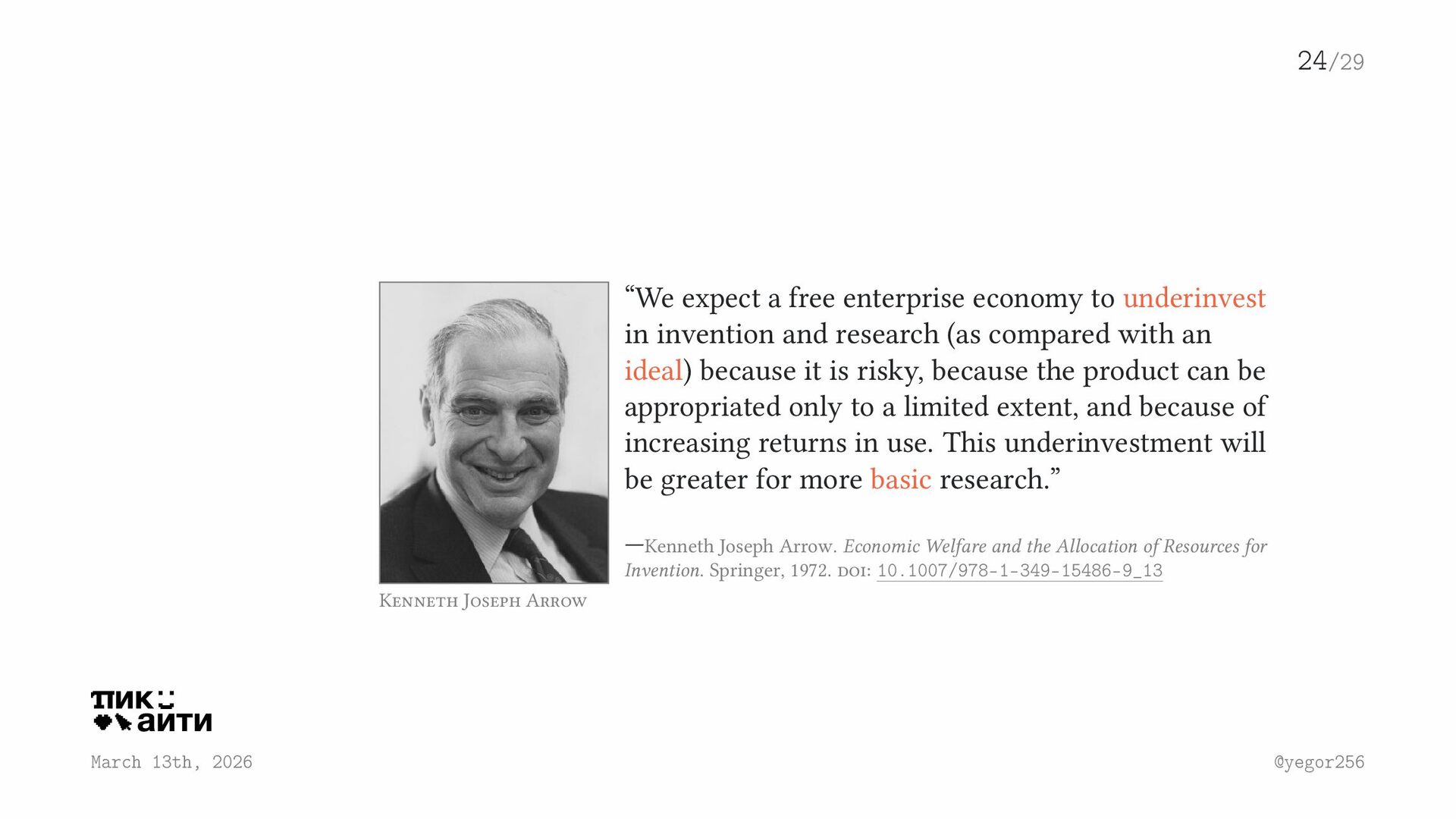
a free enterprise economy to underinvest in invention and research (as compared with an ideal) because it is risky, because the product can be appropriated only to a limited extent, and because of increasing returns in use. This underinvestment will be greater for more basic research.” —Kenneth Joseph Arrow. Economic Welfare and the Allocation of Resources for Invention. Springer, 1972. doi: 10.1007/978-1-349-15486-9_13
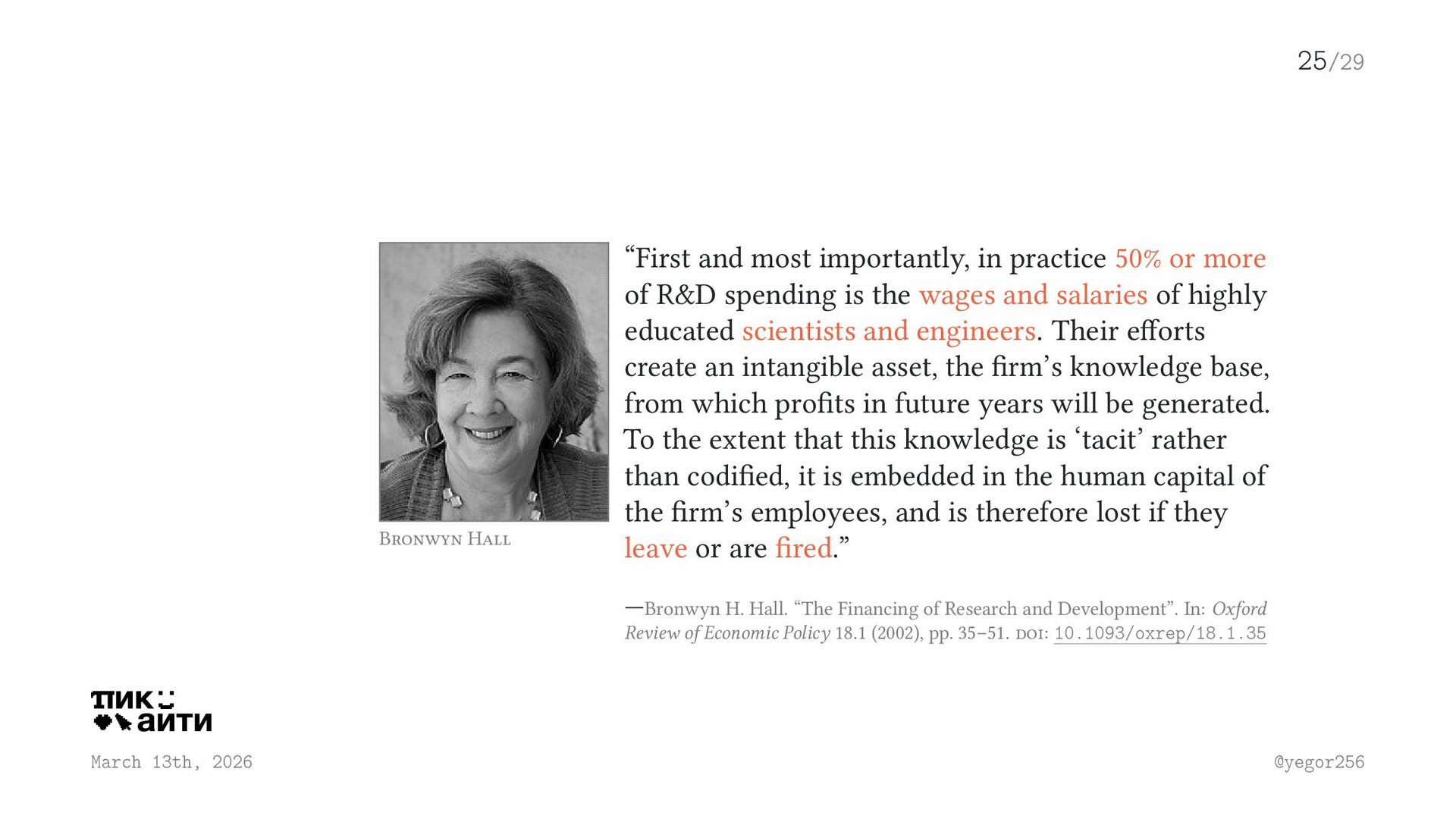
importantly, in practice 50% or more of R&D spending is the wages and salaries of highly educated scientists and engineers. Their efforts create an intangible asset, the firm’s knowledge base, from which profits in future years will be generated. To the extent that this knowledge is ‘tacit’ rather than codified, it is embedded in the human capital of the firm’s employees, and is therefore lost if they leave or are fired.” —Bronwyn H. Hall. “The Financing of Research and Development”. In: Oxford Review of Economic Policy 18.1 (2002), pp. 35–51. doi: 10.1093/oxrep/18.1.35
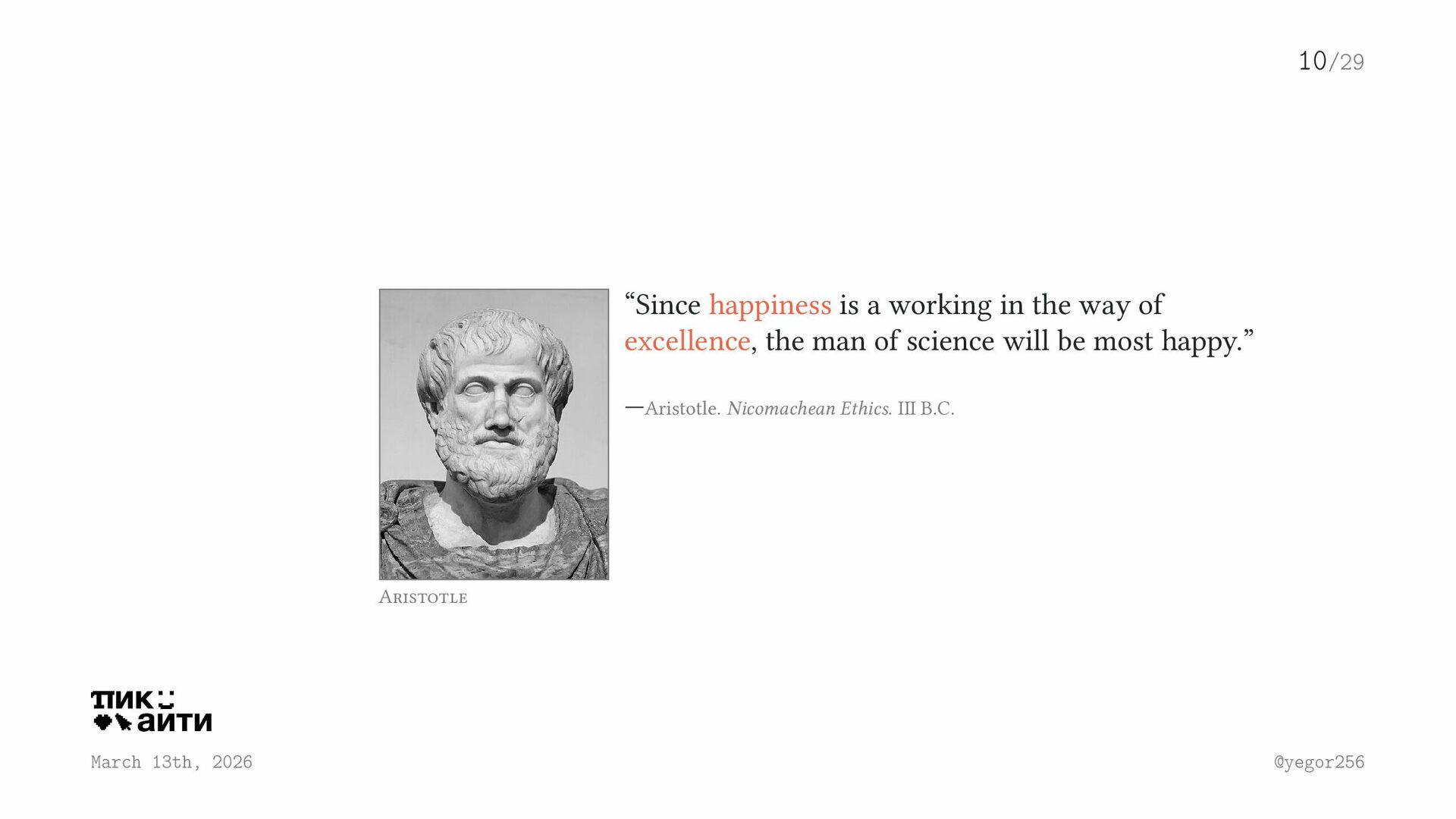
Aristotle. Nicomachean Ethics. III B.C. [2] Kenneth Joseph Arrow. Economic Welfare and the Allocation of Resources for Invention. Springer, 1972. doi: 10.1007/978-1-349-15486-9_13. [3] Arthur M. Diamond. “What Is a Citation Worth?” In: The Journal of Human Resources 21.2 (1986), pp. 200–215. doi: 10.2307/145797. [4] João Ricardo Faria and Franklin G. Mixon Jr. “The Marginal Impact of a Publication on Citations, and Its Effect on Academic Pay”. In: Scientometrics 126.9 (2021), pp. 8217–8226. doi: 10.1007/s11192-021-04073-z. [5] Rusland Galiulin and Yegor Bugayenko. Exploring Blank Lines Inside Java Methods as Indicators of Increased Code Complexity. Not Published, 2024. [6] Bronwyn H. Hall. “The Financing of Research and Development”. In: Oxford Review of Economic Policy 18.1 (2002), pp. 35–51. doi: 10.1093/oxrep/18.1.35. [7] Jin-Soo Kim and Yarsun Hsu. “Memory System Behavior of Java Programs: Methodology and Analysis”. In: ACM SIGMETRICS Performance Evaluation Review 28.1 (2000), pp. 264–274. doi: 10.1145/345063.339422. [8] Leslie Lamport. LaTeX: A Document Preparation System. 2nd ed. Addison-Wesley, 1994. doi: 10.5555/63364. [9] Richard R. Nelson. “The Simple Economics of Basic Scientific Research”. In: Journal of Political Economy 67.3 (1959), pp. 297–306. doi: 10.1086/258177. [10] Caitlin Sadowski et al. “Modern Code Review: A Case Study at Google”. In: Proceedings of the 40th International Conference on Software Engineering: Software Engineering in Practice. 2018, pp. 181–190. doi: 10.1145/3183519.3183525. [11] Howard P. Tuckman and Jack Leahey. “What Is an Article Worth?” In: Journal of Political Economy 83.5 (1975), pp. 951–967. doi: 10.1086/260371. [12] Justin Zobel. Writing for Computer Science. Springer, 2004. doi: 10.5555/2742708.


 yegor256
 yuukiw00w
 naokihaba
 colorful12
 deka_morita
 clockmaker
 tmikov2023
 palkan
 repunit11
 satoshi256kbyte
 ayumu_yamaguchi
 headius
 baasie
 bermonpainter
 techseoconnect
 holman
 62gerente
 jacobian
 maggiecrowley
 akademiya2063
 eileencodes
 ks91
ks91
 marktimemedia



![* 29/29 March 13th, 2026 @yegor256 1 * References [1]](https://files.speakerdeck.com/presentations/174d8dea0c8f4a0097f1fc4af9bf3512/slide_28.jpg)