Upgrade to Pro — share decks privately, control downloads, hide ads and more …

Probiotic Foods Guide: Fermented Foods, Gut-Fri...

Avatar for Yumi nutrition Yumi nutrition
October 15, 2026
2

Probiotic Foods Guide: Fermented Foods, Gut-Friendly Choices & Daily Wellness

Explore our comprehensive guide on probiotic foods, fermented choices, and how they support everyday digestive health. Learn the key differences between fermented foods and active live cultures, discover popular options like yogurt, kefir, kimchi, and kombucha, and find out how to combine fiber-rich diets with targeted supplements. For those looking for convenient chewable alternatives, explore Yumi Nutrition's gut health probiotic formulations to support your daily wellness routine. Learn more on our official website: https://yuminutrition.com/

Avatar for Yumi nutrition

Yumi nutrition

October 15, 2026

Transcript

  1. Probiotic Foods Guide: Fermented Foods and Gut-Friendly Choices Fermented foods

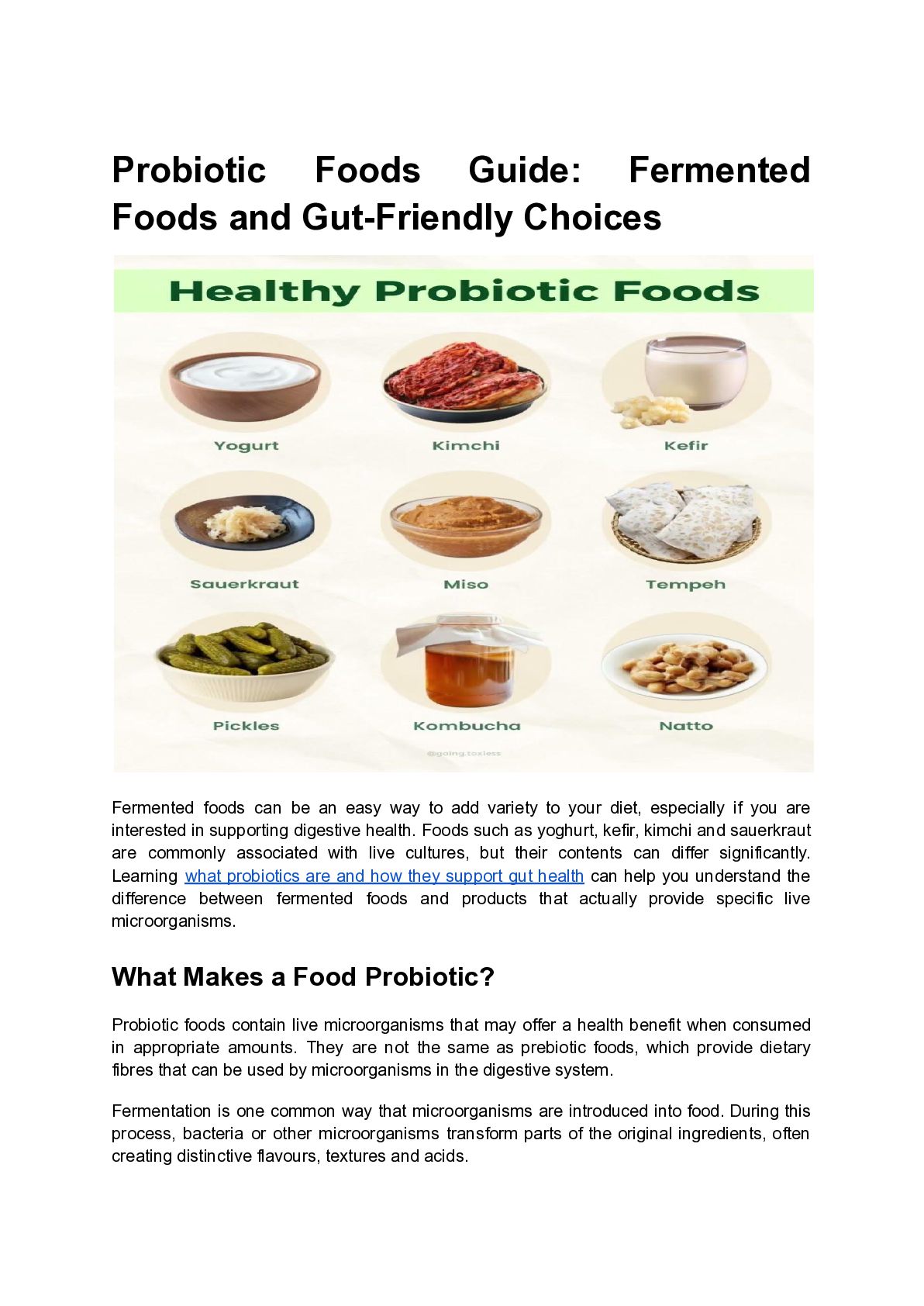
    can be an easy way to add variety to your diet, especially if you are interested in supporting digestive health. Foods such as yoghurt, kefir, kimchi and sauerkraut are commonly associated with live cultures, but their contents can differ significantly. Learning what probiotics are and how they support gut health can help you understand the difference between fermented foods and products that actually provide specific live microorganisms. What Makes a Food Probiotic? Probiotic foods contain live microorganisms that may offer a health benefit when consumed in appropriate amounts. They are not the same as prebiotic foods, which provide dietary fibres that can be used by microorganisms in the digestive system. Fermentation is one common way that microorganisms are introduced into food. During this process, bacteria or other microorganisms transform parts of the original ingredients, often creating distinctive flavours, textures and acids.
  2. However, being fermented does not automatically mean that a food

    remains probiotic. Some products are heated, pasteurised or otherwise processed after fermentation, which can reduce or eliminate living microorganisms. For this reason, it is useful to check the product information instead of assuming that every fermented food contains probiotics. Popular Fermented Foods to Try Yoghurt Yoghurt is one of the easiest fermented foods to include in everyday meals. It is made by fermenting milk with bacterial cultures, and some varieties contain additional cultures. When shopping, look for information such as “live cultures” or “active cultures”. Plain yoghurt can be combined with fruit, oats or nuts, blended into smoothies, or used in savoury recipes. It is also worth checking the sugar content, as flavoured varieties can contain considerable amounts of added sugar. Kefir Kefir is a fermented beverage with a thinner consistency than yoghurt and a naturally tangy flavour. Milk kefir is common, although plant-based versions are also available. The microorganisms found in kefir can differ between products, so checking the packaging can provide a better indication of what you are consuming. Kimchi Kimchi is a Korean fermented vegetable preparation, traditionally made using ingredients such as cabbage, vegetables and seasonings. Naturally fermented kimchi may contain live microorganisms. However, processing methods can affect the cultures that remain in the finished product. It can be enjoyed as a side dish or added to rice, noodles, salads and other meals for extra flavour. Sauerkraut Sauerkraut is produced by fermenting cabbage. Traditionally prepared versions may contain living microorganisms, but some commercially available varieties are heated after fermentation. If live cultures are important to you, check the label rather than assuming that every sauerkraut product provides them.
  3. Miso and Tempeh Miso and tempeh are traditional fermented soybean

    foods that can add variety to meals. Miso is often used in soups, marinades and sauces, while tempeh has a firm texture and can work as a protein-rich ingredient in many dishes. As with other fermented foods, the final processing method can determine whether live microorganisms remain in the product. Kombucha Kombucha is a fermented tea drink known for its sharp, slightly acidic taste. Some products contain live microorganisms, but processing can influence their presence. Kombucha may also contain added sugars and some caffeine, depending on the recipe. Reading the nutrition and ingredient information is therefore important if you drink it regularly. Does Fermented Always Mean Probiotic? No. This distinction is particularly important. A food may have been fermented but no longer contain living microorganisms by the time it reaches the consumer. Heating, pasteurisation and other forms of processing can change the microbial content. If your goal is to choose foods containing live cultures, look for terms such as “live cultures”, “active cultures” or information about specific microorganisms on the packaging. In other words, the production method alone is not enough to determine whether a finished food is probiotic.
  4. How to Add Fermented Foods to Your Diet​ You do

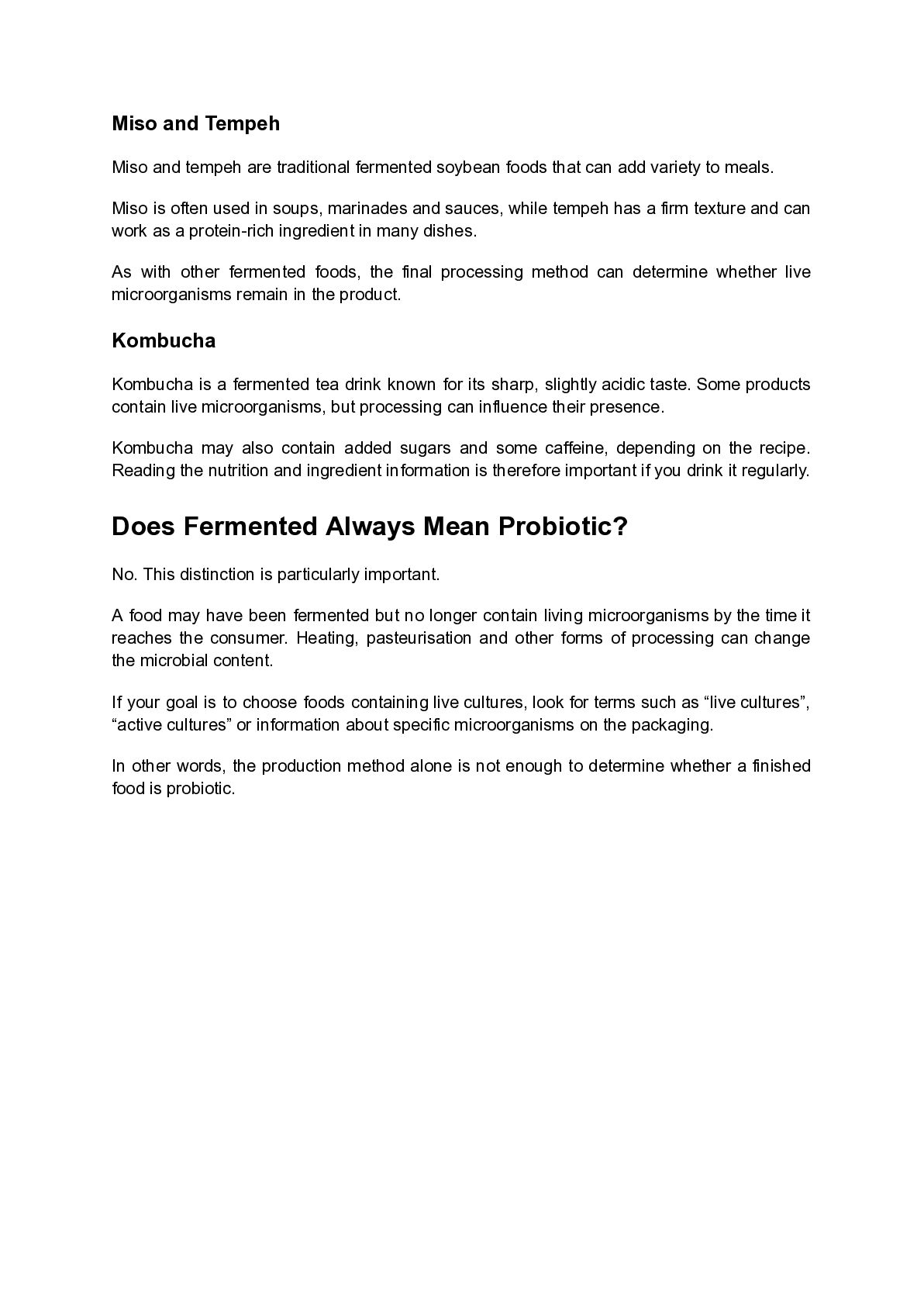
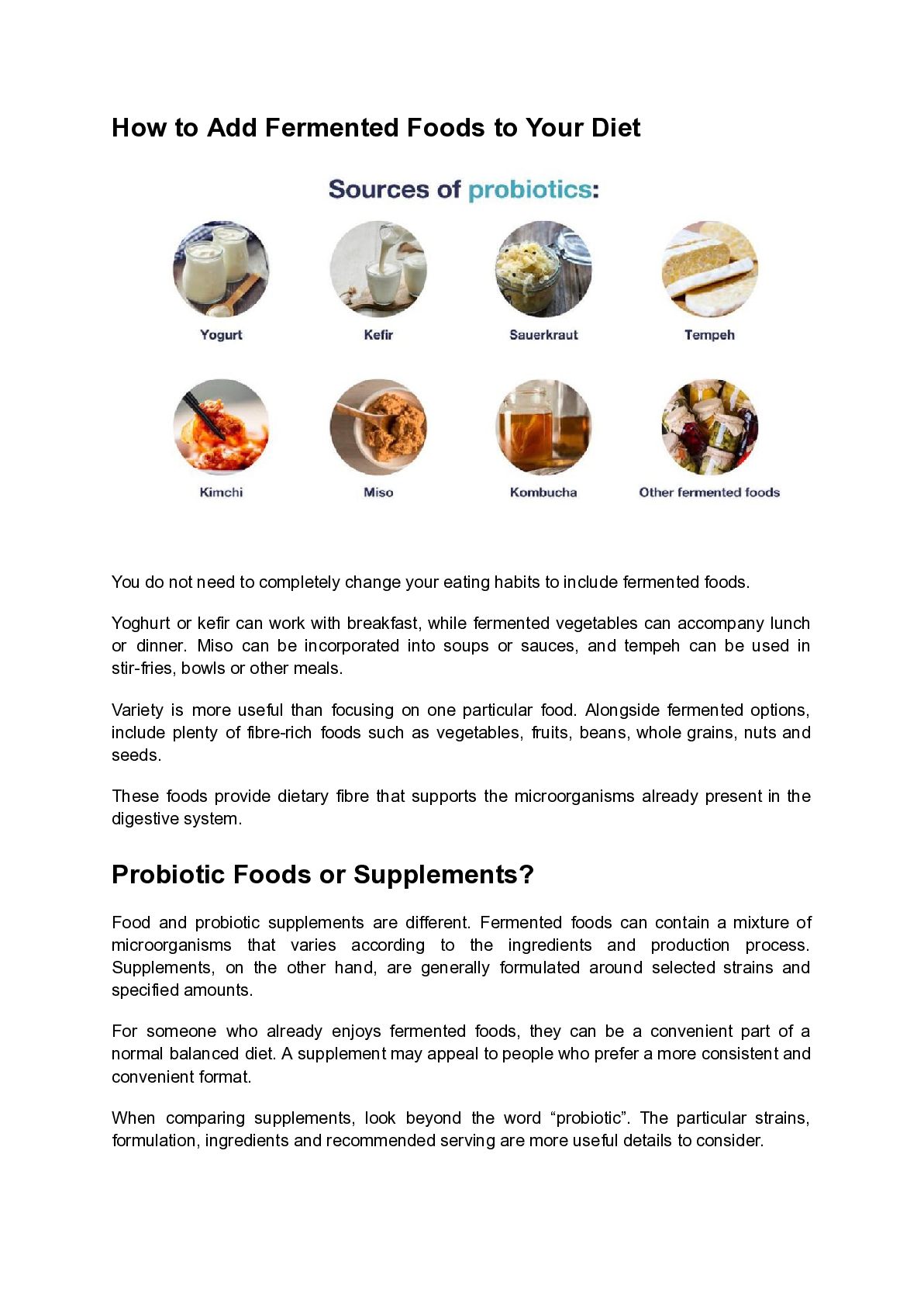
    not need to completely change your eating habits to include fermented foods. Yoghurt or kefir can work with breakfast, while fermented vegetables can accompany lunch or dinner. Miso can be incorporated into soups or sauces, and tempeh can be used in stir-fries, bowls or other meals. Variety is more useful than focusing on one particular food. Alongside fermented options, include plenty of fibre-rich foods such as vegetables, fruits, beans, whole grains, nuts and seeds. These foods provide dietary fibre that supports the microorganisms already present in the digestive system. Probiotic Foods or Supplements? Food and probiotic supplements are different. Fermented foods can contain a mixture of microorganisms that varies according to the ingredients and production process. Supplements, on the other hand, are generally formulated around selected strains and specified amounts. For someone who already enjoys fermented foods, they can be a convenient part of a normal balanced diet. A supplement may appeal to people who prefer a more consistent and convenient format. When comparing supplements, look beyond the word “probiotic”. The particular strains, formulation, ingredients and recommended serving are more useful details to consider.
  5. For example, Yumi Nutrition's probiotic and gut-health formulation provides another

    option for people who want to incorporate targeted gut-health products into their routine. A Convenient Gummy Option Some people prefer supplements in chewable formats rather than capsules or powders. For those looking for this type of option, Gut Health Probiotic Gummies provide a convenient way to include a probiotic product in a daily routine. As with any supplement, check the ingredients, recommended serving and formulation before deciding whether it is appropriate for you. How Much Fermented Food Do You Need? There is no single daily amount of probiotic food that applies to everyone. Dietary needs, preferences and individual tolerance can vary. If fermented foods are new to you, introduce them gradually and start with portions that feel comfortable. You do not need to eat several fermented products every day to maintain a varied diet. The broader quality of your diet matters more than relying heavily on one particular “probiotic” food. Final Thoughts Fermented foods can add useful variety, flavour and nutritional value to a balanced eating pattern. Yoghurt, kefir, kimchi, sauerkraut, miso, tempeh and some kombucha products may contain live microorganisms, but their contents depend on how they are produced and processed. The most sensible approach is to combine a varied diet with plenty of fibre-rich plant foods rather than relying on a single food or supplement. Most importantly, check the label. A product being fermented does not automatically mean it contains live probiotics, and understanding what is actually in the finished food can help you make better-informed choices for your everyday diet.