Upgrade to Pro — share decks privately, control downloads, hide ads and more …

10 Simple Ways to Create a More Relaxing Evenin...

10 Simple Ways to Create a More Relaxing Evening Routine

Discover 10 simple and effective habits to build a calming evening routine that helps you unwind, improve sleep quality, and restore daily balance. Learn how mindfulness, screen-free downtime, and wellness practices like Yumi Nutrition supplements can transform your nighttime ritual for better rest and wellness.

Avatar for Yumi nutrition

Yumi nutrition

October 03, 2026

More Decks by Yumi nutrition

Other Decks in Business

Transcript

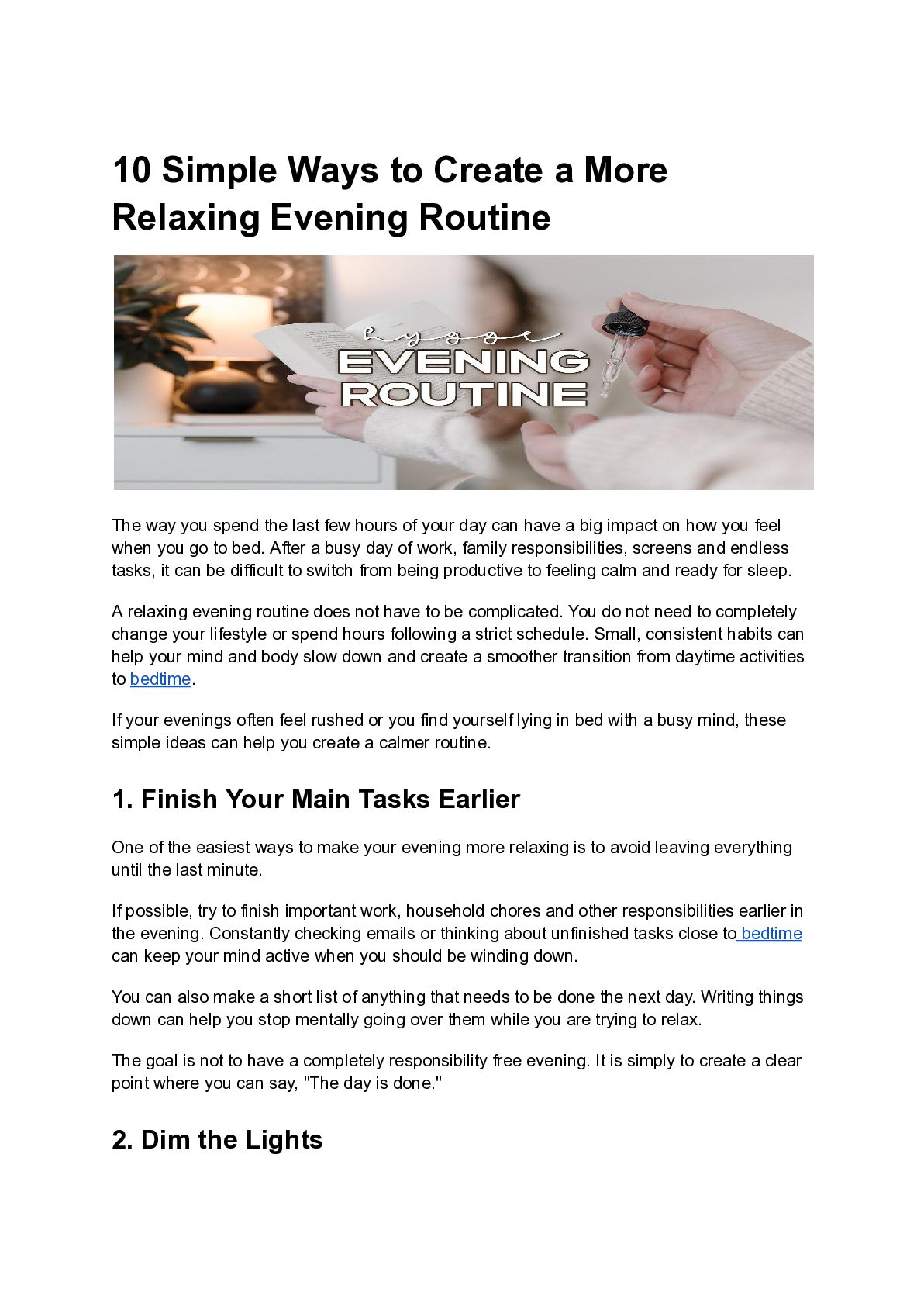
  1. 10 Simple Ways to Create a More Relaxing Evening Routine

    The way you spend the last few hours of your day can have a big impact on how you feel when you go to bed. After a busy day of work, family responsibilities, screens and endless tasks, it can be difficult to switch from being productive to feeling calm and ready for sleep. A relaxing evening routine does not have to be complicated. You do not need to completely change your lifestyle or spend hours following a strict schedule. Small, consistent habits can help your mind and body slow down and create a smoother transition from daytime activities to bedtime. If your evenings often feel rushed or you find yourself lying in bed with a busy mind, these simple ideas can help you create a calmer routine. 1. Finish Your Main Tasks Earlier One of the easiest ways to make your evening more relaxing is to avoid leaving everything until the last minute. If possible, try to finish important work, household chores and other responsibilities earlier in the evening. Constantly checking emails or thinking about unfinished tasks close to bedtime can keep your mind active when you should be winding down. You can also make a short list of anything that needs to be done the next day. Writing things down can help you stop mentally going over them while you are trying to relax. The goal is not to have a completely responsibility free evening. It is simply to create a clear point where you can say, "The day is done." 2. Dim the Lights
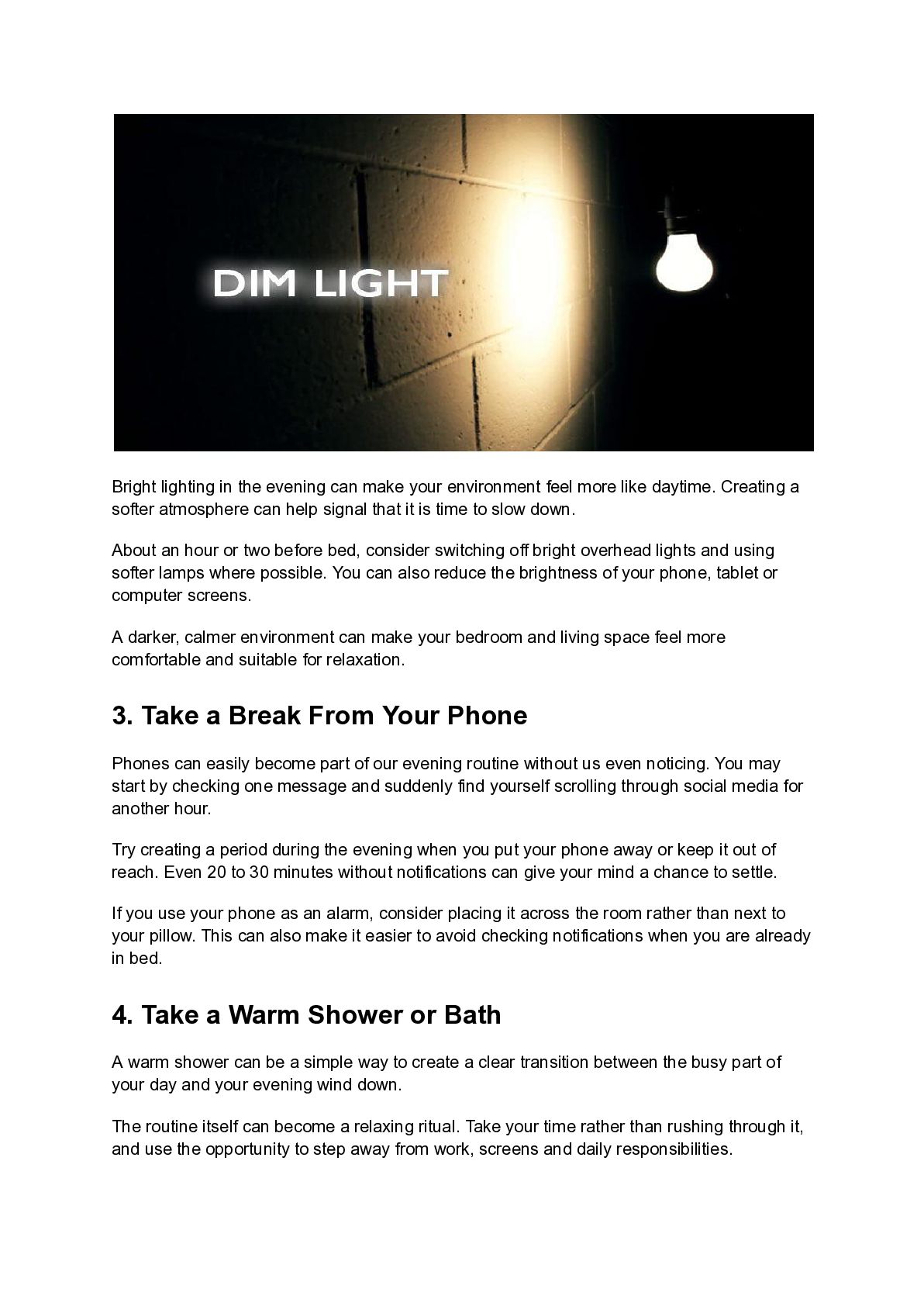
  2. Bright lighting in the evening can make your environment feel

    more like daytime. Creating a softer atmosphere can help signal that it is time to slow down. About an hour or two before bed, consider switching off bright overhead lights and using softer lamps where possible. You can also reduce the brightness of your phone, tablet or computer screens. A darker, calmer environment can make your bedroom and living space feel more comfortable and suitable for relaxation. 3. Take a Break From Your Phone Phones can easily become part of our evening routine without us even noticing. You may start by checking one message and suddenly find yourself scrolling through social media for another hour. Try creating a period during the evening when you put your phone away or keep it out of reach. Even 20 to 30 minutes without notifications can give your mind a chance to settle. If you use your phone as an alarm, consider placing it across the room rather than next to your pillow. This can also make it easier to avoid checking notifications when you are already in bed. 4. Take a Warm Shower or Bath A warm shower can be a simple way to create a clear transition between the busy part of your day and your evening wind down. The routine itself can become a relaxing ritual. Take your time rather than rushing through it, and use the opportunity to step away from work, screens and daily responsibilities.
  3. For some people, a warm bath can be particularly calming.

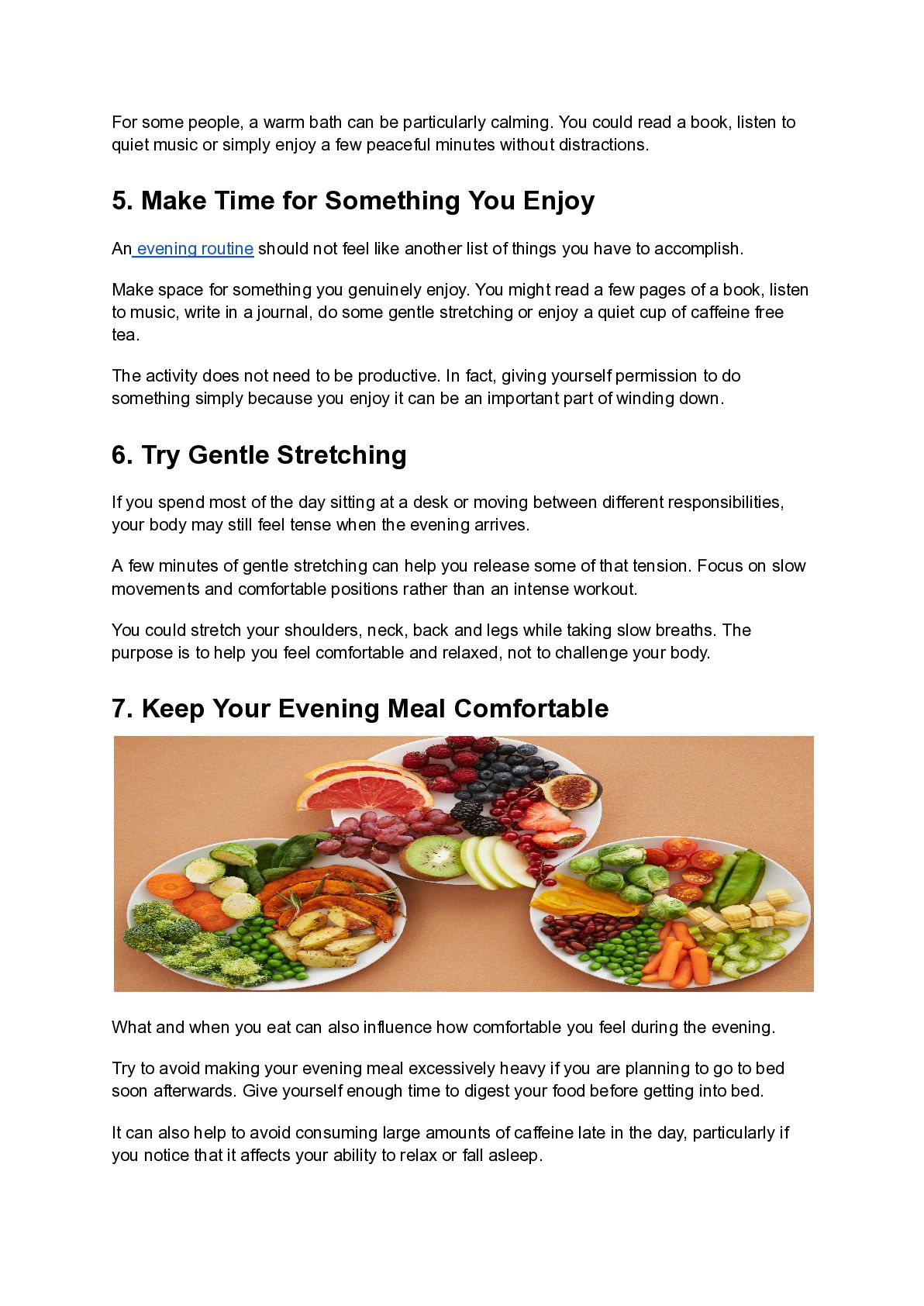
    You could read a book, listen to quiet music or simply enjoy a few peaceful minutes without distractions. 5. Make Time for Something You Enjoy An evening routine should not feel like another list of things you have to accomplish. Make space for something you genuinely enjoy. You might read a few pages of a book, listen to music, write in a journal, do some gentle stretching or enjoy a quiet cup of caffeine free tea. The activity does not need to be productive. In fact, giving yourself permission to do something simply because you enjoy it can be an important part of winding down. 6. Try Gentle Stretching If you spend most of the day sitting at a desk or moving between different responsibilities, your body may still feel tense when the evening arrives. A few minutes of gentle stretching can help you release some of that tension. Focus on slow movements and comfortable positions rather than an intense workout. You could stretch your shoulders, neck, back and legs while taking slow breaths. The purpose is to help you feel comfortable and relaxed, not to challenge your body. 7. Keep Your Evening Meal Comfortable What and when you eat can also influence how comfortable you feel during the evening. Try to avoid making your evening meal excessively heavy if you are planning to go to bed soon afterwards. Give yourself enough time to digest your food before getting into bed. It can also help to avoid consuming large amounts of caffeine late in the day, particularly if you notice that it affects your ability to relax or fall asleep.
  4. Instead of focusing on strict food rules, pay attention to

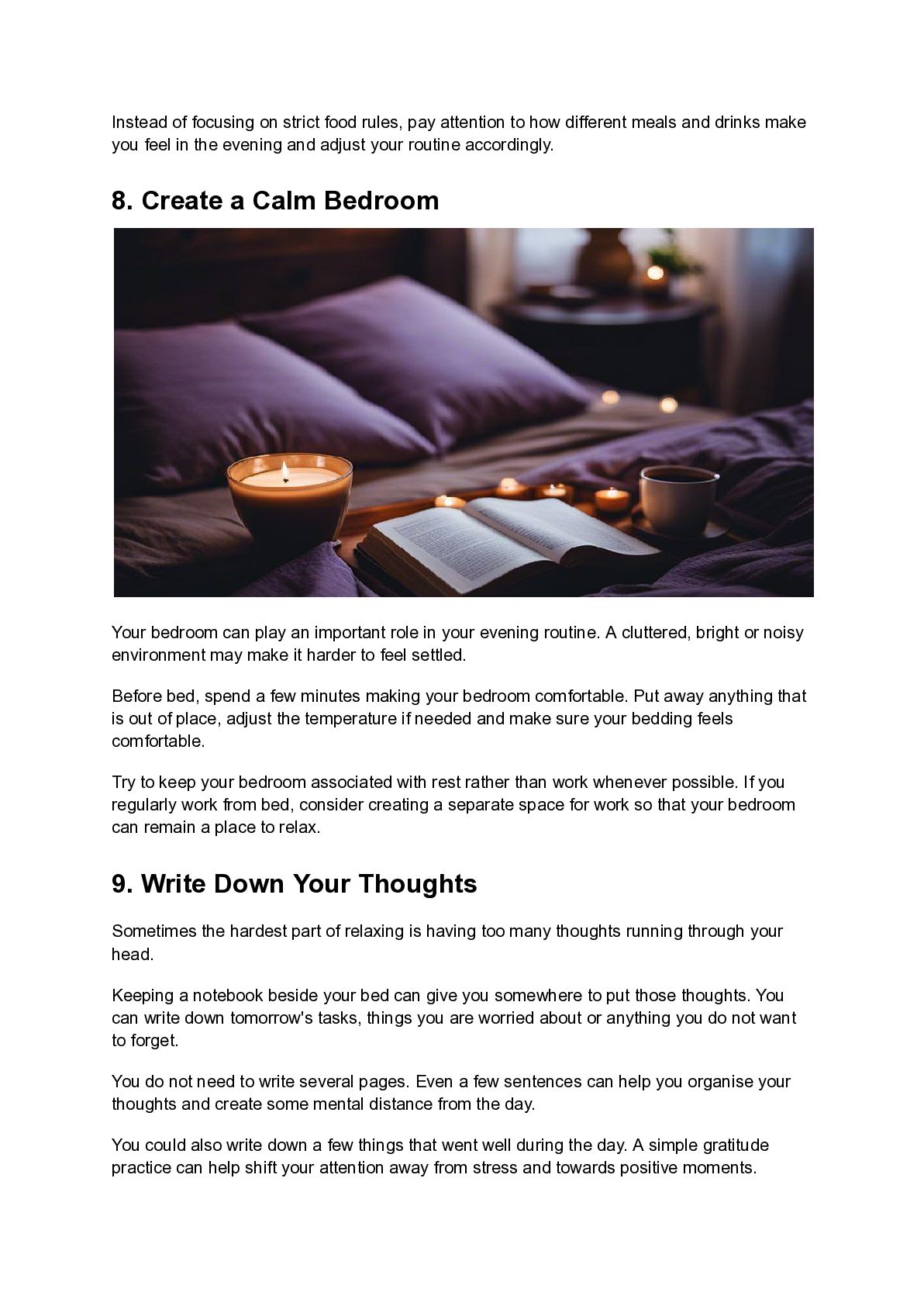
    how different meals and drinks make you feel in the evening and adjust your routine accordingly. 8. Create a Calm Bedroom Your bedroom can play an important role in your evening routine. A cluttered, bright or noisy environment may make it harder to feel settled. Before bed, spend a few minutes making your bedroom comfortable. Put away anything that is out of place, adjust the temperature if needed and make sure your bedding feels comfortable. Try to keep your bedroom associated with rest rather than work whenever possible. If you regularly work from bed, consider creating a separate space for work so that your bedroom can remain a place to relax. 9. Write Down Your Thoughts Sometimes the hardest part of relaxing is having too many thoughts running through your head. Keeping a notebook beside your bed can give you somewhere to put those thoughts. You can write down tomorrow's tasks, things you are worried about or anything you do not want to forget. You do not need to write several pages. Even a few sentences can help you organise your thoughts and create some mental distance from the day. You could also write down a few things that went well during the day. A simple gratitude practice can help shift your attention away from stress and towards positive moments.
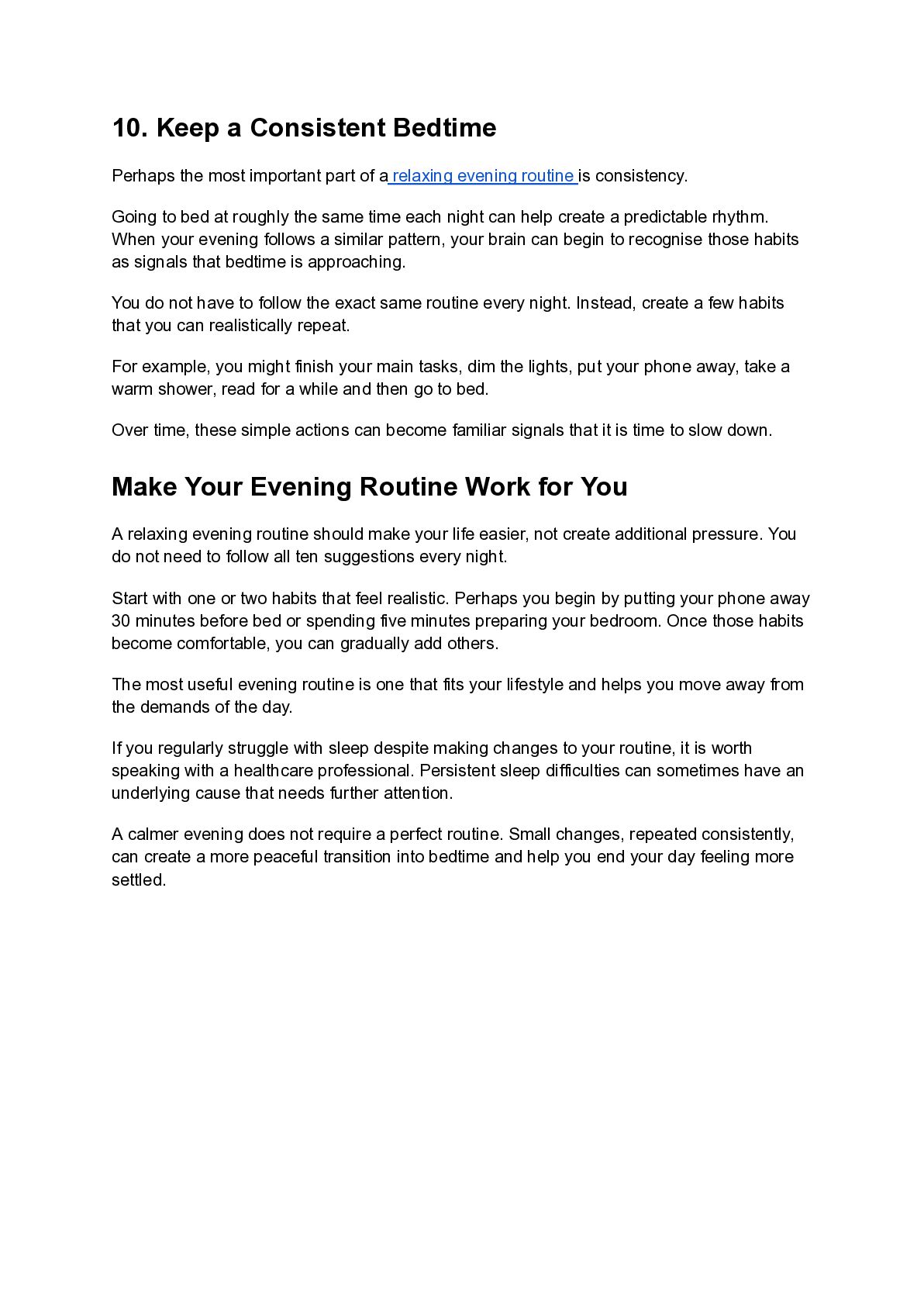
  5. 10. Keep a Consistent Bedtime Perhaps the most important part

    of a relaxing evening routine is consistency. Going to bed at roughly the same time each night can help create a predictable rhythm. When your evening follows a similar pattern, your brain can begin to recognise those habits as signals that bedtime is approaching. You do not have to follow the exact same routine every night. Instead, create a few habits that you can realistically repeat. For example, you might finish your main tasks, dim the lights, put your phone away, take a warm shower, read for a while and then go to bed. Over time, these simple actions can become familiar signals that it is time to slow down. Make Your Evening Routine Work for You A relaxing evening routine should make your life easier, not create additional pressure. You do not need to follow all ten suggestions every night. Start with one or two habits that feel realistic. Perhaps you begin by putting your phone away 30 minutes before bed or spending five minutes preparing your bedroom. Once those habits become comfortable, you can gradually add others. The most useful evening routine is one that fits your lifestyle and helps you move away from the demands of the day. If you regularly struggle with sleep despite making changes to your routine, it is worth speaking with a healthcare professional. Persistent sleep difficulties can sometimes have an underlying cause that needs further attention. A calmer evening does not require a perfect routine. Small changes, repeated consistently, can create a more peaceful transition into bedtime and help you end your day feeling more settled.