Upgrade to Pro — share decks privately, control downloads, hide ads and more …

Biotin Rich Foods & Best Dietary Sources of Vit...

Avatar for Yumi nutrition Yumi nutrition
October 07, 2026
1

Biotin Rich Foods & Best Dietary Sources of Vitamin B7

Discover the best natural dietary sources of Biotin (Vitamin B7) for healthy hair, strong nails, and vibrant skin. Learn how essential vitamins and daily nutritional supplements support hair growth, metabolism, and overall energy. For high-quality, easy-to-take daily vitamin gummies and hair care supplements in the UK, visit [https://yuminutrition.com/](https://yuminutrition.com/)

Avatar for Yumi nutrition

Yumi nutrition

October 07, 2026

Transcript

  1. Biotin Rich Foods - Best Dietary Sources of Vitamin B7

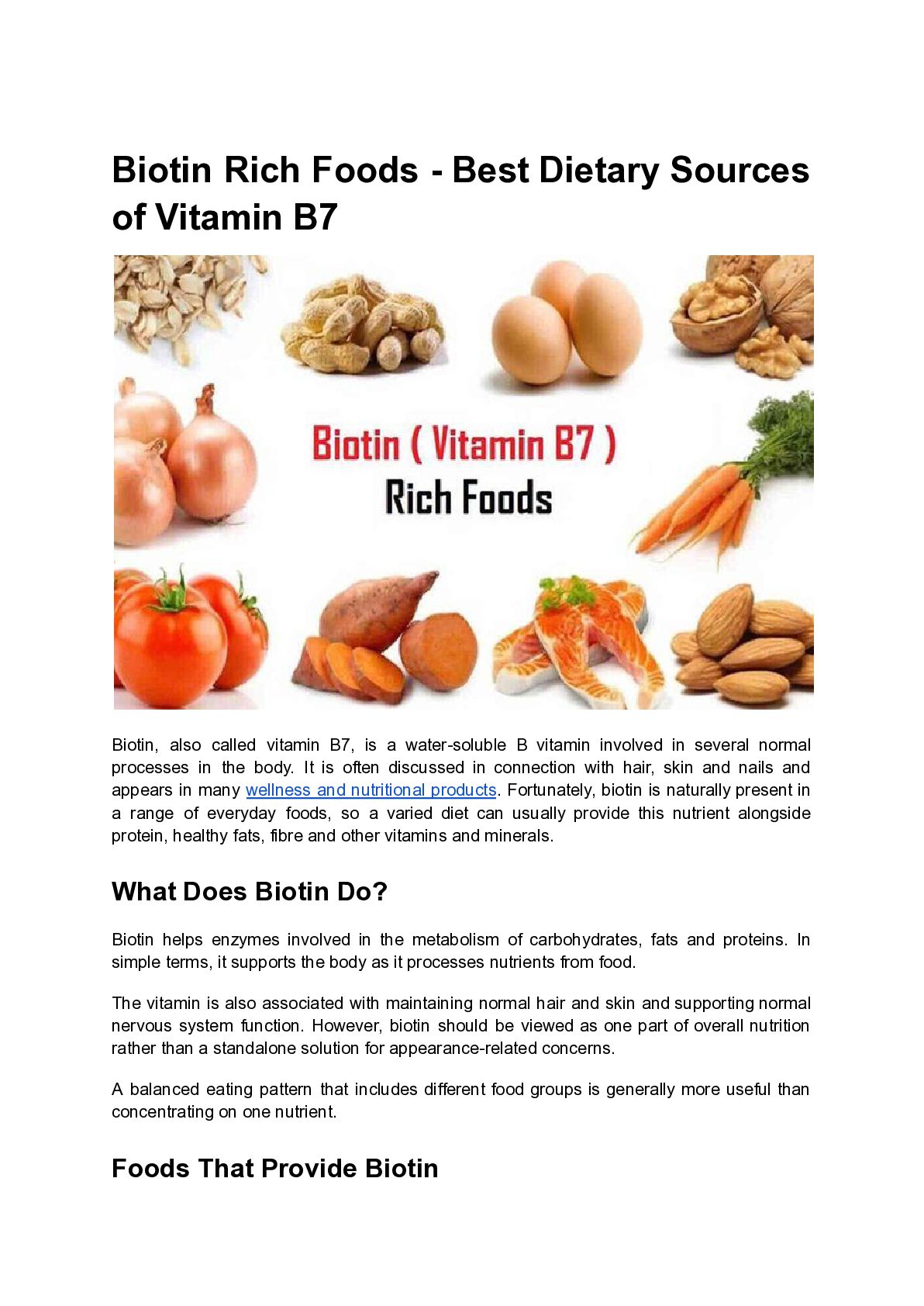
    Biotin, also called vitamin B7, is a water-soluble B vitamin involved in several normal processes in the body. It is often discussed in connection with hair, skin and nails and appears in many wellness and nutritional products. Fortunately, biotin is naturally present in a range of everyday foods, so a varied diet can usually provide this nutrient alongside protein, healthy fats, fibre and other vitamins and minerals. What Does Biotin Do? Biotin helps enzymes involved in the metabolism of carbohydrates, fats and proteins. In simple terms, it supports the body as it processes nutrients from food. The vitamin is also associated with maintaining normal hair and skin and supporting normal nervous system function. However, biotin should be viewed as one part of overall nutrition rather than a standalone solution for appearance-related concerns. A balanced eating pattern that includes different food groups is generally more useful than concentrating on one nutrient. Foods That Provide Biotin
  2. 1. Eggs Eggs are a convenient source of biotin, particularly

    because the yolk contains the vitamin. They also provide protein and several other nutrients. Boiled, scrambled or poached eggs can easily be included in breakfast or other meals. There is one important consideration: raw egg whites contain avidin, a protein that can interfere with biotin absorption when consumed in large amounts. Cooking the egg reduces this effect, making cooked eggs a practical choice. 2. Nuts and Seeds Nuts and seeds can contribute biotin while also providing protein, fibre, healthy fats and minerals. Almonds, peanuts, walnuts and sunflower seeds can be eaten on their own or added to porridge, yoghurt, salads and other meals. A small serving can add both texture and nutritional variety. 3. Salmon
  3. Salmon provides biotin as well as high-quality protein and omega-3

    fatty acids. Including oily fish in a varied diet can therefore provide several nutritional benefits at the same time. You can serve salmon with vegetables, whole grains or potatoes for a balanced meal. 4. Sweet Potatoes Sweet potatoes provide biotin along with carbohydrates, fibre and other micronutrients. They can be roasted, baked, mashed or added to soups and curries. Their versatility makes them an easy way to include more nutrient-rich plant foods in regular meals. 5. Legumes Beans, soybeans and peanuts are examples of plant foods that can contribute to biotin intake. They are also valuable sources of plant protein and dietary fibre. Legumes can be added to soups, salads, stews, grain bowls and other meals, making them particularly useful for people who eat a largely plant-based diet. 6. Avocado Avocado can contribute to your overall biotin intake while supplying fibre and predominantly monounsaturated fats. It works well in salads, wraps, grain bowls and on wholegrain toast. Pairing avocado with eggs, seeds or vegetables can create a meal containing a range of complementary nutrients. 7. Liver Liver and other organ meats can contain biotin and are also concentrated sources of several vitamins and minerals. However, eating liver is not necessary simply to obtain biotin. Many other foods can contribute to your intake, so liver is best considered an optional part of a varied diet. 8. Mushrooms Mushrooms can add biotin to the diet while contributing other nutrients. They are easy to use in omelettes, stir-fries, pasta dishes, soups and vegetable-based meals. Using different vegetables throughout the week can help broaden the nutritional variety of your diet. 9. Cauliflower Cauliflower is another vegetable that provides biotin. It can be steamed, roasted, mashed or incorporated into soups and curries.
  4. Rather than relying on one particular vegetable, combining cauliflower with

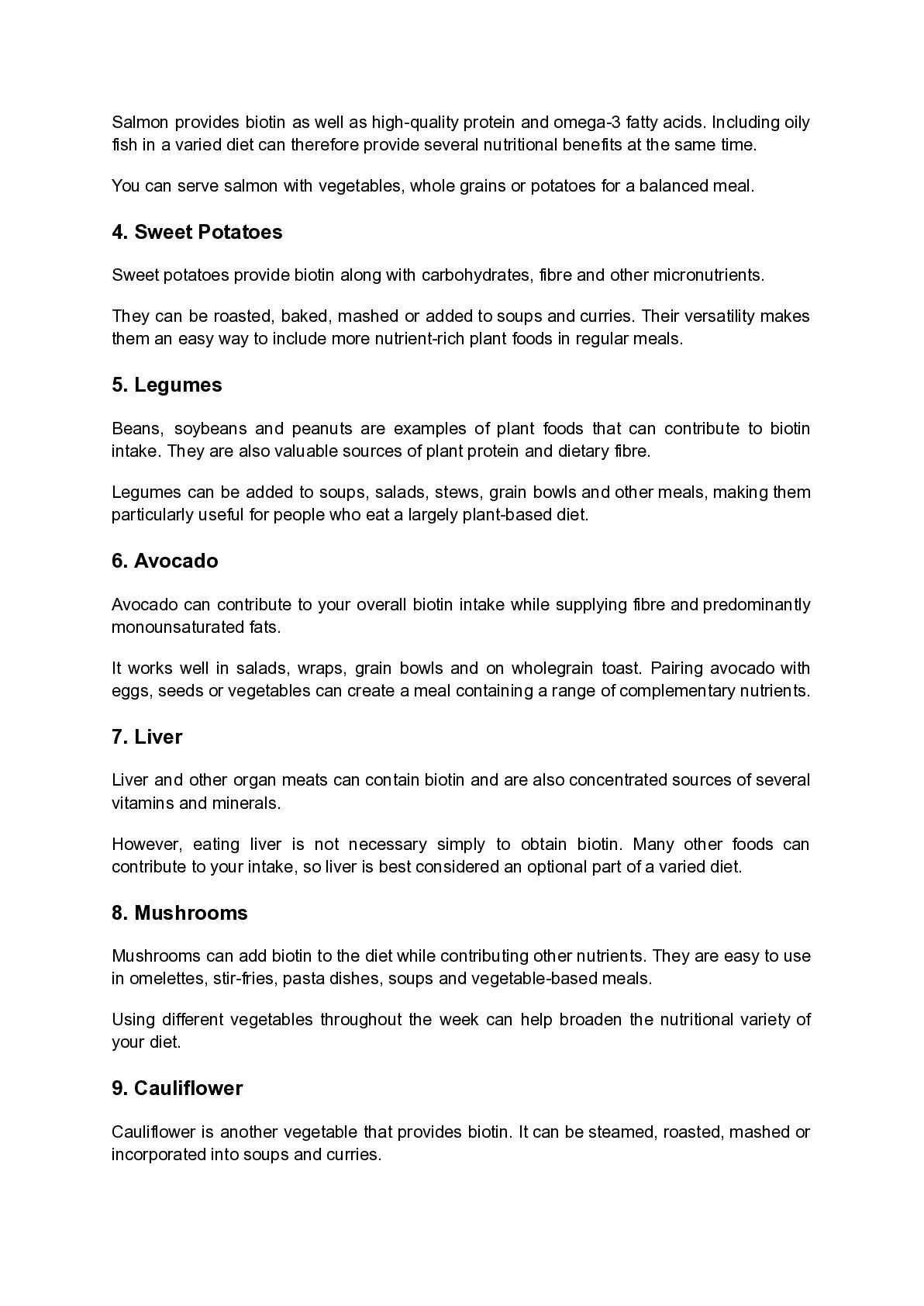
    other colourful vegetables creates a more varied source of nutrients. Does Biotin Support Hair, Skin and Nails? Biotin has a recognised role in maintaining normal hair and skin, which is one reason it is frequently included in beauty supplements. However, having more biotin does not necessarily mean having faster hair growth or stronger nails. Biotin deficiency is uncommon, and supplements are unlikely to provide dramatic results when someone already receives enough from their diet. Hair, skin and nail changes can have many different causes, including deficiencies involving other nutrients. Persistent or unexplained changes should therefore be discussed with a qualified healthcare professional. For people who want a convenient way to complement their dietary intake, biotin gummies for hair, skin and nails are another option. Yumi Nutrition's Hair, Skin and Nails Biotin Gummies are formulated for this particular wellness category. Easy Ways to Include More Biotin You do not need to redesign your entire diet to eat more biotin-rich foods. A simple breakfast could include eggs with avocado and wholegrain toast. Nuts or seeds can work as a snack, while salmon, beans or mushrooms can be included in lunch or dinner. The goal is variety rather than finding one “superfood”. Combining different nutrient-rich foods throughout the week helps provide a broader range of vitamins, minerals, protein and other important nutrients. Do You Need a Biotin Supplement?
  5. Many people can obtain biotin through a varied diet. A

    supplement may be considered when dietary intake is inadequate or when a healthcare professional recommends one for a specific reason. If you decide to use a supplement, follow its recommended serving and consider your total intake from other supplements and foods. Taking larger amounts simply because biotin is associated with hair and beauty does not guarantee additional benefits. Final Thoughts Biotin is an important B vitamin that supports normal metabolism and contributes to the maintenance of normal hair and skin. It can be found naturally in foods including eggs, nuts, seeds, salmon, sweet potatoes, legumes, avocado, liver, mushrooms and cauliflower. Instead of focusing exclusively on biotin, aim for a varied diet containing different fruits, vegetables, whole grains, protein sources and healthy fats. A balanced approach provides a wider range of nutrients and supports overall wellbeing. When additional nutritional support is appropriate, a biotin supplement can be considered alongside—not instead of—a nutritious everyday diet.