Share
Embed
The Ultimate Guide to Biotin-Rich Foods for Radiant Skin and Strong Hair
Discover the best natural sources of biotin and essential foods to support healthy hair, skin, and nails. Learn how simple dietary choices and daily wellness habits can enhance your natural beauty and everyday nutrition.

Yumi nutrition
October 28, 2026
Transcript
8 slides
-
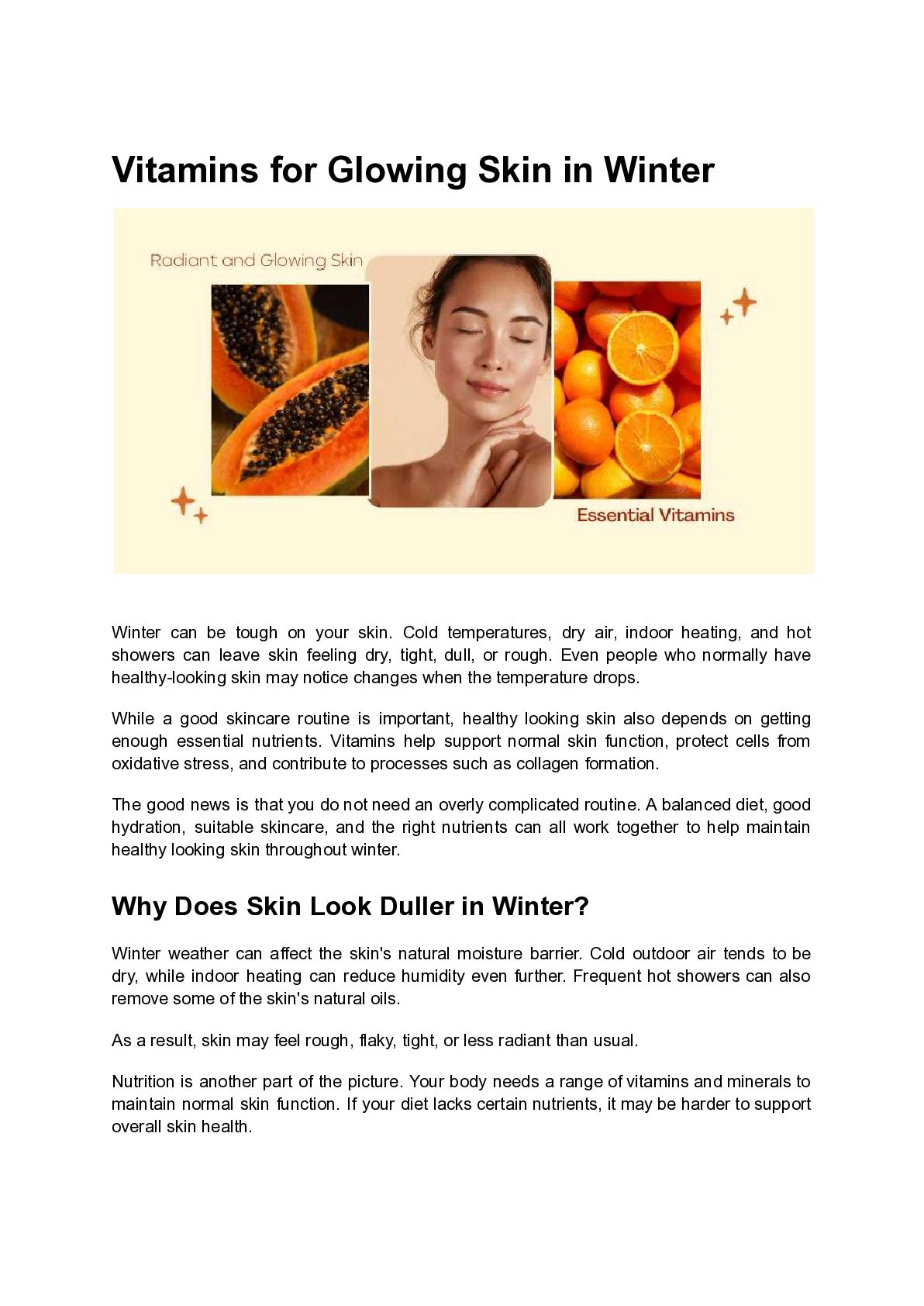
Vitamins for Glowing Skin in Winter Winter can be tough
on your skin. Cold temperatures, dry air, indoor heating, and hot showers can leave skin feeling dry, tight, dull, or rough. Even people who normally have healthy-looking skin may notice changes when the temperature drops. While a good skincare routine is important, healthy looking skin also depends on getting enough essential nutrients. Vitamins help support normal skin function, protect cells from oxidative stress, and contribute to processes such as collagen formation. The good news is that you do not need an overly complicated routine. A balanced diet, good hydration, suitable skincare, and the right nutrients can all work together to help maintain healthy looking skin throughout winter. Why Does Skin Look Duller in Winter? Winter weather can affect the skin's natural moisture barrier. Cold outdoor air tends to be dry, while indoor heating can reduce humidity even further. Frequent hot showers can also remove some of the skin's natural oils. As a result, skin may feel rough, flaky, tight, or less radiant than usual. Nutrition is another part of the picture. Your body needs a range of vitamins and minerals to maintain normal skin function. If your diet lacks certain nutrients, it may be harder to support overall skin health. -
This is why focusing on nutrition alongside topical skincare can
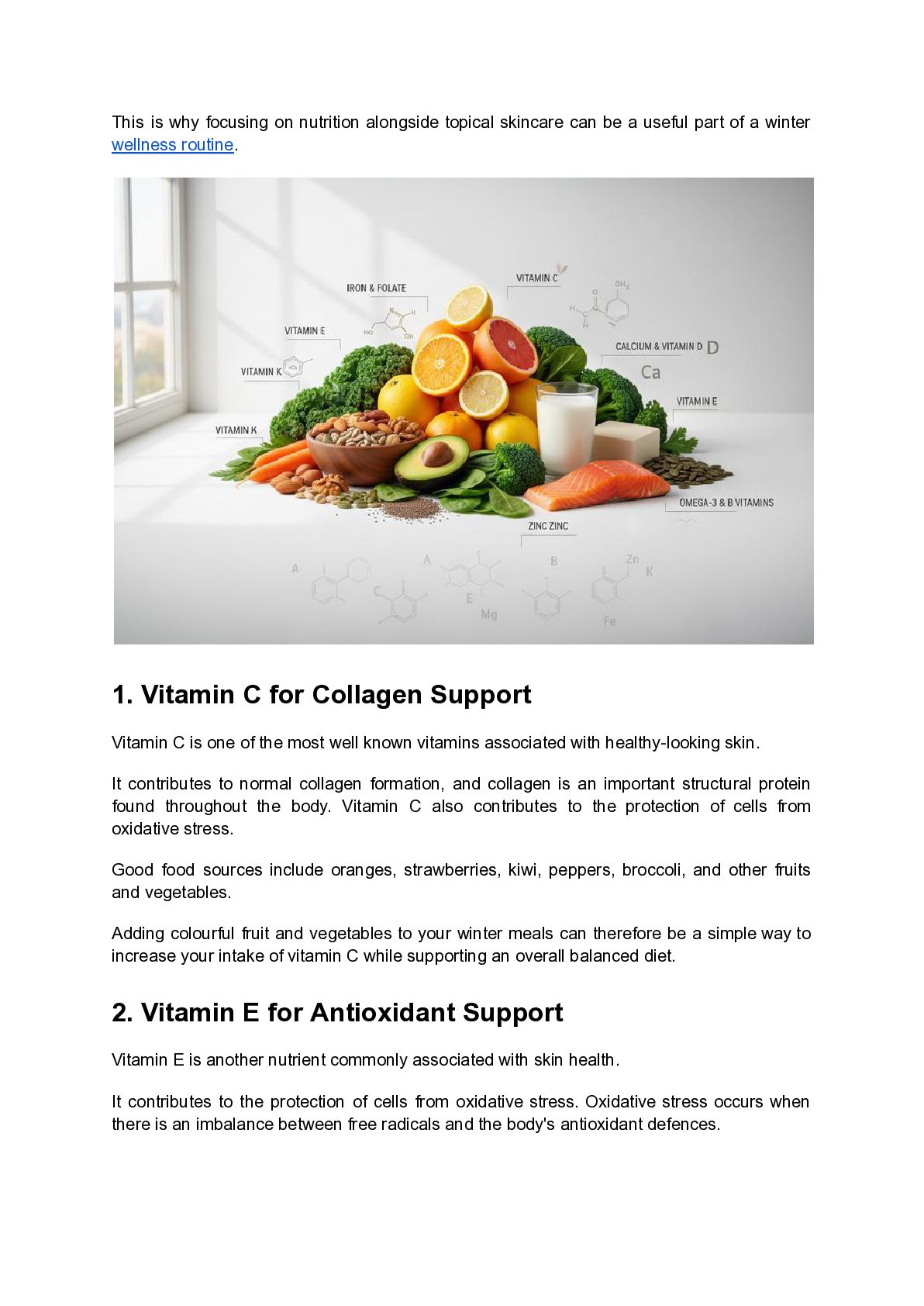
be a useful part of a winter wellness routine. 1. Vitamin C for Collagen Support Vitamin C is one of the most well known vitamins associated with healthy-looking skin. It contributes to normal collagen formation, and collagen is an important structural protein found throughout the body. Vitamin C also contributes to the protection of cells from oxidative stress. Good food sources include oranges, strawberries, kiwi, peppers, broccoli, and other fruits and vegetables. Adding colourful fruit and vegetables to your winter meals can therefore be a simple way to increase your intake of vitamin C while supporting an overall balanced diet. 2. Vitamin E for Antioxidant Support Vitamin E is another nutrient commonly associated with skin health. It contributes to the protection of cells from oxidative stress. Oxidative stress occurs when there is an imbalance between free radicals and the body's antioxidant defences. -
Foods containing vitamin E include almonds, sunflower seeds, peanuts, vegetable
oils, avocado, and some green vegetables. Rather than focusing on a single food, aim for variety. Including different sources of healthy fats, fruits, vegetables, nuts, and seeds can help provide a broader range of nutrients. 3. Vitamin A and Normal Skin Function Vitamin A plays an important role in normal skin function and is an essential nutrient. You can find vitamin A in foods such as eggs, dairy products, and oily fish. Your body can also produce vitamin A from carotenoids found in foods such as carrots, sweet potatoes, spinach, and other colourful vegetables. A balanced diet can usually provide the nutrients your body needs. Supplements should not be used as a replacement for a varied diet unless there is a specific reason to take them. 4. Vitamin D During the Winter Months Vitamin D is often discussed during winter because sunlight exposure can be lower, particularly for people who spend most of their time indoors. Vitamin D contributes to normal immune function and the maintenance of normal bones and muscles. It is also included in many daily vitamin formulations. Food sources include oily fish, egg yolks, and fortified foods. Depending on where you live, your lifestyle, and your individual circumstances, a healthcare professional may recommend a vitamin D supplement. It is important not to assume that taking more vitamin D will automatically improve your skin. The goal is to maintain adequate nutrition rather than take excessive amounts. 5. Biotin for Hair, Skin and Nails Biotin, also known as vitamin B7, is another nutrient frequently included in beauty-focused supplements. Biotin contributes to the maintenance of normal skin and normal hair. It is naturally present in foods such as eggs, nuts, seeds, fish, meat, and some vegetables. For people who want a convenient way to include biotin and other beauty related nutrients in their daily routine, gummies can be an alternative to traditional tablets. All Hair, Skin & Nails Gummies contain biotin alongside vitamins A, C, D, E, B6, B9, B12 and B5, as well as zinc, iodine, choline, and inositol. The product is designed as a daily beauty supplement, with a suggested serving of two gummies per day. -
This type of supplement can be especially convenient for people
who find tablets difficult to swallow or simply prefer chewable vitamins. 6. Zinc for Healthy Skin Zinc is an essential mineral involved in many processes throughout the body. It also contributes to the maintenance of normal skin. Food sources include meat, seafood, dairy products, beans, nuts, and seeds. If your diet already provides enough zinc, taking additional amounts is not necessarily better. Supplements should always be used according to their recommended serving, because excessive intake of certain nutrients can cause problems. A balanced diet remains the best starting point for meeting nutritional needs. 7. Don't Forget Healthy Fats Although vitamins often get most of the attention, healthy fats also have a place in a winter-friendly diet. Nuts, seeds, avocado, olive oil, and oily fish can provide different types of healthy fats and other valuable nutrients. Adding these foods to meals can make your diet more varied while helping you maintain overall nutritional balance. For example, you could add seeds to porridge, nuts to yoghurt, avocado to wholegrain toast, or oily fish to a balanced evening meal. 8. Stay Hydrated Throughout Winter -
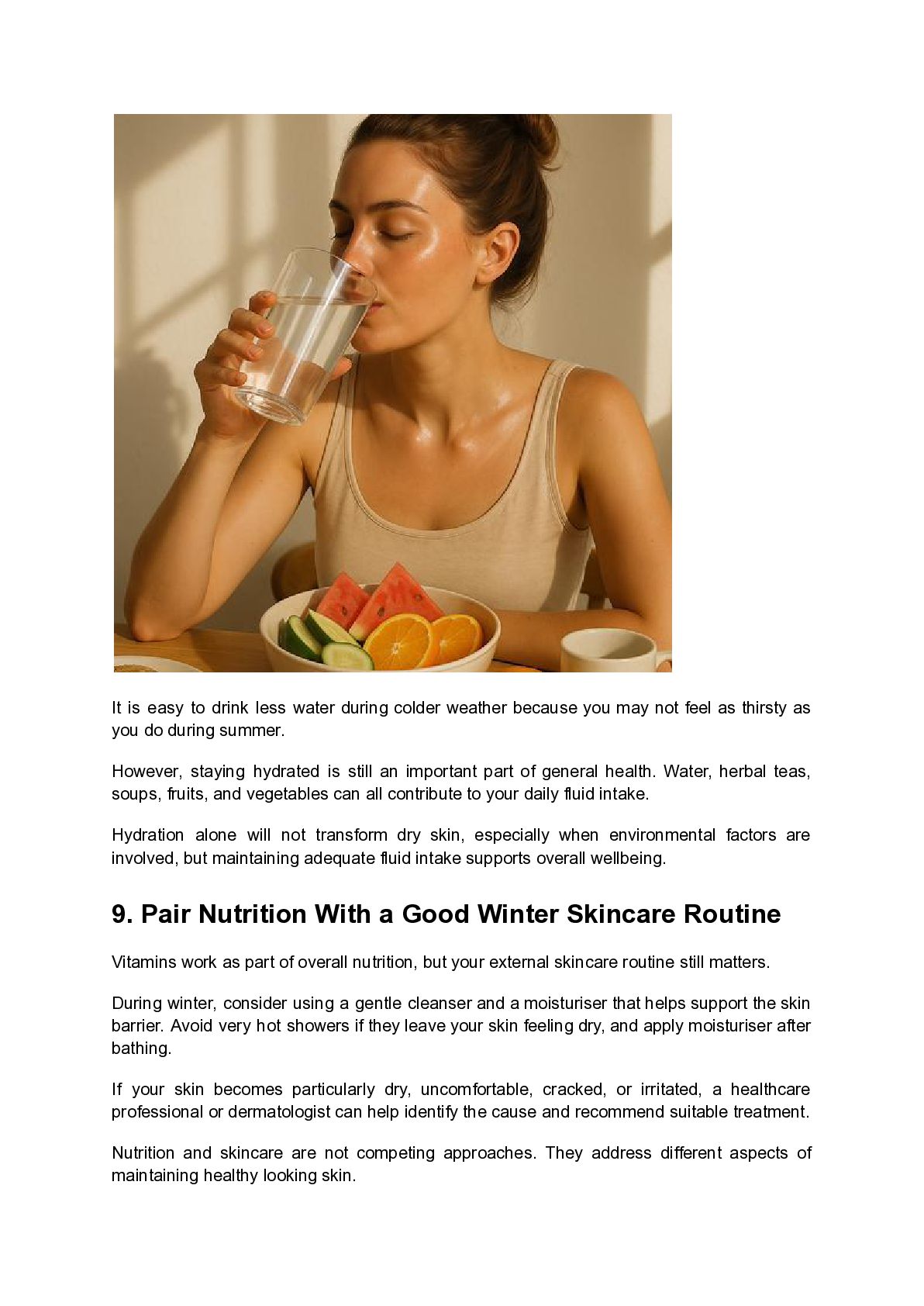
It is easy to drink less water during colder weather
because you may not feel as thirsty as you do during summer. However, staying hydrated is still an important part of general health. Water, herbal teas, soups, fruits, and vegetables can all contribute to your daily fluid intake. Hydration alone will not transform dry skin, especially when environmental factors are involved, but maintaining adequate fluid intake supports overall wellbeing. 9. Pair Nutrition With a Good Winter Skincare Routine Vitamins work as part of overall nutrition, but your external skincare routine still matters. During winter, consider using a gentle cleanser and a moisturiser that helps support the skin barrier. Avoid very hot showers if they leave your skin feeling dry, and apply moisturiser after bathing. If your skin becomes particularly dry, uncomfortable, cracked, or irritated, a healthcare professional or dermatologist can help identify the cause and recommend suitable treatment. Nutrition and skincare are not competing approaches. They address different aspects of maintaining healthy looking skin. -
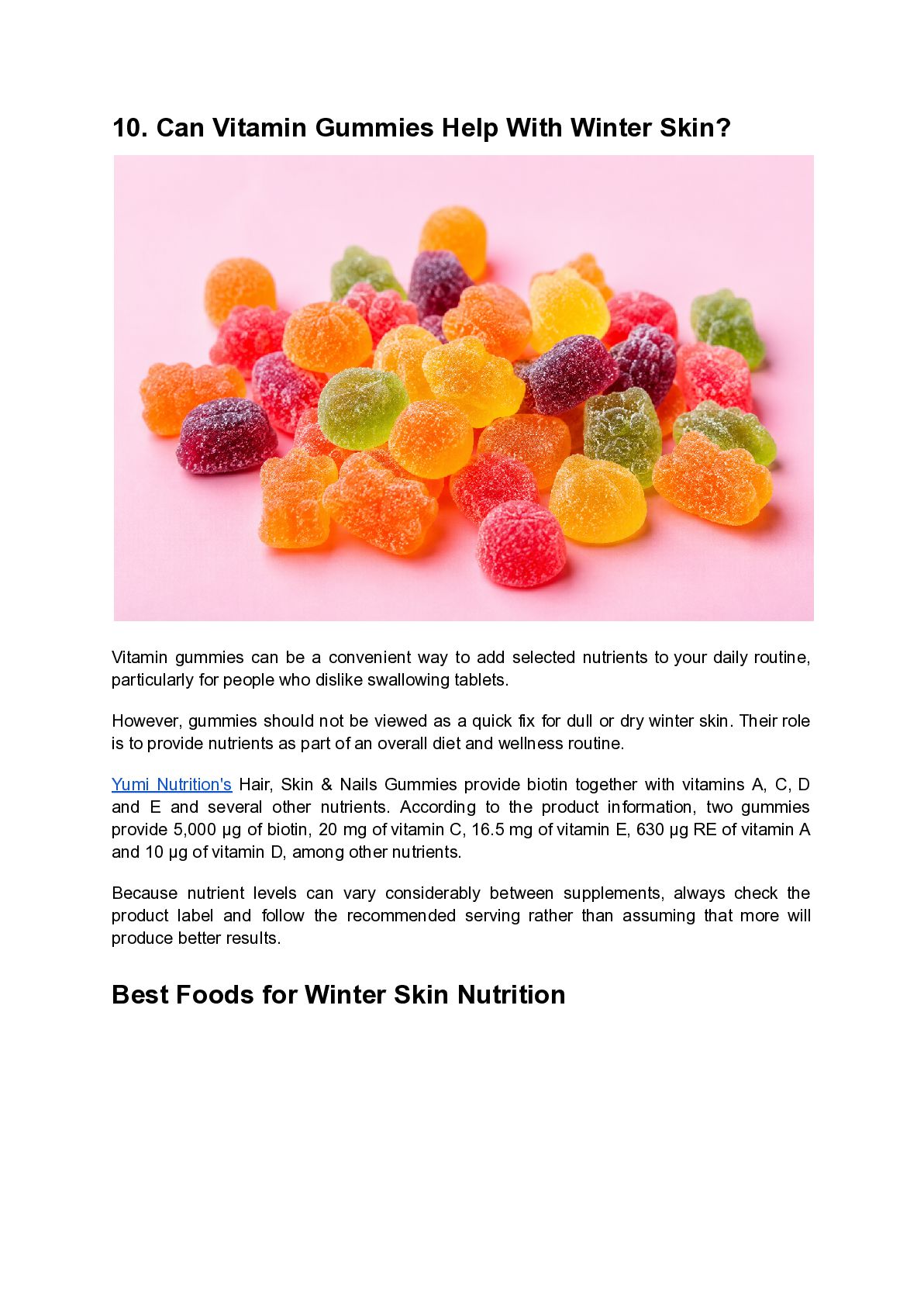
10. Can Vitamin Gummies Help With Winter Skin? Vitamin gummies
can be a convenient way to add selected nutrients to your daily routine, particularly for people who dislike swallowing tablets. However, gummies should not be viewed as a quick fix for dull or dry winter skin. Their role is to provide nutrients as part of an overall diet and wellness routine. Yumi Nutrition's Hair, Skin & Nails Gummies provide biotin together with vitamins A, C, D and E and several other nutrients. According to the product information, two gummies provide 5,000 µg of biotin, 20 mg of vitamin C, 16.5 mg of vitamin E, 630 µg RE of vitamin A and 10 µg of vitamin D, among other nutrients. Because nutrient levels can vary considerably between supplements, always check the product label and follow the recommended serving rather than assuming that more will produce better results. Best Foods for Winter Skin Nutrition -
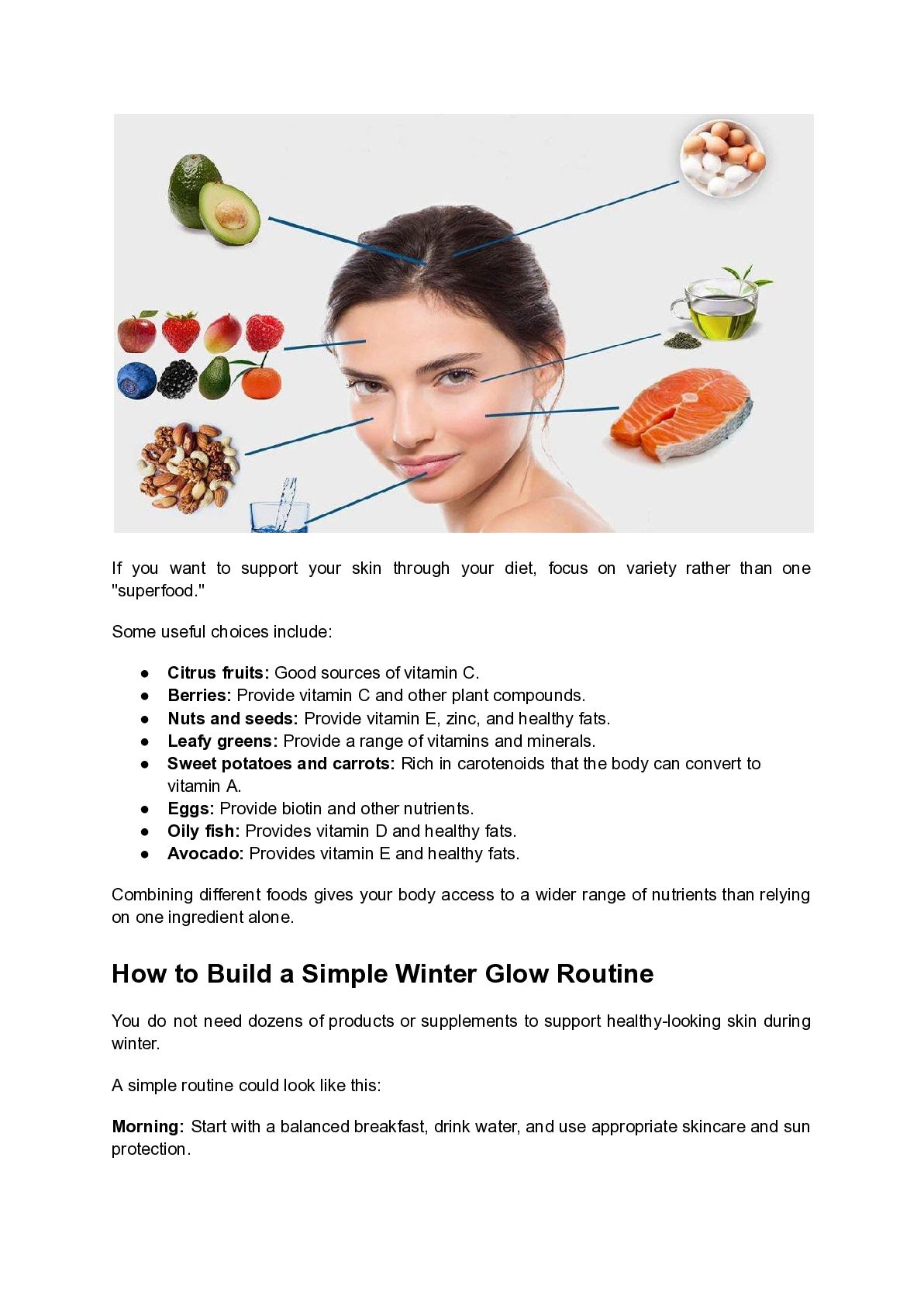
If you want to support your skin through your diet,
focus on variety rather than one "superfood." Some useful choices include: • • • • • Citrus fruits: Good sources of vitamin C. Berries: Provide vitamin C and other plant compounds. Nuts and seeds: Provide vitamin E, zinc, and healthy fats. Leafy greens: Provide a range of vitamins and minerals. Sweet potatoes and carrots: Rich in carotenoids that the body can convert to vitamin A. • Eggs: Provide biotin and other nutrients. • Oily fish: Provides vitamin D and healthy fats. • Avocado: Provides vitamin E and healthy fats. Combining different foods gives your body access to a wider range of nutrients than relying on one ingredient alone. How to Build a Simple Winter Glow Routine You do not need dozens of products or supplements to support healthy-looking skin during winter. A simple routine could look like this: Morning: Start with a balanced breakfast, drink water, and use appropriate skincare and sun protection. -
During the day: Eat a varied diet containing fruit, vegetables,
protein, whole grains, nuts, and healthy fats. Evening: Cleanse gently, moisturise, and avoid excessively hot showers if they dry your skin. Daily: If you choose a beauty supplement, take it according to the product's recommended serving and make it part of a consistent routine. Consistency is generally more useful than constantly changing products or adding multiple supplements at once. When Should You Consider a Supplement? Most people should aim to get their nutrients primarily through a varied and balanced diet. However, supplements can be useful when dietary intake is insufficient or when there is a specific nutritional need. Before starting a supplement, check the ingredients and serving size carefully. If you are pregnant, taking medication, have an underlying health condition, or are unsure whether a supplement is appropriate for you, speak with a healthcare professional. It is also worth remembering that nutritional supplements are not designed to replace meals or skincare. Final Thoughts Winter can make healthy-looking skin more difficult to maintain, but supporting your skin does not have to be complicated. Vitamin C, vitamin E, vitamin A, vitamin D, biotin, and zinc all play different roles in maintaining normal health and skin function. Getting these nutrients through a varied diet is a good starting point, while a suitable supplement may provide additional convenience when it fits your individual needs. For adults looking for a simple beauty-focused supplement, Hair, Skin & Nails Gummies can provide biotin alongside vitamins A, C, D and E and other selected nutrients in an easy-to-take gummy format. Combine good nutrition with hydration, gentle winter skincare, adequate sleep, and consistent daily habits, and you can give your skin the nutritional support it needs throughout the colder months.
 ynutrition
 chriscoyier
 tammyeverts
 tammielis
 letsgokoyo
 lfama
 jonyablonski
 swwweet
 inesmontani
 greggifford
 scottboms
 kastner