AI in Healthcare Overview: Innovation, Impact & Research Submission Tips
Comprehensive guide on AI in healthcare with use cases, benefits, and research insights. Includes tips for students on writing and publishing research papers.
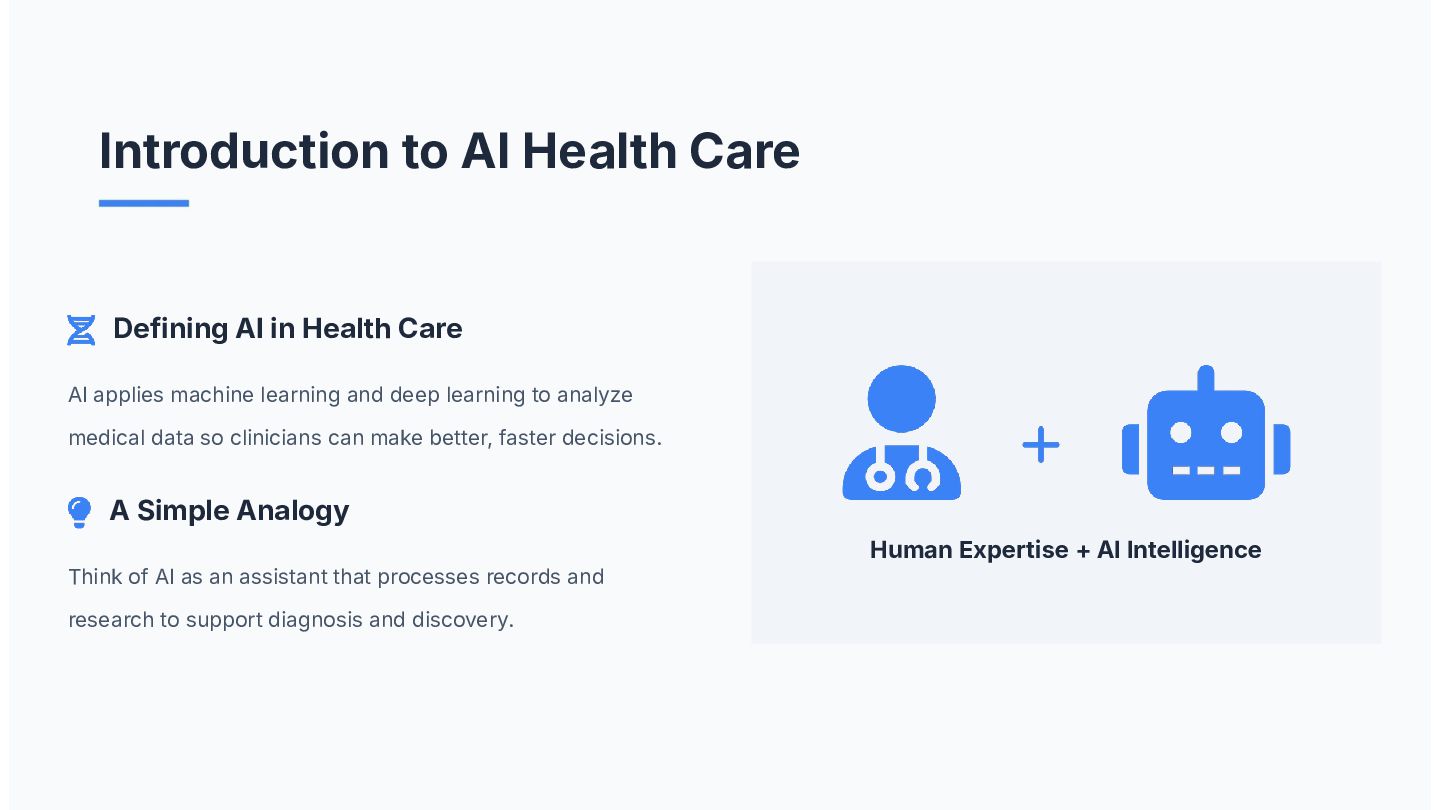
AI applies machine learning and deep learning to analyze medical data so clinicians can make better, faster decisions. A Simple Analogy Think of AI as an assistant that processes records and research to support diagnosis and discovery. Human Expertise + AI Intelligence
like data entry and image analysis allows healthcare professionals to focus more on direct patient care. Improved Accuracy AI algorithms detect subtle patterns in medical data, leading to more precise diagnoses and fewer human errors in treatment planning. Personalized Medicine Tailoring medical interventions to individual genetic makeup, lifestyle, and environment for more effective outcomes. Increased Accessibility Bringing advanced diagnostic tools to remote or underserved populations, bridging the gap in global healthcare access.
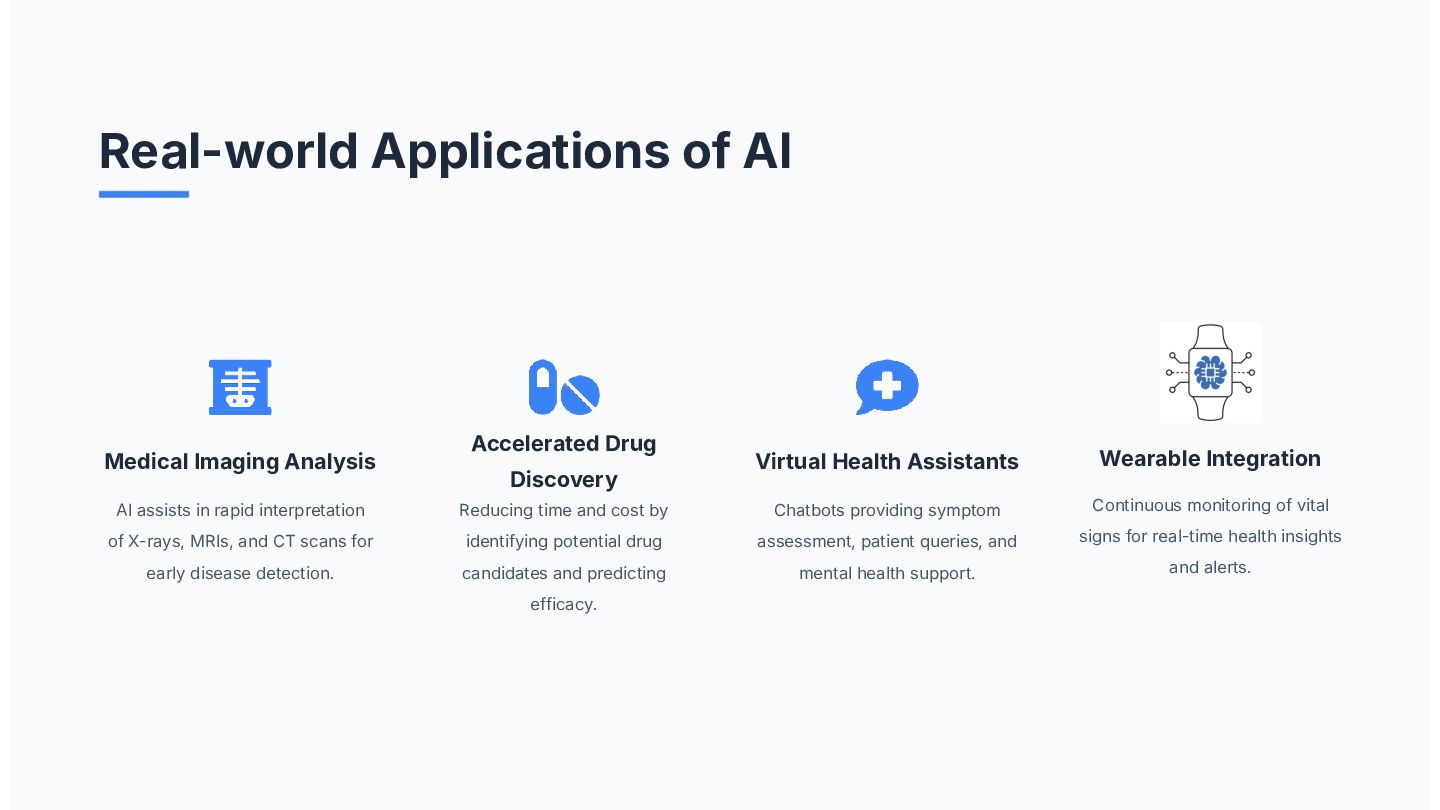
rapid interpretation of X-rays, MRIs, and CT scans for early disease detection. Accelerated Drug Discovery Reducing time and cost by identifying potential drug candidates and predicting efficacy. Virtual Health Assistants Chatbots providing symptom assessment, patient queries, and mental health support. Wearable Integration Continuous monitoring of vital signs for real-time health insights and alerts.
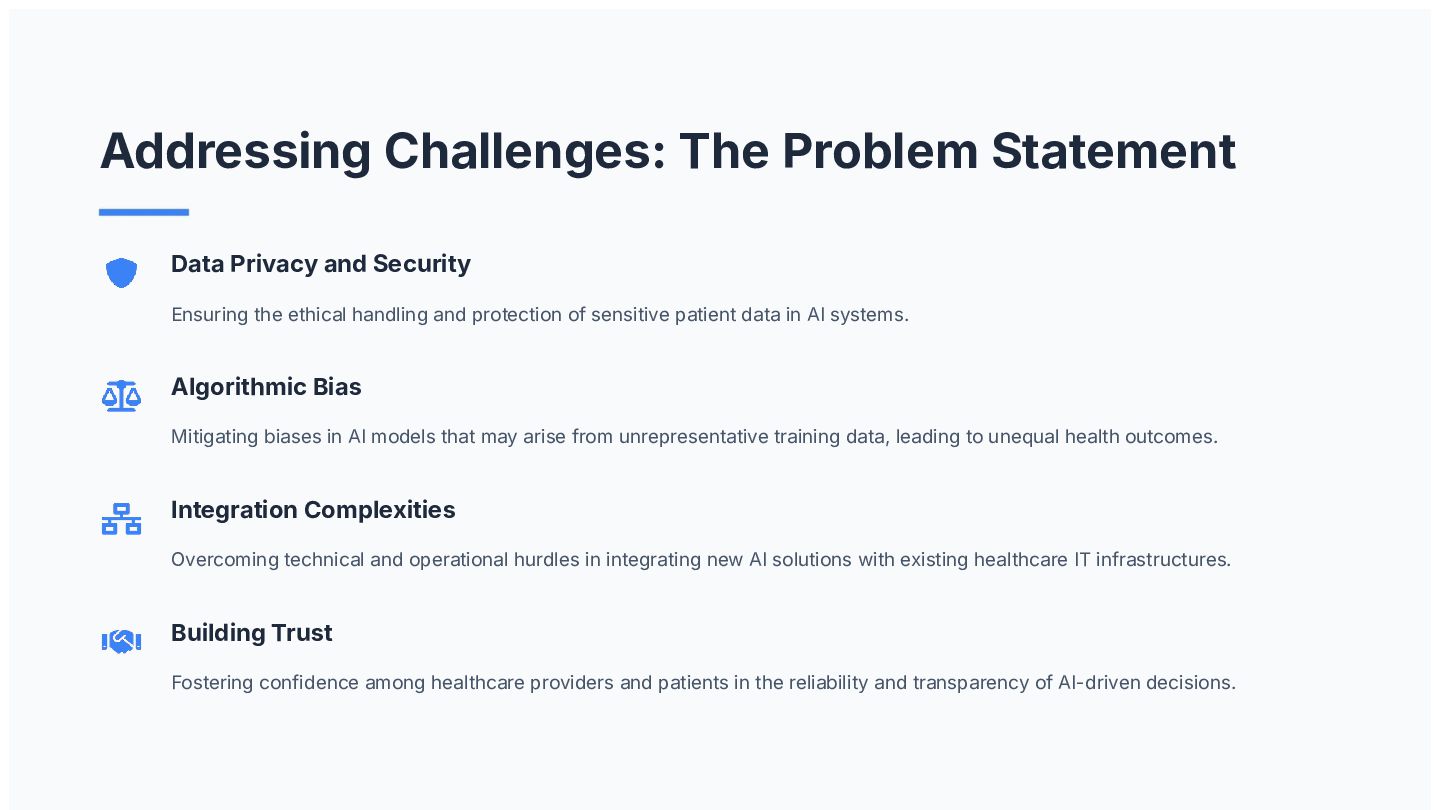
the ethical handling and protection of sensitive patient data in AI systems. Algorithmic Bias Mitigating biases in AI models that may arise from unrepresentative training data, leading to unequal health outcomes. Integration Complexities Overcoming technical and operational hurdles in integrating new AI solutions with existing healthcare IT infrastructures. Building Trust Fostering confidence among healthcare providers and patients in the reliability and transparency of AI-driven decisions.
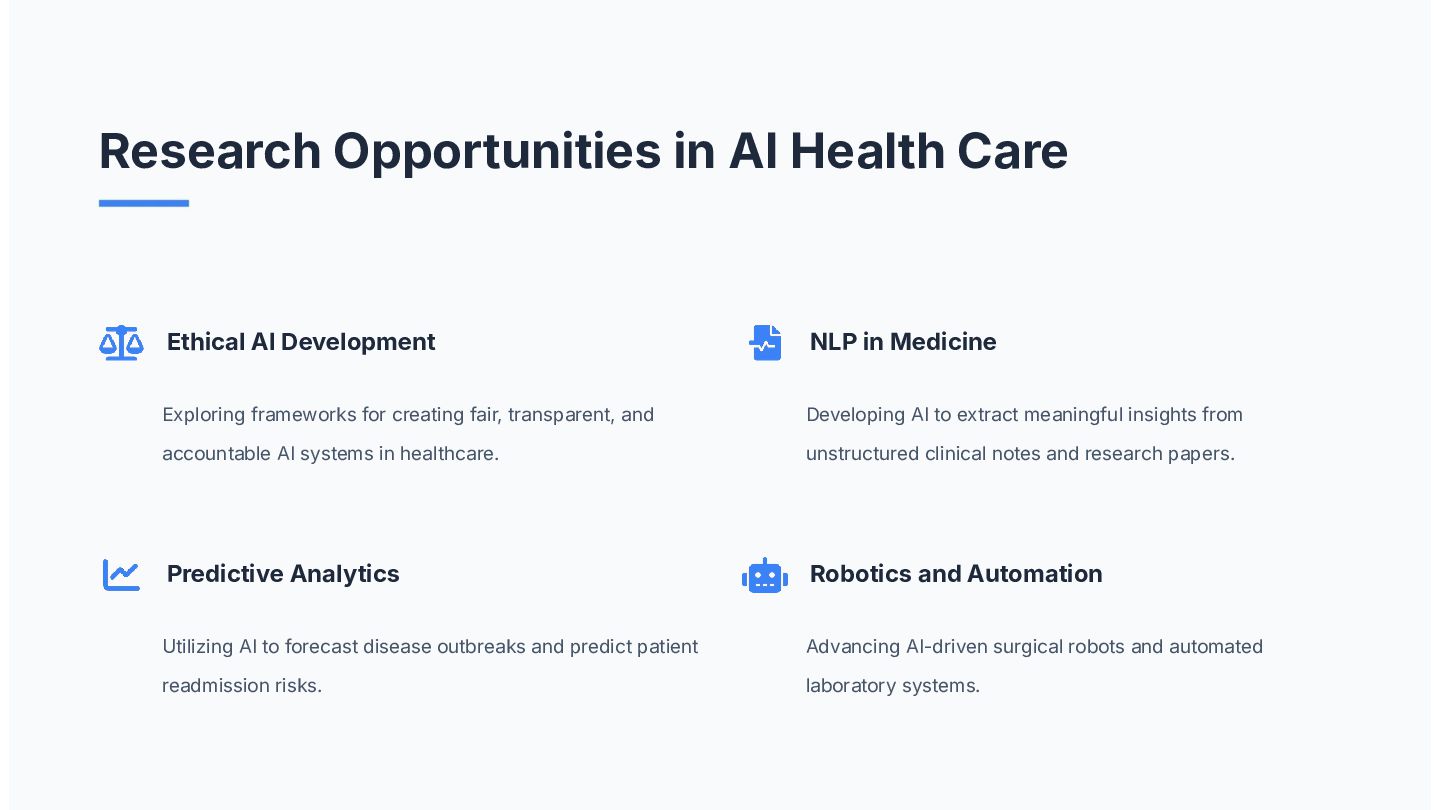
frameworks for creating fair, transparent, and accountable AI systems in healthcare. NLP in Medicine Developing AI to extract meaningful insights from unstructured clinical notes and research papers. Predictive Analytics Utilizing AI to forecast disease outbreaks and predict patient readmission risks. Robotics and Automation Advancing AI-driven surgical robots and automated laboratory systems.
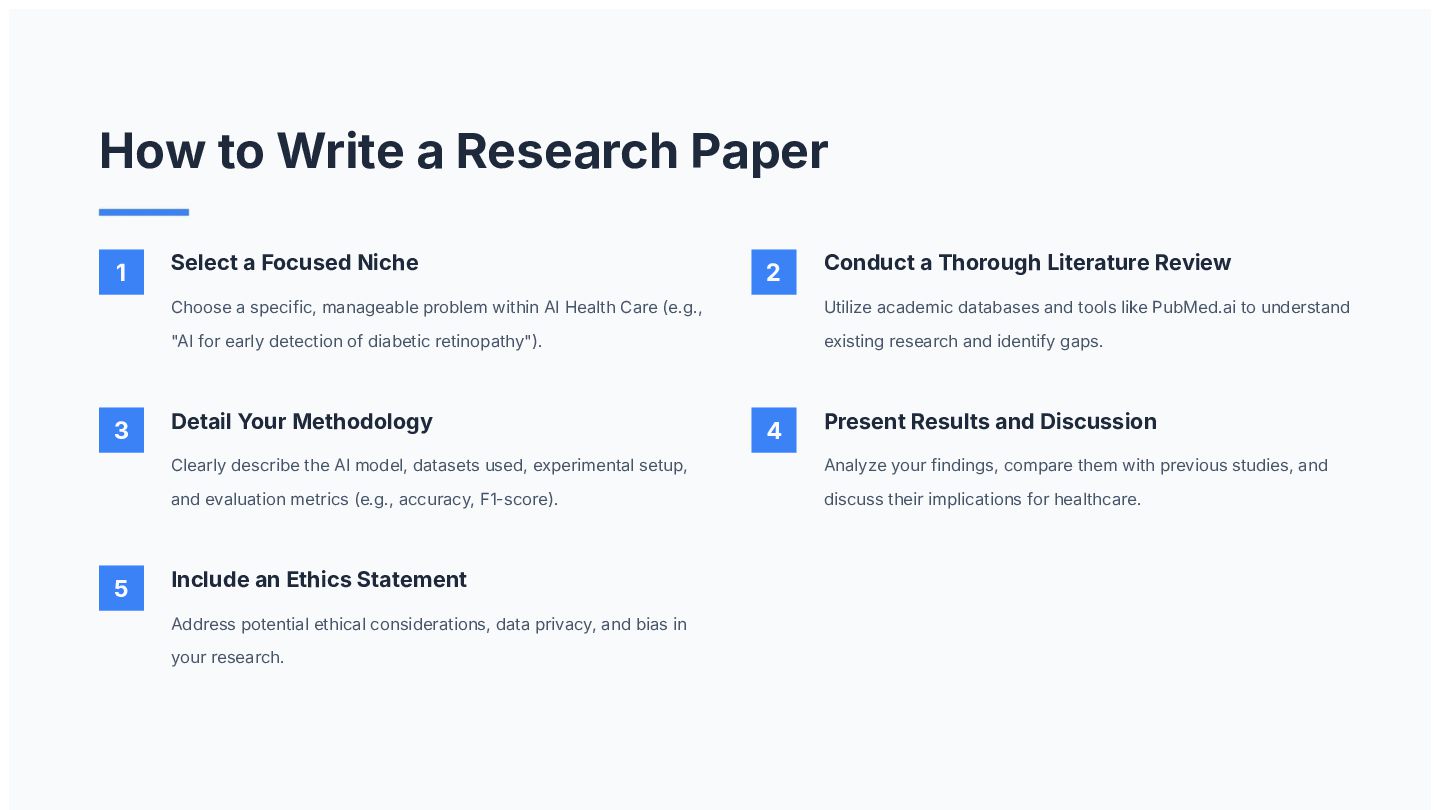
Niche Choose a specific, manageable problem within AI Health Care (e.g., "AI for early detection of diabetic retinopathy"). 2 Conduct a Thorough Literature Review Utilize academic databases and tools like PubMed.ai to understand existing research and identify gaps. 3 Detail Your Methodology Clearly describe the AI model, datasets used, experimental setup, and evaluation metrics (e.g., accuracy, F1-score). 4 Present Results and Discussion Analyze your findings, compare them with previous studies, and discuss their implications for healthcare. 5 Include an Ethics Statement Address potential ethical considerations, data privacy, and bias in your research.
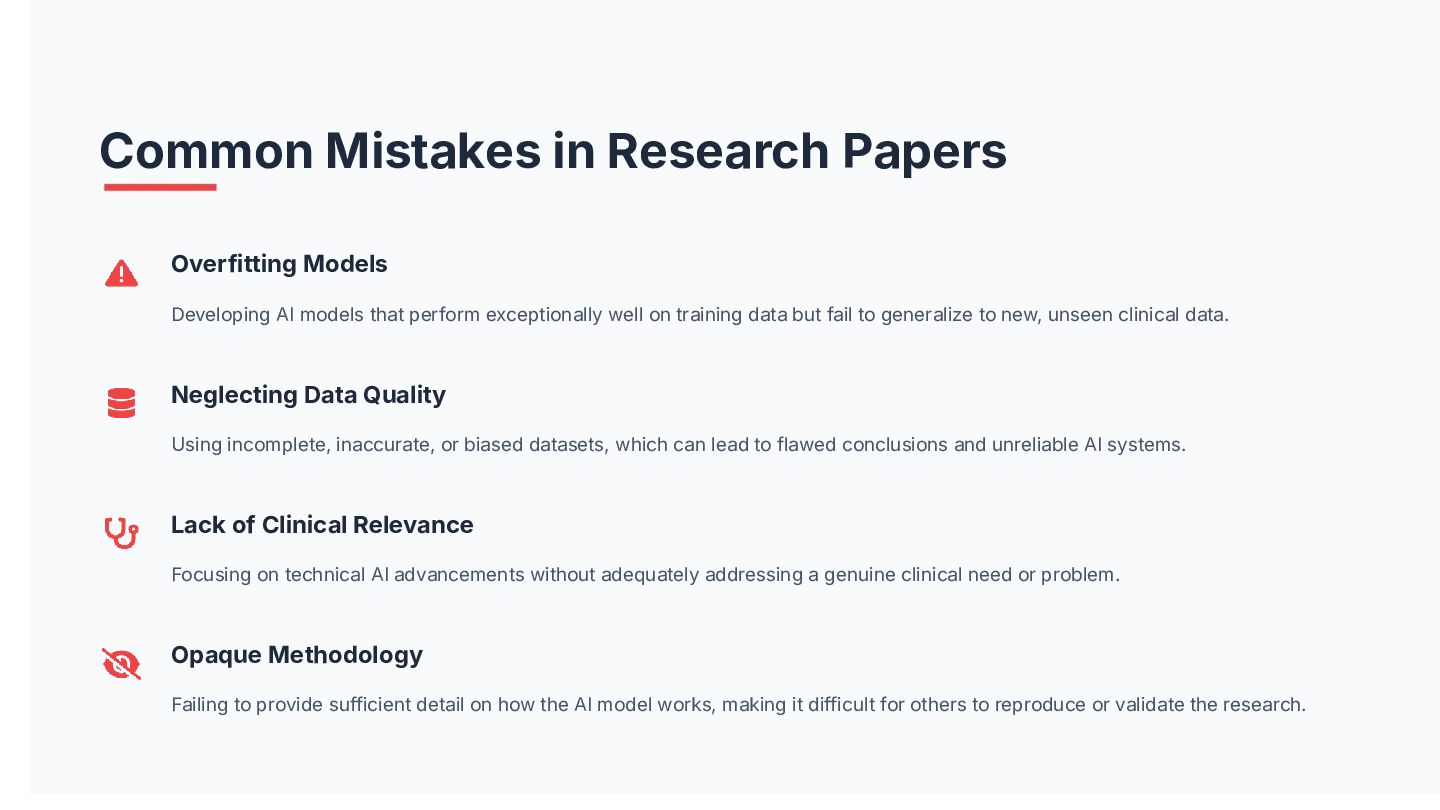
that perform exceptionally well on training data but fail to generalize to new, unseen clinical data. Neglecting Data Quality Using incomplete, inaccurate, or biased datasets, which can lead to flawed conclusions and unreliable AI systems. Lack of Clinical Relevance Focusing on technical AI advancements without adequately addressing a genuine clinical need or problem. Opaque Methodology Failing to provide sufficient detail on how the AI model works, making it difficult for others to reproduce or validate the research.
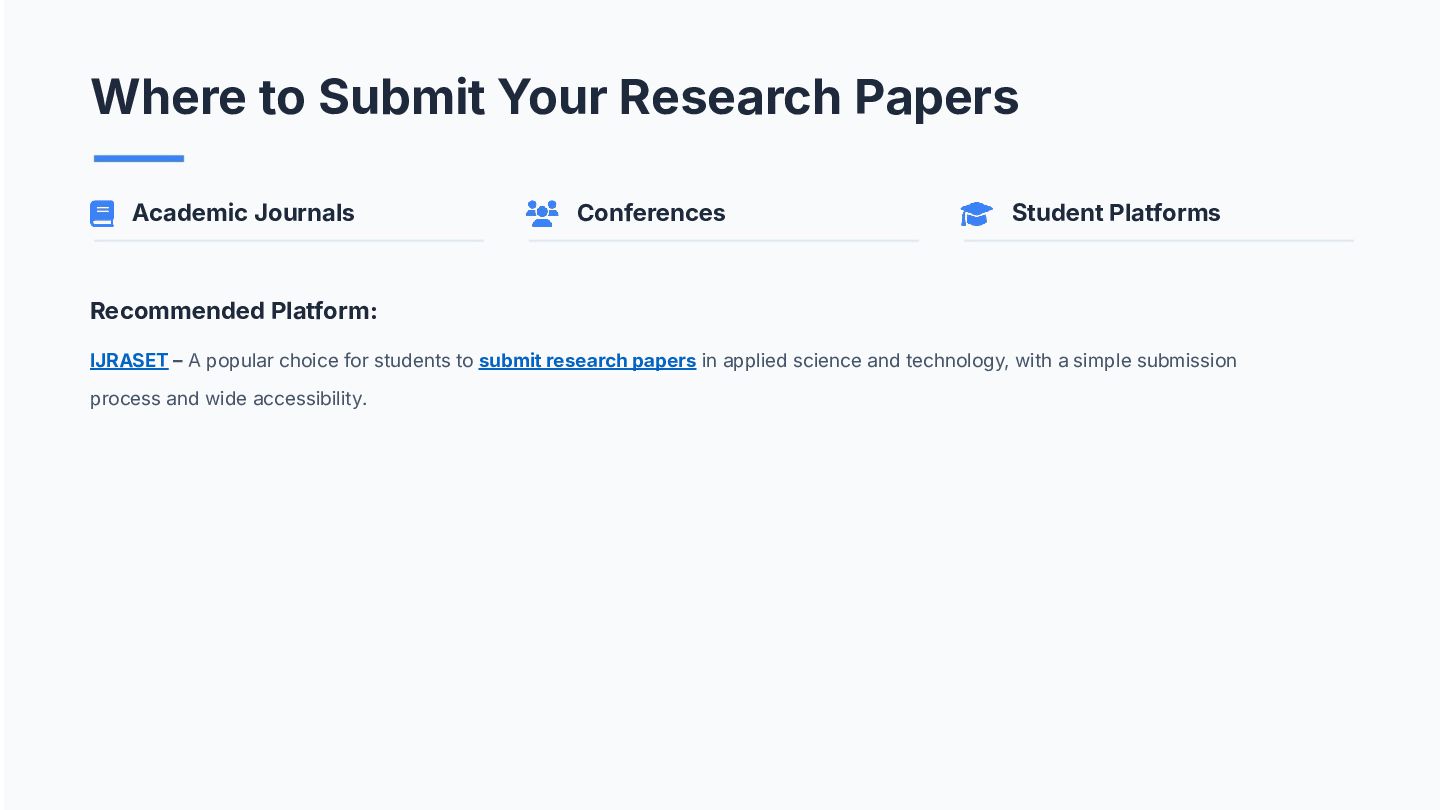
Platforms Recommended Platform: IJRASET – A popular choice for students to submit research papers in applied science and technology, with a simple submission process and wide accessibility.
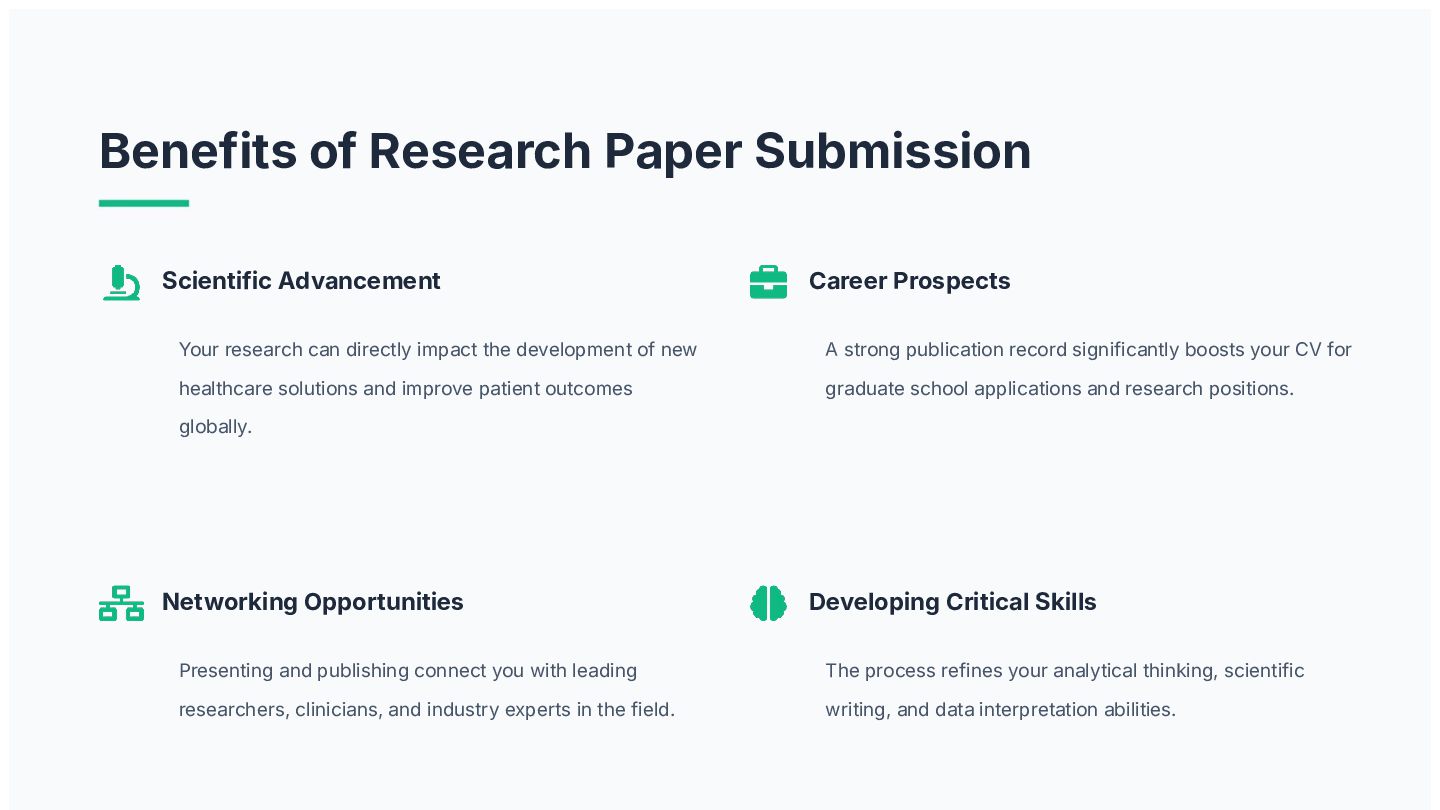
directly impact the development of new healthcare solutions and improve patient outcomes globally. Career Prospects A strong publication record significantly boosts your CV for graduate school applications and research positions. Networking Opportunities Presenting and publishing connect you with leading researchers, clinicians, and industry experts in the field. Developing Critical Skills The process refines your analytical thinking, scientific writing, and data interpretation abilities.


 recsyslab
 yumaichikawa
 ayatokanada
 satai
 hotchpotch
 sishi
 institutdelelevage
 kzmssk
 afroscript
 rikkabotan7
 signer
 tattaka
 baasie
 ivargrimstad
 techseoconnect
 skoyamalab
 marketingsoph
 codingconduct
 lara
 tmiket
 csswizardry
 hatefulcrawdad
 mayunak
 62gerente