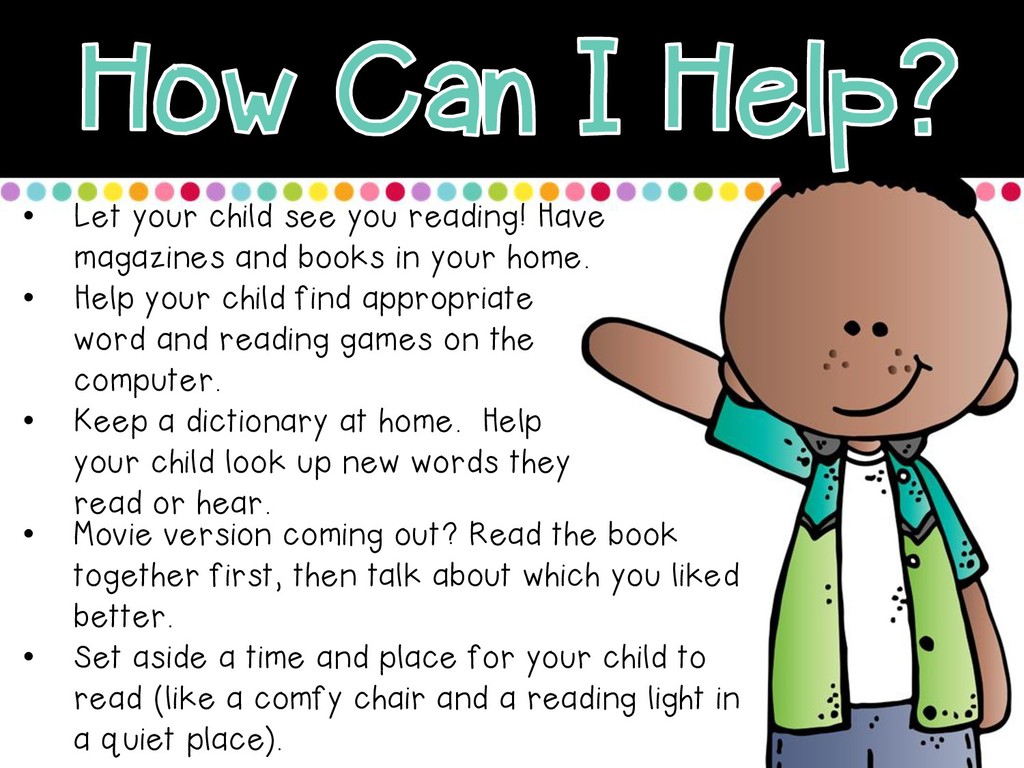
books in your home. • Help your child find appropriate word and reading games on the computer. • Keep a dictionary at home. Help your child look up new words they read or hear. • Movie version coming out? Read the book together first, then talk about which you liked better. • Set aside a time and place for your child to read (like a comfy chair and a reading light in a quiet place).
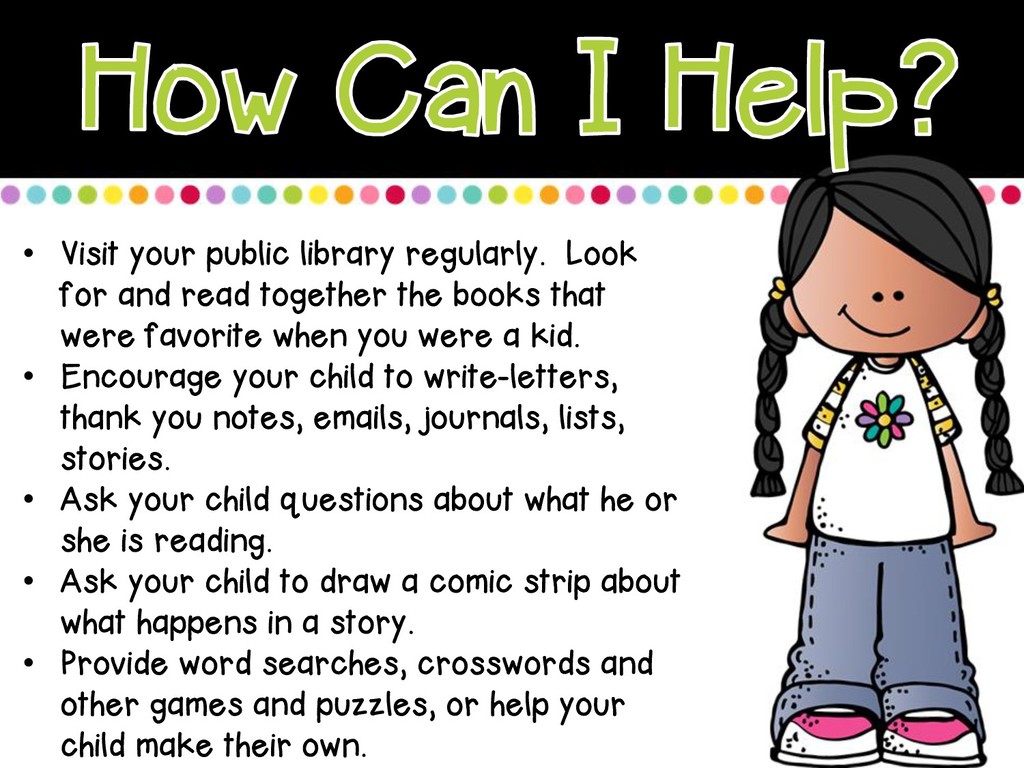
together the books that were favorite when you were a kid. • Encourage your child to write-letters, thank you notes, emails, journals, lists, stories. • Ask your child questions about what he or she is reading. • Ask your child to draw a comic strip about what happens in a story. • Provide word searches, crosswords and other games and puzzles, or help your child make their own.
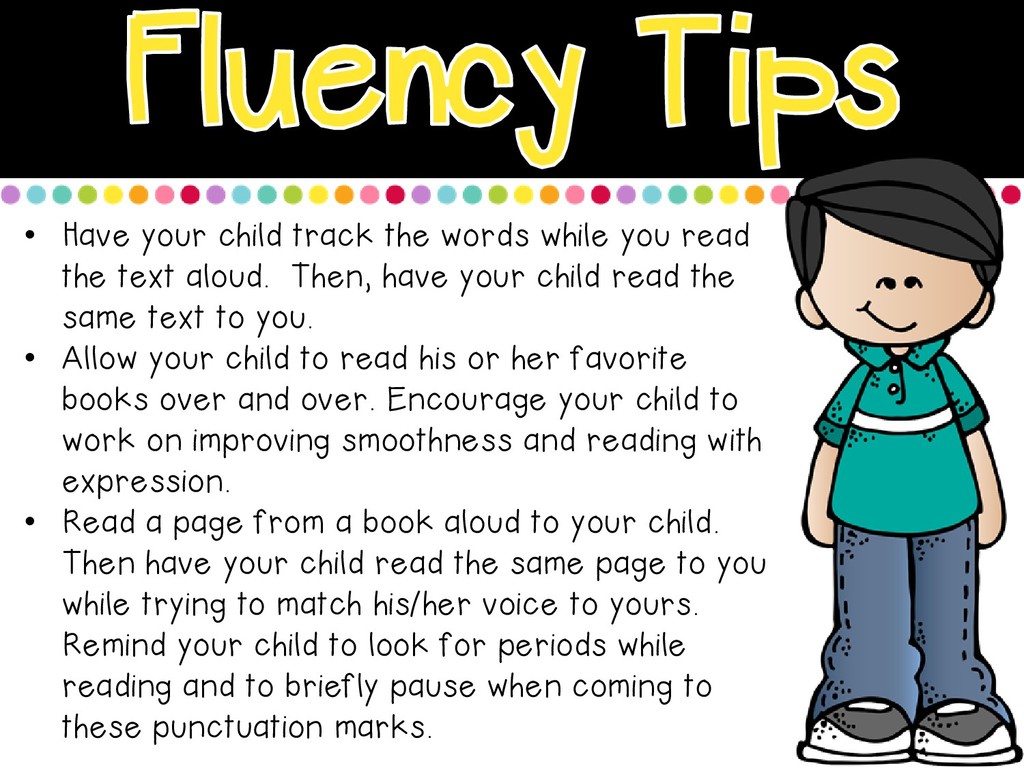
the text aloud. Then, have your child read the same text to you. • Allow your child to read his or her favorite books over and over. Encourage your child to work on improving smoothness and reading with expression. • Read a page from a book aloud to your child. Then have your child read the same page to you while trying to match his/her voice to yours. Remind your child to look for periods while reading and to briefly pause when coming to these punctuation marks.
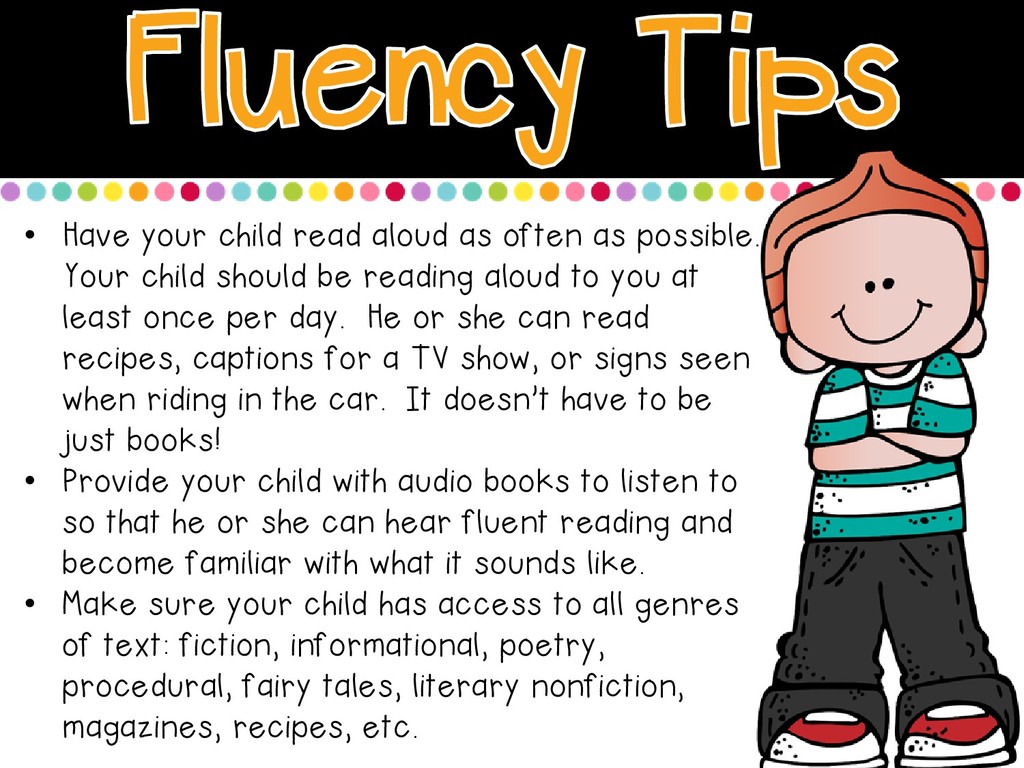
Your child should be reading aloud to you at least once per day. He or she can read recipes, captions for a TV show, or signs seen when riding in the car. It doesn’t have to be just books! • Provide your child with audio books to listen to so that he or she can hear fluent reading and become familiar with what it sounds like. • Make sure your child has access to all genres of text: fiction, informational, poetry, procedural, fairy tales, literary nonfiction, magazines, recipes, etc.
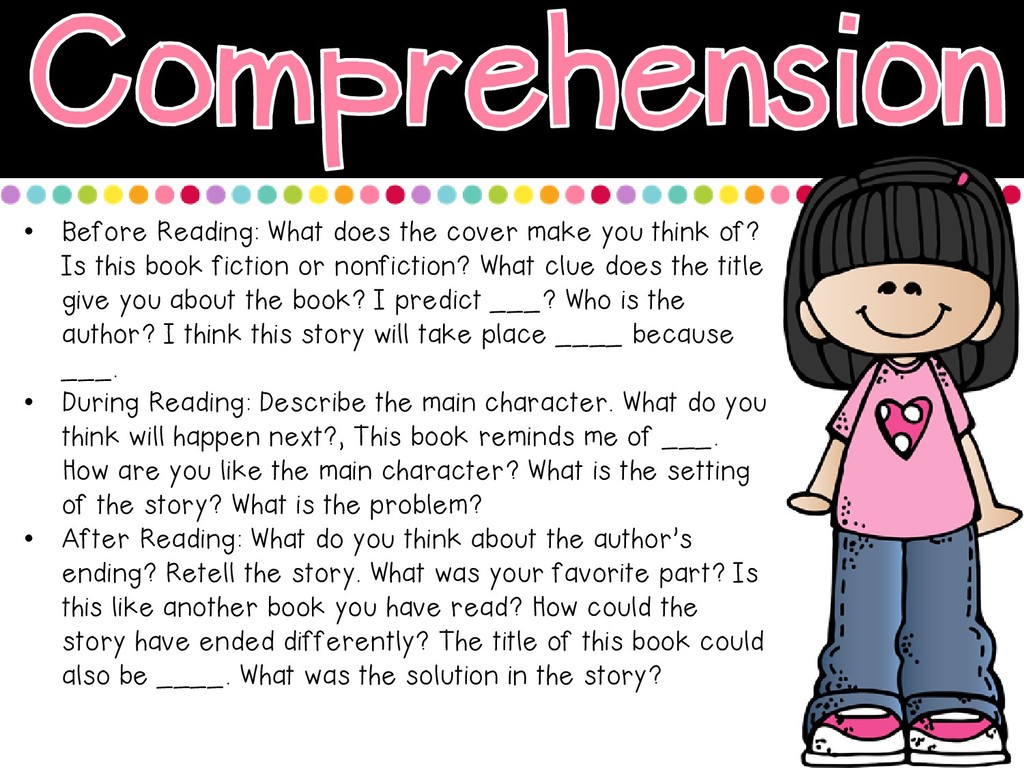
of? Is this book fiction or nonfiction? What clue does the title give you about the book? I predict ___? Who is the author? I think this story will take place ____ because ___. • During Reading: Describe the main character. What do you think will happen next?, This book reminds me of ___. How are you like the main character? What is the setting of the story? What is the problem? • After Reading: What do you think about the author’s ending? Retell the story. What was your favorite part? Is this like another book you have read? How could the story have ended differently? The title of this book could also be ____. What was the solution in the story?
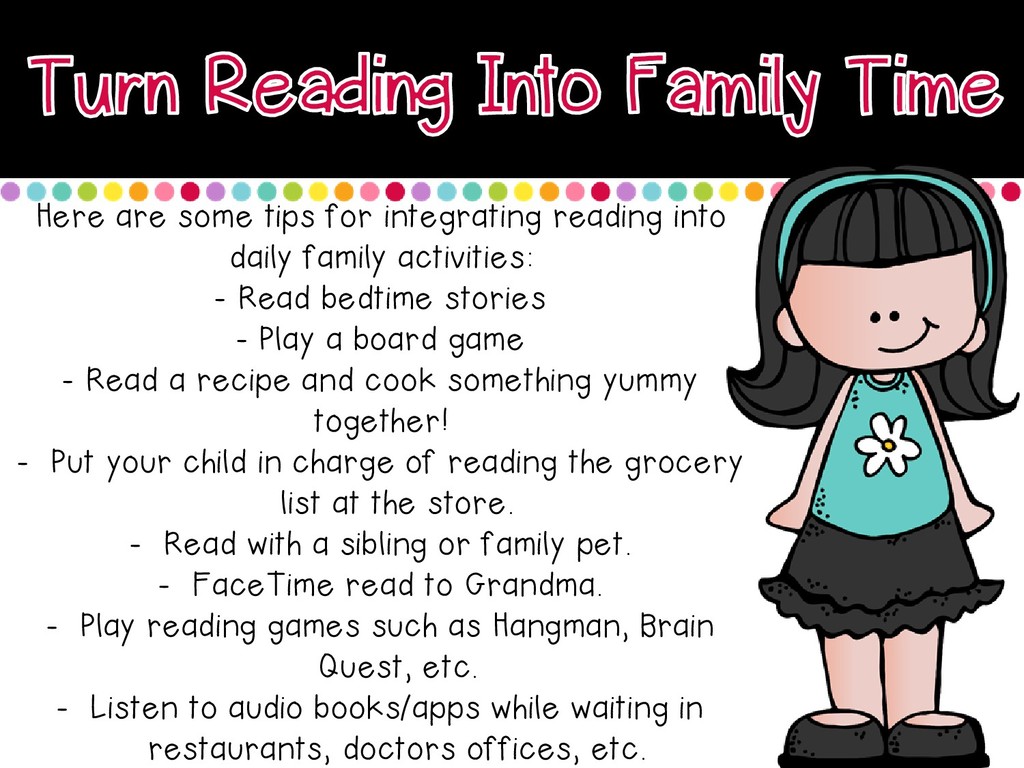
activities: - Read bedtime stories - Play a board game - Read a recipe and cook something yummy together! - Put your child in charge of reading the grocery list at the store. - Read with a sibling or family pet. - FaceTime read to Grandma. - Play reading games such as Hangman, Brain Quest, etc. - Listen to audio books/apps while waiting in restaurants, doctors offices, etc.


 pawan_pharm
 bvr7352
 hiragahh
 cbtlibrary
 spring_aki
 signer
 soudai
 terasawat
 juanmartin2026
 akiraasano
 aleyda
 geshan
 joshbly
 oripsolob
 khoart
 tmiket
 emna__ayadi
 bkeepers
 garrettdimon
 akademiya2063
 schlessera
 thoeni