Upgrade to Pro — share decks privately, control downloads, hide ads and more …

ThirdEye - LinkedIn's Business-Wide Monitoring ...

Avatar for Akshay Rai Akshay Rai
September 26, 2019

ThirdEye - LinkedIn's Business-Wide Monitoring Platform

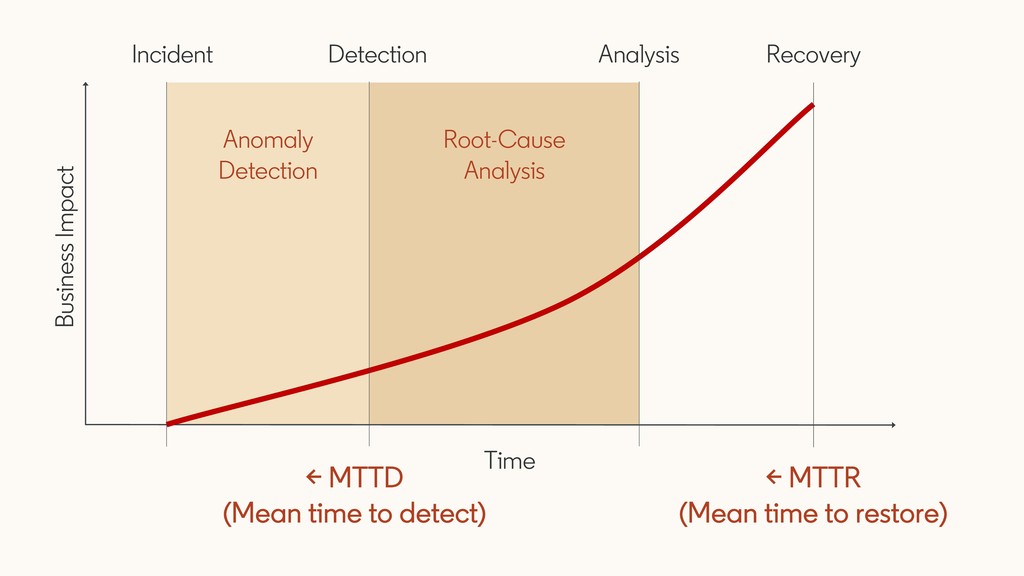
Mean time to detect (MTTD) and mean time to restore (MTTR) describe how long it takes to discover a problem and how long it takes you to restore the issue after it was detected. The shorter the MTTD and MTTR, the less time spent in outage and the more availability your product retains. Given that products and services inevitably break at some point, you need to be adept at detecting and restoring service as soon as possible. The issue triage and restoration lifecycle is made up of several steps: capturing metrics, detection (requiring monitoring and alerting), escalation, investigating, and remediation. Each segment of the triage needs to be measured for efficiency and effectiveness in order to keep these metrics as short as possible.

Akshay Rai walks you through ThirdEye, a self-service experience enabling anyone to rapidly identify and investigate deviations in business and system metrics. At LinkedIn, Third Eye is used by several teams spanning business analysts and engineers, and over 10K metrics are actively monitored. ThirdEye provides anomaly detection and collaborative dashboards for data analysis and brings together critical data that impacts metrics in a single place: holidays, deployments, company-wide issues and more. You’ll leave with an understanding of the concepts behind the open source ThirdEye project, how it’s built, and a look into ThirdEye’s insights and long-term plans. Akshay also gives you a powerful analysis of how ThirdEye helped detect and investigate some of the major issues that occurred on LinkedIn.

https://conferences.oreilly.com/strata/strata-ny/public/schedule/detail/77219

Avatar for Akshay Rai

Akshay Rai

September 26, 2019

Other Decks in Technology

Transcript

  1. Agenda 1 What is ThirdEye? 2 ThirdEye @ LinkedIn 3

    Anomaly Detection & Analysis 4 Overview of Entity Monitoring
  2. Root-Cause Analysis Anomaly Detection Business Impact Time Incident Detection Analysis

    Recovery ← MTTD (Mean time to detect) ← MTTR (Mean time to restore)
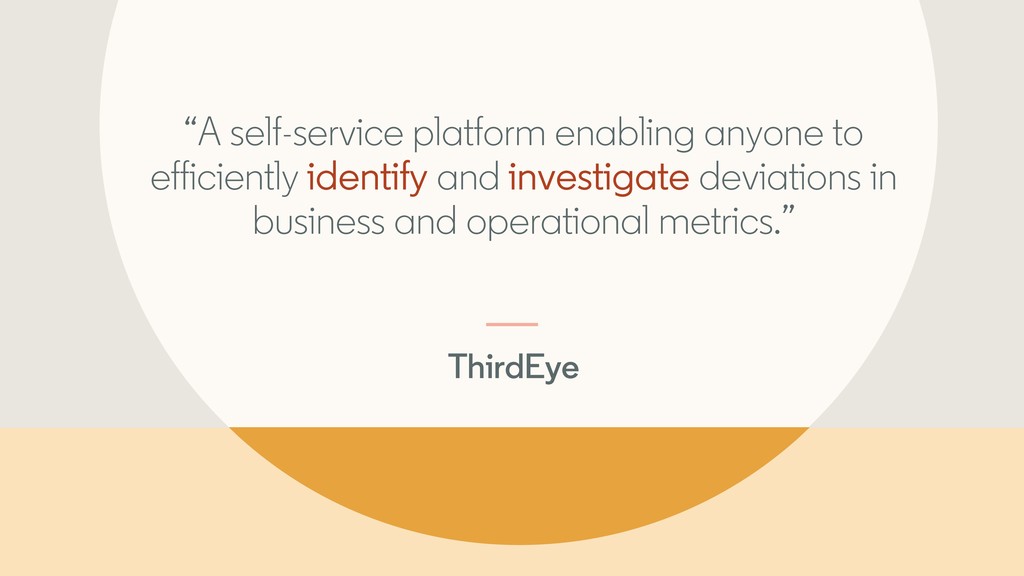
  3. “A self-service platform enabling anyone to efficiently identify and investigate

    deviations in business and operational metrics.” ThirdEye
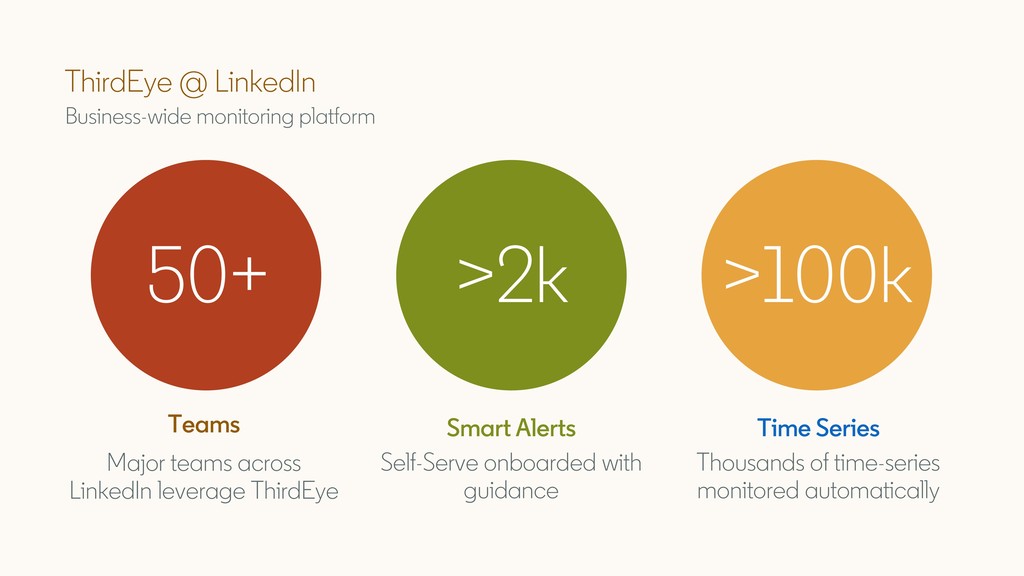
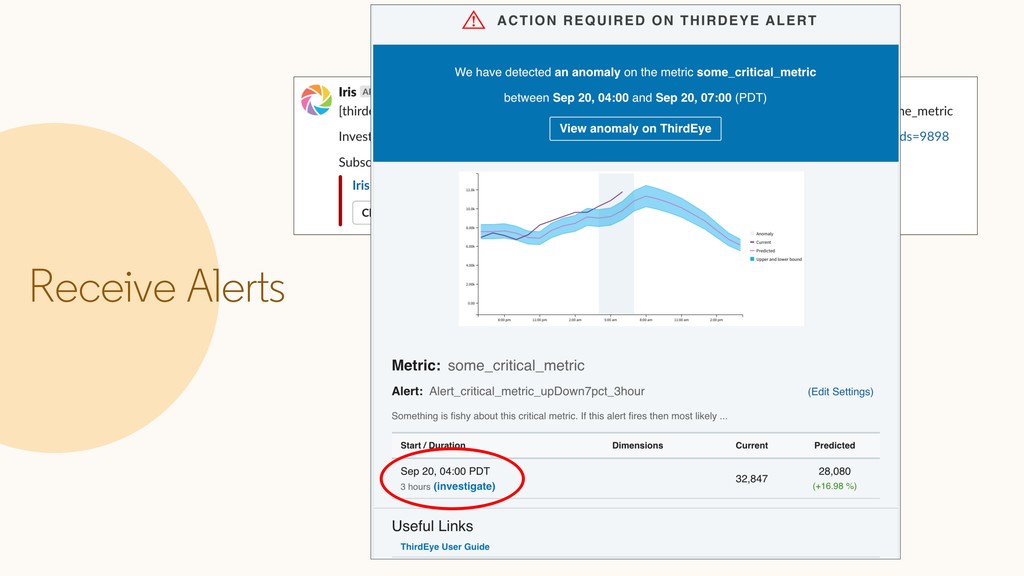
  4. ThirdEye @ LinkedIn Business-wide monitoring platform 50+ Teams Major teams

    across LinkedIn leverage ThirdEye >2k Smart Alerts Self-Serve onboarded with guidance >100k Time Series Thousands of time-series monitored automatically
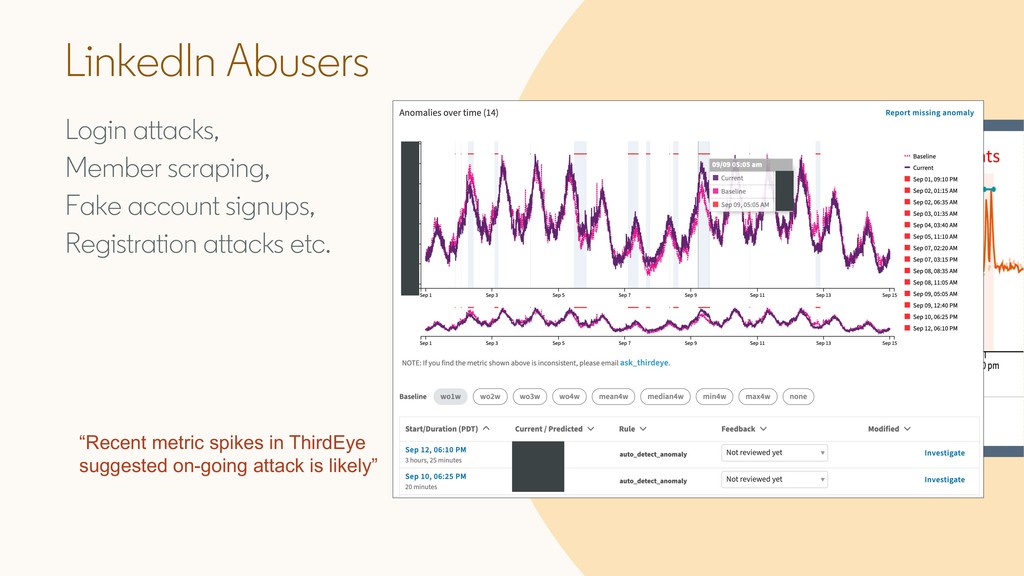
  5. LinkedIn Abusers Login attacks, Member scraping, Fake account signups, Registration

    attacks etc. Missed 12M+ Job Views in a week Restrict >3k Fake Accounts “Recent metric spikes in ThirdEye suggested on-going attack is likely”
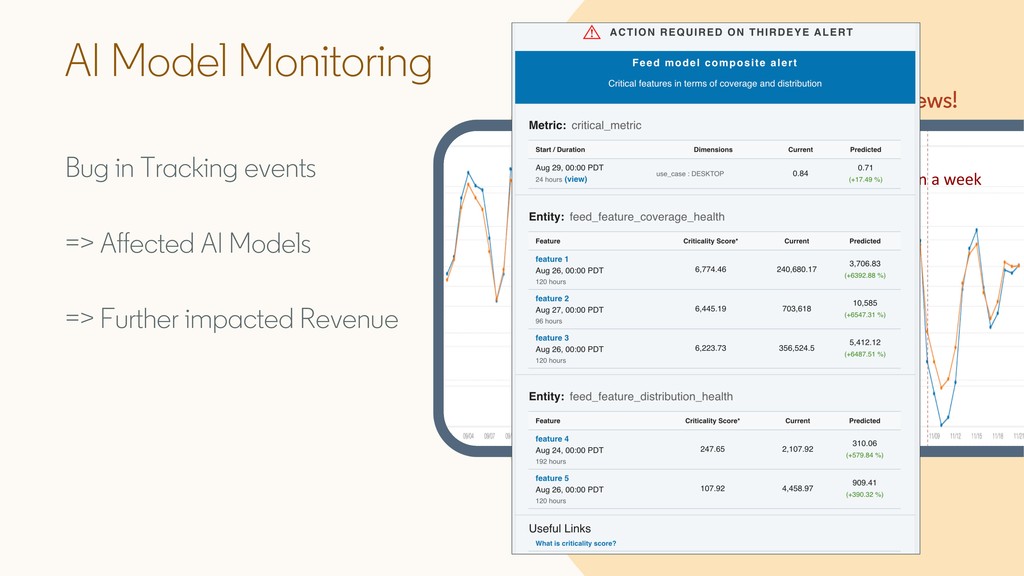
  6. AI Model Monitoring Bug in Tracking events => Affected AI

    Models => Further impacted Revenue Missed 12M+ Job Views in a week Revenue Loss due to Missed Job Views!
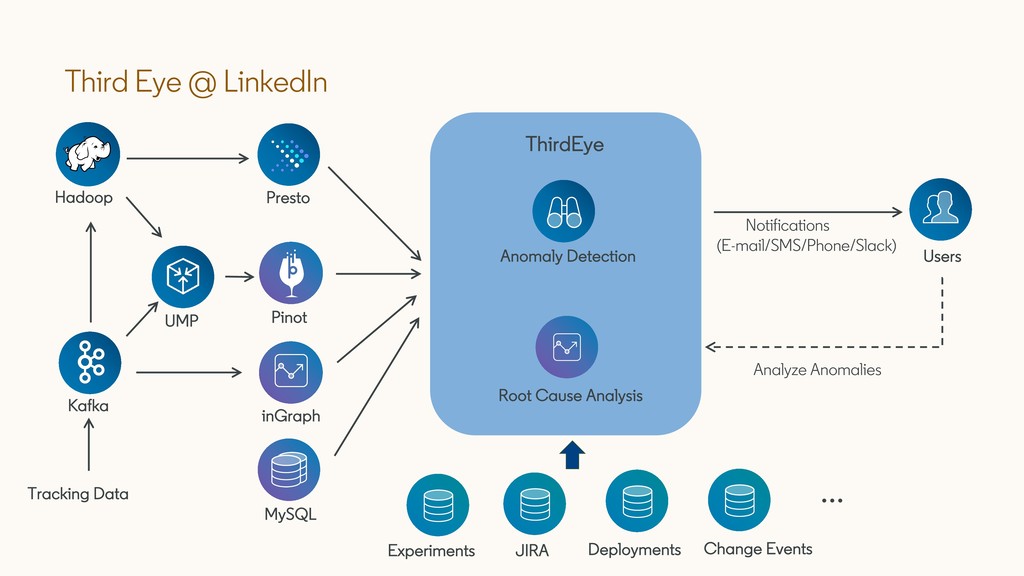
  7. Third Eye @ LinkedIn Tracking Data Kafka Pinot Hadoop MySQL

    Notifications Users ThirdEye Experiments JIRA Deployments Change Events Analyze Anomalies … UMP (E-mail/SMS/Phone/Slack) Presto Anomaly Detection Root Cause Analysis inGraph
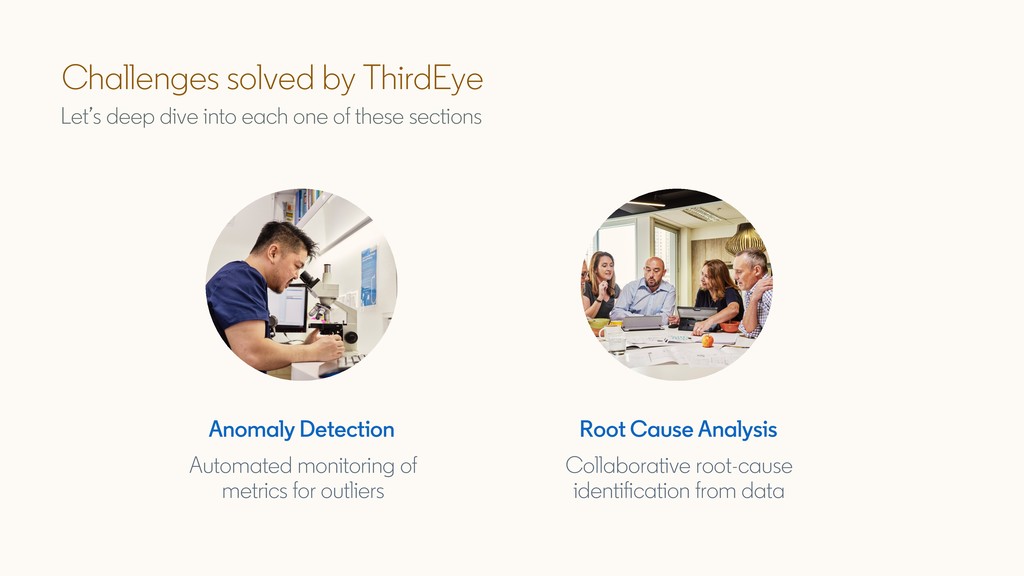
  8. Challenges solved by ThirdEye Let’s deep dive into each one

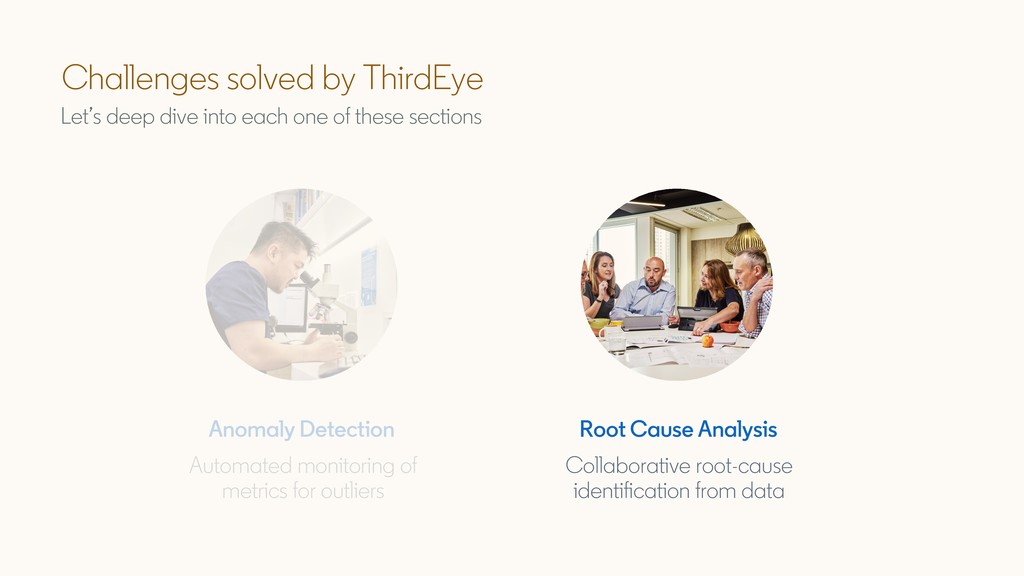
    of these sections Anomaly Detection Automated monitoring of metrics for outliers Root Cause Analysis Collaborative root-cause identification from data
  9. Challenges solved by ThirdEye Let’s deep dive into each one

    of these sections Anomaly Detection Automated monitoring of metrics for outliers Root Cause Analysis Collaborative root-cause identification from data
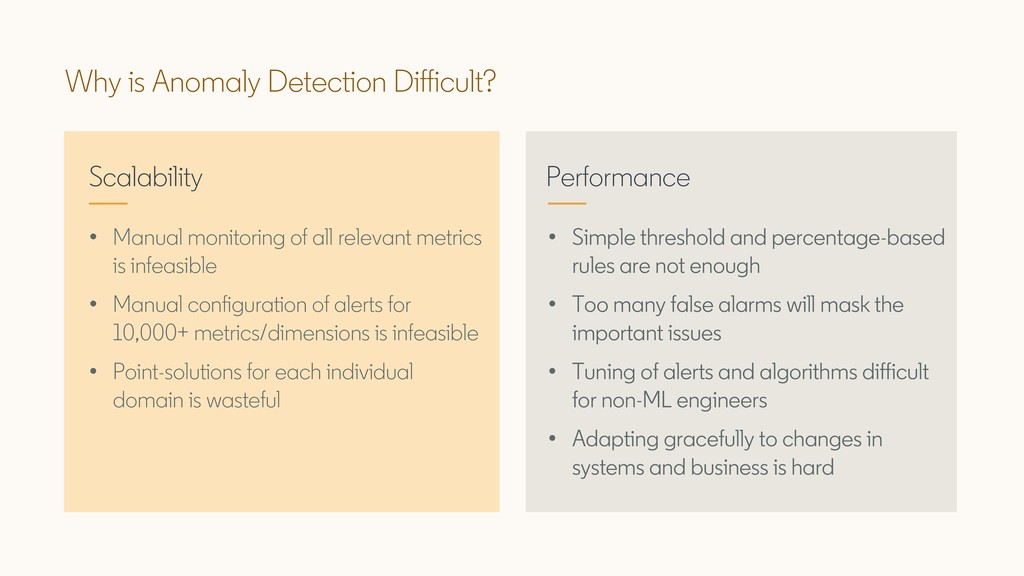
  10. Why is Anomaly Detection Difficult? Scalability • Manual monitoring of

    all relevant metrics is infeasible • Manual configuration of alerts for 10,000+ metrics/dimensions is infeasible • Point-solutions for each individual domain is wasteful Performance • Simple threshold and percentage-based rules are not enough • Too many false alarms will mask the important issues • Tuning of alerts and algorithms difficult for non-ML engineers • Adapting gracefully to changes in systems and business is hard
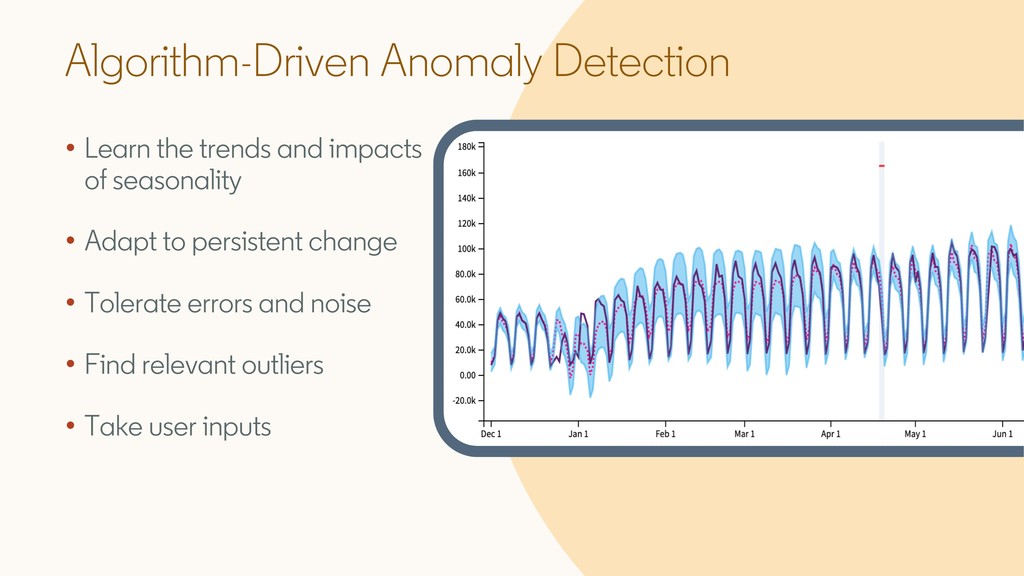
  11. Algorithm-Driven Anomaly Detection • Learn the trends and impacts of

    seasonality • Adapt to persistent change • Tolerate errors and noise • Find relevant outliers • Take user inputs
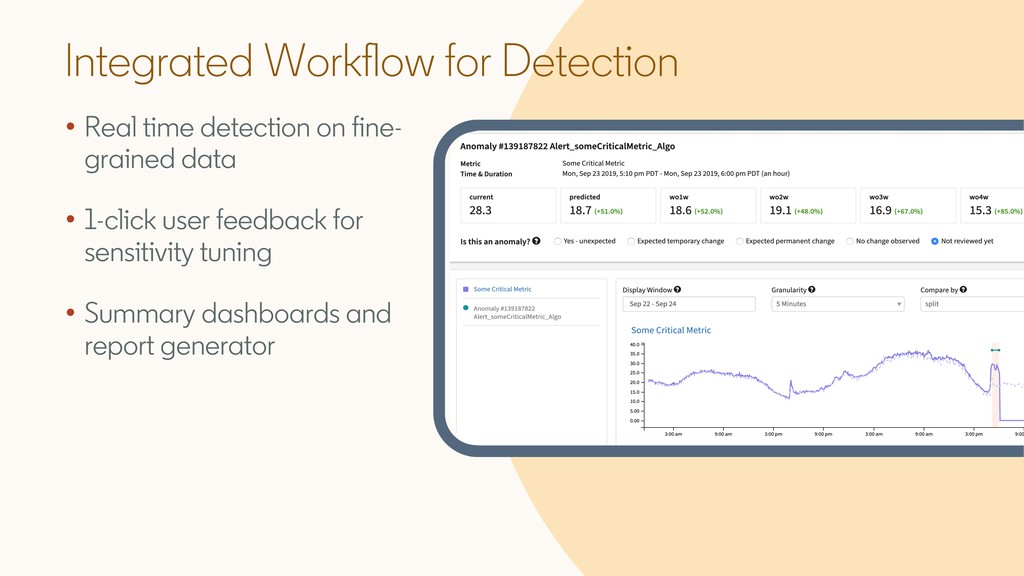
  12. Integrated Workflow for Detection • Real time detection on fine-

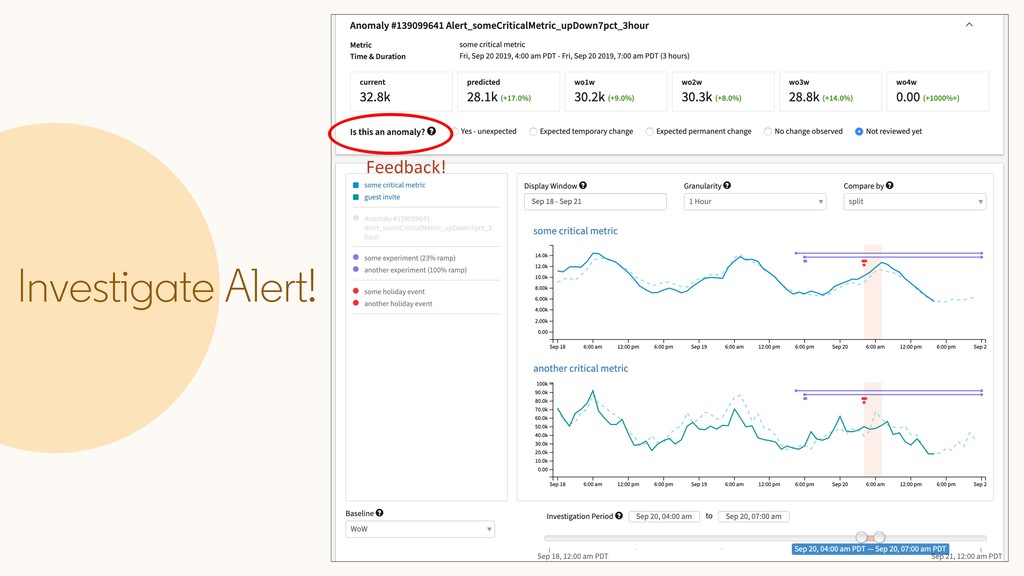
    grained data • 1-click user feedback for sensitivity tuning • Summary dashboards and report generator
  13. Anomaly Detection for Time Series Data Metrics support • Data-Source

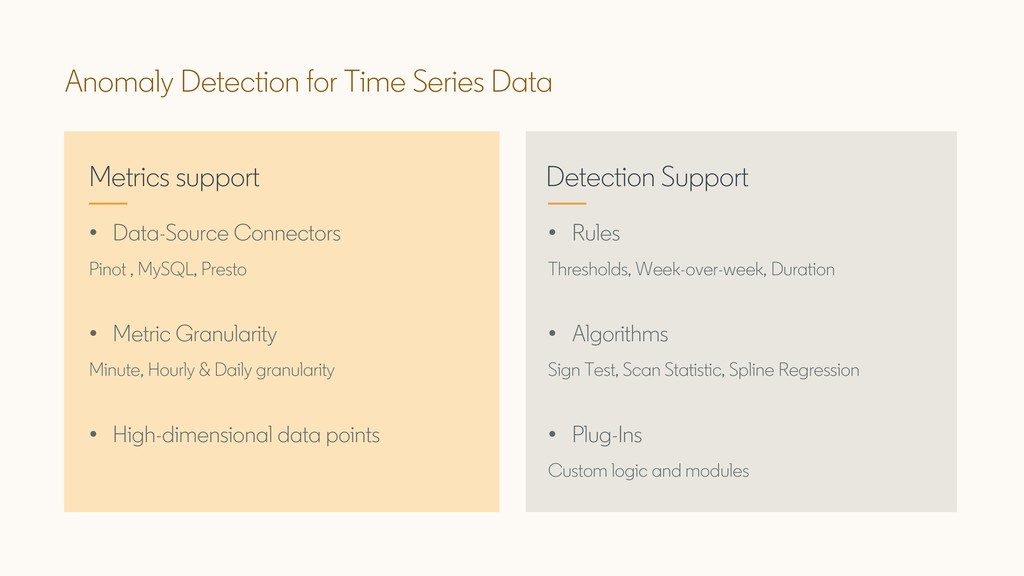
    Connectors Pinot , MySQL, Presto • Metric Granularity Minute, Hourly & Daily granularity • High-dimensional data points Detection Support • Rules Thresholds, Week-over-week, Duration • Algorithms Sign Test, Scan Statistic, Spline Regression • Plug-Ins Custom logic and modules
  14. Challenges solved by ThirdEye Let’s deep dive into each one

    of these sections Anomaly Detection Automated monitoring of metrics for outliers Root Cause Analysis Collaborative root-cause identification from data
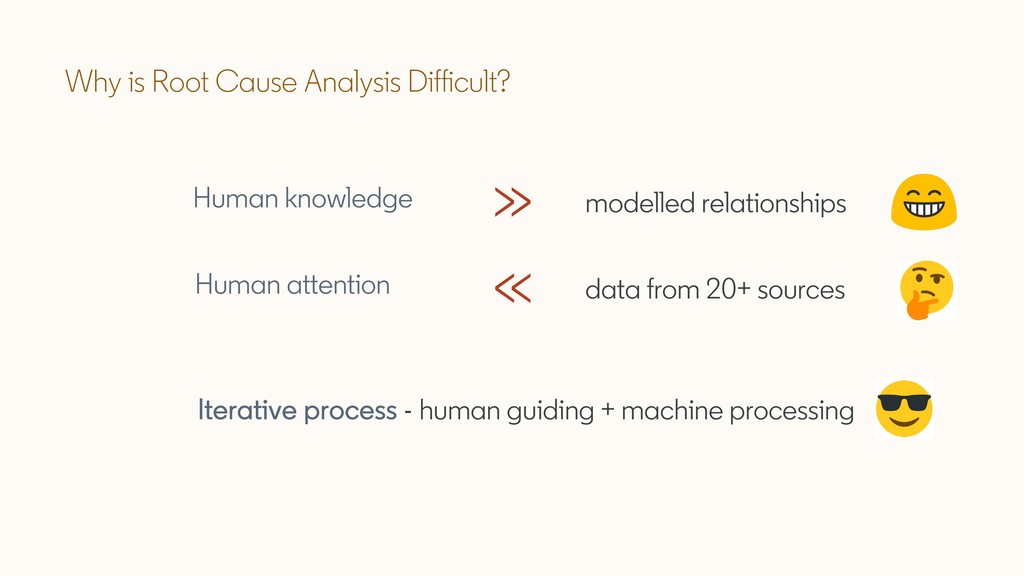
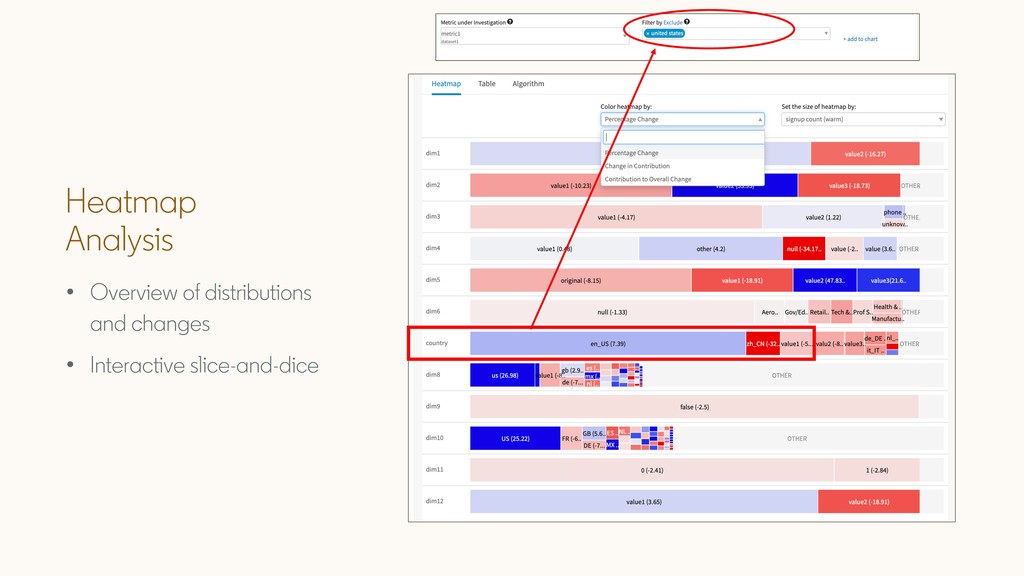
  15. Why is Root Cause Analysis Difficult? Human attention data from

    20+ sources modelled relationships Human knowledge Iterative process - human guiding + machine processing ≪ ≫
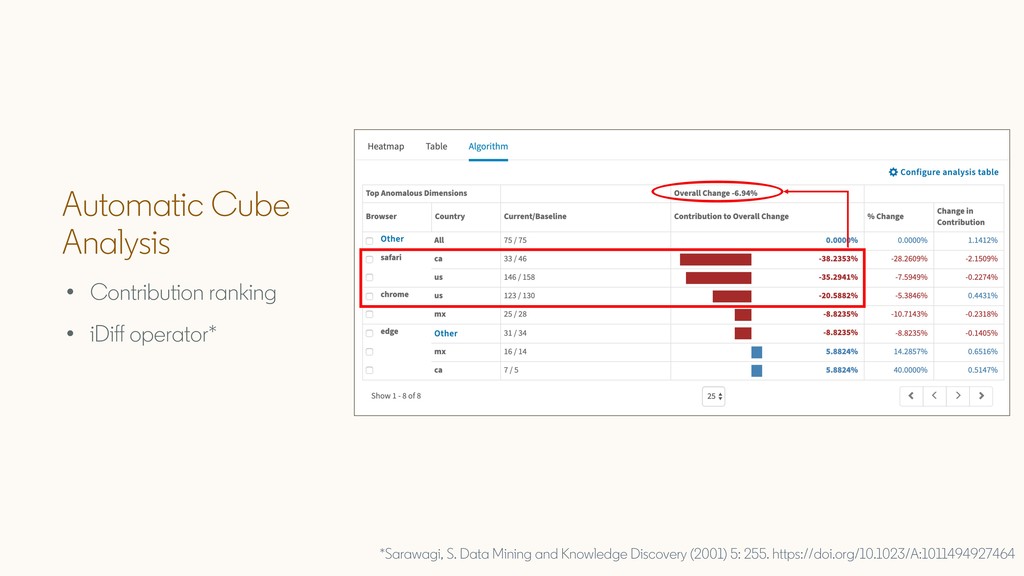
  16. Automatic Cube Analysis • Contribution ranking • iDiff operator* *Sarawagi,

    S. Data Mining and Knowledge Discovery (2001) 5: 255. https://doi.org/10.1023/A:1011494927464
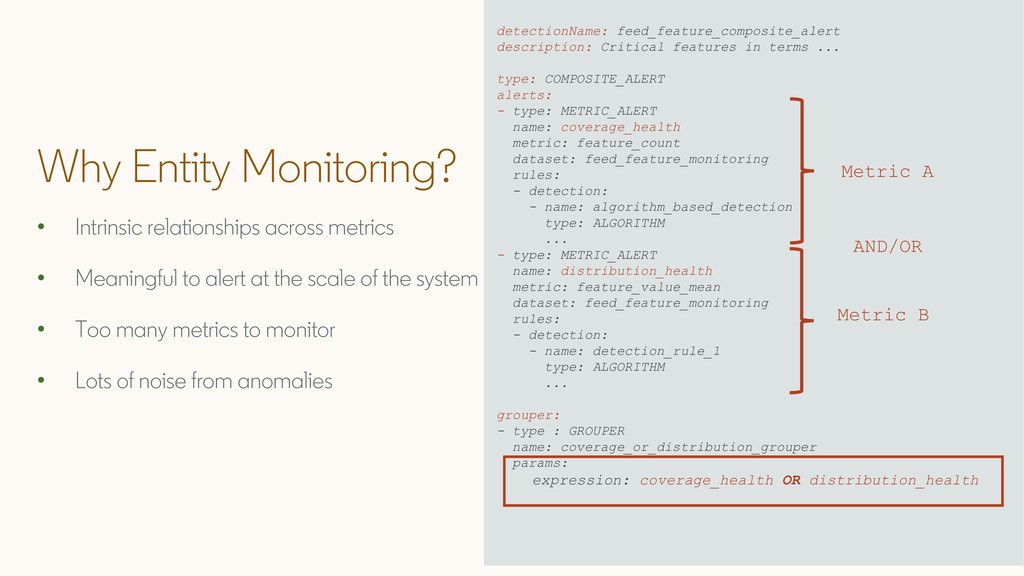
  17. Why Entity Monitoring? • Intrinsic relationships across metrics • Meaningful

    to alert at the scale of the system • Too many metrics to monitor • Lots of noise from anomalies detectionName: feed_feature_composite_alert description: Critical features in terms ... type: COMPOSITE_ALERT alerts: - type: METRIC_ALERT name: coverage_health metric: feature_count dataset: feed_feature_monitoring rules: - detection: - name: algorithm_based_detection type: ALGORITHM ... - type: METRIC_ALERT name: distribution_health metric: feature_value_mean dataset: feed_feature_monitoring rules: - detection: - name: detection_rule_1 type: ALGORITHM ... grouper: - type : GROUPER name: coverage_or_distribution_grouper params: expression: coverage_health OR distribution_health Metric A Metric B AND/OR
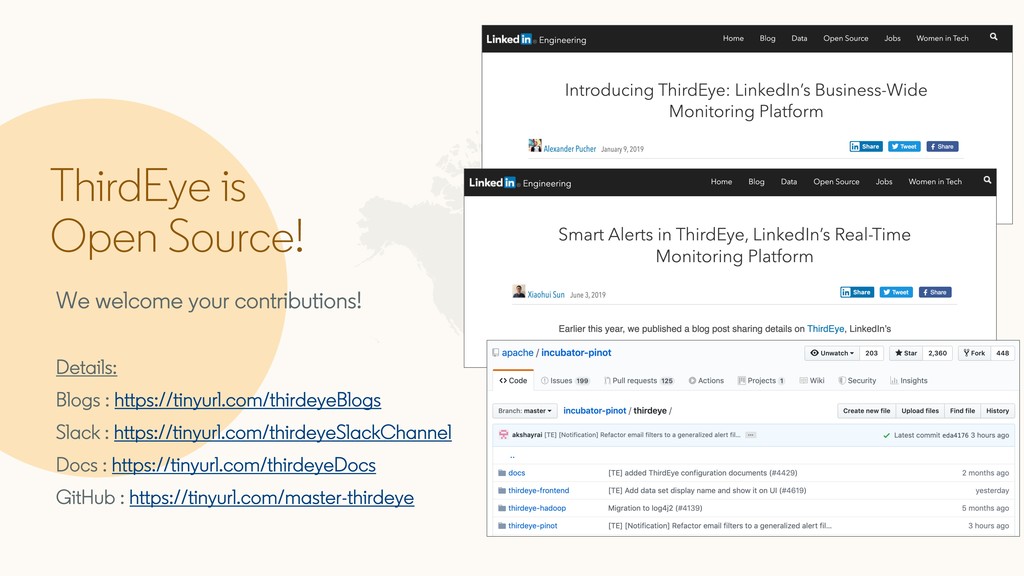
  18. ThirdEye is Open Source! We welcome your contributions! Details: Blogs

    : https://tinyurl.com/thirdeyeBlogs Slack : https://tinyurl.com/thirdeyeSlackChannel Docs : https://tinyurl.com/thirdeyeDocs GitHub : https://tinyurl.com/master-thirdeye
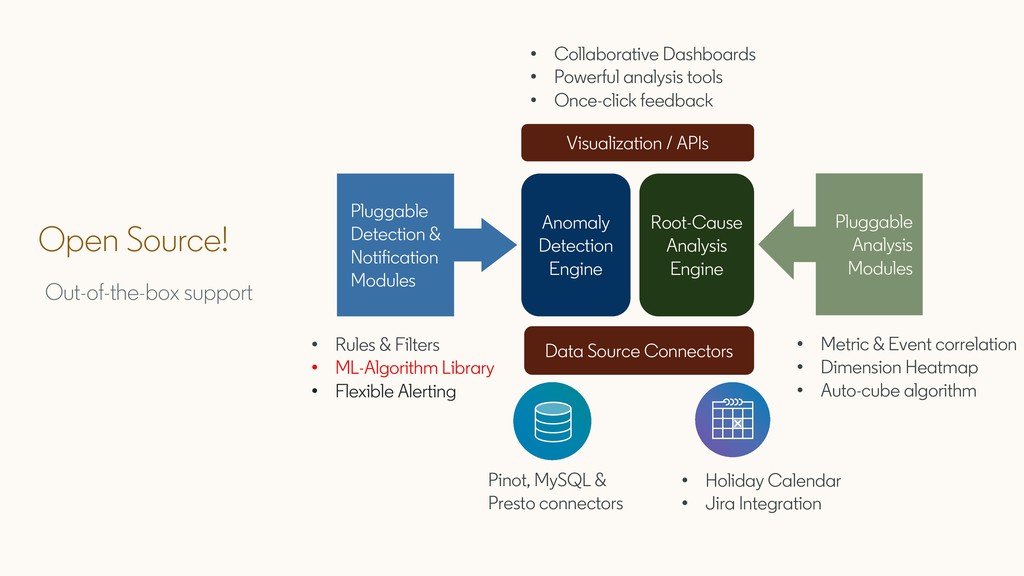
  19. Open Source! Out-of-the-box support Anomaly Detection Engine Root-Cause Analysis Engine

    Pluggable Analysis Modules Pluggable Detection & Notification Modules Visualization / APIs Data Source Data Source Connectors • Rules & Filters • ML-Algorithm Library • Flexible Alerting • Metric & Event correlation • Dimension Heatmap • Auto-cube algorithm Pinot, MySQL & Presto connectors • Holiday Calendar • Jira Integration • Collaborative Dashboards • Powerful analysis tools • Once-click feedback
  20. Open source: What’s next? • Deep Learning Infrastructure • “Entity”

    as a first class citizen • Event driven anomaly detection • Data quality & availability monitoring