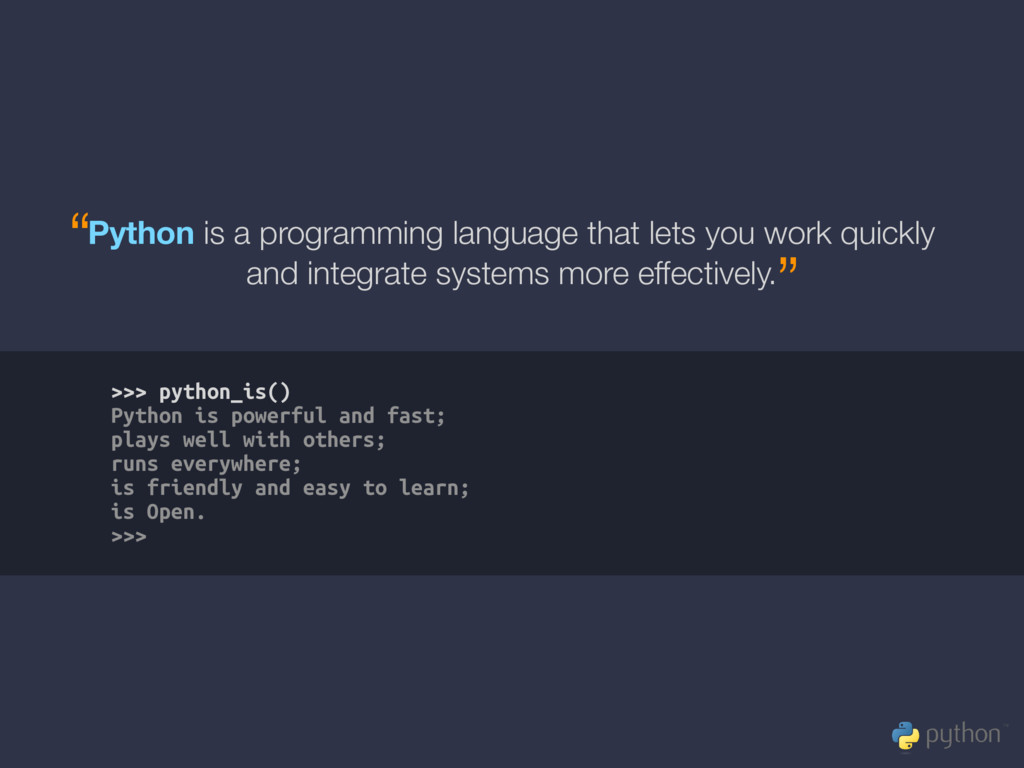
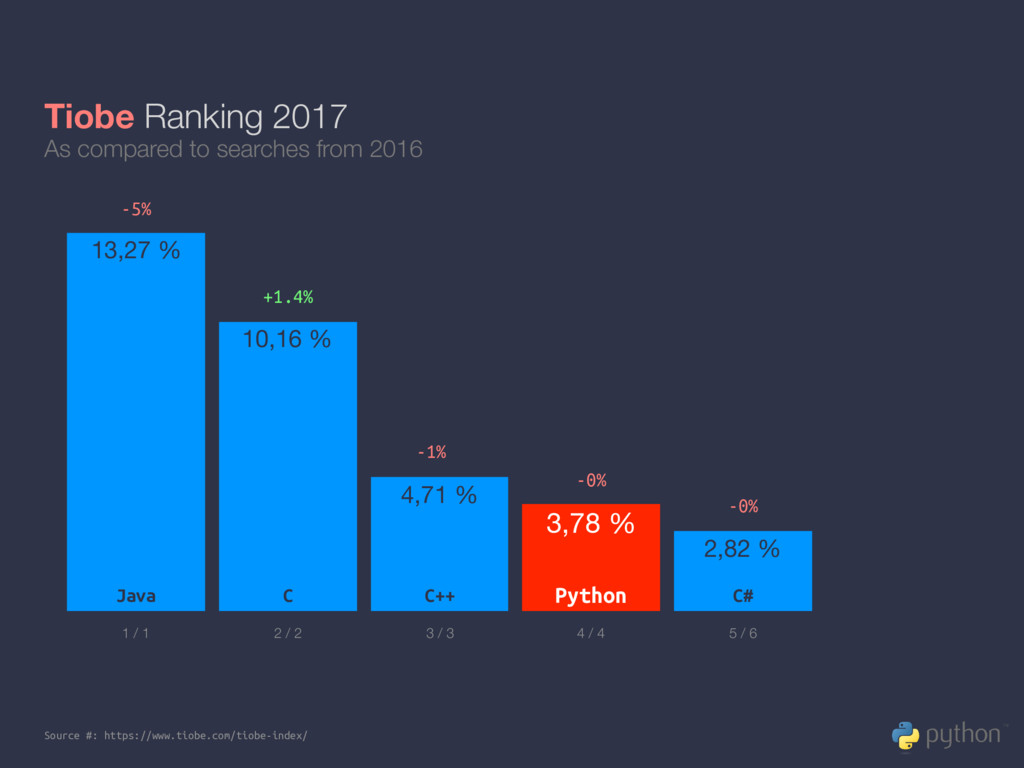
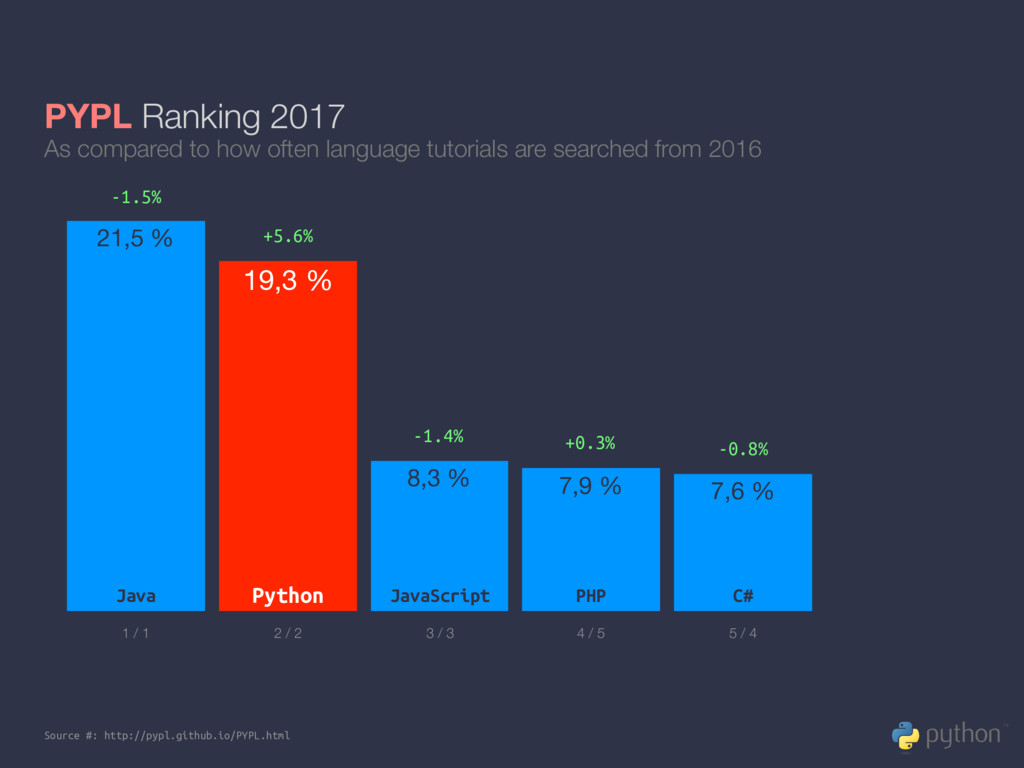
and integrate systems more effectively. >>> python_is() Python is powerful and fast; plays well with others; runs everywhere; is friendly and easy to learn; is Open. >>> “ ”
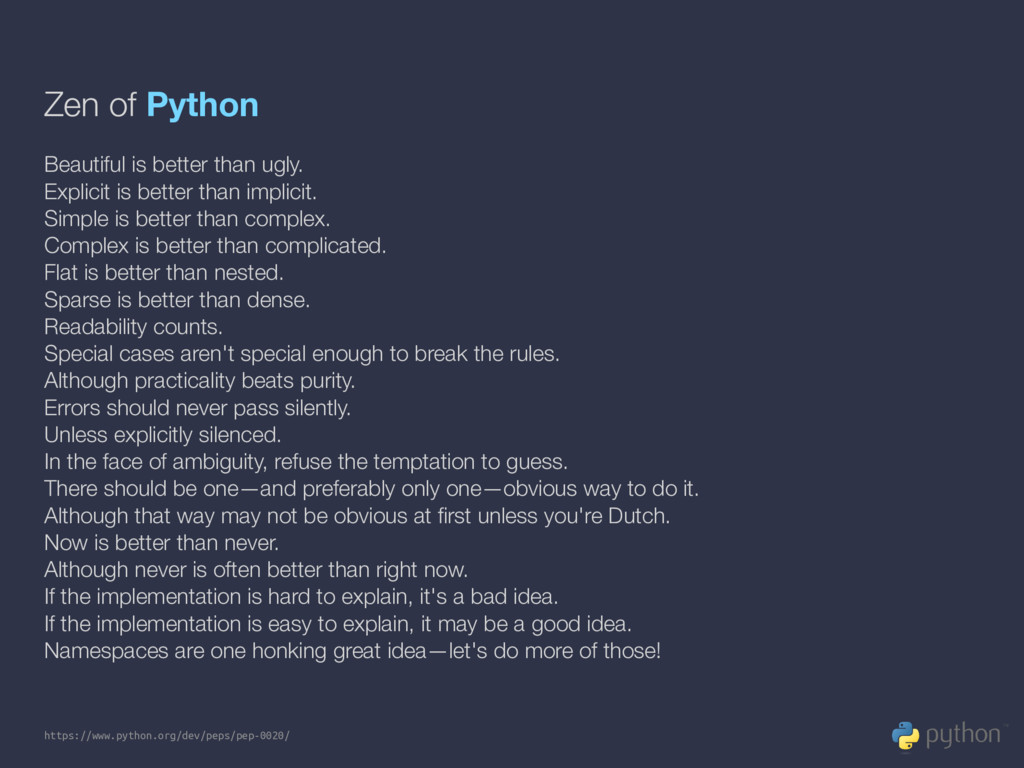
Simple is better than complex. Complex is better than complicated. Flat is better than nested. Sparse is better than dense. Readability counts. Special cases aren't special enough to break the rules. Although practicality beats purity. Errors should never pass silently. Unless explicitly silenced. In the face of ambiguity, refuse the temptation to guess. There should be one—and preferably only one—obvious way to do it. Although that way may not be obvious at first unless you're Dutch. Now is better than never. Although never is often better than right now. If the implementation is hard to explain, it's a bad idea. If the implementation is easy to explain, it may be a good idea. Namespaces are one honking great idea—let's do more of those! Zen of Python https://www.python.org/dev/peps/pep-0020/
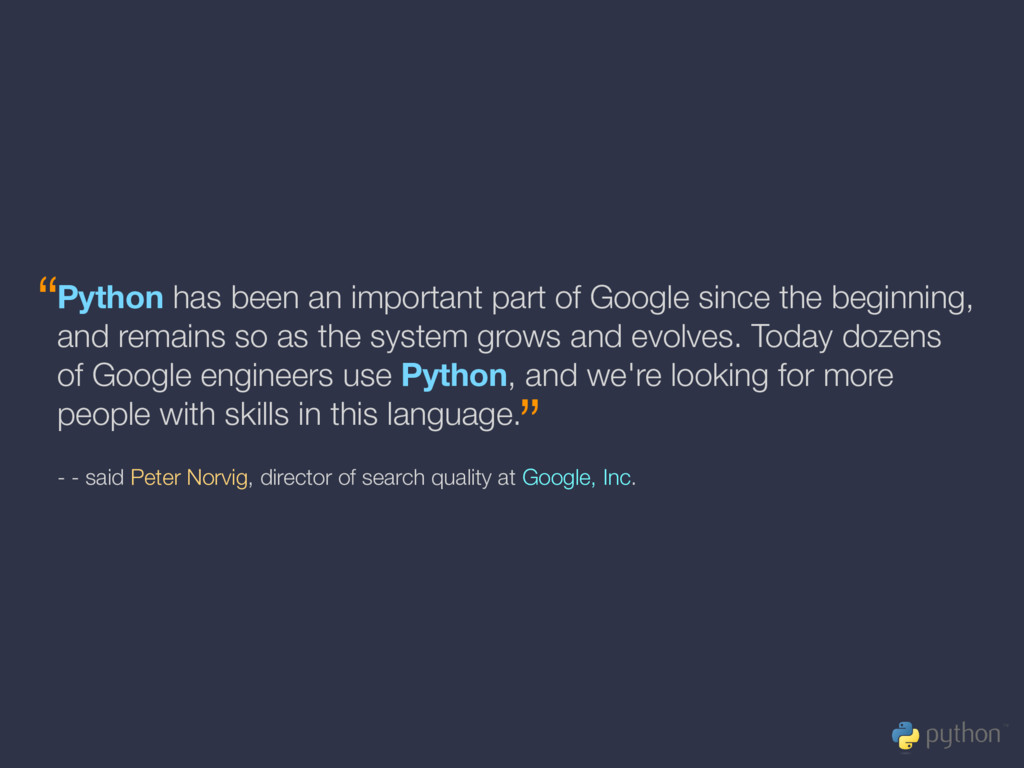
beginning, and remains so as the system grows and evolves. Today dozens of Google engineers use Python, and we're looking for more people with skills in this language. “ - - said Peter Norvig, director of search quality at Google, Inc. ”
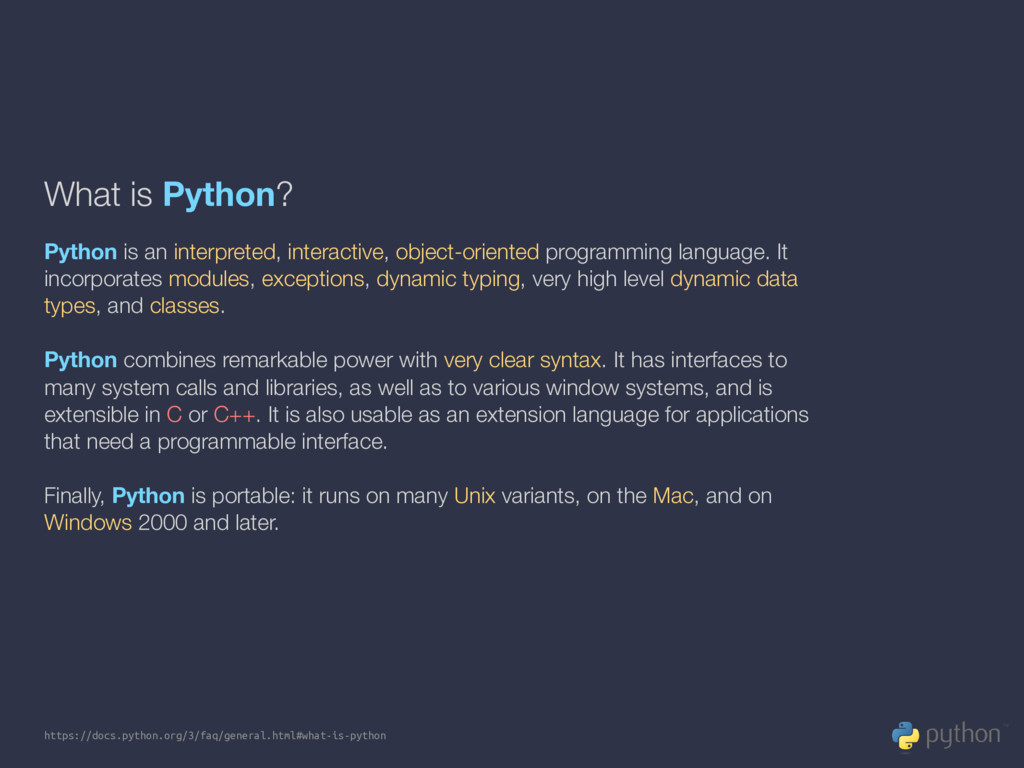
modules, exceptions, dynamic typing, very high level dynamic data types, and classes. Python combines remarkable power with very clear syntax. It has interfaces to many system calls and libraries, as well as to various window systems, and is extensible in C or C++. It is also usable as an extension language for applications that need a programmable interface. Finally, Python is portable: it runs on many Unix variants, on the Mac, and on Windows 2000 and later. What is Python? https://docs.python.org/3/faq/general.html#what-is-python
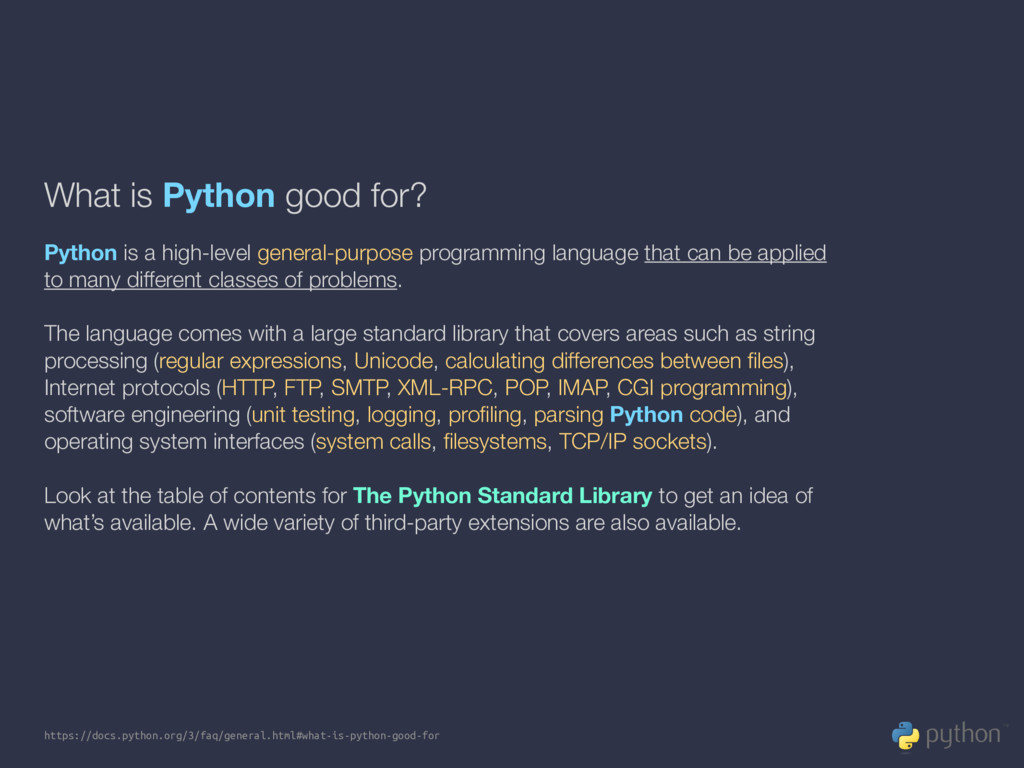
applied to many different classes of problems. The language comes with a large standard library that covers areas such as string processing (regular expressions, Unicode, calculating differences between files), Internet protocols (HTTP, FTP, SMTP, XML-RPC, POP, IMAP, CGI programming), software engineering (unit testing, logging, profiling, parsing Python code), and operating system interfaces (system calls, filesystems, TCP/IP sockets). Look at the table of contents for The Python Standard Library to get an idea of what’s available. A wide variety of third-party extensions are also available. What is Python good for? https://docs.python.org/3/faq/general.html#what-is-python-good-for


 alejandrobernardis
 satoshi256kbyte
 tosite
 findyinc
 yasaichi
 marcoroth
 dske104
 o0h
o0h
 yutobara
 chobishiba
 neuecc
 optim
optim
 panda728
 jlugia
 inesmontani
 jcasabona
 smashingmag
 chriscoyier
 reverentgeek
 lauravandoore
 axbom
axbom
 geoffreycrofte
 codingconduct
 oripsolob
 eileencodes