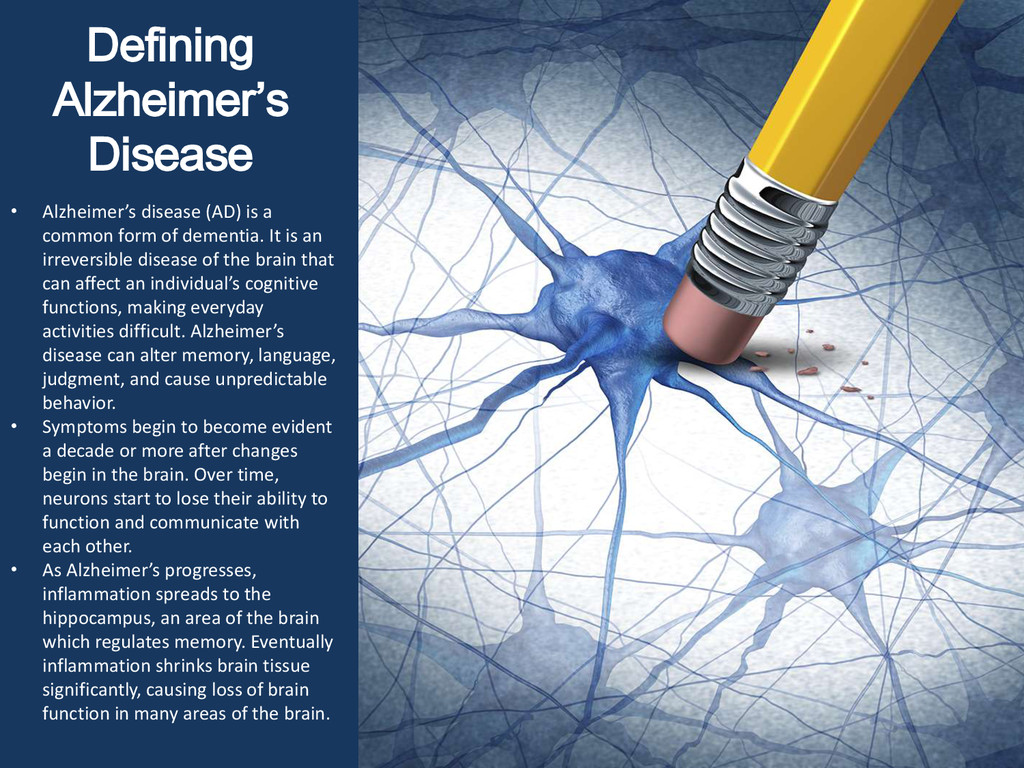
form of dementia. It is an irreversible disease of the brain that can affect an individual’s cognitive functions, making everyday activities difficult. Alzheimer’s disease can alter memory, language, judgment, and cause unpredictable behavior. • Symptoms begin to become evident a decade or more after changes begin in the brain. Over time, neurons start to lose their ability to function and communicate with each other. • As Alzheimer’s progresses, inflammation spreads to the hippocampus, an area of the brain which regulates memory. Eventually inflammation shrinks brain tissue significantly, causing loss of brain function in many areas of the brain.
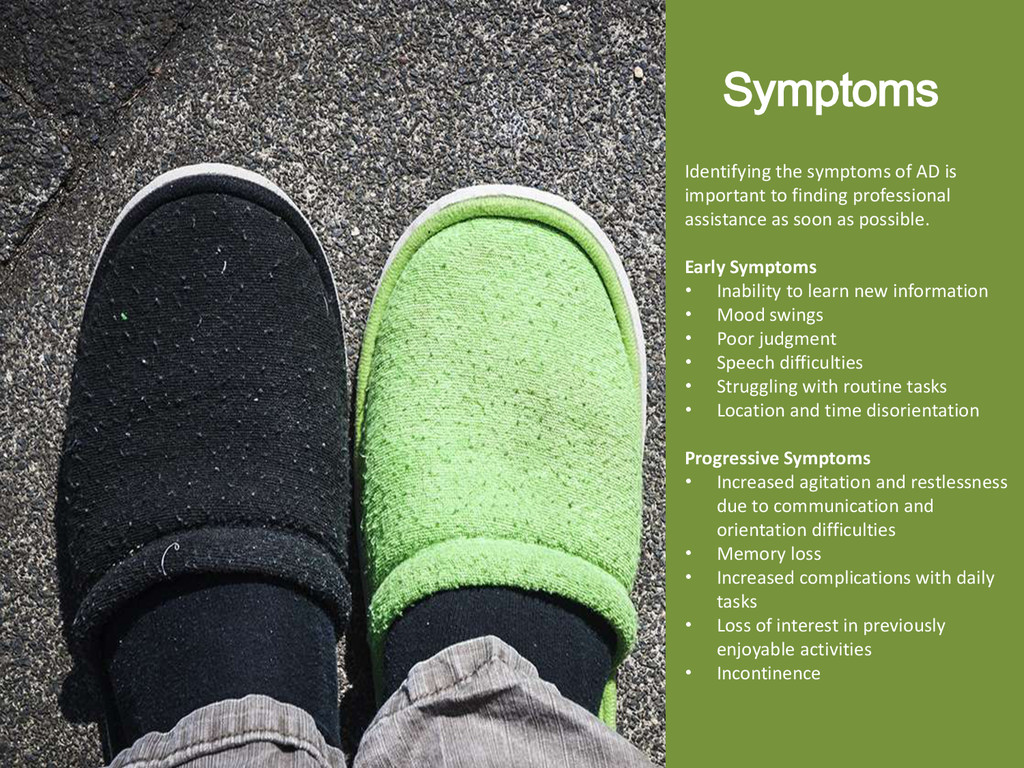
professional assistance as soon as possible. Early Symptoms • Inability to learn new information • Mood swings • Poor judgment • Speech difficulties • Struggling with routine tasks • Location and time disorientation Progressive Symptoms • Increased agitation and restlessness due to communication and orientation difficulties • Memory loss • Increased complications with daily tasks • Loss of interest in previously enjoyable activities • Incontinence
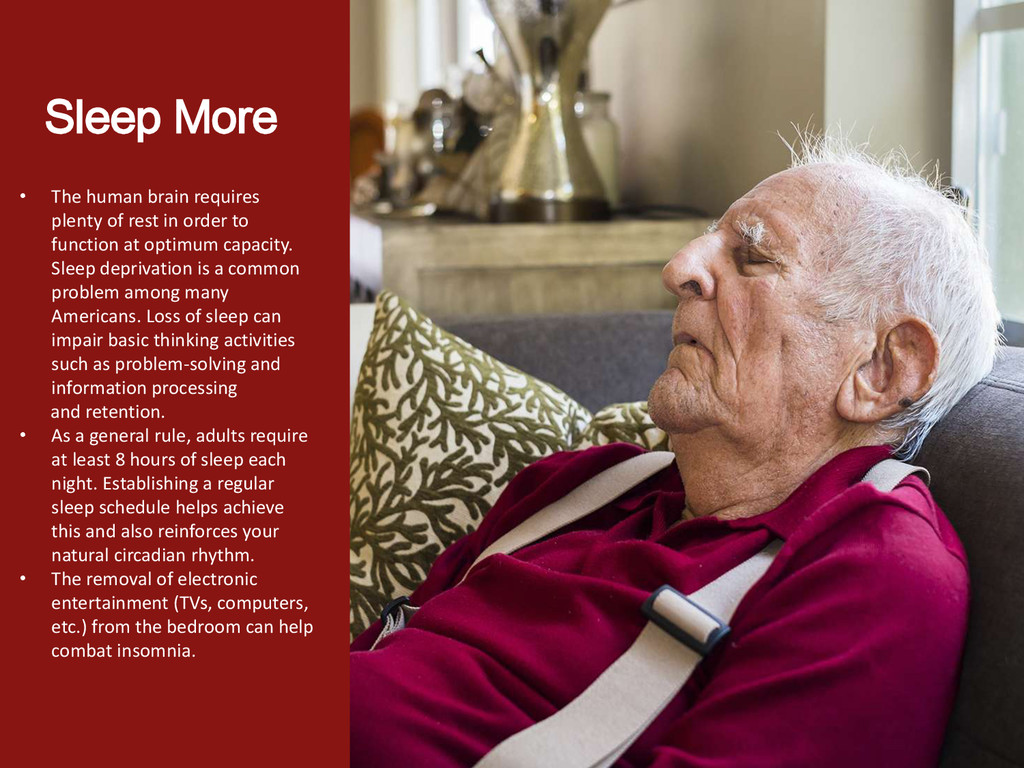
in order to function at optimum capacity. Sleep deprivation is a common problem among many Americans. Loss of sleep can impair basic thinking activities such as problem-solving and information processing and retention. • As a general rule, adults require at least 8 hours of sleep each night. Establishing a regular sleep schedule helps achieve this and also reinforces your natural circadian rhythm. • The removal of electronic entertainment (TVs, computers, etc.) from the bedroom can help combat insomnia.
in helping prevent Alzheimer’s disease. Not only does a healthy diet of omega- 3 fats, fruits and vegetables improve the body, but it also fortifies brain health. • A Mediterranean diet is well- known for including foods like fish, nuts, olive oils and whole grains, which help reduce inflammation in the tastiest way possible. • Avoid consuming trans fats and saturated fats like red meat, fast food, fried foods and processed foods.
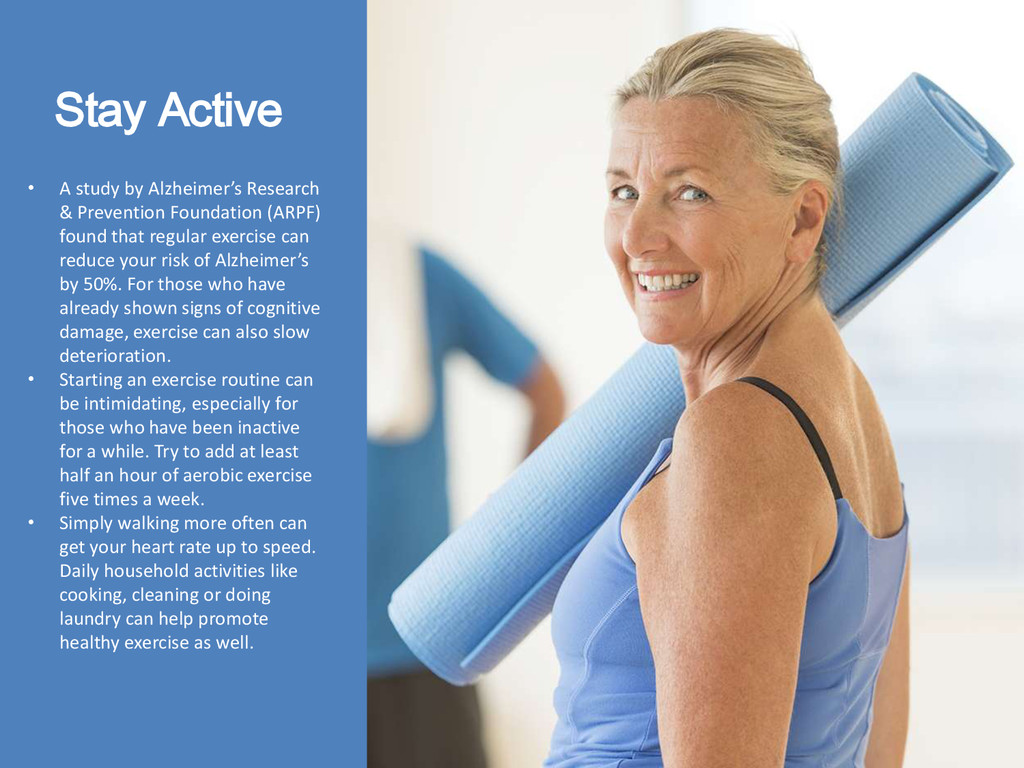
Foundation (ARPF) found that regular exercise can reduce your risk of Alzheimer’s by 50%. For those who have already shown signs of cognitive damage, exercise can also slow deterioration. • Starting an exercise routine can be intimidating, especially for those who have been inactive for a while. Try to add at least half an hour of aerobic exercise five times a week. • Simply walking more often can get your heart rate up to speed. Daily household activities like cooking, cleaning or doing laundry can help promote healthy exercise as well.
who continue to learn new things and stimulate their mind have been less likely to develop Alzheimer’s disease. • Creating new brain pathways are essential to keeping your neurological activity healthy and functioning. • Do you have an interest in studying a foreign language? Do you enjoy puzzle games or reading books? These are all fun activities to help keep your mind sharp and active.
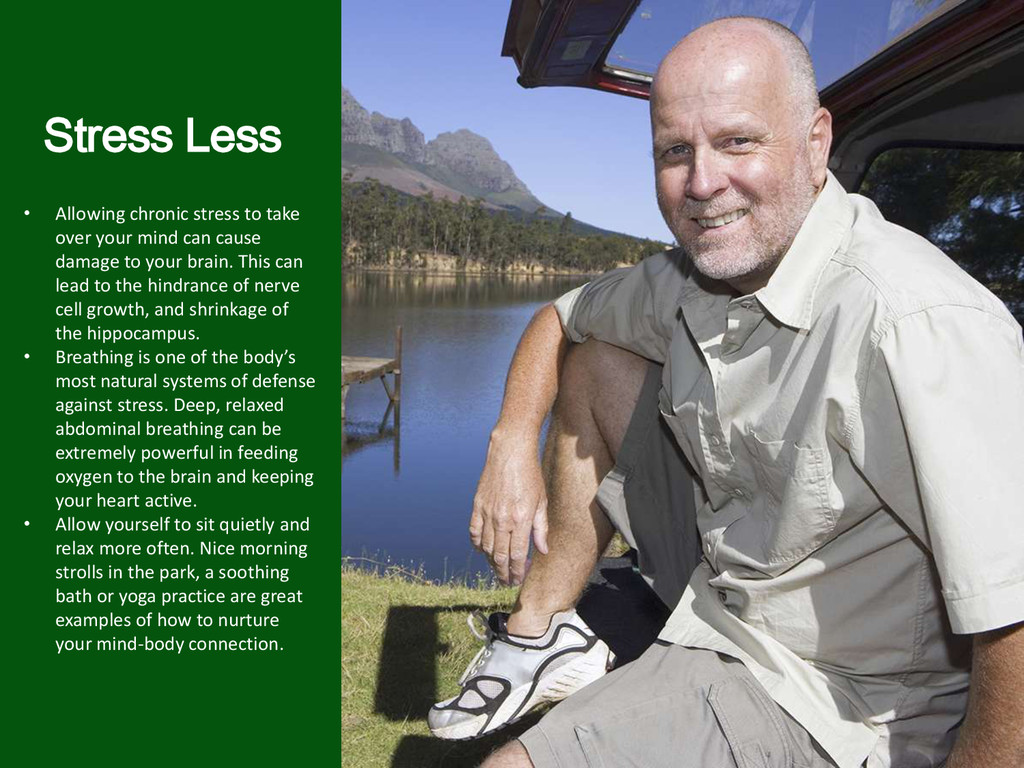
mind can cause damage to your brain. This can lead to the hindrance of nerve cell growth, and shrinkage of the hippocampus. • Breathing is one of the body’s most natural systems of defense against stress. Deep, relaxed abdominal breathing can be extremely powerful in feeding oxygen to the brain and keeping your heart active. • Allow yourself to sit quietly and relax more often. Nice morning strolls in the park, a soothing bath or yoga practice are great examples of how to nurture your mind-body connection.
Alzheimer’s Association: • African Americans and Hispanic Americans are more likely to develop Alzheimer’s than white Americans. • Seniors 85 years and older include about 2 million people with Alzheimer’s disease. • The typical life expectancy after an Alzheimer’s diagnosis is 4 to 8 years.
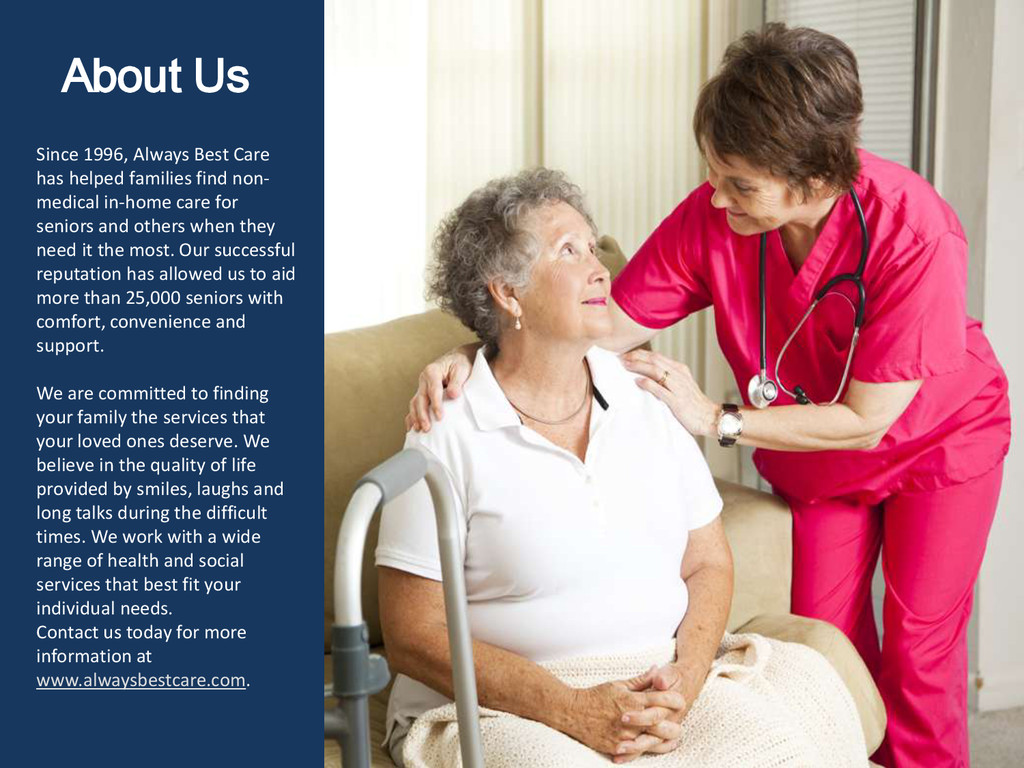
find non- medical in-home care for seniors and others when they need it the most. Our successful reputation has allowed us to aid more than 25,000 seniors with comfort, convenience and support. We are committed to finding your family the services that your loved ones deserve. We believe in the quality of life provided by smiles, laughs and long talks during the difficult times. We work with a wide range of health and social services that best fit your individual needs. Contact us today for more information at www.alwaysbestcare.com.


 nakasonejusetsu
.png) speakbuddy
speakbuddy
 tsuchihashi
 kgmotors
 makaibito
 todatomohiro
 kaonavi
 canvasedge
 freee
freee
 uemura2024
 arnekittler
 takemura_yuto
 jonoalderson
 chriscoyier
 baasie
 schlessera
 ks91
ks91
 rasagy
 reverentgeek
 popppiees
 mfonobong
 csswizardry
 sachag